25 Hairstyles for Diamond Face Shapes and How to Choose the Right One
A diamond face is usually described as widest through the cheekbones, with a narrower forehead and a narrower chin and jaw. That’s a useful outline, but real faces rarely follow it exactly. Some diamond faces have a softer chin, some a broader forehead, some cheekbones that sit higher or lower. The shape is a starting point, not a measurement.
What a haircut actually does is decide where it adds width, movement, softness, or structure, and where it takes them away. A fringe changes the upper face. A perimeter ending at the chin puts visual weight lower down. Layers placed at the cheekbone sit right at the widest point. Those effects are real, but how strong they are depends on your hair: its density, strand thickness, and natural texture, plus your natural part, your hairline, and how you style it on an ordinary day.
The 25 ideas below include haircuts, styling options, and a color idea. Each one points to what is actually shaping the silhouette.
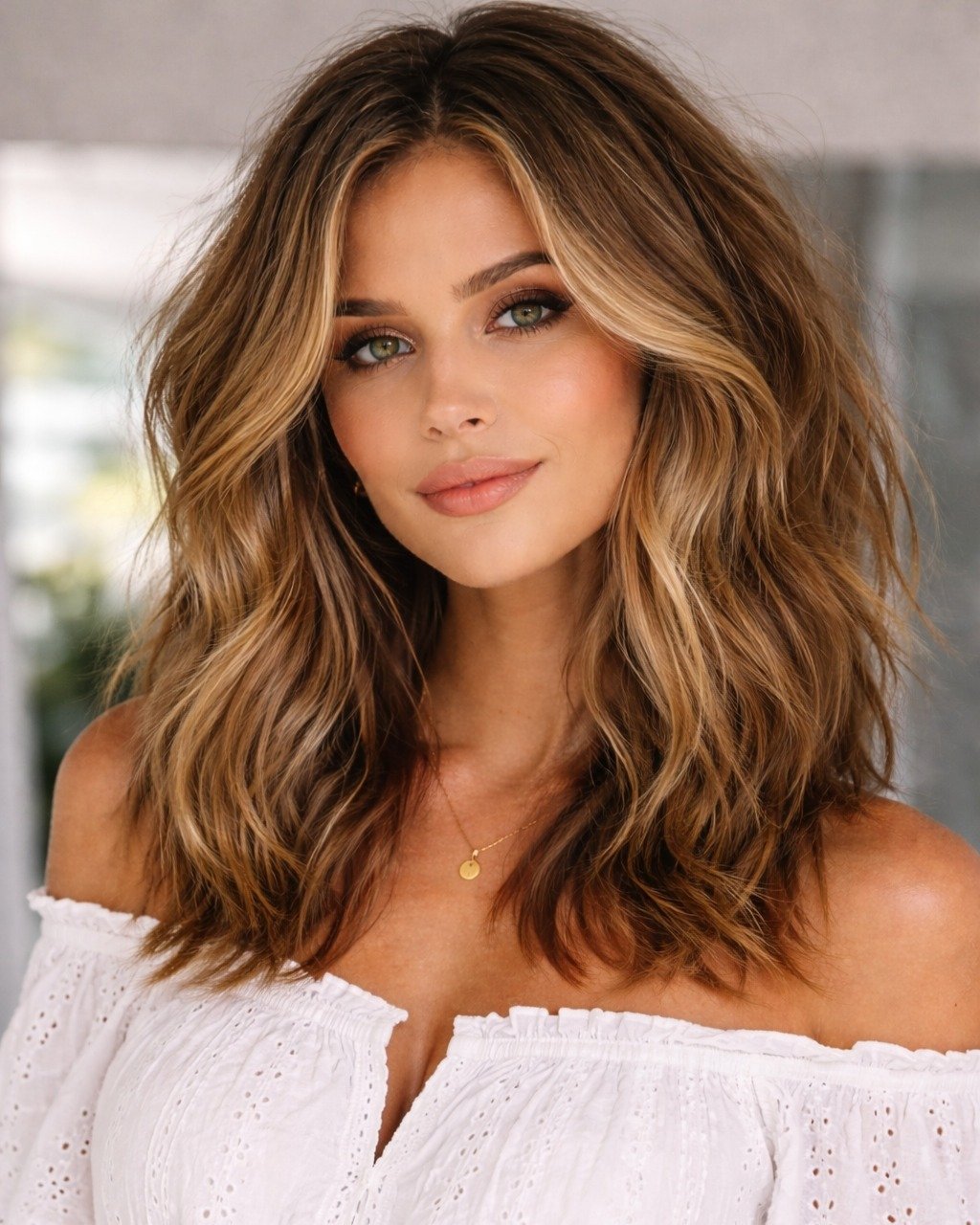
Curtain Bangs with Long Layers

Curtain bangs sit at the narrowest part of a diamond face, the forehead, and sweep outward from a center part toward the cheekbones. That can add some visual width around the upper face, though how much depends on how long the bangs are and how dense the hair is at the hairline. Shorter, fuller bangs make a stronger frame; longer, lighter ones blend more quietly into the first face-framing layer, while the long layers below keep movement lower in the length.
Straight hair usually needs a quick blow-dry to open the bangs. Wavy hair may help them fall into place but can also make them shrink. Either way, they settle most easily on a natural center part. Our guide to curtain bang hairstyles covers more fringe variations.
Chin-Length Bob
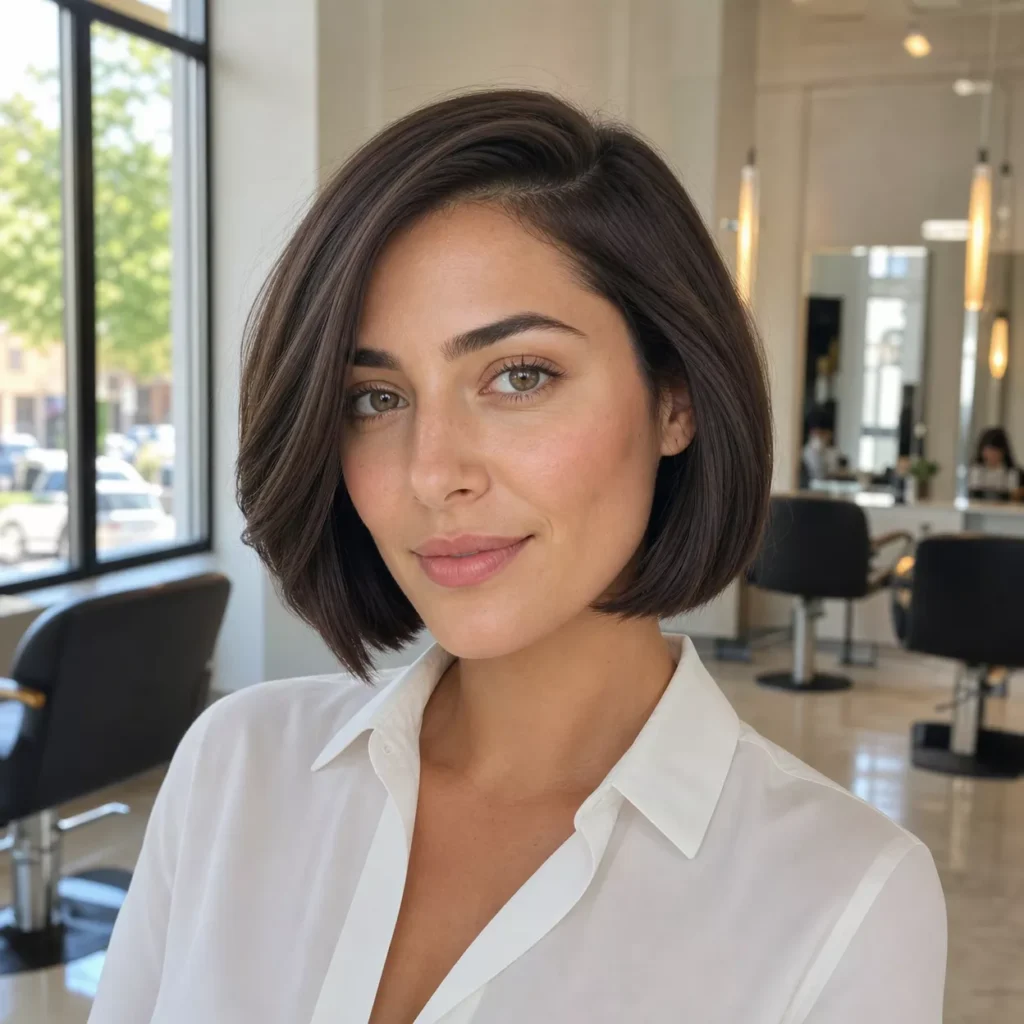
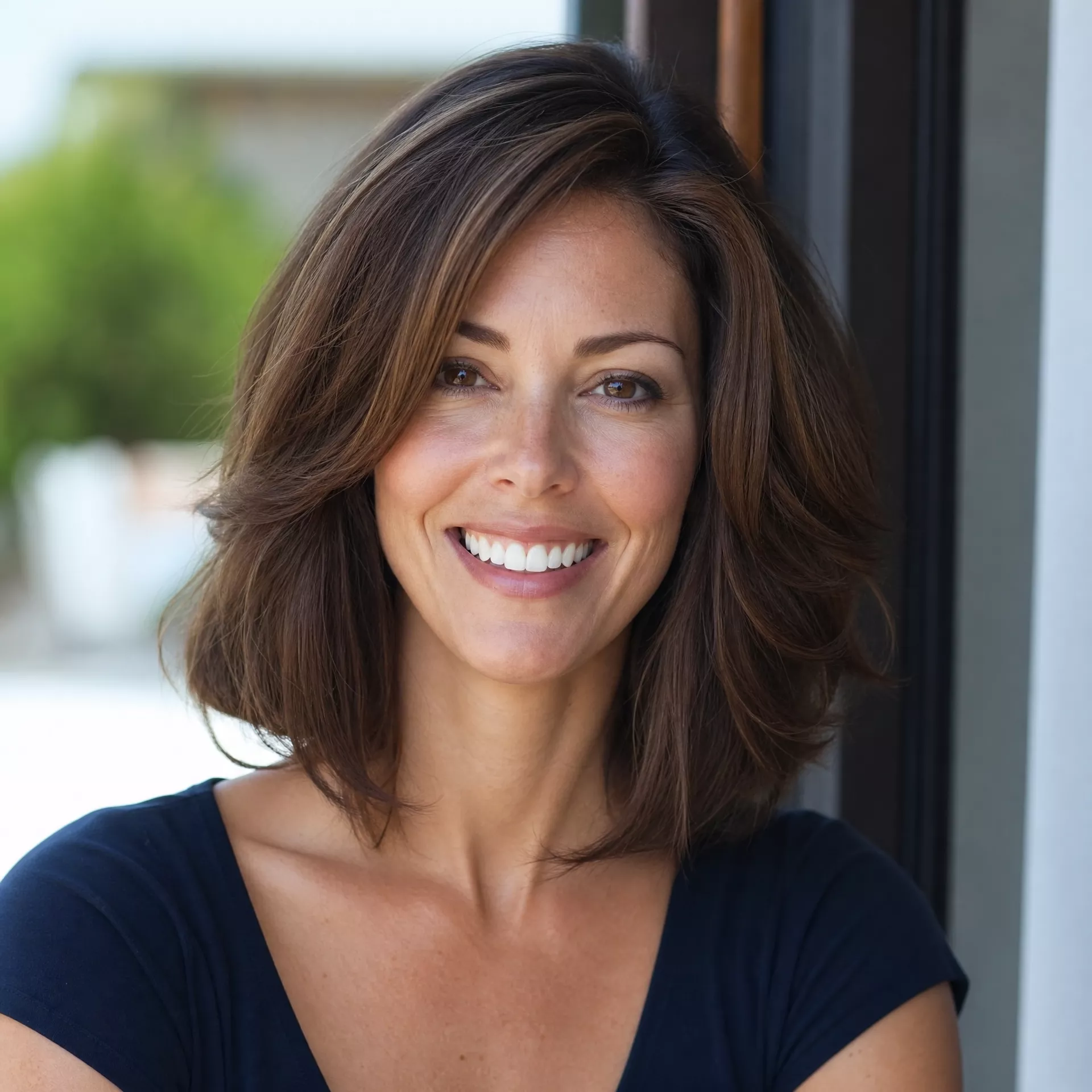
A bob that finishes around the chin puts visual weight toward the lower part of the silhouette. How noticeable that is depends on whether the ends are blunt or textured, and on density. A blunt line on dense hair looks solid and full; on fine or low-density hair, the same line reads lighter.
Small shifts in length change the result. Ending just above the chin keeps the line closer to the cheekbones; ending just below lets it fall past the jaw. Straight hair shows the perimeter crisply, while wavy hair softens it. Because the line is precise, growth shows quickly, and the bob drifts lower within weeks.
Textured Wolf Cut with Curtain Bangs
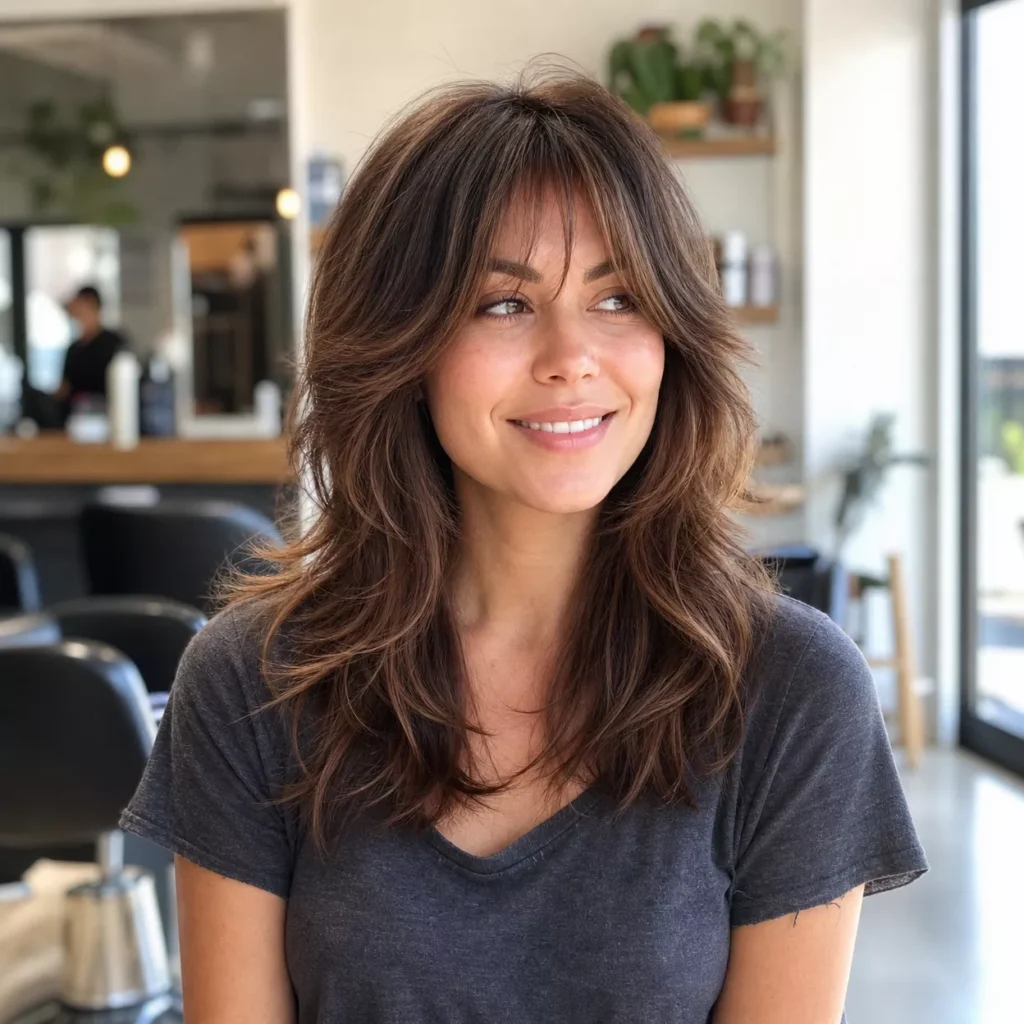
A wolf cut stacks short, textured layers at the crown and leaves longer, wispier pieces below. With curtain bangs, it adds shape at the top and around the forehead, while the layers through the mid-lengths move outward instead of lying flat against the cheekbones.
That architecture removes a lot of weight. On low-density hair, the ends can look sparse and the crown may show scalp. On dense hair, short crown layers can widen the top more than expected. Wavy and curly textures tend to fall into the shape on their own, though curls may shrink and leave the layers sitting higher than they were cut.
Side-Swept Wavy Lob

Three elements meet here: a lob perimeter around the collarbone, a side part, and waves. The side part moves more hair across one side, so the silhouette becomes asymmetrical around the forehead and cheekbone. The waves add width through the lengths, particularly near the lob’s edge. Natural waves give an irregular, softer outline; heat-created waves look more even but need restyling each time. Switch the part to the other side and the whole shape changes, so it’s worth trying both before settling on one.
Layered Medium Length Cut
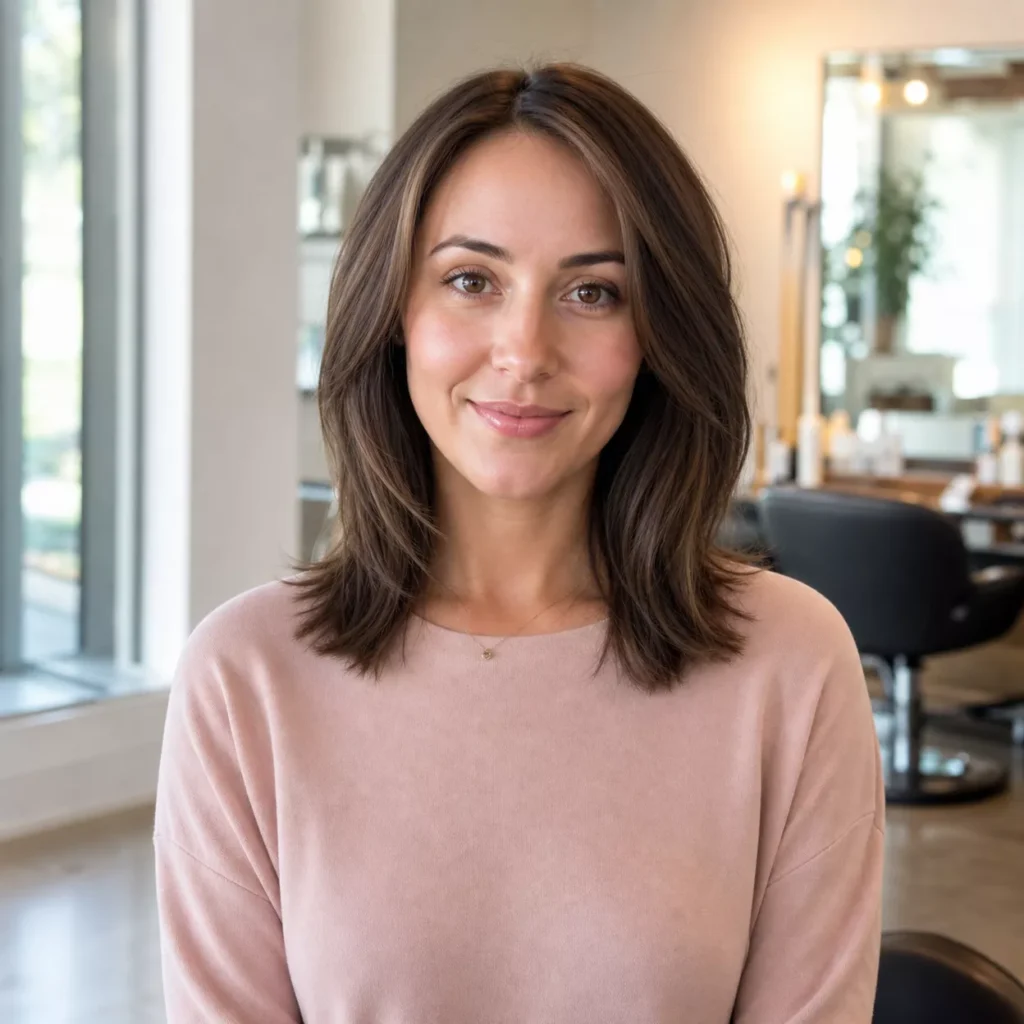
Layer placement matters more than the number of layers. On a diamond face, layers that start near the cheekbone put movement at the widest point, while layers starting at the jaw or below keep that area smoother and shift movement lower. Neither is automatically correct.
Fine but dense hair can usually handle layers that start higher. Low-density hair often looks fuller with fewer layers that begin lower. Thick hair may need more internal layering to avoid bulk. On straight hair, you’ll see exactly where the layers begin; on wavy hair, they blend into the movement of the wave.
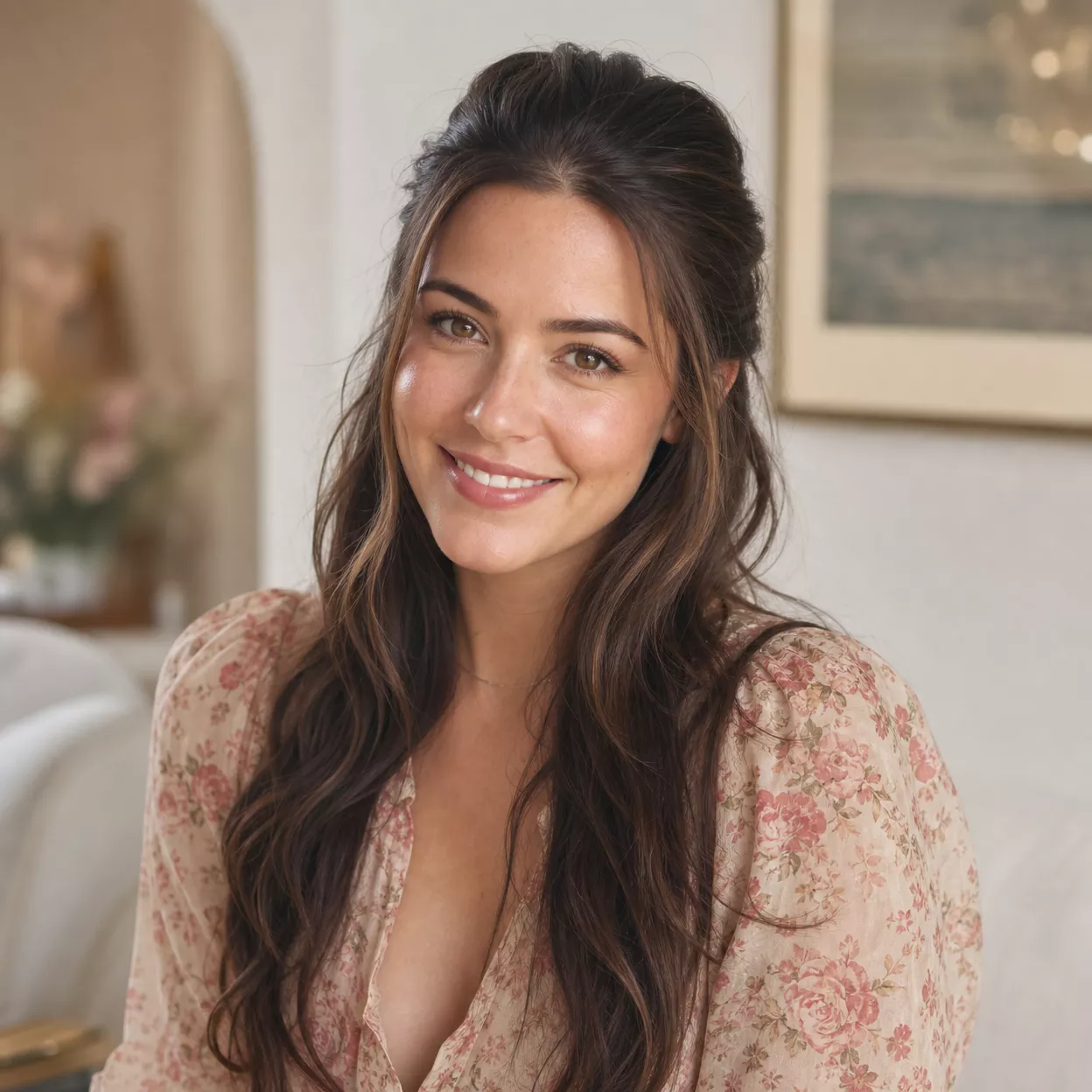
Soft Feathered Long Hair
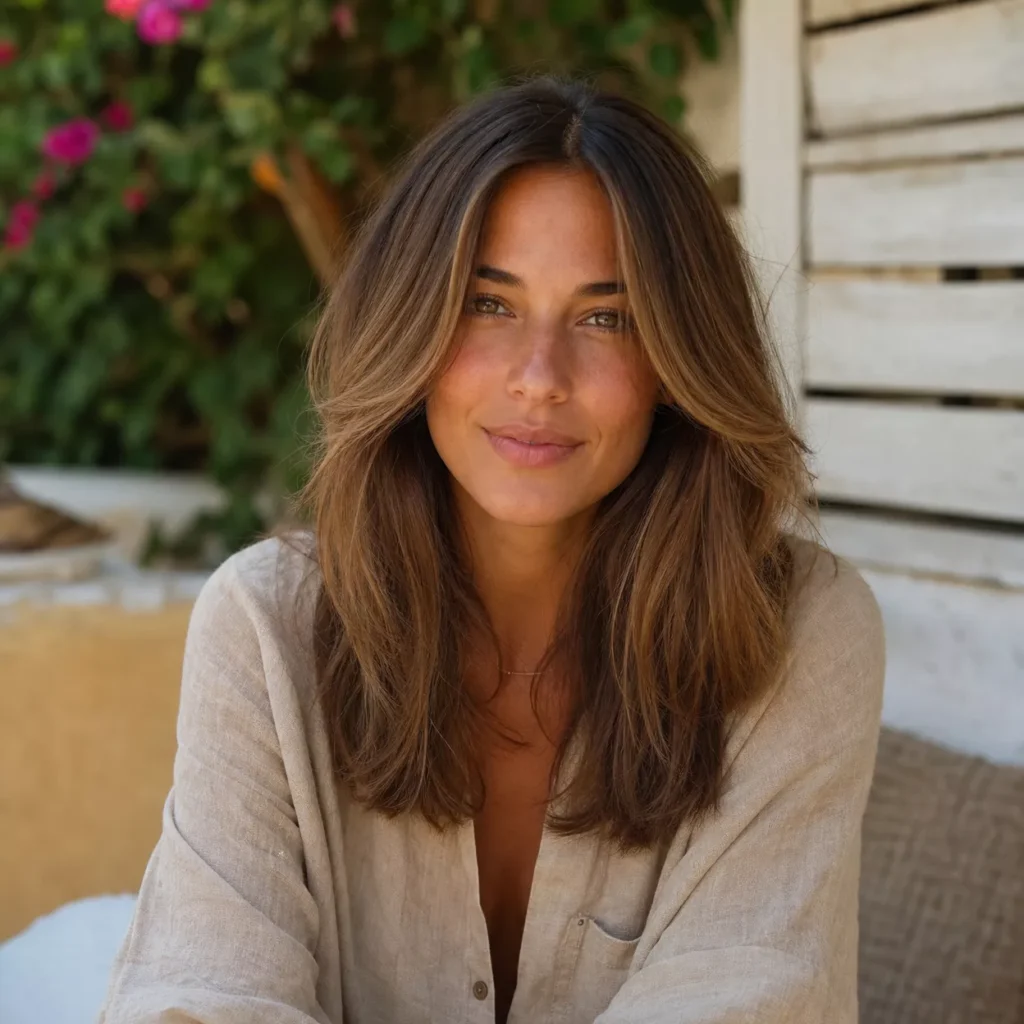
Feathering directs the layers outward and back, so the ends sweep away from the face. It’s different from thinning, which removes bulk without guiding direction, and from texturizing, which breaks up the ends for separation. On long hair, feathering creates movement without removing much of the overall length, so the hair keeps much of its weight. The outward sweep usually shows best with a round brush; air-dried straight hair may fall straighter. On wavy hair, feathering tends to encourage outward movement more naturally.
Asymmetrical Bob
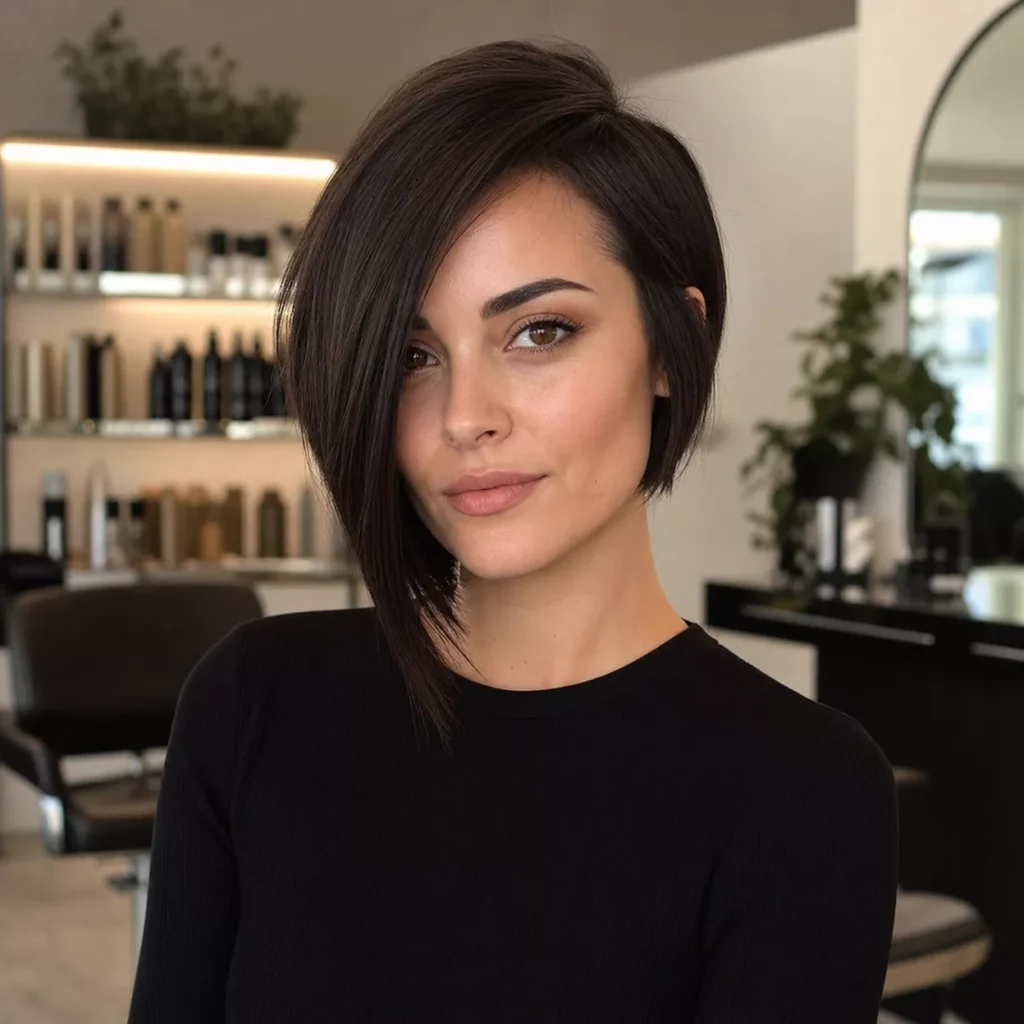
An asymmetrical bob is a deliberate design choice: one side longer, often falling toward the chin, the other shorter. That creates a directional silhouette that pulls attention diagonally rather than straight across. The amount of asymmetry decides how strong it feels. A slight difference reads soft; a pronounced one becomes the focus of the cut.
The longer side usually sits where your hair naturally parts toward. As it grows, the shorter side catches up, so the asymmetry fades unless it’s reshaped. This one suits someone who actually likes an uneven shape, rather than someone hoping the cut will look balanced.
Blunt Fringe with Medium Length
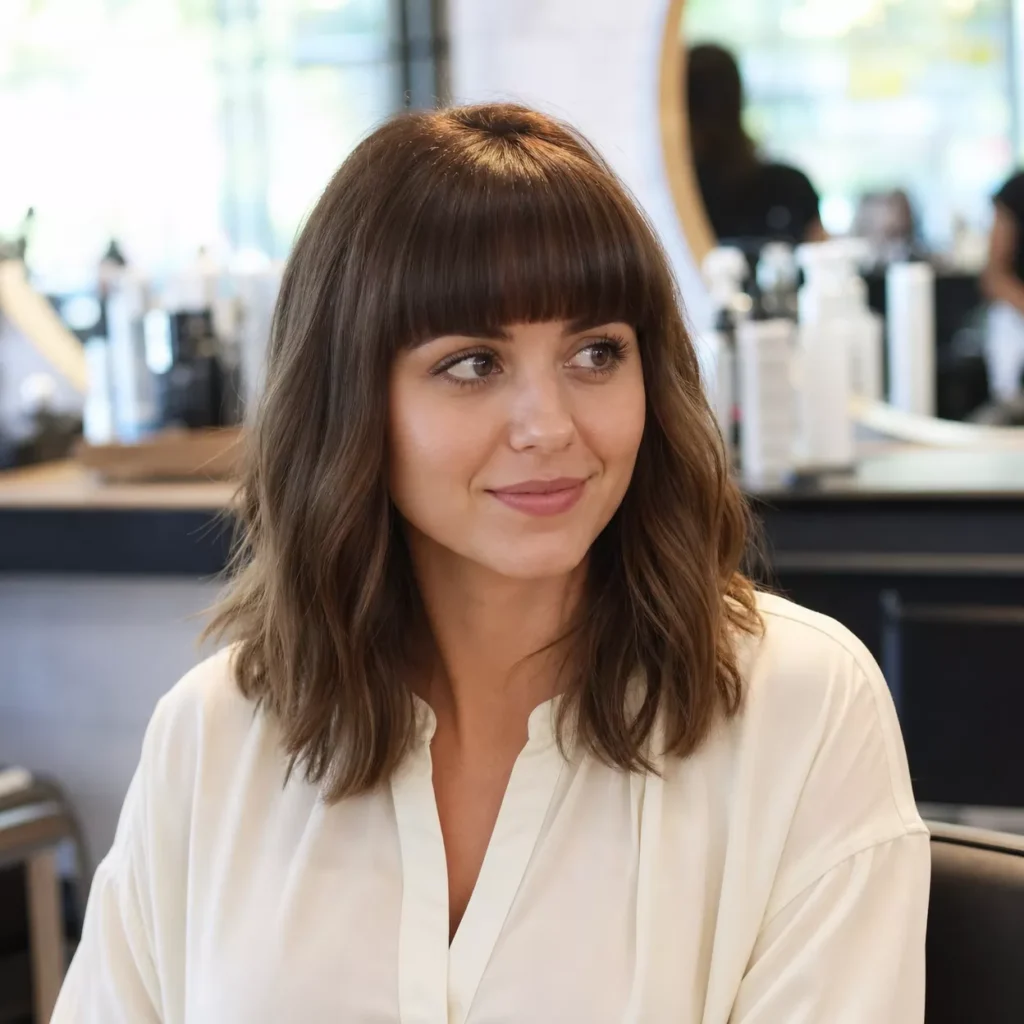
A blunt fringe draws a strong horizontal line across the forehead, and whether that line looks soft or severe depends on the hair behind it. It needs enough density at the hairline to look even, and a growth pattern that lets it lie flat. A cowlick can split or lift it. On a narrower forehead, a blunt fringe adds a clear line at the top of the face, though the effect varies with how wide and how heavy the fringe is cut. It also needs frequent trims to keep its line, and wavy hair can bend it out of shape.
Wispy Bangs with Shoulder Length Layers
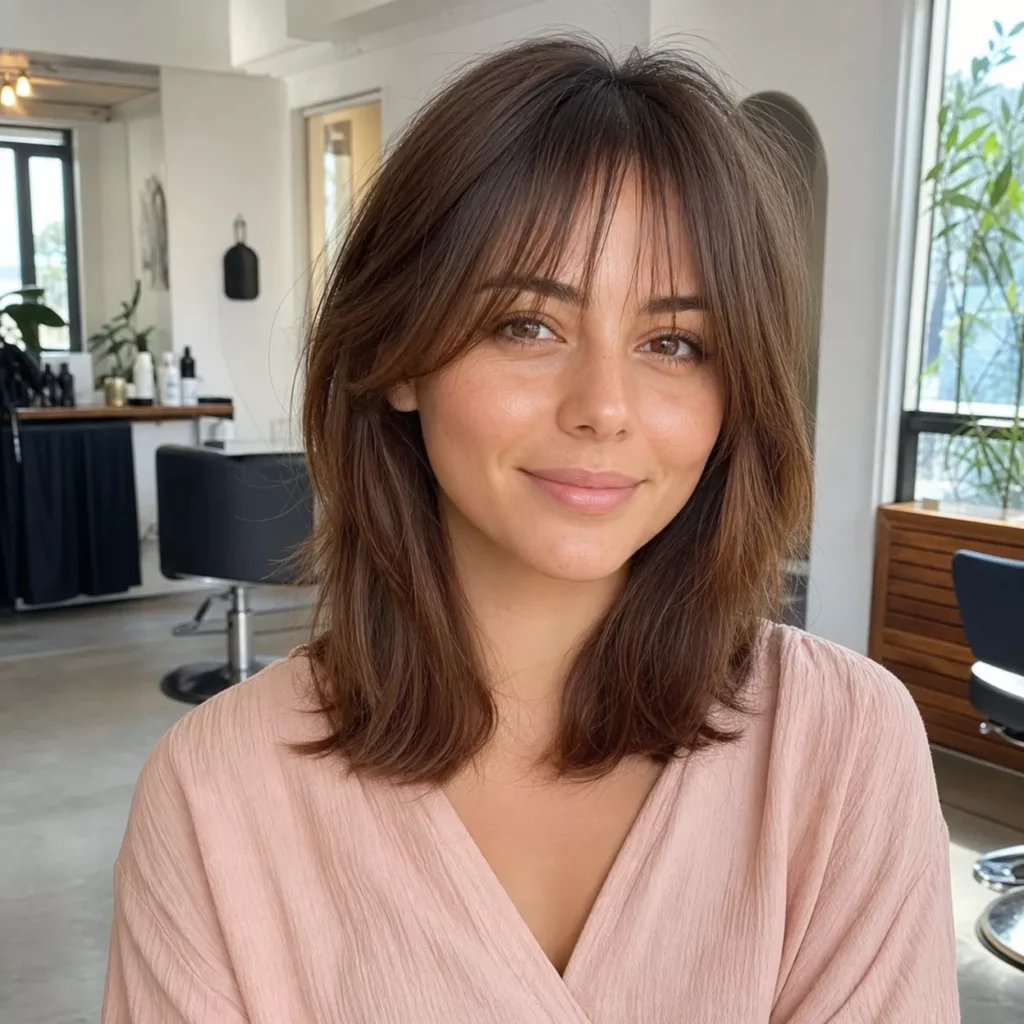
Wispy bangs are cut light enough to see through, so they soften the forehead rather than covering it. That lightness depends on what’s happening at your hairline. Fine but dense hair can carry a wispy fringe evenly; low-density hair may look patchy. Humidity tends to pull wispy bangs apart. They’re a lighter commitment than a blunt fringe, but still a commitment: they need shaping, regular trims, and a grow-out stage where they fall into the eyes.
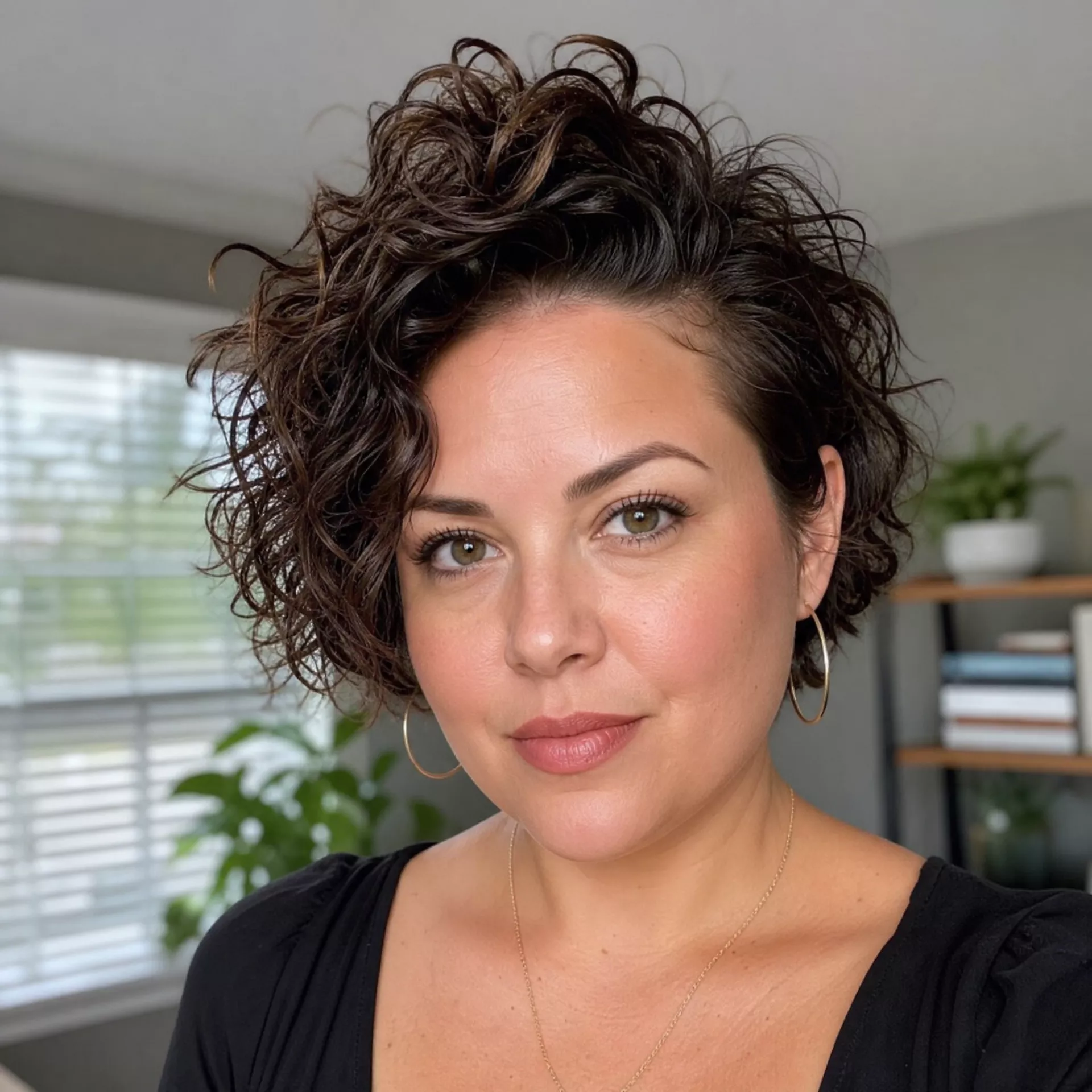
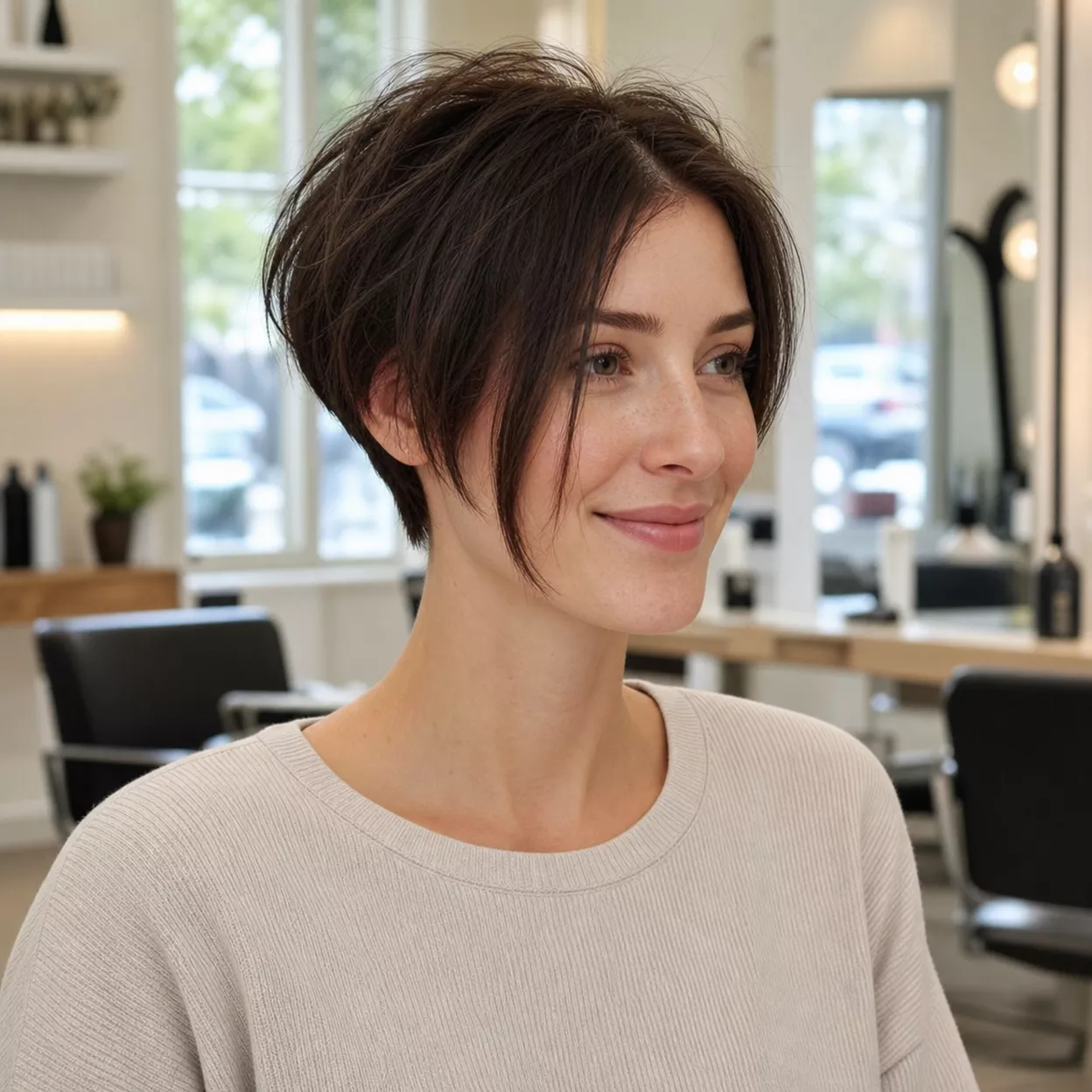
Textured Pixie with Volume at Crown
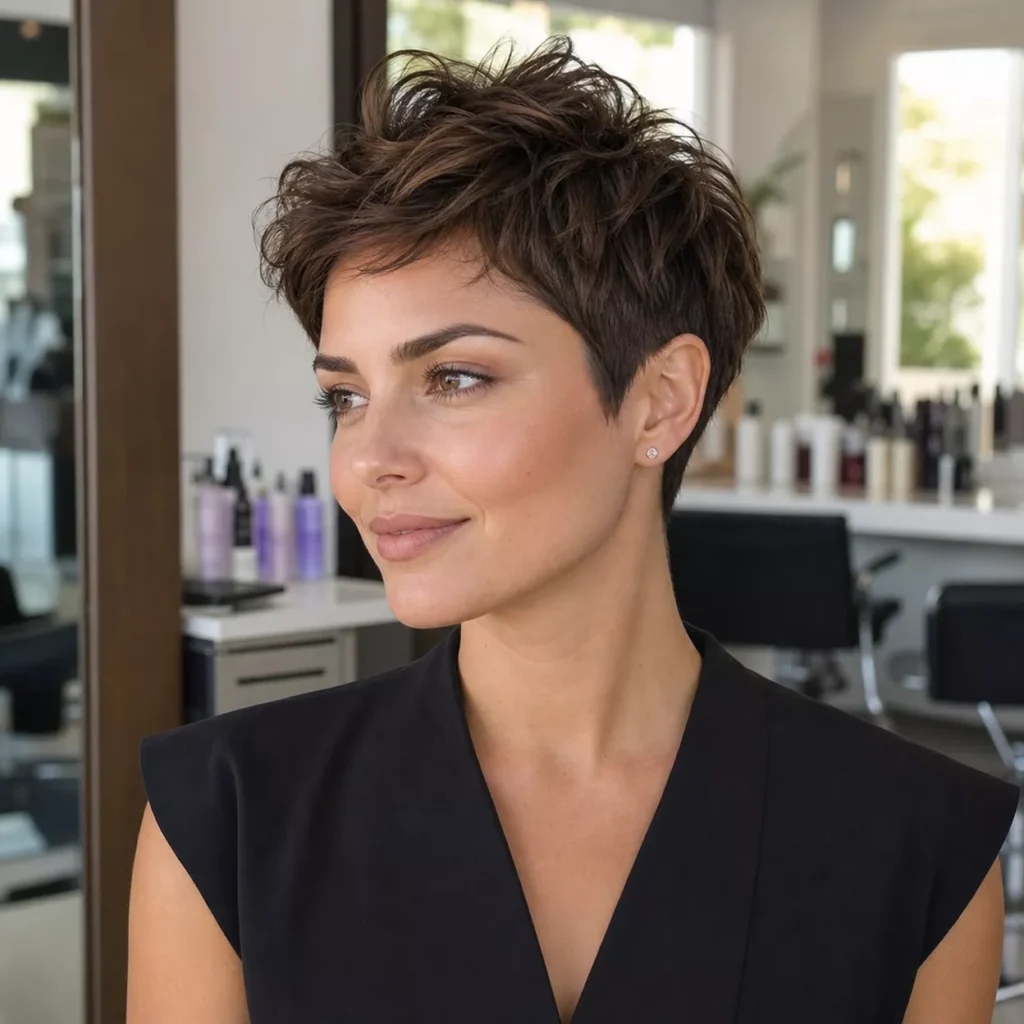
A pixie with height at the crown and shorter sides concentrates the hair on top and keeps it close around the cheekbones, which shifts visual weight upward. How it sits depends on density and texture. Fine but dense hair holds a lifted crown well; low-density hair may show scalp if the top is cut very short.
Cowlicks at the crown and hairline matter more at this length, since there’s little hair to hide them. Styling usually involves a small amount of product, and the shape needs regular reshaping because short cuts change quickly as they grow.
Shoulder Length Cut with Face-Framing Highlights
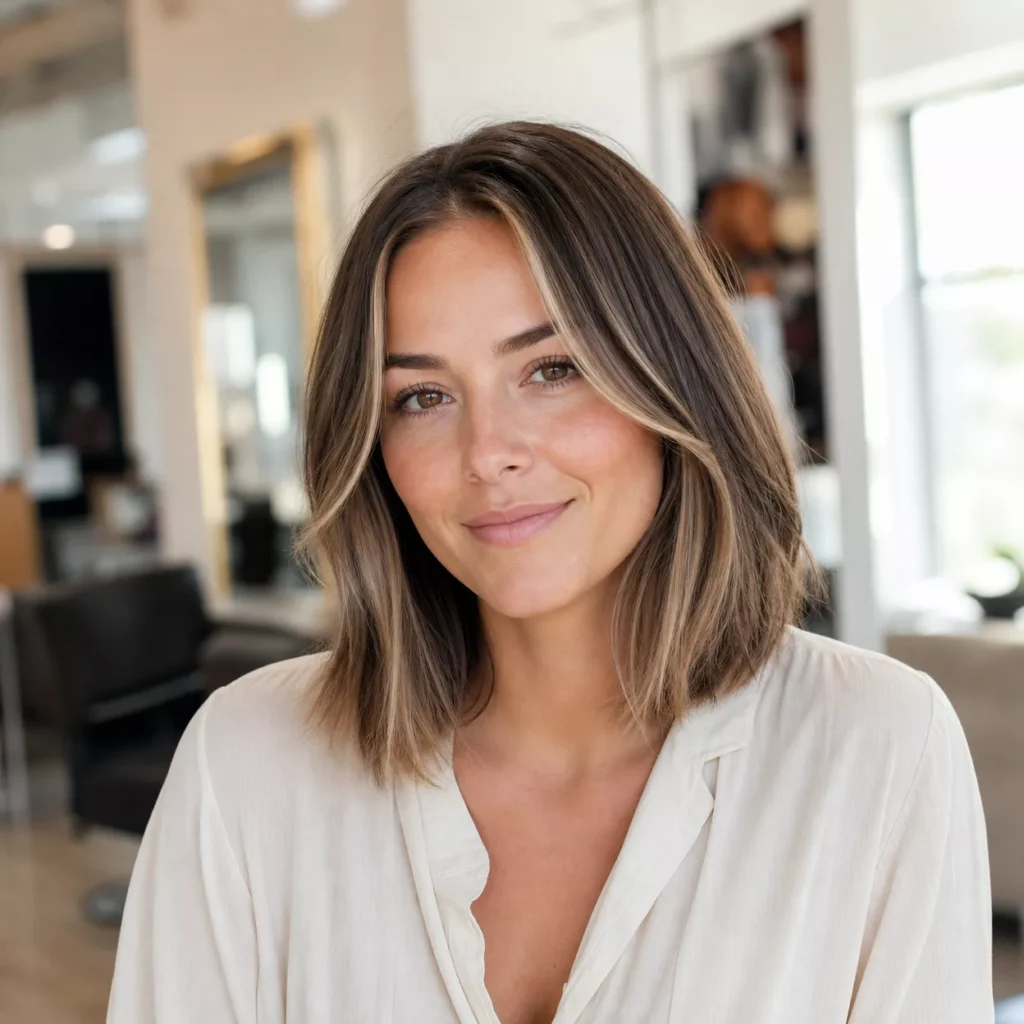
The haircut and the highlights do separate jobs. The shoulder-length cut controls shape, keeping some weight around the jaw and neck. The highlights control contrast, drawing the eye toward wherever they’re placed. Lighter pieces near the hairline and forehead brighten the upper face; pieces concentrated around the chin draw attention lower. Your starting color decides how much lightening is involved, and density affects how visible the highlights are. Because the pieces sit close to the face, regrowth shows there first.
Deep Side Part Long Layers

A deep side part sends a large section of hair across the forehead and down past one cheekbone, changing where the visual weight sits and creating a clearly asymmetrical frame. It holds best when it follows your natural part; a cowlick at the crown may keep pushing it back toward center. Lifting the crown slightly before setting the part keeps the heavier side from flattening. Layers that start at or below the cheekbone help that swept section fall smoothly instead of sitting as one heavy panel.
Chin Bob with Soft Waves
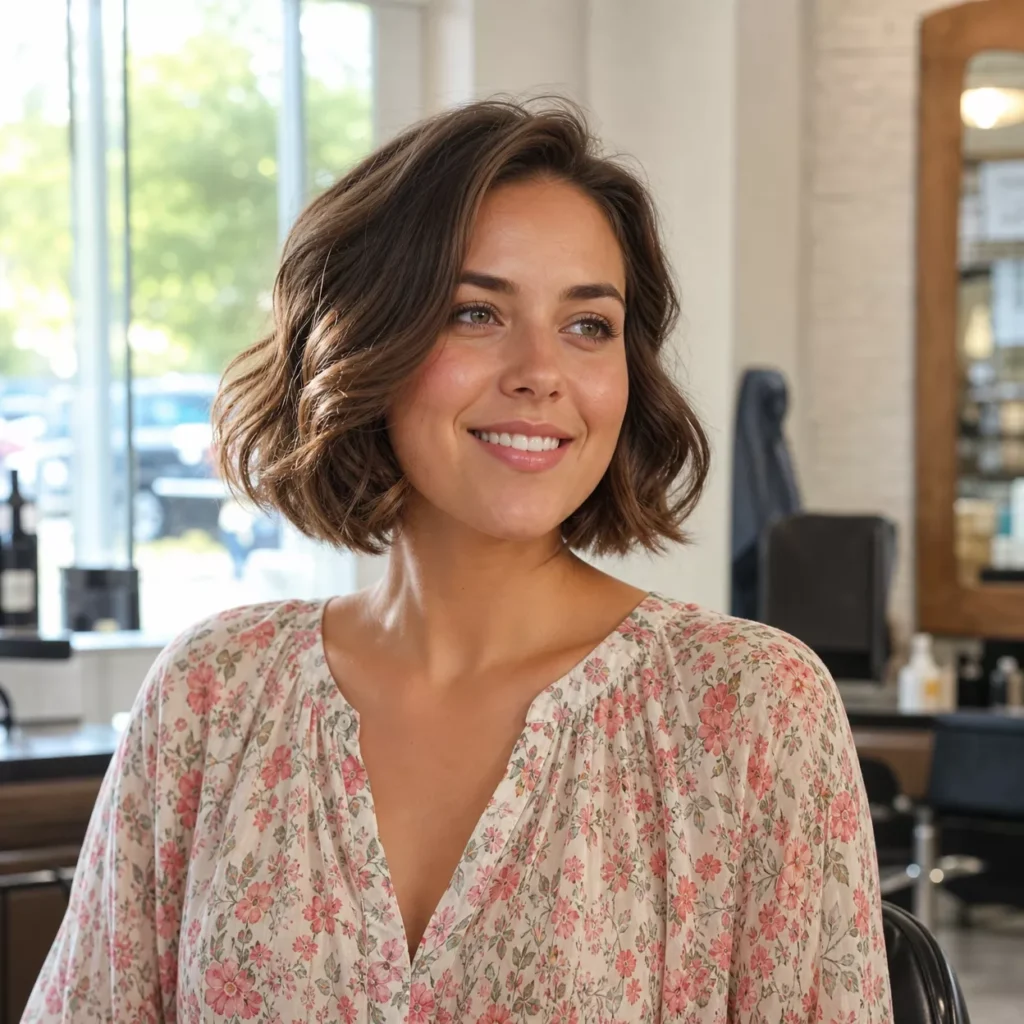
Waves expand a silhouette, and on a chin bob that expansion happens at the bottom of the cut. Where the waves begin matters. Waves starting near the cheekbone add width at the widest point; waves starting lower concentrate fullness toward the chin. Density changes how much they spread. Dense hair makes a full, wide shape, while fine hair makes a softer one. Natural waves can be uneven from side to side; heat-created waves are more uniform but need recreating.
Long Shag with Curtain Bangs
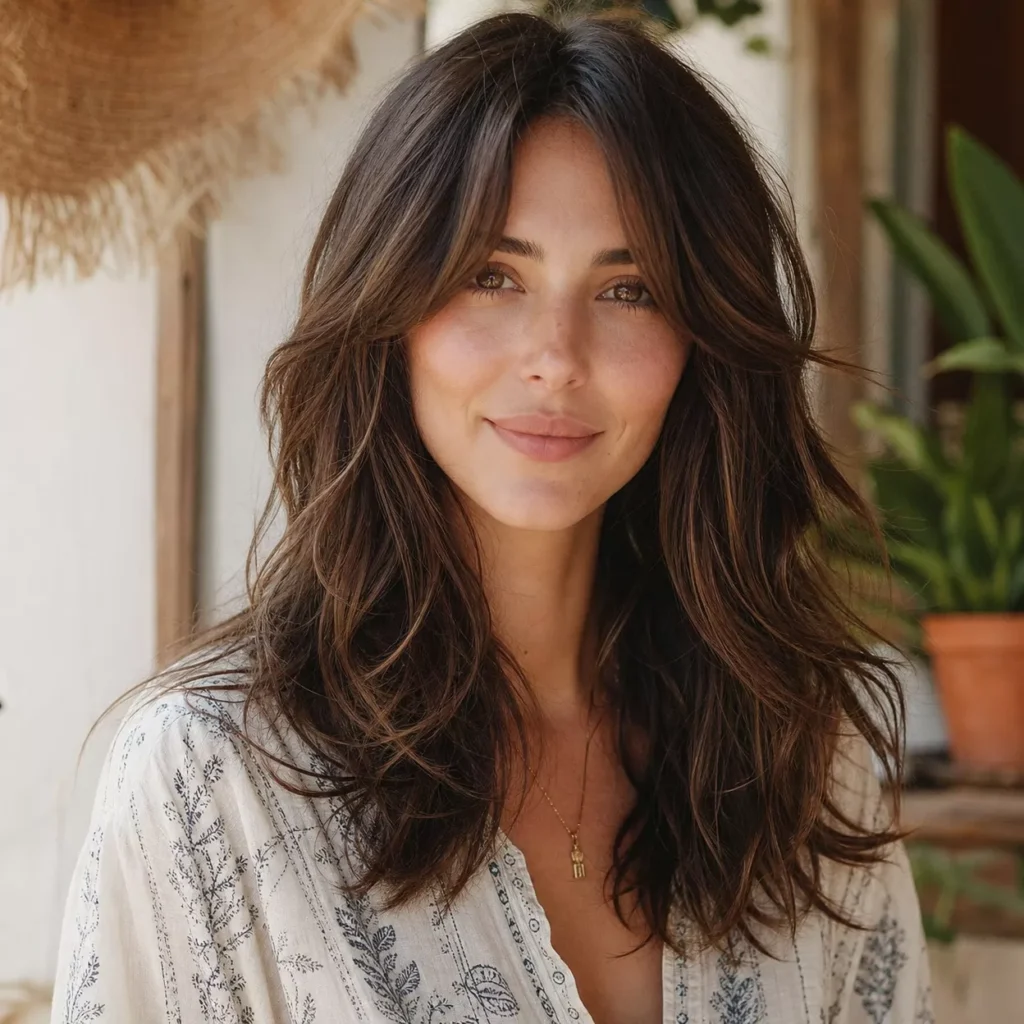
A long shag combines short layers at the crown, layers through the mid-lengths, and here, a curtain fringe at the front. The mid-length layers can move outward rather than lying flat against the cheekbones, which changes how the widest part of the face is framed. Wavy and curly hair tend to show the shag shape naturally, though curls may shrink. Low-density hair needs caution, because a shag removes a lot of weight. A gentler version with longer, fewer layers keeps more fullness at the ends.
Layered Lob with Side Part
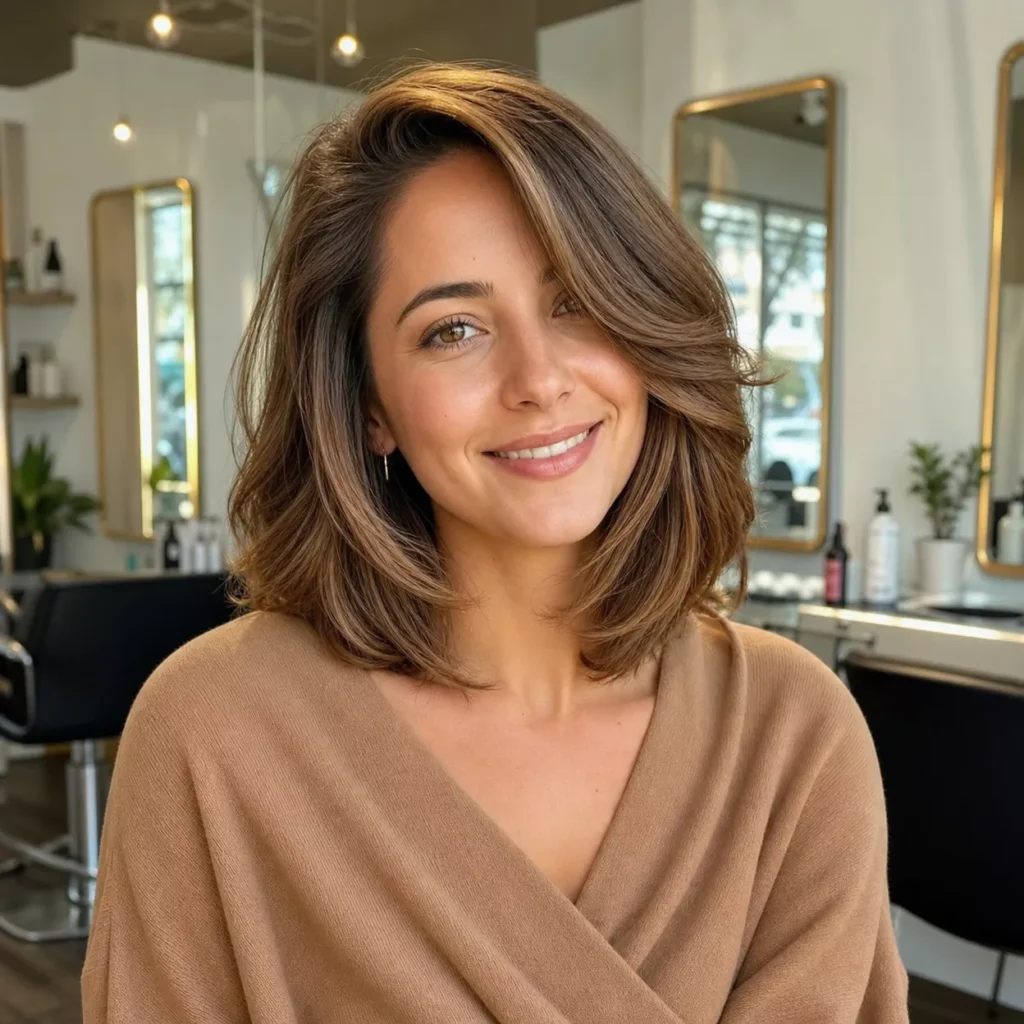
Where the wavy lob earlier relies on texture, this version is about layering. The lob ends around the collarbone, and layers inside build movement toward the ends. Where those layers start decides how much movement appears around the face. The side part adds asymmetry without changing the cut. As it grows, the layers lengthen and soften, and the perimeter drifts toward the shoulders, where it may begin to flip. Straight hair shows the layers clearly; wavy hair blends them.
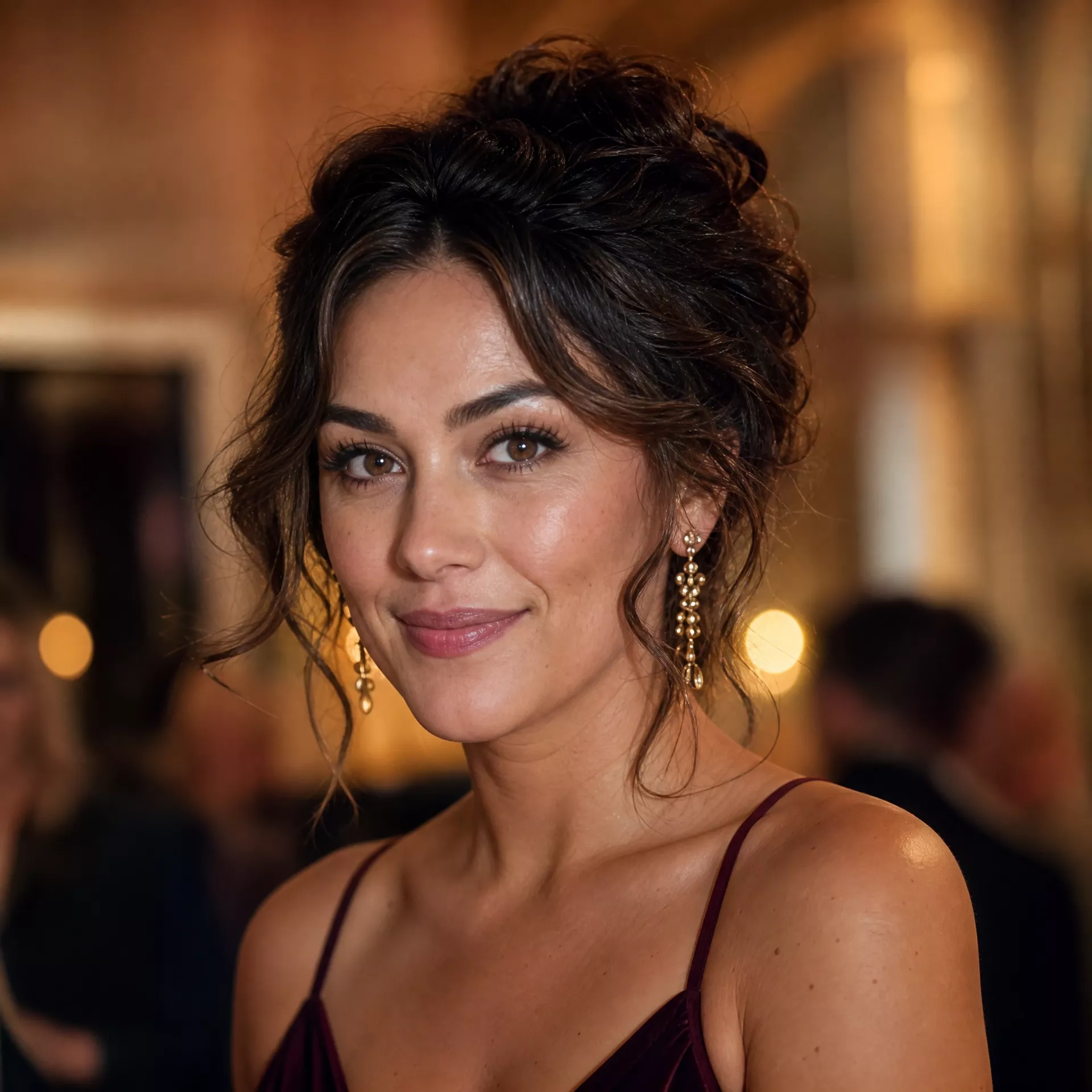
Soft Updo with Face-Framing Pieces
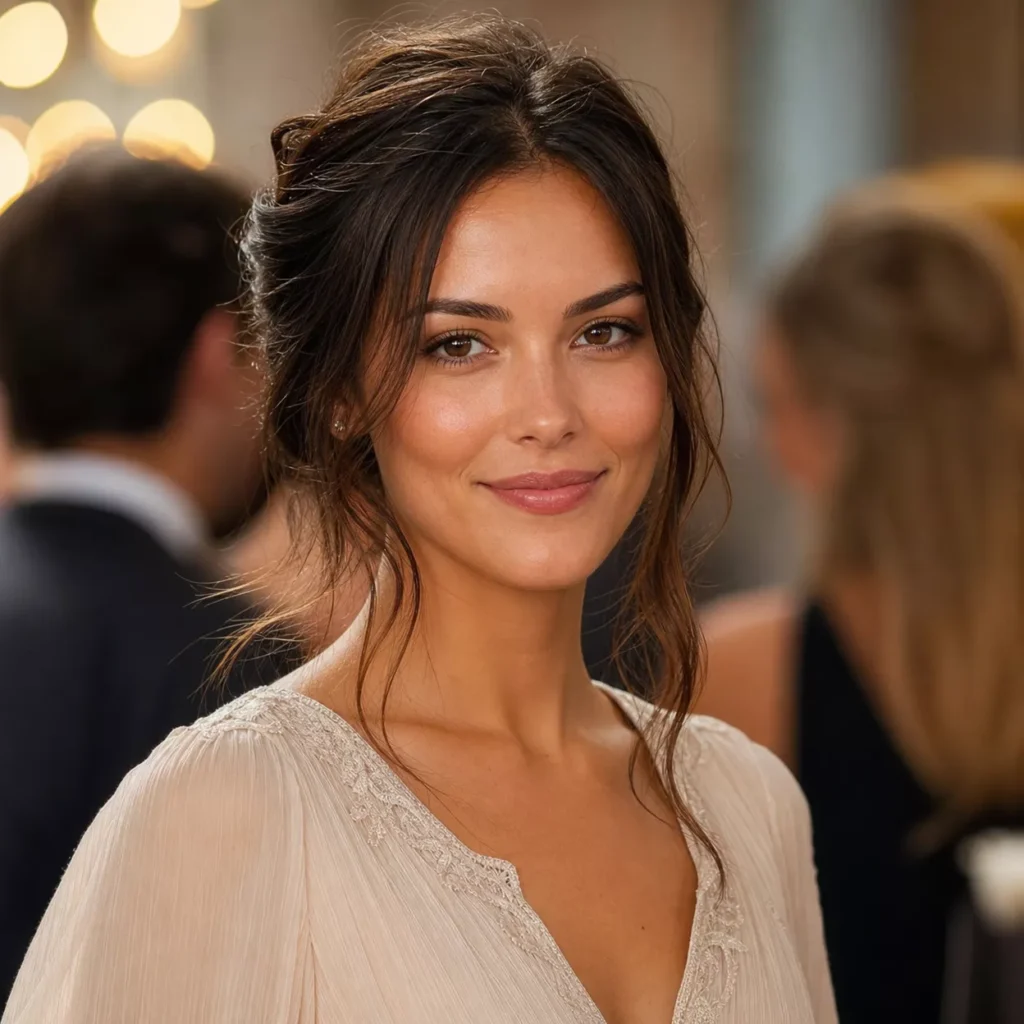
An updo is styling, not a haircut. Pulling all the hair up exposes the full shape of the face, and leaving a few loose pieces at the temples or around the jaw softens that. Whether you want those pieces is personal. Height changes the effect: a higher updo moves visual weight upward, while a lower one keeps it near the nape. Fine hair may need texture spray for grip, dense hair may need extra pins, and a tight pull at the hairline is worth avoiding if you wear it often.
Bixie Cut
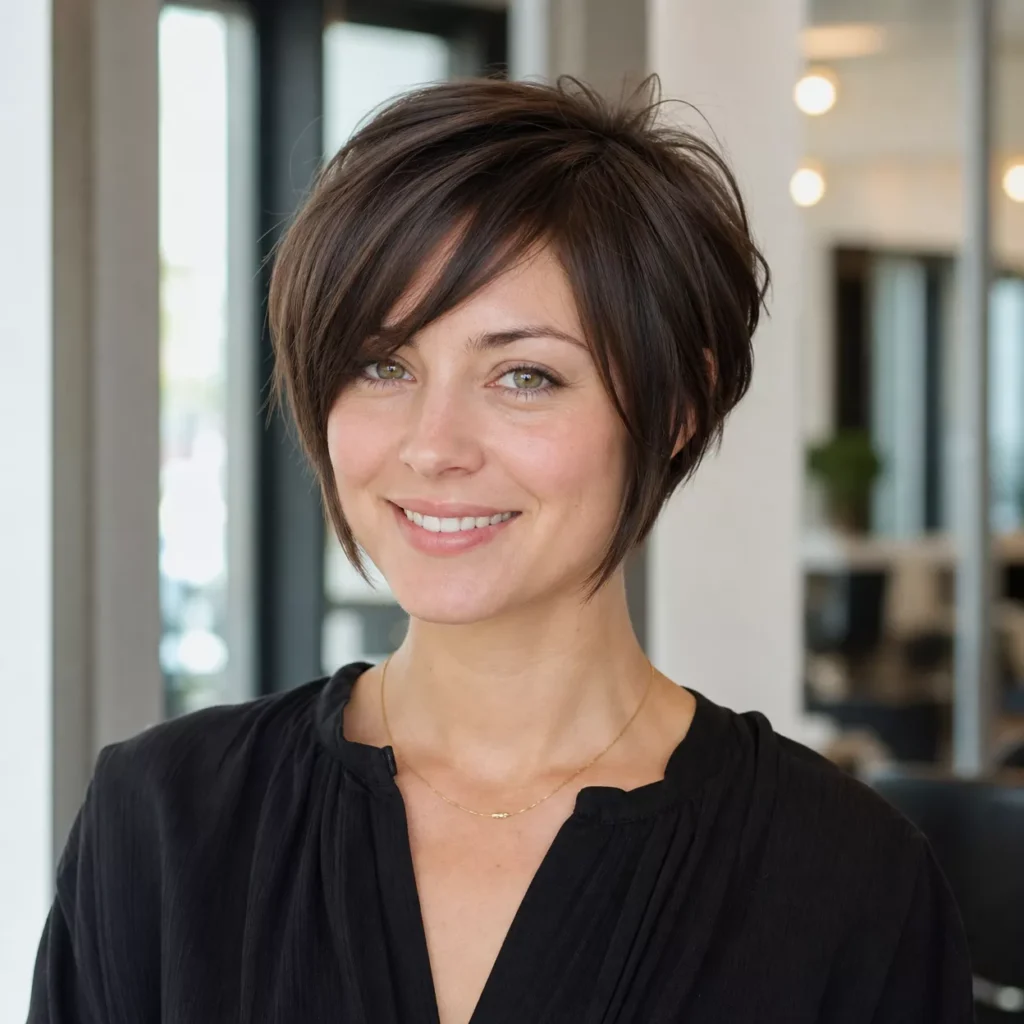
A bixie sits between a bob and a pixie. It keeps more length on top and around the front than a pixie, with a shorter back and sides than a bob. Those front pieces can be styled toward the chin or swept back, which gives it more flexibility than a full pixie. The transition between the short and long sections defines the cut, so it needs regular reshaping to keep that balance. Hairline and cowlicks matter, and on low-density hair, the top needs enough length to avoid showing scalp. Our guide to bixie haircuts covers more variations.
Romantic Soft Waves with Center Part
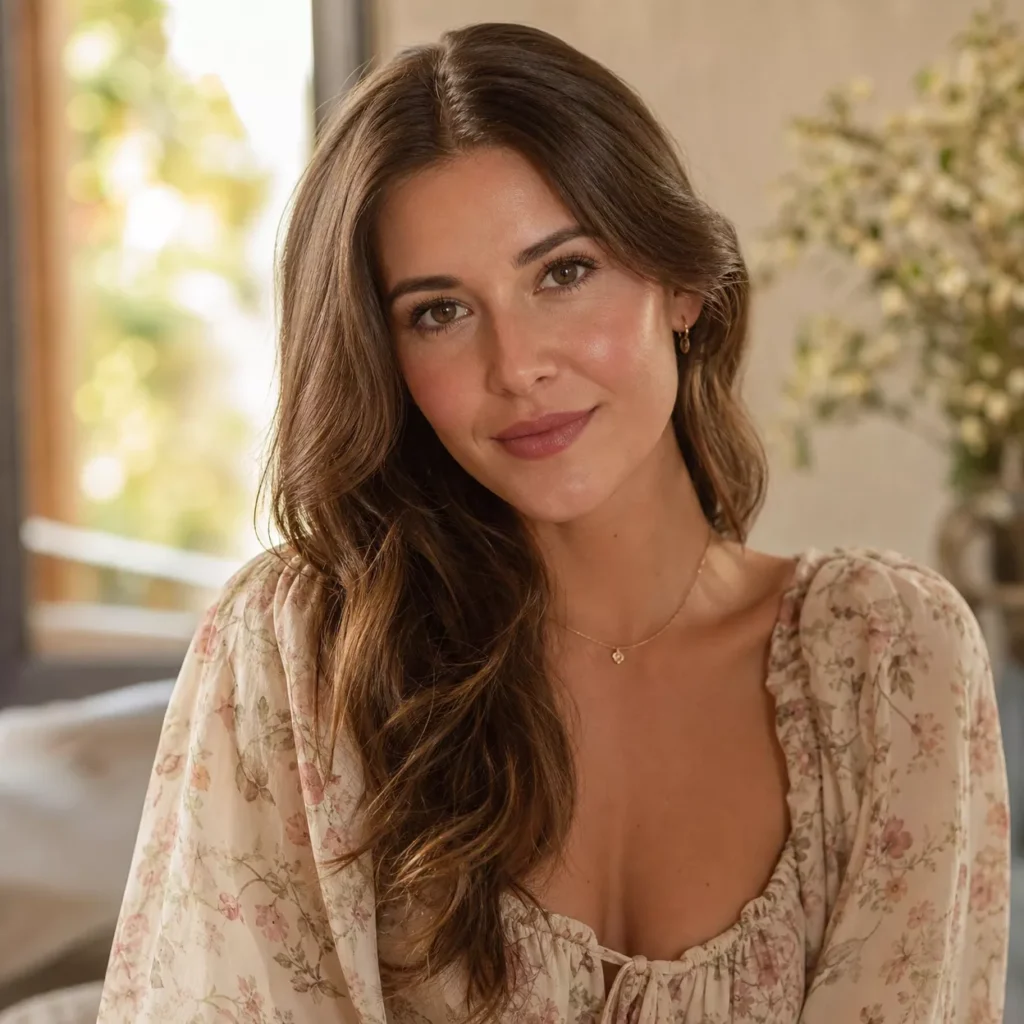
This one is about the wave pattern and the finish. Loose, rounded waves add width along the length, and a center part keeps the frame symmetrical. Natural waves form irregularly and may frizz in humidity; heat-created waves look more uniform but can drop over the day. Where the volume sits depends on where the waves start. Waves beginning mid-length concentrate fullness lower, while waves from the root add width higher up. Density decides how full the finished look appears.
Short Layered Bob
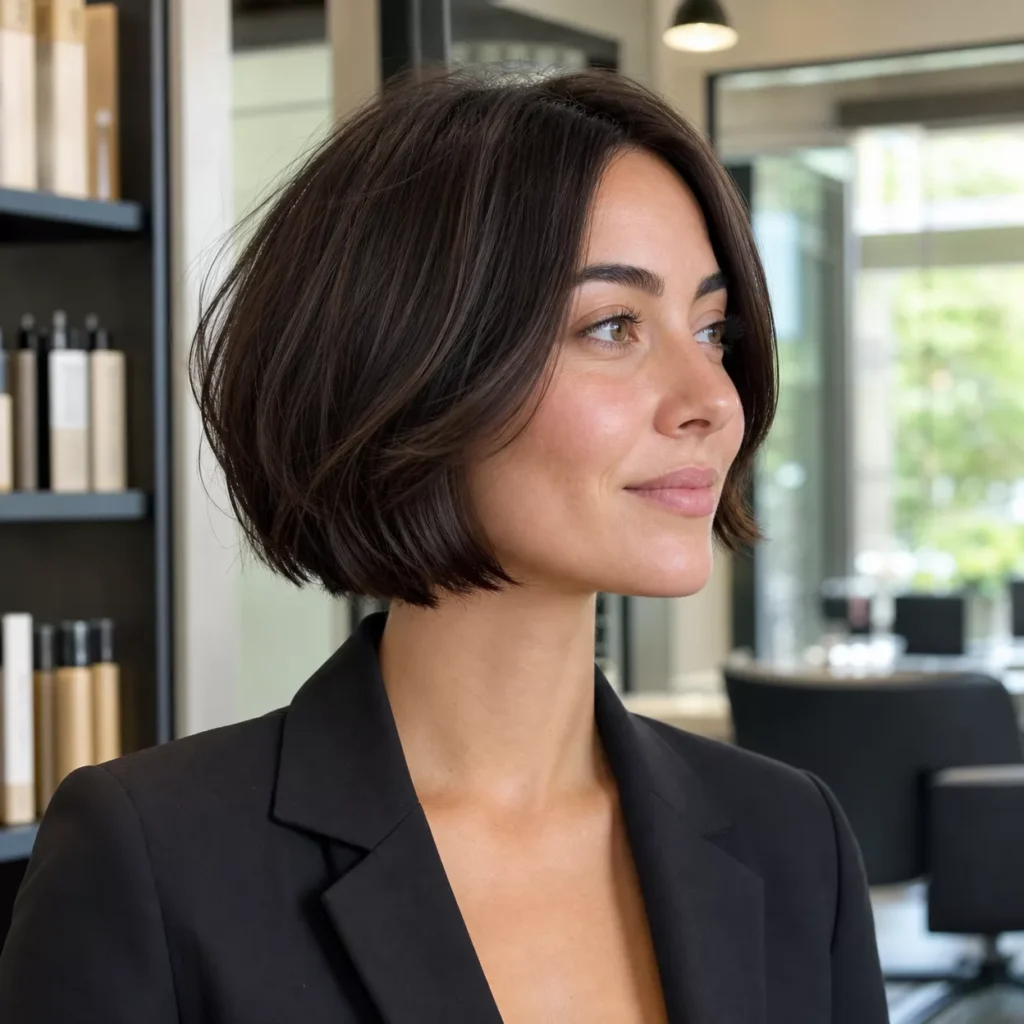
Small changes in length change a short layered bob noticeably. Ending at the jaw puts weight right at the lower face; ending just above the chin moves it slightly higher. Layers inside add movement and soften the outline. On dense hair, they stop the bob from looking bulky. On fine or low-density hair, fewer layers keep the ends fuller. Keeping the top smoother and letting the layers work lower concentrates movement toward the bottom of the cut.
Loose French Braid with Tendrils
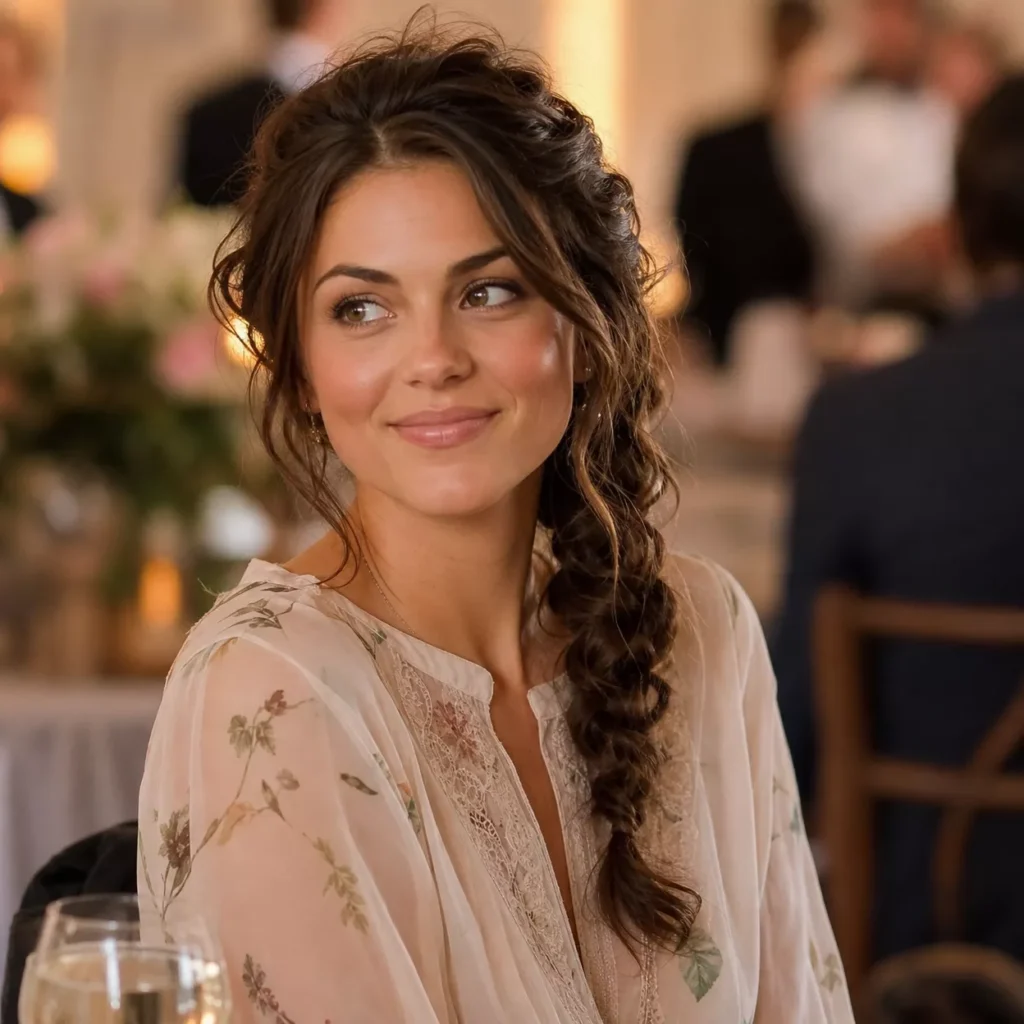
A French braid picks up hair as it travels down the head, so it needs enough length and some grip. Textured or second-day hair tends to hold better than freshly washed, slippery hair. Loose pieces at the temples and around the cheekbones soften the pulled-back shape, and where you leave them changes the frame. Dense hair makes a full braid; fine hair makes a slimmer one that can be loosened gently for width. It gets easier with practice, and a loose braid puts less strain on the hairline than a tight one.
Feathered Shag Bob
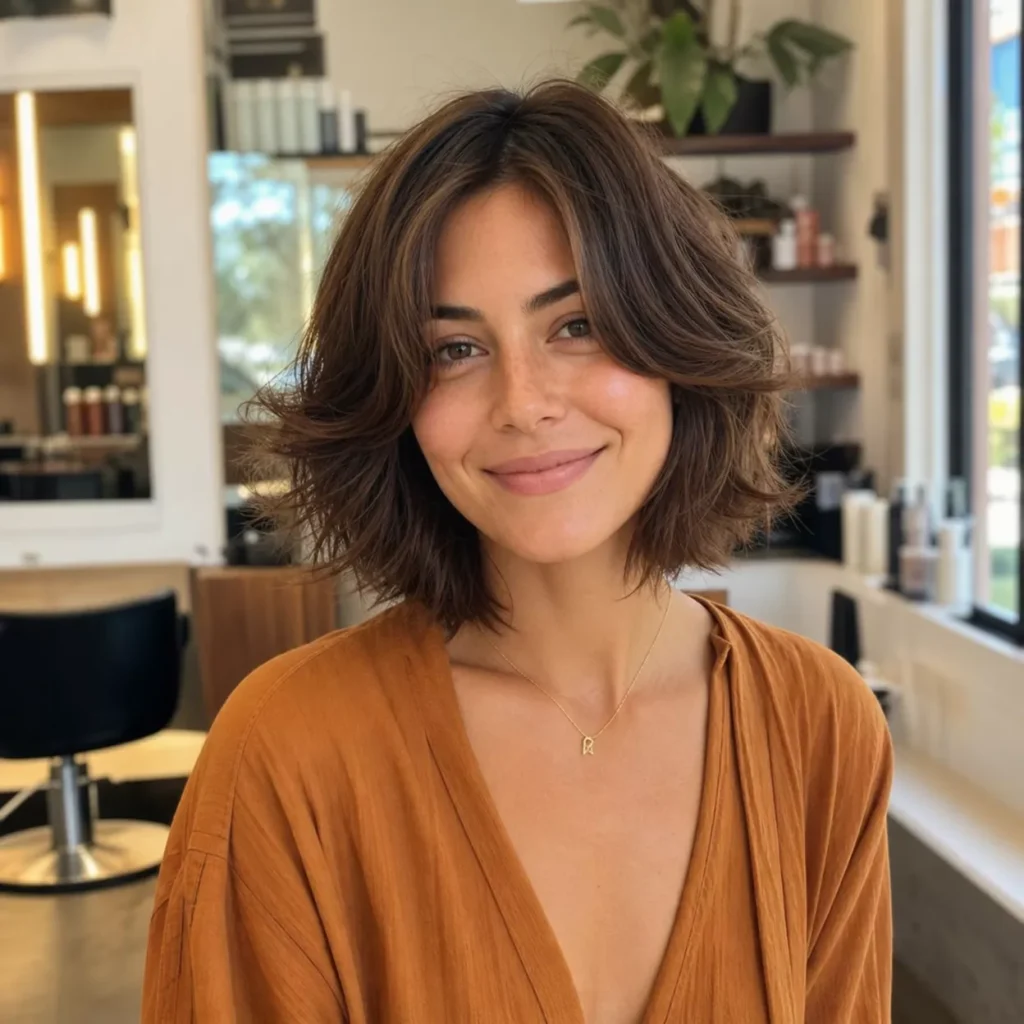
Three elements combine here: a bob perimeter, shag layering, and feathered ends. The perimeter sets the length, the shag layers add texture through the crown and sides, and the feathering sweeps the ends outward. Together, they create width around the jaw and chin. Dense hair may widen at the crown if the shag layers are short, while low-density hair may lose too much at the ends. As it grows, the feathering loses its direction and the shag softens, so reshaping keeps the shape intentional.
High Ponytail with Curtain Bang Pieces

A high ponytail pulls everything away from the face. Leaving curtain bang pieces out frames the forehead and softens the hairline. It’s a styling choice, and the pieces sit best when they follow your natural part. Height adds tension, particularly on long, heavy hair, so a slightly looser tie is easier on the hairline. Dense hair makes a full ponytail; low-density hair makes a slimmer one.
Sleek Straight Lob
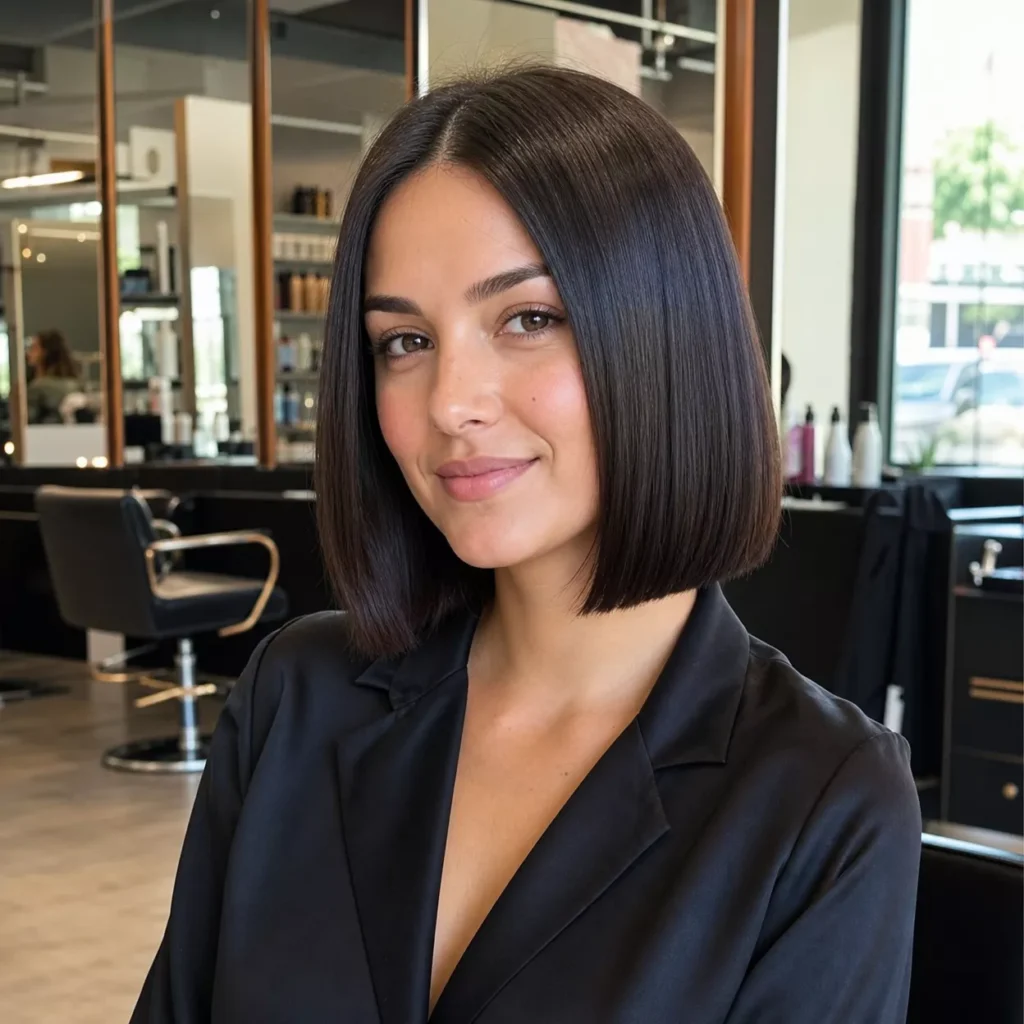
A sleek lob depends on a clean perimeter and smooth styling. The lob ends around the collarbone, creating a horizontal line low on the silhouette. On straight hair, the finish may need only brushing; wavy or curly hair usually needs heat or a smoothing product, and the sleekness comes mostly from that styling rather than the cut. The part changes the frame, with a center part reading symmetrical and a side part reading tilted. The perimeter shows growth clearly, so trims keep the line clean.
Collarbone Length Cut with Curtain Bangs

Collarbone length sits well below the cheekbones, so the weight of the cut falls lower in the silhouette. Curtain bangs add a frame at the forehead. Together, they add shape near the top and bottom of the face while the area in between stays smoother. At this length, hair can flip where it meets the shoulders, particularly straight hair, while wavy hair may form looser waves. The bangs need to suit your natural part and will need trimming before the rest of the cut.
Side-Swept Updo with Loose Bun
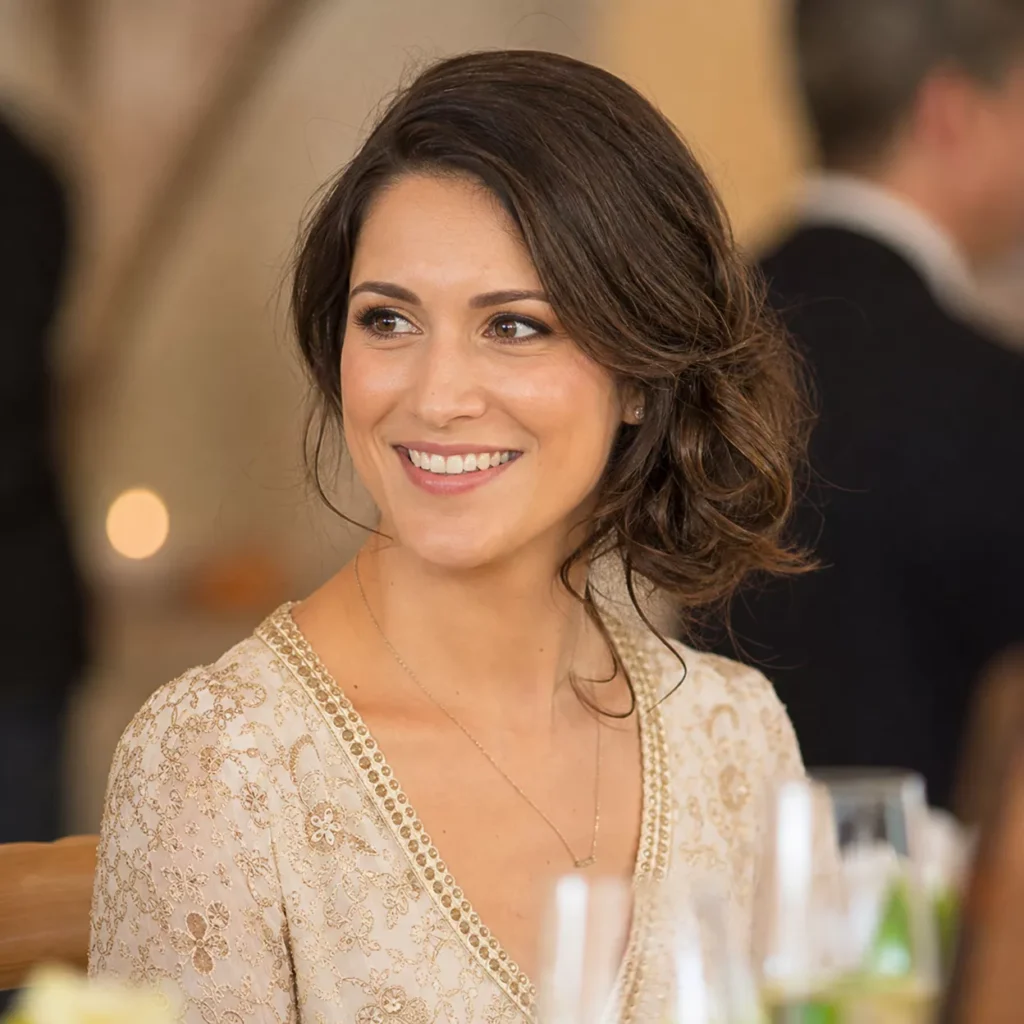
This is an occasion style. All the hair is swept to one side and gathered into a loose bun near the nape or behind the ear, creating an asymmetrical shape. A few loose pieces around the face keep it from looking severe. It needs enough length and grip. Fine or slippery hair may need texture spray and extra pins, while dense hair may need a sturdier hold. Keeping it loose rather than tight avoids pulling at the hairline.
Your Face Shape Is Only One Part of the Decision
Face shape gives you a general outline. Your hair decides how a haircut actually behaves within it.
Density determines how full layers, bangs, and perimeters look. Strand thickness affects whether hair lies flat or holds texture. Natural texture decides whether waves appear on their own or need styling. Your hairline and natural part control how fringe and side parts sit. And your styling habits decide whether a cut built around a blowout will ever look the way it does in a photo.
Maintenance matters too. A cut that suits your face shape but needs reshaping more often than you’ll book it won’t stay looking right for long.
Think About Where the Hair Adds Width
Every haircut creates visual weight somewhere. Fringe adds it at the forehead. Layers starting near the cheekbones add it at the widest point of the face. A perimeter ending at the chin or jaw adds it lower down. Crown volume moves it upward, and a full perimeter keeps it near the ends.
None of these is a rule. Small changes, like moving the first layer from the cheekbone to the jaw or ending a bob slightly lower, can change the silhouette noticeably. The useful question is where you’d like the eye to land, and which parts of the cut put weight there.
The Same Diamond Face Can Need a Very Different Haircut
Two people with similar facial structure can need very different cuts because their hair behaves differently.
Fine but dense hair can usually carry moderate layering and a fringe without looking sparse.
Low-density hair often looks fuller with stronger perimeters and fewer layers, and may need fringe taken from a smaller section.
Thick hair benefits from internal weight removal so cuts don’t expand outward.
Straight hair shows lines and layers clearly but may need styling to show movement.
Wavy hair often falls into layered shapes naturally, though uneven waves may need some help.
Curly and coily hair shrink and expand, so cuts need to be planned around the dry shape.
That’s why the same reference photo can produce very different results on two people with the same face shape.
Read the Hairstyle Photo Before You Save It
Before saving a reference photo, look at what it actually shows. Where does the first layer begin? How full or textured is the perimeter? How long is the fringe, and does it connect into the layers? Where is the part? How much crown volume is there? If you can find the back view, look at how the cut is shaped there.
Then check what might not carry over. Is the texture natural or heat-created? Is color making the layers look sharper? Could extensions be adding fullness? Is the lighting flattering the shine or softening the shape? Knowing what you actually like about a photo makes it far more useful.
Separate the Cut From the Finish
Most hairstyle photos combine several things at once: the haircut, a blowout or curling, color, and product. You might like the shape of the cut but not the waves, or the color but not the length.
Decide which part you want to reproduce. If it’s the cut, focus on layer placement, perimeter, and fringe. If it’s the finish, ask how much styling it would take on your hair. If it’s the color, treat it as a separate decision. Separating these elements is often the difference between a result that matches your expectations and one that doesn’t.
What to Tell Your Stylist
A few clear sentences make a reference photo much easier to translate:
“I’d like the face framing to begin around here.”
“I don’t want the layers to remove too much weight from my ends.”
“I like the shape, but I don’t want to style it every morning.”
“I like this fringe, but it needs to work with my natural part.”
“I like the color placement, but not necessarily this haircut.”
“I like the waves in this photo, but my hair is straight, so I’d like to know what it will look like without them.”
Final Thoughts
A diamond face gives you a distinctive starting structure, but it doesn’t decide the haircut on its own. The most successful result comes from adapting the cut to how your hair actually behaves, its density, texture, part, and hairline, and to how much styling and maintenance you’re willing to take on. Use the 25 ideas above to find the elements you like, then build the cut around your own hair.