23 Short Hairstyles for Heart-Shaped Faces and What Each Cut Changes
A heart-shaped face is usually described as wider through the forehead and cheekbones, narrowing to a smaller chin. Short hair shows that outline more clearly than long hair does, simply because less length falls around it. That’s why the details of a short cut matter so much: where the perimeter ends, how the crown relates to the sides, whether there’s a fringe, and where the layers sit all change what you see. Some people with heart-shaped faces want a soft fringe across the forehead. Others love a close pixie that shows everything. Natural texture adds another variable, since straight, wavy, and curly hair turn the same cut into different shapes. The 23 short hairstyles below explain what each one actually does, so you can choose the silhouette you like.
Chin-Length Bob for a Heart-Shaped Face

At chin length, the perimeter sits where a heart-shaped face is narrowest, so the finish of that edge matters. A blunt chin bob ends in a solid line with visible weight at the bottom. A softly layered one has lighter ends that move and curve. A slightly graduated version is a little shorter at the back, so the shape tips forward toward the chin. At the same length, these three look quite different. Straight hair shows the outline most clearly, while wavy hair lifts the ends above the chin. Ask where the edge will land once your hair is dry.
Pixie with Soft Crown for Heart Face

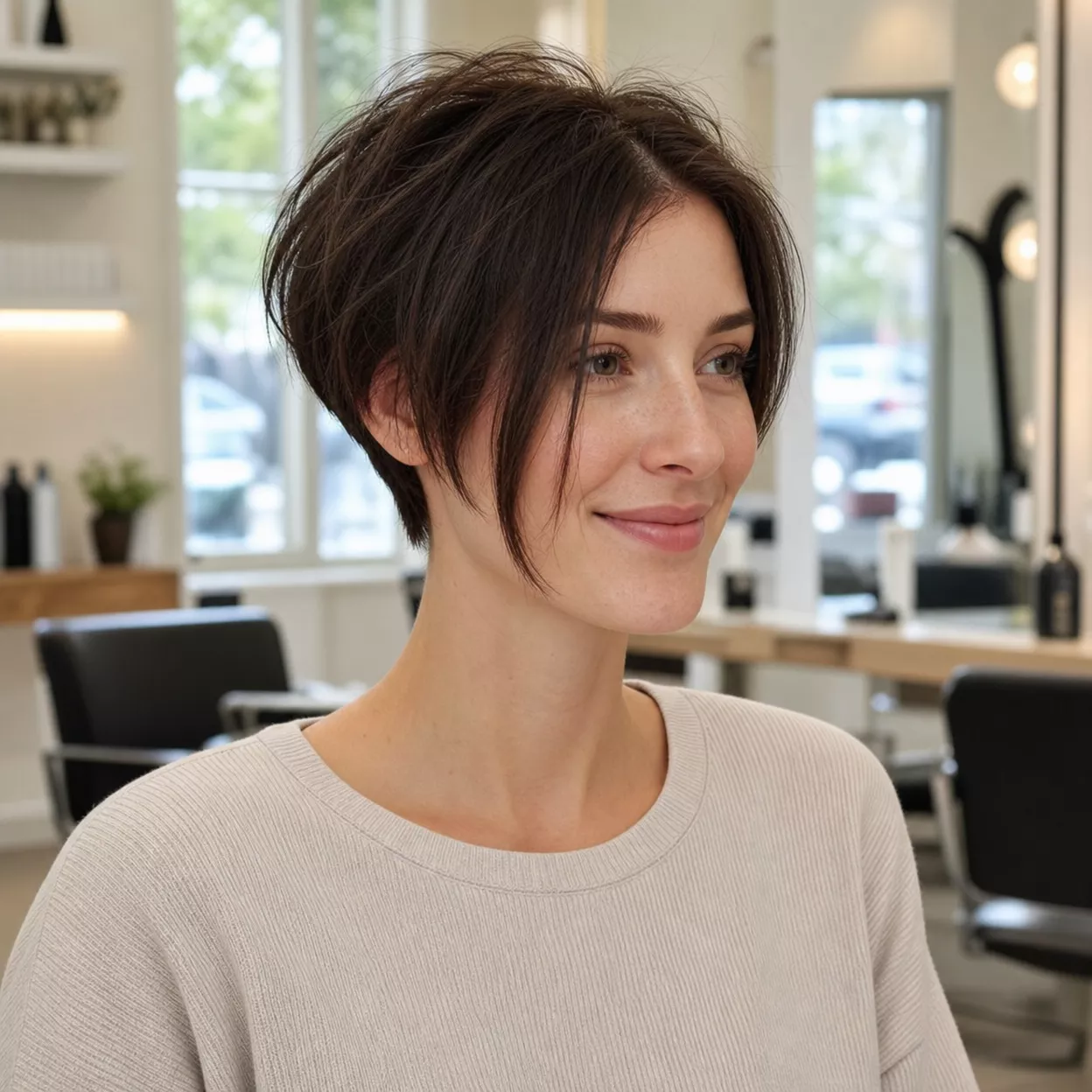
A pixie’s silhouette comes from the relationship between the crown and the sides. A close pixie keeps both short, so the head shape and hairline are fully visible. A soft-crown pixie leaves the top a little longer and lets it fall forward or to the side without lifting, which gives a rounder, gentler outline. Crown volume isn’t off-limits, though. A lifted, textured top creates a more vertical shape that some people prefer. Cowlicks at the crown decide how much choice you have, since some hair stands up regardless of the cut.
Bob with Volume at Jaw for Heart Face

Fullness through the lower outline of a bob can come from three places. The cut can include layers that start around the jaw, so the ends lift and separate. Natural wave can push the bottom outward. Styling, such as a round brush turning the ends out, can add the rest. Density decides how much is realistic. Dense hair may fill out with light layering, while fine or low-density hair often depends on styling and may lose the shape by the afternoon. Ask which bob structure suits your density before you commit to the look.
Side-Parted Short Cut for Heart Face

Moving the part to one side sends more hair across the top of the head, so one side sits fuller and the other lies closer. On a short cut, that shift is very visible and changes the direction of the whole shape. Depending on how long the top is, it can also cover part of the forehead on one side. How well a side part holds depends on your growth pattern. If your hair naturally parts near the center, a deep side part may need product or a blow-dry to stay put. Try it on damp hair before the cut.
Short Shag with Soft Layers for a Heart-Shaped Face

A short shag uses layers through the crown and sides to create movement and separation, often with a fringe at the front. Soft layers keep the steps between lengths gentle, so the shape looks textured without looking choppy. Texture changes the result a great deal. Naturally wavy hair lifts and separates in a shag with little effort, while straight hair may need a texturizing spray or a bend from a flat iron to show the layers. Fine or low-density hair can look sparse with too many layers, and dense hair often benefits from the weight they remove.
A-Line Bob for a Heart-Shaped Face

An A-line bob is shorter at the back and longer toward the front, so the perimeter slopes down toward the chin. A subtle angle, with the front only slightly longer, reads as a gently tilted bob. A pronounced A-line has a clear difference between the nape and the front, which makes the front pieces the focus of the cut. The back often includes some graduation to keep the shape neat. Straight hair shows the angle crisply, and waves soften it. The shorter back needs regular trims to keep the angle defined.
Textured Pixie for a Heart-Shaped Face

A smooth pixie lies flat in one direction. A textured pixie is cut so the pieces separate and look slightly undone. Point cutting and slide cutting break up the ends, and the top is usually left long enough to move. On straight hair, the texture often needs a little paste, wax, or spray to show; without it, the pieces may simply lie flat. Wavy hair shows the separation more easily. Fine hair can look sparse when heavily textured, so a lighter approach usually works better there.
Short Bob with Soft Waves for a Heart-Shaped Face

Soft waves change a short bob’s perimeter by lifting and softening the ends, so the outline looks less precise. Natural bends usually vary a little from section to section, which reads as relaxed. Waves made with a curling iron or wand look more uniform but have to be redone after washing. On a short bob, waves also shorten the overall length, since the bends pull the ends upward. If your waves come from a tool, think about how the bob looks straight, because that’s how it will look between styling sessions.
Curtain Bang Short Style for a Heart-Shaped Face

Curtain bangs part at the center and fall outward toward the cheekbones, framing the forehead without covering it completely. On short hair, they need to blend into the sides, so their longest pieces should meet the face-framing layers. The length of the shortest pieces decides how much forehead shows. Expect a little daily shaping, often a quick blow-dry with a round brush, plus trims to keep the fringe out of your eyes. A cowlick at the hairline can make them split unevenly.
Short Stacked Bob for a Heart-Shaped Face

Stacking means graduated layers at the back of a bob, cut so they build on top of each other and create a rounded, lifted shape at the nape and crown. The front is usually longer and smoother. That fullness sits at the back of the head, not around the face, so from the front the bob can look fairly sleek. The stacking can stay low near the nape or extend higher for more lift. Because graduation loses its shape quickly as it grows, a stacked bob needs regular trims.
Asymmetrical Short Bob for a Heart-Shaped Face

Asymmetry can be subtle, with one side slightly longer, or pronounced, with a clear difference between the two sides. A subtle version reads as natural movement. A strong one becomes the main design feature and draws attention to the longer side. The uneven perimeter needs careful cutting to look intentional, and it may need trimming more often, since the shorter side catches up as it grows. It’s easiest to style when the longer side matches your natural part.
Short Wavy Cut for a Heart-Shaped Face

The soft-wave bob earlier relies on a bob structure and often on styling. This cut is built around the waves you already have. A stylist working with natural waves may remove weight where the waves tend to collapse and leave length where they spring up, so the pattern forms more evenly. The outline is looser and usually less defined than a bob. Air-drying with a little product often gives the intended shape. The trade-off is control: waves change with humidity and handling, so the shape may vary from day to day.
Blunt Bob at Chin for a Heart-Shaped Face

The blunt chin bob has a clean, solid perimeter with no layers at the ends, so the weight sits right at the bottom. The earlier chin-length bob can be blunt, layered, or graduated. This version commits to the solid line. That makes the outline crisp and dense-looking, especially on straight hair. On dense or coarse hair, a fully blunt edge can feel heavy and may need some internal weight removed while the perimeter stays intact. Growth shows quickly, so regular trims keep the line sharp.
Short Layered Cut with Jaw Fullness for a Heart-Shaped Face

In this cut, layers are placed in the lower sections, around the jaw and nape, so the hair carries its movement there instead of at the crown. Where the layers start decides how full the lower outline looks. Starting at the cheekbone lifts more of the hair, while starting at the jaw keeps the effect lower. It’s one option among many. Some people prefer the reverse, with height at the crown and a close nape. Dense hair suits this lower layering well, while fine hair may need fewer layers to avoid thin ends.
Wispy Fringe Short Style for a Heart-Shaped Face

A wispy fringe uses a small amount of hair, cut with separated, lightly tapered ends, so the forehead shows through. It differs from a full fringe, which covers the forehead solidly, and from curtain bangs, which part and open. Lighter doesn’t mean low maintenance. A wispy fringe still needs trimming to stay out of your eyes and may need a quick blow-dry each morning. On fine or low-density hair, it can separate and look patchy. Ask how much hair will go into it.
Short Curly Style for a Heart-Shaped Face

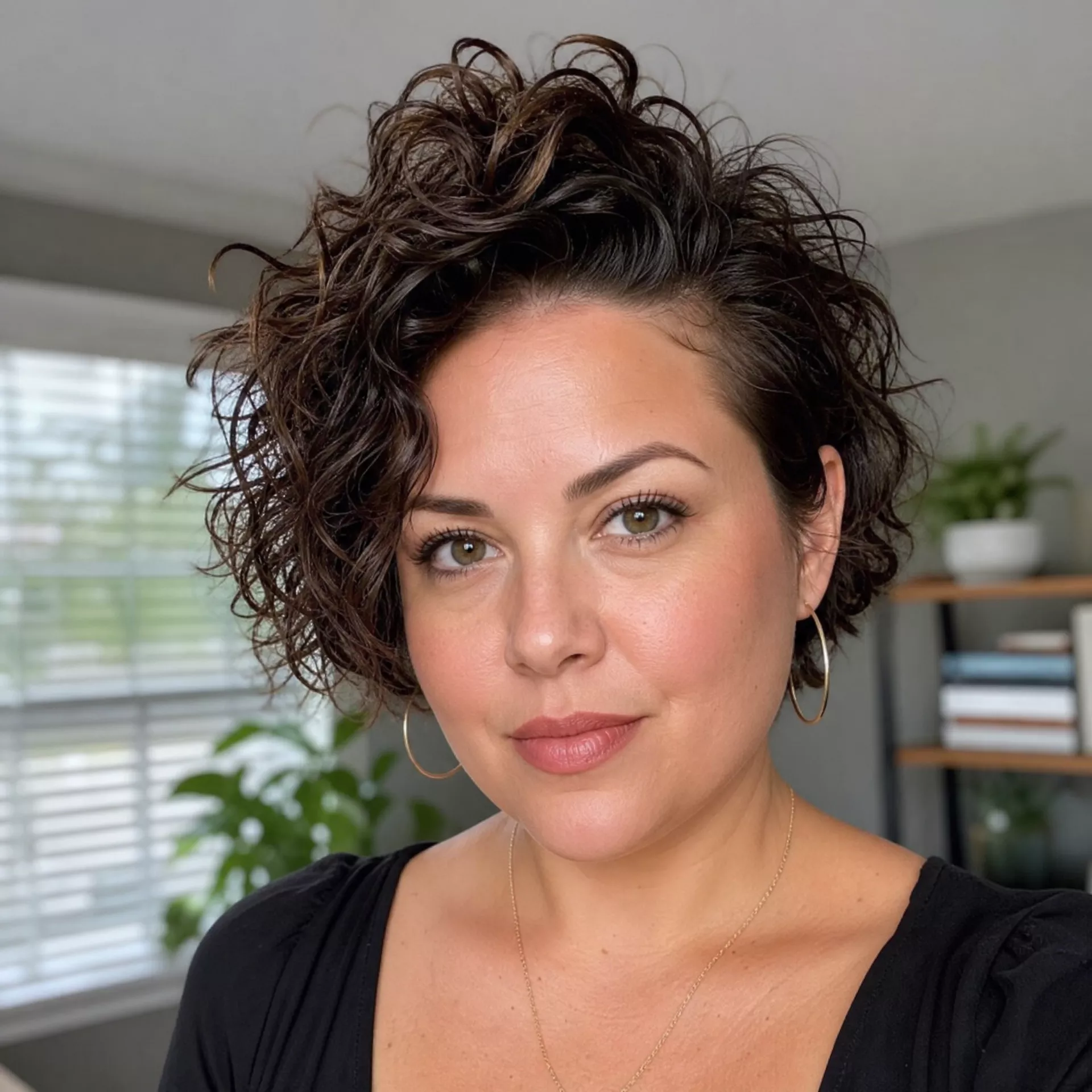
Curls shrink as they dry, so a short cut that looks chin length when stretched may sit noticeably shorter once the curls form. The shape depends on curl pattern and density. Looser curls hang more, while tight curls form a rounder, fuller outline. Where the volume sits depends on how the cut is layered. Some stylists shape curls so they stack evenly all over, while others leave more length underneath. Judge the shape on your dry, natural curls, not on a straightened reference photo, and ask how the cut will look air-dried.
Nape-Length Bob for a Heart-Shaped Face

A nape-length bob is shorter at the back than a chin-length bob, often ending at or just above the nape, which makes the overall shape compact. The front can stay longer, falling toward the chin, so the cut combines a short back with face-framing length in front. The relationship between the two decides the look. A big difference creates a strong angle, while a small one keeps the cut closer to a classic short bob. The short back needs frequent trims to hold its shape.
Short Gray Style for a Heart-Shaped Face

With gray hair, the cut and the texture shape the look most. Gray strands can be fine, coarse, wiry, or silky, sometimes all on one head, so the cut should respond to how yours behave. A short style shows natural gray clearly, which some people enjoy. Others color or blend their gray, and a short cut works equally well either way. Short hair also speeds up growing out color, since older colored ends are cut away sooner. Ask your stylist how your gray texture is likely to affect the shape.
Layered Pixie Bob for a Heart-Shaped Face

A pixie bob sits between a pixie and a bob. It’s short at the back and sides like a pixie, with longer front and side pieces that reach toward the jaw like a bob. Layers blend the two lengths so the cut moves instead of stepping abruptly from short to long. The front length decides how bob-like it looks. Longer pieces frame the face, while shorter ones keep it closer to a pixie. It grows out gradually into a bob, which many people find easier than growing out a close pixie.
Short Wolf Cut for a Heart-Shaped Face

A short wolf cut stacks shaggy layers through the crown and sides, often with a fringe, to create a textured, slightly wild outline. It’s choppier and more dramatic than the soft short shag earlier in this list, and it asks more of your styling. On straight hair, the layers usually need texture spray or paste to show, while wavy hair brings them out easily. Density matters too. On fine or low-density hair, heavy layering can look sparse. The cut changes quickly as it grows, so regular trims keep the shape.
Short Bob with Outward Flip for a Heart-Shaped Face

An outward flip turns the ends of a short bob away from the face. It differs from a natural bend, where hair curves on its own, and from a soft flick at the very tips. The flip is usually made with a round brush, a flat iron, or rollers, and it needs redoing after washing. Straight, smooth hair may release it within a few hours, while hair that bends naturally holds it longer. A slightly tapered perimeter also turns outward more readily than a heavy blunt one.
Side-Swept Fringe Short Cut for a Heart-Shaped Face

A side-swept fringe runs diagonally across the forehead from a side part. Where it starts and how long it is decide how much forehead it covers. A fringe that begins near the part and ends at the cheekbone covers part of the brow, while a longer one blends into the side of the cut. Natural parting and cowlicks affect how it sits, and a fringe cut against your growth direction may spring back. It’s also flexible, since a longer sweep can be tucked aside on days you want it out of the way.
Putting Together Your Complete Short Style for a Heart-Shaped Face

No single short cut suits every heart-shaped face, so the last step is combining the choices above. Start with length: pixie, nape-length, chin-length, or just below. Then decide on fringe, from none to curtain, wispy, side-swept, or full. Choose where you want the movement, whether at the crown, around the jaw, or spread evenly. Finally, factor in your texture and how much styling you’ll realistically do. One combination might be a chin-length bob with curtain bangs, and another a close textured pixie with no fringe. Both are valid choices.
Pixie, Short Bob, or Chin-Length Bob?
A pixie shows the hairline, cheekbones, and jaw clearly and needs regular trims, but it dries in minutes. A short bob, whether nape-length or stacked, keeps some length around the face while staying compact. A chin-length bob gives the most framing and the most styling options, including tucking it behind your ears, though its line shows growth quickly. If you’re unsure, a pixie bob or chin-length bob is easier to take shorter later than a pixie is to grow out.
How Texture Changes a Short Cut
Straight hair shows exactly what was cut, including every line and layer. Wavy hair softens lines and lifts the ends. Curly hair shrinks and expands, so a short cut may finish much shorter than it was cut. Fine hair can look sparse with heavy layering or texturizing, while dense hair may feel bulky unless some weight is removed. In a short cut, where the volume ends up sitting depends as much on your texture as on the cut itself.
Showing Your Stylist the Right Photo
Choose reference photos where the hair texture looks similar to yours, and look for ones that show the back and side as well as the front. Point out the perimeter, the length of the front pieces, any graduation at the back, and the fringe. Then ask whether the finish in the photo depends on styling and how the shape will look when you air-dry it.
Final Thoughts
Short hair shows the shape of your face more clearly, which is part of its appeal. The cut you’ll enjoy depends on the outline you like, how much fringe you want, your texture, and how much styling you’re willing to do, not on a fixed rule about heart-shaped faces. Pick out the details you like, find a photo with hair similar to yours, and talk it through with your stylist.