25 Curly Bob Hairstyles for Round Faces That Really Work
A curly bob and a round face can work well together, but the result depends on where the volume ends up. Curls add width by nature. Many stylists aim to keep a round face looking longer by building height at the crown, keeping the sides from puffing out and letting some length fall below the jaw. Treat that as a common guideline, not a rule. Plenty of people with round faces wear wide, full curls and love them.
Everything below builds on that one idea, so it will not be repeated under every style. Instead, each entry looks at a different variable: curl pattern, shrinkage, density, length, side expansion, bangs, styling time, color or grow-out. The right pick depends less on face shape than on how your curls behave once they are cut and dry.
Crown Volume Curly Bob for Round Face
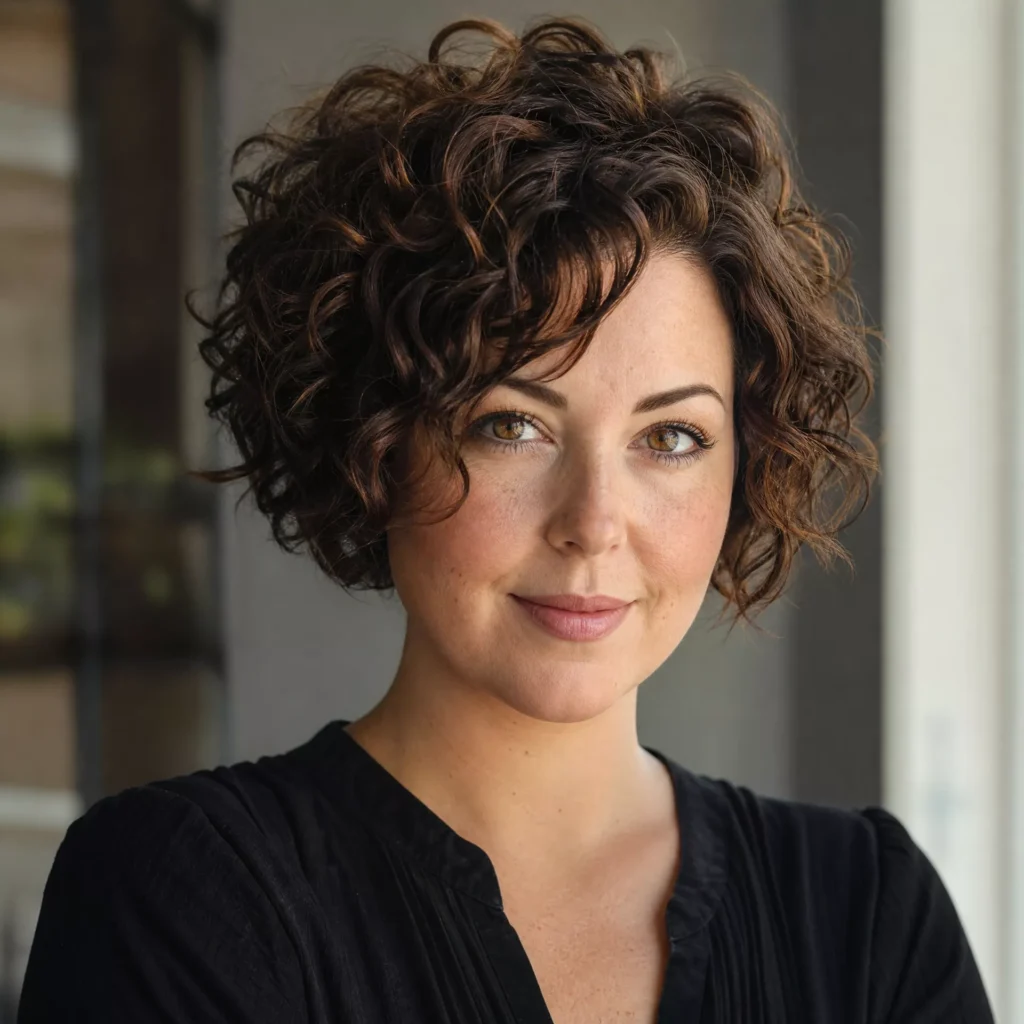
Layer placement decides this cut. Shorter layers at the top let curls spring upward instead of hanging, but they need enough density to fill in. With thick hair that is easy. With fine or low-density curls, keep the layers few and ask that they stay above the crown line so the sides keep their weight.
Side-Parted Curly Bob for Round Face

Part your hair when it is dry, not soaking wet. Curls fall differently once they dry, and a wet part often does not survive. A deeper side part moves volume to one side and breaks up a symmetrical outline. Curly hair does tend to follow its own parting, so if yours keeps moving, ask your stylist to cut with the part it prefers.
Curly Bob with Curtain Bangs for Round Face

Curly bangs shrink more than the rest of the hair. Bangs that hang to the cheekbones when wet can spring up to the brow once dry, so they are best cut dry and left longer than you think you want. You can always shorten them, but you cannot add length back.
Bangs also borrow hair from the front of your head, so density around the temples matters. Plan on reshaping every few weeks.
Try saying: “Please cut the bangs dry and leave them longer, so I can see how much they spring up.”
Elongated Curly Bob for Round Face
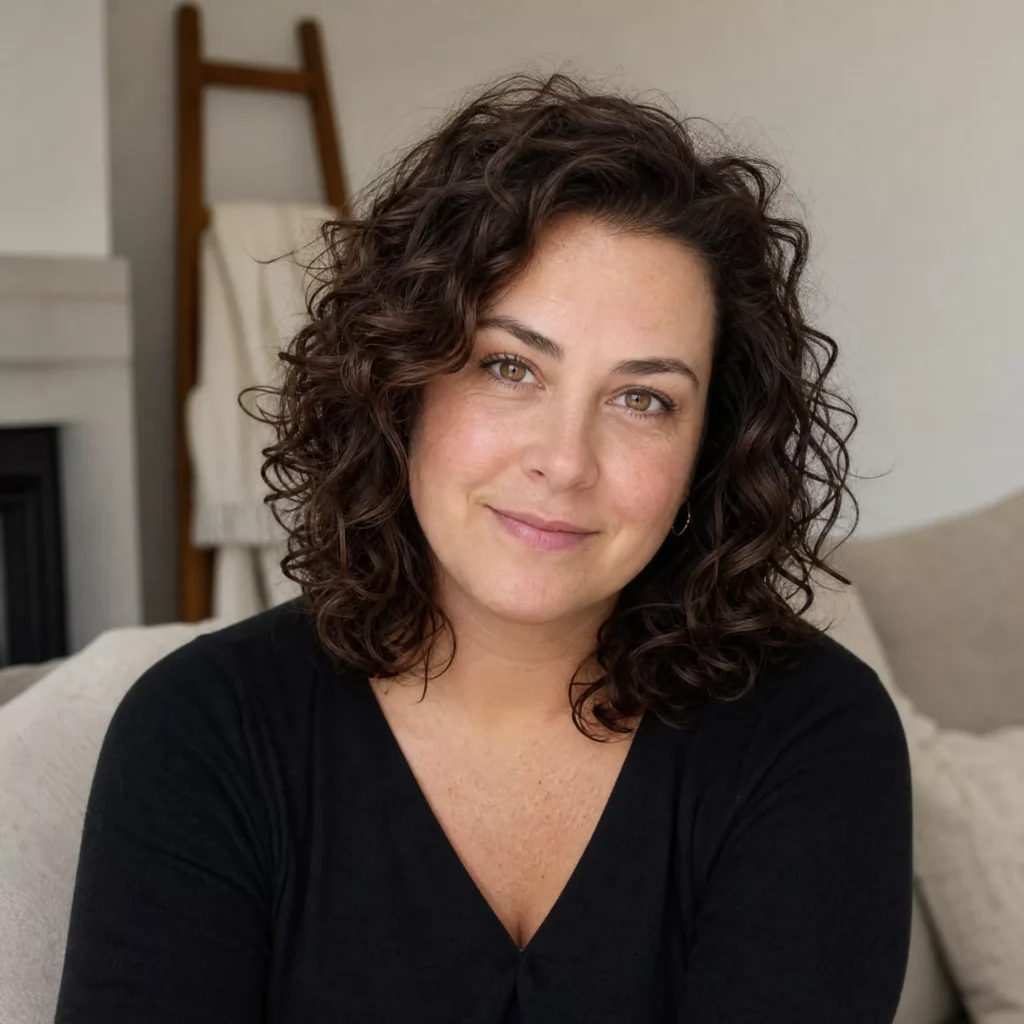
The main tool here is length and how you plan for shrinkage. Because curls dry shorter than they hang, a cut that lands at the collarbone dry may need to be cut closer to the shoulders wet. Very long weight can also pull curls looser and flatter at the top, so crown layers are still worth discussing.
Defined Curl Bob for Round Face
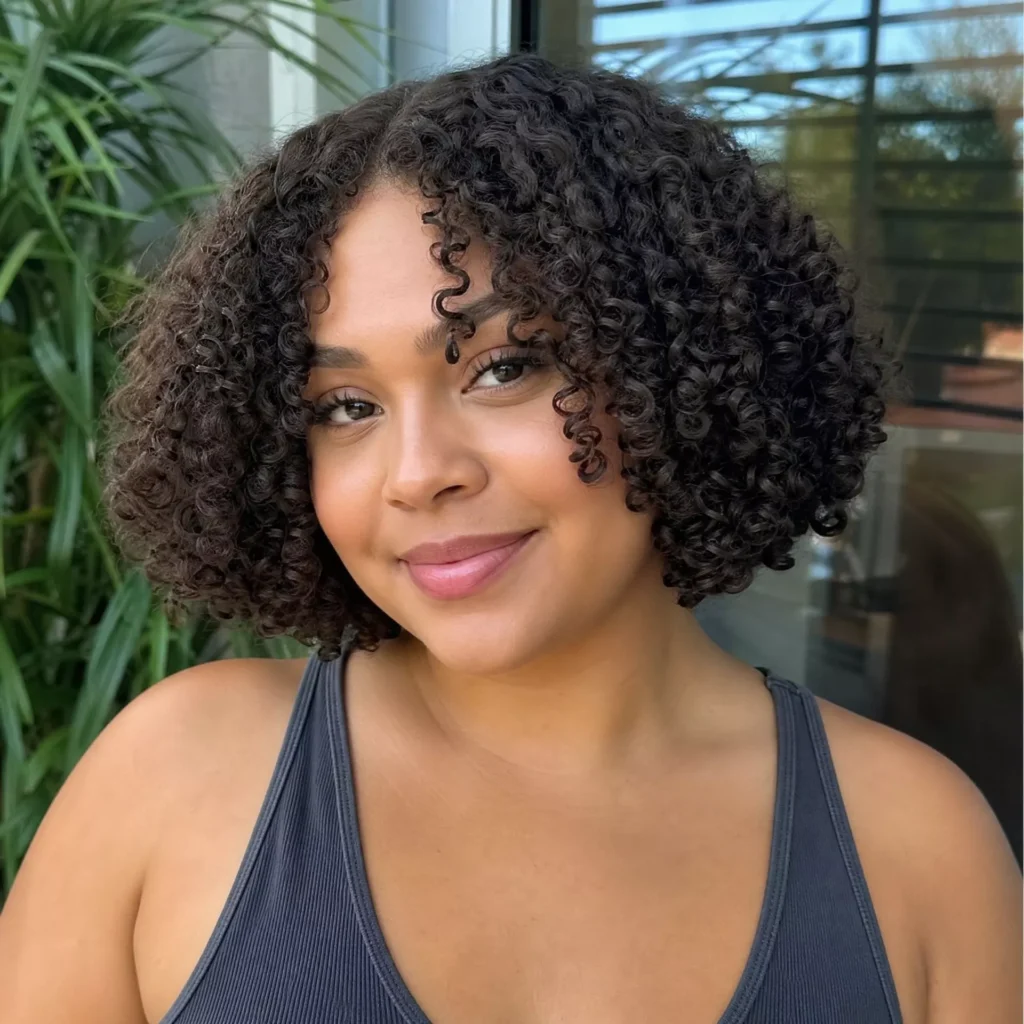
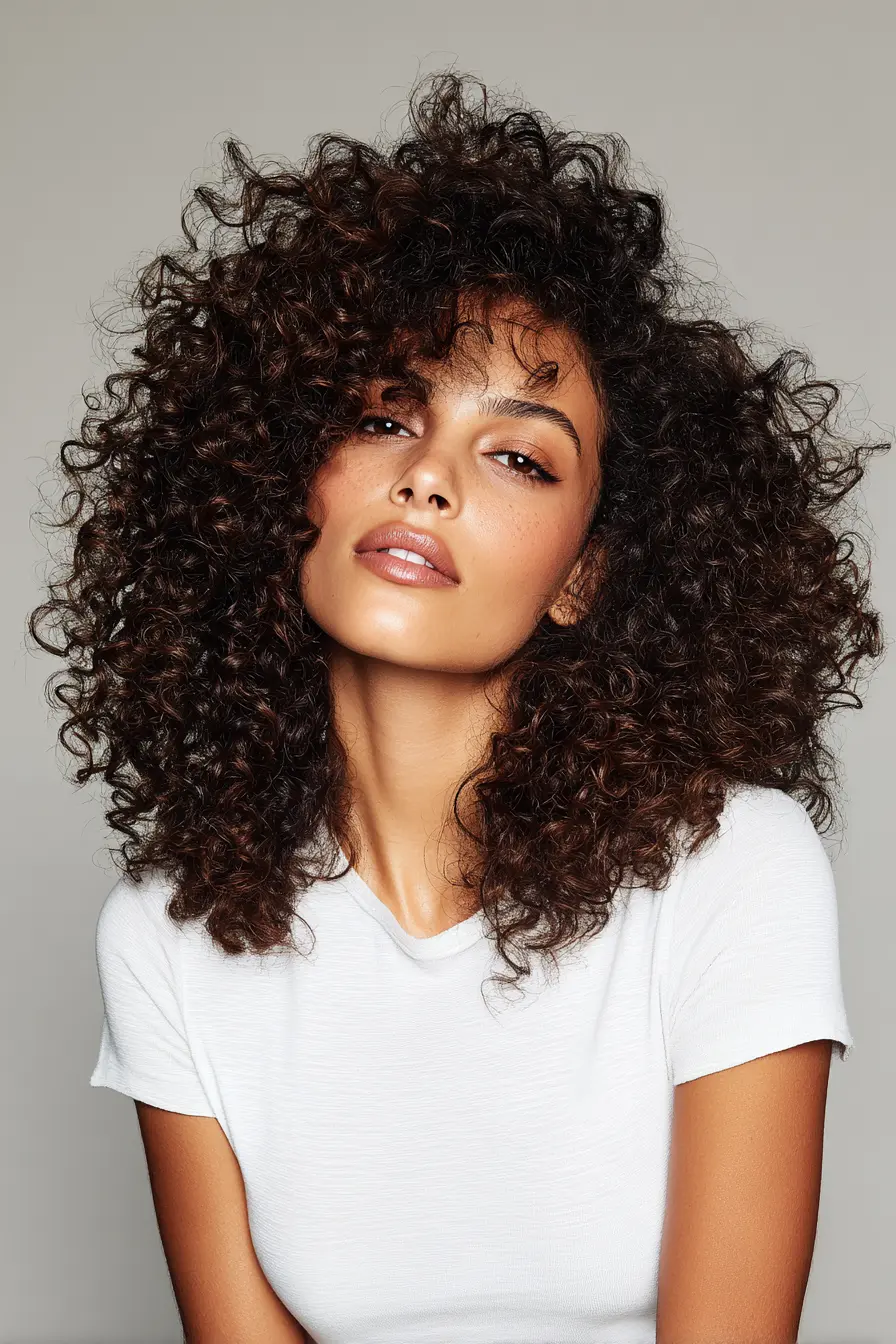
Definition comes more from routine than from the cut. Curls that clump into separate ringlets take up less visual space than the same hair when it is frizzy. That usually means styling on wet hair, working in a cream or gel, scrunching, and leaving it alone until it is fully dry.
The trade-off is weight. Heavy product can pull fine curls flat at the roots, so lighter formulas such as mousse suit lower density.
Tapered Curly Bob for Round Face
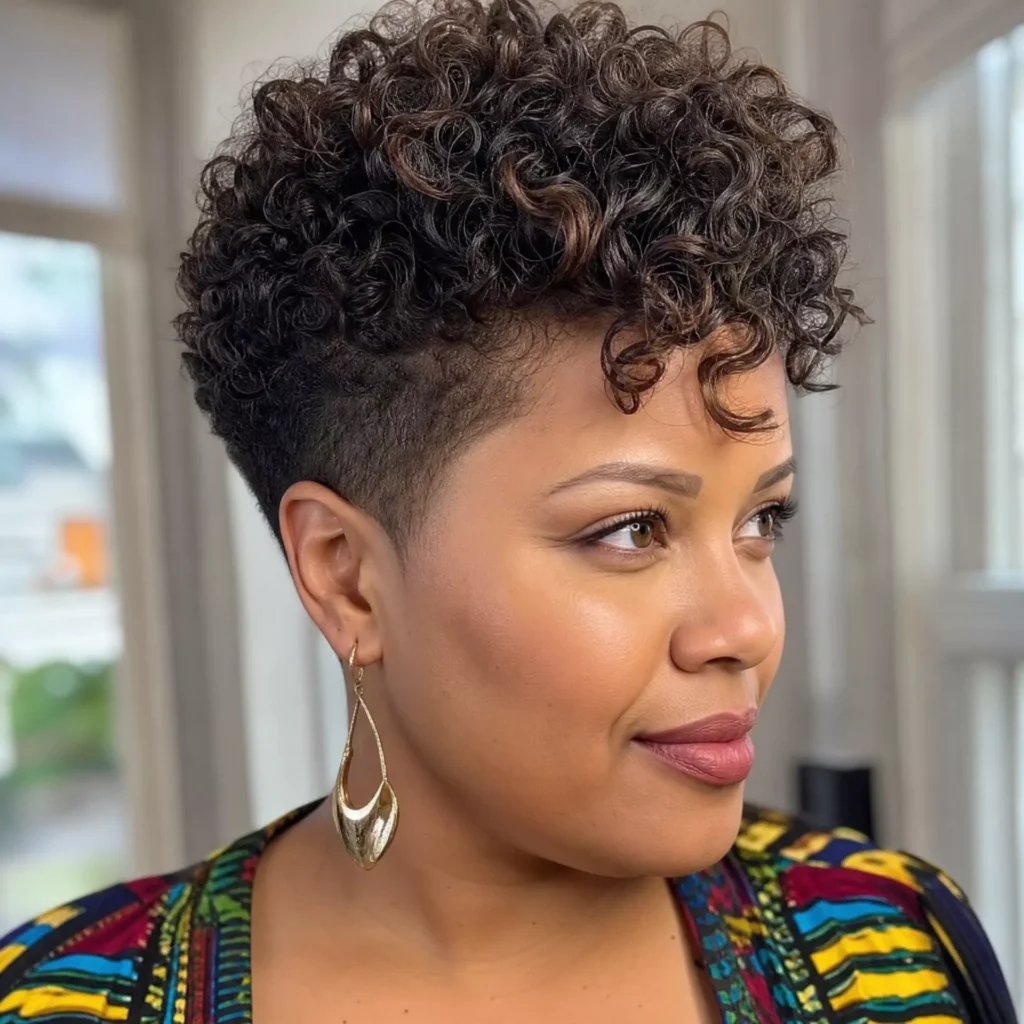
A taper cuts the sides and back shorter and closer while the top stays longer. It attacks side width directly, which is why it suits thick hair that expands outward.
Two things to know. Tapered areas can grow out fuzzy, so plan on shaping roughly every 6 to 8 weeks. And on fine hair the closer sides can look sparse, so ask how short the stylist plans to go.
Curly Bob with Face-Framing Layers for Round Face

Where the front pieces end matters as much as whether they exist. Shorter curls around the cheeks tend to spring tighter, and if they finish at the widest part of the face they can emphasize width. Pieces that end near or below the jaw usually do the opposite.
Ask your stylist where the shortest front curl will land once it dries.
High Crown Curly Bob for Round Face
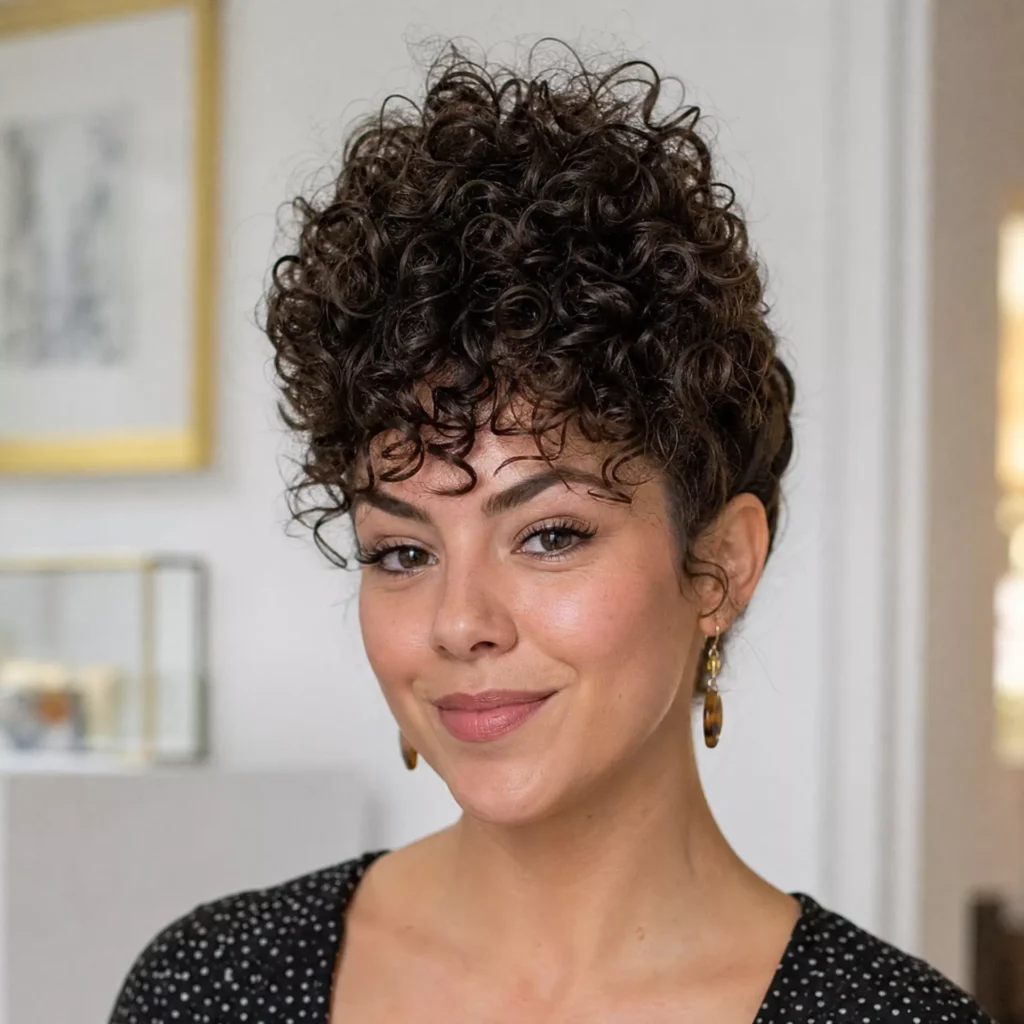
This is mostly a styling choice, not a cut. Many people build height by diffusing with their head tilted to the side or upside down so the roots lift, then lifting the crown with fingers or a pick once the hair is nearly dry.
Expect the lift to relax by the end of the day, especially in humid weather. A quick root refresh helps.
Curly Bob with Low Sides for Round Face
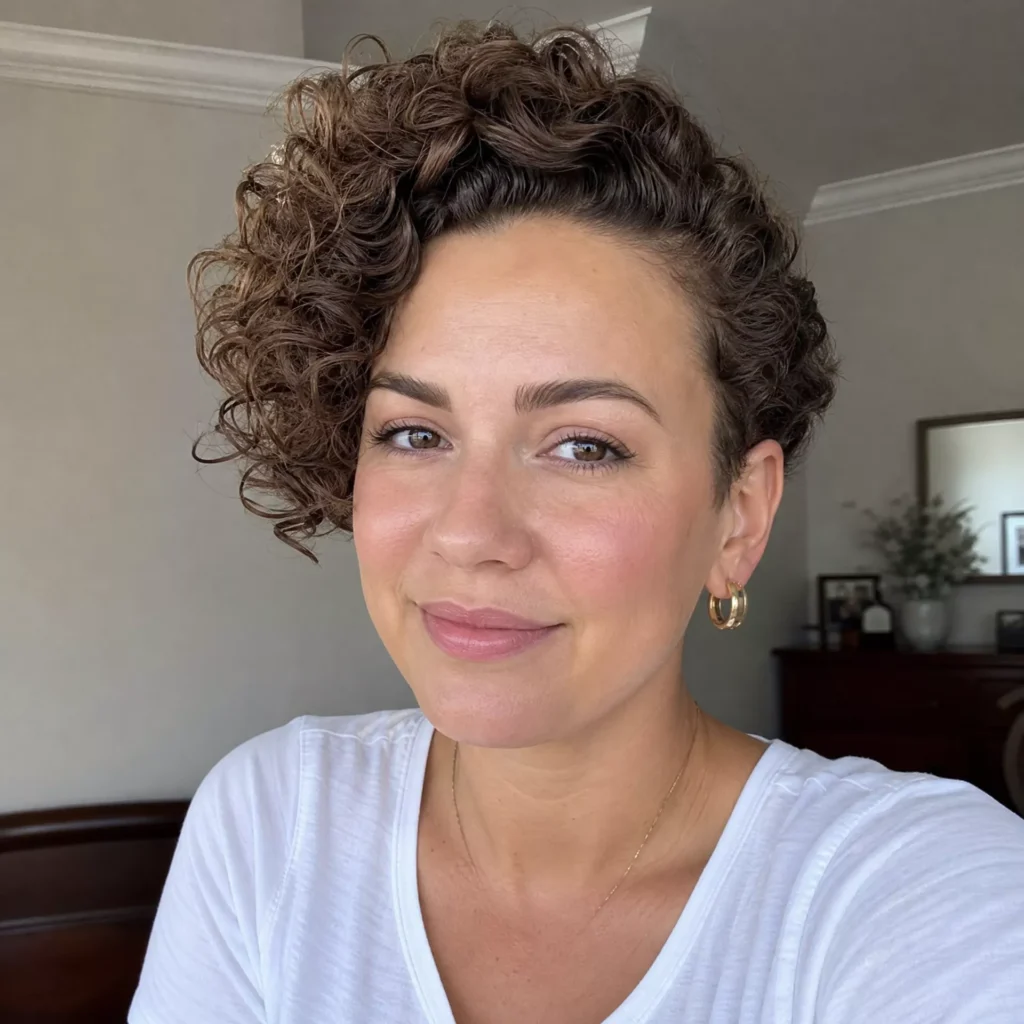
Keeping the sides lower is about how weight is removed. Ask for bulk to be taken out internally rather than with thinning shears, which can cause frizz on some curl types. Combined with some lift on top, this creates a narrower-looking outline from the front.
On very fine hair, check that the sides do not end up looking thin.
Natural Curly Bob for Round Face
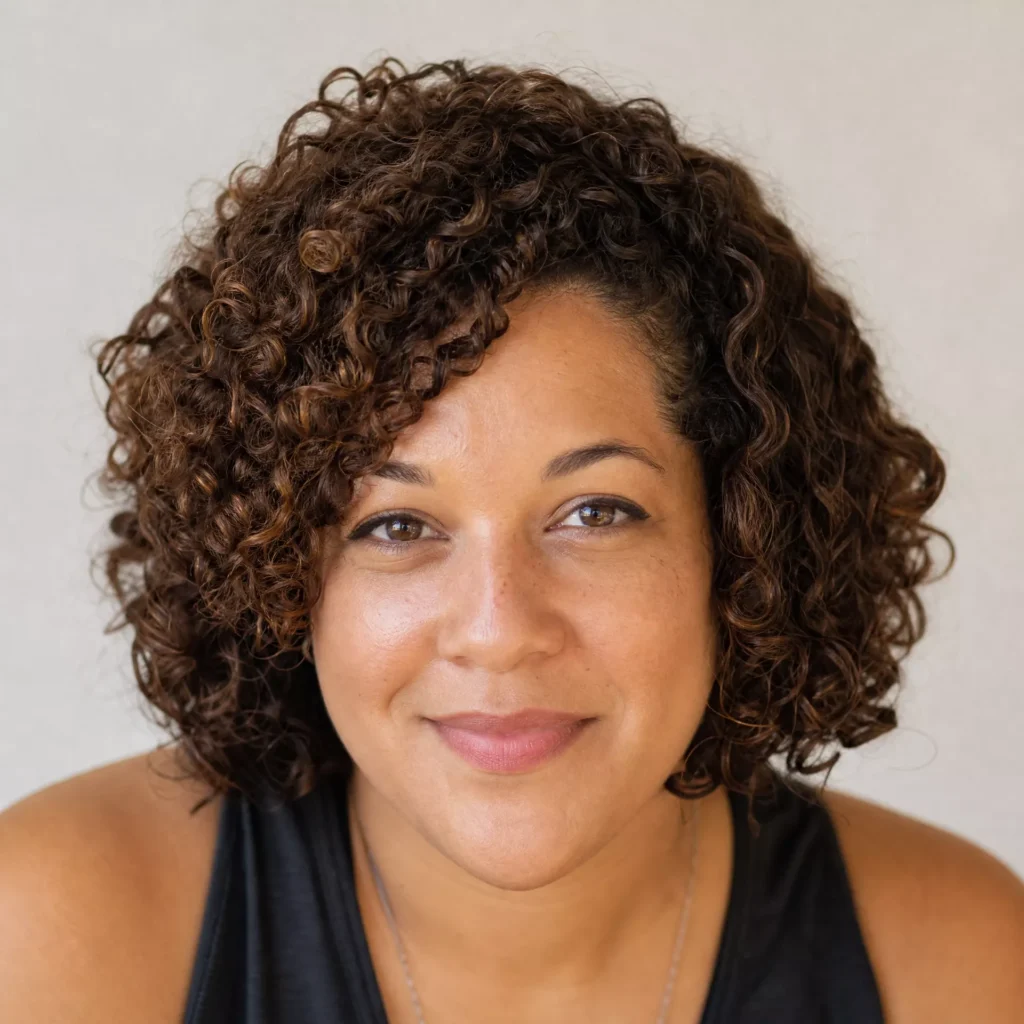
If you plan to wear your curls as they come, start with an honest test. Let your hair air-dry without heat for a day and see where it expands. Some people spring upward at the crown. Others widen at the sides.
Then ask for the cut to be shaped around that pattern. Cutting it dry helps the stylist see what your curls actually do.
PRO TIP: For a curly bob on a round face, diffuse the hair while tilting the head to the side rather than forward. Tilting to the side builds height and volume on the top section of the head where round faces need it most, rather than building volume evenly all around. This technique creates a noticeably taller, more elongated silhouette specifically through the crown and top.
Curly Bob with Side Sweep for Round Face
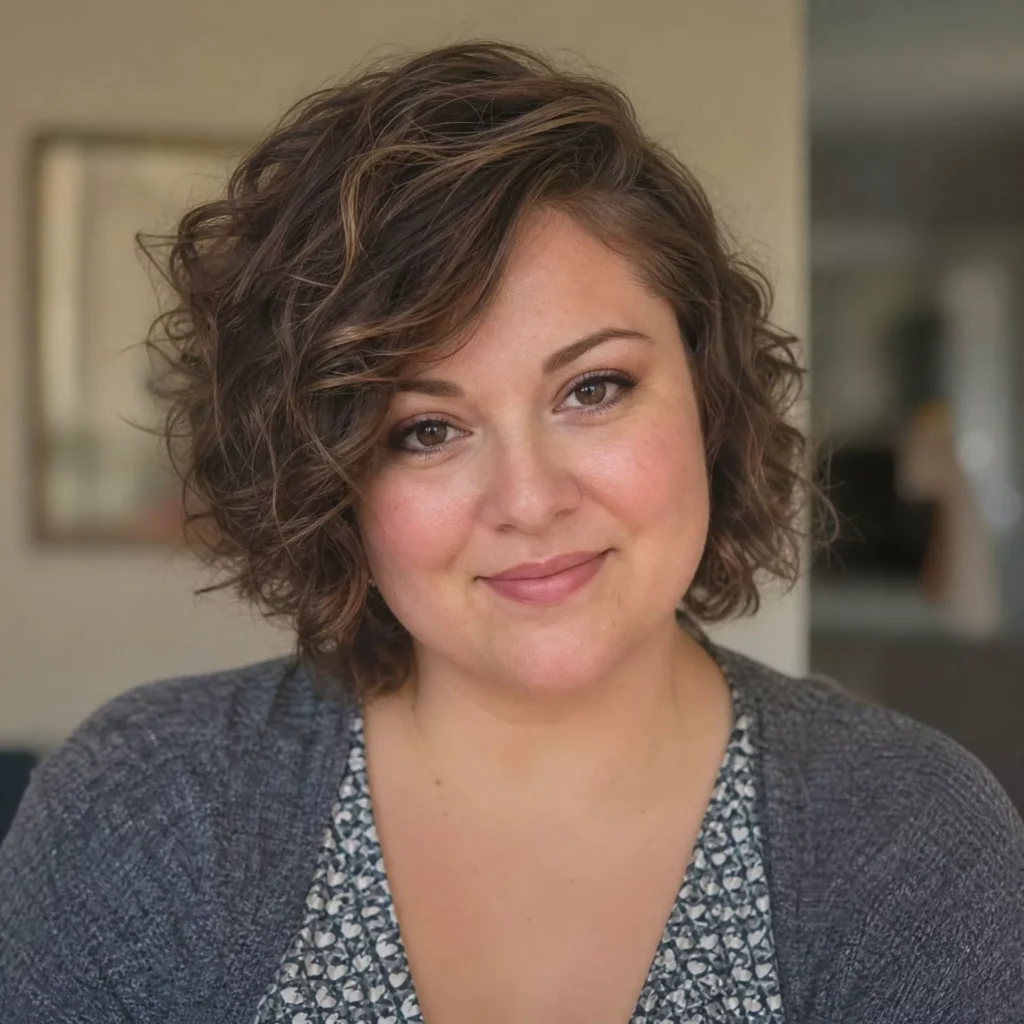
A diagonal sweep across the forehead breaks up a symmetrical outline without adding width. It works best when your curls are loose enough to move. Tight curls tend to hold their position and will not sweep, so the shape has to be cut in.
It also grows out gracefully, turning into face-framing pieces rather than an awkward stage.
Tight Curl Bob for Round Face
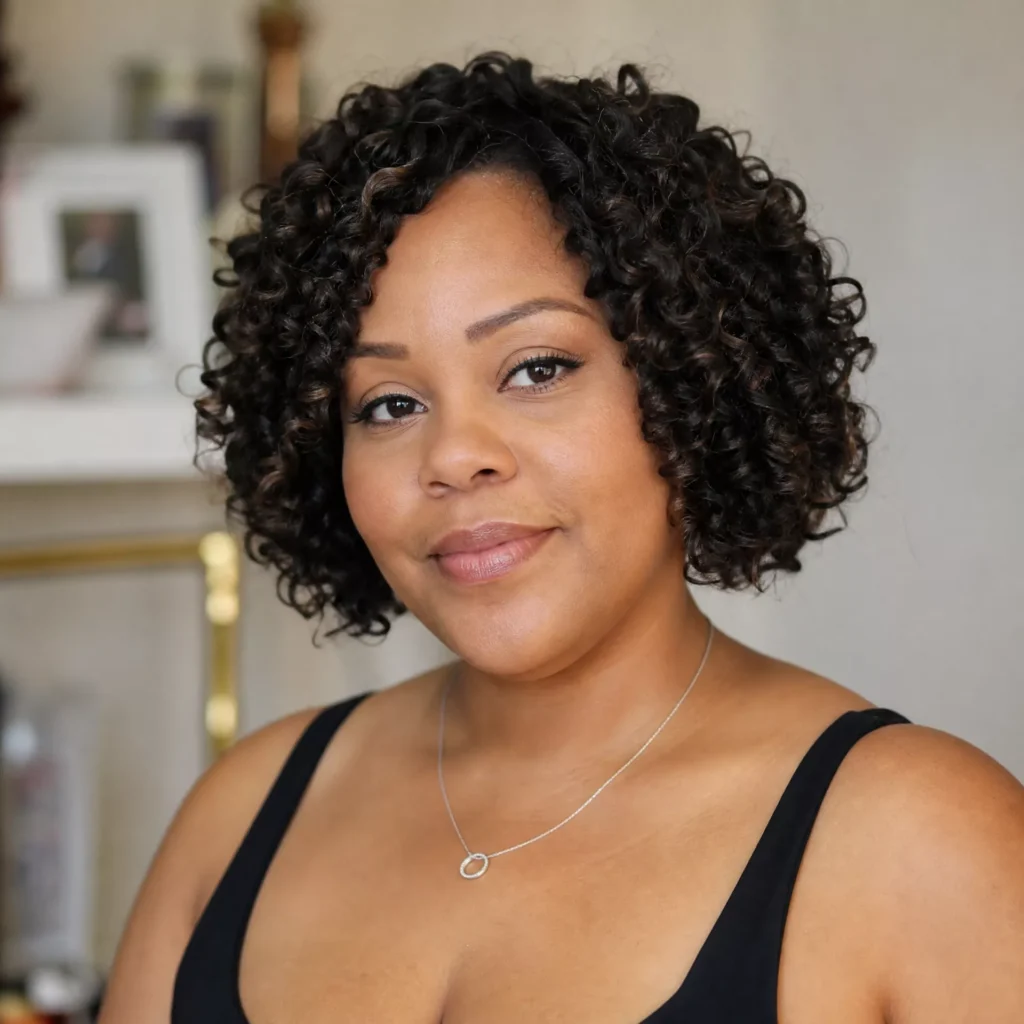
Tight curls spring up and in rather than out, so they can take up less horizontal room than looser, fluffier curls. The main variable is shrinkage. Length can drop dramatically once the hair dries, so start longer than you think you need.
Tighter patterns also tend to run drier, which makes moisture and gentle handling part of the routine.
Curly Stacked Bob for Round Face
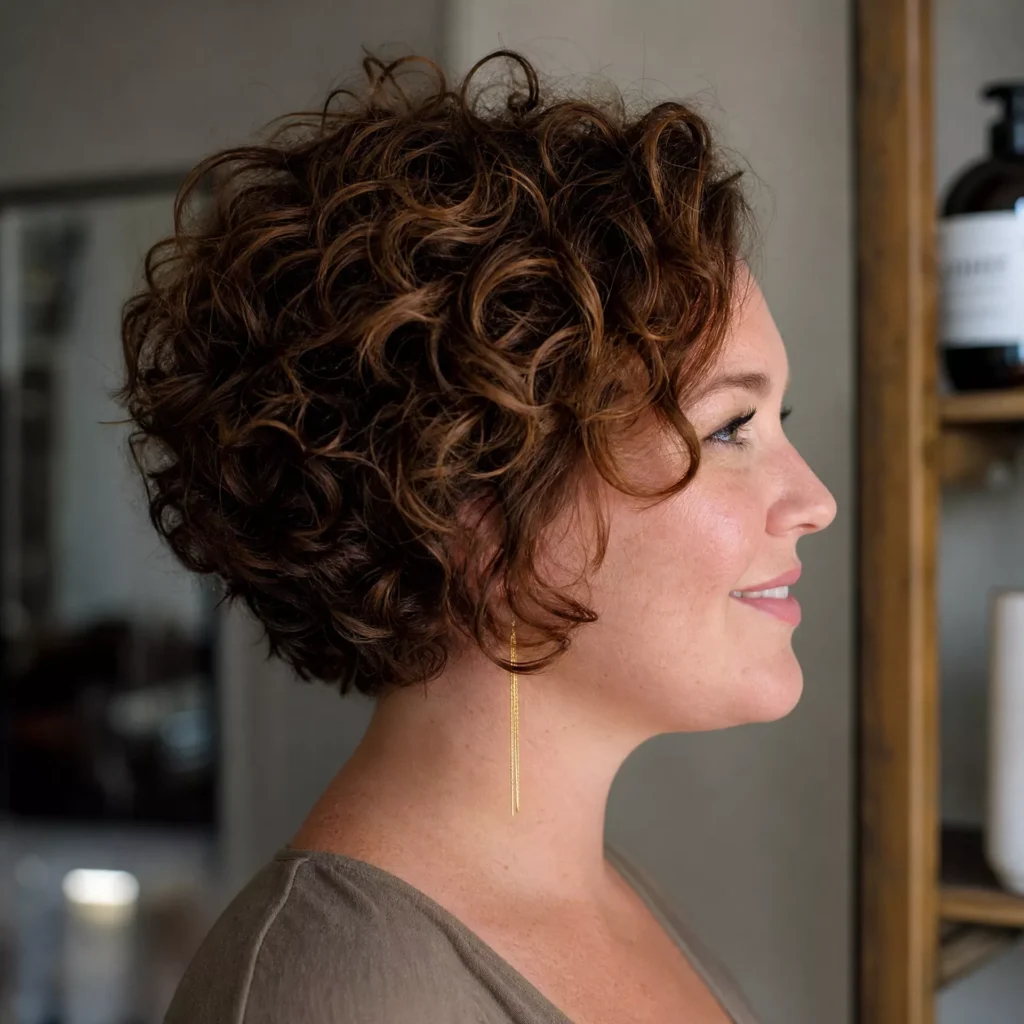
The stack builds shorter layers underneath longer ones, creating a rounded, lifted shape at the back and crown. It needs enough density to fill in, and on fine hair the stack can look sparse.
Watch how much stacking your stylist plans. Layers that are too short can push volume outward at the sides, which is the opposite of what you want.
Asymmetrical Curly Bob for Round Face
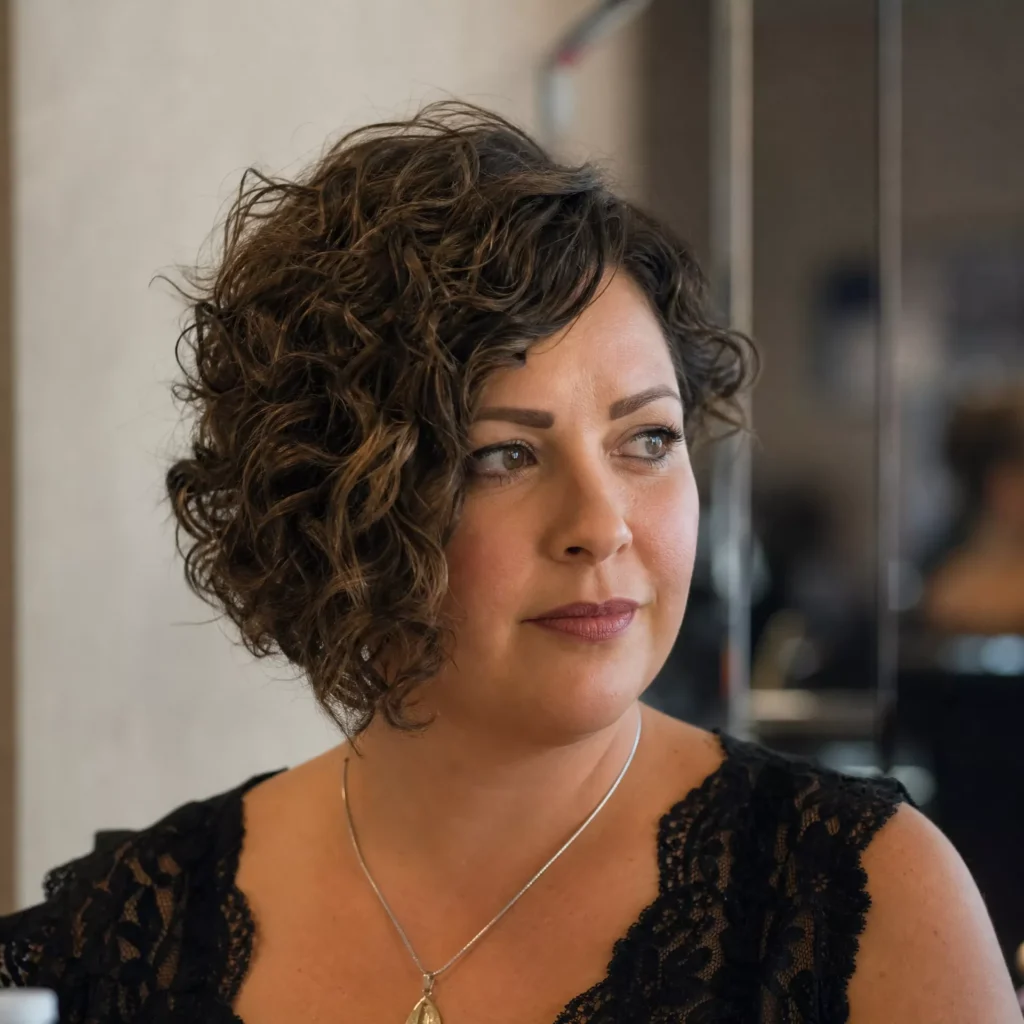
The uneven line does the visual work, but it also shows growth quickly. The shorter side loses its shape first, so expect trims every 6 to 8 weeks.
If you like to grow cuts out slowly, keep the difference in length mild. A dramatic angle looks great on day one and awkward at week ten.
Curly Lob for Round Face
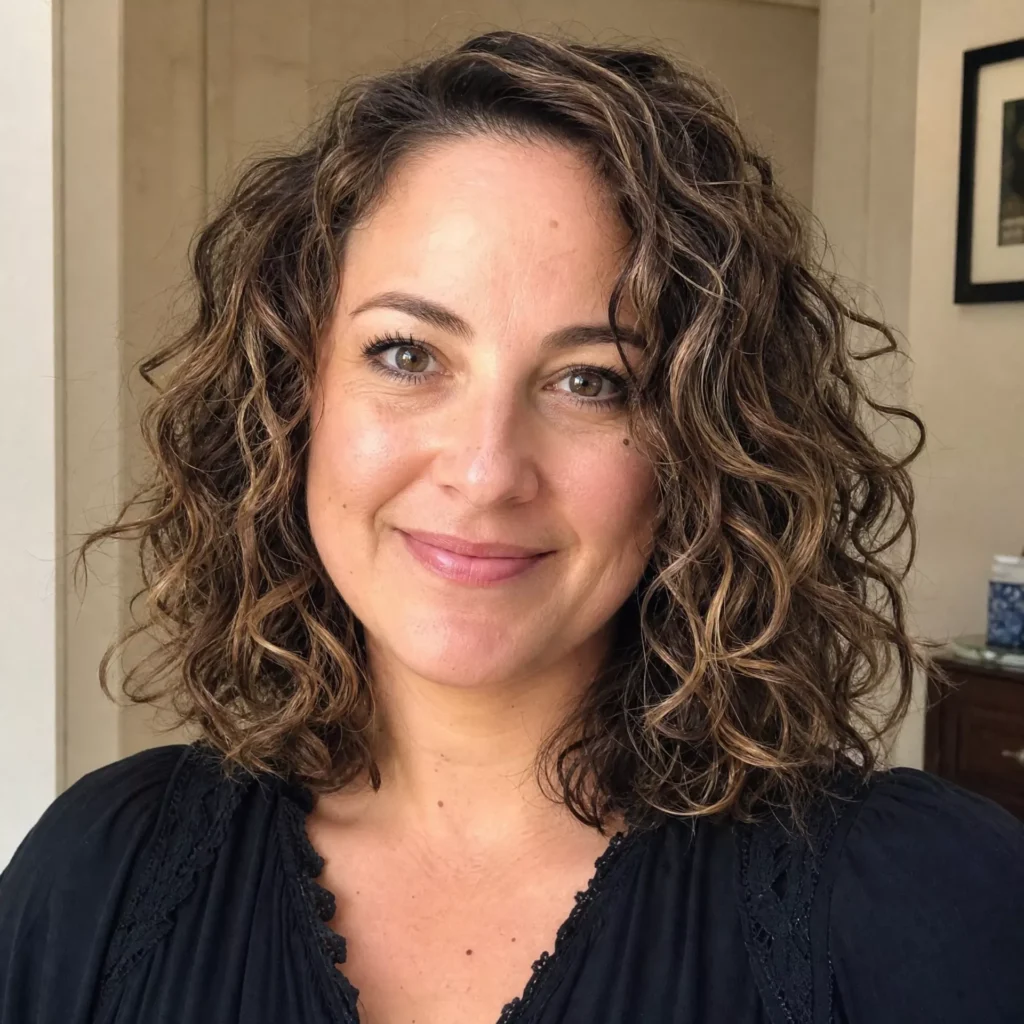
Choose this if you want a curly cut that is forgiving. The extra length gives curls room to move, lets you tie your hair back on difficult days, and grows out without the sudden loss of shape you get from shorter bobs.
The cost is time. More hair means longer detangling, more product and a longer drying session on wash day.
Highlighted Curly Bob for Round Face
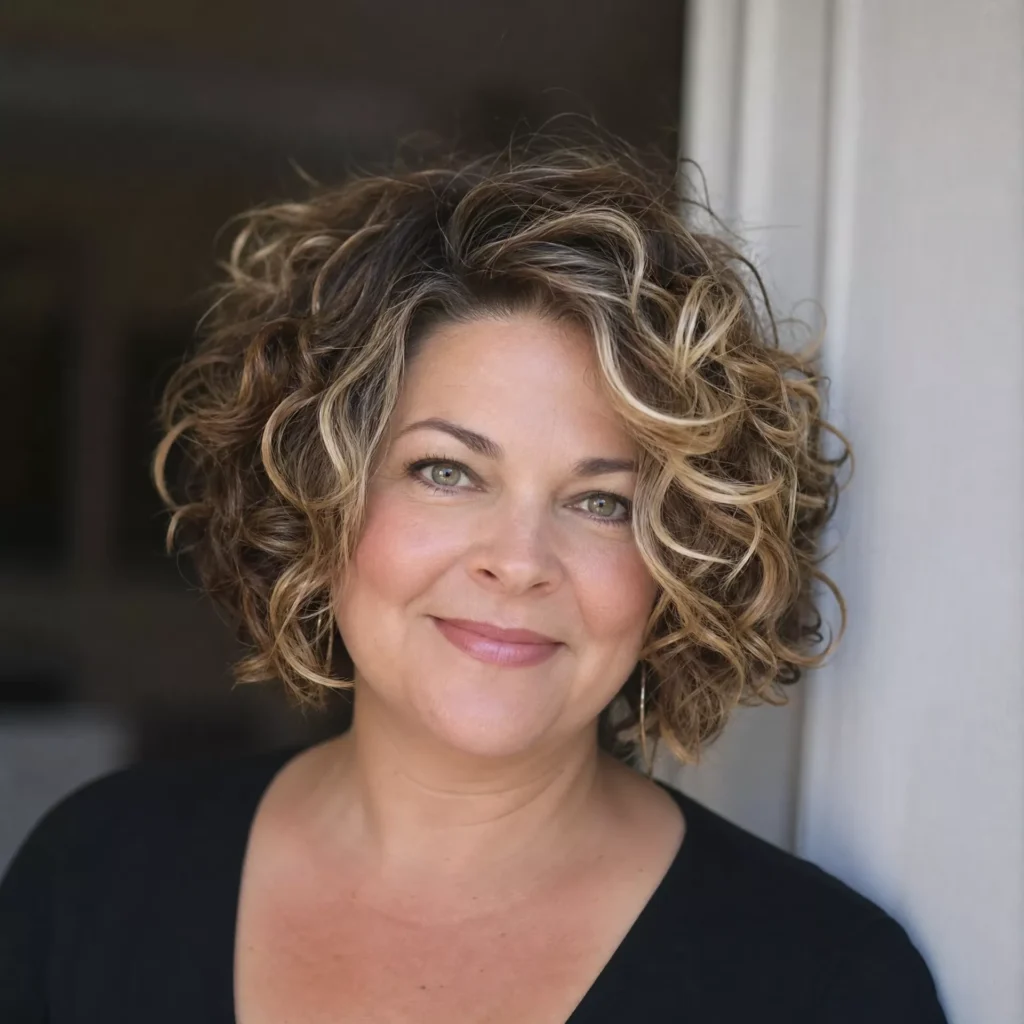
Lighter pieces catch the light on the peaks of curls, which can show off separation and shape. The downside is condition. Lightening can dry curls and, in some cases, loosen the pattern.
Hand-painted color placed sparingly, with a deep conditioning routine, is a safer approach. Ask your colorist how your curls have responded to lightening before.
Curly Bob for Round Face with Fringe

A full fringe is a bigger commitment than curtain bangs. It shortens the visible forehead, but curly fringe reacts to humidity, sleep and product, and it can look different from one day to the next.
Consider trying curtain bangs first. If you go for a fringe, expect trims every few weeks and a slightly awkward grow-out stage that pins and clips can cover.
Voluminous Crown Curly Bob for Round Face
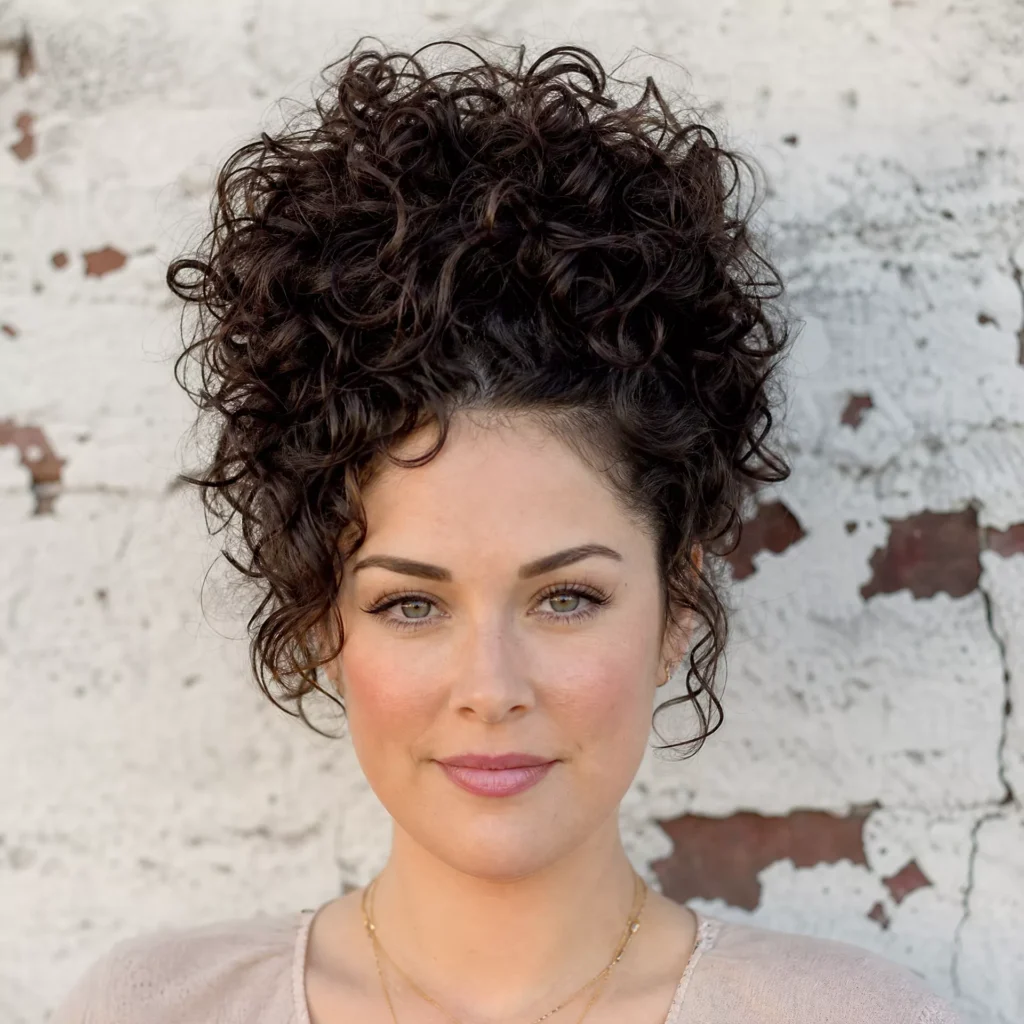
The challenge with a full crown is keeping it. Volume tends to fade over a few days, so how you sleep and refresh matters. A loose bun on top of the head or a silk covering can protect the shape overnight, and a light water spray with a quick diffuse revives it in the morning.
Keep an eye on the balance, too. A bigger crown makes the whole silhouette wider if the sides are not controlled.
Gray Curly Bob for Round Face
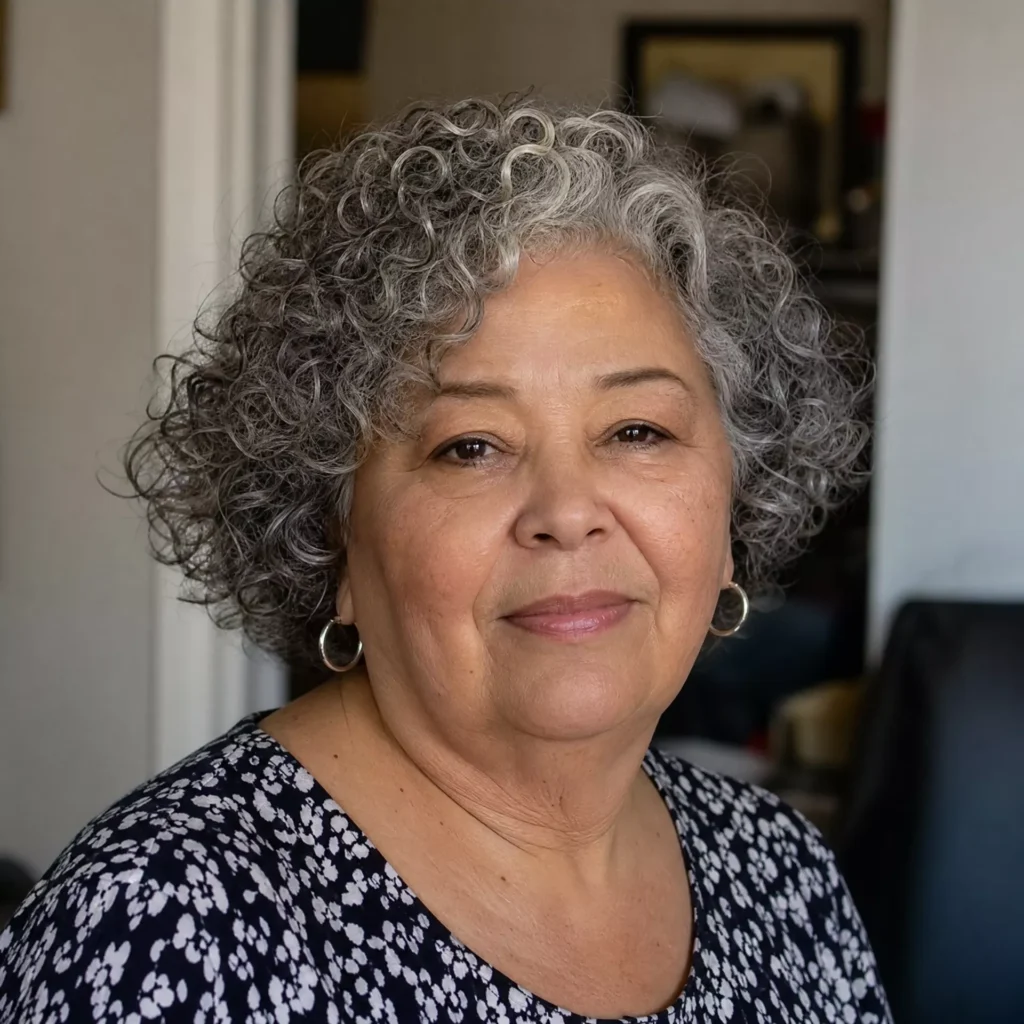
Gray strands often have a different texture from the rest of the hair. They can feel wirier or drier, and they sometimes curl differently, so you may be dealing with mixed patterns in one cut.
A moisturizing routine and a lightweight gel usually help. If you are transitioning, ask your stylist how the cut will blend the gray as it grows.
Curly Bob with Textured Crown for Round Face
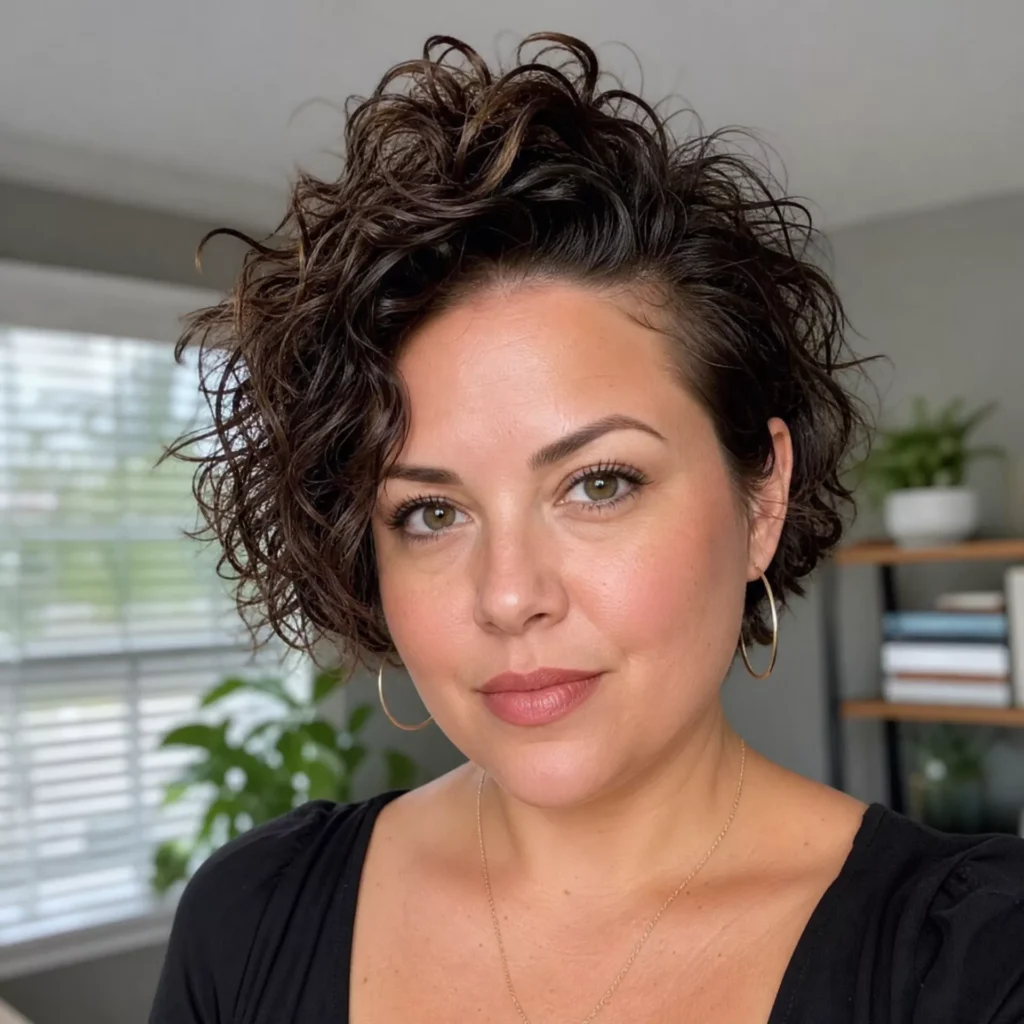
A textured crown means the top is cut in varied lengths so curls sit at different heights instead of stacking into one mass. This is a technique that depends heavily on the stylist, and it works best with someone who cuts curls dry or curl by curl.
On low-density hair it can look uneven, so ask how much texture they plan to add.
Low-Volume Side Curly Bob for Round Face
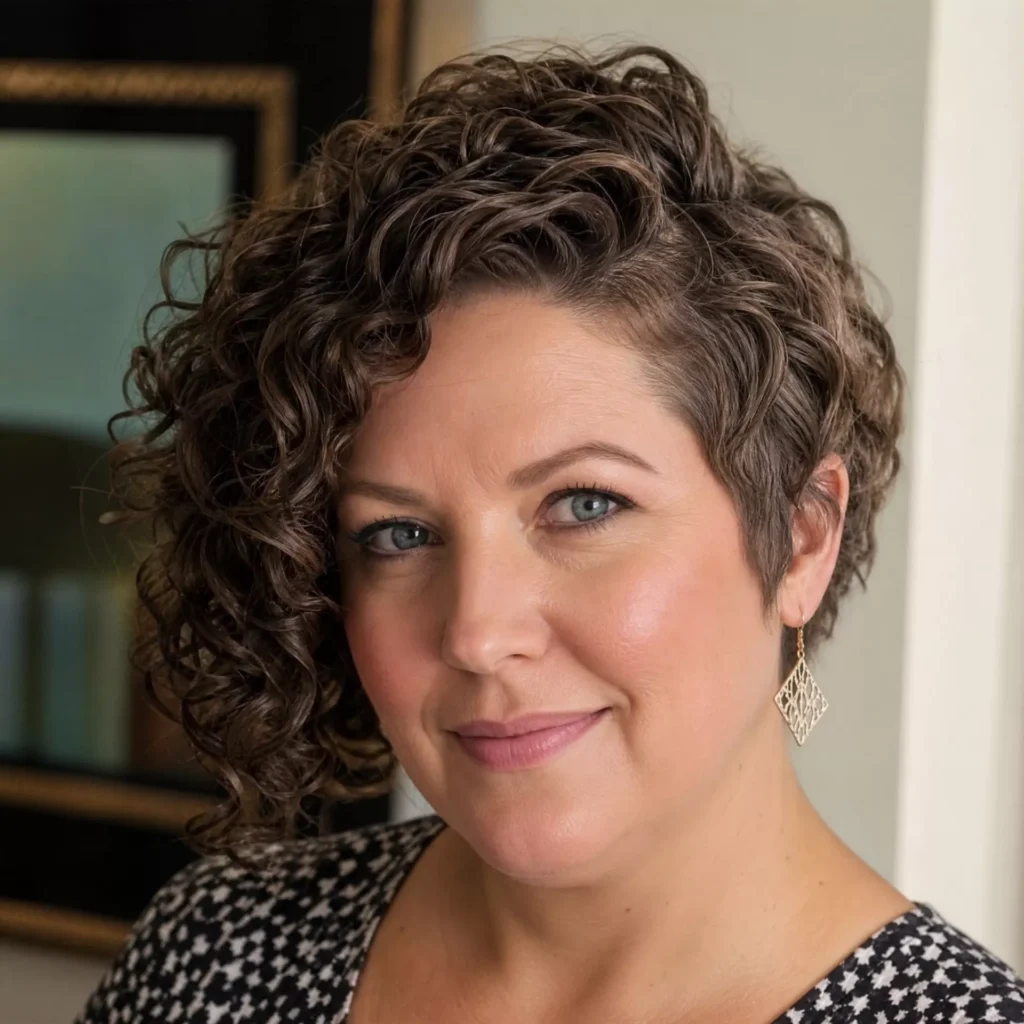
This one is more of a brief than a haircut, and the wording matters. Something like this gives your stylist a clear direction:
“Keep the sides shorter and remove bulk internally, and build the layers at the crown for lift.”
It suits thick, expanding curls best. If your hair is fine, the sides may look flat, so ask them to check before removing much weight.
Curly Bob Updo for Round Face
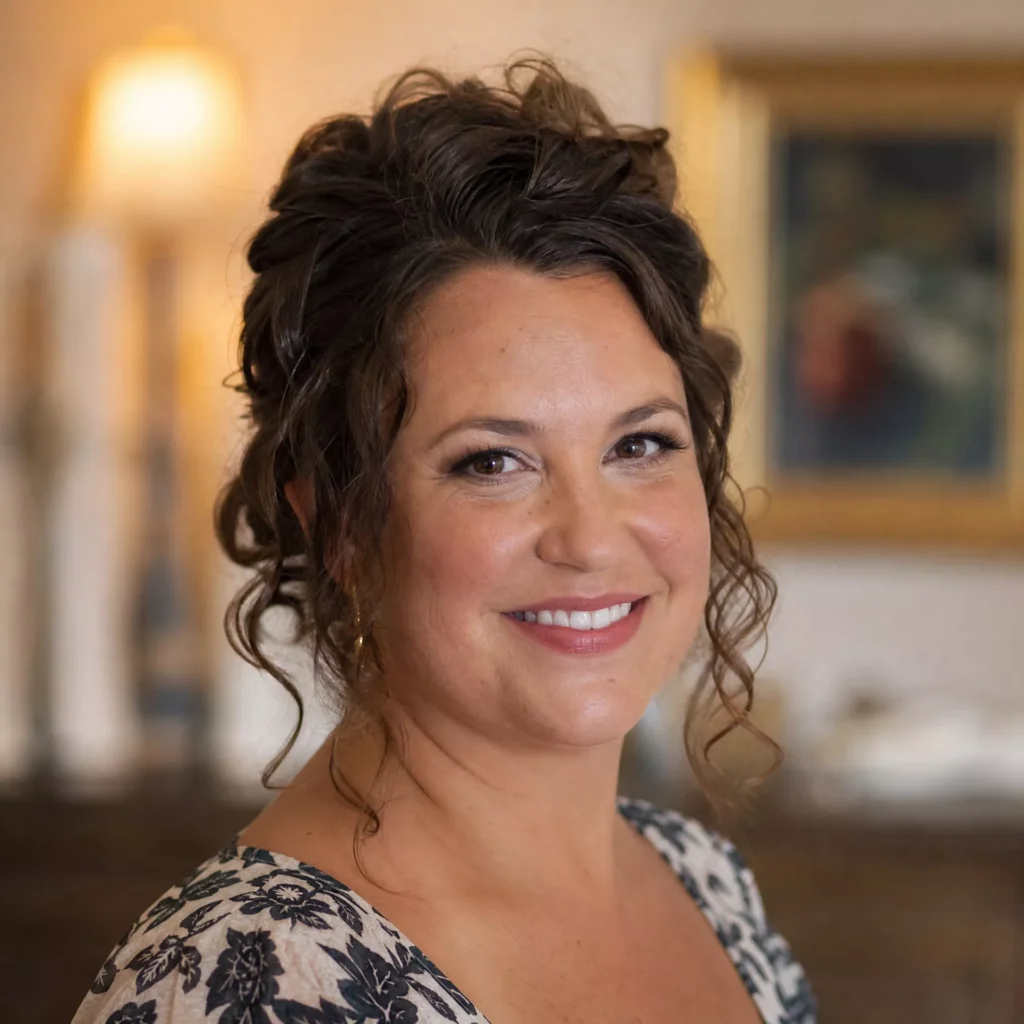
A bob is short for a full updo, so expect a half-up style, a top knot or a loose pineapple with curls left out. Pulling hair upward adds height and shows the neck, which some people find balances a round face.
Clips and pins do most of the work. Plan for the shorter pieces that will not stay in, and treat them as part of the look.
Caramel Curly Bob for Round Face
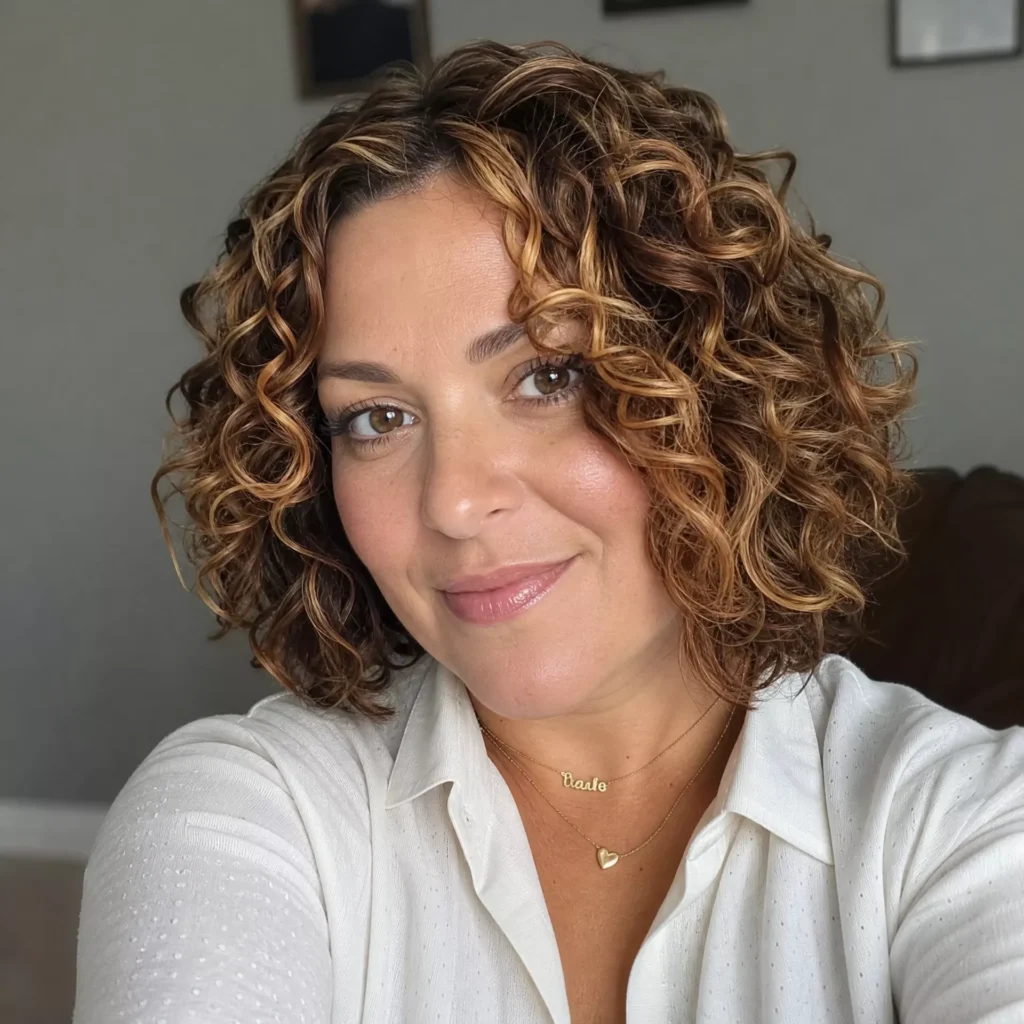
Caramel sits close to many natural shades, which is why it grows out gently instead of showing a hard line. It is a good option if you want color but not frequent salon visits.
Warm mid-tones catch the light on the curl peaks, but if the color sits too close to your base it can look flat. Ask your colorist to place it where your curls turn.
Short Tight Curly Bob for Round Face
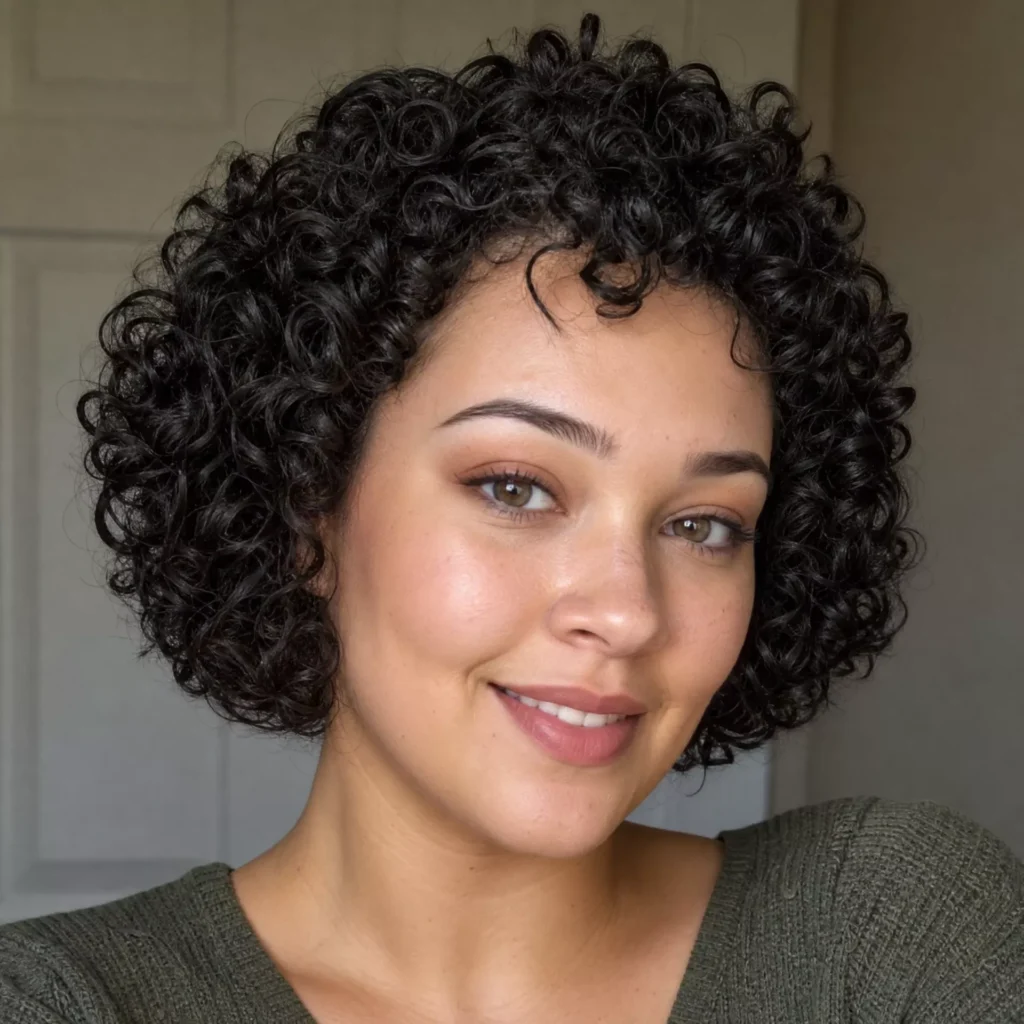
Short cuts on tight curls need the most careful planning around shrinkage. A cut that looks chin-length wet can end near or above the jaw dry, and a hem that lands at the widest part of the face may emphasize width.
If you are unsure, go longer first. You cannot add length back, but you can shorten it at the next visit.
Complete Curly Bob for Round Face
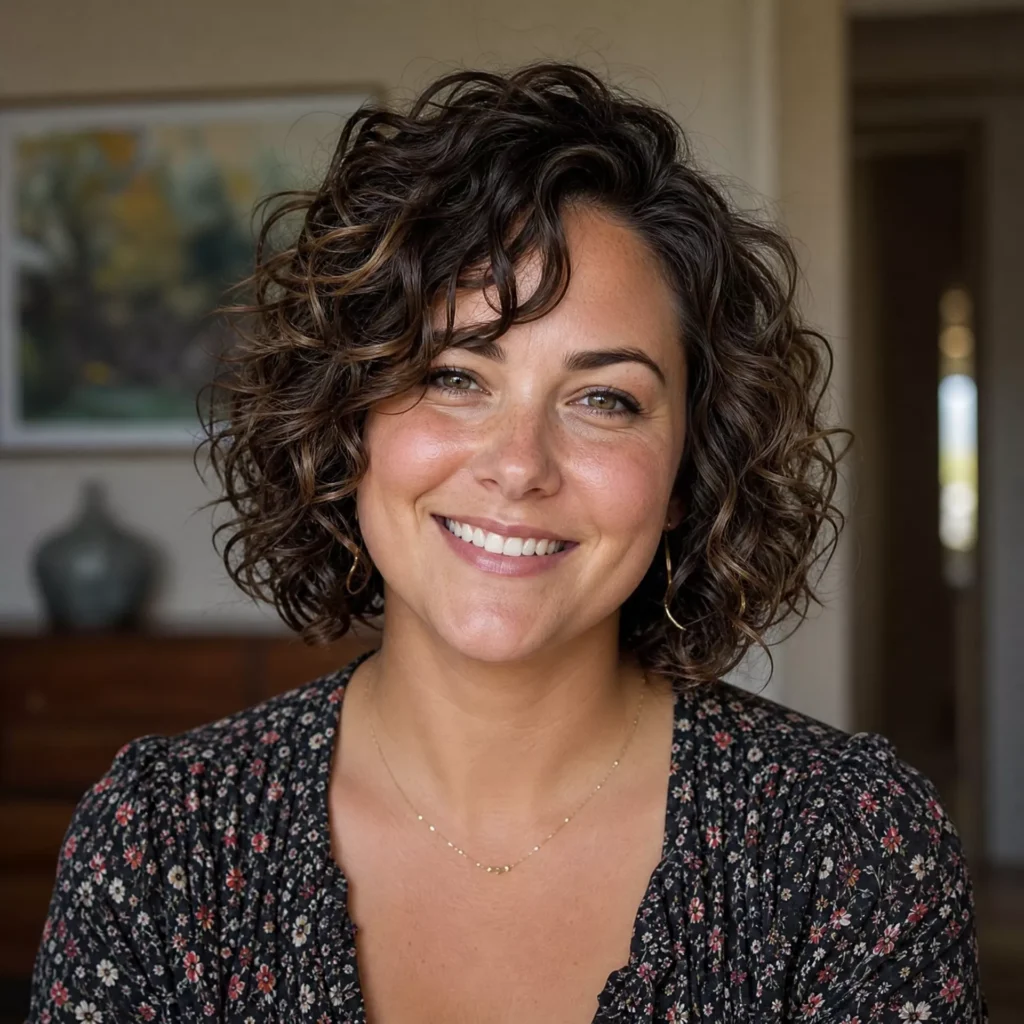
This combines several ideas above: length that sits below the jaw, lift at the crown, controlled sides and a soft fringe. It is not a universal answer, and it also stacks several upkeep tasks, including the fringe trims, crown refreshing and a curl routine.
It suits medium to thick density best. On fine hair, ask which pieces you can skip.
Before Choosing a Curly Bob
A few questions are worth answering before you save a photo.
What is your curl pattern? Loose waves, springy curls and tight coils all behave differently in a bob. Many people also have more than one pattern on the same head, which affects how the cut should be shaped.
How much do your curls shrink? Curls dry shorter than they hang when wet. A bob that looks chin-length stretched out can sit well above the jaw once it dries, and tighter patterns shrink more than looser ones. Ask to see your hair dry before the final cut.
How dense is your hair? Thick hair tends to expand sideways and often needs weight removed. Fine or low-density curls can look sparse if they are layered too heavily.
Where does your hair puff out? Check whether your curls expand at the sides or spring up at the crown once dry. That decides where the cut needs to help.
How much time will you spend on it? Curly bobs often rely on a wash-day routine and some drying time, whether that is diffusing or a careful air-dry.
How often can you trim? The shape of a curly bob softens as it grows. Roughly every 8 to 12 weeks is common, though it varies with curl pattern and cut.
Curl Pattern and Density Guide
Use this as a starting point for the conversation, not a prescription.
- Loose waves to S-curls, fine to medium density: longer or lob-length cuts with minimal layering usually keep enough weight. Short layers can flatten waves.
- Springy curls, medium density: crown layers and stacked shapes tend to work well, because there is enough hair to fill them.
- Tight curls or coils, any density: shrinkage is the main variable. Cut longer than you think you want, and keep the shape simple.
- Thick, high-density hair: side expansion is the concern. Ask about removing bulk internally and tapering the sides.
- Fine or low-density curls: keep layers few and protect the perimeter, since heavy layering can make curls look sparse.
- Mixed patterns: look for a stylist who cuts curl by curl rather than working from one uniform pattern.
Five Curly Bob Approaches Side by Side
| Approach | Curl pattern | Density | Upkeep | Main risk |
|---|---|---|---|---|
| Crown-layered bob | Waves to springy curls | Medium to thick | Medium | Lift fades without a refresh |
| Tapered bob | Springy to tight curls | Medium to thick | Higher | Sides can look too cropped |
| Collarbone curly lob | Loose to springy curls | Fine to medium | Lower to medium | Length can pull curls loose at the top |
| Stacked bob | Springy curls | Medium to thick | Medium to higher | Back can look heavy |
| Short tight curly bob | Tight curls and coils | Any | Higher | Shrinkage can make it sit too short |
Treat the ratings as general guidance. Your own curls can move any of these up or down.
When a Curly Bob Doesn’t Work
A curly bob is not right for everyone. Think twice, or ask for a more conservative version, if:
- Your curls are fine and low in density. Short layers and tapered sides remove weight that these curls may not have to spare.
- You want a no-routine cut. Curls that frizz without technique will still need product and drying time.
- You dislike frequent trims. The shape softens as it grows, and curls can lose definition.
- Your stylist doesn’t cut curls often. Mixed patterns and shrinkage reward experience.
- Your curls expand strongly at the sides. A longer cut, or internal weight removal, may work better than a bob.
Skipping the bob is not a failure. A longer cut may suit some curls better.
What to Tell Your Stylist
Bring a photo, but describe what you like about it: the height, the length, the shape at the sides. A good starting script is:
“I want a curly bob with some height at the crown and controlled sides. My curls shrink a lot, so please keep the length longer than the final result and cut it dry.”
Then adjust:
If your sides expand: “Please remove bulk internally at the sides without thinning shears.”
If you’re worried about shrinkage: “Can we start longer and shorten at the next visit?”
If you want bangs: “Please cut them dry and leave them longer, so I can see how they spring up.”
A few more questions worth asking:
- “Do you cut curly hair dry or wet?”
- “How much will this shrink once it’s dry?”
- “Where will the shortest front curls land on my face?”
- “How often will this need reshaping?”
The best curly bob is rarely the tallest or the shortest one. Pick two or three photos closest to your curl pattern and density, and take the questions above to your appointment.