25 Long Bob Hairstyles for Long Faces and How to Choose the Right One
A long bob, or lob, usually lands somewhere between the jaw and the collarbone, and within that range it can take on very different shapes. A blunt perimeter gives a solid, defined edge, while layers loosen the outline and move weight around. A fringe changes what you see at the forehead. Natural waves or curls can make the same cut look wider, shorter, or softer than it does on straight hair. Face shape is one useful lens for choosing among these options. If your face is long, you might want a fuller silhouette at the sides, or you might prefer something sleek and close to the head. The 25 long bob hairstyles below explore those different outlines and finishes, with notes on texture, fringe, and styling, so you can pick the version that suits your hair and the look you want.
Blunt Long Bob for Long Face

Cut to one solid line, the blunt lob keeps all the weight at the ends, so the perimeter reads as a clear, defined edge. Where that edge sits matters more than the label. Just below the jaw, it frames the lower face closely, while at the collarbone it falls further from the face and the overall shape looks longer. Texture changes how the ends behave. Straight hair holds a crisp line, and wavy hair bends it and may lift the ends higher. Hair that rests on the shoulders also tends to flip, which softens the line. Ask your stylist where the edge will fall when your hair is dry and worn the way you usually wear it.
Long Bob with Curtain Bangs for Long Face

A curtain fringe parts at or near the center and sweeps outward toward the cheekbones, where its longest pieces blend into the front of the lob. The result is a frame that covers part of the forehead without sitting straight across it. The shortest point decides a lot. If it sits around the brow, the fringe covers more forehead and needs more styling; if it starts nearer the cheekbone, it’s easier to push aside. Growth direction at the hairline, such as a cowlick, can split it unevenly. Curtain bangs usually need a quick blow-dry or a little product to open, so consider whether you want that step most mornings.
Wavy Long Bob for Long Face

Waves change a lob’s outline more than almost anything else. Bends in the hair lift the ends, push the lengths outward, and make the cut sit shorter than it would straight. Natural waves vary from section to section, so the shape may look slightly uneven, which is part of their character. Waves made with a curling iron or wand look more uniform but need recreating after washing. Layer placement shapes how the waves form. With too few layers, the waves can bunch at the bottom; with too many, the pattern may look stringy. If your waves are natural, ask how the cut will sit when air-dried.
Long Bob with Volume at Sides for Long Face

This version aims for a fuller silhouette through the cheekbone and jaw area. Some people with long faces like that because it widens the outline around the middle of the face. The fullness can come from layers that start around the cheekbones and lift away from the head, from natural wave, or from styling, such as a round-brush blow-dry that turns the sides outward. Density decides how much is possible. Dense hair may need only light layering to look full, while fine or low-density hair may rely more on styling. Expect blow-dried side volume to soften over the day.
Layered Long Bob for Long Face

Layers redistribute weight. Instead of collecting at the ends, some of it moves into the mid-lengths, and the outline becomes softer and less uniform. That’s the opposite of the blunt lob, where the bottom edge does all the work. The trade-off is fullness at the ends. Generous layering on fine or low-density hair can leave the perimeter thin, while dense hair often benefits from the reduced weight. Where the layers start matters as well. Layers beginning near the cheekbones affect the face frame, and ones starting lower mainly lighten the ends. Ask how much of the perimeter will stay intact.
Long Bob with Side Swept Bangs for Long Face

Side-swept bangs cross the forehead at an angle from a side part, so the frame runs diagonally instead of opening from the center like curtain bangs. The direction, length, and amount of hair in the fringe all change the result. A long, light sweep blends into the side of the lob, while a shorter, fuller fringe becomes a noticeable feature across the brow. The fringe sits most easily when it follows your natural part; cut against it, it may spring back or split. It’s also flexible, since a longer sweep can be tucked behind the ear when you want it out of the way.
Textured Long Bob for Long Face

Texture can come from the cut or from styling, and it helps to separate the two. A textured cut uses point cutting, slide cutting, or similar techniques to break up the ends and layers so they separate instead of lying as one mass. A tousled finish, covered later in this list, is mostly styling. Natural texture changes the effect. On wavy hair, a textured cut shows its separation with little effort. On very straight or fine hair, the separation may only appear with a texturizing spray or paste. Texturizing also removes some weight, so on lower-density hair, discuss how much will be taken out.
Long Bob with Wispy Fringe for Long Face

A wispy fringe uses only a small amount of hair, often with tapered ends, so the forehead shows through. It’s lighter than a curtain fringe and much lighter than a blunt or statement fringe. It changes the frame at the brow without covering it, which suits someone who wants a softer front without a strong line. It isn’t maintenance-free, though. Wispy pieces can separate and leave gaps, especially on fine or low-density hair, and short hairs at the hairline may lift. Grow-out tends to be gradual, but the fringe still needs trims or styling as it reaches the eyes.
Long Bob with Waves and Volume for Long Face

The wavy lob earlier relies on waves being present. This one is a deliberately fuller styled finish. Volume is built in through styling: lift at the roots, waves set with a larger iron or rollers, and then brushing or finger-combing them out to widen the overall shape. Some people add a texturizing spray for grip. How full it gets depends on density and strand thickness, and on how long the styling holds. Fine hair may lose volume within a few hours, while dense hair may hold it longer but take more time to style. It works more as a styled look than an everyday default.
Blunt Long Bob with Fringe for Long Face

A solid lob perimeter paired with a defined fringe creates two clear lines, one across the forehead and one at the ends. The look is structured and graphic. The fringe is the bigger commitment. A blunt fringe shows every cowlick and growth direction at the hairline, usually needs blow-drying to lie flat, and shows growth quickly, so it may need trimming between full haircuts. On curly or very wavy hair, a blunt fringe shrinks and may sit higher than expected. Ask how heavy the fringe will be and where it will sit when dry.
PRO TIP: Before deciding on length, ask your stylist where the lob will sit when your hair is worn in its usual texture. Wavy and curly hair can finish noticeably shorter than it looks when stretched, and ends that rest right on the shoulders often flip or bend. A lob that ends a little above or below that point usually behaves more predictably. Knowing the dry length helps you judge whether the cut will frame your face the way your reference photo does.
Curly Long Bob for Long Face

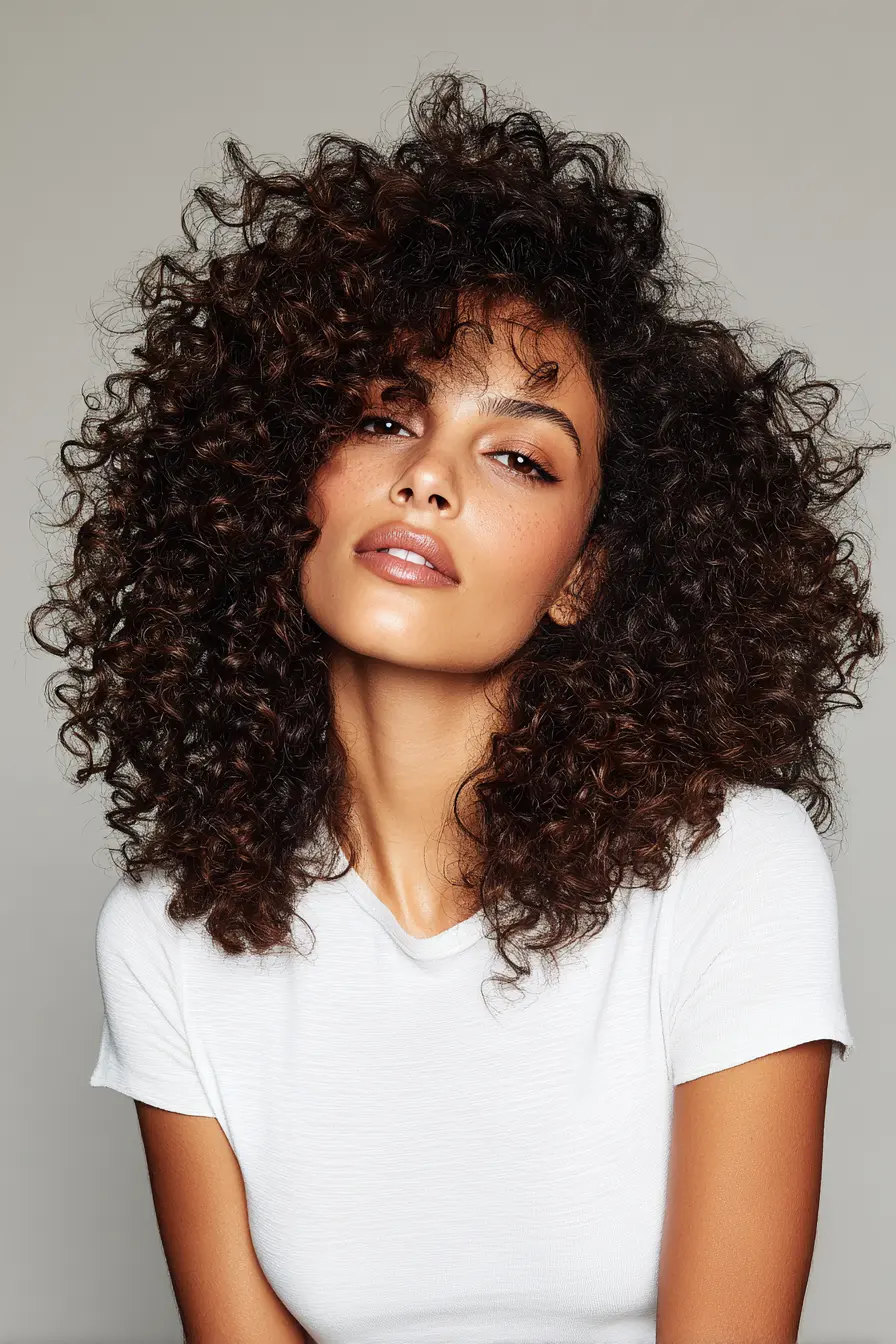
Curls shrink as they dry, sometimes by several inches, so a lob that looks collarbone length when stretched may sit around the chin once the curls form. They also expand outward, which often creates a wider outline. How much depends on curl pattern, density, and humidity. That shape isn’t automatic or effort-free. Some curls form easily with product and air-drying, while others need diffusing or more work to define. Layers help curls stack instead of forming a triangle, but too many can break them apart. Decide where you want the dry length to sit, and let your stylist plan for shrinkage.
Long Bob with Center Part for Long Face

A center part divides the lob evenly, so the front sections fall symmetrically on either side of the face. That symmetry gives a calm, even frame, particularly with straight or lightly wavy hair. Whether it sits well depends on your natural part. Hair that prefers to part to one side may slip back during the day, and a cowlick at the front can push one side up. On lower-density hair, a center part can show more scalp along the line. The part doesn’t change the cut, so it’s easy to try both options before deciding.
Highlighted Long Bob for Long Face

Highlights are a color decision, separate from the cut. They lighten selected strands so those strands stand out against the base color. Placement decides where the eye goes. Highlights around the face brighten the front, while highlights spread through the lengths add variation across the whole lob. How visible they are depends on the contrast with your base and on how fine or broad the highlighted sections are. A lob doesn’t need highlights to look finished. If you add them, the upkeep depends on how much lighter they are than your natural shade.
Long Bob with Outward-Flipped Ends for Long Face

Flipped ends are a styling finish, not a separate cut. They’re usually made with a round brush turned outward during a blow-dry, a flat iron, or rollers. The flip pushes the perimeter out from the neck and shoulders, so the lob looks wider at the bottom. How well it forms and holds depends on texture and length. Straight hair may take the flip but release it within hours, while hair with a natural bend may flip partly on its own. A lob that rests at the shoulders often flips without help. A slightly tapered perimeter also turns outward more easily than a heavy blunt edge.
Asymmetrical Long Bob for Long Face

In an asymmetrical lob, one side is cut longer or shaped differently from the other, which gives the outline a diagonal. A small difference reads as subtle, while a larger one becomes the defining feature. It changes the haircut’s character more than its proportions, adding an off-center line to the frame around the face. The trade-off is precision. An asymmetrical shape needs careful cutting, and it can lose its intended look as the hair grows or if your part shifts. It usually works best when the longer side matches your natural part.
Long Bob with Balayage for Long Face

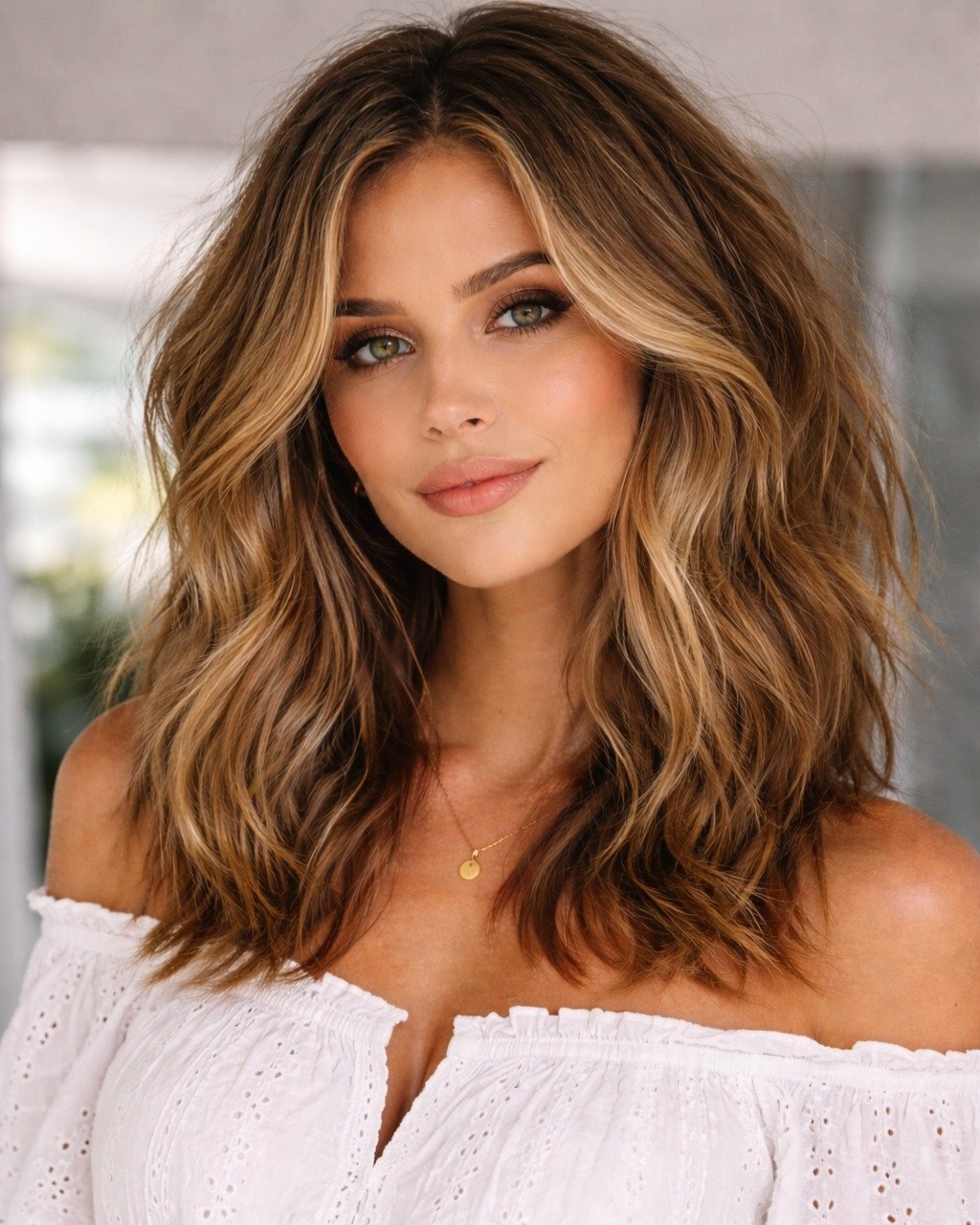
Balayage is a coloring technique in which lightener or color is painted onto sections freehand. It usually creates a gradual transition, deeper near the roots and lighter toward the mid-lengths and ends. On a lob, that transition can emphasize the ends or the layers, depending on where the lighter tones are placed. How it looks depends on your base shade and the contrast you choose. It doesn’t change the haircut’s shape, and a lob doesn’t need it. Grow-out tends to be softer than with all-over color, but upkeep still depends on how much lightening and toning are involved.
Soft Long Bob for Long Face with Fine Hair

Fine strands are narrow, and low density means fewer strands. The two often appear together, but not always. Fine but dense hair can usually carry some layering, while fine, low-density hair has less to spare. A soft lob keeps a recognizable outline with only gentle layering, so the ends hold enough weight to look full. That’s different from heavily layered or textured lobs, which can leave fine hair looking sparse at the bottom. A fully blunt edge isn’t required, though, and some fine hair looks better with lightly softened ends. Ask how much weight will stay at the perimeter.
Long Bob on Gray Hair for Long Face

A long bob shows natural gray, silver, or salt and pepper clearly, because the hair is long enough for the tones to vary across it. The haircut and the color are separate choices. Gray strands can be fine or coarse, smooth or wiry, so the cut should respond to your texture. A blunt perimeter presents the gray as one uniform shape, while layers let the mix of tones move. Wearing gray is a choice, not an expectation. The same lob works whether your hair is gray, colored, or neither.
Long Bob with Horizontal Layers for Long Face

“Horizontal layers” isn’t a single standard salon term, so it’s worth spelling out what it usually means here. It describes layers placed to build fullness through the sides instead of only lightening the ends. They often start around the cheekbones or jaw so the hair lifts away from the face there. Stylists may achieve that shape in different ways. Because the phrase can mean different things to different people, describe the result you want, such as more width at the sides, less weight at the bottom, or a rounder overall shape, and let your stylist choose the method.
Long Bob with Statement Bangs for Long Face

Statement bangs are the most prominent fringe in this list. They use more hair, a more defined edge, or a shorter length that sits clearly across the forehead. That sets them apart from a wispy fringe, which is sparse, and from thick curtain bangs, which part and open. Because they’re so visible, they also need the most upkeep. A defined edge shows growth quickly, cowlicks become obvious, and most people blow-dry them daily. On curly hair, shrinkage changes their finished length. They suit someone who enjoys the fringe as the main feature of the cut.
Tousled Long Bob for Long Face

A tousled lob looks loosely undone, with uneven bends and some separation. That finish can come from natural wave or from styling, such as a curling wand used in alternating directions, texture spray, or braiding damp hair overnight. It isn’t effortless for everyone. Wavy hair may get close with little help, while very straight or fine hair may need product and heat to look tousled and can lose the shape quickly. A cut with some texture at the ends helps the finish hold. Reshaping with your fingers through the day keeps the outline loose.
Long Bob with Thick Curtain Bangs for Long Face

Compared with the softer curtain bangs earlier in this list, this version uses more hair, so the fringe carries more visual weight and covers more of the forehead. It still parts and opens toward the cheekbones, but the effect is heavier and more noticeable. More hair also means more styling. Thick curtain bangs may need a blow-dry to open evenly, and natural growth direction becomes more apparent. On wavy or curly hair, they can expand or shrink. Ask how much hair will go into the fringe and how it will sit once dry.
Long Bob with Color Block for Long Face

Color blocking places distinct, contrasting color sections in the hair instead of blending tones gradually. Placement varies. The contrast might sit underneath, around the face, or in a band through the lengths. The effect is graphic, and the haircut changes how visible each block is. A sleek lob shows clean boundaries, while waves blur them. Strong contrast often requires lightening one section, which adds processing and maintenance. It changes the look of the lob without changing its shape.
Sleek Long Bob for Long Face

“Sleek” describes the finish: smooth, straight, and close to the head. The haircut underneath may be blunt, lightly layered, or slightly angled. Straight hair reaches a sleek finish with less effort, while wavy or coarse hair usually needs a blow-dry or flat iron and may revert in humidity. A sleek lob hanging close to the face gives a narrow, vertical outline. If you’d like a little more width, a slight angle or some lift at the sides changes that. Neither is required; it depends on the silhouette you prefer.
Complete Balancing Long Bob for Long Face

This last example combines several earlier choices: a perimeter at the length you prefer, layers placed where you want movement, fringe or no fringe, and a finish that suits your texture. One version might be a collarbone lob with light layers, soft curtain bangs, and some lift at the sides. Another might be a blunt lob just below the jaw, worn sleek with a center part. Both are valid. The combination that works for you depends on your hair, the outline you like, and how much styling you’ll realistically do.
Choosing a Long Bob Around Your Natural Texture
The same lob can look quite different on straight, wavy, and curly hair. Straight hair shows the cut’s exact outline, from a blunt edge to an angle, and tends to fall close to the face. Wavy hair lifts the ends and softens lines, usually making the lob look a little shorter and fuller. Curly hair shrinks and expands, so its dry length may be much shorter than the length it was cut to.
Think also about how much styling you’ll do. Several of these lobs look closest to their photos after a blow-dry or curling iron. If you mostly air-dry, choose a cut designed around your natural texture.
What to Discuss with Your Stylist
- Show reference photos of hair with a texture similar to yours.
- Explain how you usually wear your hair: air-dried, blow-dried, or straightened.
- Say where you want the ends to sit once your hair is dry.
- Decide whether fringe is a priority, and how much styling you’ll give it.
- Ask how the cut will behave as it grows.
- Describe whether you prefer a defined, sleek, wavy, or tousled finish.
Haircut, Styling, and Color Are Different Decisions
A lob’s shape, its styling finish, and its color are separate choices. Flipped ends, waves, and sleekness come from styling. Highlights, balayage, gray, and color blocking are color. The haircut works without any particular color or finish. When you look at a reference photo, separate the three so you know which part you’re actually asking for.
Final Thoughts
A long face is one factor in choosing a lob, alongside your texture, your density, and the time you want to spend styling. Some people like a fuller outline at the sides, others prefer a sleek, close line, and both can work. Save a photo of the version you’re drawn to, note the length and finish you want, and talk it through with your stylist.