20 Curly Lob Hairstyles for Women Over 50 with Round Faces
A curly lob sits somewhere between the chin and the collarbone. That’s long enough for curls to form and short enough that their weight doesn’t drag the shape down. The same name, though, covers a wide range of results. Curl pattern, density, and shrinkage decide where the ends actually land once the hair dries, so two people asking for the same lob can leave with noticeably different outlines. That’s why it helps to compare the details: the finished length, where the layers begin, whether there’s a fringe, and where the volume sits. Women over 50 have every kind of curl, from loose waves to tight coils, fine to coarse, sparse to dense. The 20 options below are different approaches, not a formula for round faces, so you can choose an outline you like on your own curls.
Layered Curly Lob with Crown Height
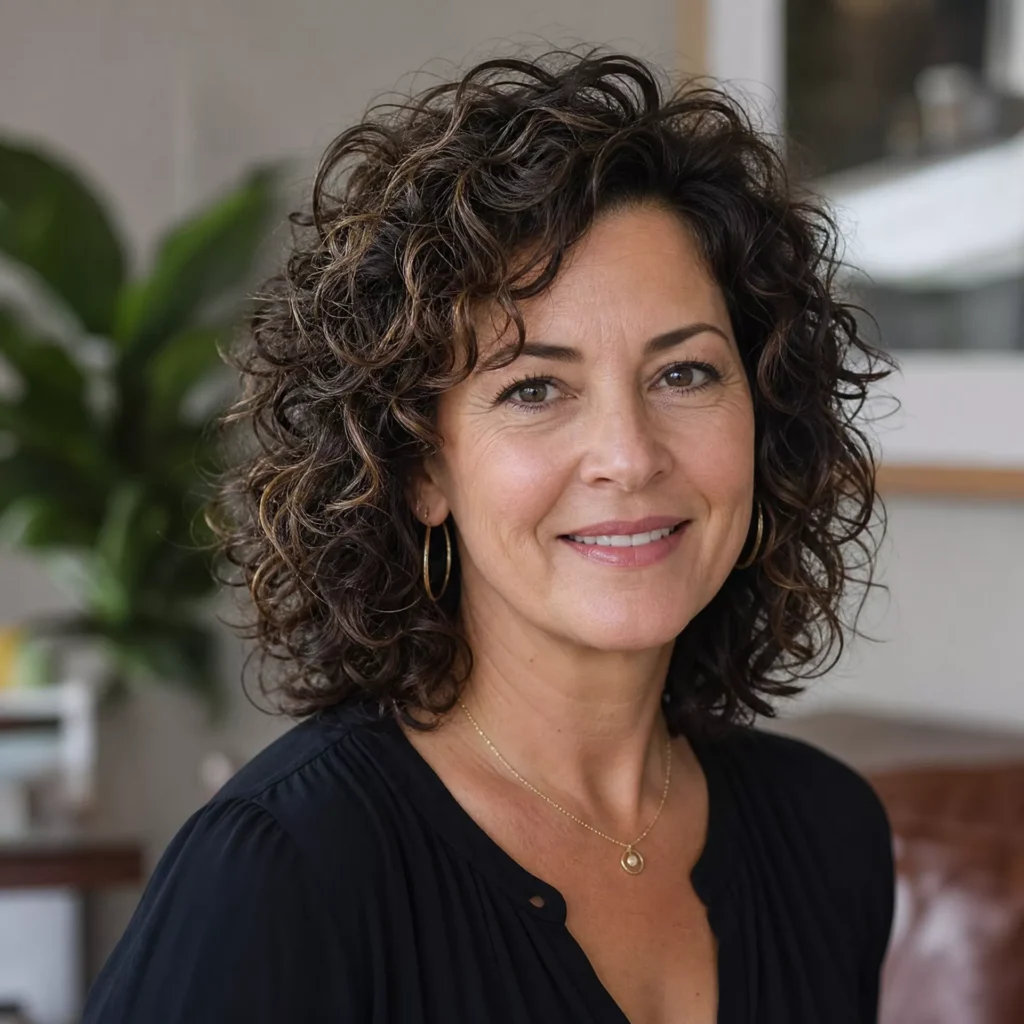
Layers on a curly lob can sit in three places: at the crown, around the face, or through the ends. In this cut, they’re concentrated at the top, with shorter pieces cut so the curls there stack higher than the hair beneath. The result is a rounded shape that sits taller at the crown and narrower lower down. Some people with round faces like that because it shifts visual emphasis upward. How much height you get depends on where the layers begin, your density, and how your curls dry. Dense, springy curls may lift noticeably, while finer or looser curls may show only a gentle rise. Ask where the shortest crown layer will start once your hair is dry.
Side-Parted Curly Lob for Round Faces
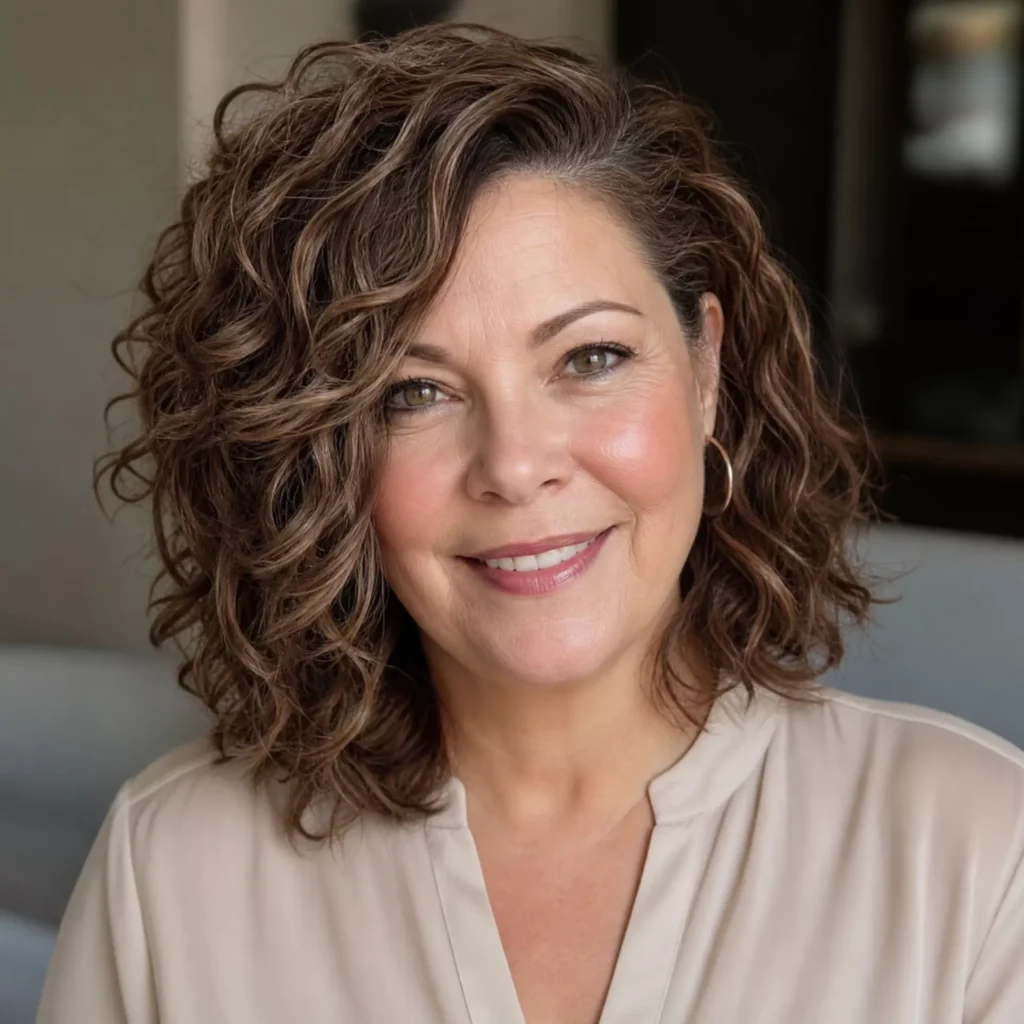
Moving the part doesn’t change the haircut, but it does change where the curls pile up. A side part sends more hair across the top to one side, giving that side more lift and leaving the other closer to the head. That asymmetry breaks up an evenly rounded frame, which may appeal if you’d like something less symmetrical. Whether it suits you depends on your natural part, any cowlicks at the crown, and whether you like more fullness on one side. Curls that grow strongly in one direction may resist a part placed against them. Try parting on each side while your hair is wet to see which falls more easily.
Curly Lob with Face-Framing Layers for Round Faces
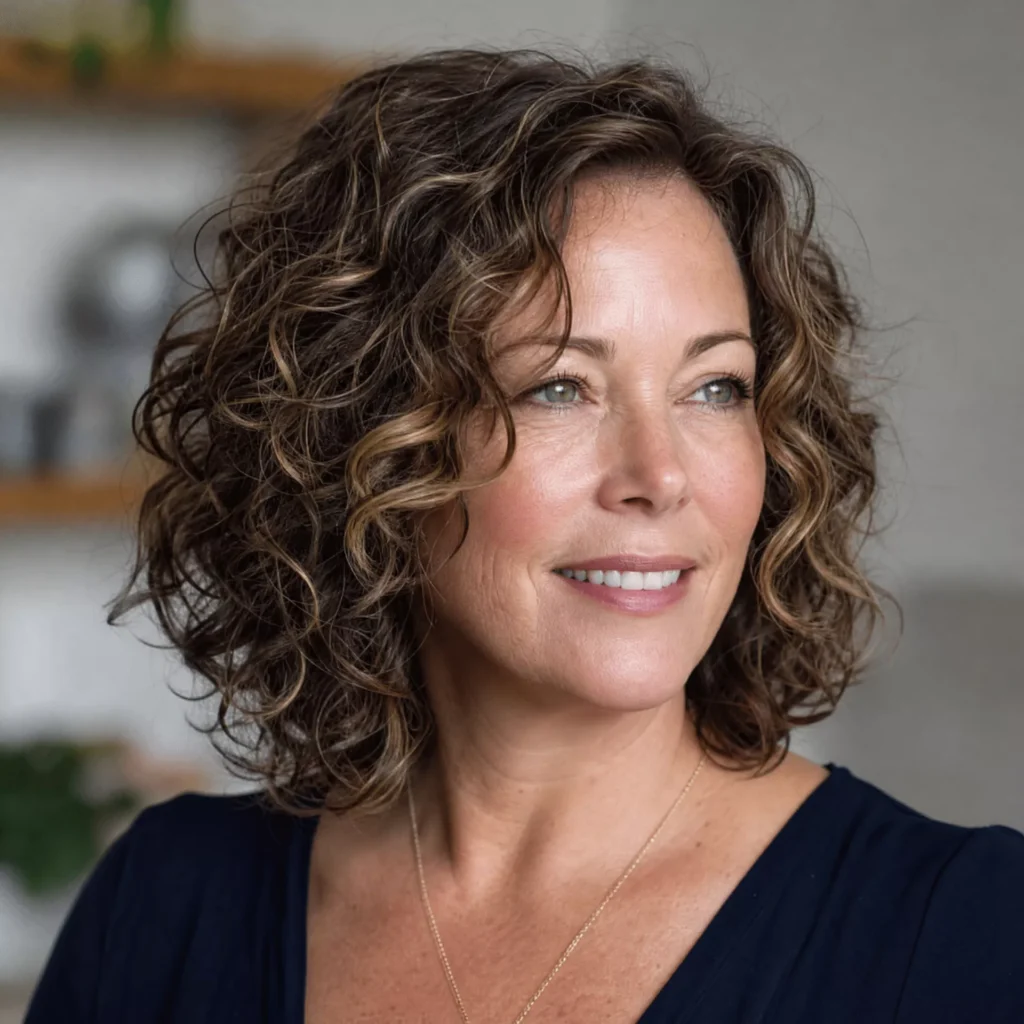
Shorter pieces at the front change the outline around the cheeks and jaw while the back keeps its length. Where those pieces start makes the difference. Subtle framing begins near the jaw or below and blends into the lob, while shorter layers starting at the cheekbone create a more visible frame. Curls also behave differently at shorter lengths. Depending on the pattern, front pieces may spring up more than expected, sit forward against the cheeks, or curve away from them. They shrink like the rest of the hair, so it’s sensible to ask for the front to be cut a little longer at first, then adjusted once you see how it dries.
Curly Lob with Curtain Bangs for Round Face Over 50
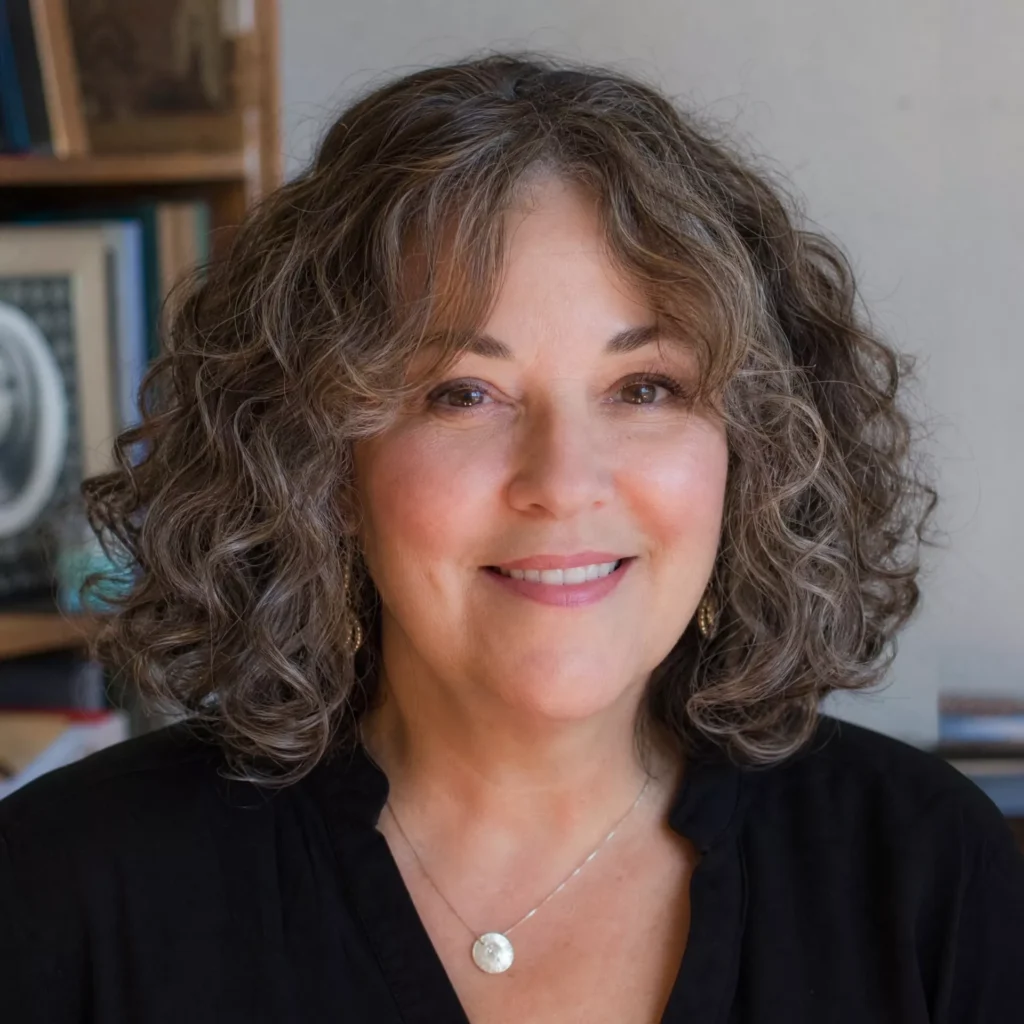
Curtain bangs part near the center and fall to either side of the forehead, connecting with longer face-framing sections. On curly hair, shrinkage makes them sit shorter than they look when stretched, sometimes by a surprising amount, so they’re best cut with that in mind. Growth direction at the hairline matters too, because a cowlick can push one side up or split the fringe unevenly. Curly bangs often need a small routine of their own, such as a little water and product each morning, or pinning them aside when they won’t settle. They change the frame at the forehead, but whether they make a face look longer depends on the curl pattern and how much forehead they cover.
Volume-at-Crown Curly Lob for Round Faces
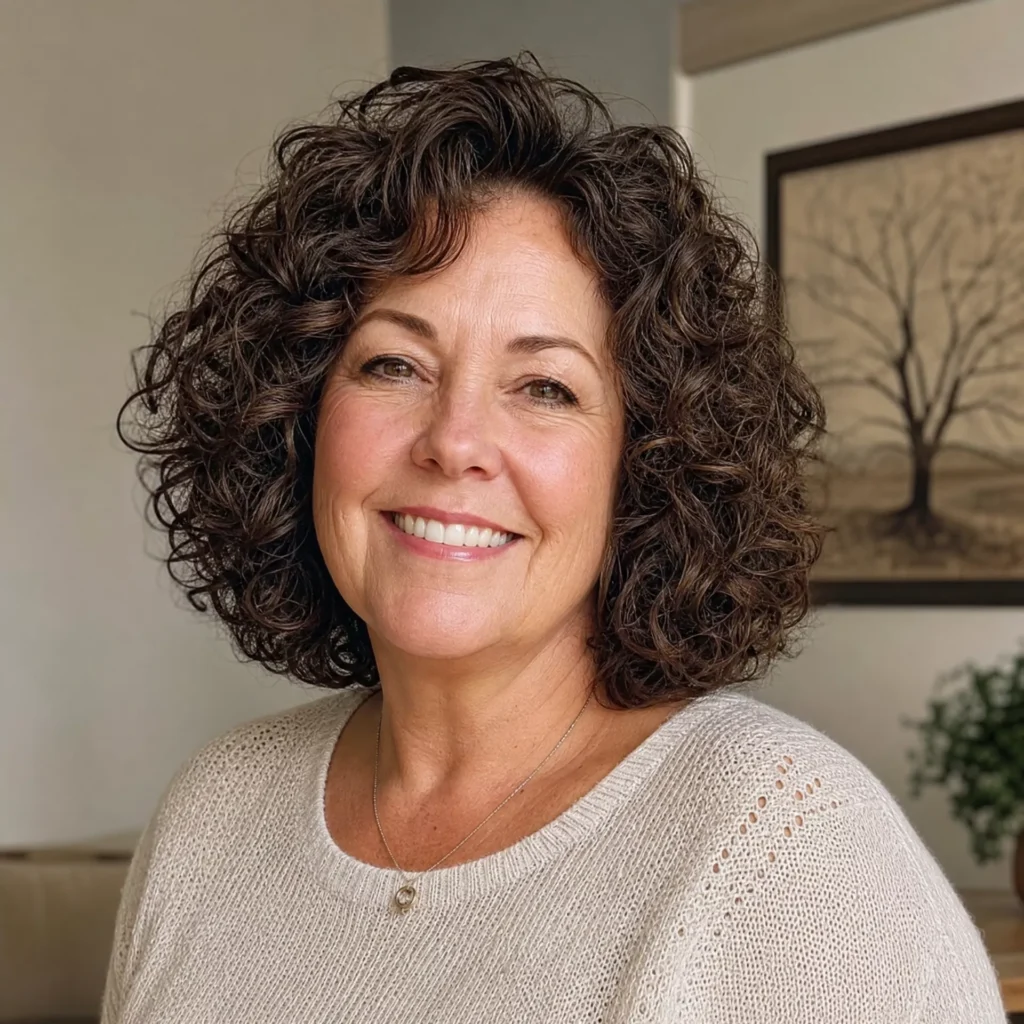
The first lob in this list builds height into the cut. This one creates it mostly through styling. The lob can have fairly even layers, and the lift at the crown comes from how the roots are dried and handled. Common methods include clipping the roots up while drying, diffusing with the head tilted, or using a root-lifting product, then gently lifting the roots with fingers or a pick once the hair is dry. The result is temporary and varies with density, technique, and product. Fine or low-density curls may need more help, while dense curls may lift with little effort. It’s an option for days you want height, not a requirement.
Defined Curl Lob on Round Face Over 50
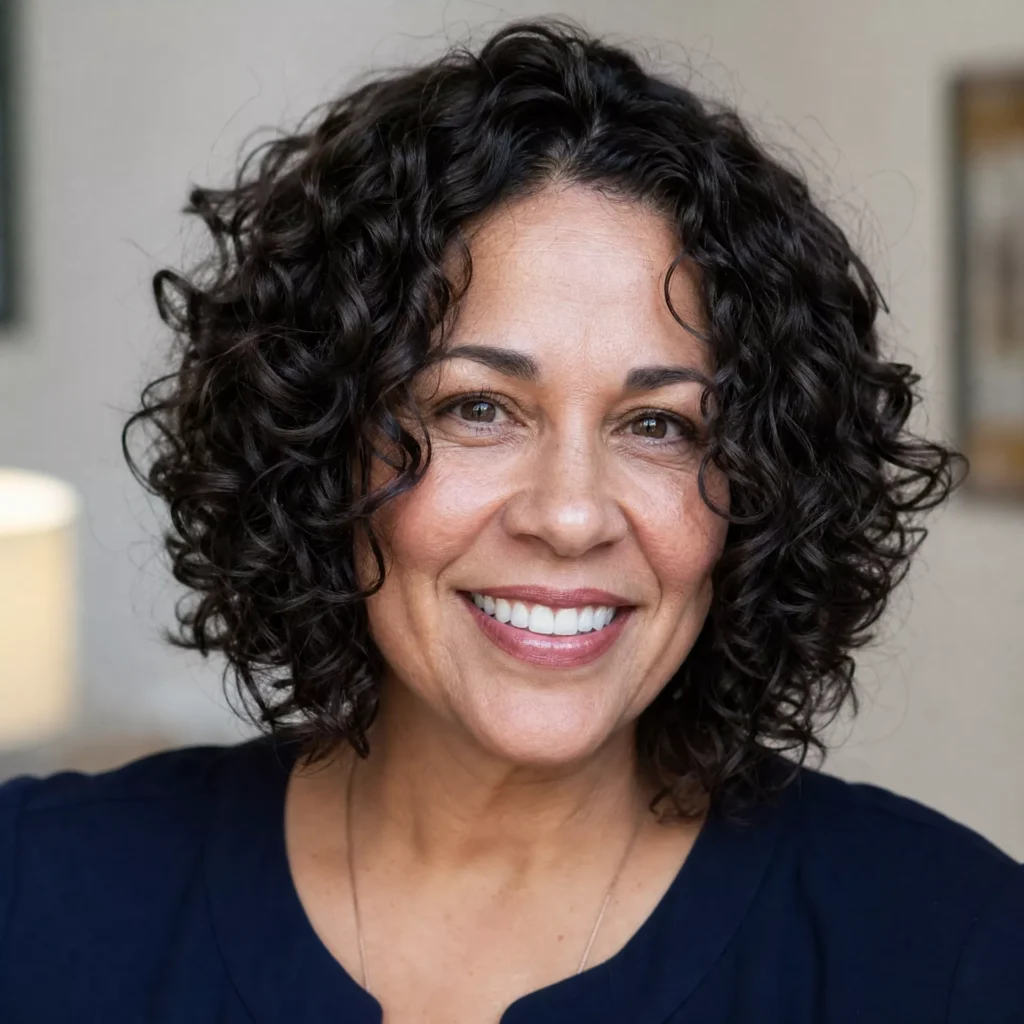
The haircut sets the outline, and the definition comes from styling. Defined curls are clumped into clear, separate ringlets or waves, usually by applying a styling product to wet hair and letting it dry undisturbed. The more defined the curls, the more the lob reads as a collection of distinct curls instead of a soft cloud. Neither finish is better. Undefined, fluffier curls look softer and often fuller, and plenty of people prefer them. The right product and amount vary with curl pattern and strand thickness. Fine curls can be weighed down by heavy creams, while dense curls may need more product to clump evenly.
Asymmetrical Curly Lob for Round Face
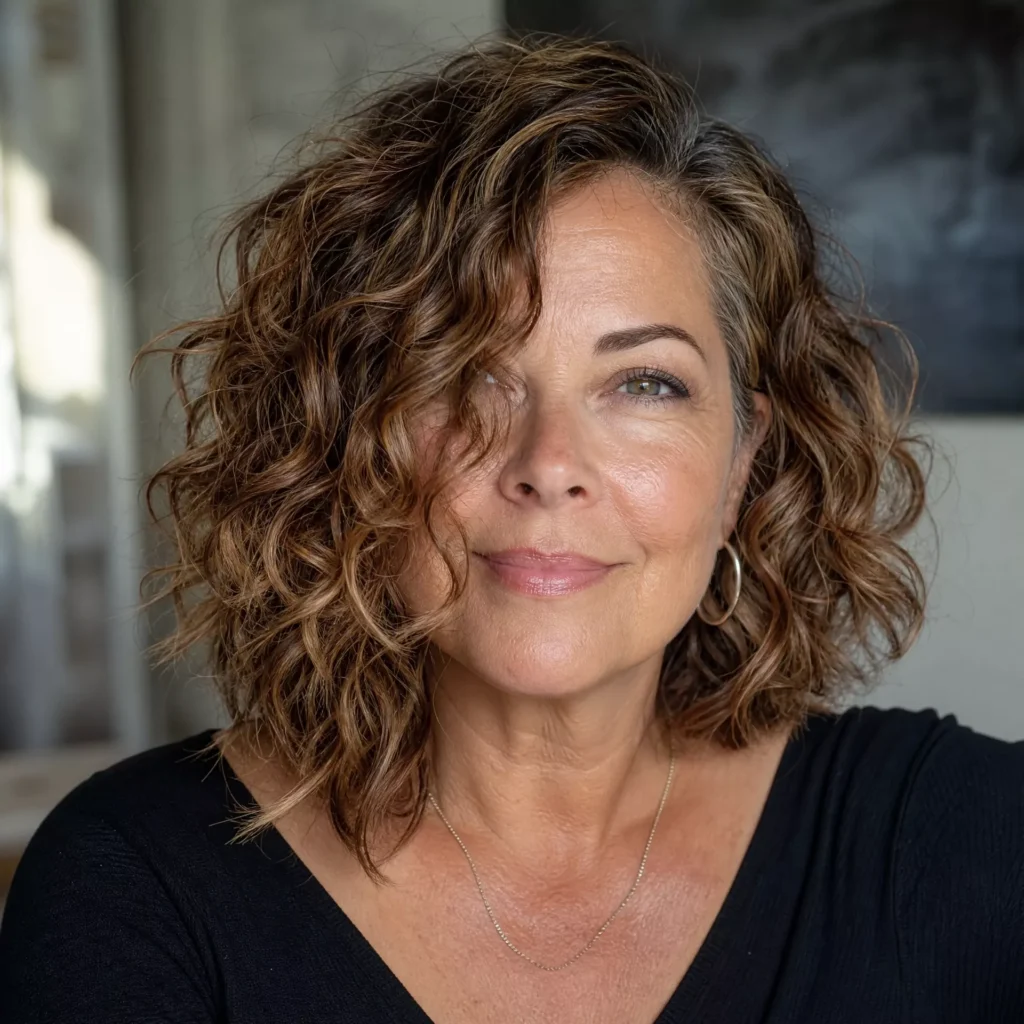
In an asymmetrical lob, one side is cut longer than the other, so the outline runs at a slight diagonal. A modest difference keeps the effect subtle, while a larger one makes it the defining feature of the cut. Curls change how visible the asymmetry is. Tighter curls with more shrinkage can blur the difference, and looser curls show it more clearly. The diagonal breaks up a symmetrical outline, but it doesn’t change the shape of the face underneath. It tends to sit best when the longer side matches the direction of your natural part. Ask how the two sides will look dry and how the difference will shift as the hair grows.
Curly Lob with Balanced Side and Crown Volume
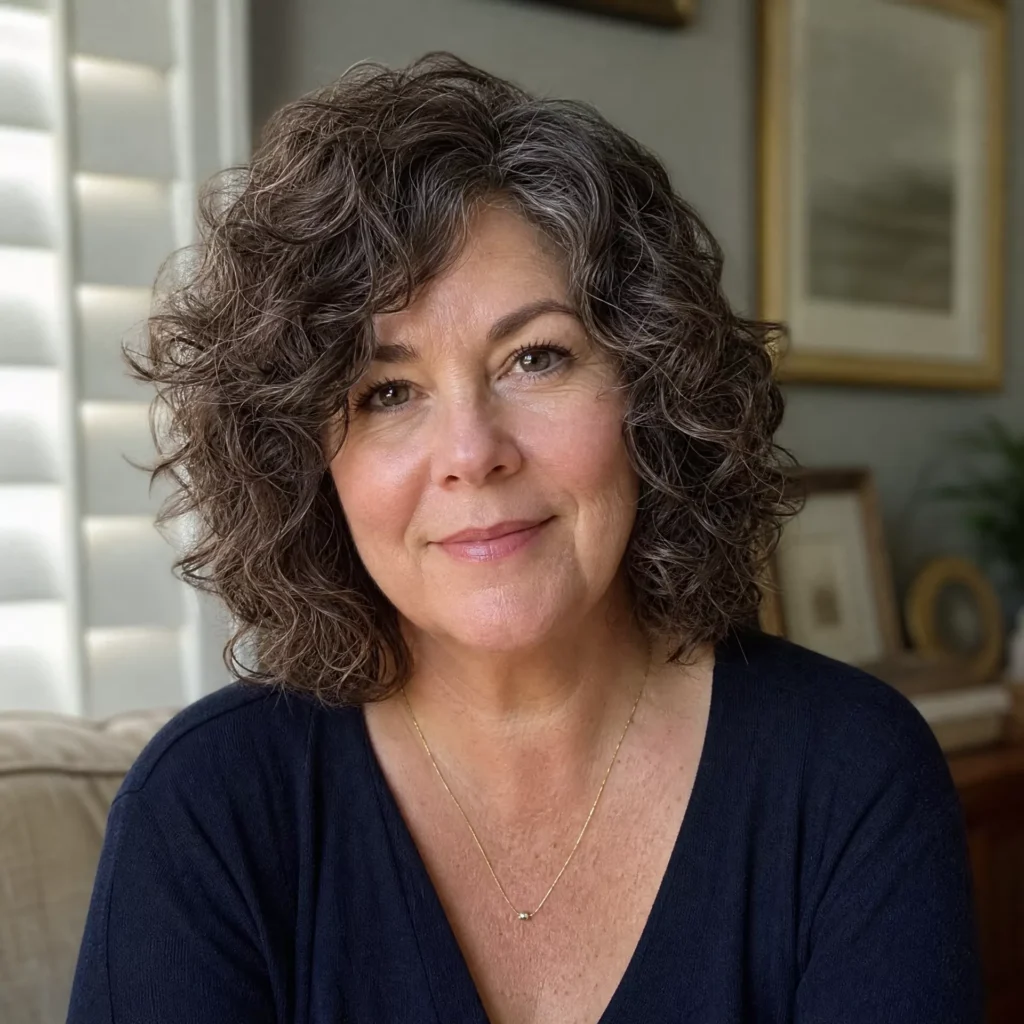
This approach is about distributing volume, not removing it. Some people want a little more lift at the crown and a little less expansion at the sides, while others like an evenly rounded shape. Layer placement is the main tool. Shorter layers at the crown encourage lift there, while sides kept slightly longer and less layered can expand less. Styling contributes too, for example lifting the roots at the top and leaving the sides to dry undisturbed. There’s no single correct distribution for a round face. Describe the outline you want to see when your hair is dry, and let your stylist plan the layers around your curl pattern.
Medium Curly Lob with Natural Gray for a Round Face Over 50
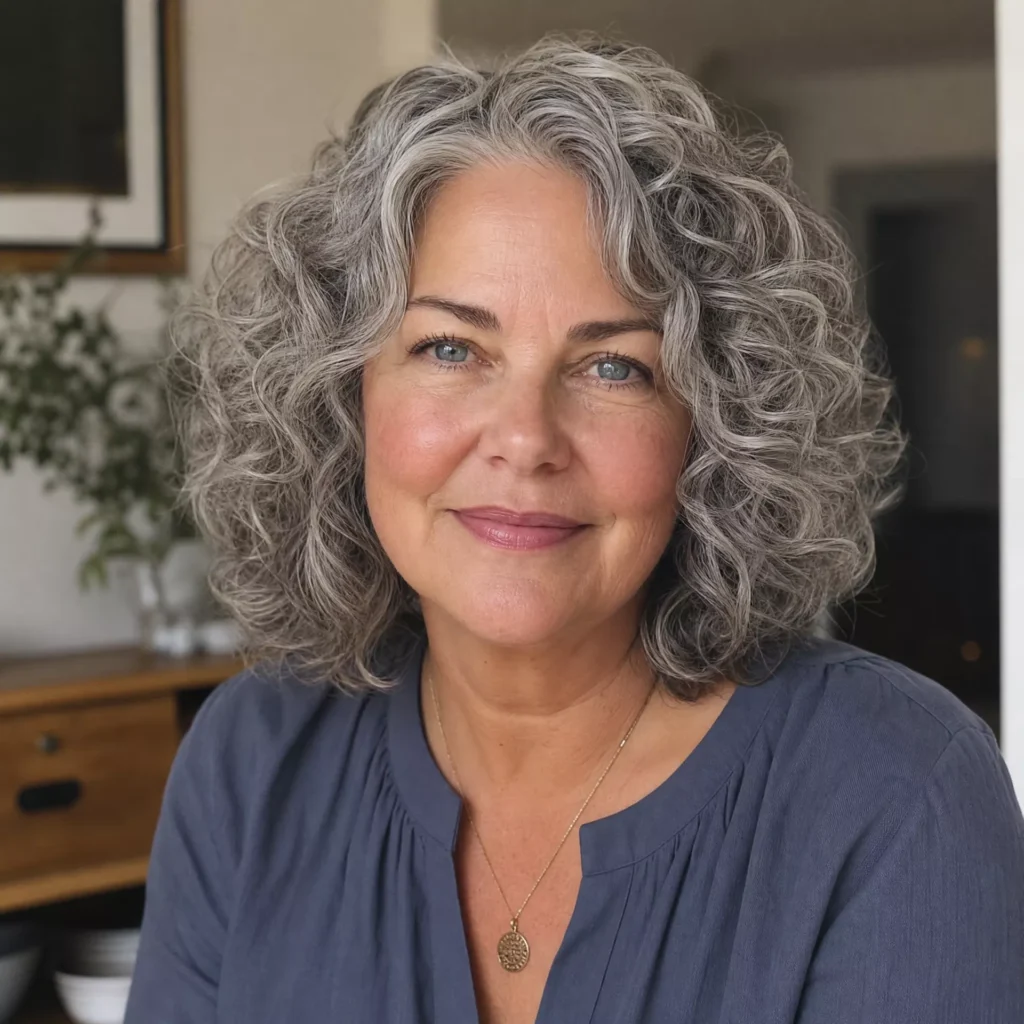
A curly lob can show natural gray, silver, salt and pepper, or a mix of tones as they grow in. The color is separate from the haircut and needs no processing. Gray strands sometimes have a different texture from the remaining pigmented ones, which can affect how they curl, so a lob that suits your current mix may behave a little differently over time. Natural variation in tone is also different from highlights, which are added to chosen sections. A medium length gives the curls room to show the color without much weight. Whether the gray draws the eye to the crown depends on where it grows most on your head.
Collarbone Curly Lob with Layers for Round Face
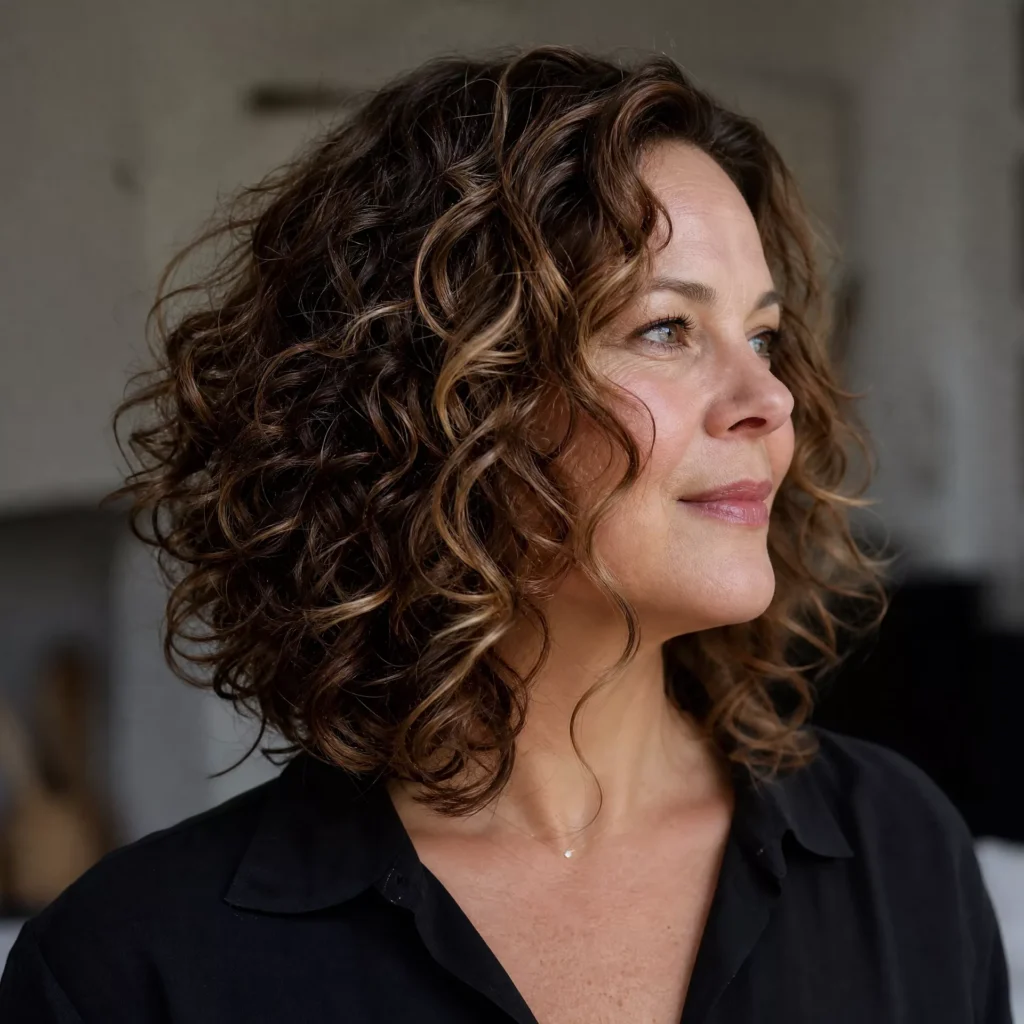
A collarbone target interacts heavily with shrinkage. Hair cut to reach the collarbone when stretched may sit around the chin or jaw once the curls form, depending on the pattern. That’s why it matters to agree on a dry length. Layers then shape the outline. More layers let curls move and stack but reduce weight at the ends, so the perimeter may look less full. Fewer layers keep a fuller edge but can create a heavier, wider bottom on dense hair. When the dry length does land below the jaw, it extends the line of the hair downward, but how far depends on how much your curls shrink.
PRO TIP: Diffusing and air-drying are both valid ways to dry a curly lob. A diffuser can help some people lift the roots or speed up drying, which is especially useful on dense hair that takes hours. Air-drying suits others perfectly well, particularly when curls form easily on their own or a softer finish is the goal. To compare them fairly, try each on a day without plans, keep the product and technique the same, and judge the shape once your hair is completely dry.
Soft Curly Lob with Highlights for a Round Face Over 50
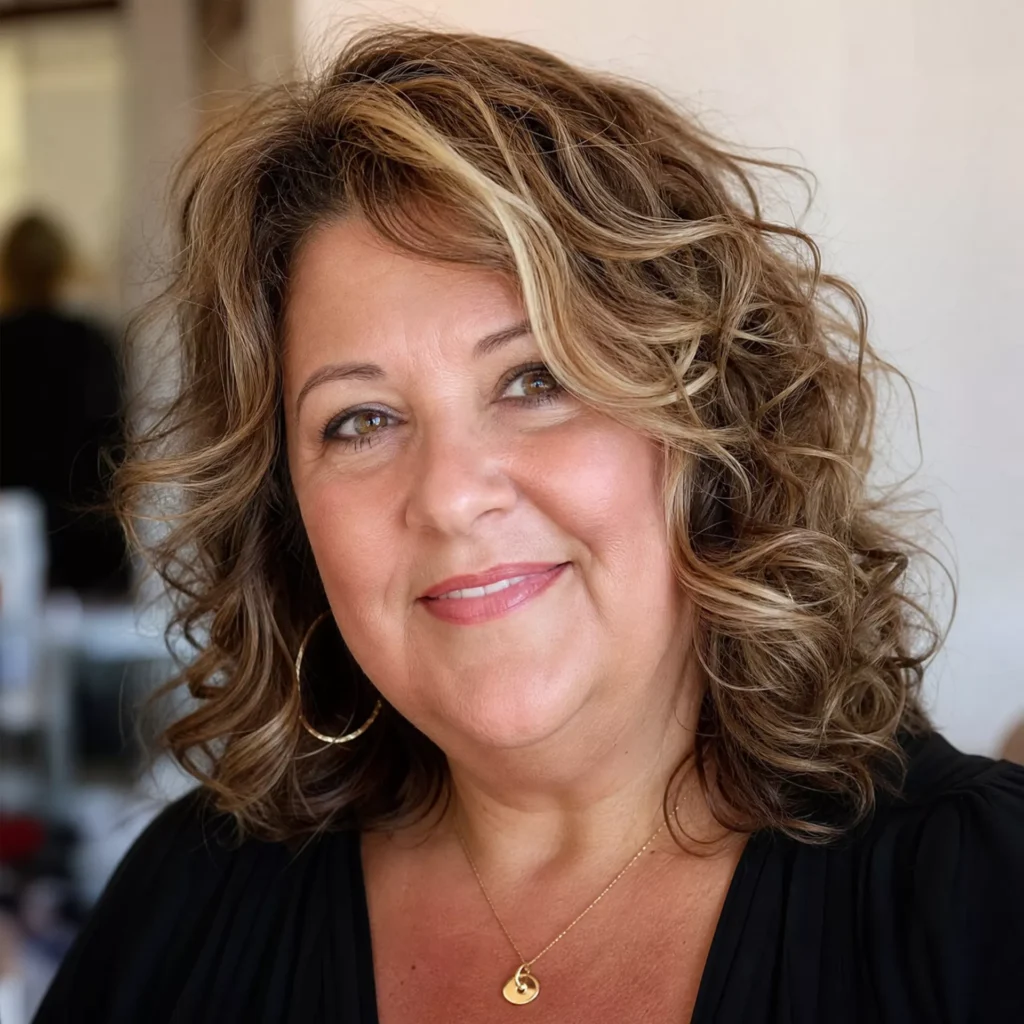
Highlights add lighter sections that show up as color variation across the curls. Because curls twist and turn, the highlighted strands appear in pieces, which can look softer than highlights on straight hair. Placement changes the effect. Highlights concentrated near the face draw attention there, while scattered pieces spread the contrast through the whole lob. The color is separate from the cut and entirely optional. Lightening can affect how some curls behave, so discuss your curl pattern and any past coloring with your colorist first. Upkeep depends on how different the highlights are from your base shade.
Lob with Tight Curls for Round Face Over 50
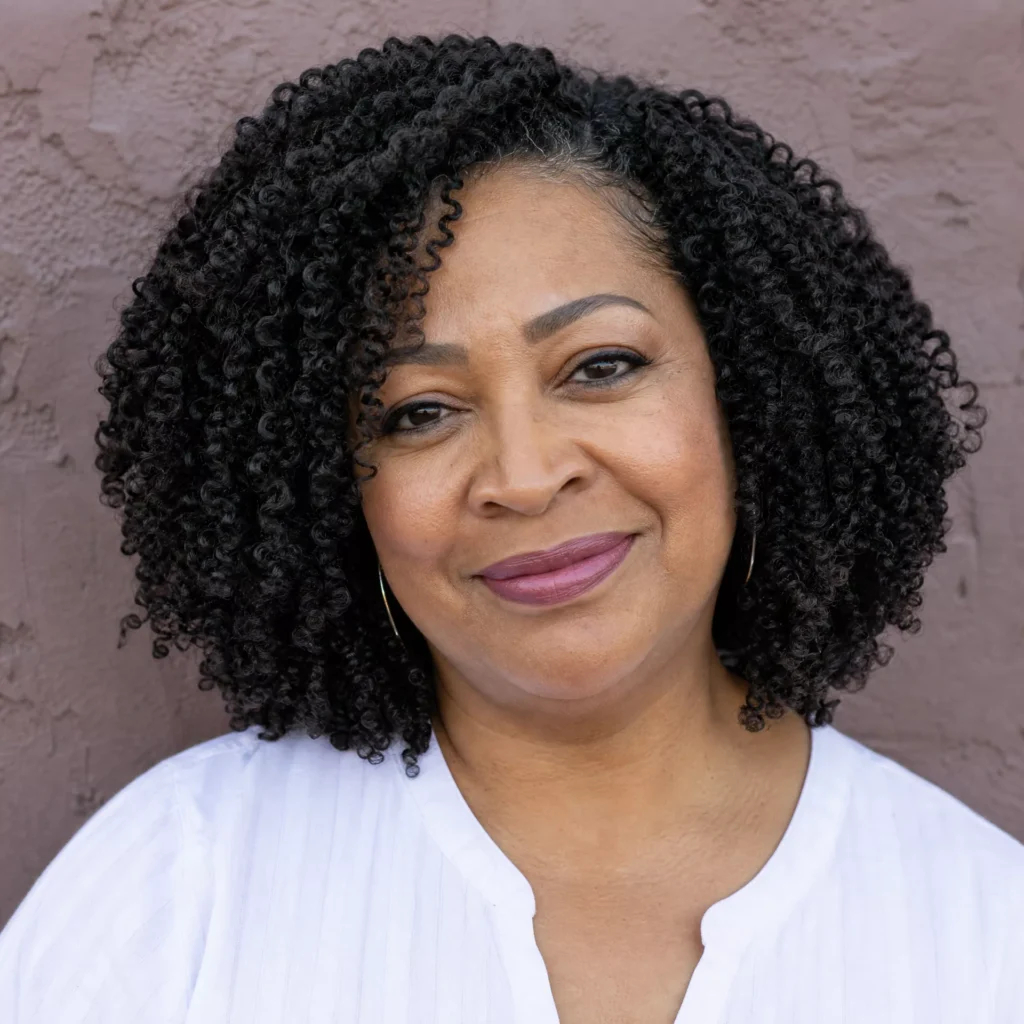
Tight curls and coils usually shrink more than looser curls, so a lob cut to the same stretched length can finish noticeably shorter. They also form a different outline, often rounder and fuller, with curls clustering closely together. That makes the dry shape the most important thing to agree on. A stylist experienced with tight curls may assess the shape on dry or partly dry hair, or explain how they’ll account for shrinkage another way. Whether tight curls sit close to the cheeks or spring outward depends on the pattern and density, so talk through the silhouette you’d like around your face.
Curly Lob Updo for Round Face Over 50
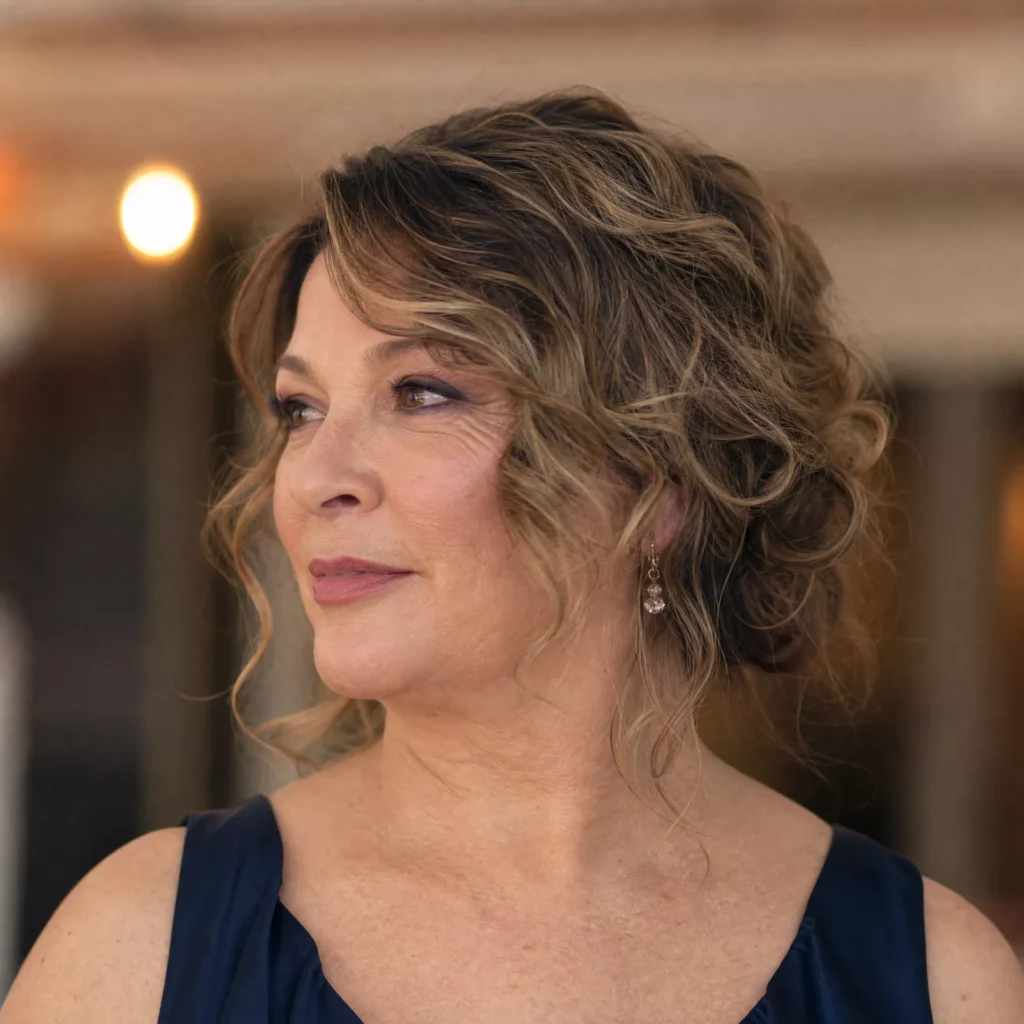
A lob updo is a styling option, not a different haircut. At lob length, curls can usually be gathered into a loose twist, a small bun, or a half-up arrangement, though not every lob is long enough for a full updo. Shorter pieces at the nape or front often escape, so pins or small clips help secure them. Gathering the hair up moves the volume to the crown and exposes the neck, which changes the outline considerably. Leaving a few curls loose around the face is optional. Some people like that softness, while others prefer everything pinned back. Test the style at home before an event to see how much hair reaches.
Curly Lob with Caramel Highlights for Round Face Over 50
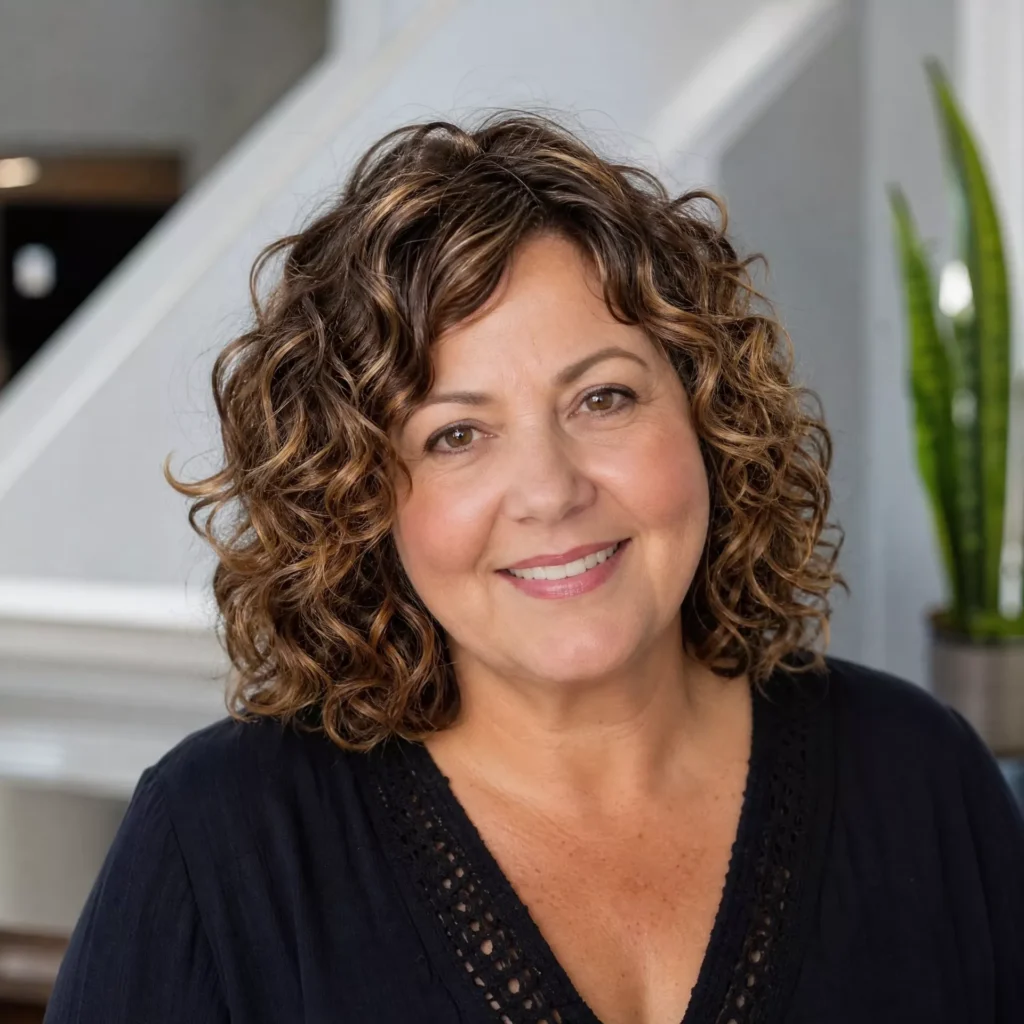
Caramel is a warm, golden-brown shade, and its effect depends on your base color. On light brown curls, it blends softly. On darker hair, it shows as warmer contrast, and on gray, it shifts the overall tone warmer. The difference from general highlights is temperature: warm tones read differently from cool or neutral ones against the same base, and they can look especially rich where curls catch the light. Warm shades can also drift between appointments, so toning may be part of the upkeep. Whether caramel suits you comes down to preference and starting color. It doesn’t change the shape of the cut.
Short Curly Lob Above the Collarbone for Round Face
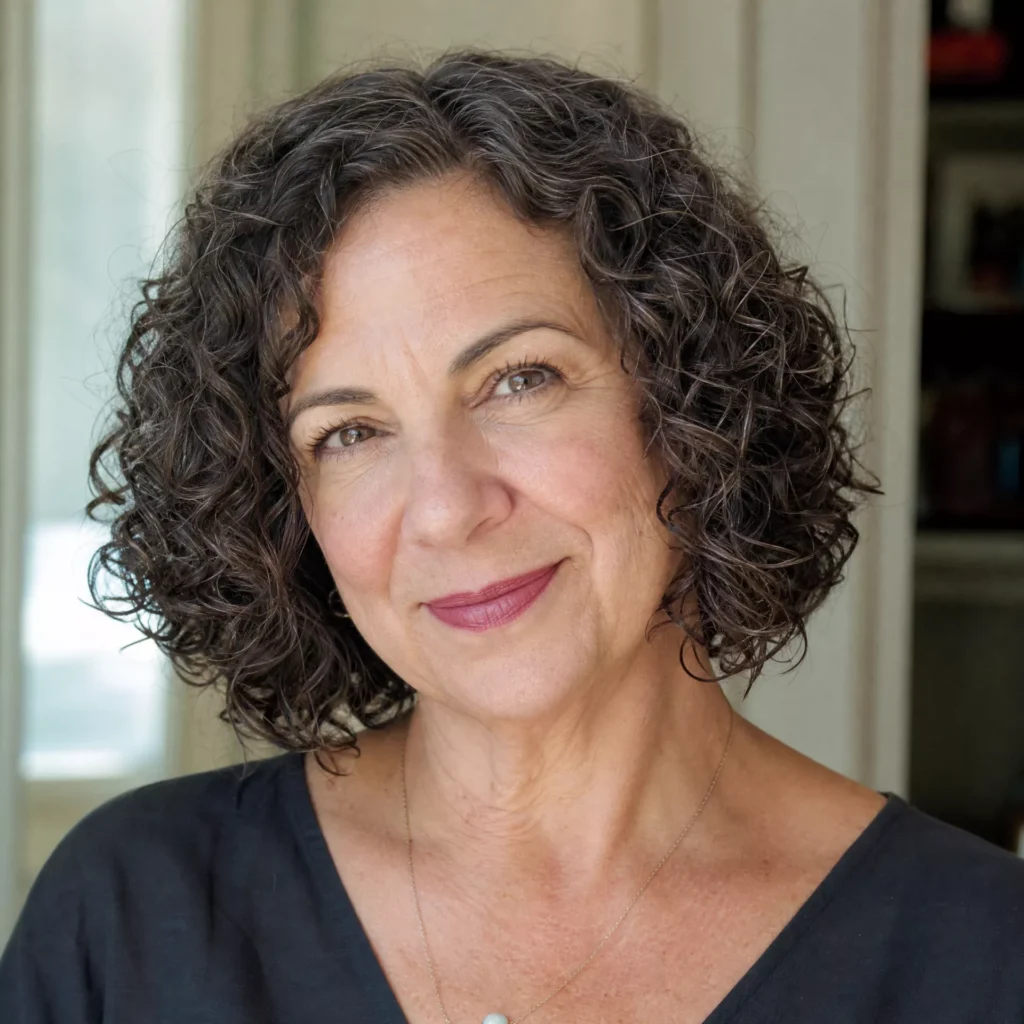
Cutting the lob slightly shorter, just above the collarbone when stretched, makes the shape more compact. Depending on shrinkage, the dry length may land around the chin or jaw. A shorter lob carries less weight, so curls may spring up more, and it’s often easier to gather into a small bun or clip. The trade-off is that, with less length weighing them down, some curl patterns expand outward and widen the sides. Whether that happens depends on the cut and your curls. A stylist can reduce expansion with internal layering, or you may decide you like the fuller shape.
Wavy Curly Lob for Round Face Over 50
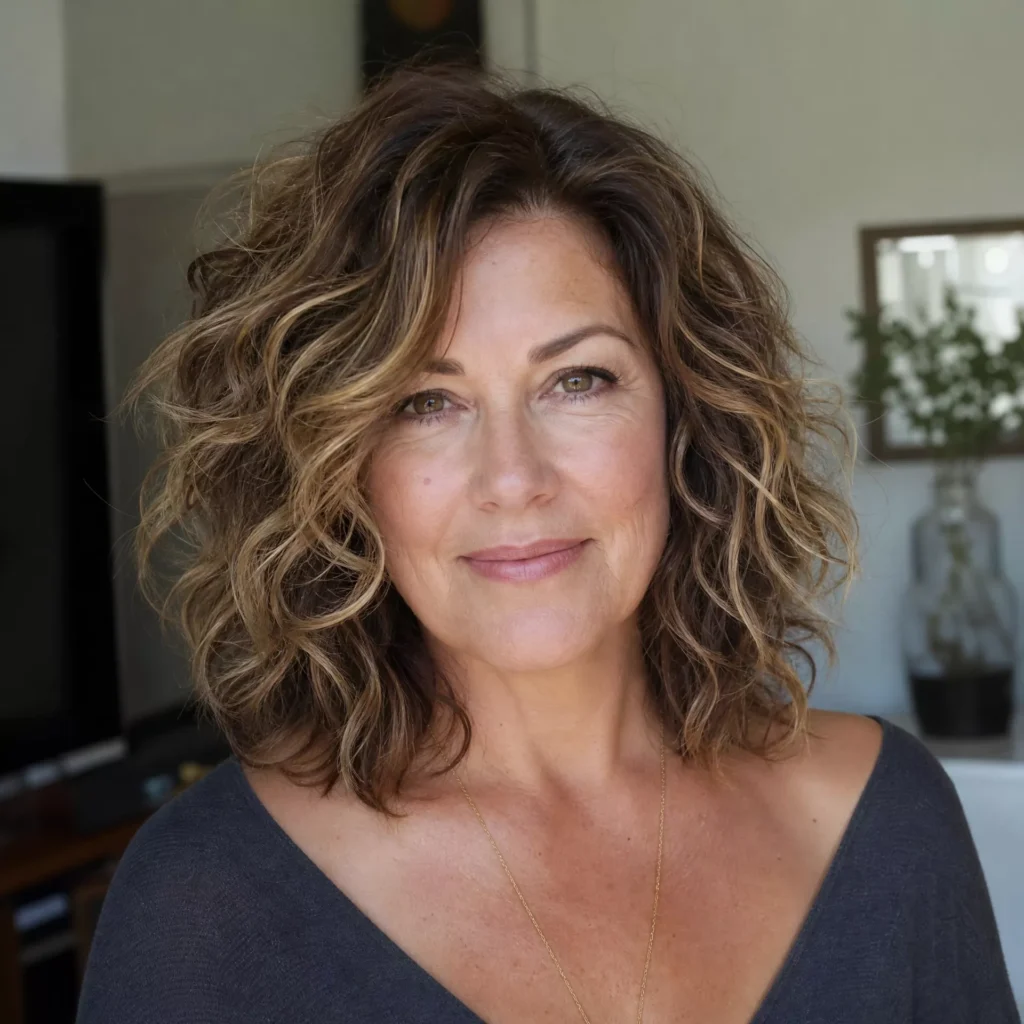
Waves and mixed wavy-curly patterns behave differently from tight ringlets. They usually shrink less, so the lob stays closer to its stretched length, and the shape tends to look softer, with the ends bending more than coiling. Wavy-curly hair isn’t one texture, either. Some heads are wavy on top and curlier underneath, and others have looser bends at the front than at the back. A cut that follows your own pattern tends to sit better than one built around a photo of different hair. Whether you want more height or a fuller outline is a personal choice, not something waves require.
Curly Lob with Wispy Face-Framing on Round Face
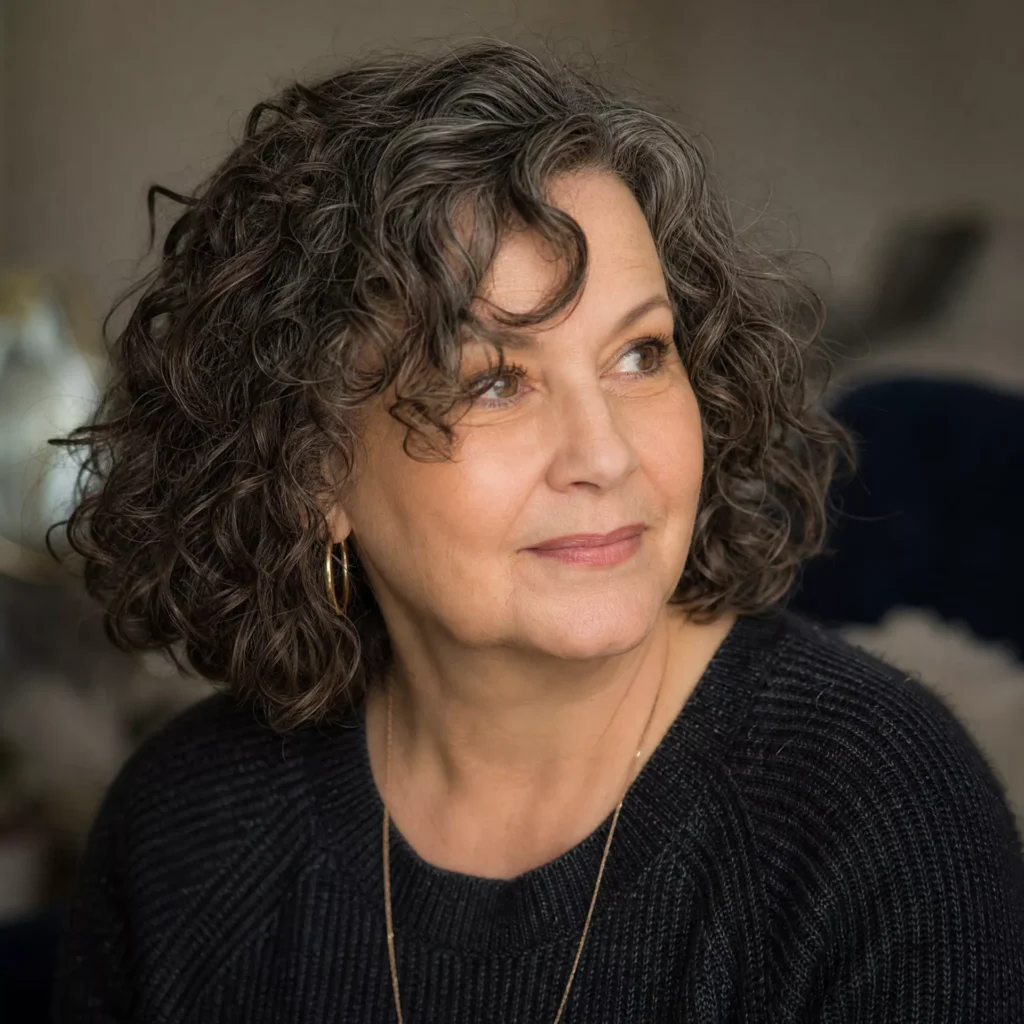
Wispy face-framing uses small, light sections at the front, often with tapered ends, so they look delicate instead of solid. That sets it apart from heavier face-framing layers, which use more hair, and from a full curtain fringe, which covers part of the forehead. On curly hair, wispy pieces form small curls or ringlets around the face. How they look depends on clumping. Small sections may form neat spirals, or they may separate and look frizzy, depending on your curl pattern and product. Ask how much hair will go into the front pieces, since taking too little can leave them looking sparse.
Low-Volume Side Curly Lob for Round Face Over 50
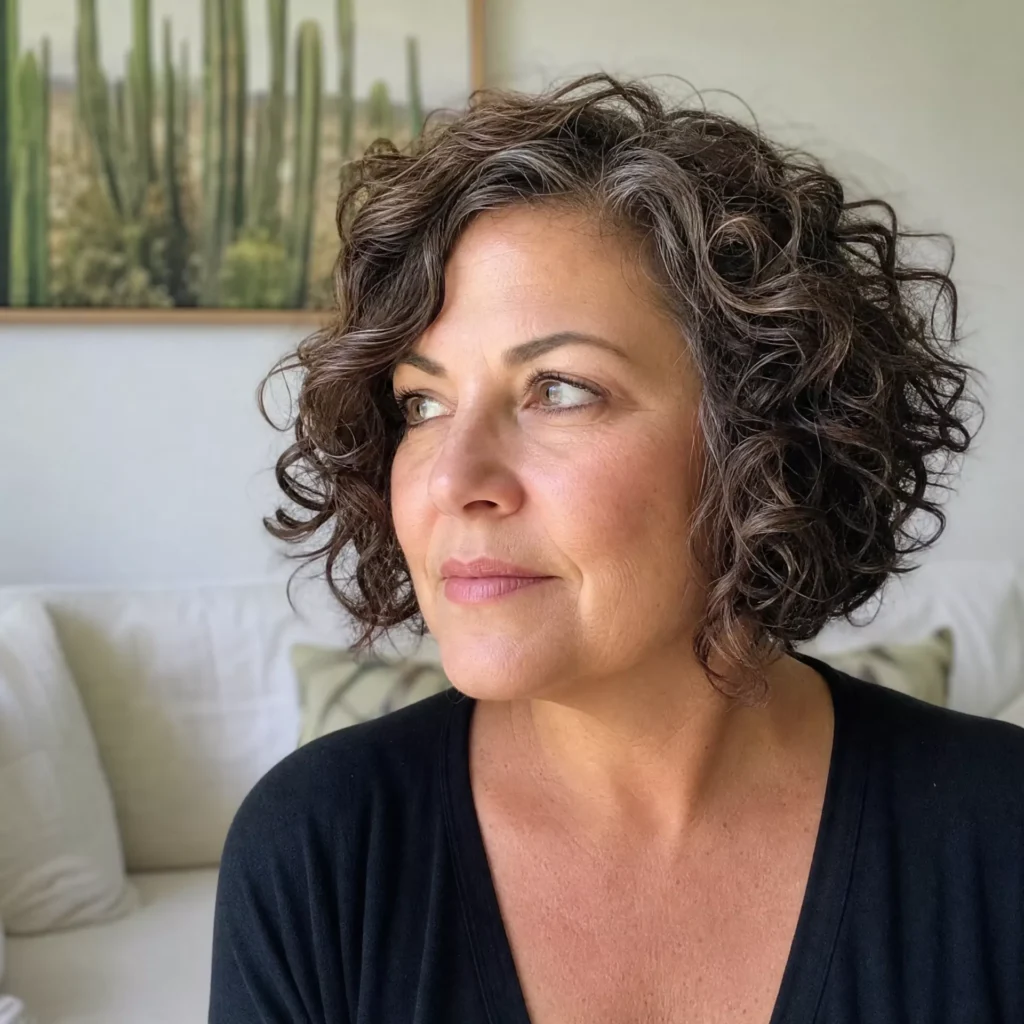
This version suits someone who prefers a less expanded silhouette at the sides. “Low volume” describes the finished shape, not flattening the curls. A stylist might keep the sides slightly longer, remove weight internally so the curls nest closer together, or concentrate layers at the crown. Styling helps too, such as letting the sides dry undisturbed and not fluffing them once they’re dry. Side fullness isn’t a flaw to correct; this is simply one of several shapes you might prefer. On dense or tightly curled hair, some expansion is natural, and the cut can shape it without eliminating it.
Diffused Curly Lob with Volume on Round Face Over 50
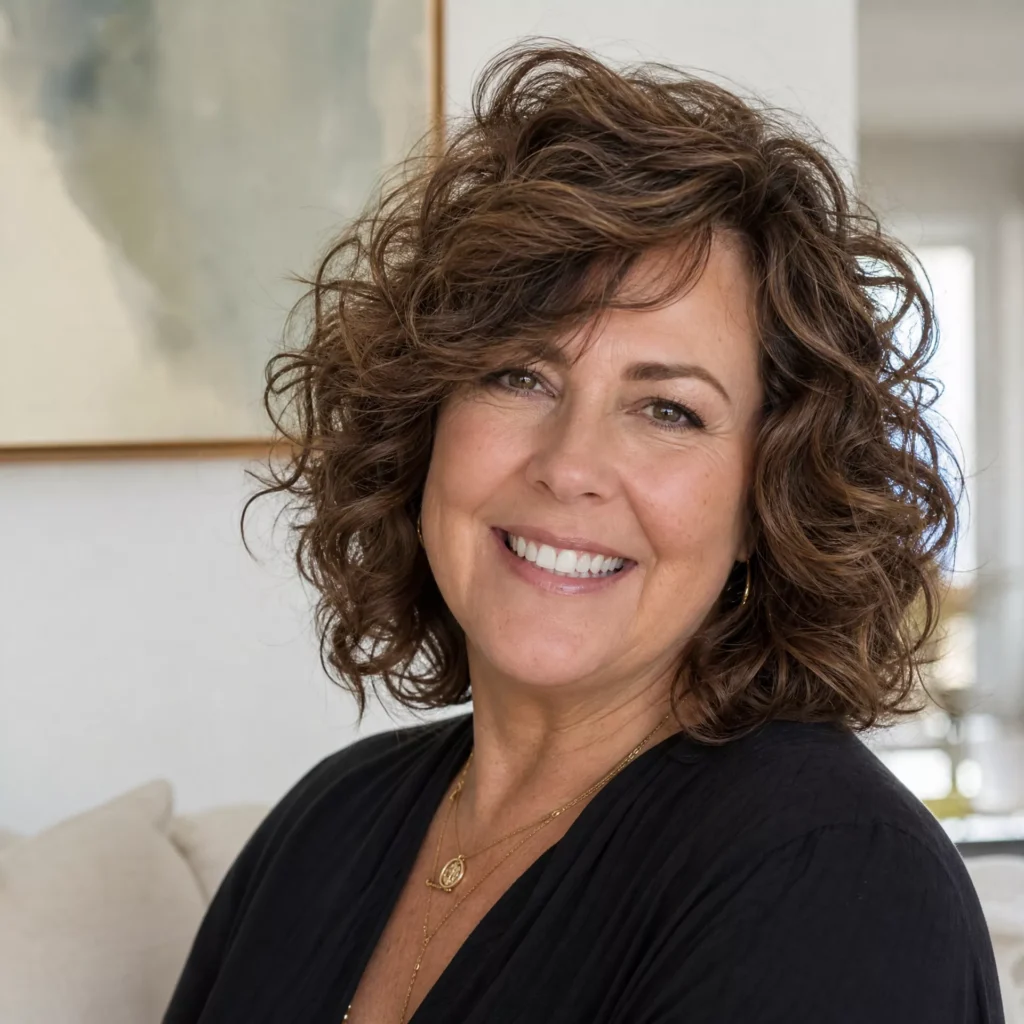
Diffusing is a drying technique, not a separate haircut. A diffuser spreads the dryer’s airflow so curls can dry without being blown apart, and lifting sections toward the scalp while drying can add height at the roots. The amount of lift depends on technique, hair characteristics, and the finish you want. Dense curls may gain noticeable volume, while finer curls may gain less, or frizz if they’re moved too much. It won’t necessarily make the face look longer, and it isn’t better than air-drying for everyone. Use a heat and speed setting that’s comfortable for your hair and scalp.
Complete Curly Lob for Round Face Over 50
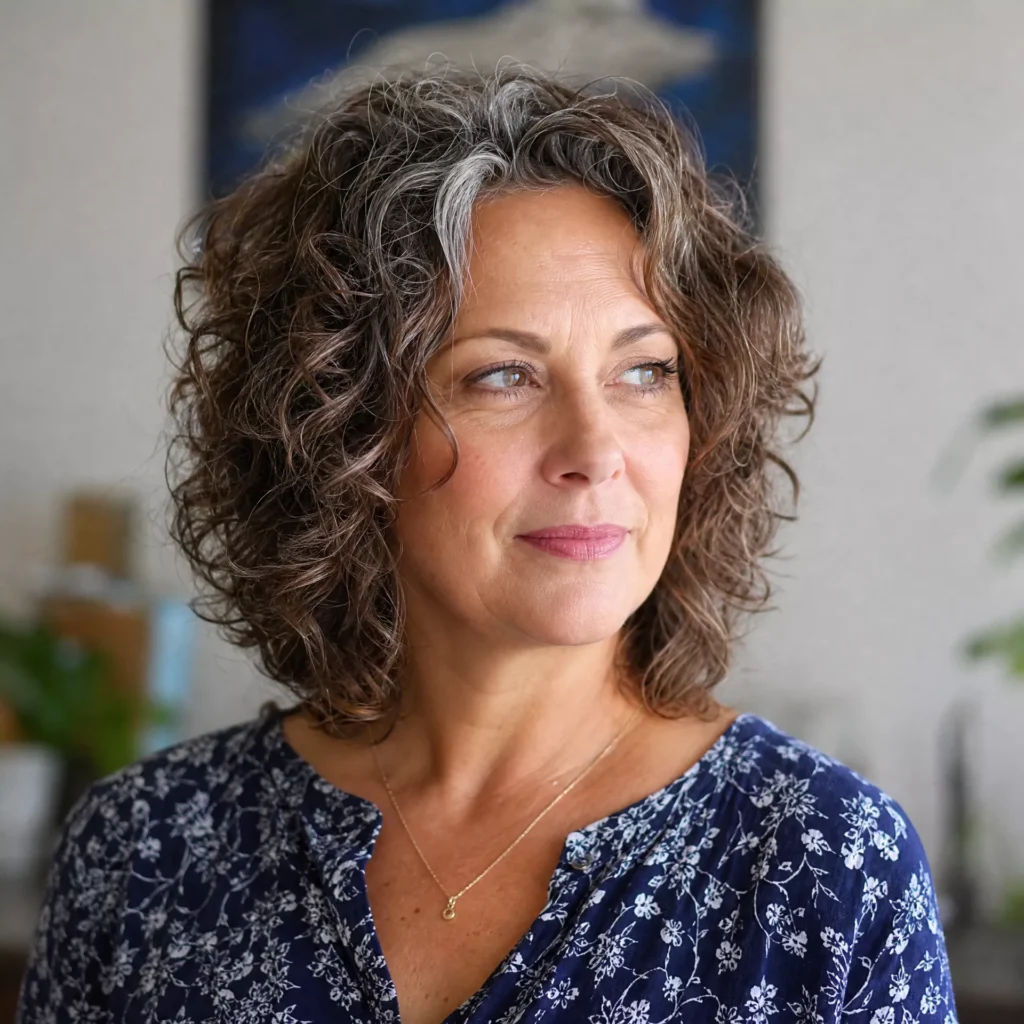
This last example shows how the earlier choices can fit together: a length chosen with shrinkage in mind, layers placed where you want the volume, a front detail such as face-framing or curtain bangs, and a drying routine that suits your curls. One person might combine a collarbone lob, crown layers, wispy front pieces, and diffused roots. Another might choose a shorter lob with balanced volume and a side part, left to air-dry. Neither is the definitive version. The right mix depends on your curl pattern, density, preferred outline, and how much styling you’ll realistically do.
How to Choose a Curly Lob for Your Curl Pattern
Start with the dry shape you want, not the stretched length. Curls shrink by different amounts, so tell your stylist where you’d like the ends to sit when dry and let them plan around your shrinkage.
Strand thickness and density change the plan. Fine strands can be weighed down by heavy products and may look sparse with too many layers. Lower density means fewer strands, so a fuller perimeter often helps the ends look complete. Dense curls may need more internal weight removal to keep the shape from widening, and coarse strands tend to hold their shape but can expand outward. Loose curls show layering clearly, while tight coils form rounder shapes. These differences matter far more than age.
What to Discuss with Your Stylist
Bring reference photos of hair that resembles yours in curl pattern and density. Explain how you usually wear it, whether air-dried, diffused, or sometimes straightened. Describe the length you want when dry, and say whether you’d like bangs, face-framing layers, or a fuller perimeter. Ask how the cut will behave as it grows out and how much styling the shape will need, and be honest about the time you’re willing to spend on it each morning.
Color Is Optional, Not a Requirement
Gray, highlights, and caramel tones are all separate from the haircut. A photo may show a curly lob that looks dimensional because of color or lighting while the cut underneath is quite simple. When choosing a reference, look at the outline, length, and layering, then decide on color as its own question.
Final Thoughts
A curly lob works best when it’s built around how your curls actually behave. Length, layer placement, front details, and drying routine can be combined in many ways, and none of them is the single right answer for a round face. Save a photo of the shape you like, note the dry length you’re aiming for, and talk it through with a stylist who understands your curl pattern.