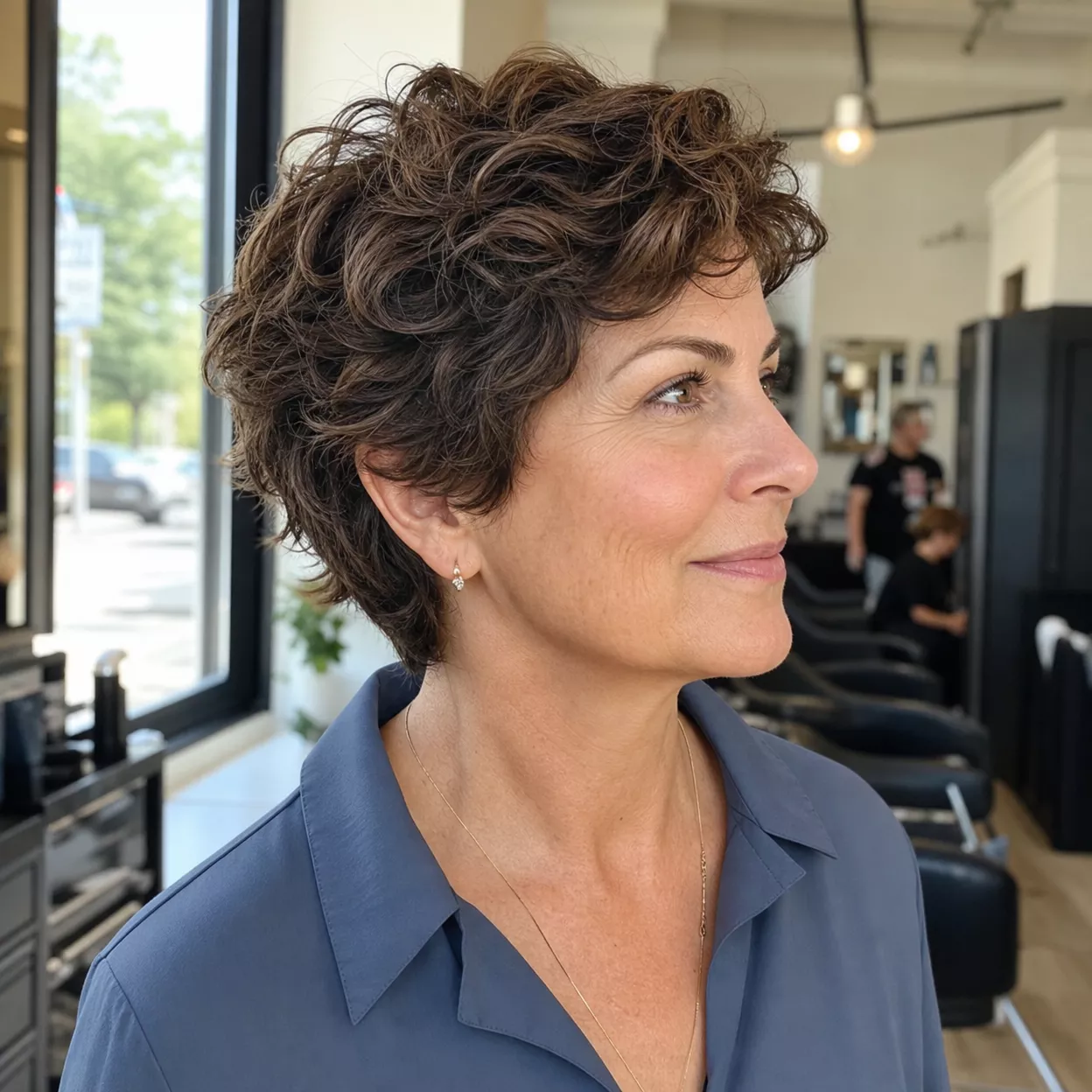
29 Hairstyles for Women Over 50 and How to Choose the Right One
Age alone doesn’t determine the right haircut. What matters more is what’s actually happening with your hair right now: how dense it is, how thick or fine each individual strand is, whether your texture has shifted over the years, how your gray or colored hair behaves, how much time you want to spend styling, and how much length you’re willing to trade for volume or ease. Two women the same age can need completely different cuts, because their hair simply isn’t doing the same thing.
The 31 styles below aren’t a checklist to work through. They’re starting points, each one built around a different technical idea, layering, perimeter weight, texture, color placement, that you can bring into a conversation with your stylist. Some of these are haircuts. A few are styling techniques or color choices layered onto a cut rather than a cut in themselves, and that distinction matters more than it might seem.
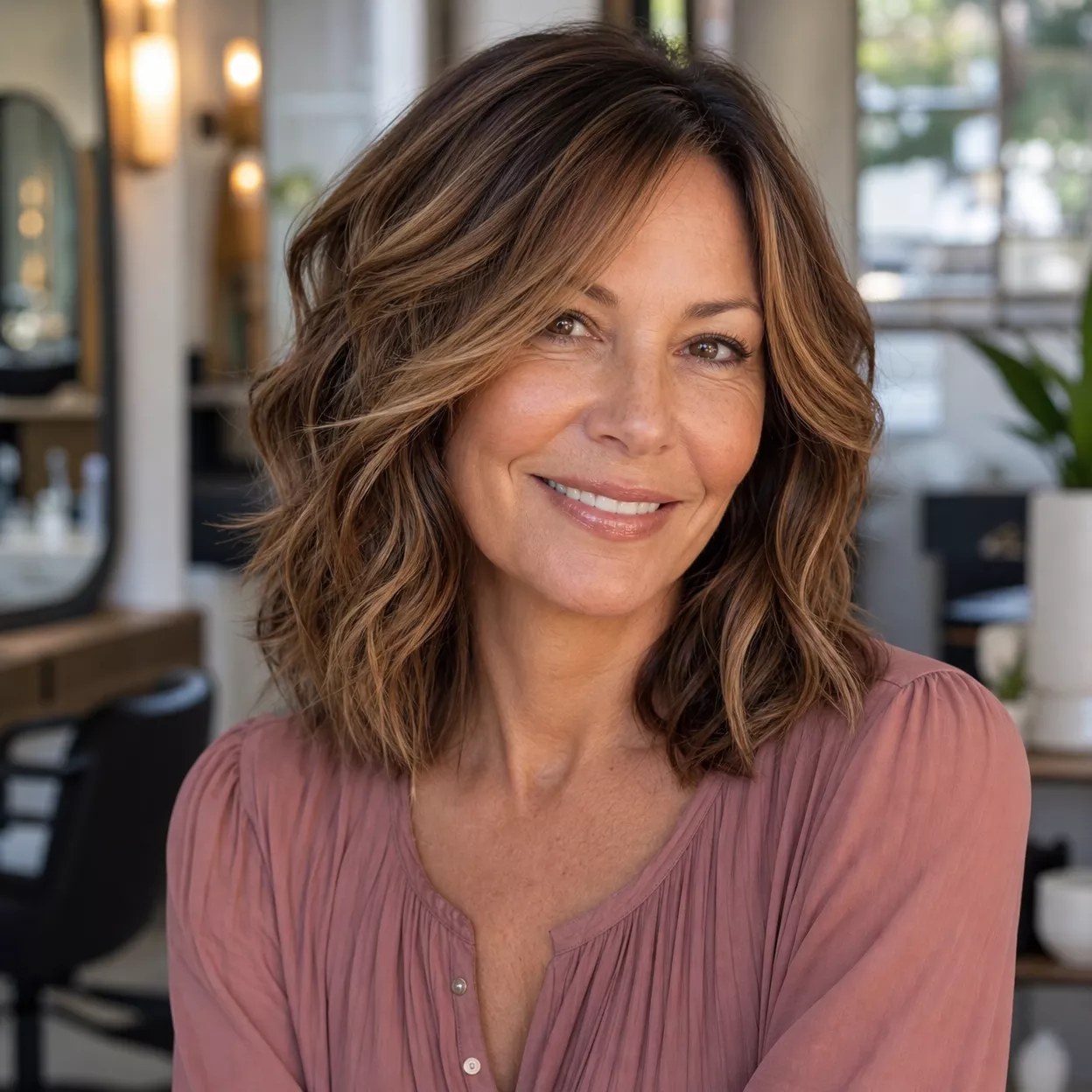
The Modern Collarbone Lob

A lob at collarbone length sits in a useful middle ground: short enough that it doesn’t need much support to hold shape, long enough to pull back if you want to. The perimeter can stay fairly blunt for a cleaner line, or be softened with layers depending on how much movement you want. It works across a range of textures reasonably well, though straight hair will show the perimeter line more clearly than wavy hair will.
Layered Bob for Thin Hair

“Thin hair” usually means one of two different things, and it’s worth knowing which one applies to you. Fine hair refers to the diameter of each strand, narrower strands that can feel soft and go flat easily. Low-density hair refers to how many strands you actually have, regardless of how thick or thin each one is. Layers can add visible movement in either case, but the amount matters: fine hair that’s also dense tolerates more layering than fine hair that’s also low-density, where removing too much weight can leave the ends looking sparse rather than fuller. Ask your stylist which situation describes your hair before deciding how aggressively to layer.
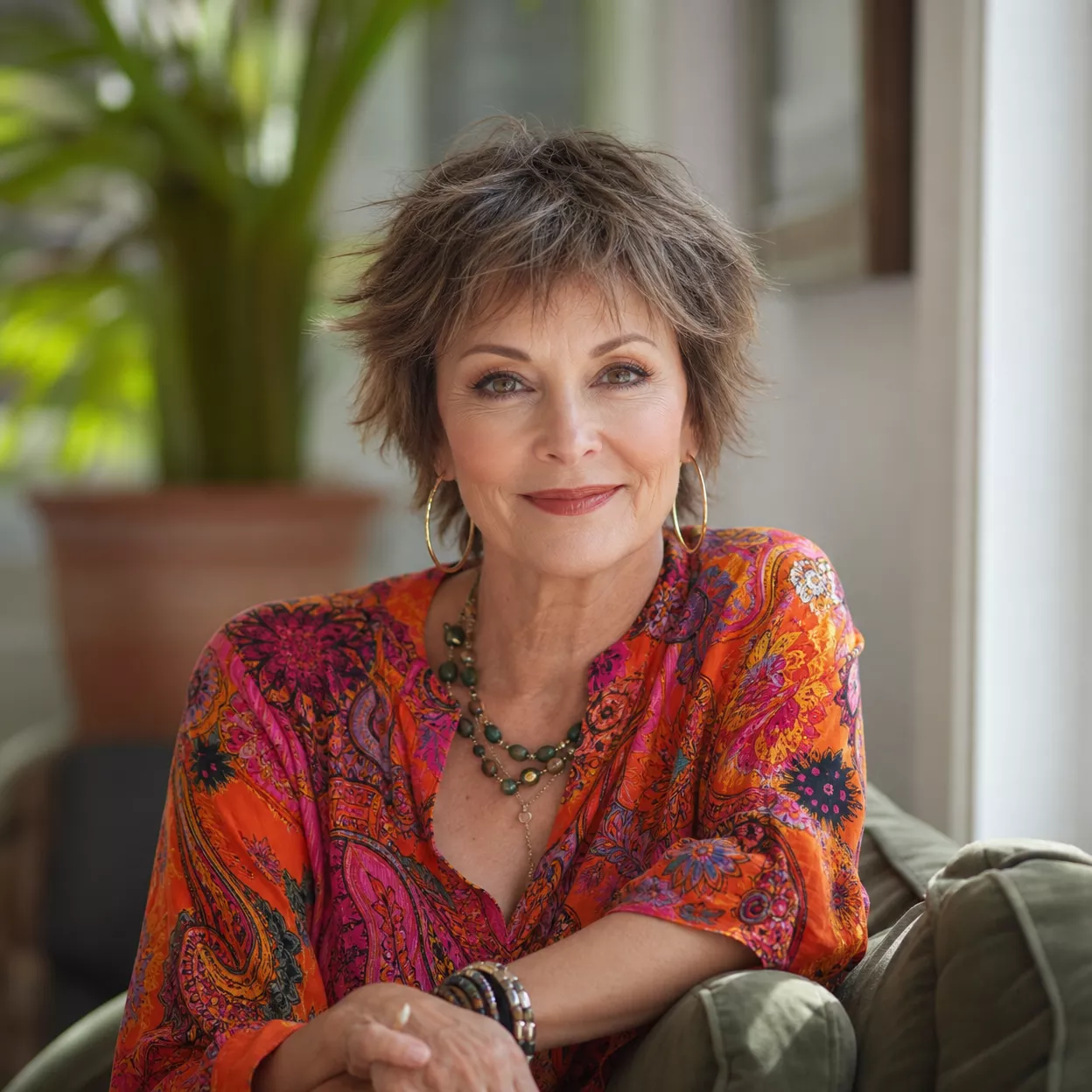
Soft Pixie with Volume on Top

A pixie removes most of the length that would otherwise weigh hair down, which is why shorter length often helps hair that struggles to hold shape when it’s longer. Volume at the crown here comes from how the top section is cut and layered, not from the shortness alone. The trade-off shows up at the salon: precise short shapes generally need reshaping more often than longer cuts to avoid looking overgrown.
Shoulder Length Waves with Curtain Bangs

Curtain bangs part in the center and sweep outward, and how well they actually sit depends on your natural part more than on the style itself. Bangs cut against the direction your hair already falls tend to drift back within a day or two. Paired with shoulder-length waves, the bangs work best when they’re cut to blend into the wave pattern rather than styled as a separate, flatter section.
Textured Silver Lob

Natural gray and silver hair can behave differently from pigmented hair, though how much varies quite a bit from person to person, it isn’t automatically coarser or drier. A lob with some texture cut into it can help gray hair show movement rather than sitting flat, which is more a function of the cut than of the color itself. If your gray hair does feel more resistant to styling than it used to, that’s worth mentioning to your stylist so the layering can account for it.
The Bixie Cut

A bixie sits between a bob and a pixie, with more length left at the sides and back than a true pixie but a shorter, more structured crown than a bob. It offers more styling flexibility than a full pixie while still removing meaningful weight from the top. Because it depends on a fairly precise relationship between the short and longer sections, it generally needs regular reshaping to hold that balance as it grows.
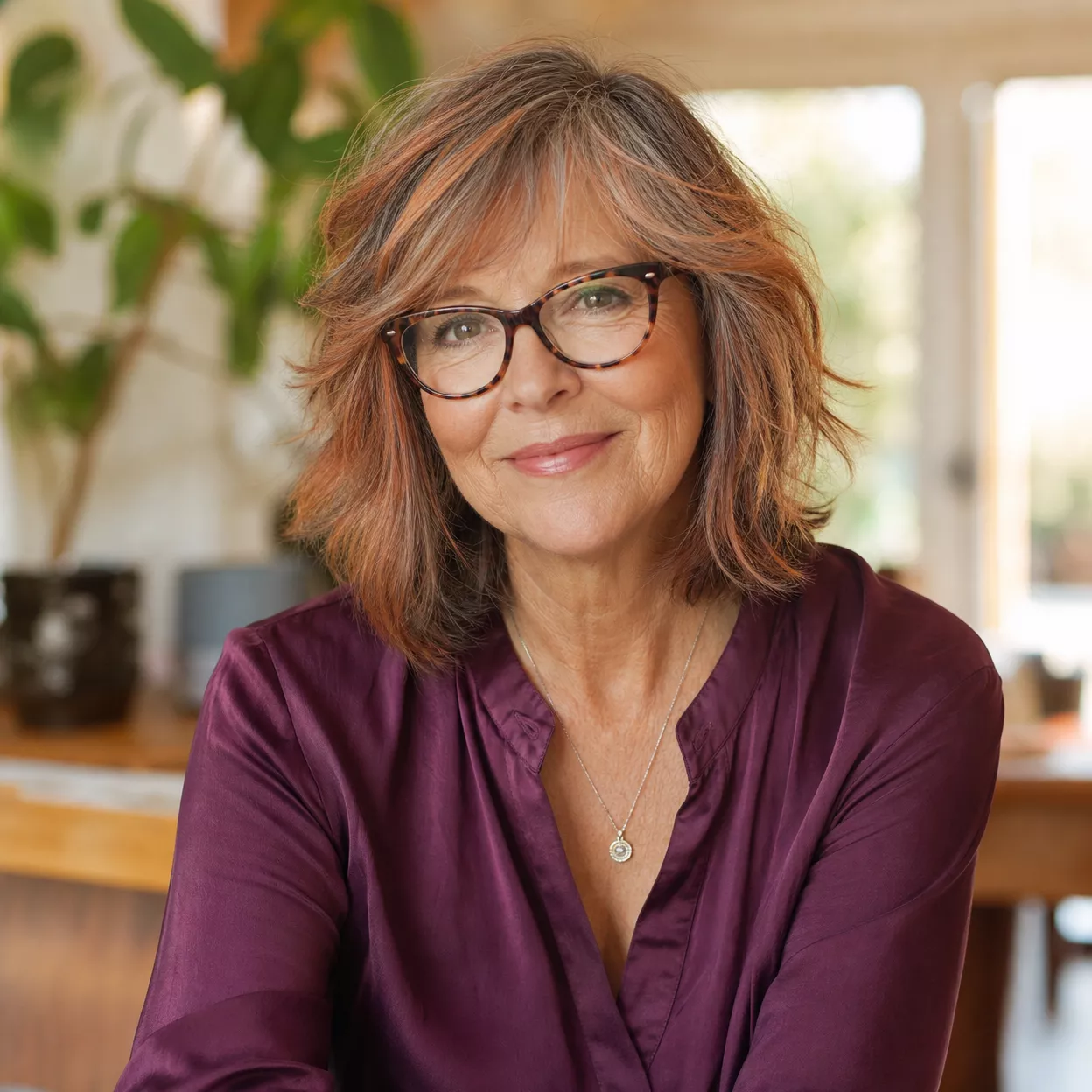
Layered Shag with Face-Framing Pieces

A shag relies on layers cut at several different lengths for separation, and that separation reads as texture when there’s enough density to fill the gaps between them. On hair with less density to spare, the same heavy layering can look more sparse than textured. Face-framing pieces cut a bit shorter add movement near the face specifically, which is a separate decision from how heavily the rest of the shag is layered.
Blunt Bob with Soft Edges

An unbroken, blunt perimeter gives the eye a solid line, which is part of why this shape often gets suggested when the goal is making the ends look more substantial, an effect of the cutting technique rather than a change in actual density. Softening the very edges slightly keeps it from looking severe. The trade-off is grow-out: a blunt line shows lengthening more visibly than a layered one, so it tends to need more frequent trims to stay looking clean.
Long Layers on Medium Length Hair

Layers here add movement while keeping most of the length intact, which is a reasonable option if you don’t want a shorter silhouette but still want some lift through the mid-lengths. It’s worth knowing this cut doesn’t create much root lift on its own; the length and weight of medium hair tend to pull the roots down regardless of layering, so root volume here usually depends more on styling than on the cut.
Voluminous Natural Curls

Curls shrink as they dry, sometimes considerably, so a length that looks right on wet hair can end up shorter once it springs up. It’s worth having curly hair either cut dry or checked once fully dry before any final trimming, since your stylist needs to see how your specific curl pattern actually falls rather than working from wet length alone. Layers here are generally used to redistribute weight so curls at the crown can lift, rather than removing bulk outright the way they might on straight hair.
Wispy Bangs with Layered Lengths

A wispy fringe is cut lighter than a full one, which means it needs reasonable density at the hairline specifically to avoid looking sparse rather than soft. If your hairline is thinner than the rest of your scalp, a wispy fringe can end up looking thinner than the reference photo shows, so it’s worth asking your stylist to leave it a touch heavier than pictured. Bangs also need their own trim schedule, generally shorter than the rest of the cut.
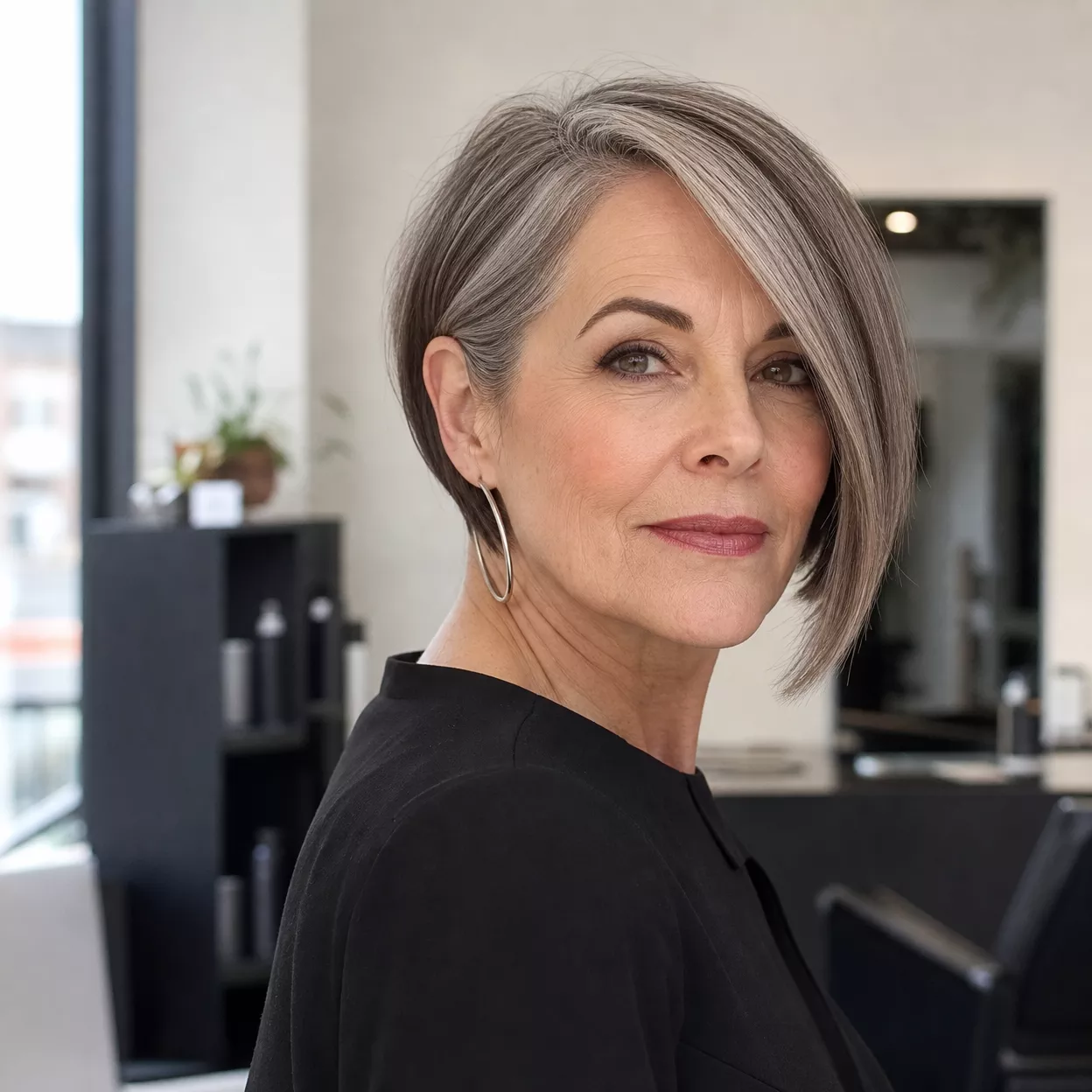
The Angled Bob

Shorter at the back and gradually longer toward the front, an angled bob creates a visible diagonal line rather than a level perimeter. How dramatic that angle is depends on the difference between the shortest and longest points: a subtle angle grows out more evenly, while a steep one can start to look mismatched between the two sides sooner as both lengths increase.
Soft Updo with Face-Framing Tendrils

This is primarily a styling approach rather than a haircut. A loosely pinned updo with a few pieces left loose around the face works on a range of cuts and lengths, and the volume it creates comes from how the hair is gathered and pinned rather than from the underlying haircut. It suits an occasion or a day when you want a different look more than a daily routine.
Honey Blonde Balayage Lob

The lob is the haircut here; the balayage is a separate color decision layered onto it. Balayage is hand-painted, so it tends to grow out with a softer line than foiled highlights, though how noticeable the regrowth becomes still depends on your starting color and how much contrast you choose. Warm honey tones read differently against different undertones, so it’s worth discussing with your colorist rather than assuming one shade suits everyone the same way.
Textured Pixie Bob

This sits close to the bixie in length, but the emphasis here is on texture through the ends rather than a sharp distinction between a short crown and longer sides. A small amount of pomade worked through dry ends can define that texture without much daily effort. If you’re deciding between this and a bixie, the difference often comes down to how much contrast you want between the top and the perimeter, which is worth discussing directly with your stylist.
Side-Swept Bob with Deep Part

The deep side part is a styling choice that can be applied to most bobs, not a separate haircut. Moving the part deeper shifts more hair to one side, which can make that side look fuller simply because more hair is layered over it. It tends to hold best when it follows the direction your hair already wants to part; forced against that direction, it often drifts back toward center over the course of the day.
Salt and Pepper Wavy Lob

Salt and pepper describes a natural mix of gray and darker strands, not a color treatment, and the contrast between the two tones can make movement more visible as waves catch light differently along the length. The waves themselves come from either your natural texture or a styling tool, so if you’re aiming for the exact look in a reference photo, ask specifically whether the wave shown is natural or created with heat.
Layered Cut for Thick Hair

On thick hair, strategic layering can redistribute weight so the cut feels lighter and easier to manage day to day. How much comes out matters more than the idea of layering itself: removing too much can leave thick hair looking thin in patches rather than evenly lighter, so a more conservative approach, adjusted over a couple of visits if needed, is often safer than one aggressive cut.
Soft Shag on Fine Hair

The same fine-versus-low-density distinction from earlier applies directly here. Fine hair that’s also reasonably dense tends to hold shag-style layering well, since there’s enough hair to create visible separation. Fine hair that’s also low-density is a different situation, and heavy shag layering there can leave things looking sparser rather than more textured, so it’s worth discussing a more conservative version with fewer, longer layers before committing to a fully choppy one.
The Classic Chignon

A styling technique, not a haircut. A low chignon at the nape gathers hair into a shape that reads as fuller than the same hair worn down, since the apparent volume comes from how it’s pinned rather than from the hair itself. It works on a range of lengths and suits both everyday wear and more formal occasions, though it needs enough length to gather comfortably.
Curtain Bangs on a Lob

Separate from the wave-paired version earlier on this list, this version pairs curtain bangs with a straighter or less textured lob, which puts more attention on the bangs themselves. They need reasonable density at the hairline to look soft rather than sparse, and they’ll need trimming on their own schedule, typically every three to four weeks, regardless of how often you have the rest of the lob reshaped.
Voluminous Blowout on Short Hair

A styling technique applied to a short cut rather than a haircut itself. Shorter length means less weight pulling the roots down, so a round-brush blowout can build noticeable lift that holds through the day more easily than the same technique would on longer hair. Reproducing it does require a regular blow-dry session; a short cut left to air-dry won’t give you this same result on its own.
Sleek Straight Bob

This depends on a smooth, straightened finish to look its best, which generally means naturally straight hair or a willingness to straighten regularly. On hair with any natural wave or curl, achieving the same sleekness usually takes more time and heat than the reference photo suggests. A deep side part and a small amount of shine serum are typical finishing touches, but the smoothness itself comes from styling, not from the cut alone.
Natural Afro

A well-shaped afro is cut with the natural curl pattern in mind rather than adapted from a technique built for straighter textures. Because coily hair shrinks significantly as it dries, shape is generally best assessed on dry, fully sprung hair rather than stretched or wet hair. The overall silhouette depends on how weight is distributed through the curl, which is a conversation worth having directly with a stylist experienced in cutting this texture.
Feathered Layers on Medium Hair

Feathering tapers the ends rather than cutting them straight across, which can make movement through the lengths more visible. Where the feathering starts matters for how the cut grows out: feathering that begins closer to the ends stays looking intentional longer than feathering cut higher up, which can start to look uneven as the shortest layers lengthen at a different rate than the rest.
The Modern Pompadour

A styling technique built around volume at the crown and curled or waved sides, rather than a specific haircut. It depends on enough length at the crown to build height and generally needs a round brush, some backcombing or product, and time to set. This tends to suit an occasion or a day you’re willing to style more than an everyday, low-effort routine.
Collarbone Cut with Invisible Layers

Different from the collarbone lob earlier on this list in one specific way: the layers here are cut internally rather than through the visible perimeter, so the outer silhouette still reads as close to one length while the inside carries some added movement and reduced weight. It’s a reasonable way to test whether layering actually helps your hair without committing to a visibly different outline.
Tousled Lob with Side Part

A styling result built on natural or lightly enhanced texture rather than a distinct haircut. How much daily effort this actually takes depends on your natural texture: hair with some existing wave or bend can often be scrunched with a texturizing product and left to air-dry, while very straight hair typically needs a wand or diffuser to get a comparable tousled effect.
Layered Wavy Cut for Curly Hair

For looser waves and curls specifically, layers let each curl or wave fall with some independence rather than being weighed down by a single length. As with the natural curls entry earlier, length and shrinkage are worth checking on fully dry hair, since wet or stretched hair can be misleading about where the cut will actually sit once it settles. A curl cream applied to damp hair and diffused on low heat is a common way to define the shape without heavy styling.
Which Style Direction May Fit Your Hair?
| Style Direction | May Suit You If | Main Benefit | Styling/Maintenance Consideration |
|---|---|---|---|
| Blunt bob | You want a defined, substantial-looking perimeter | Preserves visual weight at the ends | Shows growth more visibly; may need more frequent trims |
| Layered bob/lob | You want movement without going short | Adds visible motion through mid-lengths | Amount of layering should match your density |
| Pixie | You’re comfortable with short hair and salon upkeep | Removes weight that pulls hair flat | Needs more frequent reshaping than longer cuts |
| Bixie | You want some crown lift without full pixie length | Balances structure with styling flexibility | Depends on precise cutting to hold its shape |
| Shag | Your hair has natural texture to work with | Creates separation and movement | Can look sparse on lower-density hair if over-layered |
| Shoulder/collarbone cut | You want a manageable length that isn’t too short | Versatile between down and pulled back | Root lift often depends on styling, not just the cut |
| Long layers | You want to keep length while adding movement | Preserves length with some added motion | Minimal root lift without a styling step |
| Curly/wavy layered cut | You have natural curl or wave | Lets natural texture show with less flattening | Best assessed and cut on dry, settled hair |
| Blowout-based style | You’re willing to style regularly | Builds noticeable lift and body | Needs to be recreated with each wash |
| Updo/occasion style | You want a different look for a specific event | Creates apparent volume through gathering | Not intended as a daily routine |
How to Choose From These 31 Hairstyles
If you want to keep your length: the collarbone lob, shoulder-length options, and long-layer entries above preserve more length than a bob or pixie while still allowing some layering for movement.
If your hair is fine: moderate layering generally works well, particularly if your density is also reasonably good. Ask your stylist to be conservative with how much weight comes out near the ends.
If your hair is low-density: more conservative layering, or a blunter perimeter that preserves weight, tends to hold up better than heavy texturizing or aggressive shag-style layering.
If you have thick hair: strategic weight removal can make a cut easier to manage, but the amount should scale to your actual density rather than following a fixed rule; too much can leave patchy thin spots rather than an even result.
If you have natural waves or curls: cuts assessed and finished on dry, settled hair generally translate more accurately than ones cut on wet or stretched hair, since shrinkage and curl pattern both affect where the length actually falls.
If you air-dry most days: look toward cuts that work with your existing texture rather than ones that depend on a blowout, wand, or flat iron to look like their reference photo.
If you enjoy styling: blowout-based looks, waves, and more polished, occasion-ready styles become realistic options, since you’re already planning to spend the time.
If you’re embracing gray: treat the color and the cut as two separate decisions. A haircut can be chosen around texture and density regardless of whether you keep, transition to, or color your gray.
If you want lower daily styling effort: prioritize shapes with less dependence on heat styling, and be honest about how your hair actually looks when left to air-dry before committing to a look built around a blowout.
What Can Go Wrong When Choosing a Hairstyle?
- Choosing based on a face-shape rule alone. Density, texture, and your actual routine generally affect the outcome more than face shape does.
- Too many layers removed at once. This can leave low-density hair looking thinner rather than more textured.
- Excessive texturizing. Heavy point-cutting or thinning can create visible gaps rather than the intended movement.
- Removing too much perimeter weight. The bottom edge often reads as “thickness” to the eye; over-thinning it works against that.
- Copying a heavily styled reference photo exactly. Many photos show a finished blowout or set curls, not what the cut looks like air-dried.
- Ignoring your natural texture. A cut that photographs well on straight hair may need considerably more daily effort on wavy or curly hair, and the reverse is also true.
- Ignoring hairline or crown density specifically. A technique aimed at one area of the scalp may do nothing for a different area that’s actually thinner.
- Adding bangs without checking hairline density. Bangs that look full in a photo can look sparse on a thinner hairline.
- Confusing a color technique with the haircut. Balayage, highlights, and gray toning are decisions layered onto a cut, not a substitute for one.
- Expecting a haircut or color to increase actual density. These techniques can change visual fullness, movement, or contrast, but they don’t add hair.
What to Tell Your Stylist Before the Cut
- “I want to keep this much length” (and point to where).
- “My strands are fine, but my hair is fairly dense.”
- “My hair is low-density around the crown.”
- “I usually air-dry my hair.”
- “I don’t want the ends heavily thinned.”
- “I want some movement without losing too much weight.”
- “I like this photo, but my natural texture is different from what’s shown.”
- “How will this shape look as it grows out?”
- “How much styling does this cut need to look like the reference photo?”
- “What would you change about this for my density and texture?”
FAQ
What is the best haircut for women over 50?
There isn’t one best haircut for this age group specifically. The right choice depends on your hair’s density, strand thickness, texture, and how much styling you’re willing to do, factors that vary from person to person regardless of age.
Is short hair easier to maintain after 50?
It can mean less daily styling time, since there’s less length and weight to manage, but shorter, more precise cuts often need more frequent salon visits to hold their shape. “Easier” depends on whether you mean daily effort or overall time commitment.
Are layers good for women over 50?
Layers can add movement and visual interest at any age. Whether they’re a good fit depends on your density and texture rather than your age specifically; heavy layering on low-density hair can thin the ends, while the same layering on denser hair may look fine.
Should women over 50 avoid long hair?
No. Long hair can work well if it’s cut and maintained with your actual density and texture in mind. The main practical consideration is that length adds weight, which can reduce root lift without some styling help.
What haircut works well for fine hair?
It depends on whether your fine hair is also low in density. Fine but dense hair generally tolerates moderate layering well. Fine hair that’s also low-density often holds up better with a more intact perimeter and more conservative layering.
What if my hair is low-density?
Preserving more weight through the perimeter, rather than removing it with heavy layering or texturizing, tends to create a fuller-looking result than aggressive thinning does.
What styles work with natural gray hair?
Most of the cuts on this list work with gray or silver hair, since gray is a color consideration separate from the haircut itself. If your gray hair’s texture has changed, mention that to your stylist so the cut and layering can account for it.
How do I choose a haircut if I rarely use heat?
Prioritize cuts that are designed to work with your natural texture rather than ones that depend on a blowout or iron to look finished, and ask your stylist directly what the cut will look like fully air-dried before committing to it.
Final Thoughts
Age is only one factor, and not usually the most useful one, in choosing a haircut. What actually determines whether a style works for you is your hair’s density, the thickness of individual strands, your natural texture, how much length you want to keep, your styling routine, and how much maintenance you’re willing to take on.
Bring a reference photo to your next appointment, but also explain your actual routine: what your hair does on its own, where it feels thinnest or flattest, and how much time you’re realistically willing to spend styling it. That combination will tell your stylist far more than the photo alone.