25 Haircuts for Wavy Hair After 50, Grouped by What You Want to Change
Many women reach their fifties with the same wave they’ve always had and a haircut that no longer seems to know what to do with it. The cut hasn’t changed. The hair under it may have. It might feel finer at the ends, drier through the lengths, or wirier where gray is coming in. The wave that used to form an easy S at the shoulder might now fall looser, or kink in places it never did. Routines change too. Some people are glad to stop using a dryer altogether, and others would rather see a stylist less often.
The 25 cuts below aren’t ranked. Each note explains what problem the cut addresses, what to ask for, and what you might be giving up.
Four things to check before you look at photos
How much hair you have, not how thick each strand is. Fine strands and low density aren’t the same thing. Plenty of people have fine hair and a lot of it, and that kind of hair can handle more layering than hair that is genuinely sparse. A quick check is to pull your hair into a ponytail and compare how thick it is at the base with how thick it is near the ends. If the ends are much thinner, heavy layering will make that more obvious.
What your wave does when you leave it alone. Wash it, put in whatever you normally use, and let it dry without touching it. That result, not a salon blowout, is what the haircut has to work with. Some women find their wave pattern loosens or becomes less even over time, and some connect the change to menopause, but experiences vary widely.
How you actually dry it. A cut that depends on ten minutes with a diffuser won’t suit someone who lets it dry on the drive to work.
How often you’ll realistically go back. Short shapes lose their outline within weeks. Longer cuts are more forgiving. Being honest about this rules out a surprising number of options.
Where to start, depending on what’s bothering you
If the main thing you want is to keep what length you have, look first at the Shoulder-Length Wavy Cut with Face Framing, Long Wavy Layers, the Wavy Collarbone Cut, Undone Wavy Long Layers, and the Long Wavy Shag. All five keep meaningful length while dealing with the weight in different ways.
If your hair feels thinner or finer than it used to, the Short Wavy Bob, the Wavy Long Bob with Side Part, and the Textured Lob for Fine Hair are built around holding onto density rather than removing it.
If your hair is thick and the problem is bulk rather than thinness, the Shoulder Length Wavy Shag, the Wavy Bob with Tapered Nape, the Wavy Shag Bob, and the Long Wavy Shag all take weight out in different places.
If your priority is spending less time on your hair day to day, look at the Wavy Pixie, the Beachy Wavy Lob, the Textured Wavy Crop, and the Low Maintenance Wavy Bob. These are the four where the daily routine is closest to nothing.
If you’re weighing a fringe, the Wavy Shag with Curtain Bangs, the Wavy Bob with Curtain Bangs, the Wavy Bob with Wispy Fringe, and the Side-Swept Fringe entry cover a range from committed to barely-there.
If you’re growing out color or leaning into gray, the Wavy Cut with Natural Gray, the Wavy Lob with Highlights, and the Caramel Highlights entry are the relevant three.
And if you want a change without a dramatic haircut, the Layered Wavy Lob, the Layered Medium Cut, the side-part lob, and the Deep Side Part bob all shift the look without much length coming off.
The 25 Haircuts
Layered Wavy Lob
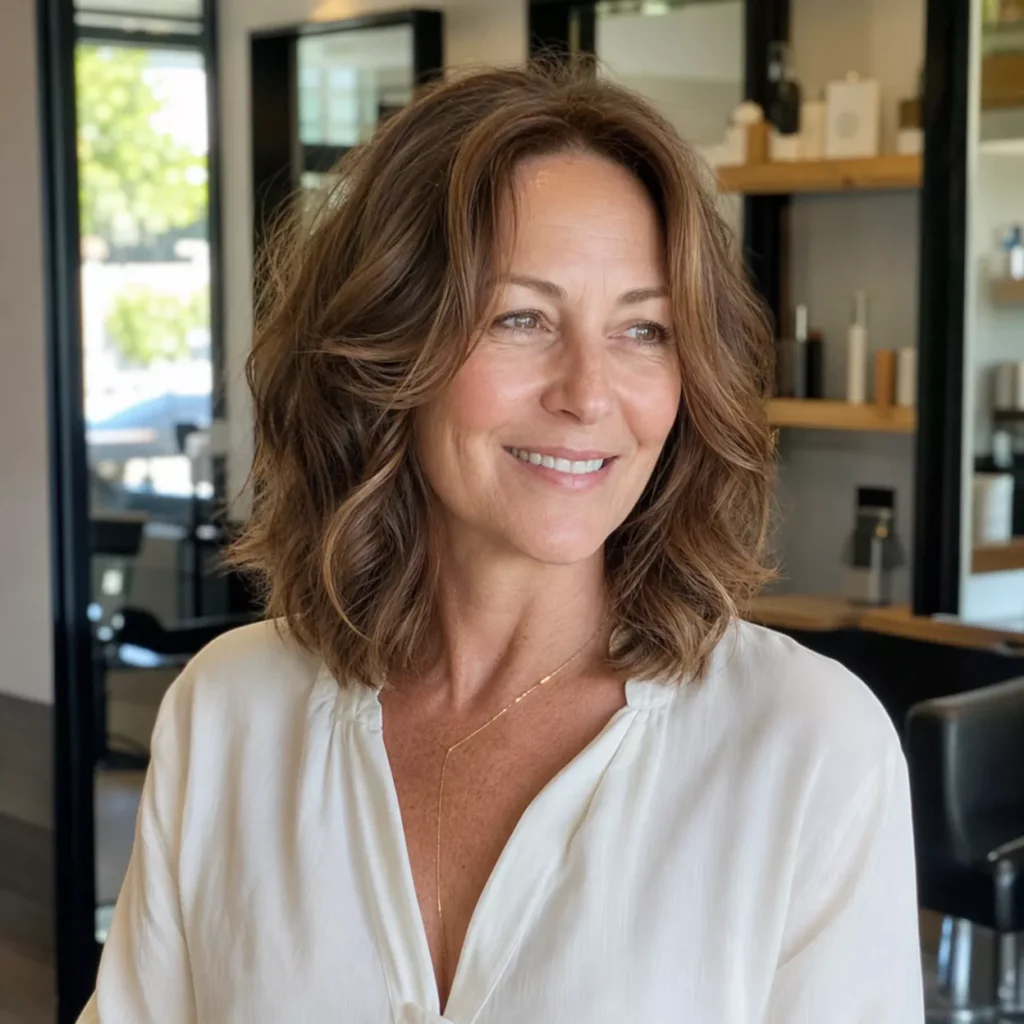
This cut is less about length than about where the weight comes out. It sits somewhere between the chin and the collarbone, and it’s aimed at medium to thick wavy hair that feels heavy at one length but still looks good with a clean outline. The phrase to know is internal layering. The layers are cut underneath, while the outer edge stays intact, so the hair feels lighter and the waves separate without the cut looking choppy from the outside. If your hair is fine, the Textured Lob for Fine Hair further down is a better starting point, since internal layering can take out weight that fine hair needs. A lob is usually more forgiving between trims than a short bob, though the timing depends on how fast your hair grows.
More lob variations are collected in our Layered Lob Haircuts guide.
Wavy Shag with Curtain Bangs
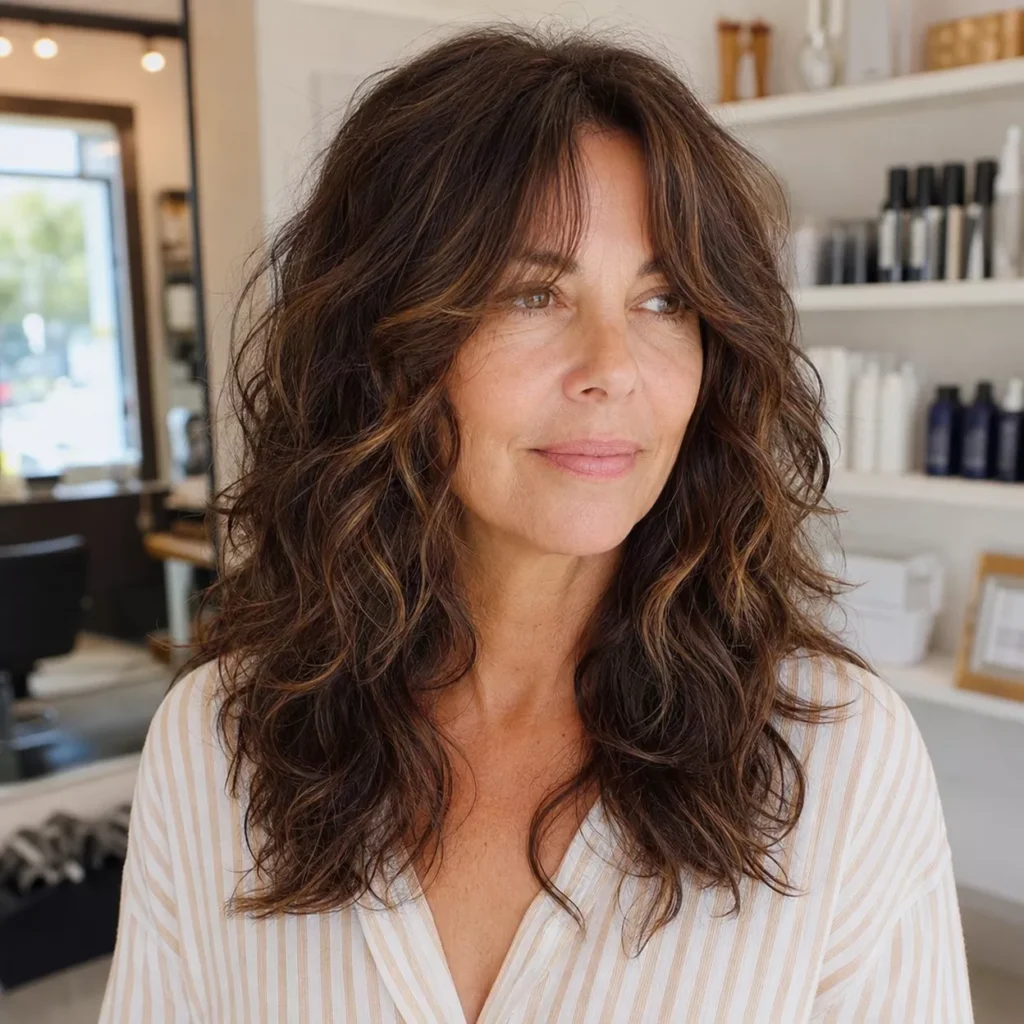
Any fringe adds a daily task, because bangs often need a little attention even when the rest of your hair doesn’t. On wavy hair they can also dry shorter than they looked when wet, and humidity can make this more noticeable, so you may want to ask for them a little longer than you think you need. Curtain bangs are one of the easier kinds to live with. They part in the middle and fall to either side of the eyes, blending into the surrounding layers instead of sitting as a separate block. Paired with a shag, where everything is cut in varied lengths, the grow-out between trims is fairly hard to spot. On fine hair, ask for the bangs to stay a bit longer and fuller, since very short curtain pieces can look thin.
If you enjoy textured styles, don’t miss our Medium Shag Haircuts guide.
Shoulder-Length Wavy Cut with Face Framing

At shoulder length, most wavy hair has room to form a complete wave without the weight dragging it flat. Pieces cut around the cheekbones give the front a shape even on days when the back isn’t cooperating, which helps if your wave has become inconsistent. One thing to know in advance: hair that lands right on the shoulders tends to flip outward, and some wave patterns exaggerate this. If that bothers you, ask for an inch above or below.
For more ideas at this length, see our Shoulder Length Haircuts for Women collection.
Short Wavy Bob
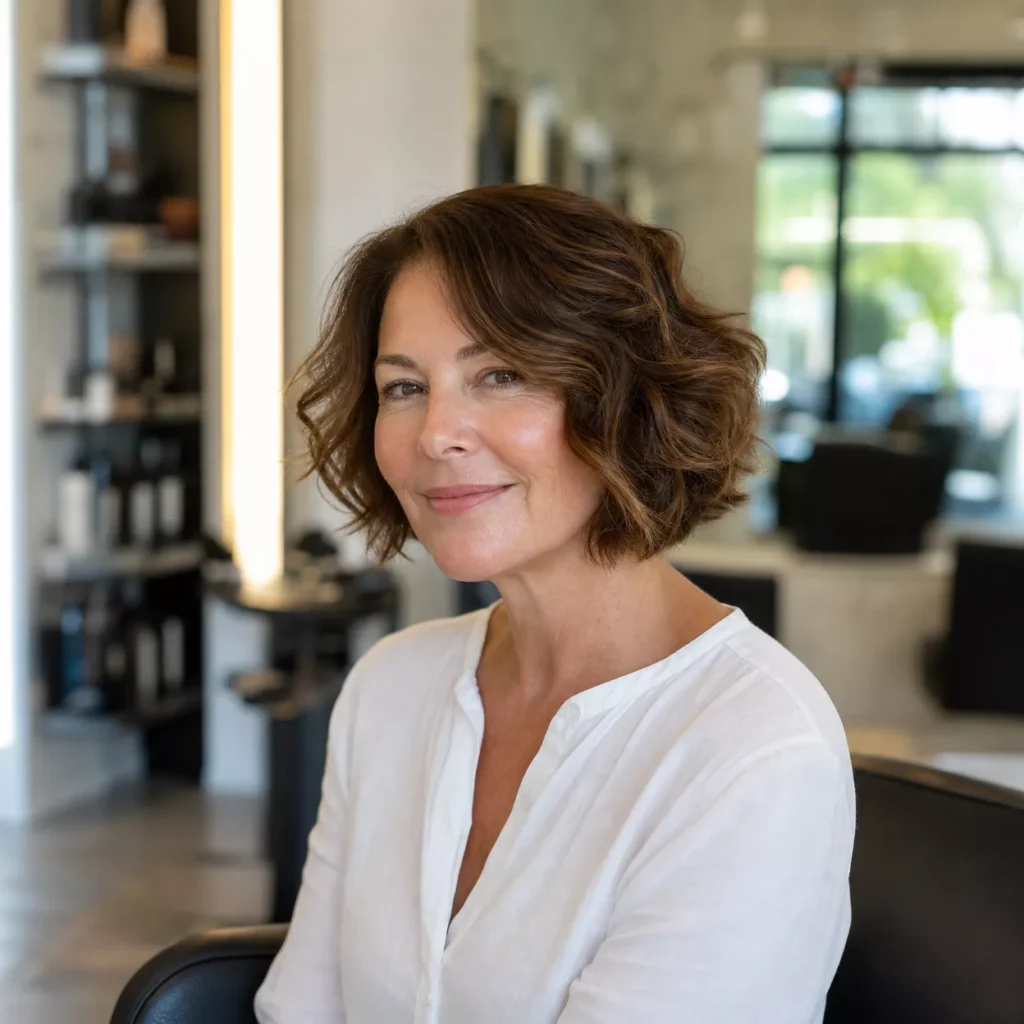
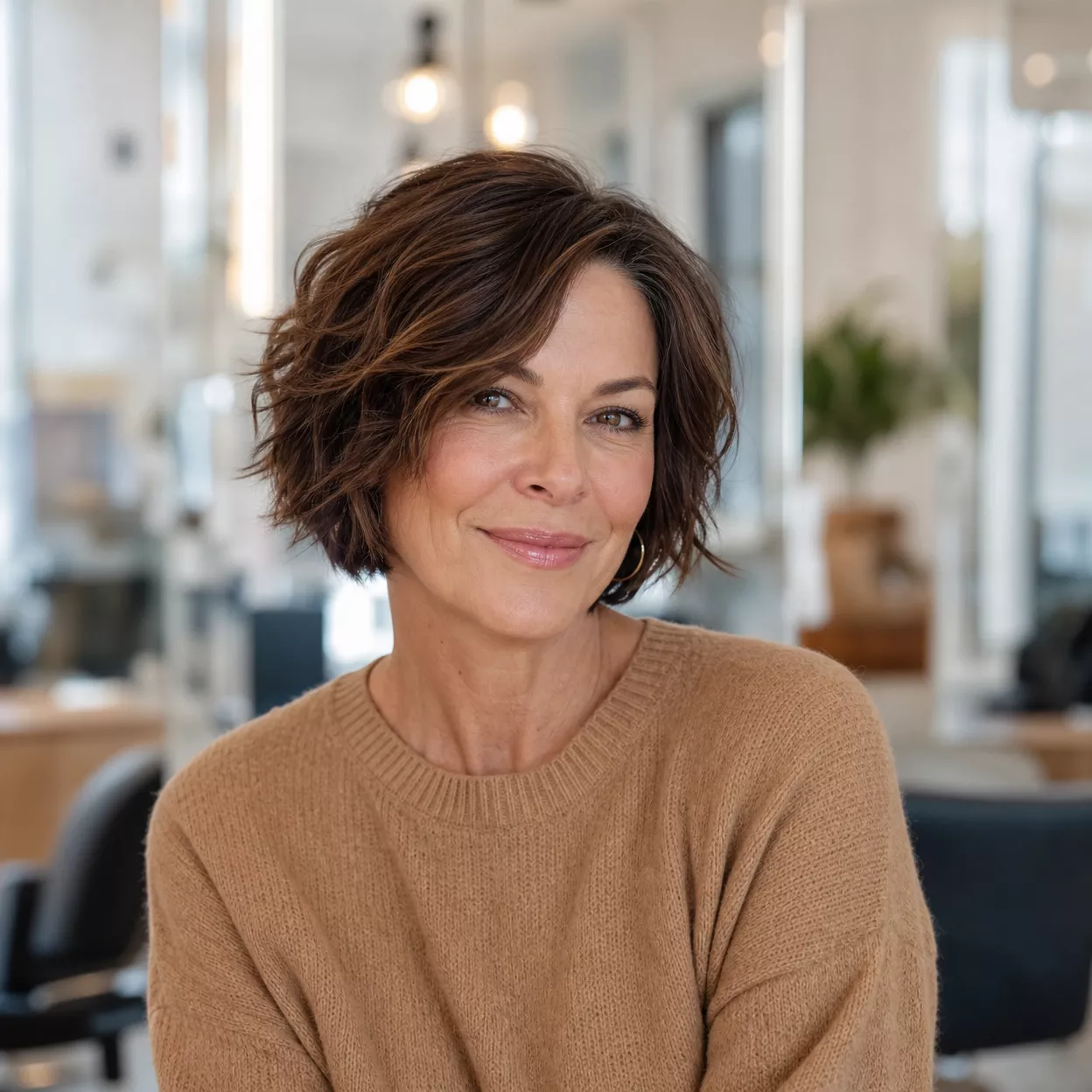
Some women notice their strands getting finer with age, and some notice less hair overall, though this varies a great deal. The usual instinct is to ask for layers “for volume,” but on thinner hair, layering removes the very hair that makes the ends look full. A bob goes the other way. It keeps most of the hair at one length, so the ends look as thick as they can, and the wave pushes the shape outward below the jaw instead of letting it cling to the neck. Ask for a mostly solid edge with very light layering, or none. Heavy layering on a short bob can scatter the wave so the shape looks patchy.
Wavy Pixie with Texture
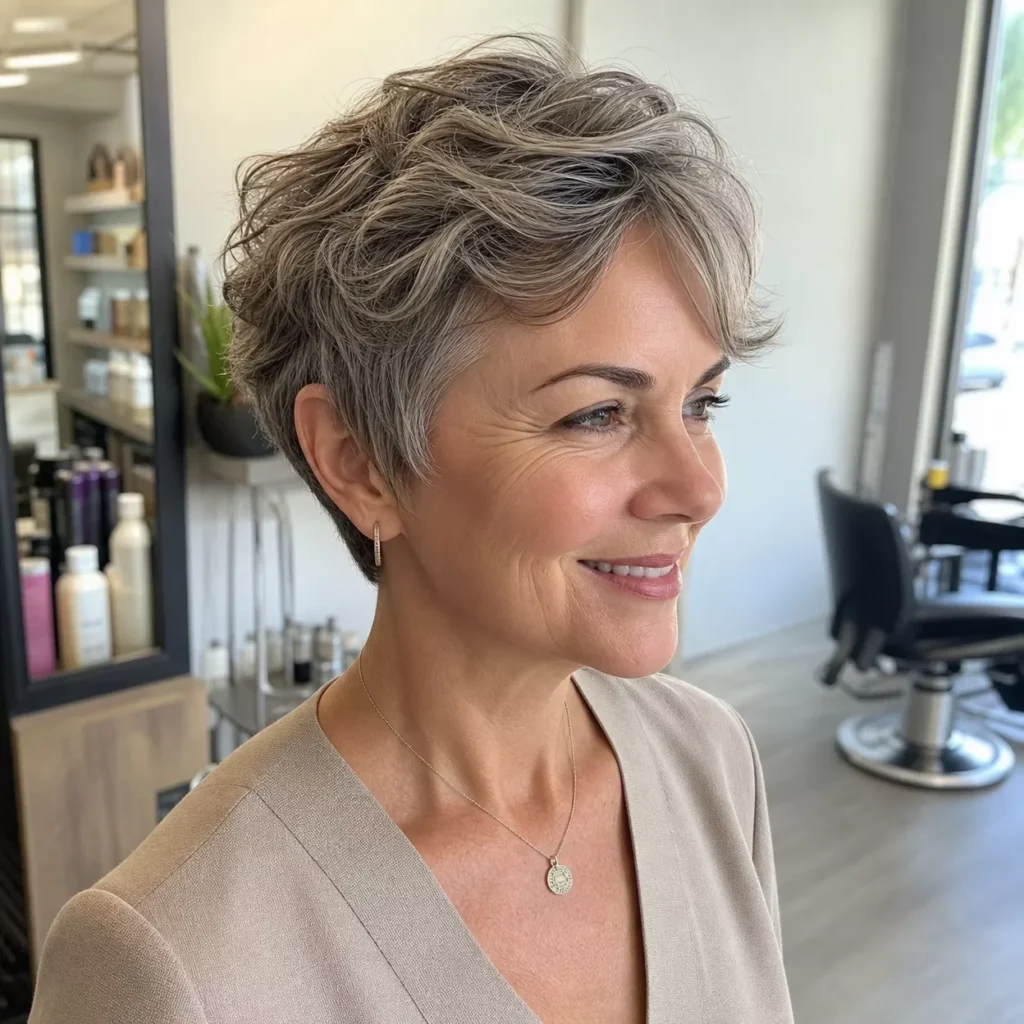
Very little daily styling, but more salon visits than longer cuts, since a pixie loses its shape quickly as it grows. For wavy hair, the advantage shows up at the crown. Straight pixies often need product and a dryer to keep from lying flat on top, while a wave tends to lift on its own. Texturizing around the sides and nape keeps the hair from puffing out over the ears.
Layered Wavy Medium Cut

Its real advantage is that it can be adjusted. The amount of layering can be increased or reduced at each visit without changing the length, which suits hair whose density is still shifting. It’s also a useful target if you’re growing out a bob or pixie. Ask your stylist to keep trimming the back while the front and sides catch up, so you avoid the stage where the back is noticeably longer than everything else.
Wavy Long Bob with Side Part
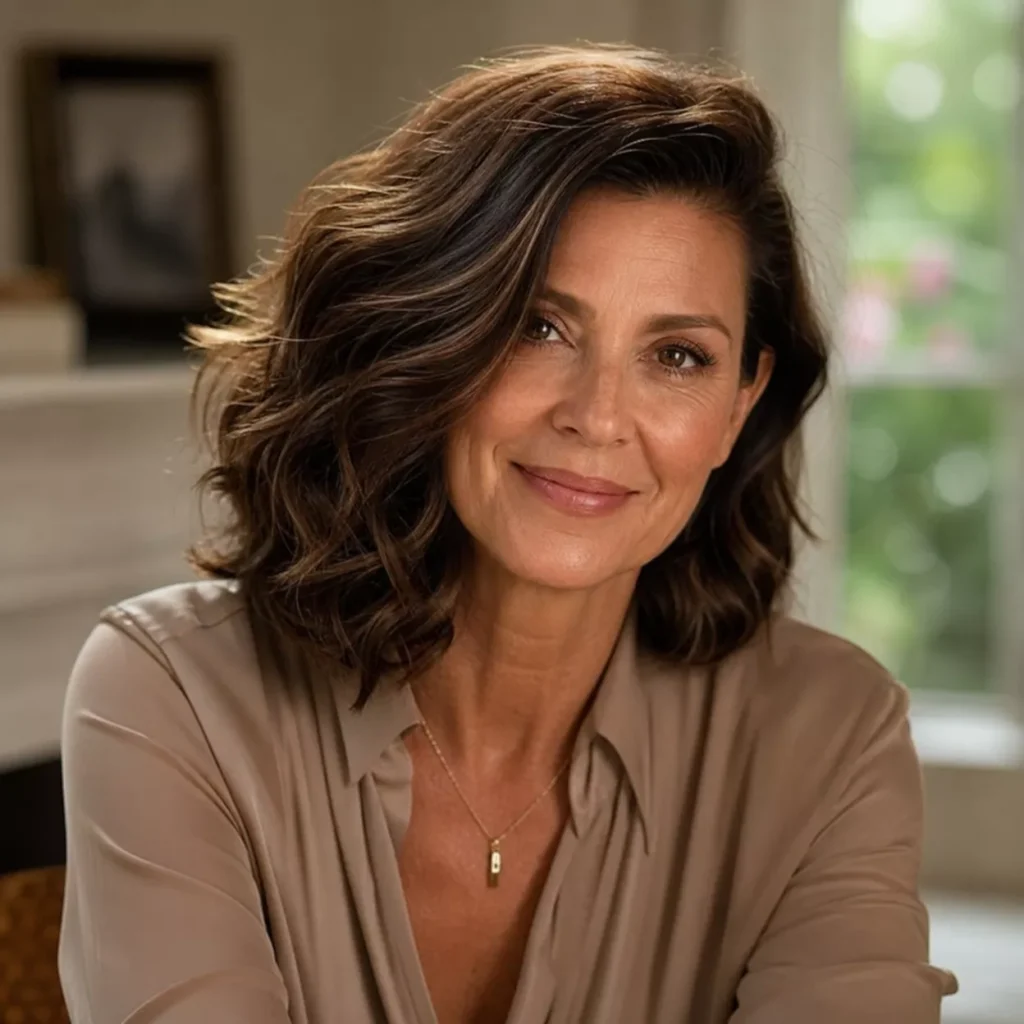
This one involves very little cutting. Moving your part from the center to the side piles more hair over one side of the head, and that side reads as fuller. It can also cover thinning near the part line or temples, since the part can be placed where it hides the sparse area. You may find that one side lifts more naturally at the root, so it can be useful to test both sides before choosing where the part will sit. The cut can then be shaped around that choice.
Beachy Wavy Lob

Less about precise cutting and more about a finish that’s meant to look slightly messy. That makes it tolerant of humidity, uneven drying and grown-out color, because none of those stand out against an undone look. A texturizing or salt spray on damp hair is the usual approach, though salt sprays can feel drying. If your hair already feels dry, a light cream may suit it better. If you prefer neat hair, this cut will probably annoy you.
Wavy Bob with Wispy Fringe
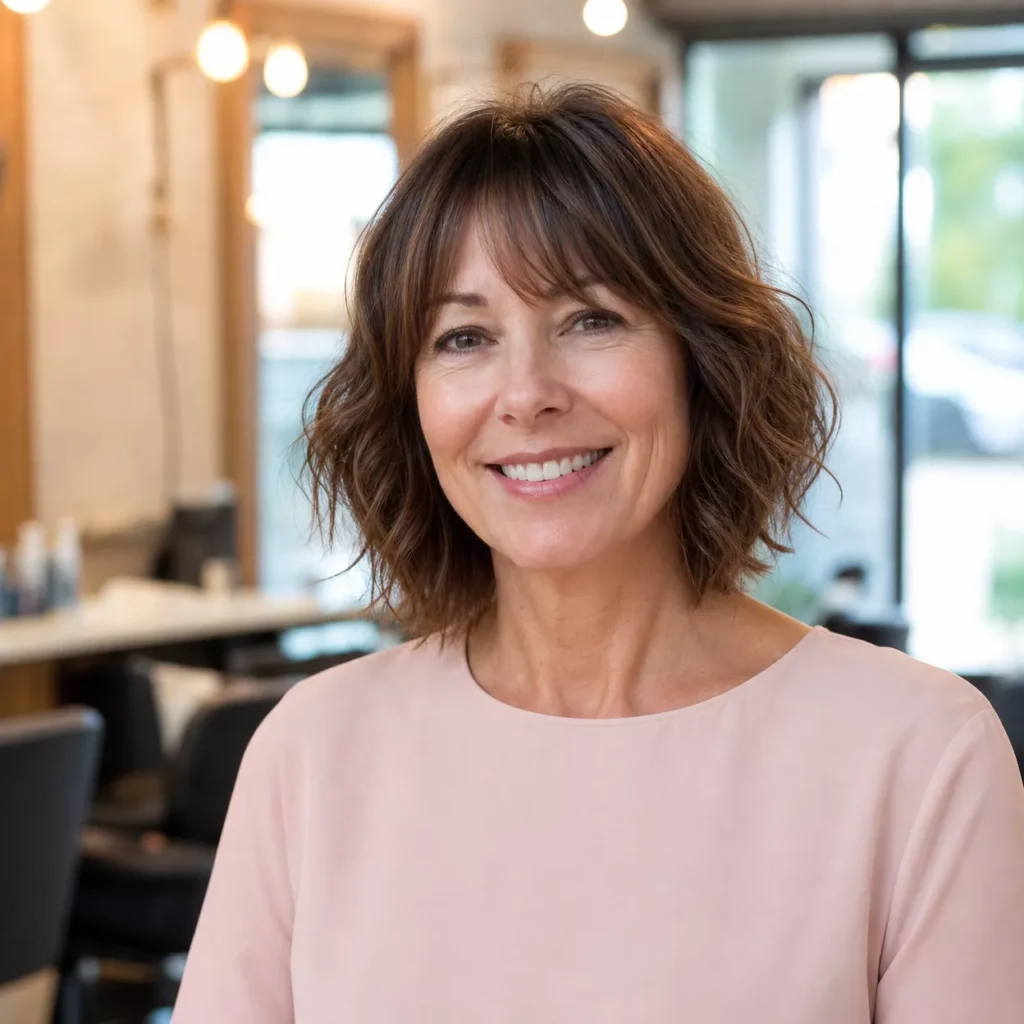
For people who like some coverage across the forehead but don’t want a heavy straight line. A wispy fringe is cut thinner and more broken up, so the wave shows through and it moves with the rest of your hair. The irregular edge also makes it easier to grow out than a thick fringe. On hair with a cowlick at the front, it may split or flip up, so mention it before your stylist starts cutting.
Shoulder Length Wavy Shag
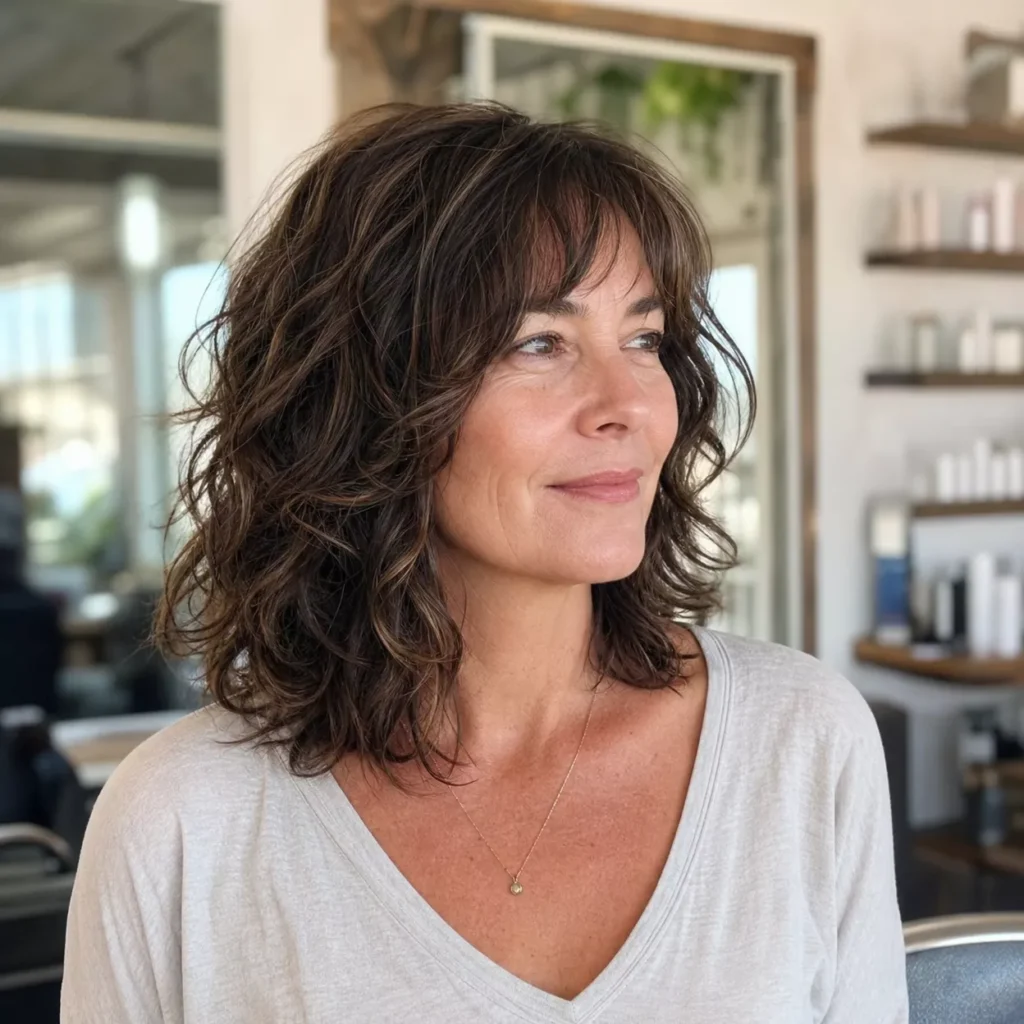
Dense wavy hair can lie heavy and flat at the top because of the weight below it. Taking that weight out through shag layering tends to let the wave spring back up, and the result can be fuller than people expect. The ponytail test matters here. If your hair looks thin because it genuinely is thin, a shag won’t create hair that isn’t there, and the Short Wavy Bob or the Textured Lob for Fine Hair may serve you better.
A question to bring to your appointment: Wavy hair often looks a little shorter dry than wet, because the wave takes up some of the length. The difference is usually smaller than with curly hair and varies from person to person, but layers cut on wet, stretched hair can end up sitting higher than expected. Some stylists cut wavy hair dry, and others cut wet and then check the shape dry. Asking when they’ll look at your hair dry tells you a lot about how they approach wave.
Long Wavy Layers After 50
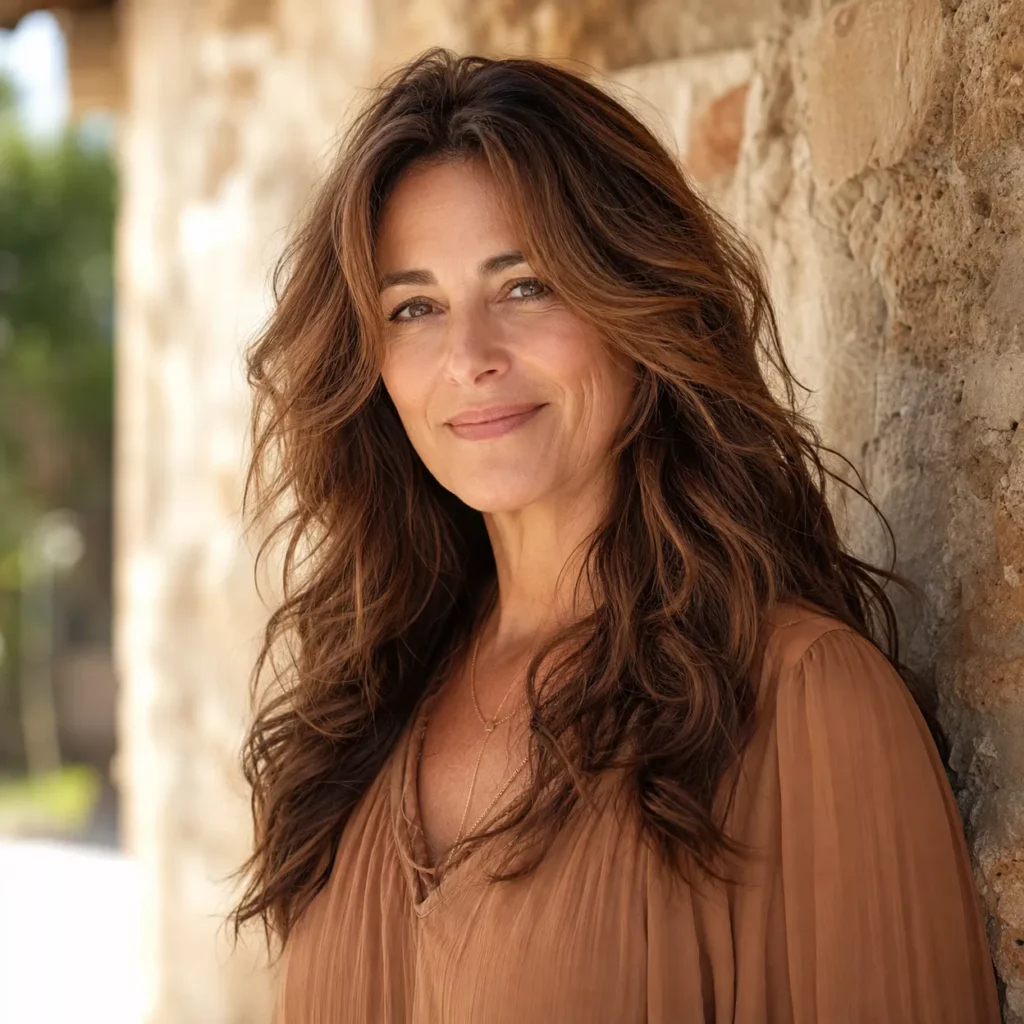
Long hair after 50 isn’t a problem in itself. What decides whether it works is how much hair reaches the bottom. If your ponytail stays reasonably thick all the way down, long layers starting around the chin or collarbone take off enough weight that the wave isn’t pulled straight by its own length. If your ends are already thin, be careful, because more layering means fewer hairs at the bottom and the lengths can start to look see-through. One approach is to ask for less layering than you see in most inspiration photos and add more at the next appointment if you want it. Taking more off is easy. Waiting for it to grow back is not.
Wavy Cut with Natural Gray

Gray hair doesn’t behave the same way for everyone. Some people find gray strands feel coarser, wirier or drier than their pigmented hair, and when the two are mixed they can sit differently. Others notice very little change. If your gray is growing in with a different texture, some layering can help the two kinds of hair blend, since varied lengths hide differences in wave more than a one-length cut does. Frizz and flyaways can also be more visible on silver and white hair, partly because light strands stand out against each other more, so a leave-in conditioner or a small amount of oil on the ends may be more useful than it used to be. If you’re growing out dye, the length of the cut decides how long you’ll live with a visible line between the two. A shorter cut gets rid of the colored ends sooner.
Textured Wavy Crop
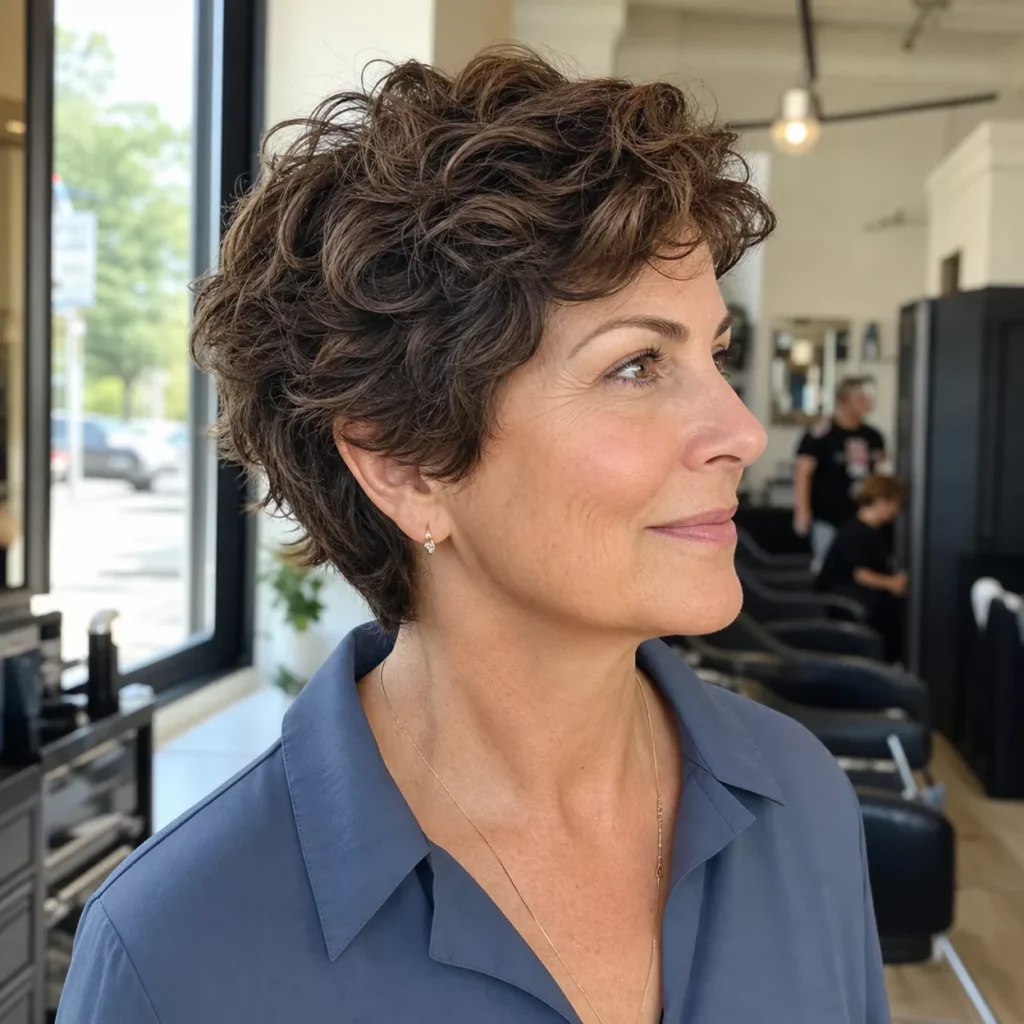
A little longer than a pixie on top, with enough length left for the wave to show. On straight hair a crop can look severe, and wave softens the outline considerably. If you’ve always had long hair, know that growing a crop out means months of in-between stages. Plan for that before the appointment.
Wavy Lob with Highlights
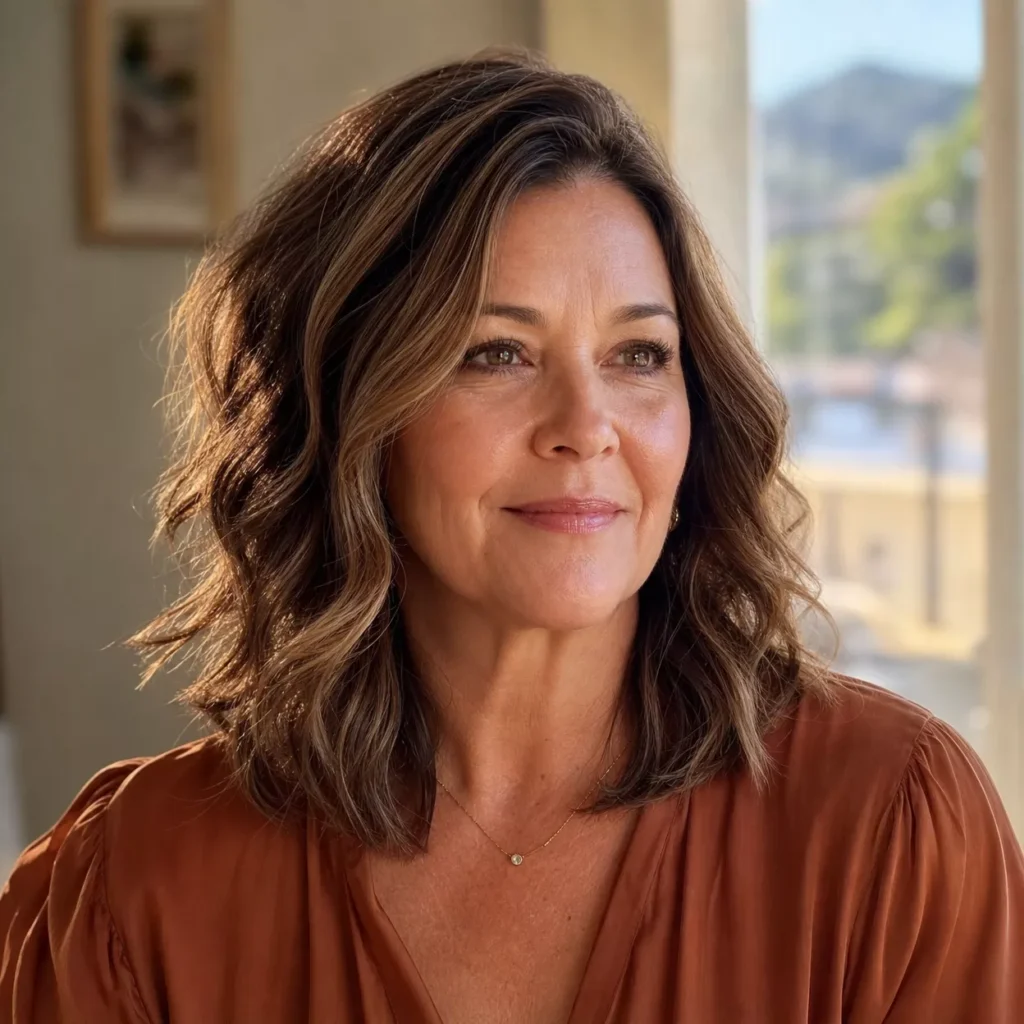
The haircut stays the same and color does the work. Waves catch light at their crests and fall into shadow in the dips, so lighter pieces show up differently as the hair moves. Balayage, which is painted on by hand instead of placed in even foil sections, tends to look less stripy on wavy hair. Because it’s often blended softly near the root, regrowth can be less obvious than with highlights placed right at the scalp, though this depends on how it’s applied. Highlights can also blur the edge of gray regrowth if you’re partway between coloring and letting it go.
For shade ideas, see our Warm Blonde Hair Color Ideas.
Wavy Bob with Curtain Bangs
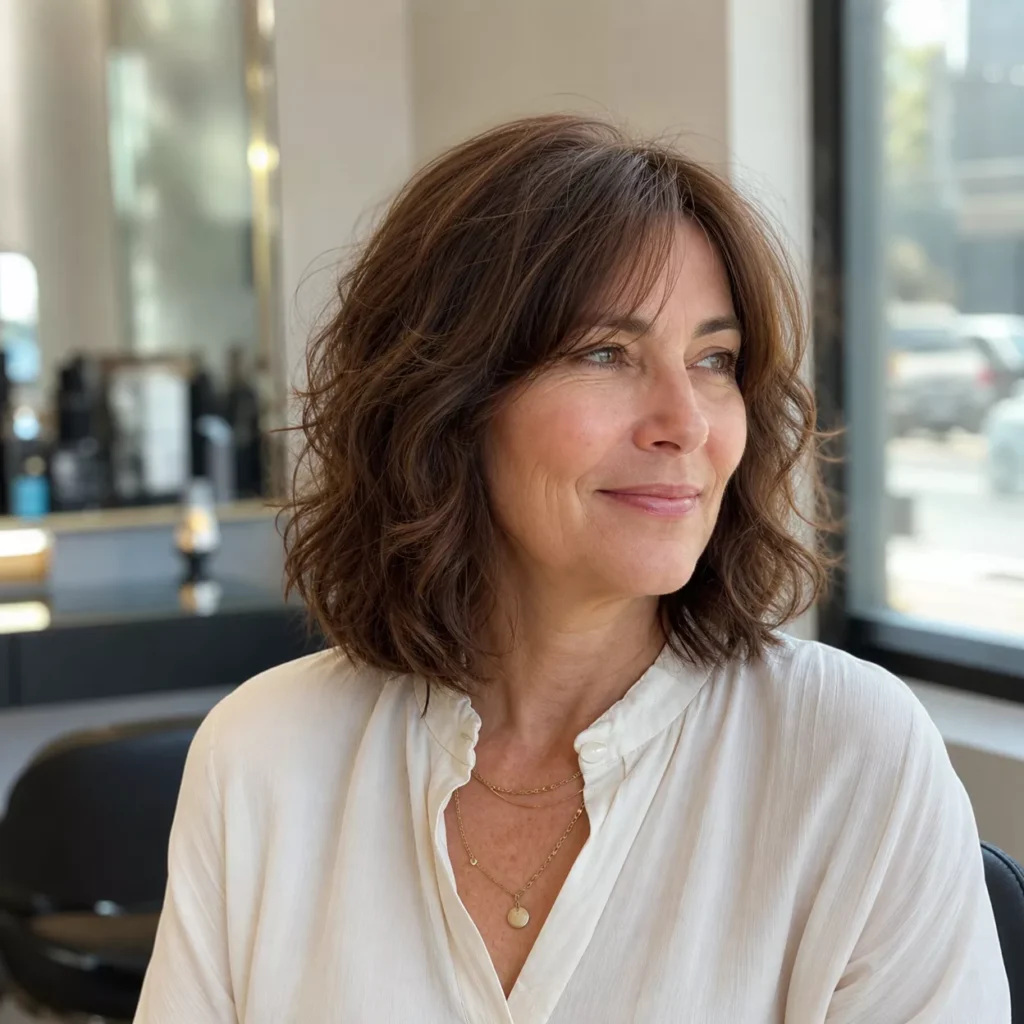
The same curtain fringe as the Wavy Shag with Curtain Bangs, with a cleaner outline. Choose this over the shag version if you want the frame around your face but prefer the rest of your hair to look more structured. The bangs and bob are cut to fall together, so ideally they dry without separate styling. That depends on how your wave behaves at the front, which varies, so ask to see how the fringe sits once it’s dry before you leave.
Wavy Bob with Tapered Nape
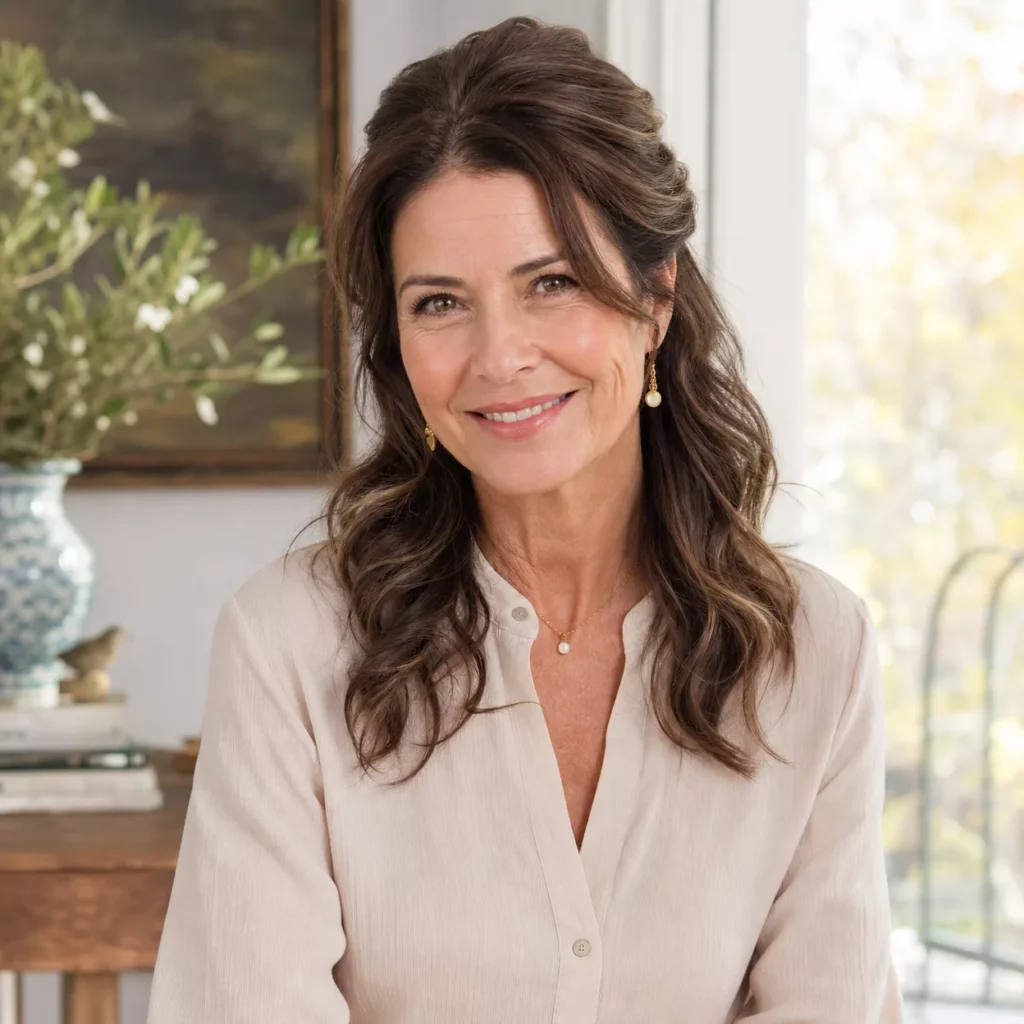
For dense hair where the bulk sits at the back of the head, pushing a bob outward from behind. The hair at the nape is cut short and closely tapered, while the top and sides keep their bob length. This removes a lot of weight without layering the visible lengths, keeps the neckline clean, and keeps hair off your collar, which some people appreciate in warm weather. The trade-offs are real. The nape grows out quickly and may need tidying as often as every month or so, and on fine hair the short back can look sparse.
Wavy Collarbone Cut with Layers
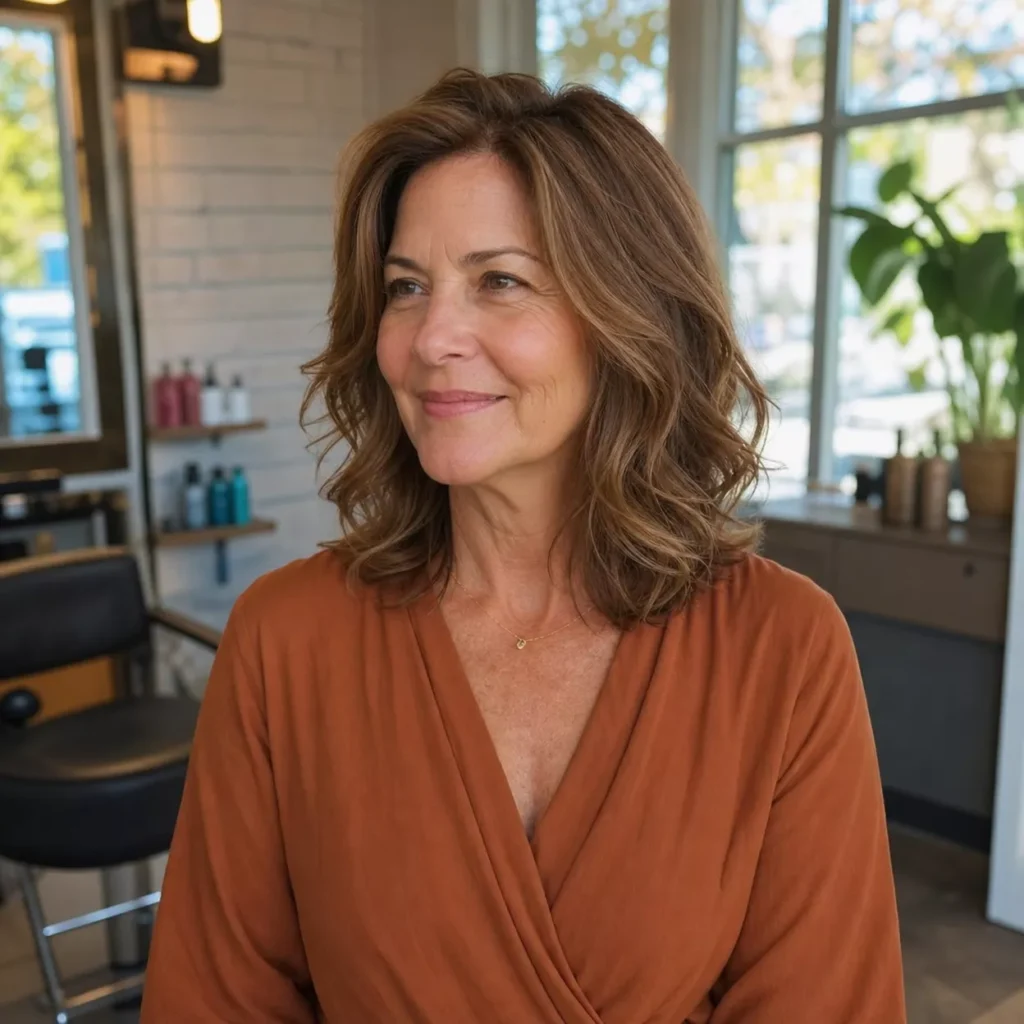
This is a length decision more than a technique. It suits someone coming down from long hair who wants to lose a few inches without ending up with a bob. It sits at or just below the collarbone, so it’s still long enough to tie back, which matters more than people expect if you exercise, garden, or simply get warm. The layering is usually lighter than in the Layered Wavy Lob, just enough that the ends don’t hang heavy. It also works as a trial run. If you like having less hair, a lob is one appointment away. If you don’t, you haven’t lost much.
Wavy Shag Bob
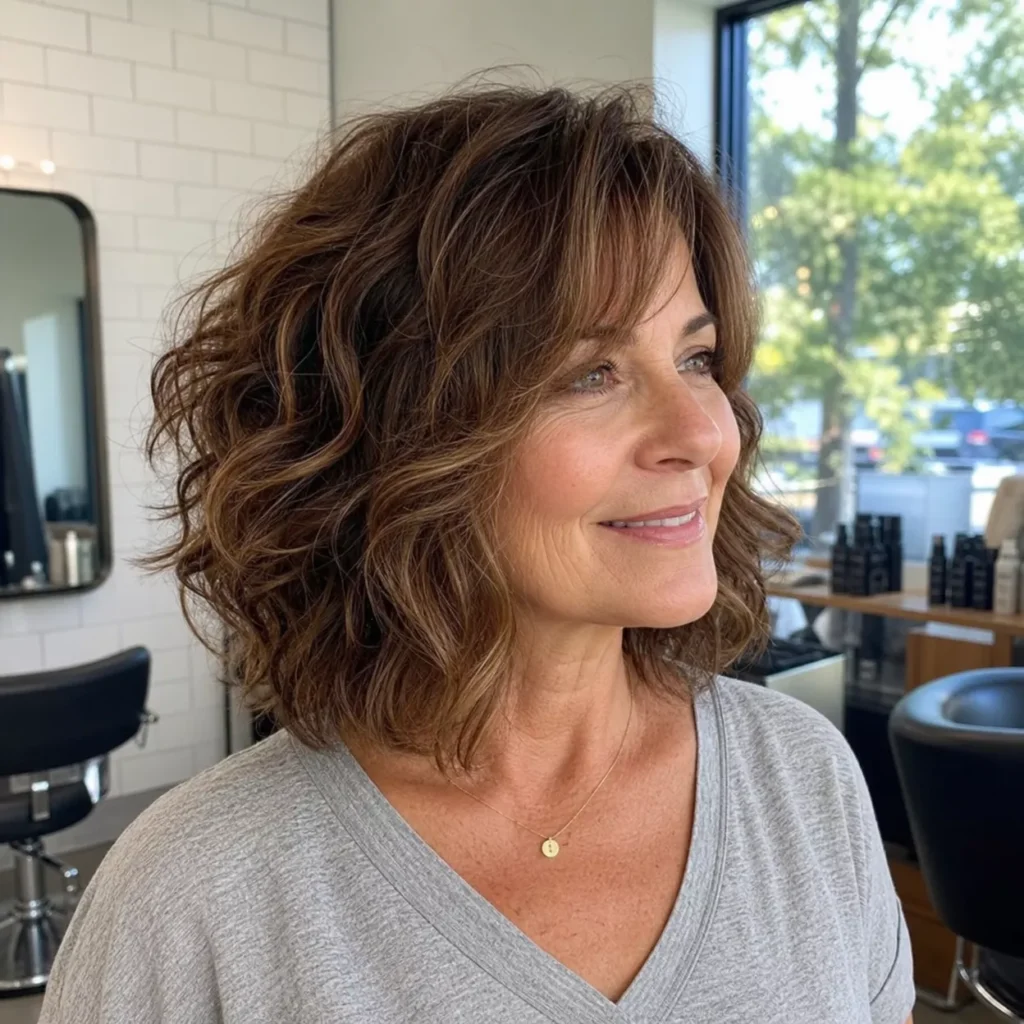
A bob outline on the outside with shag layering inside. From across the room it reads as a bob. Up close, the waves separate instead of massing together. This is a reasonable answer if a plain bob on your hair turns into a wide, solid shape by the second day. Like the other shags, it’s less suited to sparse hair.
Undone Wavy Long Layers

A close relative of Long Wavy Layers, planned entirely around air-drying. The layers are placed where your wave naturally breaks, so the hair dries into a shape without a diffuser or round brush. Tell your stylist plainly that you don’t use heat, and ask whether they can look at your hair dry before deciding where to cut. The trade-off is that an air-dry cut accepts a bit of unevenness from day to day. If you like a polished finish, this one will frustrate you.
Wavy Bob with Deep Side Part

A deep part on a bob throws a lot of hair to one side, which gives a more dramatic shape than a center part. Some people keep it for occasions and wear a softer part the rest of the time. If that’s your plan, mention it, because a bob angled to suit only one part can look uneven when you switch.
Textured Wavy Lob on Fine Wavy Hair
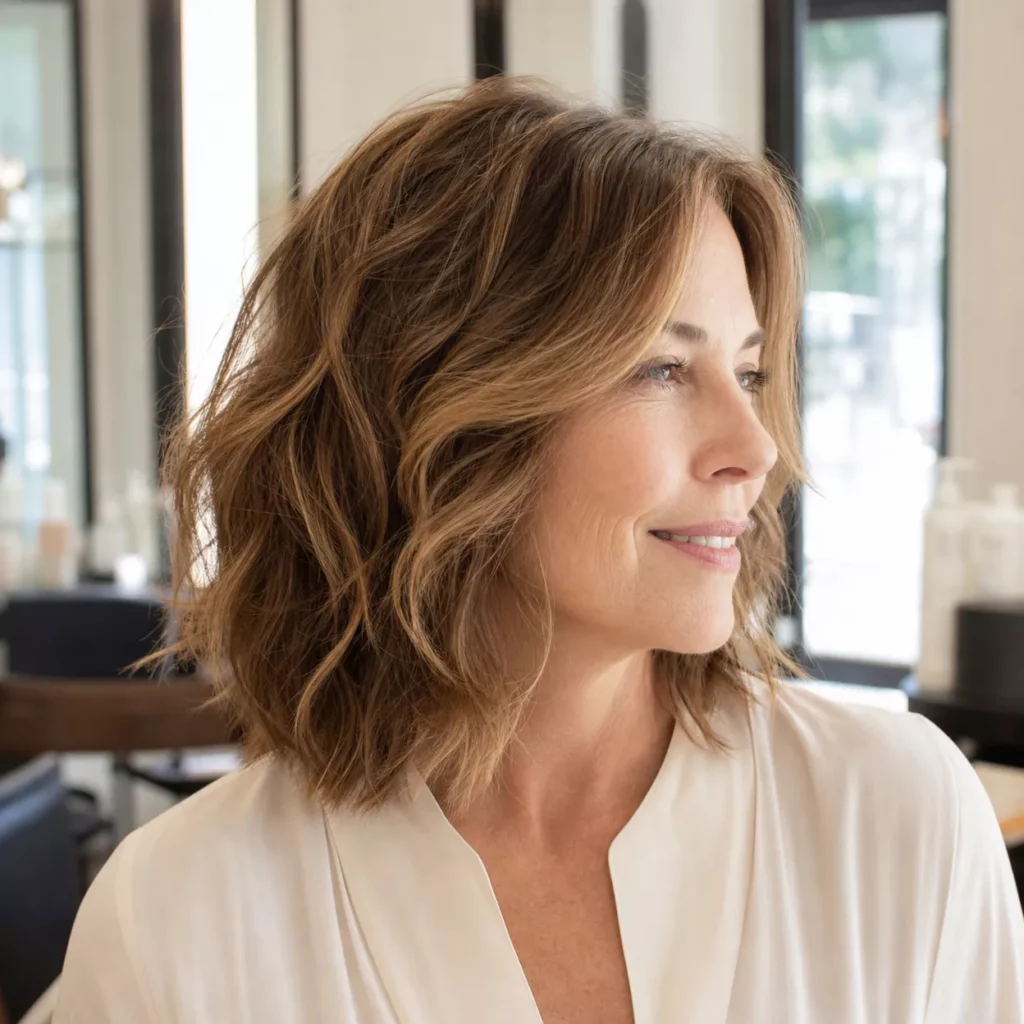
Fine waves often collapse at lob length because there isn’t enough hair to hold the shape. A fairly solid perimeter helps, with a small amount of layering kept near the face or crown, and ends softened so they don’t form a hard line. Razor cutting is one way to soften the ends, and some people with fine hair like how it separates their waves. Others find a razor makes fine or dry hair frizz more. If you haven’t had one before, it’s reasonable to ask whether point cutting with scissors would get a similar result on your hair.
Wavy Cut with Caramel Highlights
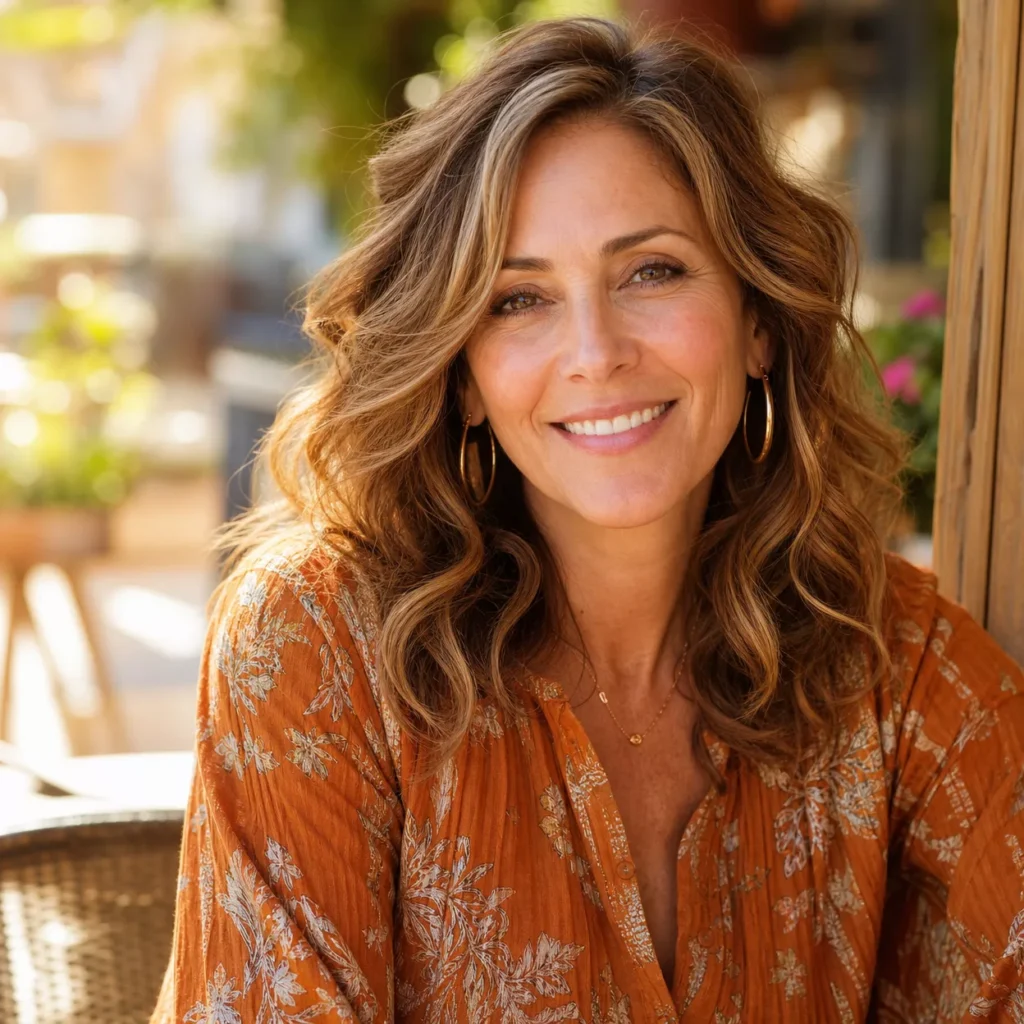
Caramel and honey are popular choices, but warm tones don’t suit everyone, and some people look better with neutral or cool shades. A practical way to decide is to ask your colorist to hold a few swatches next to your face in daylight before committing. As with any highlights on wavy hair, placing the color along the wave crests keeps it from looking striped.
Our Hair Color Combinations guide has more pairings to consider.
Low Maintenance Wavy Bob After 50
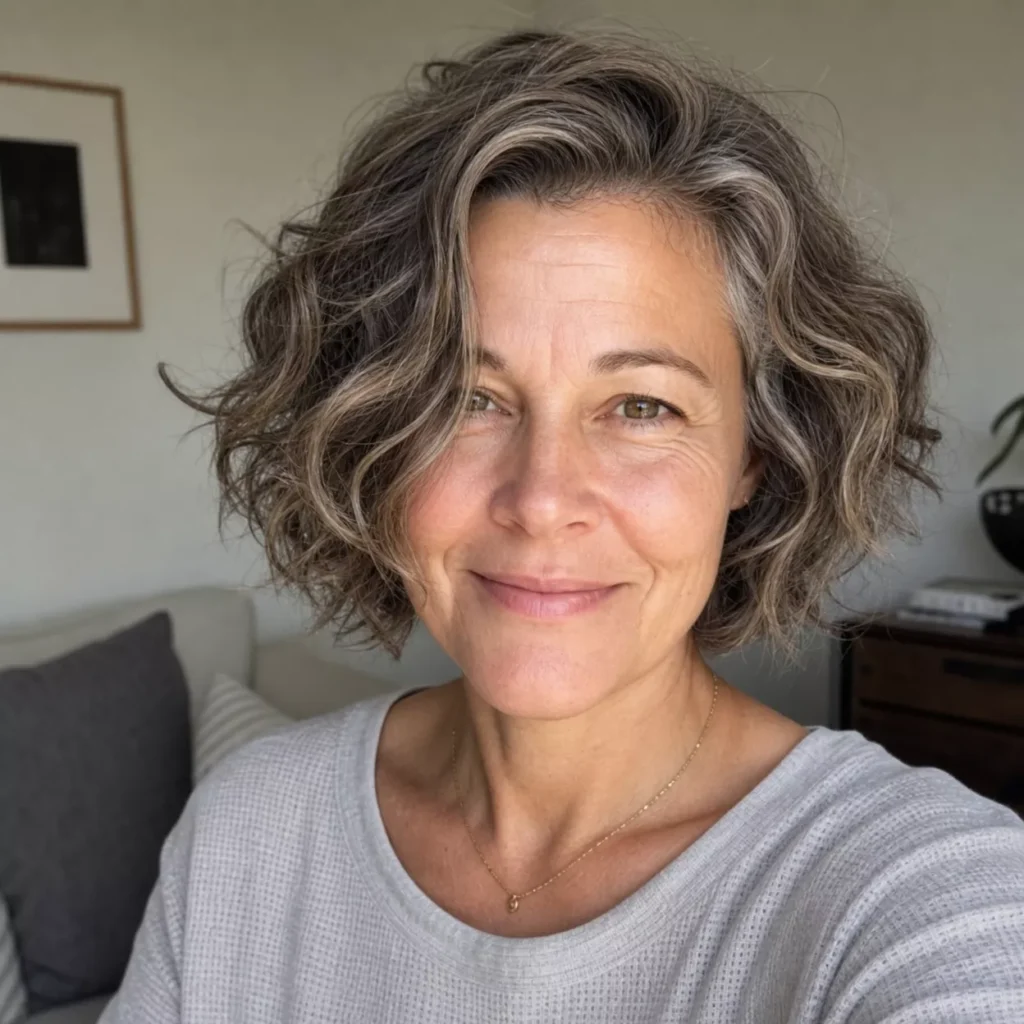
Shorter than the lobs on this list, usually around the jaw, and cut from the start to be left alone. The routine is product on damp hair, a scrunch, and nothing else. For that to work, your stylist needs to know you won’t be using heat, because a bob cut to be blow-dried smooth often looks lopsided when it dries wavy. Unlike the Short Wavy Bob, where the aim is to keep the ends as full as possible, the focus here is a shape that dries evenly on its own. The price of low daily effort is regular trims. A bob that’s grown an inch or two past its shape shows it sooner than a longer cut would. How often you’ll need to go back depends on how fast your hair grows and how crisp you like the shape.
Wavy Layers with Side Swept Fringe

A gentler kind of fringe, and a reasonable first try if you’ve never had one. It sweeps across the forehead and joins the layers at the side, so as it grows it turns into face-framing pieces instead of falling into your eyes. It usually needs trimming less often than a full fringe.
Long Wavy Shag After 50
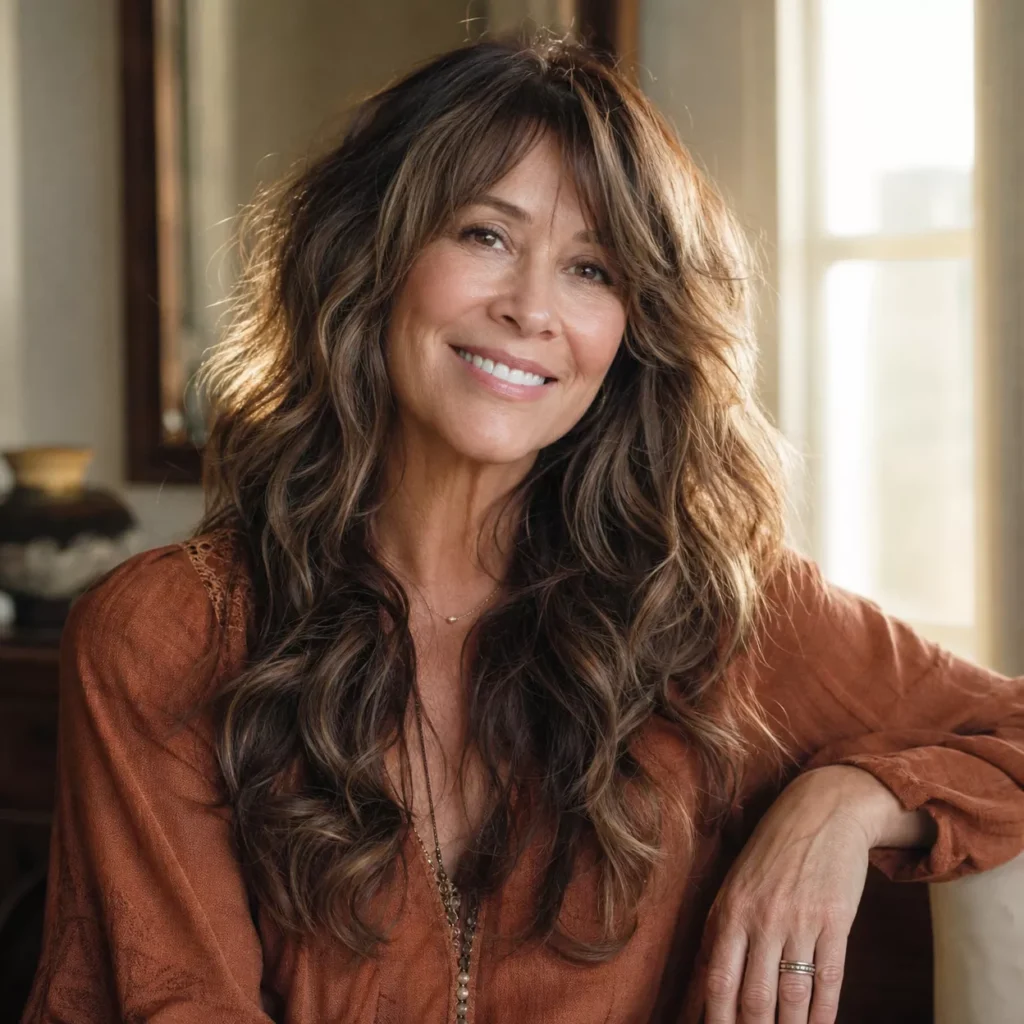
Heavily layered from crown to ends, with shorter pieces around the face and feathered lengths below. On thick waves, it breaks up the bulk that otherwise builds at the bottom while keeping most of your length. It asks a lot of your hair, though. On fine or sparse hair it can leave the ends wispy, and the short crown pieces take many months to grow out if you change your mind.
Where haircut decisions tend to go wrong
One easy mistake is choosing a cut from a photo of someone whose hair has a different density. The model’s thick waves may be what made the layering look good, and the same cut on sparser hair can look completely different. When you bring a photo, look for one where the hair seems similar in amount to yours, not just in style.
A second is asking for a cut by name without explaining how you wear your hair. “Lob with layers” means one thing to someone who blow-dries every morning and another to someone who air-dries and clips it up by noon. Tell your stylist how you dry it, whether you tie it back, and how often you’ll come in.
It’s also easy to judge a new cut on the salon blowout. The real test is the first time you wash and dry it yourself. If something is off, many salons will make small adjustments within a week or two, so ask about their policy before you leave.
Finally, drying time is part of choosing a length. Long, dense, wavy hair left to air-dry can stay damp for hours. If that doesn’t fit your mornings, it’s a real reason to go shorter.
Looking after the wave between cuts
If your hair feels drier than it used to, a gentler shampoo or washing less often may help. Sulfate-free formulas are one option. Some people find them less drying, but plenty of people with wavy hair use regular shampoo without problems, and how often you wash can matter as much as the formula. Conditioner matters most on the ends, where the hair is oldest.
Some people with wavy hair get better definition when they apply styling product while the hair is still very wet, because the waves group together before they start to dry apart. If your hair is fine, a smaller amount or a lighter product keeps it from being weighed down. Scrunching upward, and blotting with a microfiber towel or cotton T-shirt instead of rubbing, tends to reduce frizz.
Brushing dry wavy hair breaks up the pattern into a looser, fluffier shape. Some people like that result, but if you want defined waves, detangle while conditioner is in. If you use a diffuser, low heat and a heat protectant are kinder to hair that already feels dry. On the second or third day, a light mist of water and a scrunch will often bring the wave back without starting over.
Frequently Asked Questions
What to take to your appointment
Before choosing a cut, try to describe your hair in four short answers: what your ponytail looks like at the ends, what your wave does when left alone, how you dry it, and how often you’ll come back. Then pick two cuts that match the problem you most want solved, and bring a photo of each where the hair looks like yours in amount and wave. That conversation will tell your stylist far more than a haircut name ever could.
For more ideas across different lengths and textures, explore our Hairstyles for Women Over 50 collection.
This article is general information. Hair changes differ from person to person, so use it as a starting point for a conversation with your stylist.