23 Short Choppy Hairstyles for Women Over 60 With Thin Hair and How to Choose the Right One
Short, choppy cuts are often suggested for thin hair, and there’s a reason for that: a shorter length carries less weight, and broken-up ends create separation and movement that a heavier, blunt cut may not. But “choppy” describes a way of cutting, not a promised result. Texture comes from removing hair, and on hair that’s already fine or low in density, removing the wrong amount from the wrong places can leave the ends looking sparse rather than full.
It also helps to know which kind of thin you’re working with. Fine hair has narrow strands, low-density hair has fewer of them, and some hair is both. The same choppy pixie can look full on fine, dense hair and wispy on low-density hair. Natural texture, growth patterns at the crown and hairline, how much styling you do, and how often you want to visit the salon all shape which version suits you.
The 23 cuts below each focus on a different part of that decision.
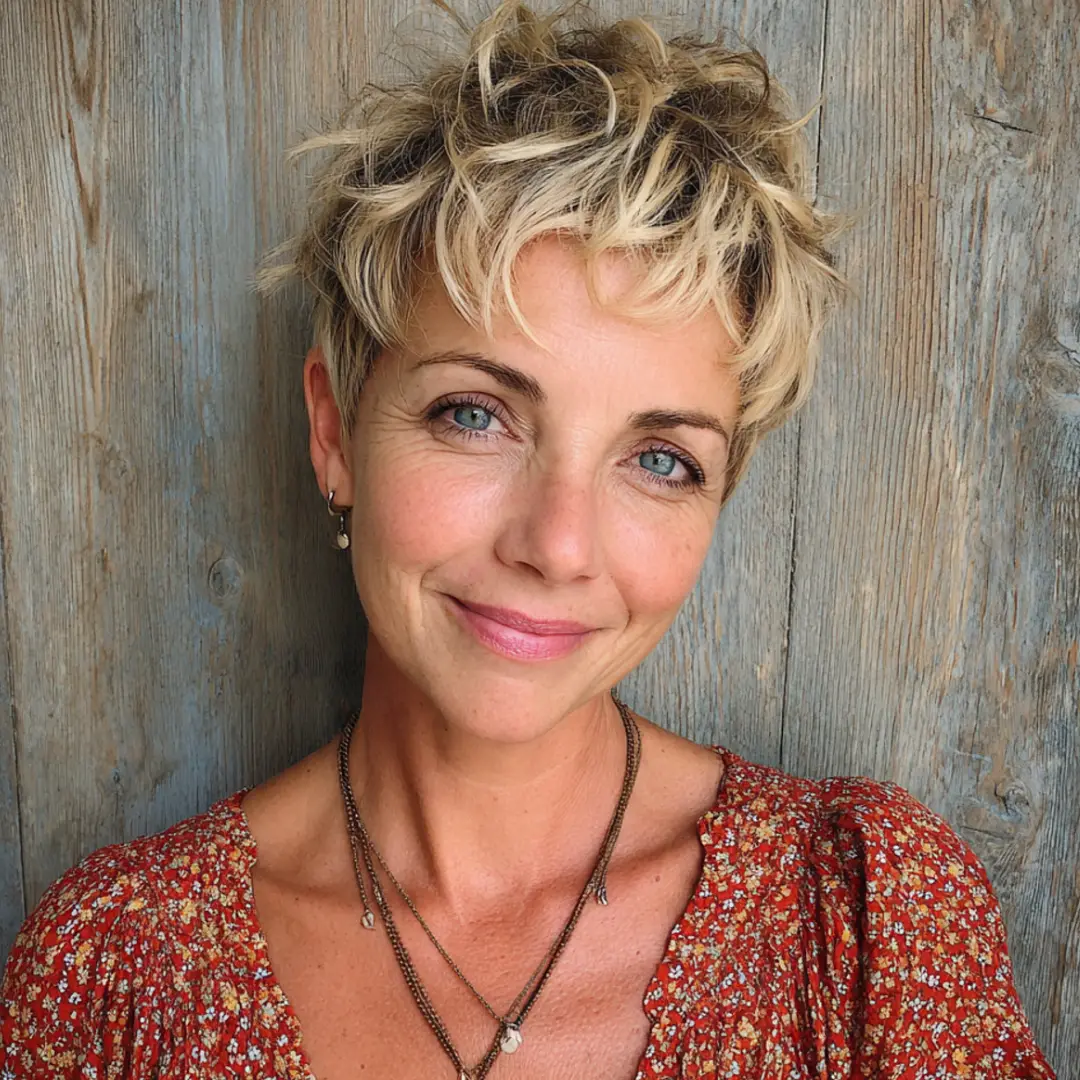
Choppy Pixie with Feathered Layers
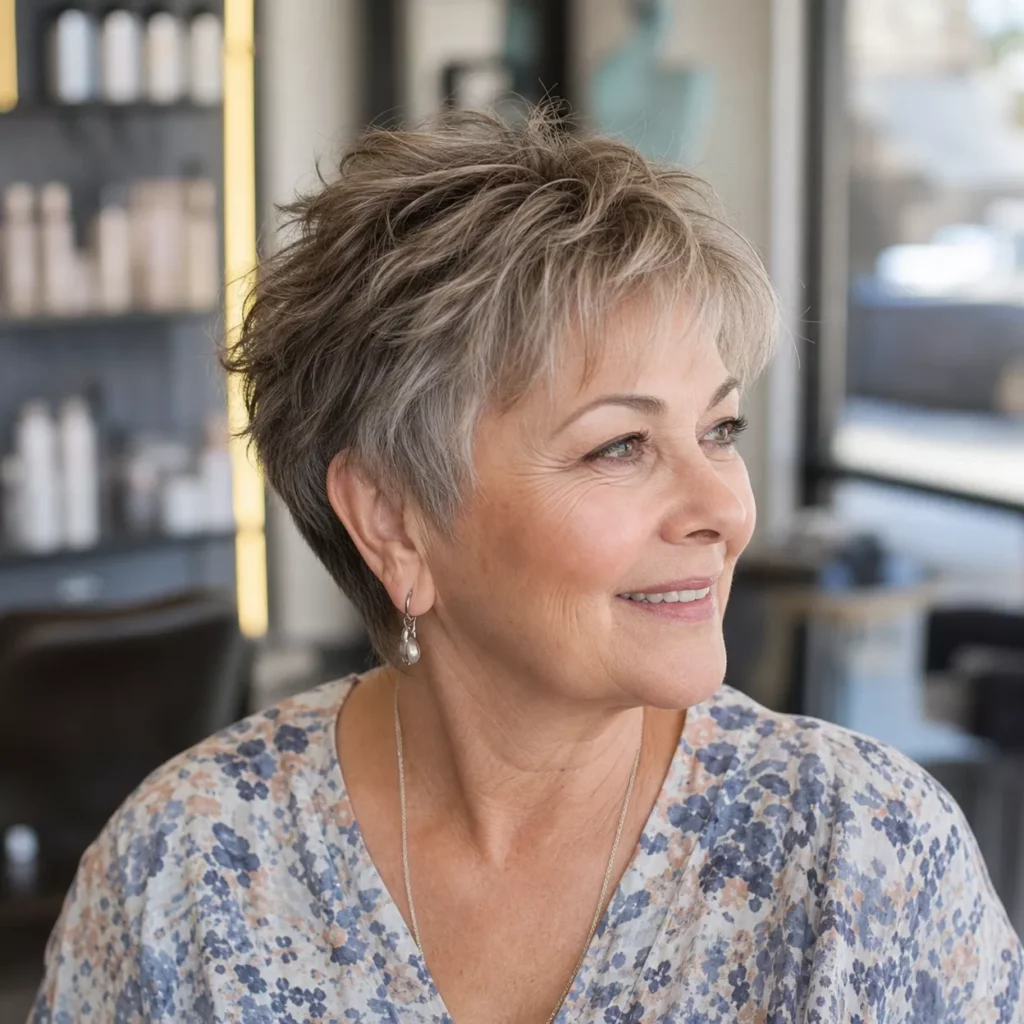
A choppy pixie puts most of its texture at the crown, where feathered layers lift and separate, but the edges around the ears and nape matter just as much. If the perimeter is textured as heavily as the top, the whole shape can look thin. Keeping a little more weight around the outline, with feathering concentrated on top, tends to make the cut look more substantial. On fine but dense hair, the crown layers can carry plenty of texture; on low-density hair, they usually need more length so the scalp doesn’t show through.
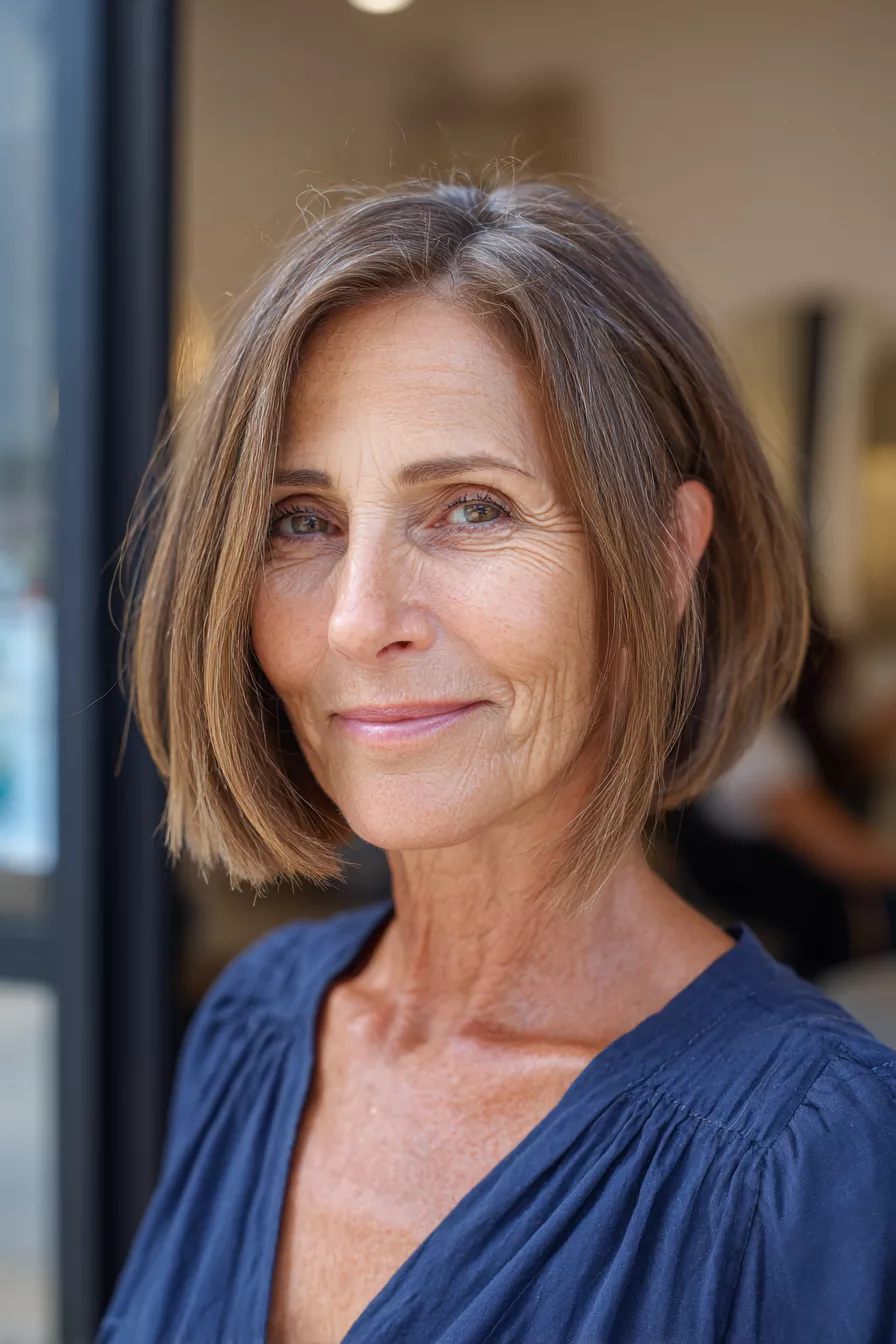
Textured Short Bob with Choppy Ends
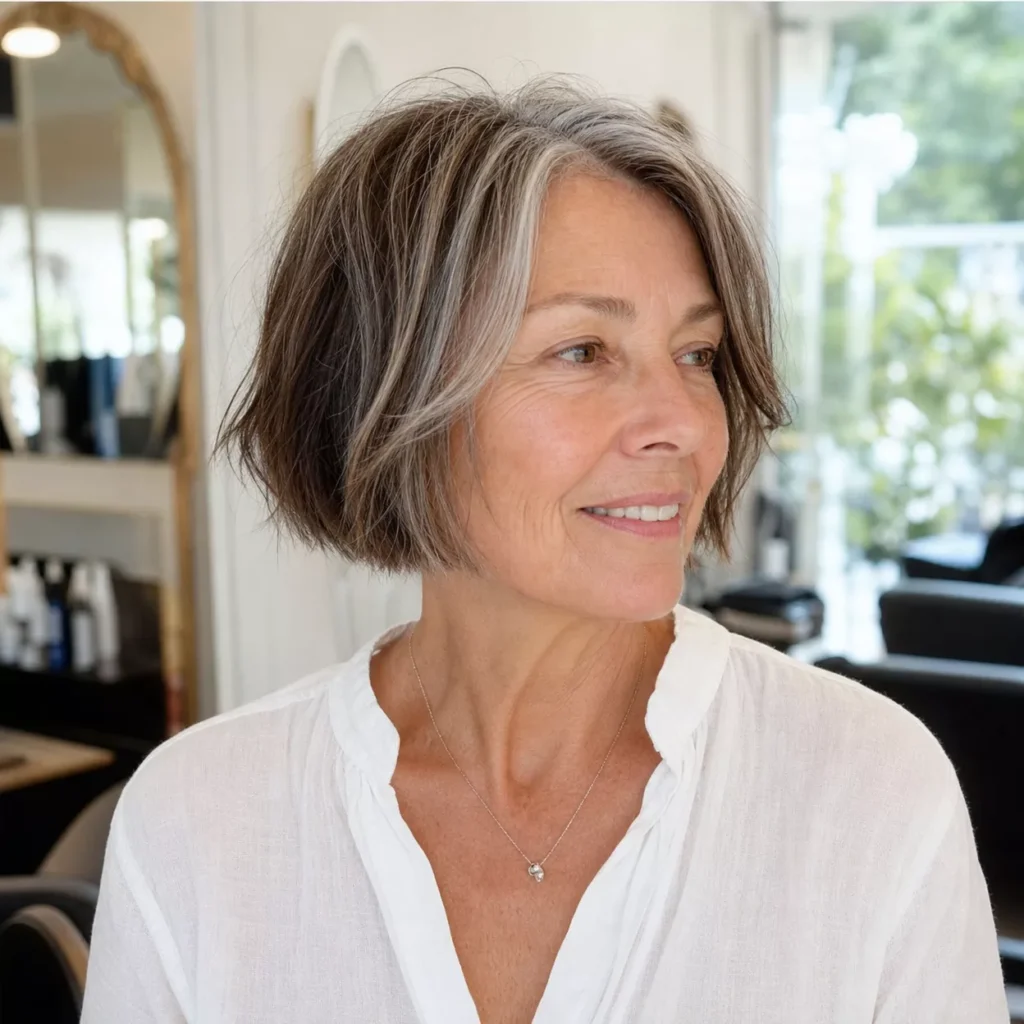
The perimeter of a short bob does a lot of the work in how dense the hair looks. A fairly solid edge with only light choppiness at the very ends reads fuller than one that’s heavily texturized. The texture breaks up the line so it doesn’t look severe, but too much can make the ends look see-through. It’s worth asking exactly how much will come off the bottom edge. On straight hair, the line shows clearly; on wavy hair, the choppy ends may disappear into the bend.
Choppy Shaggy Pixie Bob
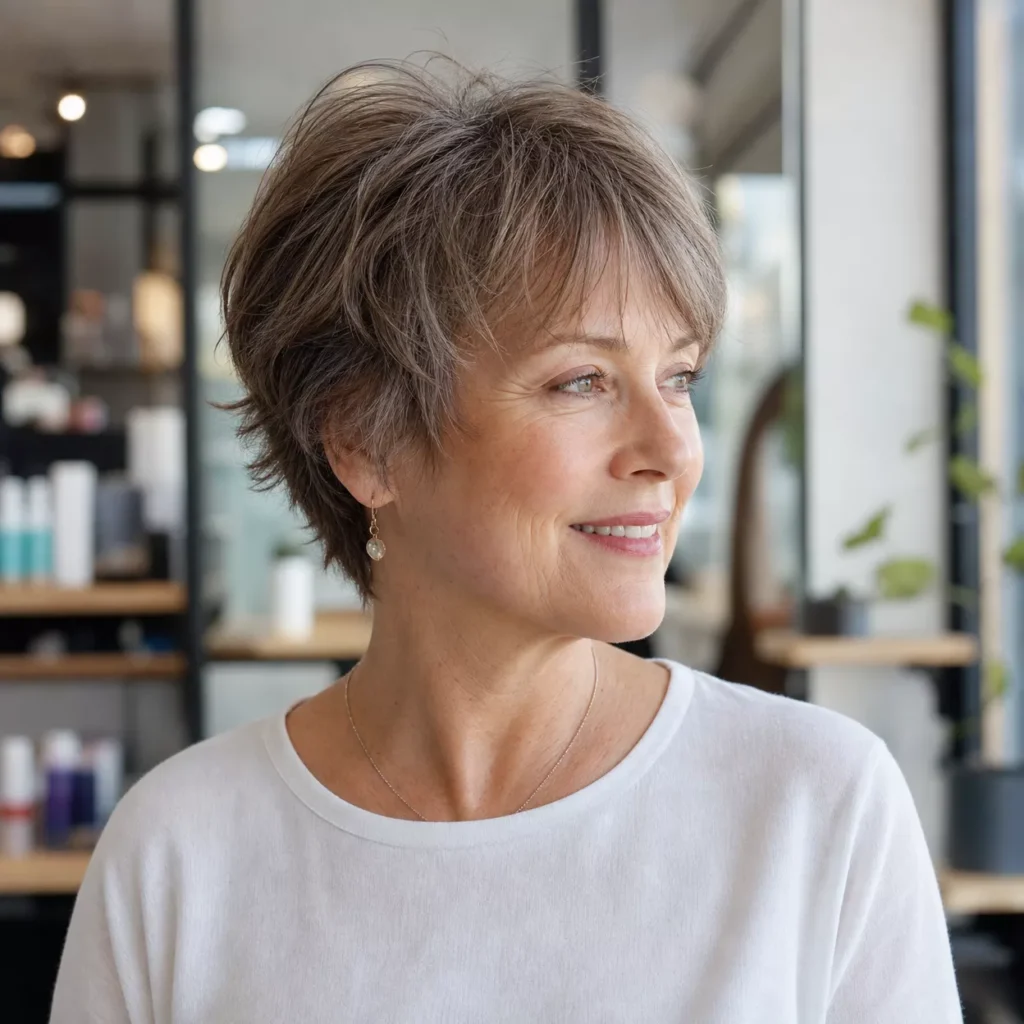
The difference between a shaggy pixie bob that looks deliberate and one that looks thin usually comes down to how much layering is involved. A shag uses layers at several lengths to create texture, and each layer removes some hair. On low-density hair, too many can leave the shape looking patchy. A more controlled version keeps fewer, longer layers and puts texture in specific places, such as the crown and around the face, rather than throughout the whole head.
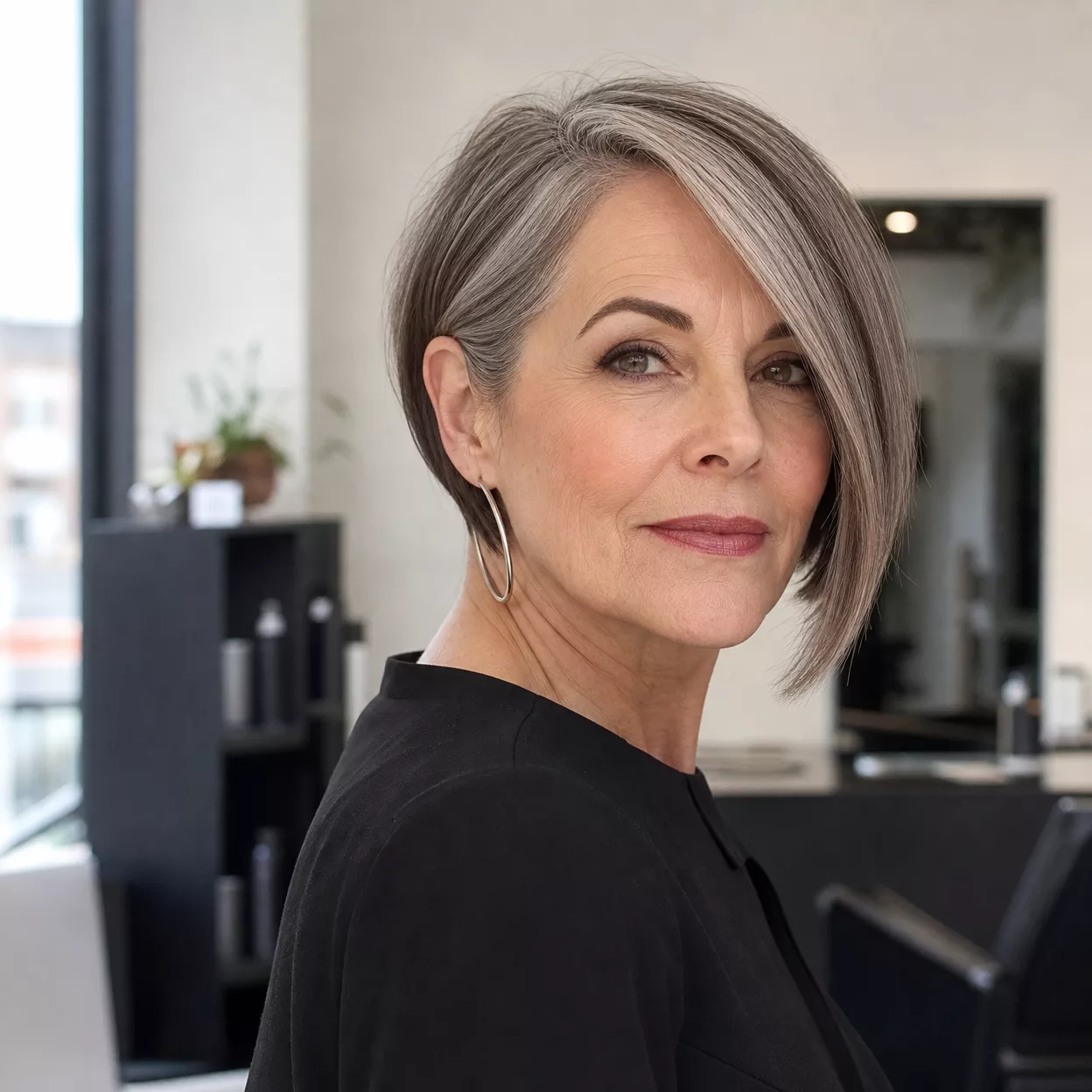
Short Choppy Cut with Side-Swept Fringe
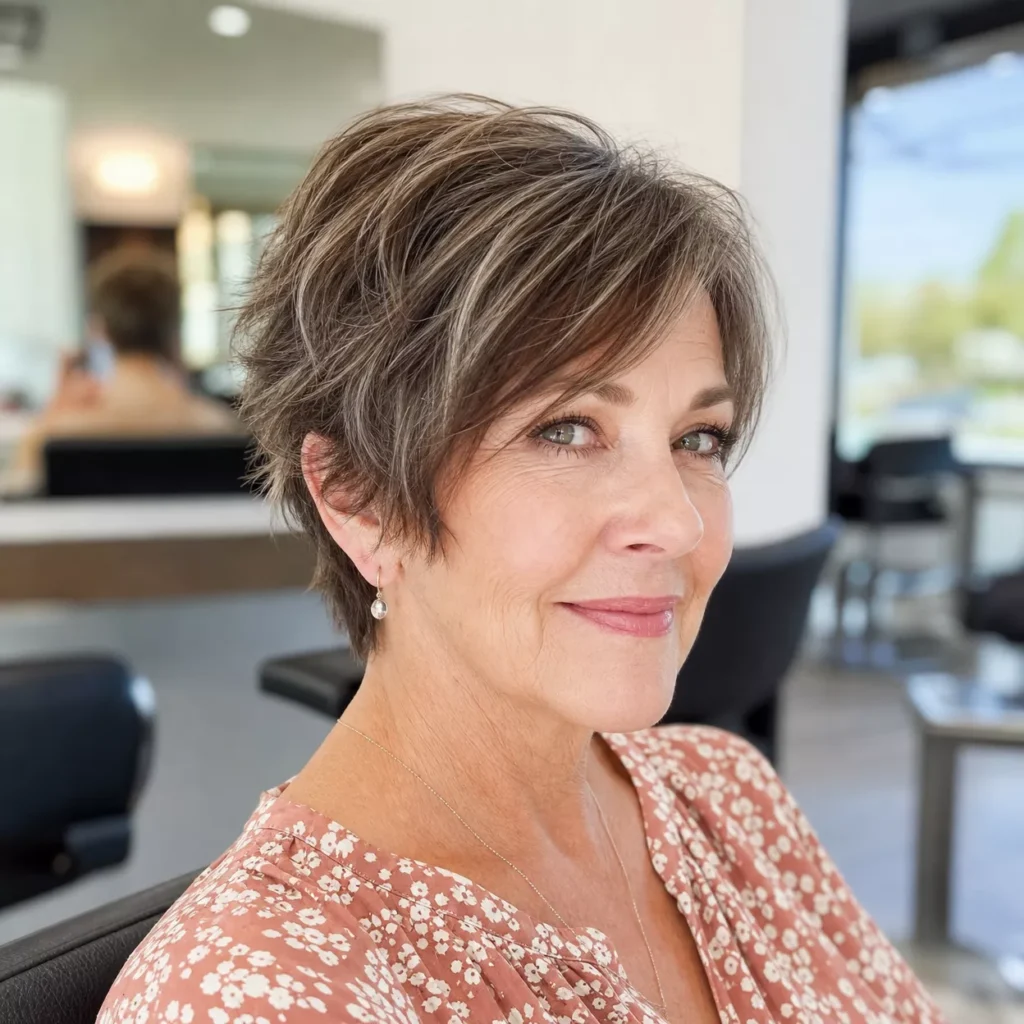
A side-swept fringe angles across the forehead, and its direction should follow your natural part. Fringe cut to sweep against your growth pattern tends to spring back or split. Hairline density matters too: a sparse front can make the sweep look wispy, so the fringe may need to come from a slightly deeper section. Most side-swept fringes need a quick blow-dry or a little product to stay in place. As it grows, it can simply be swept further to the side, which makes it fairly forgiving.
Choppy Layered Pixie with Volume at Crown
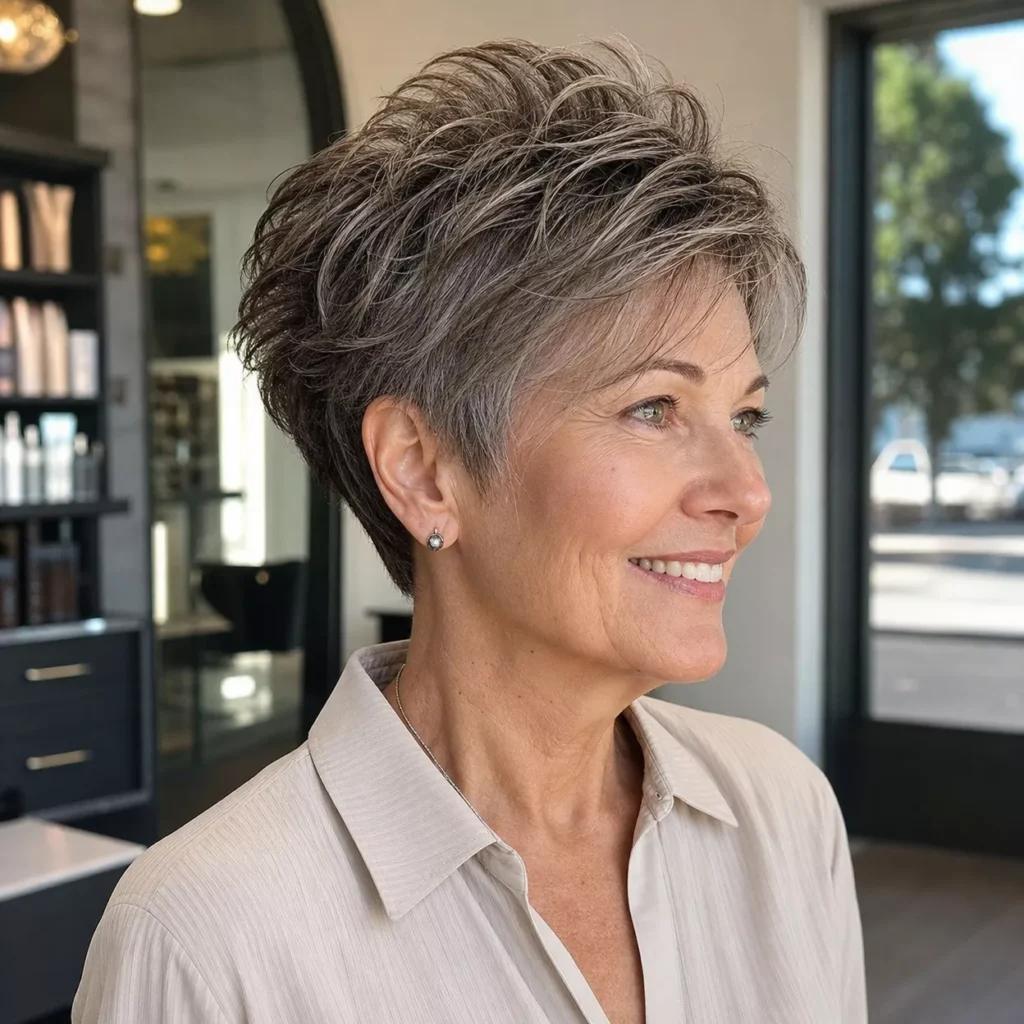
Crown volume depends partly on how your hair grows there. If it naturally lifts or has a swirl that pushes hair upward, layering at the crown can build on that. If it lies flat or grows in a strong spiral, the same layers may separate or sit down instead. A stylist can work with the growth pattern, but some styling, such as a root-lifting product or a quick blow-dry, may still be needed. On a low-density crown, very short layers can reveal more scalp, so a little extra length there often helps.
Short Choppy Bob for Very Thin Hair

Internal layers are cut beneath the surface, so the outline stays fairly intact while some weight is removed from inside. That can help a bob move without visible steps. On hair with good density, it stops the shape from feeling heavy. On low-density hair, though, internal weight removal needs care, because there may not be much weight to spare. Take out too much and the bob can look hollow or thin through the middle. Fewer, lighter internal layers are usually the safer choice here.
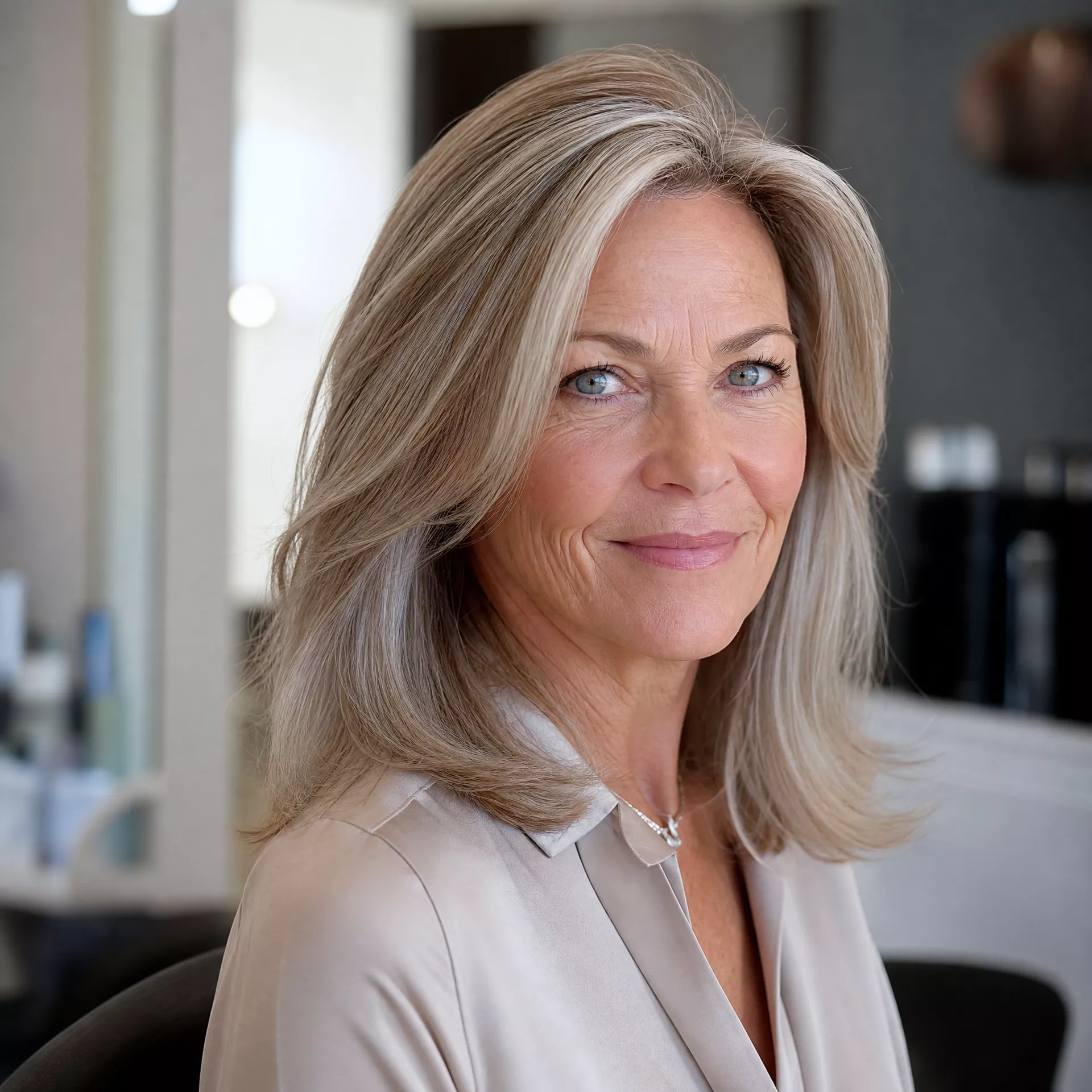
Feathered Short Cut with Soft Layers

Feathering directs the layers outward and back, creating movement without the broken-up look of a heavily choppy cut. That softness tends to keep more visual weight, which can suit fine or low-density hair that would look sparse with aggressive texture. The trade-off is less obvious separation. On straight hair, the feathered direction may need a round brush to show; on wavy hair, it may appear more naturally.
Choppy Short Shag with Wispy Fringe
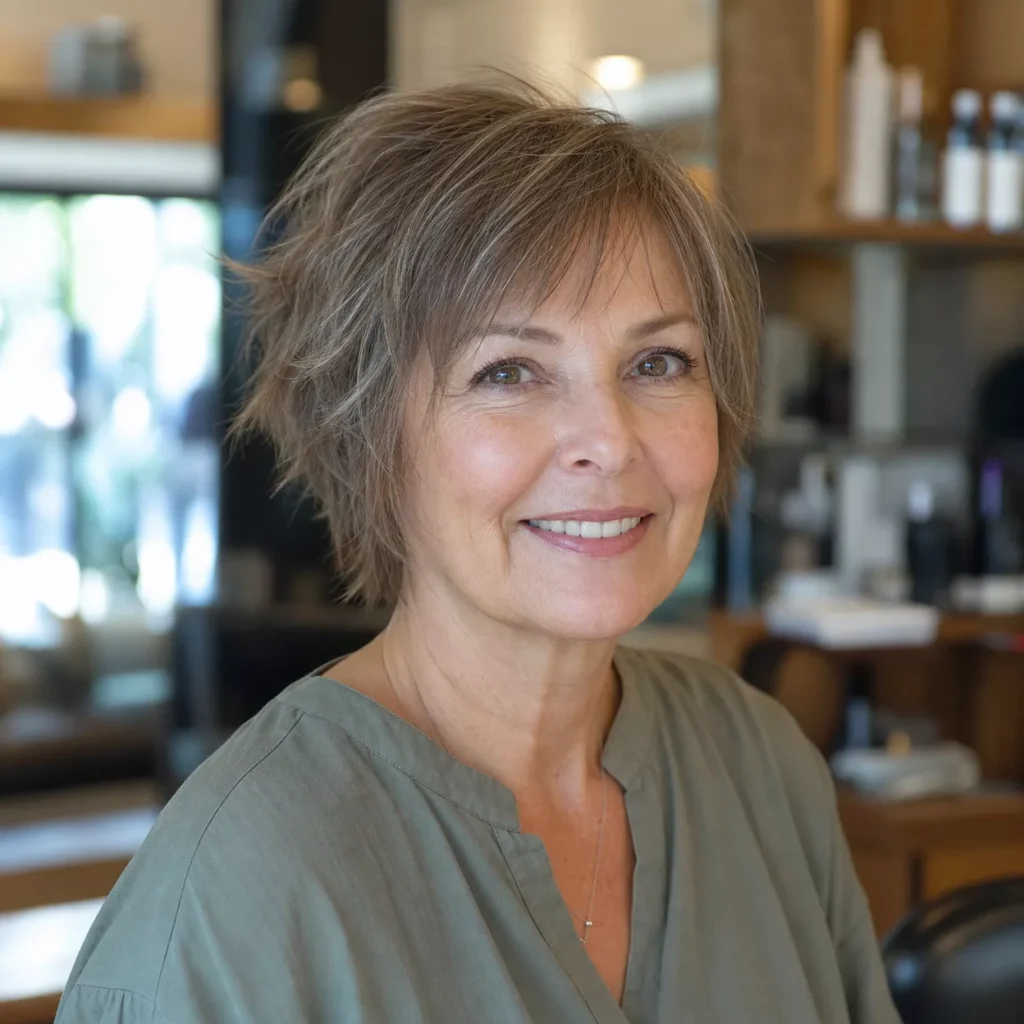
A wispy fringe on a short shag softens the front, but it relies on hairline density. With enough hair, the fringe looks light and intentional; with sparse density, it can look broken up. Shags remove weight by design, so there’s a trade-off between softness and fullness: the lighter the fringe and layers, the softer the look and the less fullness at the front. Humidity may separate a wispy fringe, and it needs trimming between cuts to stay at brow length.
Short Choppy Cut with Lifted Crown
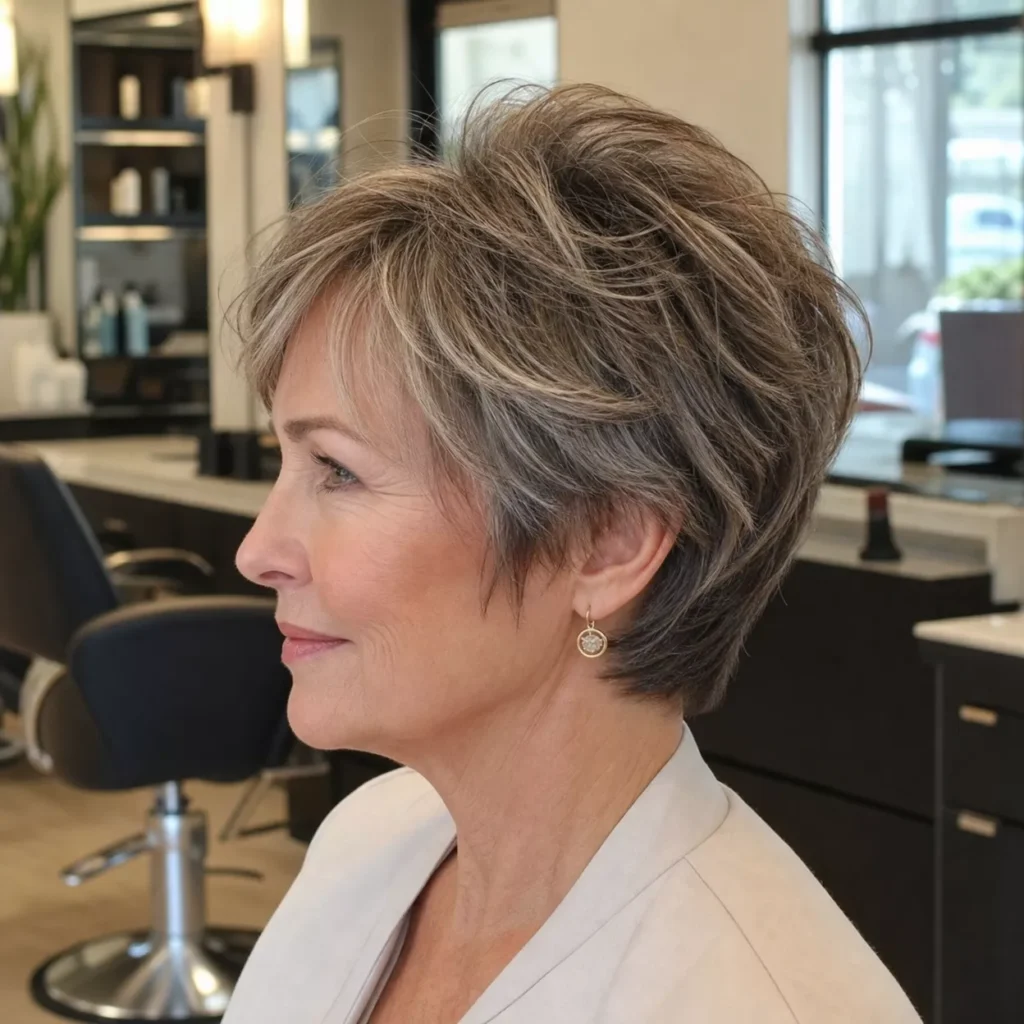
A lifted crown comes partly from the cut and partly from how your hair grows. Shorter layers at the crown can encourage lift, especially if the hair already grows upward there. If it naturally lies flat, the lift may still need styling, usually a root-lifting product and a blow-dry. It’s worth asking your stylist how the crown will behave air-dried, since the lift in many reference photos has been styled.
Tousled Choppy Short Cut

Tousled looks undone, but it usually takes some styling. The choppy layers give the hair room to separate, and product, scrunching, or a quick rough-dry brings out the texture. On hair with a natural wave, it may come together with little effort. On straight, fine hair, a texture spray may be needed to stop the layers from lying flat. A cut can reduce styling time, but it doesn’t always remove it, and that distinction is worth keeping in mind before choosing this look for ease.
Short Choppy Cut with Natural Gray

Gray and white hair can behave differently from your previous color. For some, gray strands feel coarser or more wiry; for others, they’re finer or softer; many people have a mix. A choppy cut works best when it’s adjusted to how your gray actually behaves. Coarser strands may hold texture with little effort, while finer gray hair may need a stronger perimeter to look full. Lighter tones also tend to show texture and shadow clearly, so choppy layers can look more defined in gray hair than in darker shades.
Choppy Ear-Length Bob
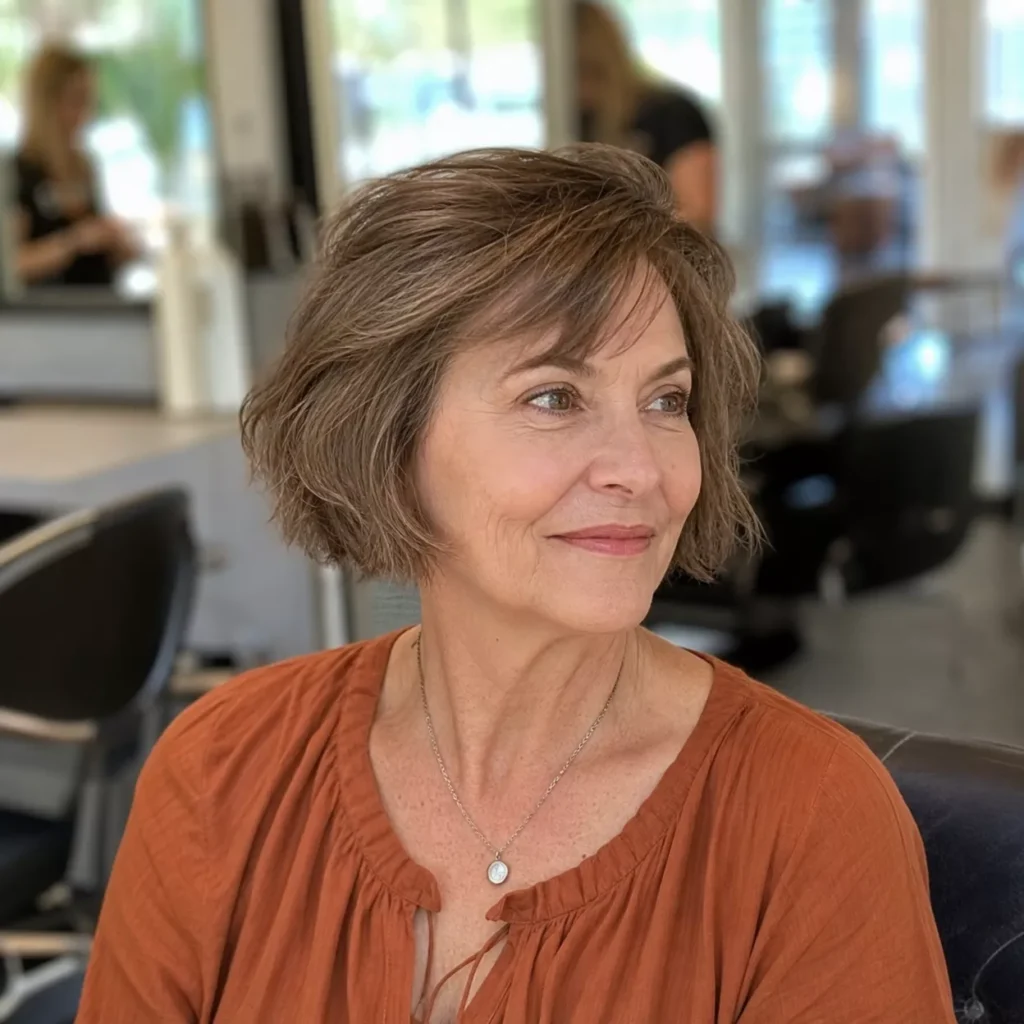
Going to ear length is a bigger commitment than it sounds. The bob sits above the jaw, there’s less hair to tuck or style, and the shape changes quickly as it grows. Regrowth around the ears and nape becomes noticeable relatively soon. Growing it out means passing through jaw length, which many people find manageable. Choppy ends soften the line, but the overall shape still needs regular reshaping to keep its proportions.
Short Choppy Cut with Warm Highlights

Warm highlights placed through choppy layers create contrast between lighter and darker strands, which can make the texture and separation more noticeable. That’s a visual effect; color doesn’t add any hair. Placement matters. Highlights along the edges of the layers emphasize movement, while highlights concentrated at the part can brighten the top but may also make the scalp more visible on low-density hair. Your starting color, including any gray, affects how warm tones turn out.
Choppy Short Pixie with Textured Top
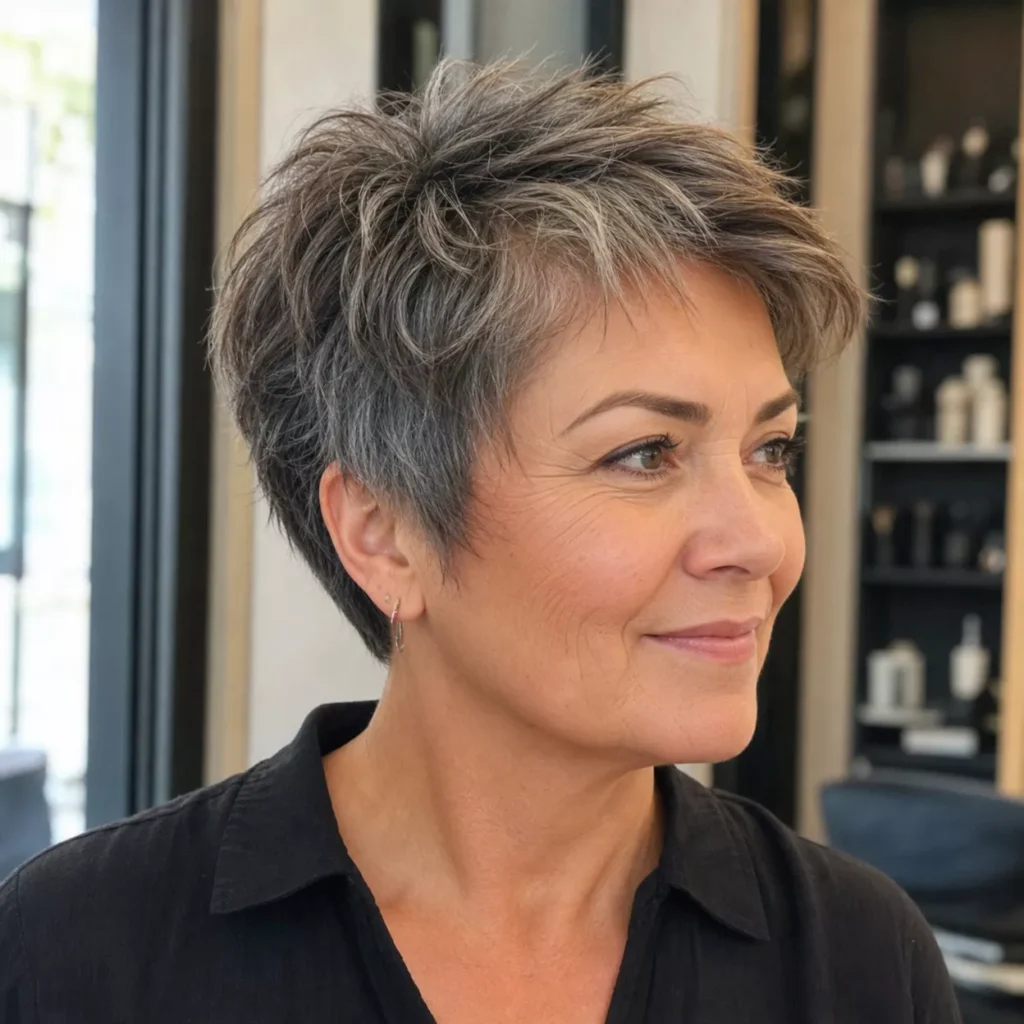
A longer, textured top gives a pixie options: worn forward, swept to the side, or lifted. The more options you want to use, the more styling it may involve. Pushing it upward for height usually needs product and sometimes a blow-dry, while wearing it forward may need less. On fine hair, the top may lie flat without a little product. On low-density hair, the top needs enough length to avoid showing scalp.
Short Choppy Cut with Side Part
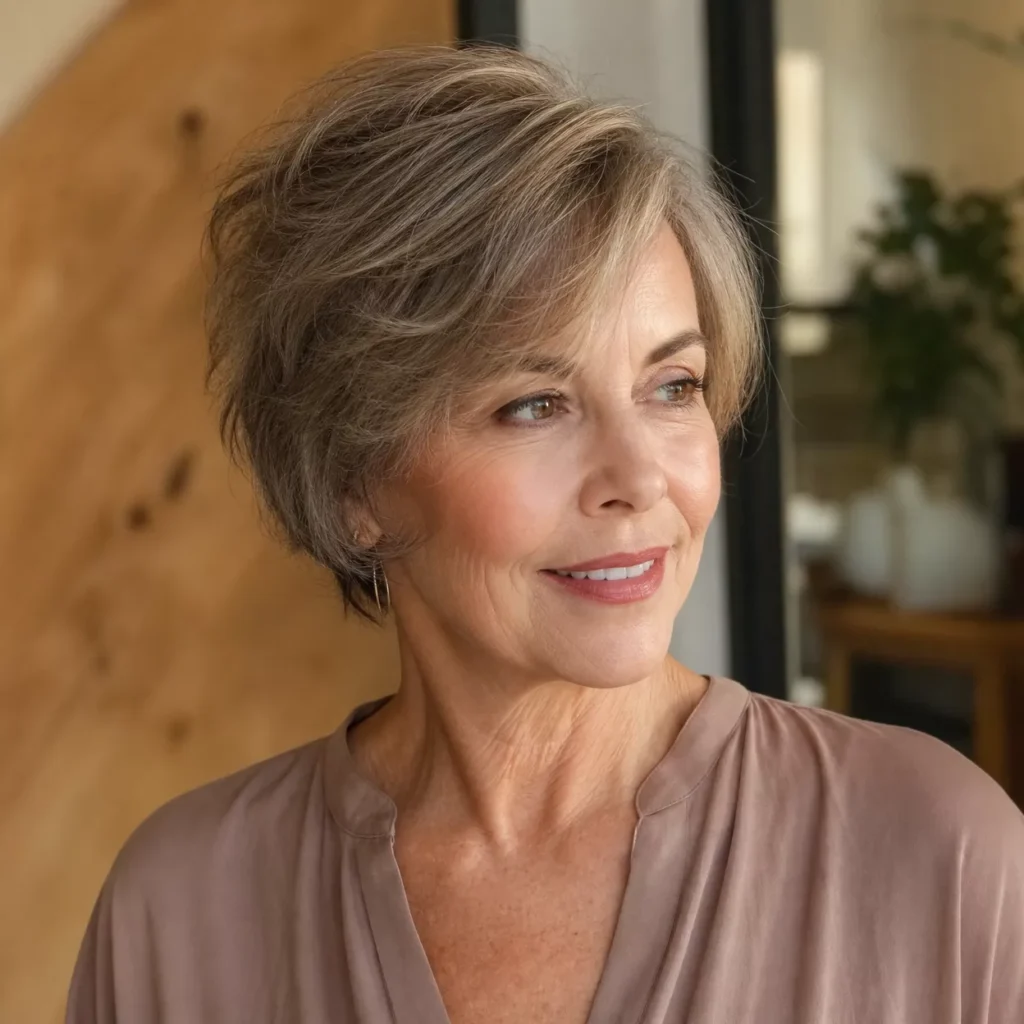
A side part shifts more hair to one side, which can make that side look fuller. It works best when it follows your natural part. Forcing a part against your growth pattern often means the hair falls back during the day, and trying to build volume where the hair doesn’t naturally lift can look stiff. On low-density hair, a very deep part may show more scalp along the line, so a moderate one often looks fuller.
Choppy Bob with Silver Tones
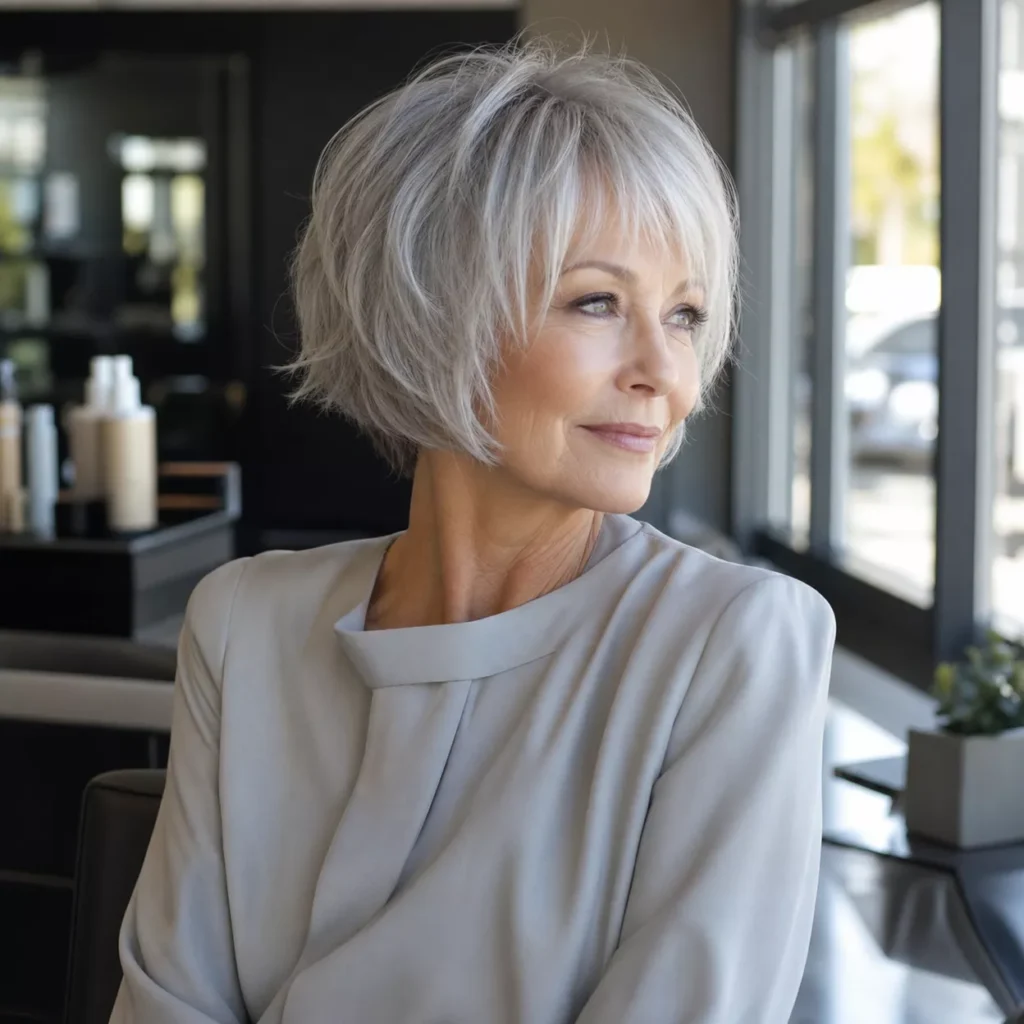
Natural silver and artificially toned silver are two different things. Natural silver hair is usually a mix of white, gray, and darker strands, so it carries built-in variation. Toned silver, applied over lightened or gray hair, is more uniform and tends to need refreshing as the toner fades. If the silver is natural, a choppy bob can show off that mix of tones. If it’s toned, the color has its own upkeep, separate from the haircut.
Short Choppy Cut for Round Face Over 60
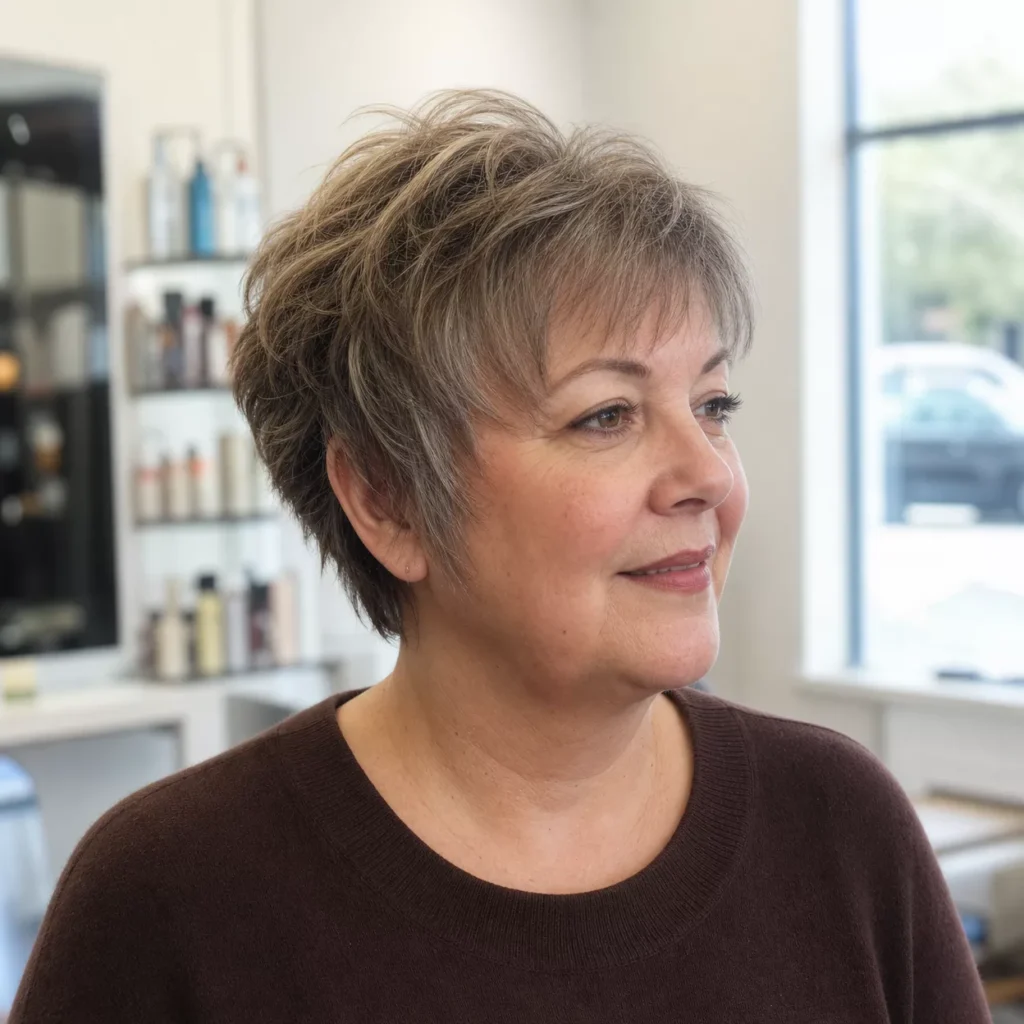
Face shape can be one consideration, but it isn’t a rule. If you like a more vertically balanced silhouette, crown height combined with choppy sides that sit closer to the head can shift visual weight upward, and a side-swept fringe can add a diagonal line. Your hairline, density, texture, and natural part affect the result as much as face shape does. If you prefer width at the sides, there’s no reason to avoid it. The aim is the silhouette you like, not a correction.
Feathered Choppy Crop

A crop is short all over, and how the edges are finished changes its character. Feathered edges taper outward and look soft and irregular. Blunter edges look more defined and can make the hair appear denser. A feathered choppy crop leans toward softness, which suits some hair and preferences, but on low-density hair, heavily feathered edges can make the outline look thin. Some stylists combine a firmer perimeter with feathered texture on top to get both.
Choppy Nape-Length Cut
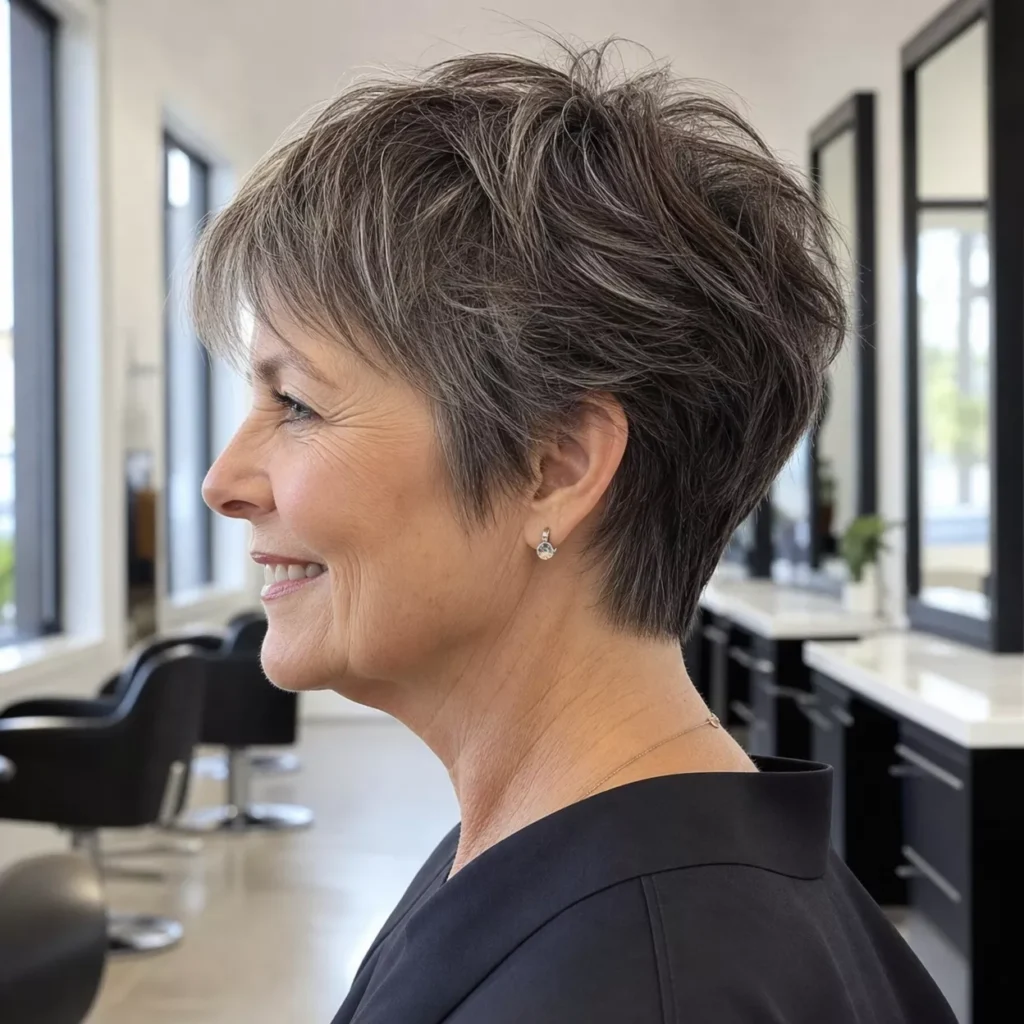
A short nape changes the silhouette from behind. The hair sits close at the neck, and the length and texture are concentrated on top and at the sides. That keeps weight away from the nape, where hair can look flat, and puts it where volume shows. The trade-off is grow-out. A very short nape becomes noticeably longer fairly quickly and needs regular tidying to keep the shape clean.
Short Choppy Cut with Blunt Fringe
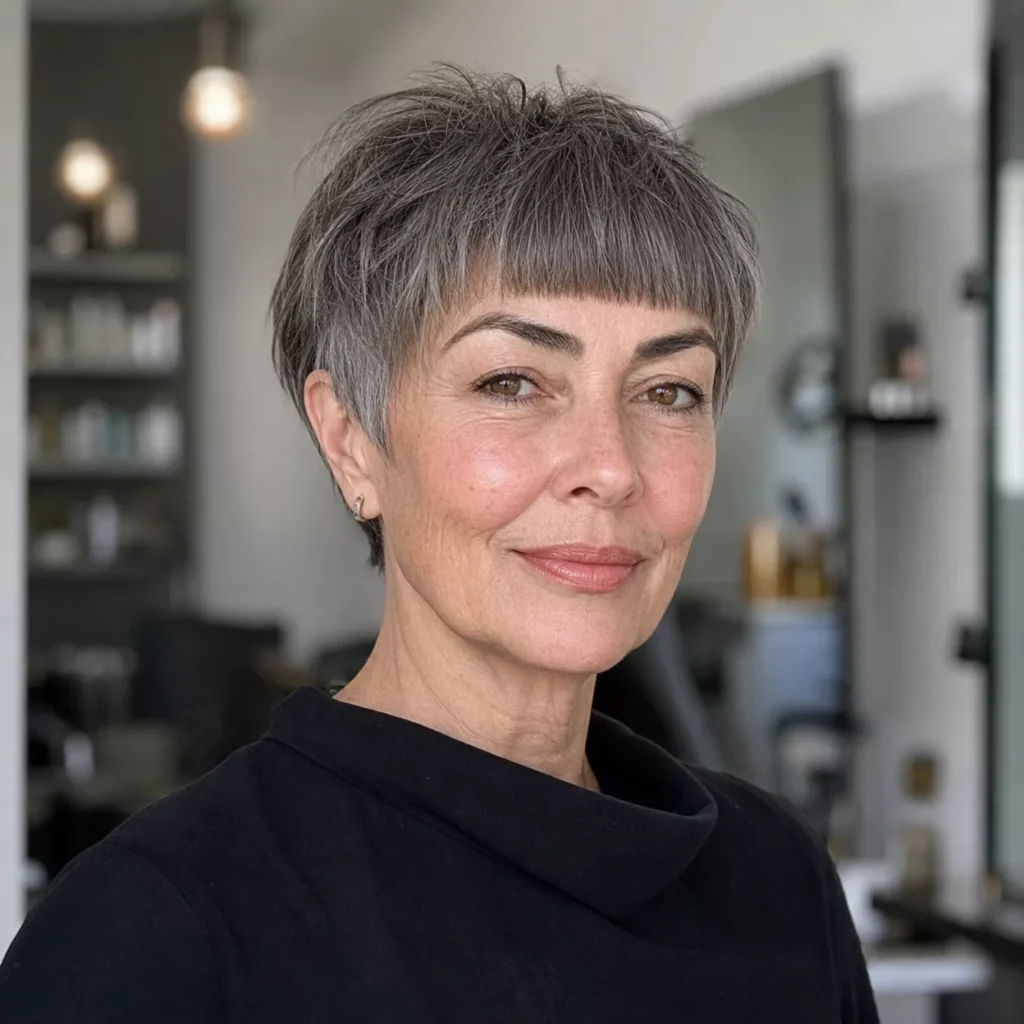
A blunt fringe creates a strong horizontal line that contrasts with the textured, choppy sides. That line can make the front look denser, since the hair is cut straight across rather than tapered. It needs enough density at the hairline to look even, and a cowlick can split it. A blunt fringe also shows growth quickly and needs regular trims. Straight hair keeps the line crisp; wavy hair may soften it.
Choppy Short Shag on White Hair

White hair shows texture and shadow clearly, so a choppy shag’s layers and separation can look more defined than they would on darker hair. Some people find their white hair feels different from their previous color, sometimes coarser and sometimes finer, so the layering should suit how yours behaves. White hair can also pick up a yellow cast from the environment or products. A purple toning product is an option if that bothers you, though it isn’t necessary for everyone.
Textured Short Cut with Piece-y Ends
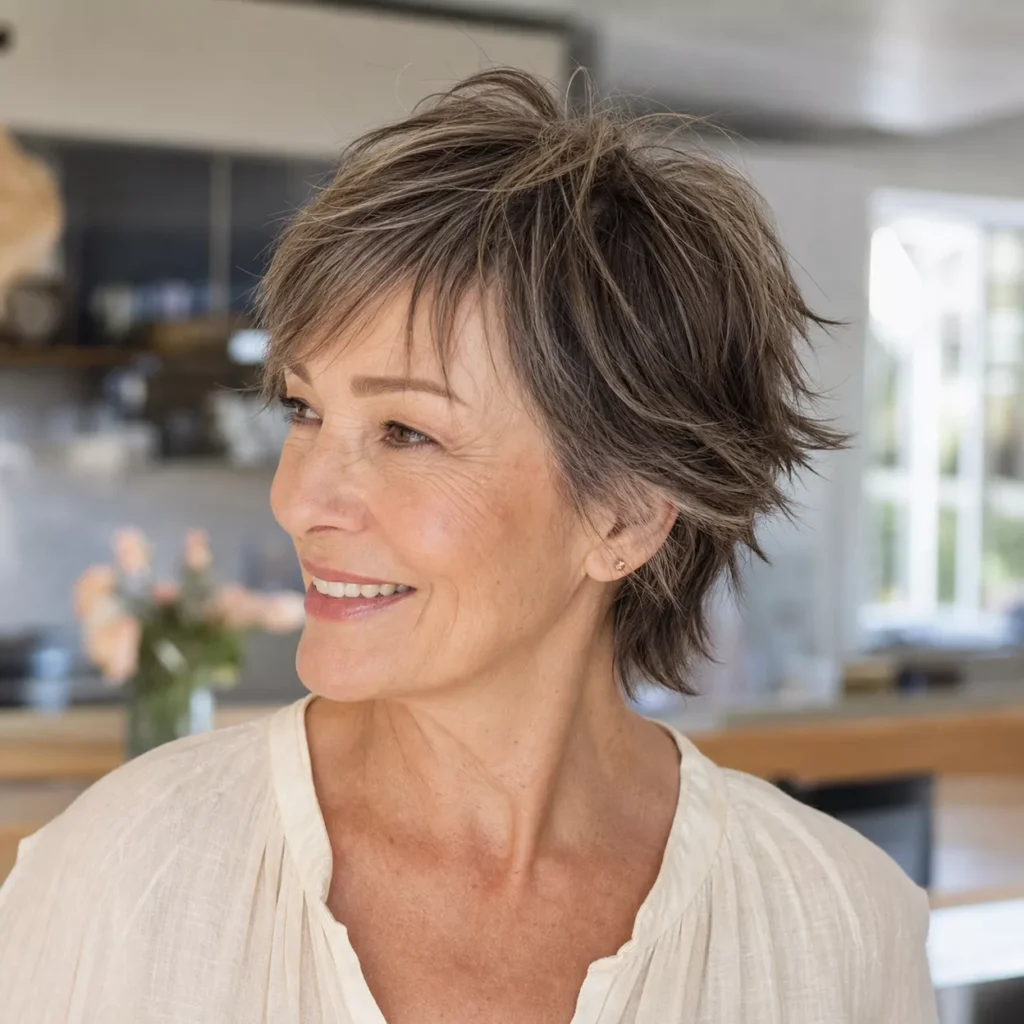
Piece-y ends come from both the cut and the styling. The cut breaks up the ends so they can separate; a small amount of paste, wax, or texturizing cream worked through dry ends defines the pieces. Without product, the ends may simply lie together. On fine hair, lighter products keep the pieces from collapsing, while heavier products can weigh them down and make the hair look flatter.
Choppy Short Cut with Soft Waves
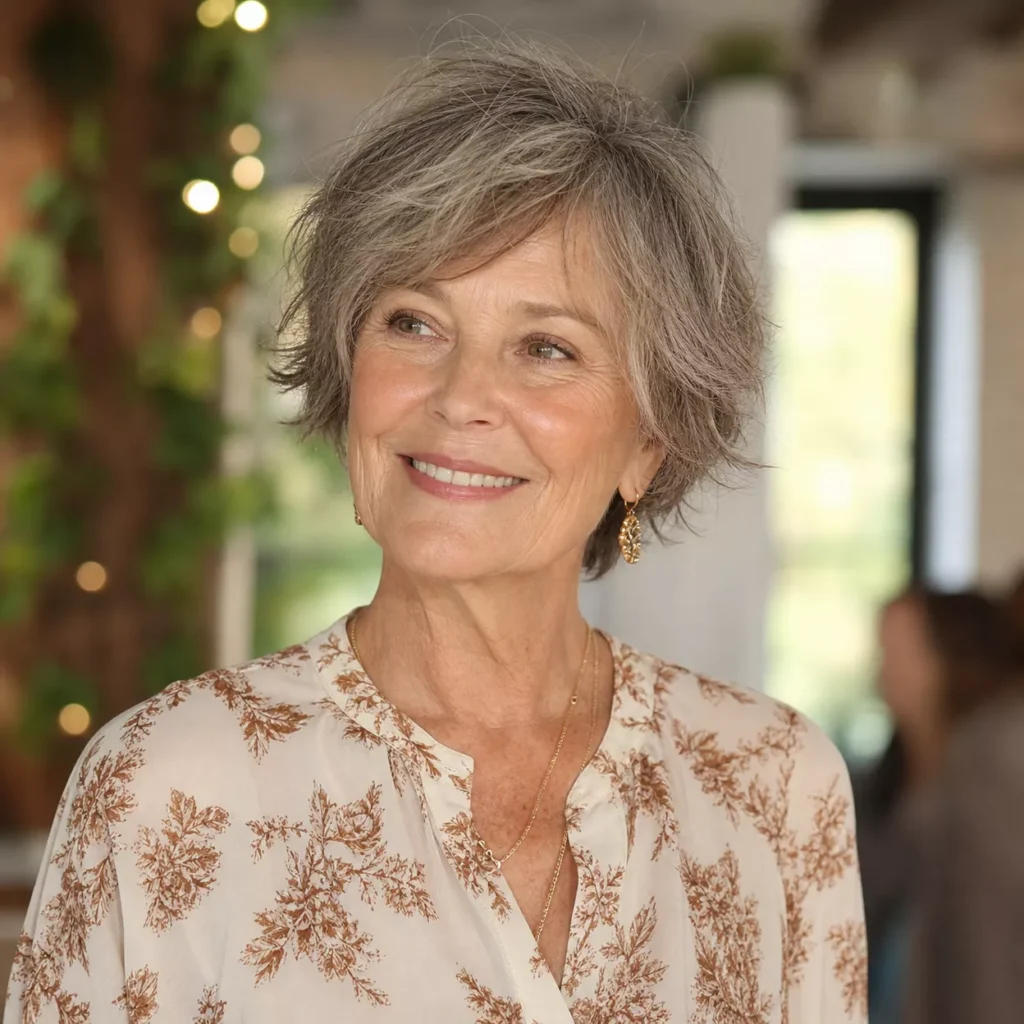
Waves change how a choppy cut looks. Natural waves bend the layers in their own pattern, which can soften the choppiness and add fullness. Heat-created waves from a wand are more uniform but need to be redone. On fine hair, waves can make the cut look fuller; on low-density hair, waves may separate and reveal gaps, so the cut may need more weight left at the ends. Humidity can loosen created waves or frizz natural ones.
What “Choppy” Should Mean for Thin Hair
Choppy cutting creates texture by removing hair to break up the ends and layers. That’s useful when hair feels flat or heavy, but it isn’t the same as adding fullness. On thin hair, the question isn’t how choppy the cut can be, but where the texture should go.
More layers don’t automatically mean more volume. Each layer removes some weight, and on low-density hair, that can mean less visible fullness. The perimeter often matters more: a solid or lightly textured edge helps the ends look denser, while heavy texturizing there can make them look sparse.
Fine and low-density hair need different decisions. Fine hair with good density can usually handle more texture. Low-density hair often looks fuller with less texture and a stronger outline.
Look at the Shape From the Back
Most reference photos show the front. The back tells you more about how the cut is built.
Look at the nape: is it tapered close or left fuller? Check the crown for short layers and how much height they create. Notice the perimeter, and whether it’s solid or heavily textured. Look for graduation, where short layers at the back build into longer ones. And notice where the weight sits: at the crown, through the sides, or at the nape.
A front-facing photo can’t show how a cut handles the back of the head, which is often where thin hair looks flattest.
Fine Hair, Low-Density Hair, or Both?
Fine hair has narrow strands. You may notice that individual strands feel soft or that the hair goes flat easily, even if there’s plenty of it. Fine hair with good density can usually handle moderate choppy texture and crown layers.
Low-density hair has fewer strands. You may see more scalp, especially at the part or crown. Low-density hair usually benefits from a stronger perimeter, fewer layers, and texture placed carefully.
If your hair is both fine and low in density, the cut needs the most balance: enough texture to avoid flatness, but enough weight to keep the ends from looking sparse.
How to Tell if a Choppy Cut May Be Too Textured for You
A few signs suggest the texture has gone further than your hair can carry.
The ends look sparse or see-through. Too much weight has been removed, and the hair looks thinner than before the cut. The perimeter looks shredded rather than softly broken. The cut needs a lot of styling just to look intentional. Or your natural texture seems to fight the shape, with layers sticking out or lying unevenly.
If you notice these, a slightly blunter perimeter and fewer layers at the next appointment can help.
What to Ask Your Stylist
A few practical questions can help you get the cut you want:
- Where will you keep the strongest perimeter?
- How much weight are you planning to remove?
- Will the layers make my ends look thinner?
- How will this cut behave without heat styling?
- What happens as the short sections grow out?
- Should the texture be created with scissors or another technique for my hair?
- How should my natural part or a cowlick affect the cut?
Choosing Between These 23 Cuts
Start with a few decisions.
How short are you willing to go? Pixies and crops are shortest; bobs keep more length around the face.
How much texture do you want? Feathered and soft-layered cuts keep more weight; shaggy and piece-y cuts show more separation.
What’s your density and strand thickness? Fine but dense hair can handle more texture; low-density hair usually needs more perimeter weight.
Do you have natural wave or curl? Waves can soften choppy texture and reduce styling.
How much styling do you want to do? Lifted crowns, textured tops, and tousled finishes often need some product or heat.
Do you have gray or white hair? Your gray’s texture may change how the cut behaves.
Do you want a fringe? Side-swept, wispy, and blunt fringes each bring their own upkeep.
How often do you want salon visits? Very short cuts and fringes need more frequent attention.
Final Thoughts
A good short choppy cut isn’t about adding as many layers as possible. It’s about placing texture where it supports your natural density, texture, and the silhouette you want, and keeping weight where the hair needs it to look full. Use the 23 cuts above to find the shape you like, then ask your stylist how to adapt the texture to the hair you actually have.