31 Haircuts and Hairstyles for Women in Their 30s and How to Choose the Right One
Being in your 30s doesn’t come with a required haircut. What this decade often does bring is a clearer sense of your routine: how much time you actually spend on your hair, whether you’d rather air-dry than blow-dry, how often you can realistically get to a salon, and whether you want to keep working against your natural texture or start working with it.
Those questions matter far more than the number itself. A cut that suits one person at 34 may not suit another at the same age, because the result depends on hair density, the thickness of each strand, natural texture, length, styling time, maintenance tolerance, and plain personal preference.
The 31 ideas below include haircuts, a few styling approaches, and some color choices layered onto cuts. Each entry explains what is actually creating the look, so you can tell which part you’d be asking your stylist for.
Classic Bob

A classic bob usually sits between the chin and the jaw, with a mostly even perimeter and little or no visible layering. That clean outline defines it, and it is also what makes the cut honest about your texture. Straight hair shows the line crisply; wavy hair softens it and can air-dry into a looser, rounder shape. Whether it’s quick to style depends on which of those you have. As it grows past the jaw, the shape starts reading as a longer bob, which some people enjoy and others book a trim for. Our guide to bob hairstyles for women covers more perimeter and length variations.
Short Curly Bob with Layers

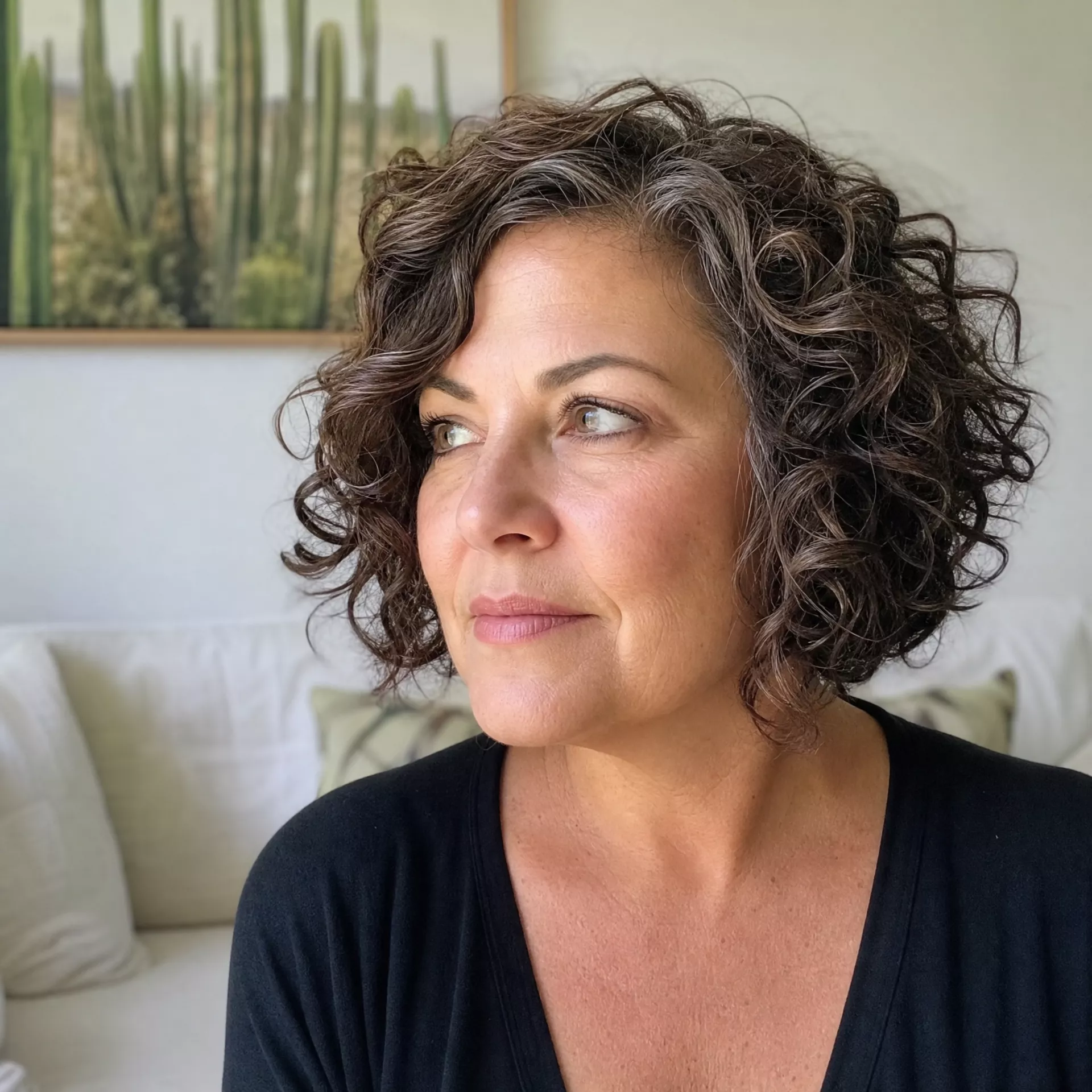
Curly hair can shrink noticeably once it dries, so a length that looks like a chin bob when wet may sit higher once the curls spring up. Layers don’t stop that shrinkage; what they change is where the curls sit. Weight left at the bottom can pull curls down and widen the base into a triangle, while layers placed through the crown and sides let the curls lift and round out the shape. A stylist who sees your curls dry, or at least checks them dry before finishing, has a better chance of placing those layers where your pattern needs them.
Jaw-Length Bob with Bangs

Two lines define this cut: the perimeter at the jaw and the fringe across the forehead. Together they frame the face at two levels, which some people love and others find too enclosed. The fringe asks the most of you. It needs enough hair at the hairline to look full rather than gappy, it usually wants a quick blow-dry in the morning to sit smoothly, and it reaches the brows well before the bob itself grows out. If you like the shape but aren’t sure about bangs, a longer fringe you can sweep aside is an easier first step.
Pixie Bob

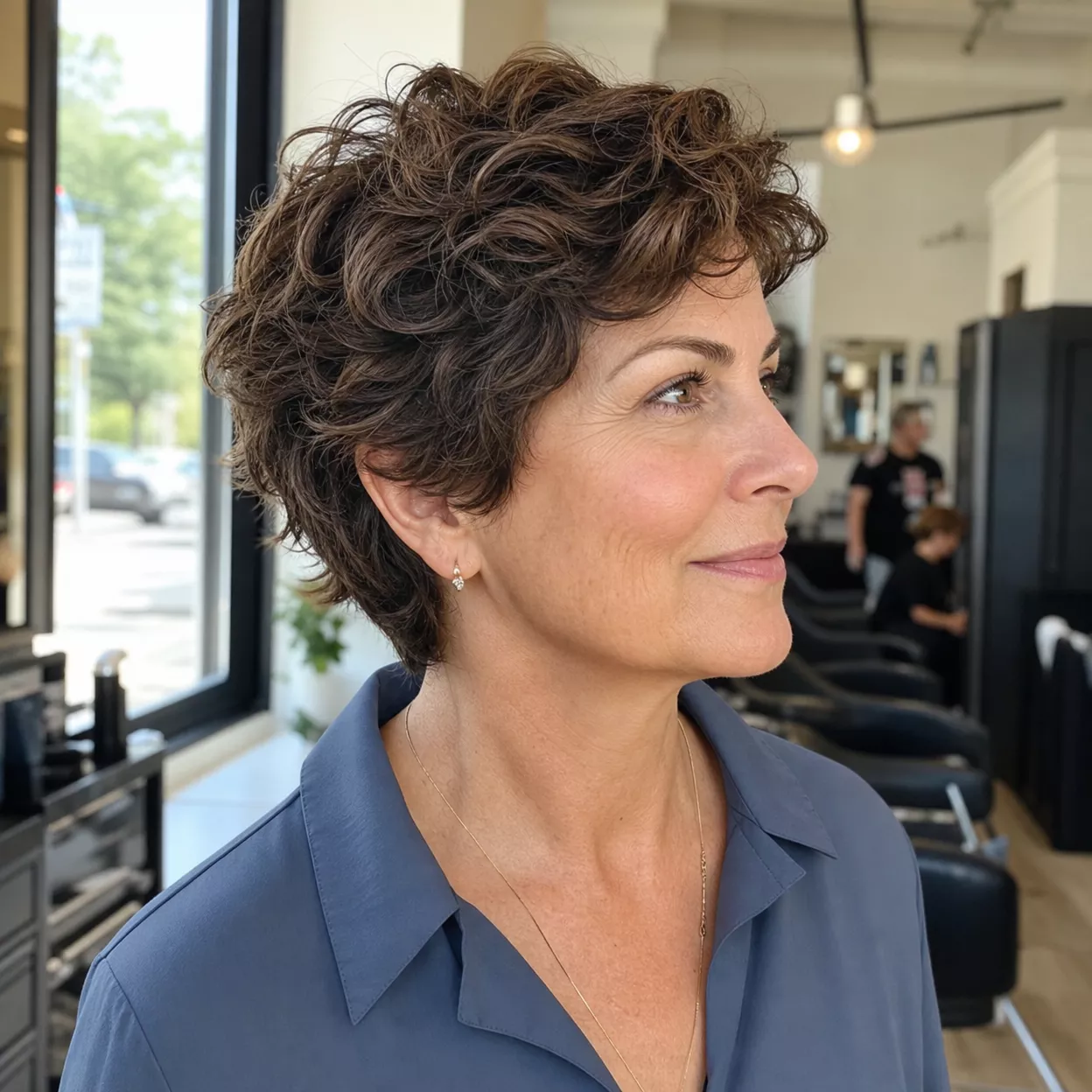
A pixie bob borrows the short, tapered back of a pixie and the longer front and sides of a bob. The crown is usually left long enough to lift and move, which separates it from a true pixie. It can cut down daily styling, since there’s less hair to dry, but it isn’t automatically low-maintenance: the tapered nape and the balance between the short back and longer front need regular reshaping to stay in proportion. In any reference photo, look at how short the back is, because that decides how quickly the cut grows out of shape.
Tousled Highlighted Waves

A photo like this contains three separate decisions. The cut is usually a medium or long layered shape. The waves are styling, created with a curling iron, a wand, or natural texture. The highlights are color, and they do much of the work that makes the waves look lived-in, since lighter pieces make each bend easier to see. If your hair doesn’t wave on its own, the look will need heat every time you wash. If it does, you may only need the cut and the color, plus a texture spray to revive it on the second day.
Wavy Lob

A lob that stops near the collarbone gives wavy hair enough length to form its pattern without so much weight that the waves drop straight. That’s why this length often air-dries well on naturally wavy hair. On straight hair, the waves in the photo usually come from a wand, which is a different daily commitment. The collarbone length is also fairly forgiving as it grows: an extra inch or two turns it into a shoulder-length cut rather than an awkward in-between stage, though it may start flipping outward once it rests on the shoulders.
Blunt Bob

A blunt bob is cut to one clean line with no tapering at the ends. On straight hair, that line looks sharp and graphic; on wavy hair, it softens and can take on a rounder outline. Density shapes the result in two directions. On thick hair, the blunt edge shows off the weight, though it can feel heavy without some weight taken out from inside. On fine or low-density hair, a blunt edge keeps the ends looking more substantial than layers would. The trade-off in every case is grow-out, since a crisp line shows new length quickly.
Stacked Bob

The back of a stacked bob is cut in short, graduated layers that build on top of one another, so the hair curves out over the nape before tapering toward a longer front. That stacking can give the back visible shape without much styling, but it depends on having enough hair to fill it. On fine hair with good density it can hold nicely; on low-density hair, the short nape layers can look sparse and let more scalp show. Because the structure lives at the back of the head, growth there is usually the first thing that makes the shape look off.
Textured Lob with Silver Highlights

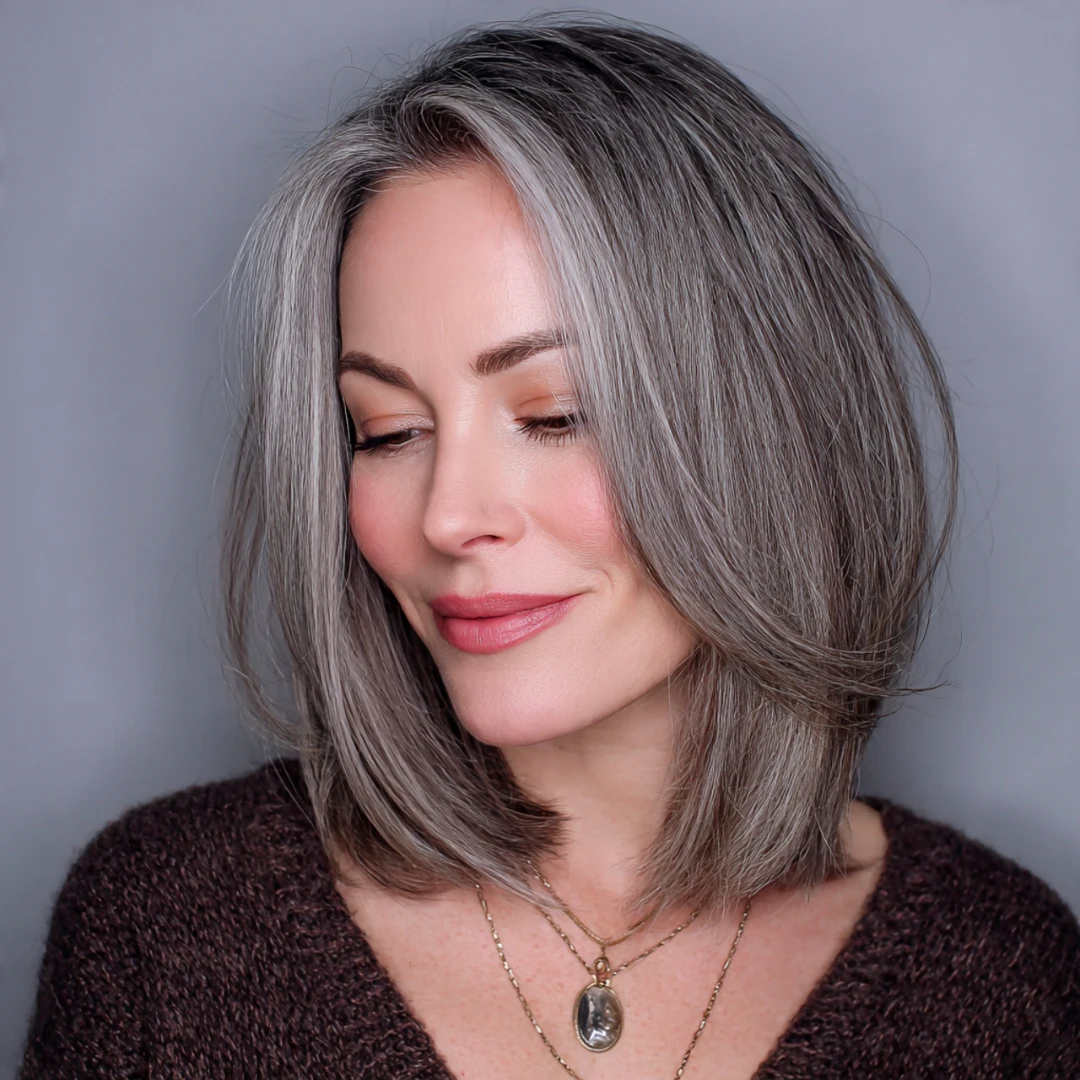
The haircut is a textured lob: collarbone length with point-cut or choppy ends that break up the perimeter. The silver pieces are a separate color decision. On a dark brown base, reaching silver usually means lightening first and then toning, and that tone needs refreshing as it fades. How much upkeep this adds depends on how many pieces are lightened and how much contrast you want. Placing the silver near the temples and hairline gives a similar effect around the face with fewer sections to maintain than highlights throughout.
PRO TIP: Ask your stylist for face-framing highlights starting at the temples. They brighten the complexion without a full highlight appointment and require much less upkeep than all-over color.
Curtain Bangs with Long Layers

Curtain bangs are cut from a small section at the front and parted in the middle so they fall toward each side. With long layers, they act as the first step in a run of face-framing pieces rather than a separate fringe. Whether they suit you comes down to practical things: your natural part (a strong side part will fight a center-parted curtain), how much hair you have at the hairline, and whether you’re willing to blow-dry them most mornings to keep the sweep. As they grow, they blend into the layers, so grow-out is usually easier than with a full fringe.
French Girl Bangs

This fringe is usually longer and more broken-up than a blunt bang, cut to skim the brows and separate slightly in the center. The looseness is deliberate, and it tends to come most easily to hair with some natural movement. Fine, straight hair can make the same fringe look flat or separated by the afternoon, and a cowlick at the hairline may push it apart unevenly. It still needs attention: a quick blow-dry, a little dry shampoo on the second day, and trims between haircuts to keep it at brow length rather than in your eyes.
Longer Pixie Cut

A longer pixie keeps extra length on top and through the fringe while the sides and back stay short. That crown length gives it range: swept to one side, pushed up, or worn forward. It’s also a gentler route if you’re growing out a shorter pixie, or testing whether short hair suits you before going all the way. The fringe usually needs a few minutes of styling to fall in the direction you want, and the sides tend to need tidying well before the top does.
Textured Pixie with Side-Swept Bangs

Choppy, point-cut layers give this pixie separation rather than a smooth finish. How much texture actually shows depends on your hair. Medium to thick hair with some natural bend often holds the pieces with a small amount of paste, while very fine, straight hair can lie flat and need more product to look deliberately textured. The side-swept fringe sits best when it follows your natural part; pushed the opposite way, it tends to spring back as the day goes on.
Wavy Short Bob

Cut just below the jaw, this bob relies on waves to break up the perimeter so the outline looks softer than a blunt bob. On naturally wavy hair, the shorter length can make the wave pattern easier to see, since there’s less weight pulling it straight. On fine hair, waves add movement and some space between strands, but they don’t add density, and a heavily layered short bob can make fine ends look thinner. Keeping the perimeter fairly solid and letting the waves supply the movement is usually the safer version.
Shag Cut

A shag uses many layers at different lengths, usually shortest around the crown and face, to build a rounded top and a lighter, broken-up bottom. It relies on texture. Medium or thick hair with some natural wave tends to dry into that shape with little help, which is where the shag’s air-drying reputation comes from. On straight hair, the same layers can look flat or disconnected unless you add texture with product or heat. On low-density hair, the amount of layering is worth discussing carefully, since a shag removes a lot of weight by design.
Butterfly Cut

A butterfly cut combines two sets of layers: short ones around the face, often starting near the cheekbones, and longer ones through the back that keep most of the overall length. That gives a lot of movement at the front without committing to shorter hair. Most butterfly-cut photos show a full round-brush blowout, which is what makes the short layers flip away from the face. On straight hair, that finish usually needs heat each time. On curly hair, the same layering behaves differently: the short pieces spring up and create volume around the face instead of a sweep.
Angled Bob

An angled bob is shorter at the back and gradually longer toward the front, so the perimeter slopes down toward the face. How steep that slope is changes the whole look. A gentle angle reads as a soft bob with some forward movement; a steep angle becomes a graphic shape where the cut itself is the focus. Steeper angles also grow out less evenly, because the short back reaches the collar while the front still looks right. The shorter back works best with enough density there to avoid looking sparse.
Curly Angled Bob

An angle behaves differently on curly hair than on straight hair. Curls shrink and spring at different rates across the head, so an angle that looks precise when wet can soften or nearly disappear once dry. That isn’t a flaw; it means the angle is usually cut more gently and checked on dry curls. The finished shape comes from where weight is left: more at the front keeps the longer pieces heavier and closer to the face, while less at the back lets the curls there stack up and add height.
Mid-Length Cut with Balayage

Three separate things are happening in this kind of photo: a mid-length cut with soft layers, waves that come from styling or natural texture, and balayage, which is hand-painted color. The balayage has its own schedule. Because it’s painted rather than applied from the root, it tends to grow out with a softer line than foil highlights, but how visible regrowth becomes depends on your starting color and how much contrast you choose. The center part shown in many of these photos is a styling choice you can change without touching the cut.
Rounded Bob

A rounded bob curves under at the ends, giving the whole shape a soft, rounded outline. Part of that curve can be built into the cut, by leaving slightly more length underneath or beveling the ends, but much of the finish in photos comes from a round brush turning the ends under. Dense, straight hair tends to hold the rounded shape most easily. Very fine hair may need a blow-dry to get the curve at all, and curly hair usually forms its own rounded shape without this particular technique.
Side-Swept Bangs with Sleek Cut

The cut underneath this look is usually simple: a sleek, one-length or lightly layered shape. What changes the look is the side-swept fringe and a deep side part, which pull the eye across the face on a diagonal instead of down the center. Both depend on styling. The fringe needs to be blow-dried in the direction of the sweep, and the smooth finish typically comes from a flat iron or a careful blowout. If your hair naturally parts on the opposite side, expect to reset the sweep during the day.
High Ponytail with Wispy Bangs

This is a styling option rather than a haircut, and it can work with several different cuts, as long as your hair reaches the crown comfortably when pulled up. Short layers around the face will fall out of a high ponytail, which suits a softer look but frustrates anyone wanting everything smooth. The wispy bangs are the only cut element here. They stay out of the ponytail and keep it from looking severe, but they need enough density at the hairline to look intentional rather than stray. Clip-in pieces are an option if you want more length or fullness in the tail.
Long Layers for Long Hair

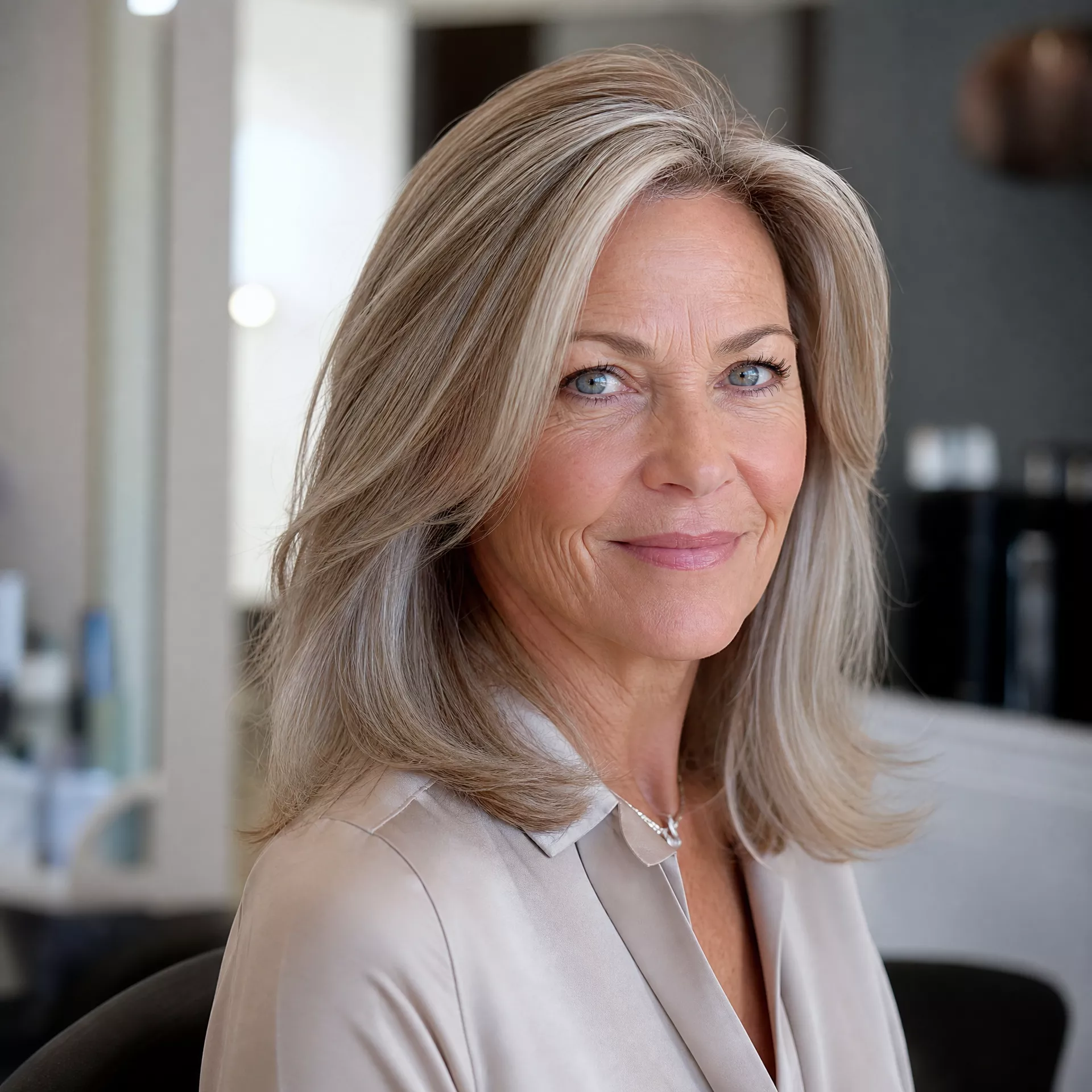
Long layers keep most of the overall length while adding shorter lengths inside it, so the hair moves instead of hanging as one sheet. Where the layers start is the main decision. Layers beginning around the shoulders keep weight at the top and add movement at the ends; layers starting higher build more shape around the face. Layers don’t change the condition of your hair, though trimming dry or split ends during the cut can make the ends look neater. On straight hair, much of the swing in photos comes from a round-brush finish.
Layered Shoulder-Length Bob

This sits right at the shoulder, with layers through the lengths that let the ends move instead of flipping up against a collar. Its main strength is range: a smooth blowout for work, a looser air-dried version on weekends. If your hair is low-density, ask for the layers to stay light near the perimeter so the ends keep their weight. Face-framing highlights appear in many reference photos of this cut, but they are a separate color decision you can add later or skip. Our guide to layered shoulder-length hairstyles looks at this length in more depth.
Gamine Pixie Cut

A gamine pixie is close-cropped, with a short, often slightly uneven fringe and soft layers over the top. The silhouette sits small and close to the head, which puts the focus on the face and neck. That short fringe is a big part of what makes it look like this particular cut, so it needs regular trims to stay at its intended length. Texture changes the finish: fine, straight hair lies close and smooth, while thicker or wavier hair looks more tousled. Without regular reshaping, it gradually turns into a longer pixie.
Blunt Lob

A blunt lob takes the clean perimeter of a blunt bob and moves it down toward the collarbone. The extra length adds flexibility: it can be tucked behind the ears, tied back, or worn straight or wavy. Straight hair shows the blunt line clearly and often looks sharpest after a quick pass with a flat iron. Wavy hair softens the edge into something more relaxed. Because the line is precise, grow-out becomes noticeable once the hair reaches the shoulders, where it may start to flip.
Face-Framing Layers on Long Hair

If you want a change without losing length, face-framing layers alter only the front. The key choice is where the first layer starts: around the cheekbone for a stronger frame, at the jaw for something softer, or near the collarbone for barely-there movement. Shorter starting points mean more pieces slipping out of a ponytail. Texture matters here as well. On wavy or curly hair, face-framing pieces often bounce up shorter than they were cut, while on straight hair they may need a round brush to curve away from the face.
Textured Pixie with Auburn Tone

The textured pixie is the cut; auburn is the color. The layering gives the pixie separation so it doesn’t read as a flat cap, and color can make that texture easier to see, since lighter and darker strands catch light differently. Red and auburn shades tend to fade or shift noticeably as they wear, so they generally need more frequent refreshing than more neutral shades, and a color-safe shampoo can help slow that down. Because the pixie also needs regular reshaping, booking cut and color together can simplify things.
Middle-Part Afro

A rounded afro with a middle part is shaped around natural coily texture. Coils can shrink considerably as they dry, so the final shape is usually best judged on dry hair rather than wet. The silhouette comes from where weight is left or removed: a round shape needs the top and sides balanced so it doesn’t widen more toward the bottom. The middle part divides the shape into two symmetrical sides, and moving it creates a different outline without any cutting at all. A stylist who works regularly with coily hair will generally shape it most accurately.
Ultra-Short Bob

This bob usually sits at or just above the chin, often with a blunt edge and very little layering. At this length there’s almost nothing to tuck behind the ears, so the shape is always on display. On straight hair it looks sleek with minimal styling; on wavy hair it can puff outward unless some weight is removed from inside. Because the length is so short, even a small amount of growth changes the look, so trims tend to come around more often than with a longer bob.
Fairy Waves with Face-Framing Color

This look pairs loose, airy waves, usually made with a curling wand or heatless curls, with lighter color placed around the face. The waves are styling and need recreating after each wash unless your hair already has a soft wave. The face-framing color is a placement choice: a few lightened pieces near the hairline that show clearly when the hair moves. How noticeable that is depends on the contrast with your base color, and those front pieces will also be the first place regrowth shows.
What Actually Makes These Cuts Work
Once you look past the names, most of these 31 looks come down to the same handful of variables.
Length
Length decides how much weight pulls on the hair. Short cuts carry less weight, so they hold shape closer to the scalp, but they show growth sooner. Long hair offers more options, ponytails, braids, updos, yet its weight can pull the roots flat. Collarbone and shoulder lengths sit in between, which is part of why lobs and shoulder-length bobs appear so often.
Perimeter
The bottom edge carries much of what the eye reads as thickness. A blunt perimeter keeps weight there and looks solid, but makes growth easy to spot. A tapered or point-cut edge softens the outline and adds movement, at the cost of some visual weight at the ends.
Layer placement
The same number of layers can produce very different shapes depending on where the shortest one begins. Starting near the cheekbone puts movement and emphasis around the face, as in a butterfly cut. Starting near the shoulders keeps the top smooth and moves the ends. Much of the difference between a shag and long layers is placement, not quantity.
Density
Fine hair has narrow individual strands; low-density hair has fewer strands overall. They aren’t the same, and they don’t need the same cut. Fine but dense hair can usually handle moderate layering. Fine, low-density hair tends to look fuller when the perimeter is preserved, and coarse hair with low density sits somewhere different again. If density is your main concern, our guide to volumizing hairstyles for fine or thin hair covers that in more detail.
Texture
Straight hair shows every layer line but may need styling to show movement. Wavy hair separates layers on its own and often air-dries into shape. Curly hair shrinks as it dries, so length and layering are best judged dry. Coily hair forms its own silhouette, and its shape is decided by where weight is left.
Styling
A large share of reference photos show a blowout, a curling iron, or careful product work. The haircut is the foundation, and styling is what you’d be adding every day to recreate the photo. Knowing how much of a look comes from each helps you judge whether it fits your routine.
Choose by How You Actually Wear Your Hair
If you usually air-dry
Start with what your hair does on its own. Wavy hair tends to suit the wavy lob, the shag, or the wavy short bob. Straight hair often looks best air-dried in cleaner shapes, like a blunt bob or blunt lob, where the line does the work instead of texture.
If you blow-dry regularly
More polished shapes become realistic: the rounded bob, the butterfly cut, the classic bob with a smooth finish, or long layers with a round-brush swing. These can look quite different without the blow-dry, but that doesn’t matter if you’re going to style them anyway.
If you want to wash and go
Avoid cuts that depend on precise styling to look finished, such as heavily flipped face-framing layers or sleek looks that need a flat iron. A cut matched to your natural texture, whether that’s curly layers, a shag on wavy hair, or a blunt shape on straight hair, will usually cooperate more.
If you exercise frequently
Consider how bangs and face-framing pieces will behave when your hair is tied back or damp from sweat. Short fringes and very short front layers tend to fall out of ponytails and need restyling afterward. Longer curtain bangs or layers that start around the jaw are easier to pull back.
If you want to keep long hair
Face-framing layers or long layers can change the look noticeably while keeping almost all of your length. The butterfly cut adds more drama at the front without shortening the back.
If you want a major change
Shorter bobs, the pixie bob, the gamine pixie, and the longer pixie create a bigger structural shift than any amount of layering on long hair. They also bring more frequent salon visits, so factor that in alongside the daily styling time they save.
If you are embracing natural texture
Choose the cut around your actual curl or wave pattern, not around a straight-hair photo. The short curly bob, curly angled bob, shag, and middle-part afro are all shaped around texture rather than against it.
If you color your hair
Treat the color as its own decision with its own maintenance. Balayage, silver highlights, auburn, and face-framing pieces all have different regrowth and fading patterns, separate from how often the cut itself needs attention.
Haircut Details Worth Paying Attention To
When you’re looking at a reference photo, these are the details that tell you what the cut is really doing:
- Where the shortest layer begins. Around the cheekbone, the jaw, or lower? This determines how much shape sits around the face.
- Where the perimeter ends. Chin, jaw, collarbone, or shoulder, and whether it rests on the shoulders, which can cause flipping.
- Whether the ends are blunt or tapered. Blunt ends look solid; tapered or point-cut ends look lighter and move more.
- Whether the bangs are integrated. A fringe that blends into face-framing layers grows out differently from a separate, blunt one.
- Whether the part looks natural or styled. A deep side part in a photo may not match where your own hair falls.
- Whether the texture is natural or heat-created. Look for signs of a wand or round brush, like very uniform waves or perfectly curved ends.
- Whether the color is part of the look. Highlights and balayage can make layers look more defined than they would on a single color.
- How much of the volume comes from styling. Lift at the root and a rounded shape often come from a blowout rather than the cut alone.
Before You Commit to a Reference Photo
A single hairstyle photo can combine a haircut, a professional blowout, curling, color, sometimes extensions, flattering lighting, and a fair amount of product. Asking for “this” leaves your stylist guessing which of those you mean. A more useful question to ask yourself first is: what part of this photo am I actually asking for?
It helps to separate the photo into three parts:
Cut. The length, perimeter, layer placement, and fringe. This is what your stylist creates with scissors and what stays with you between appointments.
Color. Any highlights, balayage, or tone. This is a separate service with its own upkeep, and it can make a cut look more textured or dimensional than it would on a single color.
Styling. The waves, the blowout, the part, the product. This is what you’d need to recreate at home, often every time you wash.
Once you’ve done that, a few habits make the photo more useful. Look for references where the hair has a similar texture and density to yours, since the same cut can look very different on straight versus curly hair. Try to find the style from more than one angle, especially the back. And ask your stylist directly what the cut will look like air-dried, so you know what you’re getting on the days you don’t style it.
FAQ
What haircut is easiest to style in your 30s?
The easiest cut is usually the one that works with your natural texture rather than against it. For wavy hair, that might be a wavy lob or shag; for straight hair, a blunt bob or lob often looks finished with minimal effort. Age doesn’t change that; your hair and routine do.
Can women in their 30s wear short hair?
Yes. Pixies, pixie bobs, and ultra-short bobs work at any age. The practical considerations are the same as always: shorter cuts often mean less daily styling but more frequent reshaping, and they put the shape and your face more on display.
Are layers good for fine hair?
They can be, depending on density. Fine hair that is also dense usually handles moderate layering well. Fine hair with low density often looks fuller when the perimeter is kept solid and the layers are kept long or internal, since heavy layering can make the ends look thin.
Is a bob easier to maintain than long hair?
Day to day, often yes, since there’s less hair to dry and style. At the salon, not necessarily. A bob, especially a blunt or angled one, shows growth sooner and usually needs trims more often than long hair to hold its shape.
What haircut works with natural curls?
Cuts shaped around your curl pattern, such as a curly layered bob, a curly angled bob, a shag, or a rounded afro, tend to work better than shapes designed for straight hair. Because curls shrink, length and layering are usually best judged on dry hair.
Should I choose a haircut based on face shape?
It can be one consideration, but it’s rarely the most important one. Density, texture, styling time, and what you personally like have a bigger effect on whether a cut works day to day. Face shape is more useful for fine-tuning details, like where face-framing layers start.
How do I know if a Pinterest hairstyle will work on my hair?
Check whether the person in the photo has a similar texture and density to yours, and whether the look depends on styling, color, or extensions. Then ask your stylist how the cut would look on your hair air-dried. That usually tells you more than the photo itself.
How often should a short haircut be reshaped?
There’s no fixed schedule, since it depends on how fast your hair grows and how sharp you want the shape to stay. As a general pattern, the nape, the sides, and any short fringe tend to lose their shape first, so those areas usually decide when you book.
Final Thoughts
Your 30s don’t call for a specific haircut. The more useful question is whether a cut fits your hair, your routine, how much styling you’ll actually do, how often you’re willing to visit a salon, and your own sense of style.
When you bring a reference photo to your next appointment, point to the specific detail you like, whether that’s the length, the perimeter, the layers, the bangs, the texture, or the color. That one clarification gives your stylist a much better starting point than the picture alone.