25 Curtain Bang Hairstyles for Women Over 50 with Thick Hair
Curtain bangs are a fringe that parts at or near the center of the forehead, sitting shortest in the middle and growing longer toward the outer edges, where they sweep to each side and usually blend into face-framing layers. Because they open in the middle rather than forming one straight line, they tend to feel less like a commitment than a full fringe.
Thick hair can be a real advantage here. Density gives the fringe enough hair to look full rather than sparse, which matters at the front of the head where every strand shows. The same density can also work against you. Heavy bangs may sit like a ledge on the forehead, push outward, puff up after drying, or split into chunky sections instead of sweeping smoothly.
How curtain bangs behave on your hair depends on several things at once: how dense your hair is, how thick the individual strands are, your natural texture, where your hair naturally parts, and how much styling you do on an ordinary morning. The right length and the right amount of weight removal come from those details, not from the photo you bring in.
Age, on its own, doesn’t decide whether curtain bangs will suit you. Changes some people notice over time, such as hair feeling coarser, drier, or more resistant to styling, especially as gray grows in, can matter more than the number itself. The aim is a fringe shaped around the hair you actually have now.
Before You Choose Curtain Bangs for Thick Hair
Thick hair is not one thing
“Thick” can describe very different hair. Some people have coarse individual strands, each one wide and strong. Others have high density, meaning a lot of strands, even if each one is fine. Some have both. Fine but dense hair can look thick overall yet behave softly at the front, while coarse hair may be wiry and resist lying flat. A fringe cut for one can behave quite differently on the other.
Your natural part matters
Curtain bangs usually split around a center or slightly off-center part. If your hair naturally parts there, the bangs tend to settle with little effort. A strong cowlick at the front or a long-established side part can push the fringe in a different direction. That doesn’t rule curtain bangs out, but the split may need to sit where your hair already wants to fall rather than being forced into the middle.
Texture changes the finished length
Straight hair shows the cut line clearly, so the length you see in the chair is roughly the length you’ll live with. Wavy hair can make the bangs look shorter or less even once dry. Curly hair can shrink considerably, so a fringe that skims the brows wet may sit much higher dry. Humidity can change all of these from one day to the next.
Thick hair may need weight management
Removing some weight can stop dense bangs from looking heavy or standing away from the forehead. More thinning isn’t automatically better, though. Over-thinning can create frizz, uneven ends, or a fringe that separates into strands. Whether weight comes out through the cutting angle, point cutting, or another technique should depend on your texture, condition, and density, not on a single rule.
Styling expectations
Low daily styling and low salon maintenance are different things. Some curtain bangs air-dry into shape; others need a minute with a round brush or a blow-dryer to sweep open. Heat tools may help on straight, heavy fringes. And almost every fringe needs trimming before the rest of the haircut does. It helps to decide which kind of effort you’re willing to give.
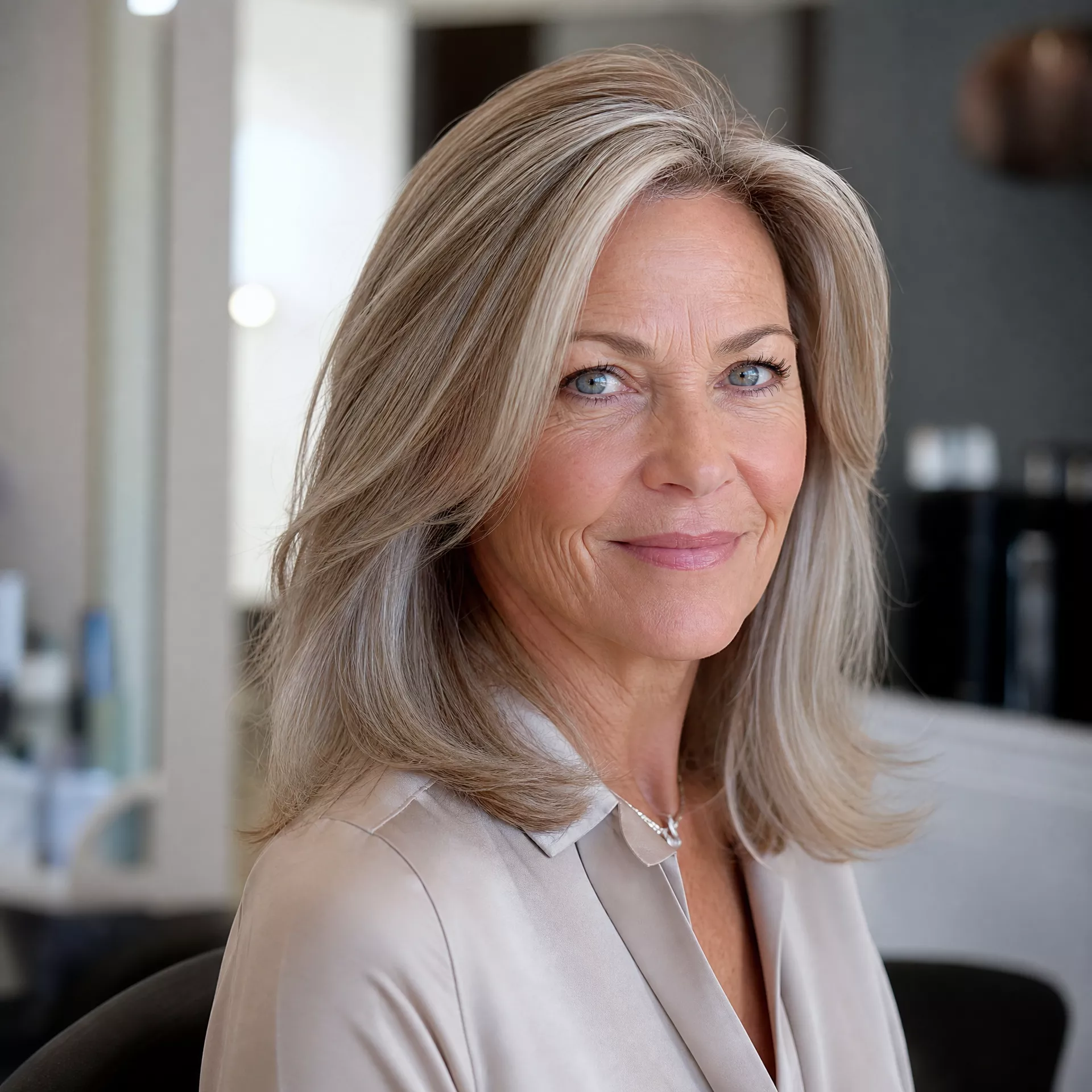
Soft Curtain Bangs with Face-Framing Layers

The key detail is where the bangs end and the face-framing layers begin. When that connection is smooth, the fringe flows straight into the layers, so there’s no obvious break between the two. On thick hair, the layers usually start somewhere between the cheekbone and the jaw, carrying the line of the bangs down the sides. If they start too high, the front can look busy; too low, and the bangs may feel disconnected. It’s a good place to start if you’re trying curtain bangs for the first time.
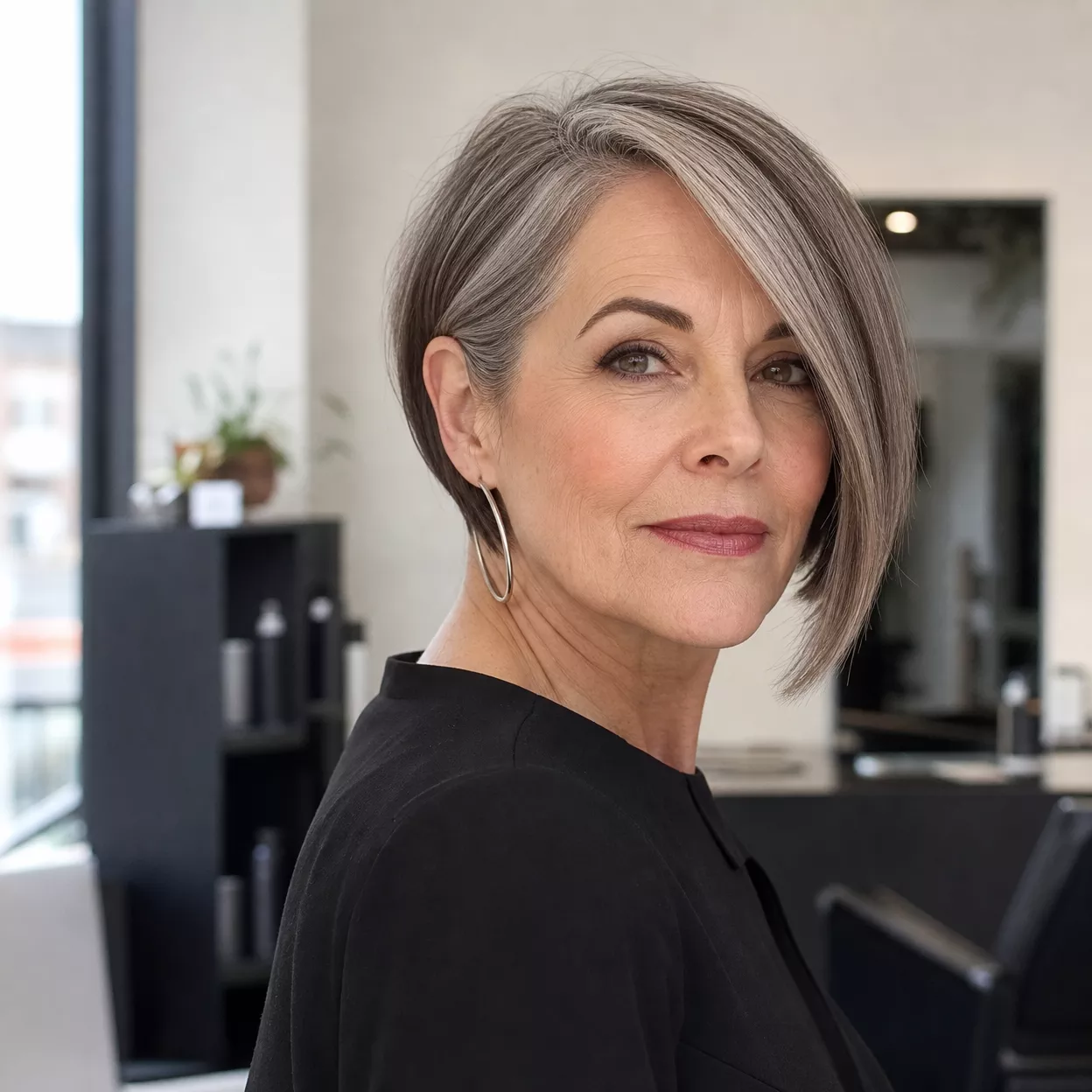
Curtain Bang Bob with Choppy Ends

Here the choppy work happens at the perimeter, where the ends are point-cut or broken up so a dense bob doesn’t look like one solid block. The curtain bangs soften the front, while the choppy ends do the same job at the bottom. On a chin-length bob, keep in mind that the bangs and the perimeter both show growth quickly, so the look can drift out of shape faster than a longer cut. Dense hair at the nape is worth mentioning, since it can push the back outward if it isn’t addressed.
Layered Lob with Curtain Bangs

A lob keeps enough length to tie back, which is useful when the bangs are growing or on hot days. The layering in the mid-lengths takes some of the bulk out of thick hair so the shape doesn’t widen at the shoulders. This combination runs on two schedules: the lob may go a while between trims, but the bangs will need attention sooner. If you like the idea of curtain bangs but aren’t sure you’ll keep them, a lob gives you the most room to grow them out.
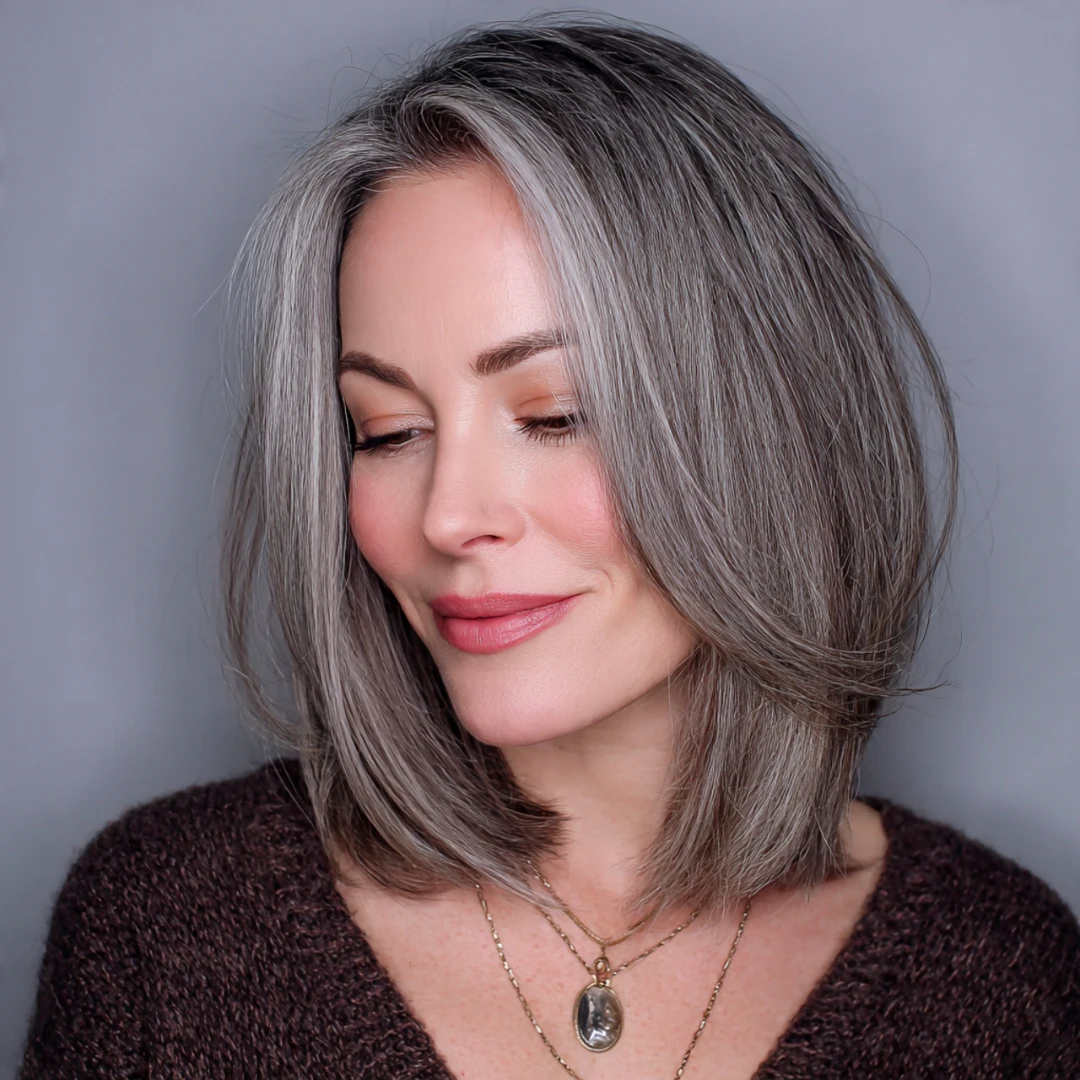
Silver Curtain Bangs with Textured Layers

The haircut creates the shape; the silver color changes how that shape reads, since lighter strands make layers and texture easier to see. If your gray or silver hair feels coarser or springier than your hair used to, that can show up first at the hairline, where the bangs sit. Wiry strands may resist lying flat or spring up as they dry. Textured layers can work with that rather than against it, and a light smoothing or styling cream can help the fringe settle.
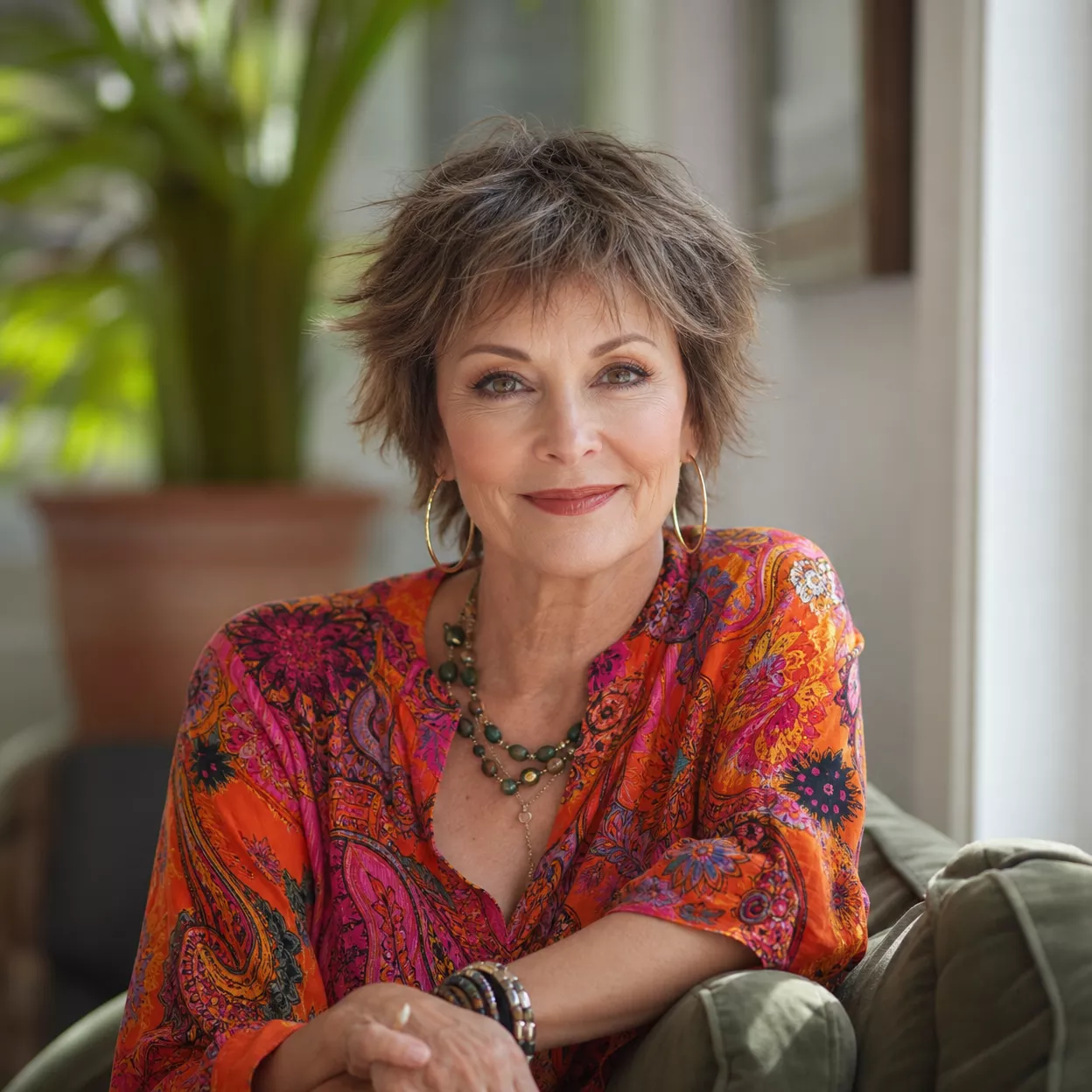
Wispy Curtain Bangs on a Thick Shag

Wispy bangs on thick hair are a matter of how the fringe is lightened. Some weight is taken out so the bangs look airy rather than solid, but that needs to be done carefully. Too much removal on coarse hair can leave the fringe frizzy or uneven, while too little keeps it heavy. The shag layering behind the bangs removes bulk from the crown and sides, which helps the front look lighter in proportion. Our guide to shag haircuts for thick hair covers how much layering different densities can take.
Blunt Lob with Feathered Curtain Bangs

This one plays a solid perimeter against a soft front. The blunt ends keep the lob looking full and structured, while feathered curtain bangs keep the front from feeling like a wall of hair. On thick hair, a blunt lob can carry a lot of weight in the interior, so some internal weight removal may help the shape move. The trade-off is that a blunt line shows growth clearly, especially once it starts resting on the shoulders.
Warm Brunette Layered Cut with Curtain Fringe

The layered cut and the warm brunette color are separate decisions. Warmer tones can make the layers easier to see because light catches the edges of each section differently. The cut itself removes interior bulk and lets the curtain fringe connect into the layers around the face. If the brunette is a color treatment rather than your natural shade, maintenance depends on how far it is from your base and how quickly regrowth or gray shows at the part, which sits right above the bangs.
Side-Swept Curtain Bangs with Long Layers

If your hair has a strong side part, this version works with it. The bangs still open toward the sides, but the split sits off-center and one side sweeps further than the other. On thick hair, that sweep usually holds better with a quick round-brush blow-dry than with air-drying alone. The long layers below carry the movement down, so the fringe doesn’t look like a separate piece. It’s a practical option if forcing a center part has never worked for you.
Pro Tip: For thick hair, ask your stylist to thin the curtain bangs from underneath using a razor or thinning shears, not on top. This removes density without shortening the bang, so it still sweeps naturally and doesn’t sit like a heavy shelf over your forehead.
Ash Blonde Bob with Soft Curtain Bangs

Ash blonde is a cool-toned color that usually requires lightening, and on dark, thick hair that can take more than one appointment. Cool tones also tend to drift warmer as toner fades, so keeping the shade ash may mean regular toning. Some people find ash helps blend a gray transition. The bob and the bangs are the haircut; they’ll need trims on their own schedule, and on a bob both the perimeter and the fringe show growth fairly quickly.
Curtain Bangs with a Choppy Layered Bob

Where the choppy bob above focuses on the ends, this version layers the whole shape, so the texture runs through the interior as well as the perimeter. That can help thick hair that tends to puff, since the layers reduce bulk throughout. Technique is worth discussing rather than assuming. Some stylists use a razor for this kind of texture, others use scissors and point cutting, and a razor isn’t always the right choice for coarse or dry hair.
Tousled Medium Cut with Curtain Fringe

Tousled is a finish, and whether it happens on its own depends on your texture. Thick, wavy hair may fall into a tousled shape with a little product and air-drying. Thick, straight hair usually needs some help from texture spray, a wand, or a diffuser. The curtain fringe at the front needs to fit the same finish; very smooth bangs can look out of place against tousled lengths. At medium length, the hair still has enough weight to settle without looking unfinished.
Curtain Bangs with Wavy Layered Lob

Waves make the length of curtain bangs harder to predict. A fringe cut to the cheekbone when wet may spring shorter or curve upward once dry, and the two sides may not dry identically. That’s a good reason to have the bangs checked or finished on dry hair. The wave pattern in the lob helps break up density, and the layers let the waves form instead of being dragged straight by weight. A light mousse can help define the waves, though it’s optional.
Bold Copper Shag with Curtain Bangs

The shag shape and the copper color are two commitments. The shag layers rely on texture to show their separation, so on straight hair they may need styling. Copper adds warmth and contrast, but red and copper tones tend to fade faster than many other shades and usually need refreshing more often. Because the bangs sit right at the front, fading and regrowth at the hairline will be noticeable. If you like the shape but not the upkeep, the shag works just as well in your natural color.
Straight Thick Hair with Curtain Bangs

Straight hair shows exactly how the bangs were cut, which makes precise shaping important. A dense, straight fringe can sit like a heavy shelf if too much weight is left in the center, so the bangs are often cut slightly lighter in the middle and longer at the edges to help them part. Most straight, thick curtain bangs need a quick round-brush blow-dry to sweep open; left to air-dry, they may fall forward. The upside is predictability: what you see in the chair is close to what you’ll live with.
Curtain Bangs with a Natural Gray Lob

If you’re growing out color, curtain bangs can make the transition feel more intentional, since they draw attention to the front and break up the line where natural gray meets colored lengths. A lob shortens the time it takes for the old color to grow out. Gray hair’s texture can differ from what you’re used to, so it’s worth mentioning to your stylist if your hairline feels coarser or drier. The fringe and the lob will grow at different rates in terms of how noticeable it is, so expect to trim the bangs first.
Layered Curtain Bangs on a Medium Shag

In this version, the bangs themselves are layered, cut in stages so the shortest pieces sit near the center and the rest step down toward the face-framing layers. That keeps a thick fringe from looking like one block. The medium shag behind it removes weight from the crown and sides, which can help thick hair that tends to widen at the top. The trade-off is styling: layered bangs can separate unevenly in humidity and may need a quick brush to reconnect.
Textured Bob with Blended Curtain Fringe

The blend is the whole point here. The curtain fringe is cut to merge into the bob’s textured layers so there’s no visible join. That takes precision, especially on thick hair, where an uneven transition can make the front look disconnected from the rest of the cut. Ask your stylist exactly where the fringe will connect to the layers, and check it dry. A well-blended fringe also grows out more gradually, since it already sits within the layers.
Face-Framing Curtain Bangs on Long Layers

Long hair’s weight can help thick hair lie flatter, and curtain bangs at the front give that length a frame without cutting it shorter. The layers spread density through the length instead of letting it stack at the bottom. Long, thick hair can take a long time to dry, and the bangs may dry faster than the rest, so they often need styling first. If you tie your hair back often, keep the face-framing layers long enough to stay in a ponytail.
Curtain Bangs with Highlighted Layers

Highlights placed through the face-framing layers and the fringe make those sections easier to see, because lighter strands catch light against the darker base. That’s a visual effect; the highlights don’t add any density. Placement matters near the face, since regrowth at the part and fringe will show sooner than highlights further back. Partial highlights around the front can be a lower-commitment option than full color, though they still need occasional refreshing.
Short Curtain Bang Bob with Textured Crown

Short layers at the crown reduce the heavy, rounded shape that thick hair can form in a short bob, while the curtain bangs open the front. The trade-off is height and width. On very dense hair, too many crown layers can stand up and widen the top, so the amount should match your density. A short bob also shows growth quickly, at both the perimeter and the fringe, so it tends to need more frequent reshaping than longer cuts.
Curtain Bangs with a Rounded Layered Bob

A rounded bob curves inward at the ends, and much of that curve is styling. Some hair bends that way naturally; often it comes from a round brush or a large-barrel iron. On thick, straight hair, the shape may need a quick blow-dry to look rounded rather than straight. On thick, wavy hair, it may form a softer rounded outline on its own. The curtain bangs connect into the front of the curve, so they usually look best styled in the same direction.
Curtain Bang Pixie Lob (Pob) for Thick Hair

“Pob” isn’t a standardized term, but it usually describes a cut between a pixie and a bob: short at the back and sides, with more length at the front. On thick hair, that shorter length removes a lot of weight, while curtain bangs keep the top from looking heavy or rounded. Density at the nape matters, since thick hair there can push the shape outward. Short cuts show growth sooner, so both the bangs and the overall shape will need regular attention.
Curtain Bangs with Balayage Layered Lob

Balayage is a hand-painted color technique, separate from the layered lob. Because the lighter sections usually start a little away from the root, regrowth tends to blend more softly than with a strong root-to-ends contrast. That makes it a common choice for people who don’t want frequent color appointments, though toner can still fade and the color will eventually need a refresh. The lightened pieces can make the layers and the curtain fringe more noticeable as they move.
Wispy Curtain Bangs on a Silver Shag

Silver hair with a wispy fringe combines two things that can both resist lying flat. Gray strands may feel coarser or springier for some people, and a lightened fringe can separate more easily. A light smoothing product can help the bangs stay in place without weighing them down. The shag layering behind keeps the overall shape light, which helps the wispy front look proportionate rather than sparse.
Classic Center-Part Curtain Bangs with Layers

This is the version most other styles here are adapted from: a center part, bangs that open evenly to each side, and layers that carry the line down past the face. It works most easily when your hair naturally parts at or near the center. The symmetry is part of its appeal, but it also shows any unevenness clearly. It’s a reasonable starting point if you want curtain bangs without a strong opinion yet about length or texture.
How to Choose the Right Curtain Bang Style for Your Hair
Thick, straight hair. Expect the bangs to show their cut line clearly and to need a quick blow-dry to sweep open. Ask for slightly less weight in the center so they don’t sit flat against the forehead.
Thick, wavy hair. Waves can change the length once dry, so consider having the bangs checked on dry hair. Cuts that work with your wave pattern, like a wavy layered lob or tousled medium cut, often need less styling.
Thick, curly hair. Curly bangs can shrink considerably and dry unevenly, so length is best judged dry. A stylist familiar with your curl pattern can help decide how much weight to leave in the fringe.
Coarse hair. Coarse strands can be springy and resist lying flat, so a light smoothing product may help, and over-thinning can lead to frizz.
Fine but dense hair. Your hair may look thick overall but behave softly at the front, so the bangs may need less weight removed than coarse hair would.
A strong natural side part. Side-swept or off-center curtain bangs usually work better than forcing a center split.
A cowlick at the front. Mention it before the cut; the stylist may adjust the length or direction of the bangs so they fall more predictably.
A low-styling routine. Choose bangs that work with your natural texture, and keep them a little longer so they’re easier to tuck or sweep aside.
Regular blow-drying. Straight or rounded curtain bang styles become more realistic if you’re already styling every day.
Glasses. Bangs that end near the top of your frames can look crowded or catch on them, so many people keep the fringe slightly above or below that line.
Growing out bangs. Curtain bangs tend to grow into face-framing layers, which makes growing them out more gradual than with a blunt fringe.
Disliking frequent trims. Longer curtain bangs that blend into layers usually need less frequent reshaping than shorter, more precise ones.
What Can Go Wrong?
- Bangs cut too thick. A heavy fringe can sit like a ledge or push away from the forehead.
- Too much weight left in the center. The bangs may refuse to split or fall flat in the middle.
- Over-thinning. Removing too much can create frizz, uneven ends, or a stringy fringe.
- Bangs springing shorter when dry. Especially on wavy or curly hair, the dry length may be shorter than expected.
- The natural part fighting the split. Bangs cut for a center part may keep drifting if your hair wants to fall to the side.
- Too much layering. The front can look disconnected from the rest of the haircut.
- More styling than expected. Some curtain bangs need daily blow-drying to sweep open.
- Humidity. Damp weather can make the fringe separate, frizz, or curl.
- An awkward grow-out length. Bangs eventually reach the eyes; a trim or styling change helps until they blend into the layers.
- Copying a styled photo. A fringe in a photo may have been blow-dried or curled in a way your natural texture won’t reproduce.
What to Tell Your Stylist
- Where should the shortest point of my curtain bangs sit when my hair is dry?
- How much weight should stay in the fringe?
- Do I actually need thinning, or can the shape come from the cut itself?
- How will this work with my natural part?
- Will these bangs work with my natural texture?
- What will this look like without a blow-dry?
- Where should the face-framing layers connect to the bangs?
- How will these bangs grow out?
- How often will they need reshaping?
How to Use a Curtain Bangs Photo at the Salon
Rather than saying “I want this exact haircut,” look at the photo and pick out the specific details you like:
- the length of the bangs
- whether the part is centered or off-center
- how the bangs transition into face-framing layers
- how dense the fringe looks
- the overall haircut behind the bangs
- whether the texture looks natural or heat-styled
- the hair color
- the length around the cheekbones and jaw
Then point to those details. A stylist can adapt the length, the split, and the weight to your hair far more easily than they can copy a photo taken on someone else’s hair after styling.
FAQ
Are curtain bangs good for thick hair?
They can be. Thick hair gives the fringe enough density to look full, but it may also need some weight managed so the bangs don’t sit heavily or puff out.
Do curtain bangs work for women over 50?
Yes. Age doesn’t determine whether curtain bangs suit you. Texture, density, natural part, and how much styling you want to do matter more.
Are curtain bangs high maintenance?
They usually need more frequent trims than the rest of a haircut, and some need a quick blow-dry each day. Longer curtain bangs that blend into layers tend to be easier to maintain.
Can curtain bangs work with wavy or curly thick hair?
Yes, though shrinkage and uneven drying can change their length and shape. Having them cut or checked on dry hair helps.
What if my hair has a strong side part?
Side-swept or off-center curtain bangs often work better than forcing a center split.
How often do curtain bangs need trimming?
It depends on how fast your hair grows and how precise you want them. Shorter, more defined bangs need attention sooner than longer, blended ones.
Should thick curtain bangs be thinned?
Sometimes. Some weight removal can help, but over-thinning can cause frizz or uneven ends. The method should match your hair’s texture and density.
Can curtain bangs work with glasses?
They can. Keeping the bangs slightly above or below the top of your frames usually prevents them from looking crowded.
What happens when curtain bangs grow out?
They typically blend into face-framing layers, which makes growing them out more gradual than with a blunt fringe.
Final Thoughts
Curtain bangs can be a practical choice for thick hair because density gives the fringe presence. The result, though, depends on how the weight, length, texture, and natural part are handled.
Bring a few reference photos to your appointment, point out the specific details you like, and ask your stylist how those bangs will behave with your actual hair, both on the day of the cut and a few weeks later.