26 Short Bob Haircuts for Women Over 50 With Thick Hair
A short bob behaves very differently on thick hair than it does on fine or low-density hair. The cut that sits neatly against the neck on one person can flare out at the jaw on another, or stack into a rounded, heavy shape that’s hard to style.
Part of the reason is that “thick” covers several kinds of hair. High density means a lot of individual strands. Coarse hair means each strand is wide. Fine but dense hair has plenty of hair made up of narrower strands, and dense, coarse hair has both, which usually means the most weight to manage.
The usual advice is to remove bulk, but taking out too much can create its own problems: frizz, weak-looking ends, an overly rounded outline, or sections that move unevenly. The more useful question is where a bob should keep its weight and where it should let it go.
Being over 50 doesn’t settle that on its own. Your current density, texture, any gray coming through, how you style your hair, and how short you’re actually willing to go matter far more.
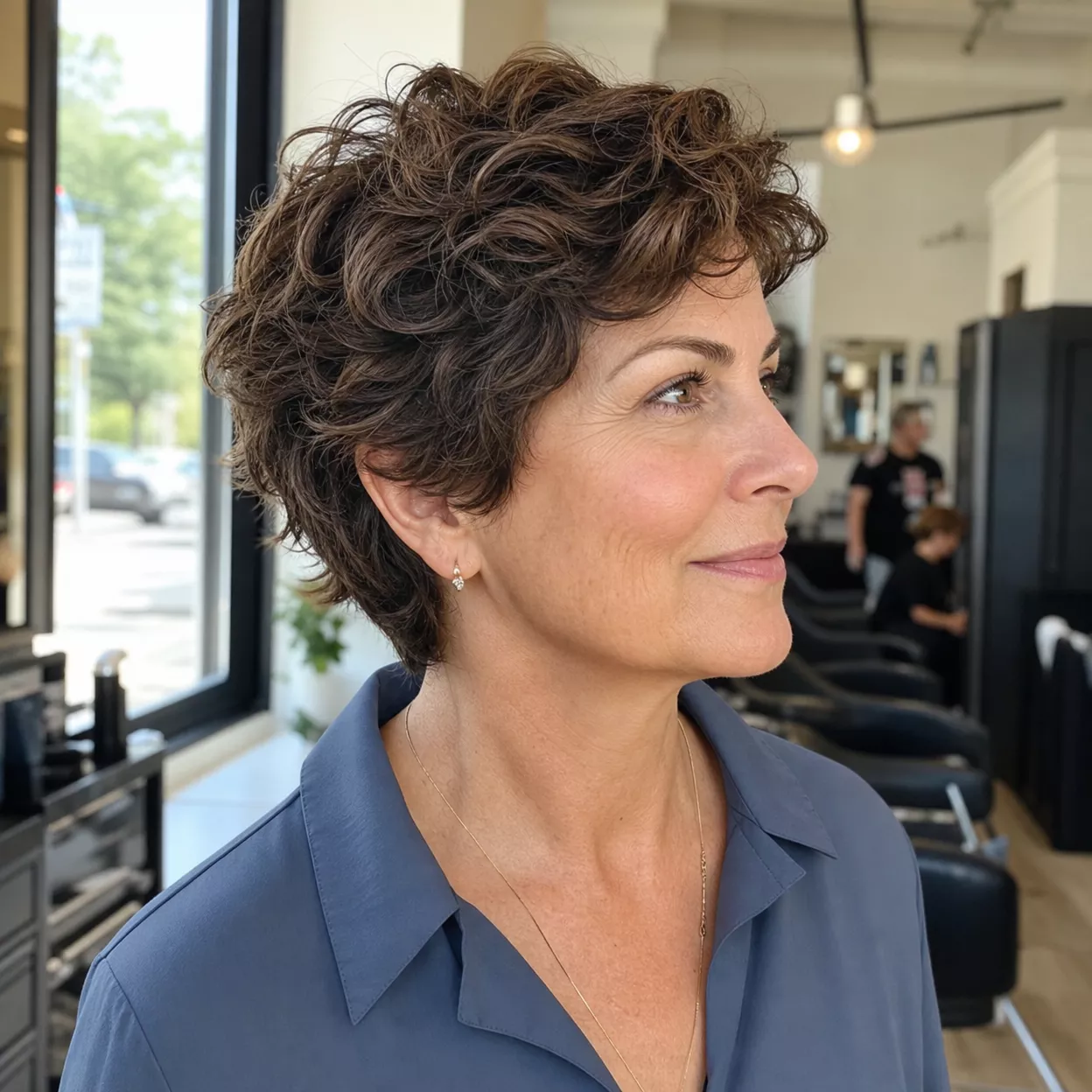
Choppy Layered Bob

Choppy layers break the bob into uneven pieces, and on thick hair the useful question is where those pieces come from. Layering placed through the interior and mid-lengths can take weight out of the middle of the shape while the outer edge keeps enough hair to look finished. Push the choppiness all the way to the ends and dense hair can start to look fuzzy rather than textured, especially if it’s also coarse. The technique might be point cutting, a razor, or scissors, depending on the hair; the amount removed matters more than the tool.
Textured Salt-and-Pepper Bob

Salt-and-pepper hair is a natural mix of gray and darker strands, and that contrast does something a single shade can’t: it makes texture visible. Every layer edge and bit of separation shows up as light against dark. The haircut is still doing its own work, a textured bob with some interior layering, but the color changes how much of that work you can see. If you’re partway through a gray transition, a textured cut can also blur the line between colored ends and natural regrowth.
Chin-Length Blunt Bob

A blunt edge at the chin keeps all the weight at the perimeter, which is the point: the bottom line looks solid and deliberate. On thick hair, that same weight can push outward at the jaw and widen the shape, particularly with dense, coarse strands. A stylist may soften the very edge or remove a little weight from inside so the line sits closer to the neck without breaking it up. If you like fullness at the ends, this is one of the few cuts here that keeps it on purpose. Expect the line to show growth quickly.
Stacked Bob with Graduated Back

Graduation at the nape stacks short layers on top of each other, so the back curves out and up before the hair lengthens toward the front. In a stacked bob, bulk isn’t so much removed as relocated: the dense hair at the nape is cut short, and the shape is built above it. On very thick hair, that stacked section can grow wide at the back of the head if the graduation is too steep. A gentler stack, or some internal weight removal above it, keeps the profile rounded rather than shelf-like.
Low-Maintenance Wedge Bob

A wedge bob is compact and rounded, with graduation at the nape and its weight sitting a little higher than in a classic bob. On dense, straight hair, that shape can hold with a quick blow-dry, because the cut does most of the shaping. Whether it’s genuinely low-maintenance depends on how easily your hair holds the rounded outline without a brush, and on how often you’re willing to have the nape cleaned up, since that’s where growth shows first. Coarse or wavy hair may need more styling to stay smooth.
Silver Layered Bob with Undercut

An undercut removes a hidden section of hair, usually at the nape, cutting it very short beneath the longer layers. On thick hair, it can take out more weight than layering alone, because a whole section is gone rather than thinned. It’s a bigger commitment than it looks. The clipped area grows back as short, bristly hair that needs regular tidying, and it shows whenever the hair is lifted or tied up. Growing it out means a stretch of mismatched lengths. The silver color is a separate choice and doesn’t change any of that.
Tousled French Bob

A French bob sits short, around the cheekbone or upper jaw, often with a fringe. The tousled finish in photos looks like no effort at all, but that usually depends on texture. Thick hair with some natural bend can fall into that shape with a light product. Dense, straight hair often needs texture spray or a quick bend with an iron to keep it from sitting as a smooth block. There’s also a difference between looking effortless and being effortless to maintain: the short length means growth changes the shape within weeks.
Side-Parted Sleek Bob

A deep side part sends more hair to one side and changes where the visual weight sits, creating a less symmetrical outline. It holds best when it follows the direction your hair already falls; a part forced against a cowlick tends to give up by midday. Sleekness is a styling result, usually from a blow-dry and a smoothing product. Dense, straight hair often holds it well once dry, though thick hair can take a while to blow out. If the heavier side feels bulky, a little internal weight removal on that side can help it lie closer.
Wavy Layered Bob with Choppy Bangs

Waves and bangs both shrink as they dry, and they rarely do it evenly. A fringe cut at the brows when wet can bounce up and split once dry, with one side sitting shorter than the other. That’s why wavy bangs are worth having checked or finished on dry hair. The layered bob behind them lets the waves form instead of being pulled flat, though on thick, wavy hair too much layering can make the sides expand. Choppy bangs on dense hair also need some weight taken out so they don’t sit heavily over the eyes.
Modern Textured Bob

This approach keeps the perimeter fairly solid while taking weight out of the interior. The outer edge looks full and defined; the inside is lighter, so the hair moves instead of sitting as one mass. That split between outer weight and inner weight is probably the single most useful idea for thick bobs, and many of the cuts on this list are variations on it. When you ask for it, describe both halves: a strong outline, and weight removed from inside rather than from the ends.
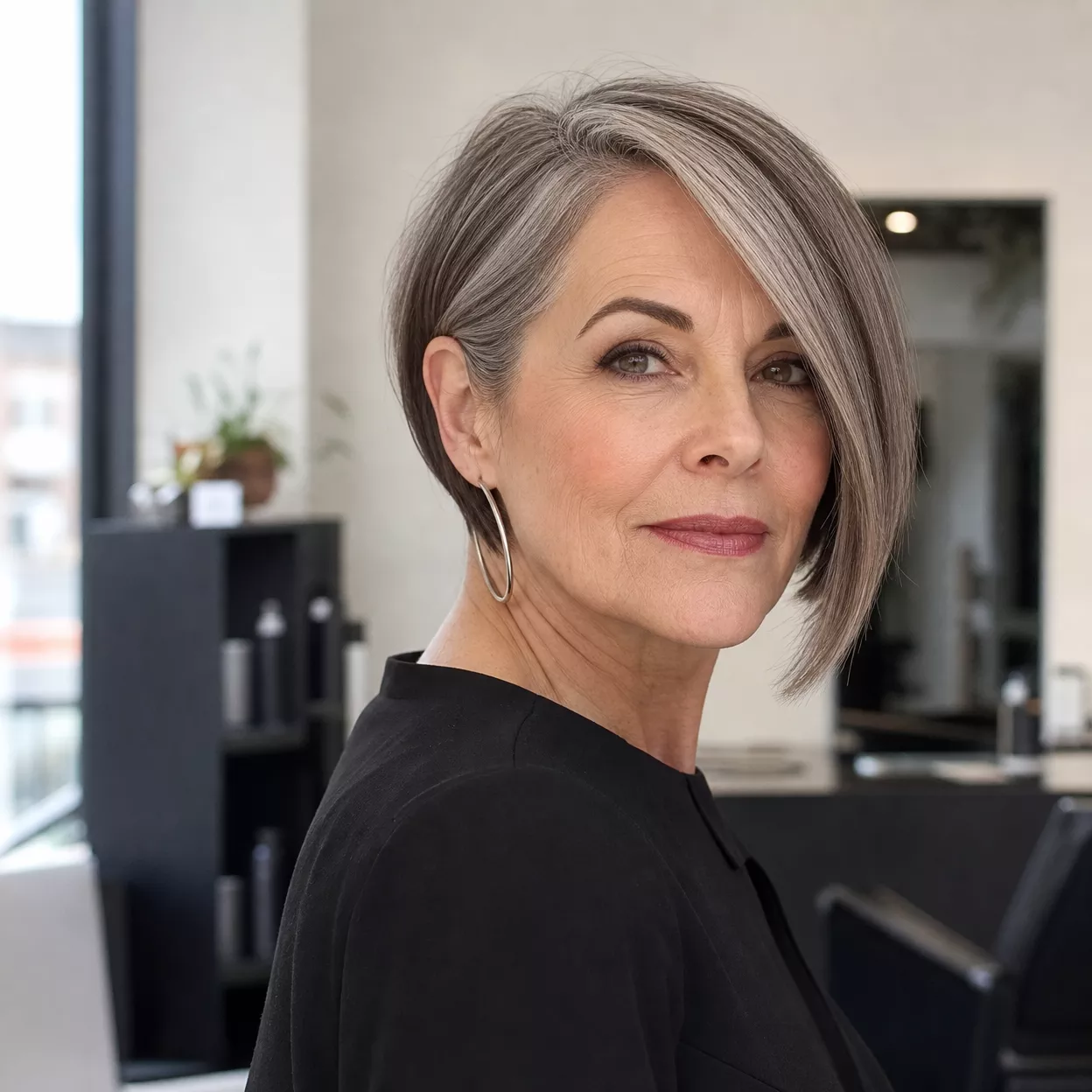
Salt-and-Pepper Angled Bob

An angled bob is shorter at the back and longer toward the front, so the perimeter slopes forward. On thick hair, density affects how clean that angle looks. Dense hair at the back can push the shorter section outward and soften the line, while the longer front pieces may need some weight removed to fall smoothly. The salt-and-pepper color adds natural contrast that makes the angle and any layering easier to see. A gentle slope grows out more evenly than a steep one.
Dimensional Layered Bob

Dimension here comes from layers placed at different heights, so sections of hair sit at slightly different levels instead of falling in a single line. On thick hair, that can stop the bob from looking flat or blocky. Placement matters more than quantity. Layers concentrated in the mid-lengths and crown create movement without stripping the ends; layers carried all the way to the perimeter can leave thick hair with wispy edges and a rounder outline than you wanted. Ask where the shortest layer will start.
Side-Parted Bob with Soft Waves

A cut designed to work with a part on either side gives you more than one shape from the same haircut. Flip it one way and the heavier side sweeps across; flip it the other and the balance shifts. That flexibility depends on the layers being cut to fall reasonably well in both directions. Soft waves, natural or from a large-barrel iron, help break up density so the sides don’t look solid. If you wear it straight one day and waved the next, the outline will look noticeably different, which is part of its appeal.
Sculptress Bob

A sculpted bob is about precision: clean geometric lines, often an angle, and ends that are beveled, meaning cut at an angle that encourages them to turn slightly under. It suits dense, straight hair especially, since that hair holds a defined line well. On wavy or coarse hair, the precision can be harder to see without a blow-dry to smooth it out. The trade-off is upkeep. Sharp lines show growth quickly, so the shape only stays crisp with regular reshaping.
Blow-Out Bob

This look depends more on styling than on cutting. A round-brush blow-dry smooths thick hair, directs it closer to the head, and curves the ends. The haircut underneath is usually a classic or lightly layered bob; the blowout creates the finish you see. On thick hair, that can take a while, and humidity may undo it sooner than you’d hope. If you’re happy to blow-dry most mornings, it gives a very controlled result. If not, ask how the cut will look air-dried before committing.
Glossy Blonde Bob with Fringe

Three separate commitments sit in this one photo: the bob, the fringe, and the blonde. Lightening thick or dark hair to a clean blonde may take more than one appointment, and the tone will need refreshing as it fades. The fringe will need trims well before the bob does, since it reaches the eyes quickly. A blunt fringe on dense hair can also look heavy, so some weight may need to come out to help it lie flat. The gloss is mostly styling and product.
Curly French Bob

Curls can shrink considerably, so a French bob cut to the jaw while wet may sit much higher once dry. Many stylists prefer to see curly hair dry, or at least check it dry, before settling on a short length like this. The shape also depends on curl pattern: looser curls may form a rounded outline, while tighter curls stack and expand more. On thick curly hair, weight distribution matters, since too much weight low down can make the shape wide, and too little can leave the curls frizzy and undefined.
Shaggy Textured Bob

A shaggy bob uses layers at several lengths, usually shortest at the crown. On thick hair, those short crown layers can lift and expand, so the top may become wider than the rest of the shape if there are too many. The aim is to remove enough weight that the hair moves, without making the crown the widest point. Longer side bangs can soften the front, though they add one more thing to maintain. Our guide to shag haircuts for thick hair goes further into layer placement.
Choppy Bob with Razor Ends

A razor creates tapered, feathery ends by slicing rather than cutting straight across. On some thick hair, that helps the ends move and keeps them from looking blunt. It isn’t universally suitable, though. On coarse, dry, or fragile hair, razored ends can fray or frizz and look uneven rather than soft. Point cutting and slide cutting with scissors can create a similar texture. Which technique fits depends on your hair’s condition and the finish you’re after, so it’s worth discussing before anything is cut.
Warm Auburn Feathered Bob

Feathering shapes the ends so they move outward or back, lightening the edges of the bob. On dense hair, that softening can keep the perimeter from looking heavy; on coarse hair, feathered ends may need a smoothing product to stay neat. The auburn is a separate decision with its own upkeep. Red and auburn tones tend to fade faster than many other shades, so the color will likely need refreshing more often than the haircut needs trimming.
Natural Silver Chin-Length Bob

A one-length chin bob in natural silver keeps the outline simple and solid. Silver hair can feel coarser or springier for some people than their hair used to, which may make a blunt perimeter sit a little wider or kick out at the ends. Some weight removed from inside can help it lie closer. As for maintenance, keeping your natural color removes color appointments, but a precise chin-length line still needs trimming to stay sharp, and silver can pick up a yellow cast that some people choose to tone.
Textured Bob with Shorter Crown Layers

A bob starts to look helmet-like when thick hair sits as one rounded mass from crown to ends. Shorter layers at the crown break up that shape so the top moves independently. It works when those layers stay in proportion. On very dense or coarse hair, too many short crown layers can stand up and widen the top, which simply swaps one kind of bulk for another. If your crown already sits high, fewer and slightly longer crown layers usually work better than heavily shortened ones.
Inverted Bob with Beveled Ends

An inverted bob pairs a graduated, shorter back with longer front pieces, and beveled ends encourage the hair to curve under. On thick hair, the nape is the area to watch, since dense hair there can push the graduated section outward. The front pieces carry most of the visible length, so their exact length changes the overall impression more than any other detail. As it grows, the back lengthens and the contrast softens, which is why regular trims keep the shape looking intentional.
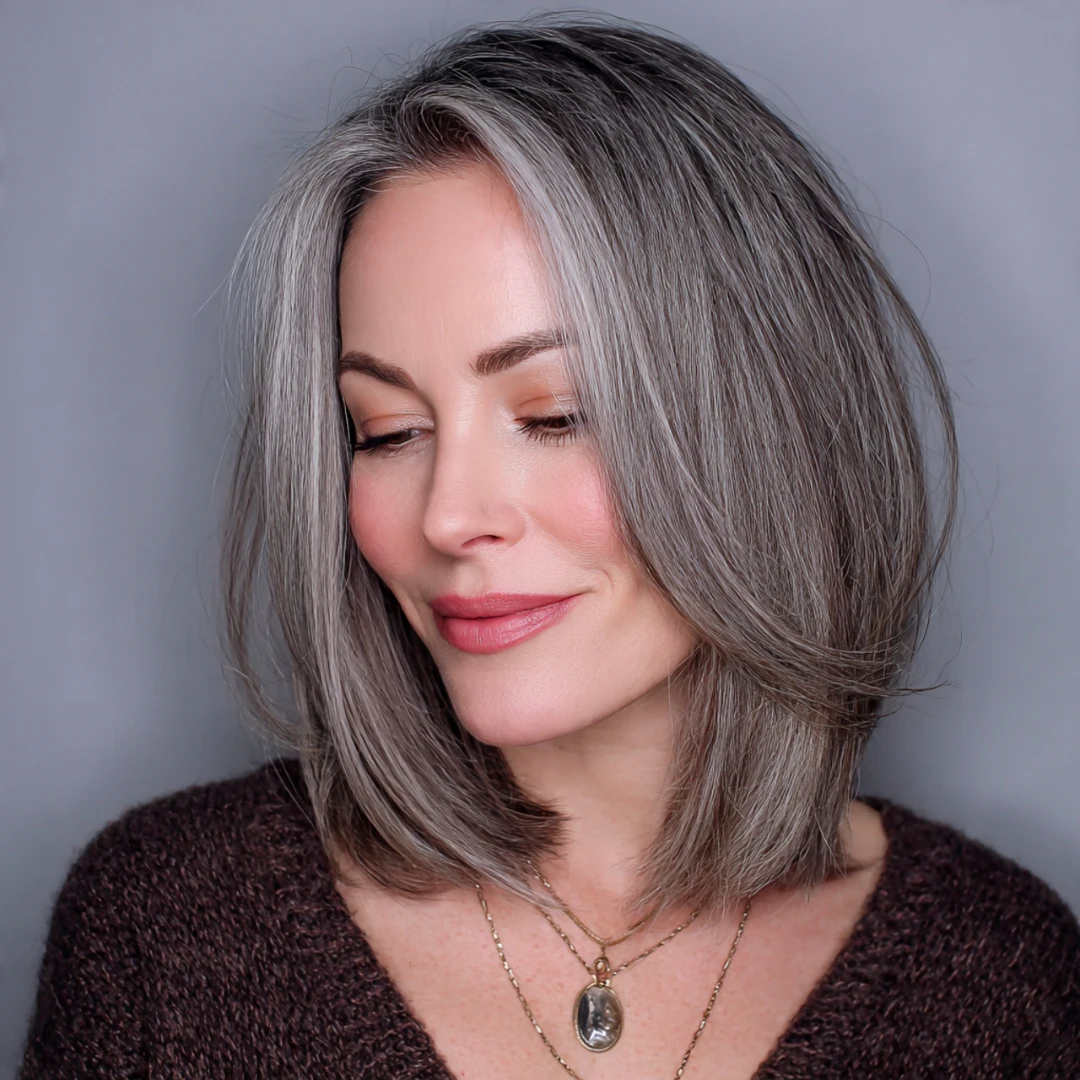
Choppy Lob (Chiclop) for Thick Hair

This one sits at the longer edge of the bob family. A lob, or long bob, usually ends near the collarbone, so it isn’t a short bob in the strict sense. It earns a place here because some people want a bob’s shape without going short, and on thick hair the extra length adds weight that helps the hair hang rather than expand. Choppy texturing keeps it from looking boxy. It’s also long enough to tie back, which most of the shorter cuts on this list aren’t.
Asymmetric Bob

An asymmetric bob is longer on one side, creating a directional slope across the jaw. On thick hair, the shorter side can puff out or carry more visible density, so the stylist may take a little weight out there specifically. Because the shape changes depending on where you stand, check both sides and the back before you leave the chair. The longer side often needs styling to fall forward, and since both sides grow at the same rate, the asymmetry becomes less defined without regular reshaping.
Classic Bob with Middle Part

A center part divides the bob into two matching halves, which makes symmetry the defining feature and makes any unevenness obvious. It sits most easily when your hair naturally parts near the center. On thick hair, the perimeter needs to be precise on both sides, and growth patterns can make one side sit fuller than the other. The clean, symmetrical look also shows growth clearly, so it needs regular trims to stay even.
The Real Question Is How You Want Your Bob to Behave
Most people come to a short bob wanting thick hair to feel less heavy. But “less heavy” can mean several different things, and each points toward a different kind of cut.
If what bothers you is width, the hair spreading at the sides or the jaw, the answer is usually controlled weight removal from inside the shape, as in the modern textured bob or a dimensional layered bob, rather than chopping the ends. If you want a stronger, more defined shape, cuts that keep weight at the perimeter, like the chin-length blunt bob or the sculpted bob, give you a line rather than texture.
Movement is another goal entirely. Choppy, shaggy, and feathered bobs let thick hair separate and move, but they need the most care around how much is taken out. Softer ends, on the other hand, often come from feathering or beveling rather than heavy thinning.
Natural texture changes the brief again. A cut built to work with waves or curls, such as the wavy layered bob or the curly French bob, can look finished with less styling than a sleek shape that has to be blown out.
If you’re moving toward gray, the cut can help. Textured and angled bobs often blend the transition more gently than a solid line, and salt-and-pepper or silver hair makes texture easier to see. And if you mainly want a shorter commitment, the pixie-adjacent bobs and wedge shapes give you that, along with more frequent trims.
If Your Thick Hair Usually Does This, Look for That
If your nape gets bulky, look at cuts that control the back: the stacked bob, the wedge bob, or an inverted bob with graduation. An undercut is the most direct option, with the trade-off of regrowth that needs tidying.
If the sides puff outward, the perimeter and layer placement matter more than overall thinning. A modern textured bob with weight removed from inside, or a sleek bob blown out close to the head, can help.
If your ends turn triangular, weight is collecting at the bottom. Interior layering, as in the dimensional layered bob, redistributes it without losing the outline.
If your bob looks like a helmet, shorter crown layers can break up the rounded mass, though too many can create width at the top. A textured bob with crown layers is the place to start, kept in proportion.
If your waves become too wide, working with the wave pattern usually helps more than forcing it sleek. A wavy layered bob or side-parted bob with soft waves, with layers placed to let the waves fall, can calm the width.
If your straight hair looks too solid, texture at the ends or a choppy layered bob can break up the block, as long as the edge keeps enough weight to look finished.
If your crown becomes too wide, be wary of shaggy cuts with very short crown layers. Fewer, longer layers at the top keep the shape closer to the head.
If your bangs become too dense, the fringe likely needs some weight taken out rather than being cut shorter. Our guide to curtain bangs for thick hair covers how much weight a fringe can carry.
If gray or coarse hair refuses to lie flat, a smoothing product helps, and so can keeping a little more length and weight where the hair is springiest. The natural silver chin-length bob and sculpted bob both depend on hair that will settle.
If your hair feels heavy overall, a choppy lob keeps length while adding texture, and a modern textured bob reduces weight without a dramatic change in shape.
What a Bob Photo Cannot Tell You
A photo shows the shape, not the hair it’s sitting on. You can’t tell from an image how dense the model’s hair is, whether her strands are fine or coarse, or how her natural part and nape grow. Those details decide whether the same cut will hang the way it does in the picture.
Photos also hide the work behind them. Many bobs are shown freshly blown out, curved with a round brush, or finished with smoothing and shine products. Lighting softens frizz and shows off gloss. Color can make layers look more defined than the cut alone would.
None of that makes the photo useless. It just means it’s a reference for the shape and length you like, not a promise of how the cut will behave on your hair the next morning.
A Few Decisions to Make Before Going Short
Before you sit down in the chair, it helps to decide a few things.
Think about whether you still want to tie your hair back. Most of the bobs on this list are too short for a ponytail, with the choppy lob the main exception. If you rely on putting your hair up, that matters.
Decide how much styling you’ll realistically do. Sleek, sculpted, and blow-out bobs look their best with a dryer and brush most mornings. Textured, wavy, and curly shapes can work with less, provided your hair cooperates.
Consider how you feel about a strong perimeter. A blunt line looks deliberate and keeps fullness at the ends, but it also shows growth clearly. Softer ends are more forgiving as they grow.
If you’re keeping or growing out your gray, think about whether you want a cut that shows off that contrast or one that blends it.
Nape maintenance is easy to overlook. Stacked, wedge, inverted, and undercut bobs all depend on a tidy nape, which may mean more frequent short appointments.
Then there’s the bigger question of movement versus structure. Shaggy and choppy cuts move; sculpted and blunt ones hold their shape. Both can suit thick hair, but they ask for different routines.
And if an undercut is on the table, be honest about whether you’re comfortable with the regrowth and the time it takes to grow out. Our guide to short hairstyles for women over 50 covers more options if you’d like to compare beyond bobs.
Final Thoughts
A short bob on thick hair doesn’t succeed by removing as much hair as possible. It succeeds when the weight stays where it holds the shape together, usually at the perimeter and in the places that keep the outline clean, and comes out where the hair would otherwise spread, stack, or stand up.
When you look at any of the 26 cuts above, that’s the useful way to read them: not as a list of looks, but as different decisions about where weight should live. Bring that question to your stylist, and the conversation becomes far more specific than “make it less heavy.”