23 Ash Blonde Hair Color Ideas and What to Know Before Going Cool
Ash blonde describes a direction more than a single shade: blonde with the warmth held back, so it reads cooler, smokier, or more muted than golden or honey tones. Within that direction the range is wide. Some ash blondes lean beige, some lean taupe, some look faintly silver, and a few are pale enough to sit close to platinum.
What you end up with depends heavily on where you start. Natural blonde hair can often be toned toward ash with little lightening. Dark brown hair has to be lifted first, and lifting tends to reveal warmth that the toner then has to counter. A reference photo shows the finished color, not how many steps it took to get there.
Cool also doesn’t have to mean icy. A soft smoky blonde and a near-white platinum both count as ash, but they ask very different things of your hair and your schedule. Balayage, highlights, shadow roots, and all-over color each grow out differently too.
The 23 ideas below look at ash blonde through those lenses: starting base, placement, contrast, how much lightening is involved, and what the color will need once you’ve left the salon.
Classic Ash Blonde Balayage

Balayage is painted by hand, so the lightened pieces can begin a little away from the root and widen toward the ends. That placement is what gives it a softer grow-out than highlights foiled close to the scalp: when your natural color comes back, there’s no single hard line. The ash comes from toning those painted sections. On light brown or dark blonde hair, the pieces may not need much lift to read cool. On darker bases, they’ll need more, and the tone may drift warmer between visits. In a reference photo, notice where the brightest pieces start. That tells you more about grow-out than the shade itself.
Pearl Ash Blonde

Pearl ash is a pale blonde with a soft, slightly reflective cool tone, closer to the inside of a shell than to metallic silver. It needs a fairly light base for that softness to show; over darker blonde, a pearl toner tends to read simply as cool light blonde. The difference between pearl and gray is subtle but real. Pearl keeps some blonde brightness, while silver pushes the tone toward gray. If you like a pearl photo, look at how light the hair is underneath the tone, because that level is what you’d need to reach.
Dark Ash Blonde with Shadow Root

A darker base doesn’t have to be something to hide. With a shadow root, the area near the scalp is kept close to your natural depth, or softened slightly with color, and blended down into ash blonde lengths. The root becomes part of the design. That’s why regrowth tends to look less obvious: new growth blends into a root that was already deeper.
It isn’t maintenance-free. The blonde lengths still fade and may need toning or a gloss to stay cool, and if the root and lengths differ sharply in depth, the transition needs careful blending to avoid a visible band. Dark ash itself is deeper and smokier than pale ash, so it often needs less lifting than a light ash would from the same starting point.
Icy Ash Blonde Ombre

An ombre runs from darker roots to lighter ends, and the icy version takes those ends very pale. That contrast is the whole idea, and it’s also the commitment. To reach frosty, near-white ends from a dark base, the lengths need significant lightening, sometimes across more than one appointment depending on the hair’s condition. The ends are the oldest part of the hair and may feel drier afterward. Because the roots stay dark, regrowth matters less here; keeping the ends cool and in good condition is the real upkeep.
Smoky Ash Blonde Highlights

Smoky ash highlights are cool, muted pieces woven through your natural base rather than painted in broad sections. The effect is dimensional rather than dramatic, and placement decides how it reads: finer, closer highlights blend into a soft overall shift, while wider, fewer ones show as distinct streaks. As cool toner fades, highlights can lean warmer, so they may need toning between full appointments. Waves tend to break up the pattern, which makes the contrast look softer than it does on straight hair.
Silver Ash Blonde

Silver ash pushes past cool blonde into something more metallic and gray-leaning. It usually needs a very light base, since the silver tone has to sit over hair that’s already pale, and it tends to fade toward a plainer or slightly yellow blonde as the toner washes out. Keeping it silver typically means regular toning. It’s worth separating this from natural gray, too. Silver ash is a color result; natural silver comes from the hair itself and behaves differently.
Mushroom Ash Blonde

Mushroom blonde sits at the muted end of ash: a taupe-beige with gray and brown undertones, nearer to a cool, dusty light brown than to bright blonde. Because it’s deeper and softer, it often needs less lightening than icy shades, which makes it a reasonable way to cool down brunette hair without going very light. It reads understated, particularly on straight, smooth hair where the tone looks even. Under warm indoor lighting it may look browner; in daylight, grayer.
Ash Blonde with Caramel Lowlights

Two tones are combined on purpose here: cool ash highlights on the surface, and warmer caramel lowlights placed underneath or between them. The lowlights add depth so the blonde doesn’t read as one flat sheet, and the warm-against-cool contrast shows as the hair moves. Whether you like it comes down to how much contrast you enjoy. Some people find a little warmth softens an all-ash result; others prefer to stay fully cool. Lowlights deposit color rather than lift it, which can bring depth back to hair that’s been heavily highlighted.
Buttery Ash Blonde

Buttery ash sits near the line between warm and cool. A soft, creamy blonde is toned just enough to take out brassiness without pushing it toward gray. It’s a useful reminder that ash doesn’t have to mean silvery or smoky; it can simply mean blonde with the yellow brought under control. Because it isn’t trying to be fully cool, it may need gentler toning than icy shades, and a little warmth returning as it fades tends to be less noticeable.
Champagne Ash Blonde

Champagne ash is a pale blonde with a faint golden reflect over a cool base, so it looks bright rather than stark. That balance is sensitive to light. Warm indoor lighting can bring out the gold, while daylight can make it read cooler. Styling plays a part as well: smooth, glossy hair reflects more light and shows the shine more than textured hair does. On fine hair, the reflective quality can make the color look luminous, though it doesn’t change how dense the hair is.
Ash Blonde Bob

The bob is the haircut; ash blonde is the color. The cut still changes how the color reads. On a blunt bob, a single, even ash shade shows as one clean block, so unevenness or regrowth is easy to spot. A textured or layered bob breaks the color into sections, which can make even one tone look more dimensional. Short hair also shows root growth sooner relative to its overall length, so all-over ash on a bob may need touch-ups more often than balayage on longer hair.
Ashy Beige Blonde

Ashy beige sits between cool ash and warmer honey: neutral, slightly smoky, with enough beige that it doesn’t tip into gray. That middle ground can make it easier to live with as it fades, because a small drift warmer or cooler doesn’t change its character much. It can be built as all-over color, highlights, or balayage, and each will grow out differently. Neutral shades like this also tend to look fairly consistent from one lighting situation to the next.
Light Ash Blonde Babylights

Babylights are very fine highlights placed close together, imitating the scattered lightness of naturally blonde hair. In light ash, the result is subtle and blended. Subtle doesn’t mean maintenance-free, though. Babylights involve many small lightened sections, often close to the root, so regrowth eventually shows as a soft band, and the appointment itself can take a while. On fine hair, the delicate placement can look natural; on very dense hair, more sections may be needed before the effect is visible at all.
Dimensional Ash Blonde on Dark Brown Hair

On dark brown hair, ash blonde rarely means turning the whole head blonde. More often, lighter pieces are lifted and toned cool while the brown base stays, creating dimension through contrast. Those pieces have to pass through warm stages as they lighten, and bringing them to a genuinely cool blonde can take more processing, sometimes more than one session. Underlying warmth can also return as the toner fades.
Keeping the highlights fine and blended rather than chunky usually makes the contrast look softer and grow out more gently. If your hair has box dye, old highlights, or other color history, mention it. That history affects how the hair lifts and how evenly the tone takes.
Rose-Tinted Ash Blonde

This lays a soft, muted rose tone over a cool ash base, giving the blonde a faint pink cast rather than a bright fashion pink. Pastel and rose tones tend to be among the shortest-lived, often fading within weeks, so the tint usually needs refreshing to stay visible. It shows most clearly on a very light base. As it fades, the hair generally drifts back toward the underlying ash or a slightly warmer blonde.
Ash Blonde Sombre

Sombre is the softer cousin of ombre: the shift from root to ends is gradual and lower in contrast, with no obvious point where dark turns light. In ash, the lengths are lifted and toned cool, but less dramatically than in an icy ombre. Because the gradient is gentle, regrowth tends to blend in, and the color can often go longer between appointments than higher-contrast looks. The ends still need toning as they fade, and how seamless the transition looks depends on how carefully it’s blended.
Platinum Ash Blonde

Platinum ash is about as light as blonde goes before reaching near-white, with a cool, slightly gray tone. Getting there usually means lifting the whole head very pale, and from darker bases that can mean significant processing across more than one session. Hair condition matters a great deal. Previously colored or fragile hair may not respond well, and its starting condition shapes what’s realistic.
This is a high-maintenance commitment compared with blended ash balayage. Root growth shows quickly against such a pale shade, toner needs regular refreshing to keep it cool, and the lightened hair often needs extra care to stay in good condition.
Two-Tone Ash Blonde

Two-tone ash uses two related cool shades, often a deeper smoky ash and a lighter one, layered through the hair. It creates dimension without relying on high-contrast or chunky highlights, since both tones belong to the same cool family. Waves help show the variation as the shades fall at different points. Upkeep depends on where each tone sits and how quickly each one fades.
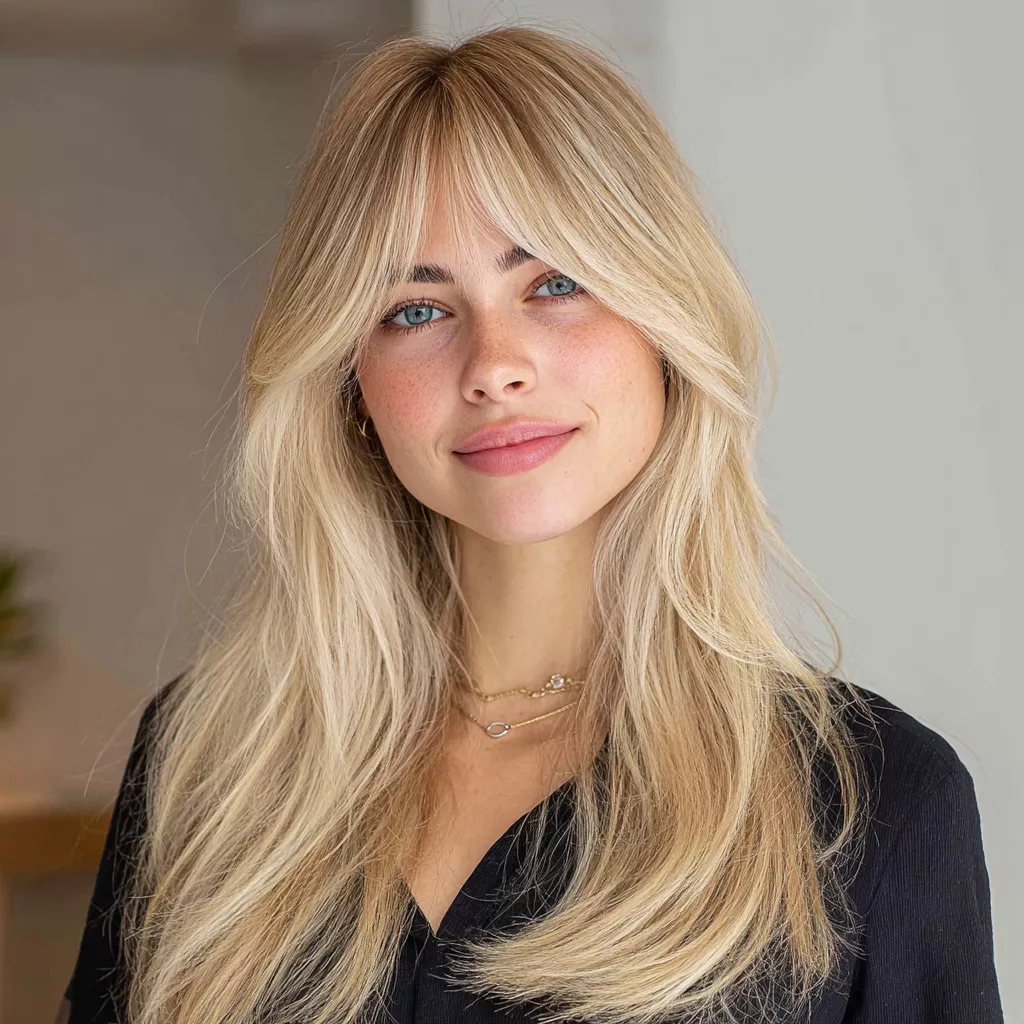
Ash Blonde Curtain Bangs

Curtain bangs are the haircut; ash blonde is the color. Together, they make the fringe the most visible part of the color, sitting right around the face. Lighter ash placed through the bangs and front pieces brightens that area visually, but it also means regrowth and fading show there first. The bangs need their own trims, separate from color appointments, so this combination asks for attention in two different ways.
Dirty Ash Blonde

Dirty ash blonde is a deliberately deeper, muddier blonde, with darker tones woven through and a mix of cool and slightly warm notes. It’s sometimes mistaken for ash that has faded, but it’s built this way on purpose: lowlights and a deeper root keep it from looking bright or clean. Because depth is already part of the color, it can grow out less obviously than a bright blonde, though the lighter strands still benefit from occasional toning.
Ash Blonde Money Piece

A money piece concentrates lightness in two sections around the face while the rest of the hair stays at or near its natural color. A small amount of lightening creates a strong visual effect, which is the appeal. The trade-off is location. Because those pieces sit at the hairline and part, regrowth and tone changes become noticeable quickly, so touch-ups may come sooner than they would with balayage placed further back.
Glossy Ash Blonde Hollywood Waves

This is the version of ash blonde that red carpets were made for. Long, glossy ash blonde waves styled in classic Hollywood fashion look sophisticated and cinematic at the same time. A glossing treatment at the salon takes this look from great to genuinely unforgettable.
Ash Chocolate Blonde

This pairs a rich chocolate brown base with cool ash blonde pieces. The gap between warm brown and cool blonde is significant, so placement matters: fine, blended pieces read softer, while broader streaks look bolder. On a dark base, the blonde sections need lifting and toning, and they may lean warm as they fade. The brown base helps the grow-out, since new growth blends into it rather than standing out against it.
What Ash Blonde Looks Like Depends on Where You’re Starting
Two people can bring the same photo to a colorist and leave with different processes, because their starting points are different.
Natural blonde hair is the most direct route. Often, the color only needs toning to shift from golden to cool, without much lightening.
Light brown hair usually needs some lift, but not a great deal, to reach a soft ash. Smoky, beige, and mushroom tones are often within reach in a single appointment.
Medium brown hair needs more lightening, and the warmth that appears along the way becomes something the toner has to manage. Highlights or balayage are often more practical here than going fully blonde.
Dark brown hair has the furthest to travel. Very pale ash shades can take more than one session, and keeping them cool takes ongoing attention. Dimensional approaches, like ash pieces through a brunette base, often fit dark hair more comfortably.
Previously colored hair adds unknowns. Box dye, old highlights, past toners, and uneven porosity can all change how the hair lifts and takes tone, and none of that shows up in a photo.
Gray or silver hair is different again. It may already sit near the light, cool end of the range, so the goal may be blending rather than lightening.
Cool Doesn’t Always Mean Icy
“Ash” covers several distinct directions, and it helps to know which one you’re after.
Smoky ash is muted and dimensional, with a soft gray cast that keeps the blonde from looking bright.
Classic ash is simply blonde with warmth controlled, cool without being gray.
Beige ash sits between cool and warm, neutral enough to look natural as it fades.
Pearl is pale and softly reflective, brighter than silver.
Silver is metallic and gray-leaning, and usually needs a very light base.
Platinum ash is the lightest, close to white, with the highest lightening and maintenance commitment.
Mushroom is darker and more muted, a taupe-beige with gray and brown undertones.
Knowing which of these you actually want often matters more than choosing the right photo, because it tells your colorist how light the hair needs to go and how cool the toner should be.
The Part of Ash Blonde Photos You Can’t See
A color photo shows the finished result at its freshest. It doesn’t show how many rounds of lightening went into it, what the hair looked like before, or how new the toner is. Ash shades are usually at their coolest right after toning and drift warmer over the following weeks.
Lighting changes things too. Daylight tends to make ash look cooler and grayer, while warm indoor light can bring out hidden gold. Styling adds another layer: smooth, glossy waves reflect more light than straight or textured hair, so the same shade can look richer in one photo than another.
What a photo also can’t tell you is how the color grows out, how much upkeep it needs, or what condition the hair was in before. When you show a reference to your colorist, point to the specifics: how deep the root is, how much contrast there is, how wide the lighter pieces are, how close to the scalp they start, and whether the tone looks smoky, beige, pearly, or silver.
Before You Commit to the Coolest Shade
Start with where your hair is now. The darker your natural color, the more lightening a pale ash will take, and the more warmth there is to manage. That isn’t a reason to avoid ash, but it may be a reason to aim for a smoky or dimensional version rather than an icy one.
Think about your color history honestly. Old box dye or heavy highlights can make lifting uneven, and your colorist can only plan around what they know.
Consider how light you actually want to go, and how much root growth you’re comfortable seeing. A shadow root or balayage softens regrowth; all-over platinum doesn’t.
Toning is part of most ash blondes. Purple-toned products can help counteract yellow, while blue-toned ones are generally used for more orange warmth, though formulas vary. Used too often, they can make some blondes look dull or slightly violet, so they’re best used when the tone starts to shift rather than on a fixed schedule.
Finally, decide whether you want a subtle cool change or a dramatic one. Both are ash. They just live very differently.
How cool your result can go depends on where you are starting from. Darker or previously colored hair usually has to be lightened carefully before an ash tone will read as ash rather than muddy, and toning does the final correction. A strand test can show how light a section can lift, how long it needs, and whether the tone lands where you want it. Treat that as a color test only. An allergy patch test is a different check, done on the skin by following the dye product’s instructions before use, every time, even with a familiar product. Hair that has already been bleached or processed may lift unevenly, so a professional assessment before more lightening is the safer call.
Final Thoughts
Ash blonde isn’t one color but a family of cool directions, and the right one depends less on the photo than on your starting base, how much lightening you’re prepared for, and how much upkeep you’ll realistically keep up with. A smoky, softly rooted ash can look as considered as a platinum one while asking far less of your hair and your calendar. Choose the tone first, then let your starting point decide how you get there.