26 Curly Hairstyles With Color and What to Know Before You Book
Color on curly hair rarely looks the way it does on a swatch. Curls bend, stack, and shrink, so light hits them at constantly changing angles, and where the color is placed matters as much as the shade itself. A highlight that would read as a clean stripe on straight hair may appear as scattered flecks through a curl pattern. A dark root can look softer when the curls above it fall forward and cover the line.
“Curly hair with color” isn’t one look, either. Some ideas here add quiet dimension close to your natural shade. Others depend on significant lightening, careful toning, or vivid pigments that fade and need refreshing. Your starting color, your hair’s chemical history, and its current condition all shape what’s realistic.
The 26 ideas below explain what each color involves, how it tends to behave on curls, and what’s worth discussing with your colorist before you commit.
Copper Red Curly Hair
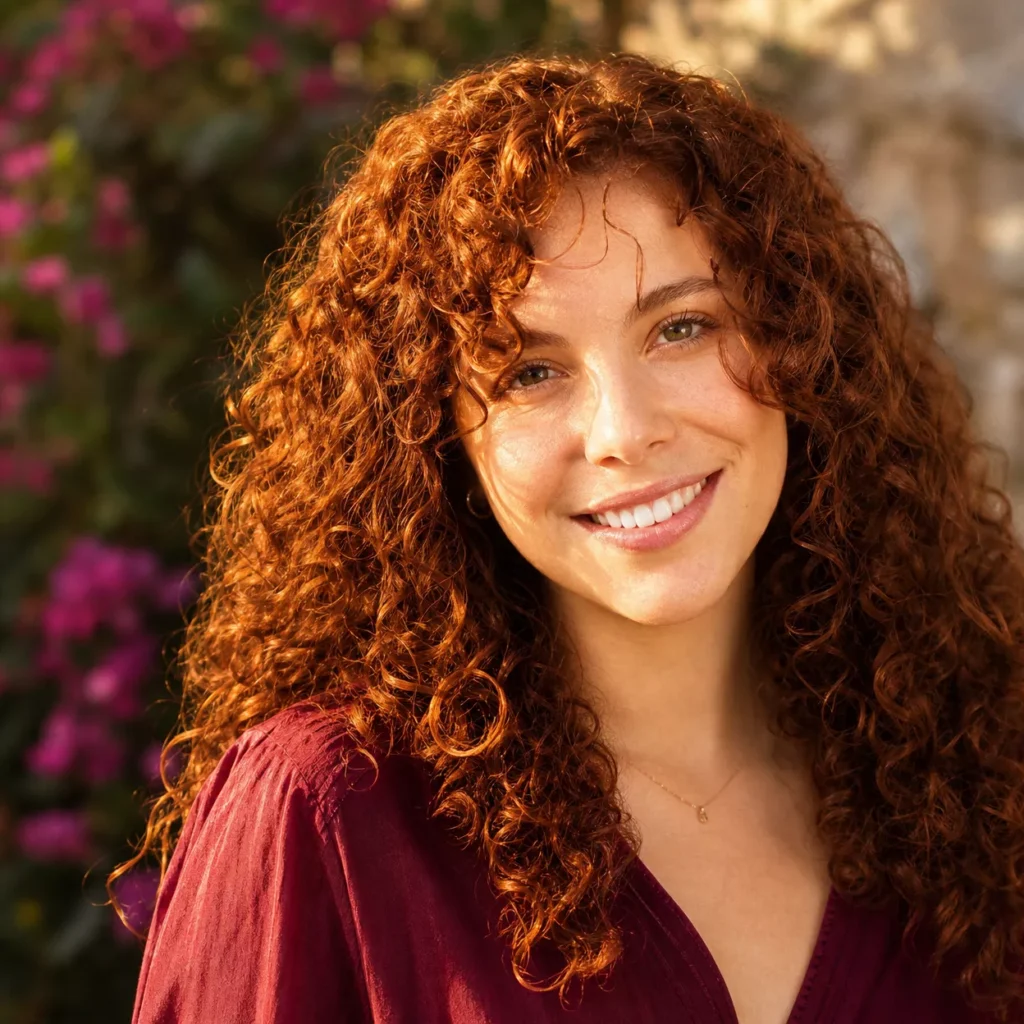
Copper ranges from a soft, golden-leaning shade to a deep, almost auburn red-orange, so the first decision is how bright and how deep you want it. Your starting base shapes what’s possible. On light brown or dark blonde curls, a copper tone can often be deposited with little or no lightening. On dark brown or black hair, a bright copper usually needs some lift first, and the warmth that appears during lightening can actually work in copper’s favor. Copper tends to fade faster than neutral browns, so expect to refresh it to keep it vivid.
Honey Balayage on Curly Hair
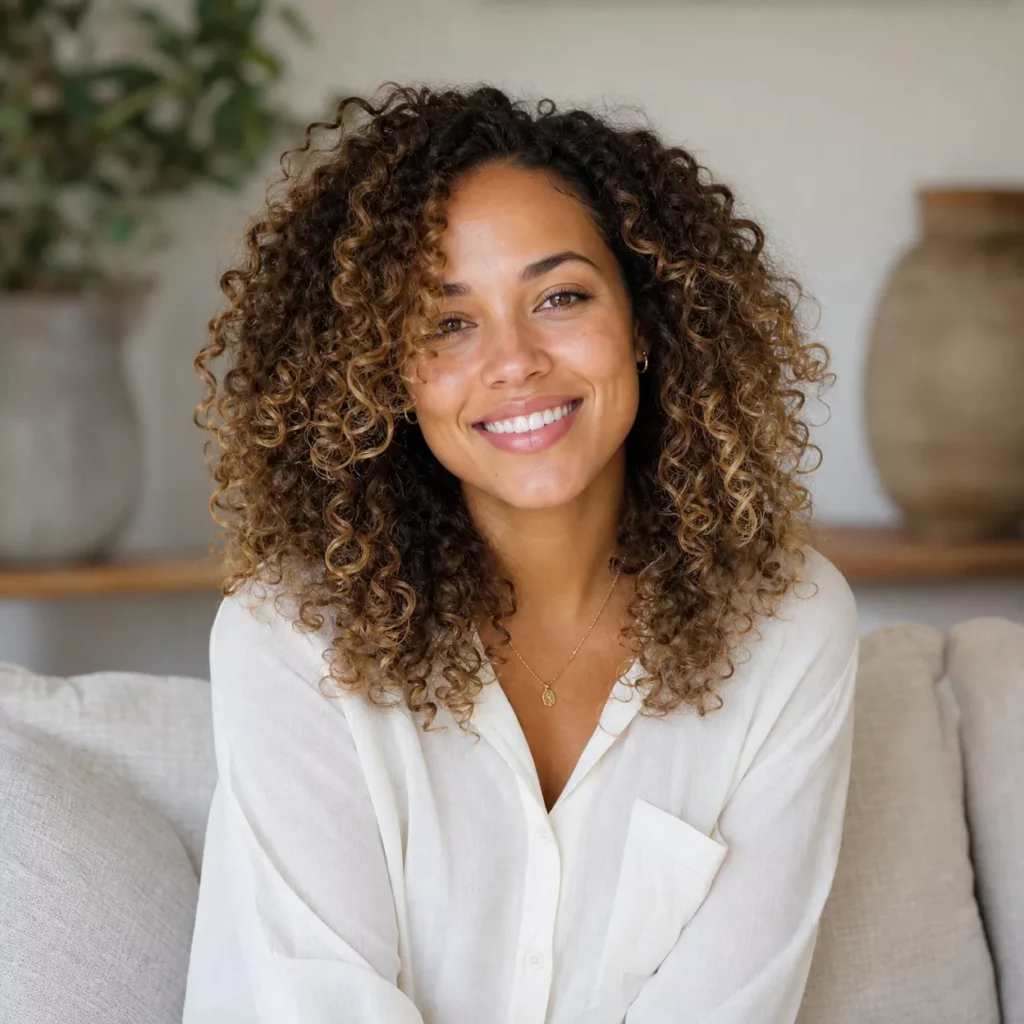
Balayage is hand-painted, so on curly hair the placement can follow the way each curl falls rather than a strict foil pattern. Honey tones painted through the mid-lengths and ends usually leave the root close to your natural color, which means regrowth tends to blend rather than show a line. How much contrast you choose decides how noticeable that grow-out becomes. On tighter curls, shrinkage pulls painted sections upward, so the colorist may place the honey a little differently than on looser waves to keep it visible once the hair dries.
Dark Auburn Curly Hair
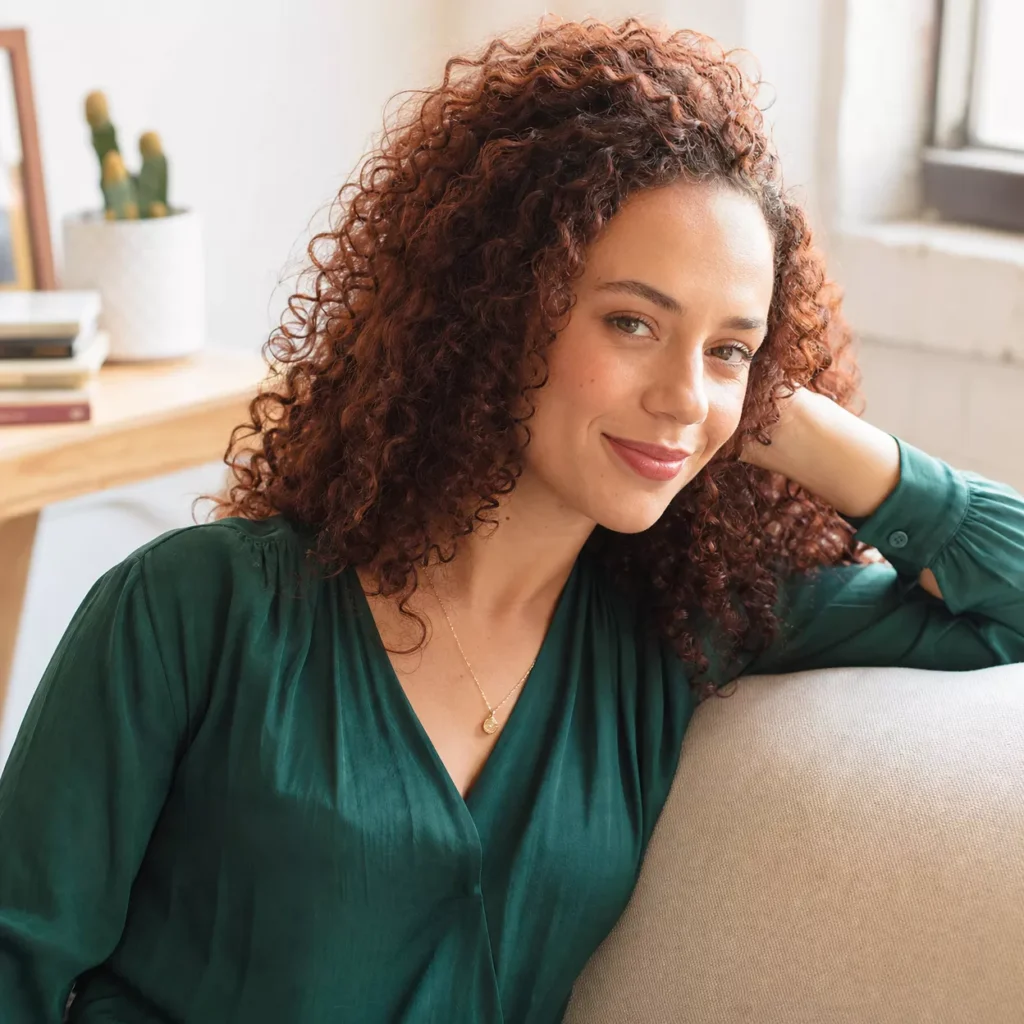
Dark auburn sits between brown and red, and the main question is how much red you actually want to see. A deeper auburn reads as warm brown indoors and shows its red mainly in sunlight. A brighter one shows red more consistently. On dark natural hair, a deep auburn can often be deposited without much lightening, while a brighter version may need some lift. Red pigments tend to fade, so the vividness can soften between appointments, usually drifting toward a warmer brown.
Blonde Highlights on Dark Curly Hair
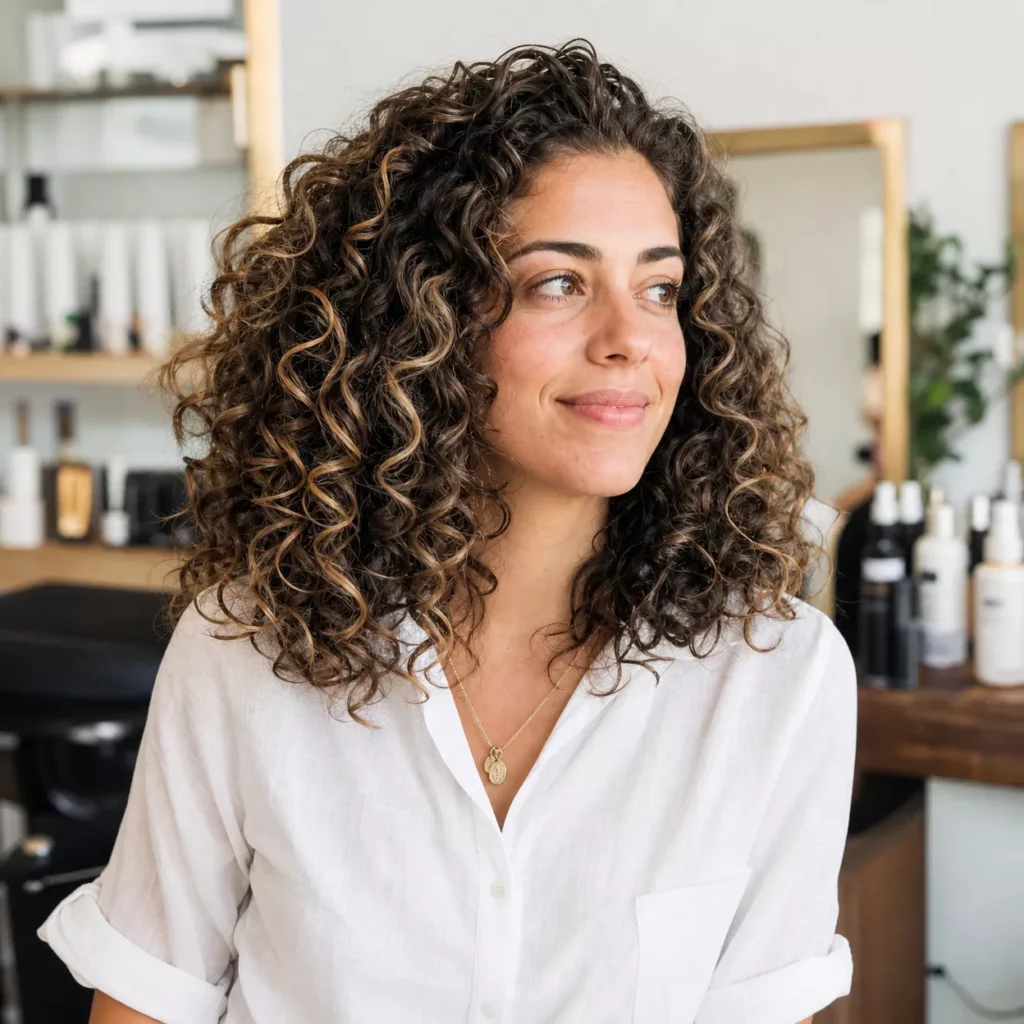
Contrast and width shape this whole look. Fine highlights placed close together blend into the curl pattern and read as subtle dimension. Wider, chunkier sections create obvious contrast, and with it, more visible regrowth. Reaching blonde from dark hair usually involves lightening, and how far it can go depends on how much lift your hair can handle. Because each curl twists, highlighted strands often show up as flecks rather than continuous lines, so even bold placement can look softer than it would on straight hair.
Ombre Curly Hair from Brown to Caramel
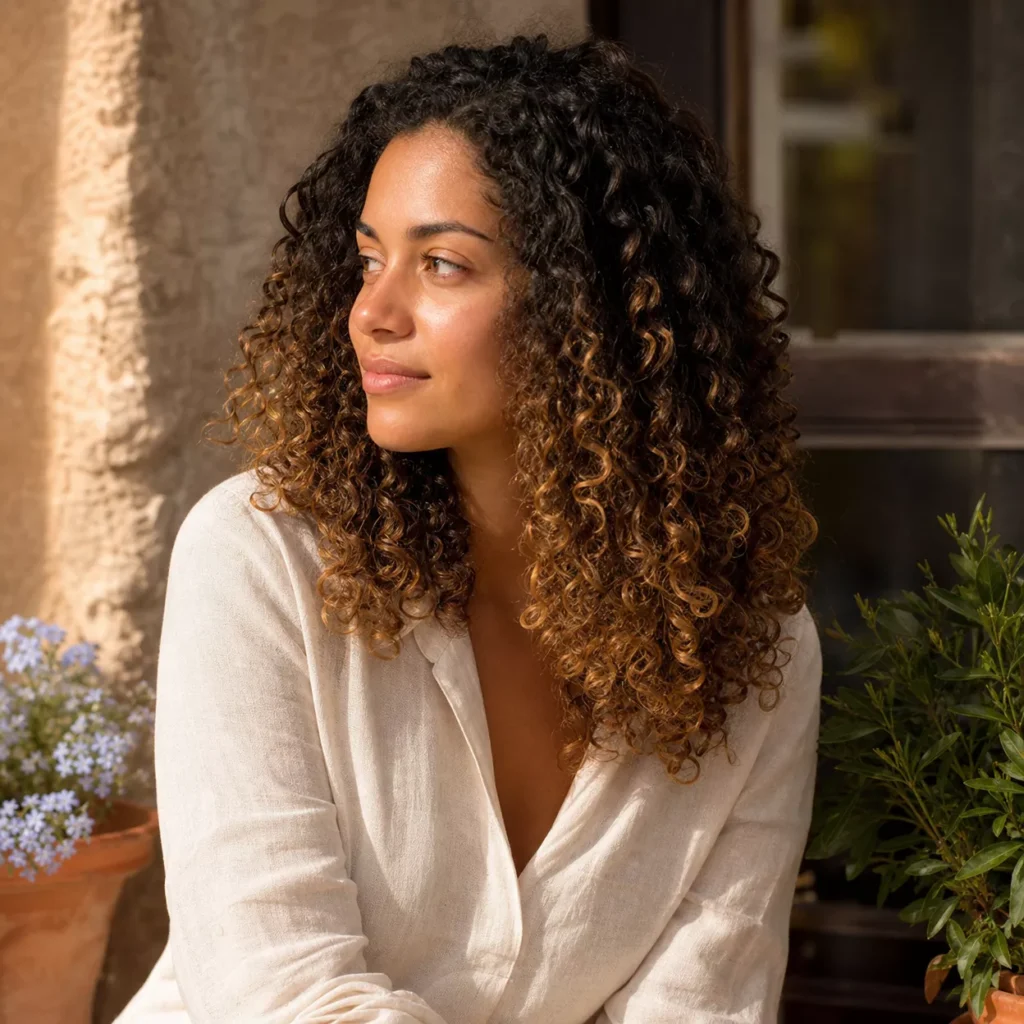
An ombre moves from a darker root to lighter ends, and the detail that matters most is where the transition begins. Starting it lower keeps more brown and makes the caramel an accent at the ends. Starting it higher makes caramel the dominant color. On curly hair, shrinkage pulls the ends upward, so the transition may sit higher once the hair is dry than it did while wet. Because the root stays brown, regrowth is less of a concern, but the caramel ends may need toning as they fade.
Vibrant Red Curly Hair
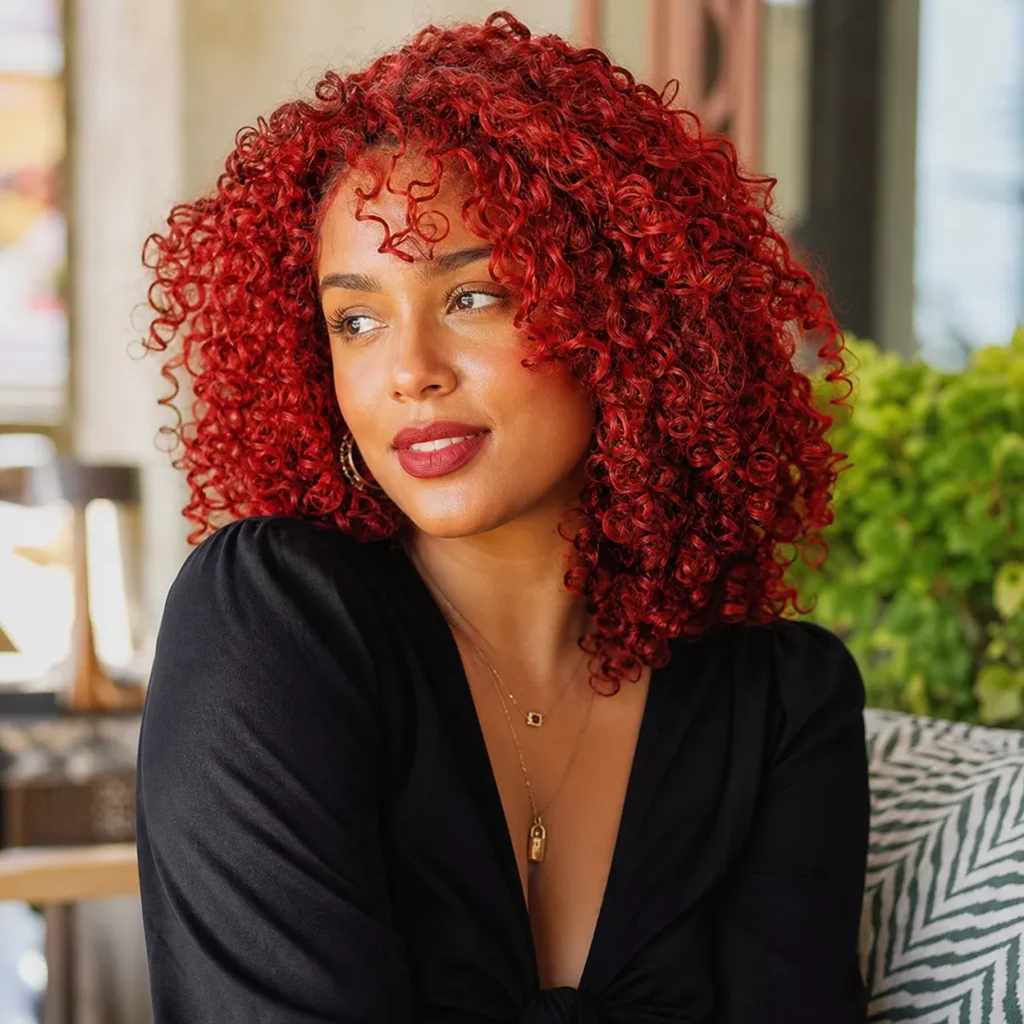
A vivid, saturated red is a commitment. To show brightly, it usually needs a light enough base, which may mean lightening first on darker hair. Bright reds also tend to fade faster than many other shades, so washing, sun, and heat can soften the color noticeably between appointments. Keeping the intensity usually means regular refreshing, and color-depositing conditioners or a gentler wash routine may help slow the fade. If you want red with less upkeep, a deeper red or auburn tends to be more forgiving.
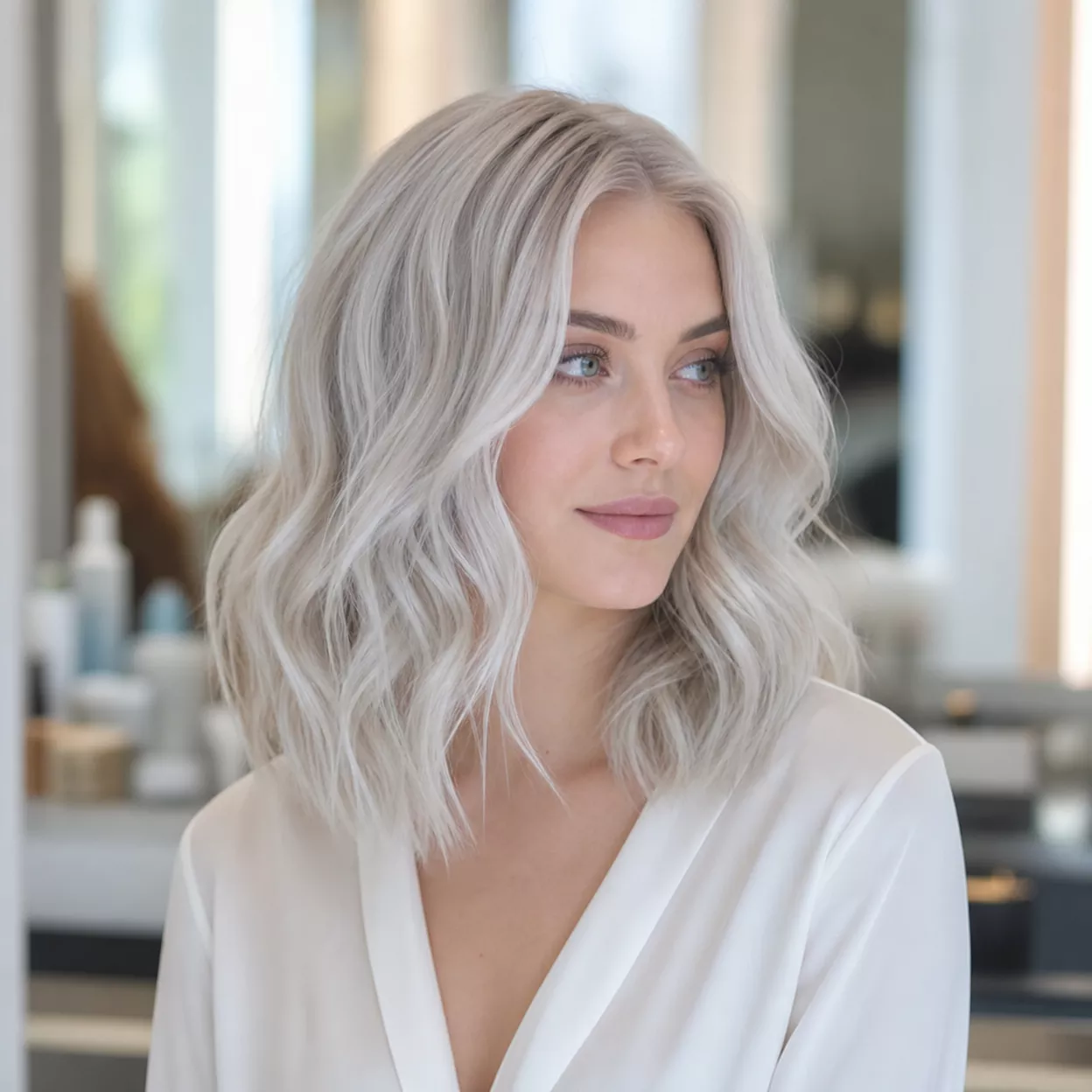
Ash Blonde Curly Hair
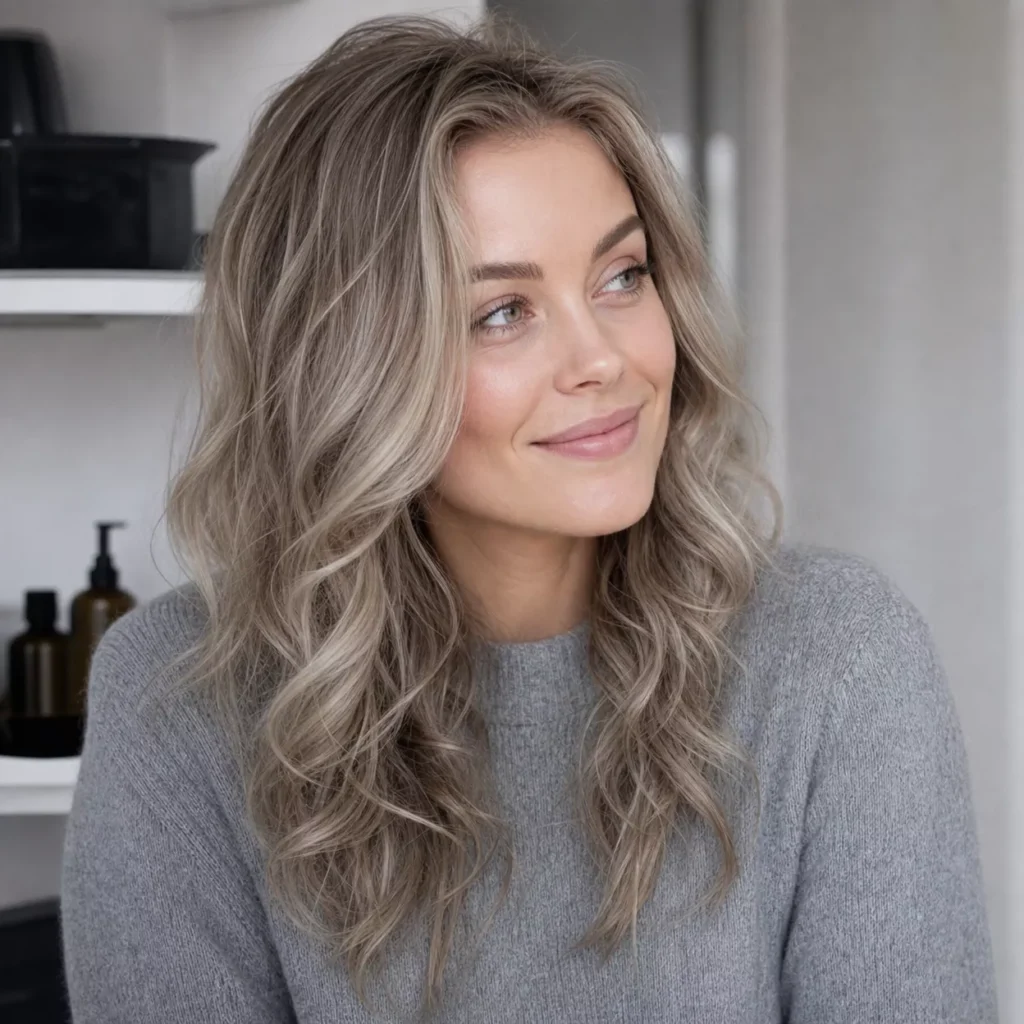
Ash blonde is a cool, muted blonde, and reaching it from darker curly hair usually means significant lightening followed by toning to counteract warmth. That’s where curl condition becomes important. Lightening can change how curls feel and how well they hold their shape, so the hair’s condition should be assessed before a major change, and a slower, staged approach may be suggested. Once you reach ash, the cool tone tends to drift warmer as toner fades. Purple or blue toning products can help, though using them too often can dull or tint some blondes. Our guide to ash blonde shades covers the cooler range in more depth.
Money Piece on Natural Curly Hair
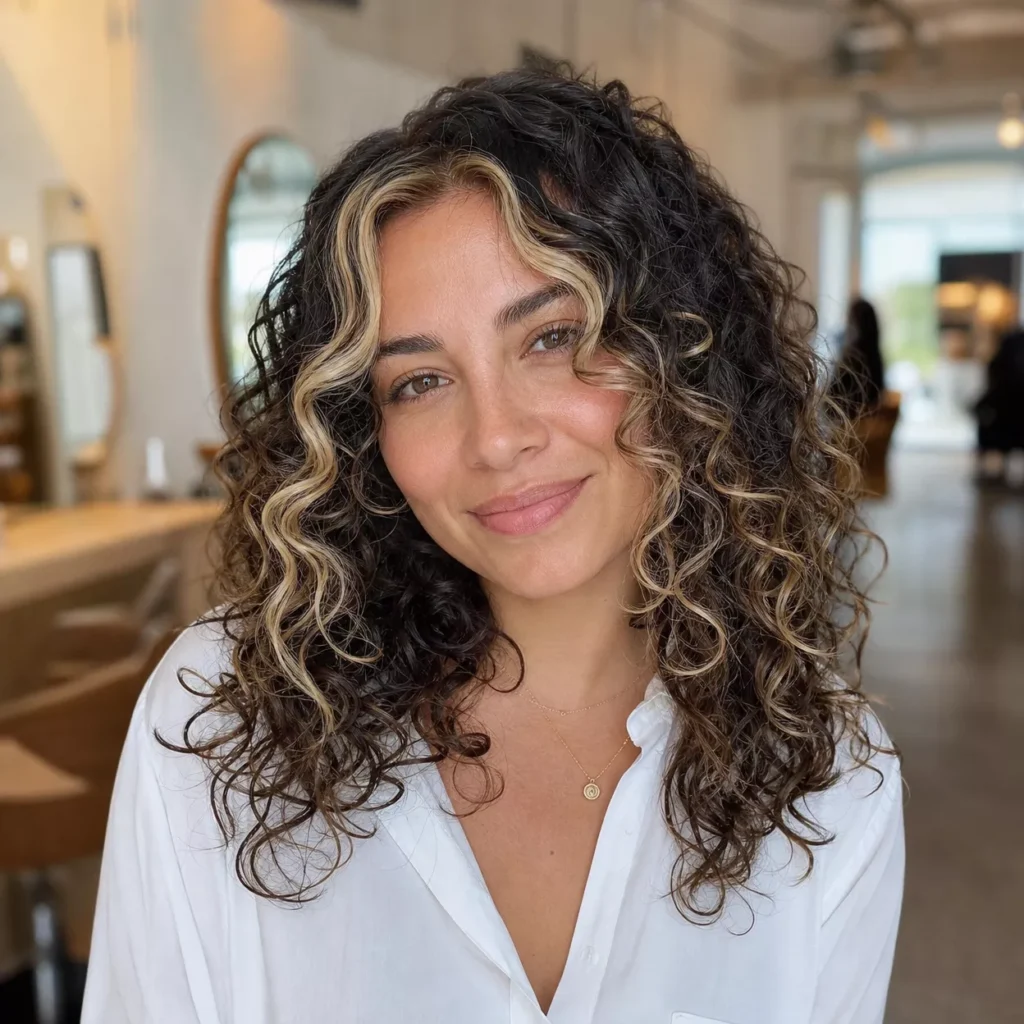
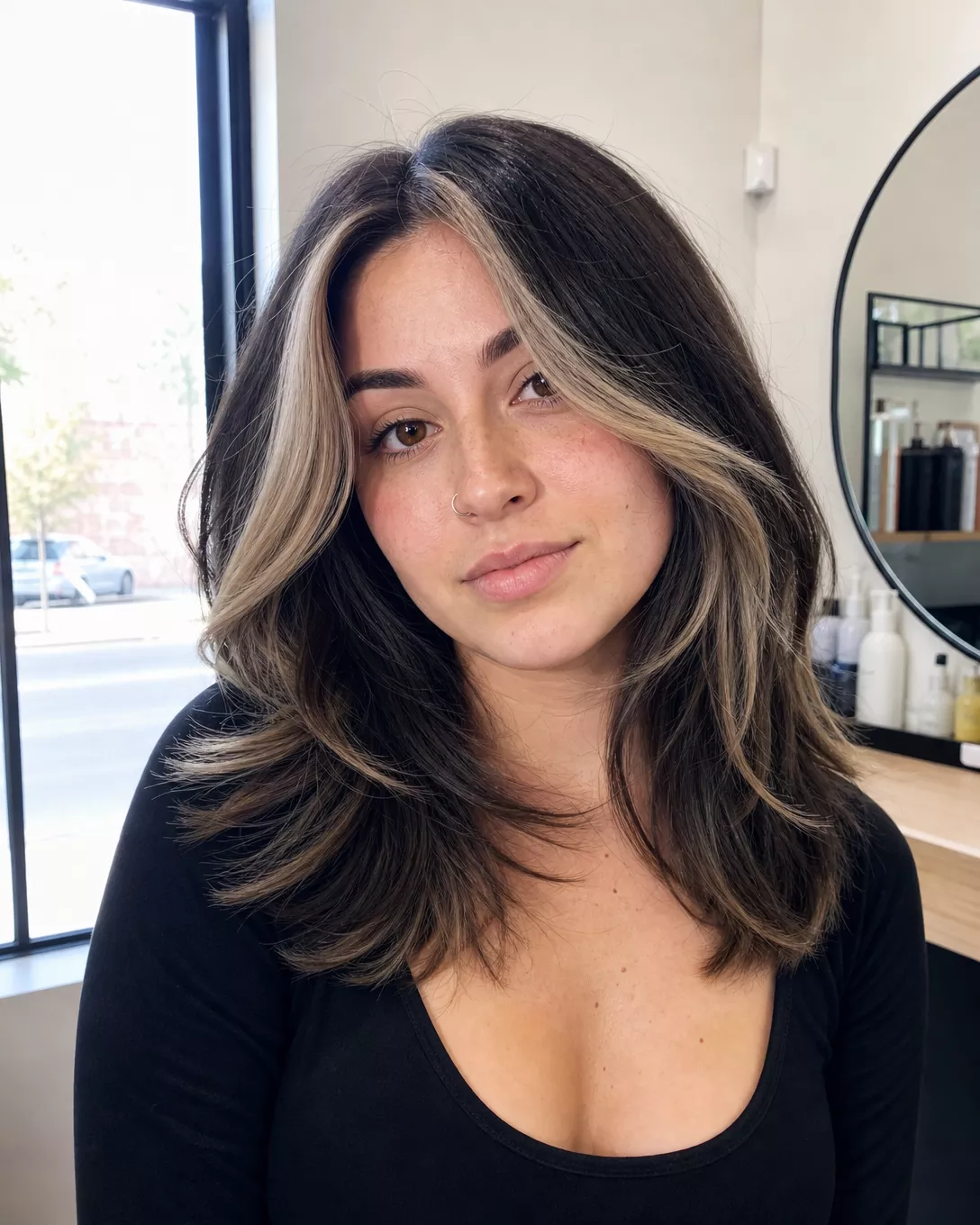
A money piece concentrates lighter color in two sections at the front hairline, framing the face while the rest of the curls stay their natural shade. On curly hair, placement deserves extra thought, since front curls may spring up or fall differently from the rest of the head. A colorist may adjust where the sections begin so the brightness sits where you want it once the hair dries. It involves less lightening overall than full highlights, but regrowth at the hairline becomes visible quickly.
Soft Brunette Balayage on Curly Hair
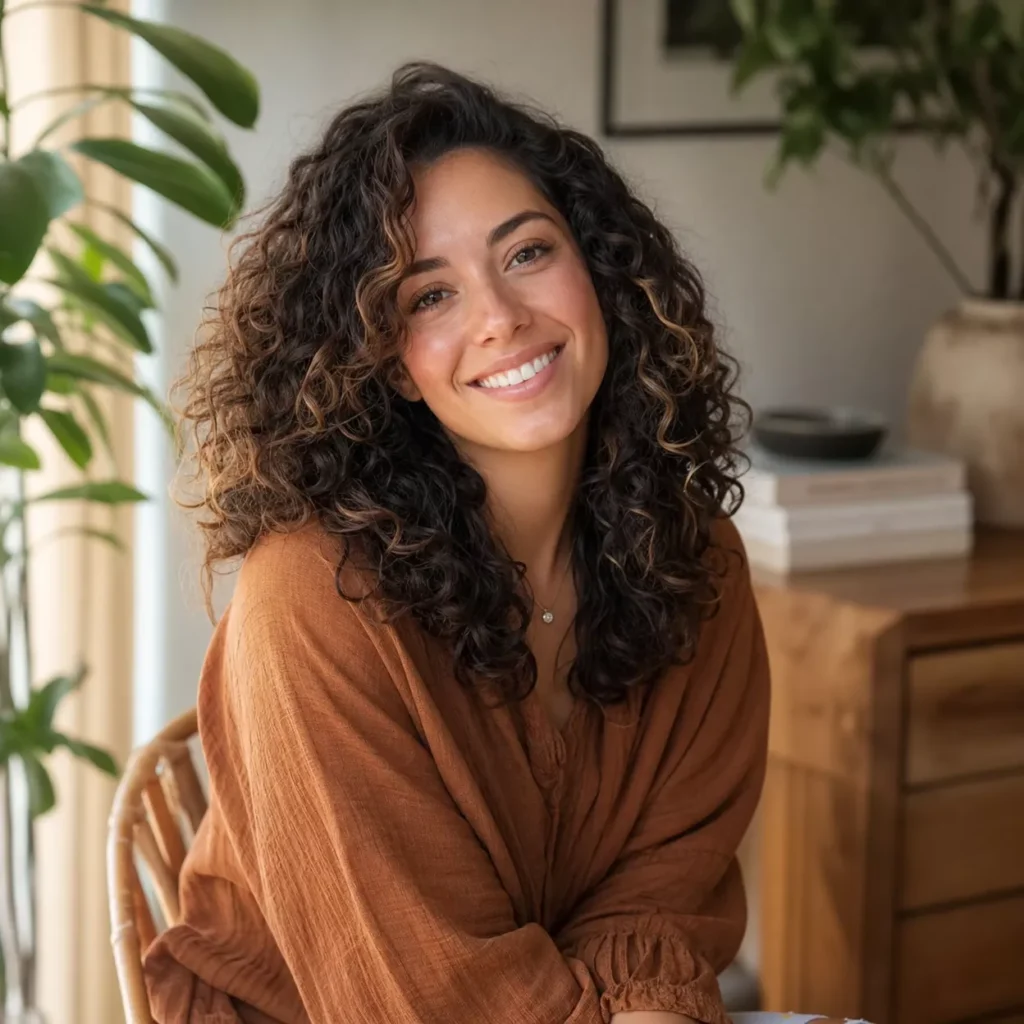
Soft brunette balayage adds a slightly lighter brown through the mid-lengths and ends without dramatically changing the base. The difference is small, so it reads as depth rather than contrast, especially on darker curls. Because the lighter tones stay close to your natural shade, it often needs little or no lightening and tends to grow out softly. It’s a reasonable way to add dimension if you don’t want your color to look noticeably different from your own.
Strawberry Blonde Curly Hair
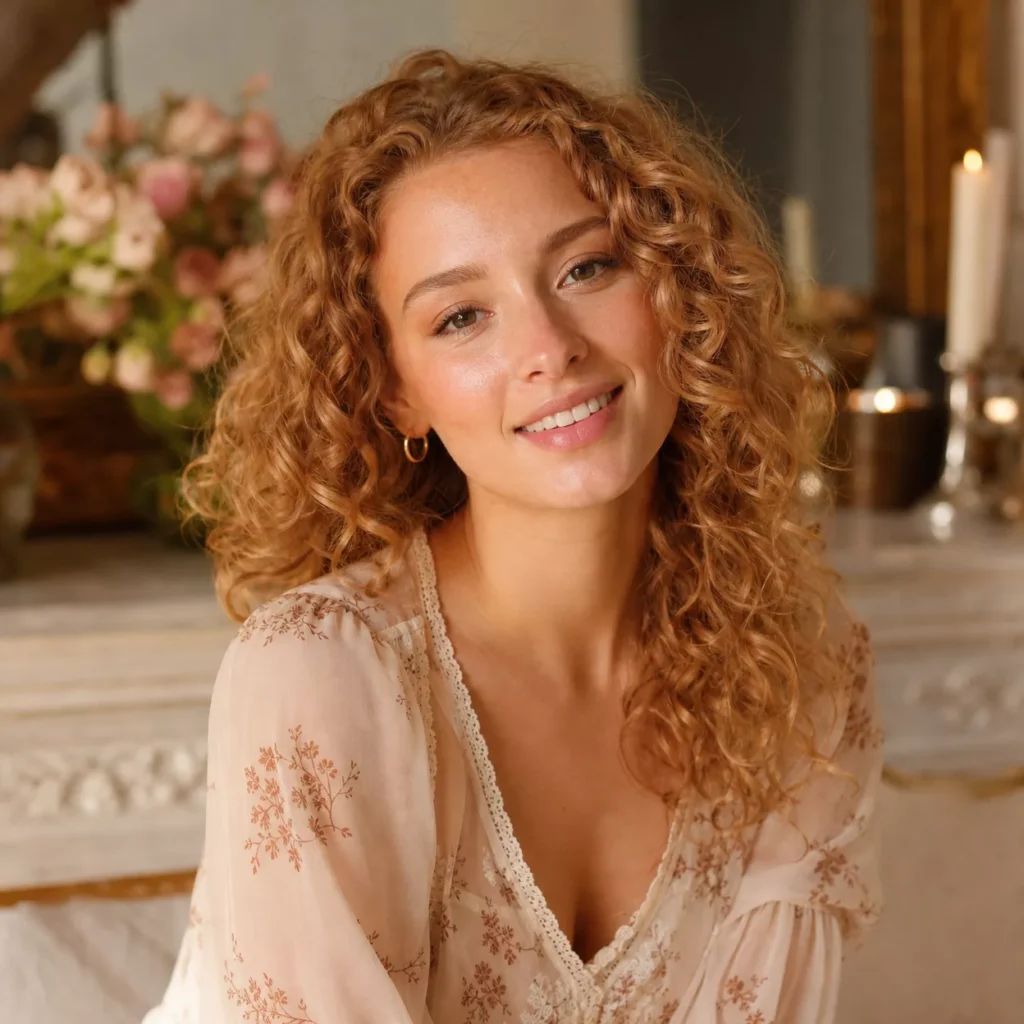
Strawberry blonde balances gold, copper, and blonde, and the mix decides the result. More gold makes it read as a warm blonde; more copper pushes it toward light red. Your starting color matters a great deal. Light brown or blonde hair may reach strawberry blonde with modest lift or deposit, while darker hair needs more lightening. Like other red-based tones, the copper element can fade faster than the gold, so the shade may shift over time.
Silver Gray Curly Hair
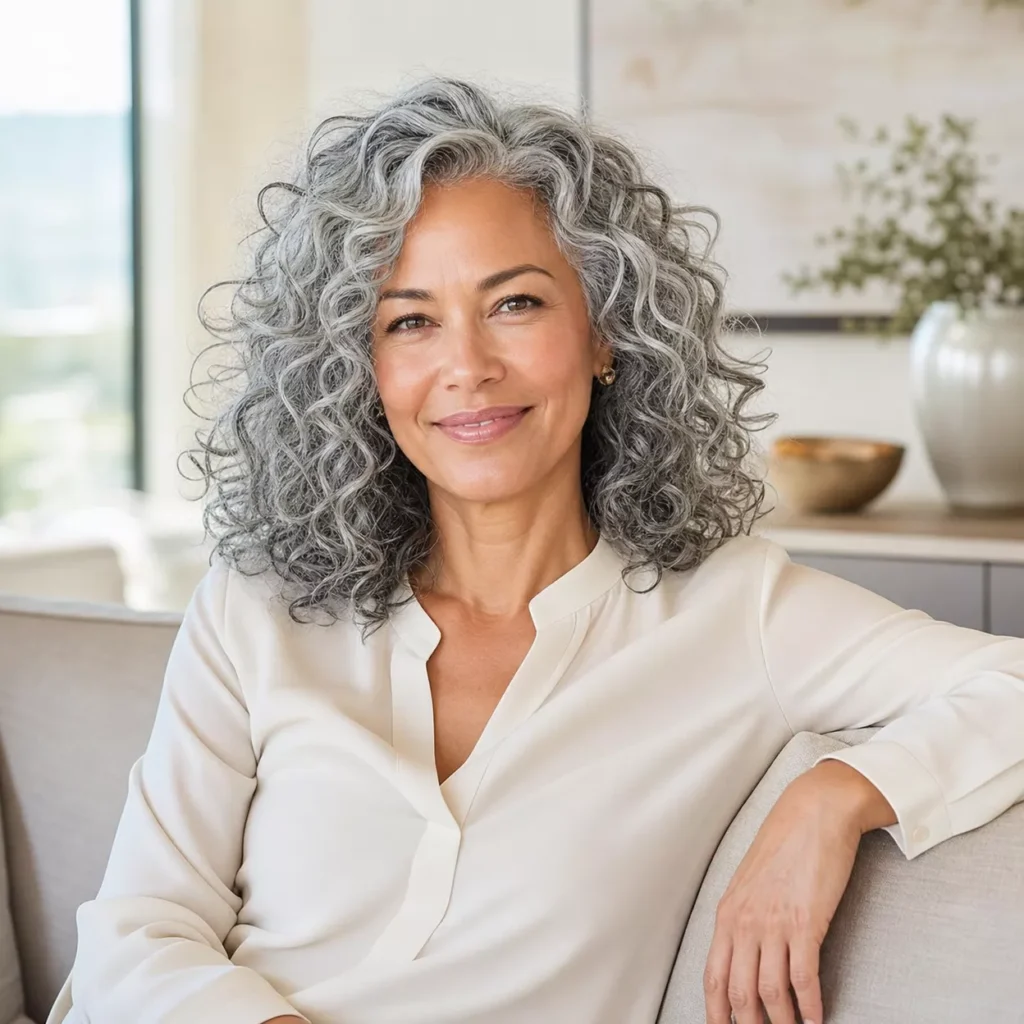
Silver on curly hair can come from two very different places. If you’re transitioning to your natural gray, the work is mostly about blending: highlights or lowlights can soften the line between colored ends and new growth while the gray grows in. If you want silver from a darker base, that usually means significant lightening followed by toning, and keeping silver from turning yellow means regular toning afterward. Some people find their gray strands feel coarser or more porous than pigmented hair, so the curl pattern may change slightly as gray grows in.
Chocolate Brown Curly Hair with Caramel Highlights
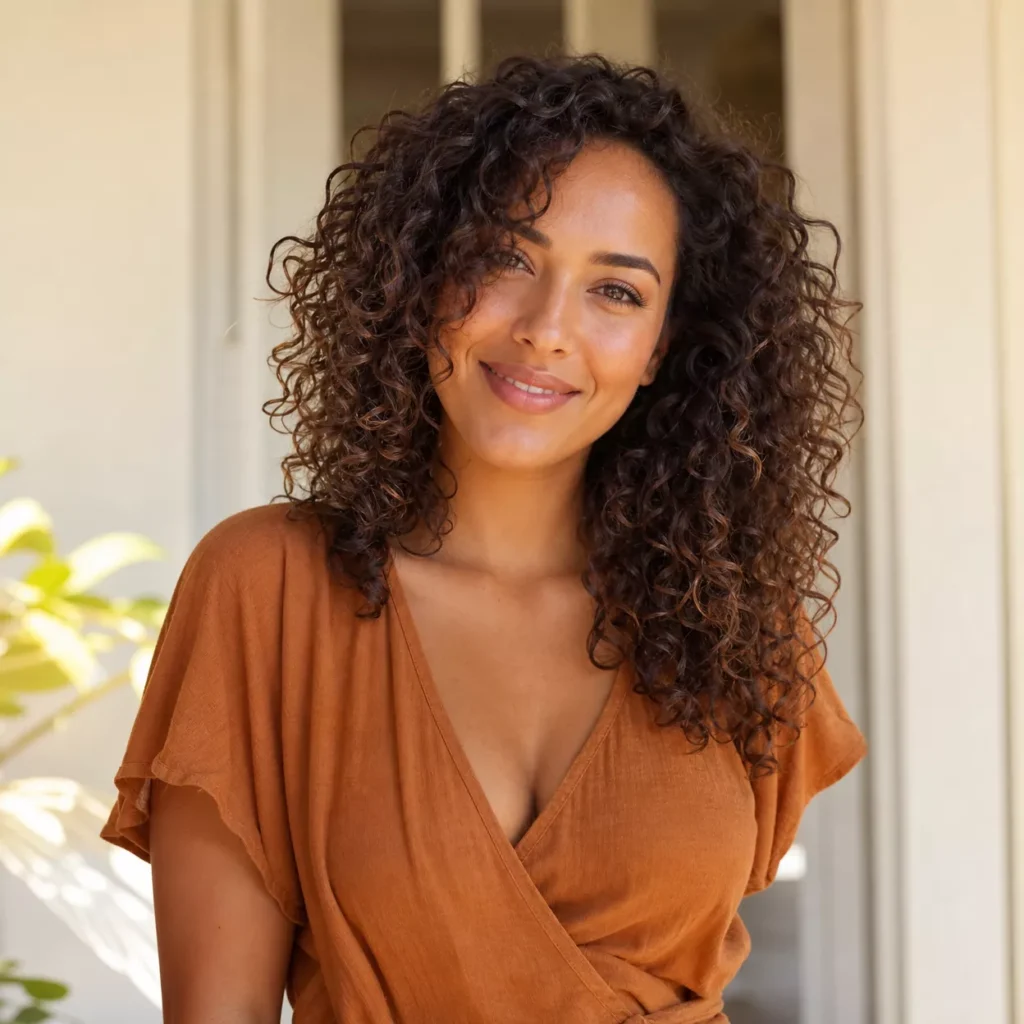
Chocolate brown keeps the overall look deep, while caramel pieces introduce lighter points through the curl pattern. The contrast is adjustable: fine caramel highlights read subtle, while broader ones become more noticeable. On darker bases, caramel usually needs some lightening. Because the base stays brown, regrowth tends to blend in, though the caramel may need toning to stay golden rather than turning orange.
Bold Burgundy Curly Hair
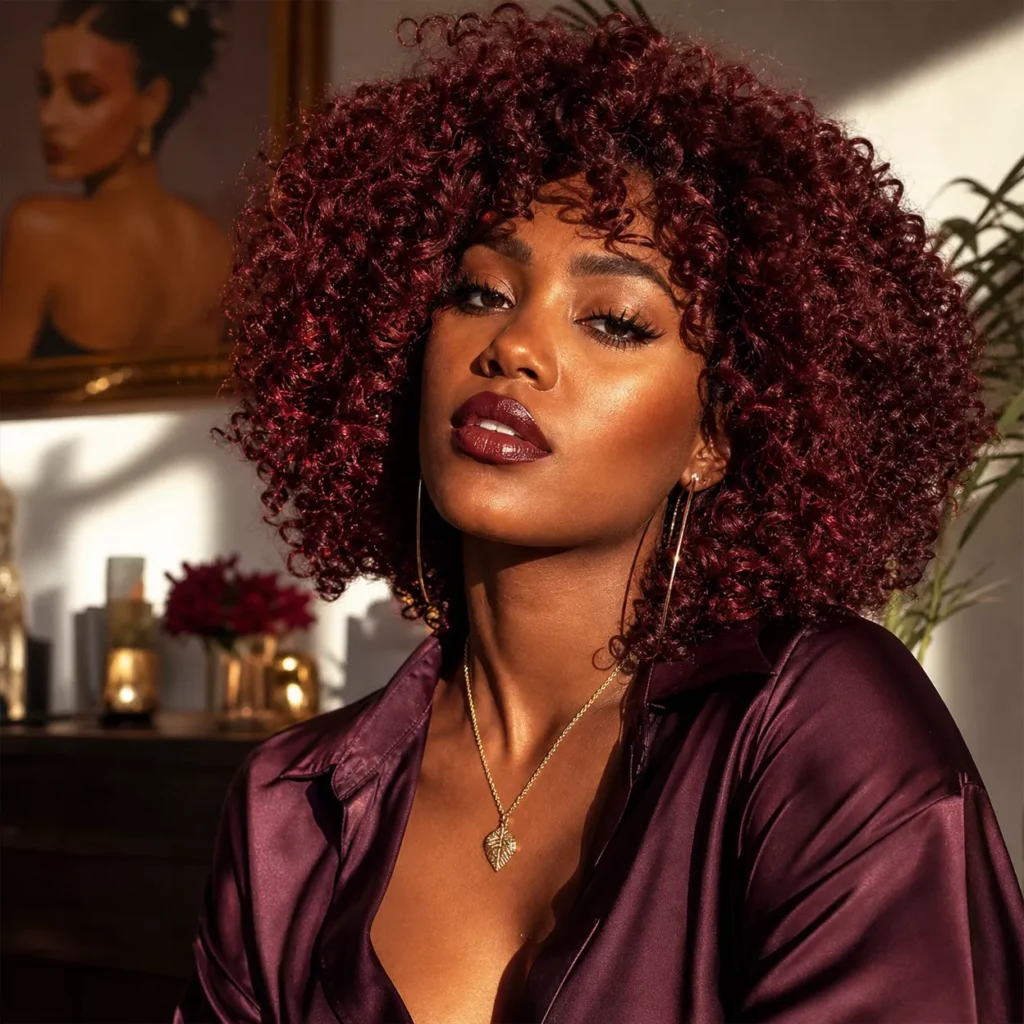
Burgundy is a deep red-violet, and how visible it looks changes with the light. Indoors, it may read as dark brown with a hint of wine; in sunlight, the red-purple comes through clearly. On dark hair, burgundy can often be deposited without much lightening, but a brighter version may need some lift. Red-based pigments tend to fade, so burgundy may soften toward a brown-red between appointments.
Golden Brown Ombre Curly Hair
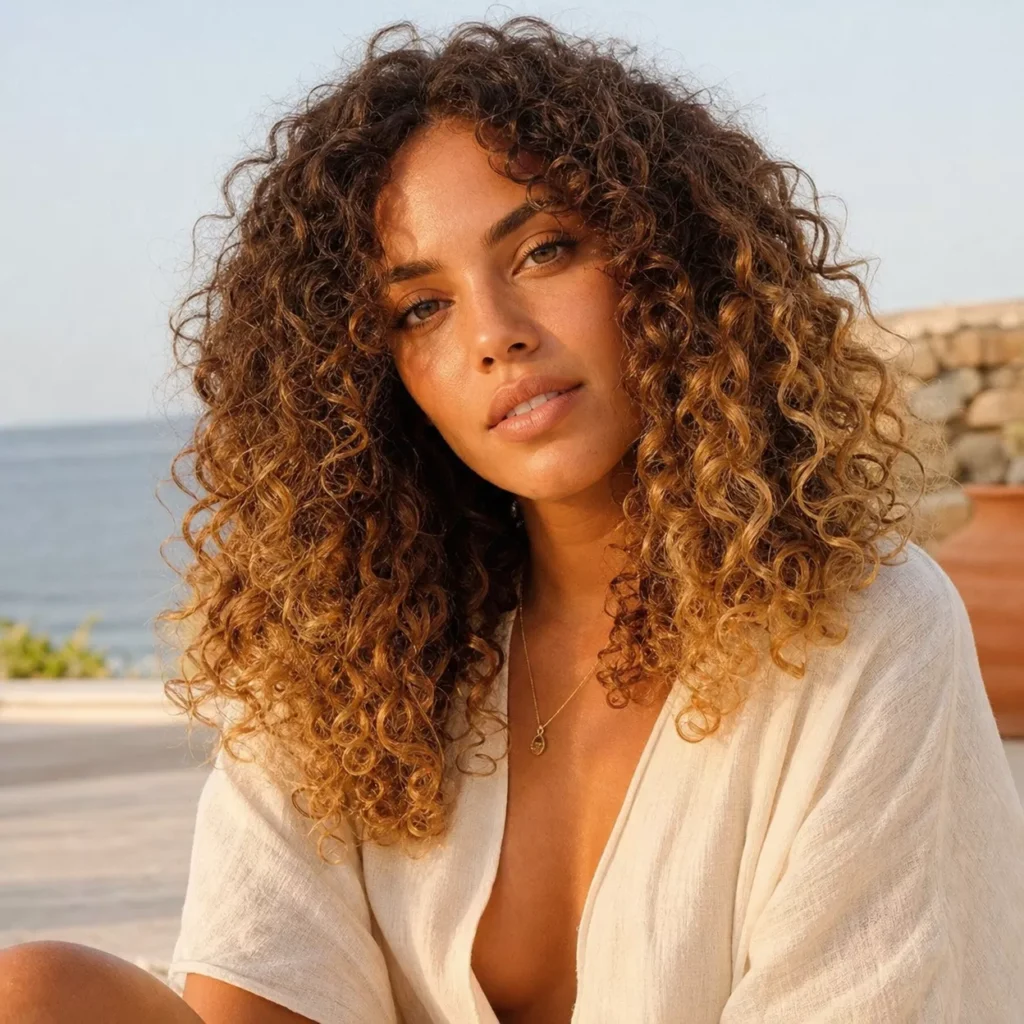
A golden brown ombre keeps a deeper root and moves into warm, golden-brown ends. The gap between root and ends decides how visible it looks. A small difference reads natural; a larger one looks deliberate. Golden brown usually needs less lightening than blonde, which makes this a gentler option for dark curly hair. The root stays close to natural, so regrowth is less noticeable, but the golden ends may need a gloss to stay warm.
Pastel Pink Curly Hair
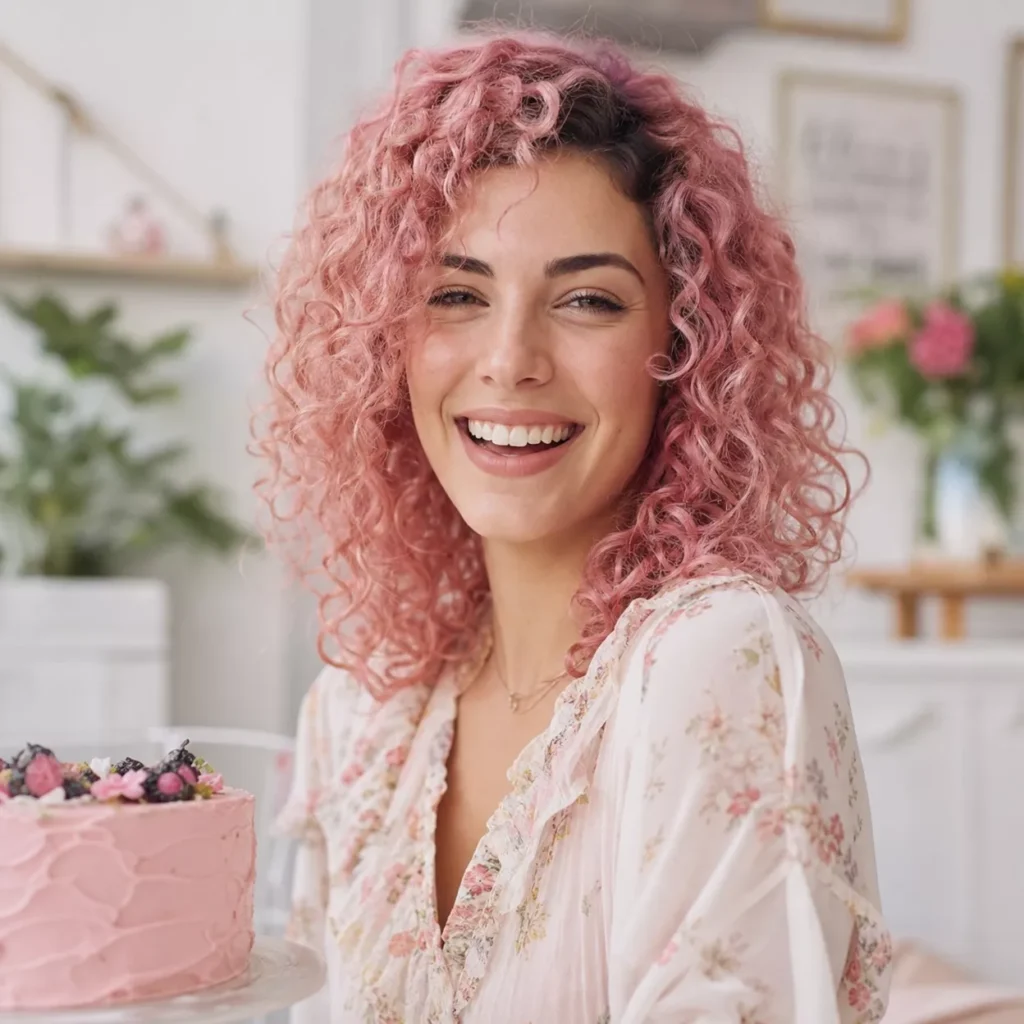
Pastel pink needs a very light base to read as pink. On most curly hair that isn’t already pale blonde, that means significant lightening first, and that step is the main commitment as well as the point where hair condition matters most. Once applied, pastel tones fade quickly, often within weeks, sometimes revealing the blonde beneath. Keeping the pink visible usually means regular refreshing, often with color-depositing products at home.
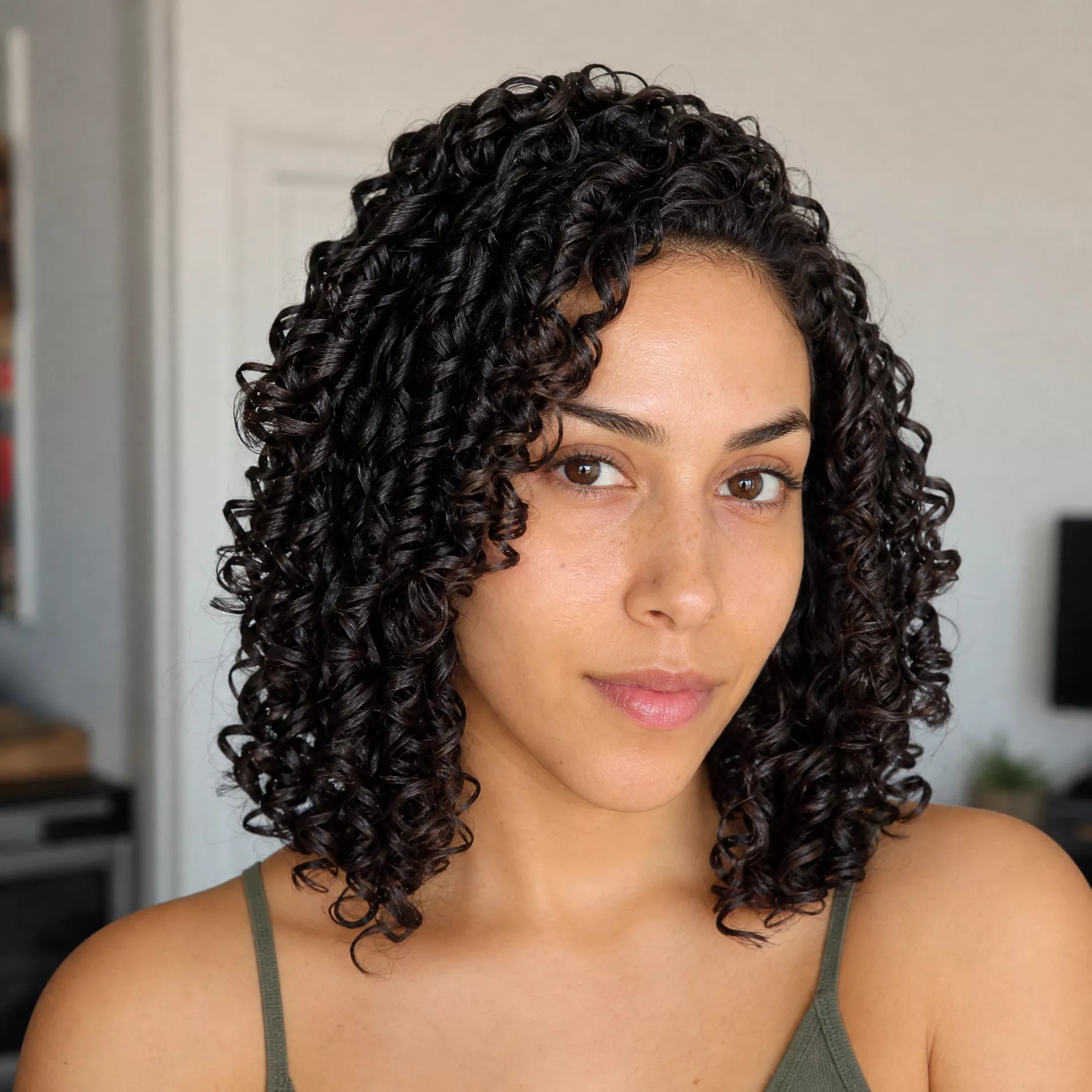
Jet Black Curly Hair with Blue Tones
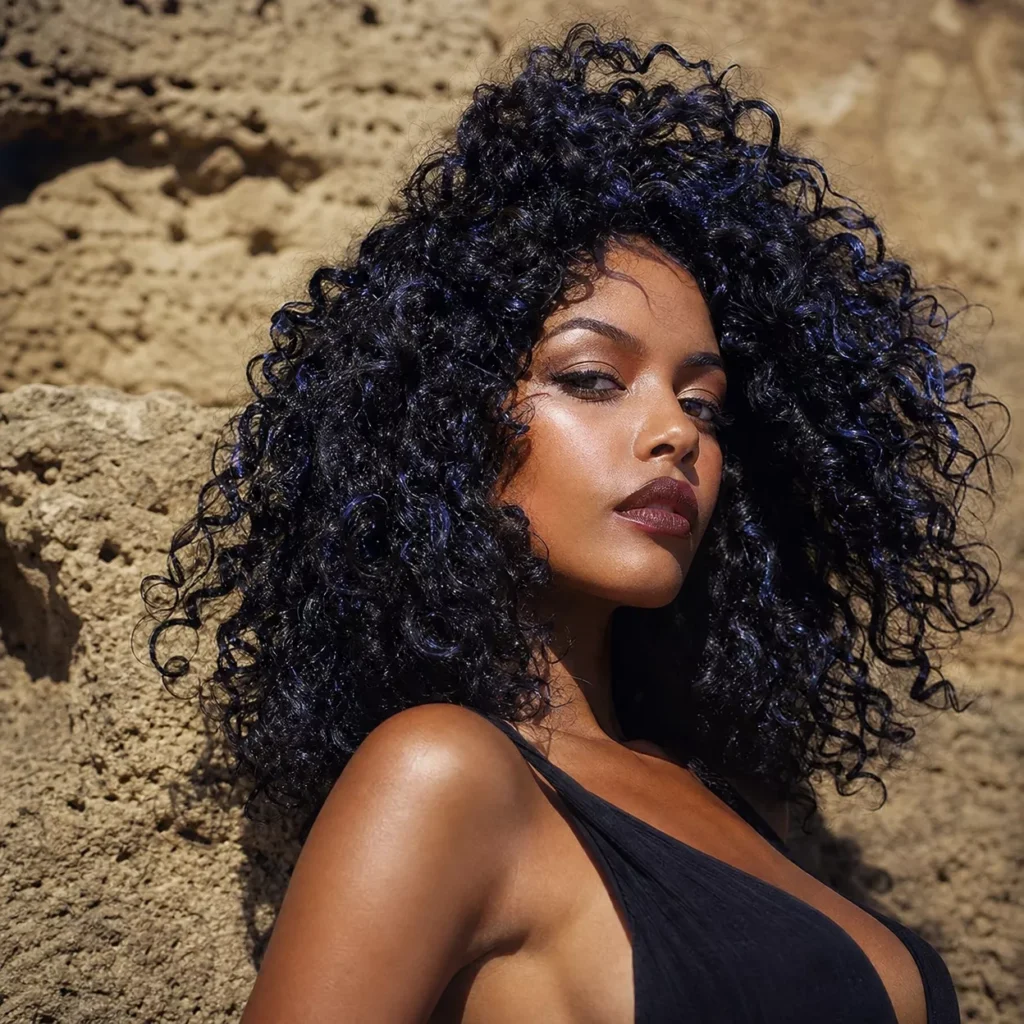
Blue-black adds a cool, blue reflect to black hair. In its subtle form, the blue appears mainly in sunlight, while indoors the hair reads as black. A more obvious blue requires lightening first so the blue can show clearly, which is a much bigger commitment. It helps to decide which you want before booking. Subtle blue-black can often be deposited on dark hair, while vivid blue sections need more processing and fade faster.
Warm Chestnut Curly Hair
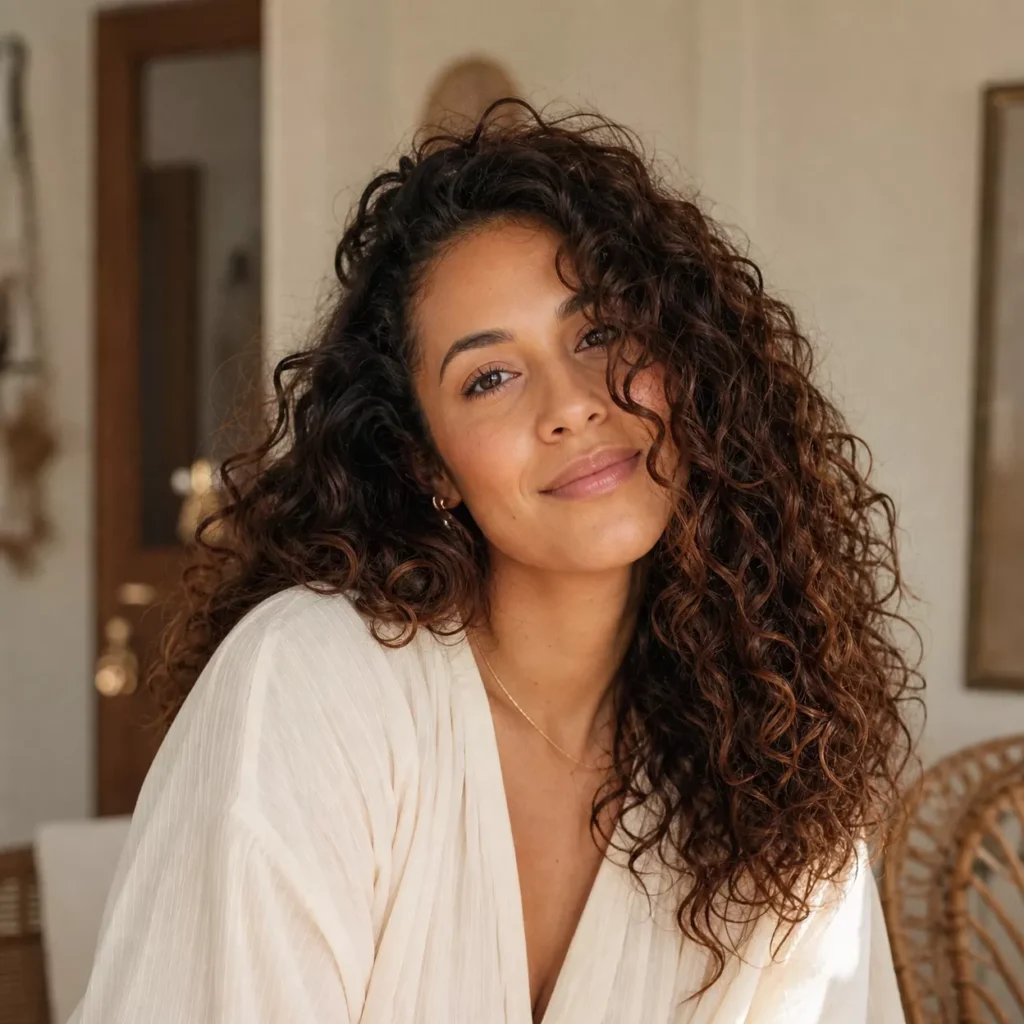
Chestnut is a warm, reddish brown, and the balance between red and brown is the main decision. More brown reads natural; more red reads warmer and more noticeable. On medium to dark curls, chestnut can often be achieved by depositing color with little lightening. The red element may fade faster than the brown, so the shade can drift browner between appointments.
Sun-Kissed Highlights on Curly Natural Hair
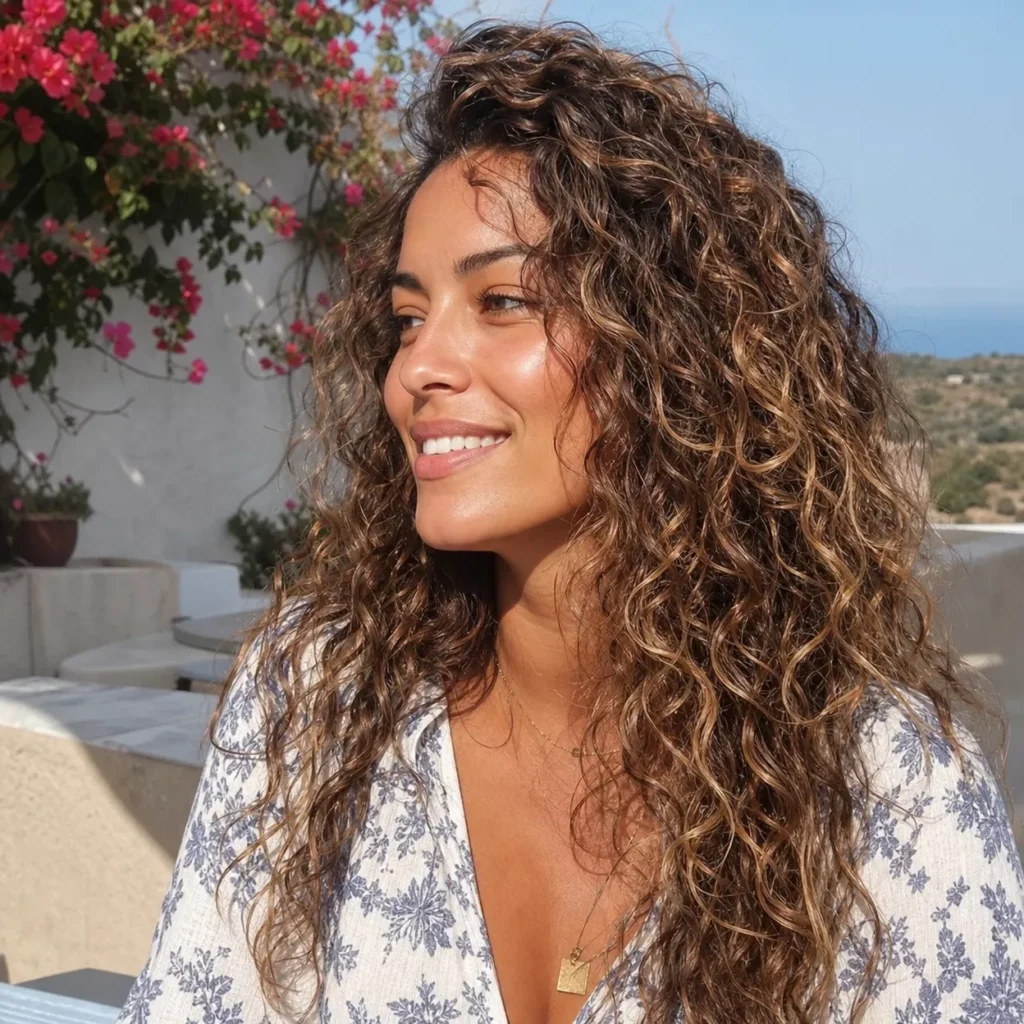
Sun-kissed highlights imitate the way hair lightens unevenly outdoors: brighter around the face and on the top layers, with more depth underneath. On curly hair, natural-looking placement means following how the curls actually fall, so the lighter pieces sit where sunlight would reach. Techniques vary, and some colorists use balayage, foils, or a combination. The amount of lightening depends on how bright you want the highlights and how dark your base is.
Rose Gold Curly Hair
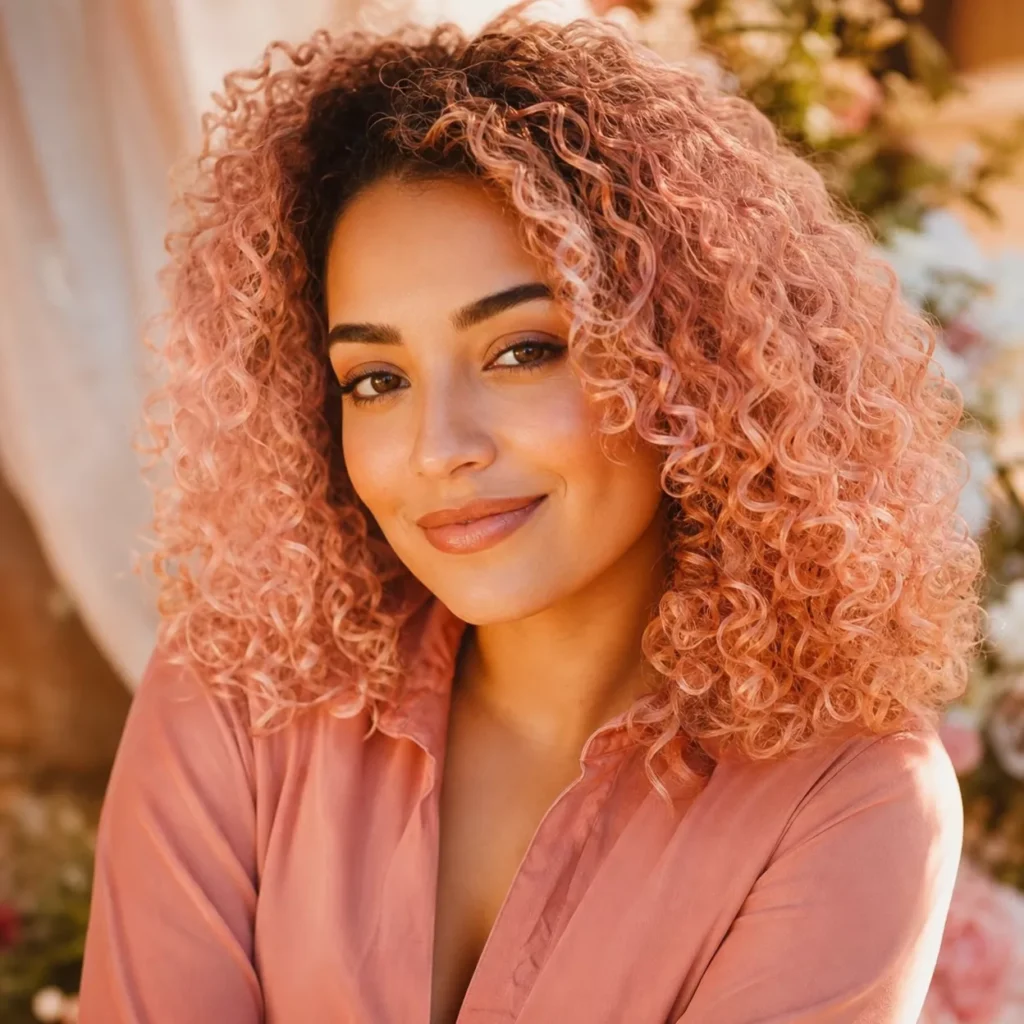
Rose gold blends pink, peach, and gold tones, and it usually behaves like a fashion color rather than a long-lasting shade. It needs a light base to show, so darker hair may need lightening first. The pink element tends to fade quickly, often leaving a warm, peachy blonde behind. Some people like that softer fade; others refresh it regularly to keep the rose tone visible.
Deep Plum Curly Hair
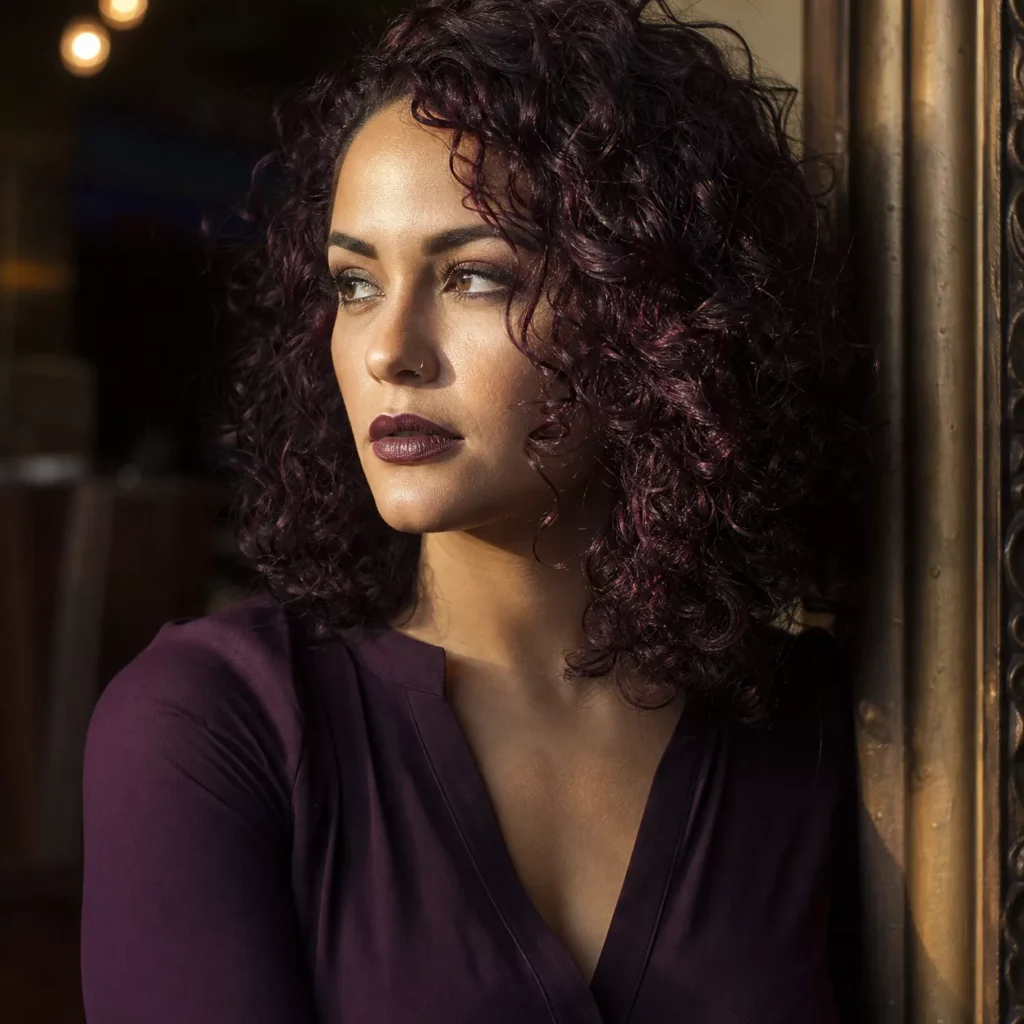
Deep plum is a dark purple-red that often looks subtle indoors, reading close to dark brown, and more clearly purple in direct light. On dark hair, plum can sometimes be deposited without lightening, which keeps it understated; a brighter plum needs some lift. Purple tones can fade fairly quickly, so the shade may soften between appointments.
Toffee Blonde Curly Hair
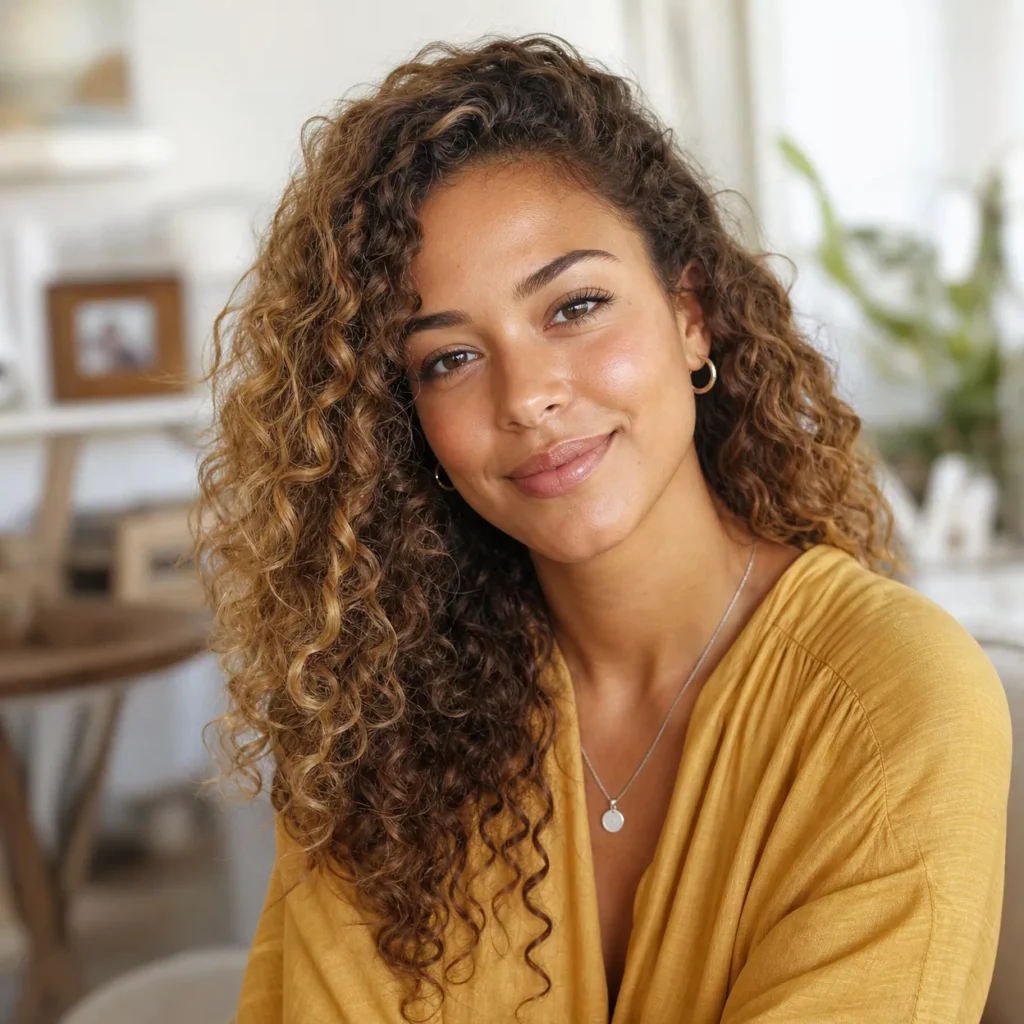
Toffee blonde is a warm, brown-leaning blonde, often used as a transition for brunettes moving toward lighter hair. It usually needs some lightening from a brunette base, though less than a pale blonde would. The warmth that appears during lightening tends to suit toffee rather than fight it. Placement can range from highlights to all-over color, and the more contrast it has with your natural root, the more noticeable regrowth becomes. Our guide to warm blonde shades covers toffee and its neighbors in more detail.
Curly Hair with Chunky Face-Framing Highlights
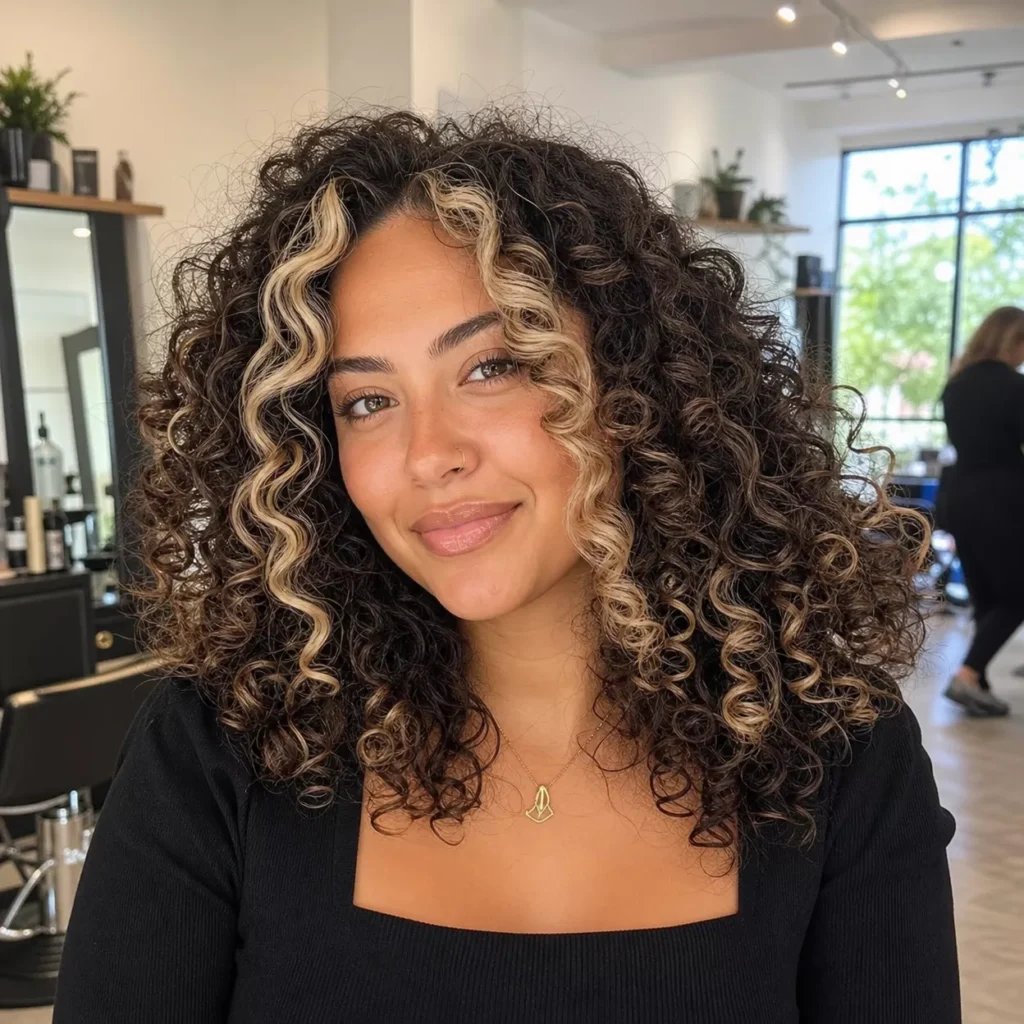
Chunky face-framing highlights use wider sections of lighter color around the face. Width and placement decide how bold they look: wider sections create stronger contrast, and starting close to the root makes them more visible. On curly hair, the front curls may spring up or clump differently from the rest, so placement may need adjusting to sit where you want once dry. Regrowth at the hairline will show quickly, especially with high contrast.
Natural Black Curly Hair with Subtle Highlights
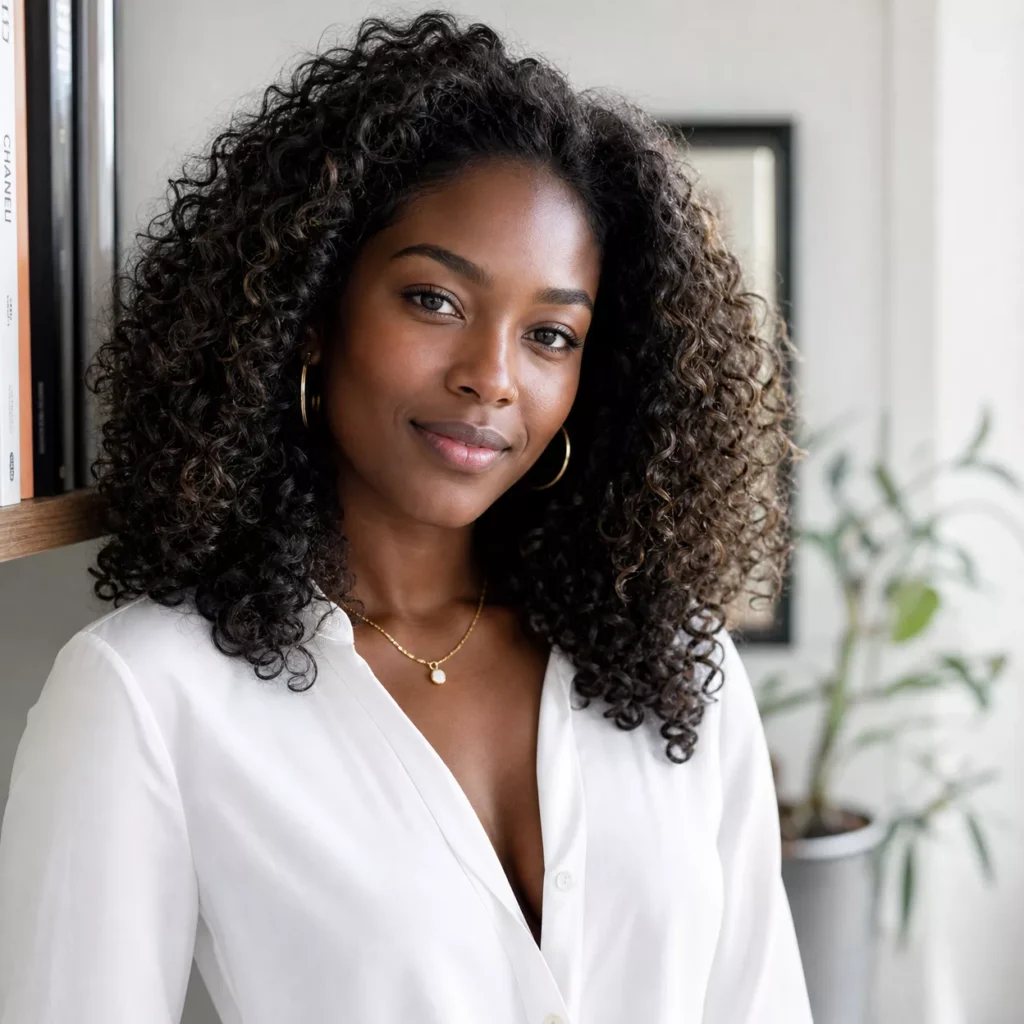
Subtle highlights on natural black curls aim to keep the depth while adding a little movement. The highlights are usually fine and only a few shades lighter, often warm brown or soft caramel, so they blend into the base rather than standing out. That usually means modest lightening and a gentle grow-out. On coily textures, fine highlights may show as flecks scattered through the curls rather than as streaks.
Bright Ginger Curly Hair
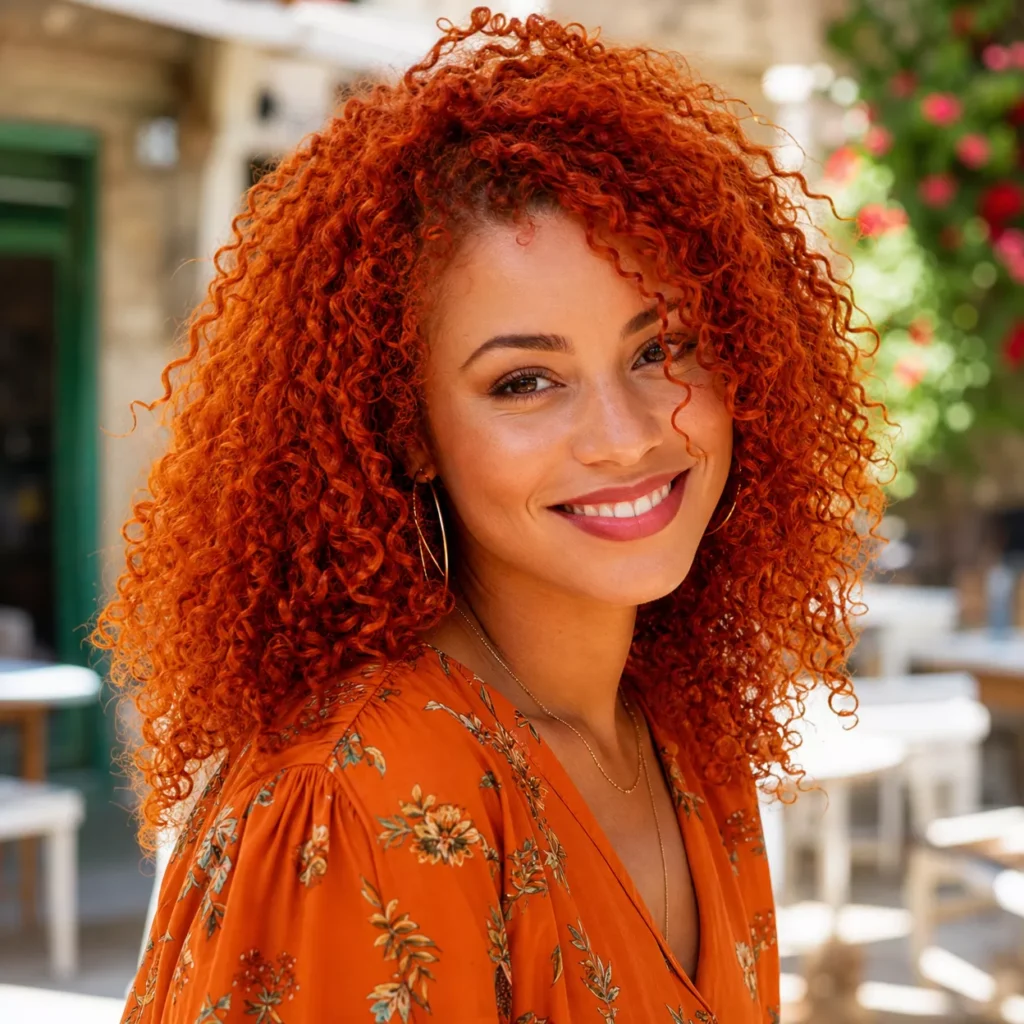
Bright ginger is a vivid orange-red, lighter and more saturated than copper. Reaching it depends heavily on your starting color. Light brown or blonde hair may get there with deposit or minimal lift; dark hair needs lightening, and the bright orange tones can be harder to keep even across the head. Like other bright reds, ginger fades and may need regular refreshing to keep its intensity.
Dimensional Brunette Curly Hair
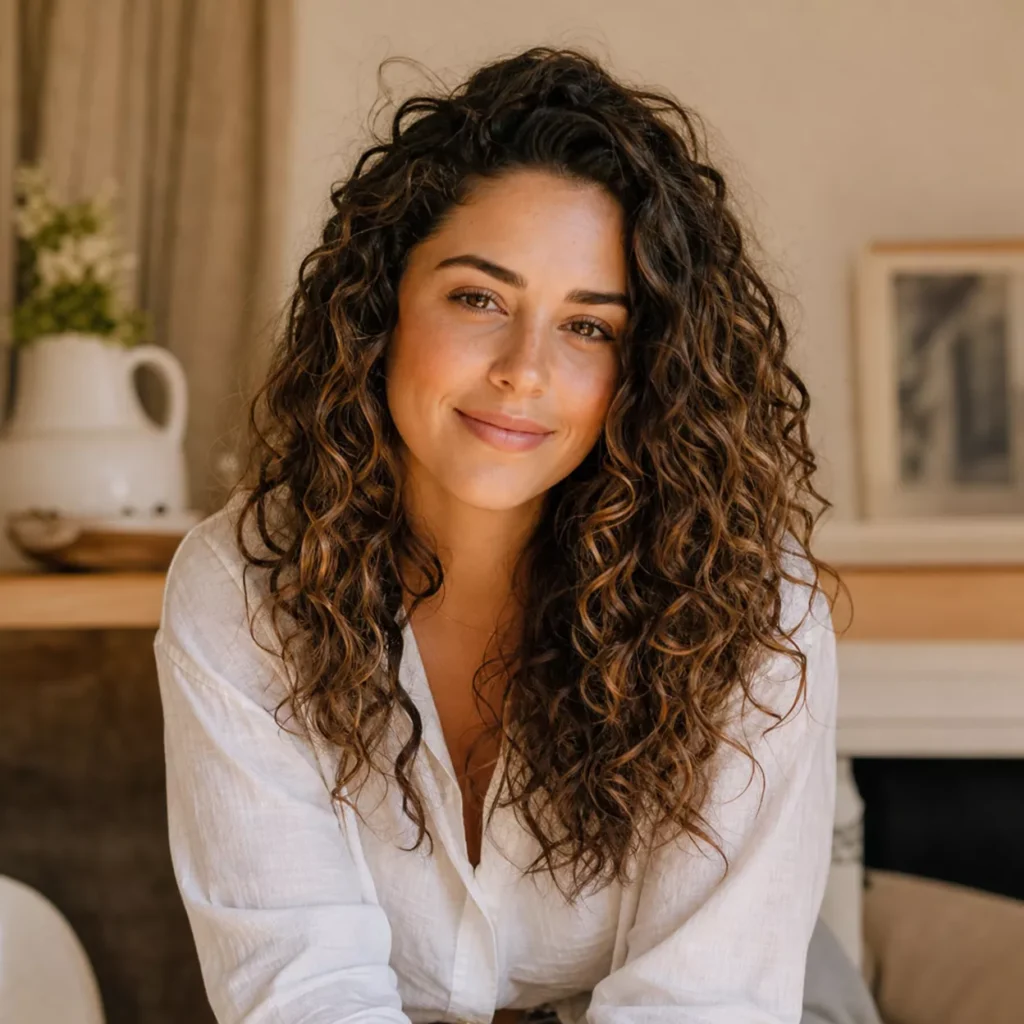
Dimensional brunette uses several shades of brown placed through the hair, so the color shifts gently without obvious stripes. The goal is variation rather than contrast. Shades close to each other, placed in small sections, blend into the curl pattern; too much contrast or sections that are too wide can look striped. It often needs little lightening and tends to grow out softly.
Bright Blue or Teal Curly Hair
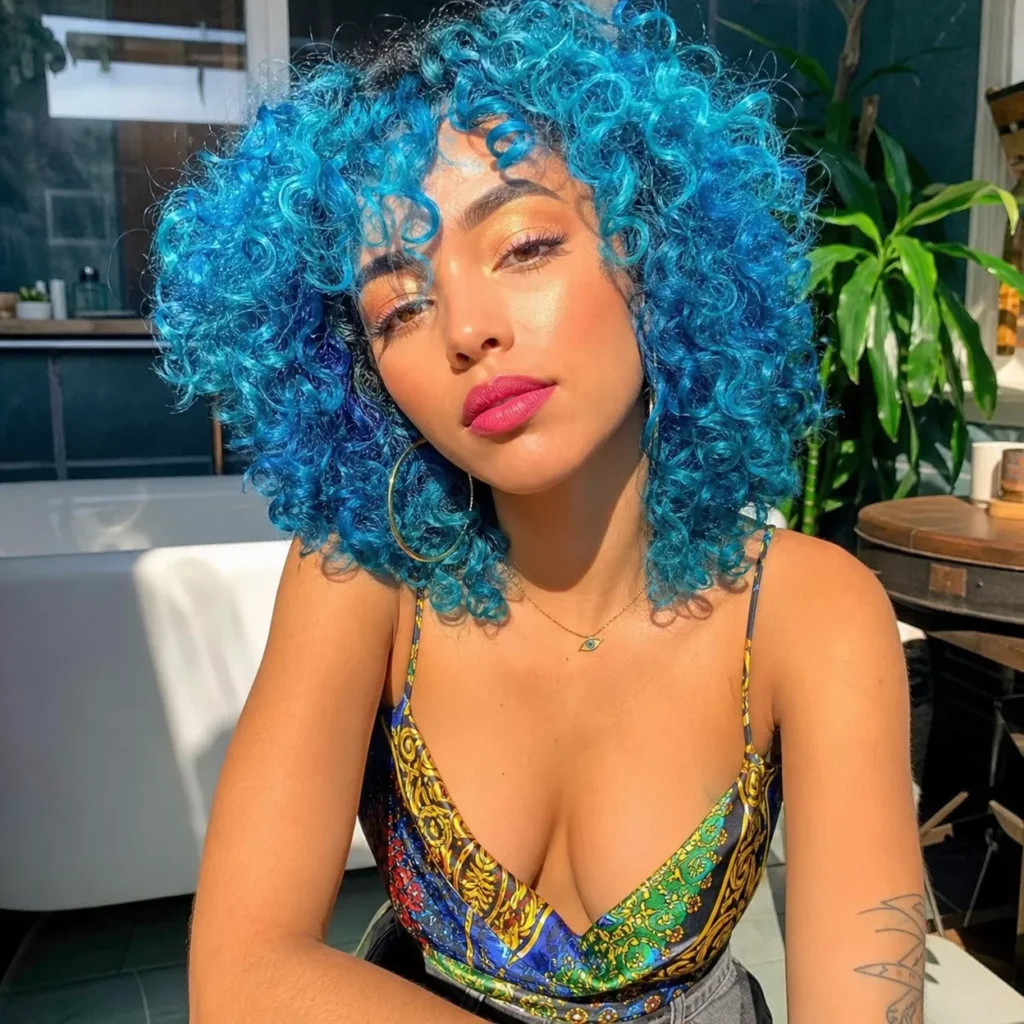
Bright blue or teal is a vivid fashion color that needs a light base to show clearly, which usually means significant lightening on most curly hair. The color tends to fade relatively quickly, sometimes shifting toward green as it does, so it needs regular refreshing. Hair condition is worth assessing before committing, since repeated lightening and vivid color can change how curls feel and behave. If you want blue without full commitment, a single section or an underlayer limits the maintenance.
Which Color Approach Fits Your Starting Hair?
Your starting point shapes almost every color decision.
Dark natural hair can usually take deeper shades like auburn, burgundy, chestnut, or plum with little or no lightening. Lighter results, from caramel to blonde to pastels, generally need lifting first, and the warmth that appears along the way has to be managed.
Light natural hair, whether dark blonde or light brown, has more options with less processing. Coppers, golds, and strawberry blondes may be reachable with deposit or modest lift.
Previously colored hair adds unknowns. Old dye doesn’t simply lift like natural pigment, so your colorist may need to decide whether lightening, color removal, or another approach is appropriate based on your existing color.
Previously lightened hair may already be light enough for pastels or vivids, but its condition matters before adding more chemical processing.
Gray hair can be blended, enhanced, or covered, and it may take color differently from pigmented hair.
Balayage, Highlights, Ombre, or All-Over Color?
These terms describe placement rather than color.
Balayage is hand-painted, usually starting away from the root, which tends to give a softer grow-out. Highlights are typically placed in sections, often closer to the root, for more even coverage and a more defined pattern. Ombre is a gradient from darker roots to lighter ends. All-over color changes the whole head at once, which means regrowth shows more clearly.
On curly hair, the choice affects how visible the color is when the curls are dry and how noticeable regrowth becomes. Balayage and ombre generally show less root contrast; all-over color and highlights near the root show more.
How Curly Hair Can Change the Look of Color
Curls change how color appears, though not always in the same way.
Curl pattern decides how color sections show: looser curls display longer stretches of color, while tighter curls break it into flecks. Density affects how much color is visible overall; dense curls can hide fine highlights, while lower-density curls show them more clearly. Shrinkage pulls color placement upward as hair dries, which is why placement is often checked dry. Movement and light reflection change how color reads from moment to moment as curls bend and stack.
It’s also worth separating color from cut and styling. Defined curls can make highlight placement easier to see, but the haircut and styling technique are separate from the color service. Our guide to curly shag haircuts covers how cut shape affects curl definition.
What Can Make a Color Appointment Go Wrong?
Most color disappointments come from a mismatch in expectations rather than a single mistake.
Choosing a shade without considering your starting base can lead to a result that’s warmer, darker, or patchier than expected. Asking for blonde from previously dark-colored hair without discussing the process may lead to surprises about how many steps are needed. Showing a photo without saying how much maintenance you’ll accept can result in a color you love but can’t keep up. Leaving out your chemical history, such as box dye, relaxers, or previous lightening, can affect how the hair responds. Choosing a vivid color without understanding how quickly it fades can mean a short-lived result. Placing highlights too heavily around the face can make regrowth there very noticeable. And confusing a color name, like “honey” or “copper,” with a specific formula can create mismatched expectations, since those names cover a wide range.
What to Show Your Colorist in the Reference Photo
When you bring a photo, point out the specific details you like:
- the overall color and how warm or cool it looks
- how deep the root is compared with the lengths
- where the highlights sit, and how wide they are
- how much contrast there is
- whether face-framing pieces are lighter
- how much natural hair is still visible
- the curl pattern, and whether it resembles yours
- the level of maintenance you’re prepared for
The more specific you are, the easier it is to adapt the color to your own hair.
A Simple Way to Choose Your Color
Start with five questions:
- How dramatic do you want the change to be? Subtle dimension, a noticeable shift, or a completely new color?
- Are you willing to lighten? Many blondes, pastels, and bright reds need it, especially from dark hair.
- How visible do you want your roots to be? Balayage and ombre soften regrowth; all-over color shows it more.
- How often do you want to refresh the color? Vivid and fashion colors fade faster than deeper shades.
- Do you want subtle dimension or obvious contrast? That decides placement and how far the lighter color goes from your base.
Your answers will point toward a range of options rather than one single color.
Final Thoughts
Color on curly hair depends on more than the shade name. Starting color, condition, placement, curl pattern, and maintenance all affect the result. Choose the level of change you want first, then work with your colorist on the placement and process that fit your curls, your history, and how often you’re willing to come back.