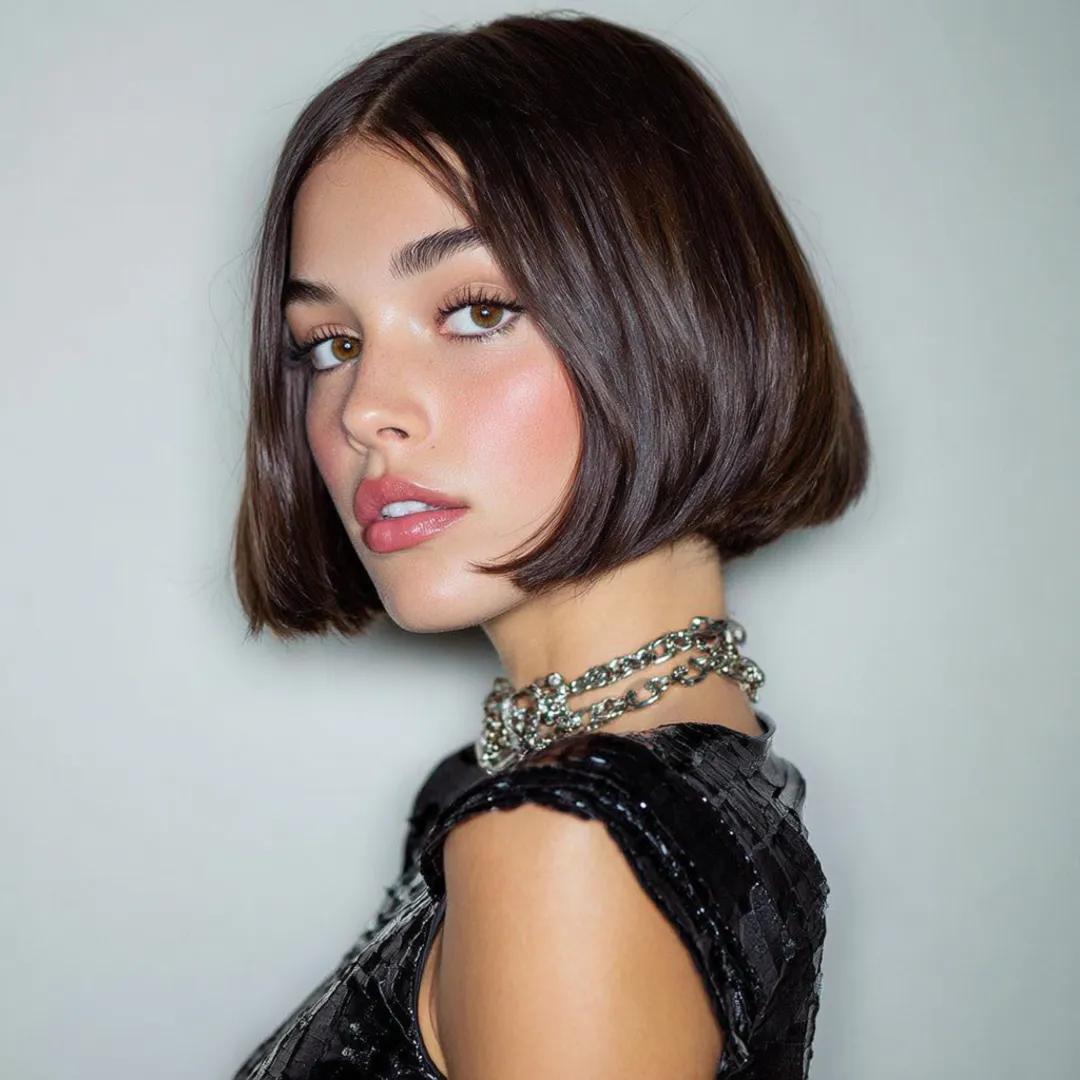
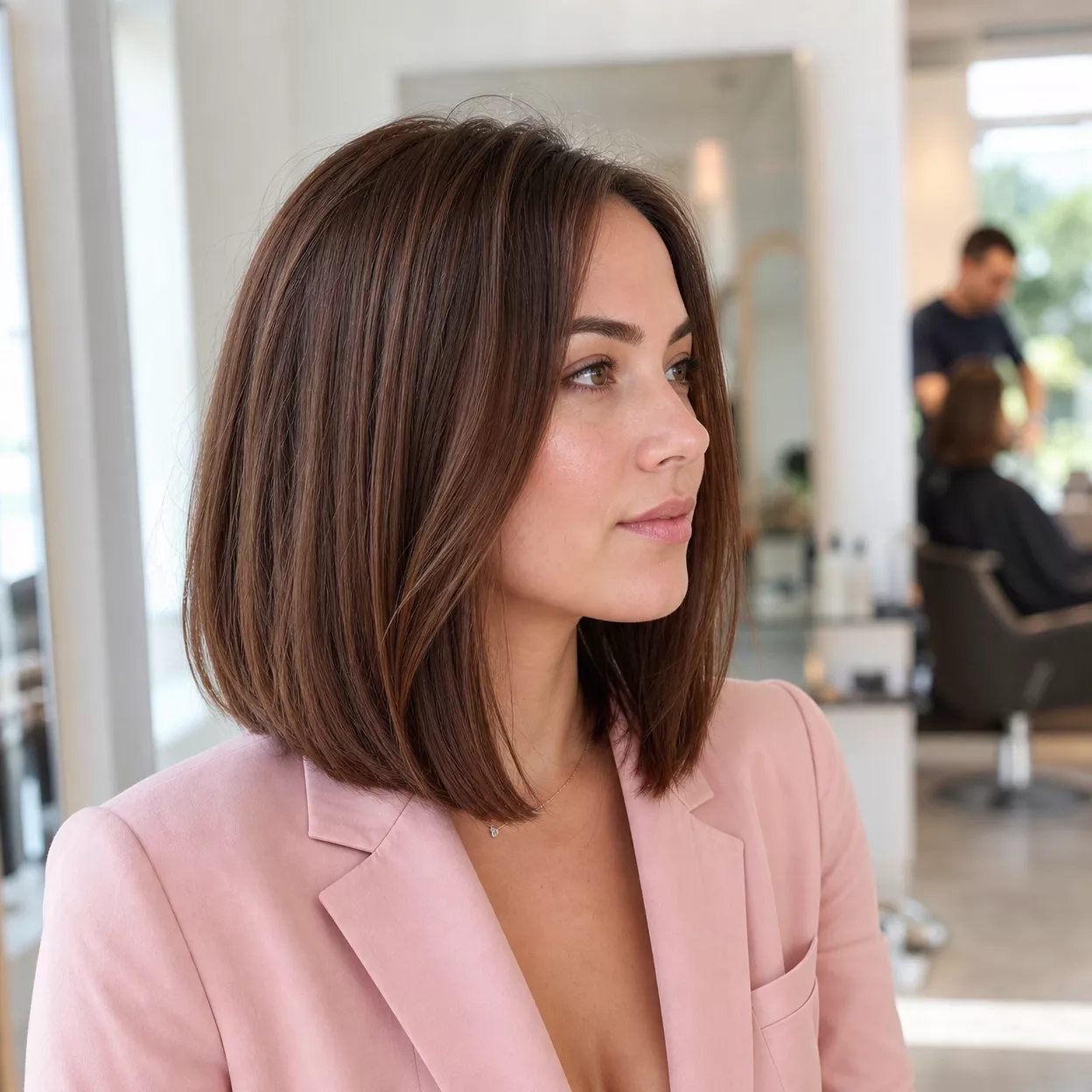
28 Wolf Cut Hairstyles and How to Find the Right Version for Your Hair
A wolf cut isn’t one fixed haircut. It’s a relationship between two parts of the head: a shorter, heavily layered crown and a longer, lighter perimeter below it. Change how far apart those two parts sit, how much weight comes out between them, or where the shortest layers begin, and the cut looks completely different. That’s why two photos labeled “wolf cut” can show a soft, shaggy shoulder-length shape and a sharp, mullet-like crop.
The result also depends on the hair it’s cut into. Density decides how much layering the hair can carry before the ends look thin. Strand thickness affects whether layers stand up or lie flat. Straight hair shows every line, while waves and curls blur and lift them. A fringe adds its own upkeep, and your styling habits decide whether the texture in a photo ever appears at home.
The 28 versions below cover different lengths, textures, densities, fringe choices, and colors, with notes on what changes in each.
Classic Medium Wolf Cut
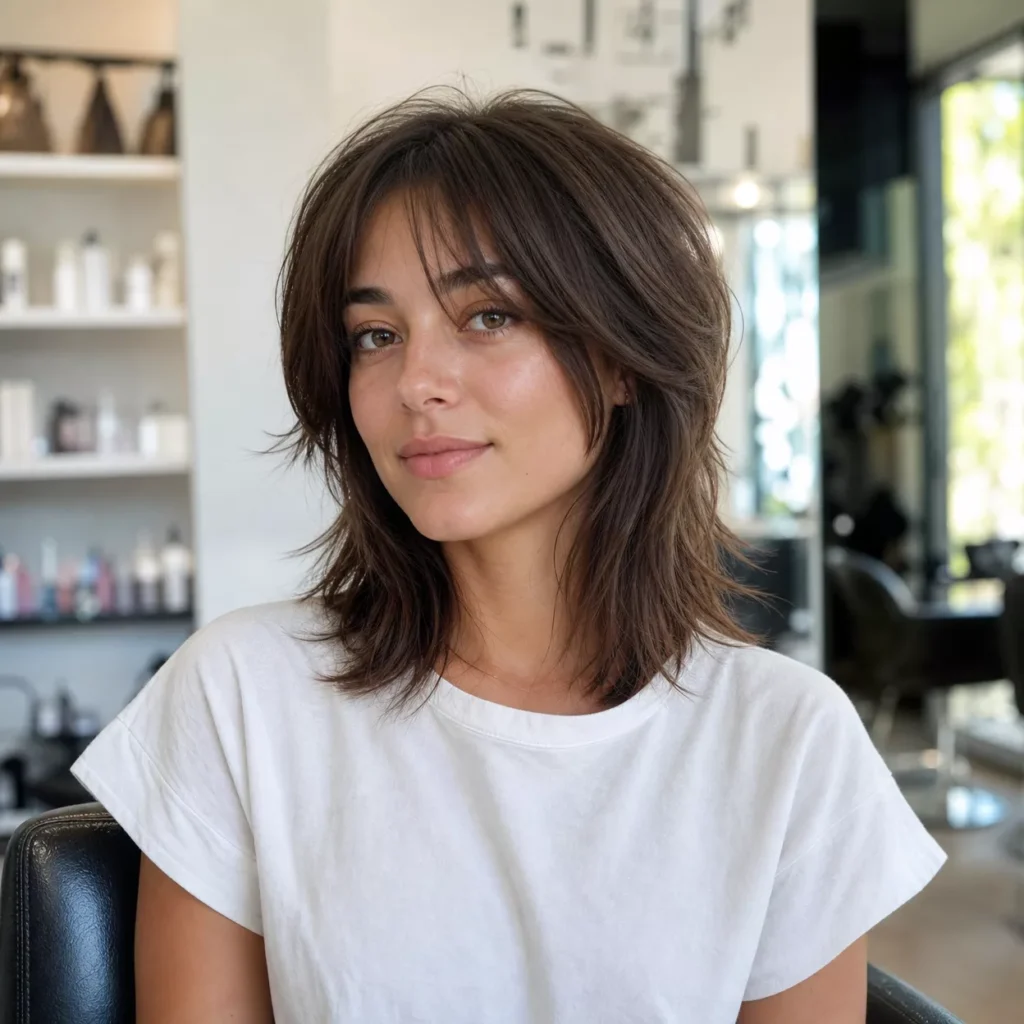
This is the reference point for the rest of the list. The crown is cut into short, stacked layers that sit up and away from the head, while the lengths below stay longer and lighter, usually ending somewhere around the collarbone. The gap between those two zones is what separates a wolf cut from a shag. A shag tends to blend its layers more evenly, while a wolf cut leaves a more noticeable step between crown and perimeter. How pronounced that step is decides how bold the cut looks.
Short Wolf Cut with Curtain Bangs
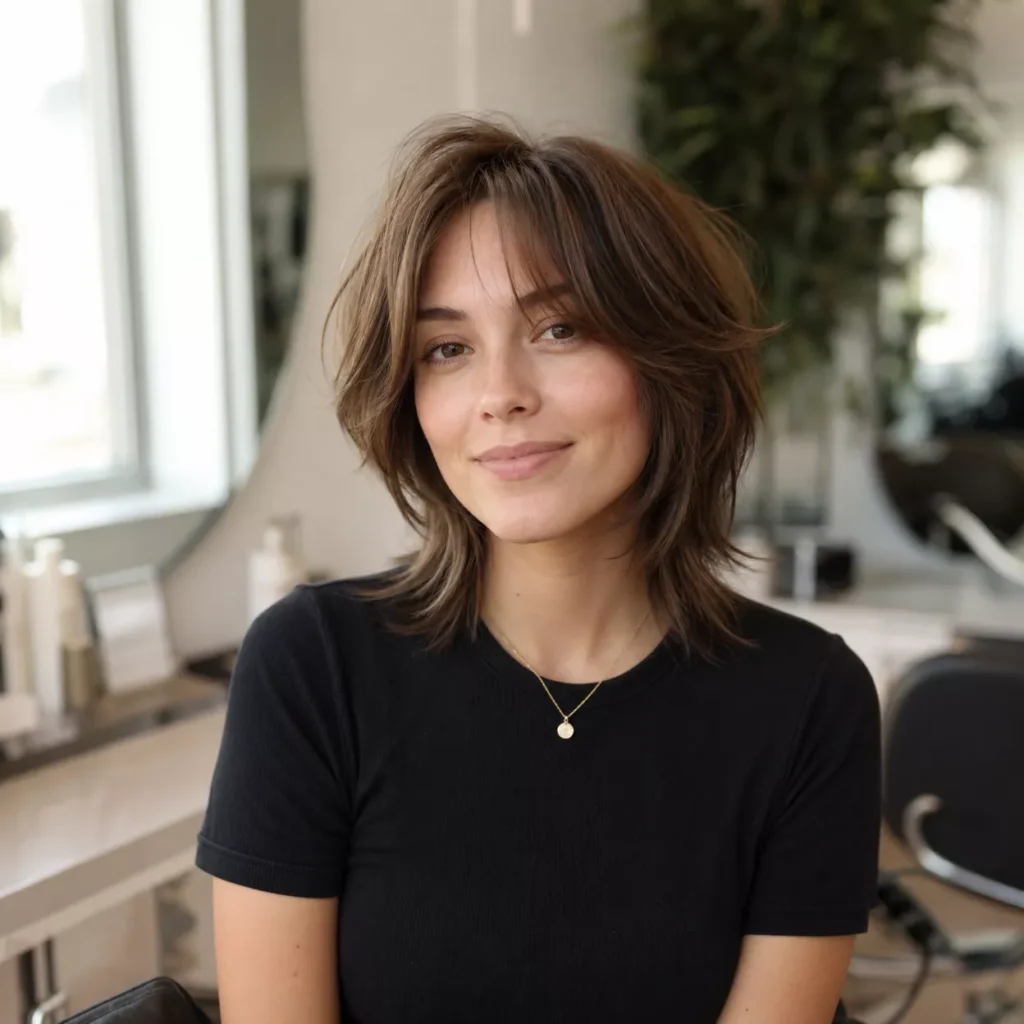
At a shorter length, the crown and the fringe start to merge. Curtain bangs part at the center and sweep into the short crown layers, so the front of the cut reads as one continuous frame. That connection works best when the bangs split where your hair naturally parts; a strong side part or a cowlick can pull them off balance. Straight to wavy hair tends to show the shape clearly. Because everything is short, both the bangs and the crown show growth fairly quickly.
Long Wolf Cut with Waves
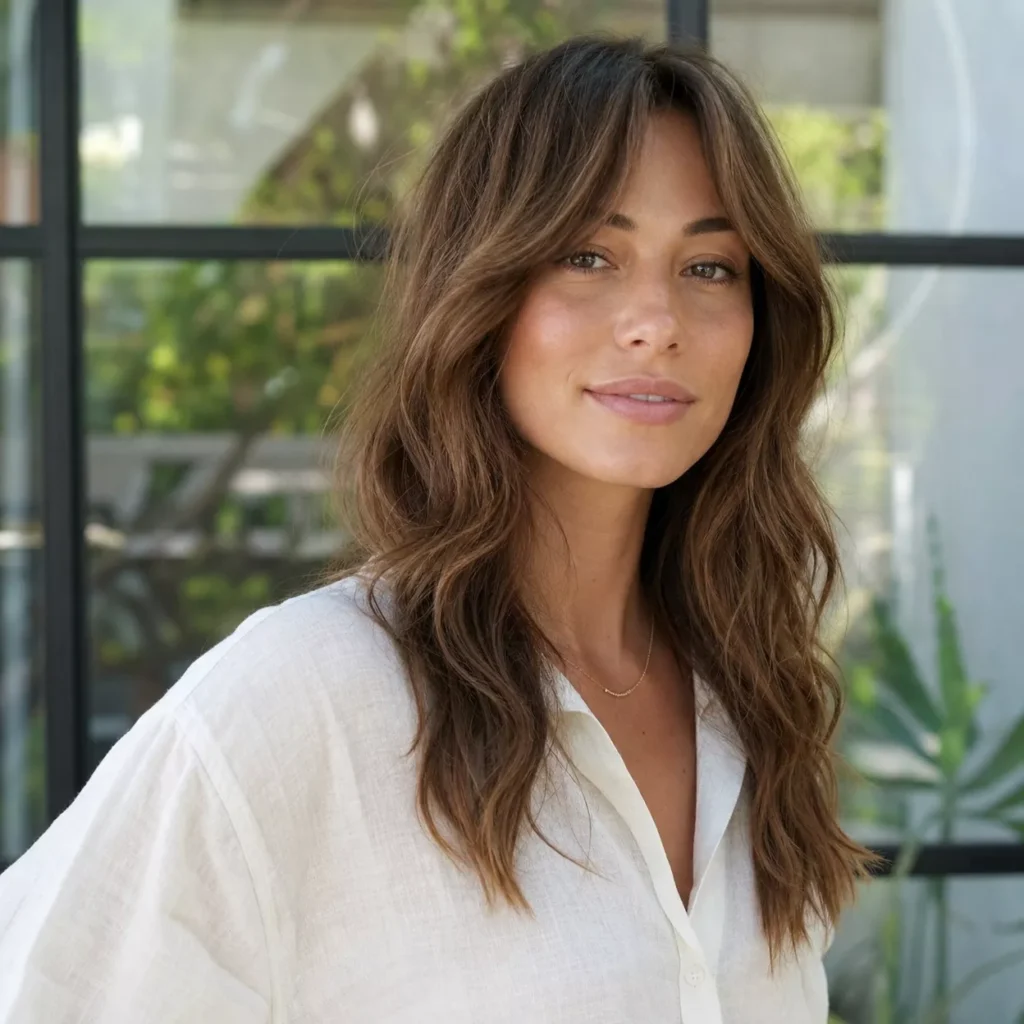
A long wolf cut keeps most of the length below the shoulders while concentrating shorter layers at the crown and around the face. That makes it a smaller commitment than the shorter versions: if you don’t love it, there’s plenty of length to grow into. The waves in most photos are styling rather than part of the cut. They may appear on their own if your hair bends naturally; otherwise, they come from a wand or flat iron. On long, heavy hair, the crown layers may need some lift to show against the weight below.
Wolf Cut for Fine Hair
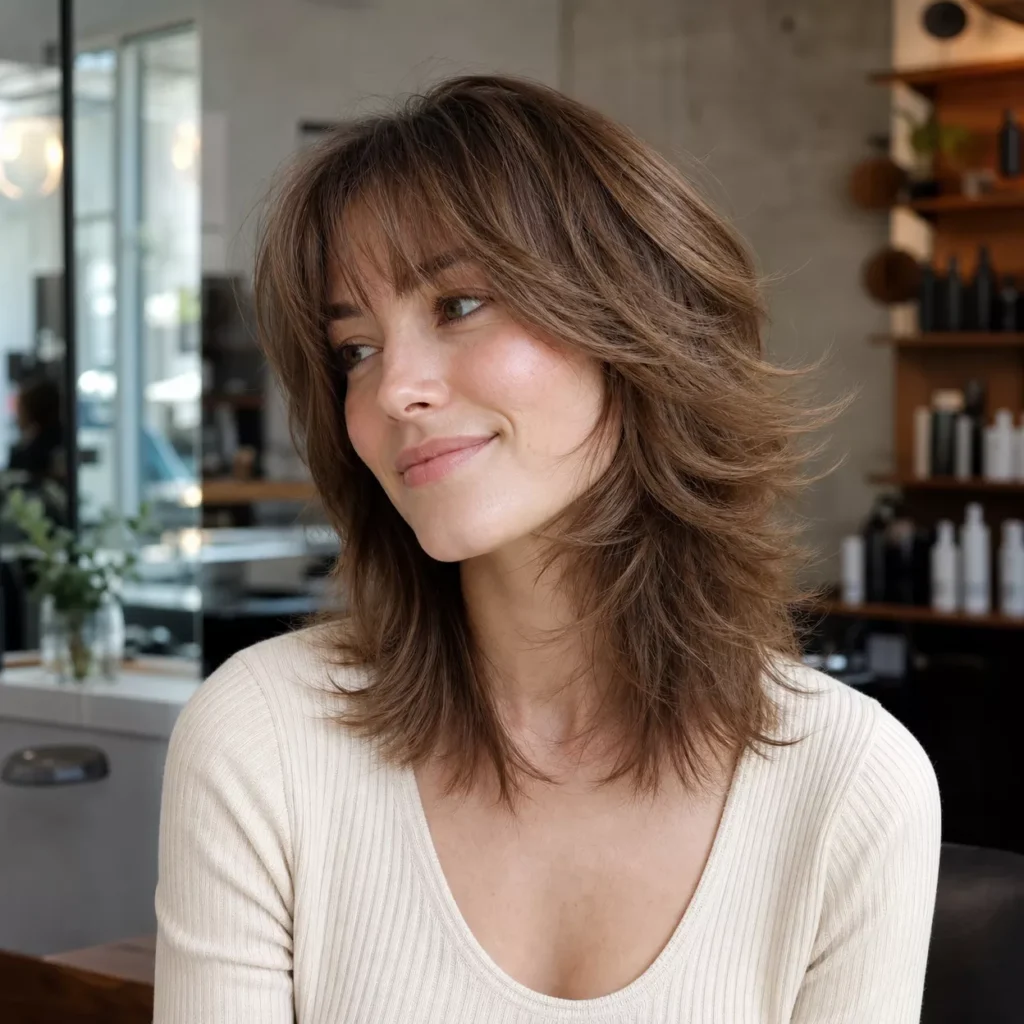
On fine hair, the amount of weight removed matters more than the style name. Some crown layering can create lift and movement, especially if the hair is fine but reasonably dense. Wolf cuts remove a lot of hair by design, though, and taking too much from already-light ends can leave the perimeter looking less substantial than before.
A softer version, with the shortest layers starting a little lower and the perimeter kept stronger, tends to hold up better. Whether texture is created with scissors or a razor should depend on your hair’s condition, since razored ends can look wispy on fine strands. Our guide to volumizing hairstyles for fine or thin hair covers this distinction in more depth.
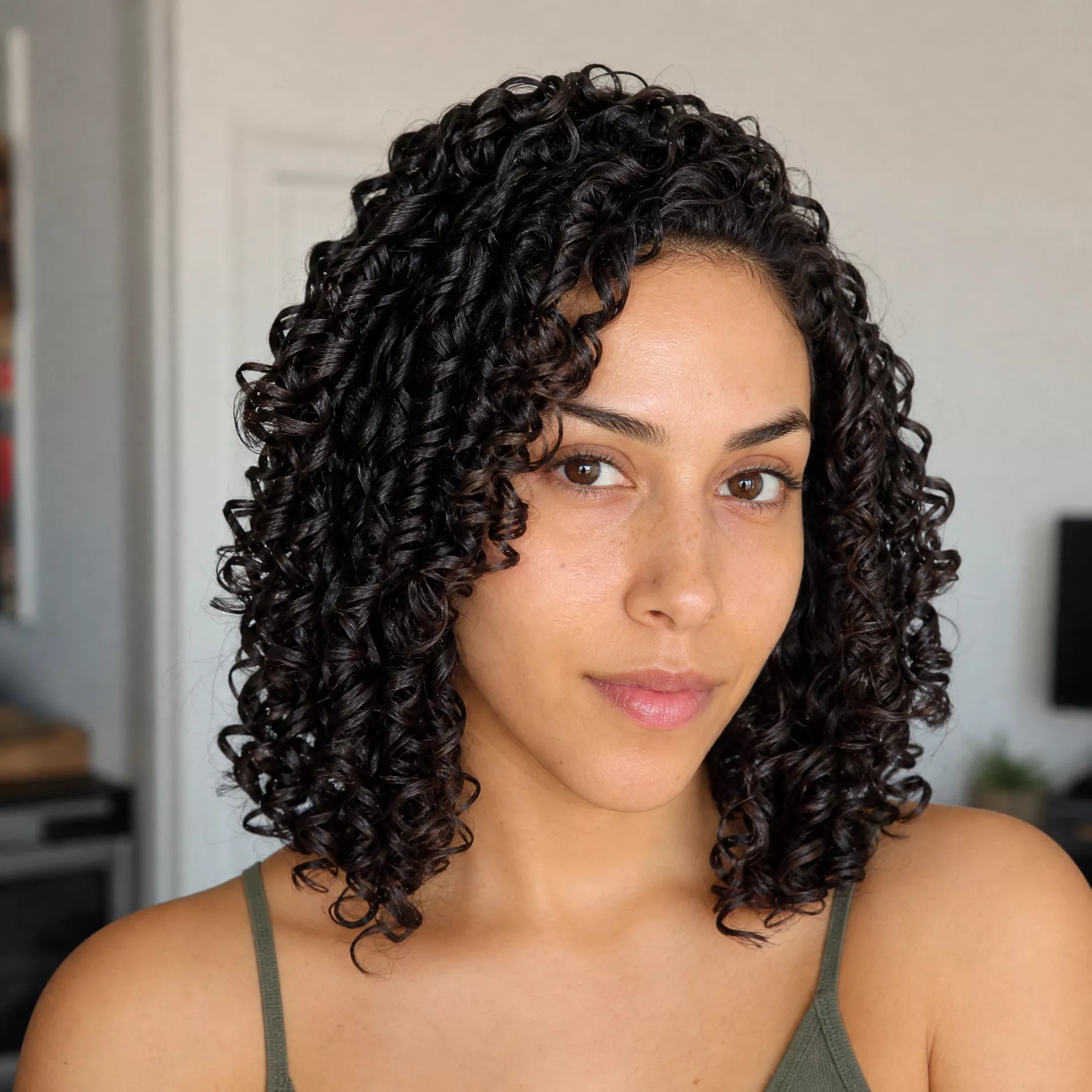
Curly Wolf Cut
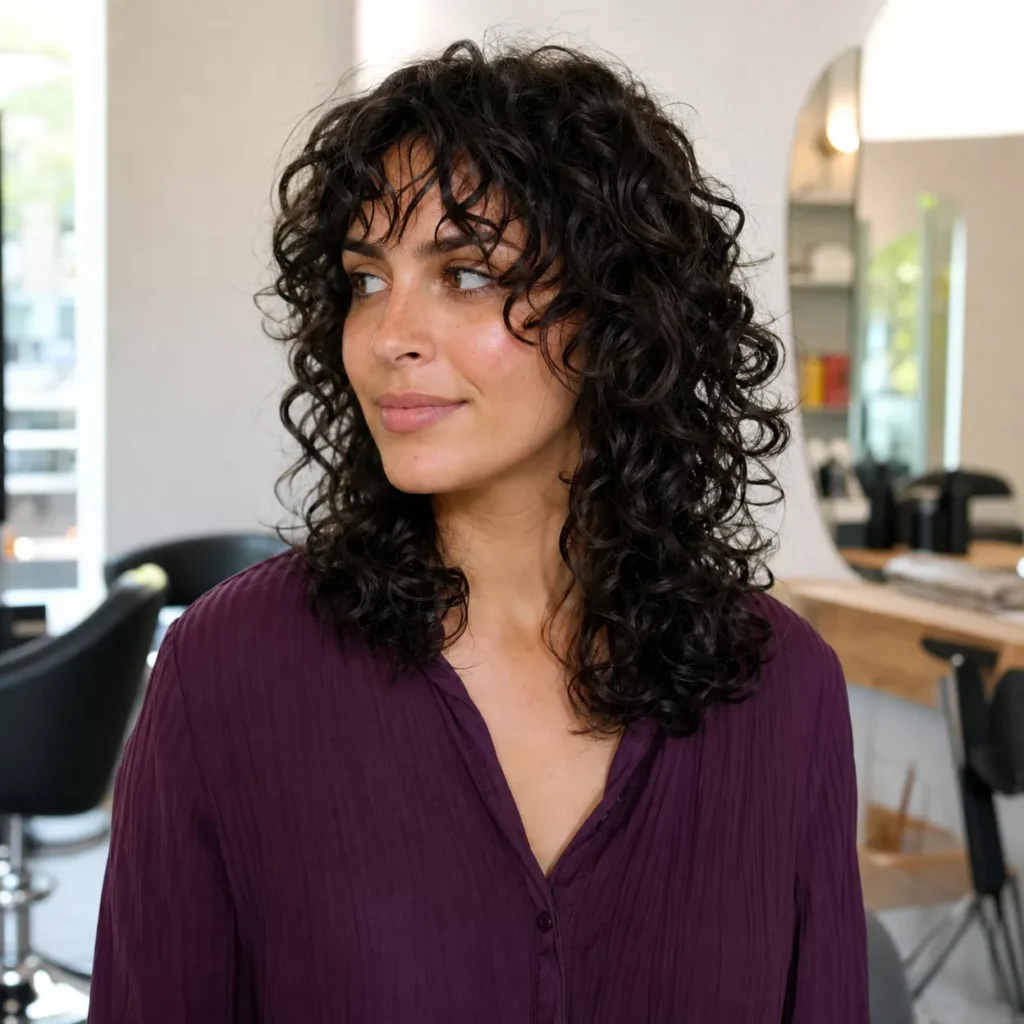
Curls change a wolf cut’s silhouette in ways that are hard to predict from wet hair. They shrink as they dry, sometimes significantly, so the crown layers may sit higher and the perimeter shorter than they were cut. Many stylists assess curls dry, or check them dry, before finishing.
Removing weight at the crown can let curls lift, while leaving enough length and weight lower down keeps them from frizzing outward. The right balance depends on curl pattern, density, and how much your hair shrinks, so one approach won’t suit every curly head. Our guide to curly shag haircuts covers similar layering decisions.
Wolf Cut with Wispy Fringe
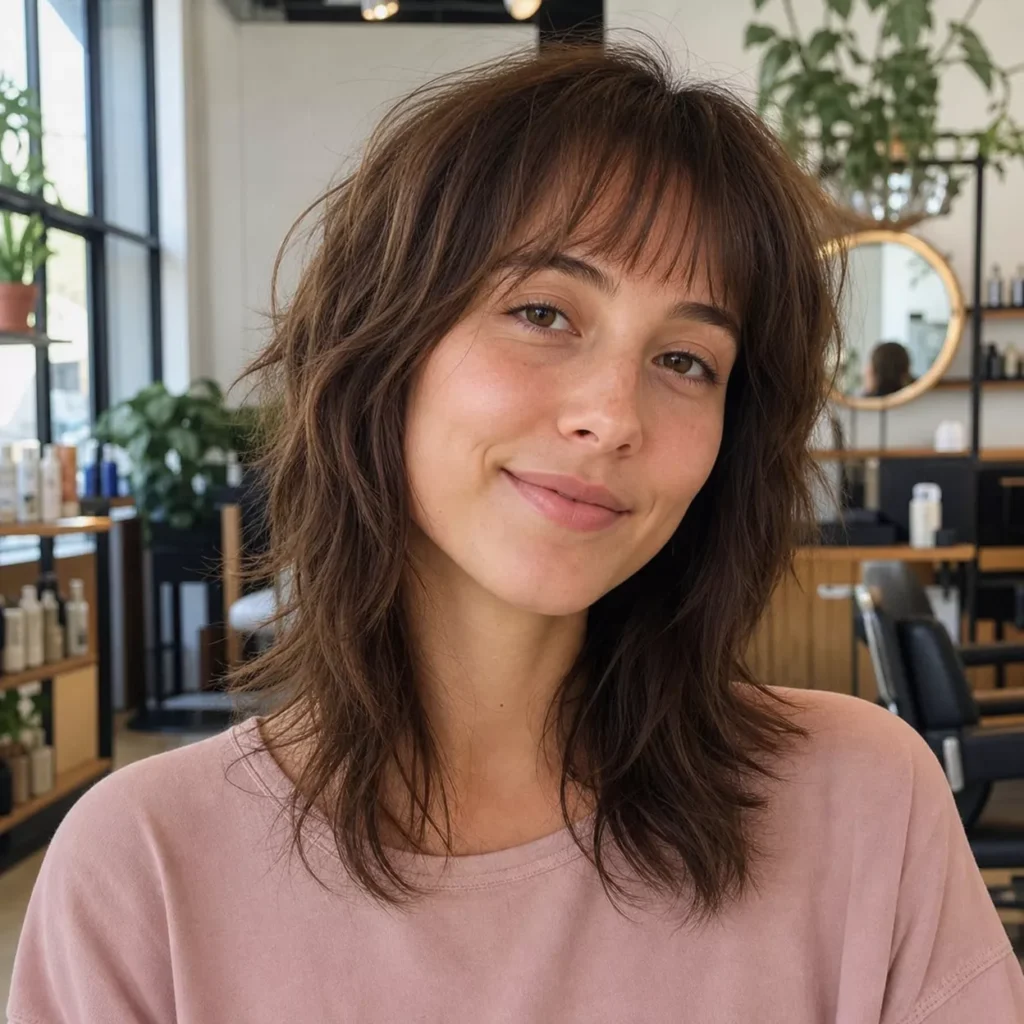
A wispy fringe softens the front of a wolf cut, blending into the choppy layers instead of drawing a solid line. That softness depends on hairline density. With enough hair, it looks deliberate; with a sparse hairline, it can look patchy. It also tends to separate in humidity. As it grows, it moves into the face-framing layers, but there’s a stage where it falls into the eyes, and it usually needs reshaping between full cuts.
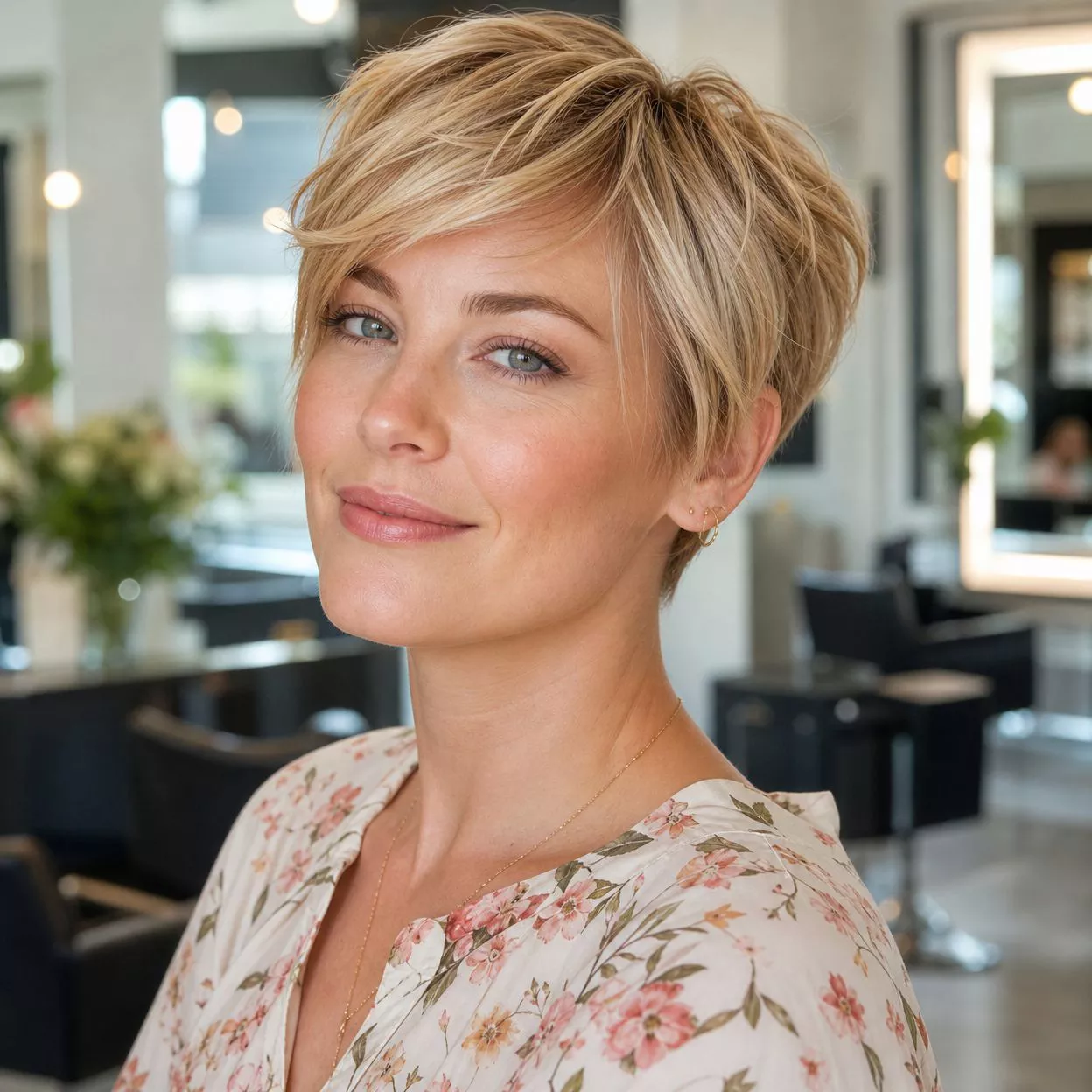
Short Textured Wolf Cut
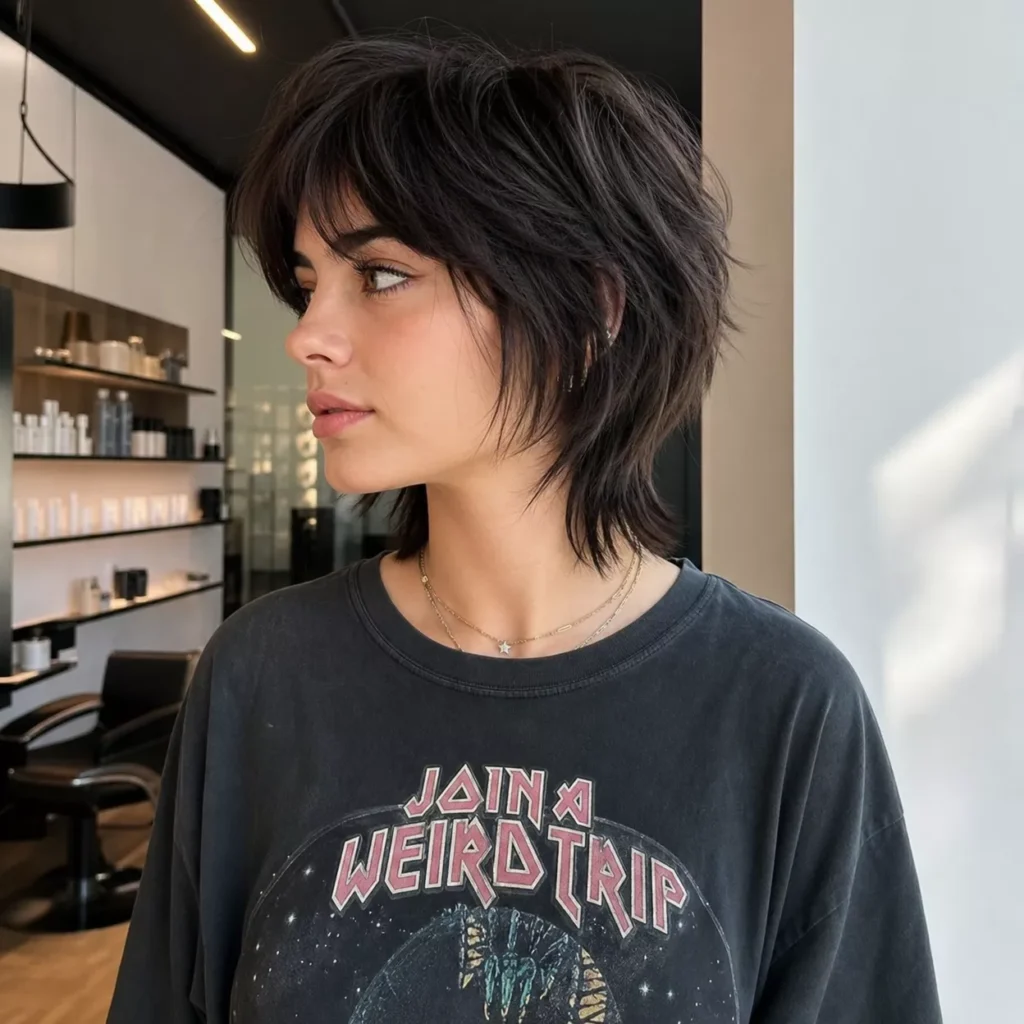
At its shortest, a wolf cut becomes mostly crown: short, heavily layered pieces on top with a little more length at the nape. The texture in photos usually involves product, since short layers on straight hair can lie flat without it. On fine hair, the crown may need a texturizing paste or spray to stand up. Coarser hair may hold the layers more readily. The short length also means growth shows quickly, so the shape needs regular reshaping to keep its outline.
Wolf Cut for Thick Hair
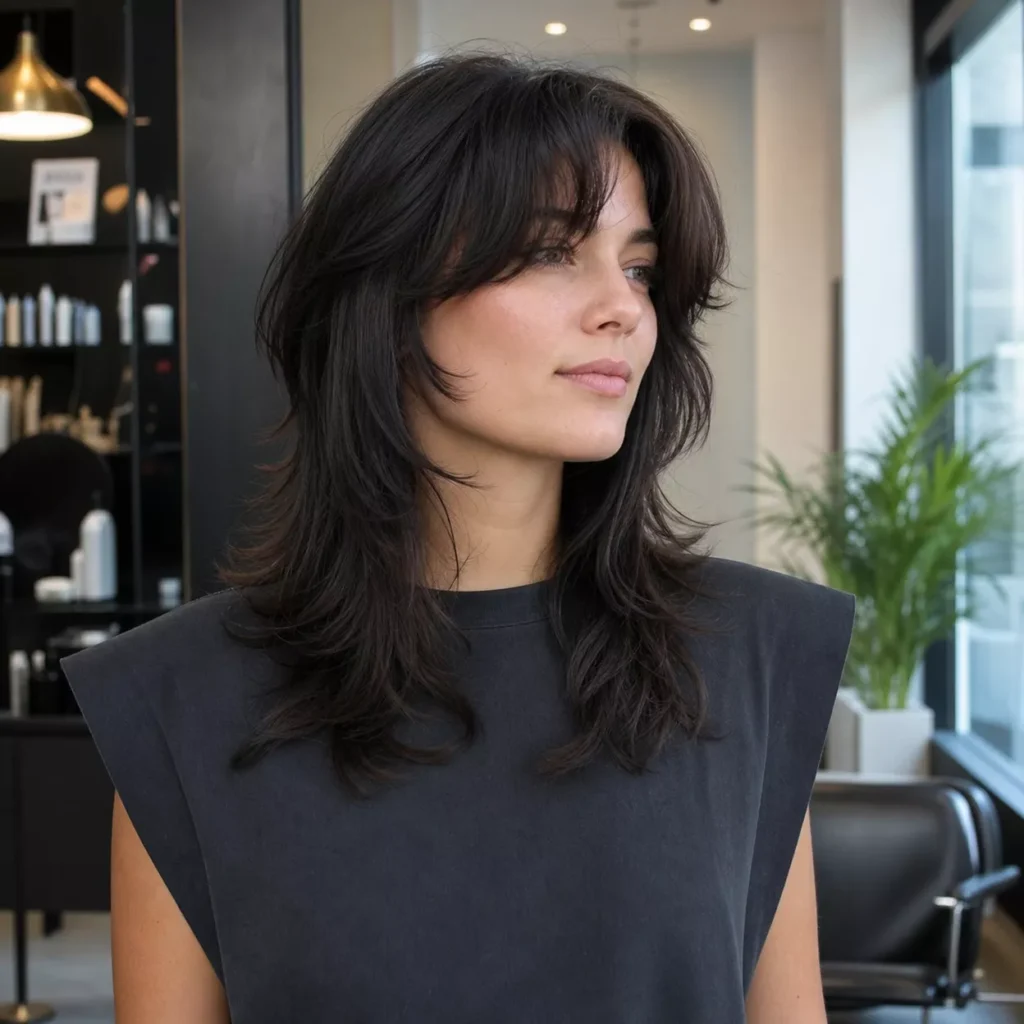
Thick hair, meaning high density, coarse strands, or both, often carries a lot of weight inside a wolf cut. Internal layering can move some of that bulk so the cut sits closer and moves more. Aggressive texturizing isn’t automatically better, though. Taking out too much at the crown can make dense hair stand up and widen, and heavy thinning on coarse hair can leave short, frizzy pieces poking out.
The aim is controlled weight removal: lighten the interior, keep enough at the perimeter to hold the shape. Our guide to shag haircuts for thick hair looks at the same balance from another angle.
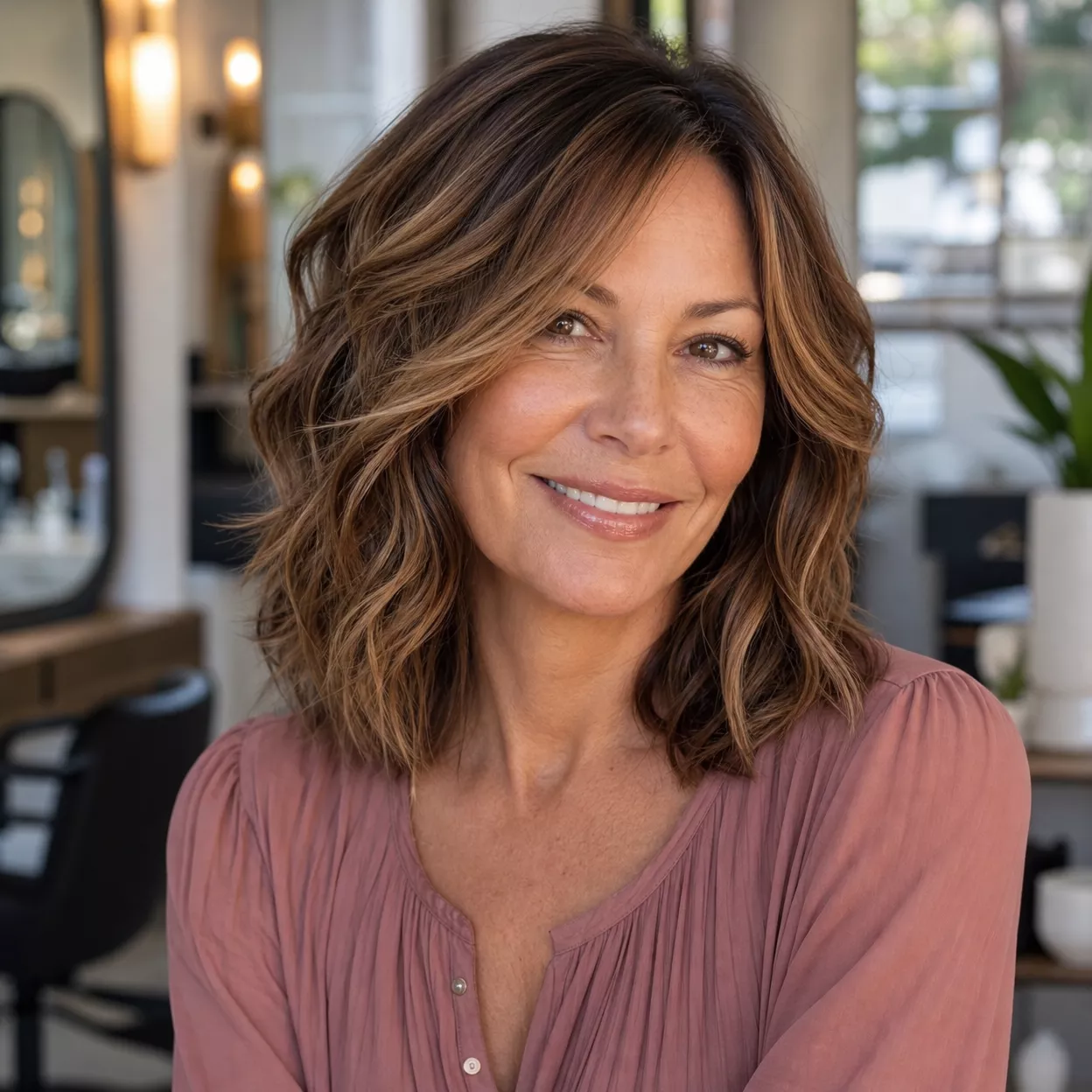
Shoulder Length Wolf Cut
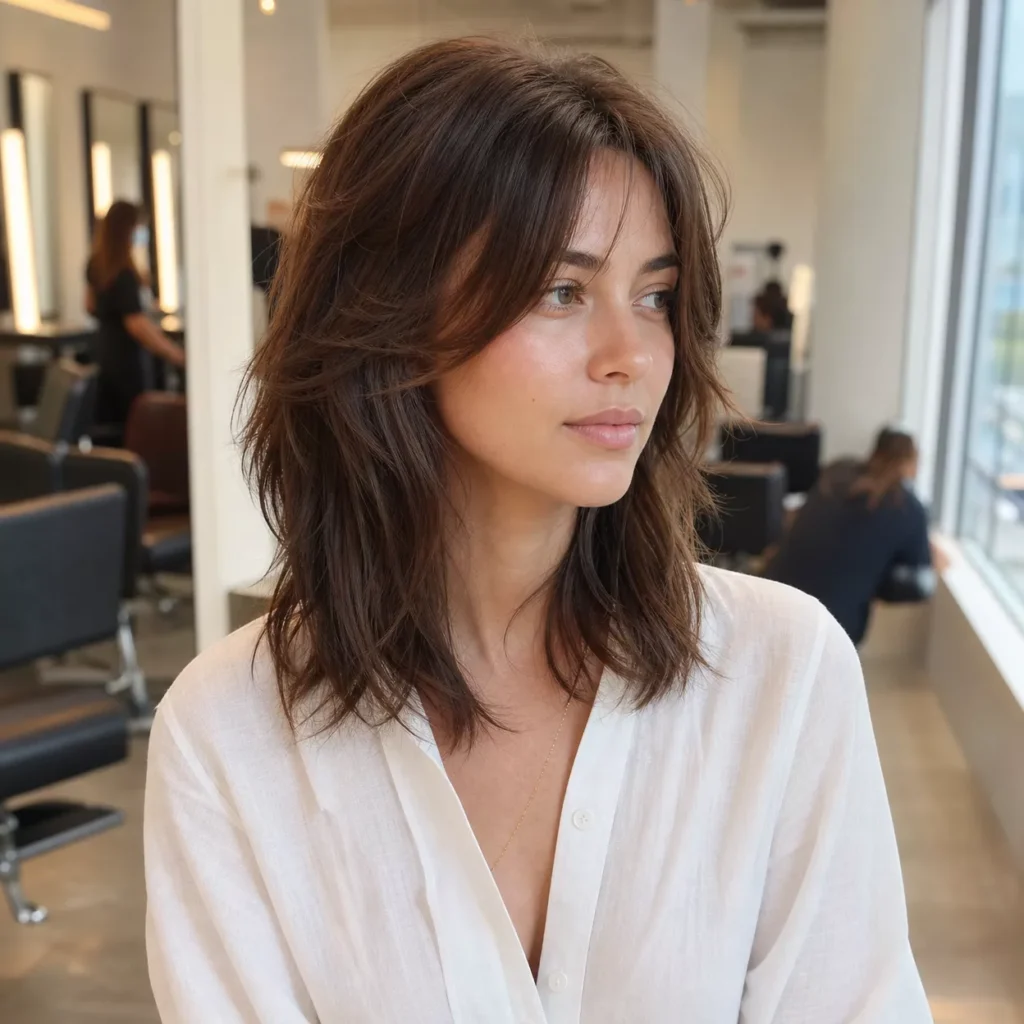
Shoulder length gives a wolf cut enough room to show separation between the shorter crown and the longer perimeter without requiring the commitment of a very short cut. The trade-off is where the hair meets the shoulders. Ends resting there can flip outward, which may suit the wolf cut’s texture or push the ends in directions you don’t want. Going slightly shorter or longer avoids that if it bothers you.
Wolf Cut with Curtain Bangs and Highlights
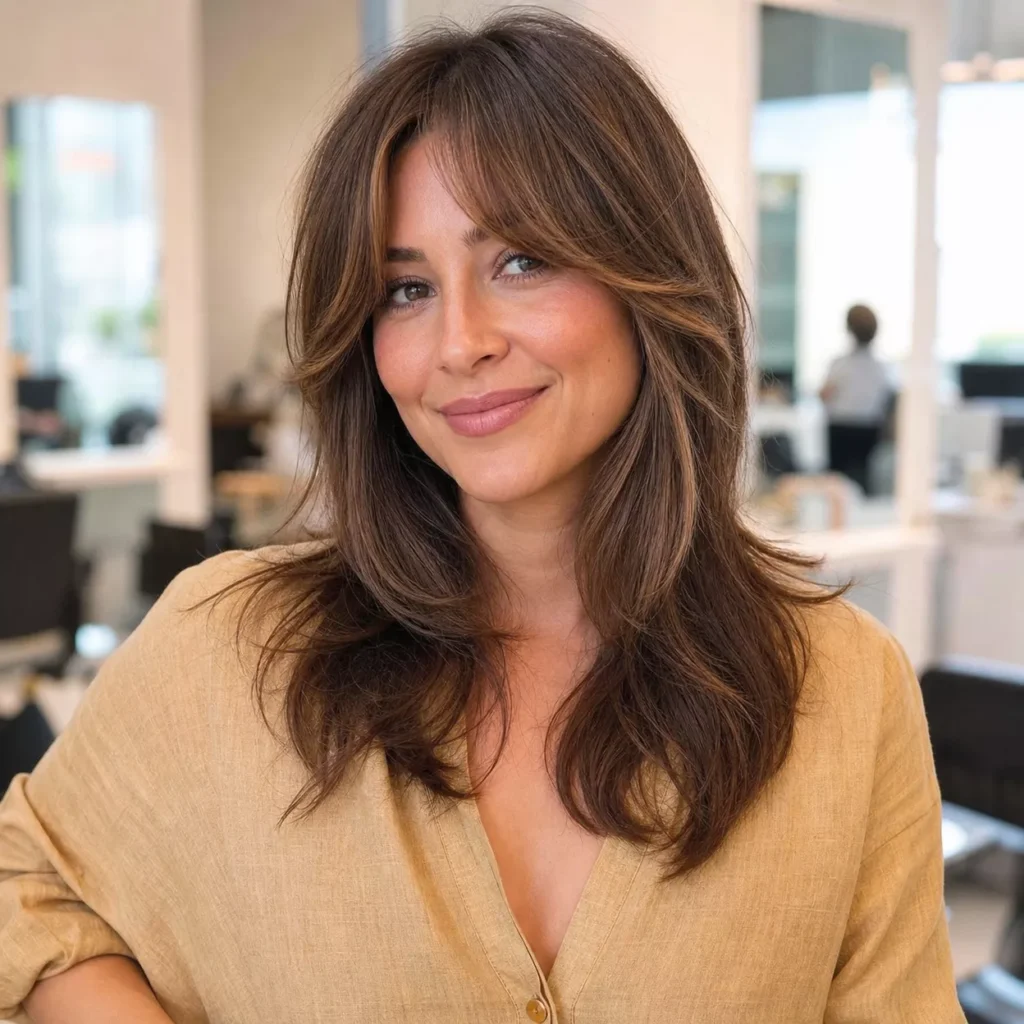
Three elements share this look: the wolf cut, the curtain bangs, and the highlights. Color placement interacts with the cut. Highlights along the edges of the crown layers emphasize their separation, while lighter pieces in the curtain bangs brighten the front. That front placement also means regrowth becomes visible near the face sooner. The cut and the color are separate services on separate schedules, so it’s worth planning for both.
Wavy Wolf Cut
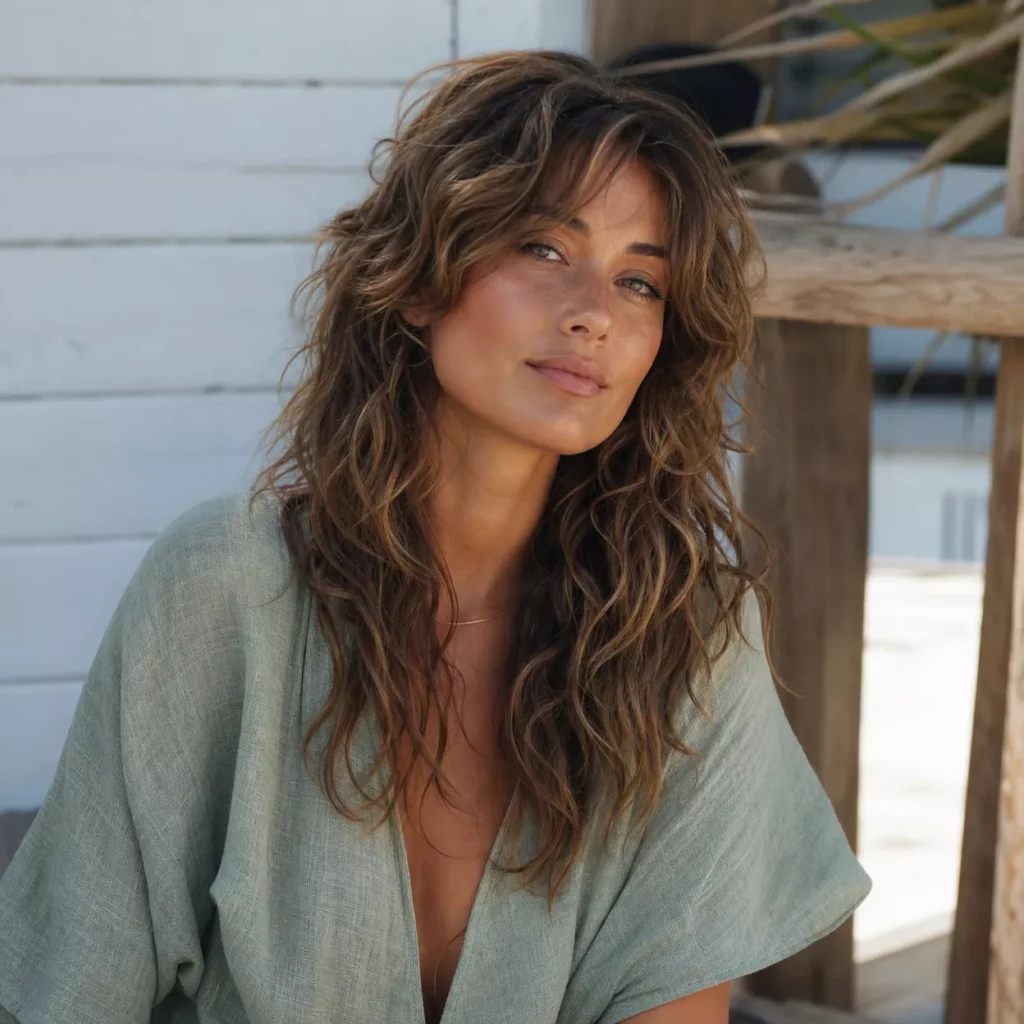
Wavy hair and wolf cuts often work well together, but layer placement changes the wave. Removing weight at the crown lets the top lift and bend more freely, while leaving weight lower keeps the waves from dissolving into frizz. If the shortest layers start too high, waves can spring into a rounder shape than you expected. The wave pattern matters too. Consistent waves fall into the shape easily; uneven ones may need some styling to look balanced from side to side.
Wolf Cut for Women Over 40
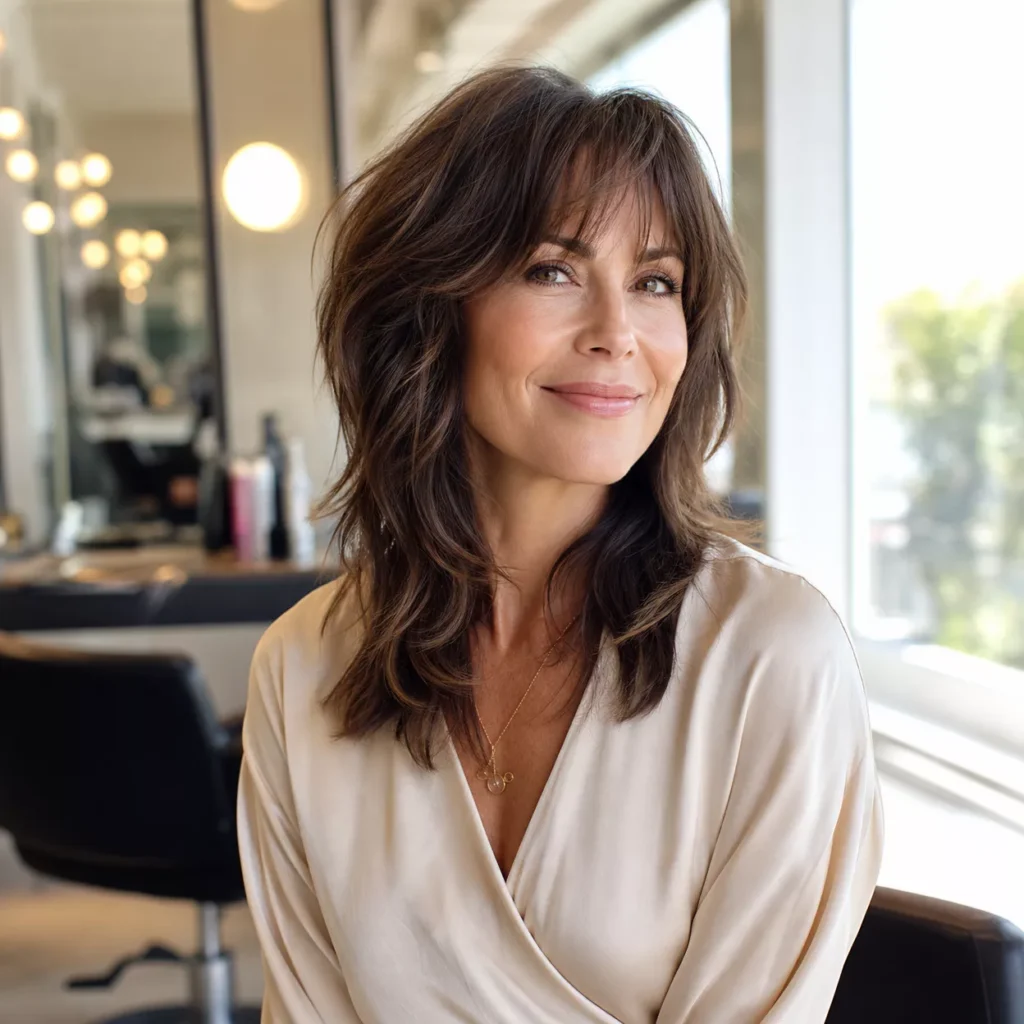
There’s no age limit on a wolf cut, but some people prefer a softer version with blended layers and less contrast between crown and perimeter. That approach removes less weight overall, which can also suit hair whose density or texture has changed over time. If gray is coming in, its texture may differ from the rest of your hair, which can affect how the layers sit. The decision comes down to your hair and how bold you want the shape to look, not your age.
Honey Blonde Wolf Cut
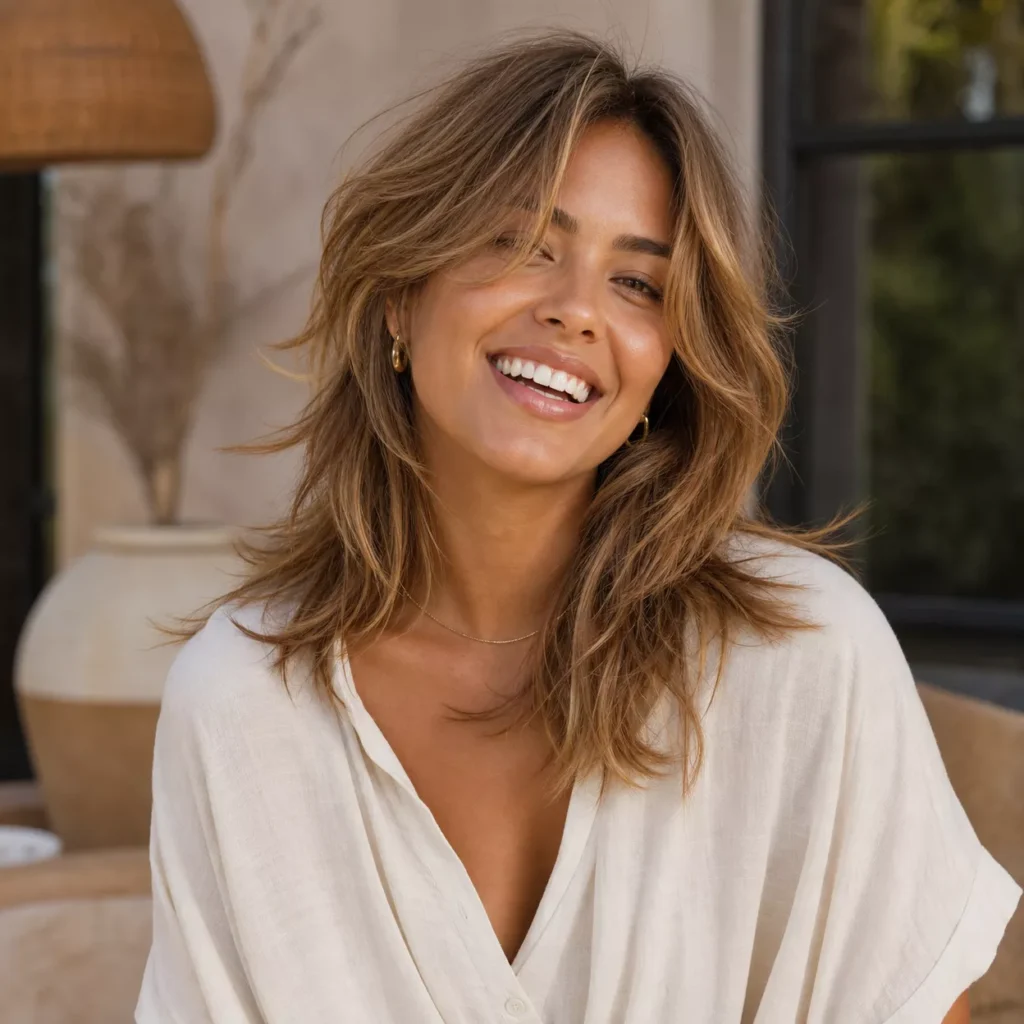
Honey blonde is warm and golden, and on a wolf cut it’s often placed as highlights or balayage rather than all-over color. Placed along the layers, it makes the crown’s separation easier to see. Placed more evenly, it softens the contrast. Your starting color decides how much lightening is needed. Light brown hair may need only modest lift, while darker hair needs more and may come out warmer than expected. Warm tones can drift brassy, so occasional toning may be part of the upkeep.
Short Wolf Cut Bob Length
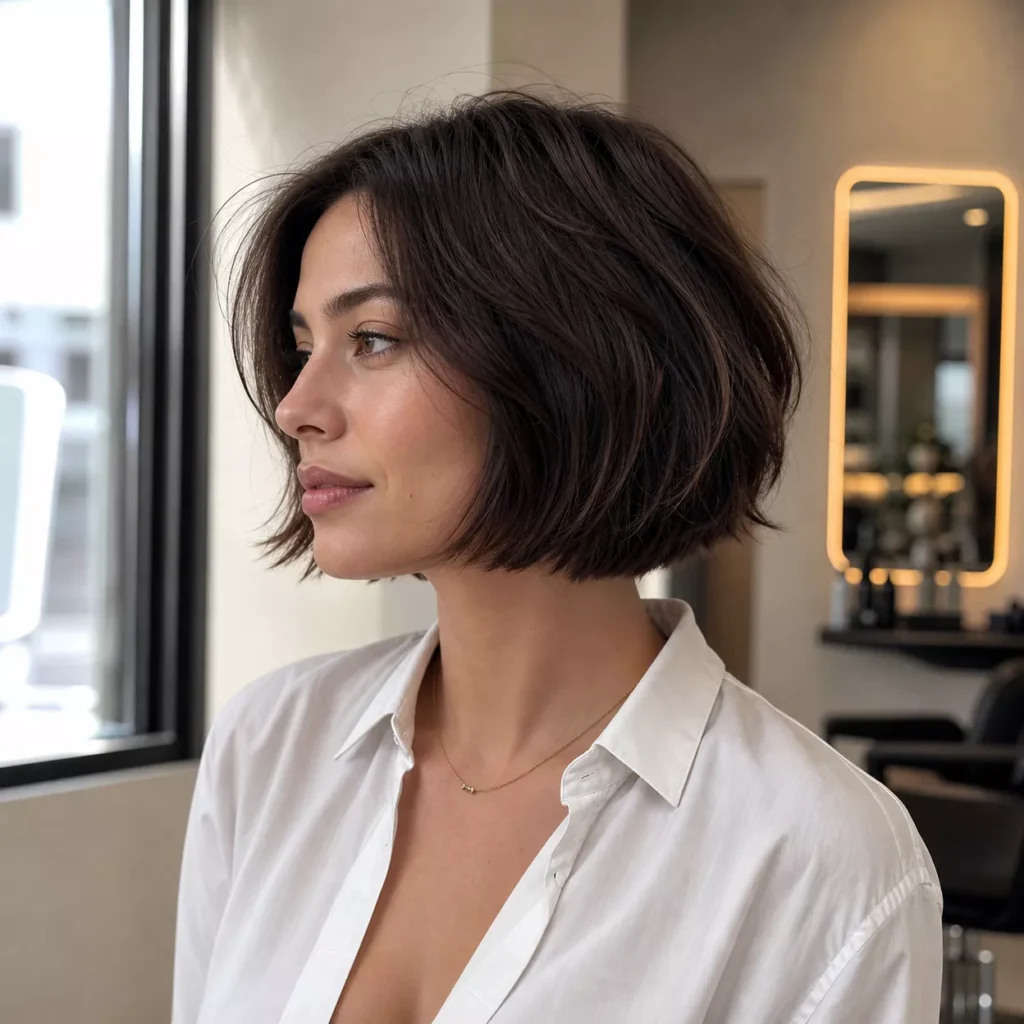
At jaw length, the wolf cut borrows a bob’s frame. The outline sits around the jaw, while the interior uses shorter, choppier crown layers. The result looks more structured than a fully textured wolf cut, and because the perimeter keeps more weight, it can be a gentler way into the style. As it grows, the outline drifts lower and the crown layers lengthen, so regular reshaping keeps the contrast between the two.
Wolf Cut on Straight Hair
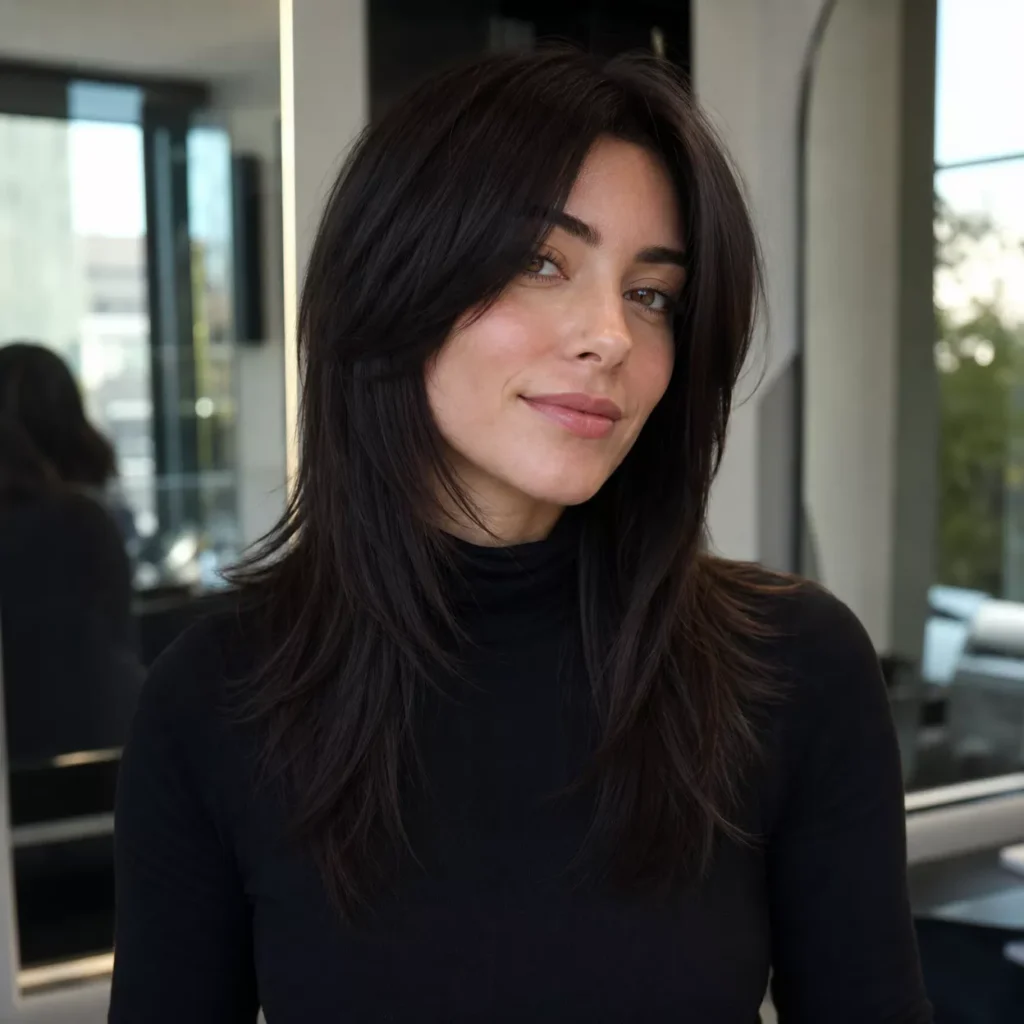
Straight hair reveals the wolf cut’s structure clearly. Every layer edge and every step between crown and perimeter shows. That can look sharp and deliberate, but it also means the cut may look flat without texture product or some styling. Depending on the hair’s condition and density, a stylist may soften the ends with a razor or point-cutting. A quick bend with a flat iron or a texture spray often brings out the separation seen in photos.
Dark Brunette Wolf Cut
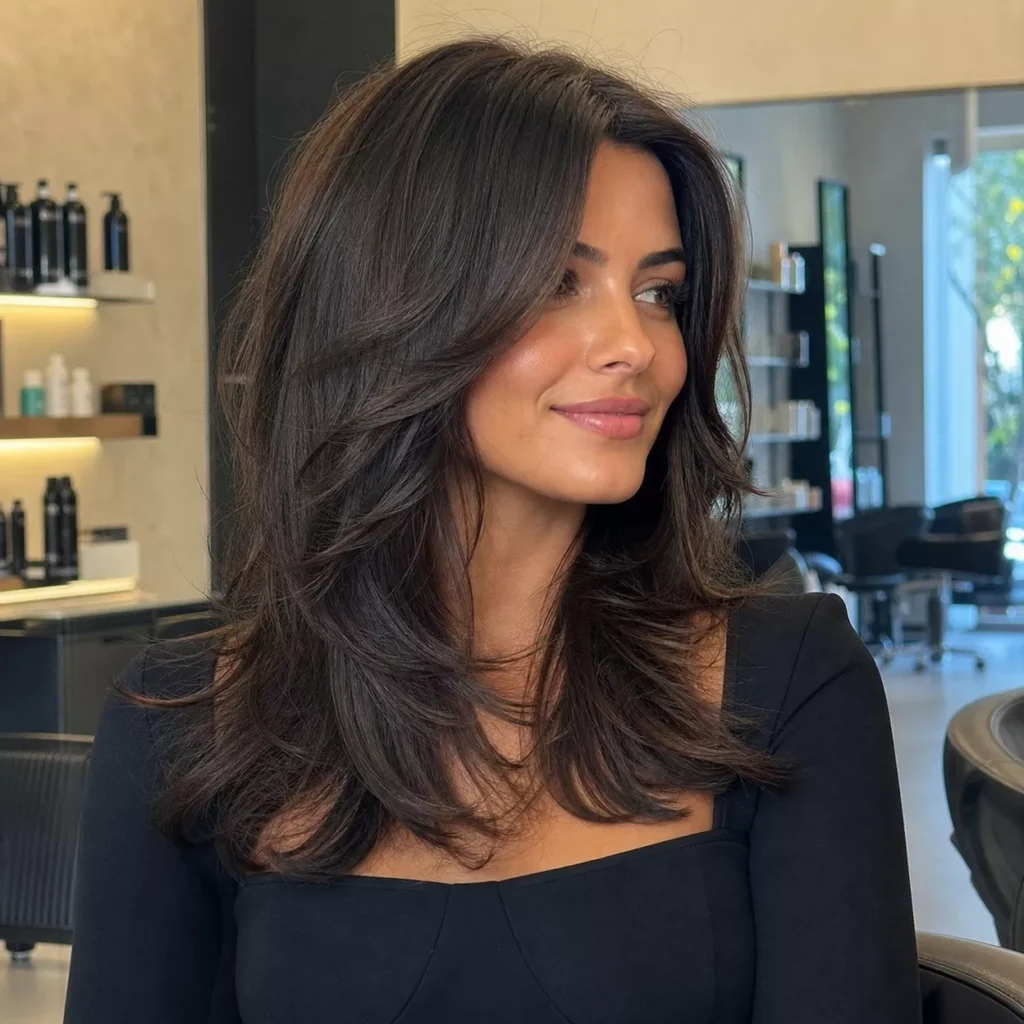
On dark brunette hair, the layers show through light and shadow rather than color contrast. Each layer edge catches light while the hair underneath sits deeper, which can make the crown’s shape look defined. A gloss can add shine if the color is dyed, but it’s optional. Without highlights doing any visual work, the cut has to carry the shape on its own, so precise layering matters more here.
Wolf Cut Mullet Hybrid
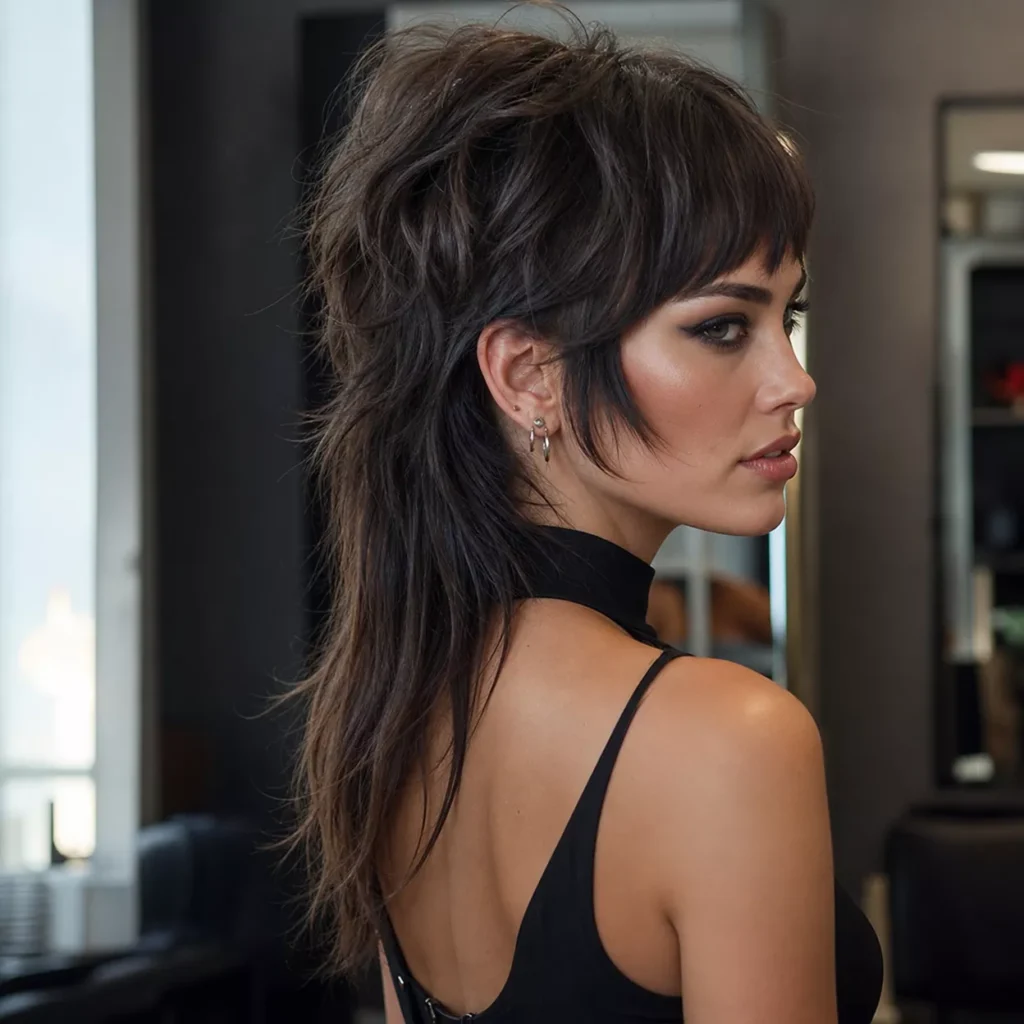
This version pushes the contrast between crown and nape further. The crown is short and choppy, and the back is noticeably longer, creating a mullet-like silhouette that shows most clearly from the side and back. It’s the boldest shape on this list and the one most dependent on the back of the head.
Growth affects it quickly. As the crown lengthens, the contrast softens, so keeping the shape means regular reshaping. It’s worth looking at reference photos from the side and back before committing, since the front view alone can make it look much tamer than it is.
Soft Feathered Wolf Cut
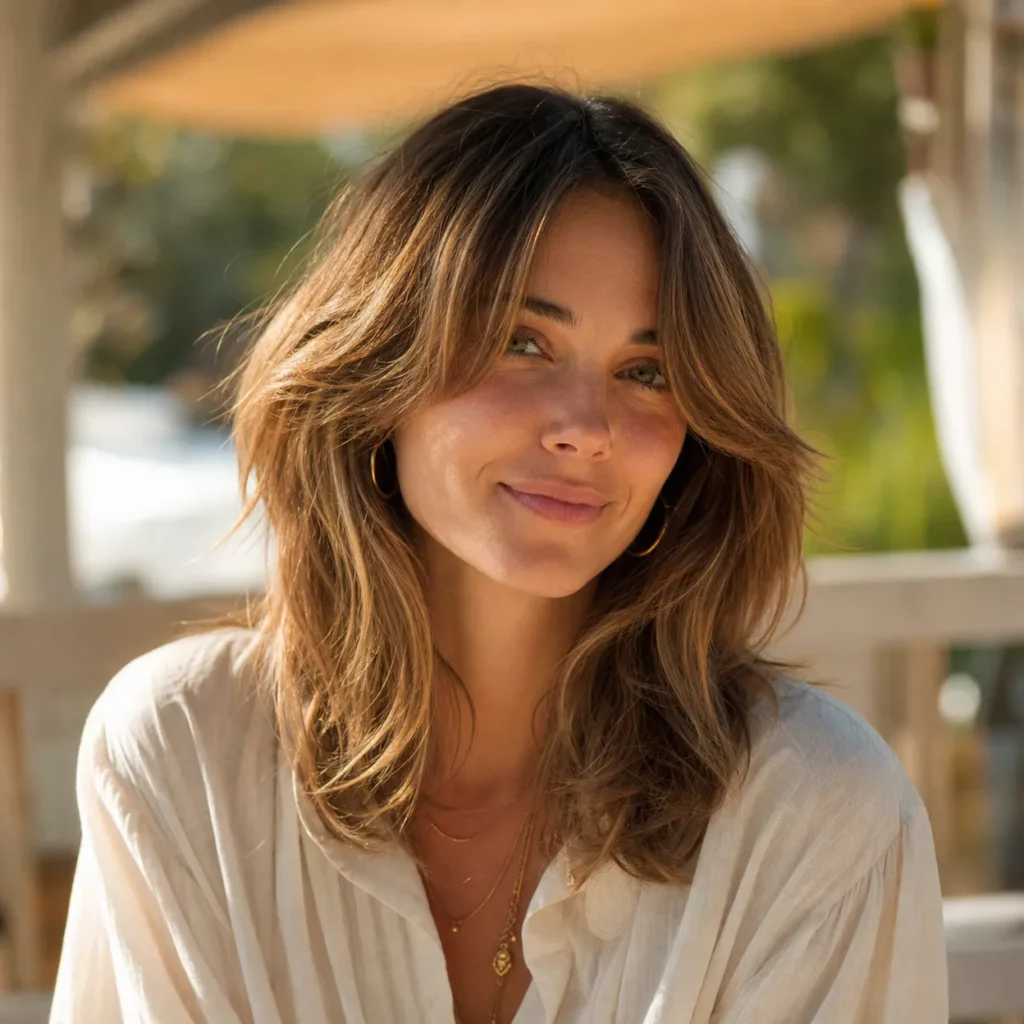
Compared with the mullet hybrid, this version narrows the gap between crown and perimeter. The layers are longer and feathered outward rather than chopped, so the wolf shape is still there but less pronounced. That tends to keep more weight in the hair, which can suit fine or low-density hair. On straight hair, the feathered direction often needs a round brush to show; on wavy hair, it may appear more naturally.
Wolf Cut for Curly Fine Hair
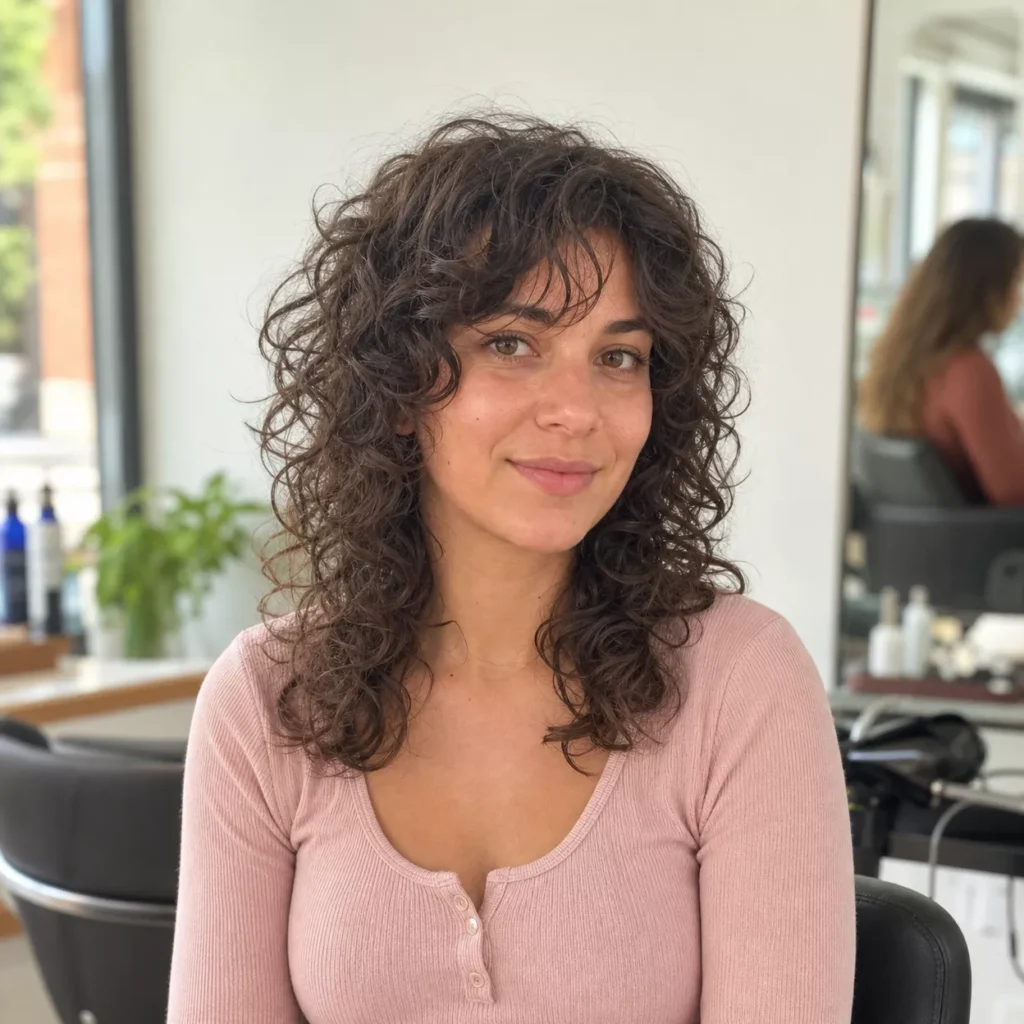
Fine curls have their own balance to manage. The strands are narrow, so length can weigh the curls down, but there’s also less hair to spare when layering. Removing some weight at the crown can help the curls lift and group, while removing too much can leave the ends sparse. Shrinkage matters too, since fine curls may spring up more than expected. A light-hold gel or mousse can help define them without adding weight.
Ash Blonde Wolf Cut
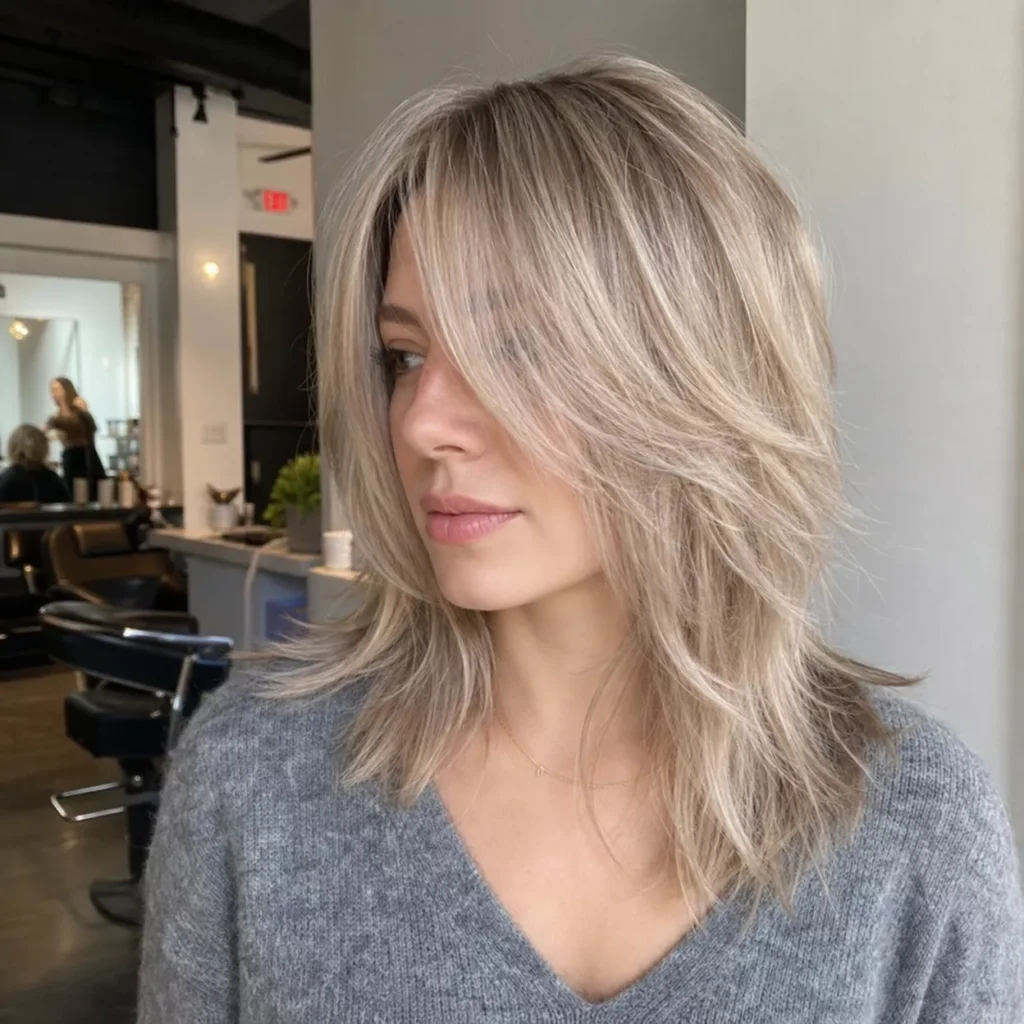
Ash blonde is a cool, muted blonde, and on a wolf cut it can make the layers look more defined, since the lighter tone shows shadow between pieces. Reaching ash from a darker base usually means lightening and then toning to control warmth. As toner fades, the color drifts warmer, so ongoing toning is part of the commitment. A shadow root can soften regrowth, but it doesn’t remove the need to tone the lengths.
Wolf Cut with Blunt Fringe
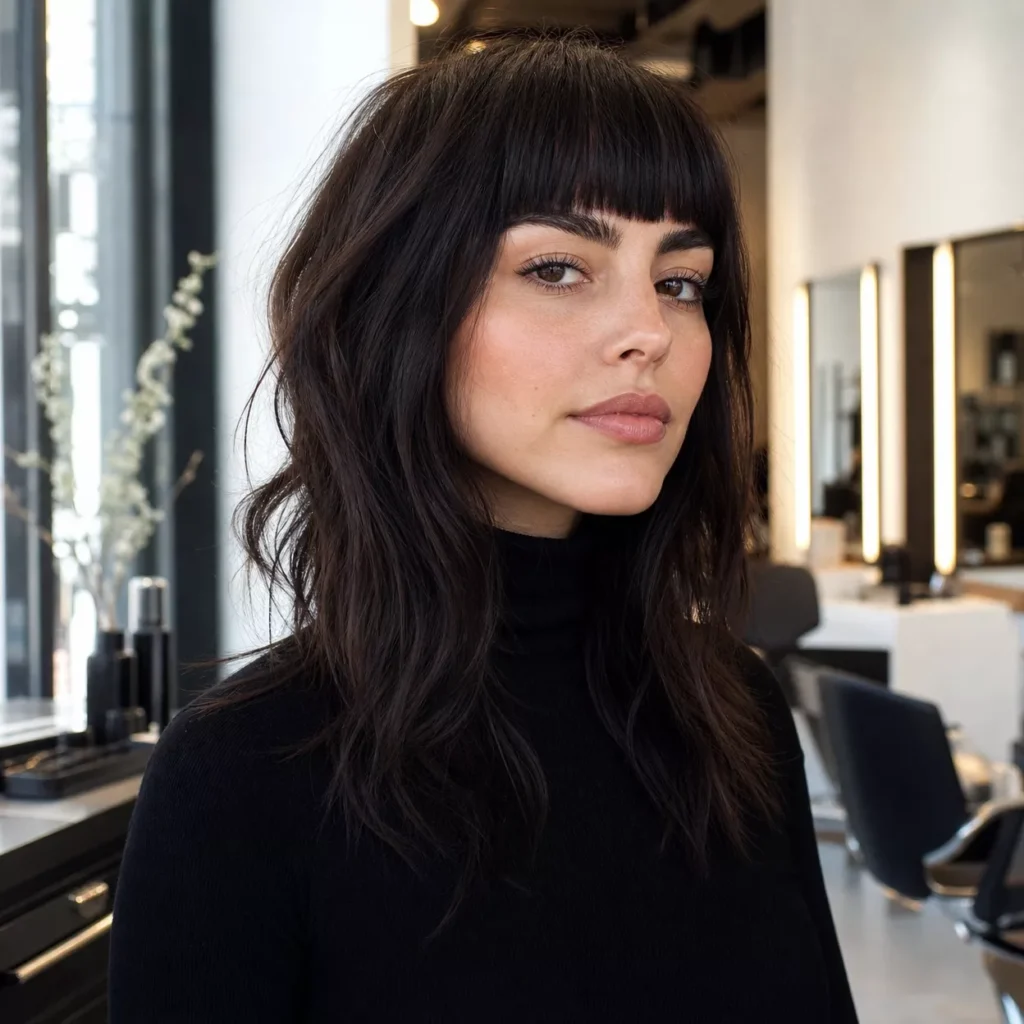
A blunt fringe sets a strong horizontal line against the wolf cut’s choppy layers, and that contrast becomes the defining feature. It needs enough density at the hairline to look solid, and a cowlick can split or lift it. If you wear glasses, consider where the fringe will sit in relation to the frames. Blunt fringes usually need reshaping more often than the rest of the cut, since even a little growth changes how they sit.
Long Wolf Cut with Curtain Bangs
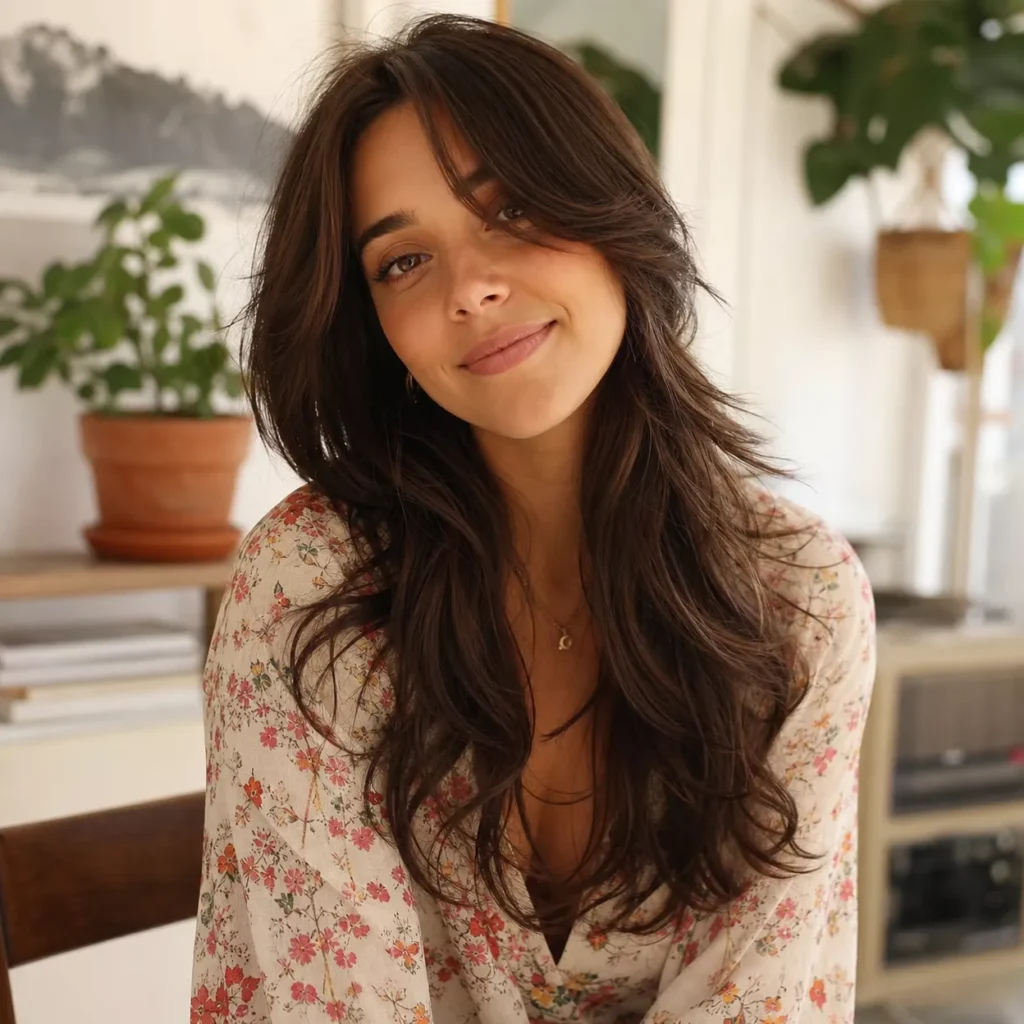
On long hair, curtain bangs connect the face-framing layers to the wolf cut’s crown, so the front gains shape while the length stays. Where the bangs end matters. Cheekbone-length bangs blend into the first layer, while shorter ones read more like a fringe. They need to suit your natural part and usually need a quick blow-dry to sweep open. The long lengths may need some lift at the crown for the wolf shape to show against their weight.
Caramel Wolf Cut
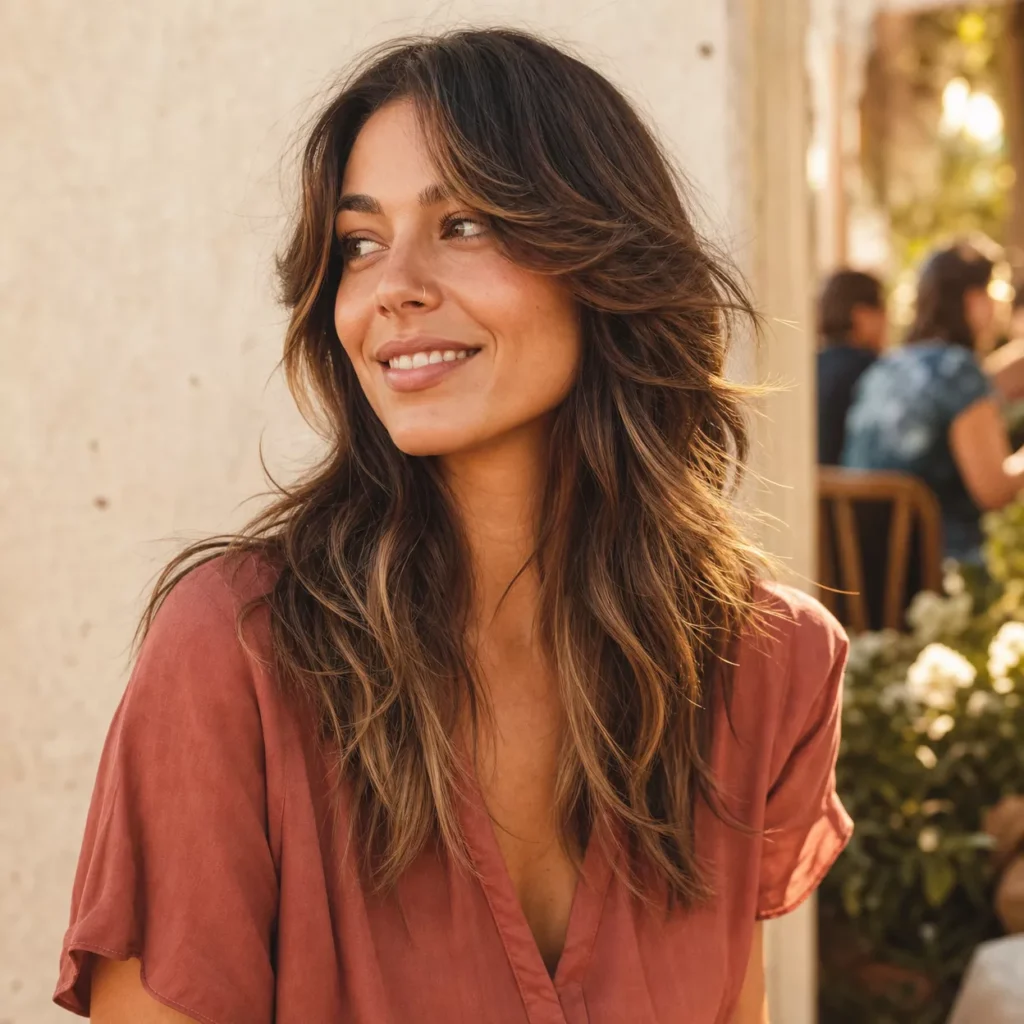
Caramel highlights through a wolf cut add warm contrast that makes the layers easier to read. On medium or dark brunette bases, caramel pieces usually need lightening; on lighter bases, less. Strategic placement along the crown layers and around the face emphasizes the cut’s movement, while even placement throughout softens it. Warm tones can drift brassy as they fade, so a gloss or toner may help keep them balanced.
Short Shaggy Wolf Cut
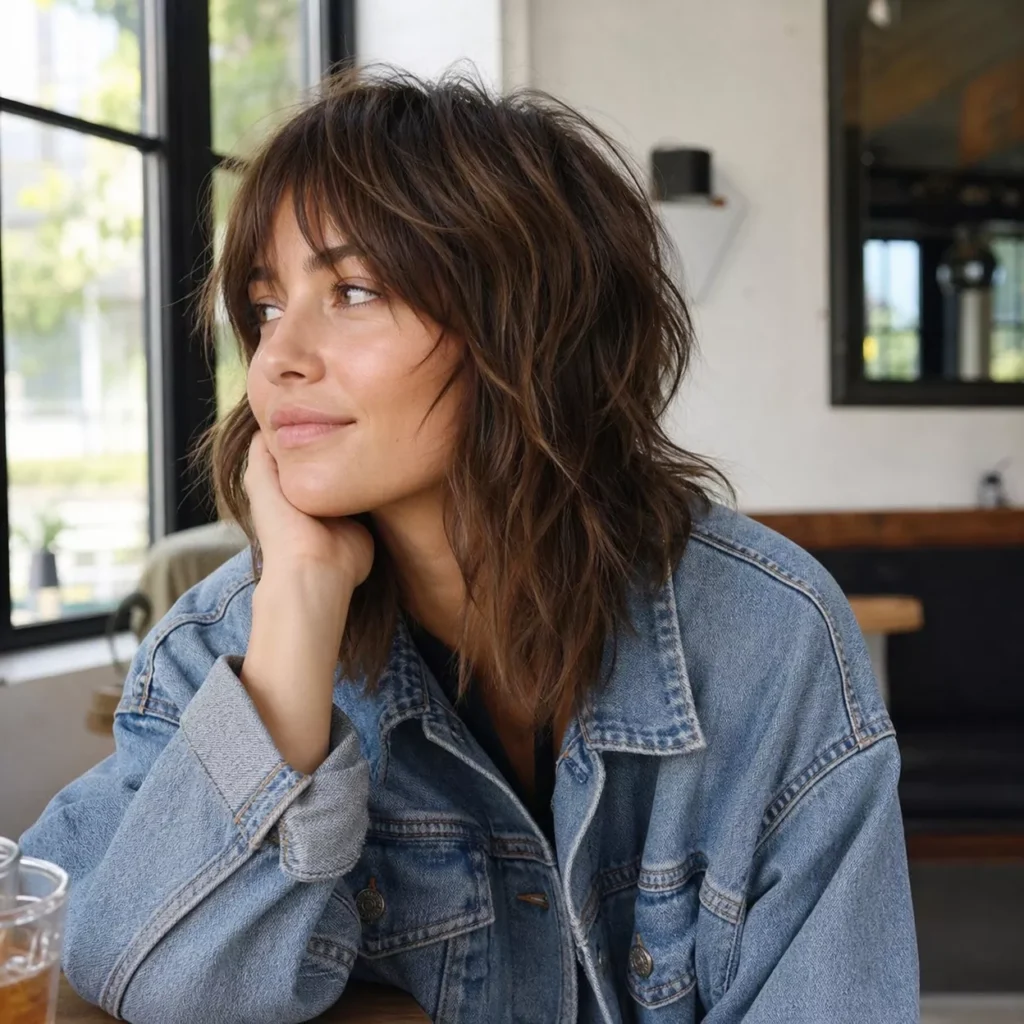
The shaggiest version combines short length with heavy, piecey layering throughout. It looks undone, but that texture usually needs product and some styling to read as deliberate rather than messy. On fine or low-density hair, heavy layering can leave gaps. On dense, wavy hair, it may fall into shape more naturally. It needs regular reshaping to keep the layers from lengthening into a looser, less defined shape.
Wolf Cut for Wavy Thick Hair
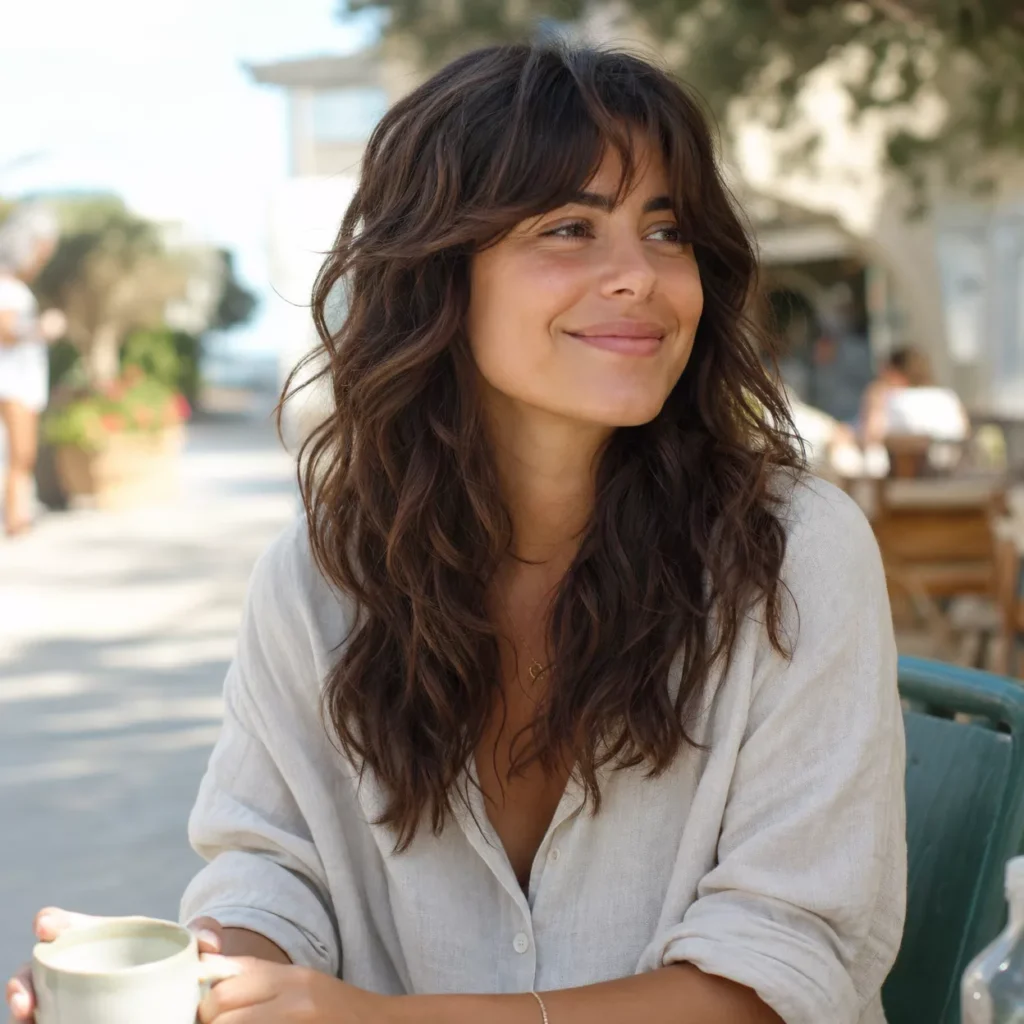
Thick, wavy hair can carry a wolf cut’s layering well, since there’s enough hair for the waves to fill in the shape. The challenge is managing bulk without over-thinning. Internal weight removal can stop the cut from expanding outward, while heavy thinning may create frizz. The waves themselves add movement, so this combination often needs fewer layers than straight hair would to look textured.
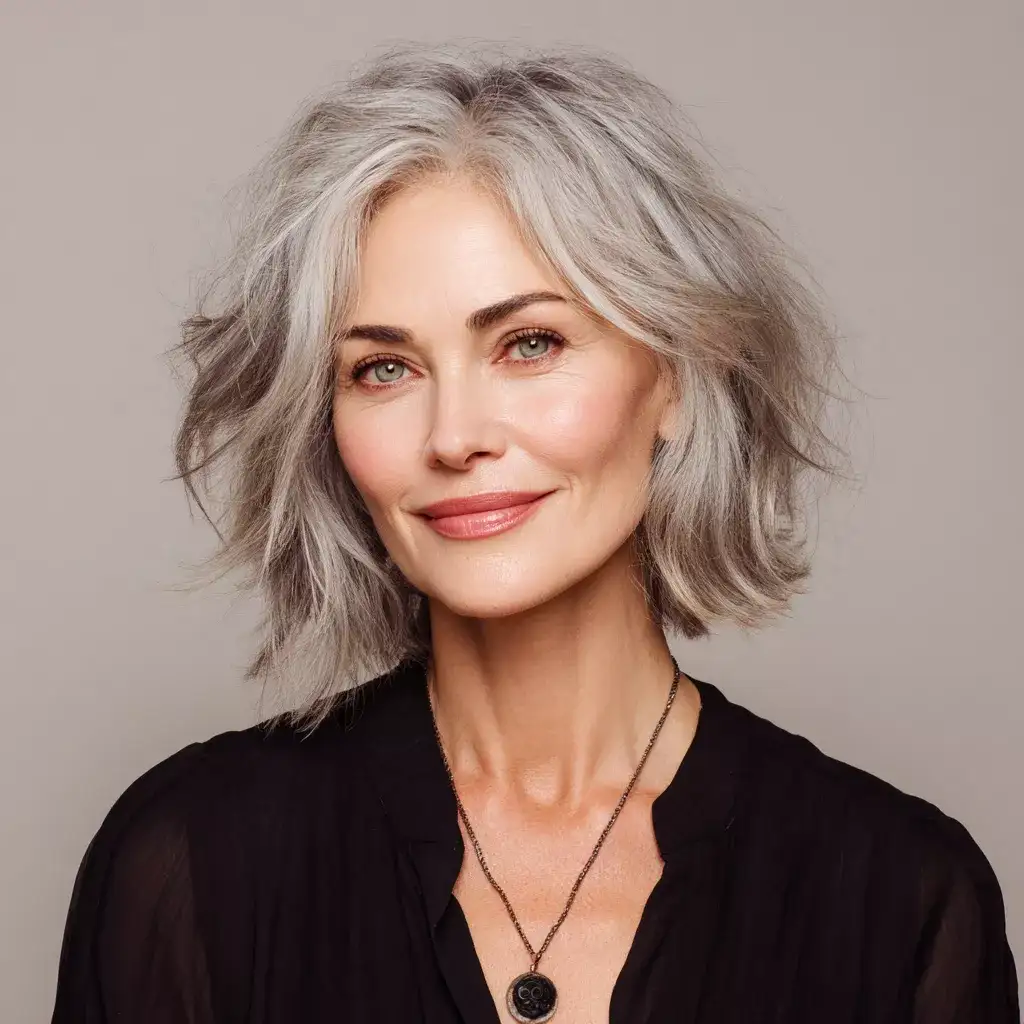
Silver Wolf Cut
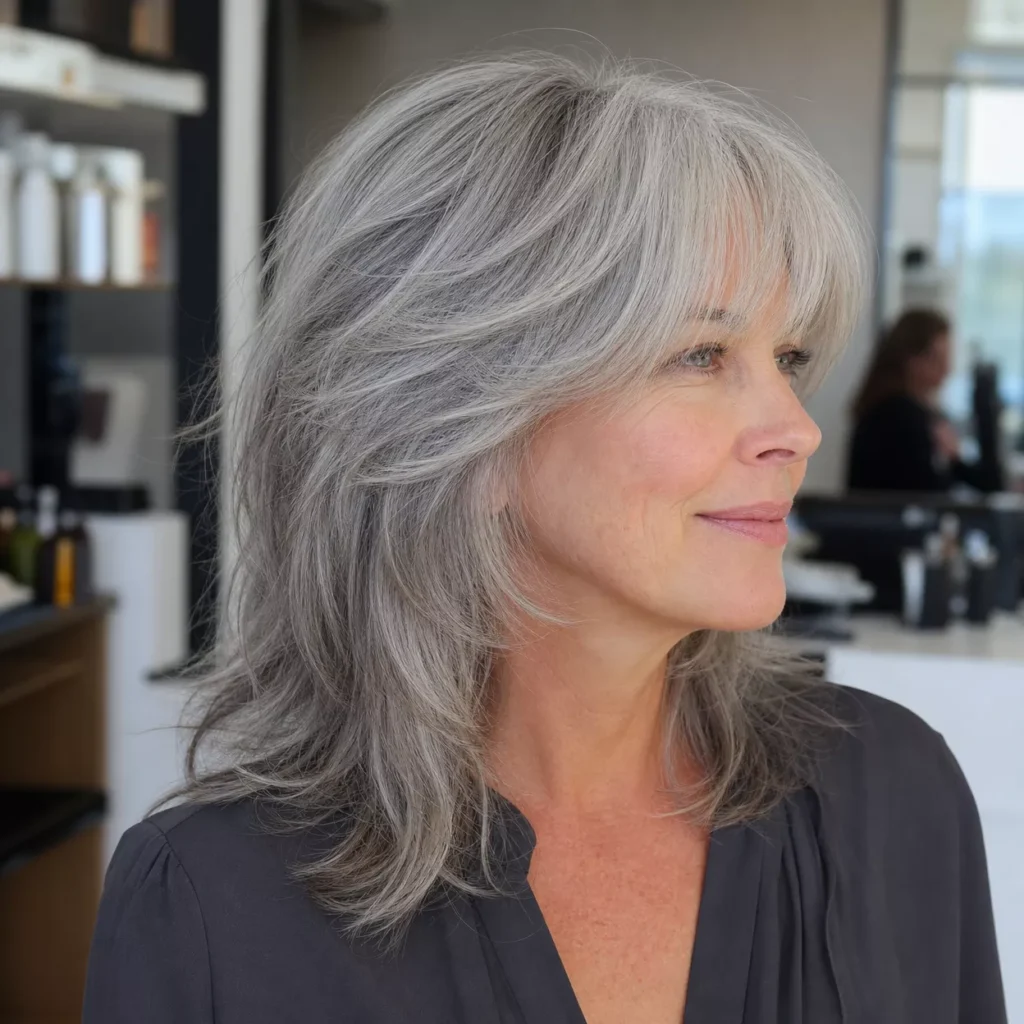
Silver or salt-and-pepper hair shows a wolf cut’s layers clearly because of its mix of tones. Natural silver needs no color maintenance, while artificially toned silver needs regular toning to stay cool. Some people find their gray strands coarser or more wiry, which can make layers stand up more readily; others notice no difference. The cut should be adjusted to how your gray actually behaves.
Wolf Cut with Side Part
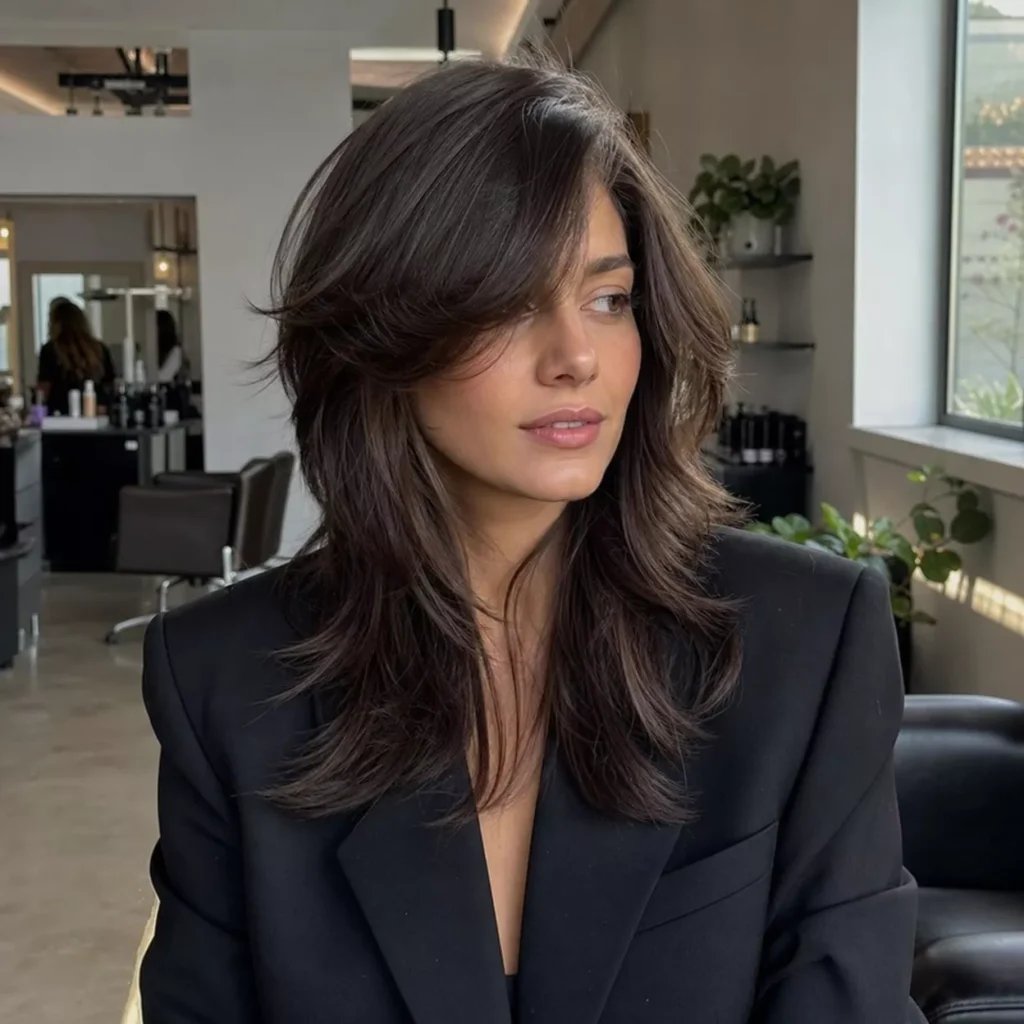
Moving the part to one side shifts the wolf cut’s crown volume to that side and creates a diagonal sweep across the forehead. The shape becomes more structured and less symmetrical than a center-parted version. It holds best when it follows your natural part. On dense hair, the heavier side may need some internal weight removed; on low-density hair, a deep part may show more scalp along the line.
Lived-In Wolf Cut

A lived-in wolf cut is designed to look intentional as it grows, with slightly irregular layers and softer contrast between crown and perimeter. That can mean less frequent reshaping. Low styling effort and low maintenance aren’t the same thing, though. On wavy or curly hair, it may need only air-drying and a little product. On straight hair, it may still need texture product to look lived-in rather than flat.
What Actually Changes the Shape of a Wolf Cut?
A few decisions shape every wolf cut, and they’re worth understanding before choosing a photo.
The placement of the shortest layer sets the tone. Starting it high on the crown creates a strong, rounded top and more contrast with the lengths below. Starting it lower softens the shape.
Crown volume comes from those short layers, but how much lift you actually get depends on density and texture. Dense or coarse hair may stand up readily; fine hair may need styling.
Perimeter length decides how much hair remains at the bottom. A longer, fuller perimeter keeps the cut grounded; a shorter or heavily texturized one makes it lighter and more dramatic.
Internal weight removal controls how much the cut moves. Too little, and the shape may feel heavy; too much, and it may look thin or frizzy.
Fringe adds a separate shape at the front, with its own maintenance.
Texture and density then decide how all of this sits on your head.
That combination is also what separates a wolf cut from its neighbors. A shag blends its layers more evenly. A mullet keeps a much more dramatic difference between short top and long back. A wolf cut sits between them.
Fine Hair, Thick Hair, Waves, and Curls Don’t Need the Same Wolf Cut
The same idea, short crown and longer perimeter, needs adjusting for different hair.
Fine, high-density hair can usually handle moderate layering, since there’s enough hair to fill in the movement. Fine, low-density hair needs more caution: fewer layers, a stronger perimeter, and the shortest layers starting lower.
Thick, high-density hair benefits from internal weight removal, but too much can create width or frizz.
Straight hair shows the structure clearly but often needs styling to show texture.
Wavy hair often falls into the shape naturally, though layer placement changes how the waves form.
Curly hair needs the dry shape in mind, since shrinkage changes both the crown and perimeter.
The Back of the Haircut Matters More Than the Front Photo Shows
Most wolf cut photos are taken from the front, but much of the cut’s character sits at the back.
Look at the crown: how short are the layers, and how much height do they create? Check the nape: is it longer and wispy, or shorter and tidier? Notice the perimeter: is it full or thin? Look at the transition from short to long layers. A smooth transition looks softer; a sharp step looks bolder. And notice how much layering is visible overall.
If you can, find reference photos from the side and back. They’ll tell you far more about the cut’s construction than the front alone.
When a Wolf Cut Can Go Wrong
Most disappointing wolf cuts come from a mismatch between the cut and the hair, not from the style itself.
Too much weight removed can leave fine or low-density hair looking sparse. Layers that start too high can make the top look disconnected from the rest. A weak perimeter can make the ends look thin. A fringe cut against a cowlick may never sit right. A cut designed for a different density can look either too heavy or too thin. Curly hair can shrink more than expected, leaving the shape shorter or rounder. Color can emphasize uneven layering. And many reference photos rely on styling, so expecting the photo’s result from the cut alone, without that styling, can lead to disappointment. A dramatic wolf cut also asks for regular styling and reshaping, which isn’t for everyone.
What to Show Your Stylist
Bring photos that show:
- the front
- the side profile
- the back shape
- the amount of layering you like
- the perimeter length you want
- your fringe preference
- how much styling you’re realistically willing to do
A few phrases can help explain what you want:
“I want movement without removing too much weight from the ends.”
“I’d like the crown shorter, but I still want a substantial perimeter.”
“I like this amount of separation between the crown and the lower lengths.”
“Please consider how my natural texture behaves when it’s dry.”
How to Choose Between These 28 Wolf Cuts
If you want to keep significant length, consider the long wolf cuts, with or without curtain bangs.
If your hair is fine or low-density, look at the soft feathered, lived-in, and fine-hair versions, which keep more weight.
If your hair is thick or high-density, consider versions with internal weight removal, such as the thick-hair and wavy thick-hair wolf cuts.
If your hair is naturally wavy, the wavy wolf cut and lived-in version often fall into shape with less styling.
If your hair is curly, look at the curly and curly fine-hair versions, and plan around the dry shape.
If you want fringe, choose between curtain, wispy, and blunt, keeping in mind that each needs its own upkeep.
If you want color dimension, consider honey, caramel, ash, or highlighted versions, and plan for color maintenance separately.
If you want less styling, a softer or lived-in wolf cut matched to your texture may suit you.
If you want a more dramatic, mullet-like shape, the mullet hybrid and short textured versions push the contrast furthest.
Is a wolf cut good for fine hair?
It can be, especially if the hair is fine but reasonably dense. The key is controlling how much weight comes out. A softer version with fewer layers and a stronger perimeter usually works better than heavy texturizing.
Can a wolf cut work on curly hair?
Yes, though shrinkage and curl pattern need to be considered. Many stylists assess curls dry to judge where the crown and perimeter will sit.
Does a wolf cut require a lot of styling?
It depends on your texture and the version you choose. Wavy and curly hair often need less styling to show the shape. Straight hair may need texture product or heat.
Is a wolf cut different from a shag?
Yes. A shag tends to blend its layers more evenly, while a wolf cut creates a more noticeable difference between a short, layered crown and longer lengths below.
Can you keep long hair with a wolf cut?
Yes. Long wolf cuts keep most of the length and concentrate shorter layers at the crown and around the face.
Does a wolf cut work on thick hair?
It can, especially with internal weight removal. Over-thinning can create frizz or width, so controlled layering usually works better.
What should I ask for if I want a softer wolf cut?
Ask for longer layers, a less pronounced difference between crown and perimeter, and enough weight left at the ends to keep the shape full.
Final Thoughts
A wolf cut is defined less by a fixed formula and more by how its layers, weight, length, texture, and styling are balanced for the person wearing it. Choose the version that suits your density and texture, look at reference photos from every angle, and be clear with your stylist about how much contrast and maintenance you actually want.