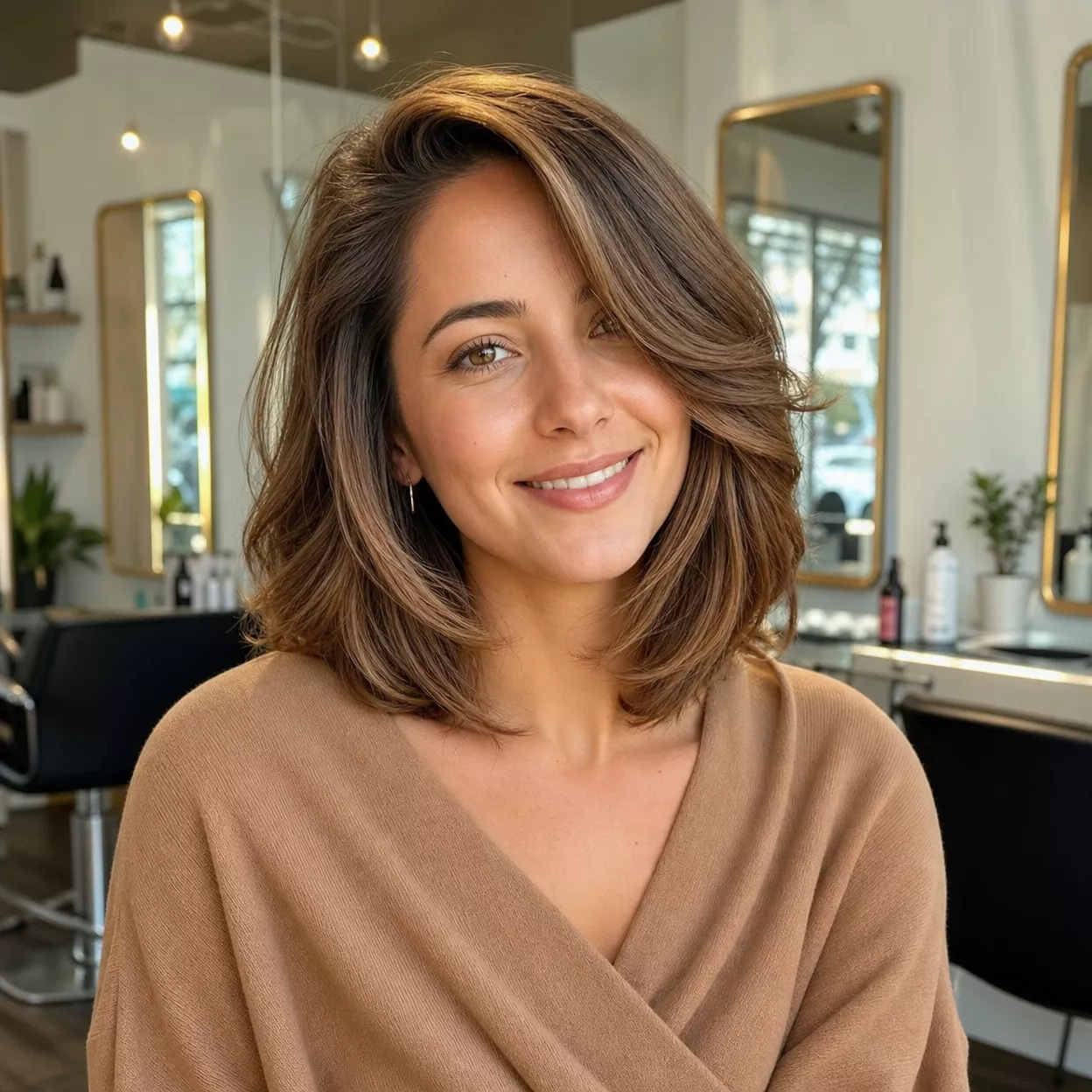
25 Hairstyles for Diamond Face Shapes: Fringe, Length, and Layers Compared
A diamond face is usually described as widest at the cheekbones, with a narrower forehead and a narrower jaw or chin. That description is a starting point, not a rulebook. Hair can sit close to the cheekbones or skim past them, fill the forehead or leave it clear, end at the jaw or fall well below it, and each choice changes the overall outline differently. Some people with diamond faces like a soft frame around the cheekbones. Others want them on full display with a short, defined cut. The 25 hairstyles below cover fringes, bobs, lobs, long layers, and a few styled looks, with notes on texture, upkeep, and what each one actually changes, so you can choose by preference instead of formula.
Side-Swept Bangs for Diamond Face
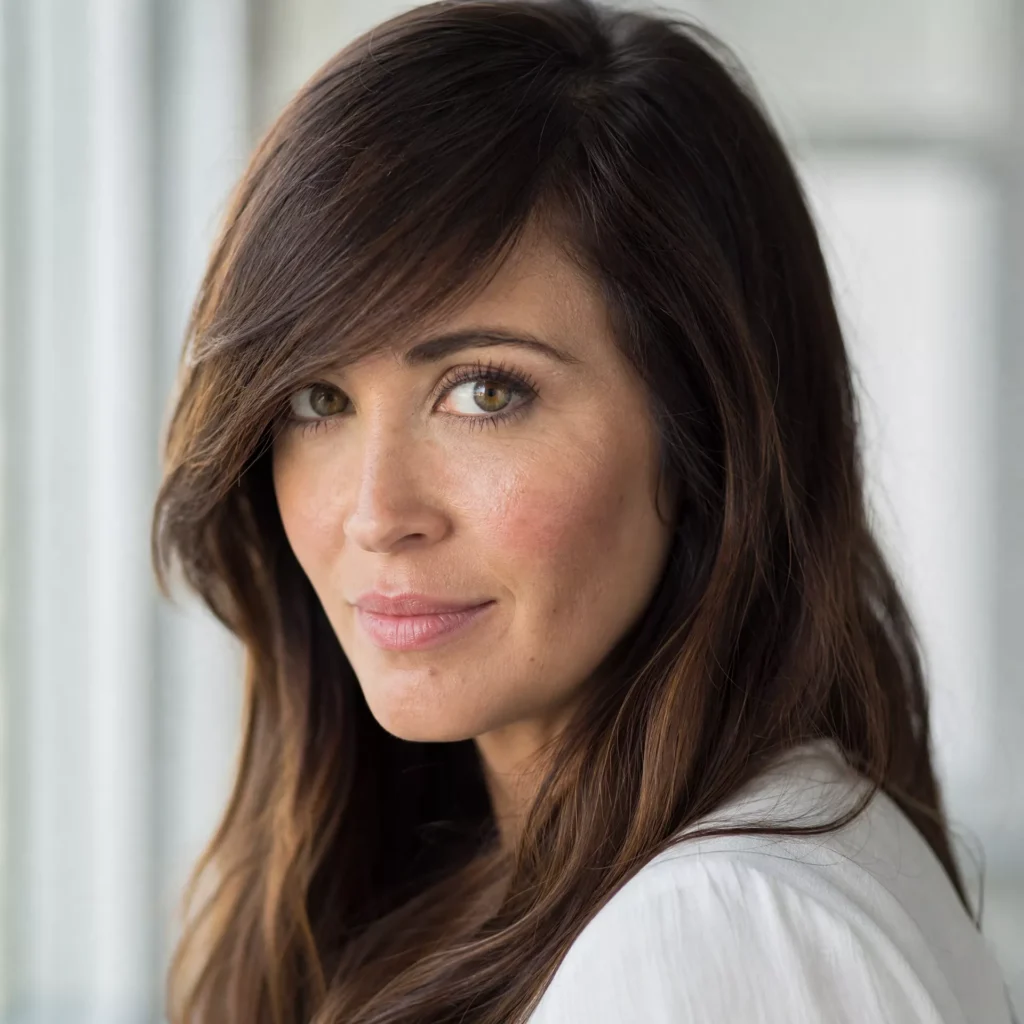
Three things shape a side-swept fringe: how long it is, which way it sweeps, and how much forehead it covers. A long sweep that reaches the cheekbone blends into the sides and leaves much of the forehead visible. A shorter one crosses the brow more fully and reads as a clear feature. Direction is largely decided by your natural part. A fringe cut to sweep against it tends to spring back or split by midday. If you’d like to be able to tuck it away, ask for the longest piece to reach past your ear.
Full Fringe on Diamond Face
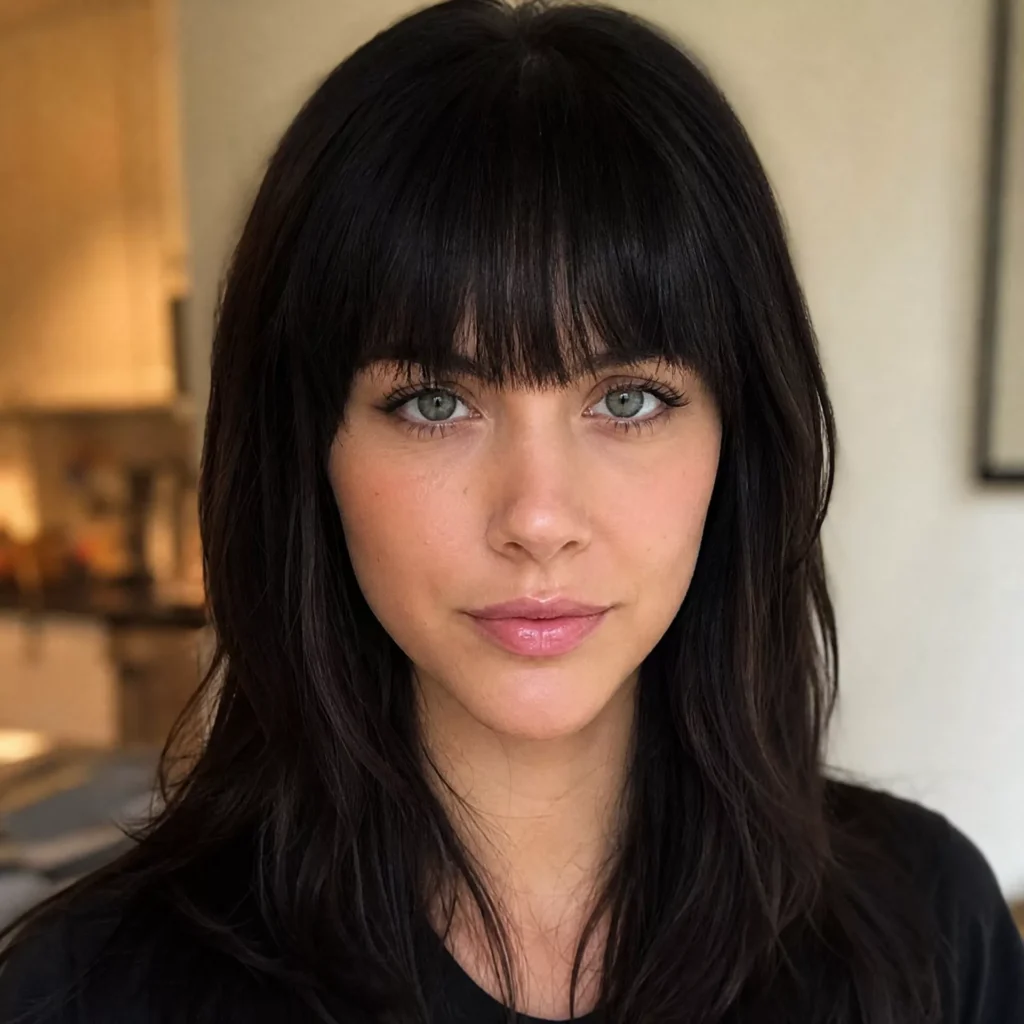
A full fringe covers most of the forehead with a solid section of hair, usually ending at or just above the brows. It adds a strong horizontal line at the top of the face, which is a significant visual change and a real commitment. It shows growth quickly, needs trimming between haircuts, and usually needs a blow-dry to lie flat, especially if there’s a cowlick at the hairline. Wavy or curly hair shrinks as it dries, so a full fringe may sit higher than the length it was cut to. It suits someone who wants the fringe to be the focus of the look.
Long Layers on Diamond Face

Long layers change how long hair moves and what its outline looks like. Layers that start near the face, around the cheekbones or chin, create a frame that curves around the face. Layers concentrated lower down, below the shoulders, mostly lighten the ends and leave the area around the face smooth. On a diamond face, that choice decides whether the hair interacts with the cheekbones or simply falls past them. Dense hair often needs more layering to move freely, while fine or low-density hair keeps a fuller perimeter with fewer layers.
Chin-Length Bob on Diamond Face
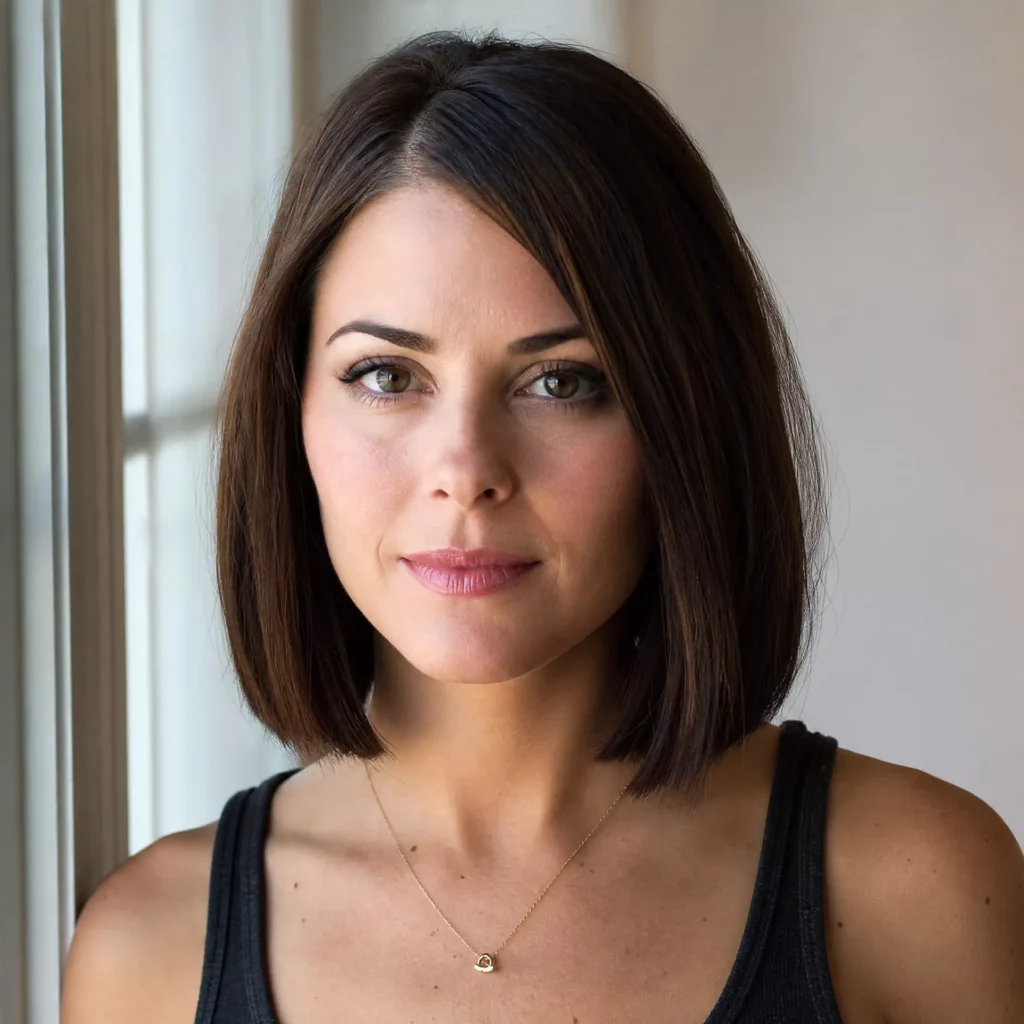
A bob that lands at the chin can take several shapes. A blunt bob has a solid line and holds its weight at the ends. A graduated bob is shorter at the back and stacks slightly, giving a rounded shape. A softly textured bob has broken-up ends that move more freely. At the same length, these look quite different around the lower face. Straight hair shows the outline clearly, while wavy hair lifts and softens it. Ask which version suits your texture and whether the ends will still sit at the chin once your hair is dry.
Shoulder-Length Cut with Volume at Jaw for Diamond Face
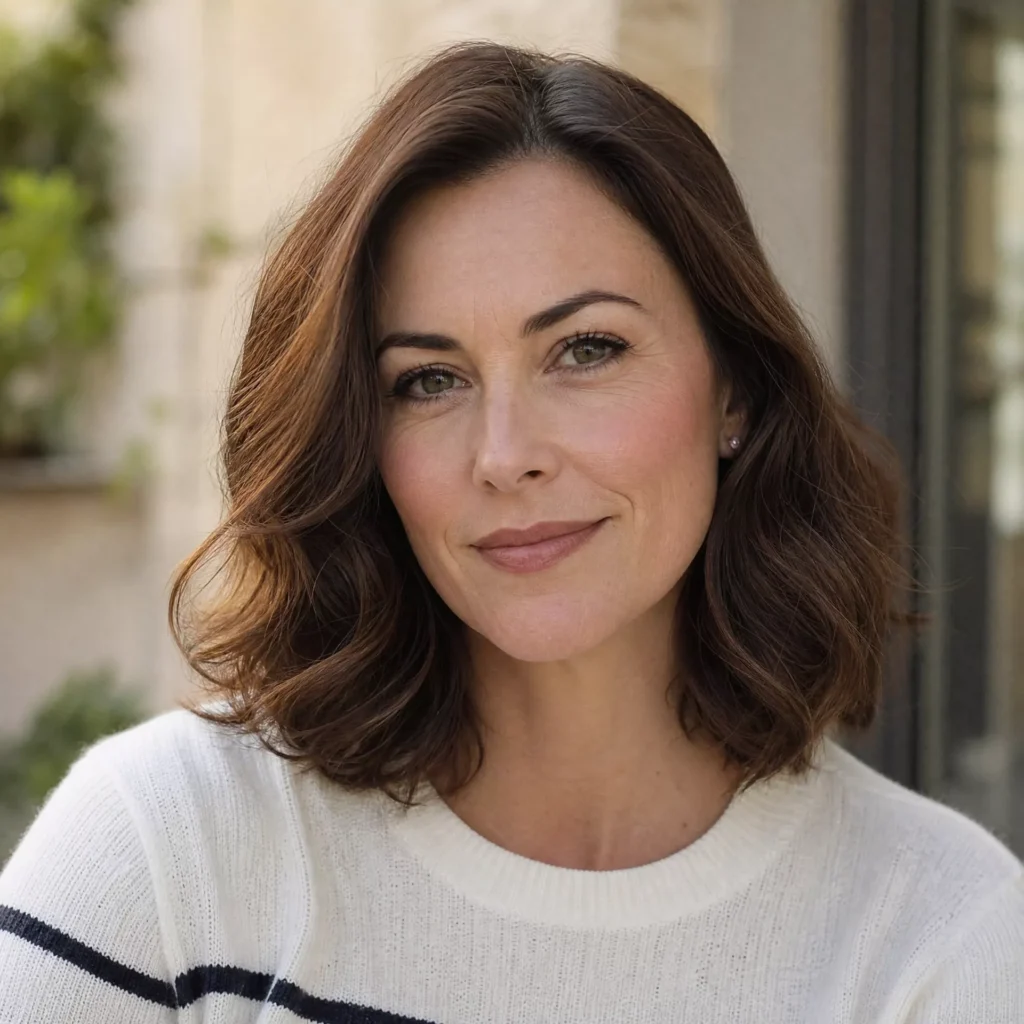
Movement around the lower face can come from layers that start around the jaw, from a slight bend in the ends, or from styling the hair outward with a round brush. At shoulder length, the ends often flip where they meet the shoulders, which adds to the effect. Some people like that fullness below the cheekbones, and others prefer the hair smooth and close there. If you want it, ask where the shortest layer will begin and whether the movement will show when you air-dry, since much of it may depend on styling.
Lob with Side Fringe for Diamond Face

The longer perimeter and the shorter front pieces have to meet somewhere, and where they meet decides how the cut reads. If the side fringe blends into face-framing layers that run down toward the lob’s ends, the front looks like one continuous line. If the fringe stops abruptly, it looks like a separate feature. Worn naturally, a side fringe may fall slightly differently each day depending on your part. The lob also gives enough length to tie back, which helps when the fringe needs a break.
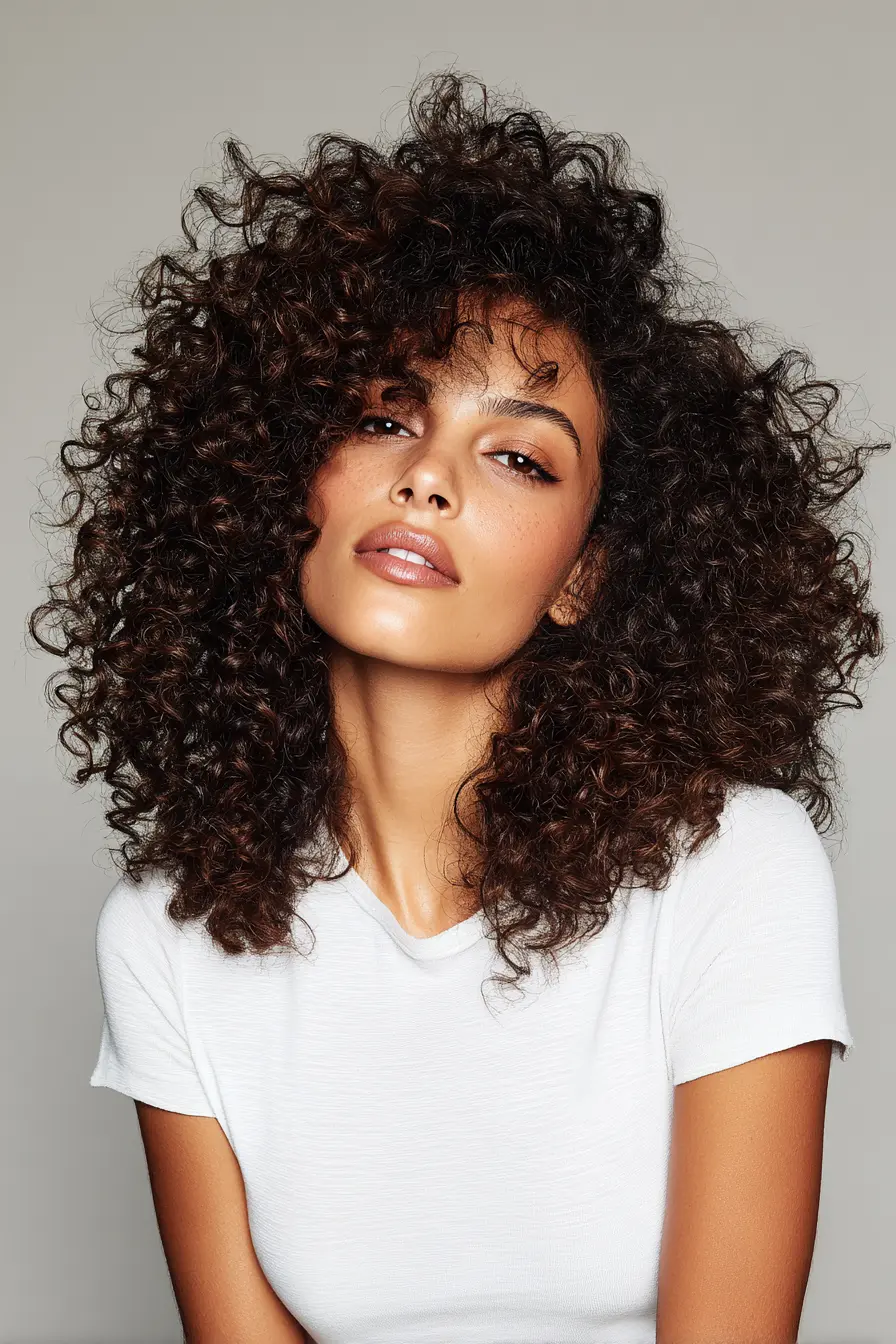
Wavy Shoulder-Length Hair on Diamond Face

Loose waves and defined curls behave differently at this length. Loose waves bend gently, usually leave the top smoother, and keep the outline fairly close to the head. Defined curls form clear spirals, shrink more, and expand outward. If your waves are natural, the cut should work with where they form, and air-drying with a little product may be enough. Waves from a curling iron look more even but need restyling after each wash. Ask how the length will sit once dry, since waves pull the ends upward.
Curtain Bangs on Diamond Face
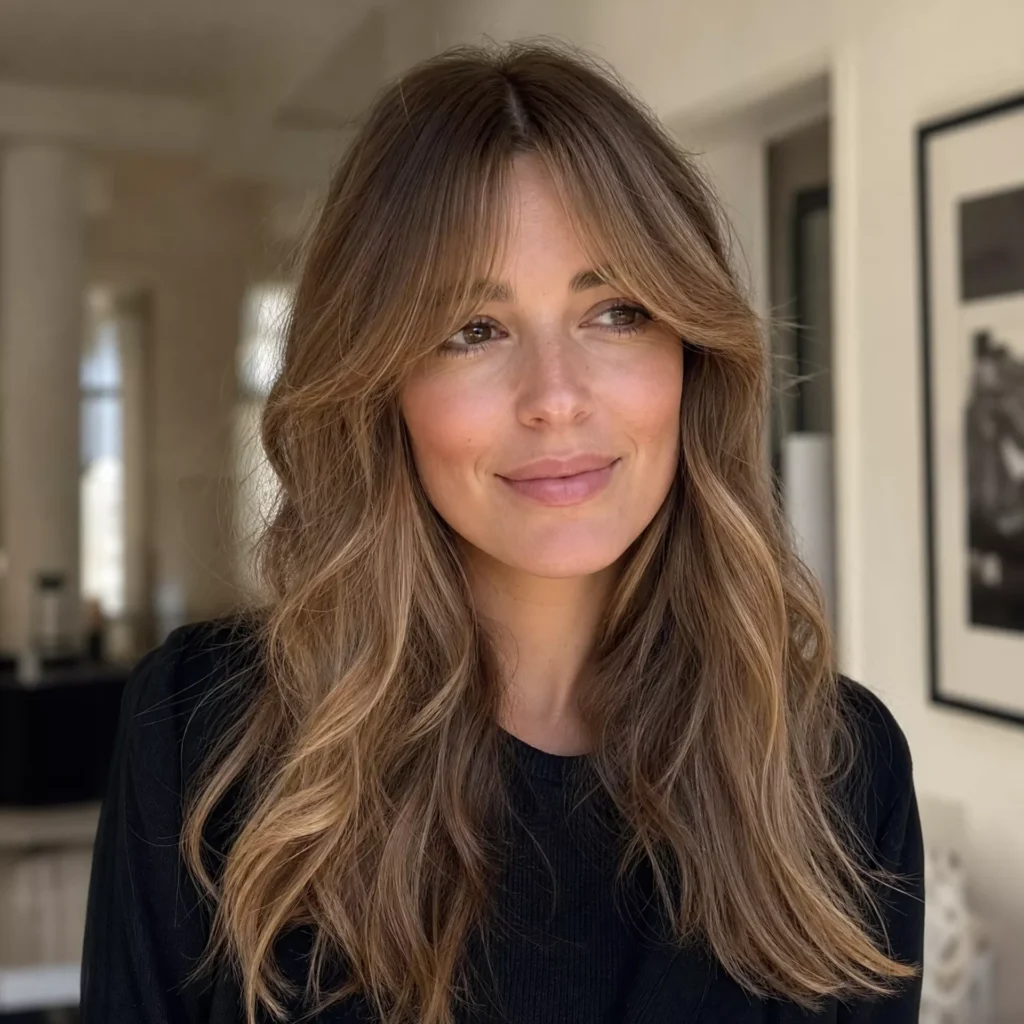
Curtain bangs part at the center and fall to either side, opening toward the cheekbones. The shortest pieces set the effect. Starting around the brow, they cover more of the forehead; starting nearer the cheekbone, they act more like face-framing layers. How they connect to the rest of the cut matters too, because the longest pieces should lead into the next layer. A natural part that sits off-center can make one side fall lower than the other. Most curtain bangs need a quick blow-dry or a twist with a round brush to open evenly.
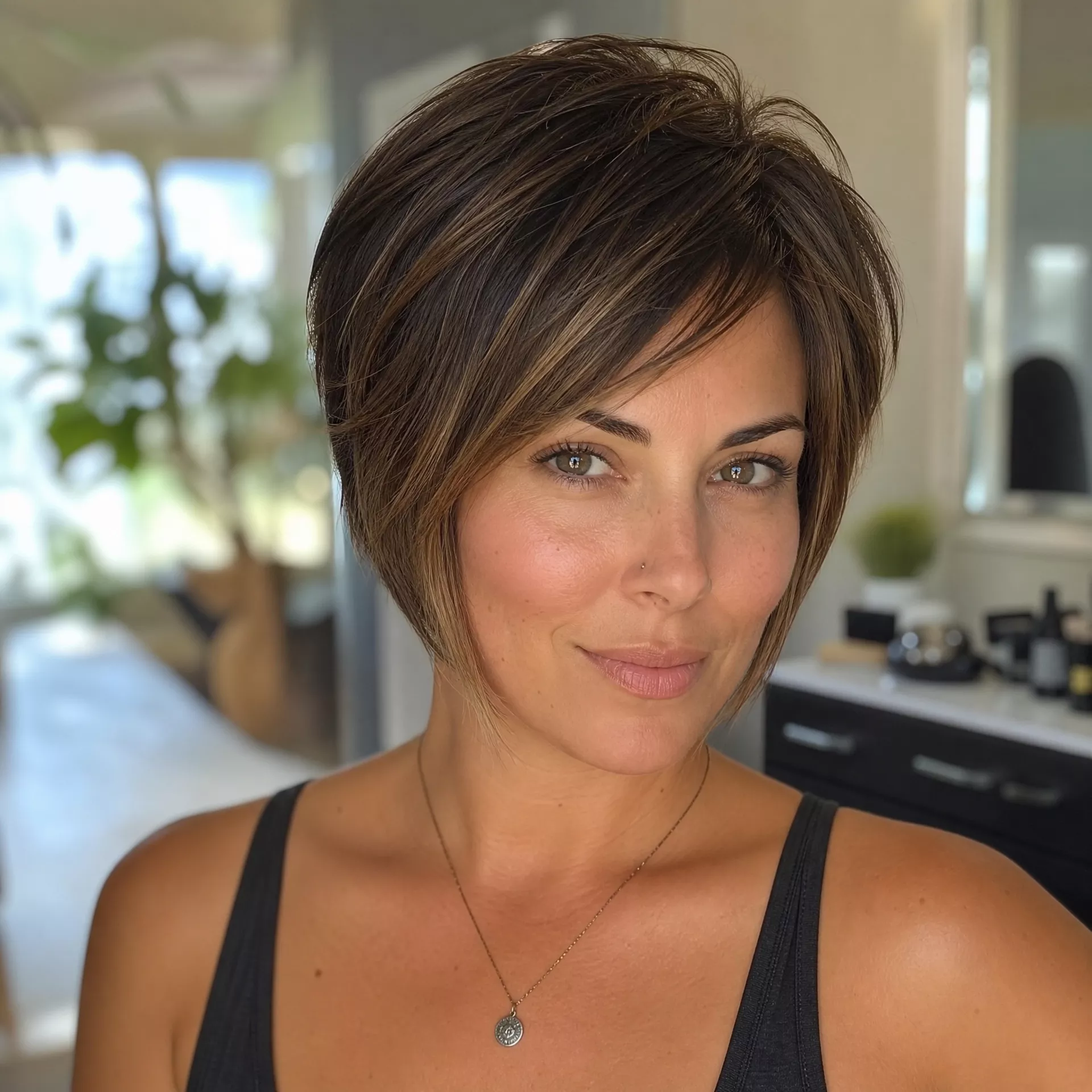
Short Pixie with Soft Top on Diamond Face
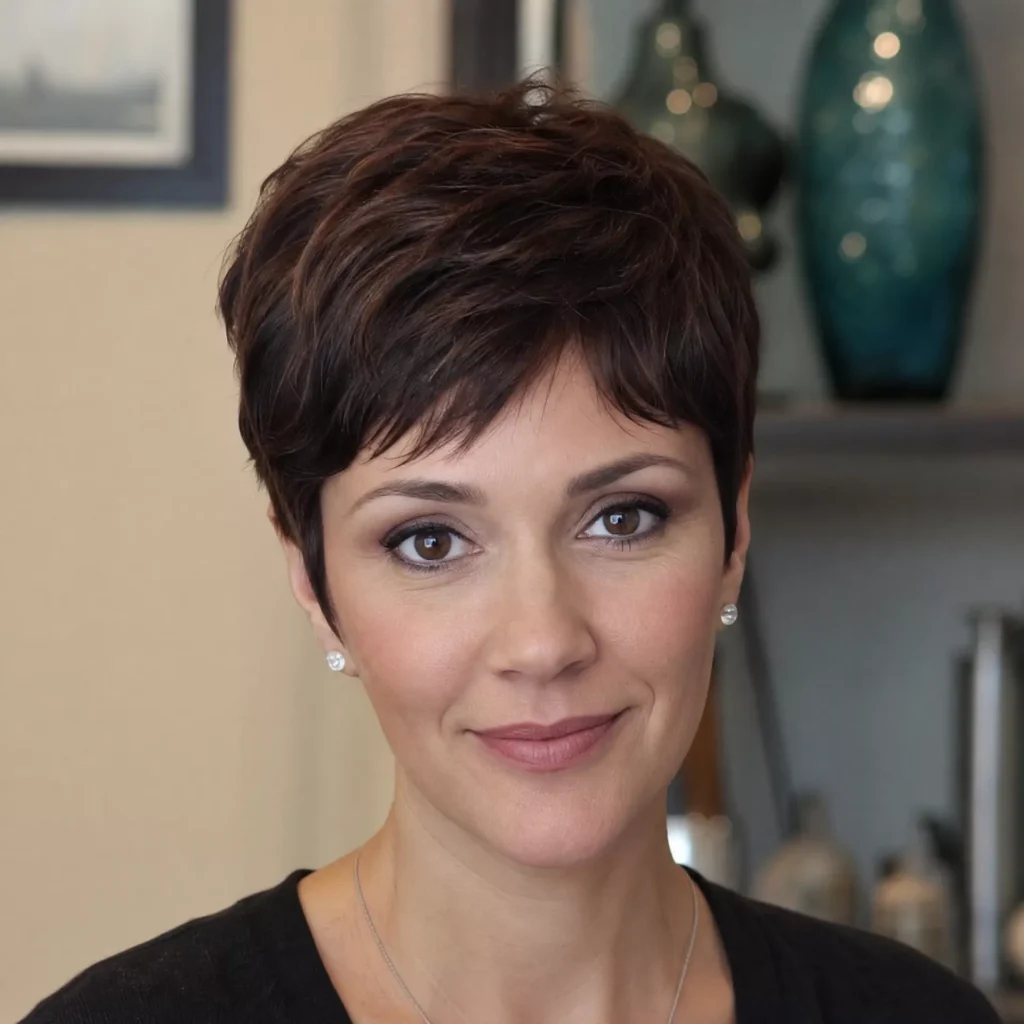
A pixie’s shape comes from the relationship between the top and the sides. Here, the top is left longer and softer so it can be swept, tousled, or pushed forward, while the sides stay short. The cut shows the cheekbones and jaw clearly, which some people with diamond faces enjoy. The top doesn’t have to be lifted for height. It can lie flat and forward for a softer look. Cowlicks and growth direction show at this length, and the proportions change quickly as it grows, so expect regular trims.
Long Hair with Center Part on Diamond Face
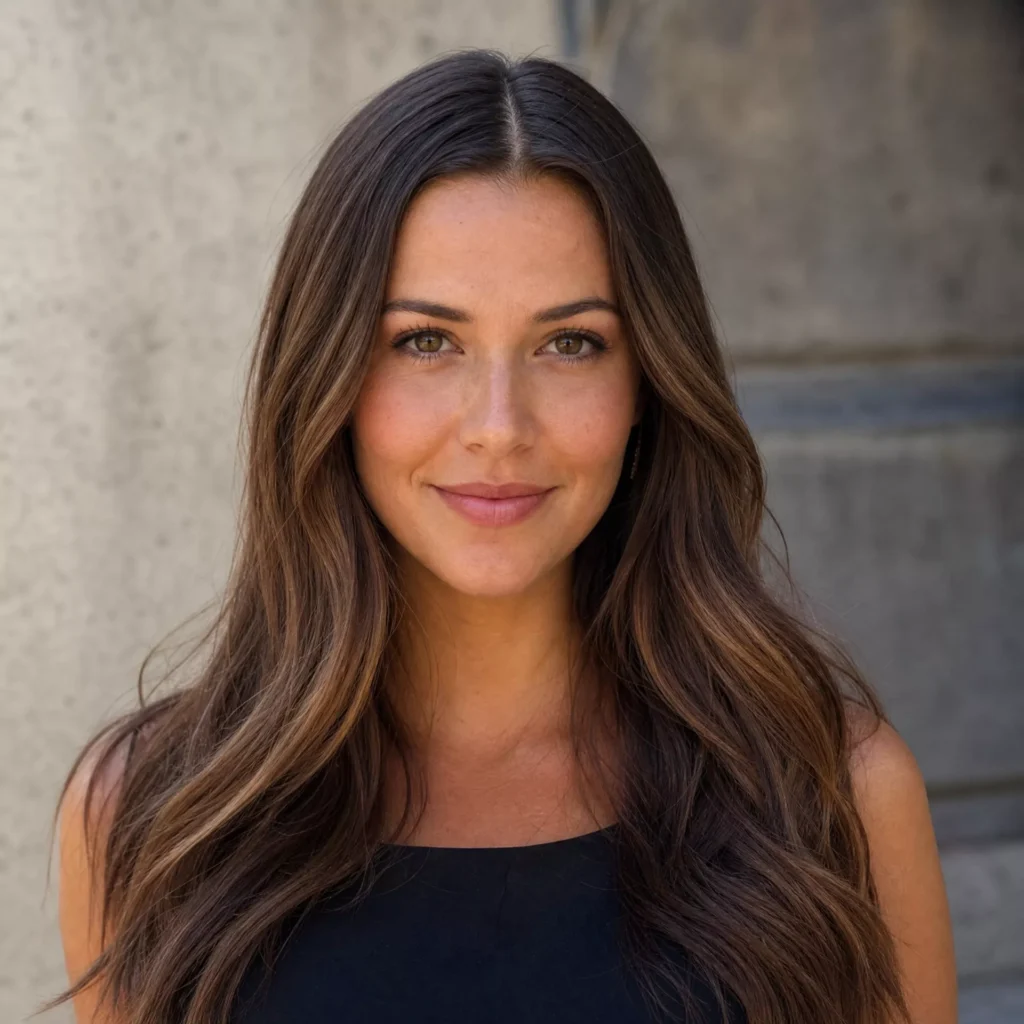
A center part splits long hair evenly, so the front sections fall symmetrically along both sides of the face and create a calm, balanced frame. The front layers decide how much the hair interacts with the cheekbones. Without layers, it falls straight past them; with face-framing layers starting at the cheekbone, it curves around them. A center part sits most easily when your hair naturally parts near the middle. On lower-density hair, it can show more scalp along the line. Whether you prefer it to a side part is simply a matter of taste.
Bob Ending at the Jaw on Diamond Face

The chin-length bob earlier compared bob shapes. This one is about the line at the jaw and how it’s finished. A jaw-length bob usually ends slightly higher than a chin bob, so the perimeter runs right along the jawline. Graduation, a slight stacking at the back, can make the ends curve in toward the jaw, while a blunt finish creates a firmer line. That perimeter is very visible, so growth shows quickly and regular trims keep it crisp. On wavy hair, the line may sit higher than where it was cut, so check where it lands when dry.
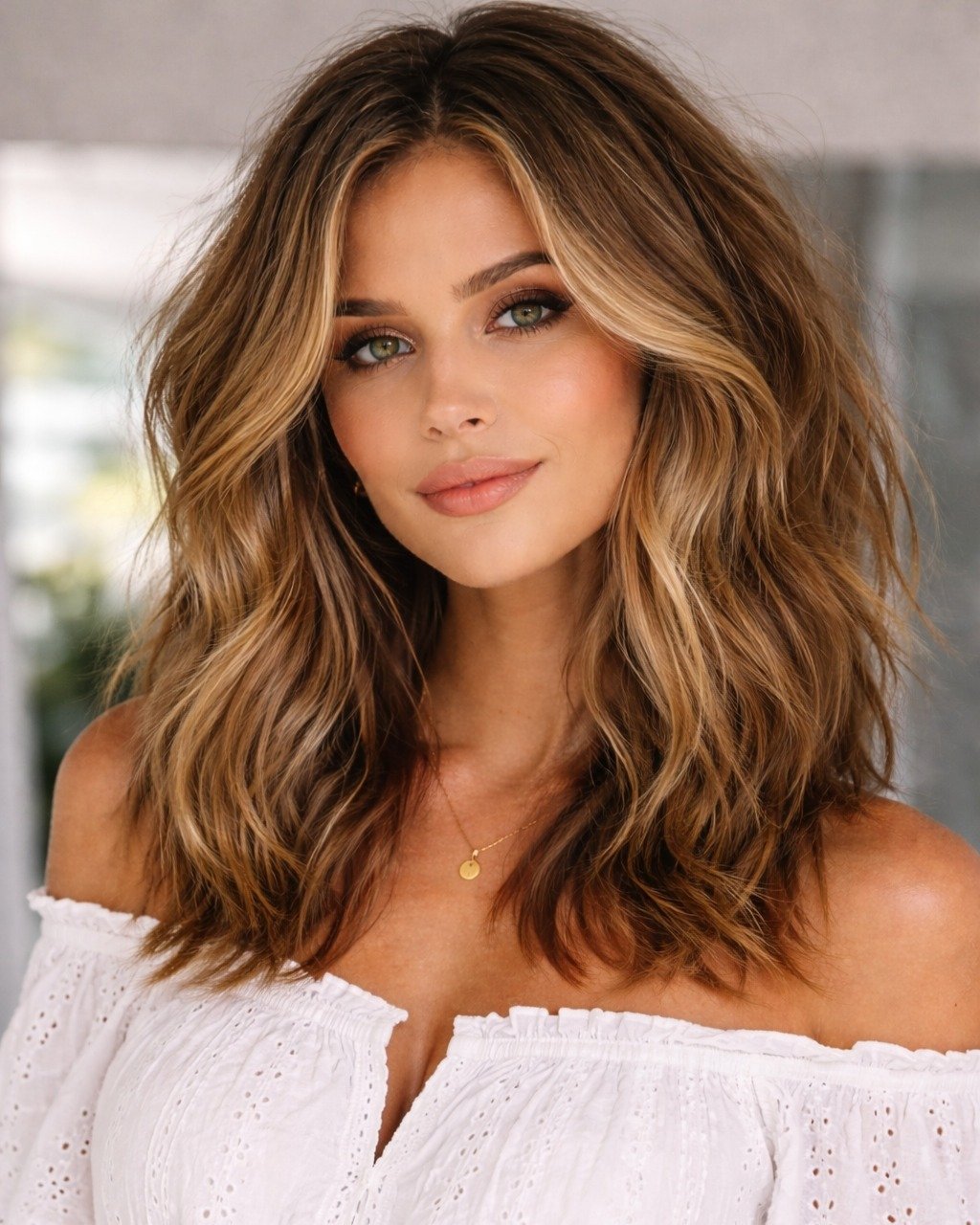
Diamond Face Lob with Waves
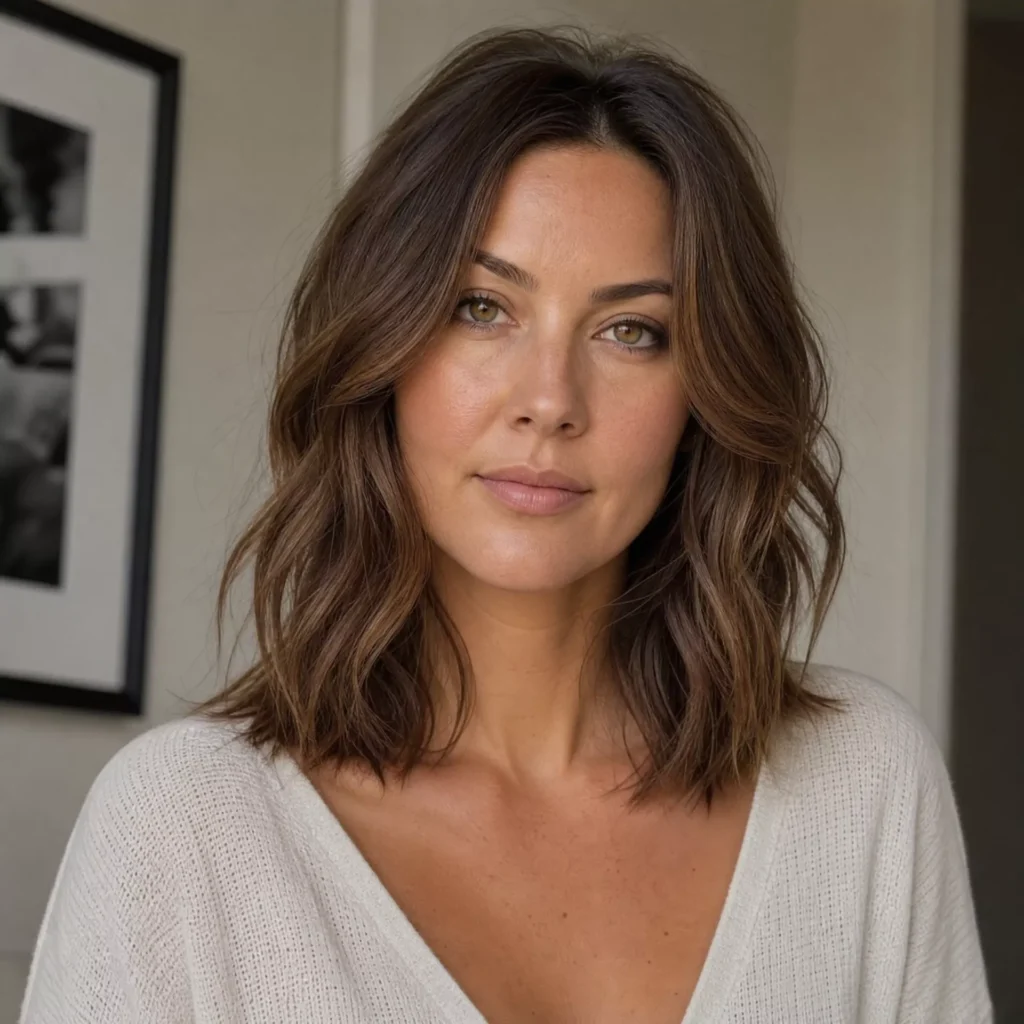
A wavy lob has more length below the jaw than the shoulder-length wavy cut, so the waves have room to form a longer, looser pattern, with the ends around the collarbone. Waves can run through the whole length or start from the mid-lengths down, leaving the top smoother. The extra length also widens your styling options, since a lob can be tucked behind the ears, worn half-up, or tied back. Natural waves usually need product and possibly a diffuser. Heat-set waves need a wand or iron each time.
Shag with Curtain Bangs on Diamond Face

A shag stacks layers through the crown and sides, and curtain bangs open at the front into the face-framing layers. The two need to connect, with the fringe leading into the first layer. Heavily textured layers behave differently depending on density and texture. On dense, wavy hair, they lift and separate easily. On fine or straight hair, they may look thin or need styling product to show. The layers tend to sit around the cheekbones, which creates a textured frame there. Ask how much layering your density can carry.
Feathered Layers on Diamond Face
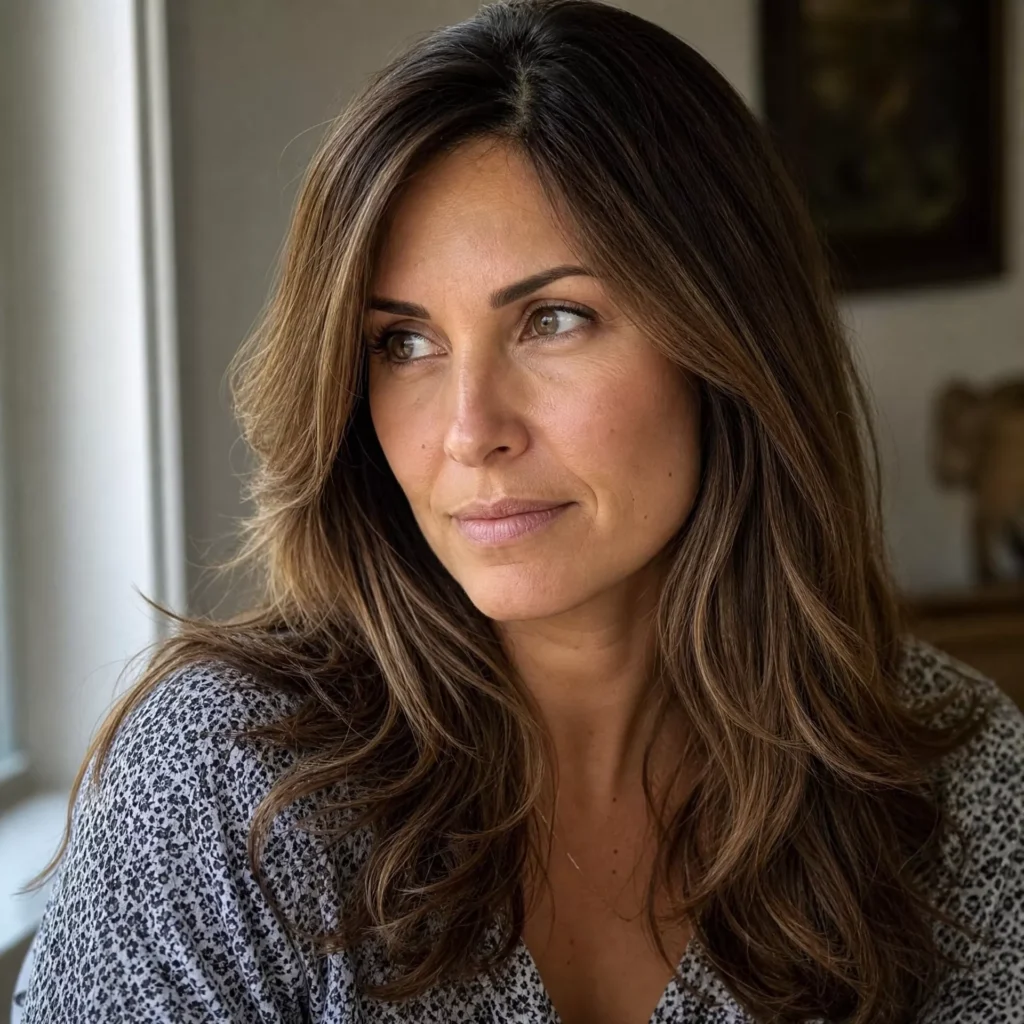
Feathered layers have tapered ends that sweep outward or downward, so the edges look soft instead of solid. A subtle feathered finish keeps the layers long and only lightly tapered. More pronounced feathering, with shorter and more noticeable layers, creates a stronger sweep that’s often styled away from the face with a round brush. The softness around the cheekbones is a large part of the appeal. On fine or low-density hair, too much tapering can leave the ends wispy, so a lighter version keeps more weight at the bottom.
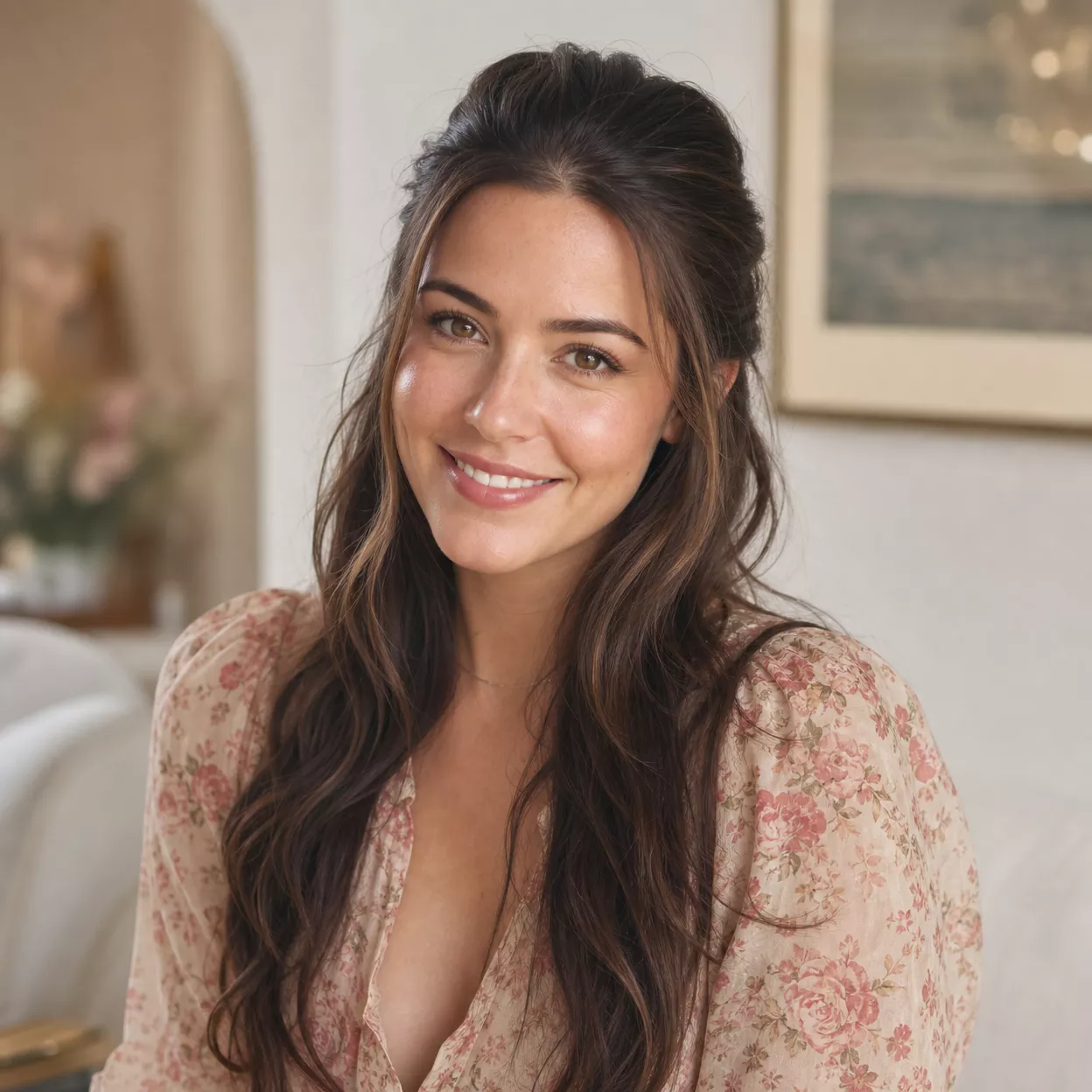
Half-Up Half-Down on Diamond Face
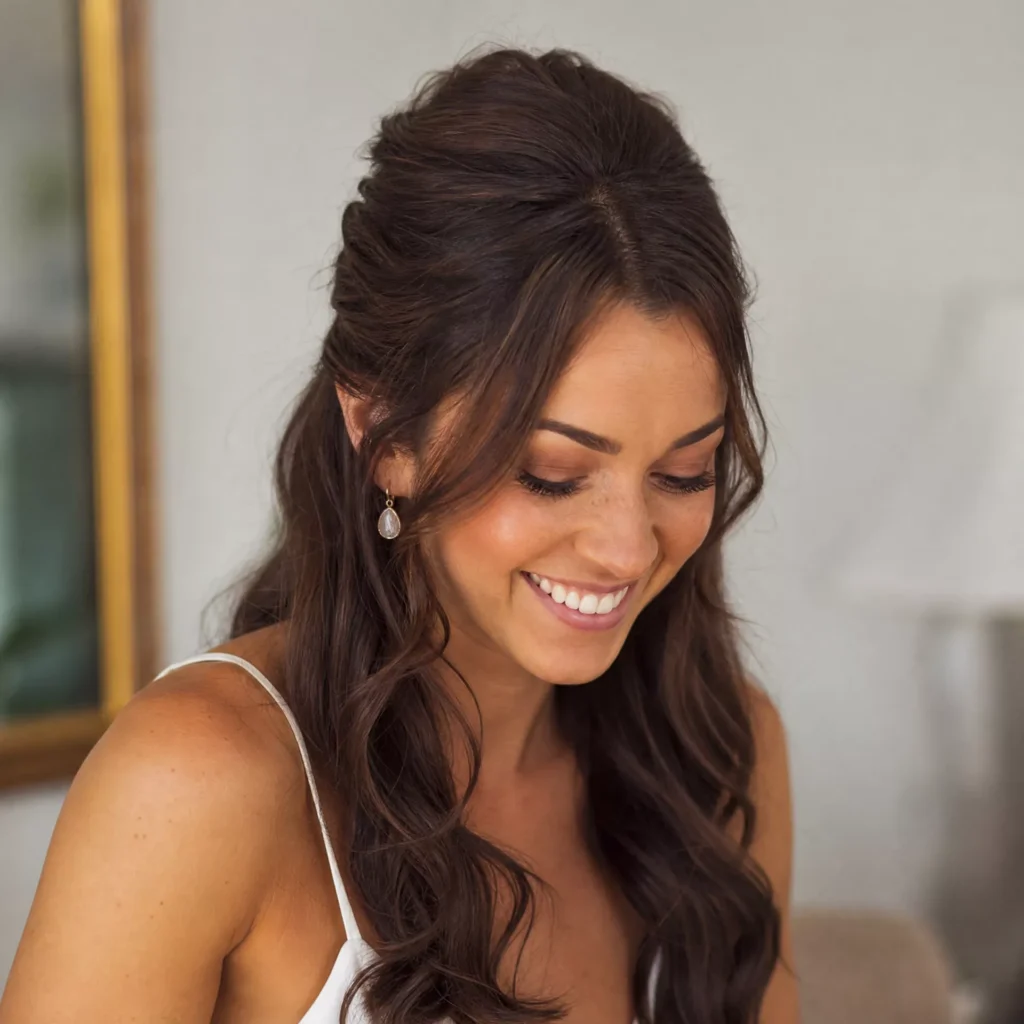
Two choices shape a half-up style: where the gathered section sits and how much hair goes into it. A small section near the crown leaves most of the hair loose, while a larger one pulls more away from the face. Tension matters as much as placement. A tight pullback smooths the sides and shows the cheekbones and temples clearly. A relaxed, softly gathered version leaves some movement around the face. Smooth, slippery hair may need a clip or a couple of pins to keep the section in place.
Loose Updo with Tendrils on Diamond Face
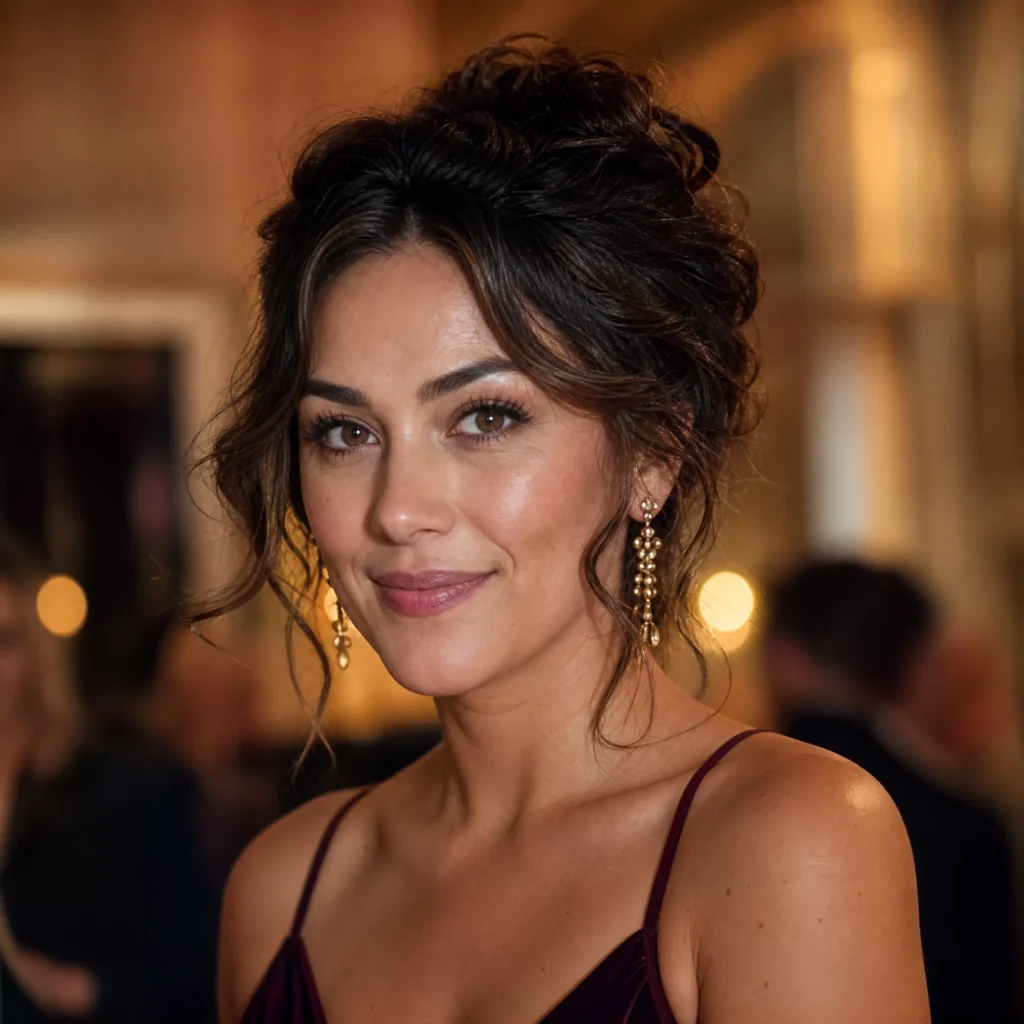
Tendrils are the loose pieces left out around the face, and where they sit and how long they are decide the effect. Short pieces at the temples stay near the forehead, while longer ones at the front fall past the cheekbones. Leaving out too many can make the updo look unfinished. The updo itself should be as secure as the occasion needs. A relaxed daytime version can rely on a few pins, while an event that lasts for hours may call for more structure or a light hairspray. Try it before the day so there are no surprises.
Textured Lob on Diamond Face
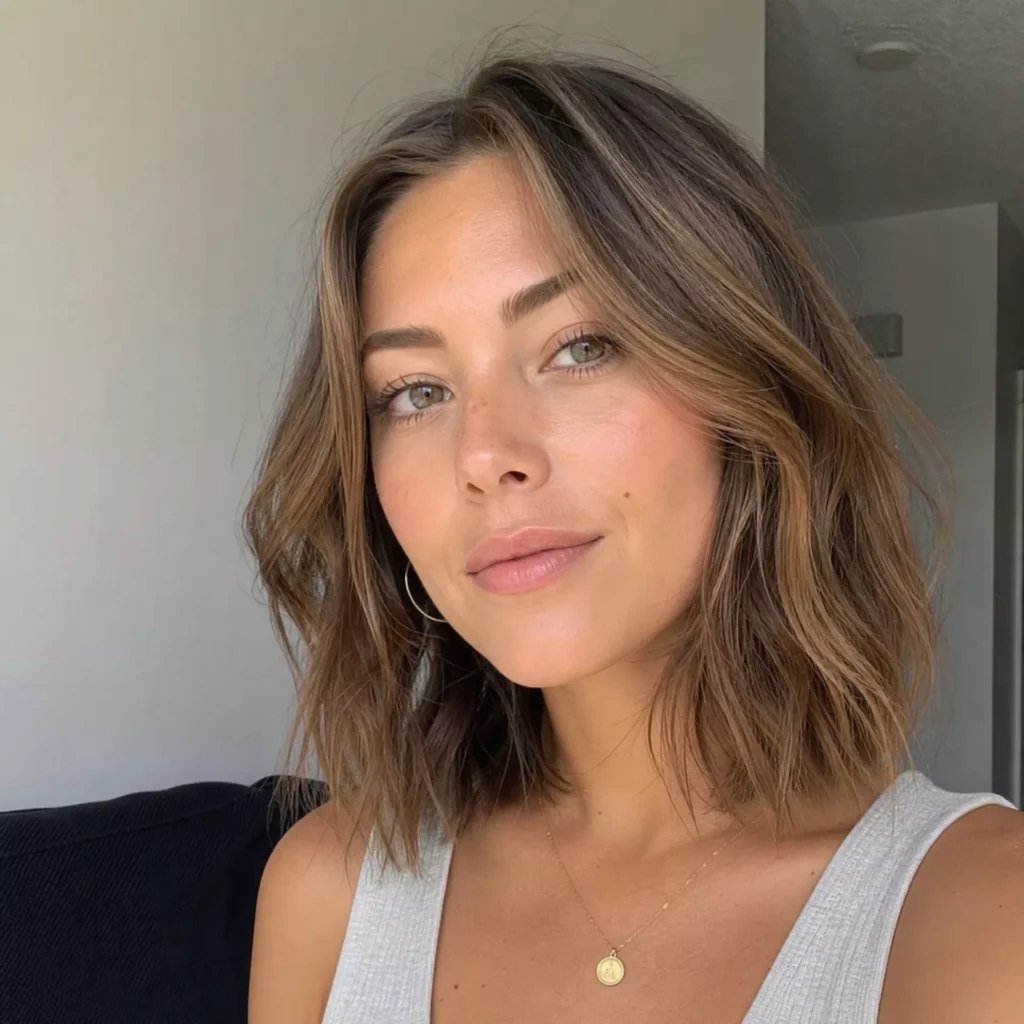
Texture here means separation built into the cut through point cutting or slide cutting, so the lob’s ends and layers break up instead of lying as one smooth sheet. That’s different from the wavy lob, where movement comes from the wave pattern. A textured lob can look separated even on straight hair, though a texturizing spray usually helps. Compared with a blunt or smooth lob, the outline is softer and less defined. On fine hair, heavy texturizing can make the ends look thin, so keep it light.
Long Bob with Flipped Ends on Diamond Face
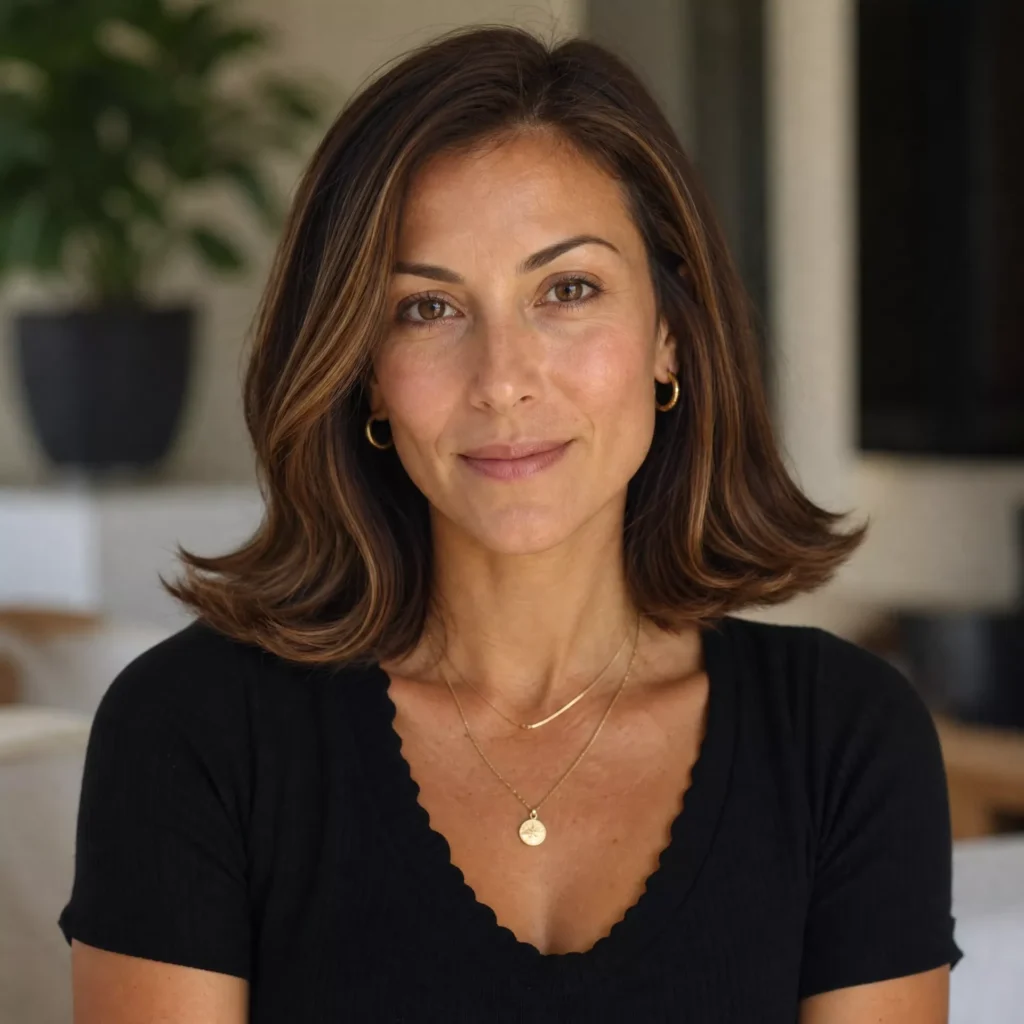
Flipped ends turn outward at the bottom of the lob, usually with a round brush, a flat iron, or rollers. It’s a styling finish, so it needs redoing after washing unless your hair naturally bends that way. Hair that meets the shoulders often flips on its own, while very straight, smooth hair may release the flip within a few hours. The flip moves the perimeter outward near the jaw and collarbone. A slightly tapered edge turns outward more easily than a heavy blunt one.
Braided Style with Volume at Forehead on Diamond Face
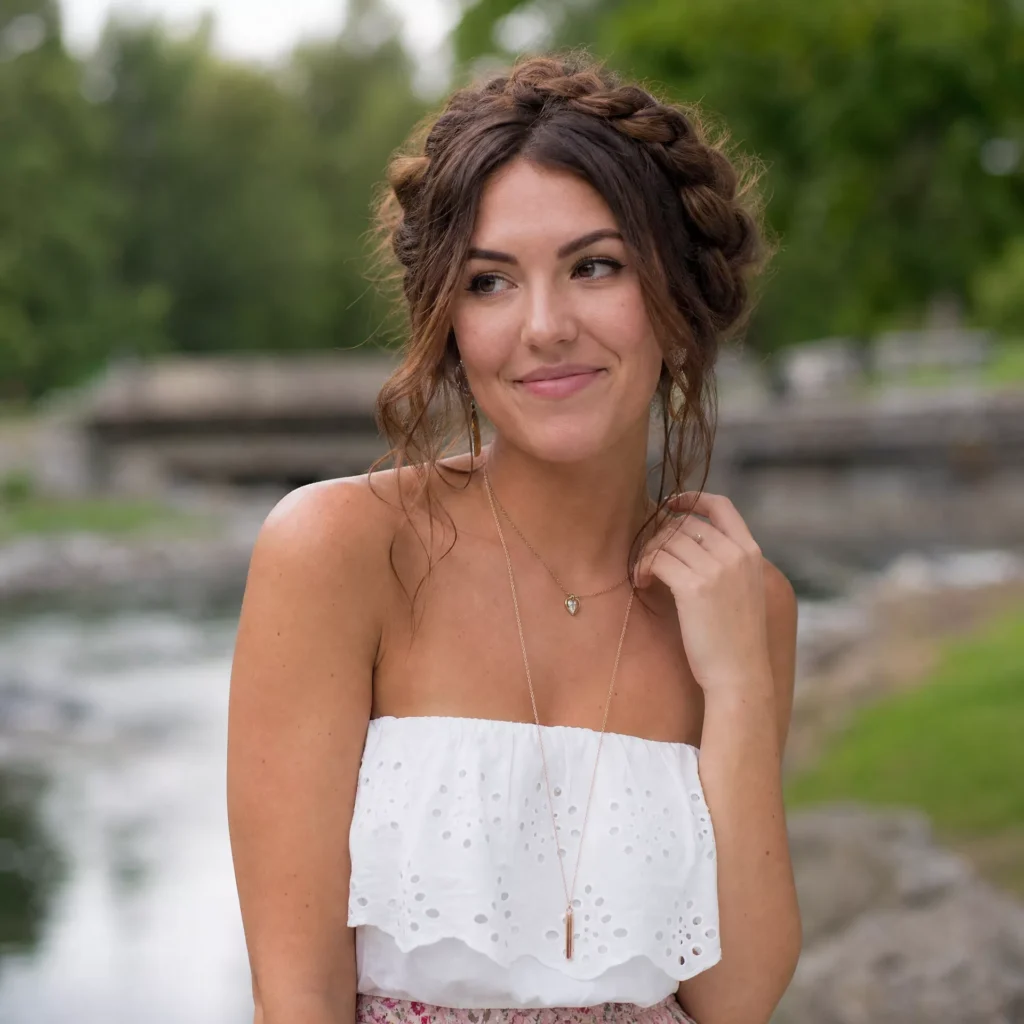
Braid placement decides most of the effect. A braid that starts at the hairline and runs across the top like a headband frames the forehead, while a crown braid sits higher. Gently loosening the braid near the front, or lifting the front section slightly before braiding, adds fullness around the temples. How much is possible depends on your hairline and how much hair you have at the front. Short layers near the face may slip out, and the way you secure the front, with pins or a small elastic, decides how long it holds. A flat, close braid is equally valid if you’d prefer no extra volume.
Wispy Fringe on Diamond Face

A wispy fringe uses a small amount of hair in separated, lightly tapered pieces, so the forehead shows through. It’s softer than a full fringe and lighter than curtain bangs. There’s a difference between soft and over-thinned, though. A wispy fringe should still look intentional, while one thinned too much can look sparse or patchy, especially on fine hair. It’s usually easier to grow out than a blunt fringe, but it still needs regular trimming and a little daily shaping. Ask how much hair will go into it.
Long Hair with Loose Waves on Diamond Face
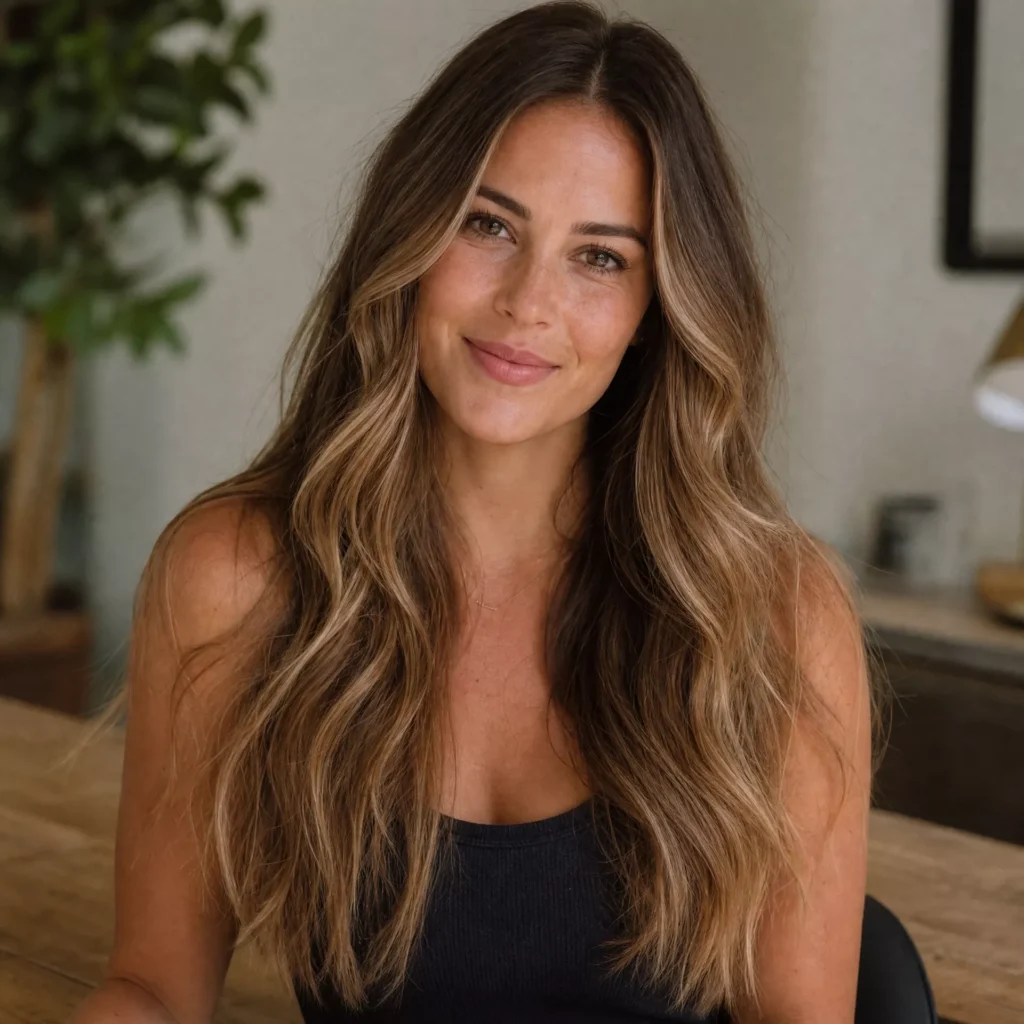
Long hair gives waves room to form a long, relaxed pattern, with the overall length falling well below the cheekbones. The amount of layering decides how the waves behave. Few layers keep them heavier and more uniform toward the ends, while more layers let them form higher up and move more freely. A relaxed finish usually comes from natural texture with light product, or from a large iron used on alternating sections and then brushed out. Very long, heavy hair can pull waves straighter at the roots.
Asymmetrical Cut on Diamond Face

Asymmetry ranges from one side being slightly longer to a dramatic difference between the two. A subtle version reads as a soft diagonal, and a strong one becomes the main feature of the haircut. The uneven outline changes how the hair frames each side of the face, and whether you prefer that to a symmetrical cut is a matter of taste. Asymmetry needs precise cutting, and it tends to lose its intended shape as it grows. It’s easiest to live with when the longer side follows your natural part.
Diamond Face with Balayage Long Hair
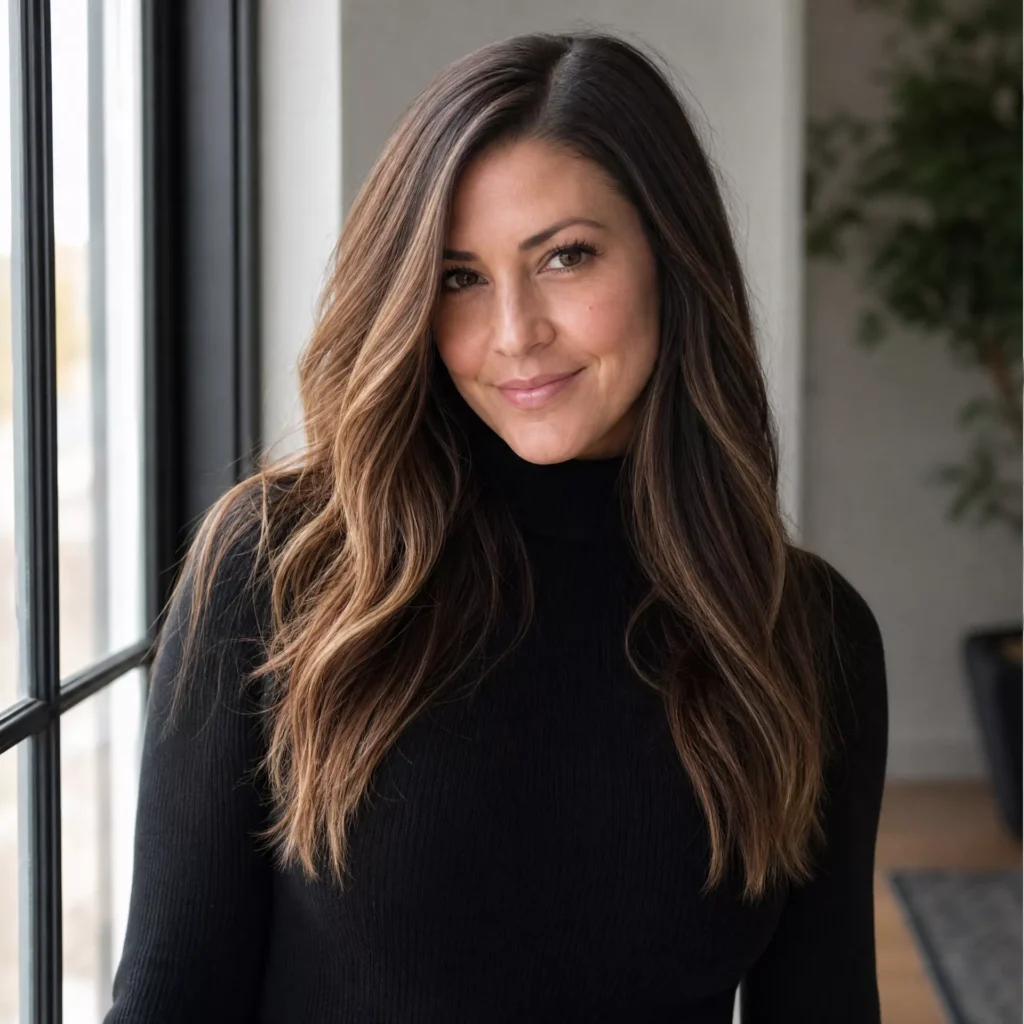
Balayage is a color technique, not a haircut. Lightener or color is painted freehand onto sections, usually leaving the roots closer to your natural shade and lightening toward the mid-lengths and ends. On long hair, that creates a gradual shift in tone down the length. The amount of contrast is your choice, from barely there to strong. Upkeep depends on how much lightening is done and how often toning is needed. It changes the color in the lengths, not the shape of the haircut or the face.
Ponytail with Side Pieces on Diamond Face

Leaving a few strands out of a ponytail changes how the front looks. Fine face-framing strands, just a few hairs at the temples, look light and soft. Larger sections, such as a full face-framing layer, act more like a frame and need more styling to sit well. Ponytail height matters too. A high ponytail lifts and pulls the hair upward, while a low one sits quietly at the nape. The side pieces work best when they’re long enough to fall cleanly and short enough to stay out of the way.
Building a Complete Cut for a Diamond Face

Instead of one ideal combination, think of the cut as a series of decisions. First, choose a length: short and defined, around the jaw or collarbone, or long. Then decide on fringe, whether full, wispy, curtain, side-swept, or none at all. Choose where layers start and whether you want hair close to the cheekbones or falling past them. Finally, consider your texture and the styling you’ll realistically do. One person might choose a collarbone lob with curtain bangs, while another chooses a short pixie with no fringe. Both are sound choices.
Strong Fringe, Wispy Fringe, or None
Five of the styles above involve a fringe, and the main difference between them is commitment. A full fringe changes the face the most but needs frequent trims and daily styling. Curtain and side-swept bangs are more flexible, since the longer pieces can be tucked aside on off days. A wispy fringe is subtle and grows out gently but can look sparse on fine hair. No fringe at all leaves the forehead clear, which is just as reasonable a choice. If you’ve never had a fringe, a longer curtain or side-swept version is the easiest place to start.
Where the Fullness Sits
Many of these styles differ mainly in where the hair carries its fullness. Some build it near the forehead with a fringe or a lifted front. Others place it below the cheekbones, through jaw-length bobs or flipped ends. Still others keep the hair smooth near the face and let length carry the movement lower down. Fullness right at the cheekbones isn’t wrong; it simply draws attention to that area. When you look at reference photos, notice where the volume sits, then ask your stylist whether your texture will put it in the same place.
Final Thoughts
A diamond face doesn’t come with one correct haircut. Fringe, length, layers, and texture each change the outline in their own way, and the best combination is the one you’ll enjoy wearing and can manage day to day. Save the photo that feels closest to what you want, point out the fringe, length, and finish you like, and let your stylist adapt it to your hair.