25 Shag Haircuts for Women With Thick Hair and What to Know Before You Cut
Thick hair carries a lot of weight, and much of it sits in the interior where you can’t see it. A shag changes where that weight sits: shorter layers around the crown and face, longer pieces below, and an outline that’s broken up instead of solid. Done well, that can keep thick hair from stacking into a heavy, rounded shape. Done too aggressively, it can leave the ends looking thin and the cut harder to style.
“Thick” also isn’t one thing. It can mean high density, meaning a lot of strands, or coarse individual strands, or both. Fine strands packed closely together can look every bit as thick as coarse ones, but they respond differently to layering. Add straight, wavy, curly, or coily texture and a different length, and the same shag can look nothing alike from one head to the next.
The goal isn’t to remove as much bulk as possible. The 25 cuts below show different ways of deciding where weight stays and what each version asks of you.
Long Shaggy Layers for Thick Hair

The appeal here is keeping your length. The layers start below the chin and work through the mid-lengths, so weight comes out of the middle of the hair while the overall length barely changes. Where the first layer begins is the main decision: higher up builds more shape around the face, lower keeps things calmer. On very long, dense hair, layers that are too sparse can still leave the ends feeling heavy, and layers that are too many can thin them. Ask where the weight will be left, not only where it will be removed.
The Wolf Cut

A wolf cut is a shag with a mullet-leaning shape: short, heavily layered crown, longer and wispier lengths behind. On thick hair, the short crown layers can stand up and widen the top, so the effect depends on density there. It also depends on texture. Wavy or curly hair tends to hold the separated shape, while straight hair usually needs product or heat to keep the pieces from lying flat. Curly hair shrinks as it dries, so the crown length is best judged dry. It isn’t a cut that works identically on every thick texture.
Medium Shag with Curtain Bangs

The curtain bangs are cut from a section at the front, and on thick hair how much hair goes into them matters. A very dense section can produce a heavy fringe, so some stylists take the bangs from a smaller area and blend them into the surrounding layers. Your natural part also matters: bangs that split where your hair naturally parts settle more easily than ones forced against it. They’ll need trims between full haircuts, and on wavy hair they may sit shorter once dry than they did in the chair.
Choppy Shag with Deep Side Part

Two decisions overlap here: the choppy layering, which is the cut, and the deep side part, which is styling. Moving the part shifts more hair to one side, and on thick hair that side can feel heavy unless the layers are placed with it in mind. A part that follows the direction your hair already falls tends to hold better than one forced across. The beach-style waves in photos of this look are usually created with a wand or texture spray unless your hair bends naturally.
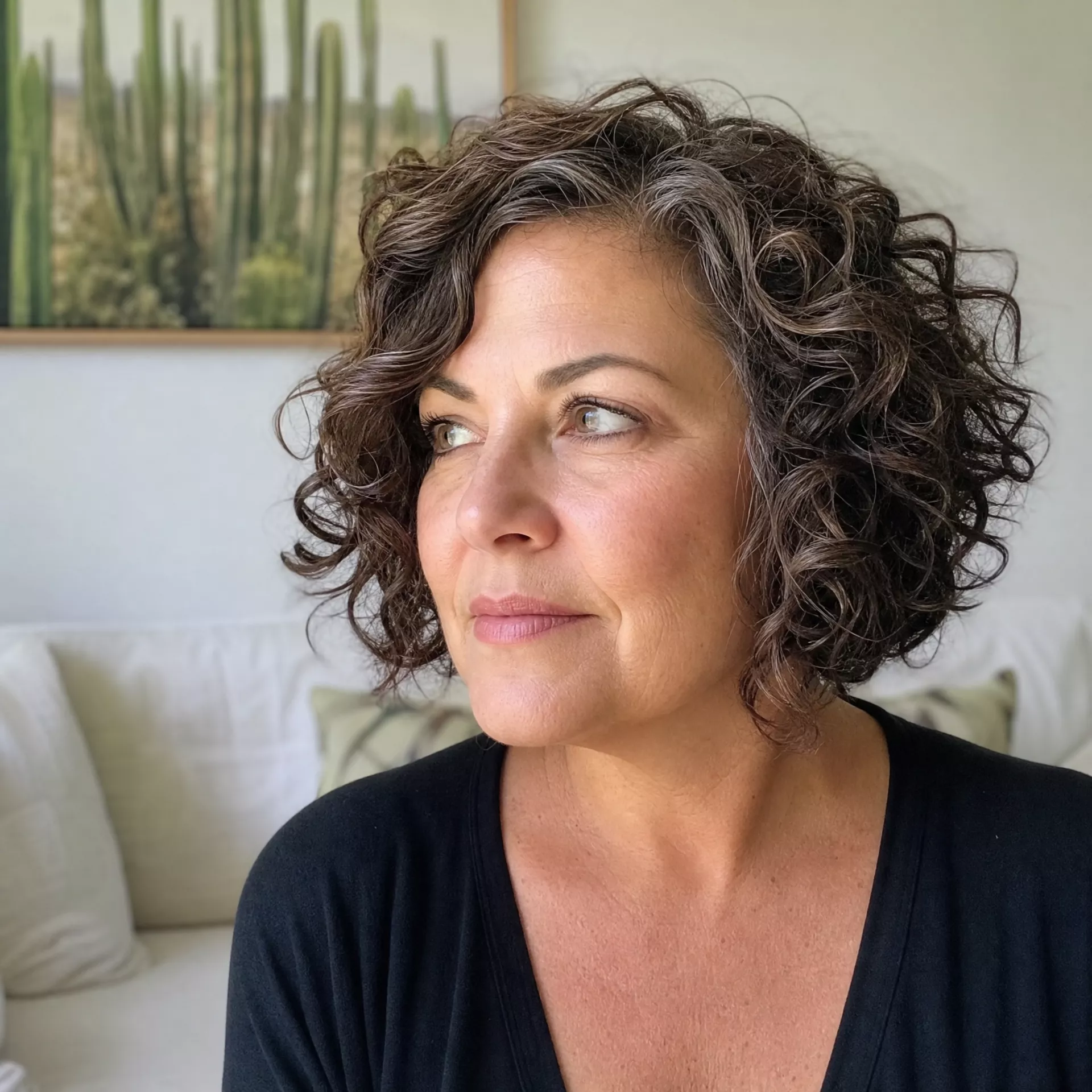
Short Shag Bob for Thick Hair

Short, dense hair can flare outward at the bottom, so this cut keeps a fairly firm perimeter while layering the interior. The edge holds the shape and the inside layers take out some of the bulk. Nape thickness is the detail to raise with your stylist, since dense hair there can push the back of the cut out and up. Expect regular reshaping, because short cuts show growth quickly. Our guide to bob hairstyles compares other perimeter options.
Soft Retro Shag with Thick Layers and Bangs

“Disconnected” crown layers means there’s a visible step between the short top layers and the longer lengths beneath, instead of a smooth blend. That step creates the retro shape, and on thick hair it also creates a wider top. If you like height at the crown, that’s the point. If your hair already expands sideways, ask for softer transitions. The full bangs need enough density at the front, and the look usually depends on a round brush or dryer to shape it.
Layered Shag with Peekaboo Highlights

The shag and the highlights are separate decisions. The layers remove weight; the highlights, placed under the top layer, add a lighter tone that shows when the hair moves or is tucked back. Highlights don’t lighten the load of thick hair, and they need lightening, which affects condition. Regrowth shows in its own time, not on the haircut’s schedule. If you like the cut but not the upkeep, it works on a single color too.
Straight Shag with Bangs for Round Faces

Face shape is one consideration here, not the deciding one. What changes the shape of the silhouette is where the first layer starts, how the fringe is shaped, and where volume sits. Layers starting near the cheekbone put movement close to the face, while layers starting lower keep the sides calmer. On straight, thick hair, some stylists slice or use a razor to soften the interior; others get a similar result with scissors and point-cutting. The right method depends on your hair’s texture and the finish you want.
Wavy Layered Shag for Thick Hair

Wavy thick hair often has weight that pulls waves straight, so layers are placed where they can release the pattern. That can let the waves form with little help, though wavy hair varies a lot: it may bend in the back and stay straight near the face, or frizz in humidity. Some stylists use a razor to soften and taper the layers, but plenty of shags are cut with scissors and point-cutting. The technique is less important than whether the stylist understands how your specific wave falls.
Dark Brown Shag with Choppy Bangs

A single deep brown shade puts the focus on the cut itself, which is worth knowing. On dark hair, uneven or overly choppy layering is easy to spot, and the shape shows up as shadows between sections. Choppy bangs add irregularity at the front, so how cleanly they’re cut matters. Because there’s no highlight contrast to define the layers, the structure has to do the work. This look is less about color maintenance than about precise cutting.
Shoulder-Length Shag with Bangs

Shoulder length has a quirk: hair tends to flip outward where it meets the shoulders. On thick hair, that can push the ends out and change the shape of the layers. Cheekbone-length layers add shape near the face, and a full fringe adds a stronger front. Whether it styles quickly depends on your texture. Naturally wavy hair may fall into shape, while straight, thick hair often needs a brush and dryer. The fringe needs upkeep between haircuts.
Long Shag with Undercut for Thick Hair

An undercut removes hair from a hidden section, usually at the nape, so the top layers can stay long while some of the bulk underneath is gone. It’s a useful tool for very dense hair, but it has its own grow-out: the clipped section regrows shorter than everything around it and needs regular tidying to stay neat. It also shows when you tie your hair up. If you’re not sure about that, ask whether internal thinning could do part of the same job.
Two-Toned Shag with Middle Part

The color contrast is separate from the haircut. Two tones make the layers easier to see, because lighter and darker sections catch light differently, which on thick hair can also emphasize choppy sections. The middle part gives a symmetrical frame and a clean center line. Two-tone color usually needs more lightening and its own maintenance, and regrowth or fading may show unevenly. If you want the shape without the upkeep, the cut works in one color.
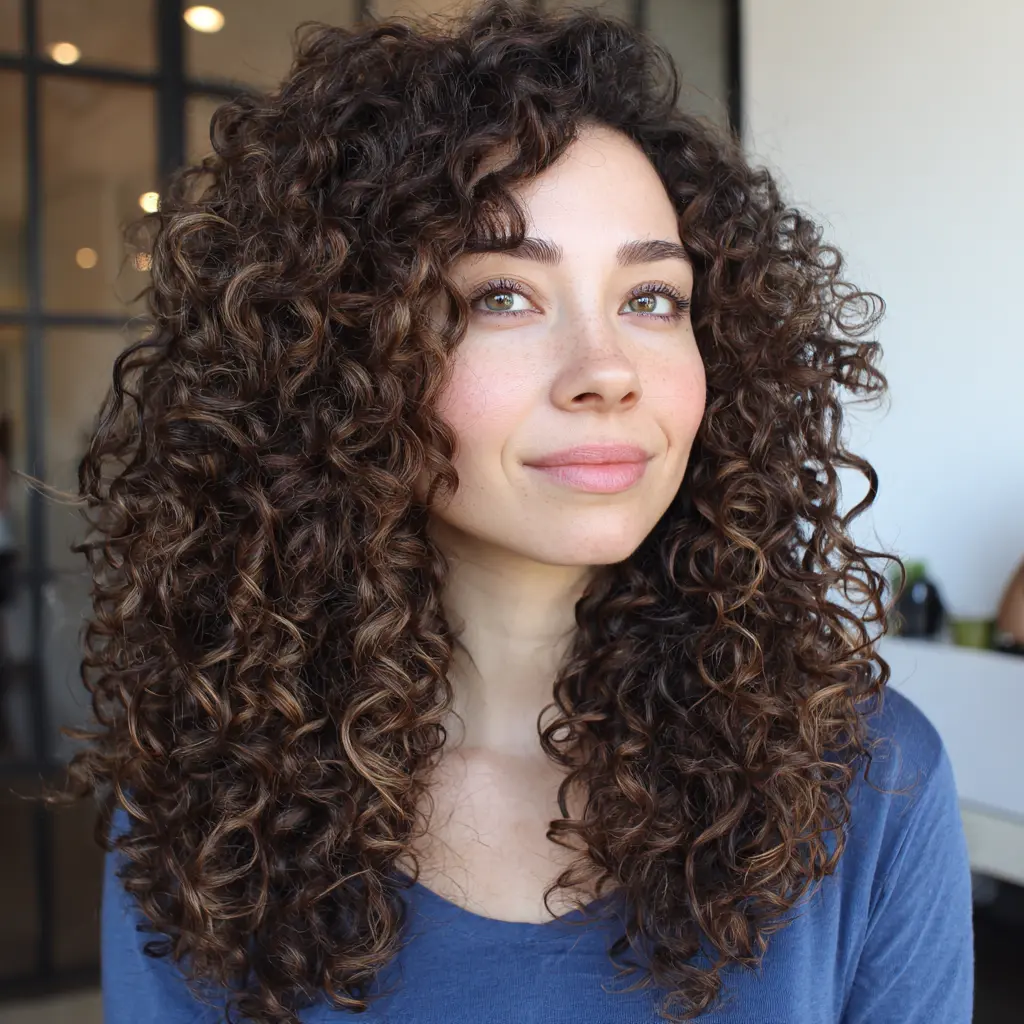
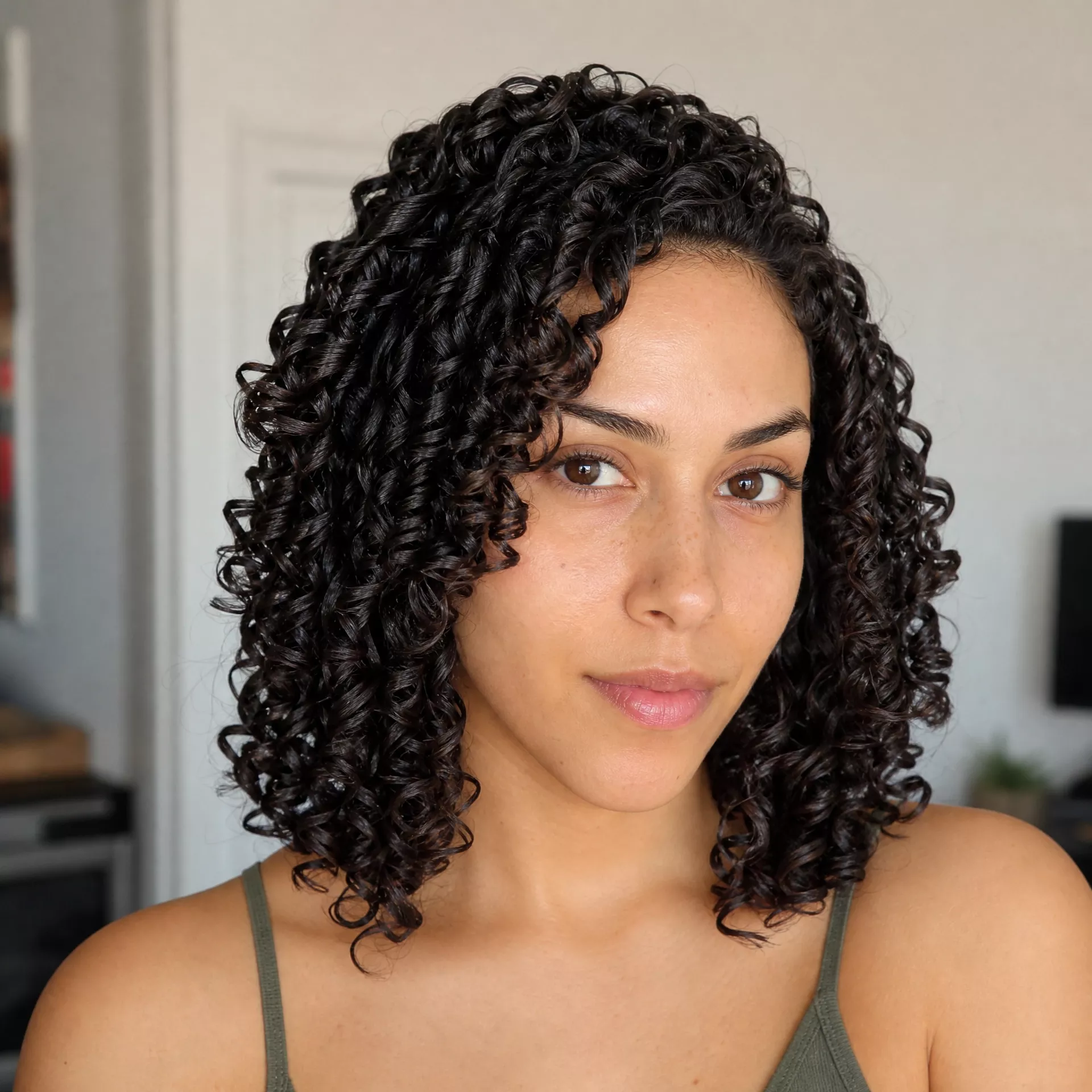
Curly Shag for Thick Hair

Curls shrink as they dry, sometimes a lot, so a length that looks right wet can land much higher once the curls spring up. Because curls can change shape significantly as they dry, ask your stylist how they prefer to assess your natural dry pattern before finalizing the layers. With thick curls, crown layers help the top lift, but weight needs to stay in the lengths so the curls hold their shape. Removing too much can make curls frizzy or widen the outline. Our guide to curly shag haircuts covers layer placement in more depth.
Tousled Medium Shag Lob

Three things are combined: a shag lob, razored bangs, and a brown-to-copper balayage. The lob is the length and shape, the razored fringe is a cutting choice, and the copper is color. Copper tends to fade faster than many shades, so it may need refreshing sooner than you’d expect. The tousled finish comes from wave and texture, natural or styled. On thick hair, keep an eye on how much weight the layers remove, so the shape still holds.
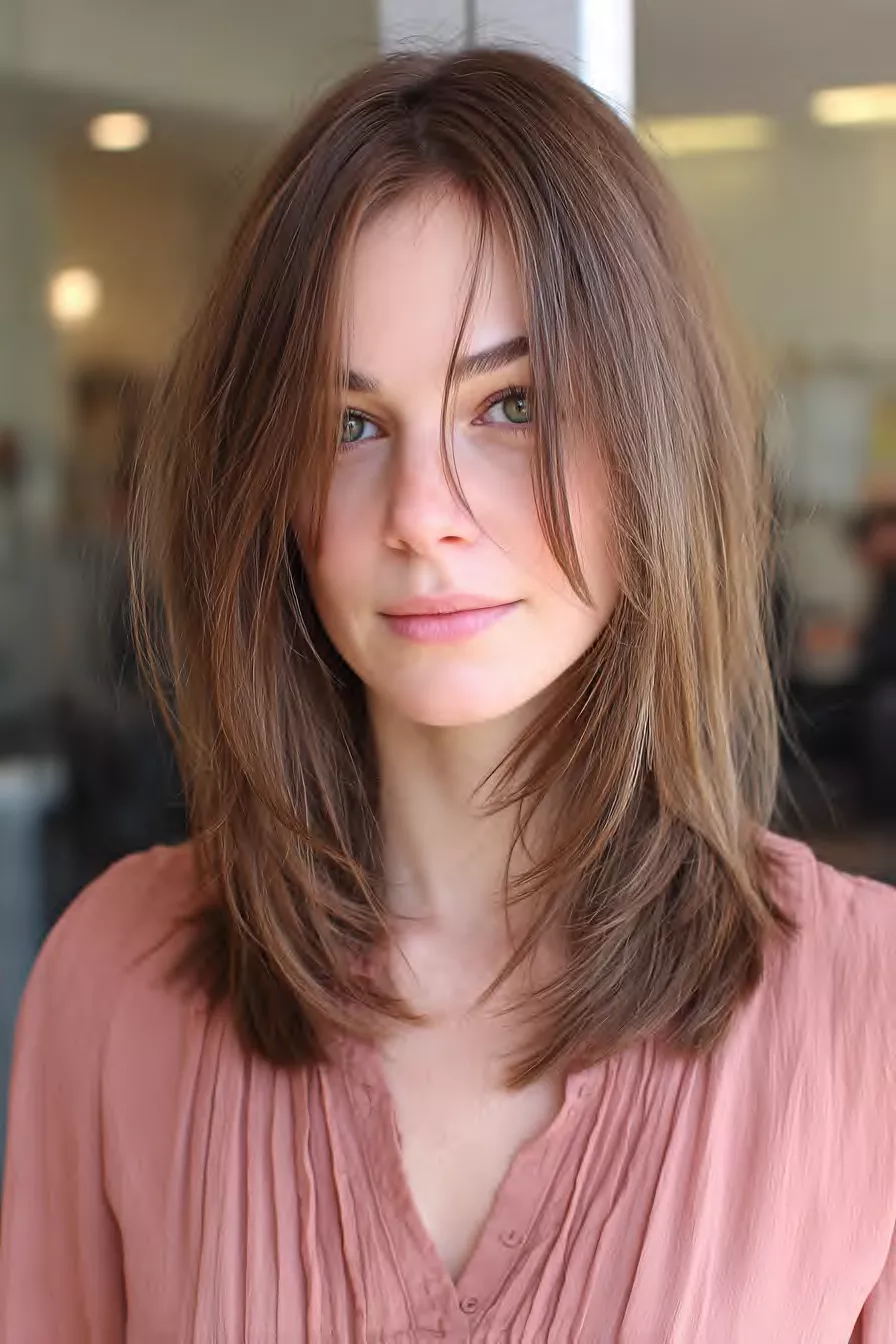
Long Shag with Face-Framing Bangs

Where the previous entries lean on crown layers, this one focuses on the front. Side bangs blend into layers that start near the face, so the change is concentrated there while the length behind stays. That makes it a moderate step: visible at the front, still long everywhere else. As the bangs grow, they blend into the face-framing layers, which usually makes grow-out gentler than a blunt fringe. On thick hair, check that the front layers aren’t so short they fall out of a ponytail.
Voluminous Shag with Crown Layers

Crown layers are usually described as lifting hair that’s weighed down, but thick hair often isn’t flat at the crown. It’s more likely to be heavy at the sides. In that case, too many short layers on top can build height and width instead of balance. This cut suits hair that does go flat at the root, which is possible even when there’s plenty of it. If your crown stands out on its own, ask for fewer short layers there, or a softer transition.
70s-Inspired Long Shag

Long, feathered layers through the sides define this shape, with length kept overall. It shows off long hair without leaving it as one heavy sheet. The trade-off is styling: the outward flick and volume in photos usually come from blow-drying and product, not just the cut. With thick hair, the layers add up quickly, so it’s worth deciding how choppy versus smooth you want before the scissors come out. The amount of layering changes the whole feel.
Sleeker Shag for Thick Straight Hair

This is the smoother end of the shag family. Layers are still there, but blended more softly so the surface looks polished instead of piecey. On straight, thick hair, that usually means a blow-dry or flat iron, and a smoothing product for the finish. Humidity can bring back frizz and lift. Because the layers are subtler, the weight removal has to be judged carefully: too little, and the hair still feels heavy; too much, and the sleek finish can turn thin.
Shag with Face-Framing Layers for Straight Hair

Compared with the sleeker version, this cut layers mainly around the face and leaves most of the length intact. That means the rest of the thick, straight hair keeps its full weight and will hang like it always has. Some people find that fine; others expect the whole head to feel lighter. A round brush on the face-framing pieces is common, but whether the rest air-dries well depends on how your hair falls naturally, not on the cut.
Soft Shag for Mid-Length Thick Hair

The layers in a soft shag are longer and more blended than in a choppy one, so the texture is gentler and the outline less broken. That makes it a reasonable choice if you like the idea of layers but not obviously uneven ones. On thick hair, the layers need to be long enough to keep weight in the ends. It tends to grow out gradually since there’s no strong shape to lose, though it may need reshaping when the layers lengthen.
Shag with Thick Full Bangs

A full, eye-skimming fringe puts a lot of hair right at the front, so hairline density and cowlicks matter. On very thick hair, a full fringe can turn heavy and stand away from the forehead, and a stylist may thin it slightly or take it from a smaller section. Forehead preference matters too: some people like a fringe that covers the whole forehead, others prefer to see some of it. It needs frequent trims, and taking hair for the fringe leaves less to work with elsewhere.
80s-Inspired Long Shag with Layers

Big layers, lots of lift at the crown, and volume through the sides define this one, and most of that finish comes from styling. The volume in photos is often a blowout, curling, and product working with the cut. With thick hair, remember that removing weight at the sides may also reduce fullness there. It’s wise to decide whether you actually want that much shape at the crown, since heavily layered top sections can feel very tall on dense hair.
Blunt Shag Bob for Thick Hair

A blunt perimeter with interior layering gives structure and texture in the same cut. On coarse, thick hair, the blunt edge reads as dense and solid, while the interior layers reduce bulk. On fine but dense hair, the same edge looks softer, and the layers may need to be more conservative. Because the line is precise, it shows growth sooner than a feathered perimeter, so reshaping tends to come around earlier. Our guide to volumizing hairstyles for fine or thin hair covers how density changes these choices.
Waist-Length Shag with Face-Framing Bangs

At this length, weight is the main variable. Very long hair is heavy, so layers matter more, but taking off too much can leave the ends looking thin. Crown layers and face-framing bangs add shape without shortening the overall length. Drying time is worth considering: long, thick hair can take a long time to dry, and the layers may not show clearly until it’s fully dry. Regular trims keep the ends looking deliberate rather than worn.
What Makes a Shag Work on Thick Hair?
The cut works when weight is removed from the right places and left in others. Most of what separates one shag from another comes down to a few decisions.
Where the weight comes out. Interior layers and internal thinning take out bulk without changing the outline much. Layers cut at the surface change the shape you see.
The perimeter. A blunt or near-blunt edge keeps the ends looking full. A feathered or tapered edge looks lighter but can thin out fast on hair that isn’t very dense.
Crown layers. Short layers on top lift the root, but on thick hair that isn’t flat, they can build height and width instead.
Texture. Straight hair shows layers clearly but usually needs styling to separate them. Wavy hair often falls into the layers. Curly and coily hair can shrink, so length and layer placement are best assessed dry.
Length. The longer the hair, the heavier it is, so the same layering feels different at shoulder length than at the waist.
Technique. A razor can create soft, tapered ends on some hair, but scissors and point-cutting can produce similar results. Which is right depends on your texture, density, and the finish you want.
The Part Most Photos Don’t Show
Most shag photos show the hair at its best moment: freshly styled, well lit, often with product and heat. That doesn’t mean the cut isn’t right for you, but it does mean the photo and the haircut aren’t the same thing.
A shag might air-dry well on naturally wavy or curly hair, since the texture fills in the layers. On straight hair, the same cut can lie flat without some product or a blow-dry, and the piecey finish you liked may take real work.
Photos also don’t show grow-out. Bangs reach the eyes quickly, undercuts regrow unevenly, and choppy layers gradually lengthen and lose their definition. Weeks after a cut, the shape can look quite different.
And photos rarely show what the hair looks like without styling. Before you commit, it’s worth asking your stylist how the cut will look on an ordinary morning on your hair.
When a Shag Can Make Thick Hair Feel Too Light
The point of a shag on thick hair is to redistribute weight, not to remove all of it. When too much comes out, the hair can start to look wispy or uneven, especially at the ends. Excessive texturizing, heavy razoring, or very short layers in areas where the hair isn’t as dense can all contribute.
Thick hair also isn’t dense everywhere. The hair at the temples, nape, or crown may be lighter than the rest, and layers placed in those areas can reveal it. Fine strands can be a factor too: fine but dense hair may not need as much weight removed as coarse hair does.
If you’ve had layers before and felt the ends looked thin, mention it. A more conservative first cut can always be followed by more layering, while weight that’s gone takes a long time to grow back.
Bringing a Reference to Your Stylist
A photo works best when you point to what you like about it. “I like where the layers start” or “I like the fringe length” tells a stylist far more than “I want this haircut.”
Bring several images if you can: a front view, a side view, and a back view if available, plus a photo of someone with similar density and texture to yours. Then a few questions help:
- Where will weight be removed, and where will it stay?
- How much length will I keep?
- Will this shape work with my natural texture?
- What will it look like if I air-dry it?
- Should the layers start higher or lower for my hair?
- How will it grow out?
- Is a razor necessary, or can we get this texture with scissors?
- How much styling does the reference photo need to look like this?
FAQ
What kind of shag works best for thick hair?
It depends on your density, texture, and length. Longer, softer layers keep more weight, while shorter, choppier versions remove more and need more styling. The right one is the one that matches how much weight you want to lose.
Does a shag remove bulk from thick hair?
It can, by redistributing weight through layers, but it doesn’t remove it automatically. Where the layers sit and how much is taken out matter. Too much can leave the ends looking thin.
Is a shag good for thick curly hair?
It can be, if the layers are placed with your curl pattern and shrinkage in mind. Weight often needs to stay in the lengths so the curls keep their shape.
Does thick straight hair need a razor for a shag?
No. A razor is one option for softening layers, but scissors and point-cutting can create similar results. The choice depends on your hair and the finish you want.
How do I stop a shag from becoming too bulky?
Ask where weight will be removed and how the crown, sides, and nape will be handled. Bulk often builds at the crown or sides when layers are too short or too many.
Can I keep long hair and still get a shag?
Yes. Long shags layer through the mid-lengths and face while keeping most of the length, though very long hair may need more careful layer placement so the ends stay full.
Final Thoughts
A good shag on thick hair isn’t about removing as much bulk as possible. It’s about deciding where the weight should stay, how the layers work with your natural texture, and how much styling you’re willing to do to get the finish you saw in the photo.
Before you book, pick the detail you like most, whether that’s the layer placement, the fringe, or the overall length, and ask your stylist how it would translate to your hair. That single detail gives them something far more useful to work from than the whole photo.