26 Low-Maintenance Summer Hair Ideas for Hot, Humid Days
What counts as low-maintenance changes in summer. Humidity can make hair expand or fall flat, heat and sweat make long hair feel heavier, and exercise or swimming may mean washing more often. Drying time starts to matter more, as does whether a cut looks finished after air-drying, whether you can pull it up easily, and how soon a short shape or a color needs attention again.
Low-maintenance doesn’t mean no maintenance. A cut can dry faster and still need regular trims. A hairstyle can take a few minutes and still loosen by the afternoon. A color technique can grow out softly and still need toning or a refresh.
The 26 ideas below mix haircuts, everyday hairstyles, and color choices, and each asks for a different kind of upkeep. Your density, length, and natural texture decide how much work any of them will actually take.
Beachy Textured Lob

At collarbone length, a lob holds less water than longer hair, so it usually dries faster, and it’s still long enough to tie back on the hottest days. The beachy texture in most photos is either natural wave or waves added with a wand. If your hair already bends as it air-dries, the cut can work with that; if it dries straight, the look depends on heat each time. Humidity can help loose waves or push them toward frizz, depending on your hair. Point-cut ends can soften the perimeter on thicker hair, while fine or low-density hair often looks fuller with a more solid edge.
Curtain Bangs with Long Layers

Curtain bangs are cut to part in the center and sweep toward each side, blending into the longer layers around them. On long hair, they add shape at the front without shortening everything else. They still ask for some attention. Many people shape them with a brush or dryer for a minute or two, a strong natural side part can pull them off balance, and wavy or curly hair can make them spring up unevenly in humidity. They also need trims well before the rest of long hair does, though longer curtain bangs usually grow out more gently than a short, blunt fringe.
Blunt Bob with Minimal Layers

A blunt bob keeps the perimeter in one clean line with little layering inside. That solid edge preserves visual weight at the ends, which is why it’s often suggested for fine hair. Fine hair (narrow individual strands) and low-density hair (fewer strands overall) don’t always respond identically, but both tend to benefit from keeping weight at the perimeter. On straight hair, the line looks crisp after air-drying; on wavy hair, it softens and may puff out in humidity. The trade-off is growth: a precise edge shows new length quickly, so regular trims are part of keeping the shape. Our guide to bob hairstyles compares other perimeter options.
Sun-Kissed Balayage on a Medium Cut

The medium cut and the balayage are two separate decisions. Balayage is a hand-painted color technique, and because the lightest pieces usually start a little away from the root, regrowth tends to blend more softly than with a strong root-to-ends contrast. That softens upkeep without removing it. How soon you’ll want a refresh depends on your starting color, how much lightening was needed, how much contrast you chose, and how quickly toner fades in sun and chlorine. Lightened strands can also feel drier, so the ends may need more conditioning through the summer.
Wash-and-Go Curly Shag

A curly shag places layers so curls can lift at the crown and group together instead of hanging heavily. Whether it becomes a true wash-and-go cut depends on how your curls behave on their own. If they form consistent clumps with a leave-in or gel and dry without much frizz, the routine can be short. If your pattern varies across the head or expands a lot in humidity, you may still need to diffuse or refine the shape. Curls also shrink as they dry, so length and layers are best decided with your dry shape in mind. Our guide to curly shag haircuts covers layer placement in more depth.
Low Bun with Face-Framing Pieces

This is a styling choice rather than a haircut, and one of the simplest ways to get hair off your neck on a hot day. Leaving a few pieces loose at the front softens the look, though short layers near the face may fall out whether you plan for them or not. Longer hair gives you more to wrap and secure; shoulder-length hair may only make a small bun. On fine or low-density hair, the bun can look smaller than in photos, so some people add texture spray first or wrap it more loosely. Humidity usually brings a few flyaways at the hairline.
Natural Wave Enhancement Cut

This describes a cut shaped around your existing wave pattern rather than a specific named style. Layers are placed where your waves naturally form, so weight doesn’t pull them straight at the top or bunch them at the ends. The cut can make air-drying more cooperative, but it isn’t the only factor. How defined the waves look also depends on your density, how you dry your hair, whether you use a light styling product, and the humidity that day. Some wavy hair looks finished with nothing added; other wavy hair needs a product and a scrunch to hold together.
Breezy Butterfly Cut

A butterfly cut pairs shorter layers around the face with longer layers through the back, so the front has movement while most of the length stays. Many reference photos show it after a round-brush blowout, which makes the front layers flip away from the face. Air-dried, those layers may sit flatter or fall forward, particularly on straight hair, so it’s more styling-dependent than it first appears. It can still suit summer if you’re happy to spend a few minutes on the front pieces, or if your hair has enough natural wave to shape them. A light trim that only removes split ends can keep a layered cut like this tidy without costing much length.
💡 PRO TIP: Ask your stylist for a “dusting” instead of a full trim this summer. A dusting removes only the very tips of split ends without taking off any real length, so your hair stays healthy and your style stays intact through the entire season. Most stylists charge the same as a regular trim, but you keep significantly more length.
Honey Blonde Highlights on Brown Hair

Honey pieces woven through brown hair create contrast between lighter and darker strands, which adds visual dimension without changing the cut. The amount of lightening depends on your starting shade: deeper browns usually need more lift to reach honey tones, and lightened strands can feel drier than the rest of your hair. Because the highlights sit on your natural base, regrowth tends to be less obvious than with all-over blonde, but it still shows eventually, and warm tones can shift or fade with sun exposure. How the shade works with your complexion is best decided with your colorist.
Piecey Messy Bun

A messy bun looks most intentional when the hair has some texture to grip. Layers help by leaving pieces that fall around the face and nape, though very short layers may escape more than you’d like. Second-day hair, or a little dry shampoo or texture spray, usually holds better than freshly washed, slippery hair. On low-density hair, the bun can look small; gently pulling it apart or pinning it more loosely can make it appear fuller, even though the amount of hair hasn’t changed.
Soft Pixie with Tapered Nape

A pixie shows clearly that there are two kinds of maintenance. Day to day, it can be quick: short hair dries fast, stays off the neck, and often needs only a little product. At the salon, it asks more. The tapered nape and the balance between the top and sides lose their shape as the hair grows, and even small amounts of growth are visible at this length, so regular reshaping is part of the cut. Density affects the result too. Fine but dense hair usually holds a soft top well, while low-density hair may show more scalp if the top is cut very short.
Loose Side Braid

A side braid moves everything off the back of the neck and needs no heat. It works best when the hair is long enough to braid comfortably past the shoulder. Hair with some texture holds a loose braid more easily; fine or slippery straight hair tends to loosen or slide, so a little texture spray before braiding can help. Pulling out a few face-framing pieces is optional. Once you’re comfortable with the technique it’s usually a quick style, though humidity may loosen it over the course of the day.
Middle-Part Sleek Straight Look

This is a styling approach rather than a haircut. It’s simplest on naturally straight hair, where a brush and a light smoothing product may be enough. On wavy or curly hair, getting the same finish usually means a blow-dry or flat iron, which turns it from a quick look into a heat-dependent one. Humidity is the main challenge. Even straight hair can lift and frizz on muggy days, and smoothing products help without guaranteeing a sleek finish into the evening. A center part also shows any flatness at the crown clearly.
Boho Half-Up Half-Down Twist

When it’s too warm to wear hair fully down but you don’t want a full ponytail, a half-up twist keeps the top section off your face while the rest stays loose. The top section is loosely twisted and pinned at the back of the head. It works most easily on medium to long hair, where there’s enough length to twist. Some texture helps it hold; slippery straight hair may need an extra pin or a light product. Face-framing pieces are optional and depend on how much hair you want kept away from your face.
Bronde Balayage with Air-Dry Waves

Three elements are combined here. The bronde balayage blends lighter beige or golden tones into a brunette base, keeping the contrast moderate. The medium-length cut sets the overall shape. The air-dried waves come from natural texture. Each has its own upkeep. Bronde usually needs less lift than bright blonde, so regrowth and fading can be less noticeable, but toner still fades in the sun and the color will need a refresh at some point. The waves only happen on their own if your hair naturally bends; otherwise they become a styling step.
Space Buns with Wispy Pieces

Two buns on top of the head keep hair off both the face and the neck, which makes them practical for beach days, festivals, and hot weekends. You need enough length to divide the hair into two sections and twist each one into a bun; shorter hair may only manage small buns or a half-up version. The wispy pieces around the temples are a styling choice, and short layers may fall out regardless. Humidity can add flyaways around the hairline, which suits the relaxed finish but won’t look sleek.
Textured Wolf Cut for Wavy Hair

A wolf cut uses strong, choppy layering: shorter at the crown, longer and wispier toward the ends. On wavy hair, that layering gives the waves room to lift and separate, which is why it can work with air-drying. It still depends on texture, since straight hair usually needs product or heat to show the same shape. Density matters as well. On thick hair, the layering can remove welcome bulk, especially if some weight is taken from inside the shape. On low-density hair, aggressive layering can leave the ends looking sparse, so a softer version is worth discussing. Whether it looks better on the second day depends on how your hair holds texture overnight.
Sleek Low Ponytail

A low ponytail keeps hair off the neck and suits most settings. The sleek version usually takes some work: brushing the hair smooth, a little smoothing product, and on textured hair, sometimes a quick blow-dry or flat iron before tying it back. Wrapping a small section around the elastic hides it and gives the ponytail a finished look. Humidity is the main variable, since it can lift flyaways around the hairline and part; a light hold product can help keep them down.
Claw Clip Updo

A claw clip twist is one of the quicker ways to get hair up, and it often holds best on second-day hair, which has more grip than freshly washed hair. The hair needs to be long enough to twist and fit inside the clip. Clip size matters. Very fine hair may slip out of a large clip, while very thick or long hair may need a bigger, sturdier one to stay secure. Loose pieces around the face are optional. This is a styling choice that works with many haircuts rather than one tied to a particular cut.
Layered Bob with Natural Texture

A layered bob can let natural texture show more than a blunt bob, since the layers give waves or bends room to move. When the layering matches your texture, air-drying tends to cooperate. The amount of layering is the part to be careful with. Fine hair with good density usually handles some layers, while fine, low-density hair can end up with thin-looking ends if too much weight comes out. Thick hair often benefits from internal layers that reduce bulk without changing the outer shape. Our guide to volumizing hairstyles for fine or thin hair goes further into that distinction.
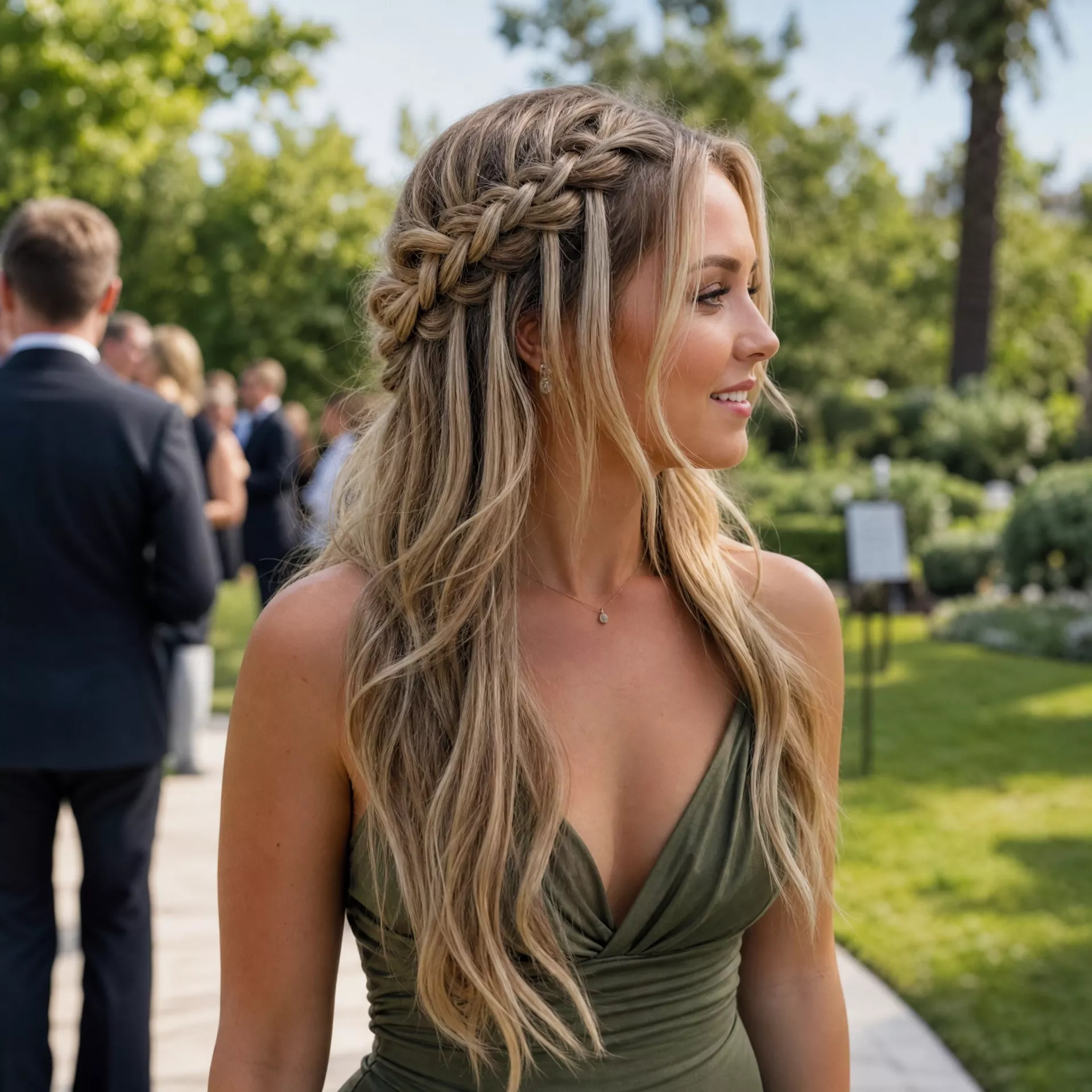
Braided Crown for Medium to Long Hair

A braided crown wraps braids around the head, keeping hair fully off the face and neck. It needs enough length for the braids to reach across the top and be pinned in place. How difficult it feels depends on your braiding technique and your hair: textured hair grips well, while fine or slippery hair can loosen and may need texture spray or extra pins. It takes some practice the first few times. Humidity can loosen the braids over the day, which may look softer rather than untidy, though a few pins might need adjusting.
Loose Fishtail Braid

A fishtail is made by crossing small sections from each side over one another, and a loose version is more forgiving than a tight, precise one, since uneven sections blend into the texture. It needs enough length to show the pattern. Hair with some texture holds the sections better, while fine or slippery hair may benefit from a texture spray before you start. Humidity may loosen it further as the day goes on, so how long it holds depends on your hair and the conditions.
Butter Blonde on a Collarbone Cut

Butter blonde is a soft, creamy blonde, and reaching it usually requires lightening, with the amount depending on your starting color. A shadow root, where the root is left deeper and blended into the blonde, can soften the transition as your hair grows, so regrowth looks less abrupt. That reduces how obvious maintenance is without removing it: toner fades, and brightness may need refreshing depending on how light you want to stay. Lightened hair often needs extra conditioning, particularly with summer sun and swimming. The collarbone cut is a separate choice with its own trim schedule.
Air-Dried Wavy Bob

A shorter length dries faster than long hair, which is part of its appeal on hot days. Whether the waves appear on their own depends on your natural wave pattern; a light wave or curl cream can help define them, but it’s optional rather than essential. Humidity may make the waves fuller or frizzier than usual. For fine hair, moderate layering keeps the waves from separating into thin strands. For low-density hair, a stronger perimeter can help the ends look more substantial.
Twisted Rope Braid Updo

A rope braid is made by twisting two sections in one direction and then wrapping them around each other in the opposite direction; that opposing twist is what keeps it from unraveling. It’s a heat-free way to get hair up, and it needs enough length to twist and pin at the nape or crown. Some texture or a light product helps the twist hold. Fine or slippery hair may need extra pins, and the style can loosen gradually in heat and humidity.
The Effortless Shag Bob

A shag bob combines a shorter, bob-length silhouette with shag-style layering, shorter at the crown and around the face and lighter toward the ends. That makes it more textured and less structured than a classic bob. It relies on texture: wavy or slightly textured hair tends to show the shag shape when air-dried, while straight hair may need product or a quick styling pass. The perimeter is lighter than a blunt bob’s, which can suit thick hair but may look thin on low-density hair. As it grows, the layers soften and the shape drifts, so periodic reshaping keeps it defined.
What Actually Makes Summer Hair Low-Maintenance?
“Low-maintenance” covers several different things, and a style can score well on one and poorly on another.
Drying time. Shorter lengths and lower density usually dry faster. Long, dense hair can take a long time to air-dry, especially in humid weather.
Styling time. Cuts that match your natural texture tend to need less daily styling. Cuts that depend on a round brush or flat iron to look like the photo take more.
Salon frequency. Short, precise shapes like a pixie or blunt bob often need more frequent reshaping than longer, softer cuts. A short cut isn’t automatically low-maintenance just because it dries quickly.
Humidity behavior. Some textures expand in humidity; others fall flat. Styles that work with that behavior need less correcting through the day.
Ability to wear hair up. Longer hair gives you buns, braids, and ponytails for hot days. Shorter cuts remove weight from the neck but limit updo options.
Color upkeep. Balayage, highlights, and blonde shades each come with their own schedule for toning and regrowth, separate from how often the cut needs attention.
Choose Based on Your Actual Summer Routine
If you air-dry most days
Look for cuts built around your natural texture, such as the natural wave enhancement cut, the air-dried wavy bob, or a curly shag if your curls clump well. Straight hair often looks most finished air-dried in cleaner shapes like a blunt bob.
If you exercise frequently
Ponytails, buns, and braids keep hair off the neck and face. Consider whether bangs or very short face-framing layers will fall into your eyes or need restyling after a workout, and whether your length is enough to tie back comfortably.
If humidity makes your hair expand
Texture-friendly cuts and styles, such as a shag, a layered bob with natural texture, or a loose braid, tend to hold up better than looks that depend on staying perfectly smooth. No style is humidity-proof, but some require less fighting against your hair’s natural behavior.
If you want to avoid heat tools
Choose cuts that look intended when air-dried on your texture, and rely on updos and braids for more polished days. Be cautious with cuts like the butterfly cut, which often depend on a blowout to match their reference photos.
If you want to keep your length
Braids, buns, half-up styles, and long layers let you manage summer heat without cutting much off. A light trim of split ends can keep long hair tidy without a major change.
If you want fewer salon visits
Softer shapes with less precise perimeters tend to grow out more gradually than pixies, blunt bobs, or bangs. For color, balayage and shadow roots usually show regrowth more softly than all-over lightening, though they still need occasional attention.
If your hair is fine or low-density
Preserving some weight at the perimeter can keep the ends from looking thin. Moderate layering, a blunt or near-blunt edge, and updos that are loosened slightly tend to work better than heavy, choppy layering.
If your hair is thick
Internal weight removal can make thick hair feel lighter and dry faster without changing the outer shape too much. Updos are often practical, though you may need larger clips or extra pins.
When a “Low-Maintenance” Style Still Needs Work
Humidity changes texture. Waves can frizz, straight hair can lift, and curls can expand, so a style that looked finished in the morning may shift by the afternoon.
Short cuts need reshaping. Pixies and short bobs often dry quickly but lose their shape faster, which means more regular trims.
Bangs grow out quickly. Any fringe tends to need attention well before the rest of the cut.
Balayage still needs maintenance. A soft grow-out reduces how often color needs a refresh, but toning and eventual touch-ups are still part of it.
Lightened hair may need more conditioning. Sun, chlorine, and salt water can make lightened ends feel drier.
Air-dried results can differ from salon styling. A cut finished with a blowout at the salon may look different at home when left to dry naturally.
Thick hair may need weight removed. Without some internal thinning, thick hair can feel heavy and take a long time to dry.
Fine or low-density hair can look thinner with heavy layering. Removing too much weight from the ends can make them look sparse.
Sleek styles may need product in humid weather. Smooth finishes often require smoothing products and still may not hold completely.
Updos need enough length and grip. Very short layers, freshly washed hair, or slippery textures can make buns and braids harder to secure.
What to Look for in a Summer Hair Reference Photo
A summer hair photo often combines several things at once, and separating them helps you judge whether the look will fit your routine.
- The haircut versus the styling. Check whether the shape comes from the cut or from curling, blow-drying, or product.
- Natural texture versus heat-created texture. Very uniform waves or perfectly flipped ends usually point to styling tools.
- Color versus cut. Highlights and balayage can make layers look more defined than they would on a single shade.
- Length. Note where the hair ends and whether that length would feel comfortable in the heat.
- Perimeter. Look at whether the ends are blunt, tapered, or choppy.
- Layers. Notice where the shortest layer begins and how much movement it creates.
- Density. Compare how full the hair looks with your own density.
- Whether the hair is tied up. Updo photos show a style, not necessarily a cut, and they depend on length and grip.
- Whether the photo looks professionally styled. Salon lighting and finishing can make any cut look more polished than it will on an ordinary day.
When you show a photo to your stylist, choose references with texture and density similar to yours, and point out the specific detail you like, whether that’s the length, the layers, the color, or the finish.
FAQ
What is the easiest summer haircut to maintain?
There isn’t one universally easiest cut. The easiest is usually the one that matches your natural texture and routine. For wavy hair, that might be a wavy bob or natural wave cut; for straight hair, a blunt shape may look finished with little effort.
Is short hair easier to maintain in summer?
Short hair often dries faster and needs less daily styling, but it usually requires more frequent salon reshaping. Whether it’s easier depends on which kind of maintenance matters more to you.
What haircuts work well for air-drying?
Cuts that are shaped around your natural texture tend to air-dry more cooperatively. Wavy and curly hair often benefit from layers placed where the texture naturally forms, while straight hair may look best in clean, blunt shapes.
How can I make my summer hair routine easier?
Reduce heat styling where you can, choose a cut that works with your texture, simplify your product routine, and keep a few quick updos or braids ready for the hottest or most humid days.
Is balayage low-maintenance for summer?
Balayage can grow out more softly than all-over color, so regrowth tends to be less obvious. It still needs occasional toning or refreshing, and lightened hair may need extra conditioning in the sun.
How do I manage hair in humidity?
No style is fully humidity-proof. Choosing styles that work with your texture, relying less on precise smoothing, and wearing hair up on the most humid days usually means less fighting against how your hair naturally behaves.
Final Thoughts
Low-maintenance summer hair is less about finding one universally easy style and more about matching a cut, styling method, or color approach to how you actually spend your summer days. Drying time, humidity, exercise, updos, trims, and color upkeep all count differently depending on your texture and density.
Before your next appointment, decide which kind of maintenance you most want to reduce, whether that’s time in front of the mirror, time with a dryer, or time in the salon chair, and choose the idea on this list that addresses that specific need.