23 Curly Shag Haircuts for Medium Hair and How to Choose the Right One
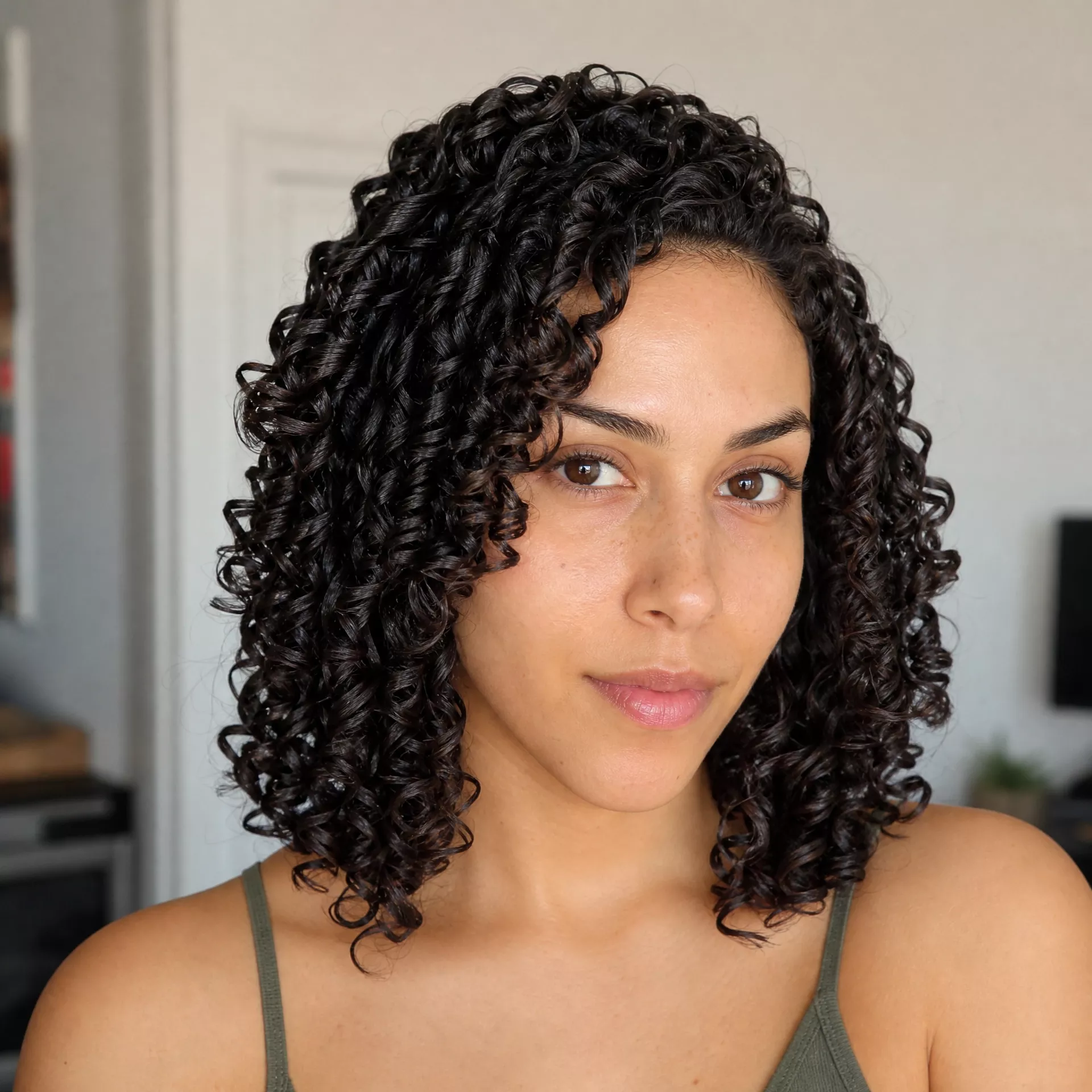
A medium-length curly shag is often described as a volume cut, but “more layers, more volume” is only part of the story. What you end up with depends on your curl pattern, your density, the thickness of each strand, how much your curls shrink as they dry, where the shortest layers begin, how much weight comes out, what happens at the perimeter, how long the fringe is, and whether you air-dry or style.
A well-placed shag can let curls spring up, move more freely, and look fuller at the crown. It doesn’t add hairs or change your density; it redistributes the hair you already have. That is also why fine strands and low density need separate thinking. Fine but dense curls can often take generous layering, while coarse curls with lower density may need more weight kept through the ends.
The 23 cuts below each highlight a different part of that balance.
Bouncy Shoulder-Length Curly Shag

At shoulder length, curls have enough hair beneath them to form a rounded shape without so much length that the weight drags them straight. This version keeps the perimeter light and slightly tapered, so the ends move instead of sitting in a heavy line. That airiness works when there is medium density to spare; if too much comes off the ends, the bottom can start to look see-through. A useful way to judge a reference photo is to look at the ends from behind. If they still look full, the stylist likely kept some weight there while opening up the layers above.
Textured Curly Shag with Defined Layers

“Defined layers” means you can see where one layer ends and the next begins, with curls grouping into separate tiers rather than blending into a single mass. The cut creates those tiers, but the crisp definition in most photos also comes from styling: a curl cream or gel applied to wet hair and left to dry without being touched. If your curls naturally clump, the layers will show more readily. If they tend to frizz or merge, expect to rely more on product. The cut provides the structure; your routine decides how visible it is.
Curly Shag with Curtain Bangs

Curtain bangs behave differently on curly hair because the fringe shrinks as it dries, often landing higher than it looked while being cut. A curtain fringe is usually left long enough to sit around the cheekbones once dry, so it splits in the middle and joins the face-framing layers. If your natural part sits to one side, a center-parted curtain may keep drifting back toward it. Blended curtain bangs grow out more gradually than a separate fringe, but they still need occasional reshaping to keep the split even.
Lively Natural Curls with Structured Layers
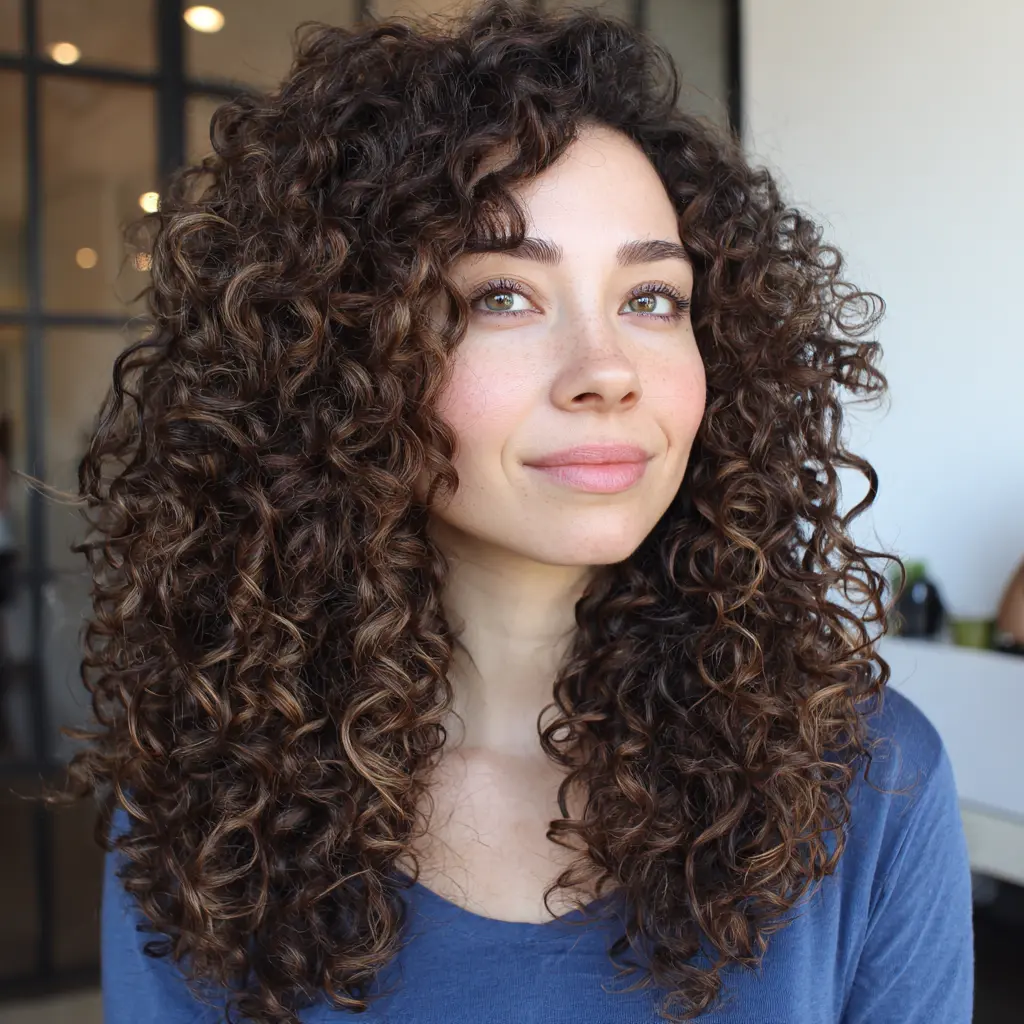
Structured layers are placed deliberately to take weight out of the lengths without collapsing the outer shape. On dense curls, that can let the hair lift from the root and spring toward the face while the silhouette keeps a rounded outline. Whether it becomes a low-effort cut depends on how closely it matches your natural pattern. When the layers sit where your curls naturally group, a leave-in and air-drying may be enough. If your curls form unevenly across the head, some styling may still be needed to even the shape out.
Medium Curly Shag with Soft Fringe

A soft fringe is cut lighter than a blunt one, with curls allowed to separate across the forehead. The key question is where it lands once dry. A fringe that skims the brows when wet can spring up to mid-forehead, so it’s worth agreeing on the dry length in advance. Weight matters too: too little and the fringe looks sparse, too much and it can puff forward. Because it sits right at the brow and eye area, even a small amount of growth is noticeable, so the fringe usually needs attention before the rest of the shag does.
Collarbone Curly Shag with Face-Framing Highlights

Two decisions are combined here: a collarbone-length shag, which is the cut, and face-framing highlights, which are color. The highlights don’t add hair or volume, but lighter pieces near the face catch light differently from the darker base, which can make curl movement and separation easier to see. How much upkeep the color adds depends on how light the pieces are, the contrast with your natural shade, and how quickly regrowth shows at the hairline. If you only want the cut, the photo still works as a guide to length and layer placement.
Dense Coil Shag with Heavy Internal Layers

High-density coils can build up a lot of bulk through the mid-lengths, which can make the shape wide and heavy even at a modest length. Internal layering removes some of that weight from inside the shape, while the outer perimeter stays long enough to hold the silhouette together. Done carefully, it lets the coils sit rounder without looking thinned from the outside. Coils can shrink significantly as they dry, so the stylist needs a clear sense of your natural dry shape before deciding how much to remove, since weight taken out of coils is slow to come back.
Curly Shag with Eye-Grazing Fringe
An eye-grazing fringe is long enough to brush the lashes when stretched, which on curly hair often means it settles nearer the brows once dry. It becomes a dominant part of the silhouette, adding weight and shape at the top and making the crown read as fuller. The trade-off is visibility and upkeep: a longer fringe can fall into your eyes on humid days, and it needs regular trims to stay at its intended length.
Because curls can shrink significantly as they dry, ask your stylist how they prefer to assess your natural dry shape before finalizing the fringe and the layers around it. Some stylists cut dry, some cut wet and refine dry, and others use different methods. What matters is that the final shape accounts for how your curls actually sit.
Copper Curly Shag with Rounded Fringe

Three elements make up this look: the shag, a rounded fringe that curves slightly at the edges instead of cutting straight across, and copper color. The rounded fringe softens the transition into the side layers, which helps it sit naturally on curly hair. Copper adds warmth and can make curl definition more noticeable in daylight, but red and copper tones tend to fade or shift faster than many other shades, so they usually need more frequent refreshing. If you like the shape but not the upkeep, the cut and fringe work just as well on your natural color.
Honey Blonde Curly Shag

Honey blonde pieces through a curly shag create contrast between lighter and deeper strands, which can make the layers and curl clumps look more dimensional. That’s a visual effect, not added volume. Lightening is worth planning carefully on curly hair. Depending on your starting color and current condition, lifting to a honey shade can change how the curls feel and how well they hold moisture, and heavily lightened ends may need extra conditioning. A colorist can advise how much lift your hair can take and whether to build the shade over more than one appointment.
Chocolate Brunette Dense Coil Shag

A single, deep brunette shade keeps attention on the shape of the cut rather than on color contrast, which suits a shag built to manage high-density coils. The layering graduates gradually from the crown downward, so the widest point sits near the middle of the head instead of at the ends. That placement is how a stylist controls the bottom-heavy bulk dense coils can develop. Without highlights to separate the layers visually, the structure has to be precise, since uneven layering is easier to spot on one rich color.
Tousled Curly Shag with Choppy Ends

Choppy ends are point-cut or cut at uneven lengths so the curls break apart instead of forming a smooth outer edge. That encourages separation, and on looser curls or waves it can produce a tousled finish with little intervention. It can be a lower-effort cut when your natural texture already creates that movement. On tighter or very dense curls, choppy ends can sometimes look frizzy or uneven rather than tousled, so a stylist may soften the chop on those textures. It’s also worth checking whether a reference photo shows fresh salon definition or second-day texture.
Mid-Length Curly Cascade with Highlights

This is closer to a layered medium-length curly cut than a true shag. Instead of concentrating short layers around the crown, the layers step down gradually from the face toward the back, so the curls fall in tiers rather than forming a rounded top. The result has less height at the crown and more movement through the lengths. The highlights are a separate addition that make those tiers easier to see. If you want some shape without the pronounced crown of a shag, this is a gentler place to start.
Voluminous Curly Shag with Soft Bangs

Here the fullness sits at the crown and front, with soft bangs blending into short face-framing layers so the fringe reads as part of the shape rather than a separate piece. The bangs need enough density to look full once they shrink; on a sparse hairline, the same fringe can separate into a few thin curls. Much of the rounded crown comes from short layers there, which works best when the hair below has enough length to balance it. Face shape can help decide how wide the bangs sit, but density and shrinkage usually decide how they actually look.
Asymmetrical Curly Shag

An asymmetrical shag leaves one side slightly shorter than the other, giving the cut a directional shape. On curly hair, that asymmetry is harder to predict than on straight hair: if one side shrinks more than the other, the difference can look stronger or weaker once dry. It also needs more deliberate maintenance, since the shorter side reaches its intended length first and the two sides grow out unevenly. If you like the idea but not the upkeep, a subtle difference, or asymmetry created through the part rather than the cut, is easier to live with.
Curly Shag with Long Shag Layers

Long shag layers start lower and step down more gently than the short, crown-heavy layering of a classic shag. The effect is softer: curls move and group freely, but there’s less height at the crown and less of the dramatic rounded outline. This approach keeps more length and more weight in the curls, which can help looser patterns hold their shape and keep low-density ends from thinning. The curtain-like fringe splits naturally and joins the longer layers, so the overall look reads as relaxed rather than sculpted.
Effortless Curly Shag with Wispy Fringe

A wispy fringe is cut light and slightly uneven, so it doesn’t rely on a precise line the way a dense, blunt fringe does. That makes it more forgiving: a few curls falling differently each day won’t spoil the shape. It still needs care. Curly fringe can flatten overnight or frizz in humidity, and refreshing it with water or a light product is often part of the morning. Fringe weight can also be adjusted to your pattern: tighter curls often need a lighter fringe to avoid puffing out, while looser waves may need a little more weight to hold together.
Auburn Curly Shag with Curtain Fringe

Three separate choices come together here. The shag provides the layered shape, the curtain fringe adds a center-split frame at the front, and the auburn is a color decision with its own schedule. It’s worth planning those schedules separately. The fringe may need a trim sooner than the rest of the cut, while the color may need refreshing when the red tones fade or the roots show, which won’t necessarily line up with your haircut appointments. Warm tones like auburn can make curl clumps look more defined in daylight, but they don’t change the cut underneath.
Curly Shag with Crown Layers for Flat Hair

Curly hair that sits flat at the crown and bulky at the ends is usually dealing with a weight imbalance: the length below pulls the top down while curls collect around the bottom. Shorter layers concentrated around the crown can let those curls spring up, while the lengths below keep enough weight to hold the overall shape. The balance matters. On low-density hair, too many short layers on top can leave the crown looking sparse rather than lifted, and removing too much from the ends can make them look thin. Ask for the crown layers first, then decide how much else needs to change.
Boho Curly Shag

The boho version is defined partly by what it leaves out: sharp lines. The layers are softer and less graduated, the fringe is loose and often uneven, and the perimeter is left slightly irregular so the curls fall naturally rather than into a sculpted outline. That lack of precision makes it more tolerant of grow-out and of variation in curl pattern across the head. It also means the shape relies on your natural texture. On curls that clump well, it looks intentional; on curls that frizz easily, it can look unfinished without a defining product.
Shoulder-Length Curly Shag with Blunt Fringe

A blunt fringe creates a strong horizontal line across the forehead, which contrasts with the soft, rounded curls of a shag and shifts the visual emphasis toward the brow area. On curly hair, a truly blunt edge is harder to keep, since curls shrink and separate; the fringe often needs to be cut a little heavier and checked dry to hold that line. It also tends to need more frequent trims and some smoothing when you style it. If you like the contrast but want less upkeep, a denser but softer fringe keeps part of the effect.
Spiral Curl Shag with Natural Volume

Spiral curls form defined, springy ringlets, and they can shrink considerably as they dry. Layers in a spiral shag are placed so the ringlets stack and lift rather than hang, while keeping enough weight at the bottom that they don’t frizz outward or lose their spiral shape. Too much weight removed can make spirals look stretched and sparse at the ends. Air-drying works for many spiral patterns; diffusing on low heat is an optional way to speed things up and add a little lift at the root without breaking the ringlets apart.
The Shagrella Cut

Names like “Shagrella” aren’t standardized, so it helps to describe the shape rather than rely on the name. In most references, it’s a medium shag with layering graduated evenly around the head, a full curly fringe that blends into the top layers, and often dimensional color. What sets it apart from the other shags here is how evenly the weight is distributed: rather than concentrating shorter layers at the crown or around the face, the stylist removes weight gradually all over, so the outline stays round and full from every angle. The fringe is heavier than wispy or curtain versions, and the color is an optional extra.
What Changes the Shape of a Curly Shag?
Most of the differences between these 23 cuts come down to a handful of variables.
Curl pattern. Loose waves, looser curls, tighter curls, and coils each respond differently to the same layering. Looser patterns separate and move easily; tighter patterns stack and expand, so layers change their width more than their length.
Density. High-density curls carry a lot of bulk and can usually lose some weight without looking thin. Low-density curls have less to spare, so the same amount of layering has a much bigger visual effect.
Strand thickness. Fine strands are narrow individually; coarse strands carry more visual weight each. Fine but dense curls often tolerate layering well. Coarse curls may need layers placed differently, because each strand pushes the shape outward more.
Shrinkage. Curls can dry noticeably shorter than they look wet. Both the final length and the height of any fringe depend on how much your pattern shrinks.
Layer placement. Short layers at the crown lift the top; layers around the face open up the front; long layers keep weight lower. Curly hair can look wider at the bottom, the familiar triangle shape, when weight collects through the lengths and the upper sections have little structure. Layers alone don’t solve that. The fix depends on your curl pattern, density, where the layers sit, the perimeter, shrinkage, and how you style.
Perimeter. A fuller perimeter keeps the ends looking substantial; a lighter, tapered one adds movement but can look sparse on lower-density hair.
Fringe. Fringe length, weight, and shape change the top of the silhouette and add their own maintenance.
Styling. Product, diffusing, and how much you touch your hair while it dries all affect how defined the layers look.
Match the Shag to Your Hair’s Natural Behavior
If your curls fall flat at the crown
Focus on layer placement near the crown while keeping enough weight below to balance it. The Curly Shag with Crown Layers for Flat Hair and the Voluminous Curly Shag with Soft Bangs both work on this principle.
If your ends feel bulky
Internal shaping can take weight out from inside the lengths without thinning the visible ends. The Dense Coil Shag with Heavy Internal Layers and the Chocolate Brunette Dense Coil Shag show two ways of approaching it.
If your hair is fine but dense
Moderate layering usually works, provided the perimeter keeps some weight. Shoulder-length and textured shags can suit this combination well.
If your hair is fine and low-density
Be more cautious with heavy, visible layering and choppy ends. Longer shag layers or a cascade-style cut preserve more weight, and adding crown layers alone is often a safer first step than a full shag.
If your curls shrink dramatically
Discuss the dry shape and the final length with your stylist before anything is cut, especially for fringe. Spiral and coil shags are the most affected.
If you rarely style your hair
Choose a shape that works with your natural curl pattern as it air-dries. The Boho Curly Shag and the structured-layer version tend to depend less on precise styling than looks built around defined tiers or a blunt fringe.
When a Curly Shag Doesn’t Behave as Expected
- Too much weight removed. Curls can lose their grouping and look frizzy or sparse rather than full.
- The crown is cut too short. Short layers on top can stand up awkwardly or look sparse on low-density hair.
- The ends look thin. Heavy tapering or choppy cutting at the perimeter can leave the bottom see-through.
- The triangle shape returns. If weight is taken from the wrong places, the hair can still widen toward the bottom as it grows.
- The fringe shrinks too high. A fringe cut to the brows wet may settle well above them once dry.
- Asymmetry looks exaggerated. Uneven shrinkage can make a subtle difference between sides look much stronger.
- It only works when styled. A cut that looked great after a salon diffuse may look different when you air-dry at home.
- Color changes how the curls behave. Lightened sections can feel drier or clump differently from untouched hair, which can make curls look less uniform.
- The reference photo relied on styling. Definition, root lift, and shine in many photos come from product and technique as much as the cut.
What to Point Out in Your Reference Photo
A curly shag photo shows a combination of cut, curl pattern, color, and styling. Pointing to specific details helps your stylist adapt the shape to your hair rather than copy something your curls may not do.
Useful details to point out:
- Where you want the shortest layer to sit, such as at the crown, around the cheekbones, or near the jaw.
- How much length you want to keep, measured on your dry hair.
- Whether you like the crown height or would prefer a flatter top.
- How much face framing you want, from barely-there to strongly shaped.
- Whether the fringe should blend into the layers or stand out as a separate feature.
- Whether the cut needs to work air-dried, or whether you’re happy to diffuse and style.
- How much maintenance you’ll accept, particularly for fringe and asymmetry.
It also helps to look for references with a curl pattern and density similar to yours, and to show your stylist how your own curls look on an ordinary dry day.
FAQ
Is a curly shag good for medium-length hair?
Medium length gives a shag room to work: there’s enough hair to layer through the crown and face while keeping weight in the lengths. Whether it suits you depends on your curl pattern, density, and how much shape you want, rather than on length alone.
Does a shag make curly hair look fuller?
It can make curls look fuller at the crown by removing weight that pulls them down and letting them lift. It doesn’t add hairs. On low-density hair, heavy shag layering can have the opposite effect, so the amount of layering matters more than the style name.
Are curly shags good for fine hair?
It depends on density. Fine but dense curls often handle a shag well. Fine curls with low density usually do better with longer, fewer layers and a fuller perimeter, since removing too much weight can leave the ends looking thin.
Can a curly shag work on low-density hair?
Yes, with a more conservative approach. Keeping the perimeter fuller, limiting short layers to the crown, and avoiding heavy choppy ends usually works better than a full, heavily layered shag.
Should curly shags be cut wet or dry?
Stylists use different methods, and there isn’t a single correct one. What matters is that the stylist understands how your curls look and shrink when dry before finalizing length and layers. Ask how they prefer to assess your natural shape.
How do you avoid triangle-shaped curly hair?
Triangle shapes happen when weight collects at the bottom and the top lacks structure. A stylist can rebalance that with layer placement, internal weight removal, and the right perimeter for your density and curl pattern, then refine it on dry hair.
Can you air-dry a curly shag?
Many curly shags air-dry well, especially when the layers match your natural pattern. Some looks in photos depend on diffusing or specific products, so it’s worth asking your stylist how the cut will look air-dried before committing.
Final Thoughts
The word “shag” covers a wide range of cuts, and the label tells you less than you might expect. What decides the result is where the layers are placed in relation to your curl pattern, your density, how much your curls shrink, the length you want to keep, and how you actually style your hair.
Pick a reference that matches your texture as closely as possible, then point to the specific details you like. That gives your stylist a clear starting point for a shape built around your curls rather than someone else’s.