25 Layered Lob Haircuts and How to Find the Right Shape for Your Hair
Put two layered lobs side by side and they can look like completely different haircuts. One has short pieces starting at the cheekbone and ends so textured they almost dissolve. The other keeps a nearly solid edge at the collarbone, with layering you only notice when the hair moves. Both fit the name.
“Layered lob” describes a family of shapes rather than one cut. The length usually lands somewhere between the chin and the collarbone, but what decides the result is everything inside that range: where the first layer begins, how much weight comes out, how strong the perimeter stays, and how the crown and nape are shaped. Then your own hair takes over. Density, strand thickness, and natural texture change how those layers sit, and your styling routine decides whether the shape in the photo ever shows up at home. Grow-out and upkeep differ from one version to the next, too.
The 25 lobs below run as one continuous set, starting with a baseline and moving through variations in fringe, texture, technique, and color. Each one points to the detail that matters most, so you can see what a reference photo is really showing you.
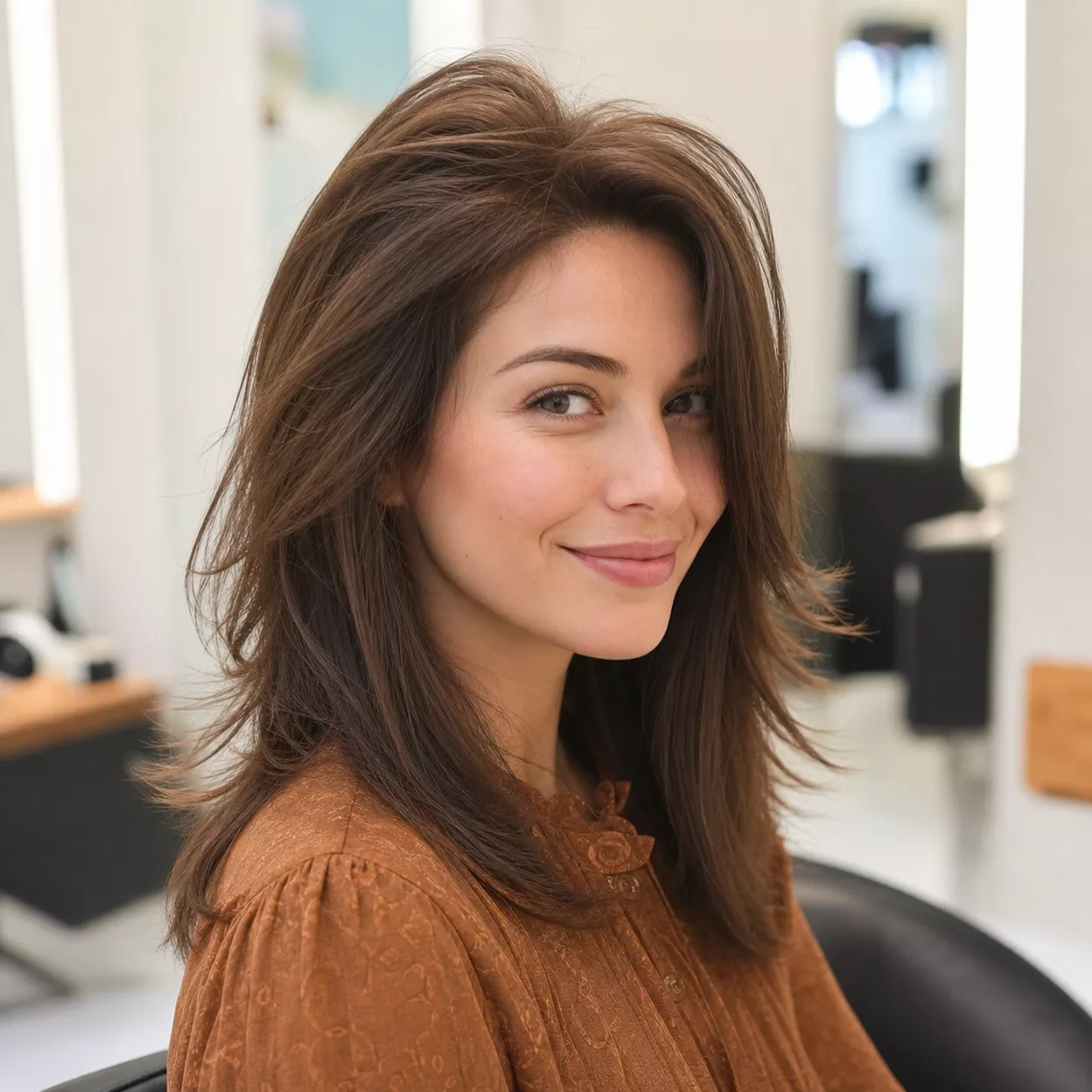
Classic Face-Framing Layered Lob

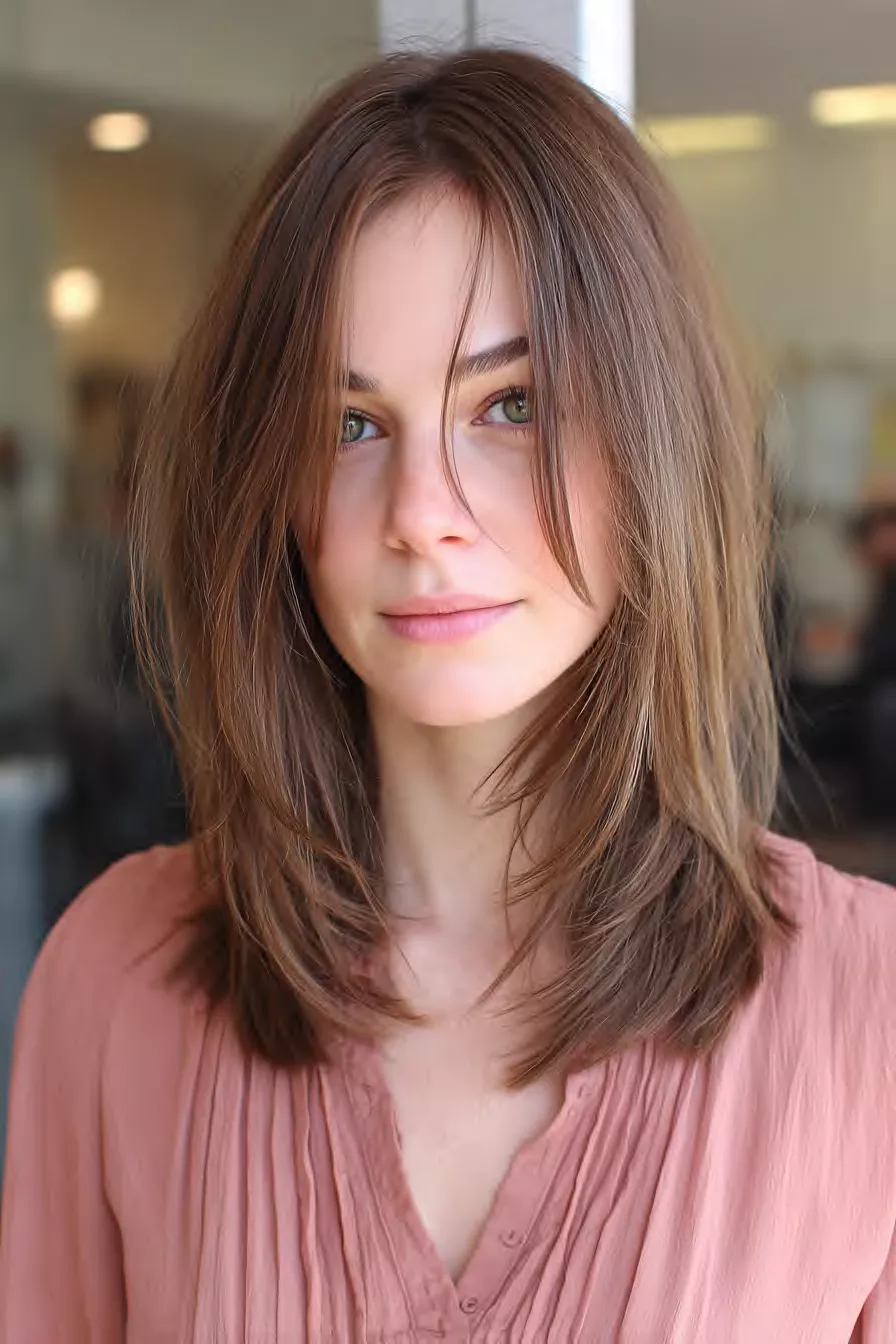
Treat this as the reference point for everything that follows. The lob ends somewhere between the jaw and the collarbone, and the layering is concentrated at the front, with shorter pieces around the face that lengthen toward the back. The perimeter still does a lot of the work: if it stays fairly solid, the cut reads full even with framing at the front.
Where those front pieces begin matters more than how many there are. Starting at the cheekbone creates a stronger frame; starting at the chin or jaw keeps it subtle. Density and texture should guide that choice. On straight hair, the framing shows clearly. On wavy hair, the shorter pieces may spring up and sit higher than they were cut.
Wavy Layered Lob with Honey Highlights
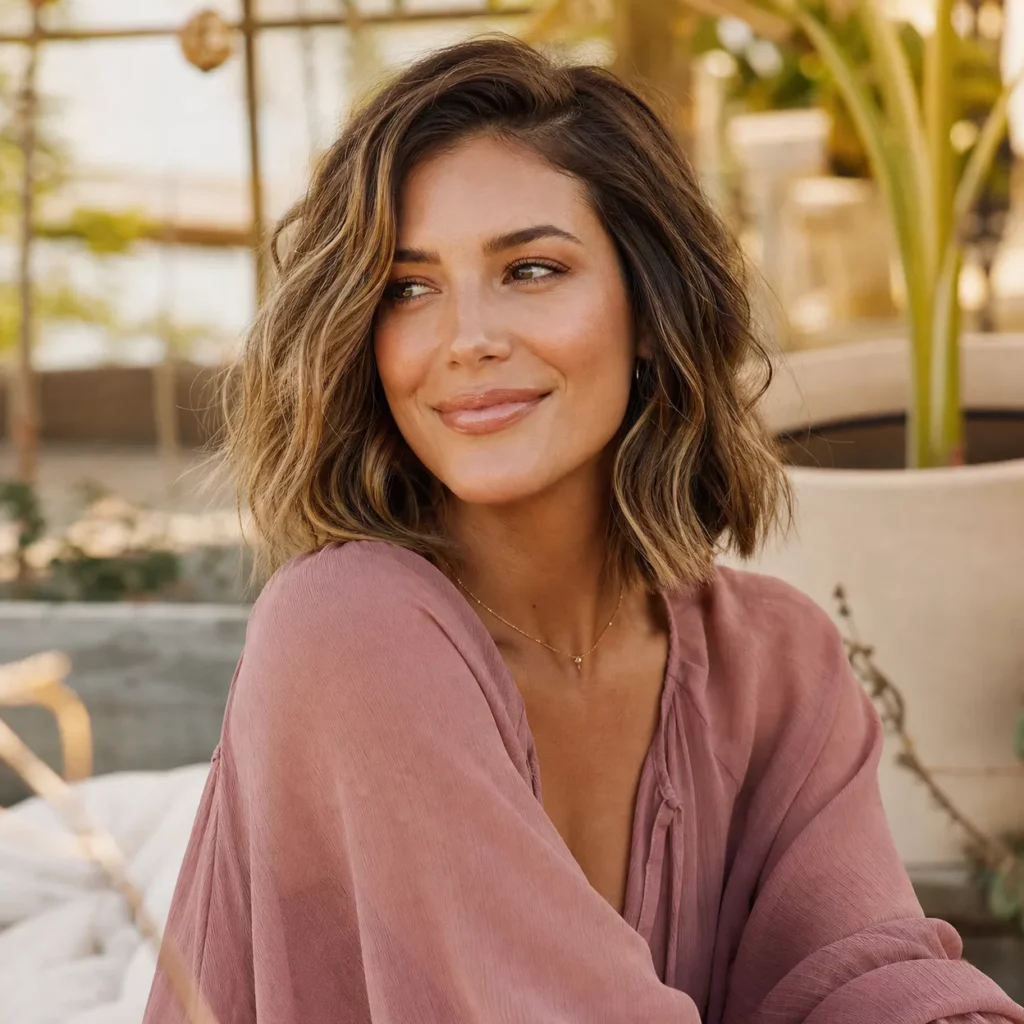
Two separate decisions share this photo. The layering takes some weight out of the lengths so a natural wave can form instead of being dragged straight. The honey highlights are color, painted through the waves so they catch light on the curves. How much styling it needs depends on your wave. Hair that dries into a consistent bend may need only a light cream; hair that waves unevenly may need a wand to match the reference. The honey itself depends on your starting base, since darker hair needs more lift to reach a golden tone.
Curtain Bang Layered Lob
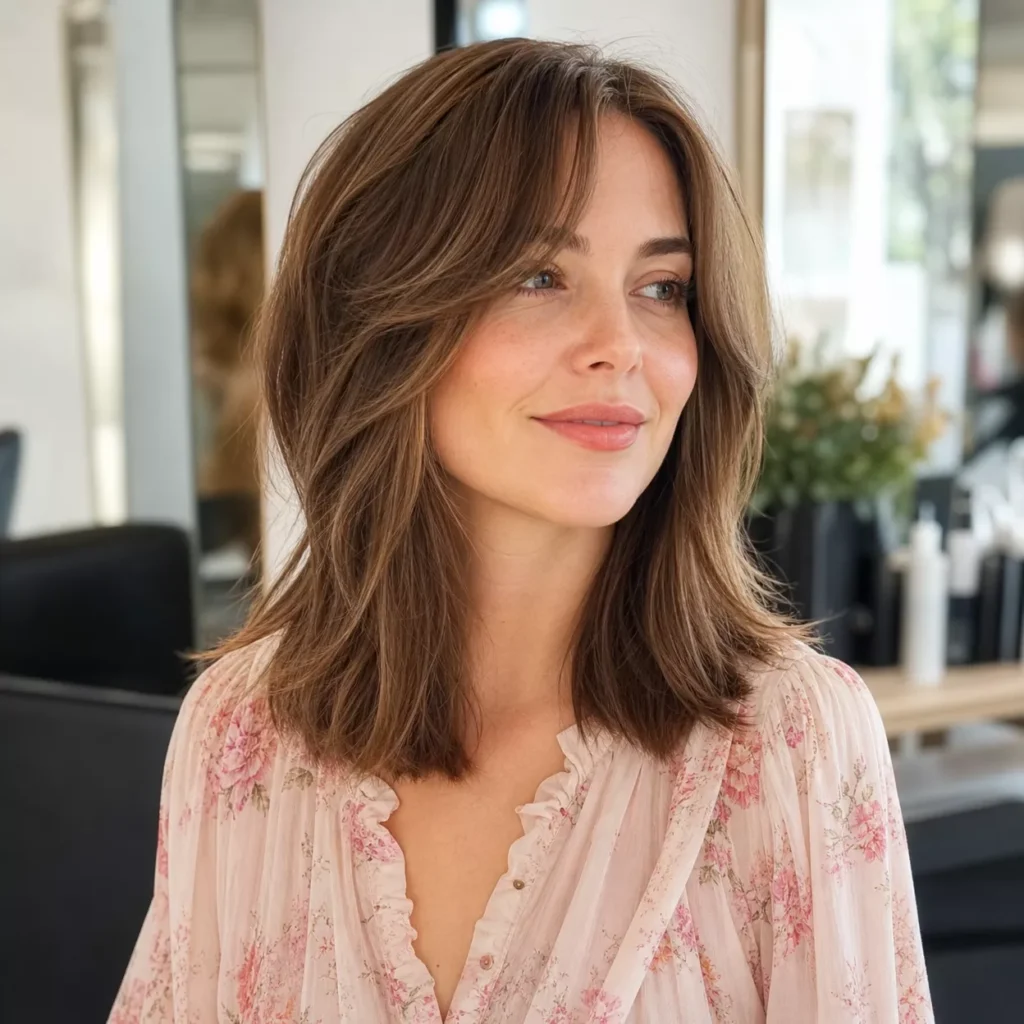
The fringe here parts at the center and sweeps toward the cheekbones, ideally flowing into the first face-framing layer so the bangs and the lob read as one shape. That connection is the detail to look for. The bangs settle most easily when the split matches your natural part, and they need enough density at the hairline to look full. Fine hair with good density can carry them well; hair that’s low in density at the front may need them taken from a narrower section. On wavy hair, expect them to spring shorter once dry. They grow into the layers over time but will want trimming before the rest of the lob.
Razored Layered Lob
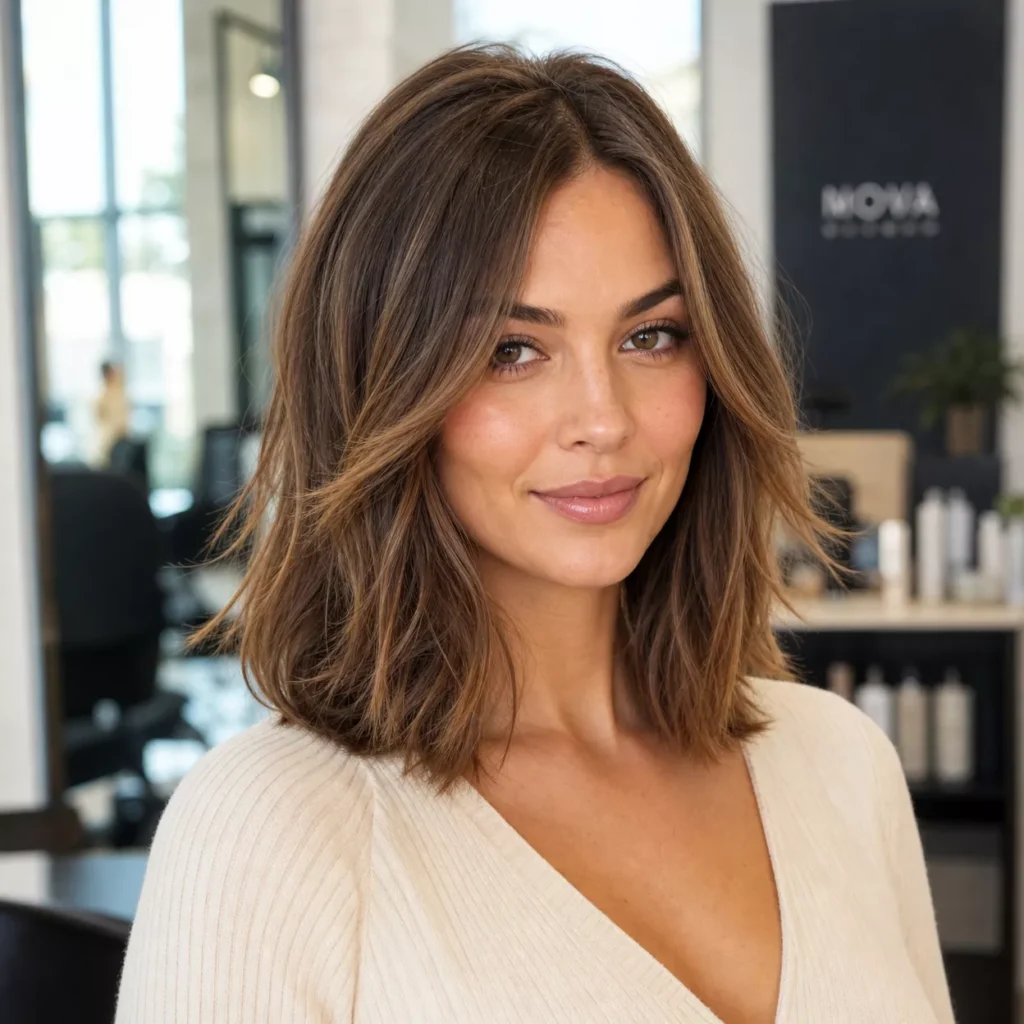
A razor slices the hair at an angle rather than cutting straight across, which tapers the ends and gives the lob a softer, more separated edge. That finish can suit straight hair with reasonable density, where the tapered ends move freely. It isn’t automatically the better choice, though. On fine, fragile, or very dry hair, razored ends can fray or look wispy, and on curly or coily hair they may add frizz. Scissors can also create soft, moving layers through point-cutting or slide-cutting. It’s usually more useful to describe the finish you want and let the stylist choose the technique that suits your hair’s condition.
Choppy Layered Lob for Thick Hair
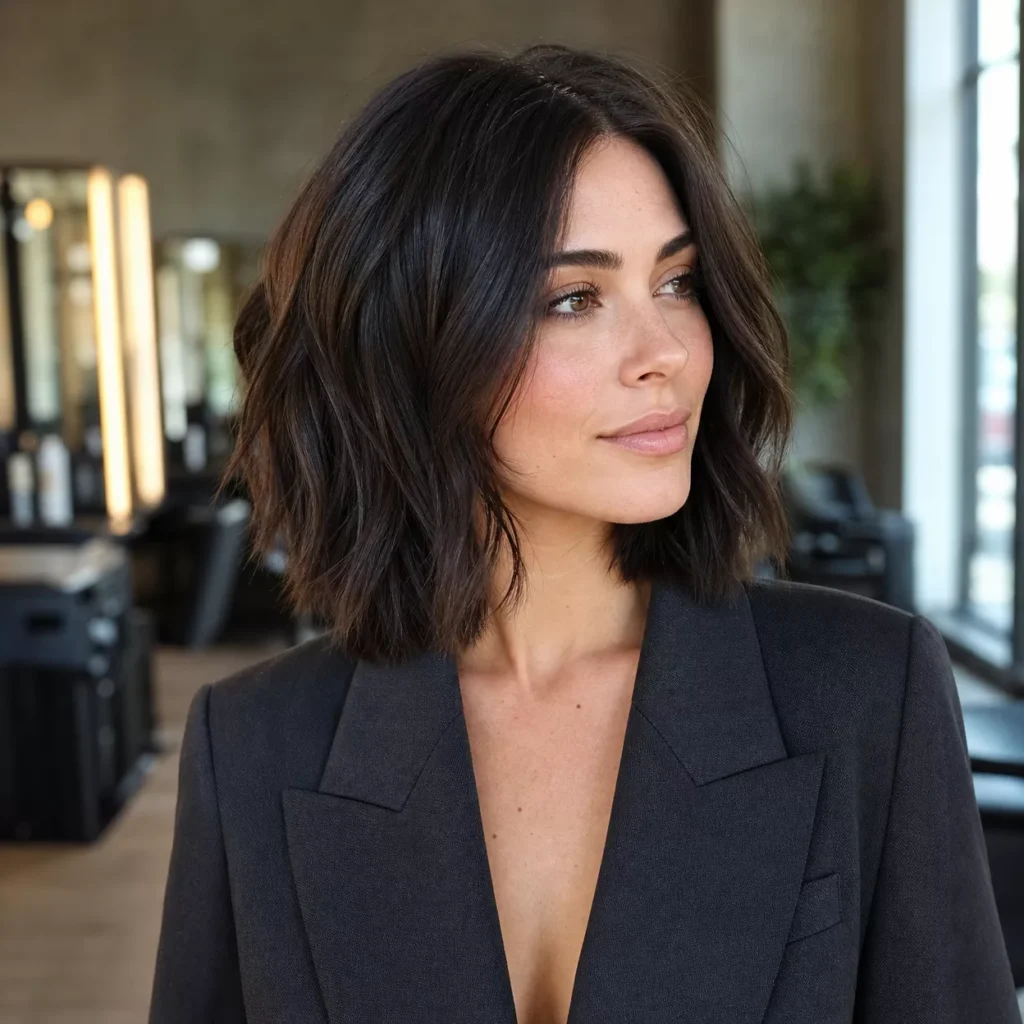
Thick hair often carries a lot of interior weight, which can make a lob sit heavy at the bottom and flat on top. Choppy layering through the mid-lengths can release some of that weight so the hair moves. The balance is the hard part. Take out too much and dense hair may expand outward, or the ends may look thin against the bulk above them.
“Thick” also covers different things. High density means many strands; coarse means wider strands. Coarse hair holds texture well but can frizz if it’s heavily thinned. Ask where the weight will come out, and how much of the perimeter will stay.
Hidden Layers in a Blunt Lob
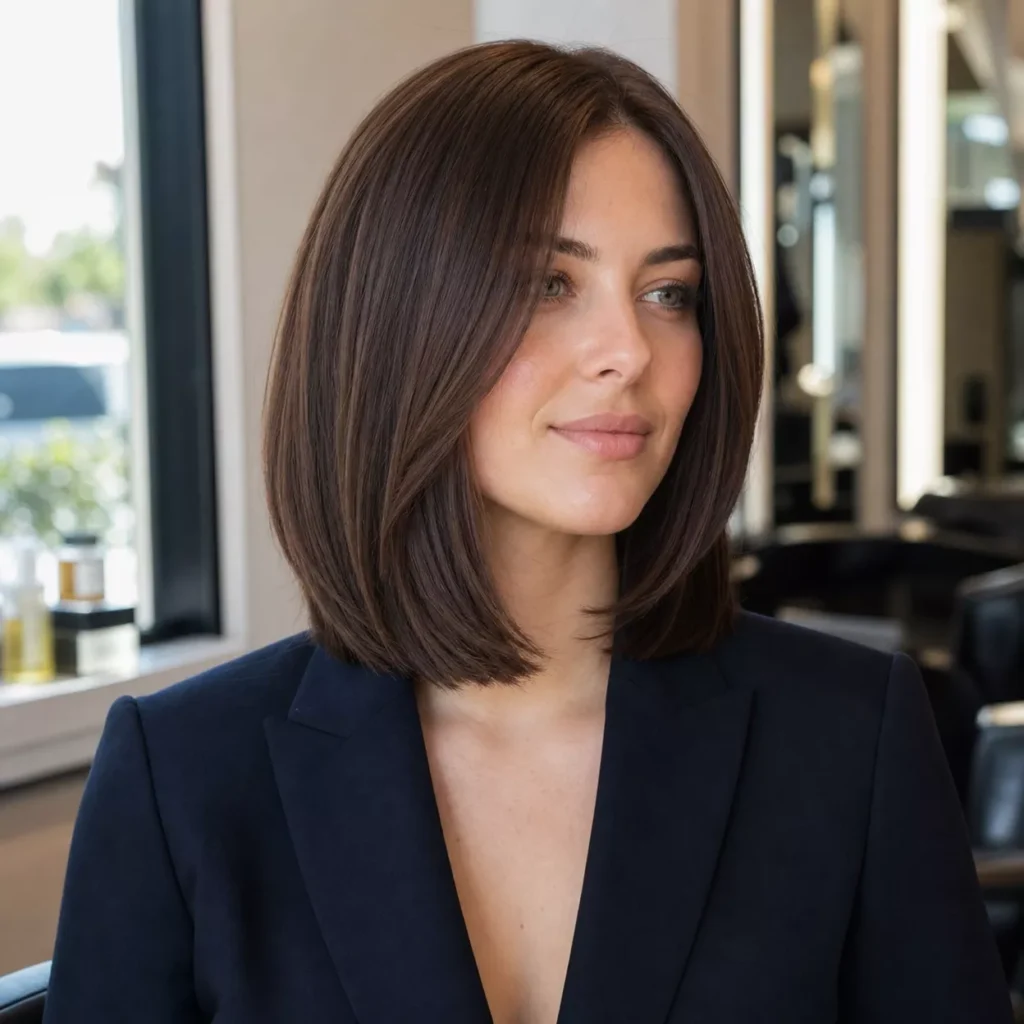
From the outside, this reads as a blunt lob: a clean, solid edge with no visible steps. The layering sits inside, cut beneath the top section so the hair moves and feels lighter without changing the outline. It’s a useful middle ground if a fully blunt lob feels too heavy but visible layers feel too undone. Texture changes how it reads. On straight hair, the exterior stays sleek and the hidden layers show only as movement. On wavy hair, the internal layers may let the waves separate more, so the cut looks softer than a typical blunt lob.
Layered Lob with Side Swept Bangs
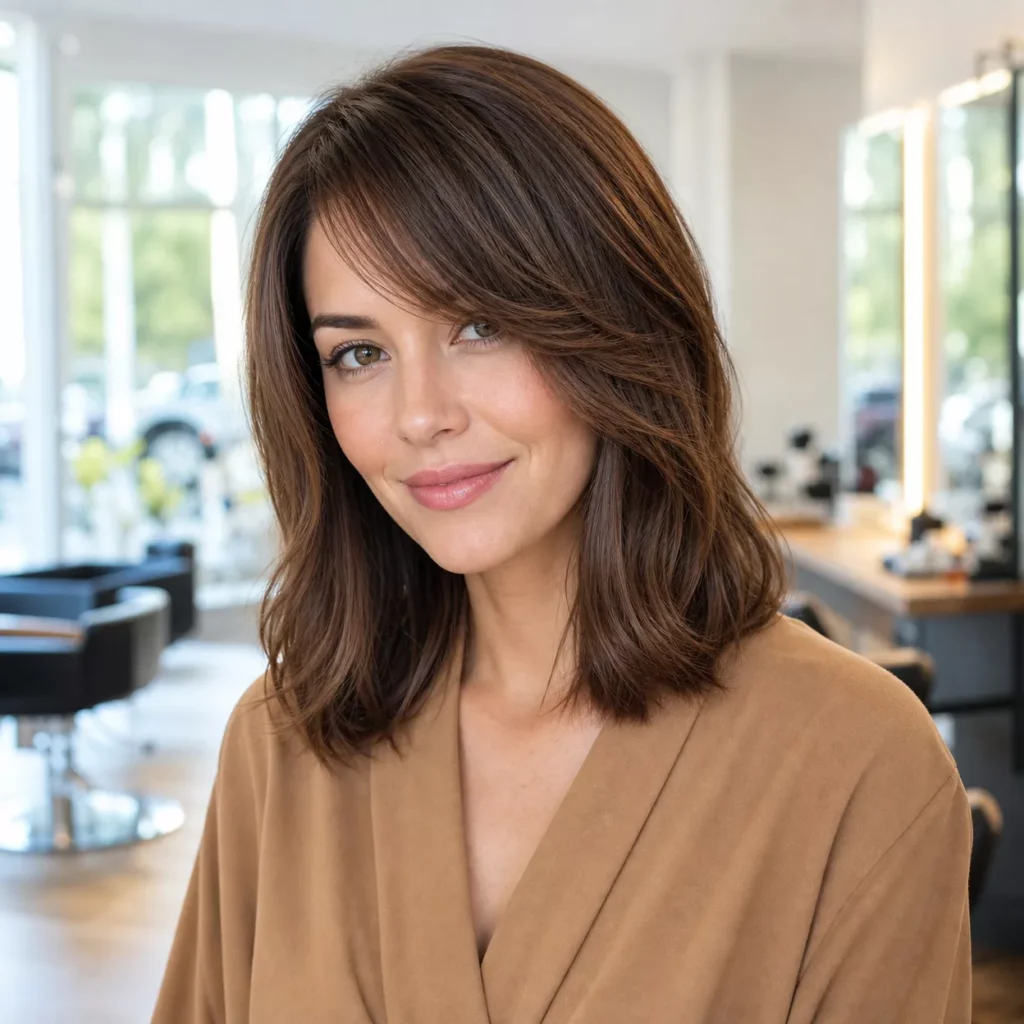
Side-swept bangs angle across the forehead toward one side, giving the lob an asymmetry the rest of the cut doesn’t have. Their direction should follow your natural part, since a fringe swept against your growth pattern tends to spring back. On straight hair, a quick blow-dry usually sets the sweep; on wavy hair, it may fall into place on its own or curl unpredictably. The face-framing layers on the swept side can continue the same line, so the fringe and the lob connect instead of sitting as two separate pieces.
Beachy Textured Layered Lob

The cut and the finish are separate here. The layered lob provides the shape; the beachy texture comes from natural wave, air-drying, a salt or texture spray, or bends added with a flat iron or wand. On naturally wavy hair, the finish can come together with a little product. On straight hair, it usually takes more work and may not last as long. Some people find that drying the roots with their head flipped over, then finishing with cool air, adds lift before texturizing, though how long that lift holds depends on the hair.
Layered Lob with Balayage

Balayage is a color-placement technique, not part of the haircut. Painted lighter sections sit along the edges of the layers, so as the hair moves, the contrast between lighter and darker strands makes the layering easier to see. The color doesn’t create movement; it reveals it. How visible that is depends on the contrast you choose and your starting base. Balayage close to your natural shade reads soft, while high-contrast pieces make every layer stand out.
Angled Layered Lob
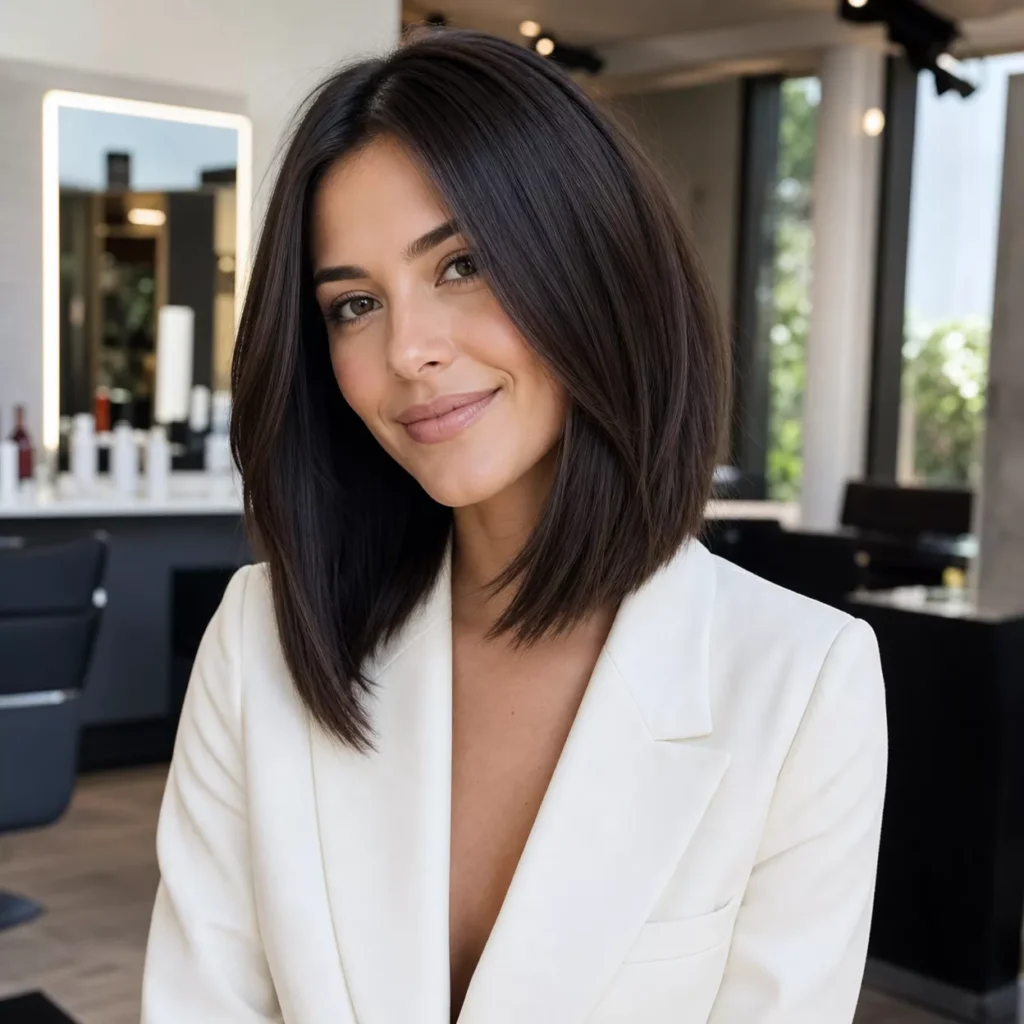
An angled lob sits shorter at the back and longer at the front, so the perimeter slopes forward. Graduation, which stacks the back slightly shorter, creates the angle, while layers inside add movement. The steeper the angle, the more the shape becomes the focus, and the sooner it changes as it grows. The back reaches the collar first and may start to flip while the front still sits where it should. A gentler angle tends to grow out more evenly.
Feathered Layered Lob
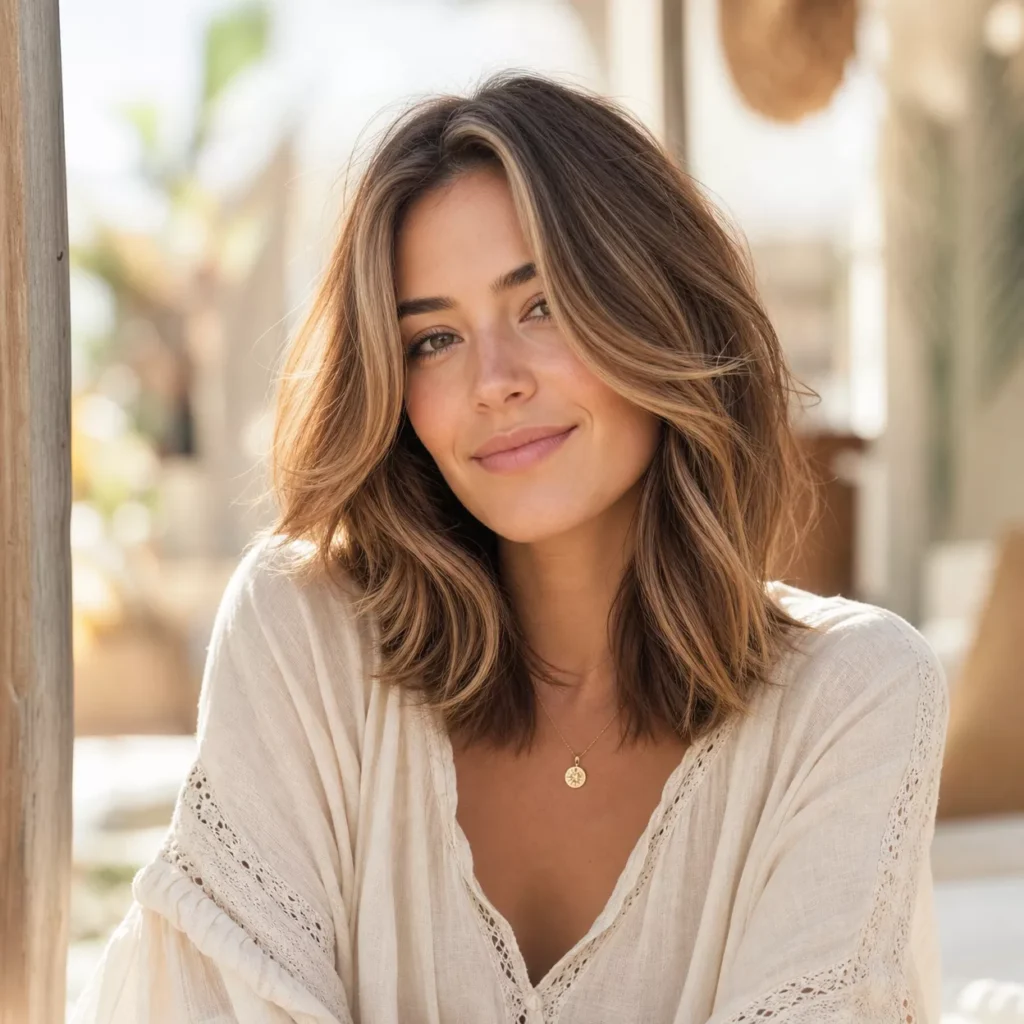
Feathering directs the layers outward and back, away from the face, so the ends sweep rather than hang. The cut gives the hair that direction, but the outward flick in most photos is finished with a round brush. On straight hair without that styling, feathered layers may simply fall straight. On wavy hair, they may flip outward more naturally. Whether feathering reads soft or retro depends largely on how strongly it’s styled.
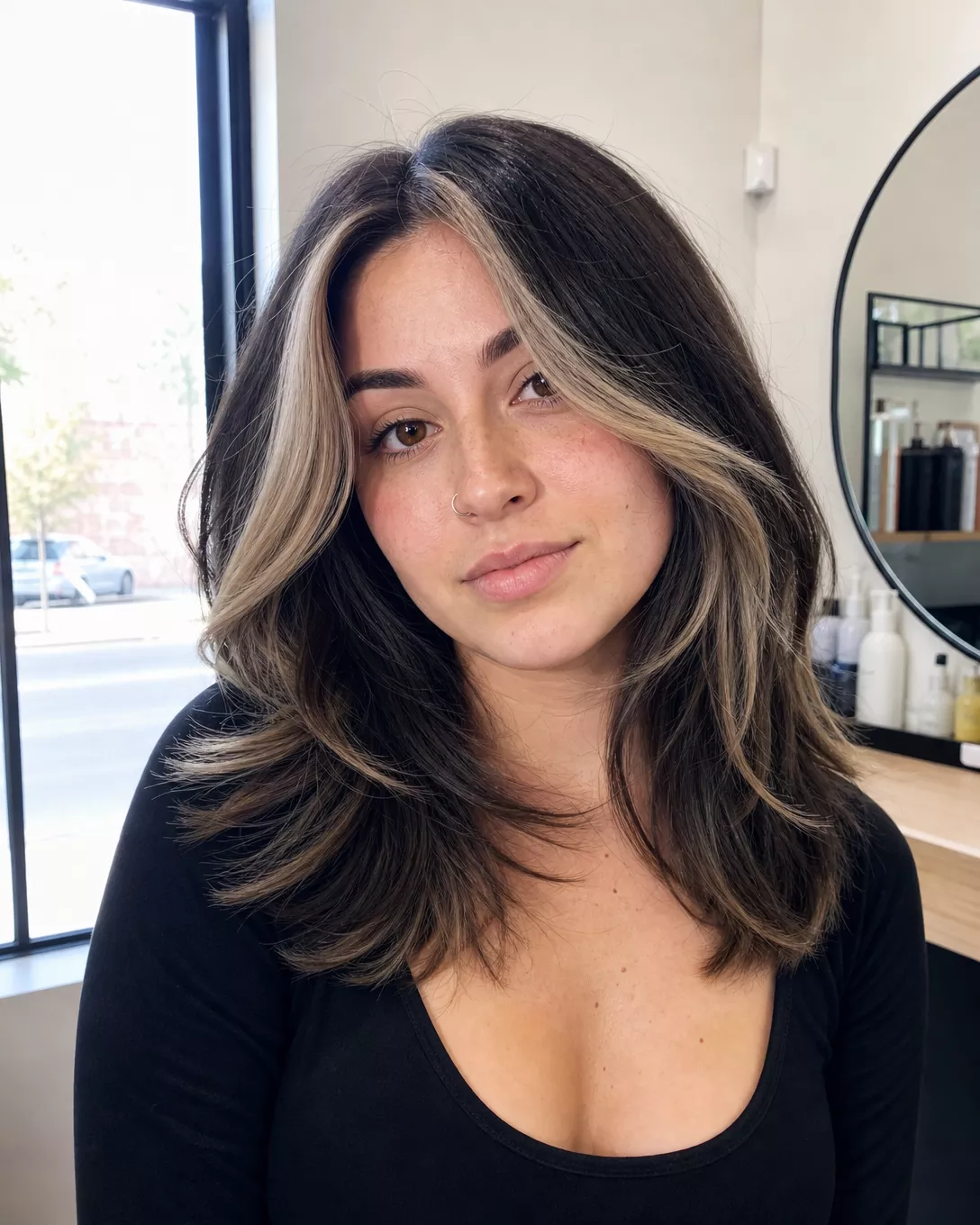
Layered Lob with Money Piece
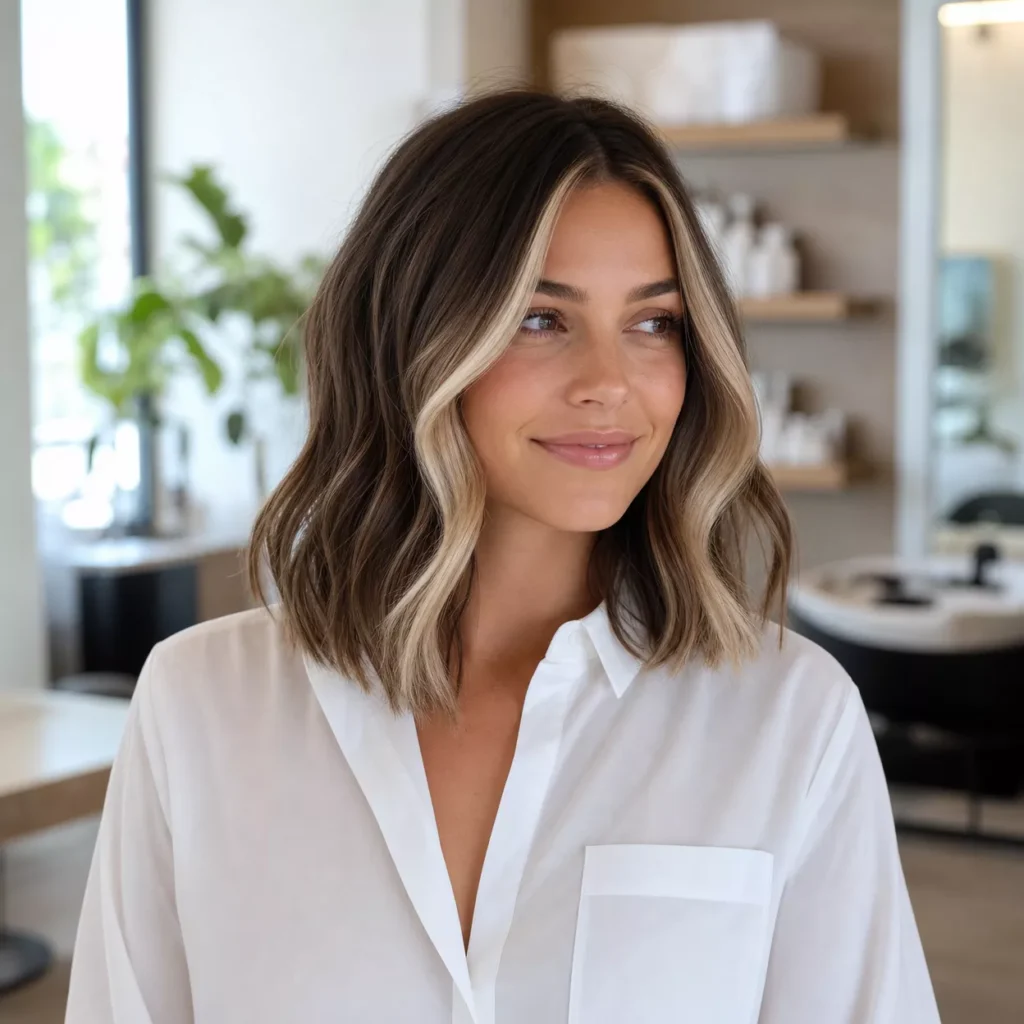
A money piece is color placed at the front: two lighter sections along the hairline while the rest of the lob stays its base shade. The haircut doesn’t change; the money piece changes where the eye lands first. How strong that frame looks depends on contrast and your starting color. A slightly lighter shade blends in; a bright blonde against dark hair stands out clearly. Because the pieces sit at the hairline, regrowth shows there quickly, so the front may need refreshing before anything else.
Shaggy Layered Lob

A shaggy lob has a particular layer architecture: shorter layers at the crown, texture through the interior, and broken, piecey ends. Together, those create height on top and movement below. It tends to suit wavy and textured hair, which falls into the shape on its own, while straight hair often needs product to show it. Density matters as well. Too many short layers can widen dense hair at the crown, while low-density hair can lose too much at the ends.
Stacked Layered Lob
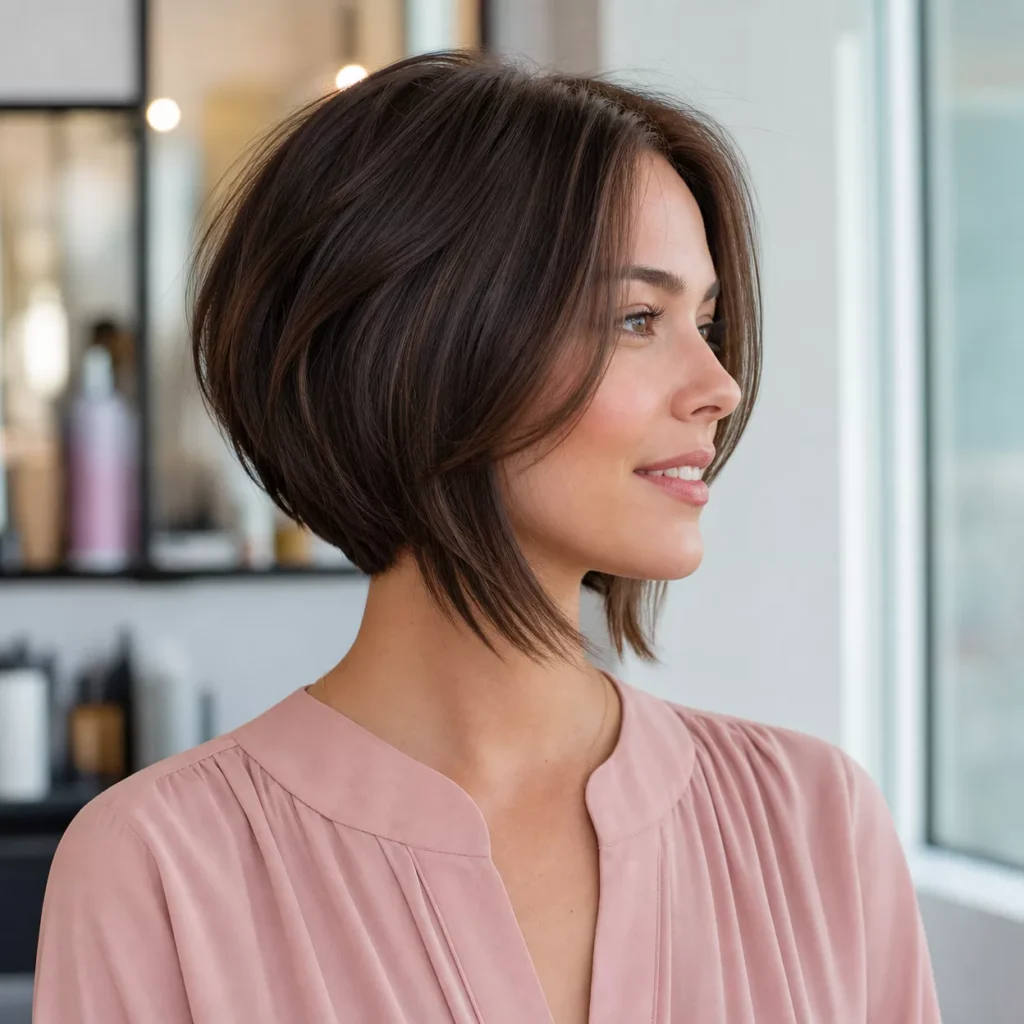
Stacking is about the nape. Short, graduated layers at the back build on one another, so the back curves out before the hair lengthens toward the front. It redistributes shape rather than adding hair. On dense hair, the stacked section holds a rounded profile; on finer or low-density hair, the short nape layers may show more scalp. As it grows, the back lengthens and loses its curve first, so the nape usually needs reshaping before the front does.
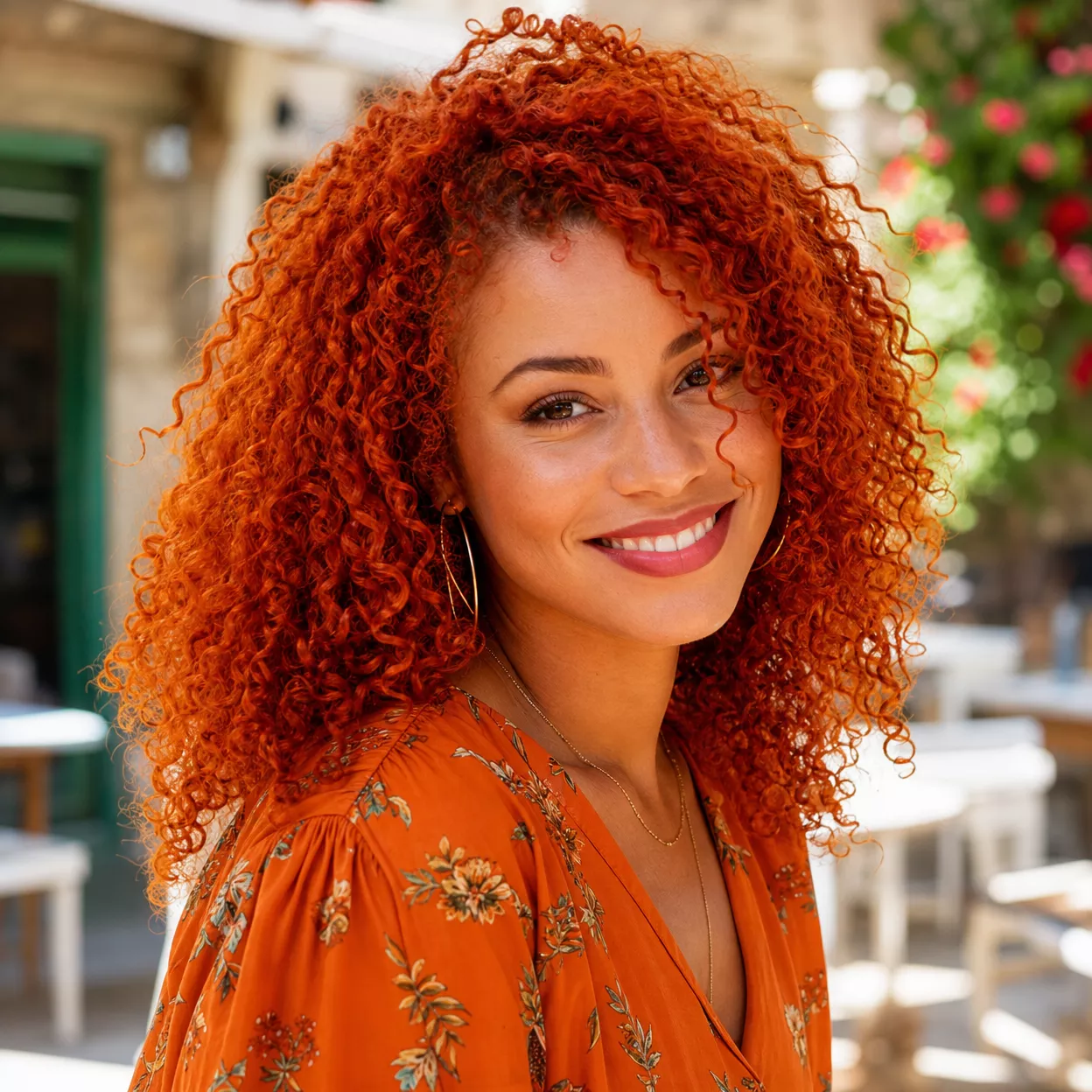
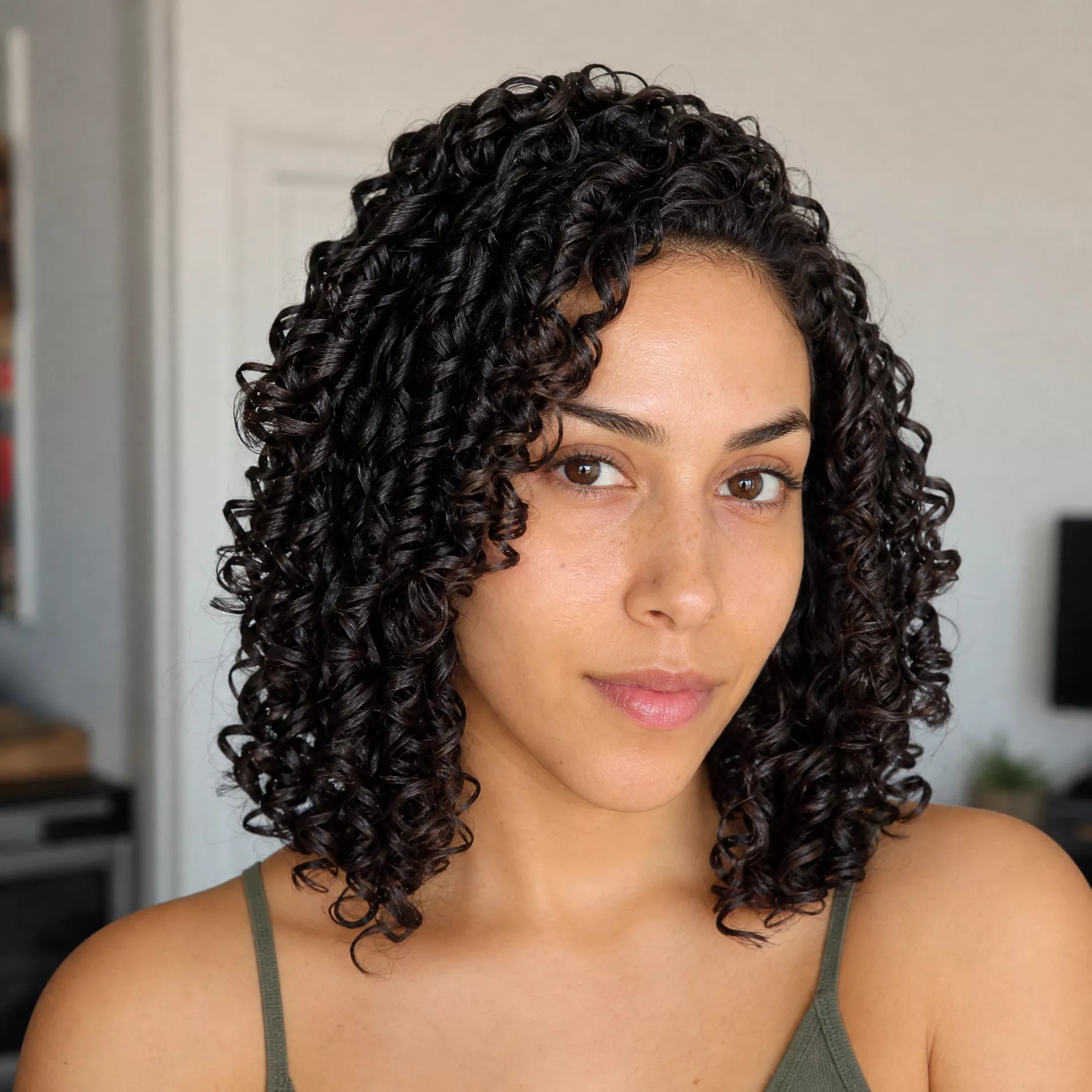
Layered Lob for Curly Hair
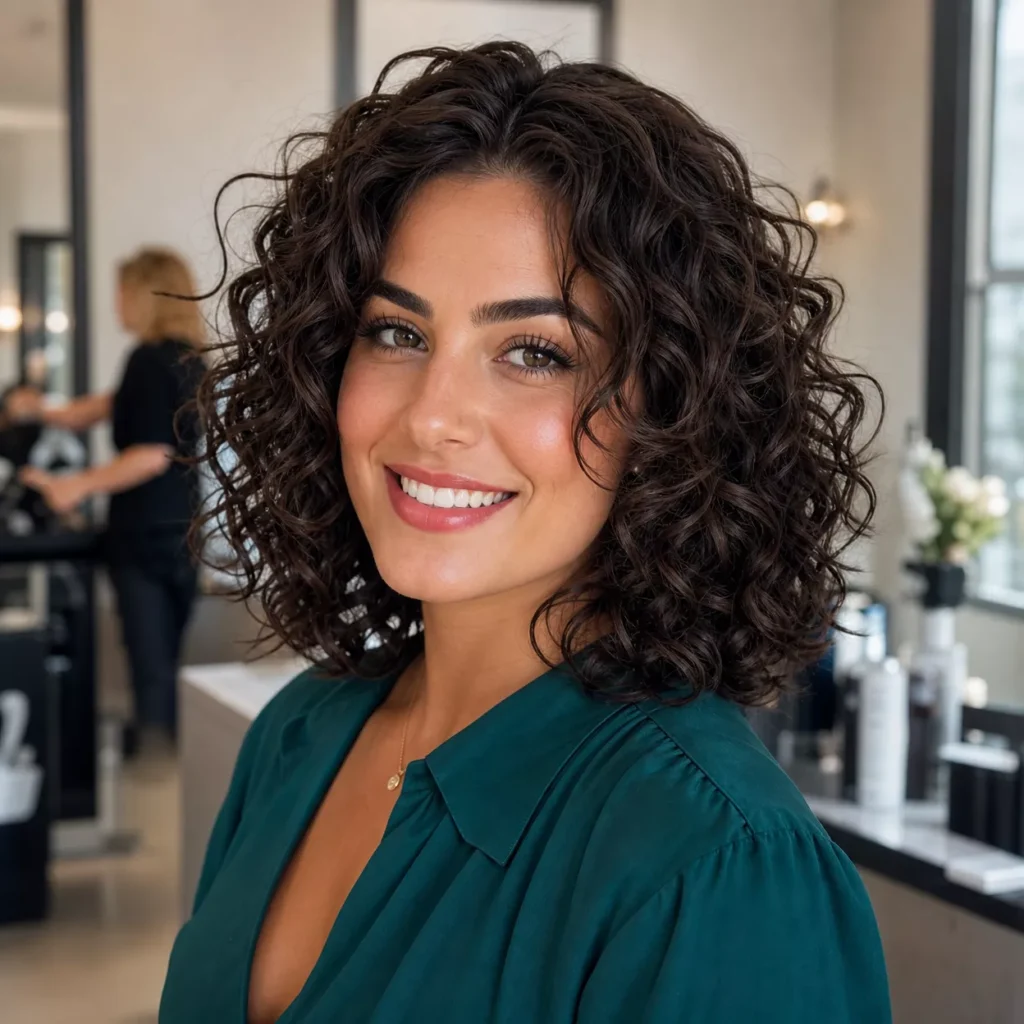
Curly hair can shrink considerably as it dries, so a lob cut at the collarbone wet may end up near the jaw. Many stylists prefer to assess curls dry, or check them dry, before settling the length and layers.
Layering tends to help when weight is pulling curls flat at the crown or making the shape widen at the bottom. Redistributing that weight lets the top lift and keeps the outline balanced. The approach shifts with curl pattern and density: looser curls may need less layering, while dense, tighter curls may need more internal shaping. Coily hair often shrinks and expands differently again. Our guide to curly shag haircuts covers layer placement for curls in more depth.
Ash Blonde Layered Lob
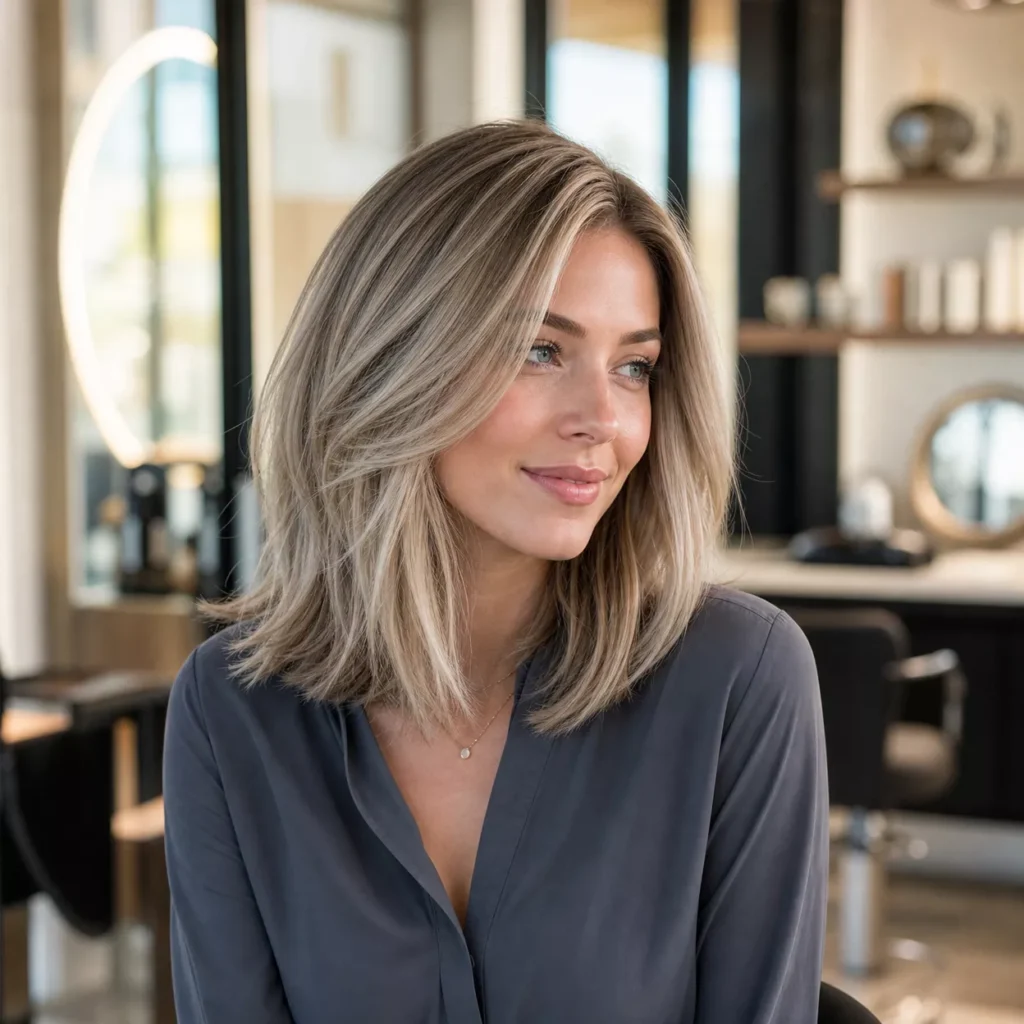
Ash blonde is a cool color direction, separate from the lob itself. Reaching it means controlling the warmth that appears when hair is lightened, which takes more work from darker starting points. Toner sets how cool the final shade looks, and as it fades, warmth gradually returns. A shadow root can make regrowth less obvious by keeping the root deeper, but the ash lengths still need toning to stay cool.
Layered Lob with Wispy Fringe

A wispy fringe is cut light enough to see through, blending into the front layers rather than forming a solid line. That lightness depends on hairline density; a sparse front can make it look gappy. Texture changes it too. Straight hair shows every strand, while wavy hair may separate the fringe further. It usually needs a quick blow-dry or a few seconds of shaping to sit evenly. As it grows, it moves into the face-framing layers, but there’s still a stretch where it falls into the eyes.
Middle Part Layered Lob

A center part divides the lob into two symmetrical halves, which can make the shape look clean and balanced, and also exposes any unevenness. It sits most easily when your hair naturally parts near the middle. A cowlick at the crown can push one side up or make the part wander. On lower-density hair, a center part may show more scalp along the line. The same lob worn with a side part can look quite different, so it’s worth trying both before deciding.
Layered Lob for Fine Hair
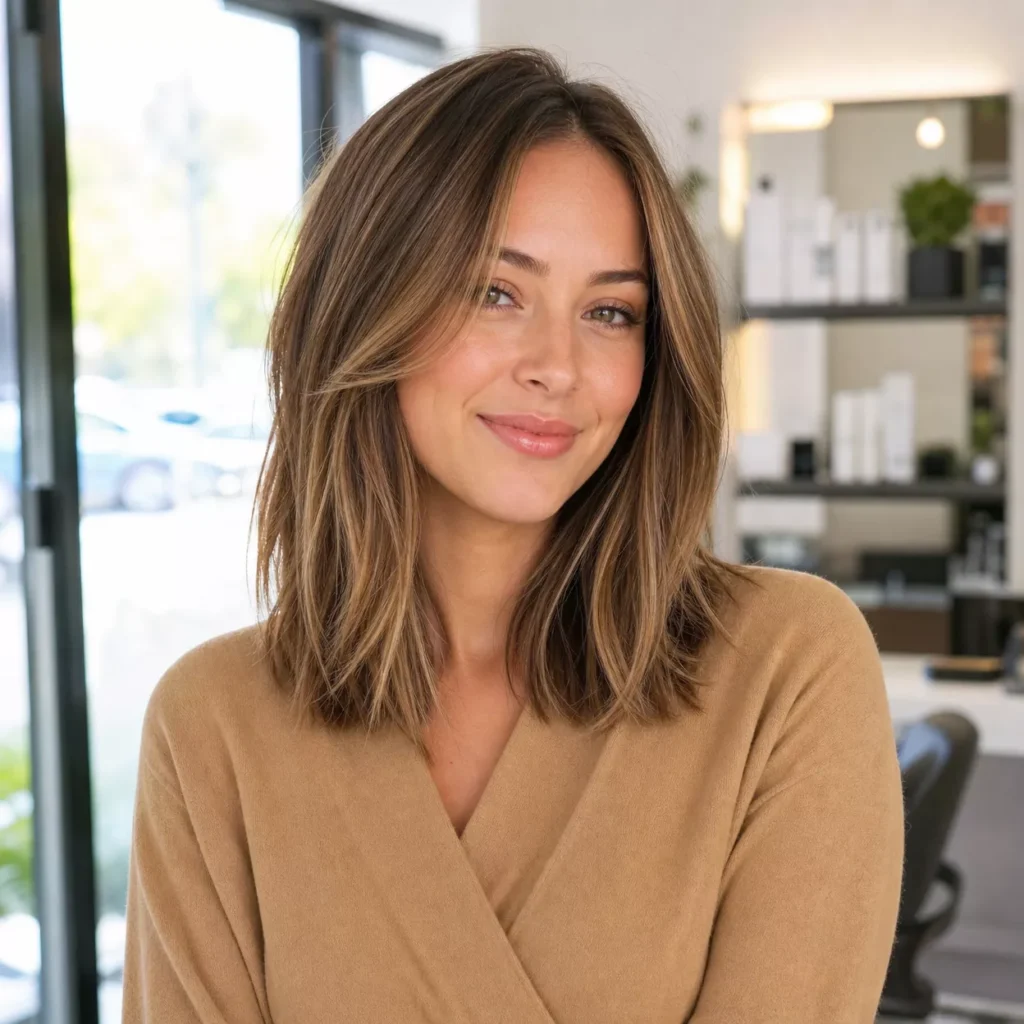
Fine describes narrow strands; low density describes fewer strands. The two need different approaches.
Fine hair with good density can usually handle moderate layering, with the first layer starting around the chin or lower, adding movement without thinning the ends. Fine hair with low density needs more caution. The perimeter should stay fairly solid and the layers few and long, because heavy layering can make the ends look sparse. A cut can change where fullness appears, but it can’t add hair. Styling, such as a little root lift or a light texture spray, can help, though results vary. Our guide to volumizing hairstyles for fine or thin hair goes further into this.
Caramel Layered Lob
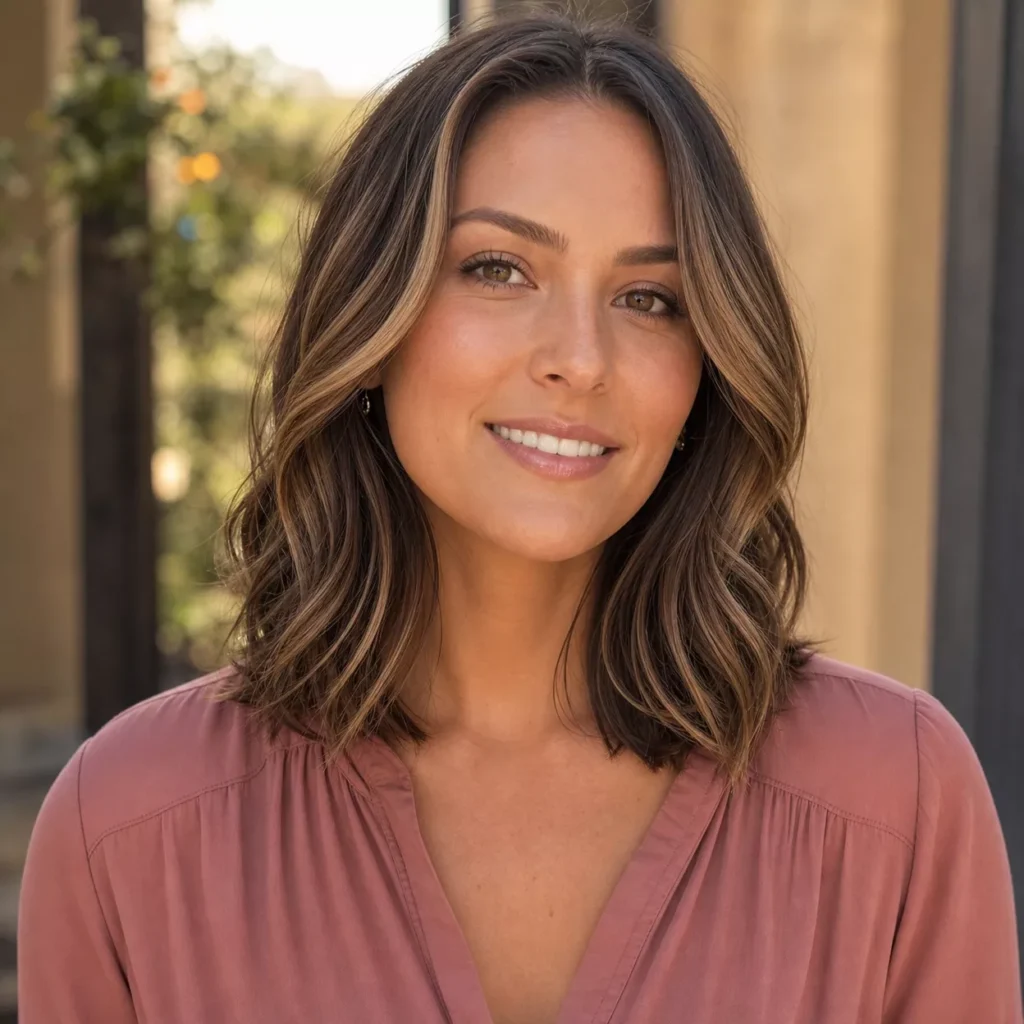
Caramel is a warm, golden-brown color, and placed through a layered lob, it adds contrast that makes the layers easier to read. Your base shapes the effect. On medium brunette hair, caramel pieces blend in softly; on dark brunette, they stand out more and need more lightening. Placement matters too. Caramel along the outer layers shows movement clearly, while caramel underneath reads more subtle.
Textured Collarbone Layered Lob
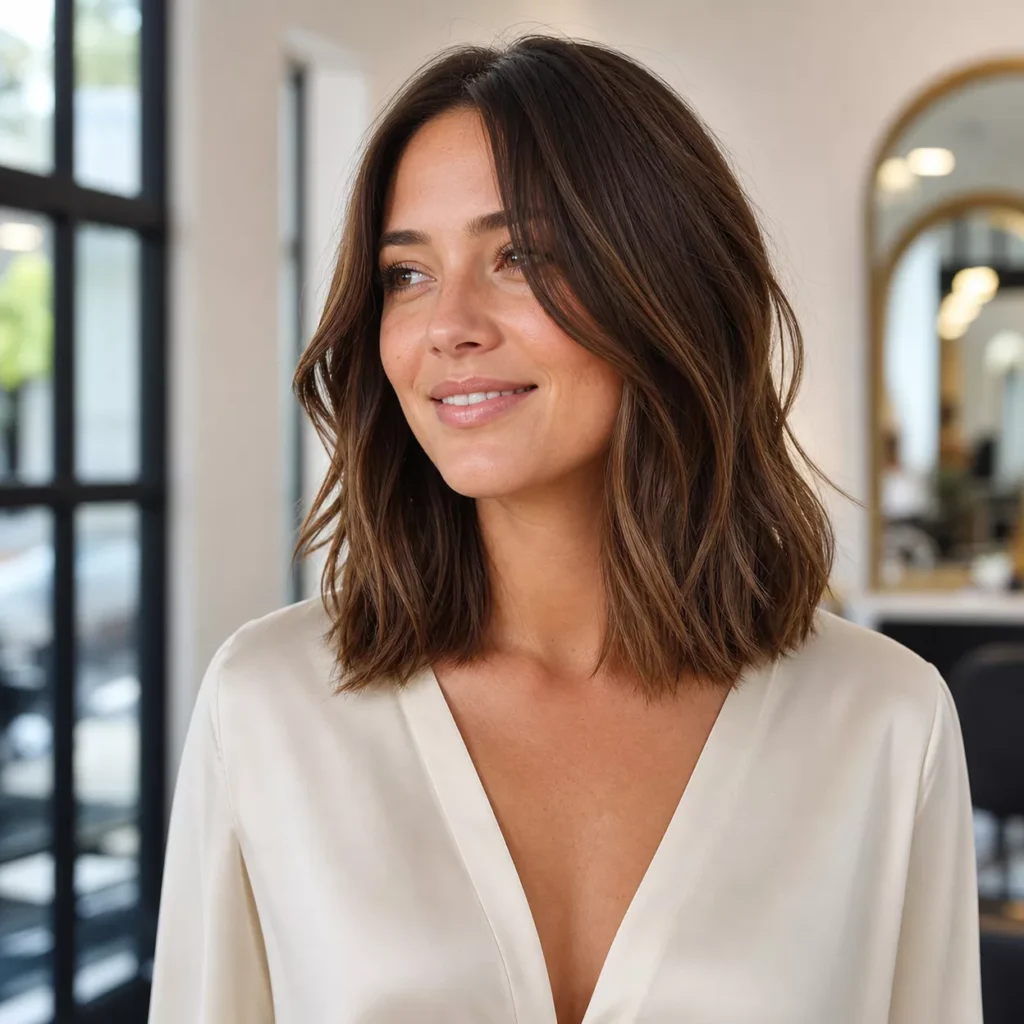
At this length, a small difference matters. Hair that ends just above the collarbone can swing freely, while hair resting right on it, or on the shoulders, may flip outward or bend unevenly. Texture at the ends softens the perimeter, but on fine or low-density hair it can thin the bottom edge. On wavy hair, collarbone length often lets the waves form without too much weight pulling them down. On straight hair, a quick styling pass may be needed to show the texture.
Layered Lob with Deep Side Part
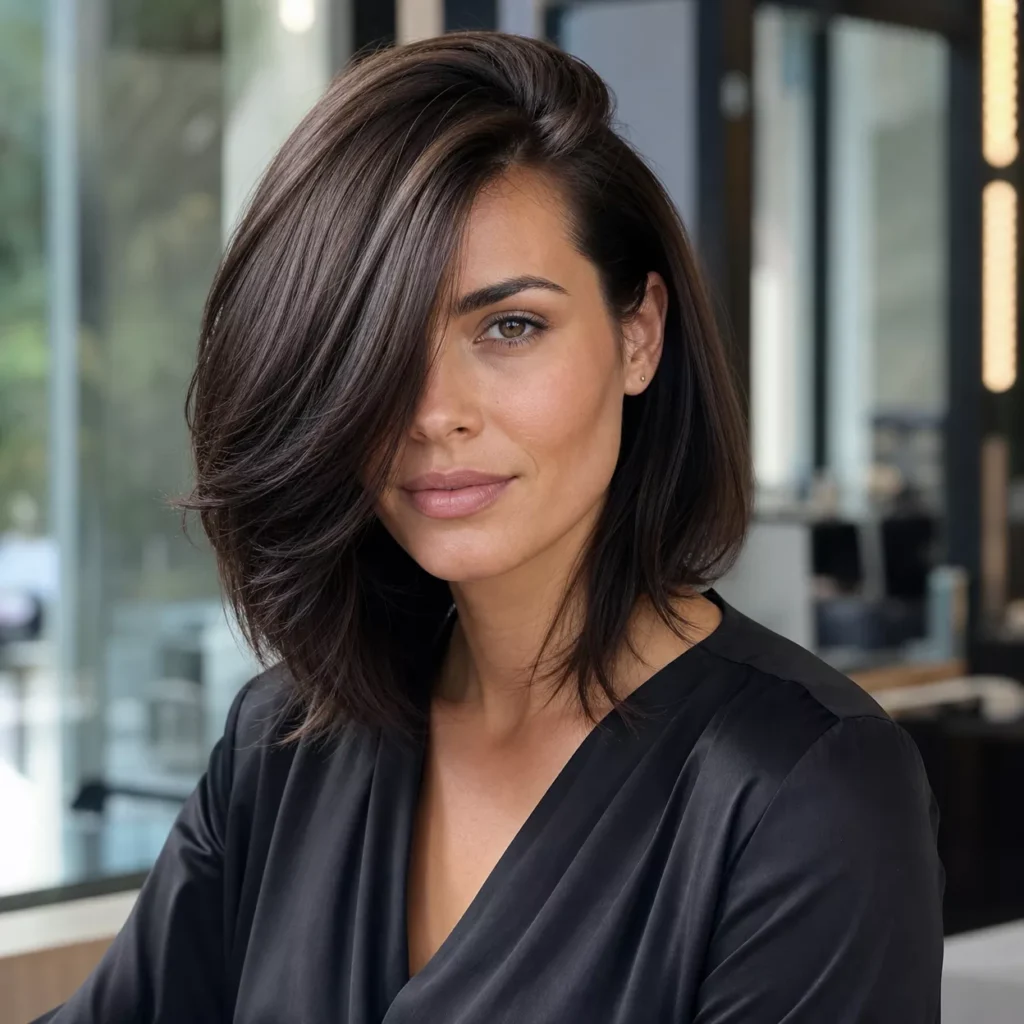
Moving the part deep to one side sends more hair across the top, so one side carries more visual weight and the other sits closer to the head. Whether it holds depends on whether the deep part matches your natural part or is created with styling; created parts tend to drift during the day. The layering can be adjusted so the heavier side falls smoothly rather than sitting bulky against the face.
Dark Brunette Layered Lob
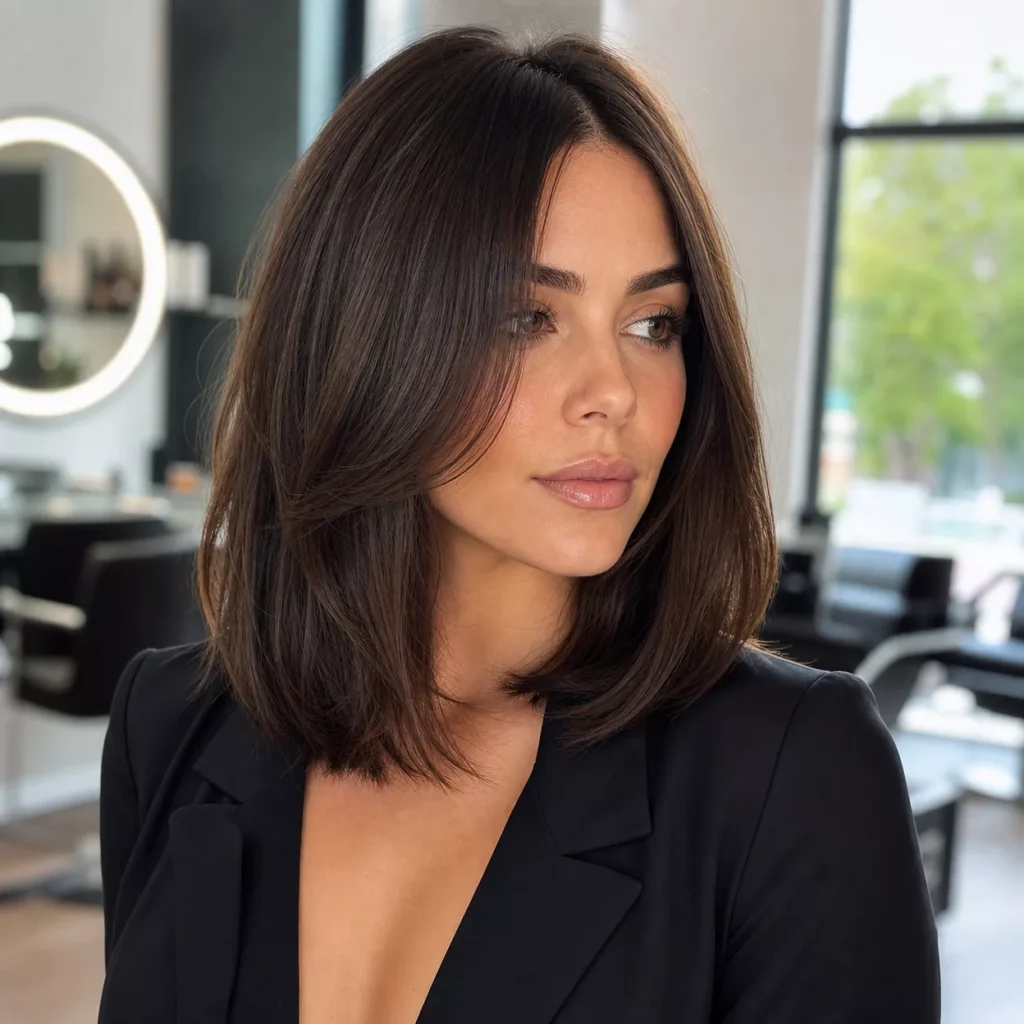
On dark brunette hair, the layers show through light and shadow rather than color contrast. Each change in length creates a slightly different surface for light to catch, so the layering can look defined even in one shade. That’s the color revealing the cut, not creating it. A gloss can add shine and refresh tone, but it’s optional, and shine isn’t the same as hair condition.
Layered Lob with Curtain Bangs and Highlights
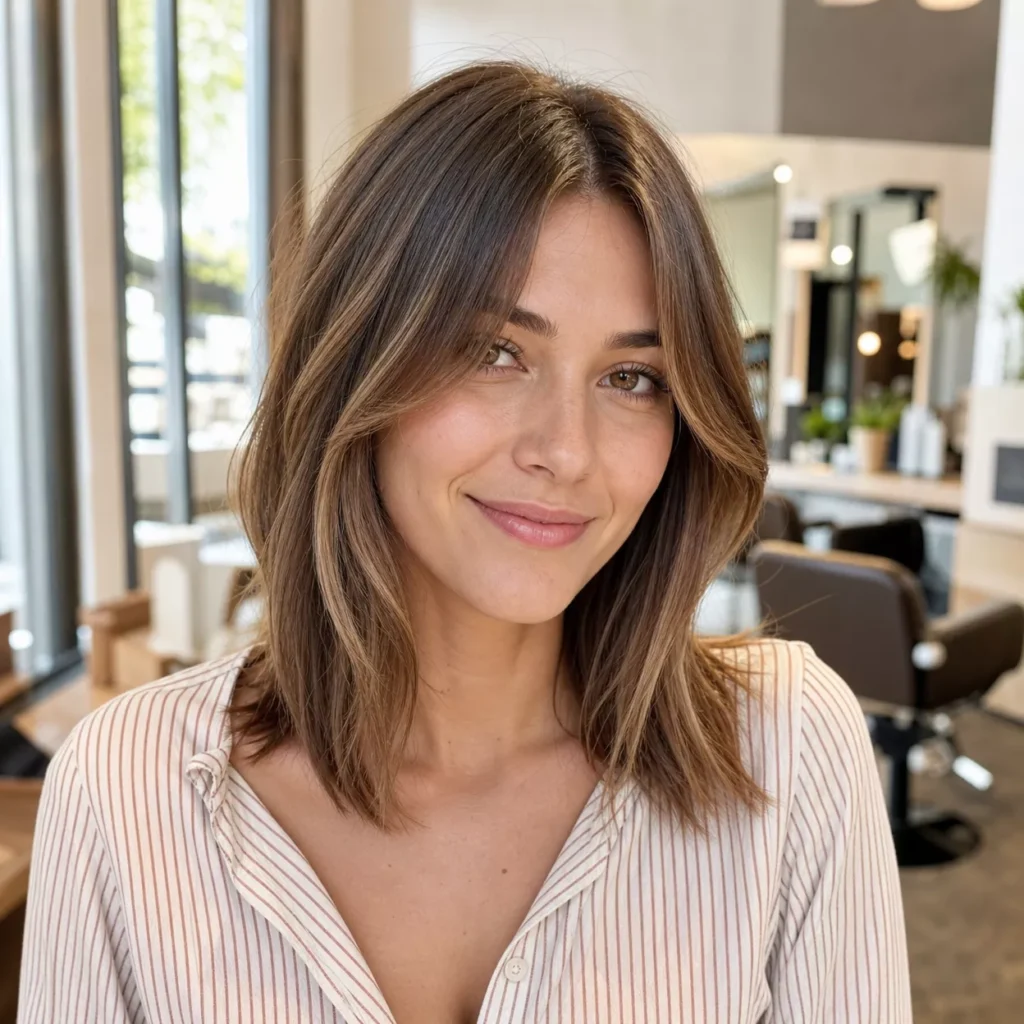
Three separate decisions overlap here: the lob shape, the curtain bangs, and the highlights. Each comes with its own upkeep. The bangs need trimming before the lob does, the highlights need refreshing as they fade or grow out, and the lob itself may go longer between cuts. Ideally, the highlights follow the layers to show their movement, and the bangs connect into the face-framing pieces. Your natural part decides how the bangs sit, and your starting color decides how much lift the highlights need.
Lived-In Layered Lob

Lived-in describes a cut designed to keep looking deliberate as it grows: a soft perimeter, slightly irregular layers, and a shape that doesn’t depend on a precise line. That’s different from simply messy, because the irregularity is planned. How low-maintenance it is depends on texture. On wavy hair, it may need only air-drying and a light product. On straight hair, it may need texturizing spray or a few bends to show the layering. It tends to forgive a delayed appointment better than a precise cut, but it still needs reshaping eventually.
Where Should Your First Layer Actually Start?
Of all the decisions in a layered lob, the starting point of the first layer may change the silhouette most.
Starting near the cheekbone creates the most visible frame. The shortest pieces sit high, and the cut reads clearly layered from the front. On dense or coarse hair, though, very short front pieces can push outward instead of framing.
Starting at the chin softens that effect. The front still has shape, but the layering feels more gradual.
Starting at the jaw keeps the layering subtle. The lob looks mostly intact, with movement concentrated toward the ends.
Starting near the collarbone keeps almost all the weight, so the layers mainly loosen the ends.
None of these is right for everyone. Texture, density, and your styling routine decide which one works. Wavy and curly hair can make a starting point look higher once dry, while fine or low-density hair often looks fuller when the first layer starts lower.
The Perimeter Matters More Than Most Photos Show
The bottom edge often decides how full a lob looks.
A blunt perimeter keeps the most weight at the ends and makes the hair look denser. A soft perimeter, slightly rounded or lightly textured, keeps much of that fullness while removing the hard line. A textured perimeter, choppy or razored, adds movement but takes away visual weight.
At collarbone length, the edge also meets the shoulders, which can push the ends outward or make them bend unevenly.
If your ends are fine or low in density, aggressive layering through the bottom can make them look sparse. A stronger perimeter, with layers kept higher and lighter, usually holds up better. Dense hair, by contrast, can often handle a softer or more textured edge, provided the interior weight is managed too.
Fine, Thick, Wavy, Curly: The Same Lob Can Be a Different Haircut
On fine but dense hair, a layered lob can carry moderate layering well. The strands are narrow, but there are enough of them to keep the ends looking full.
Fine, low-density hair needs a more protective approach. Fewer layers, a stronger perimeter, and a first layer that starts lower usually look fuller than heavy layering.
Thick, high-density hair benefits from internal weight removal, so the lob moves rather than sitting heavy. Too many short layers can create width.
Coarse hair holds texture and shape well but may frizz if thinned heavily or razored.
Straight hair shows layer transitions and perimeter lines clearly, which suits precise cuts but means layering may need styling to show.
Wavy hair often falls naturally into layered shapes, though uneven wave patterns may need some help.
Curly and coily hair shrink and expand, so the cut has to be planned around the dry shape. Weight distribution matters more than the number of layers.
Look at the Back of the Haircut
Most reference photos show the front. The back tells you more about how the cut is built.
Look at the nape. Is it tapered or full? Is there graduation, with stacked layers creating a curve? Check the perimeter at the back: is it blunt, rounded, or angled?
Notice how the layers are distributed. Do they sit mostly at the crown, through the mid-lengths, or at the ends? Look at the width: is the back fuller than the front? Check for bulk and whether it’s been removed evenly.
Finally, see how the back connects to the front. A well-planned lob flows from one to the other; a disconnected one can look like two different haircuts.
When “Low Maintenance” Is Actually Low Maintenance
“Low maintenance” can mean several different things, and a lob may fit one meaning but not another.
Fewer styling steps usually comes from a cut that works with your natural texture.
Forgiving grow-out comes from soft perimeters and blended layers rather than sharp angles or stacked napes.
Minimal color maintenance depends on whether color is part of the look and how much contrast it has.
No fringe removes one of the most frequent reasons for a trim.
Natural texture and easy air-drying depend on how closely the cut matches the way your hair already behaves.
A cut can be easy to style day to day but need frequent reshaping. Another can grow out gracefully but need daily styling to look right. Knowing which kind of maintenance you want to reduce makes the choice clearer.
What to Tell Your Stylist
A reference photo becomes more useful with a few clear sentences:
“I want movement, but I don’t want the ends to look thinner.”
“I like this layer placement, but I need the perimeter to stay fairly strong.”
“I have fine strands but fairly high density.”
“My hair is wavy when it air-dries, so I’d like the cut to work with that pattern.”
“I like the texture in this photo, but I know the finish may need styling.”
“I’d like the back to stay clean rather than becoming too rounded.”
“I like this color, but I’m mainly here for the haircut.”
Final Thoughts
The best layered lob isn’t the one with the most layers. It’s the one where the layer placement, perimeter, density, texture, styling routine, and maintenance all make sense together for the hair you actually have.
Use the 25 lobs above to find the shape you like, then let those details, rather than the photo alone, guide the conversation. For shorter variations of the same ideas, our guide to bob hairstyles covers the length just above the lob.