28 Layered Haircuts for Fine Hair That Add Real Volume
Layering is often treated as an automatic fix for fine hair, but it doesn’t work that way. Layers remove weight, and fine hair depends on weight staying in the right places to look substantial. The real question isn’t whether to add layers. It’s how much weight comes out, and exactly where, since the same technique that lifts one head can leave another looking thinner at the ends.
Some of what follows are actual cutting structures, meaning length, layer placement and technique, and some are styling or color choices that can be paired with several different cuts rather than being a haircut in themselves. Both are worth knowing apart, since a color technique or a blow-dry habit won’t fix a structural weight problem, and a cut alone won’t give you a wash that only holds its shape with product.
Where the Weight Goes
Fine hair usually has two separate problems, and they don’t have the same fix. One is flatness at the roots and crown, where the hair lies close to the scalp instead of lifting. The other is thinness at the ends, where too much weight has been removed and the perimeter looks sparse or see-through.
Crown layers can address the first problem by giving the roots somewhere to lift from. They do very little for the second. If your main complaint is flat roots, layers placed only through the mid-lengths won’t fix that on their own, since the weight at the top hasn’t changed. If your main complaint is thin-looking ends, crown layers won’t help either, and may make it worse if they’re carried too far down the length.
Most of the entries below lean toward solving one of these two problems, not both at once. Worth keeping in mind as you read through them.
Long Layered Cut with Face Framing
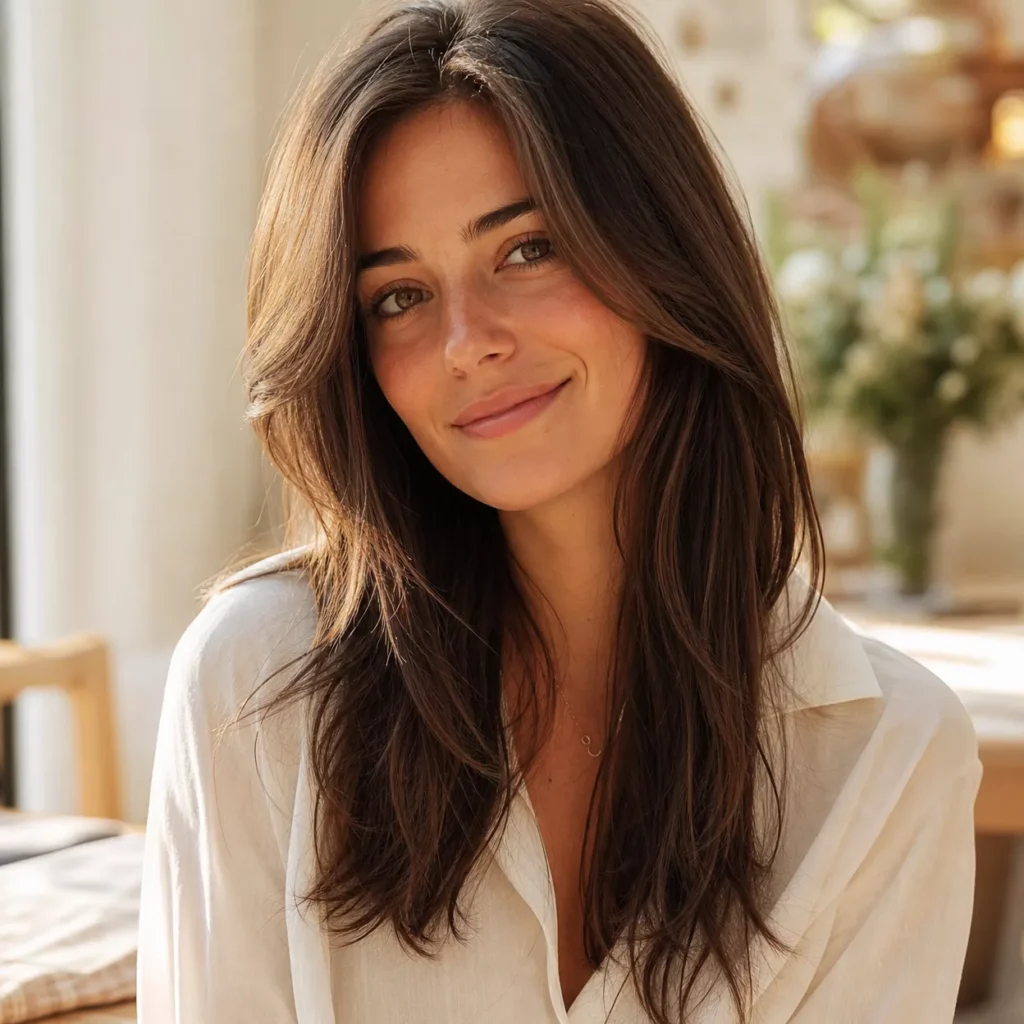
The front pieces are cut shorter than the rest and the layers graduate down through the length. Since these are the longest cuts on the list, the condition of the ends matters as much as the cut itself. The bottom of long hair is also the oldest hair on your head, and dry or frayed ends will undercut whatever the layering is trying to do.
Layered Lob for Fine Hair
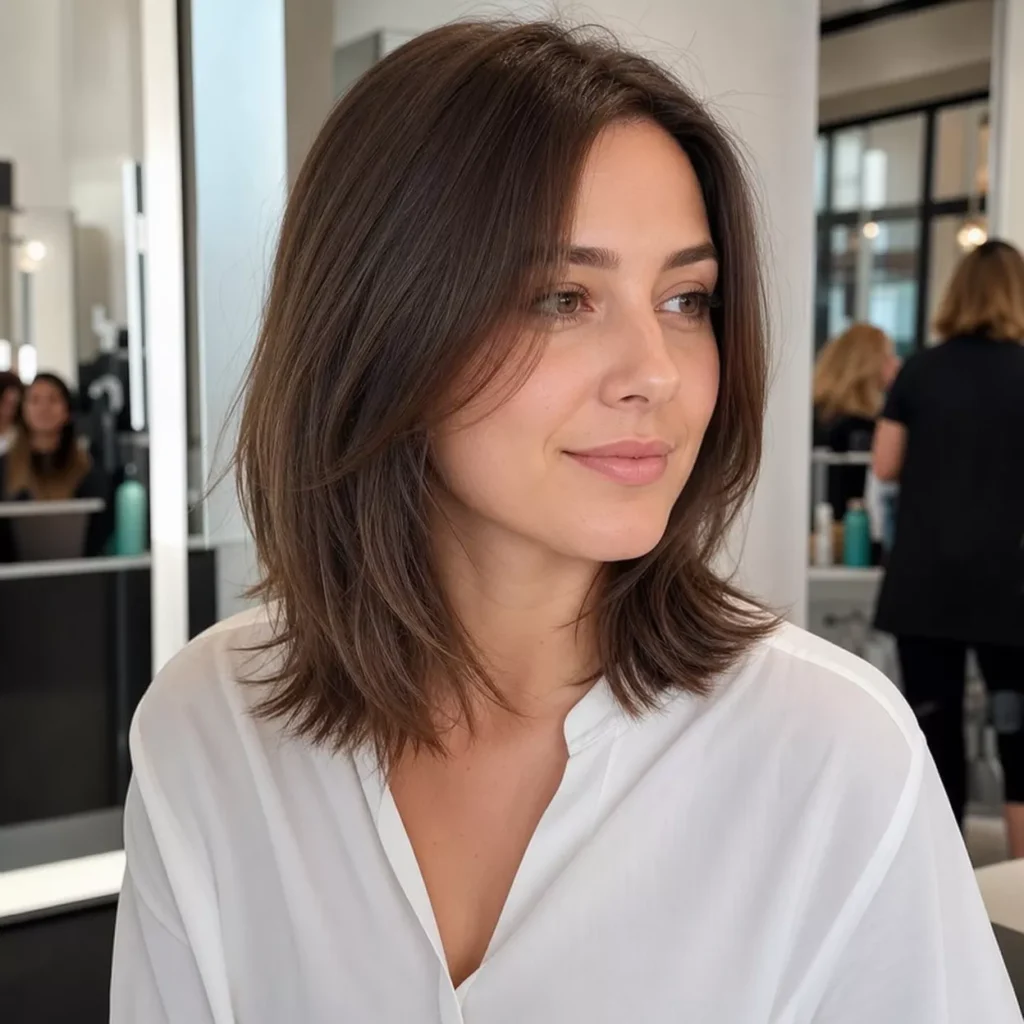
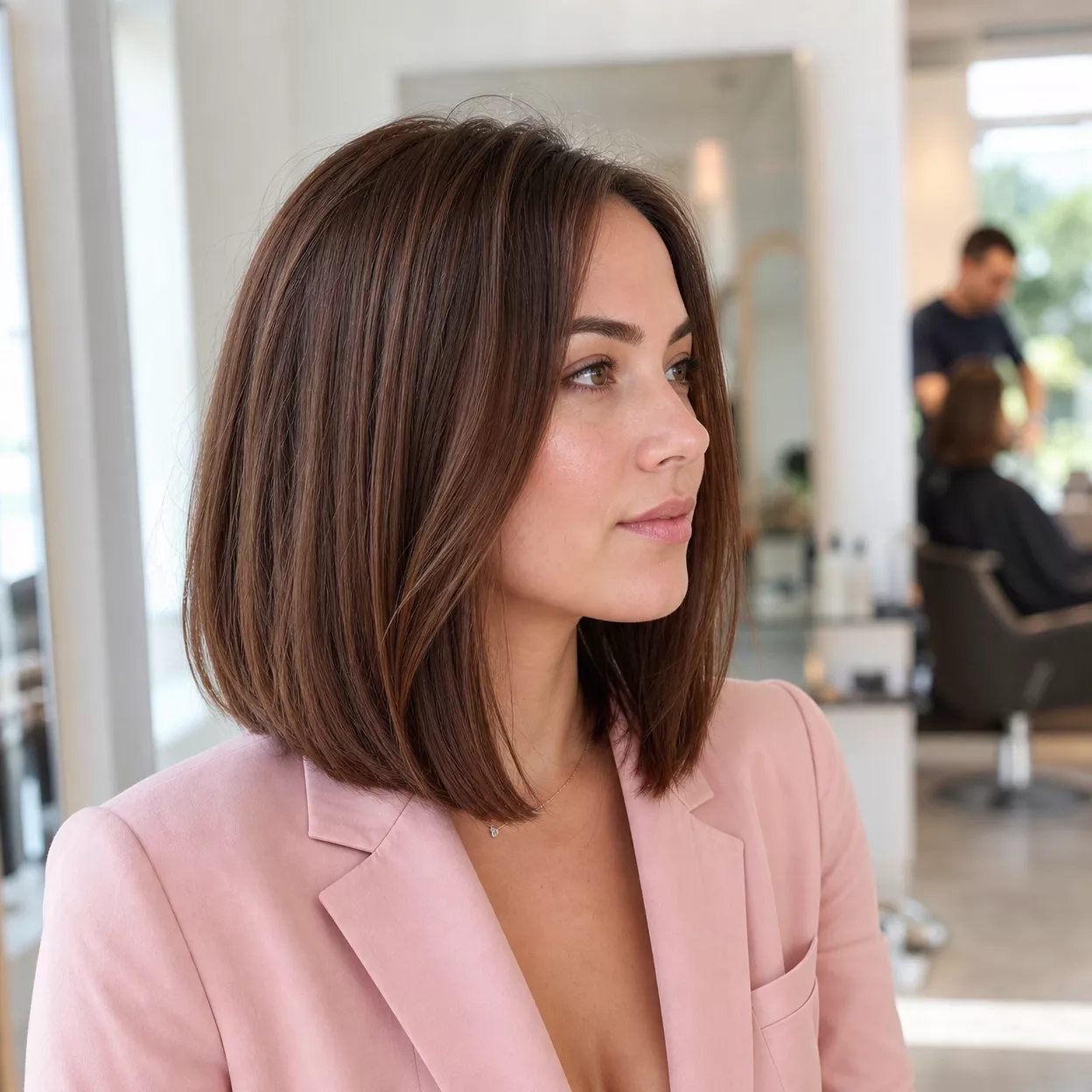
At collarbone length, the decision is how much interior layering to add. Too little, and the hair can feel heavy and flat. Too much, particularly near the bottom, and the ends start to look sparse. The perimeter can stay close to one length or be cut with a slight angle, but the interior layering is where most of the actual decision-making happens with a stylist.
Layered Bob with Volume at Ends

Instead of layering throughout, this concentrates the cutting in the last two or three inches only, leaving most of the length essentially one piece. It’s a narrower version of layering, which means less overall weight loss than a fully layered bob, but the effect at the ends, a slight outward flip, depends on how it’s blow-dried as much as how it’s cut.
Razor-Cut Layered Lob
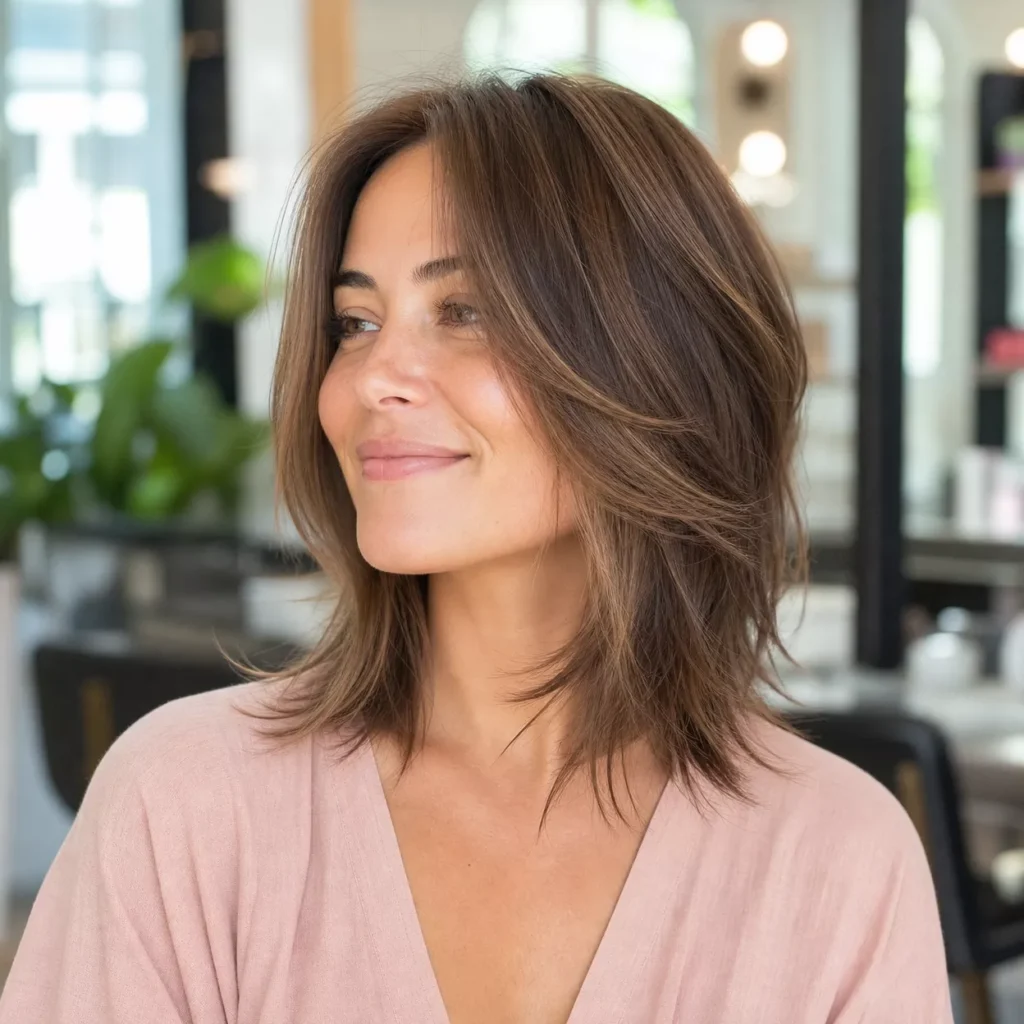
A razor cuts differently from scissors. It feathers the ends instead of leaving a blunt edge, which can create movement without a hard line. On fine hair, though, a razor used heavily can leave the ends looking wispy rather than soft, especially if the hair is already somewhat dry or processed. It’s worth asking how many passes your stylist plans to use before they start.
Short Layered Pixie
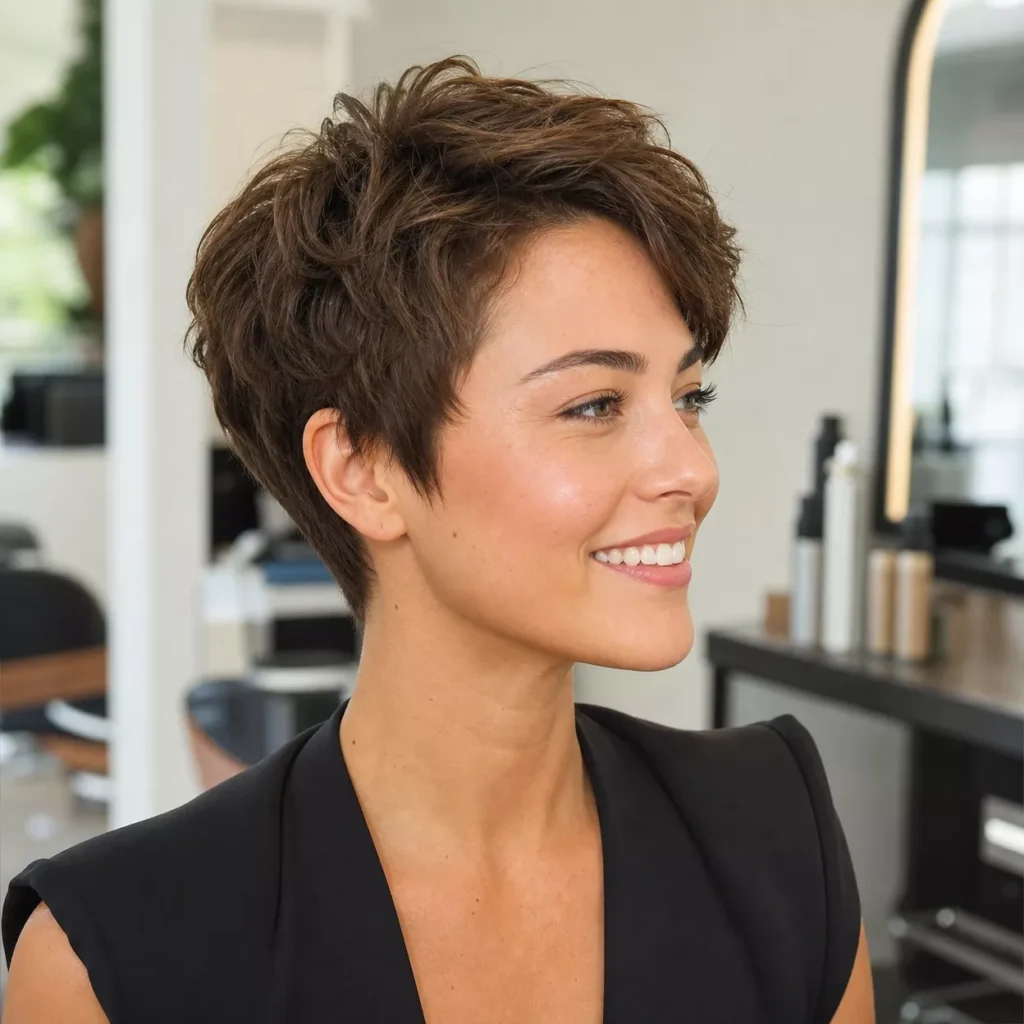
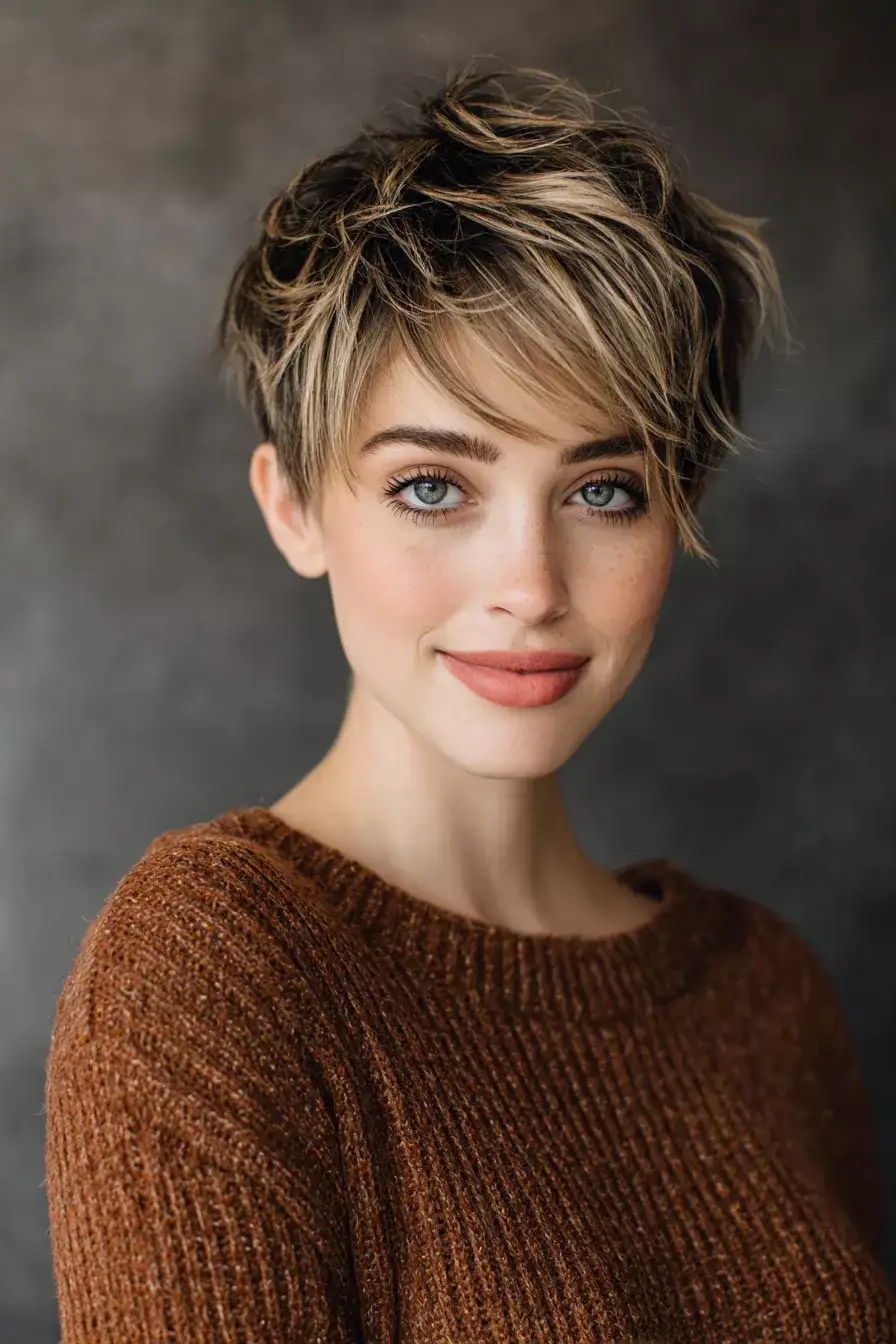
At this length, the cut itself removes most of the weight that was pulling fine hair flat, so the layering does a narrower job: lifting the crown. How much length is left at the top decides how much you can vary the style day to day. A little length there gives room to sweep it forward or up; almost none, and the shape stays fixed once it’s cut.
Layered Cut with Curtain Bangs
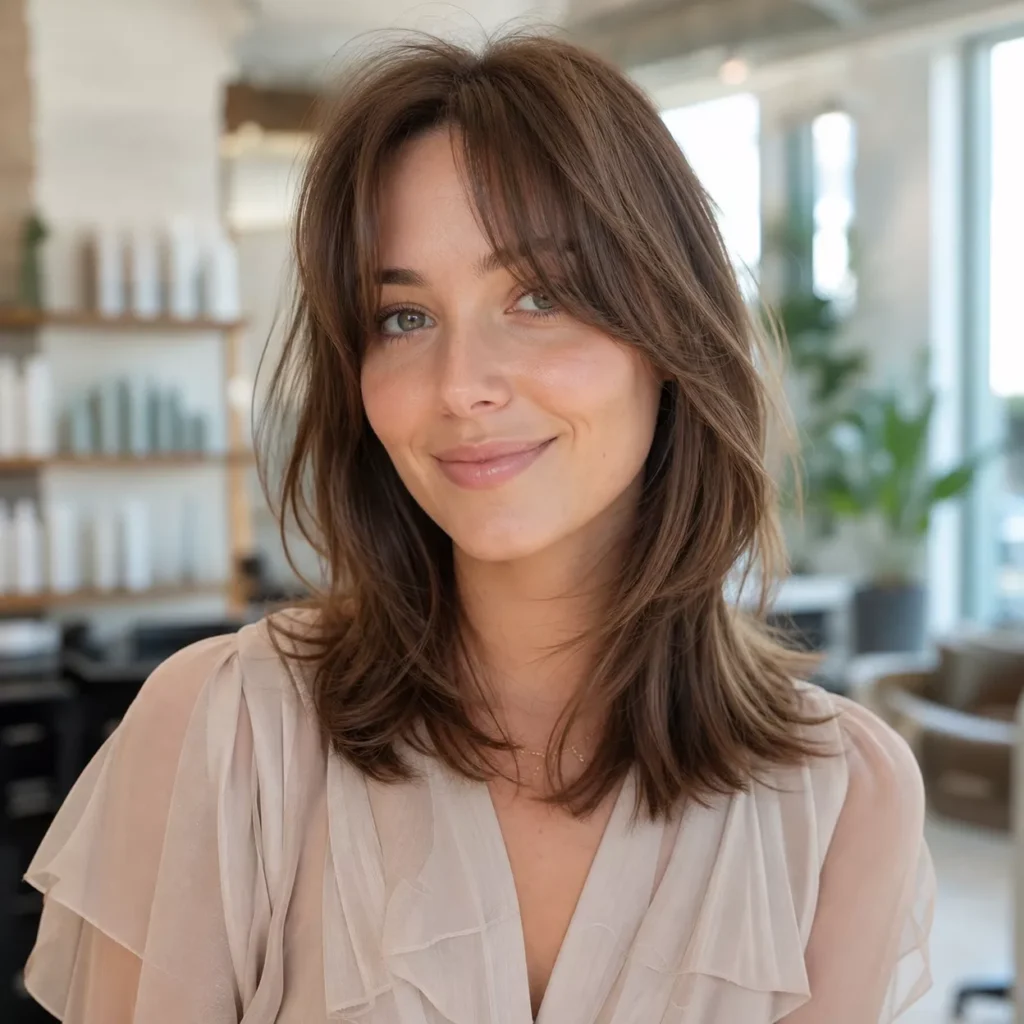
Curtain bangs are cut from the front section of the head, so the real question is how much density is available there to begin with. If the temples are already sparse, taking bangs from a smaller section preserves more hair in the surrounding layers. They also grow out into face-framing pieces rather than an awkward stage, which is one advantage over a blunter fringe.
Layered Medium Cut for Fine Hair

Medium length is a middle ground in terms of commitment, not just appearance. It’s short enough that layers through the crown and mid-lengths can still lift the roots, and long enough that you’re not locked into a short-hair routine. It also tends to grow out more forgivingly than a precise short cut.
Stacked Layered Bob
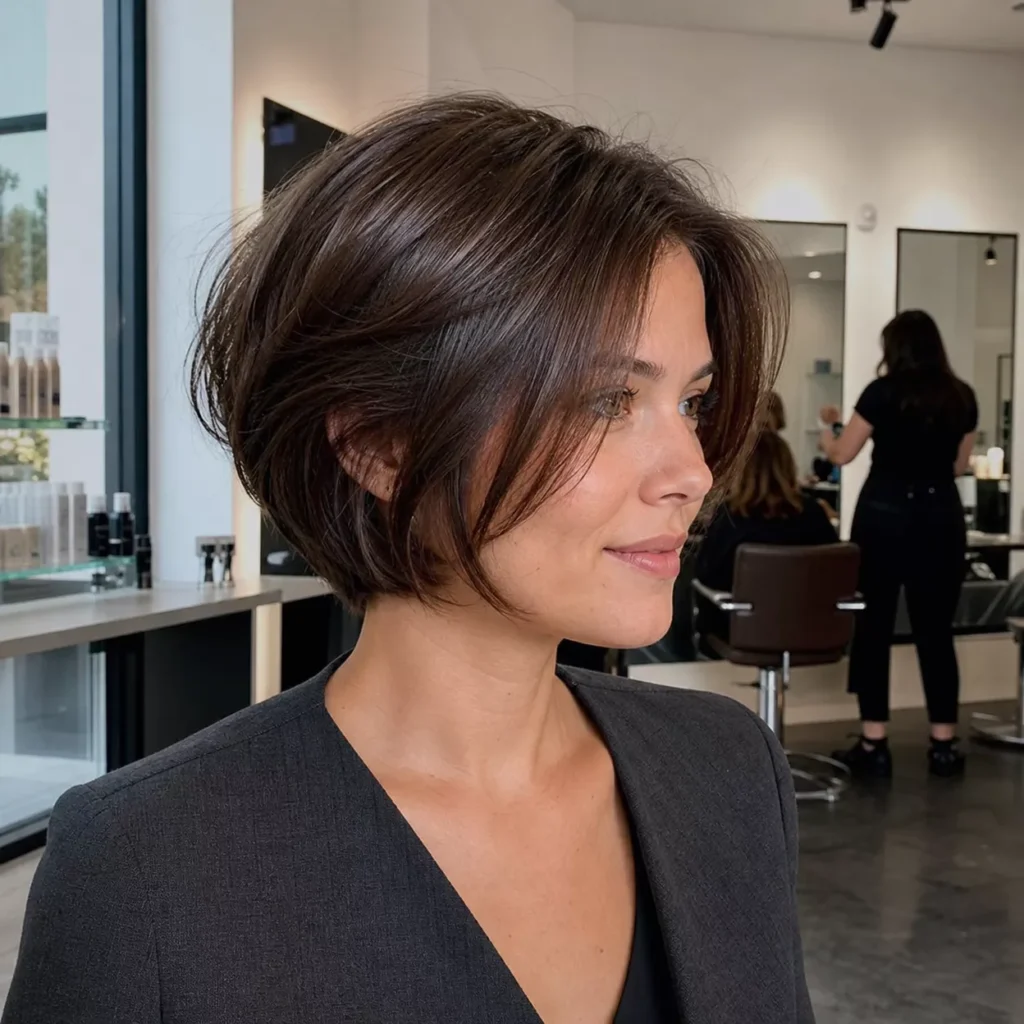
Stacking works at the back of the head: short layers are cut underneath and left to push the longer top layers outward, which builds shape specifically through the crown and back rather than along the length. It doesn’t add hair, and it doesn’t do much for the front or the ends. What it does is change the angle the back sits at, which some people find gives the impression of more fullness from behind.
Long Layered Cut with Balayage
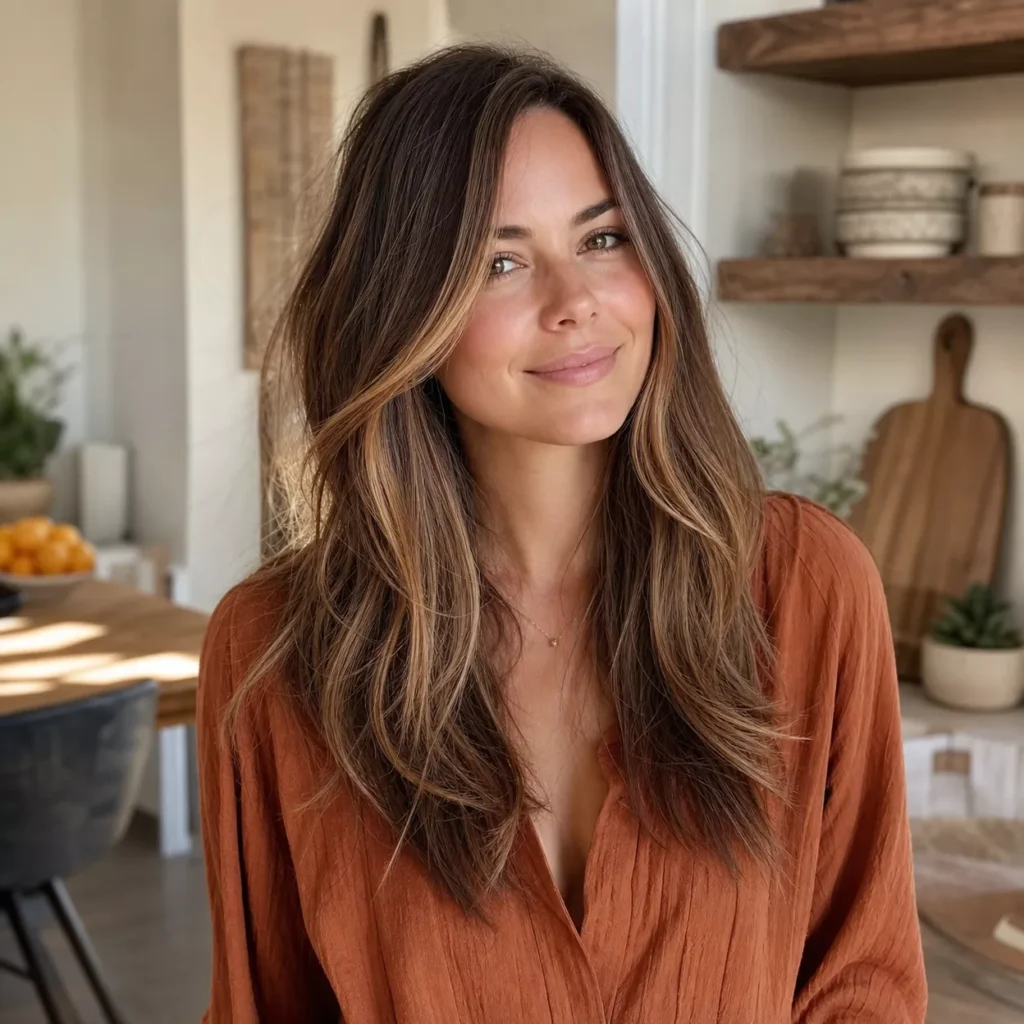
Balayage is hand-painted color, applied unevenly on purpose so lighter and darker sections sit at different points along the layers. Because it’s painted rather than foiled to the root, it tends to grow out without a hard line, which usually means fewer color appointments than an all-over shade.
Layered Bob with Wispy Fringe
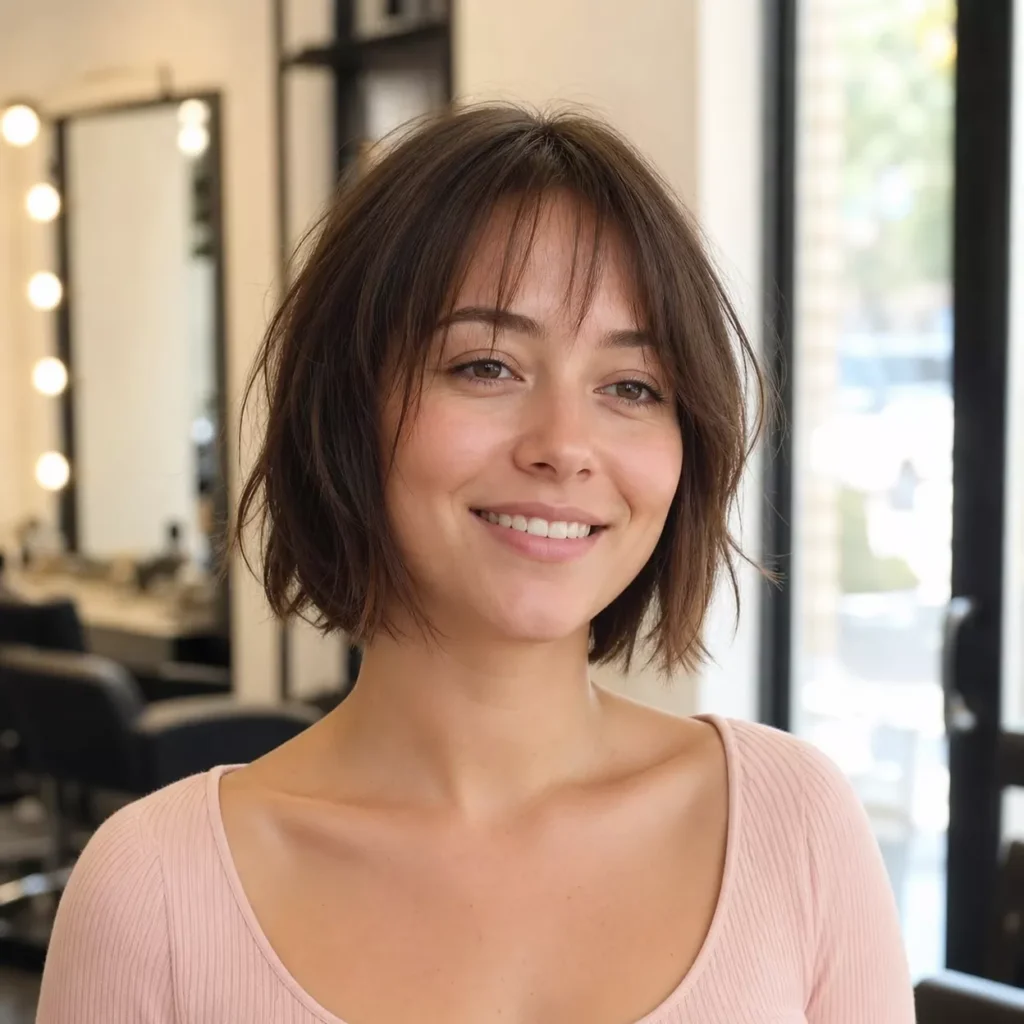
A wispy fringe is cut light on purpose, so you can see through it a little. On thicker hair that reads as soft. On fine hair, the same lightness can look sparse, particularly if the front section doesn’t have much density to begin with. Asking for the fringe to be left a touch heavier than the reference photo is a reasonable adjustment.
Pro tip: If your hair is finer or thinner than it used to be, ask specifically where the layers will start, at the crown, the mid-lengths, or somewhere in between, rather than just how many there will be. Crown layers are one way to address flat roots. Mid-length layers alone often don’t, even though they create visible movement.
Layered Shag for Fine Hair
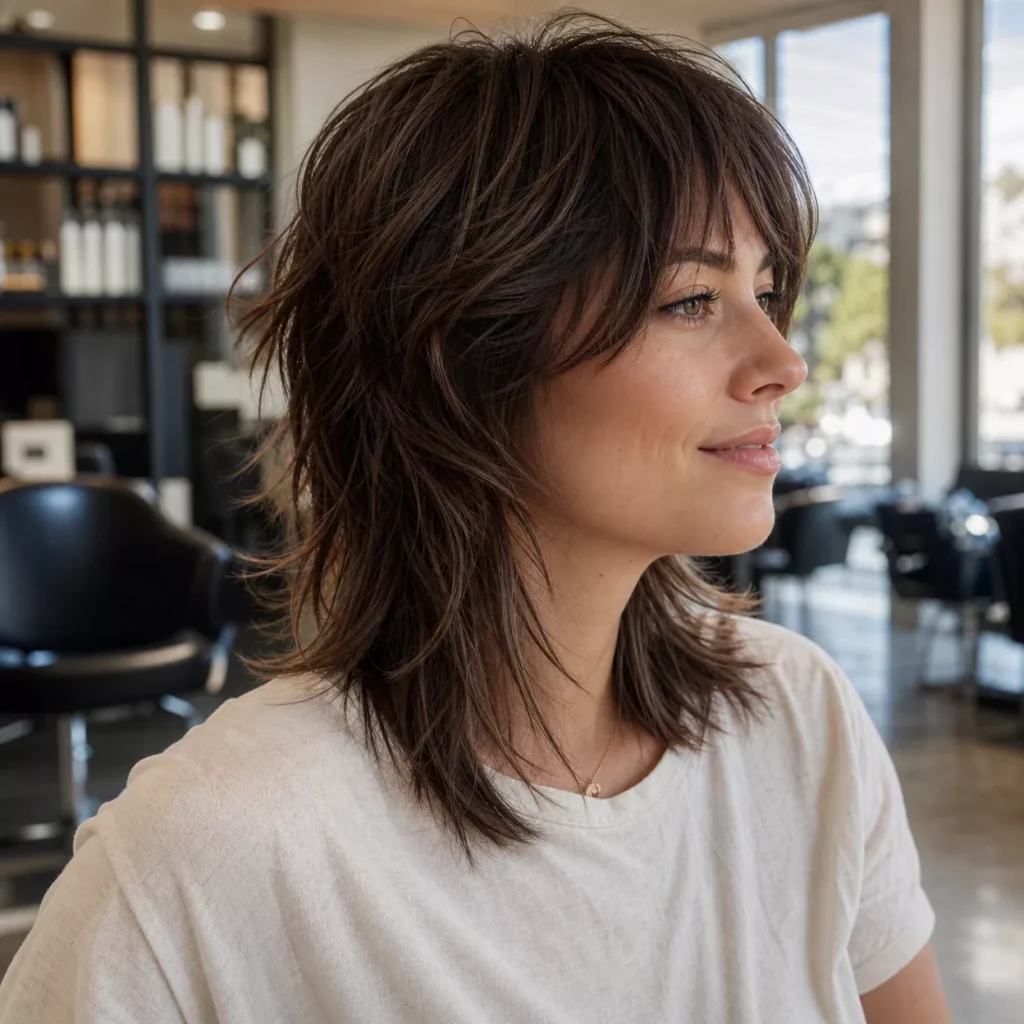
A shag relies on layers at several different lengths creating separation between them. That separation reads as texture when there’s enough hair to fill the gaps, and as thinness when there isn’t. On fine or lower-density hair, a modified shag with fewer, longer layers is often a safer starting point than the choppiest version in a reference photo.
Layered Cut with Invisible Layers
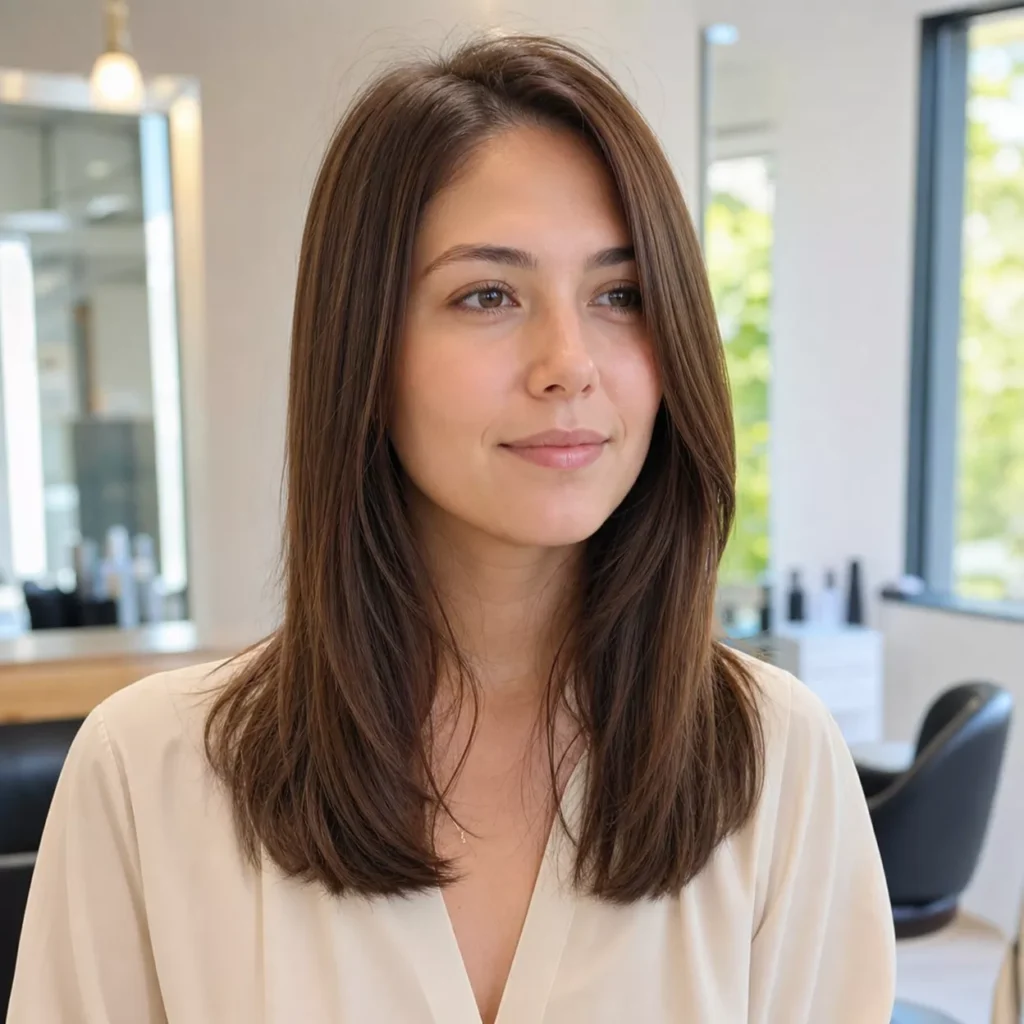
These are cut internally, so the outer silhouette still reads as close to one length while the inside carries the lift. It’s a lower-risk way to test whether layering actually helps your hair, since the visible outline doesn’t change much even if the interior layering doesn’t work out the way you hoped.
Shoulder Length Layered Cut

Hair that lands exactly at the shoulder tends to flip or tuck depending on how it hits, which is a physical quirk of the length rather than anything about fine hair specifically. Face-framing layers add movement near the face, but it’s worth checking with your stylist whether your hair will sit above, at, or just below the shoulder, since a small difference changes how it behaves.
Layered Pixie Bob for Fine Hair
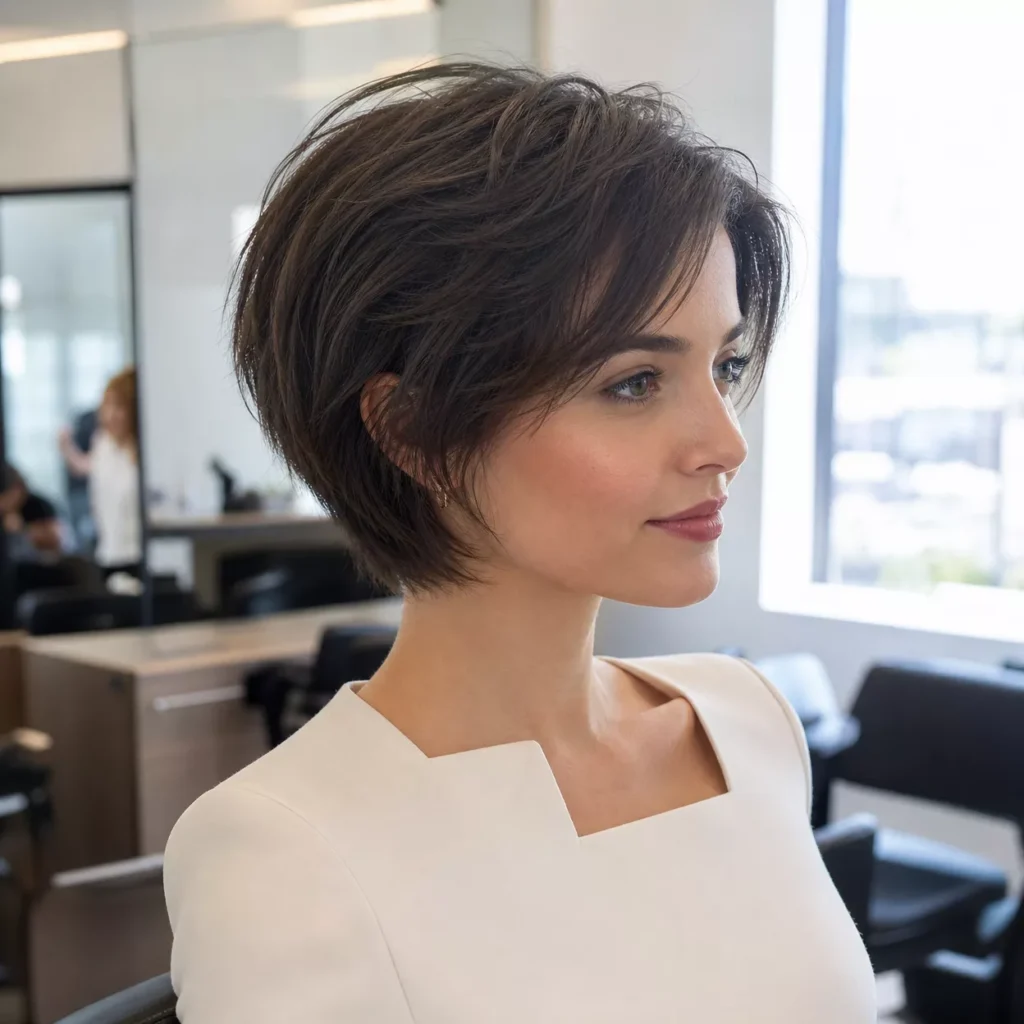
This sits between a pixie and a bob, with more length kept at the front and sides than a true pixie and shorter sides than a bob. It’s a reasonable compromise if you’re not ready to commit to either extreme. The crown carries the lift, and the slightly longer perimeter gives it some shape to hold onto as it grows, which makes the grow-out less abrupt than a pixie’s.
Long Layers with Highlights for Fine Hair
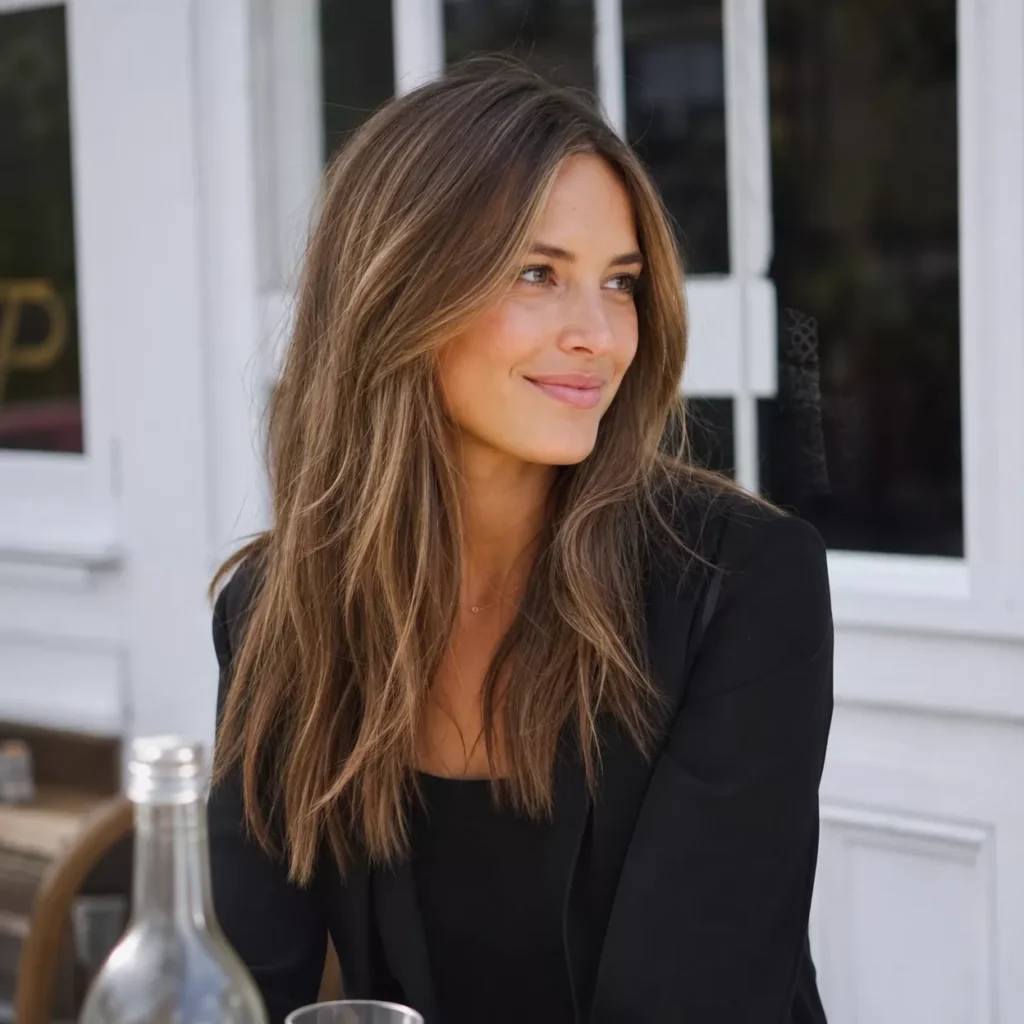
Foiled highlights are more uniform than balayage, which can look more deliberate but also shows regrowth sooner, since the color starts closer to the root in each section. Ask for fine, thin foils rather than thick sections if you want the color to look woven through the layers rather than striped.
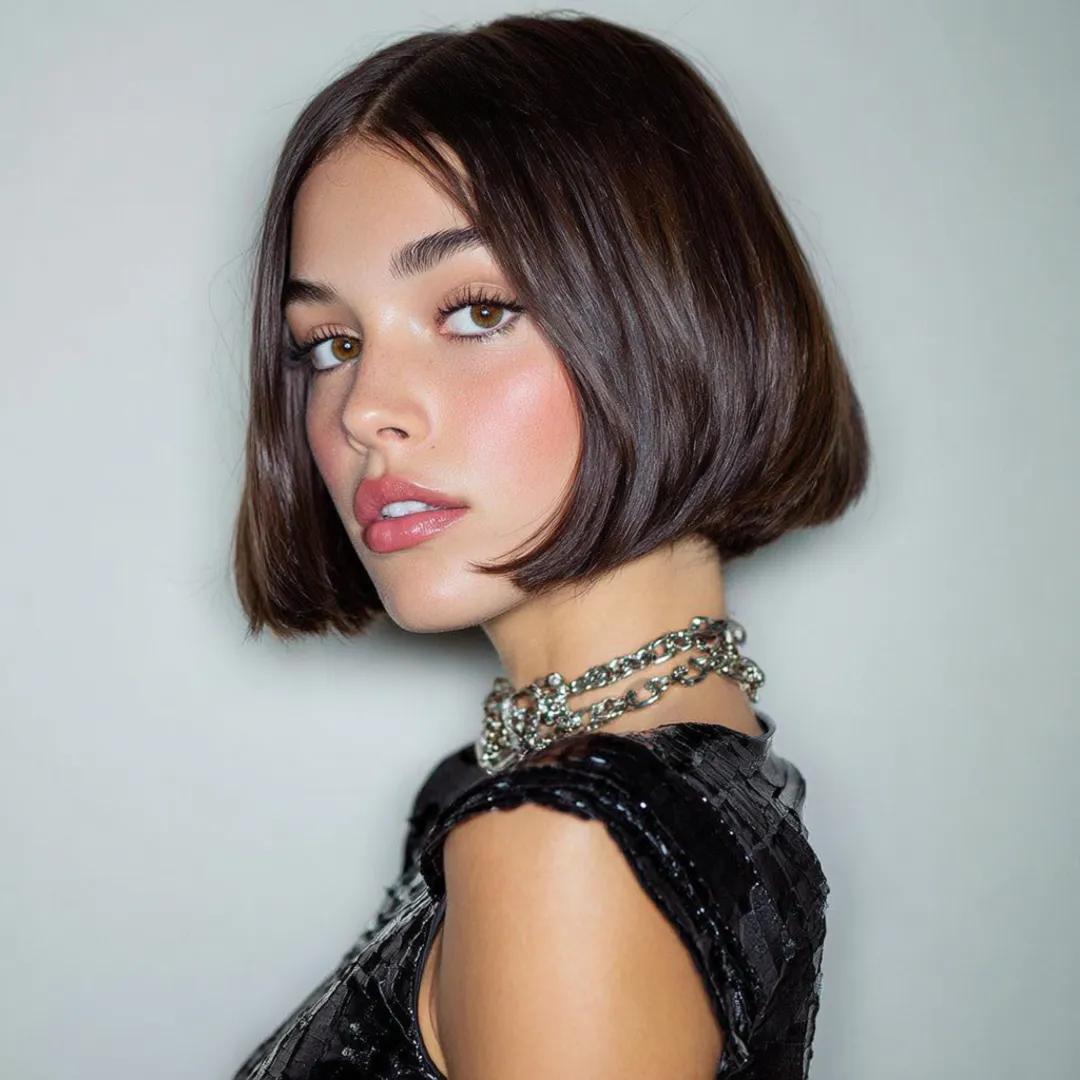
Layered Blunt Bob
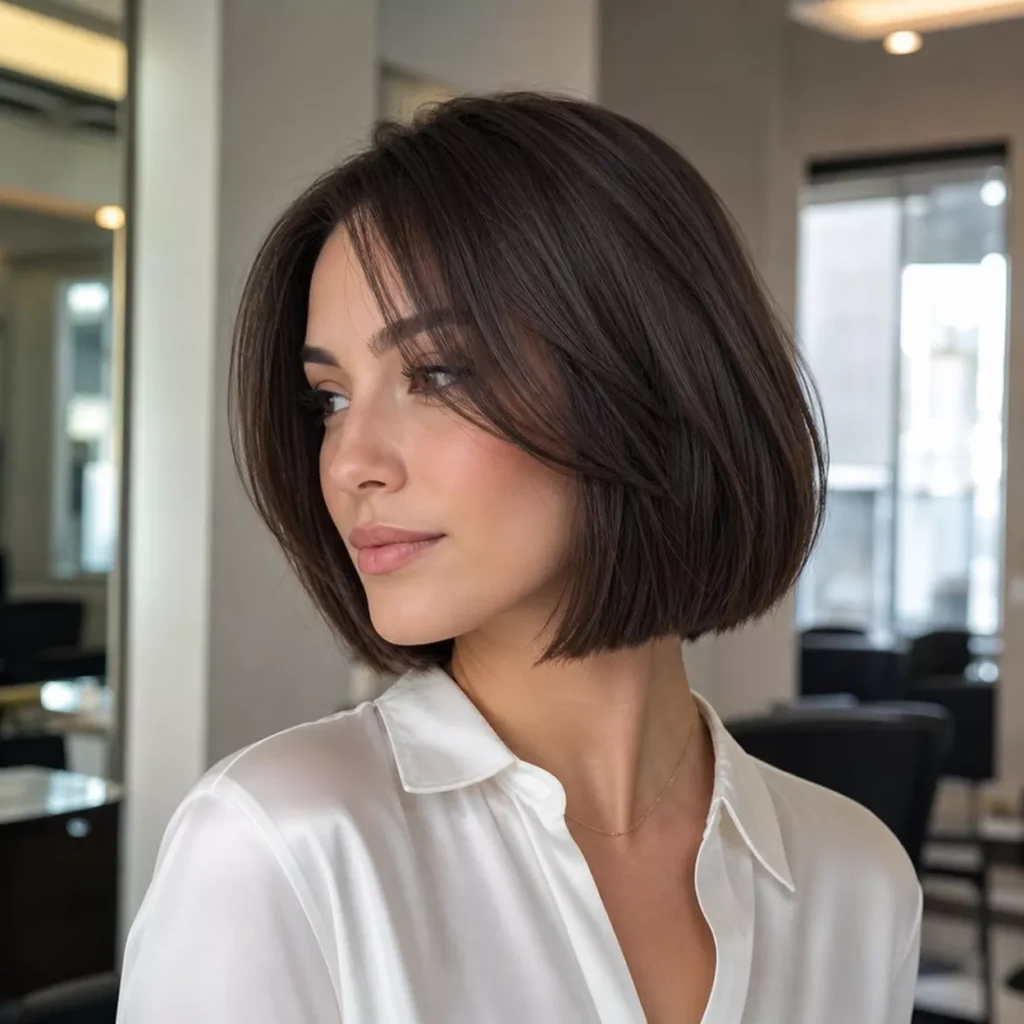
This keeps the bottom edge close to one length while cutting layers only inside that outline. The solid perimeter gives the eye an unbroken line to read as full, and the interior layers stop the hair from sitting flat against the head. It’s a fairly direct answer to the weight question at the start of this article: keep the edge, layer the inside.
Layered Long Bob with Center Part

A center part is a parting decision, not a cutting technique, and it changes how a long bob or lob frames the face. It creates a more symmetrical look than a side part, though on fine hair a very deep center part can also expose more scalp along the line itself.
Textured Layered Mid-Length Cut
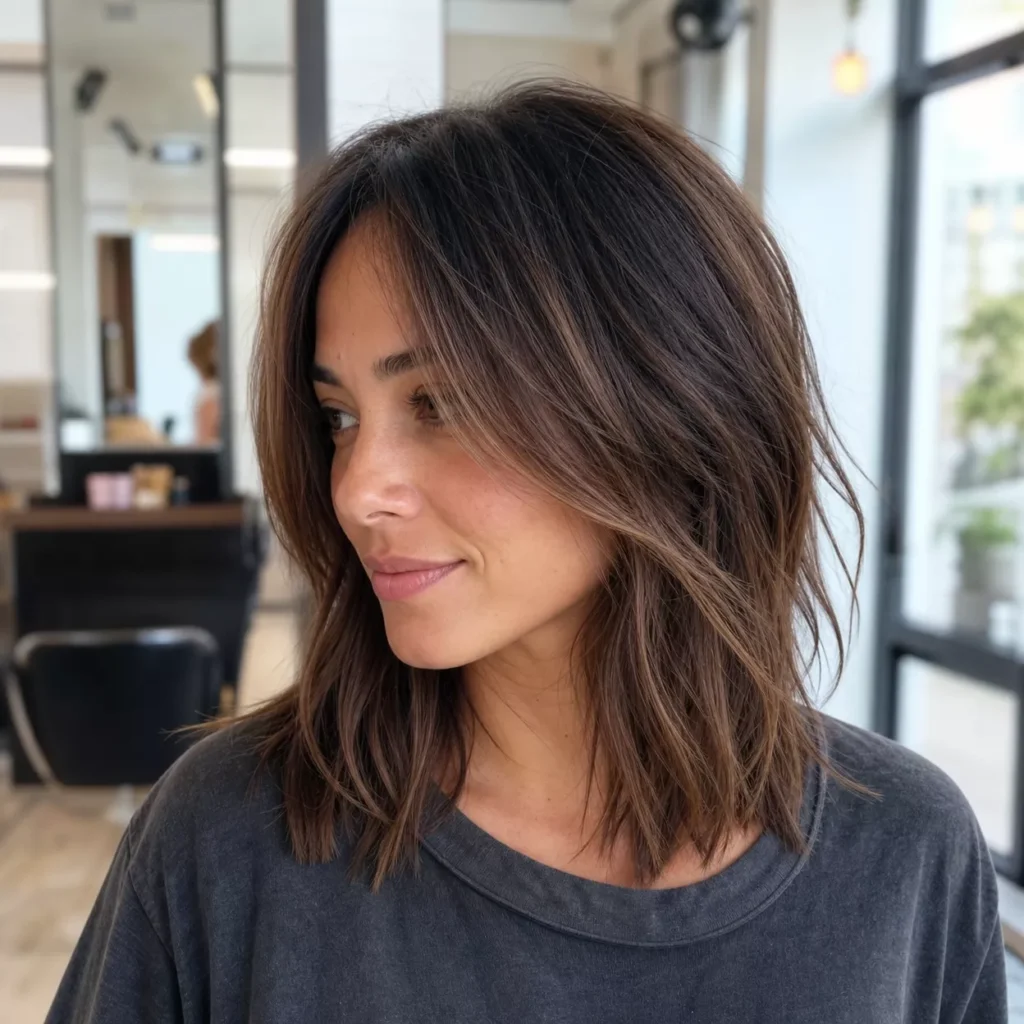
Texture here comes from technique, point cutting or light thinning through the mid-lengths, rather than from length removal. The amount matters more than the idea. A little texturizing breaks up a flat finish; too much, especially concentrated in one area, can leave visible gaps in hair that doesn’t have much density to spare.
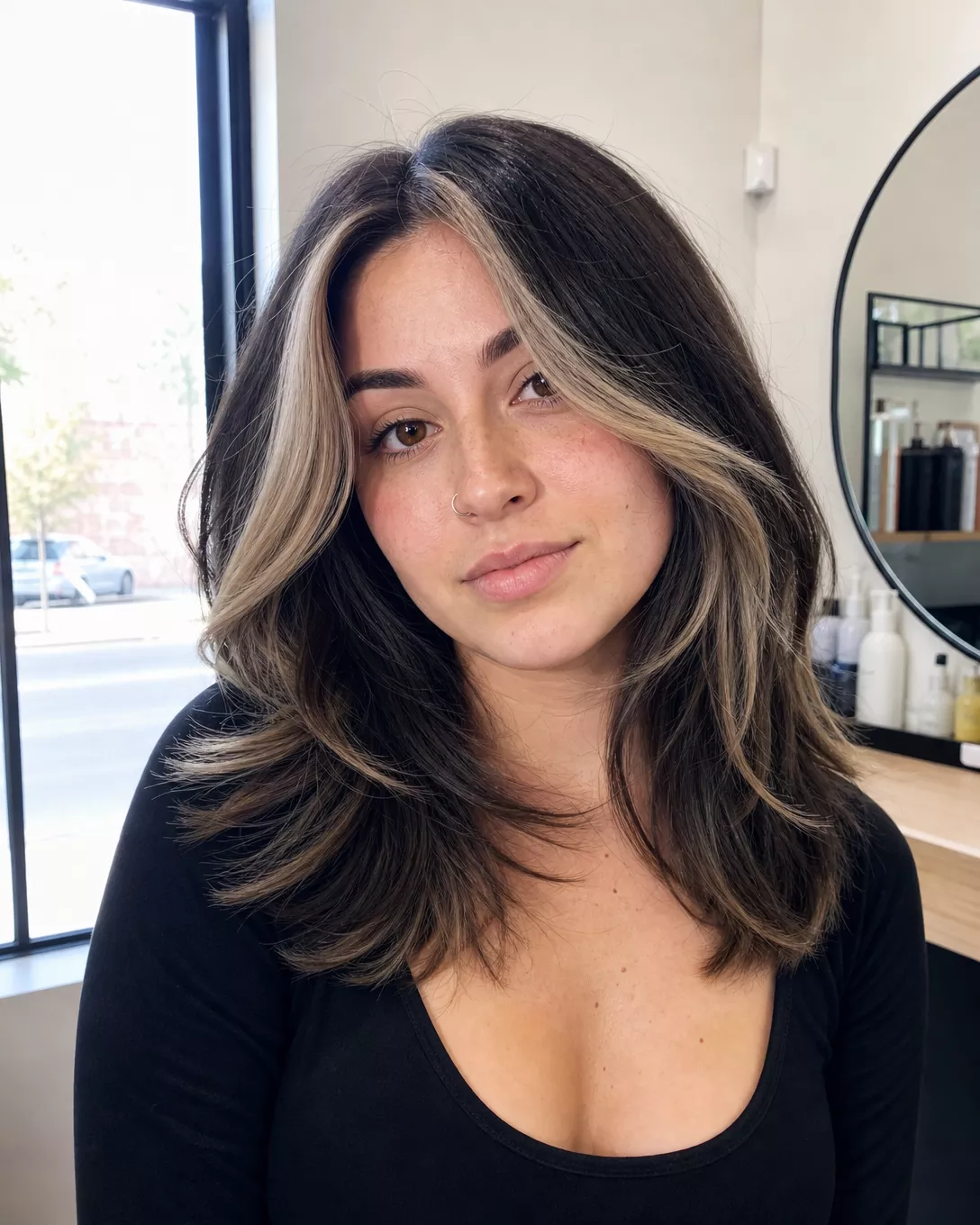
Layered Cut with Money Piece
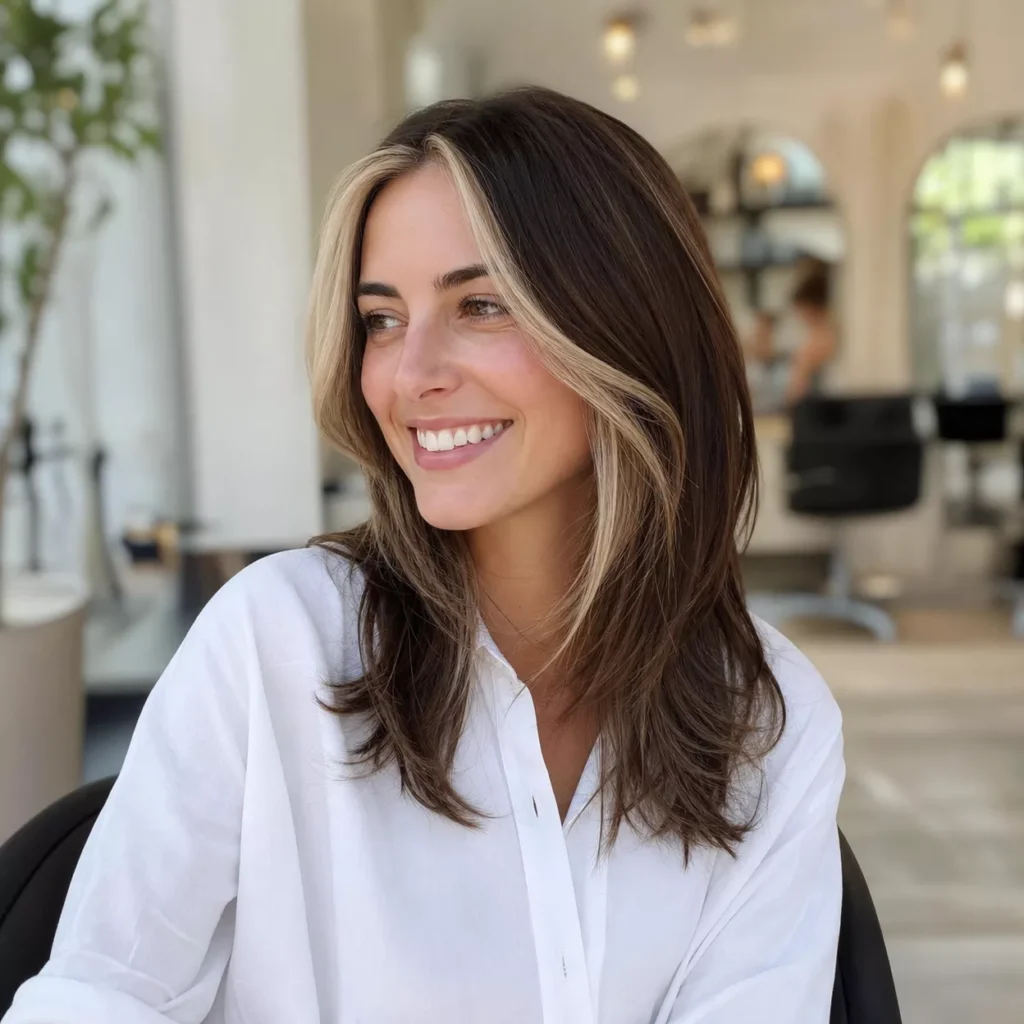
This limits the color to two bright sections framing the face, which is a lower commitment than highlights through the whole head. Because it sits right at the hairline, it also shows regrowth the fastest of any of the color options here.
Feathered Long Layers
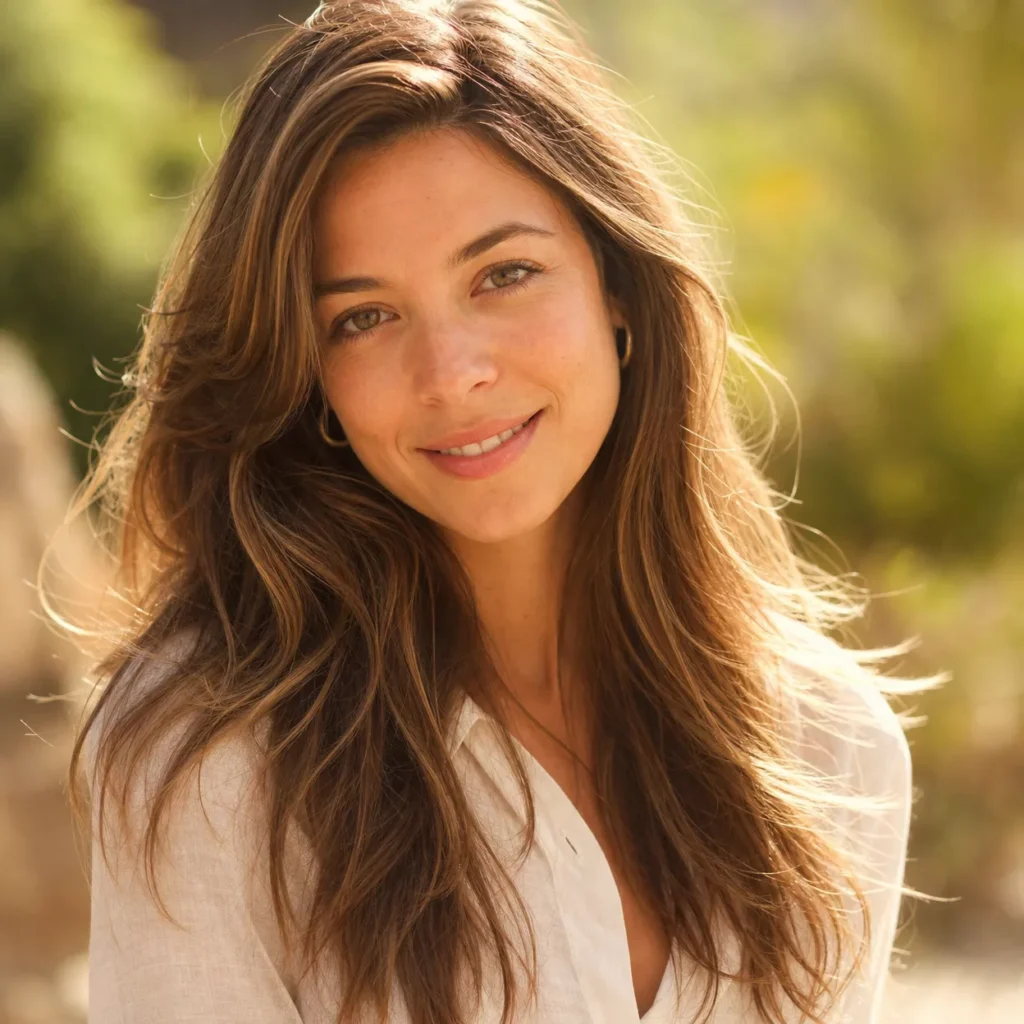
Feathering can be created with scissors by cutting into the ends at an angle, creating a softer edge. How much weight it removes depends on the technique and how deeply the stylist works into the hair. It’s generally a gentler approach than the razor-cut lob above, though it still needs enough length at the ends to feather into, so very fine, already-thin ends may not have much to work with.
Layered Cut with Root Lift
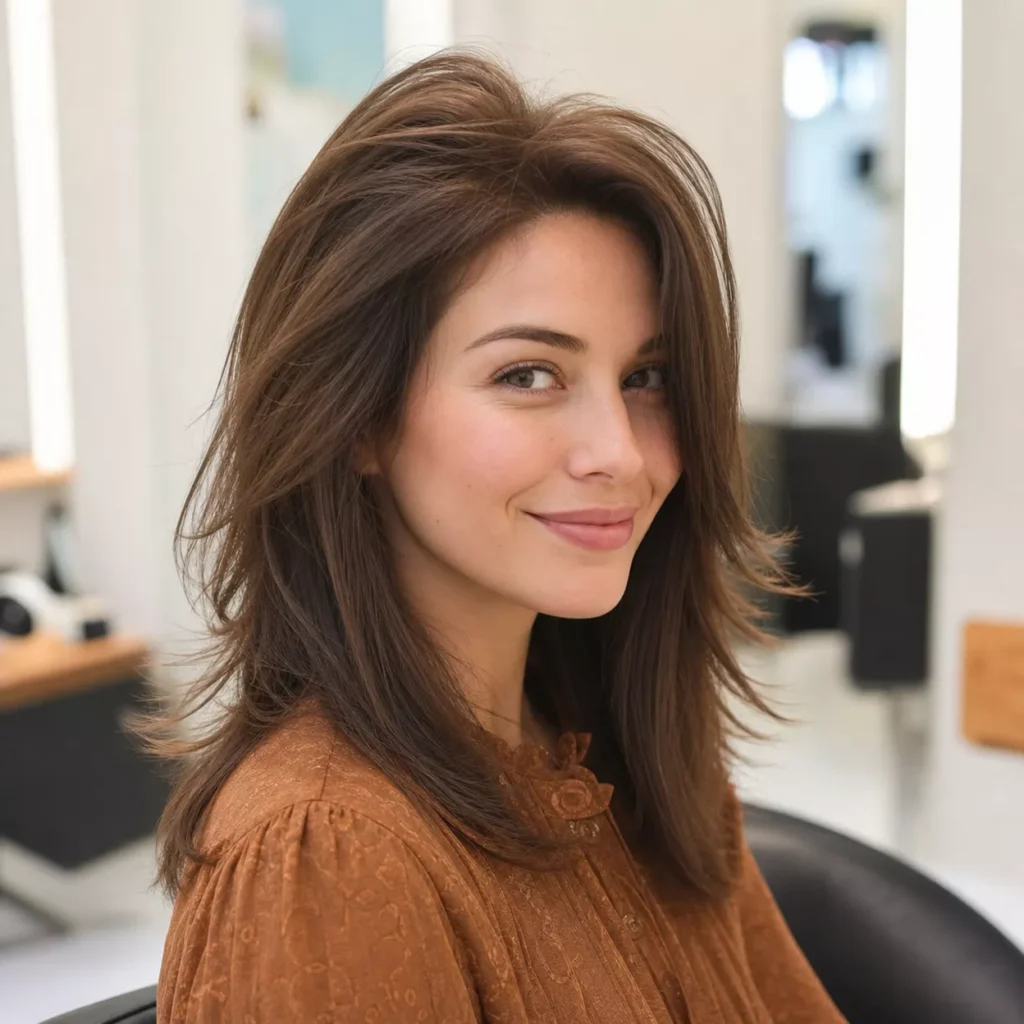
This is a blow-drying technique, not a haircut. A volumizing spray applied at the roots on damp hair, followed by a round brush lifting the hair up and away from the scalp while drying, adds temporary height. It pairs naturally with any of the crown-focused cuts above, like the pixie or stacked bob, but the lift fades by the next wash and has to be redone.
Short Layered Bob for Fine Hair
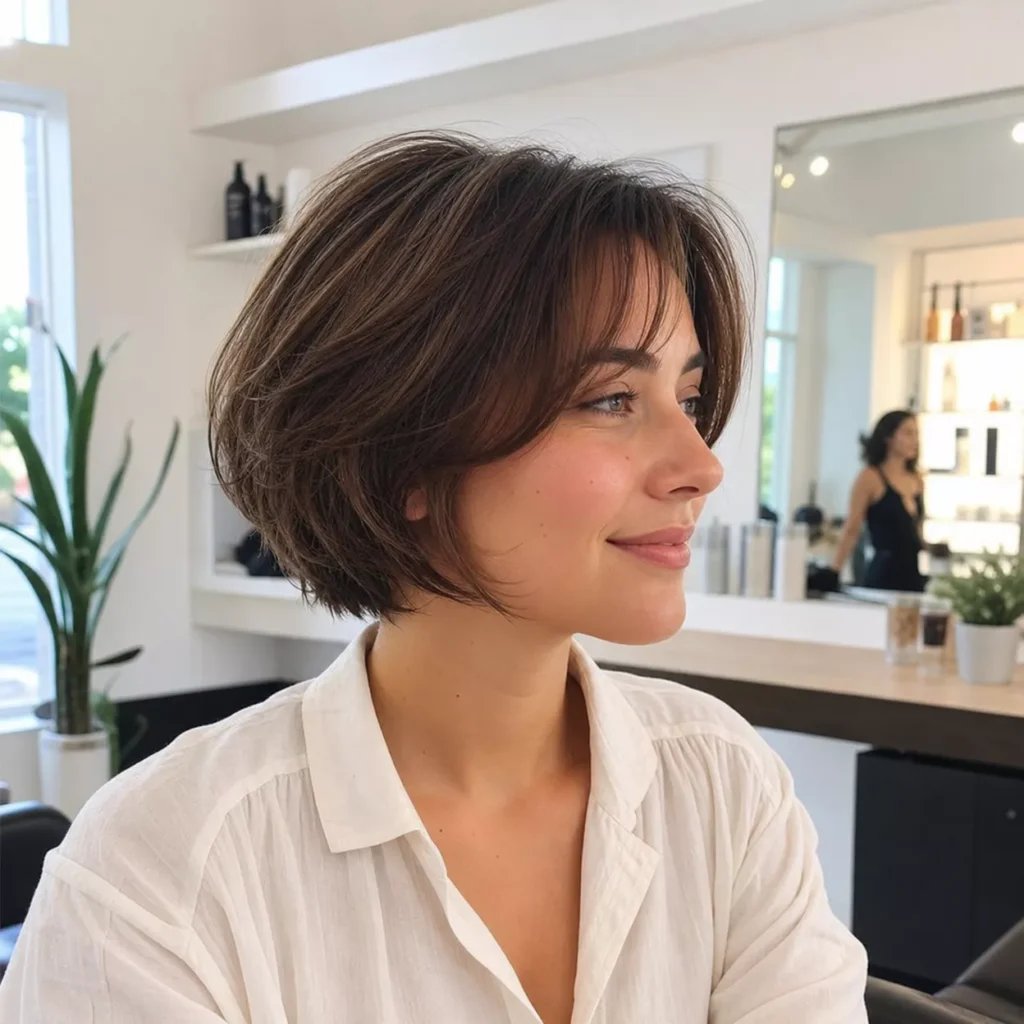
At or just below the ear, there’s very little length left for weight to accumulate in the first place, so the shortness itself does more of the job than the layering does. That also means there’s less room for over-thinning, since the cut can’t remove much more than the length already has.
Layered Haircut with Side Swept Bangs
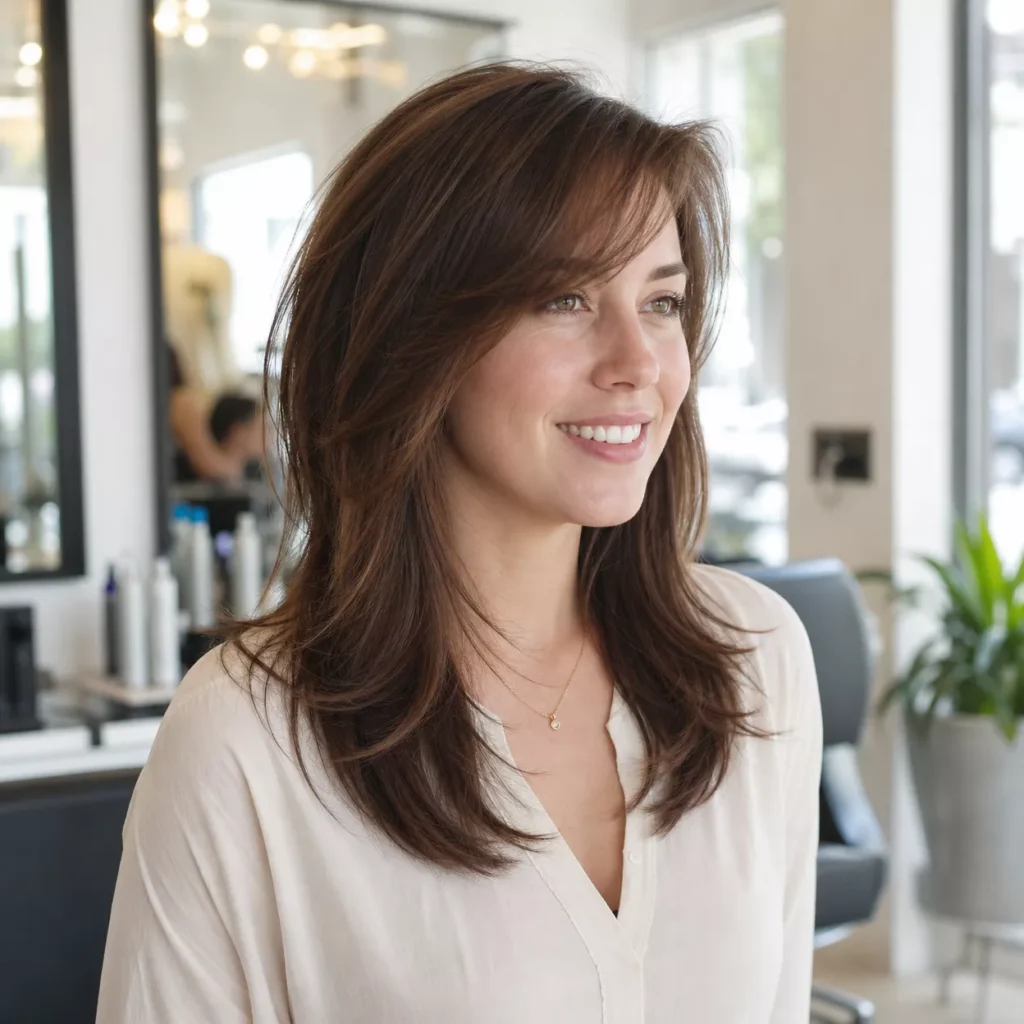
Whether a swept bang holds depends less on the cut and more on which way your hair naturally parts. A sweep cut against your natural direction tends to fight its way back, so it’s worth having your stylist check your dry, unstyled hair before deciding which side to weight it toward.
Layered Cut with Waves
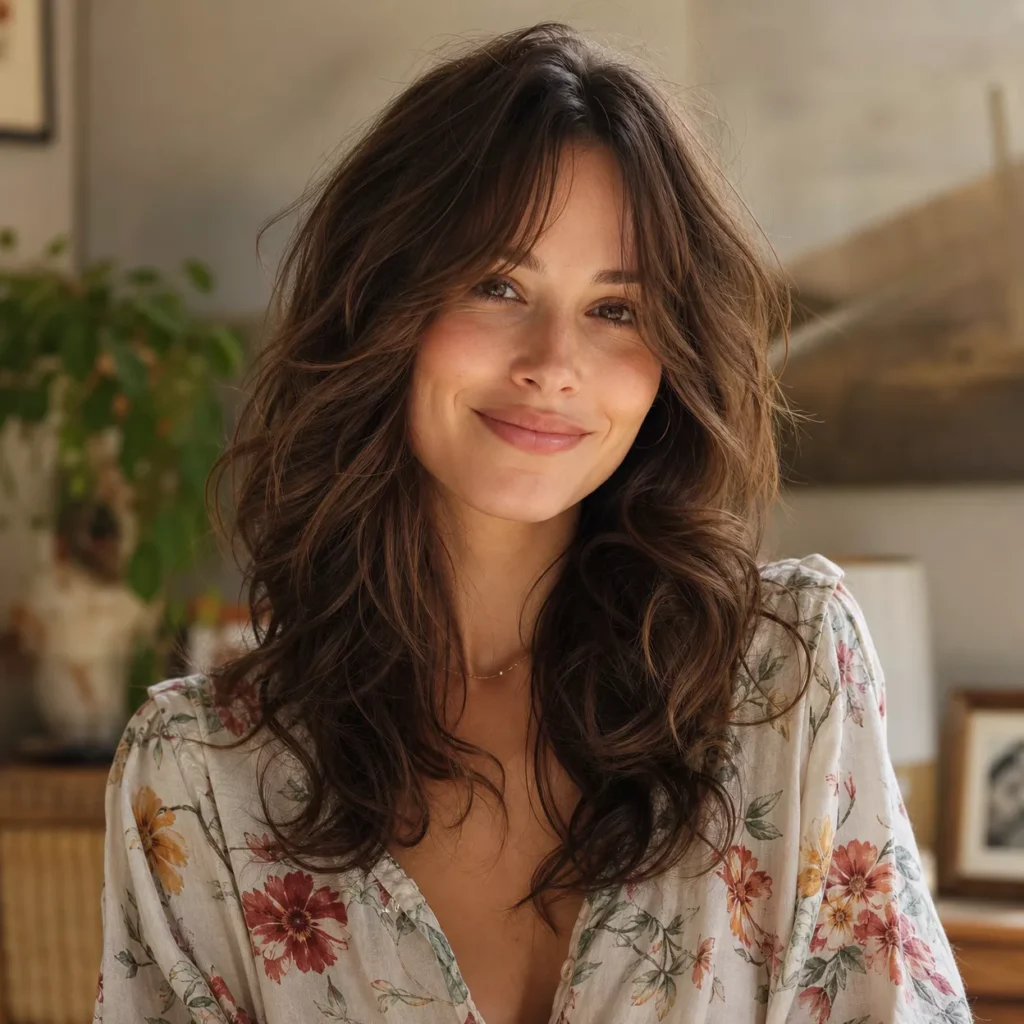
Waves, whether from a curling wand or natural texture, add width wherever they sit along the length. On a layered cut, that tends to show up most at the point where the layers end, since that’s where there’s the most separation for the wave to catch. It’s a styling choice you can apply to almost any length above, not a specific cut.
Graduated Layered Bob
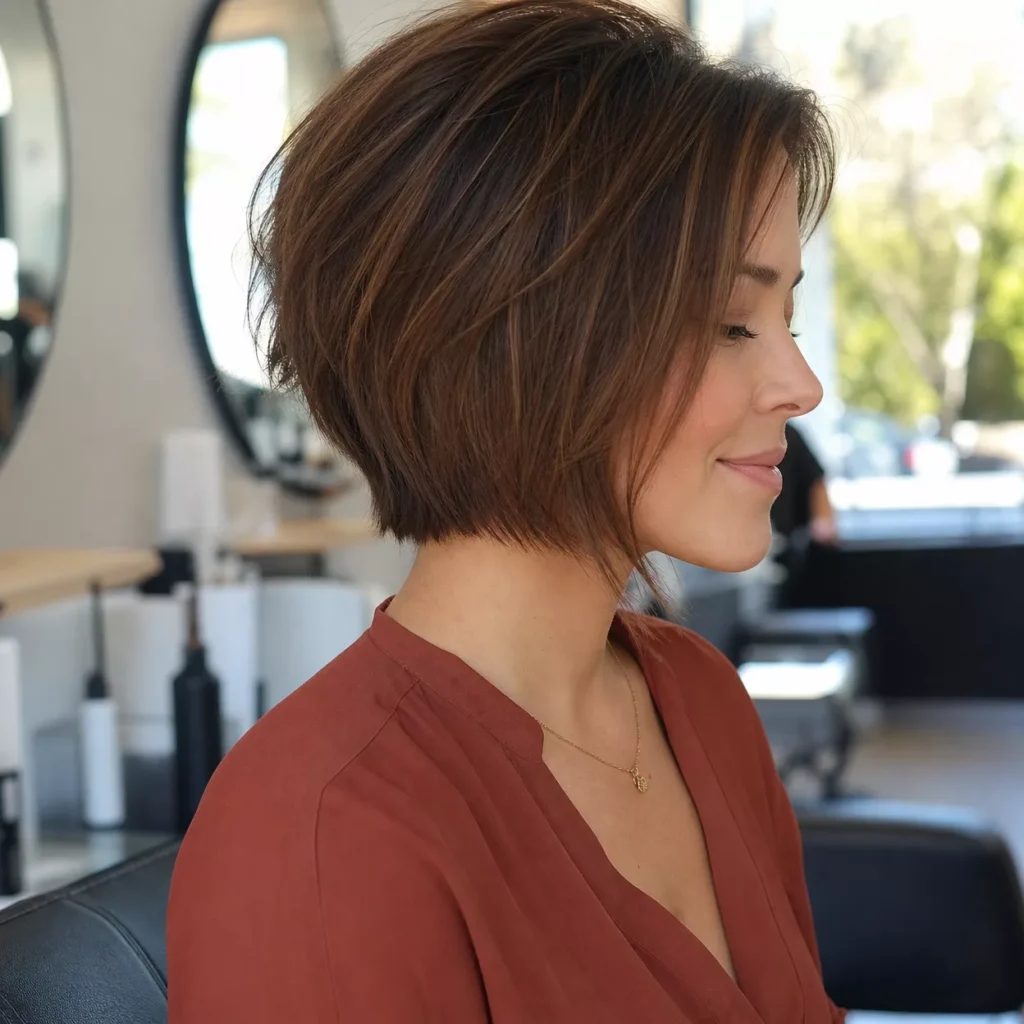
Graduation builds the shape from short at the back to longer toward the front, which is a different mechanism from stacking, even though both add shape to the back. Graduation creates a directional line that moves forward, giving the front pieces more visible movement, while stacking is mostly about lift straight up from the crown.
Layered Cut with Ash Blonde Color
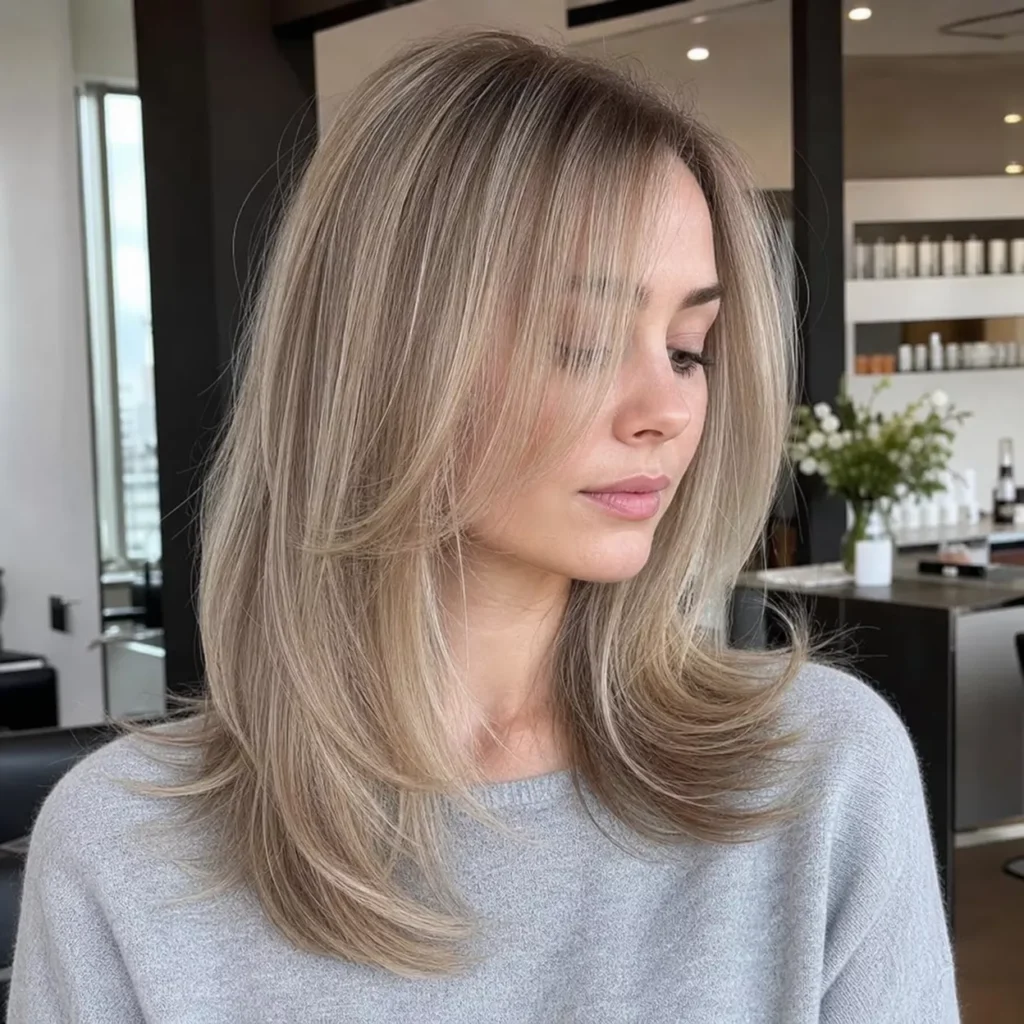
Ash tones are cool and can fade toward warm over time, so holding the color usually means a purple or blue-toned shampoo between salon visits. Lightening does affect hair condition, which matters more on fine hair since damaged ends tend to look thinner regardless of how they’re cut.
Undone Layered Medium Cut

This describes a styling approach, wash, a light mousse, air-dry, applied to a medium layered cut rather than a separate haircut. It only looks intentional if your natural texture cooperates. If your hair dries flat and stringy without help, this routine will show that rather than disguise it.
Layered Collarbone Cut for Fine Hair
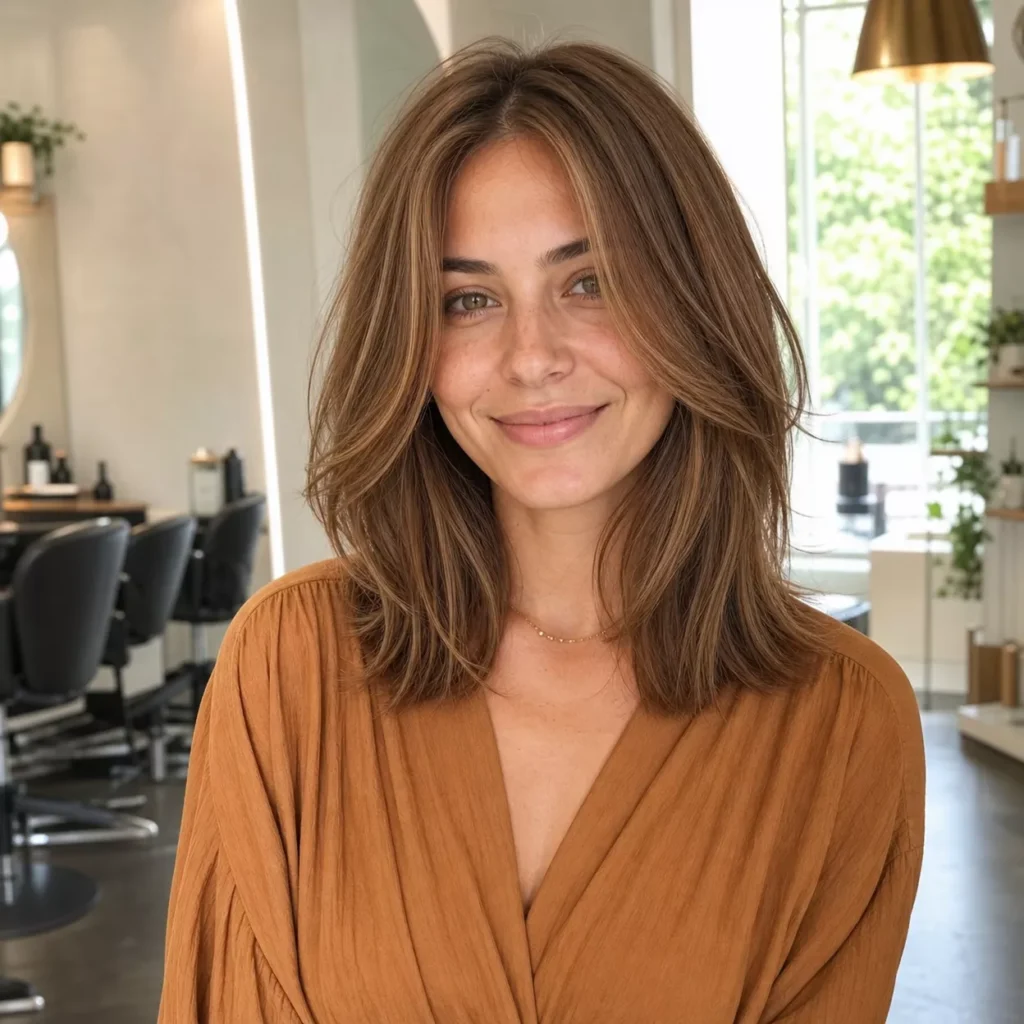
This is worth considering as a starting length if you’re unsure how much layering your hair can take. It sits at the same length as the Layered Lob above, but the emphasis here is different. The advantage is that you can start conservatively, then add more interior layering at a later appointment if your hair responds well.
What Actually Decides the Result
The cut is only one part of this. How your hair grows, how much natural texture it has, and how you actually style it on an ordinary day all affect whether a layered cut ends up looking fuller or thinner. A photo shows one version of a haircut, usually styled and lit well, not necessarily the version your hair will produce.
A few honest questions are worth asking before you commit to any of the cuts above: “Where will the layers start, at the crown or further down?” “How much weight are you planning to take out, and can we be conservative the first time?” “What will this look like if I just let it air-dry?” None of those require technical knowledge on your part, just a willingness to ask before the cutting starts rather than after.
There isn’t one layered cut that solves both flat roots and thin ends at once. A cut may address one of these concerns more directly than the other, so knowing which problem you’re trying to change makes it easier to choose a structure, and to decide separately whether any of the color or styling choices are worth adding on top.