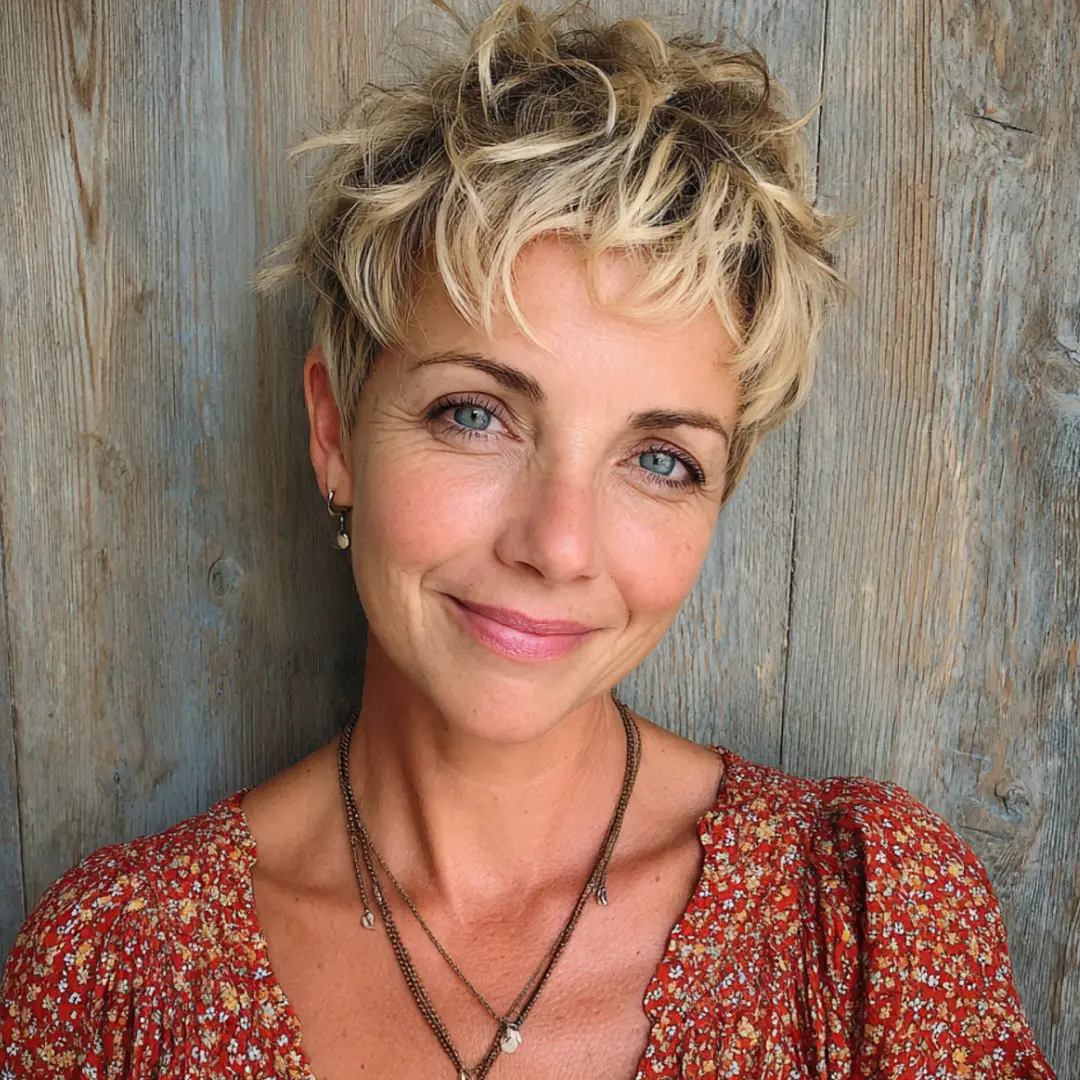
26 Shoulder-Length Haircuts for Women and How to Choose the Right One
Shoulder length tells you where the ends land, not how the haircut is built. A blunt cut that stops at the shoulders and a heavily layered shag of the same length can look and behave like two unrelated haircuts. The difference comes from the perimeter, where the layers begin, how weight is distributed, your natural texture, and how much styling you’re willing to do. Fine strands and low-density hair aren’t the same thing, and thick hair can mean many hairs, wide strands, or both. A reference photo may be showing a blowout, curling-iron waves, a color treatment, or texture built with product, not the cut alone. The shoulder-length haircuts for women below are explained by what each one actually does, so you can pick the version that suits your hair and the routine you want to keep.
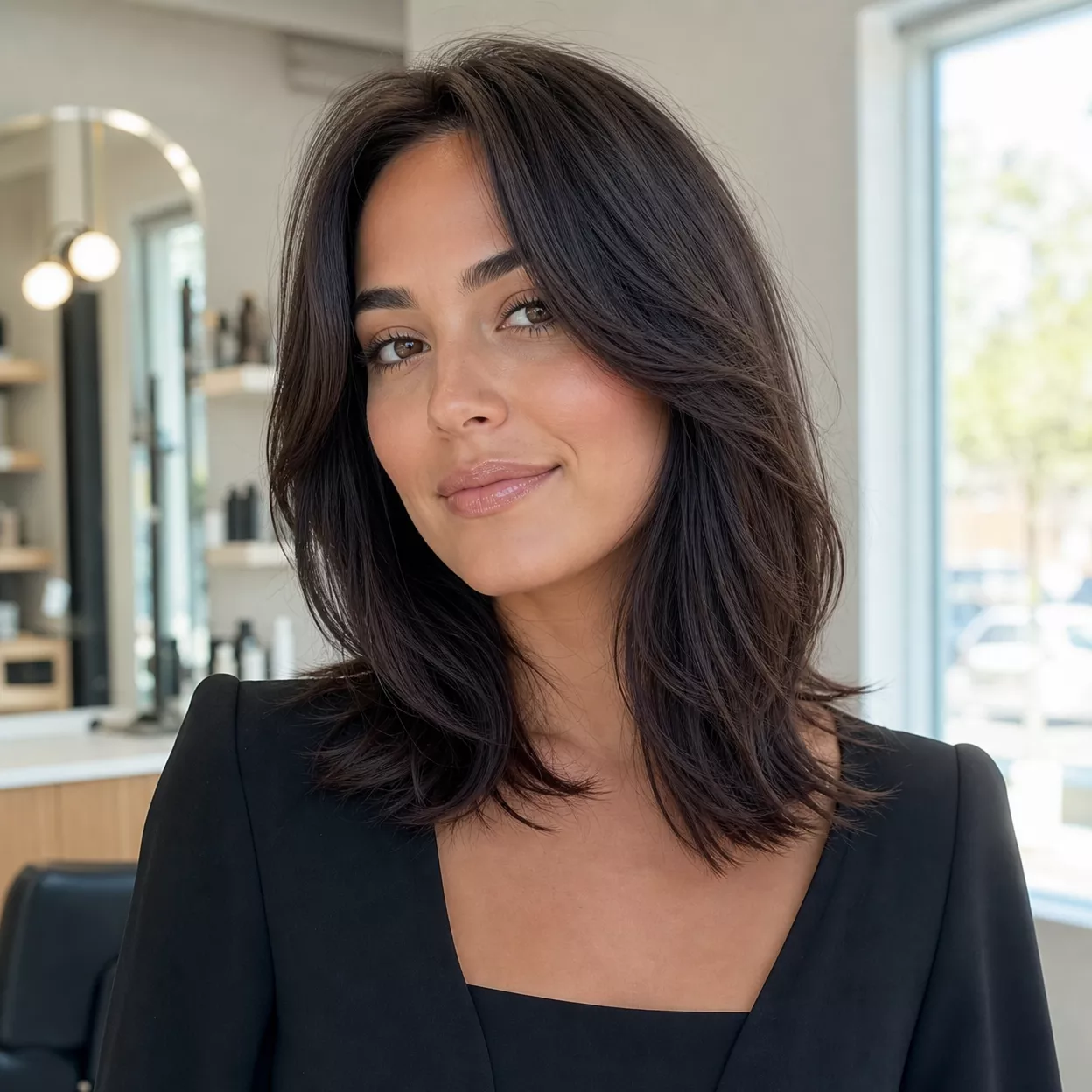
Layered Shoulder-Length Lob

Layers can sit in three places, and each changes the cut differently. Interior layers remove weight through the body of the hair and create movement. Face-framing layers shape the front and decide how the hair falls around the cheeks and jaw. A stronger line at the ends keeps the bottom edge solid, whatever happens above it. The balance matters most on fine or low-density hair, where generous layering can leave the ends looking thin. Dense hair often needs more interior layering to stop the shape from feeling heavy. Ask where the first layer will start and how much weight will stay at the perimeter.
Shoulder-Length Bob with Curtain Bangs

A curtain fringe parts at the center and opens toward the temples, so its outer edges have to meet the sides of the bob somewhere. If they blend into the face-framing length, the fringe and bob read as one shape. If there’s a gap in length, the fringe looks separate. Your natural part and hairline decide how easily it opens, and a cowlick or strong side part can push it off-center. The amount of hair in the fringe matters too. A thin section sits lightly and splits easily, while a fuller one holds its shape but usually needs a quick blow-dry to open.
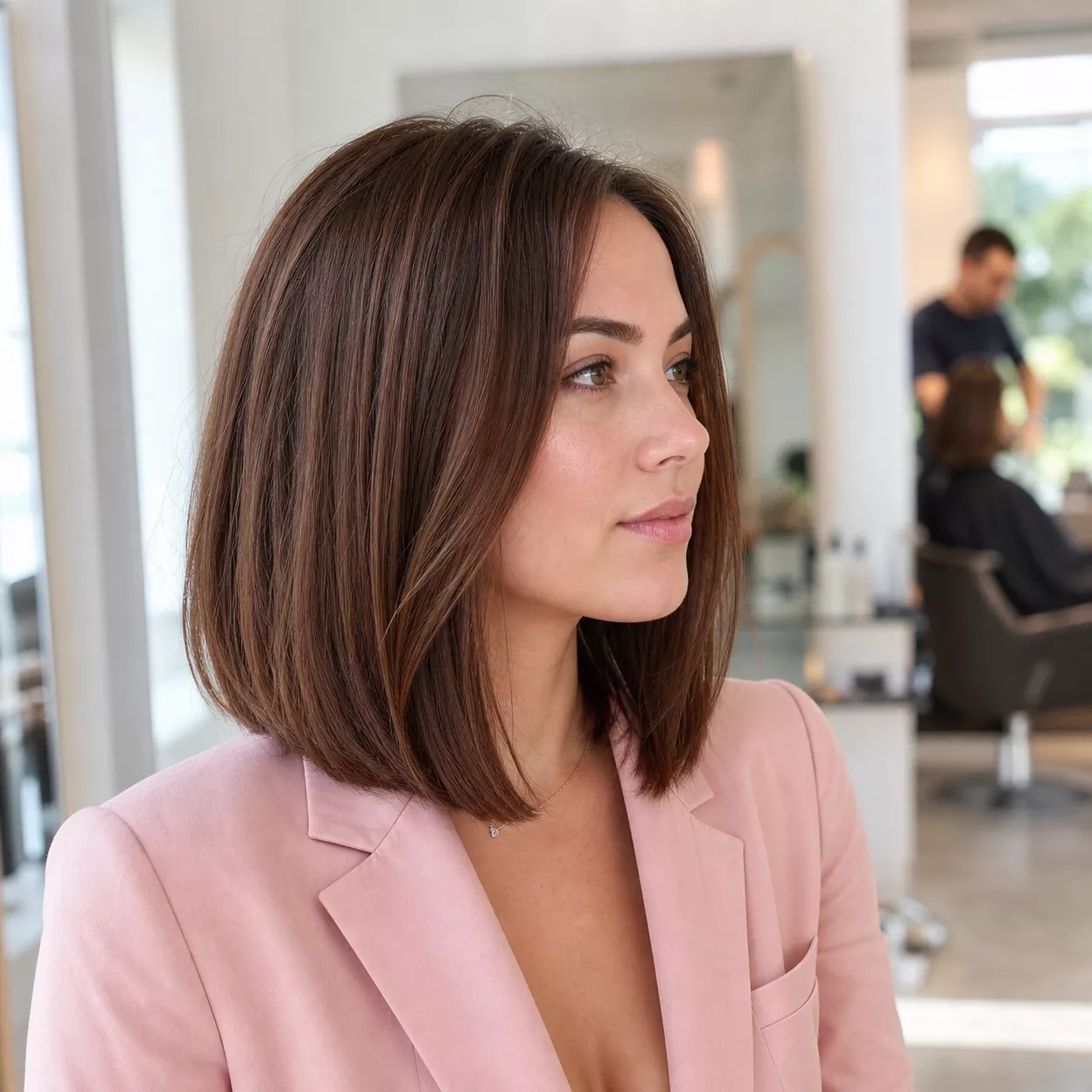
Blunt Shoulder-Length Cut

Everything here happens at the perimeter. Cutting the ends to one solid line keeps the full weight of the hair at the bottom, which can make the ends look denser. It doesn’t add hairs, though, and on very low-density hair the line can still look see-through. On dense or coarse hair, a fully blunt shape may feel heavy and spread outward unless some interior weight is removed. The outline also shifts as it grows. Hair resting on the shoulders tends to bend or flip, so the clean line softens between trims.
Shoulder-Length Shag

A shag moves weight upward. Shorter layers through the crown, face-framing pieces at the front, and a lighter perimeter create separation through the whole cut, so the shape sits fuller near the top and lighter at the ends. That distribution is the point, but it needs hair to work with. On low-density hair, an aggressively layered shag can leave the lower lengths looking sparse. Thick hair often carries a shag well, though bulk removal has to be planned so the layers don’t stack into a puffy outline. Natural wave usually brings the layers out with less styling than straight hair needs.
Shoulder-Length Wavy Cut

This cut is designed around waves you already have. Wavy hair often draws up as it dries, and different sections may bend differently, so the shape is easiest to judge once the hair has dried in its natural pattern. Layers can support the wave by removing weight that would otherwise pull it flat, but too many can break the pattern into frizzy, uneven sections. A cut built for natural waves won’t recreate the look of straight hair curled with a wand, which is more uniform and has to be redone after washing. How little styling it needs depends on your wave pattern, products, and climate.
Textured Shoulder Bob with Face Framing

Two decisions shape this bob: where the texture goes and how the front pieces join the main outline. Texture through the ends or interior gives a separated, lived-in look, while the face-framing pieces decide whether the front curves in, falls straight, or sweeps outward. Face framing changes the outline around the face. It doesn’t hide features or suit every face by default. On fine or low-density hair, taking too much from the front can leave the area around the face thin, which becomes obvious when the hair is tucked back. Ask how short the shortest front piece will be.
Shoulder-Length Cut with Side Swept Bangs

A side-swept fringe has a direction, and so does your hair. When the fringe is cut to follow your natural part and growth pattern, it usually falls across the forehead with little help. Cut against it, it may spring back, split, or need a blow-dry every morning to stay put. Length matters as well. A longer sweep blends into the face-framing layers, while a shorter one stands out as a separate feature. Check where your hair parts when it dries naturally before deciding which side the fringe should lean toward.
Razored Shoulder-Length Cut

A razor is a cutting tool, not a shortcut to airy hair. Used on the ends, it tapers each section instead of cutting straight across, which can produce softer, more separated edges. Whether that works depends on technique and on the hair itself. Fine or fragile strands may fray, dry hair can frizz at razored tips, and curly or coily hair may lose definition at the ends. Scissors can also create texture through point cutting or slide cutting. Describe the finish you want, then let a stylist who has assessed your hair choose the tool.
Shoulder-Length Wolf Cut

A wolf cut stacks shorter layers around the crown, adds face-framing sections, and keeps longer lengths through the back. The step between the top and the lower sections creates its rounded, layered outline. More layering makes that contrast stronger, and less keeps it closer to a shag. Because it removes a substantial amount of weight, fine or low-density hair can end up thin through the back. A softer version with fewer, longer layers keeps the character while protecting the perimeter. Crown height also depends on growth pattern and density, not only the cut.
Shoulder-Length Cut with Highlights

Highlights are a color decision layered on top of a haircut decision. Placement can draw attention to particular sections, such as the front pieces or the ends of layers, by making them lighter than the surrounding base. That doesn’t mean single-color hair looks flat, or that highlights reveal every layer. The result depends on your starting color, any color history, how fine or broad the highlighted sections are, and how much contrast you want. Upkeep follows from that contrast, since highlights far lighter than your natural shade show regrowth sooner.
Shoulder-Length Cut for Fine Hair

Fine describes strand diameter. Low density describes how many strands there are. You can have fine hair and a lot of it, or fine hair and not much of it, and the cut should reflect which. The aim here is a useful perimeter with restrained layering: enough weight at the ends to keep the outline full, and only as much movement as the hair can afford. Fine but dense hair may carry soft layers well, while fine, low-density hair usually does better with very few. Texture matters too. Fine wavy hair moves on its own, while fine straight hair may lie flat without some styling.
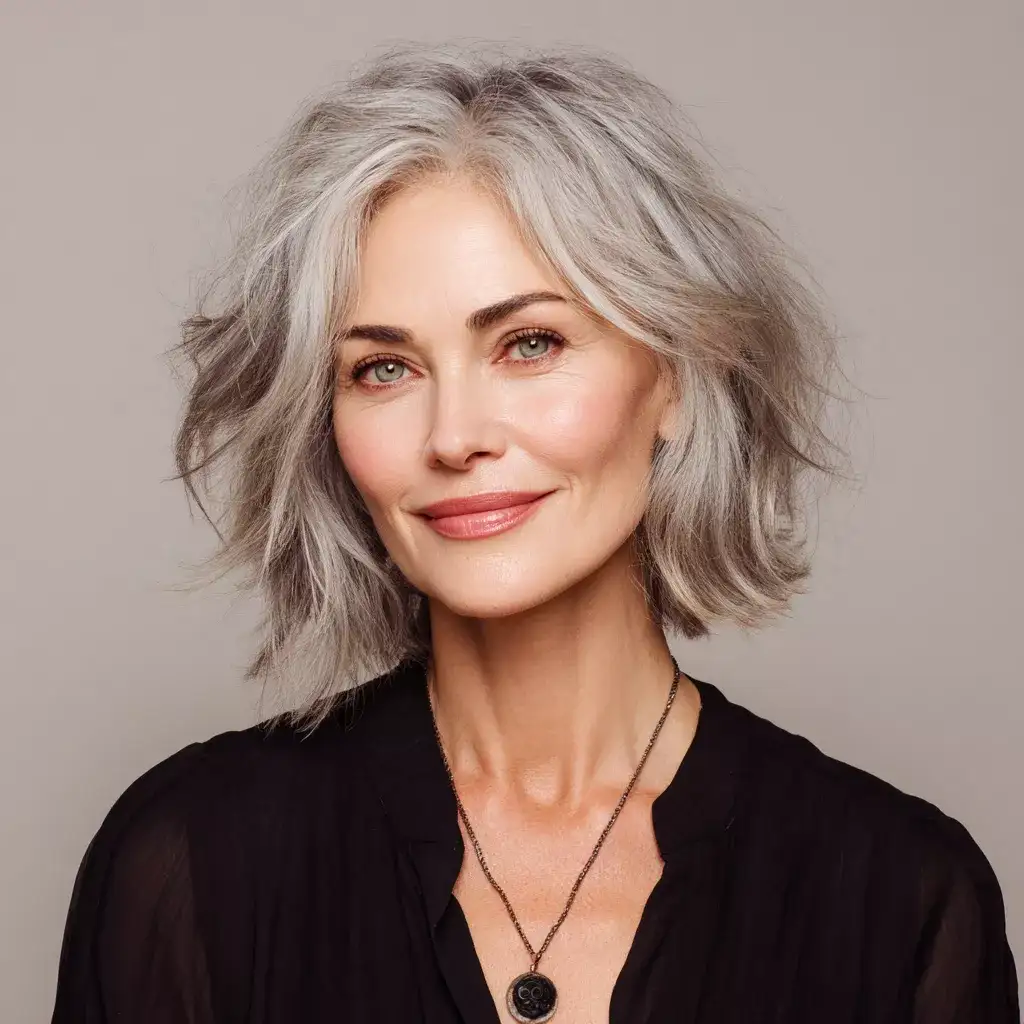
Shoulder-Length Gray Cut

Natural gray is a color, and the cut is a separate decision. Gray hair has no single texture. It can be silky, wiry, fine, or coarse, sometimes in combination on the same head, so the haircut should respond to how your own strands behave. The perimeter and layers set the silhouette: a solid line gives a clean outline, while layers add movement. Gray hair doesn’t need color or layers to look finished. What helps is a shape that suits your texture and the way your hair grows in.
Shoulder-Length Curly Cut

Curls shrink as they dry, so hair that reaches the shoulders when stretched may sit closer to the chin once the curls spring back. Curl pattern, density, and weight distribution all change the dry shape. Removing some weight can let curls stack and move, but taking too much can leave the outline thin or uneven, especially on lower-density hair. Tight coils may shrink far more than loose curls. Some stylists cut curls dry, some cut wet and refine dry, and others combine the two. Ask how the shape will look once your curls have fully dried.
Shoulder-Length Bob with Waves

Here, the waves are a finish applied to a bob, not part of the cut. A wand, flat iron, rollers, or braids can bend the hair, and that bend lifts the perimeter so the bob looks shorter and wider than it does straight. The underlying shape still matters. If the perimeter and layers are balanced, the waves sit evenly; if not, they may bunch on one side or collapse at the ends. How long they last depends on your hair, since smooth, slippery strands often release waves faster than hair with some natural bend. Expect to restyle after washing.
Shoulder-Length Cut with Money Piece

A money piece is color placement, not a haircut. It brightens the sections closest to the face, usually from the root, so they contrast with the base color around them. How noticeable it is depends on the gap between the two shades, your starting color, and how wide the brightened sections are. A subtle version blends in, while a bright one becomes the main feature. Regrowth shows sooner at the front, so upkeep varies with contrast. The cut also affects how it reads: face-framing layers spread the brightness around, while a solid front keeps it in one band.
Shoulder-Length Asymmetrical Cut

Asymmetry ranges from a slight difference between the two sides to a clear diagonal. A subtle difference reads as natural movement and tolerates a part that shifts. A pronounced angle becomes the defining shape and depends on the part sitting where the cut was planned. Because the asymmetry shows at the perimeter, the line has to be precise. As the hair grows, the shorter side catches up and the contrast softens, so a strong angle needs more regular shaping to keep its look. Ask your stylist how much difference there will be between the sides.
Soft Shoulder-Length Lob with Balayage

The lob and the balayage are two separate decisions. The lob’s outline and soft layers set the shape. Balayage is a color technique in which lightener or color is painted on freehand, usually heavier toward the mid-lengths and ends. It often grows out with a softer line than all-over color, but how natural it looks depends on the contrast with your base. Maintenance depends on your starting color, how much lightening is needed, the placement, and the result you want. The layers also change where the painted sections land as the hair moves.
Shoulder-Length Cut for Thick Hair

Thick can mean high density, coarse strands, or both, and the cut should respond to which. Dense hair has many strands and may need weight taken from the interior to keep the shape from feeling bulky. Coarse strands are wide and hold shape well, but can frizz if thinned too heavily. The usual approach is to manage bulk internally while keeping the perimeter intact. Too little weight removal leaves the cut wide and heavy, and too much can create uneven ends or unwanted separation. Aggressive thinning isn’t automatically the answer, so discuss how much will come out and from where.
Shoulder-Length French Bob

A classic French bob usually sits around the jaw or chin, often with a fringe, so a shoulder-length version is really a longer, French-inspired bob. What carries over is the approach: a fairly blunt perimeter, a fringe, minimal layering, and often a slightly undone texture. At shoulder length, the ends may rest on the shoulders and flip, which changes the crisp outline the shorter version has. The texture in many reference photos comes from product or a quick bend, not the cut alone. Describe the details you like, such as the fringe or the soft ends, instead of relying on the label.
Shoulder-Length Cut with Wispy Fringe

A wispy fringe uses only a small amount of hair, so it sits lightly and lets some forehead show through. How much hair goes into it, and how it connects to the sides, decide whether it looks soft or sparse. On fine or low-density hair, the pieces can separate and leave gaps, and short hairs along the hairline may spring up or curl. Grow-out tends to be less abrupt than with a blunt fringe, but the length still passes through the eyes before it blends into the face-framing layers, so expect occasional trims or pinning.
Shoulder-Length Cut with Copper Color

Copper covers a wide range, from muted auburn-copper to brighter orange-red. What’s achievable depends on your starting color and coloring history: lighter hair takes brighter copper more easily, while darker hair may need lightening first. Vivid copper tends to fade sooner than deeper shades, so upkeep can be higher. The haircut changes how the color reads. Layers show variation in tone as the hair moves, while a solid perimeter shows the color as a more uniform block. Choose the shade and the cut separately, then consider how they work together.
Shoulder-Length Textured Layers for Volume

This version places layers specifically to influence lift and separation, mostly around the crown and through the mid-lengths. Shorter crown layers can encourage the top to sit higher, but they don’t automatically create root lift, since growth pattern, density, and drying method all play a part. Too much layering lower down can work against the goal by thinning the ends so the overall shape looks less full. A blow-dry with lift at the roots often does as much as the cut. The aim is balance: enough layering to free the top, enough weight left to keep the perimeter full.
Shoulder-Length Shag with Curtain Bangs

Two structures have to work together here. The curtain fringe needs to flow into the shag’s face-framing sections, and the crown layers, sides, and perimeter need to continue the shape the fringe starts. When the lengths connect, it reads as one cut; when they don’t, the fringe looks added on. Texture changes the behavior. Straight hair shows the layers clearly but may need styling to separate them, and wavy hair often falls into shape on its own. Curly hair shrinks, so the fringe can sit shorter than expected. Fine and dense hair need different amounts of layering to avoid looking sparse or bulky.
Undone Shoulder-Length Style

“Undone” describes a finish, not one particular haircut. It usually means loose texture, some separation, and a slightly imperfect shape. Whether you can get there by air-drying depends on your natural texture, the cut’s structure, the products you use, how you dry your hair, and the weather. Hair with natural wave often gets close on its own. Very straight or very fine hair may need texturizing spray, a quick bend with a wand, or a rough blow-dry to look similar. The finish also changes between washes, sometimes for the better and sometimes not.
Shoulder-Length Cut with Deep Side Part

Moving the part far to one side shifts more hair across the top of the head, so one side sits fuller and the other flatter. That changes the silhouette and can increase the appearance of volume on the heavier side, though how much depends on density, growth direction, and where your hair naturally parts. If your natural part sits near the center, a deep side part may drift back during the day and need product or a blow-dry to hold. On lower-density hair, a deep part can also show more scalp along the line. The cut itself often needs little change.
Shoulder-Length Lob with Soft Curls

The lob sets the shape, and the curls sit on top of it. Its perimeter and layers decide how the curls stack: a layered lob lets them separate and move, while a blunter one holds them closer together. The curl usually comes from a wand, rollers, or natural texture. Styled curls tend to relax over the day, and humidity, washing, or brushing loosens them further. Curls change how volume looks, but whether they add it depends on your hair. The lob also needs to work on the days you skip the curls.
Where Shoulder-Length Hair Gets Its Shape
Four areas set the outline. The perimeter decides how the ends look: blunt, tapered, or angled. Interior layers control weight through the body of the hair. Face-framing pieces decide how the front transitions into the rest, and crown layers influence the shape at the top.
Shoulder length adds a variable that shorter and longer cuts don’t have: the shoulders themselves. Ends that land on them tend to bend outward or flip, so the perimeter can look different from how it was cut, and it shifts as you move. Cutting slightly above or below the shoulder line reduces that effect. Cutting right at it means accepting some flip.
The Same Length Can Behave Differently on Different Hair
Fine strands are narrow, and low density means fewer strands. High density means many hairs, and coarse strands are wide. A cut that works on fine but dense hair may look sparse on fine, low-density hair, and one that suits dense hair may feel stiff on coarse strands.
Texture shifts the result again. Naturally straight hair falls straight without help, while heat-straightened hair returns to its own pattern after washing. Natural waves vary from section to section, and curling-iron waves look more uniform. Curly hair shrinks as it dries, so its outline changes with humidity and styling. These differences are why a reference photo rarely reproduces exactly.
When Layers Help and When They Remove Too Much
Layers trade weight for movement. On dense or coarse hair, that trade usually helps, because it eases bulk and keeps the shape from spreading. On fine or low-density hair, the same layering can leave the ends thin. Wavy and curly hair often need some weight removed so the pattern can form, but too much can split it into uneven sections.
Layers don’t automatically add volume. The result depends on where they start, how much hair is taken, your growth pattern, and how you style. A few well-placed layers often do more than many.
What a Reference Photo Cannot Show You
A photo captures one styled moment. Product, blow-drying, curling tools, and lighting can all change how smooth, full, or textured the hair looks. You can’t see the model’s density or natural texture, and the back is usually missing.
Save front, side, and back references if you can. Then decide what you actually like about the image: the perimeter, the layers, the fringe, the texture, or the color. Naming that detail gives your stylist something specific to adapt to your hair.
What to Discuss Before Your Haircut
- Where should the perimeter fall when my hair is dry?
- How much layering do I actually need?
- How will the cut behave with my natural texture?
- Will the look require heat styling?
- What happens if I air-dry it?
- How will the shape change as it grows?
- Which parts of my reference photo depend on styling or color?
Final Thoughts
Shoulder length is a starting point, not a guarantee of fullness or easy styling. The perimeter, the layers, your natural texture, and the routine you want to keep decide how the cut behaves. Use these 26 haircuts to identify the details you like, whether that’s a solid edge, a curtain fringe, or soft layers, then talk them through with your stylist so the cut is built around your own hair.