22 Hairstyles for Long Faces and Thin Hair: How to Choose the Right One
A long face and thin hair are usually discussed as two separate problems, but they meet in the same place: the silhouette. A long face tends to have more length than width from hairline to chin, and how a haircut sits around it depends on where the hair ends, where any fringe falls, and where the layers begin.
Thin hair complicates that, partly because “thin” can mean different things. It might mean fine strands, each one narrow. It might mean low density, with fewer strands overall. Or it might mean both. Fine hair with plenty of density can carry layers and texture that would leave genuinely sparse hair looking see-through.
So the goal here isn’t to follow a chart of long-face rules. It’s to understand where a haircut creates visual weight, how much movement it adds, where its perimeter ends, and how your own hair behaves once it’s cut. Natural texture, your part, and how much styling you’ll realistically do each morning all play a part. The 22 ideas below look at those decisions one at a time.
Chin-Length Bob with Soft Waves
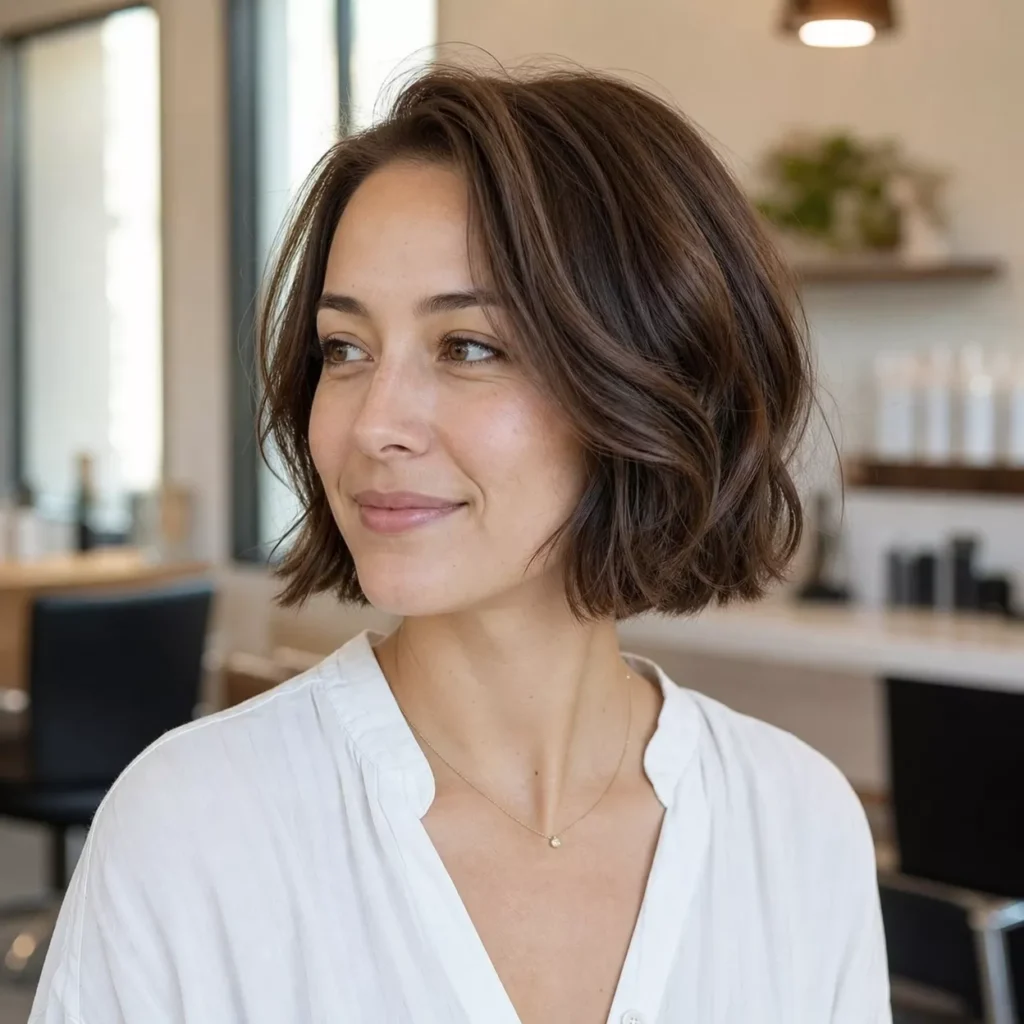
Where the perimeter stops is the first decision. A bob ending around the chin puts visual weight across the lower face, and soft waves widen that weight slightly as they bend outward. Whether the chin is the right stopping point depends on your jaw and how your hair falls. A little above it keeps the line higher; a little below lets it soften.
The waves matter as much as the length. Natural waves form unevenly and can loosen in humidity, while waves made with a wand look more uniform but have to be recreated. On fine hair with good density, waves can make the bob look fuller. On low-density hair, the same waves may separate and show gaps, so a slightly stronger perimeter often helps.
Curtain Bangs with Layered Lob
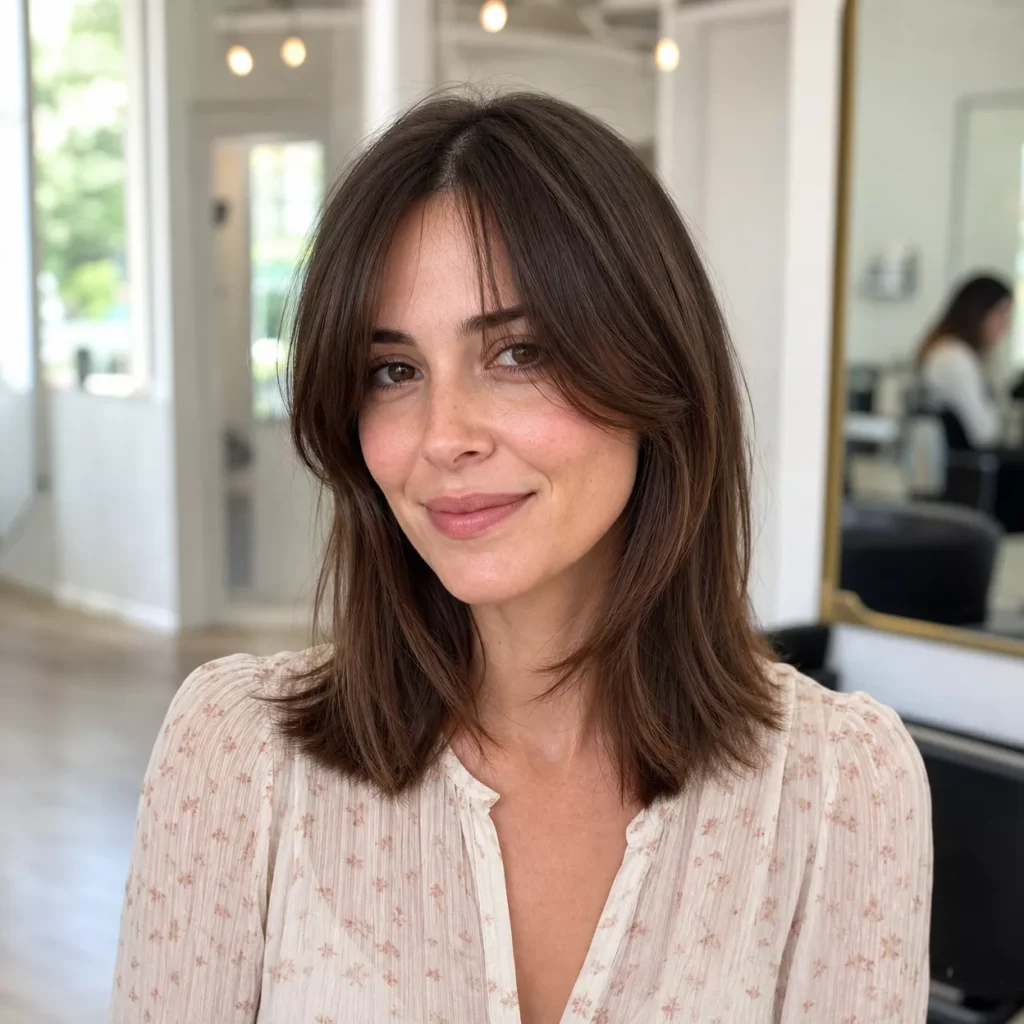
Curtain bangs part at the center and sweep toward the cheekbones, adding a frame across the upper face. That can change how much forehead shows, though the effect depends on how long the bangs are and how much hair goes into them. Below them, the lob ends around the collarbone, with layers that connect the fringe to the lengths. When the bangs meet the first face-framing layer smoothly, the front reads as one shape.
They usually need a quick blow-dry to sweep outward and sit best on your natural part. On low-density hair, a fringe taken from a narrower section keeps the rest of the front from looking thin. Our guide to curtain bang hairstyles covers more fringe variations.
Side-Swept Bangs with Shoulder Length Layers
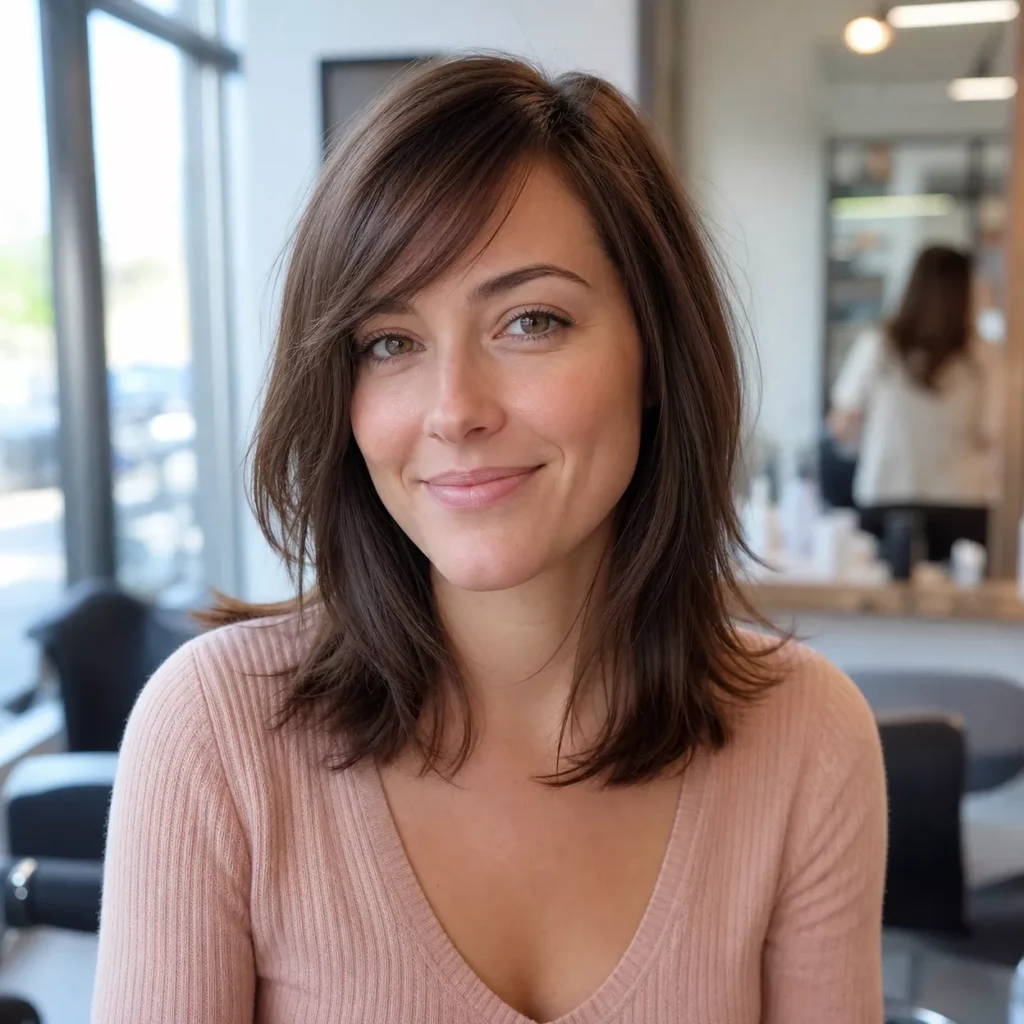
A side-swept fringe angles across the forehead, creating a diagonal line rather than a straight horizontal one. That diagonal is the main design effect, and it holds best when it follows your natural part. Cowlicks at the front can push it up or back toward the center. Hairline density matters as well: a sparse front may make the sweep look wispy rather than soft. As it grows, a side-swept fringe tends to blend into face-framing layers fairly gradually, though it still needs trims to keep it out of the eyes.
Textured Blunt Bob
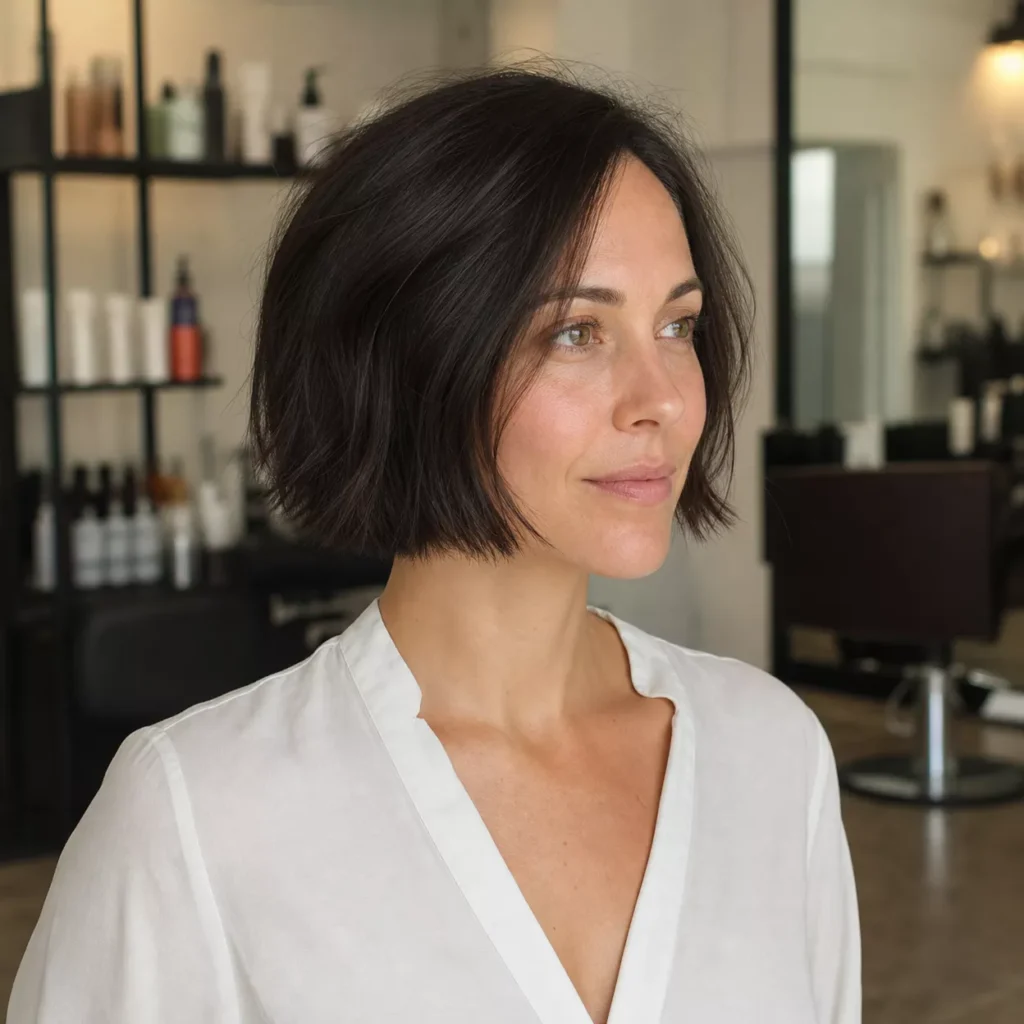
Three separate things are combined here. The blunt perimeter is the outer edge, cut in one solid line. Surface texture is added near the ends, usually with point-cutting, so the edge looks less rigid. Internal layers, if any, sit inside the shape.
On fine hair, that solid perimeter can make the ends look denser, because there’s no taper revealing how narrow each strand is. It doesn’t add hair, but it changes how the ends read. Too much texturizing at the edge undoes that effect, so the texture should stay light. Whether it’s added with scissors or a razor depends on the hair’s condition and the finish you’re after.
Shag Cut with Curtain Bangs
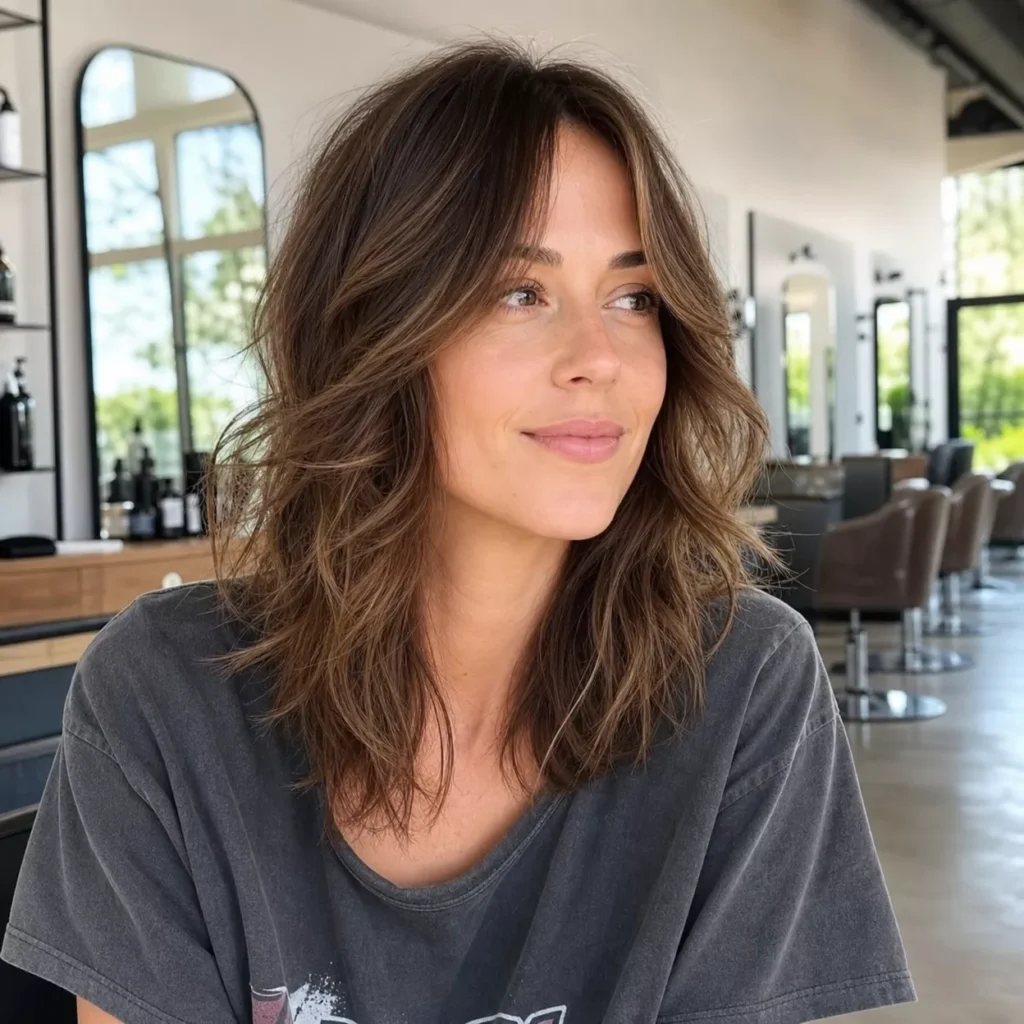
A shag removes a lot of weight by design, and that’s the trade-off to think about first. Shorter layers at the crown and through the mid-lengths create movement and separation, while curtain bangs open the front. On fine but dense hair, that can look full and textured. On low-density hair, aggressive layering can leave the ends looking light or sparse, so a softer shag with longer layers is often a better place to start.
Natural wave helps a shag show its shape; on straight hair, the texture in photos usually comes from styling. Many shag references are heavily styled, so it’s worth checking whether the separation looks natural or created.
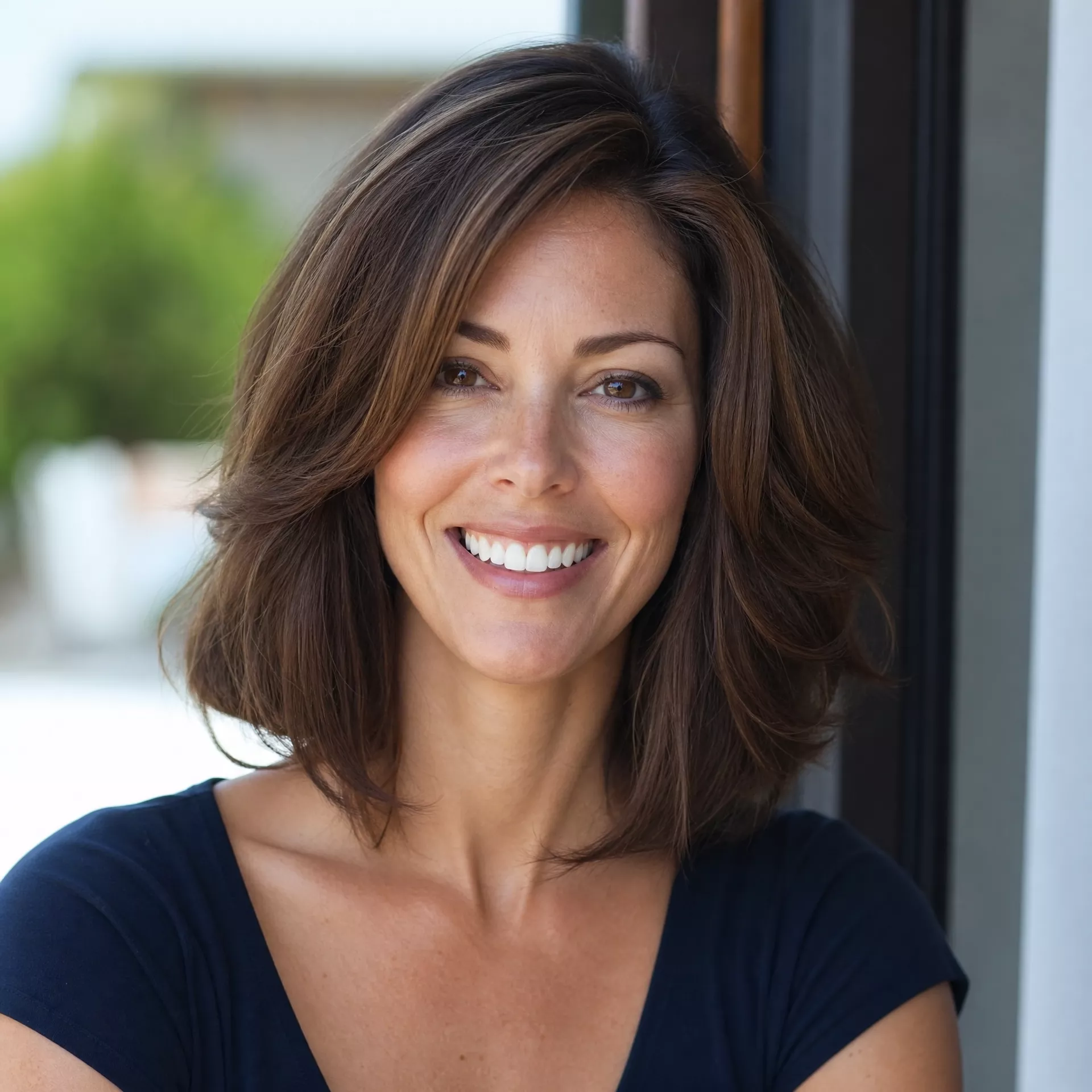
Collarbone Length Cut with Face Framing
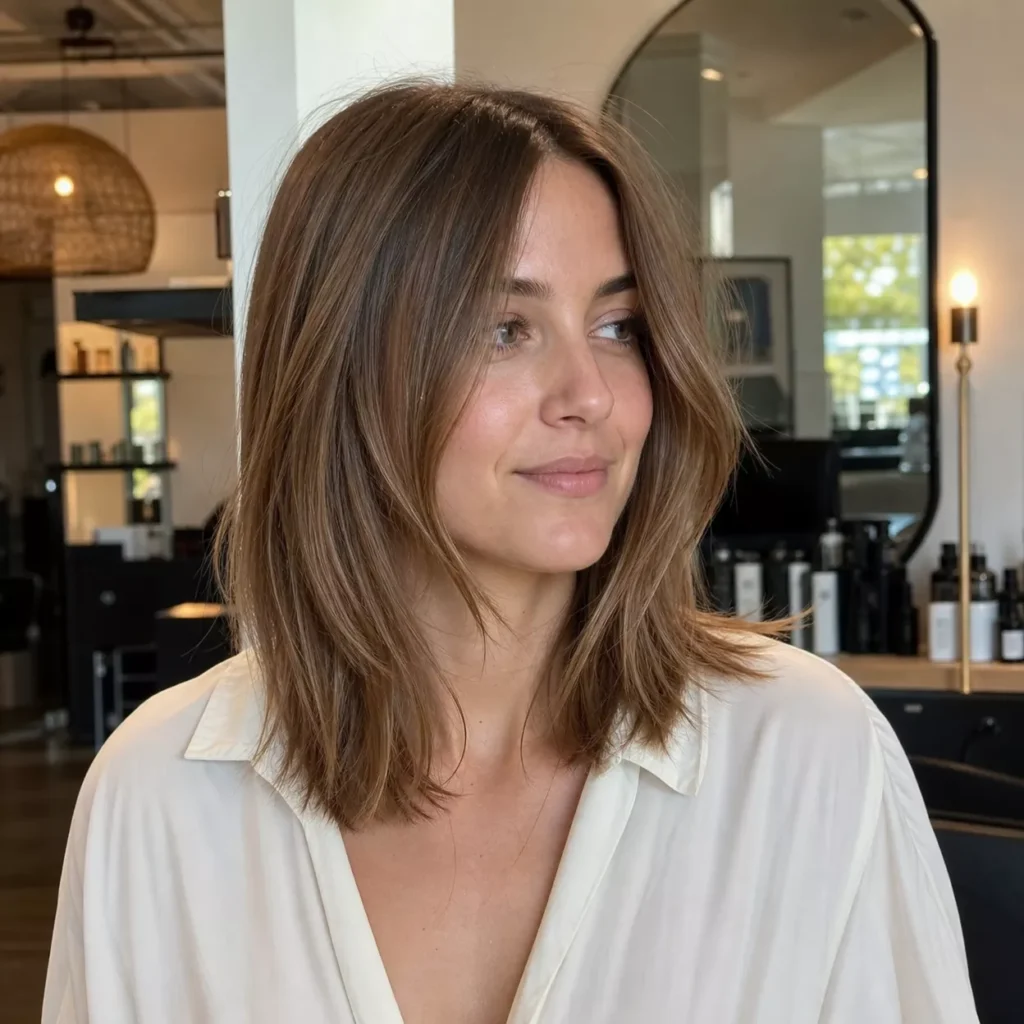
Collarbone length behaves differently from a bob. It’s long enough to keep some weight and movement through the lengths, but not so long that it hangs straight past the shoulders. Face-framing pieces then add shape around the cheeks and jaw. Where they start changes the effect: at the cheekbone, the frame is close and visible; at the jaw, it’s softer.
On fine or low-density hair, keeping the perimeter fairly solid preserves fullness at the ends while the framing adds movement in front. The trade-off is that collarbone-length hair can flip outward where it meets the shoulders.
Feathered Layers with Side Part

Feathering directs layers outward and back so they move away from the face instead of hanging straight. It’s different from thinning, which removes bulk without guiding direction, and from texturizing, which breaks up the ends for separation. Feathering doesn’t create volume on its own; it changes the direction the hair moves, which can make the silhouette look less flat. The side part shifts more hair to one side and adds asymmetry. Both depend on styling. The feathered direction usually needs a round brush to show, and the part holds best when it matches your natural growth.
Bixie with Textured Ends

A bixie sits between a pixie and a bob: shorter at the back than a bob, with more length around the ears and face than a pixie. On a long face, that length around the ears and cheekbones places weight at the sides. On low-density hair, short crown layers can show scalp, so leaving a little more length on top helps. Cowlicks matter more at this length, since there’s less hair to cover them.
Textured ends add separation and movement. The bixie can be quick to style, but the shape needs regular reshaping to stay balanced, so it’s lower in daily effort rather than lower in overall upkeep. Our guide to bixie haircuts covers more versions.
Wispy Fringe with Medium Length
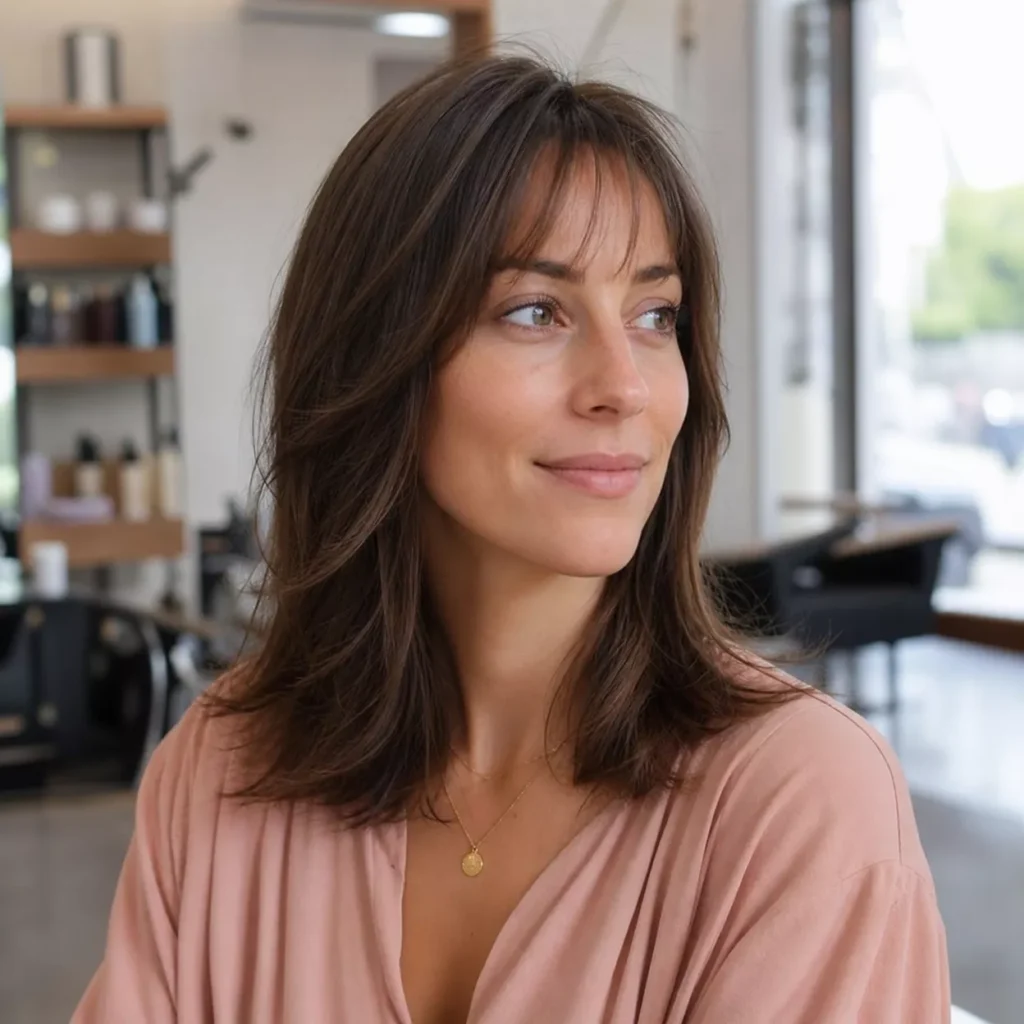
A wispy fringe is cut light enough that the forehead shows through, so how transparent it looks depends on density at your hairline. With good density, it reads soft; with sparse density, it can look patchy. It needs to suit your natural part, and humidity tends to separate it into strands. Most wispy fringes need a quick blow-dry or some shaping, and they need trimming between haircuts to stay at brow length. As they grow, they blend into the face-framing layers, but there’s an in-between stage first.
Blunt Lob with Soft Texture
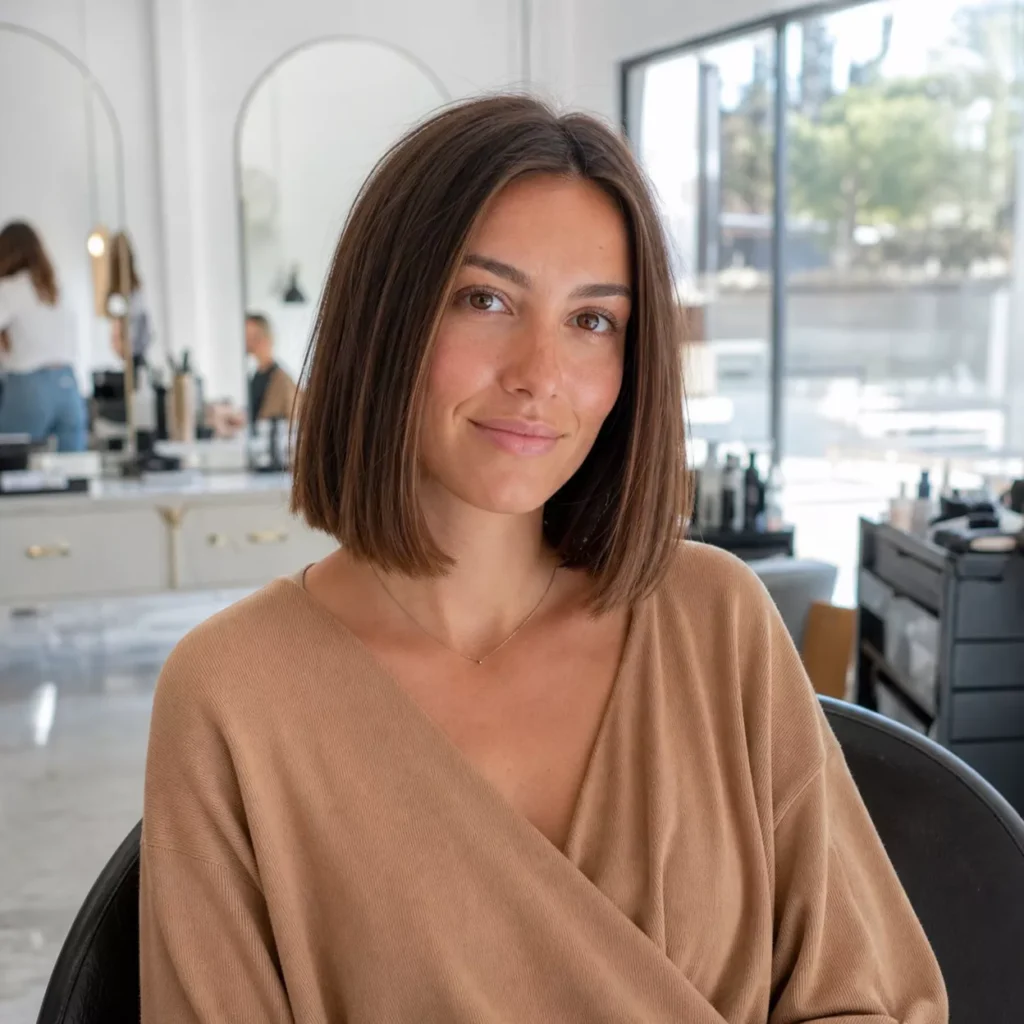
The blunt lob keeps a strong, solid perimeter around the collarbone, which can make the ends look denser than a tapered cut would. That’s a visual effect; the hair isn’t physically thicker.
The soft texture is a separate step, either added lightly with point-cutting or created with styling products after drying. Fine strands with good density tend to look full with this approach, while low-density hair benefits from the strong perimeter but needs the texture kept light. Styling changes the finish. Air-dried with a texture spray, it reads relaxed; blown smooth, it reads sleek.
Chin Bob with Blunt Bangs
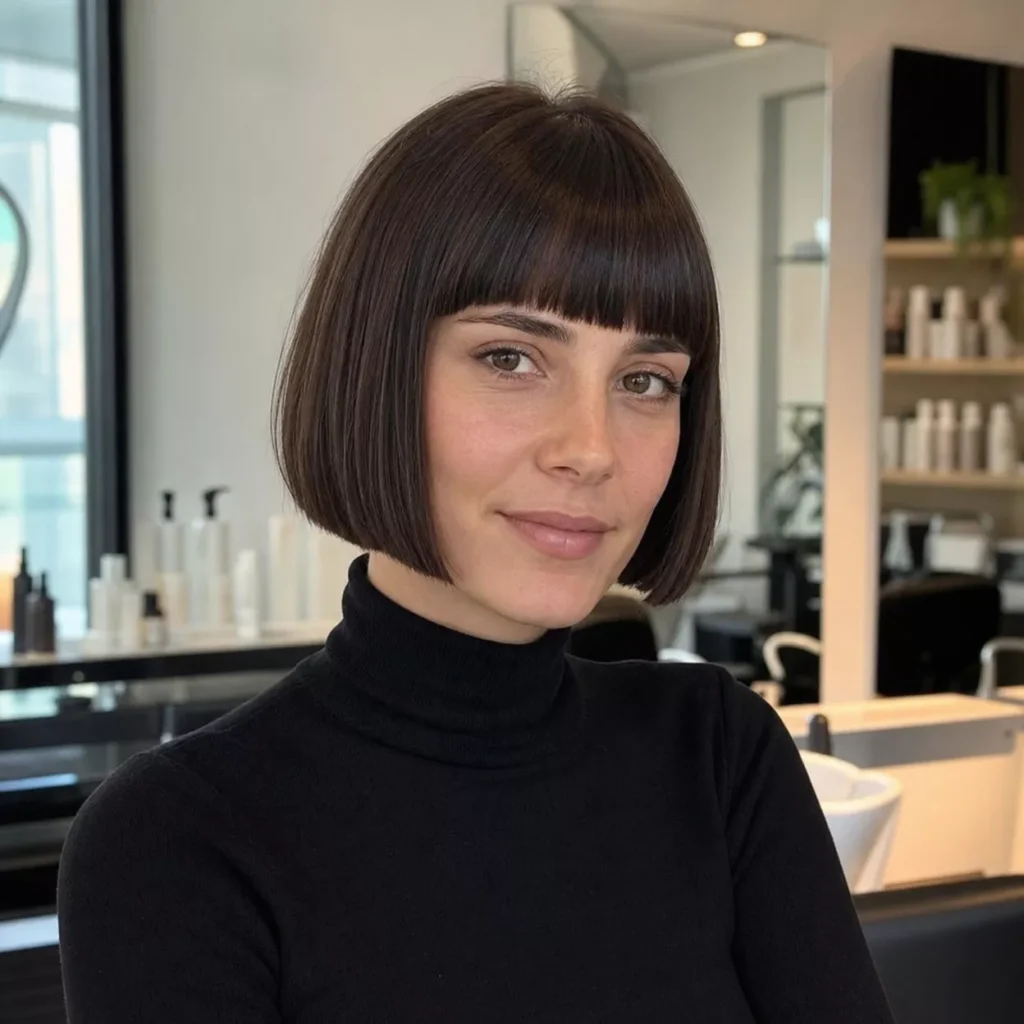
Two structured elements meet here: a blunt fringe across the forehead and a bob perimeter around the chin. Together, they create two horizontal lines framing the face at the top and bottom. It’s a strong look, and it asks for commitment. The fringe needs enough density at the hairline to look solid, and a cowlick can split it. Both elements show growth quickly, and the fringe in particular needs regular trims. On fine hair, the solid lines can make the edges look denser.
Voluminous Blowout Lob
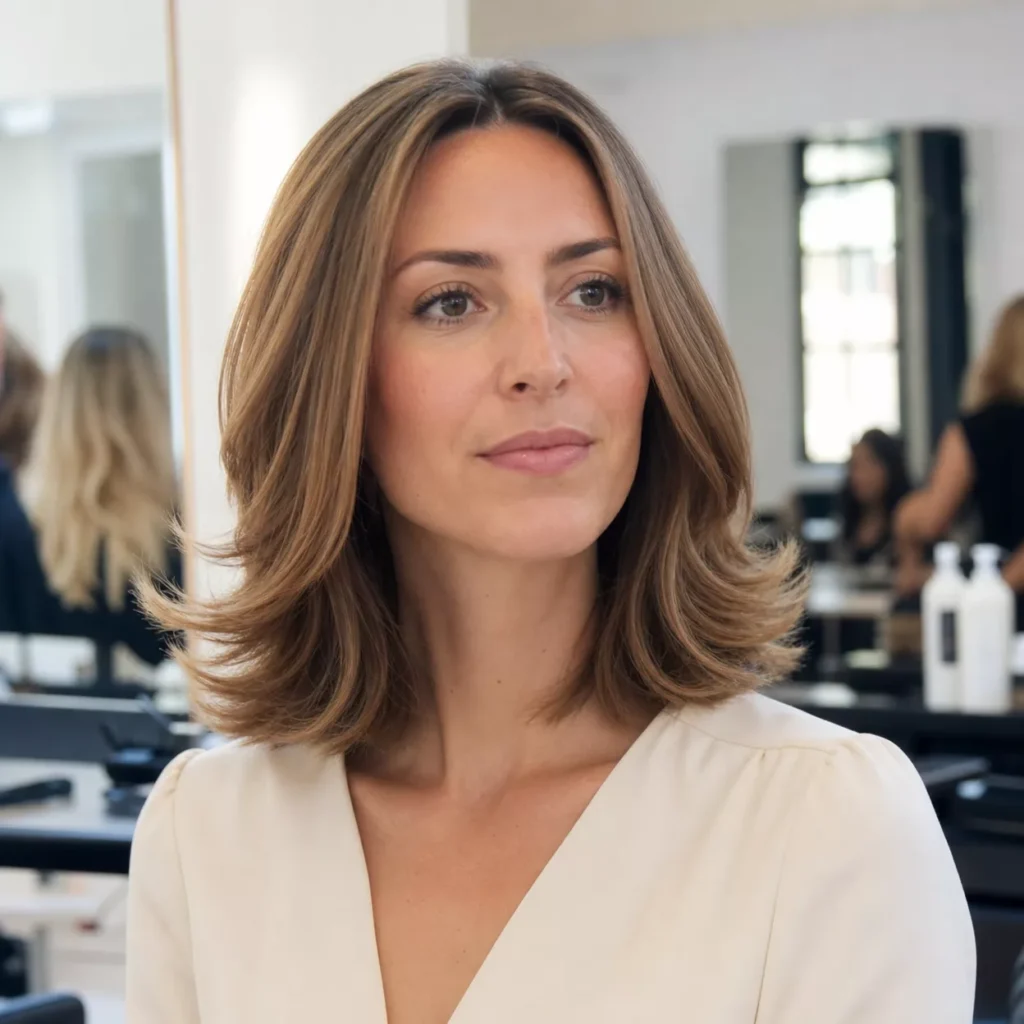
This is a styling result laid over a haircut. The lob is the cut; the volume comes from a blowout, with a round brush lifting the roots and flipping the ends outward. That outward direction widens the silhouette at the sides.
The volume is temporary and depends on technique, heat, and humidity. Fine hair may lose its lift faster than coarser hair, and low-density hair may show more scalp at the part when lifted. If you don’t blow-dry regularly, it’s worth asking how the lob looks air-dried before committing to the cut for this look.
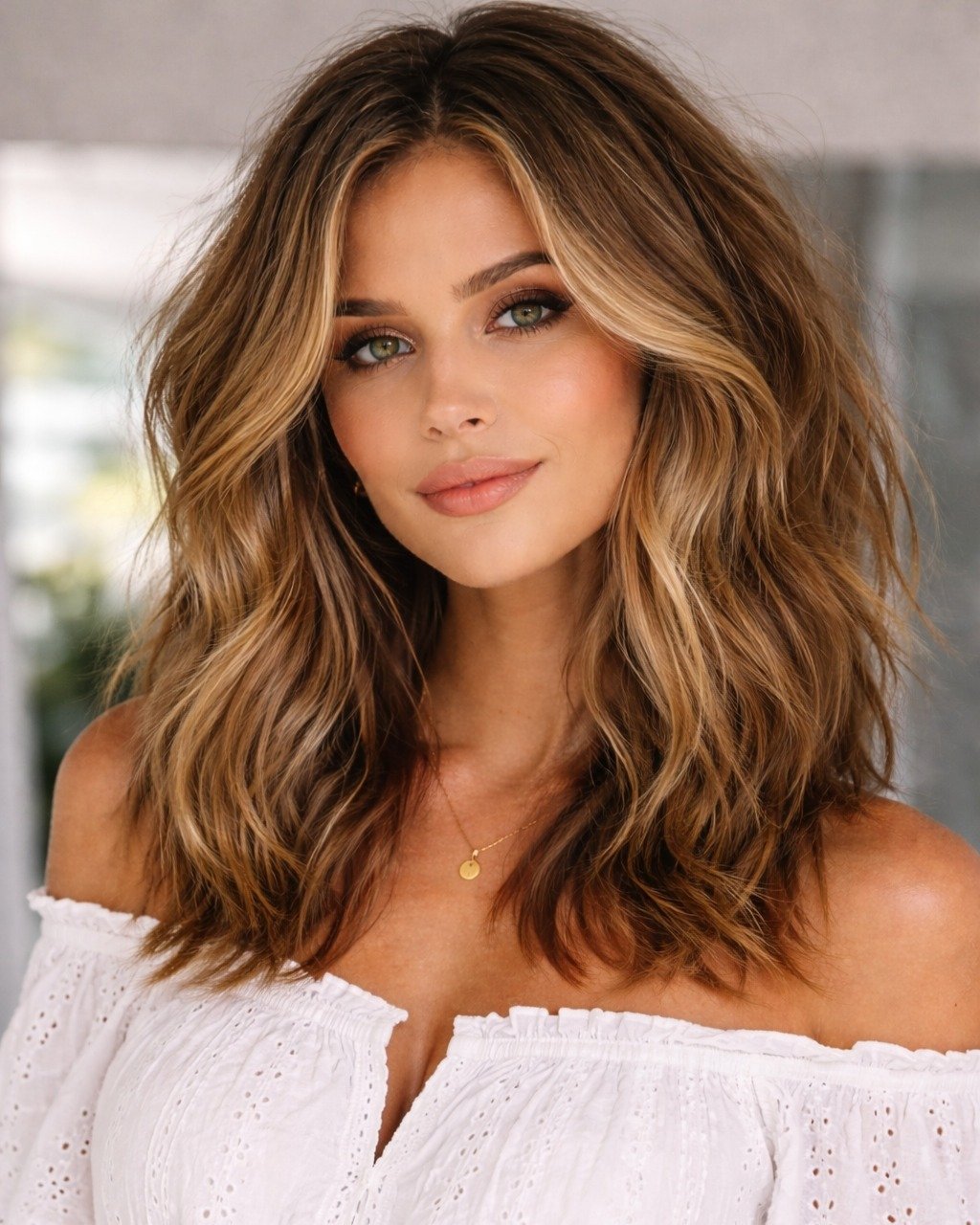
Tousled Wavy Bob

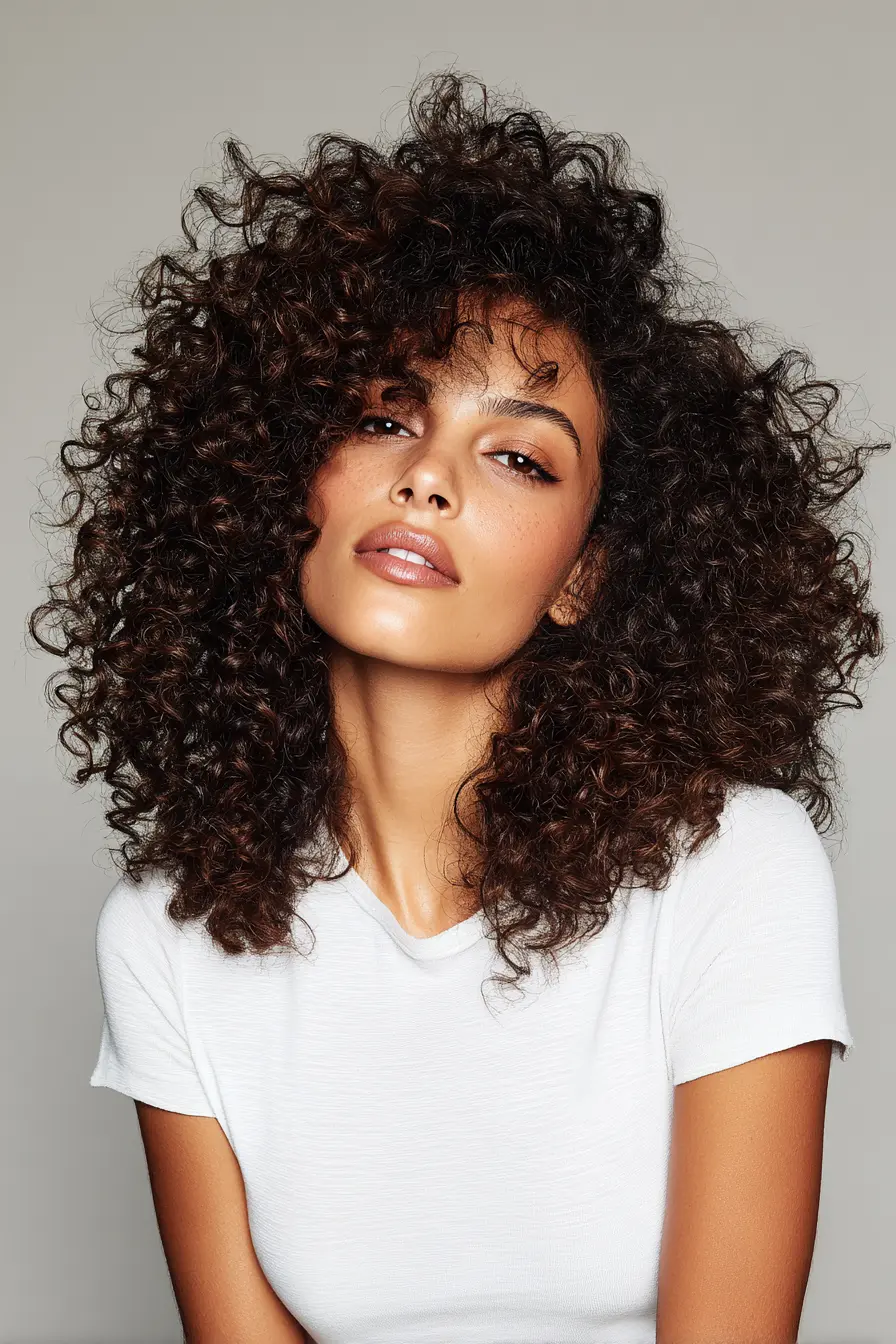
The waves here can be natural or created. Hair with a natural wave may tousle with a light curl cream and air-drying; straight hair usually needs a wand or flat iron. Humidity can loosen created waves and frizz natural ones. Density changes the look, too. Fine but dense hair forms fuller waves, while low-density hair may separate into thinner clumps. The waves also alter the bob’s perimeter, making it look softer and slightly shorter as the hair bends upward.
Razored Shaggy Lob
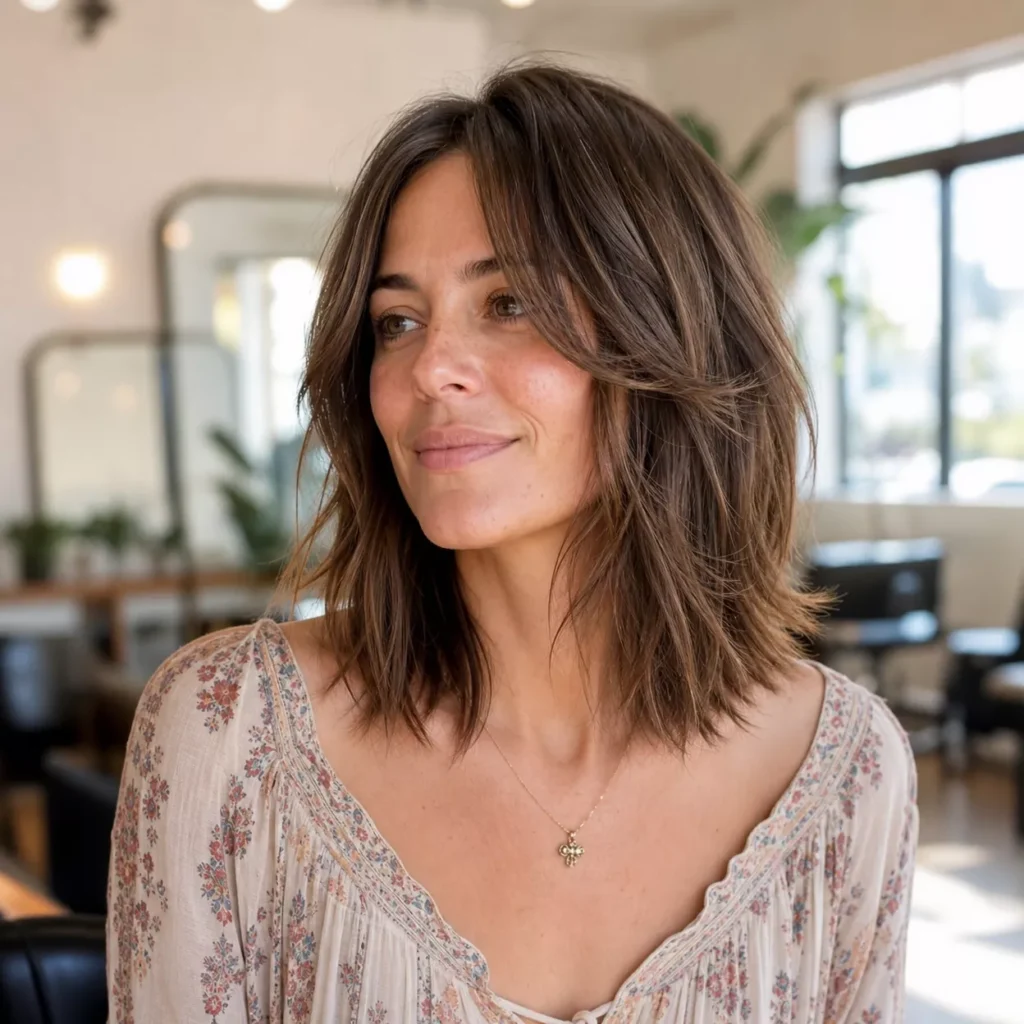
A razor cuts at an angle, tapering the ends so they look airy and separate. That can be useful on dense hair, where the weight removal lets the lob move. It isn’t automatically a fullness technique. On fine or low-density hair, heavily razored ends can look see-through, and on dry or fragile hair, they may fray. Wavy hair often shows razored texture well; curly hair may frizz. Scissors can create soft, textured ends too, so the finish matters more than the tool.
Stacked Bob with Soft Layers
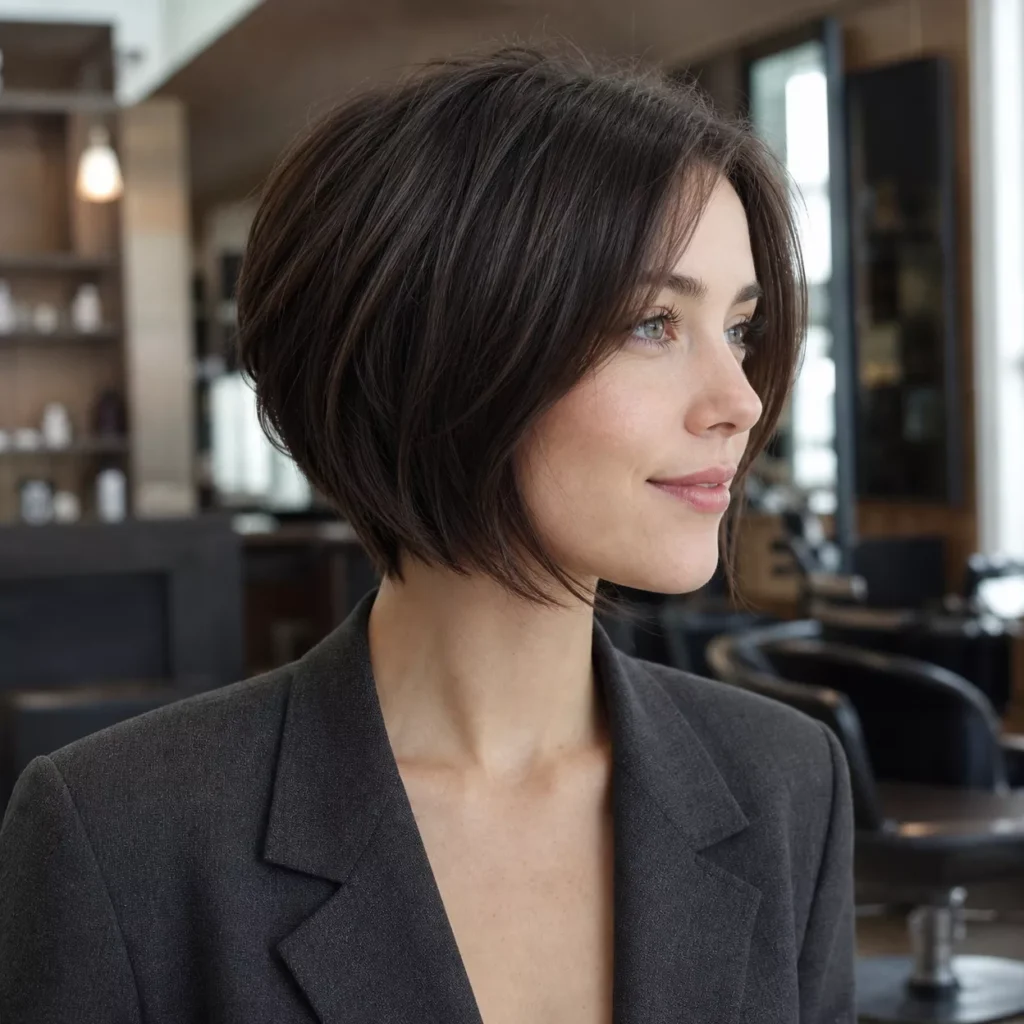
Stacking means short, graduated layers at the nape that build on each other, so the back curves outward before the hair lengthens toward the front. That shapes the back of the head and can add some fullness at the crown and nape, widening the silhouette from the side. It depends on density, though. On low-density hair, the short nape layers may show scalp. Soft layers in front frame the face. As it grows, the stacked back lengthens first, so regular reshaping keeps its curve.
Half Up Half Down with Loose Waves
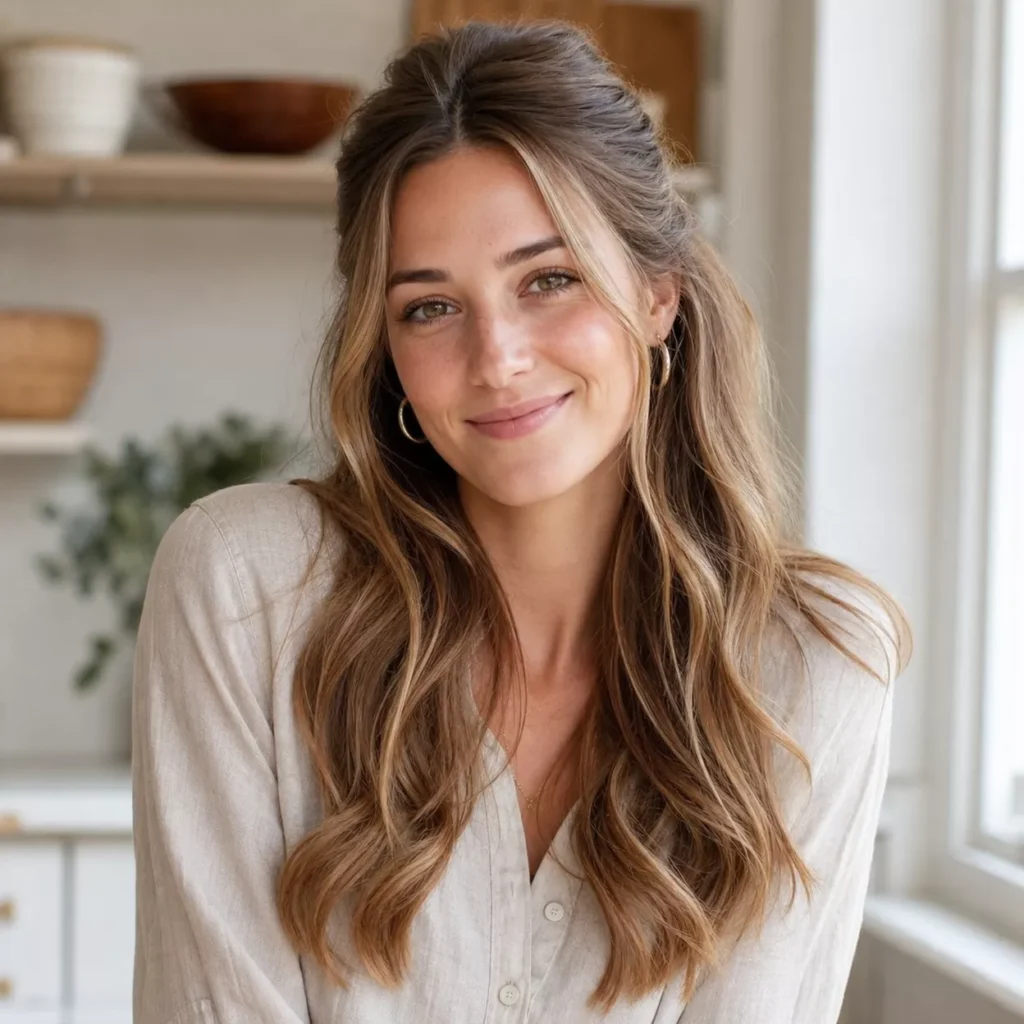
This is a styling option rather than a haircut. The top section is gathered at the crown, adding height there, while the rest stays loose. Loose waves through the lengths add movement. Fine or slippery hair may need texture spray for grip, and low-density hair can make a slim top section, so gathering slightly more hair helps. Leaving a few pieces loose around the face softens the look. A tight tie can pull at the hairline, so a looser gather is kinder if you wear it often.
French Bob with Soft Fringe
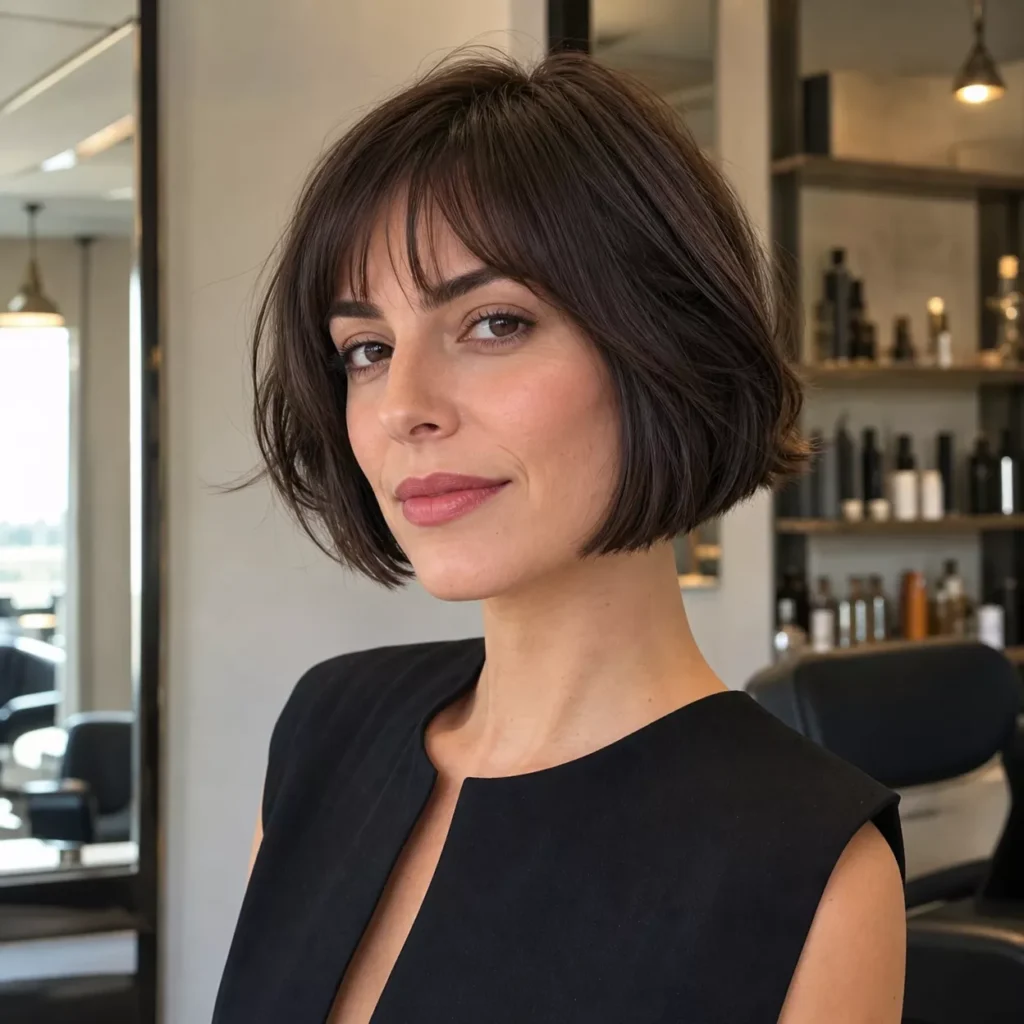
A French bob sits around the cheekbone or jaw, with a fairly strong perimeter and often a fringe that blends into it. On a long face, a soft fringe covers part of the forehead while the bob creates a horizontal line lower down. The finish depends a lot on natural texture: a slight wave makes it look relaxed, while very straight hair can look more formal. The short length means growth changes the shape quickly, and the fringe needs regular attention. Whether it suits you depends on your jaw, forehead height, and how comfortable you are with a shorter perimeter.
Layered Pixie with Side Swept Bang
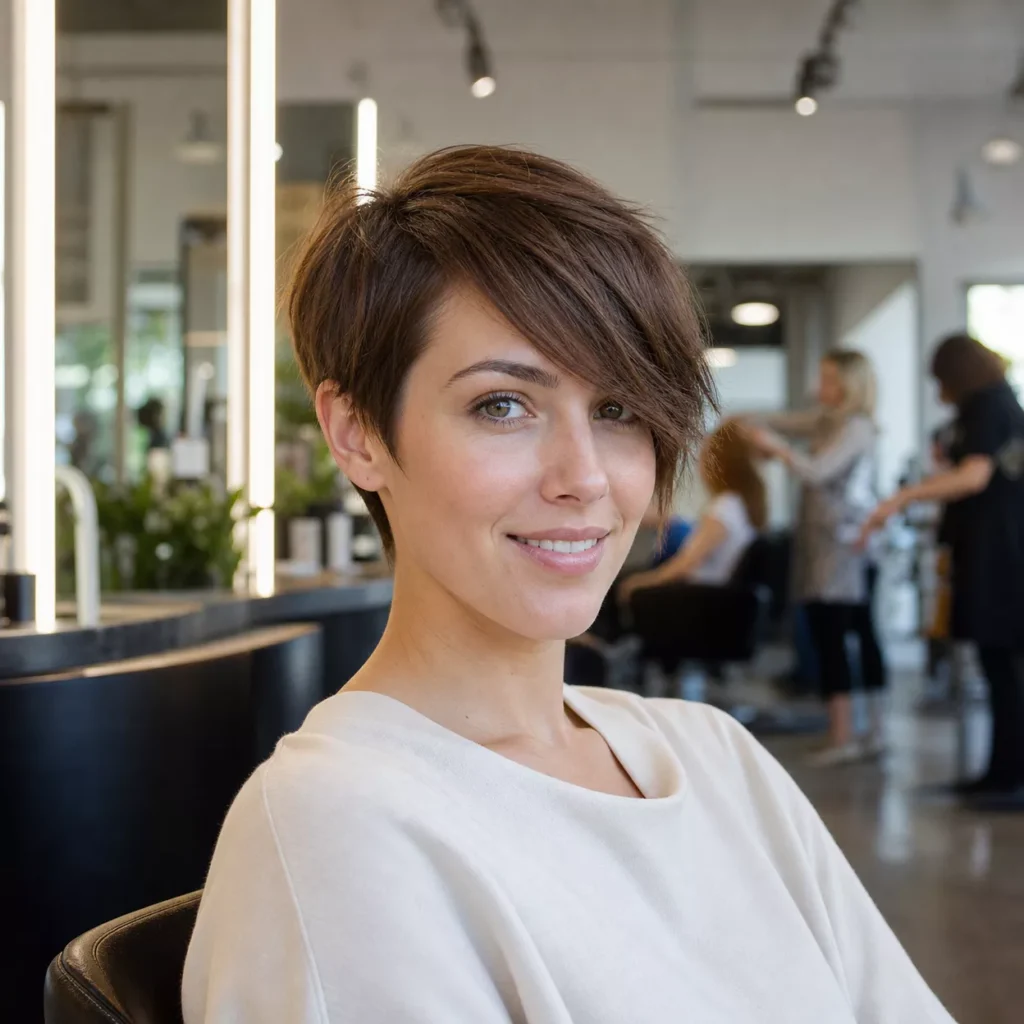
A layered pixie keeps the sides and nape short, with more length and texture at the crown and a side-swept fringe. Short hair can make fine hair look more textured, since there’s less length weighing it down, but it doesn’t change the hair’s actual density or condition. On low-density hair, the crown layers need enough length to avoid showing scalp. Cowlicks at the hairline affect how the side-swept bang sits. Grow-out is the real commitment: the shape changes quickly, and growing it out takes time.
Loose Updo with Face Framing Pieces
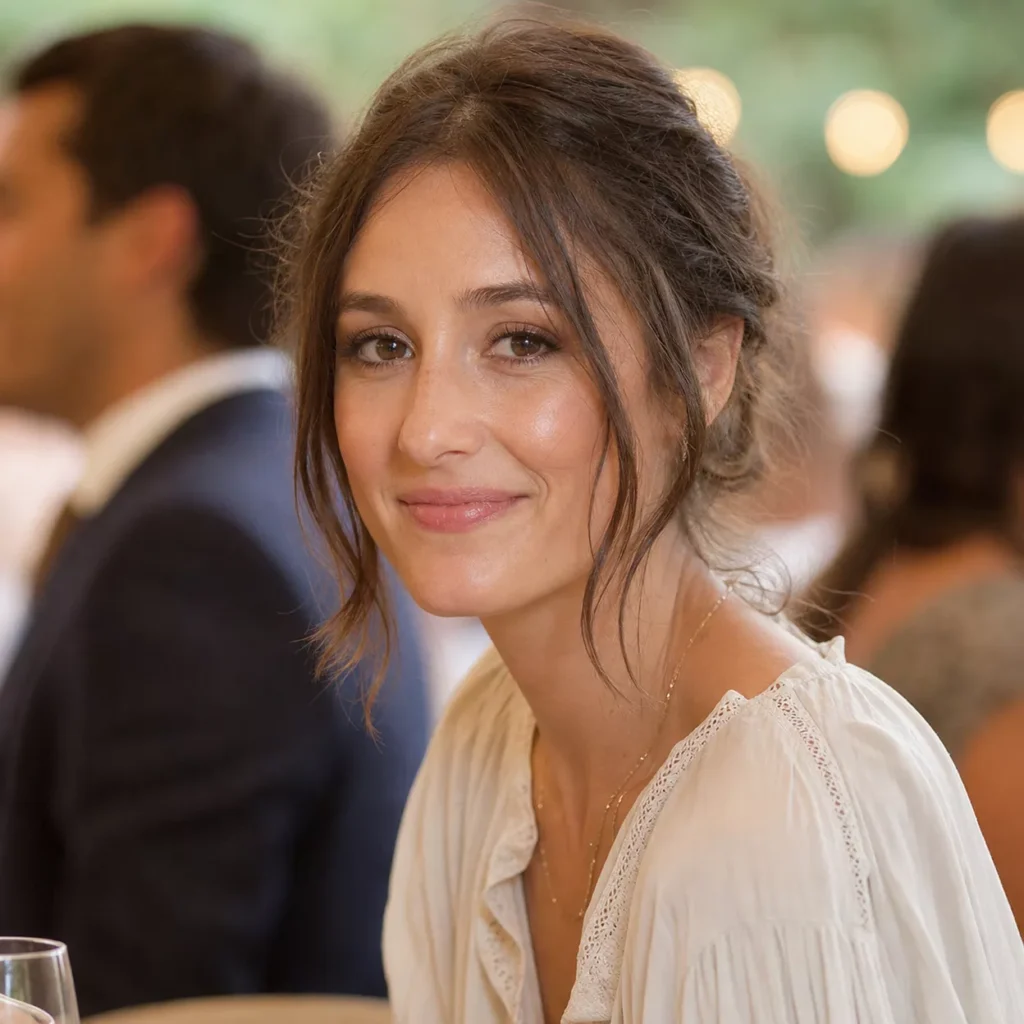
An updo is styling, not a haircut. Placing it at the nape keeps it low; placing it higher adds height at the back of the head. Loose face-framing pieces soften the pulled-back shape around the forehead and cheeks, though whether you want them is a matter of preference. Fine or slippery hair may need texture spray and extra pins; dense hair holds well but may need sturdier pins. A loose updo puts less tension on the hairline than a tight one.
Beachy Waves on Shoulder Length Cut

Beach waves are a finish rather than a haircut. On a shoulder-length cut, they add movement through the lengths and widen the silhouette slightly. Hair with a natural wave may form them with a salt or texture spray and air-drying. Straight hair usually needs a wand or flat iron. Humidity can loosen heat-made waves or frizz natural ones. The shoulder-length perimeter keeps enough weight for the waves to form without pulling them flat.
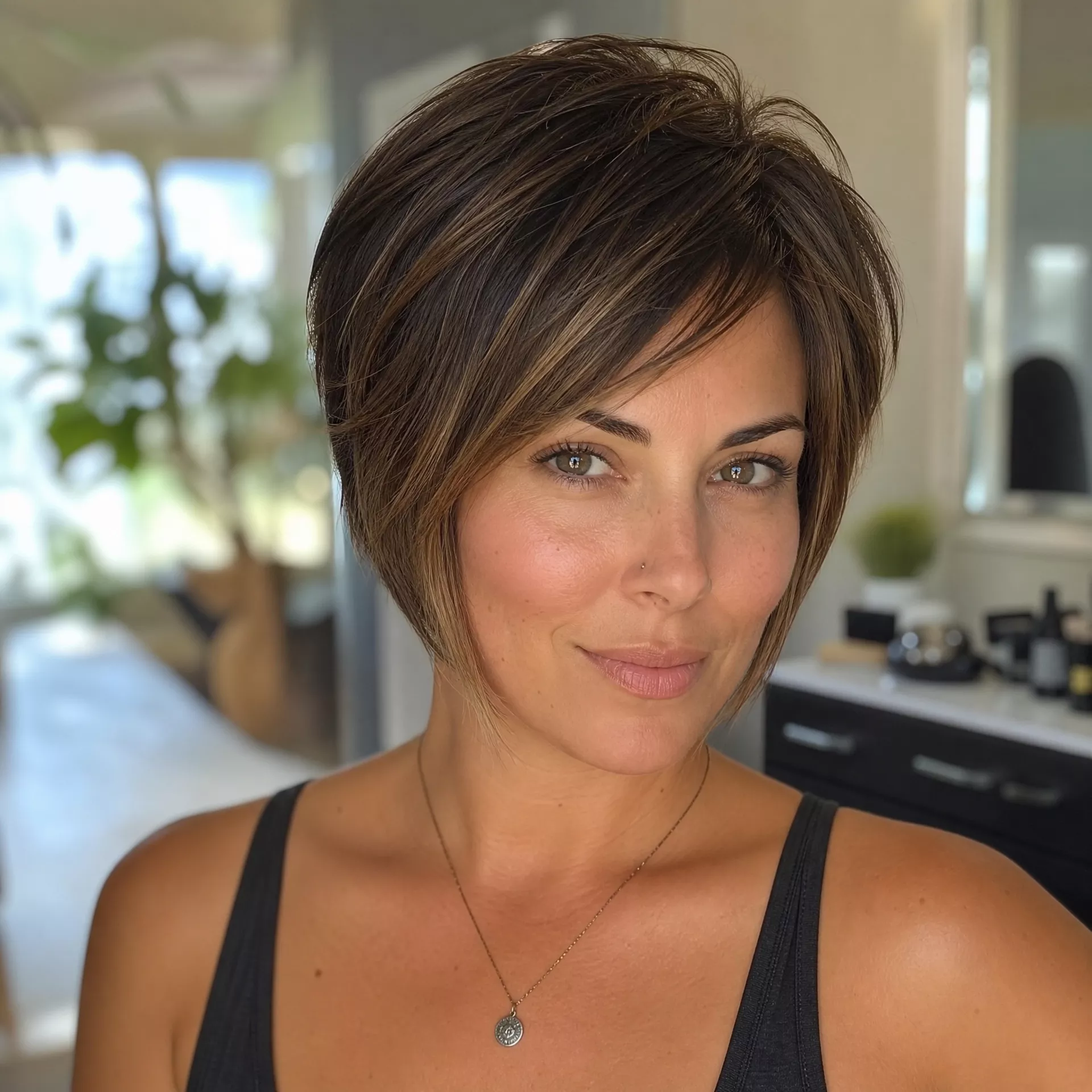
Textured Pixie Bob
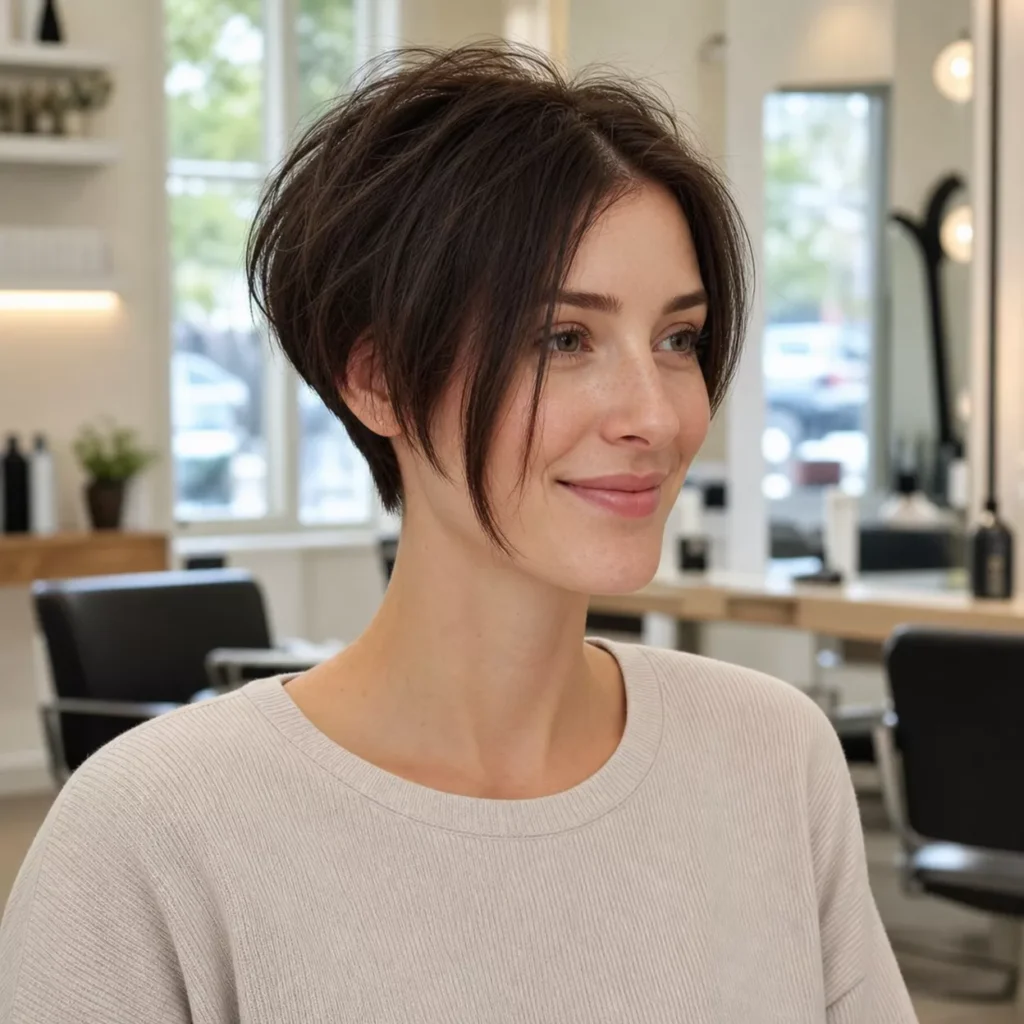
A pixie bob is longer than a pixie, especially at the front, but shorter at the back than a bob. Compared with a bixie, it often keeps a little more length around the cheekbones and a softer, more bob-like front. Texture through the crown adds separation and can make fine hair look fuller on top, while low-density hair may need slightly more crown length. The front pieces frame the cheekbone area. As it grows, the back lengthens and the shape drifts toward a bob, so regular trims keep its proportions.
Curtain Bang Shag with Collarbone Length
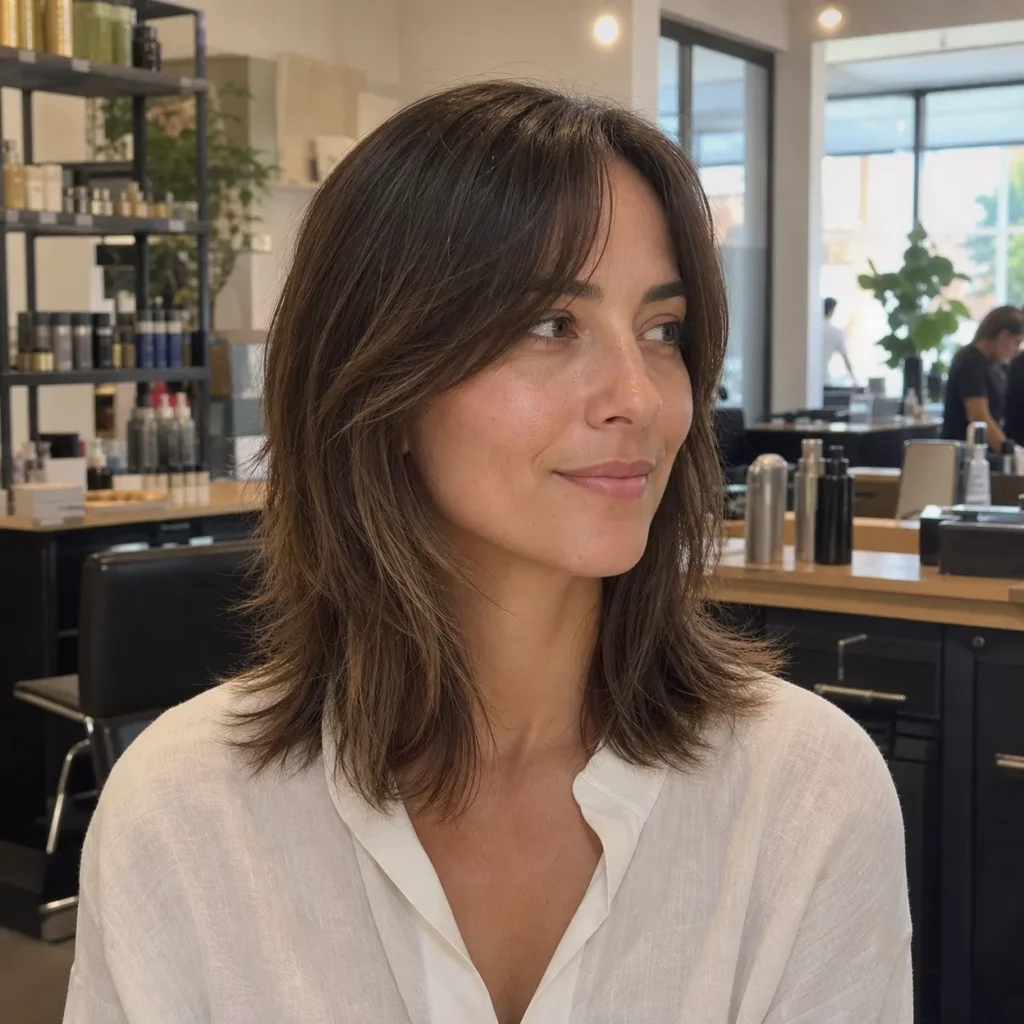
Three components work together here: a curtain fringe at the front, shag layering through the crown and lengths, and a collarbone perimeter. The fringe frames the forehead, the shag layers add movement, and the collarbone length keeps weight at the ends.
How much weight the shag removes is the decision that matters most. On fine but dense hair, moderate layering can look full; on low-density hair, too much can leave the ends sparse. The fringe needs its own trims and usually some styling. Natural wave helps the shag show its shape, while straight hair may need texture product or heat.
The Length Question Comes First
Length changes the silhouette more than almost anything else, and labels like “short” or “medium” can be misleading. A chin-length bob and a collarbone lob are both shorter than long hair, but they put weight in very different places. Where the perimeter ends often matters more than the name of the cut.
It helps to think in terms of where hair creates visual weight. A fringe changes the forehead area. A bob perimeter creates weight wherever it ends. Waves expand the silhouette. Crown volume moves attention upward. Face-framing layers change the transition around the cheeks and jaw. A side part adds asymmetry. A shag redistributes weight internally.
These are design effects rather than face-shape rules. Combined thoughtfully, they let you shape the silhouette you want instead of following a fixed list.
Fine Hair and Low Density Need Different Decisions
Fine hair describes narrow strands. Low density describes fewer strands. They often appear together, but not always.
Fine hair that’s dense can usually handle moderate layering and texture, since there’s enough hair to fill in the movement. Fine hair that’s also low in density needs more caution: keeping weight at the perimeter and limiting layers tends to look fuller. Coarse hair with low density holds shape well but may show gaps if heavily layered.
The same cut can look full on fine, dense hair and sparse on fine, low-density hair, which is why knowing which kind of “thin” you have matters before choosing.
Where Should the Weight Stay?
Removing weight everywhere isn’t automatically better, especially on thin hair.
The perimeter and ends often carry most of the visible fullness, so keeping them solid helps fine and low-density hair look denser. The crown can be lightened for lift, but on low-density hair, short crown layers may show scalp. Face-framing pieces can add movement without thinning the rest of the cut. Internal layers can create movement while leaving the outline intact.
A well-planned cut keeps weight where it supports the shape and removes it only where it helps the hair move.
Read the Hairstyle Photo More Carefully
A hairstyle photo shows the finish, not the hair underneath.
Look at the front, but also the side and back if you can. Notice where the perimeter sits and where the layers begin. Check whether the fringe connects into the layers or sits separately. Ask whether the texture looks natural or styled, whether lighting or color is making the hair look fuller, and whether extensions might be adding density.
The photo can’t tell you the model’s density, how her hair behaves air-dried, or how much styling went into it. Treat it as a guide to shape and placement rather than a promise.
When the “Low-Maintenance” Version Isn’t Actually Low-Maintenance
Low-maintenance can mean several things, and they don’t always line up.
An easy haircut may need fewer salon visits but still require daily styling. An easy style may be quick in the morning but depend on a cut that needs frequent reshaping. Color can add its own maintenance, separate from the cut. Wash-and-wear works when the cut matches your natural texture. Air-drying is simple only if your hair dries into the shape you want.
Knowing which kind of maintenance you want to reduce helps narrow the options.
What to Say at the Appointment
A few specific sentences can make a reference photo far more useful:
“I want to keep enough weight through my ends to make them look fuller.”
“I like this shape, but I don’t want to rely on a daily blowout.”
“My hair is fine but quite dense.”
“My hair is low density, so I want to be careful about removing too much.”
“I like the fringe, but my natural part sits here.”
“I like the haircut in this photo, but not necessarily the styling.”
“My waves are natural, but they shrink when dry.”
Final Thoughts
A long face and thin hair don’t call for a single answer. The useful decisions are about length, where the weight stays, how much layering your density can handle, and how much styling you’ll realistically do. Use the 22 ideas above to find the elements that suit your hair, then build the cut around how your hair actually behaves rather than how it looks in someone else’s photo.