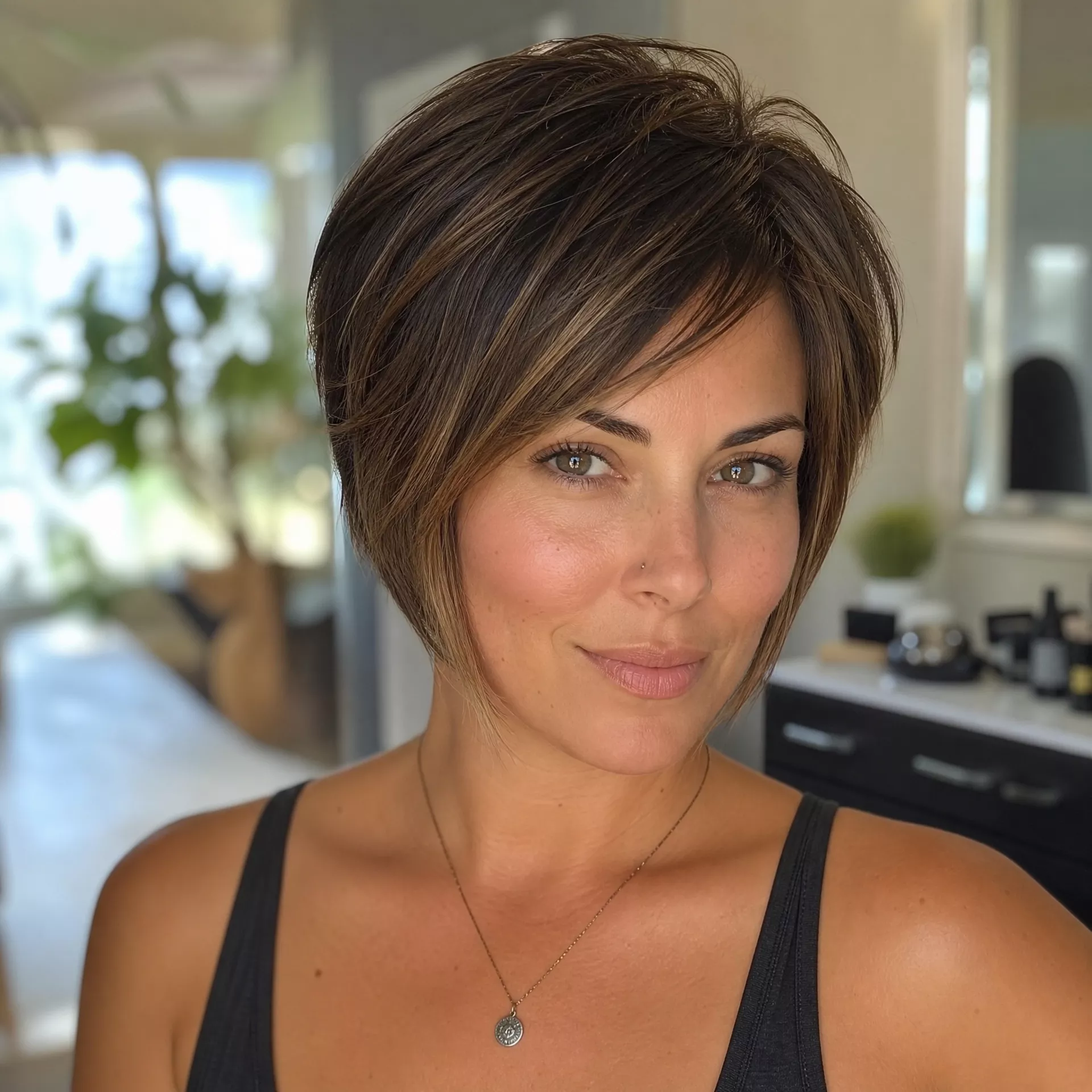
20 Medium Length Hairstyles for Round Faces and Fuller Figures
If you want a medium-length cut that feels balanced with your face and overall proportions, a few things shape the result: where the layers begin, where the volume sits, and where the ends land around the shoulders. Round faces are often described as having similar width and length, with the widest point at the cheeks. Many people choose cuts that add vertical lines or keep volume away from the sides. That is a preference, not a rule, and plenty of people with round faces wear full, wide styles happily.
Photos usually show the styled result, so each style below looks at one practical factor that decides how the cut behaves on an ordinary morning: layer placement, bangs, your natural part, hair type, or how much upkeep it asks for. Trim timings are approximate and vary with how quickly your hair grows.
Quick Face Shape and Hair Type Guide
These are starting points for the conversation, not rules.
Wavy or straight hair: Most cuts below work with either. Wavy hair usually needs product and diffusing, and straight hair often needs heat to hold a shape.
Round face: The widest point is usually at the cheeks, with length and width close together. Some people prefer cuts that keep volume off the sides or add height at the crown.
Overall proportions: Length, where volume sits and where the ends land around the shoulders can all change how balanced a cut feels. Look at how the hair sits against your neck and shoulders, and choose the balance you like.
Fine hair: Layers should be chosen carefully, since removing weight can thin the ends.
Thick or curly hair: Longer layers can remove bulk and keep the shape from widening toward the ends.
Long Layers with Deep Side Part
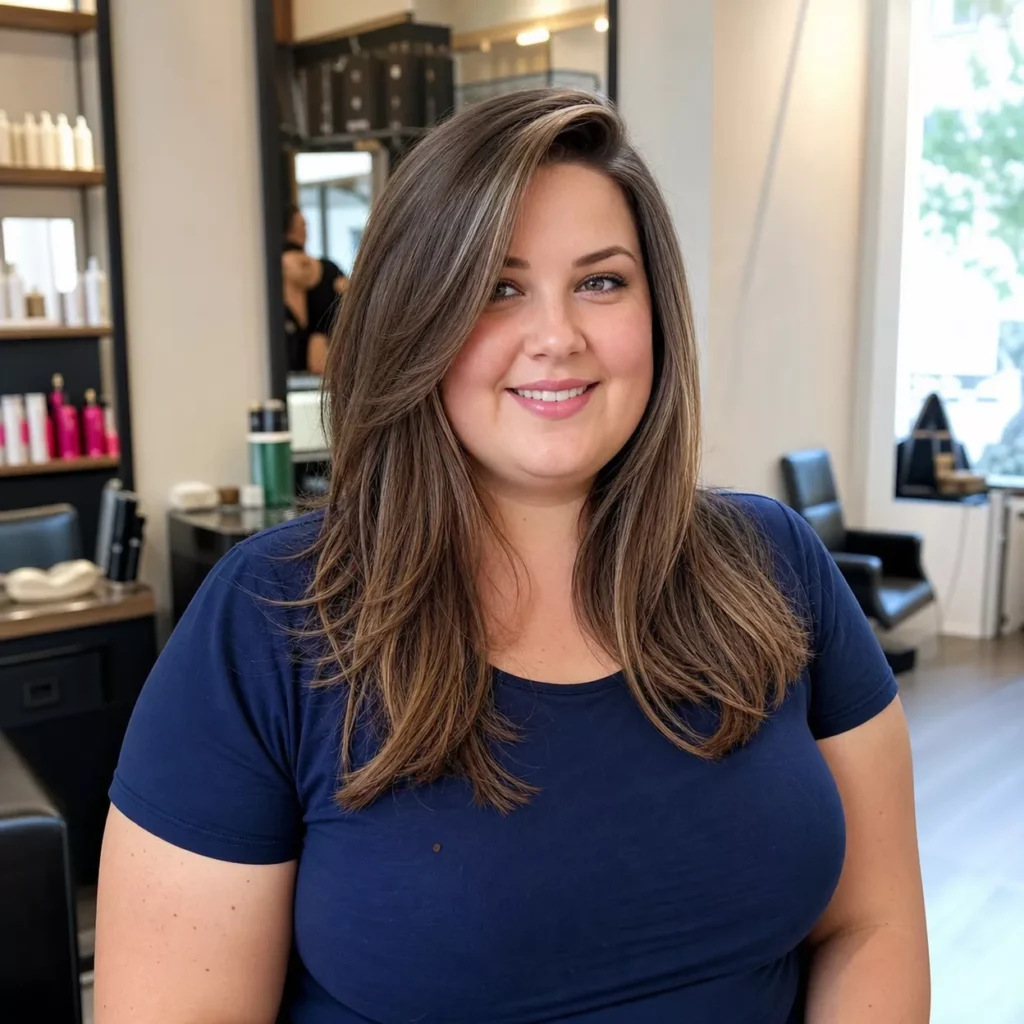
A deep side part works best when there is enough length and density to create a clear sweep. Straight to wavy textures usually hold the diagonal most easily, and very fine hair may need lighter layering so the heavy side does not collapse. The strong part creates a longer diagonal line, which can make the overall shape appear less horizontally focused.
Where the layers begin matters as much as the part. Layers that start around the chin or lower keep most of the movement below the widest part of the cheeks, and each layer takes weight out of the ends, so on fine hair it helps to keep them long. A useful request is: “Long layers starting below the cheekbone, with a deep side part cut into the fringe area.” Trim roughly every 8 to 10 weeks.
Side-Swept Layers at Collarbone Length

Collarbone length is where hair meets the shoulders, and many medium cuts change character there. Depending on your shoulder line, the ends can flip outward, tuck under or sit flat, so it is worth seeing how yours behaves before you commit to the length.
The sweep creates a diagonal line from the top of the head down and across, and leaving the opposite side heavier keeps the shape balanced. Curling only the ends with a medium-barrel iron can reinforce the direction, and a light-hold texturizing spray keeps it soft. Plan on trims about every 6 to 8 weeks.
Layered Lob with Curtain Bangs

Curtain bangs are cut from the front of the head, so the first question is how much density you have there. Thin temples or a wide part can make them look sparse, and a stylist can take them from a smaller section to keep more hair in the surrounding layers. Round-brushing them open while blow-drying helps them fall away from the center instead of straight down.
Bangs set the maintenance rhythm. They usually need a trim every three to four weeks, while the lob itself can wait around eight. They also grow into face-framing pieces rather than an awkward stage, and the lob length leaves enough hair to tie back in the meantime.
Looking for more styles like this? Browse our Layered Lob Haircuts collection for more inspiration.
Medium Length with Face-Framing V-Layers
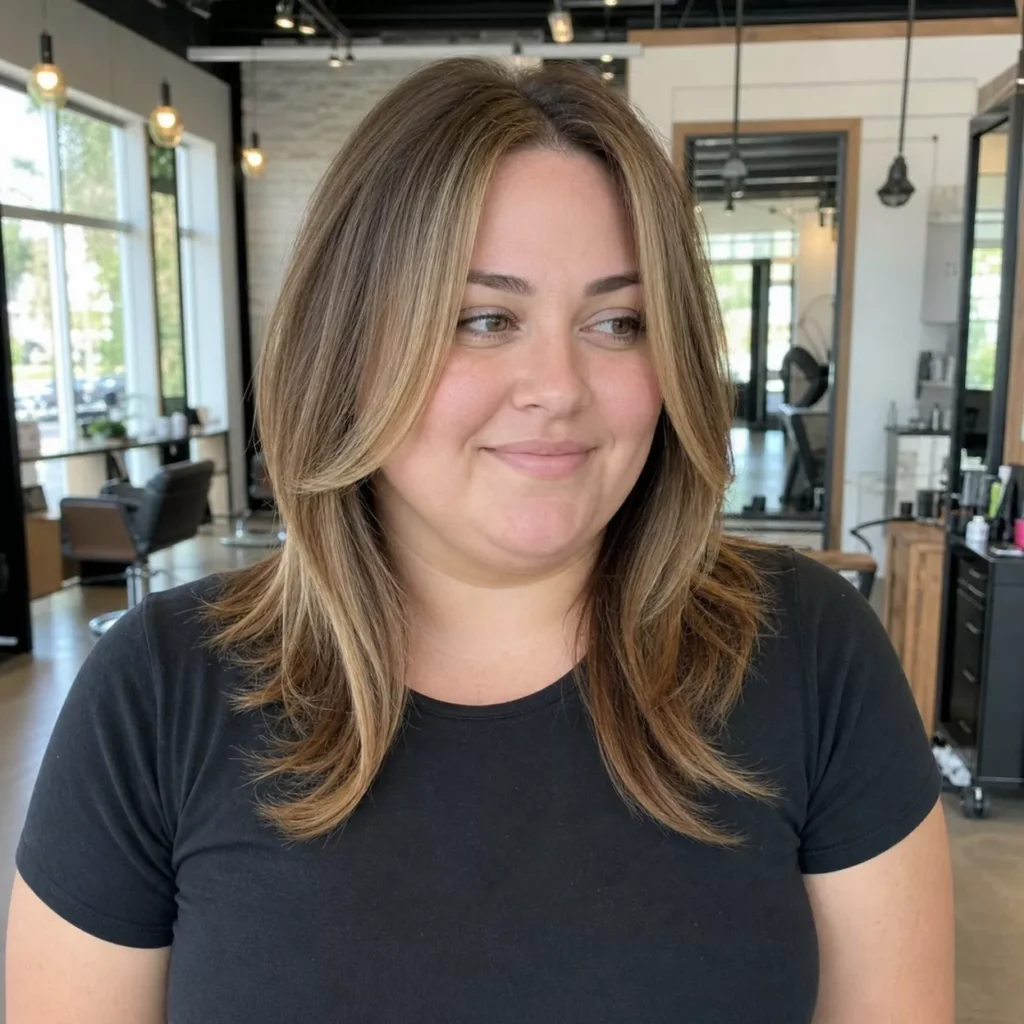
A V-shaped perimeter points downward at the center instead of ending in a flat line. That creates a longer vertical line, which can change how the face and neck area are perceived, and some people like it for that reason.
The trade-off is at the points. The V narrows the bottom edge, so on fine hair the longest section can look thin. Blow-drying with the nozzle pointing down keeps the shape, rather than rounding the ends under. Trims every 10 to 12 weeks are common, though the points soften as they grow. If you try it, ask where the V will start and how much weight will stay at the tip.
Sleek Side-Parted Medium Cut
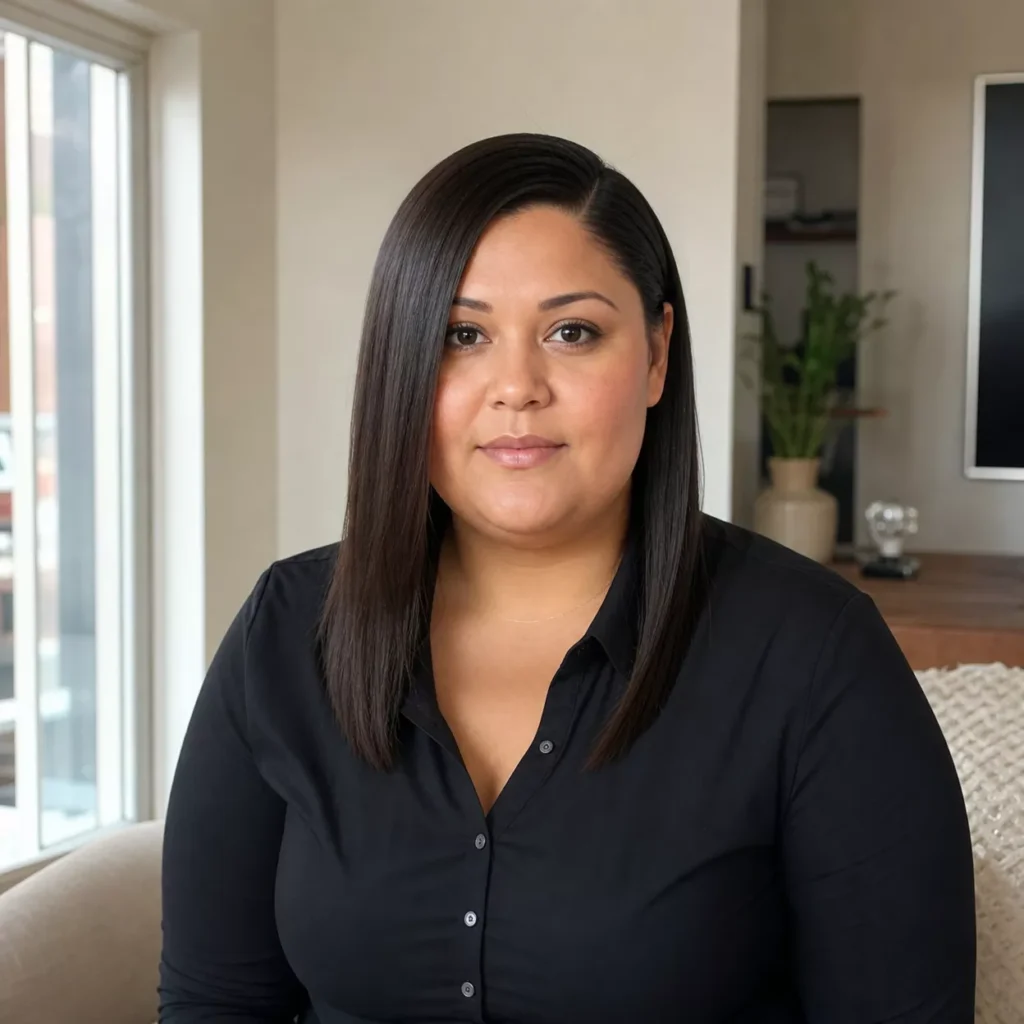
Smooth, close-lying hair tends to sit flat at the crown, so the top is the part to watch. With no layers to lift it, a strong side part can leave the roots looking pressed down. A little root lift before blow-drying gives the part some shape, and a lightweight serum on damp hair keeps the surface glossy.
This is a one-length cut with minimal internal layering, so the perimeter does most of the work and split ends show more than they would on a textured cut. It suits straight hair, or hair you are willing to straighten. You might say: “A one-length cut with minimal internal layering and a deep side part.” Trims about every 8 weeks keep the line clean.
Soft Waves with Center Part and Long Layers

Waves add width through the mid-lengths, so the pattern matters. Larger, looser waves tend to sit closer to the head than tight ones, and where the waves begin, around the cheeks or lower, changes how wide the outline reads. A center part is symmetrical, which puts the emphasis on the middle of the face and keeps the layers even on both sides.
Waves do not always mean less heat. Natural waves usually need product and diffusing, while straighter hair needs a wand. Curling alternating sections in different directions gives a less uniform pattern. Ask for the front pieces to be left slightly longer, and plan trims every 8 to 10 weeks.
Medium Shag with Curtain Bangs
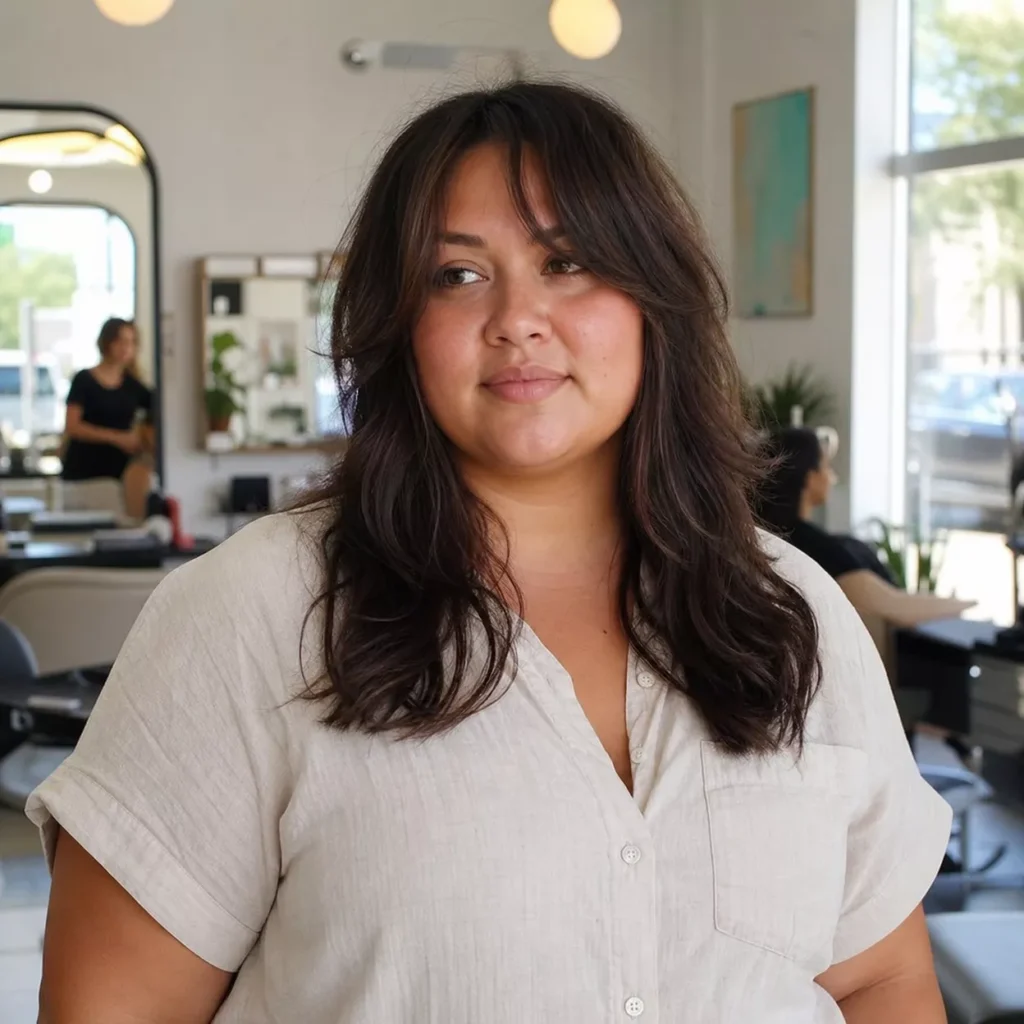
Shag layers remove weight, so density decides how this cut behaves. On medium to thick hair the layers have plenty to work with. On fine hair, too many short layers can leave the ends sparse. Layers that start around the chin and work downward keep most of the added texture below the widest part of the cheeks.
Wavy or curly hair often holds the shape with a texturizing cream, scrunching and an air-dry or a low-heat diffuse. The curtain bangs blend into the front layers, so how they are cut matters. Trim every 6 to 8 weeks to stop the layers from growing into a shapeless mass.
If you love textured cuts, don’t miss our Medium Shag Haircuts guide.
Medium Blowout with Volume at Crown
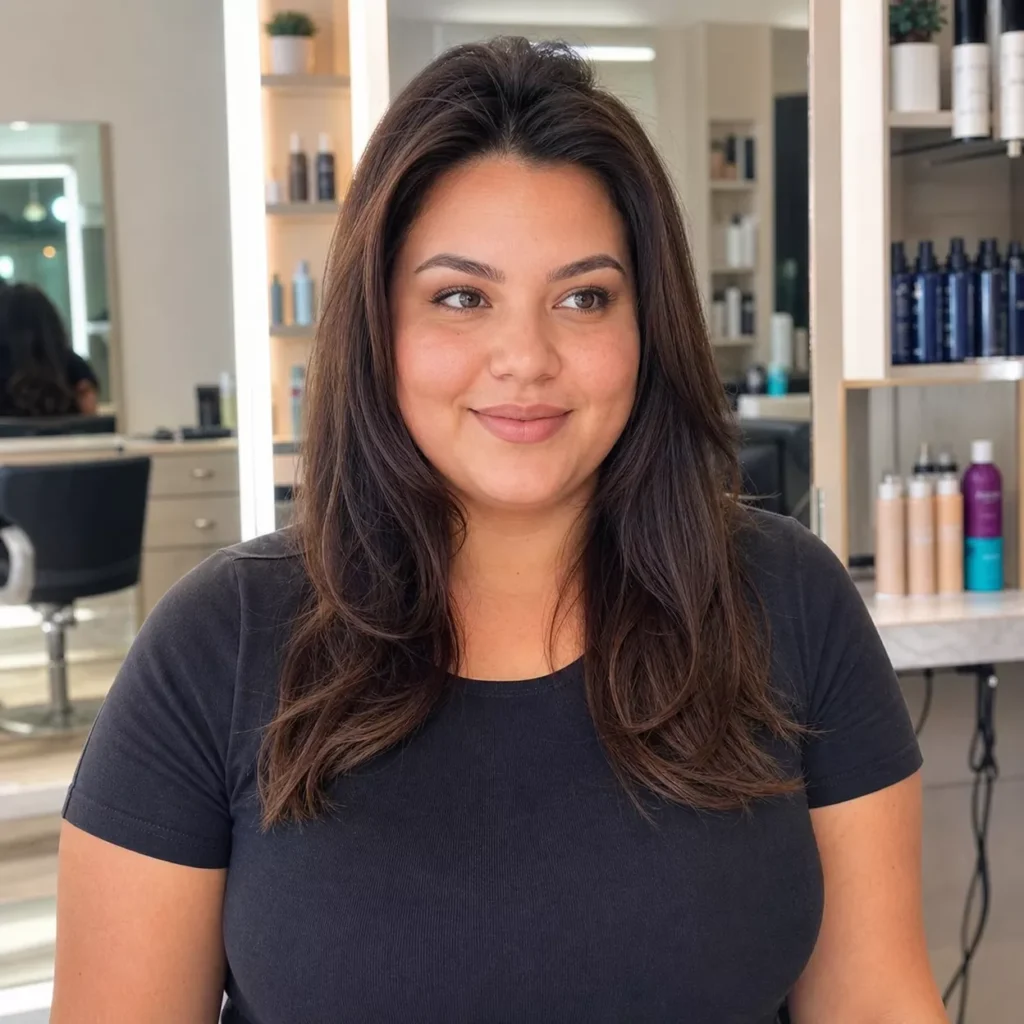
This is a root-direction style. Crown height comes from lifting the roots upward while directing heat downward along the length, and keeping the sides smooth so they do not add width. Thick, straight hair holds it more easily than fine hair, which may need a root spray.
The lift softens over a day or two, and dry shampoo can refresh it between washes. Lift at the crown makes the overall silhouette taller, which some people prefer. The cut needs layers concentrated at the crown and kept smooth at the sides, with a trim about every 8 weeks.
Angled Bob at Collarbone Length
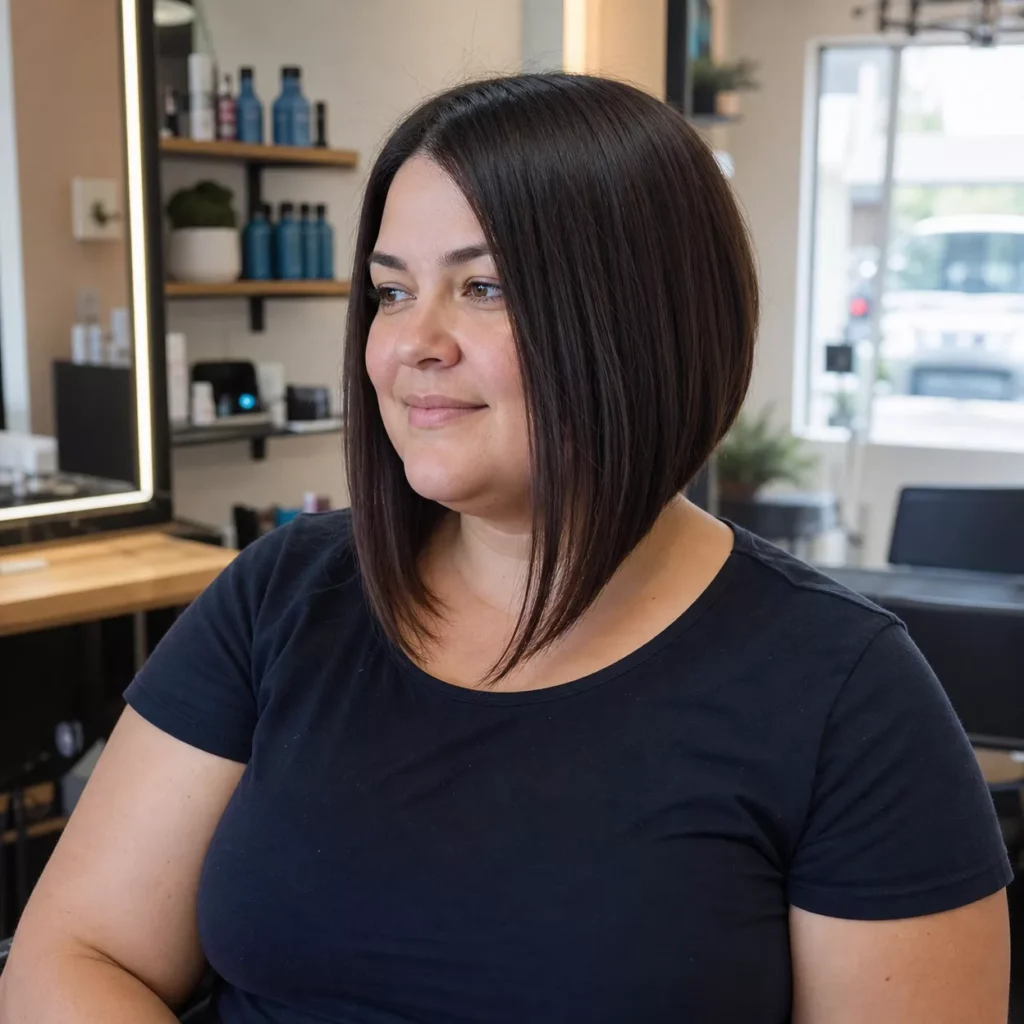
An angled bob is graduated: shorter at the back and longer toward the front, so the front pieces make a forward line down each side of the face. How steep the angle is decides the look. A subtle angle grows out gently, while a steep one changes quickly as the front lengthens and the back grows.
It is a precise cut and usually needs reshaping about every 6 weeks to keep its line. It is easiest to style straight with a flat iron for a clean edge. Ask how steep the angle will be, and how it will look by week five: “An angled bob, shortest at the back and gradually longer toward the front, ending at the collarbone.”
Medium Cut with Straight Wispy Bangs
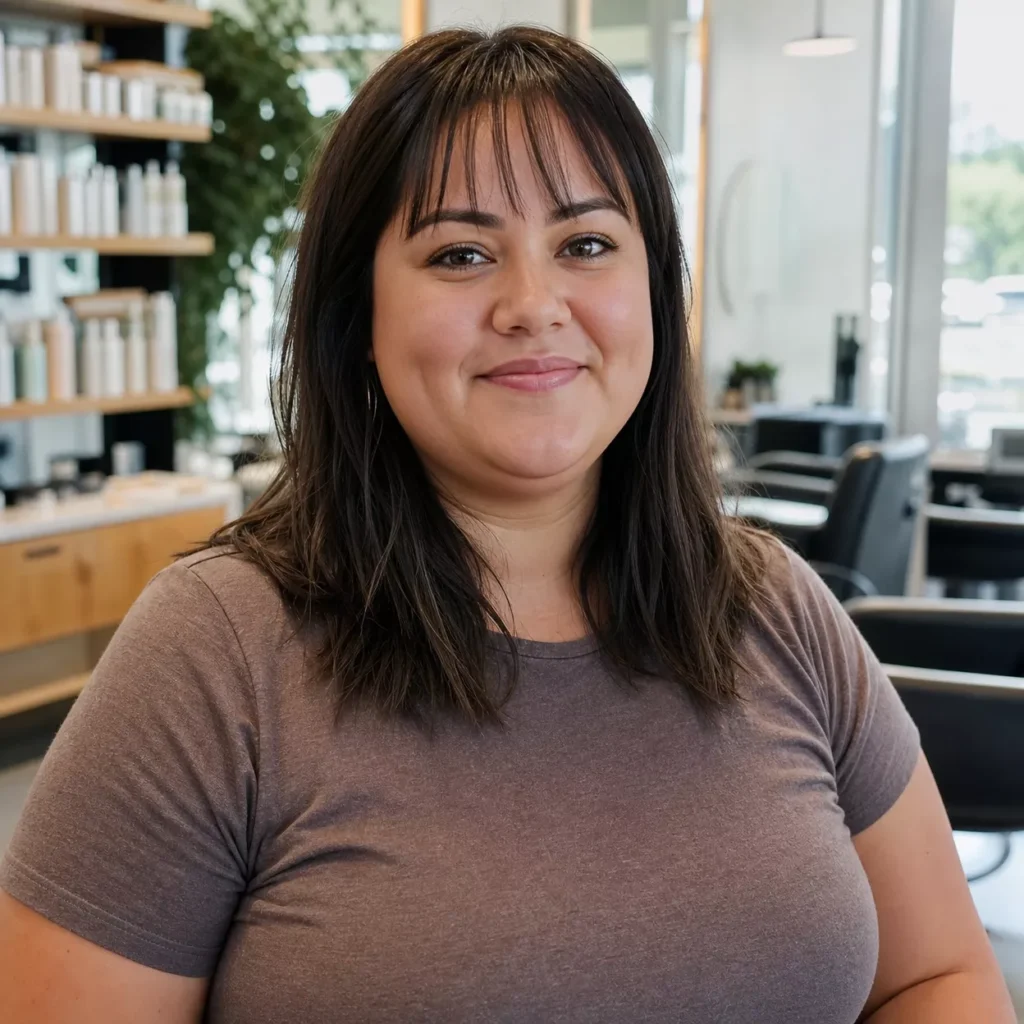
Two things decide how wispy bangs behave: your hairline and any cowlick. A cowlick at the front can make bangs part or lift on their own, and a low or very high hairline changes how much forehead they cover. A stylist can judge that on dry hair better than a photo can.
Wispy means lighter than blunt, so you can see through the fringe, but on thin hair that can read as sparse. Point cutting keeps the ends from turning blunt. Expect a bang trim about every three weeks and a full cut every 8 to 10 weeks.
Pro Tip: For round faces with fuller figures, always ask for layers that start at or below the chin rather than at the cheekbones. Layers beginning at the cheekbones add width exactly where a round face doesn’t need it. Chin-level layers create length and movement below the widest point of the face, producing a slimming effect from every angle.
Long Bob with Beach Waves and Side Part

The main question is where the waves come from.
- Natural bend: salt spray on damp hair, a scrunch and an air-dry can be enough.
- Straight hair: the waves usually come from an iron or wand and a hold spray, which is a heat routine, not wash-and-go.
The side part moves more hair to one side and adds asymmetry. Humidity can relax the waves through the day, so a slightly firmer hold helps. Texturized ends keep the perimeter from looking heavy, and trims every 8 to 10 weeks keep the length in shape.
Layered Medium Cut with Highlights

Placement and condition are the two things to settle. Highlights concentrated at the front pieces put contrast near the center of the face, and they take less time and money than color through the whole head. Lightening affects condition, and dry ends can look thinner, so ask your colorist how much lift your hair can take.
Ask for the highlights to be blended with the base color so regrowth does not show a hard line: “Face-framing highlights concentrated at the front layers, blended with the base color.” Plan on a cut about every 10 weeks and color every 8 to 12 weeks, depending on contrast and regrowth.
Soft Shag at Shoulder Length
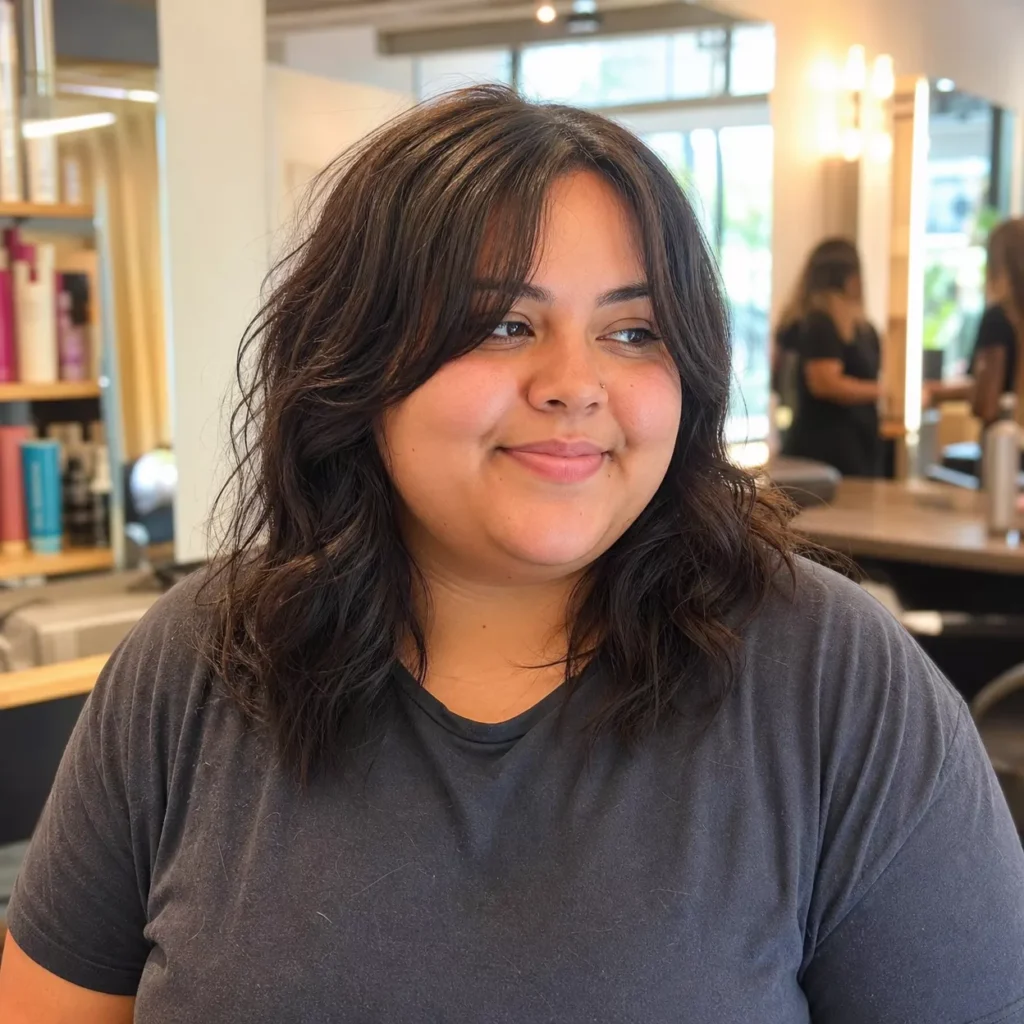
This one is about bulk distribution. Thick or curly hair can widen toward the ends when the weight sits at the bottom, and a shag removes weight through layering. Heavier layering through the mid-lengths, with the crown kept relatively smooth, moves bulk away from the cheeks.
Scrunching a texturizing cream into the layers below the chin gives definition, and wavy to curly hair with fine to medium density usually holds the shape well. Trim about every 8 weeks.
Medium Cut with Deep Side Part and Waves

A deep part holds best when it follows the direction your hair already wants to fall. Forcing it to the opposite side can mean it flips back within hours, so check your natural part before you commit. The waves are built by curling in sections away from the face and brushing out gently for a soft finish, not defined ringlets.
It is closer to an occasion style than an everyday one, since it takes time to set and hold. It can work on a range of textures if you are prepared to do the styling, and layers that support a swept, waved finish help it keep its shape.
Layered Medium Bob for Double Chin
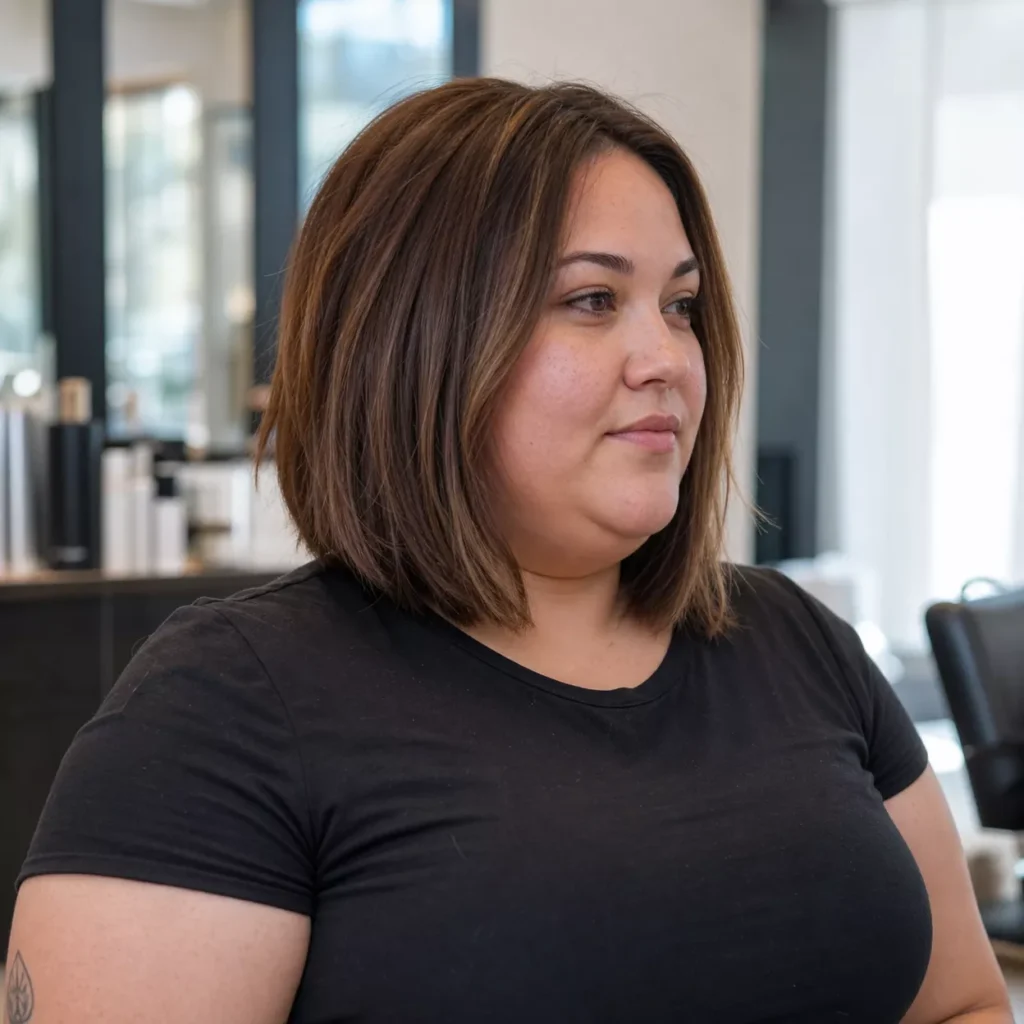
If you prefer not to have the haircut end directly at the jawline, a bob that falls a little below the chin gives you another option. The perimeter ends past the jaw, so the outline does not stop right there, and layers through the mid-lengths keep the hair from clinging to the neck.
Length is worth being precise about. Around two to three inches below the chin is a common target, though it varies with your hair. Much longer, and the ends may start flipping against the shoulders. How you tuck your hair behind the ears also changes how much jaw shows, so leave one or both sides loose depending on preference. You might ask for: “A layered bob ending two to three inches below the chin, with movement through the mid-lengths.” Trim every 6 to 8 weeks to hold the length.
Medium Length with Straight Layers and Side Sweep

Straight hair shows every layer clearly, so this cut depends on how well the layers blend. Uneven steps are visible, and blended layers keep the surface smooth. The perimeter is the visible edge, and layers that reach the bottom remove weight from it, so heavy texturizing can leave the ends looking thin.
The side sweep at the front adds a diagonal line. Flat-iron in small sections, then sweep the front pieces to one side while still warm. It suits straight, fine to medium hair, with trims about every 8 weeks.
Wavy Medium Length with Volume Away from Face

Waves expand as they dry, and where they expand matters. At the crown and sides they add width, and at the ends they add fullness lower down. Layers concentrated at the ends with minimal layering near the roots keep most of the expansion in the lower part of the length.
Diffusing on low heat and scrunching upward from the ends supports that direction without adding crown volume. Thick hair expands more than fine hair, and humidity increases it. You can ask for: “Layers concentrated at the ends, with minimal layering near the roots.” Trim every 8 to 10 weeks.
Medium Cut with Long Curtain Bangs
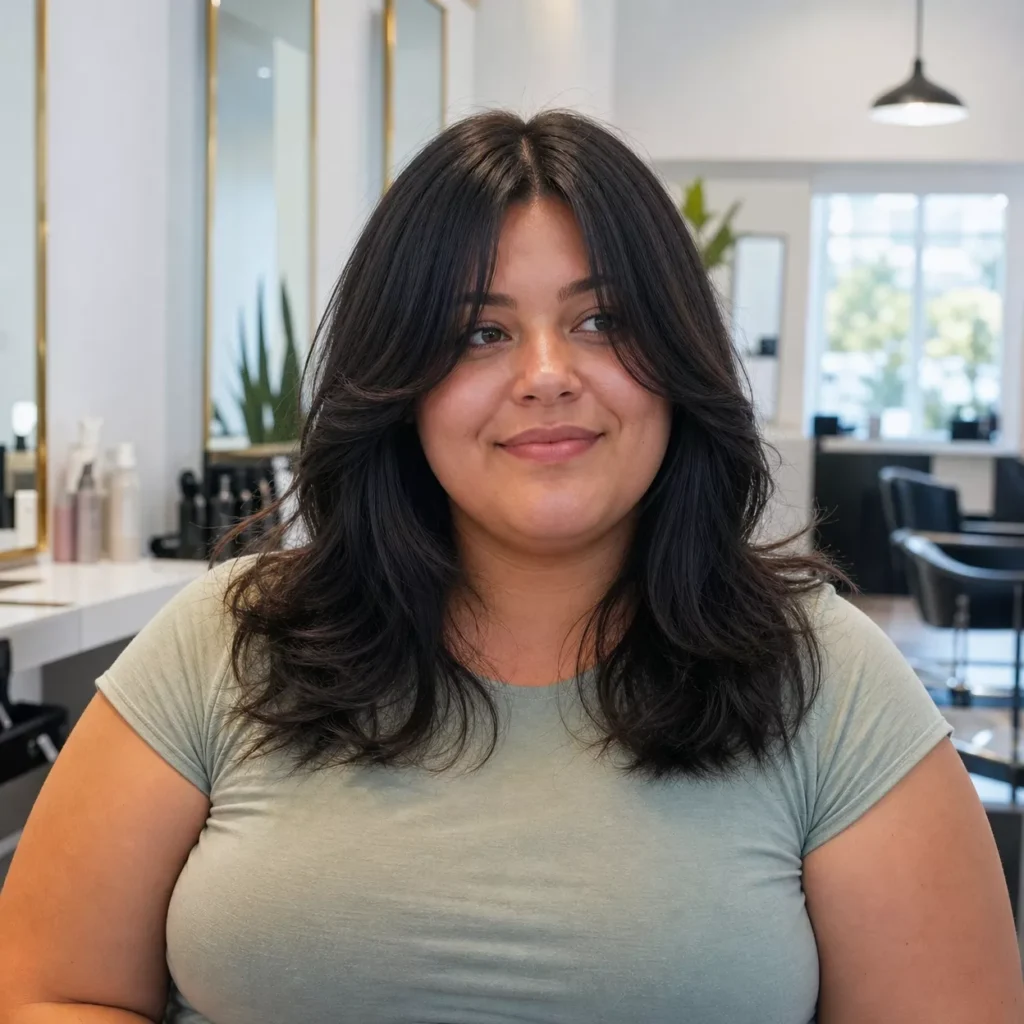
Hairline and grow-out are the two things to consider. Long curtain bangs part in the center and sweep past the temples, so the shape of your hairline affects where the split falls. A widow’s peak or a high hairline can change the angle. Curls can also shrink bangs, so length is best judged on dry hair.
They blend into layers at cheekbone length, so as they grow they turn into face-framing pieces, and pinning or tucking them covers the in-between stage. A trim about every four weeks keeps them from reaching the eyes, and blow-drying around a barrel brush trains them back from the part.
Sleek Straight Medium Cut with Layers
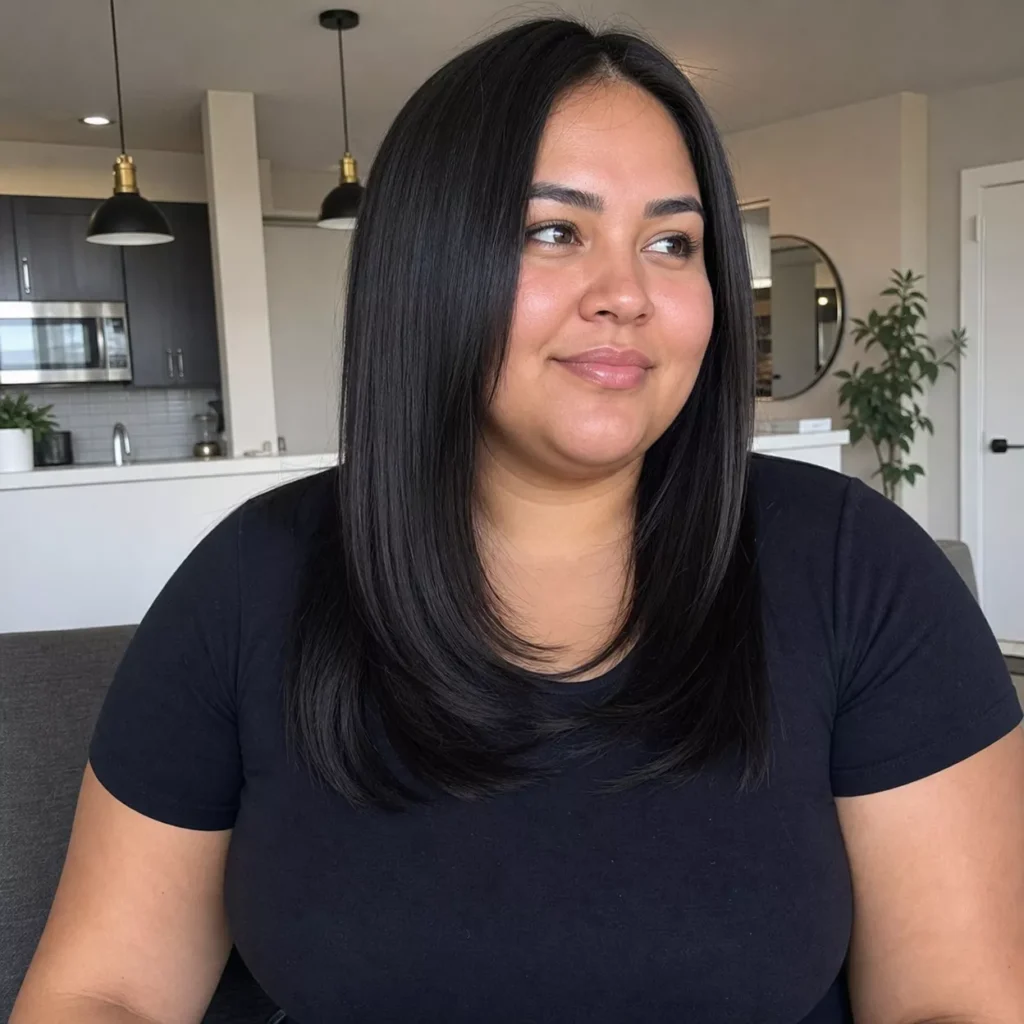
The layers here are internal. They are cut inside the shape to remove weight without disturbing the smooth surface, so the hair looks straight and glossy without looking stiff. Heavy texturizing works against that, since it roughens the surface and can thin the ends.
This is a heat routine. Blow-dry with a large round brush, sweeping downward and outward, and use a heat protectant. Humidity can undo the smoothness, so an anti-humidity product may be worth having. A useful request: “A one-length base with soft internal layering, no heavy texturizing.” Trim about every 8 weeks.
Medium Length with Low Side Bun

A side bun is a styling technique, not a cut, so grip and length are what matter. You need enough length to gather to one side, and shoulder-length hair may only manage a twist or a small bun. Fine, smooth hair tends to slide, so backcombing lightly at the crown or using dry shampoo before gathering gives it something to hold, and a few hidden bobby pins secure it through an evening.
Shorter face-framing layers may work loose, so expect a few pieces to escape. Some people like that, and others pin them back. There is nothing specific to ask a stylist for, though face-framing layers can make the bun easier to style if you do not have them. Trims every 10 to 12 weeks keep the ends healthy enough to smooth.
How to Choose the Right Style for You
Three questions narrow it down.
First, how much daily styling do you want to do? Sleek, straight styles typically depend on heat and time. Wavy or shaggy cuts can work with your natural texture, though they may need products and diffusing.
Second, what is your hair doing on its own now? Fine hair tends to do better with lighter layering, since removing weight can thin the ends. Thick or curly hair may benefit from layers that remove bulk, as in the shag or long layers.
Third, look at your actual week. If most of your styling happens before work, check the upkeep of each cut: bangs and an angled bob need frequent shaping, and a sleek cut needs heat. An occasion style such as the side bun only matters on the days you wear it.
When a Medium-Length Cut Doesn’t Work as Expected
- Layers beginning at the widest part of the cheeks can add visual width.
- Heavy volume at the sides can make the silhouette feel broader.
- A shoulder-length cut can flip outward depending on where it meets the shoulders.
- Very fine hair can lose too much weight if it is heavily layered.
- Curly or wavy hair can expand more than the reference photo suggests.
- A precise angled bob can require more frequent shaping than expected.
- Copying a styled photo exactly may not work, since your texture and growth pattern differ from the model’s.
Hair Care and Maintenance
Healthy hair tends to hold a cut better than damaged, over-processed hair. A regular conditioning treatment can help layered and shaggy styles keep their texture, especially if you use heat tools often. Apply heat protectant before blow-drying or straightening, since repeated heat can leave ends looking thin and frizzy, which affects the smooth lines many of these cuts rely on.
If you color your hair, a color-safe shampoo can help face-framing highlights last between visits. For wavy or curly textures, a microfiber towel can reduce frizz for some people and preserve the wave pattern.
Humidity affects straight, sleek styles more than textured ones, so an anti-humidity spray may be worth keeping on hand in summer. In drier winter months, textured and wavy styles may need extra leave-in conditioner to reduce static and flyaways.
What to Bring to Your Consultation
Stylists work faster when you bring more than a single photo. Along with a reference image, say what you want the cut to do: keep volume away from the sides, avoid ending at the jawline, stay off the shoulders, or hold its shape with little styling. It also helps to be honest about your routine. A cut that looks best with 20 minutes of blow-drying is a poor fit if you air-dry most mornings.
Bring a photo of your hair on an ordinary day as well. It shows your natural texture and growth pattern more accurately than one polished picture does.
Frequently Asked Questions
Final Thoughts
There isn’t one medium-length cut that suits every round face or every body shape. What tends to matter more are practical things: where the layers begin, where the volume sits, where the ends land around the shoulders, how your hair grows and how much time you will spend on it.
Save two or three photos rather than choosing one immediately. When you see your stylist, explain what you like about each, whether that is the length, the part, the layers, the bangs or the texture, because that tells them more than the photograph alone.