26 Shaggy Lob Haircuts for Women Over 50 and How to Find Your Version
Shaggy lobs look simple in photos and turn out to be surprisingly hard to recreate. Part of the reason is the name itself. “Shaggy lob” can describe a nearly blunt collarbone cut with a little texture at the ends, or a heavily layered shape that’s closer to a full shag. It can be razored or scissor-cut, barely layered or layered all over, worn with bangs or without.
The other part is the hair. Thick, dense hair and fine hair respond very differently to the same layers, and fine strands aren’t the same as low-density hair. Waves and curls change both the visible length and where the layers land. A cut that looks undone and easy in a reference photo may depend on a blowout, a wand, or a texture spray the caption never mentions.
What usually separates a shaggy lob that works from one that doesn’t is a handful of decisions: how much weight is removed, what happens at the perimeter, how short the crown layers go, whether there’s a fringe to maintain. Color can make texture easier to see, but it doesn’t create density. And being over 50 isn’t the deciding factor. Your hair’s density, texture, and growth pattern, and how much styling you’ll actually do, matter far more.
The 26 versions below explain what makes each one behave differently, and what to look for before choosing it.
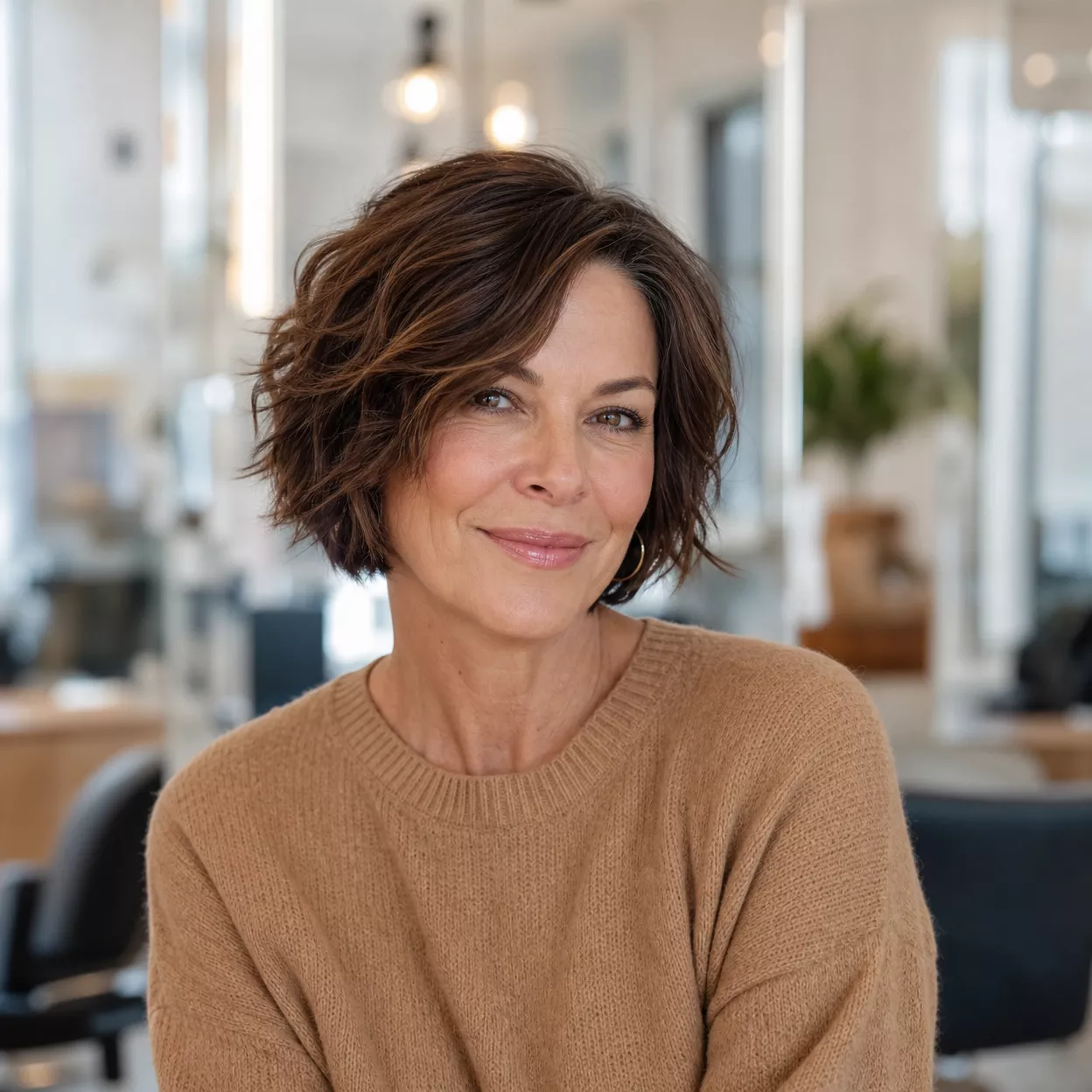
Classic Textured Shaggy Lob
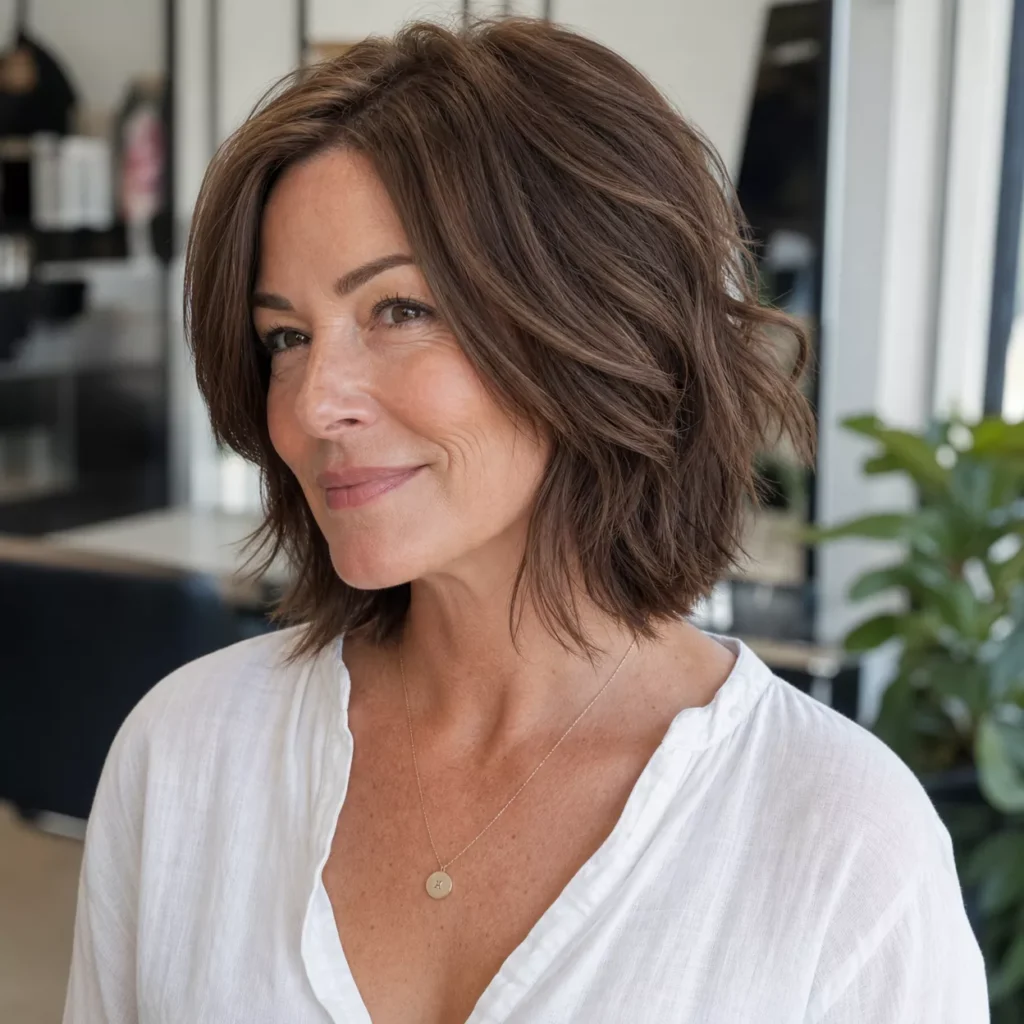
Start here, because most of the other versions are adjustments to this one. The length sits just above the collarbone, the layers are visible but not extreme, and the ends are broken up so the perimeter reads textured rather than blunt. In photos, that texture often comes from point-cutting or a razor, though the tool matters less than how much is taken out. On hair with enough density, broken ends move nicely. On fine or low-density hair, heavily textured ends can look see-through, so it’s worth asking for more weight to stay at the bottom edge.
Shaggy Lob with Curtain Bangs
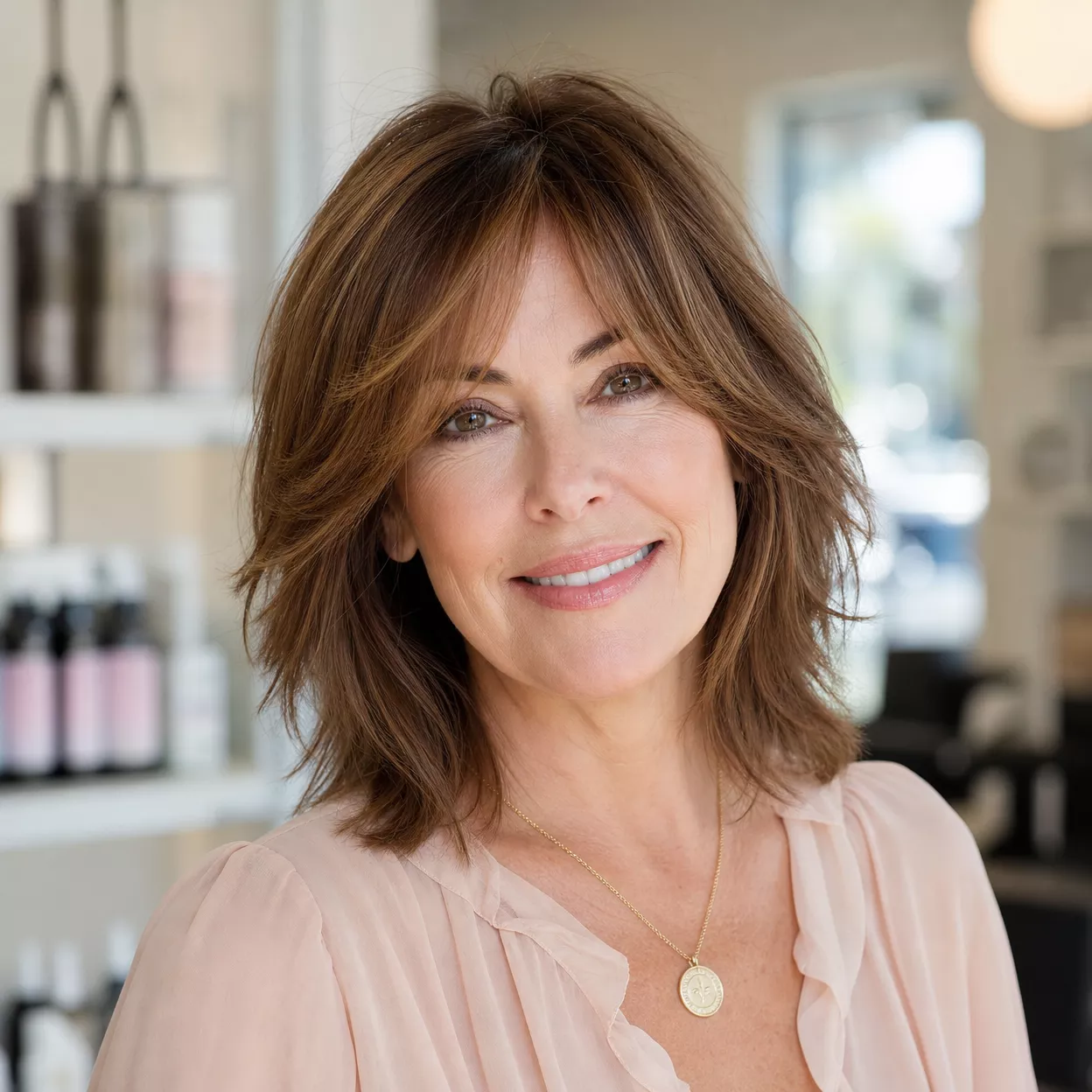
Curtain bangs turn the front of the shag into a frame: a center-parted fringe that sweeps outward and joins the face-framing layers. The fringe needs enough hair at the hairline to look deliberate. Fine hair that’s still dense usually supplies that; low-density hair may need the fringe taken from a smaller, deeper section so it doesn’t look thin. Most curtain bangs need a minute or two with a brush or dryer to open properly, and they’ll want a trim before the rest of the lob does. Our guide to curtain bang hairstyles covers fringe placement in more detail.
Layered Shaggy Lob with Face Framing
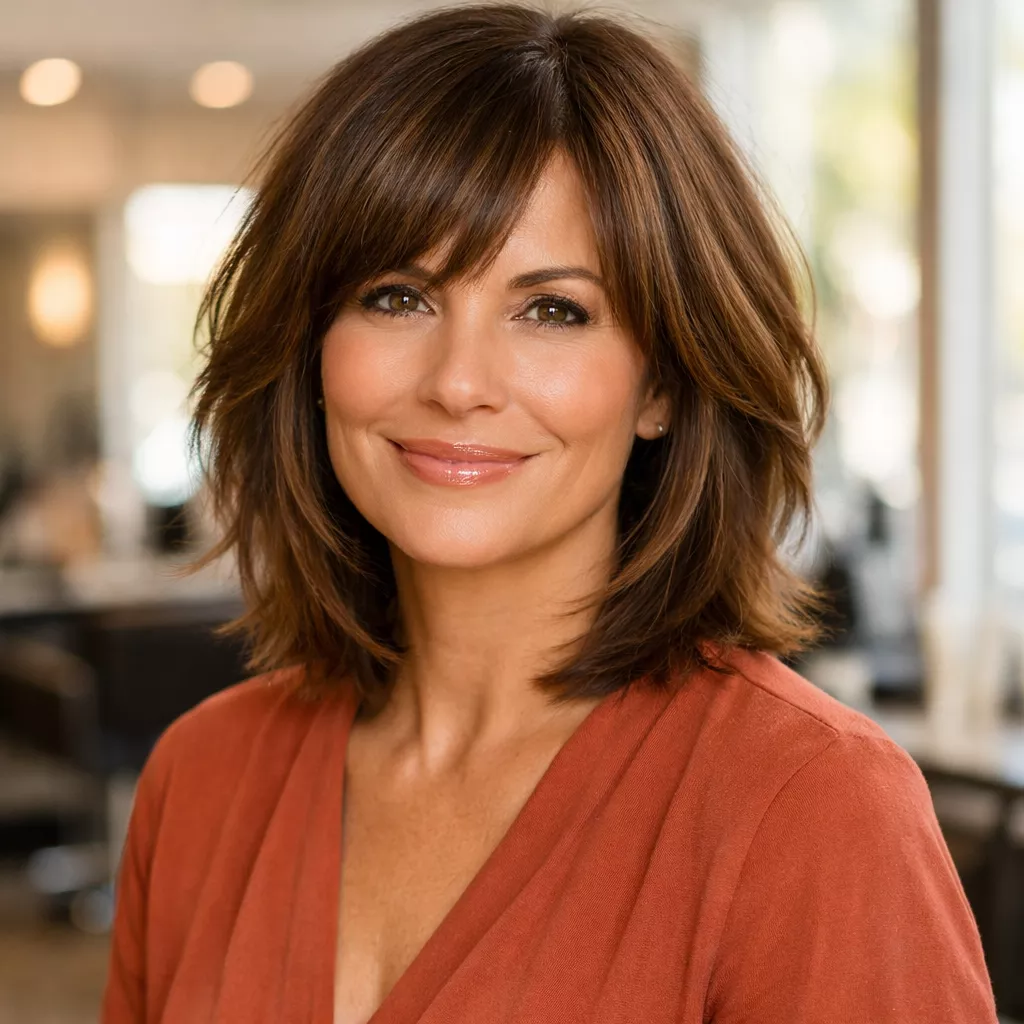
Here the shag layering is concentrated around the face, while the back stays longer and heavier. Where the shortest front layer starts is the main decision. Starting at the cheekbone draws attention to the upper face; starting near the jaw keeps the frame lower and softer. Because the back keeps more of its length, this can feel like a smaller change than a full shag, which suits anyone trying layers for the first time.
Silver Shaggy Lob
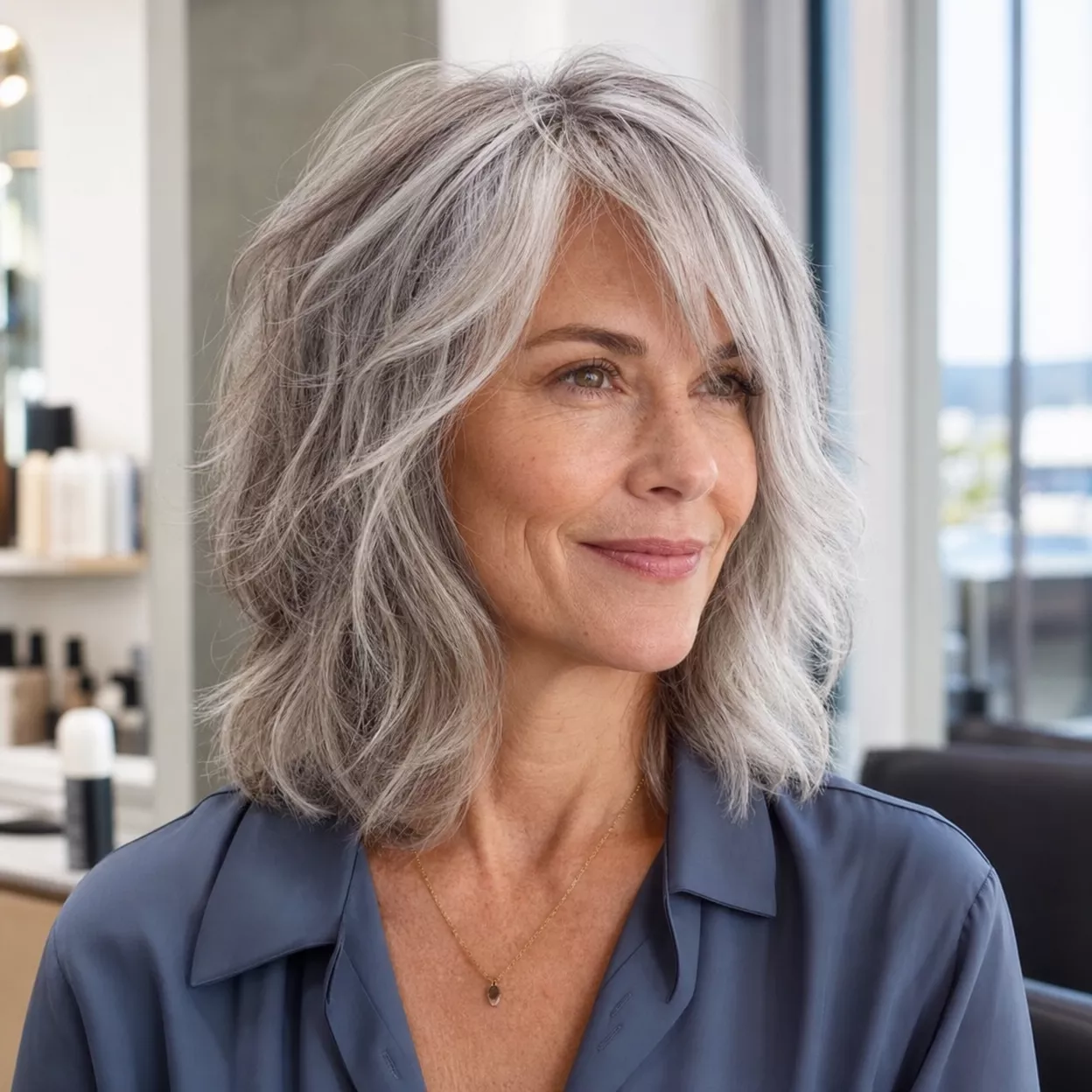
Silver or salt-and-pepper hair makes texture easy to see, since lighter strands pick out every piece and layer edge. That’s the color doing visual work; the same cut on darker hair would look smoother. Some people also find their gray hair springier or drier than it used to be, though that varies widely. If yours resists lying flat, a light texturizing or smoothing product helps the shag read as intentional rather than frizzy.
Shaggy Lob with Wispy Bangs
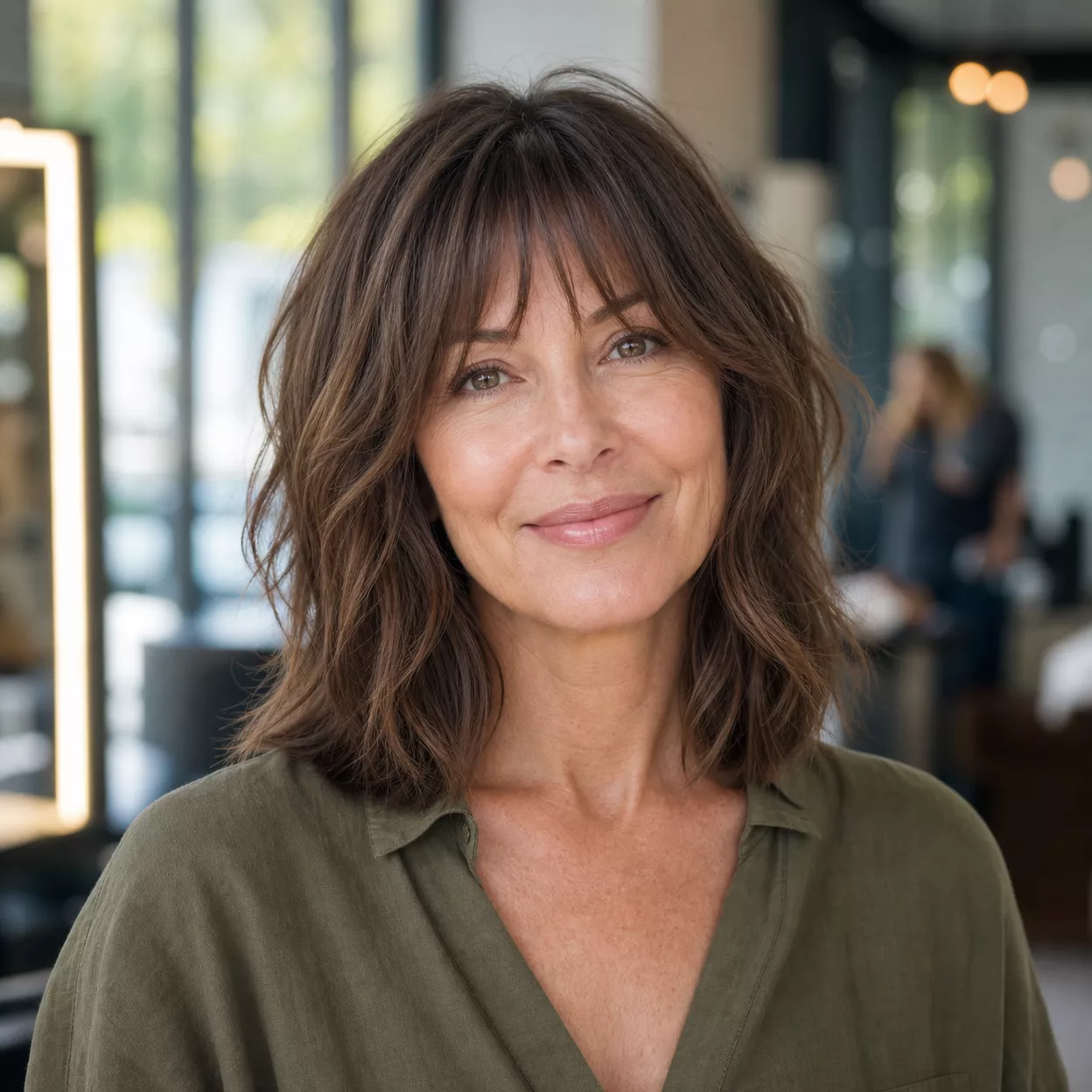
Compared with curtain bangs, a wispy fringe sits lower and more evenly across the forehead, cut light enough that skin shows through. That lightness blends naturally into a shag’s broken texture. It still needs some density at the front, or the fringe can look stringy, and humidity tends to separate wispy bangs more than heavier ones. If you want some forehead coverage without a solid line, this is the gentler option, though it will need trimming between full cuts.
Sandy Blonde Shaggy Lob
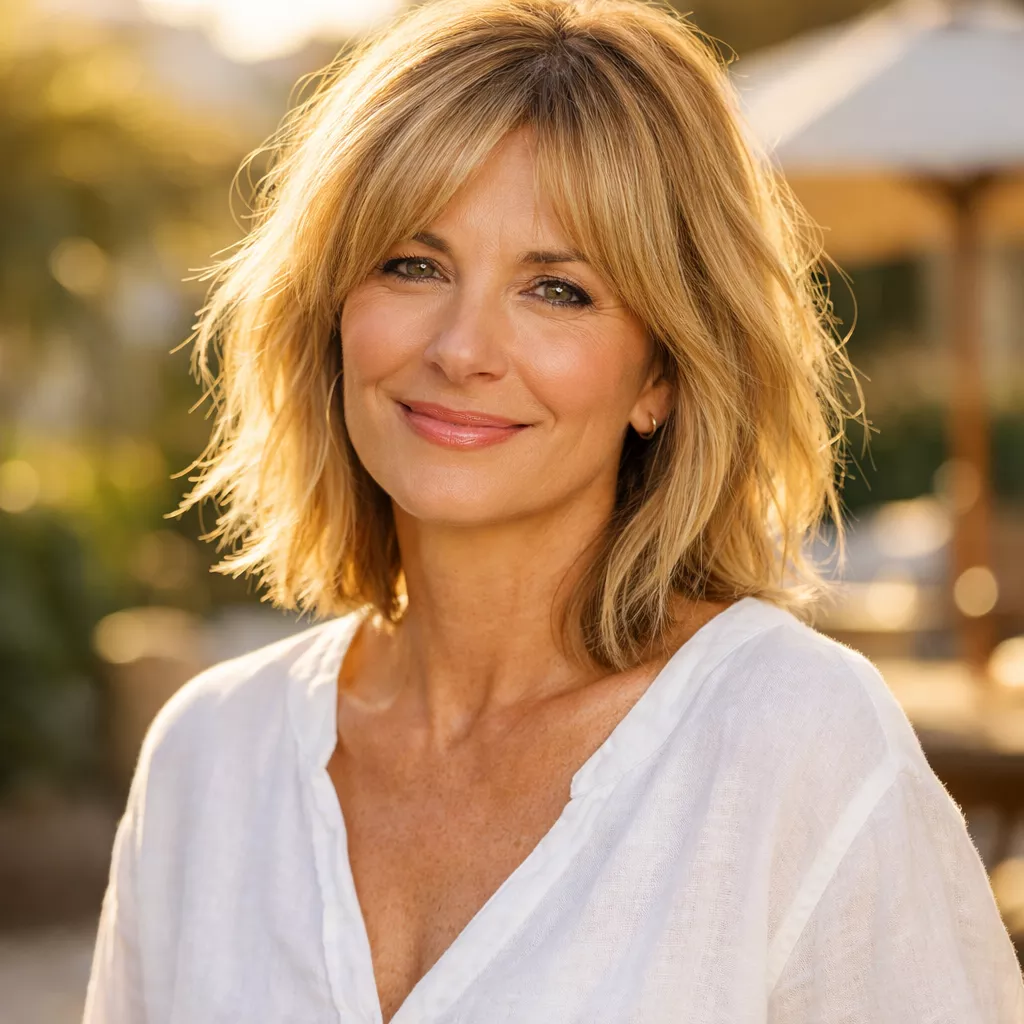
Sandy blonde is a beige, slightly warm blonde, and on a shag it does something useful: lighter strands catch the light at the ends of each layer, so the texture reads more clearly than it would on a single dark shade. Again, that’s color, not the cut. If you’re moving away from darker dye, a sandy blonde can also help regrowth and incoming gray blend more gently. How much lightening it takes depends on where your hair starts.
Shaggy Lob with Side Swept Bangs
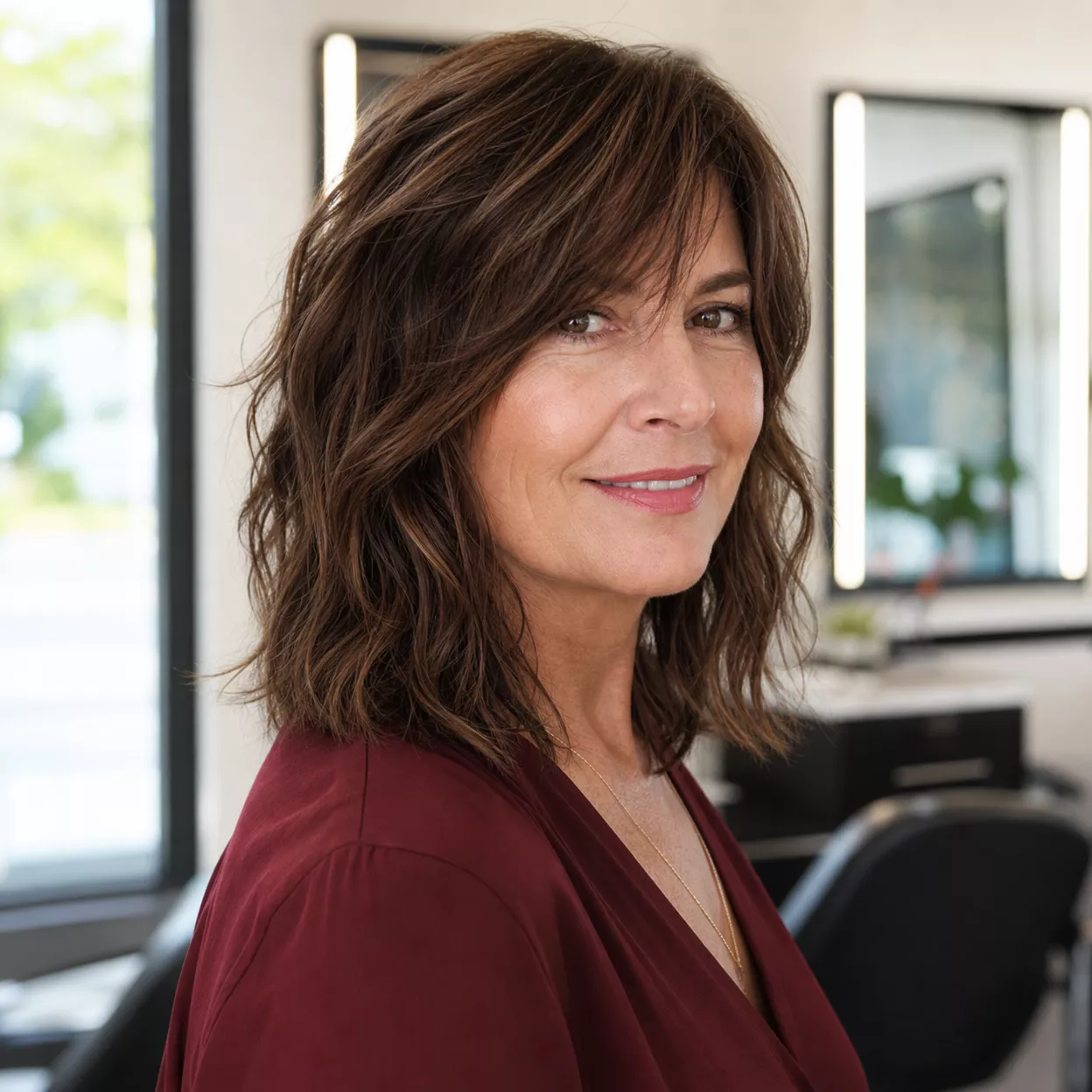
A side-swept fringe changes the direction of the whole cut. Instead of opening at the center, the front sweeps across one side, adding asymmetry and a diagonal line near the face. Whether it stays put depends on your natural part; a fringe swept against your growth pattern may keep springing back toward center. This version is also forgiving during grow-out, since a longer side fringe simply sweeps further.
Choppy Shaggy Lob for Thick Hair
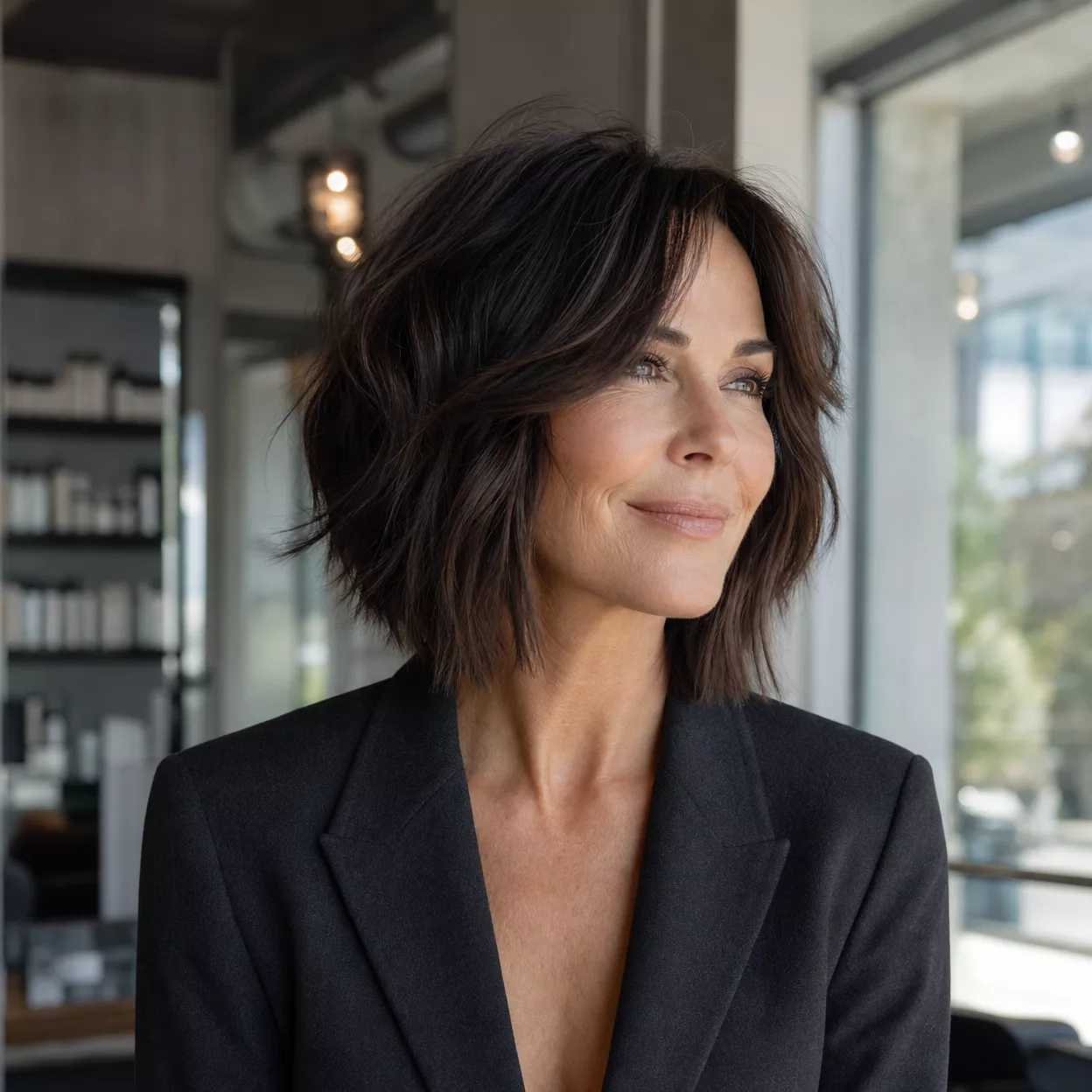
Thick hair has the opposite problem from fine hair: too much weight rather than too little. In a lob, that weight can make the shape hang flat at the top and heavy at the bottom. Choppy layers combined with some internal weight removal let the hair move. The risk is overcorrecting. Take too much from the crown and thick hair can expand upward and outward instead of sitting neatly. The goal is lighter, not wider.v
Wavy Shaggy Lob

Shaggy layering often suits natural waves, because removing some of the weight in the lengths lets the bends form instead of pulling straight. The wave pattern still matters. Hair that waves evenly can air-dry into a convincing shag. Hair that bends at the back but stays straight near the face may need a few passes with a wand to look consistent. A curl cream or mousse can help define the waves, but the cut can only work with the wave you already have.
Shaggy Lob with Caramel Highlights
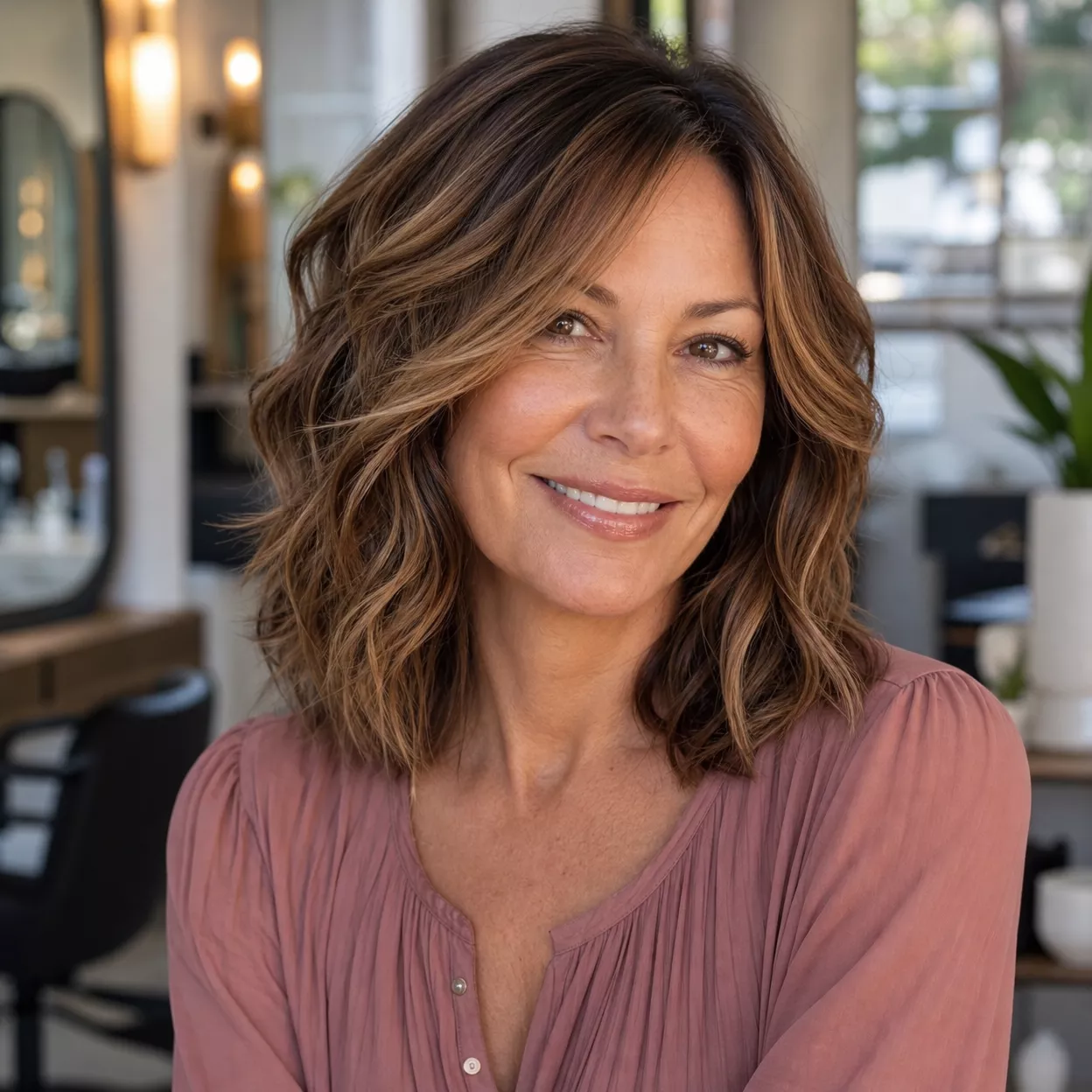
Caramel highlights add warmth and contrast, and placed along the edges of the layers, they make the shag’s structure easier to see. They don’t create layers, and they don’t change how much weight the cut removes. They do add color upkeep: caramel can drift brassy as toner fades, and regrowth shows depending on how close to the root the pieces start. Think of it as two decisions made at the same appointment.
Undone Shaggy Lob for Gray Hair

Where the silver lob above has a fairly smooth texture, this version is deliberately piecey. That separation shows off the variation inside gray hair, where some strands are white, some silver, and some still pigmented. The risk with an undone finish on gray is that it can read as unfinished rather than chosen, so shape still matters. A defined perimeter and a little product to separate the pieces keep it looking intentional.
Shaggy Lob with Blunt Fringe
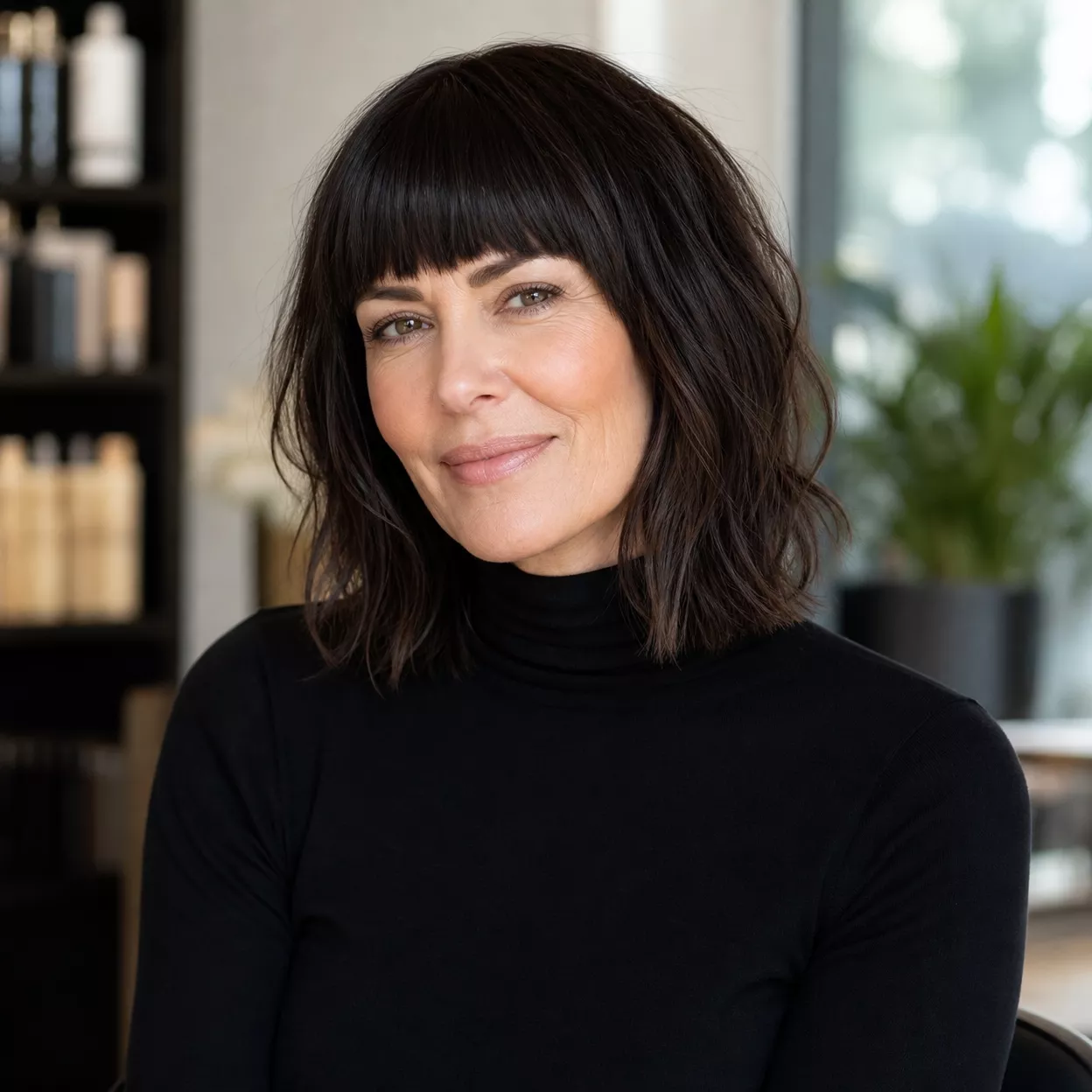
A blunt fringe on a shag sets a solid horizontal line against a broken, textured shape, and that contrast is the point. It’s also the most demanding fringe on this list. Blunt bangs show growth quickly, need regular trims, and can split if there’s a cowlick at the hairline. On dense hair, the fringe may need some internal weight removed so it doesn’t sit heavily on the forehead.
Feathered Shaggy Lob
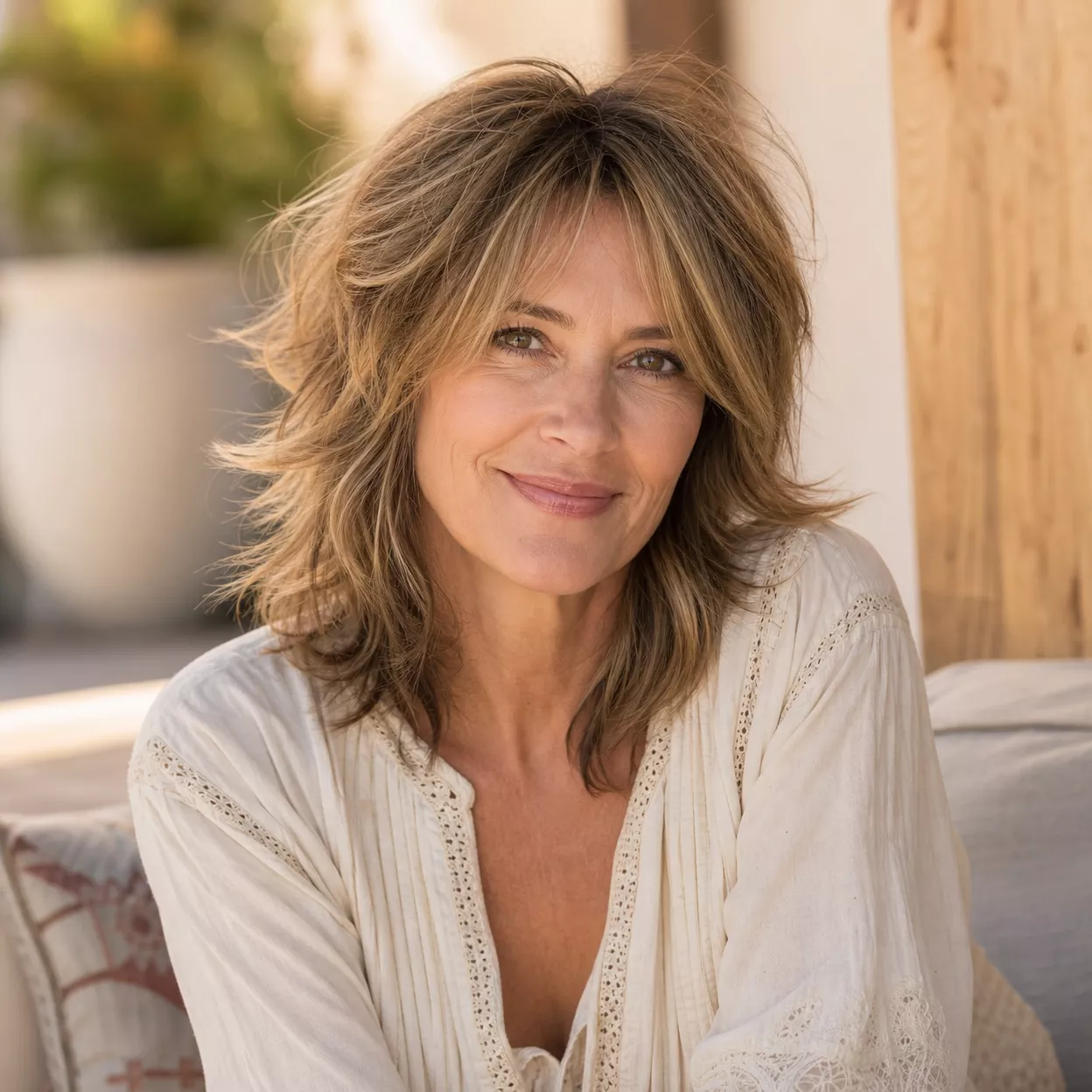
Feathering means the layers are cut to roll outward and back, away from the face, instead of falling straight down. It gives the lob a softer, rolling edge with a 70s feel. On straight hair, that outward flick usually comes from a round brush and rarely appears on its own. On hair with natural wave, feathered layers can air-dry into a gentle outward movement. In a photo, notice whether the ends curl away from the face, since that’s often the styling rather than the cut.
Shaggy Lob on Fine Hair
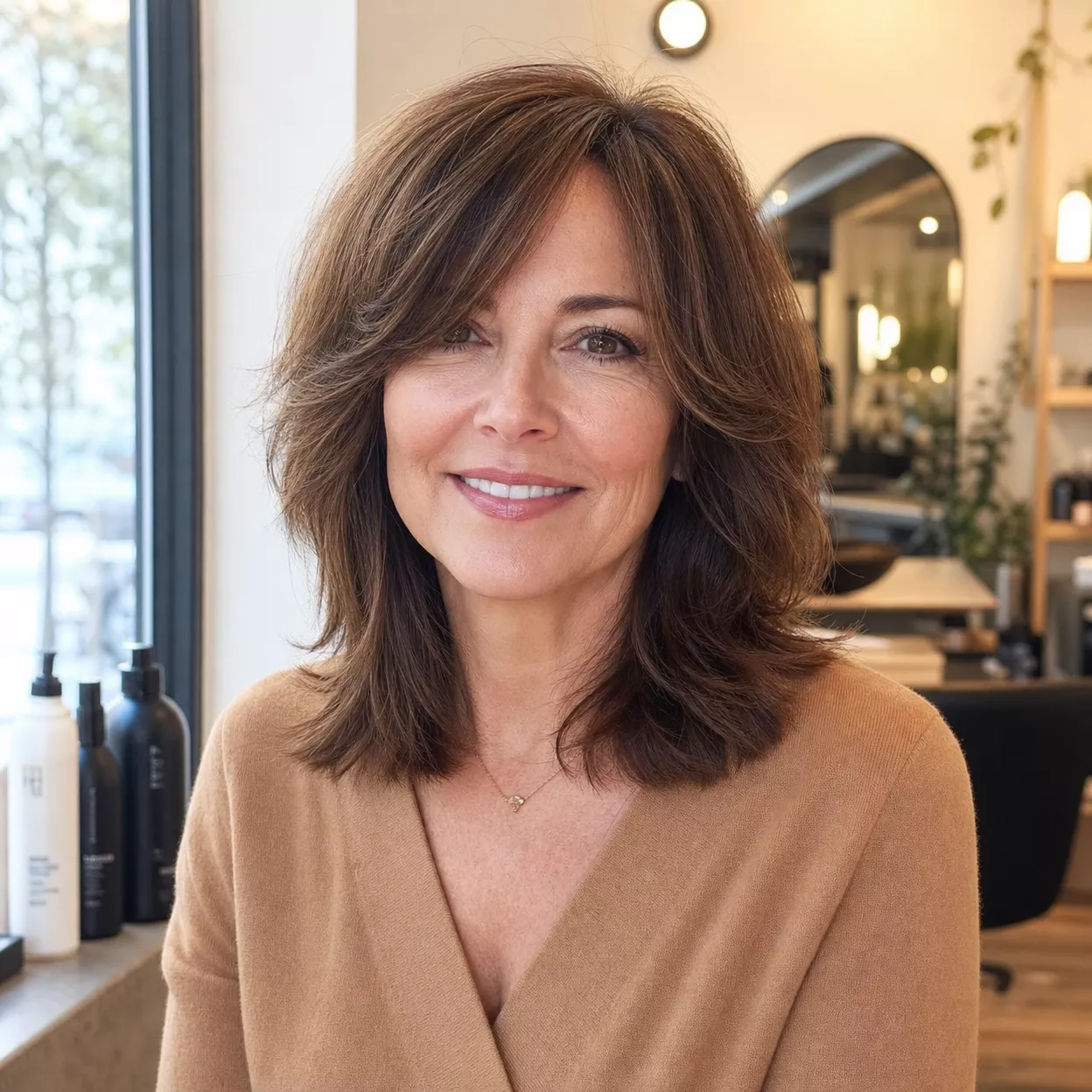
Fine hair needs a careful version of the shag, and fine isn’t the same as thin. Fine describes narrow strands; low density describes fewer strands. Fine hair that’s still dense can carry moderate layering and look fuller, especially with a little crown layering for lift. Fine, low-density hair needs its perimeter protected, because too many layers can leave the ends looking sparse.
A haircut can shift where fullness appears, but it can’t add hair. The aim is placement, not quantity. Our guide to volumizing hairstyles for fine or thin hair goes further into this.
Shaggy Lob with Ash Blonde Color
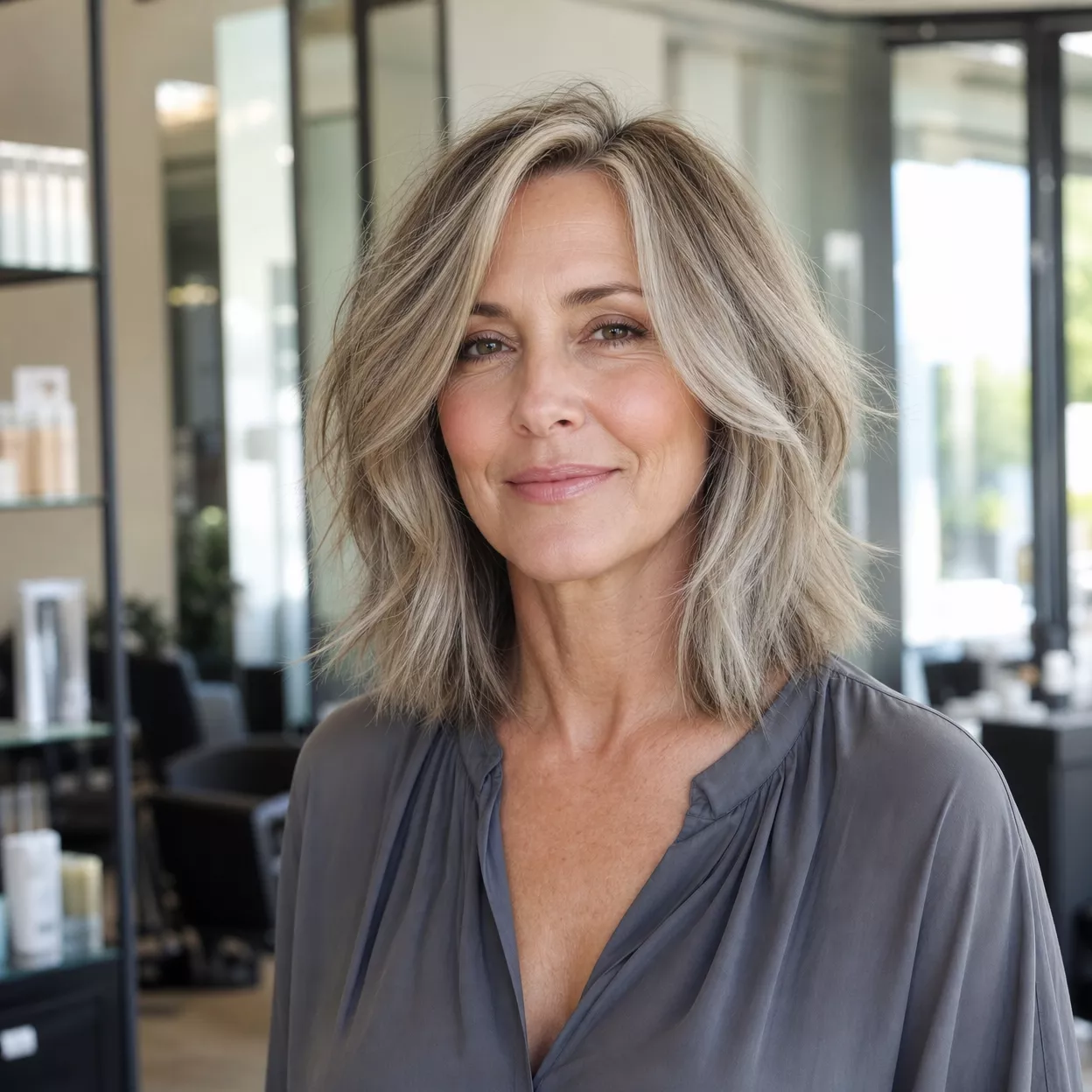
Ash blonde gives the shag a cooler, smokier finish, which emphasizes texture more quietly than warm highlights do. Keeping ash cool usually takes regular toning, since warmth returns as it fades, and reaching it from a darker base takes more lightening than the photo suggests. A shadow root can soften regrowth, but it doesn’t take toning out of the routine.
Shaggy Lob with Root Shadow
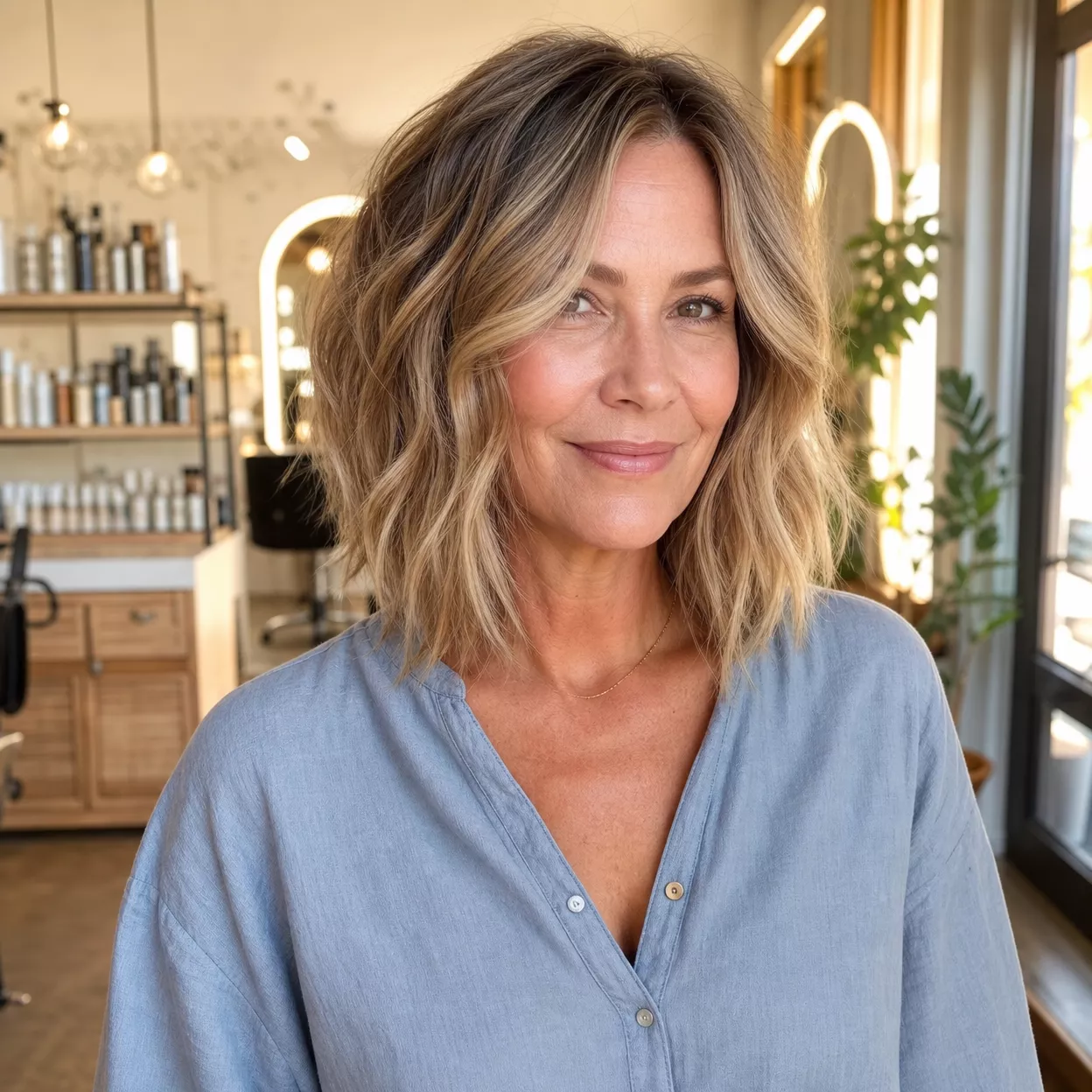
A root shadow keeps the hair near the scalp deeper than the lengths, so regrowth blends in instead of showing a hard line. On a shag, the deeper root can also make the crown layers look slightly fuller, since depth near the scalp reads as density. What it doesn’t do is reduce haircut maintenance. The shag still needs reshaping on its own schedule, and the lighter lengths still need toning.
Tousled Shaggy Lob
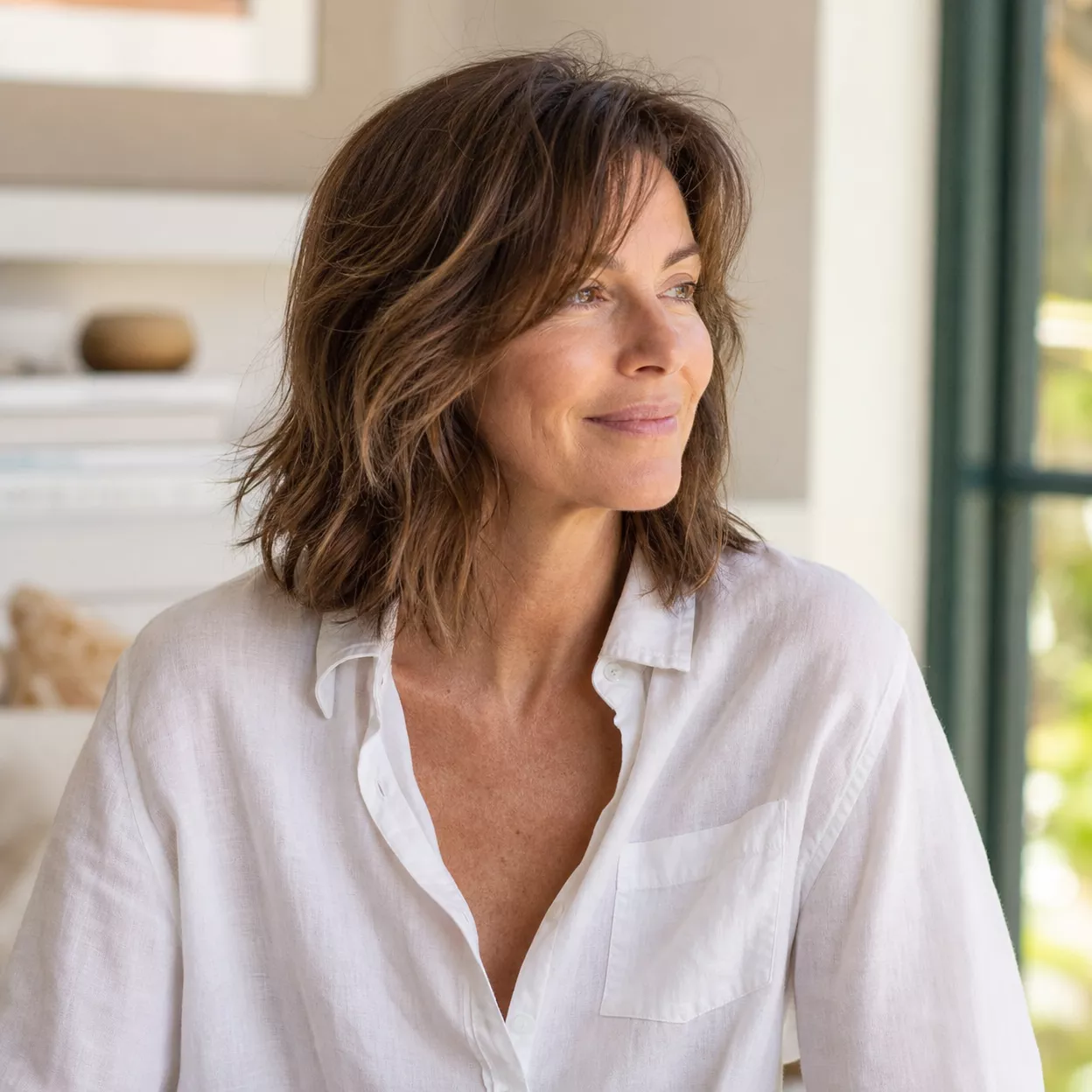
Tousled describes the finish, not a separate cut. The layers are shaped so they separate easily, and the tousled look comes from texture spray, scrunching, or natural wave. On wavy hair, it can come together in minutes. On straight hair, it usually takes more product and possibly a few bends with an iron. Humidity can push it fuller than intended. In reference photos, check whether the separation looks natural or heavily worked.
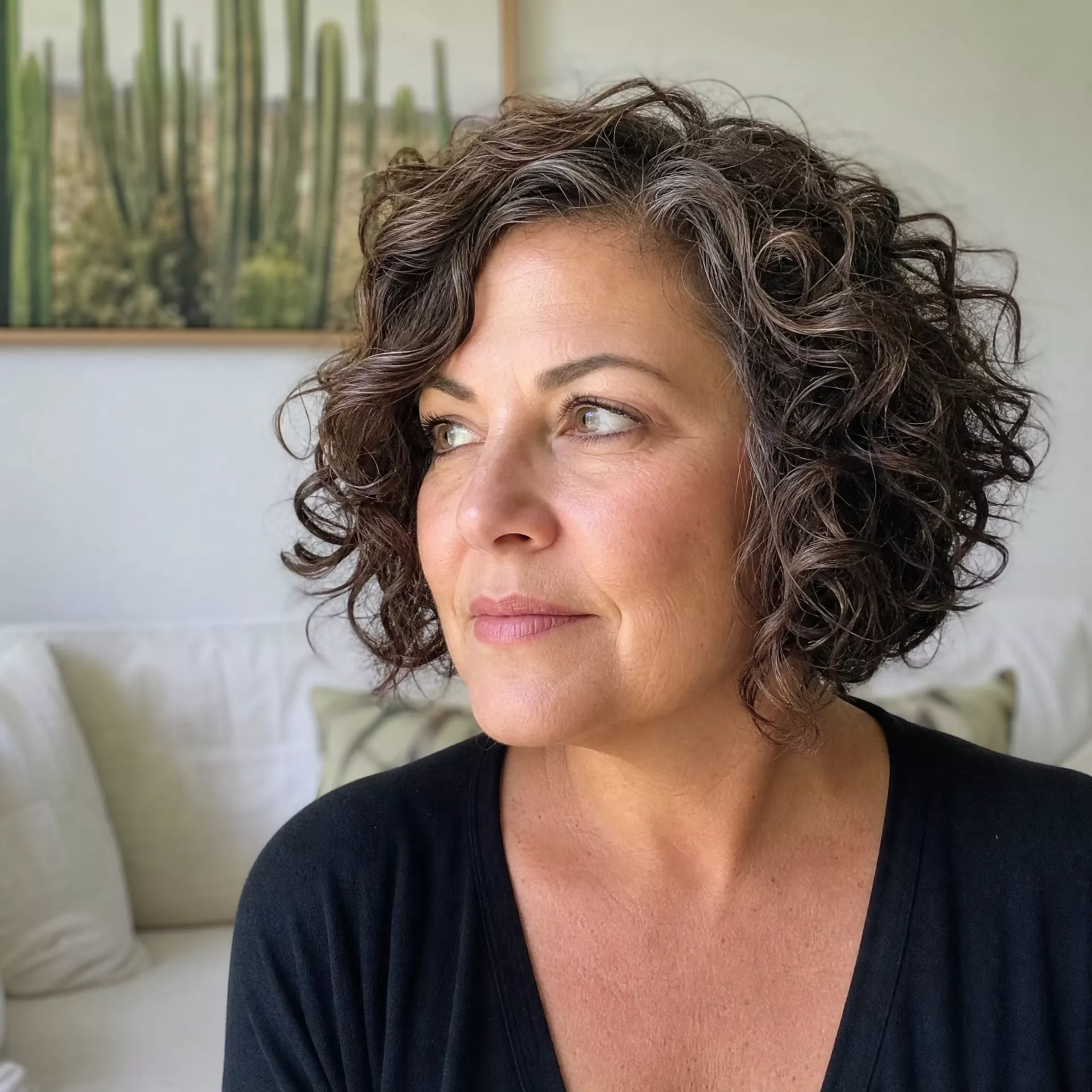
Shaggy Lob for Curly Hair
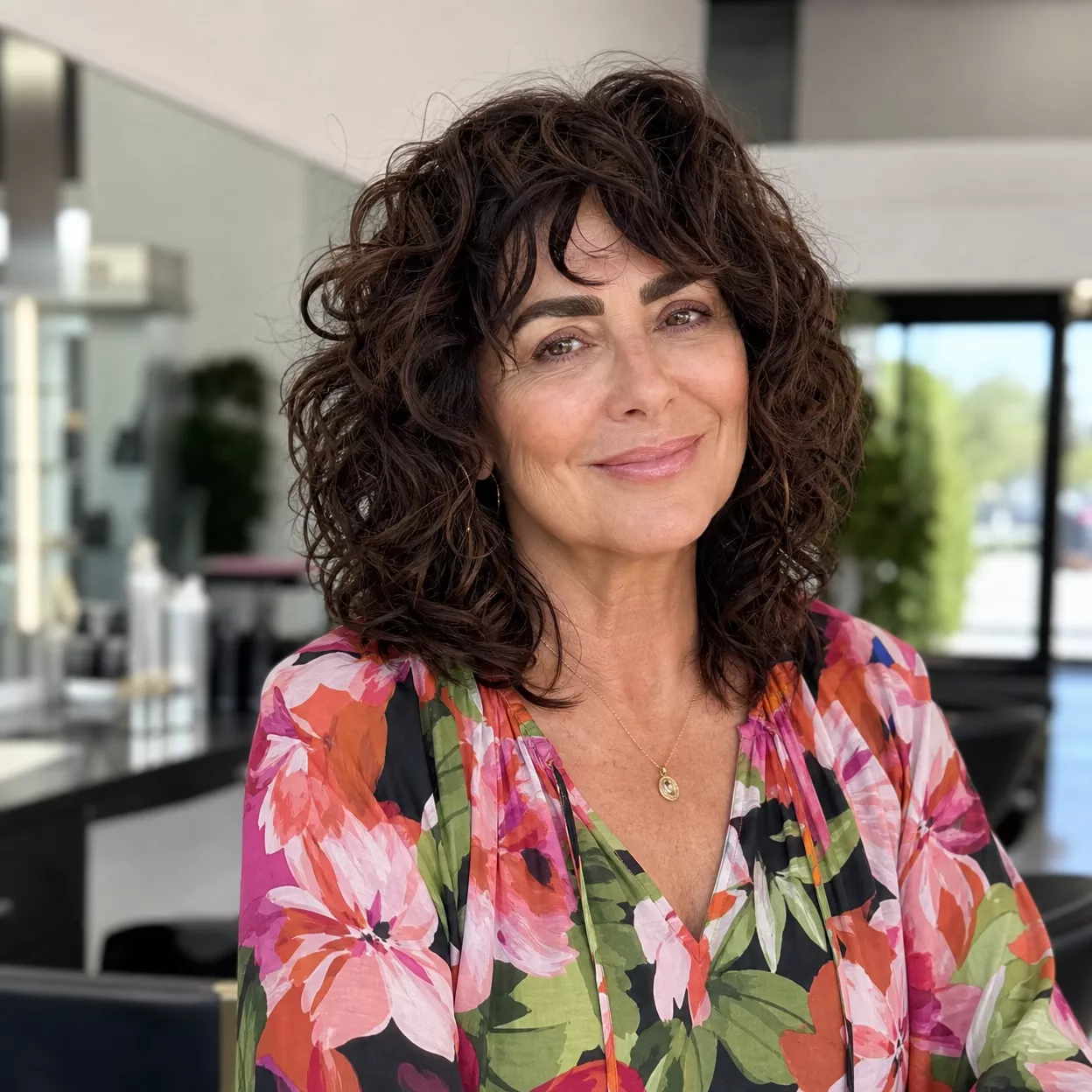
After several straight and wavy versions, curls change the rules. They shrink as they dry, sometimes considerably, so a lob cut at the collarbone wet may sit near the jaw once dry. Many stylists prefer to assess curls dry before settling the length and layers. On curly or coily hair, layering mainly redistributes weight so the crown can lift and the shape doesn’t widen at the bottom. Remove too much and curls can lose definition; leave too much and the silhouette can turn triangular.
Angled Shaggy Lob
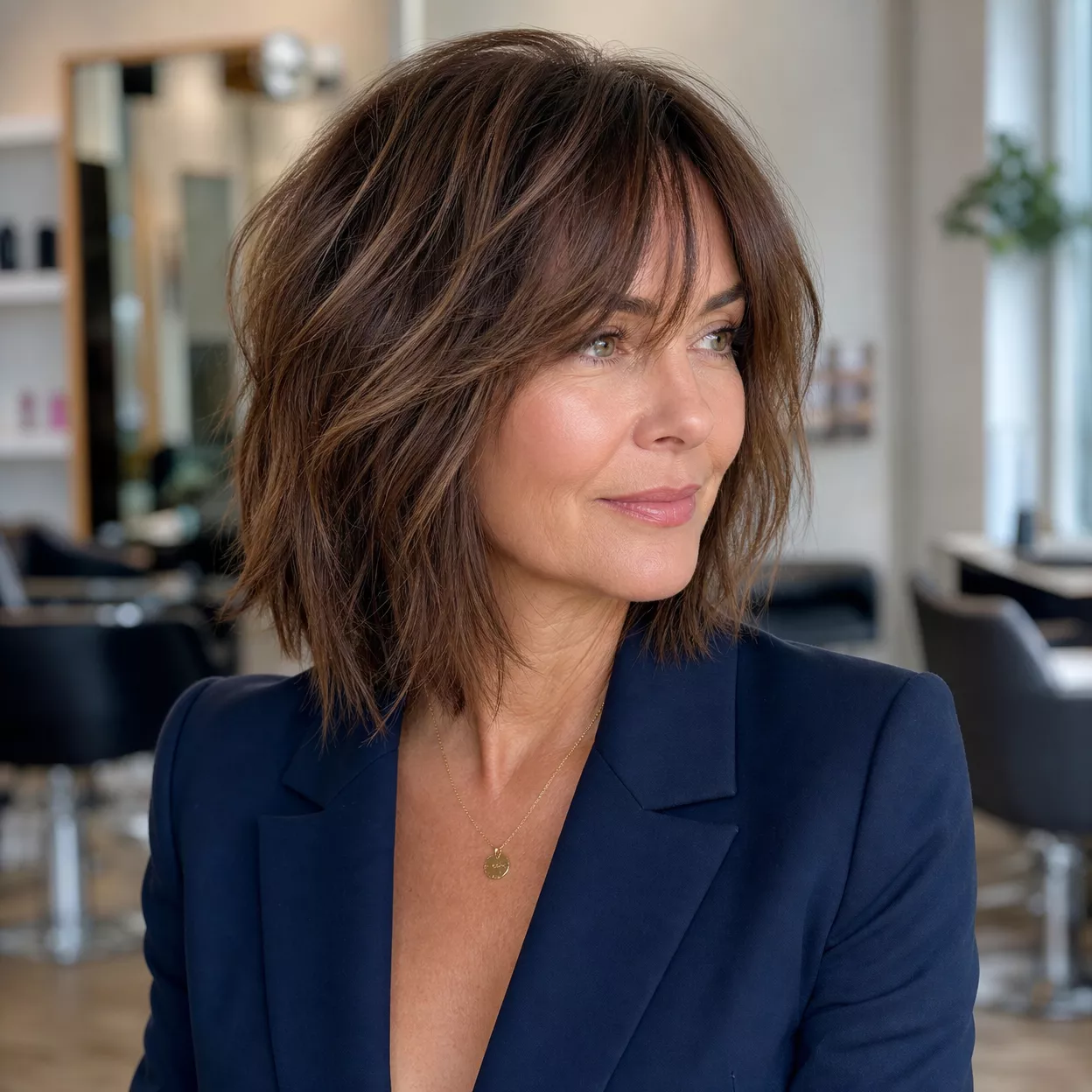
An angle puts structure back into a shape that’s otherwise loose. The back is slightly shorter than the front, so the perimeter slopes forward and gives the shag a clear outline while still allowing texture. Steeper angles grow out less evenly, since the back reaches the shoulders while the front still looks right. A gentle slope is easier to live with between cuts.
Shaggy Lob with Highlighted Money Piece
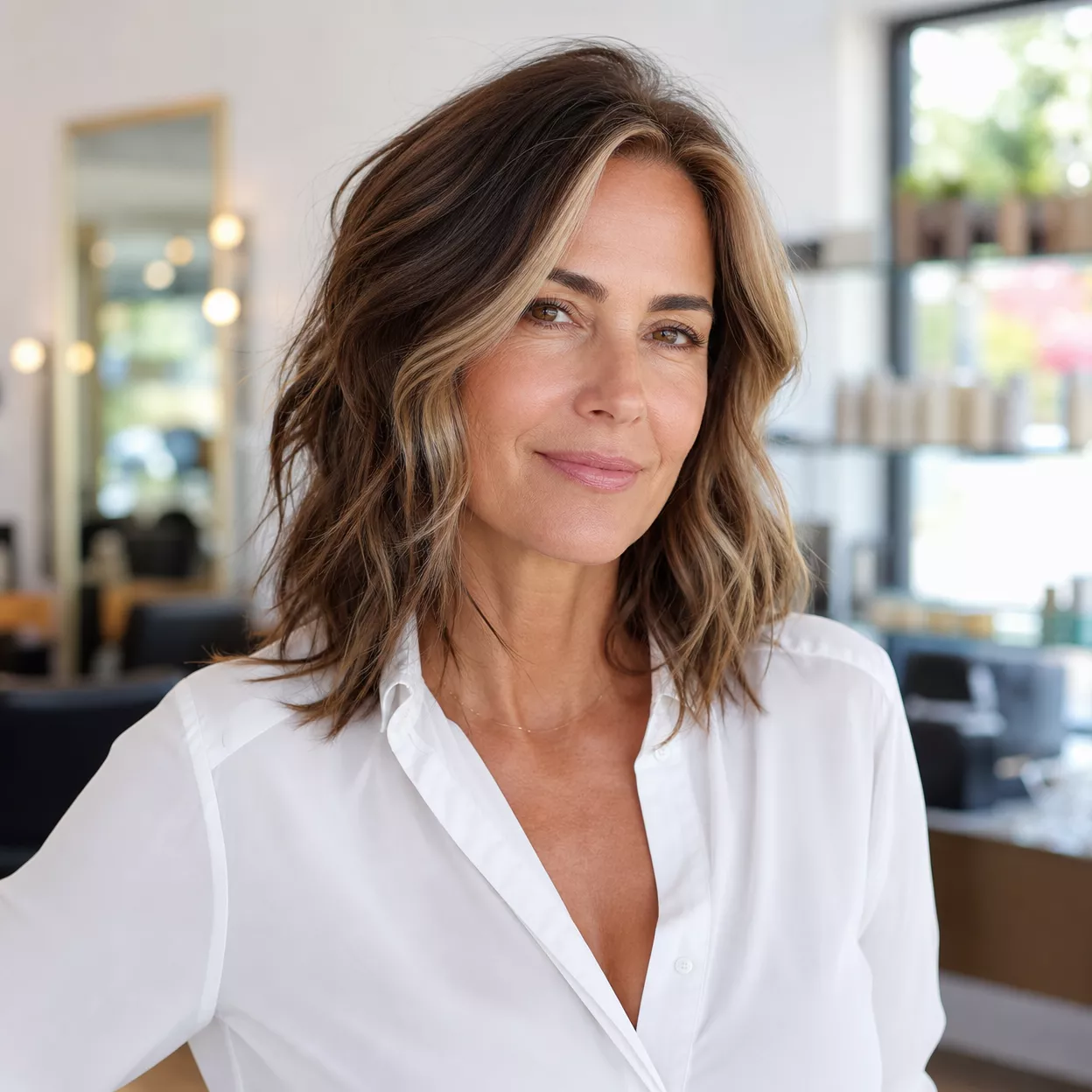
A money piece concentrates brightness in two front sections, shifting attention toward the face without changing the haircut at all. It’s a small amount of color with a noticeable effect. The trade-off is location. Regrowth and tone changes show quickly at the hairline, so those front pieces may need refreshing before any color placed further back. It works with most base colors, though the contrast and lift involved depend on the starting shade.
Razored Shaggy Lob
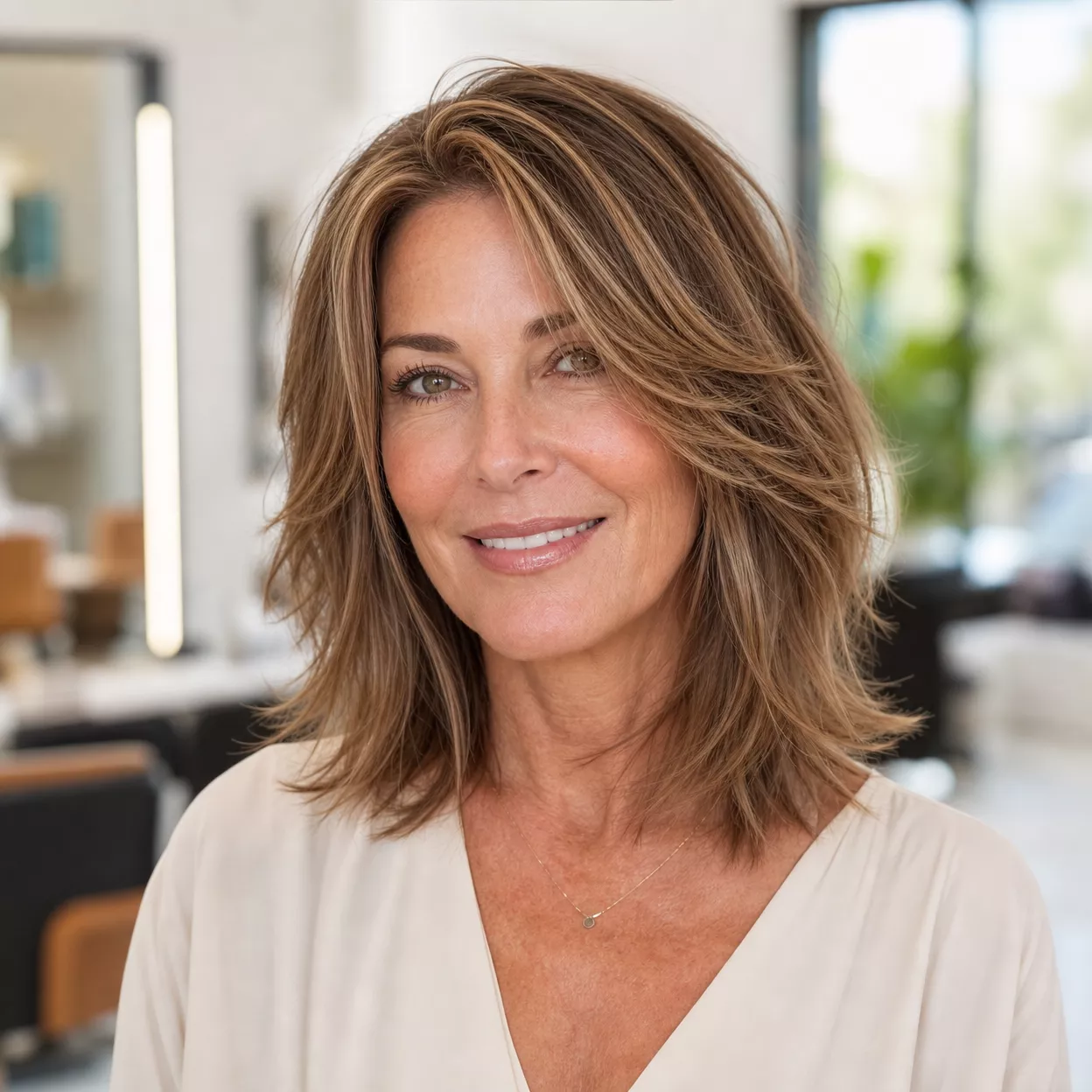
A razor slices the hair at an angle, creating tapered, feathered ends that look softer than ends cut straight across. On some hair, particularly straight hair with reasonable density, that gives the shag a light, piecey finish. It isn’t automatically right for fine hair. On fragile, dry, or very fine strands, razored ends can fray or look wispy, and on curly hair they can increase frizz. Point-cutting with scissors can create a similar softness. It’s more useful to describe the finish you want than to ask for a specific tool.
Shaggy Lob for Older Women with Thick Hair
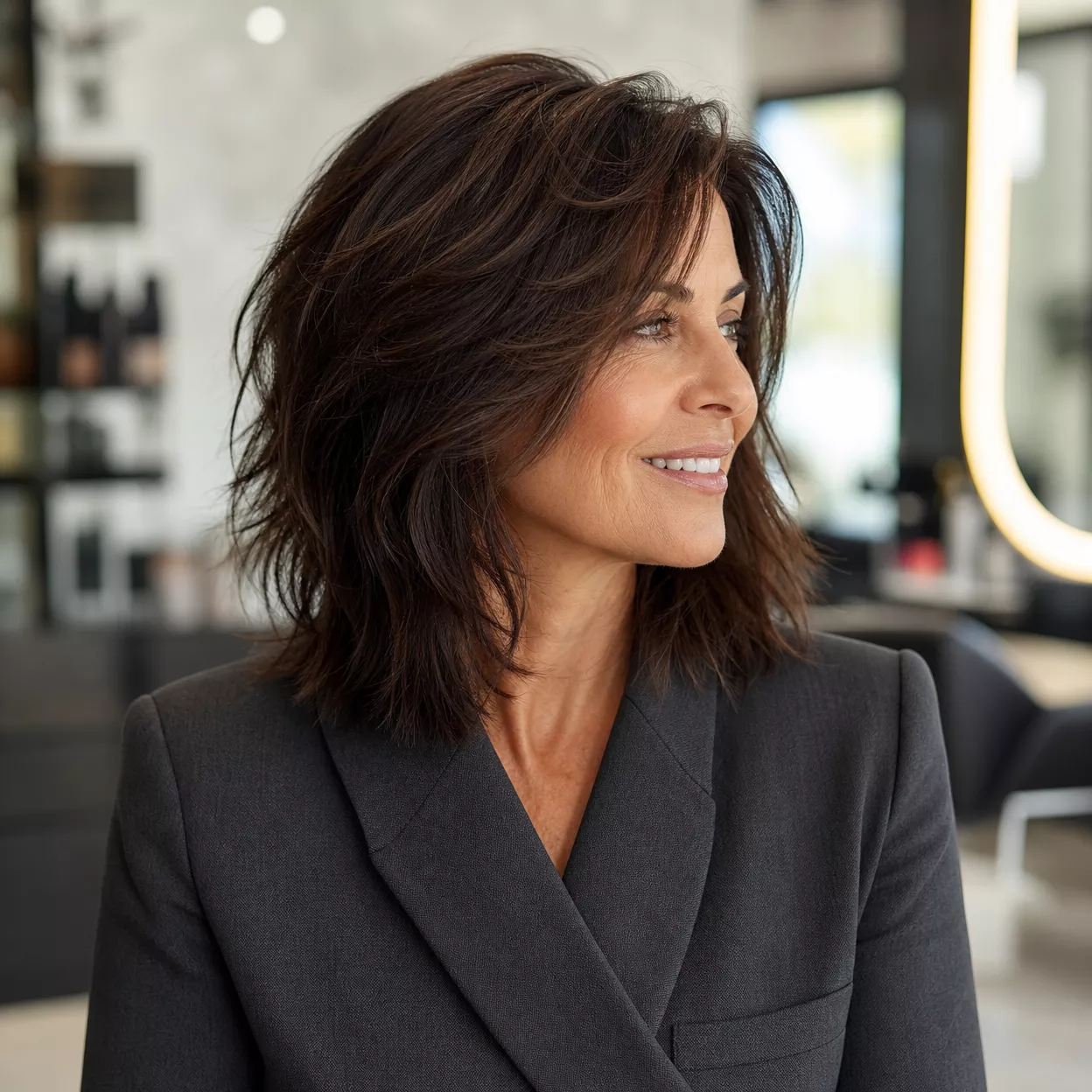
Very dense hair can make a lob feel like a helmet, especially in humid weather. Removing interior weight helps, but more isn’t always better. Over-thinning can leave short, frizzy pieces inside the shape that stick out, particularly on coarse hair. A balanced approach takes bulk from the interior while leaving the perimeter strong. That can shorten drying and styling time, though by how much depends on your hair. Our guide to shag haircuts for thick hair looks at this balance more closely.
Beachy Shaggy Lob
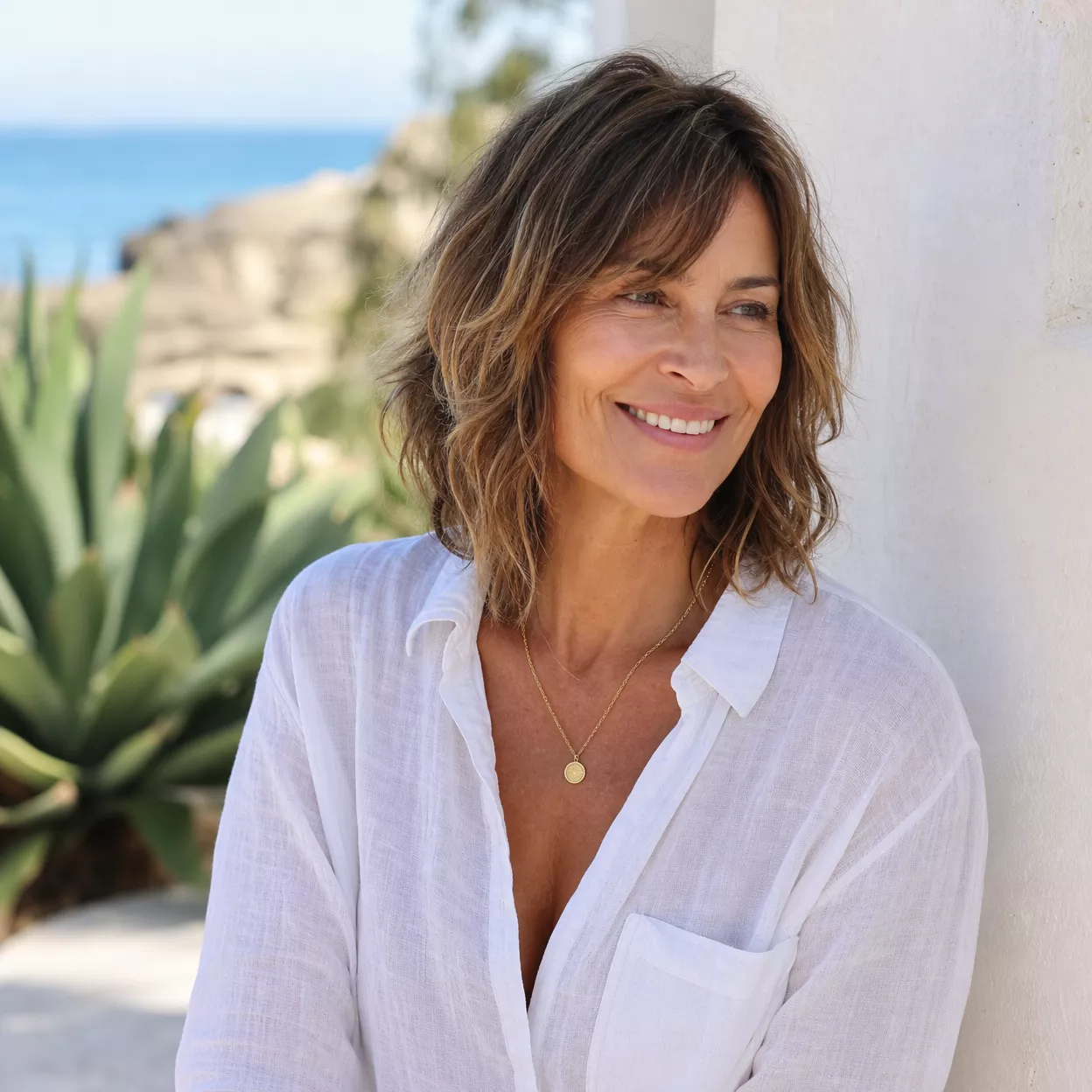
Beachy describes the loose, slightly rough texture associated with salt water and air-drying. The cut provides the layers; the texture usually comes from natural wave, a salt or texture spray, or a wand. Some hair does look better on the second day, when it has more grip, but that depends on texture and how quickly the scalp gets oily. On very straight hair, expect to work for this finish.
Shaggy Lob with Platinum Highlights
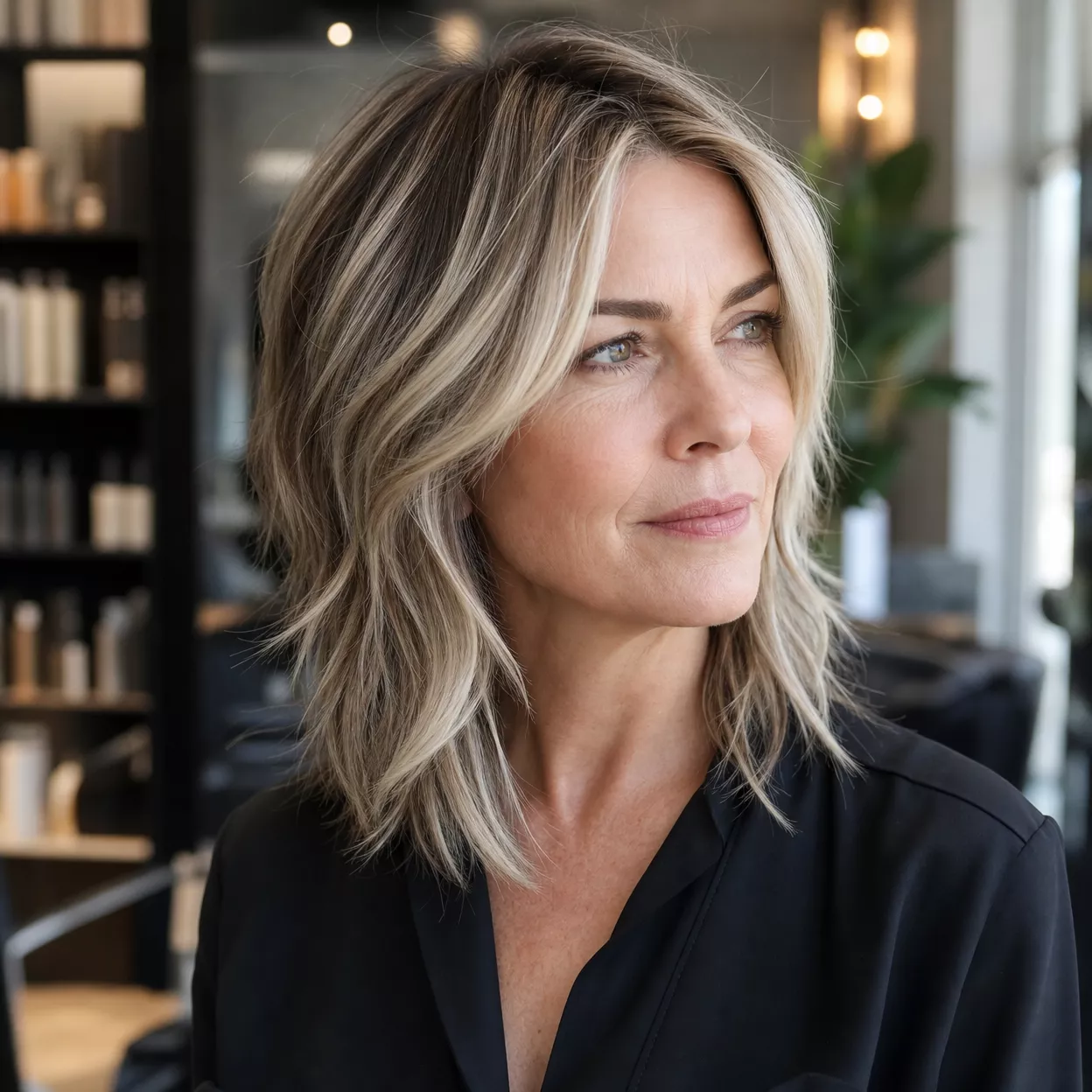
Platinum highlights against a darker base create strong contrast, which shows every layer and textured end clearly. They also involve significant lightening, especially on darker hair, and regular toning to keep the platinum from turning yellow. Regrowth is easy to spot when the contrast is this high. It’s a bold color decision on top of the haircut, and it asks for more upkeep than softer highlights.
Low-Maintenance Shaggy Lob
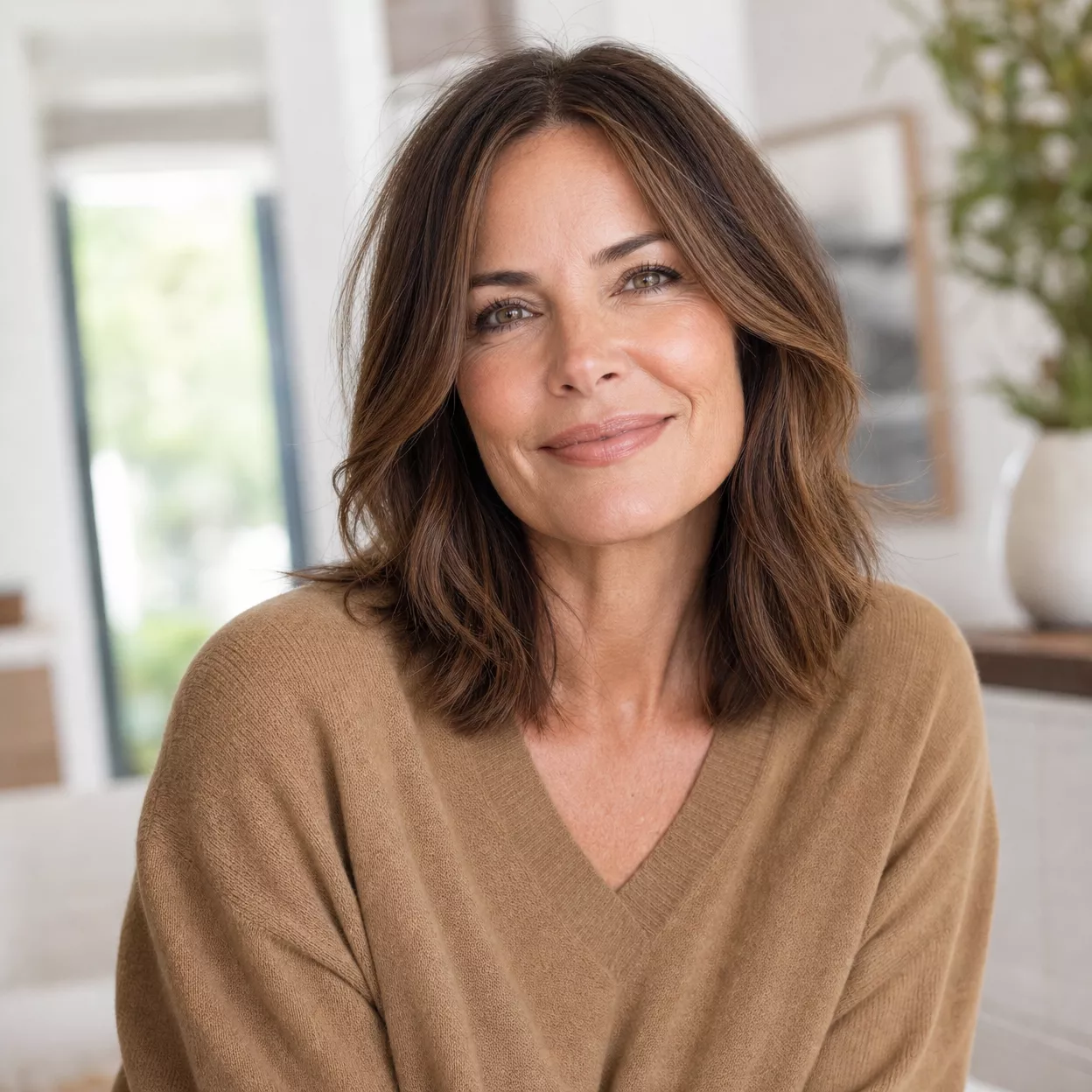
Low-maintenance here means a cut designed to grow out gradually: a slightly longer length, soft internal layers rather than short choppy ones, and no fringe to keep in shape. As it grows, the shape loosens instead of collapsing. Paired with color that blends regrowth, the time between appointments can stretch, though how far depends on your growth rate and how defined you want the shape to stay. Daily styling still depends on your texture.
Soft Shaggy Lob with Layers
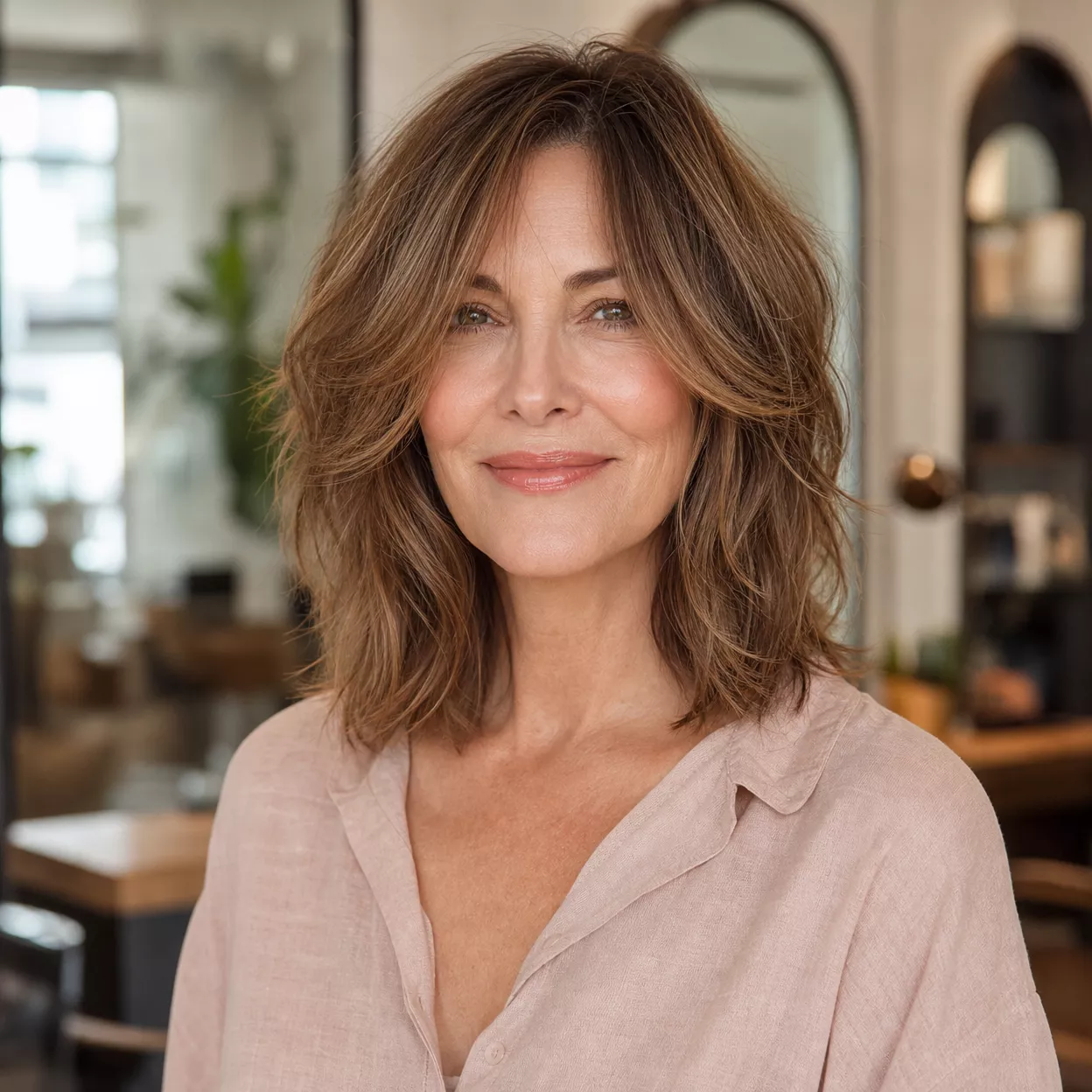
This is the gentlest version on the list: blended layers through the mid-lengths, light ends, and no obvious choppiness. It keeps most of the perimeter’s weight, which suits anyone nervous about losing fullness at the ends. It’s also the easiest to adjust. If you like it, the next cut can add more texture; if you don’t, little has been taken away. For many people, it’s a sensible first shaggy lob.
The Shaggy Lob Is Really About Weight Placement
Every version above makes different choices about where hair stays and where it comes out, and those choices shape the result more than the name of the cut.
The perimeter, meaning the bottom edge, carries much of what reads as fullness. Keep it strong and the ends look substantial even with plenty of layering above. Texture it heavily and the bottom becomes lighter, which helps thick hair but can make fine or low-density hair look thin.
Interior weight is the hair inside the shape. Removing some of it lets thick hair move without shortening it, but taking out too much can leave short pieces that stick out or make the shape expand.
Crown layers create lift and that characteristic shag silhouette. On fine hair, a few can add needed height. On dense hair, too many can make the top wider than the rest of the cut.
The nape matters too. Dense hair at the back can push a lob outward, and some weight removed there can help it sit closer.
Face-framing layers decide where attention lands and how the front moves. Their starting point, more than their number, determines the effect.
So “more layers” isn’t automatically better. A shaggy lob with too much removed can end up frizzy, sparse at the ends, or wider than you expected.
Fine Hair, Thick Hair, Waves, Curls: The Same Lob Behaves Differently
Take one shaggy lob shape and put it on different hair, and you’ll get different results.
On fine but dense hair, moderate layers usually add movement and visible fullness without much risk, as long as the perimeter keeps some weight.
On fine, low-density hair, the same layers can thin the ends and expose more scalp at the crown. Fewer, longer layers and a stronger perimeter tend to work better.
On thick, high-density hair, the shag removes welcome bulk, but too many short layers can create width rather than lightness.
Coarse strands hold texture well, but can frizz if heavily thinned or razored.
Straight hair shows the cut clearly, yet often needs product or heat to show the shag’s separation.
Wavy hair often falls into the layers naturally, though uneven wave patterns may need some styling to look consistent.
Curly and coily hair shrink and expand, so the shape has to be planned around how the hair looks dry rather than wet.
Read the Photo Before You Save It
A shaggy lob photo is useful, but it shows the finished look, not the hair or the work behind it.
Start with the shortest layer. Is it at the crown, the cheekbone, or near the jaw? That tells you how dramatic the shag really is. Then look at the ends. Are they full and dense, or thin and wispy? If yours are naturally finer, expect a lighter result.
Check the crown for signs of a blowout, like smooth lift at the roots. Look at the waves: if they’re very even, they’re probably made with a wand. Notice how the fringe is sitting, since most bangs in photos are freshly styled.
Consider whether extensions might be adding length or fullness, and whether color is doing some of the work by making the layers stand out. Compare the model’s density with yours.
And if you can, find front, side, and back views. A shaggy lob can look completely different from behind.
When “Low Maintenance” Isn’t Actually Low Maintenance
A shaggy lob can grow out gracefully and still need daily styling. Those are two separate kinds of maintenance, and it helps to know which one you’re trying to reduce.
Bangs often need more attention than the rest of the cut, since they reach the eyes long before the lob needs reshaping.
Curly hair may need a different cutting approach, often assessed dry, so it isn’t always as simple as booking a standard trim.
Highlighted, blonde, or platinum hair adds color upkeep, including toning and regrowth, separate from the haircut.
A textured, tousled finish may look effortless in a photo but still take product, scrunching, or a wand.
And root shadows can reduce how obvious regrowth looks without removing all color maintenance.
How often you’ll need a cut or color refresh depends on your growth rate, your color, and how defined you want the shape to stay.
What to Tell Your Stylist Without Just Saying “Make It Like This”
A photo works best with a few specific sentences attached. For example:
“I want movement, but I don’t want the perimeter too thin.”
“I like the layers in this photo, but I want the ends to keep enough weight to look intentional when I air-dry.”
“I want the fringe to blend into the lob rather than sit separately.”
“I have thick hair, but I don’t want the crown to get wider.”
“I have fine hair with lower density, so please be careful about how much weight comes out.”
“My hair waves at the back but not at the front, so I’d like a shape that still works when it dries unevenly.”
“I don’t blow-dry most days, so I’d like to know how this will look air-dried.”
These give a stylist something concrete to work from, which matters more than the photo itself.
Finding Your Version
A shaggy lob works when its layers, perimeter, texture, and styling demands match the hair it’s cut on, not just the photo it was copied from. The 26 versions above aren’t 26 interchangeable looks. They’re different answers to the same set of questions: how much weight should come out, where fullness should stay, and how much styling you’re realistically willing to do.
Answer those first, then choose the photo that matches. For more ideas beyond lobs, our guide to hairstyles for women over 50 covers other lengths and shapes.