24 Choppy Layered Hairstyles for Short Hair That Pop
Choppy layers work by cutting hair at uneven lengths and angles instead of one smooth line, so the ends separate rather than falling together. On short hair that separation does two different jobs depending on what you start with. On finer strands, the gaps between pieces can make the hair look like it takes up more space, since there’s air moving through it instead of it lying flat. On thicker hair, the same technique removes bulk from specific areas, which can make a heavy cut feel lighter without necessarily changing the length.
Neither result is automatic. How choppy layers behave depends on your density, your natural texture, and how much length is actually removed, not just the name of the cut. The 24 styles below each highlight a different part of that decision: where the weight sits, how the shape grows out, and what a particular technique asks of your hair.
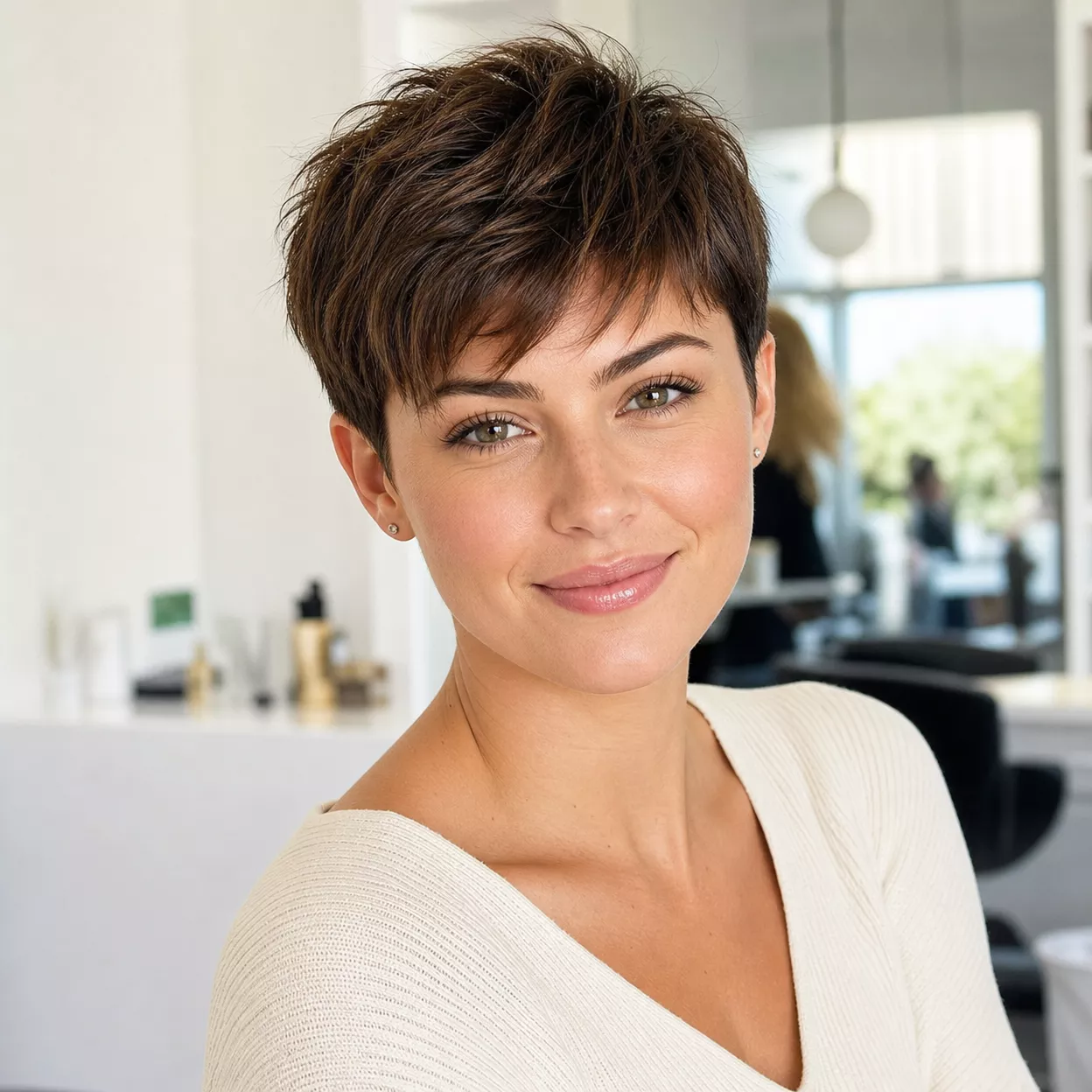
Choppy Textured Pixie
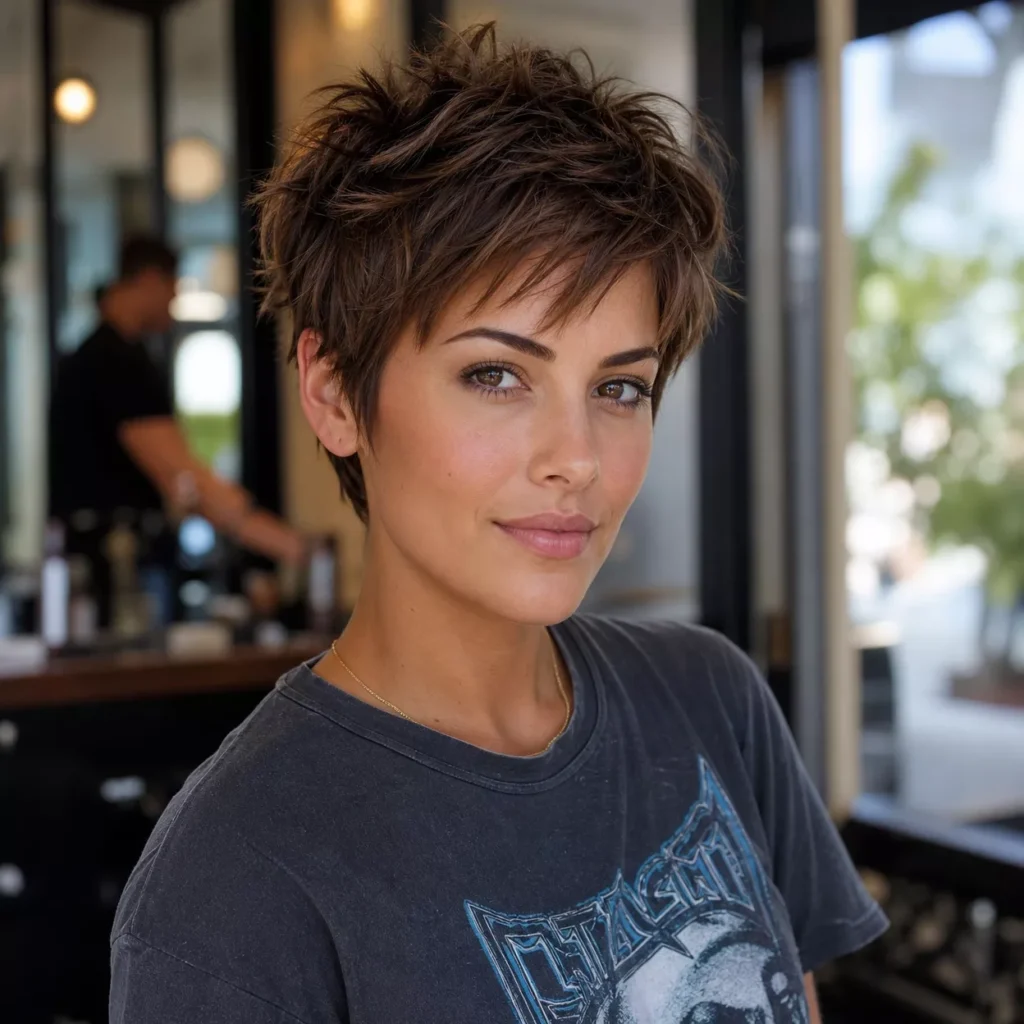
The amount of length left at the crown decides how much you can do with this cut day to day. More length there means you can push it forward, tousle it upward, or leave it flatter depending on your mood. Cut very short at the crown, the shape is largely fixed once it’s finished, and daily styling comes down to a small amount of product worked through with fingers rather than a brush.
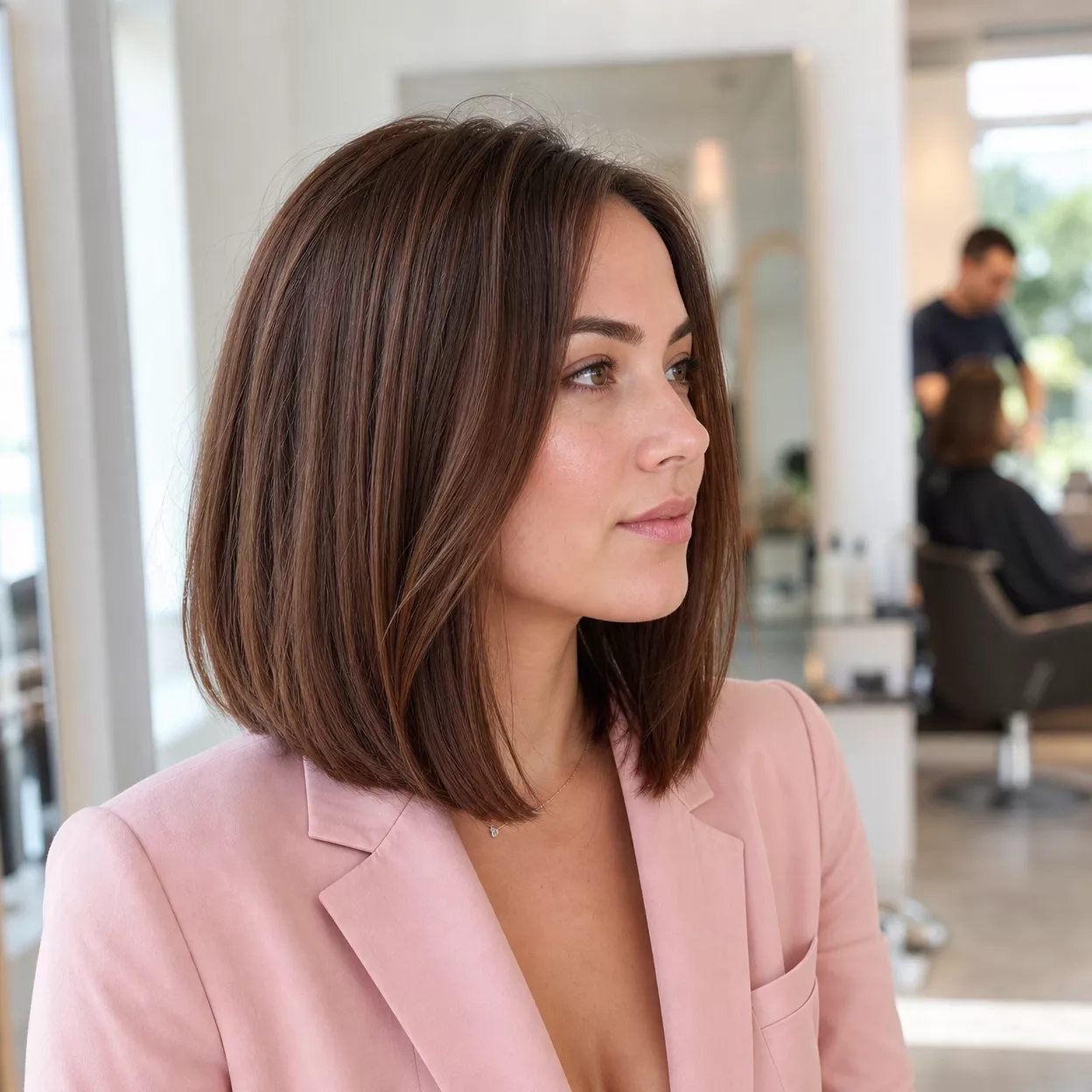
Choppy Layered Bob at the Jaw
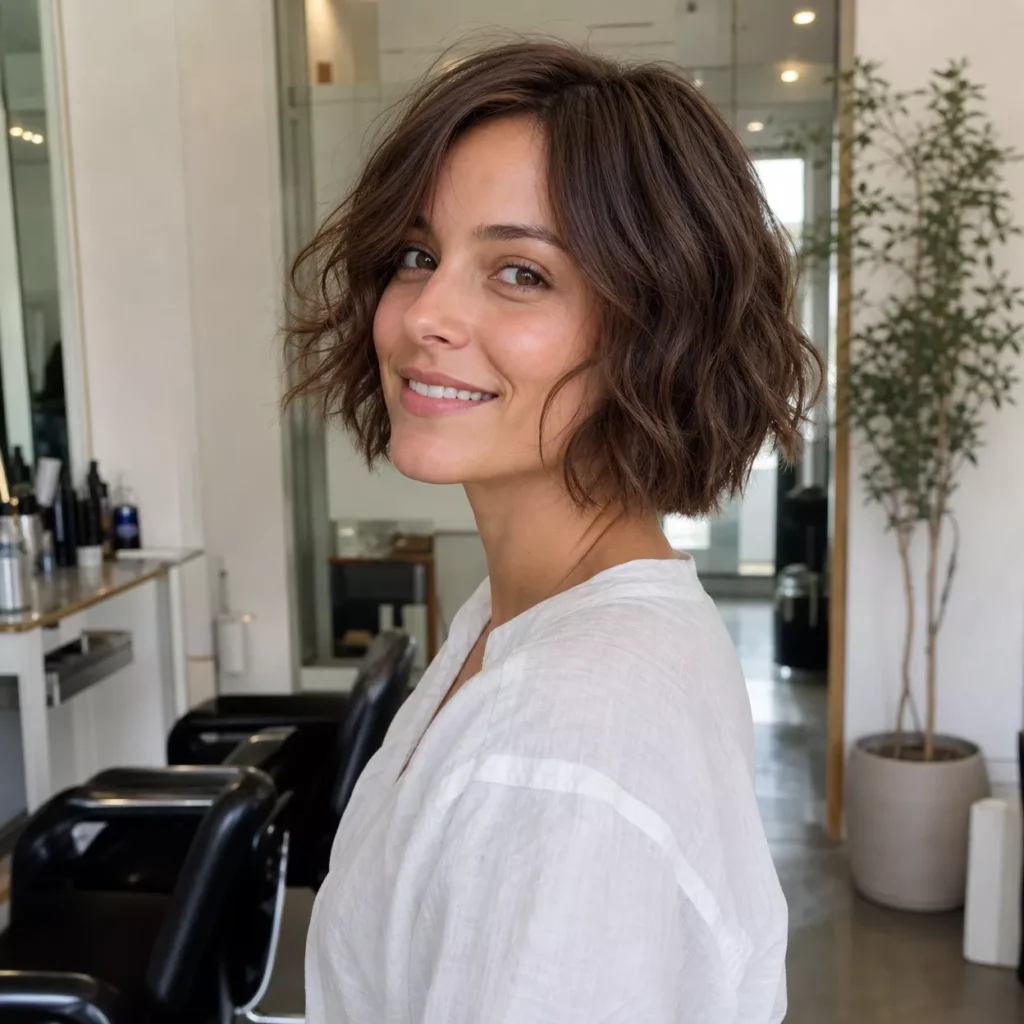
At jaw length, the perimeter is doing most of the visual work, since it sits right at the widest, most visible part of the face. Choppy layers cut into that edge soften it, which means the shape holds up better as it grows than a blunt jaw-length line would. It’s worth asking how much of the perimeter will stay intact, since a heavily chopped edge changes the outline faster than a lightly textured one.
Short Choppy Shag

A shag depends on separation between layers of different lengths, and how much separation shows depends on density. With enough hair, the gaps read as texture. With less, the same cutting pattern can leave visible thin spots, so it’s reasonable to ask your stylist how the layering will be adjusted for your particular density rather than copied straight from a photo.
Choppy Pixie Bob
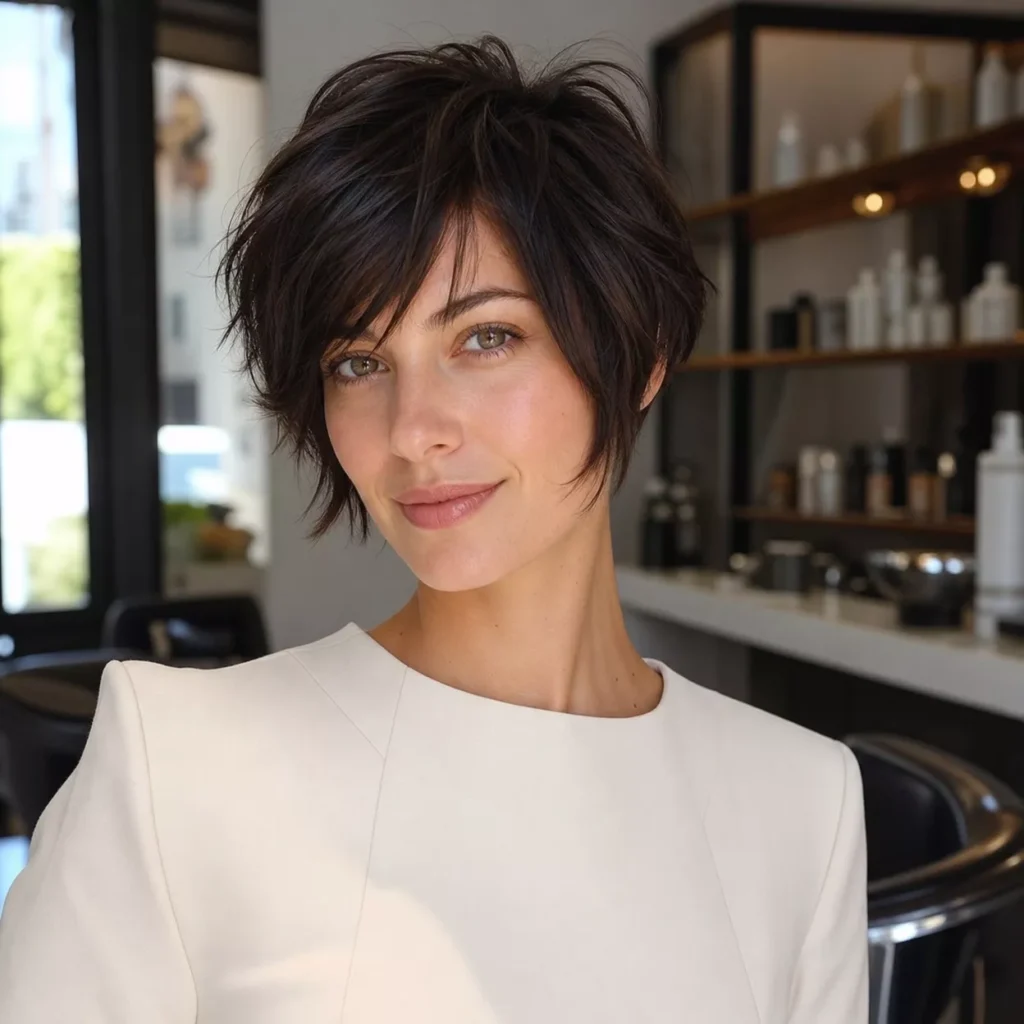
This length sits between a pixie and a bob, and it tends to come up most often as a transitional cut, either growing a pixie out or moving toward something shorter. Because it’s already in-between, it grows out into other shapes with less of an awkward stage than a true pixie does. The trade-off is that it needs shaping fairly regularly, since a length this short shows growth quickly at the sides and back.
Edgy Choppy Bob with Blunt Fringe

The contrast here is deliberate: a fringe cut in one clean line against layers cut with no clean line at all. That precision at the front means the fringe needs its own maintenance schedule, often needs more frequent trims than the rest of the cut, separate from the rest of the cut. Ask your stylist how the two will be blended where the fringe meets the sides, since a hard edge there can look unfinished rather than intentional.
Choppy Layered Ear-Length Bob

Ear length is short enough that growth shows up fast, particularly around the ears and nape, so this isn’t a cut you can stretch between visits for long. What it does offer is a fairly structured perimeter that choppy layers can soften without losing the overall shape, so the cut tends to grow into a slightly longer, still-wearable version of itself rather than falling apart.
Razored Short Shag with Curtain Bangs

Razoring cuts differently from scissors: it feathers the ends so they taper rather than ending in a blunt line. That works well when there’s enough hair to spare, since the technique removes some density along with the length. Curtain bangs added at the front rely on there being enough hair there too, so if your temples run thinner, it’s worth asking for the bangs to come from a smaller section rather than a wide one.
Choppy Layered Pixie with Long Top
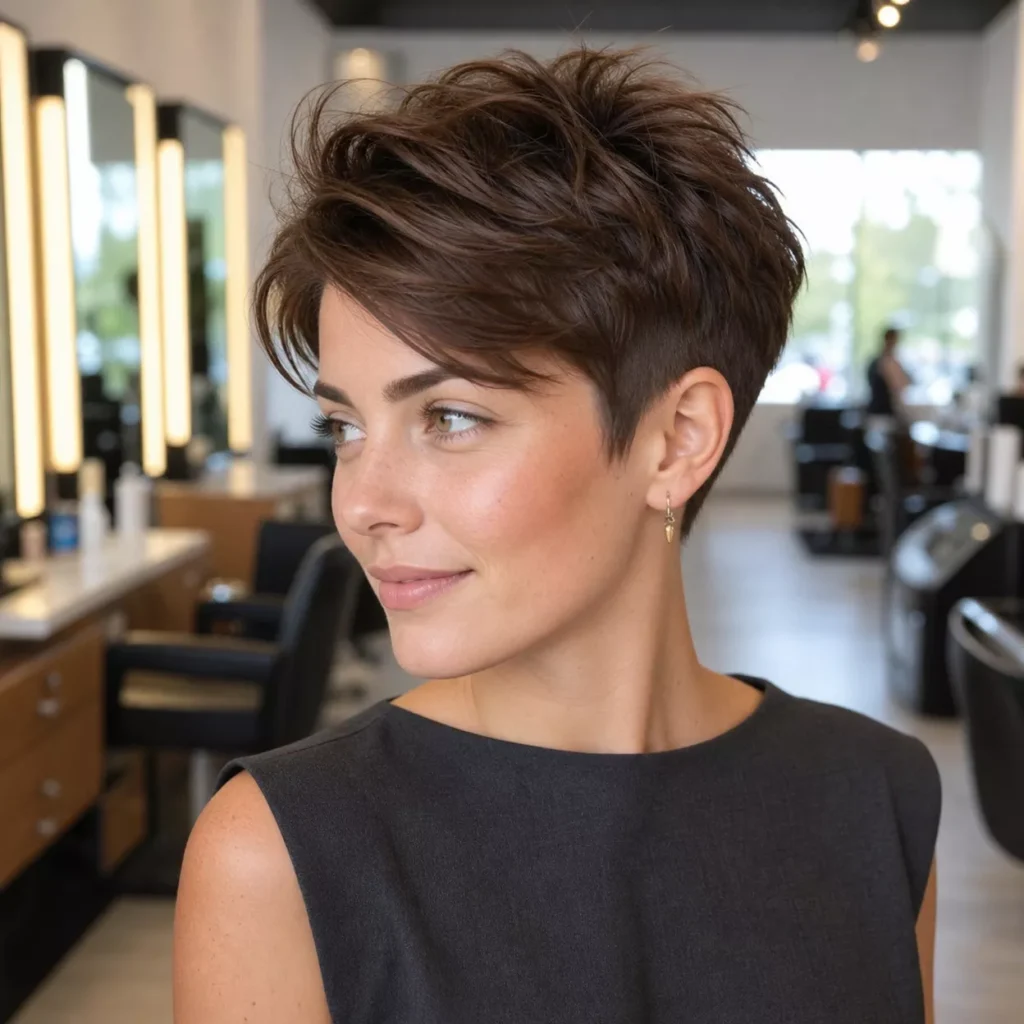
Keeping the top longer while the sides and back stay short means the maintenance splits in two directions. The short sides need regular tidying to stay clean, while the longer top can go further between cuts since there’s more length to work with before it looks unshaped. If you’re not sure how short you want to go, this version gives you a way to test a pixie without committing to the same length all over.
Textured Choppy Bob with Side Part
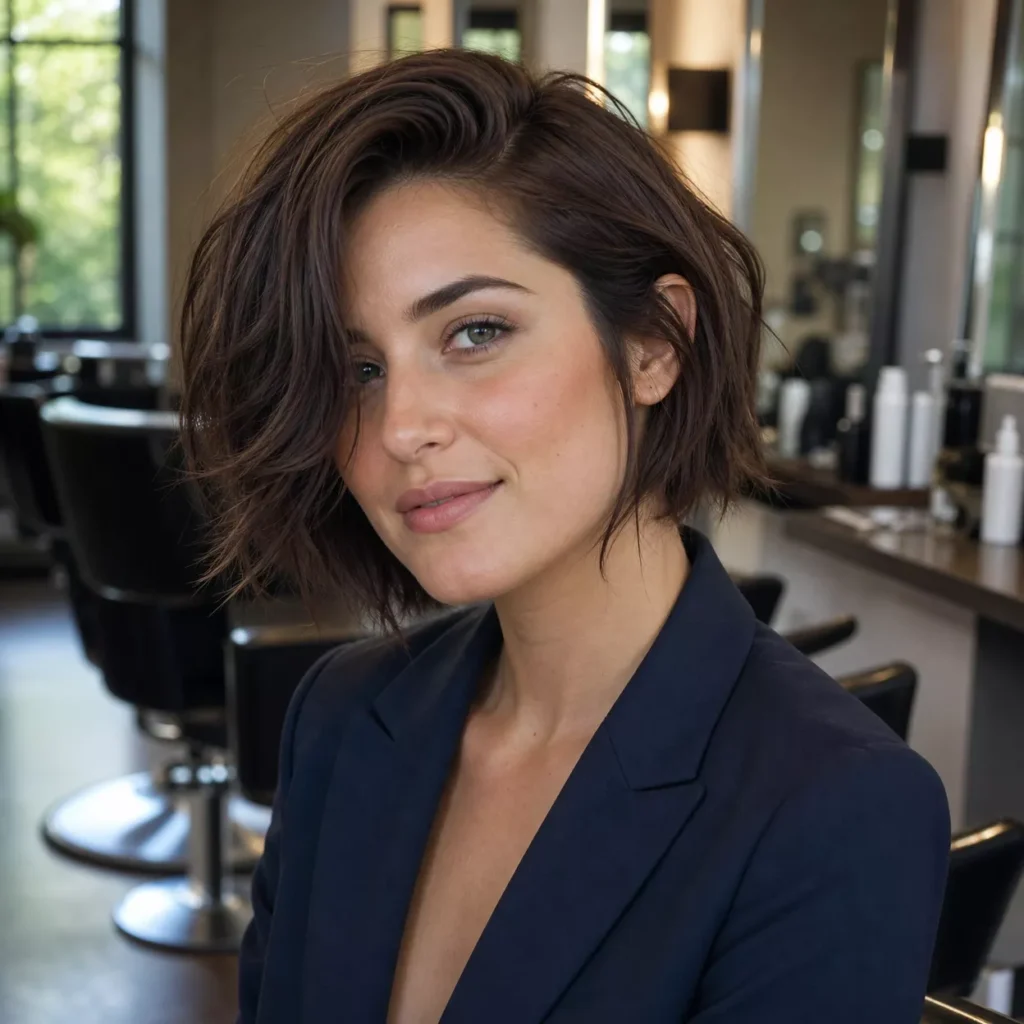
A side part only holds well if it follows the direction your hair already wants to fall. If you force a part against the grain, it tends to work its way back to center by midday, so it’s worth having your stylist check your natural part before deciding how deep to cut the asymmetry into the layers.
Short Choppy Cut for Thick Hair
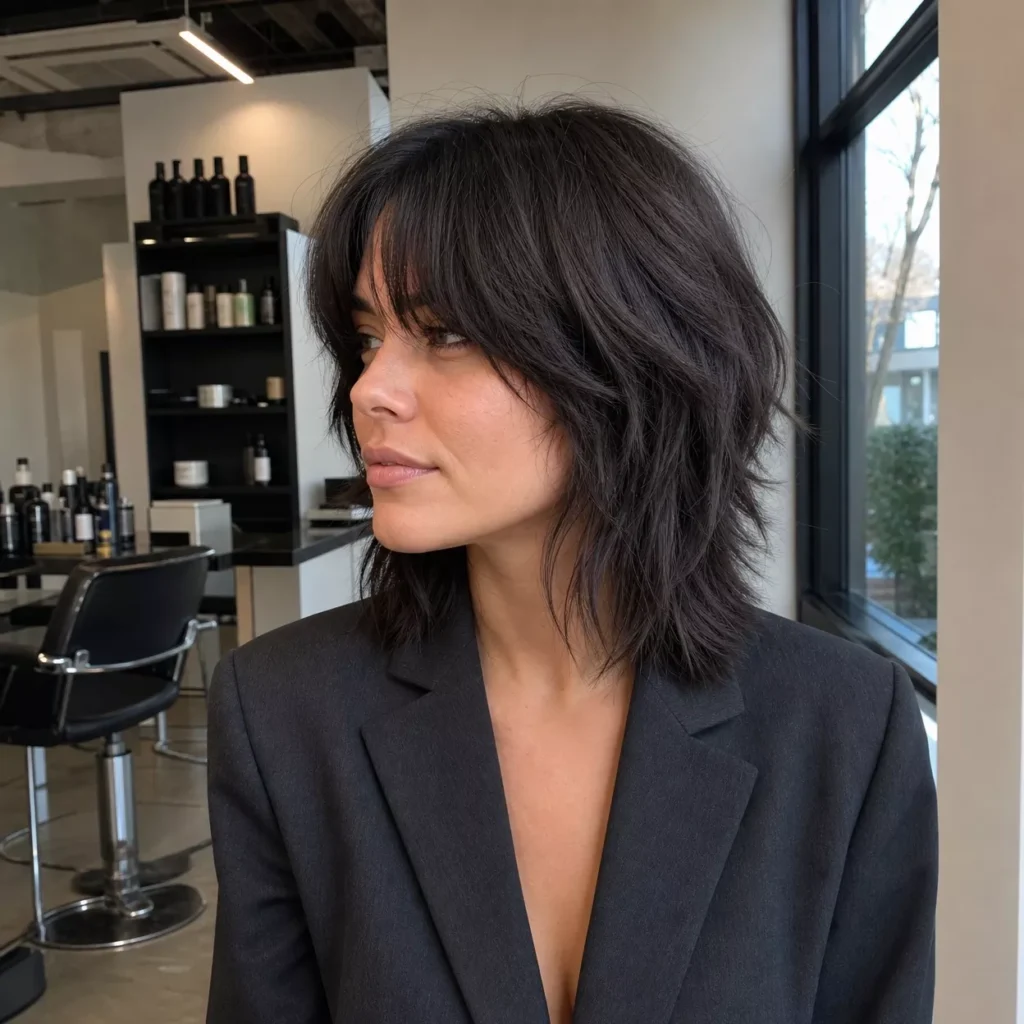
Aggressive layering removes bulk from specific sections rather than shortening the whole head evenly, which is the main reason it’s suggested for thick hair. Where that bulk is removed matters. Taken out mostly at the ends, the cut can still feel heavy near the roots. Taken out through the mid-lengths and interior, it tends to dry faster and sit lighter, though how much faster depends on your particular density and how much length comes off.
A tip worth keeping in mind: if you want choppy texture to hold through the day, work a small amount of texturizing paste through dry hair after styling rather than into wet hair beforehand. Applying it dry lets you see exactly where the texture is landing, and it avoids the flatter, weighed-down look that can happen when product goes on before the hair has dried into its shape.
Choppy Layered Bob with Curtain Bangs

Curtain bangs are cut from the front section of the head, so the amount of hair available there affects how full they look once they’re parted and swept to each side. They also need their own trim, usually every three to four weeks, since bangs grow into your eyeline faster than the rest of a short cut grows out of shape.
Choppy Short Shag with Wispy Fringe

A wispy fringe is a lighter option than a full one, cut thin enough that you can see through it slightly. That works if your front section has enough density to spare; on finer hair up front, it can end up looking sparse rather than soft, so asking for it to be left a bit heavier than the reference photo is a reasonable adjustment.
Short Choppy Cut with Undercut
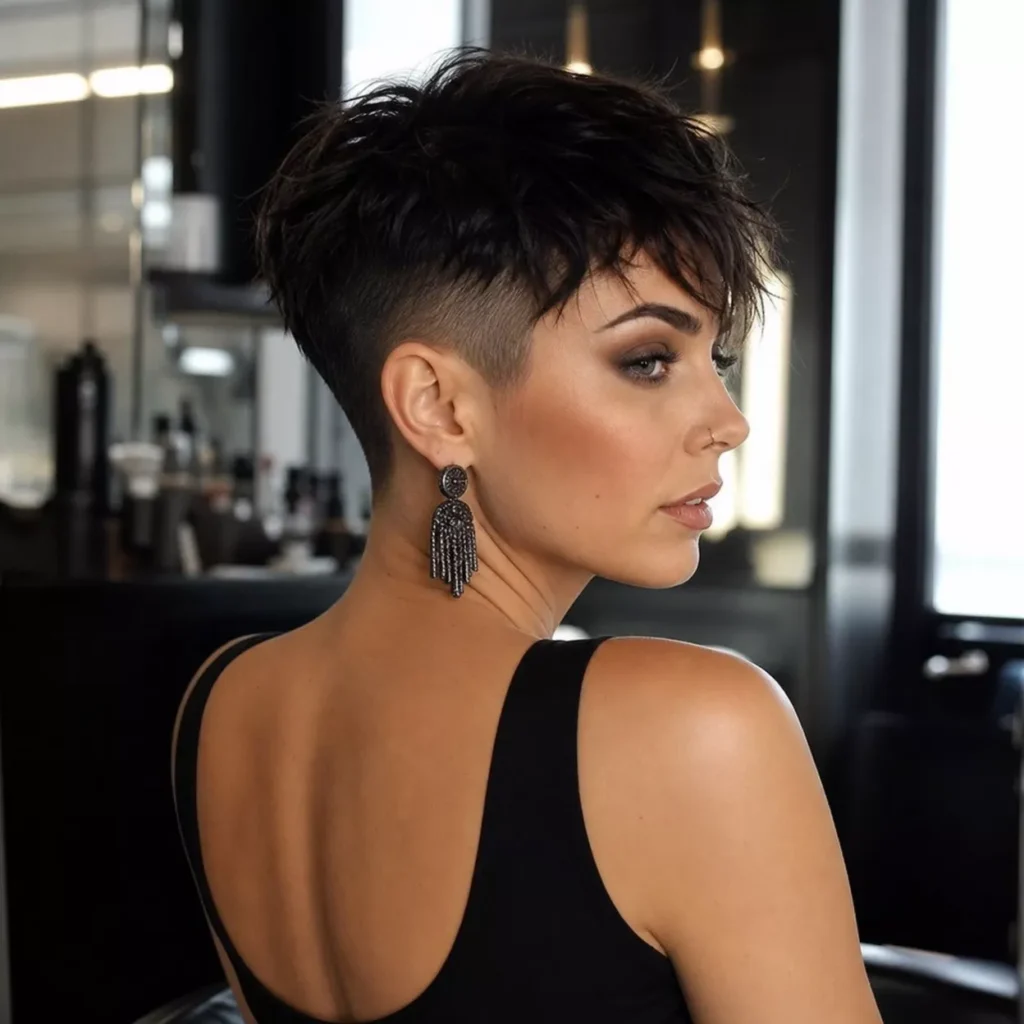
The undercut section, whether shaved or clipped short, removes bulk at the nape and sides, which is separate from what the choppy layers on top are doing. Because it’s cut close to the skin, it grows in visibly within two to three weeks and needs its own upkeep on that schedule, which is worth factoring in if the rest of your routine is fairly low-effort.
Choppy Layered Bixie
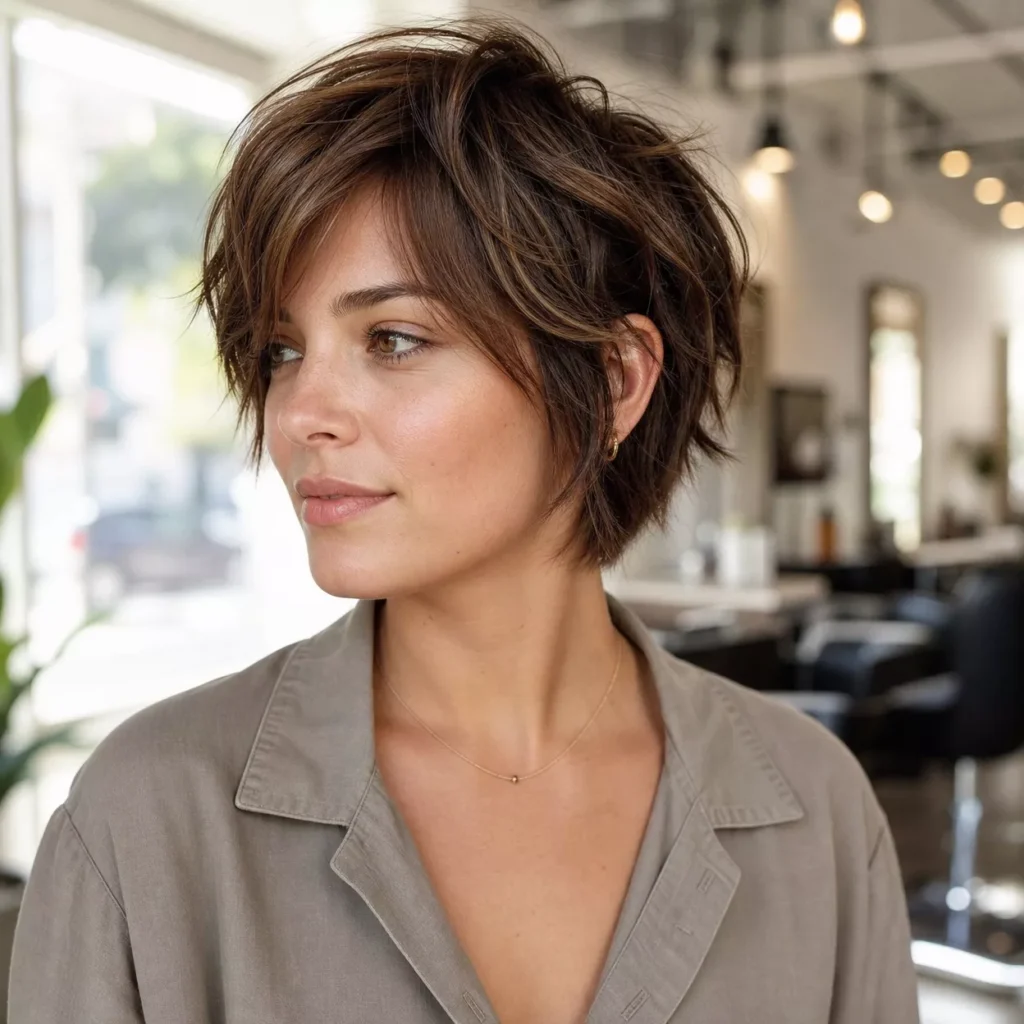
Sitting between ear and chin length, a bixie tends to hold its shape for a bit longer than an ear-length bob before it needs reshaping, simply because there’s slightly more length to lose before the cut looks undone. As it grows, the choppy layering helps disguise the transition rather than leaving an obvious in-between stage.
Two-Tone Choppy Short Bob
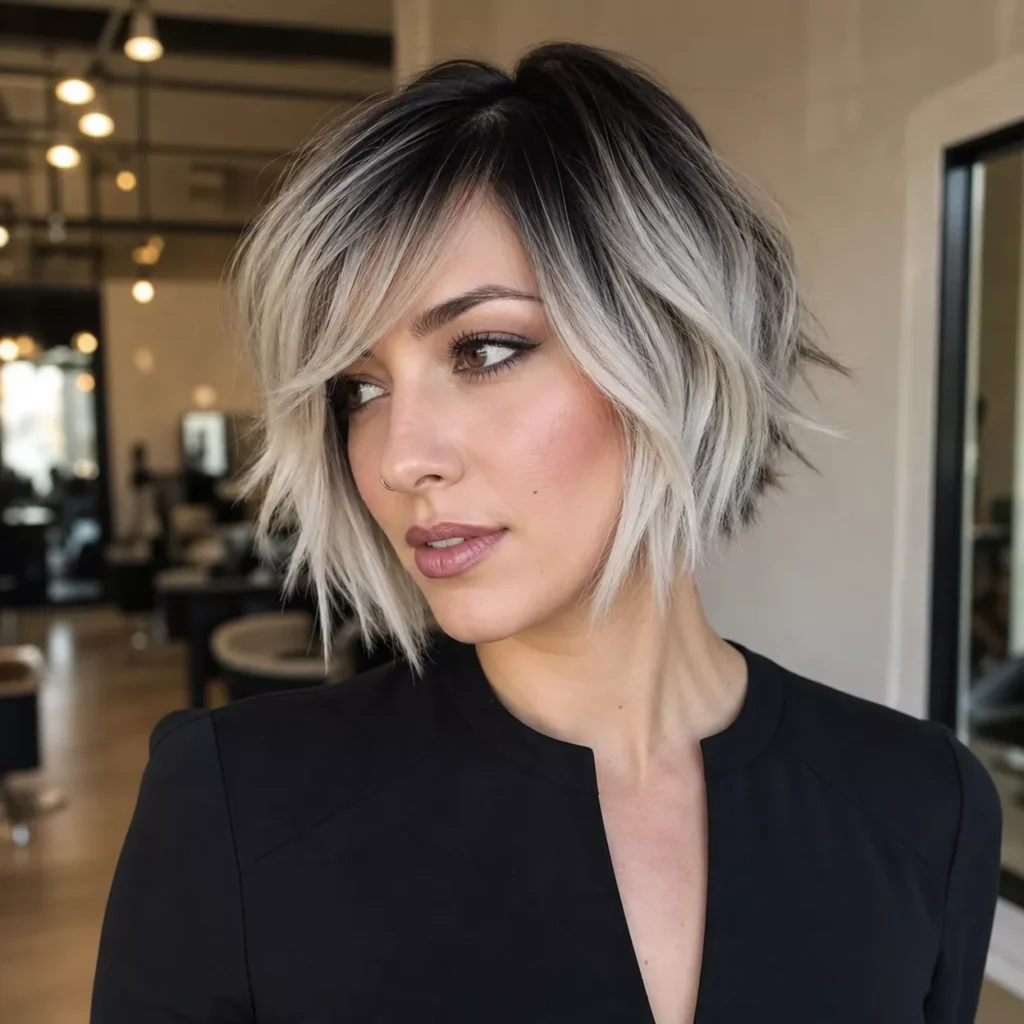
Color placed to follow the cut lines shows up differently depending on how the layers move, which is the appeal of pairing the two. It also means the color upkeep follows the cut’s schedule somewhat: as the choppy layers grow out and shift, the placement of light and dark sections shifts with them, so a color refresh often lines up with a cut refresh rather than running on its own separate timeline.
Choppy Pixie with Textured Fringe
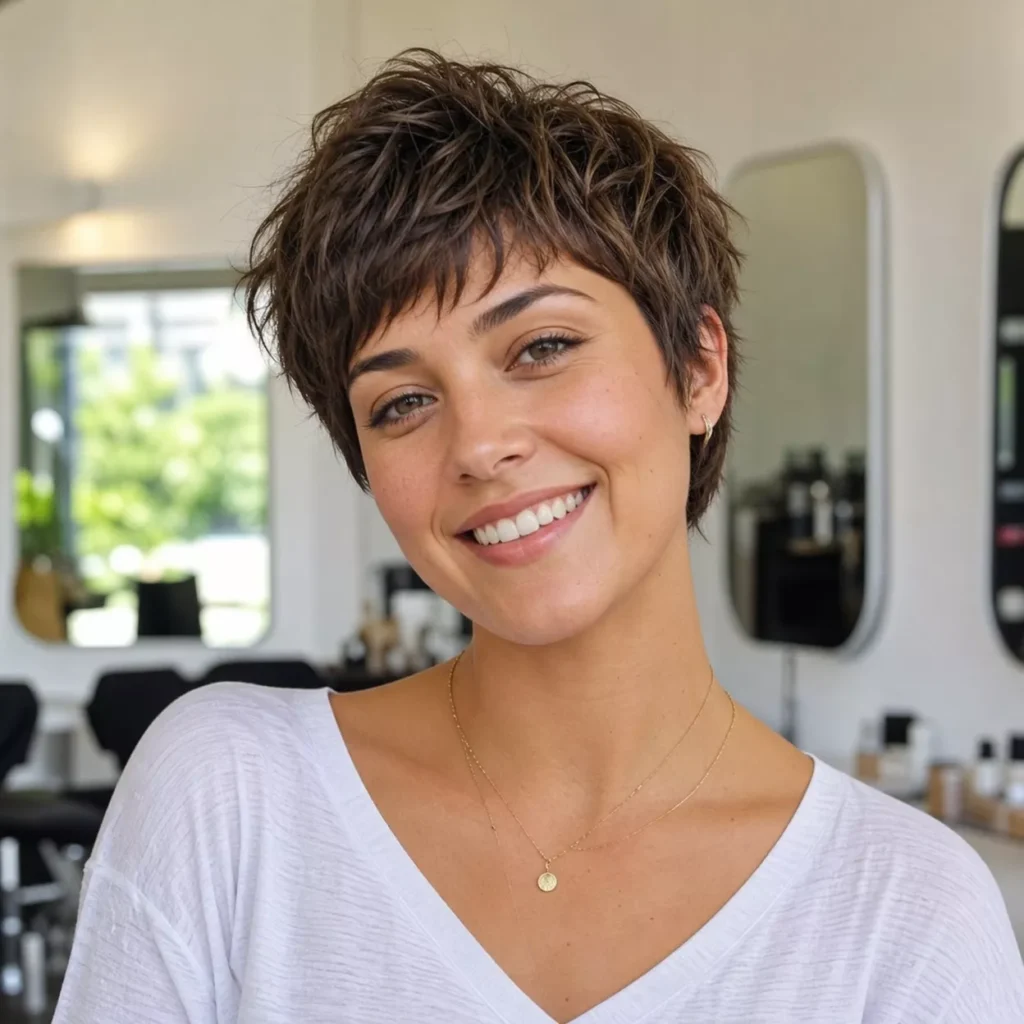
Cutting the fringe with the same technique as the rest of the pixie means there’s no obvious seam between the two, which is really the point of this version. It takes very little daily effort, generally just pushing the fringe forward and scrunching it slightly, but that only works if the fringe has been kept short enough to hold its direction without product.
Short Choppy Wolf Cut
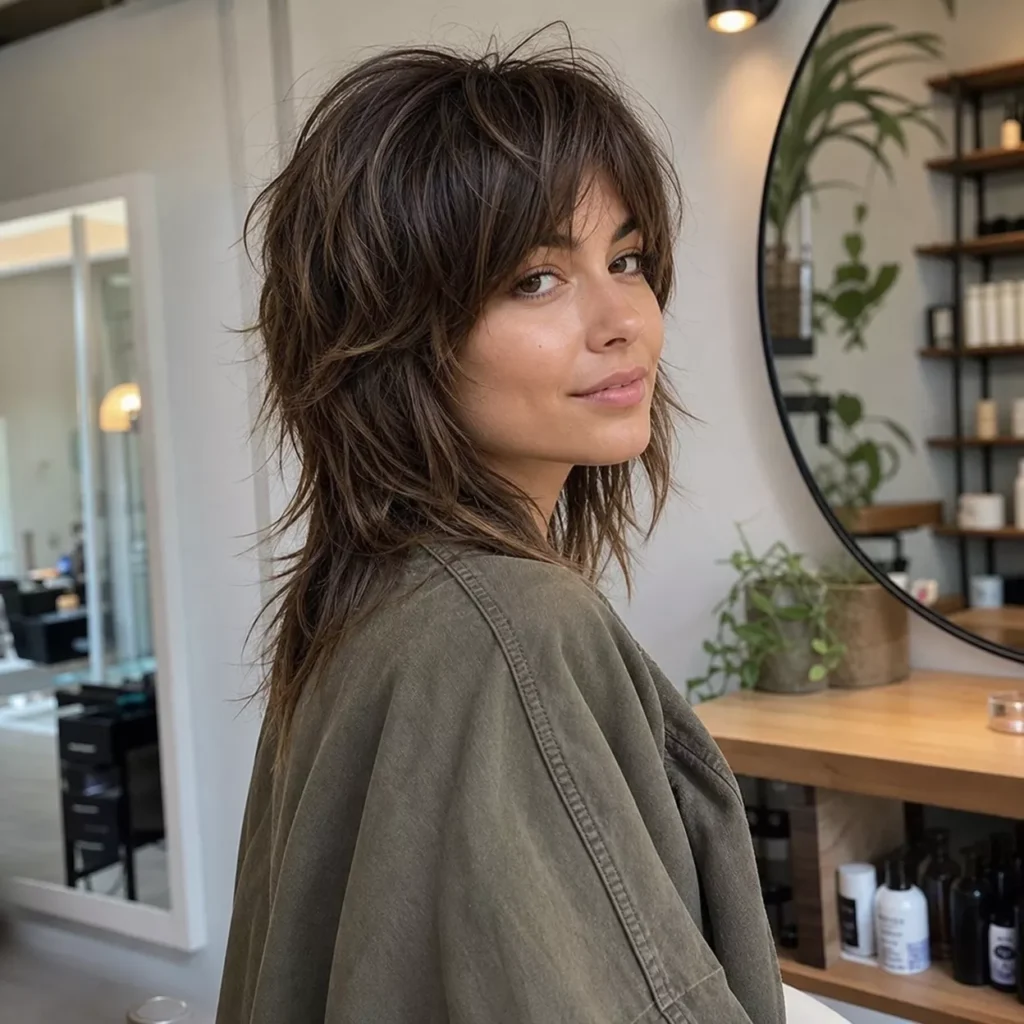
This starts with heavy layering right at the crown and lets it cascade down through the sides and back, which needs a fair amount of length to begin with to have anywhere to fall from. On hair with some natural wave or curl, the layers tend to separate on their own; on straight hair, getting the same separated look usually takes a scrunch of mousse or a light diffuse rather than air-drying alone.
Choppy Short Bob with Peek-a-Boo Color
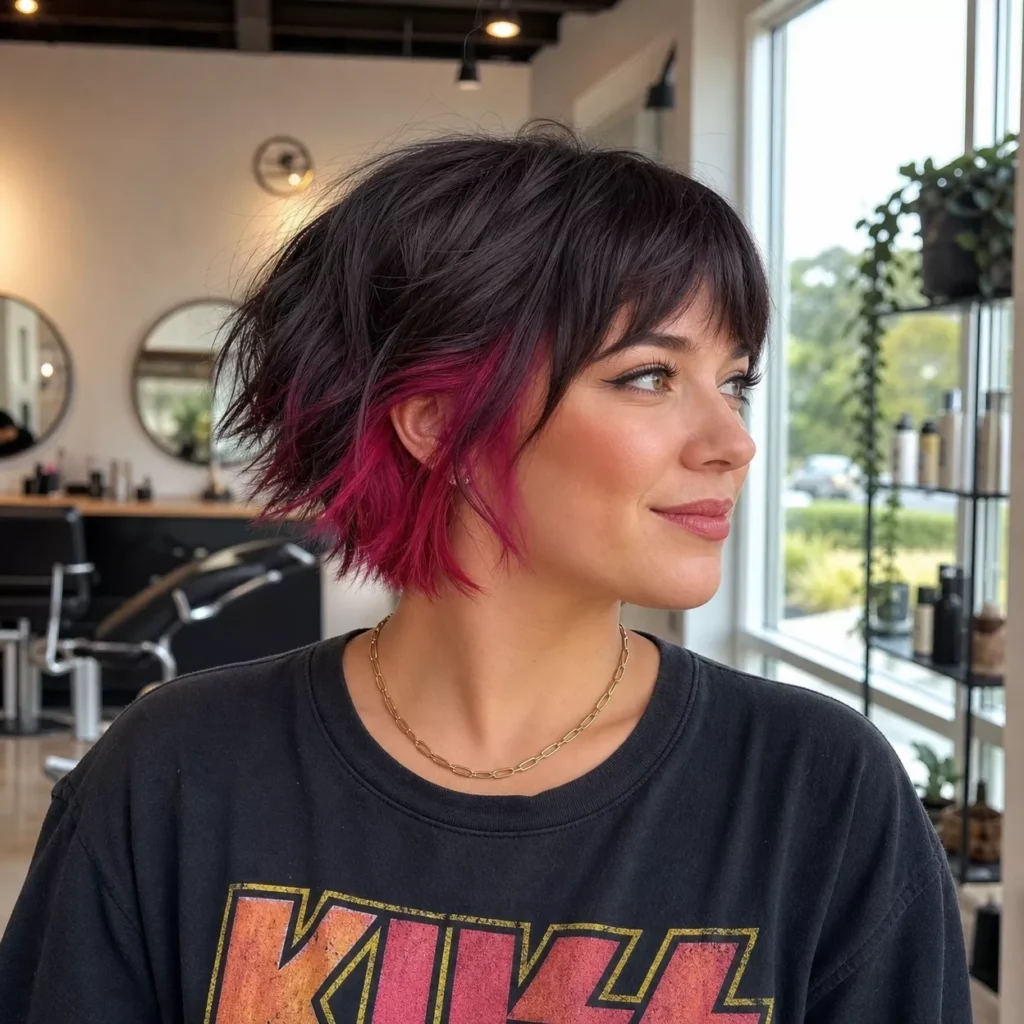
Hiding color in the lower layers means it only shows when the choppy layers move or separate, rather than being visible all the time. That makes it a lower-commitment way to try a bold shade, though it also means the color needs enough contrast with your base to be visible at all once it’s tucked underneath.
Short Choppy Cut for Fine Hair
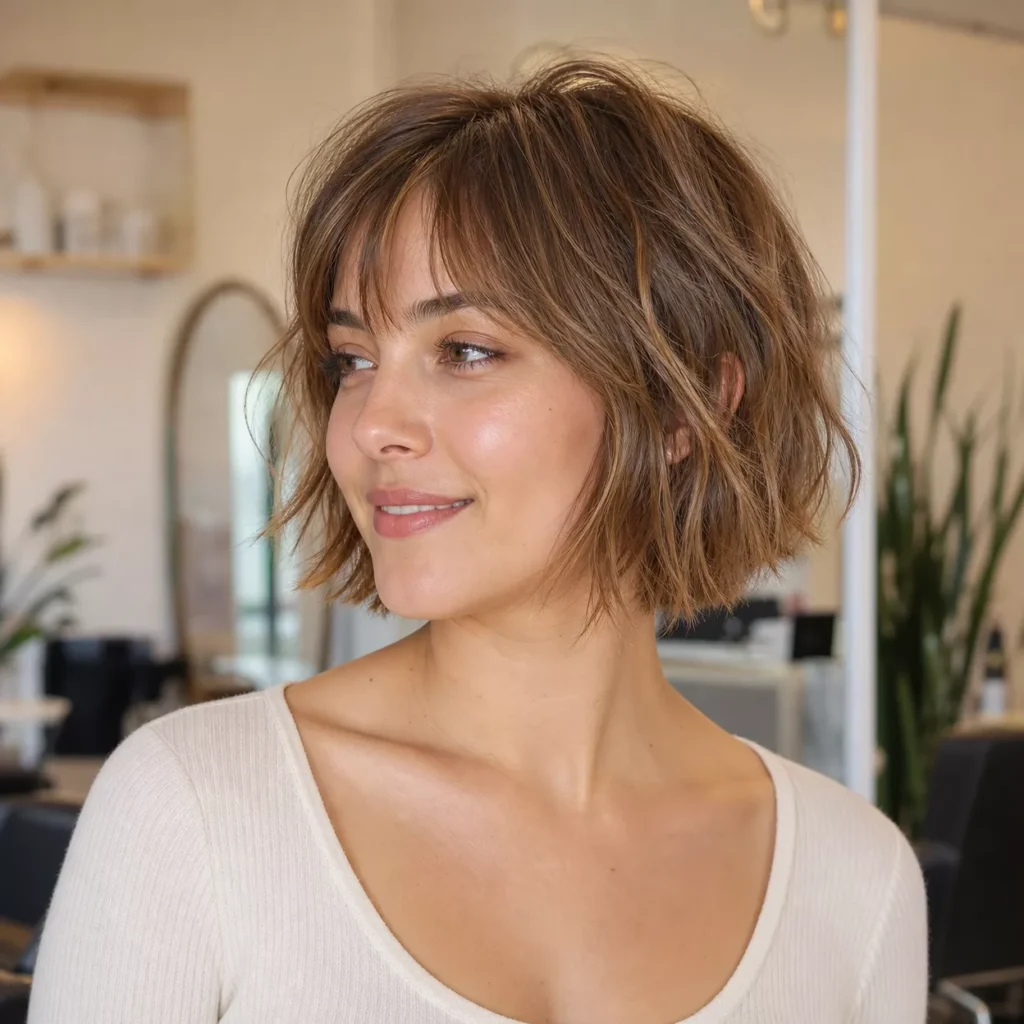
The useful question with fine hair isn’t whether to layer, but where. Layers near the crown can lift the roots and help with flatness there. Layers carried too far into the ends can leave the perimeter looking thin rather than full, since there’s less hair to spare at the tips than at the root. Choppy cutting at the ends only, with the crown left a bit heavier, is one way to split the difference.
Choppy Bob with Soft Waves

Waves add width along wherever they sit in the hair, so on a choppy bob they tend to show up most right where the layers end, since that’s where there’s the most separation for a wave to catch. A medium-barrel wand and a flexible-hold spray hold reasonably well, though humidity will relax the set faster than it would on a smoother, less textured cut.
Asymmetrical Choppy Short Cut
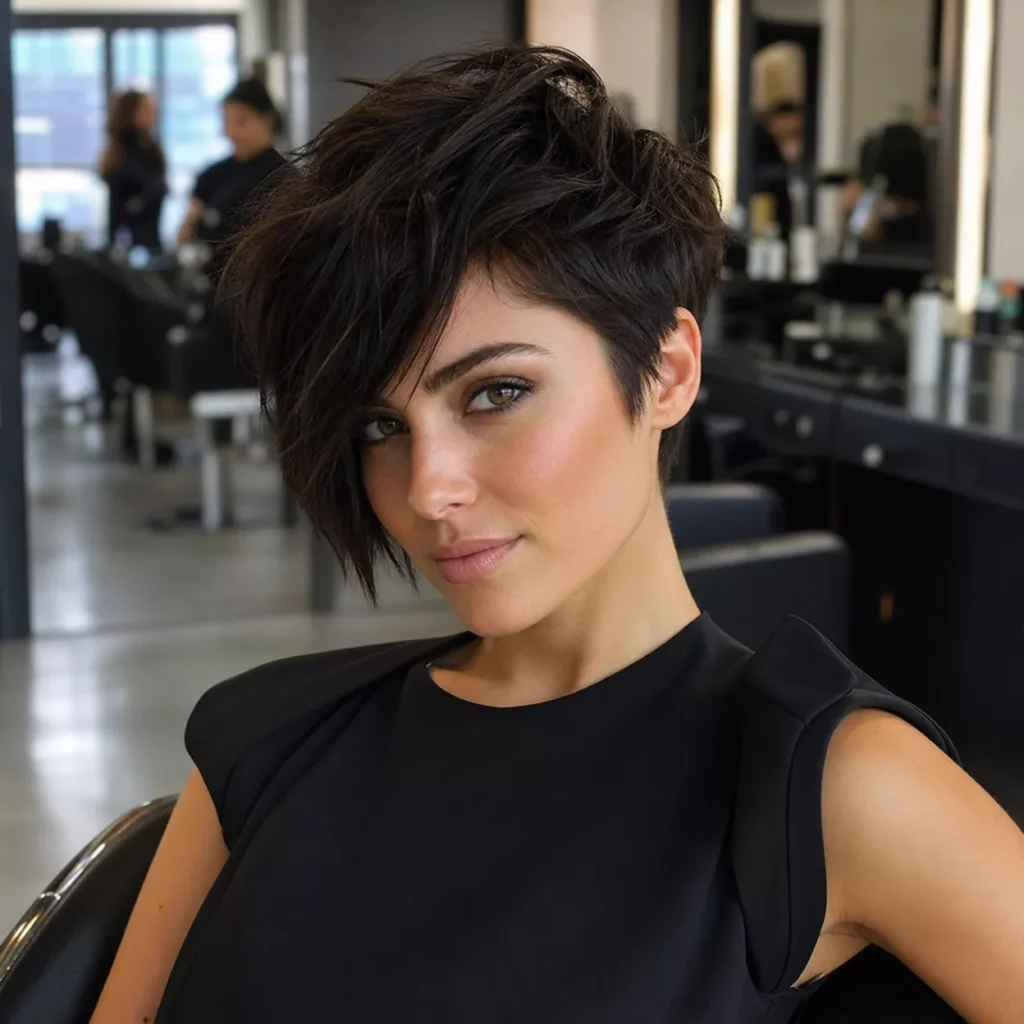
The uneven length between the two sides is the entire design, and it’s also what makes this one need more frequent attention than a symmetrical cut. The shorter side loses its shape first as it grows, so the asymmetry becomes less deliberate and more accidental if you go too long between trims. A milder length difference is easier to keep looking intentional between visits than a dramatic one.
Choppy Short Shag on Curly Hair
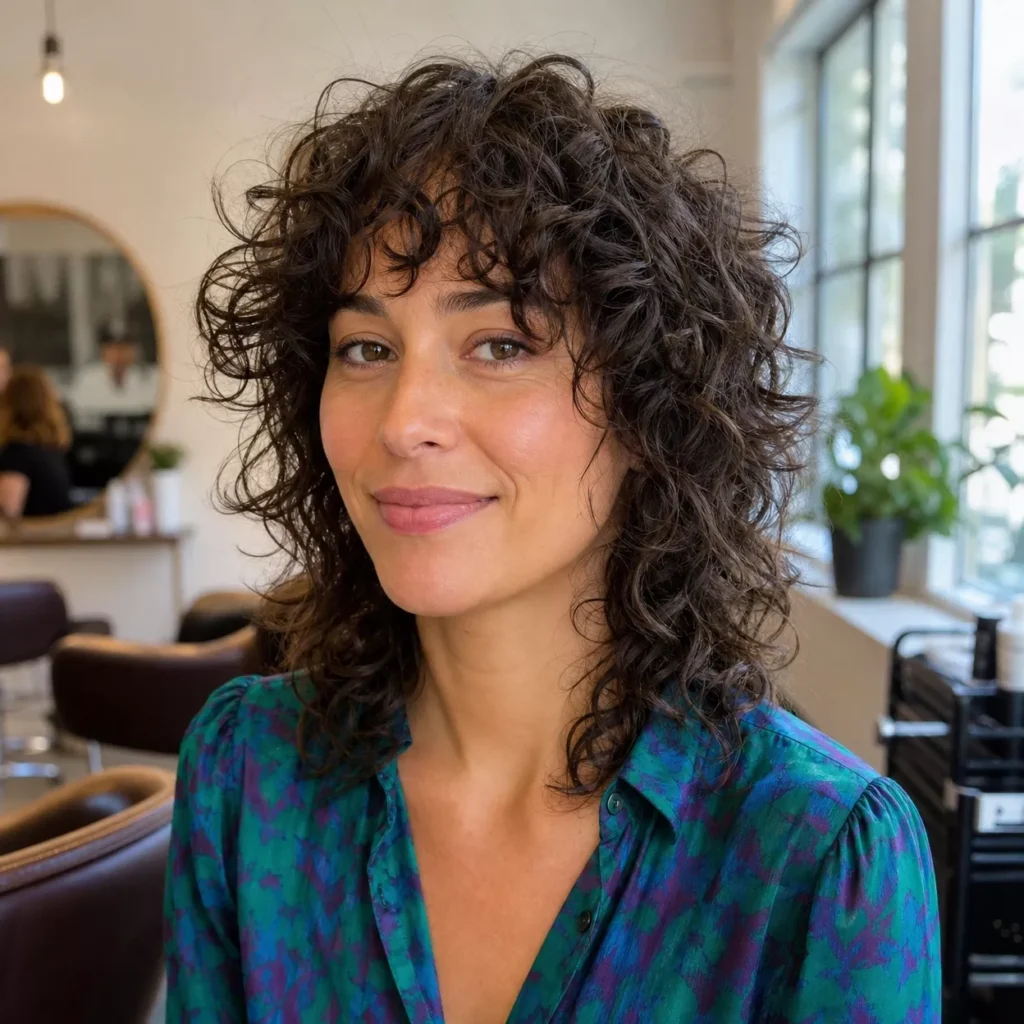
Curls shrink as they dry, often more than people expect, so a length that looks right wet can sit noticeably shorter once it’s fully dry. Removing weight through choppy layering can let curls spring up rather than hang, but it’s worth having the shape checked or cut on dry hair so the stylist is working with the length you’ll actually end up wearing.
Choppy Layered Crop with Fringe
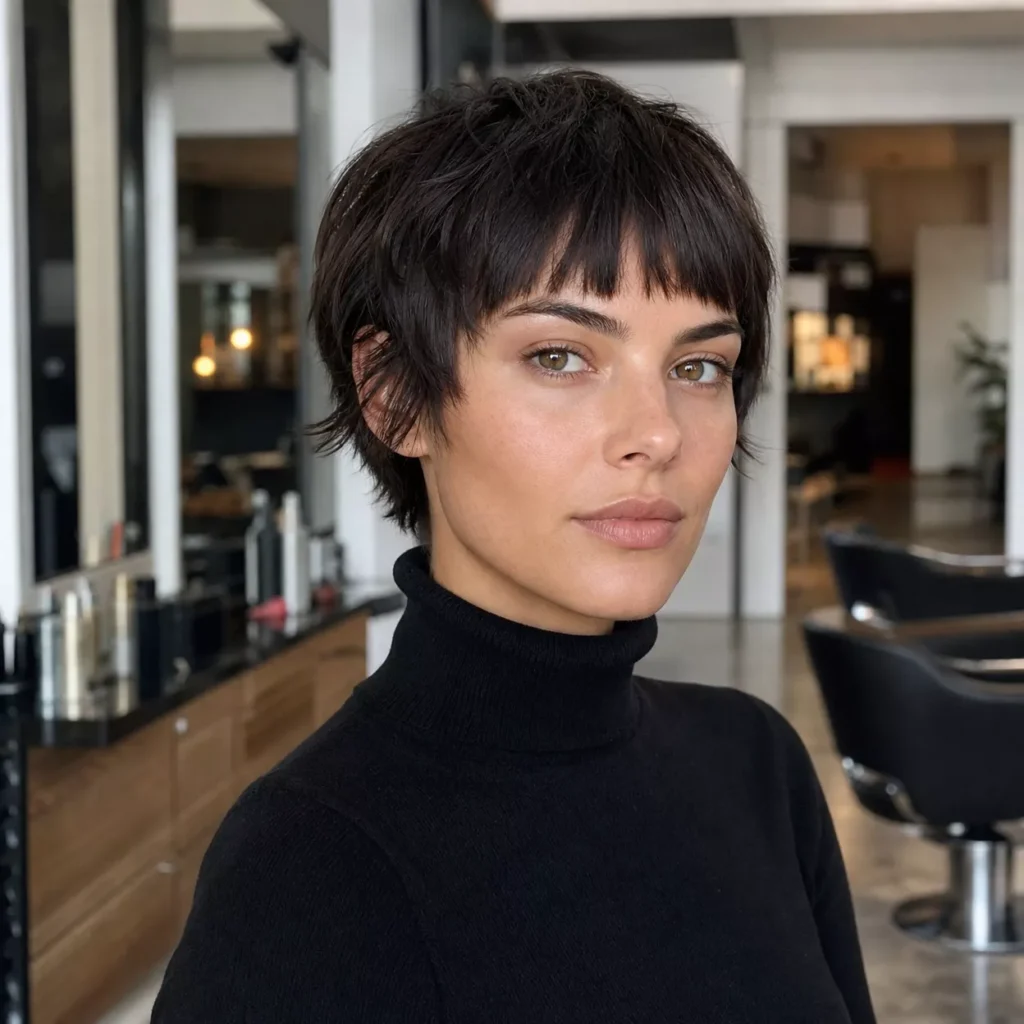
Similar to the blunt-fringe bob earlier on this list, but at a shorter length overall, so the contrast between the precise fringe and the loose, choppy crop reads even more clearly. Because the crop is shorter, there’s less hair to hide a rough transition where the fringe meets the sides, so this one benefits from a stylist who blends that area carefully rather than leaving a visible step.
Tousled Choppy Short Cut

How little effort this actually takes depends heavily on your natural texture. Wash, a texturizing cream scrunched through, and an air-dry can be genuinely quick if your hair already has some movement to work with. On very straight, fine hair, the same routine may fall flatter than the tousled result in a photo, since there’s no natural bend for the product to enhance.
How to Choose a Choppy Layered Cut for Your Hair
Start with what your hair is actually doing now, not what you want it to do. Fine, straight hair tends to benefit from layering concentrated near the crown, with the perimeter kept a little more intact so the ends don’t look sparse. Thick hair usually has room for layering removed through the mid-lengths and interior, which is where bulk tends to build up. Curly or wavy hair needs a length decision made with shrinkage in mind, since the same cut can look different wet versus fully dry.
Maintenance is worth being honest with yourself about too. Anything with a fringe, an undercut, or a hard perimeter line often needs trims roughly every three to five weeks to hold its shape. Softer, more textured shapes with no sharp lines tend to grow out more gradually and forgive a longer gap between salon visits.
What Can Go Wrong With Choppy Layers
- Too much layering on already-fine hair, which can leave the ends looking wispy instead of textured.
- A fringe or undercut left too long between trims, since both grow into an obvious, less deliberate shape faster than a plain layered edge.
- Copying a curly-hair reference on straight hair, or the reverse, since the same layering pattern separates very differently depending on texture.
- An asymmetrical cut allowed to grow out unevenly, which can shift from looking intentional to looking simply uneven.
- Choppy texture styled with too much product, which weighs pieces back together and cancels out the separation the cut was meant to create.
What to Tell Your Stylist
A few honest points of information help more than a single reference photo on its own:
- “My hair is fine. Can you keep the perimeter a little heavier and concentrate the choppy layering near the crown?”
- “My hair is thick. Where would you take out the most bulk so it dries faster and sits lighter?”
- “My hair curls or waves. Can we check the length again once it’s dry?”
- “I don’t want to be back in the chair every three weeks. Which version of this holds its shape longest?”
Choosing Between These 24 Styles
There isn’t one version of a choppy layered cut that suits every head of short hair, since the technique behaves differently depending on what you start with.
- Fine hair: look for a cut that keeps weight at the perimeter and concentrates the layering near the crown, rather than one that chops evenly all the way through.
- Thick hair: look for layering removed through the mid-lengths and interior, where bulk tends to build, rather than only at the very ends.
- Curly or wavy hair: choose a length with shrinkage in mind, and have the shape checked on dry hair before the final cut.
- Lower maintenance: favor a softer perimeter with no hard lines, since fringes, undercuts and sharp edges all need more frequent trims to look intentional.
- A bolder result: an undercut, an asymmetrical cut, or a two-tone color placed along the layers will show the most visible change, at the cost of more upkeep to keep it looking deliberate rather than simply grown out.
Bring a photo, but bring your actual hair type and routine into the conversation too. The cut that looks right on someone else’s density and texture isn’t always the one that will look the same on yours.
FAQ
Do choppy layers make short hair look thicker?
They can create the appearance of more fullness by separating strands so light and air move through the hair instead of it lying flat. That’s different from actually adding density, and the effect is more noticeable on fine hair with reasonable coverage than on hair that’s genuinely sparse.
How often do choppy layers need a trim?
It depends on the shape. A cut with a fringe, an undercut, or a hard perimeter line usually needs attention every three to five weeks to hold its edge. A softer, more textured shape with no sharp lines tends to grow out more gradually and can often stretch longer between visits.
Can I get choppy layers on curly or wavy hair?
Yes, though length should be judged on dry hair rather than wet, since curls shrink as they dry and a length that looks right damp can sit shorter once it’s fully dry. Removing weight through layering can also let curls spring up rather than hang flat.
Will choppy layers work if my hair is very fine?
It depends on where the layering happens. Layers concentrated near the crown can help with flatness at the roots. Layers carried too far into the ends can leave the perimeter looking thin, since there’s less hair to spare at the tips than near the root.
Is a choppy cut hard to style at home?
That depends more on your natural texture than the cut itself. Hair with some natural movement often needs just a texturizing cream and an air-dry. Very straight, fine hair may need a scrunch of mousse or a light diffuse to get the same separated look a photo shows.