26 Short Hairstyles for Women and What to Consider Before You Cut
Short hair sounds like one decision, but it’s really several. A chin-length blunt bob and a cropped pixie both count as short, yet they live very different lives. One keeps a solid edge you can tuck behind your ears; the other exposes the nape and changes shape within weeks. A bixie sits between them, a short shag adds layers that depend heavily on texture, and a tapered cut moves almost all the attention to the crown.
Those differences show up in daily styling, in how often the shape needs reshaping, in what the grow-out looks like, and in where the weight of the hair ends up. They also depend on your hair. Density, strand thickness, and natural texture decide whether a short cut sits close to the head or pushes outward, and whether the finish in a photo appears with a little product or only after heat styling.
The 26 cuts below cover that range, from bobs to pixies to the shapes in between. Each one explains the detail that matters most, so you can work out which kind of short you actually want.
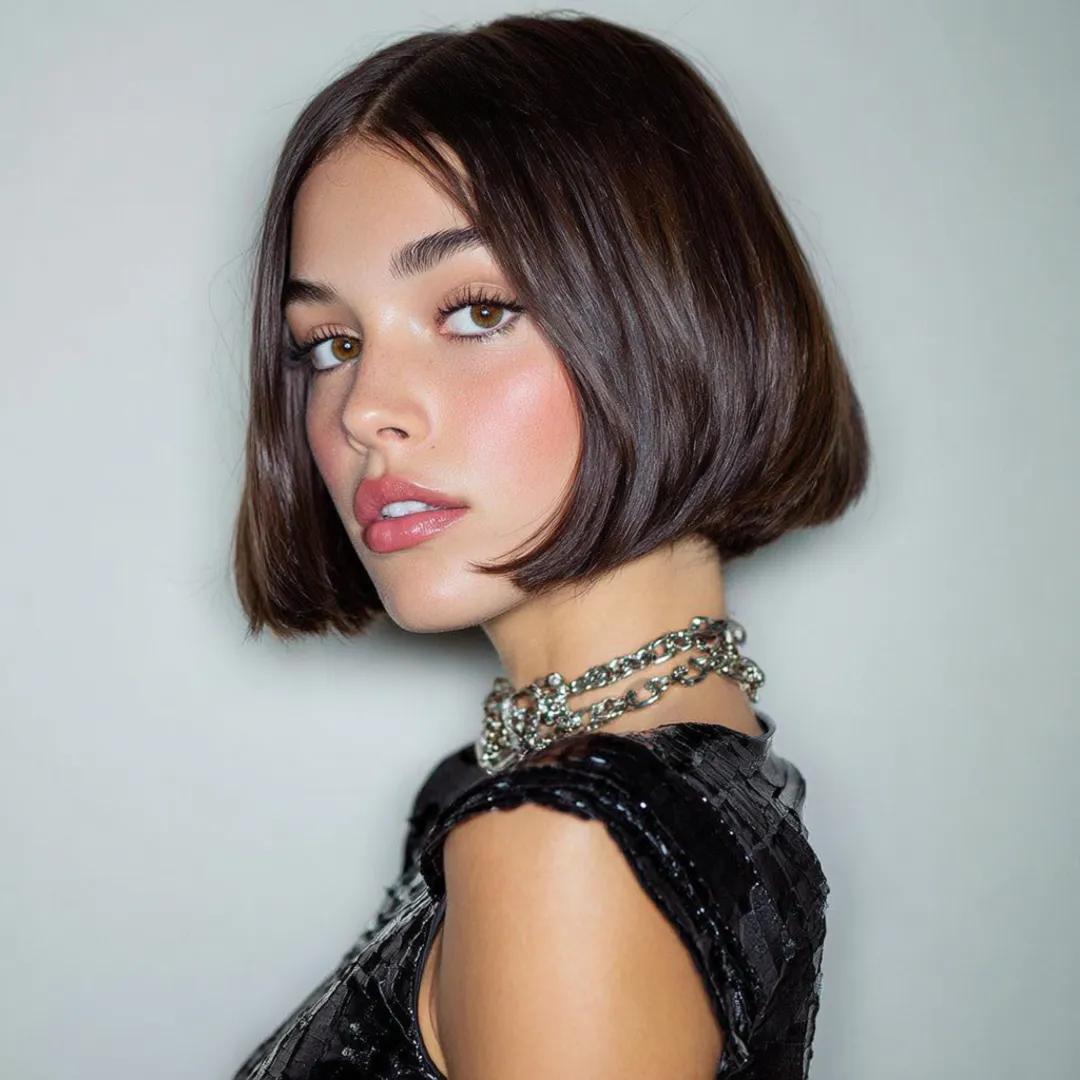
Classic Blunt Bob

Every bob on this list can be measured against this one. The hair is cut to a single, solid line, usually at the chin or jaw, with little or no layering inside. That strong perimeter makes the ends look full and the shape look deliberate. Density decides how it sits: dense hair holds a crisp, heavy line, while fine hair reads lighter and swings more. Straight hair shows the line clearly; wavy hair bends it into something softer. A center part keeps it symmetrical, and a side part tilts it.
Because the edge is so precise, a small amount of growth changes where it falls, and the line starts to soften within weeks. Our guide to bob hairstyles covers more perimeter variations.
Textured Pixie Cut
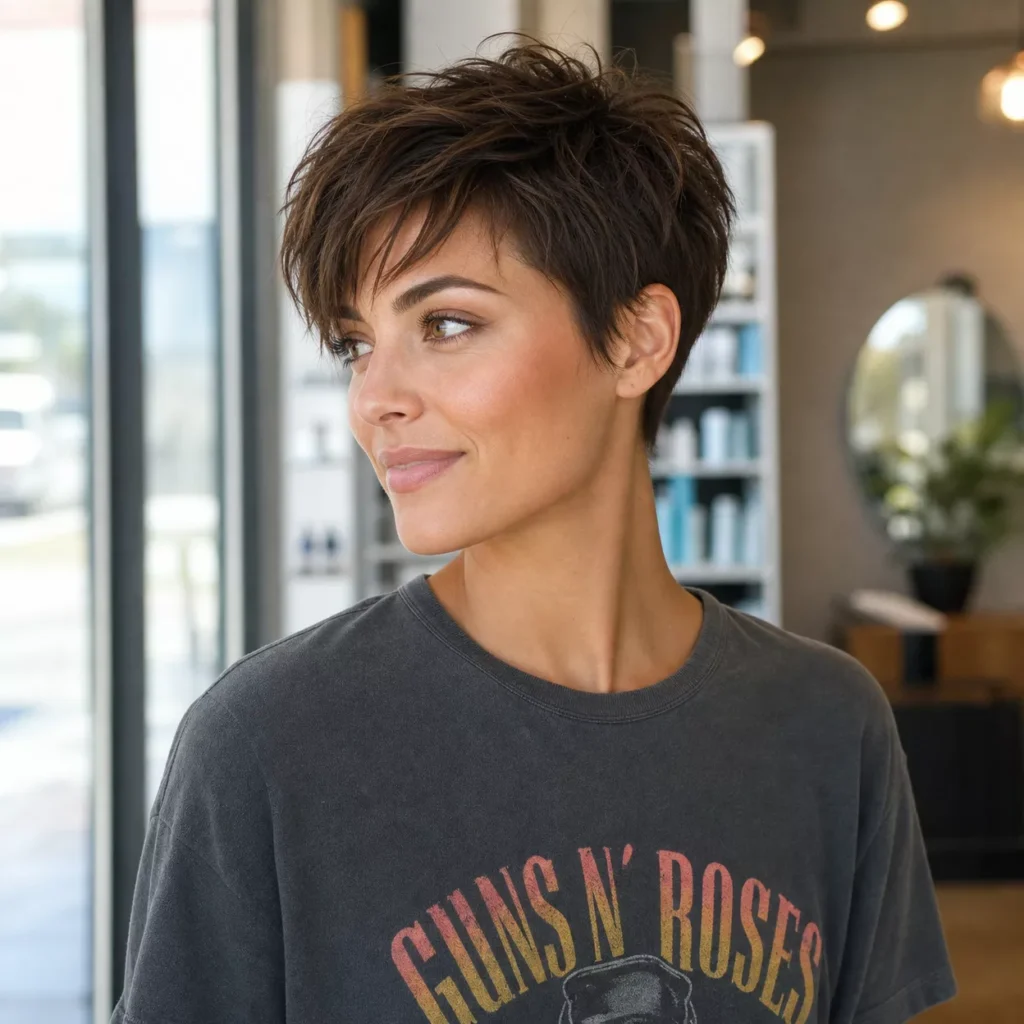
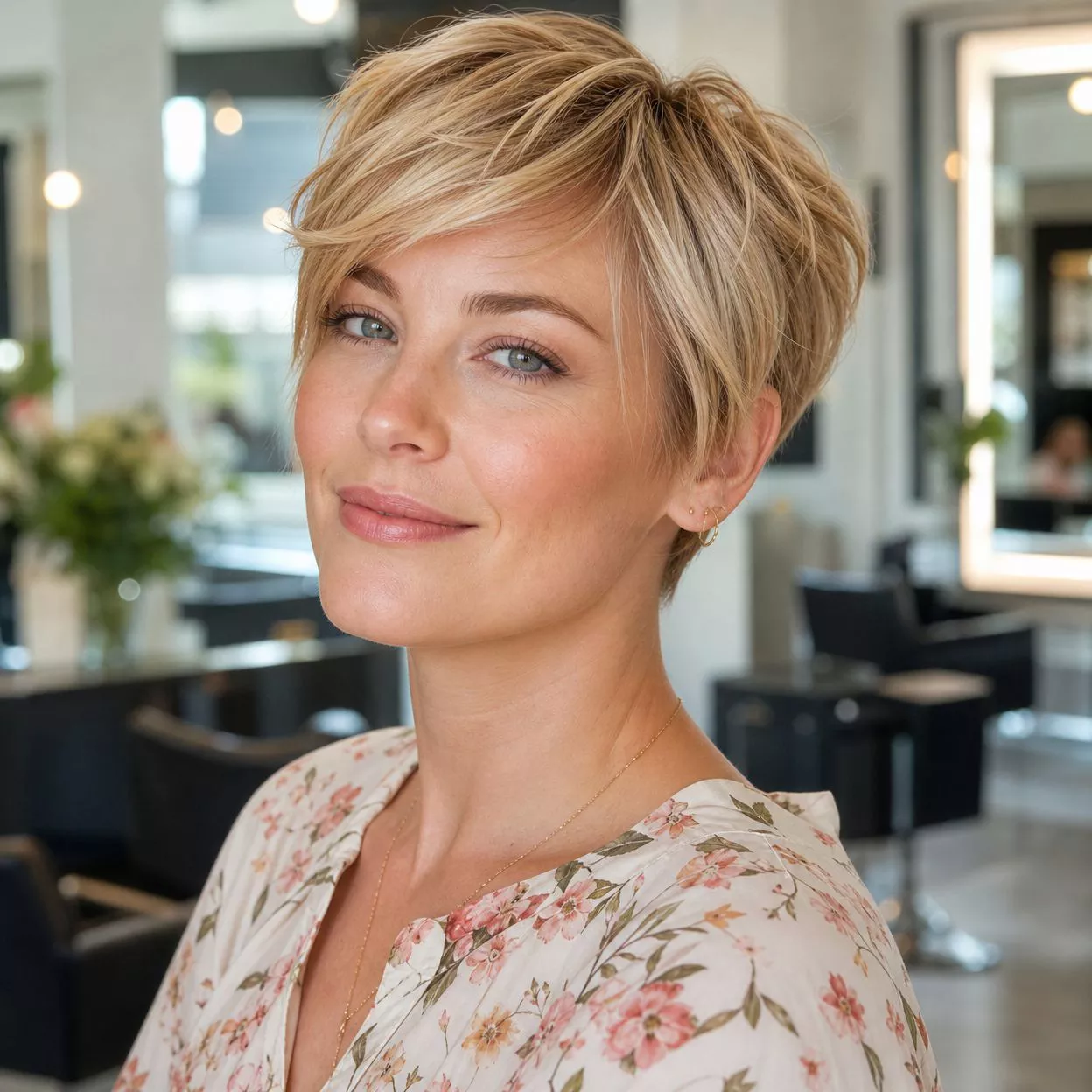
“Textured pixie” covers a wide range. Some versions keep the sides close and leave several inches on top; others keep everything short and rely on point-cutting for separation. The crown length decides how much styling you’ll do. Longer top pieces can be pushed, swept, or tousled, but they usually need a little product to sit with texture rather than lie flat. The hairline matters more in a pixie than in longer cuts, since cowlicks and uneven growth are on show. Grow-out comes quickly too, with the sides and nape losing their shape before the top does.
Short Shag with Curtain Bangs
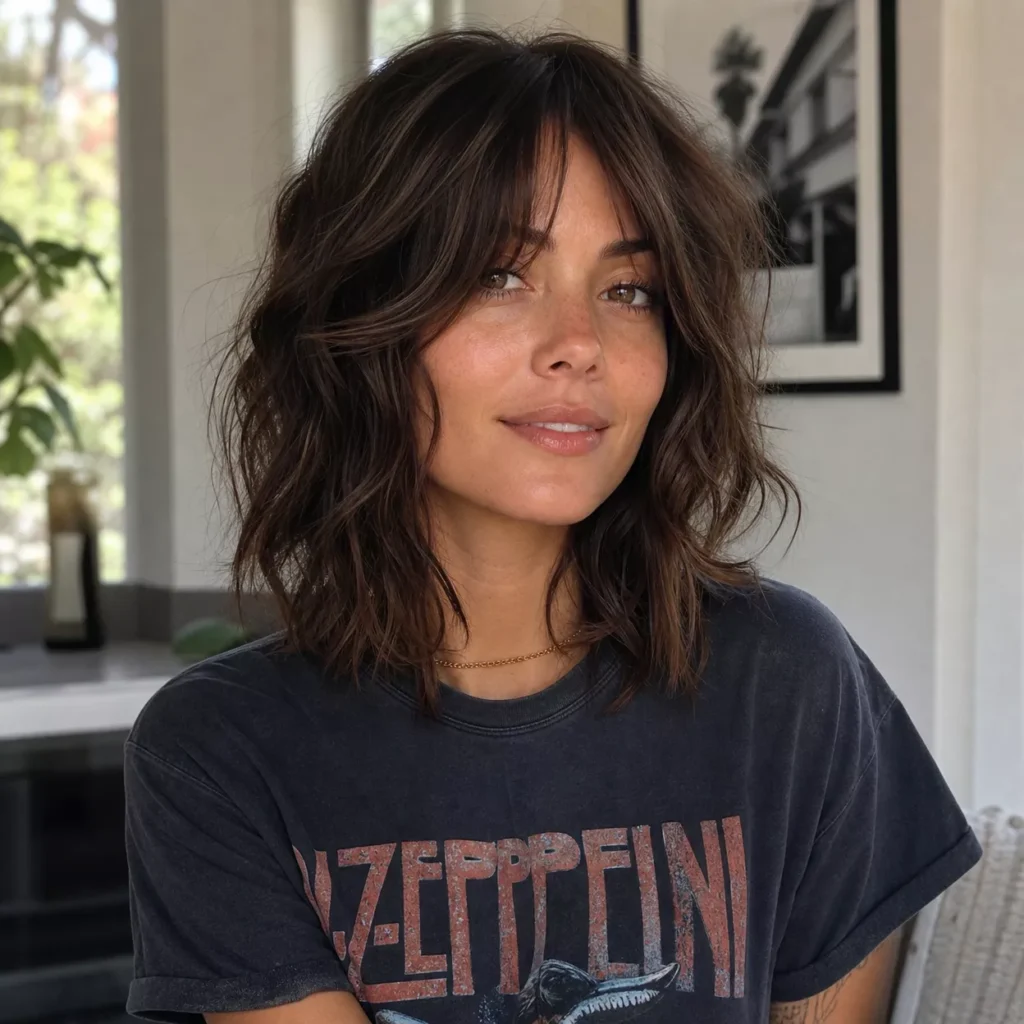
A short shag puts shorter layers at the crown and texture through the rest of the cut, and curtain bangs carry that movement to the front. The connection between them matters: when the bangs flow into the first face-framing layer, the front reads as one shape rather than a fringe sitting on top of a haircut.
Texture changes the outcome. On wavy hair, the shag tends to fall into place. On straight hair, it often needs product or heat to show separation. On curly hair, the layers and bangs may shrink and spring up higher than they were cut. And dense hair can widen at the crown if there are too many short layers.
Angled Bob
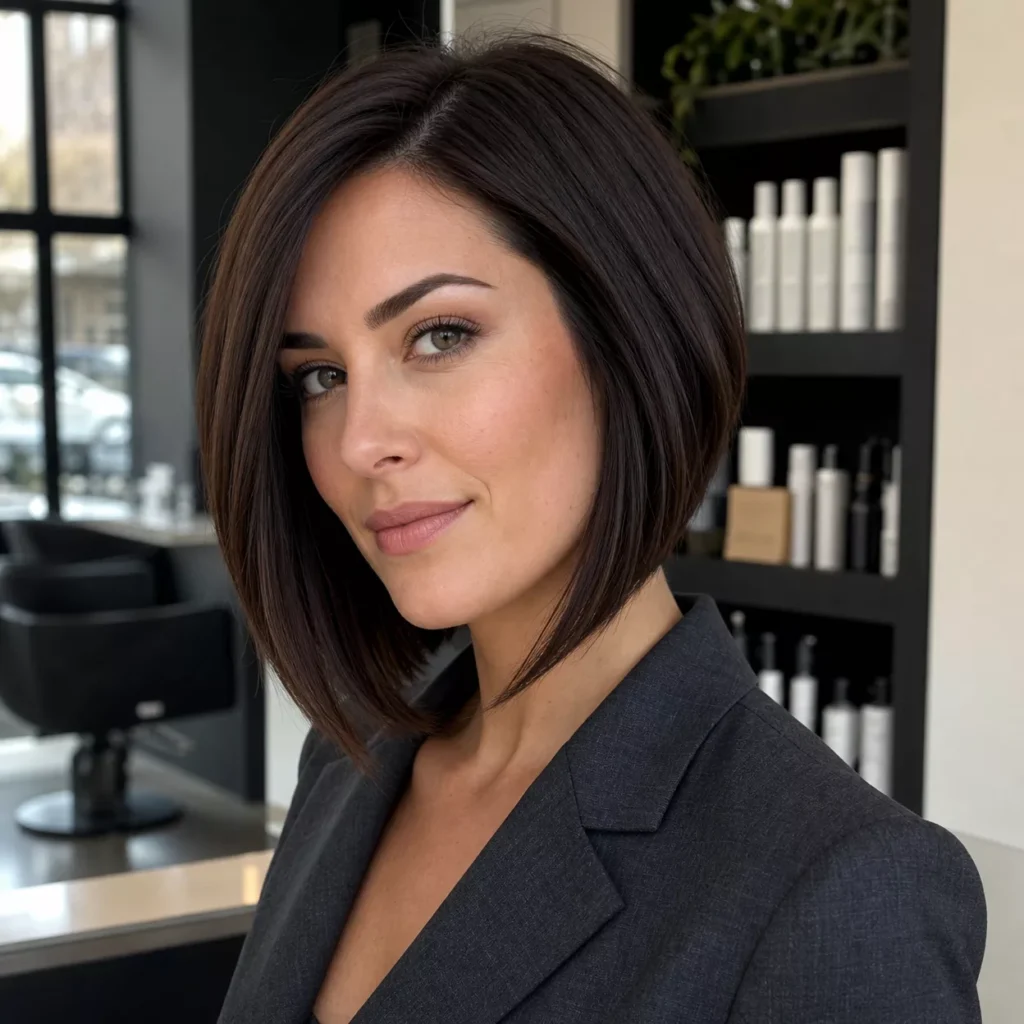
An angled bob is shorter at the back and longer toward the front, so the perimeter slopes forward and the nape sits higher than the jawline. The steepness of that slope defines it. A gentle angle reads as a subtle tilt; a sharp one becomes a clearly graphic shape. Density affects how clean the line looks, since dense hair at the back can push outward. As it grows, the back reaches the collar first, and the angle gradually flattens unless it’s reshaped.
Short Layered Wolf Cut
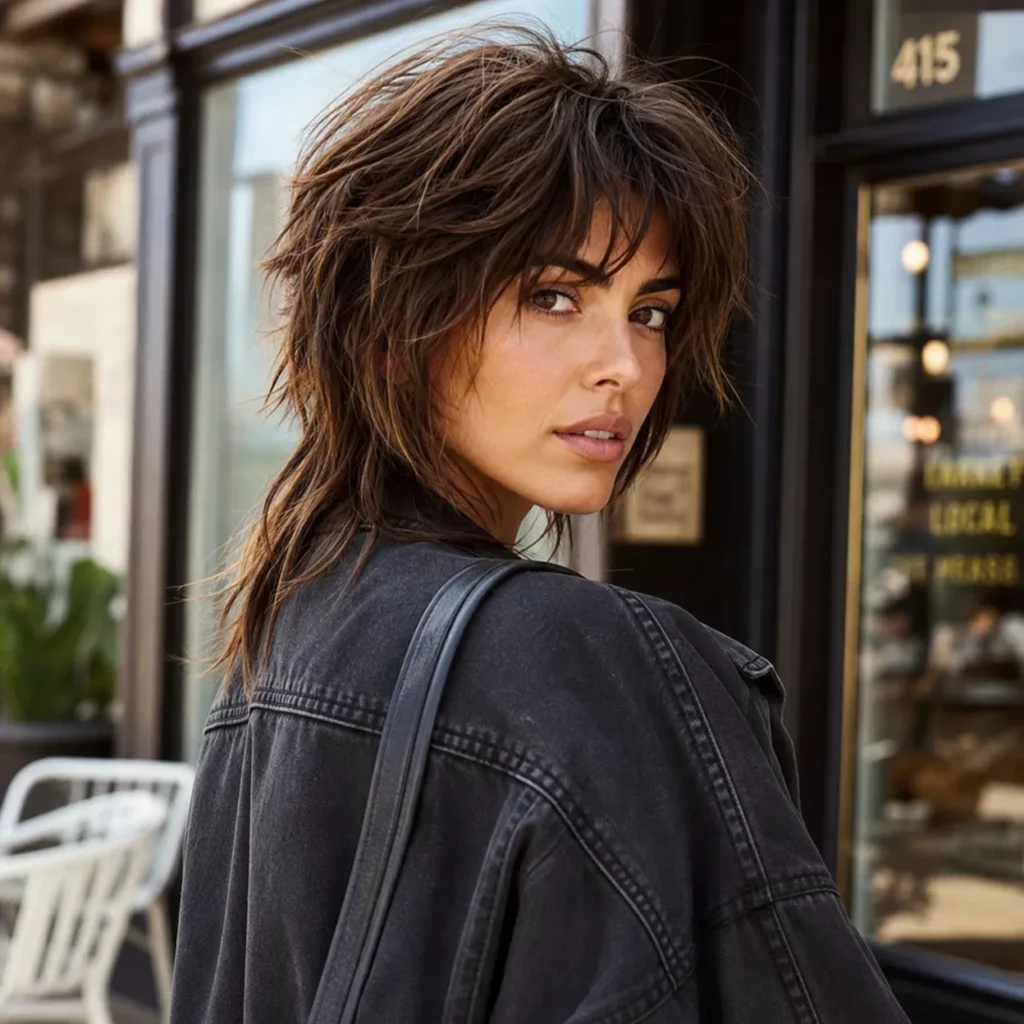
A wolf cut sets a short, layered crown against noticeably longer pieces at the nape, giving the shape height on top and length behind. That contrast is the whole design. On dense hair, the crown layers can build considerable height and width; on finer hair, they may look flatter unless styled. Wavy hair often falls into the separated finish naturally, while straight hair usually needs a texturizing product. As it grows, the gap between crown and nape narrows, which changes the silhouette more than it would with most cuts.
Inverted Bob
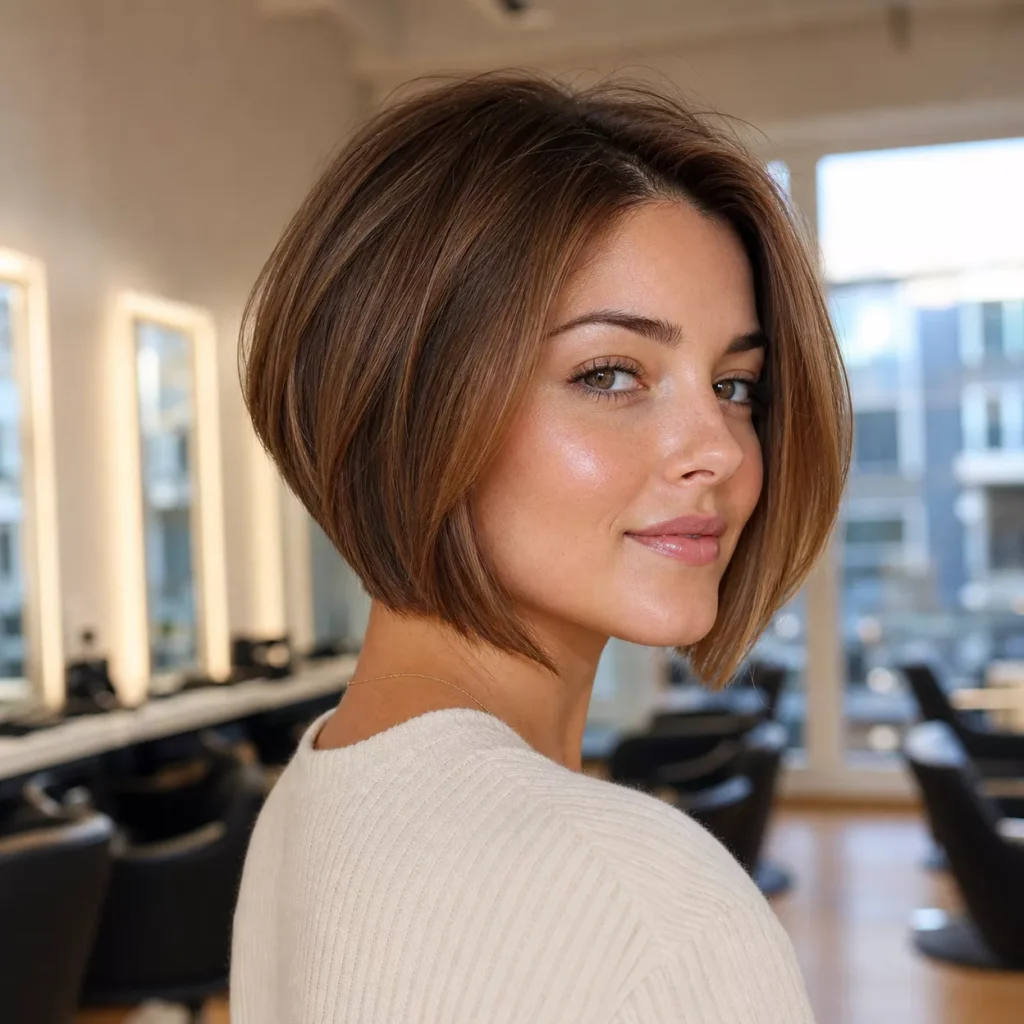
The inverted bob relies on graduation: short, stacked layers at the nape building upward, with longer pieces toward the front. That moves weight to the back of the head and creates a rounded profile from the side. Fine hair needs a careful version. If it’s fine but dense, the graduation can hold its shape well. If it’s also low in density, the short nape layers may show scalp and the stack may look less full than in photos. As the back grows, it softens and lengthens, so the shape depends on regular reshaping.
Short Pixie Bob
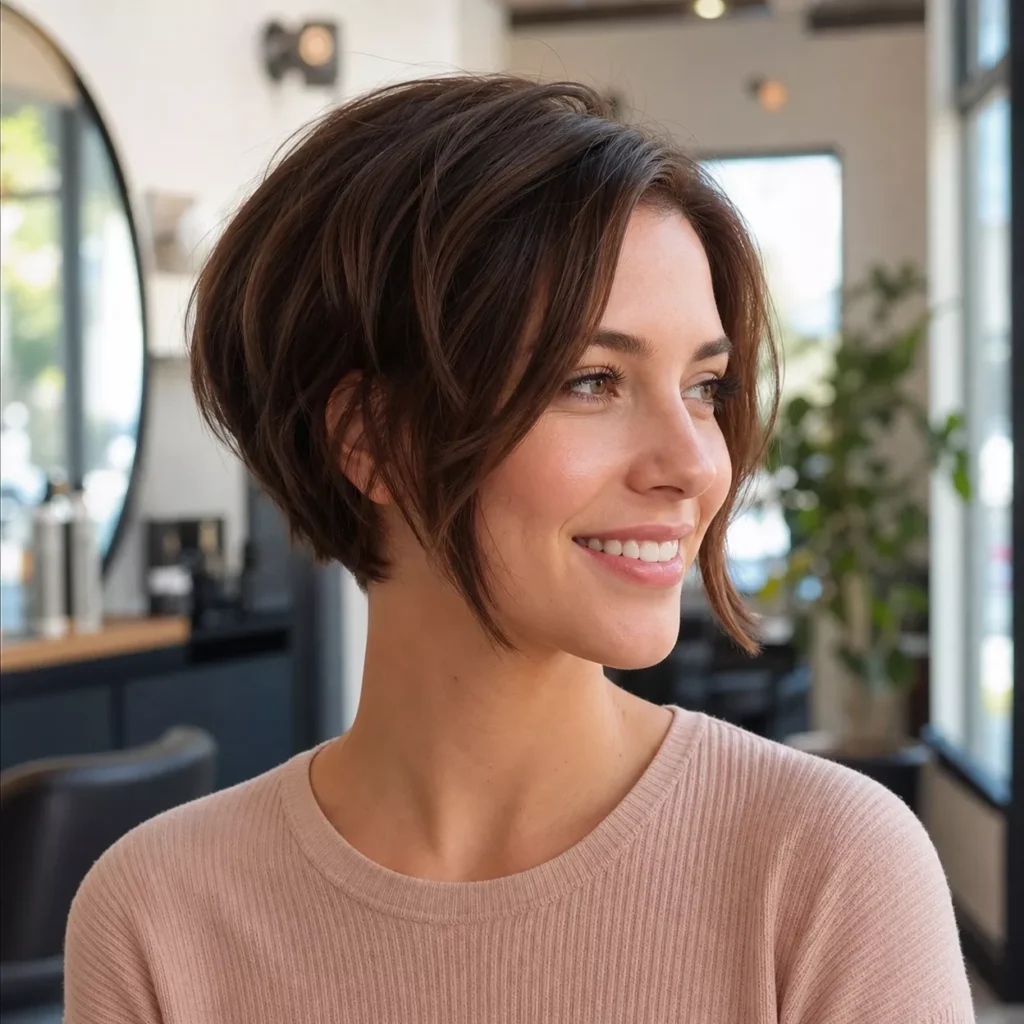
A pixie bob sits between its two names: shorter than a bob at the back and sides, longer than a pixie at the front. That extra front length gives more options. It can be tucked, swept, or worn forward, while the nape stays neat. It’s often used as a transition, either for someone moving from a bob toward a pixie or for someone growing a pixie out. The commitment is moderate, though the nape still needs tidying as it grows, since that’s where the shape changes first.
Sleek Chin-Length Bob

The haircut is a chin-length bob with a clean perimeter. The sleekness is styling. On naturally straight hair, a quick blow-dry and a little smoothing product may be enough. On wavy or curly hair, the same polished finish usually means a flat iron or a careful blowout. The chin placement keeps the ends right at the jawline, so the line needs to be precise. Air-dried, the same cut may look softer and less defined than in sleek reference photos.
Short Curly Shag

Curly hair can shrink considerably, so a short shag cut at the jaw when wet may sit much higher once dry. Many stylists check curls dry before settling length and layers. In a curly shag, layering mostly redistributes weight: crown layers let the curls on top lift, while enough length below keeps the shape from widening into a triangle.
Curl pattern changes the plan. Looser curls may need less layering. Tight curls and coils often shrink and expand more, and dense curls may need more internal shaping. One approach rarely fits every pattern. Our guide to curly shag haircuts goes into layer placement in more detail.
Choppy Textured Bob

A choppy bob breaks up the ends with irregular, point-cut lengths, often with some interior layering as well. On hair with natural wave or texture, that can look finished with very little styling. On straight hair, the choppiness may lie flat unless you add a texturizing product. Density matters at the bottom edge: dense hair carries the broken ends well, while fine or low-density hair can look sparse there. As it grows, the choppy ends soften, which can make the shape look less intentional until it’s refreshed.
Asymmetrical Bob
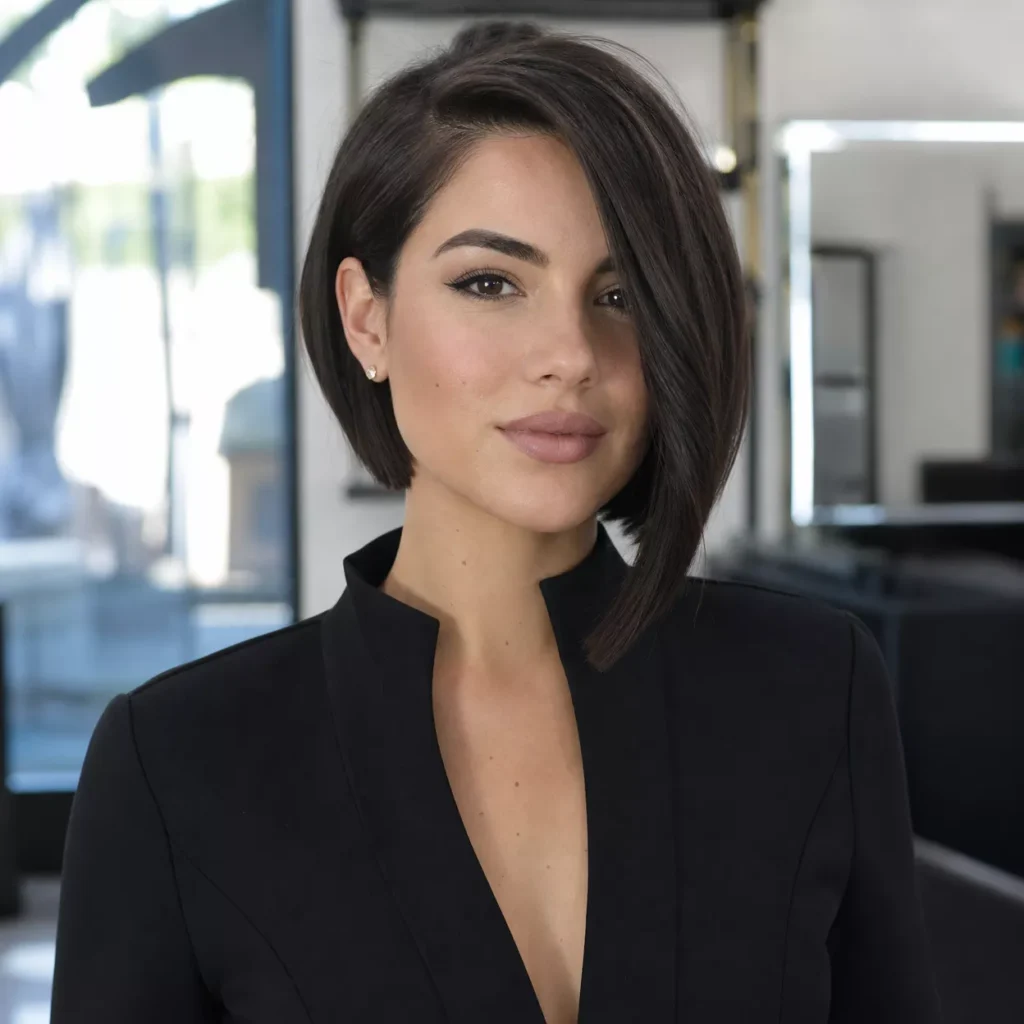
An asymmetrical bob is longer on one side than the other, so the shape changes depending on where you stand. Check it from the front, both sides, and the back before you leave the chair. The part usually sits toward the longer side, sending more hair across. Straight hair shows the asymmetry clearly; curly or wavy hair can blur it. As it grows, the shorter side catches up, so the difference becomes less visible unless the shape is refreshed.
Short Bob with Wispy Bangs
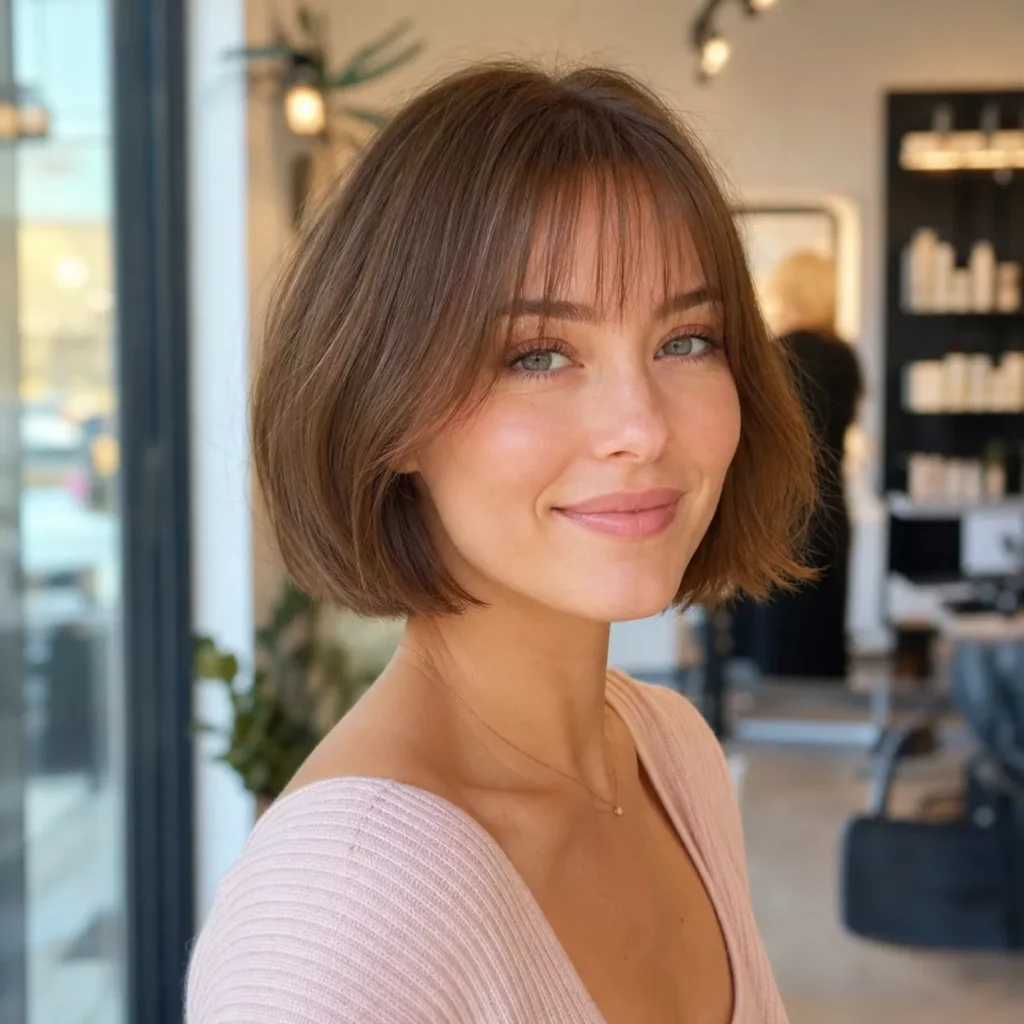
Wispy bangs are cut light enough to see through, blending into a short bob instead of forming a solid line. That lightness depends on hairline density; a sparse front can make them look patchy. They usually need some styling, often a quick blow-dry, to sit evenly. As they grow, they pass through a stage where they fall into the eyes before blending into the face-framing pieces, so there’s an in-between phase to plan for.
Ear-Length Bob

Cutting a bob to the ears is a bigger step than it sounds. The length sits above the jaw, which opens the area around the jaw and cheeks and leaves less hair to work with. Many ear-length bobs can still be tucked behind the ears, which changes the look from rounded to sharper. Cowlicks at the nape or crown are more visible at this length, and natural texture shows clearly: straight hair looks precise, while wavy hair may kick outward. Grow-out passes through jaw length, which many people find easier to manage than a pixie grow-out.
Short Wavy Bob

Three things meet here: a short bob cut, a natural wave, and styling. If your hair has a consistent natural wave, the bob may air-dry into shape with a little cream or mousse. If the wave is uneven or weak, it may need scrunching, a diffuser, or a wand. Humidity can make waves fuller or frizzier. The cut helps by leaving enough length for the wave to form, but it can’t create a wave that isn’t there.
Classic Pixie Cut
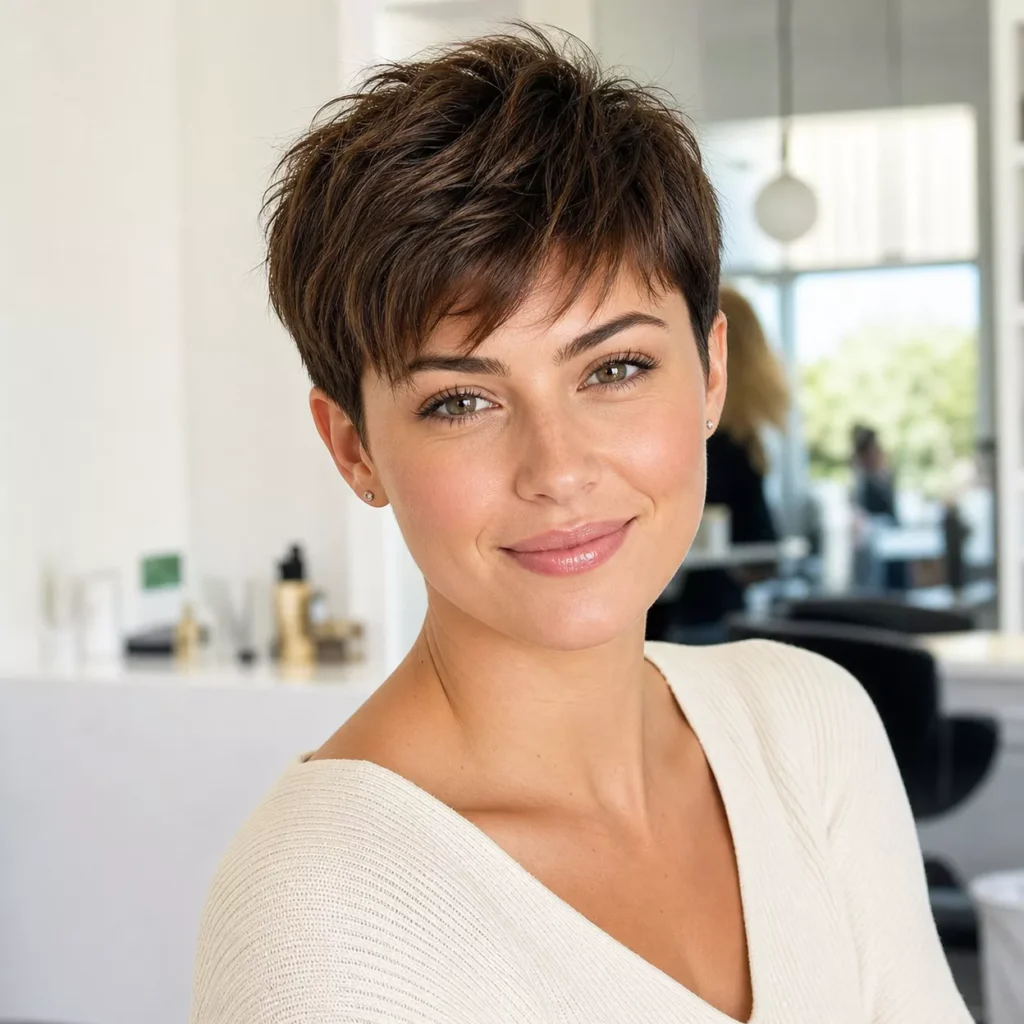
A classic pixie keeps the sides and nape short, with a little more length at the crown and fringe. It’s a bigger commitment than any bob, mostly because of grow-out: the shape changes noticeably within weeks, and growing it out takes months of in-between stages. The hairline, nape, and crown are all visible, so cowlicks and growth patterns matter more. Daily styling can be quick on many hair types, though some people use a small amount of product to shape the top.
Short Bob with Curtain Bangs

Curtain bangs on a short bob part at the center and sweep toward the cheekbones, connecting into the bob’s perimeter. Their length decides how they read. Longer bangs blend into the bob; shorter ones look more like a distinct fringe. They sit best when the split matches your natural part. They’ll also need trimming before the bob does, since a little extra length changes their sweep.
Feathered Short Haircut

Feathering directs the layers outward and away from the face, so the ends flick back rather than hang straight. That’s different from thinning, which removes bulk without guiding direction. On straight hair, the outward movement usually needs a round brush to show. On fine hair with good density, feathering can add movement; on low-density hair, too much of it can leave the ends looking sparse. The effect comes from direction, not from adding hair.
Short Bob with Side Part and Waves

This is a styling combination on a short bob: a deep side part sending more hair across one side, plus waves that follow the same direction. The waves can be natural or made with a wand. The part holds best when it follows your natural growth direction. On dense hair, the heavier side may need some internal weight removed so it doesn’t sit bulky against the face. It suits days when you want more shape, though it asks for more styling than wearing the bob straight.
Tapered Pixie Cut
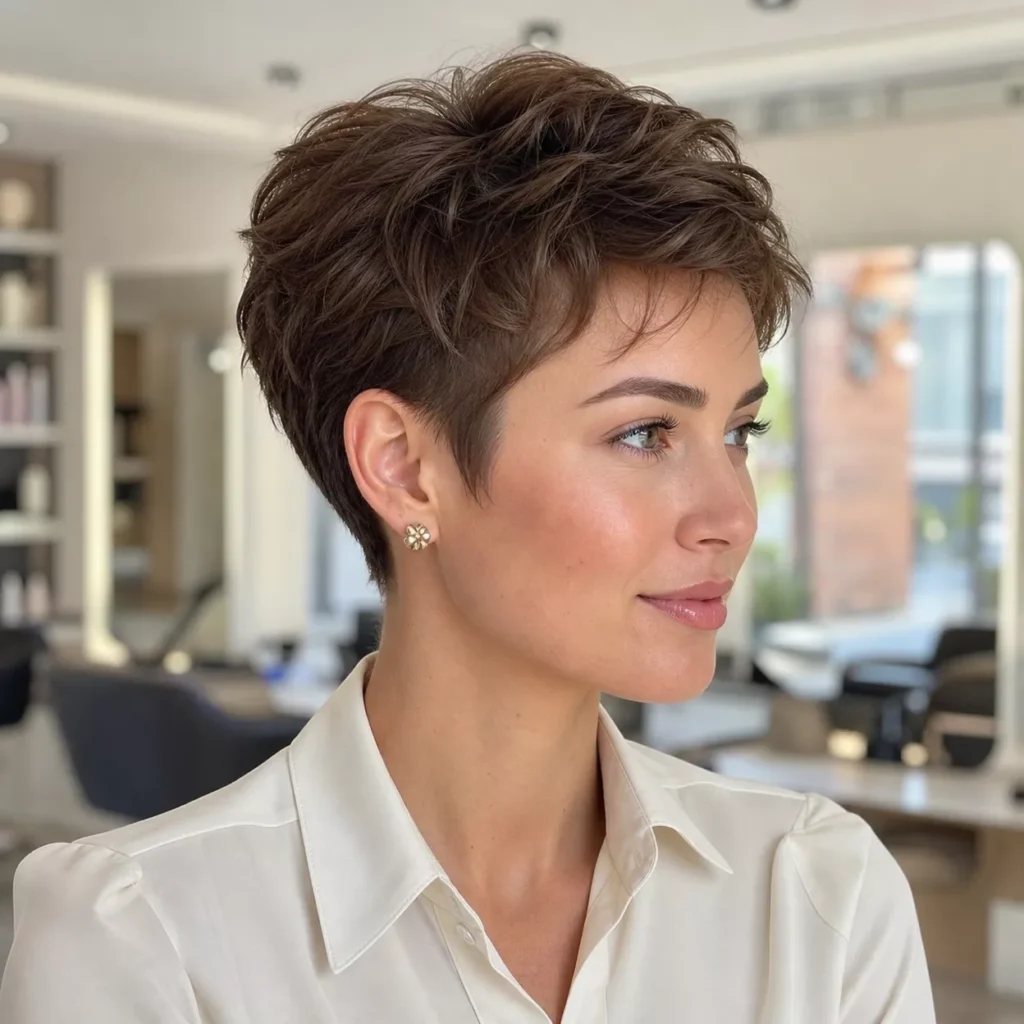
A tapered pixie keeps the sides and nape very close and leaves more length at the crown, concentrating the hair on top. For fine hair, that placement can make the top look fuller, because the hair isn’t spread across the whole head.
It’s worth separating three things that often get blurred together. Fine strands are narrow. Low density means fewer strands overall. Thinning describes a change in coverage over time. A tapered shape can shift where hair appears fuller, but it can’t add hair, and if the crown itself is sparse, very short top layers may show more scalp.
Short Shag with Blunt Fringe

This pairs two opposites: a blunt fringe cut in a strong horizontal line and a shag with loose, irregular texture. The contrast is the point. The fringe needs enough density at the hairline to look even, and a cowlick can split or lift it. It also shows growth quickly and will need trimming more often than the rest of the shag. Wavy hair softens the fringe’s line; straight hair keeps it sharp.
Short Bob for Thick Hair
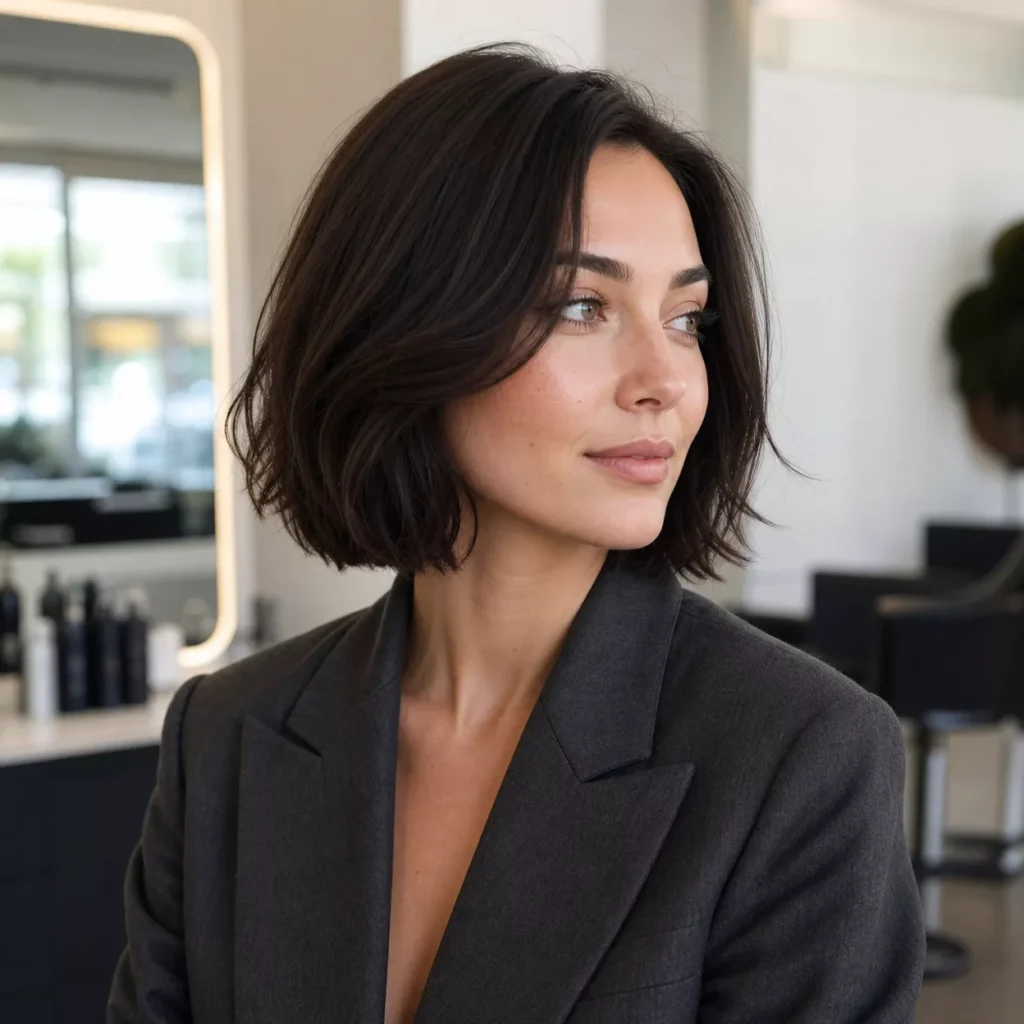
A short bob on thick hair can expand into a triangle or pyramid if the weight isn’t managed. Heavy thinning isn’t always the answer. Removing some interior weight can help the bob sit closer, but over-thinning can leave short, frizzy pieces poking out, particularly on coarse hair.
Dense and coarse aren’t the same either. Dense hair has many strands; coarse hair has wide ones, and each responds differently. Keeping the perimeter solid while lightening the interior, and controlling bulk at the nape, usually holds the shape better than thinning throughout.
Stacked Bob
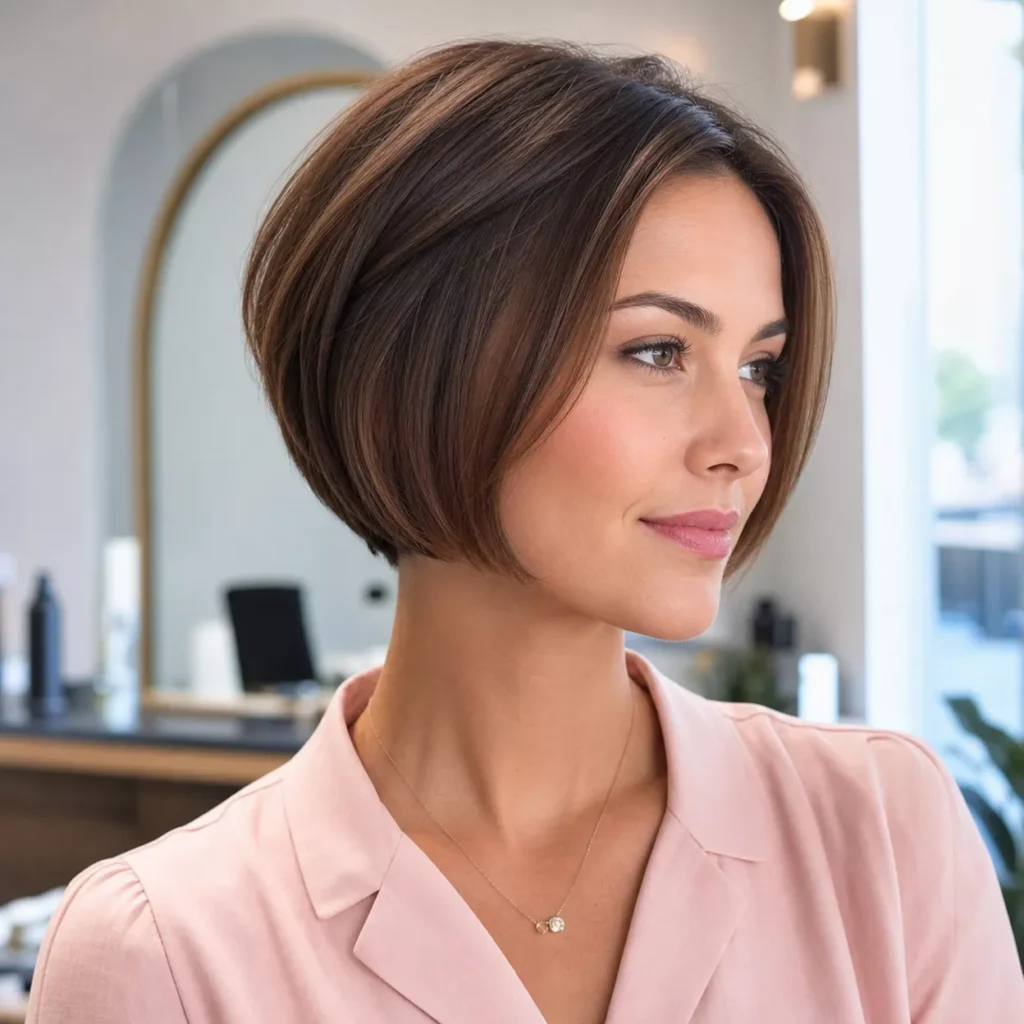
Stacking changes the length relationship at the back. Short, graduated layers at the nape sit beneath progressively longer ones, so the back curves outward before the hair lengthens toward the front. The shape comes from that graduation rather than added volume. Dense hair holds the curve well, while low-density hair may show scalp through the short layers. As it grows, the stack lengthens and loses its curve first.
Short Messy Bixie
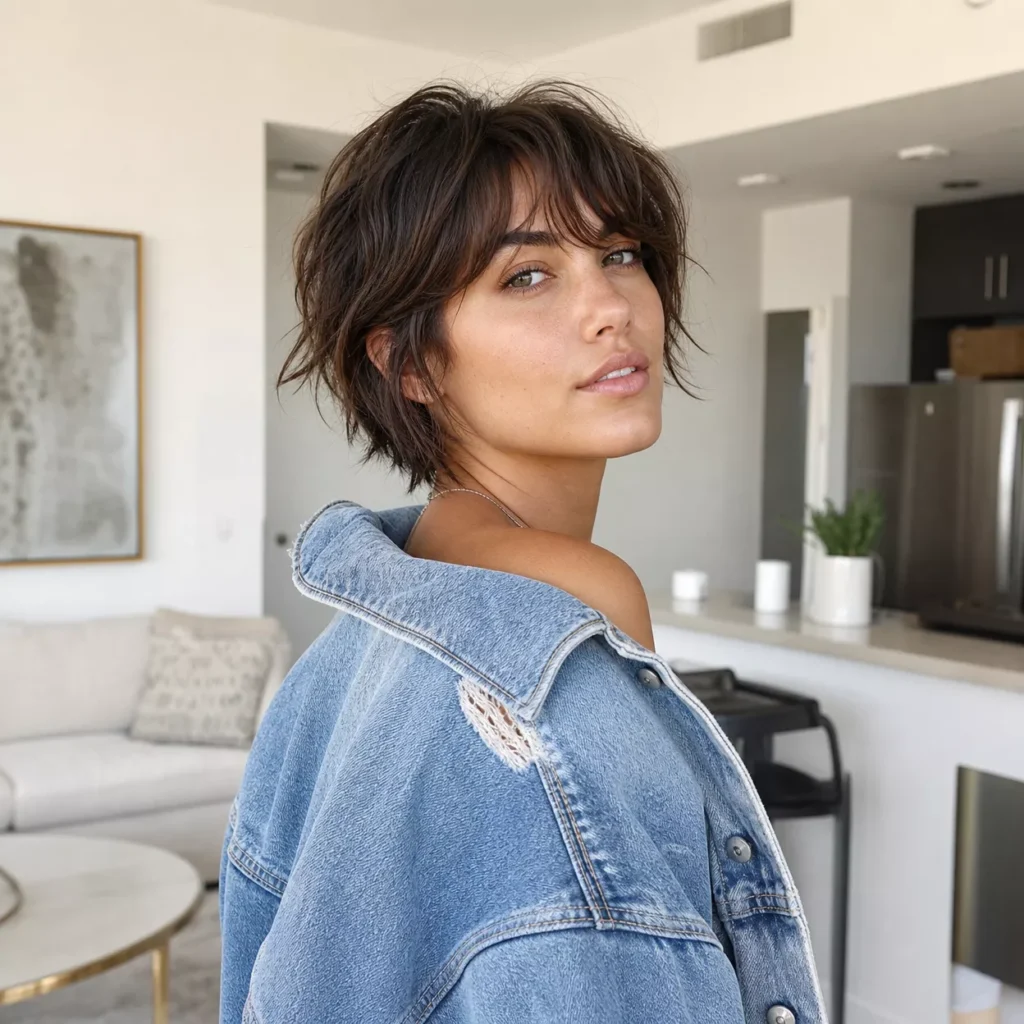
A bixie blends a pixie’s short back and sides with a bob’s longer front and top. In a messy version, the layers may be disconnected, with visible steps between lengths, or blended for a softer transition. Messy doesn’t mean unstyled. The undone finish usually comes from texture product, fingers, or a quick rough-dry, and the cut needs layers placed so the mess looks intentional. As it grows, the nape lengthens first, so regular reshaping keeps it in proportion. Our guide to bixie haircuts covers more variations.
Short Bob with Money Piece
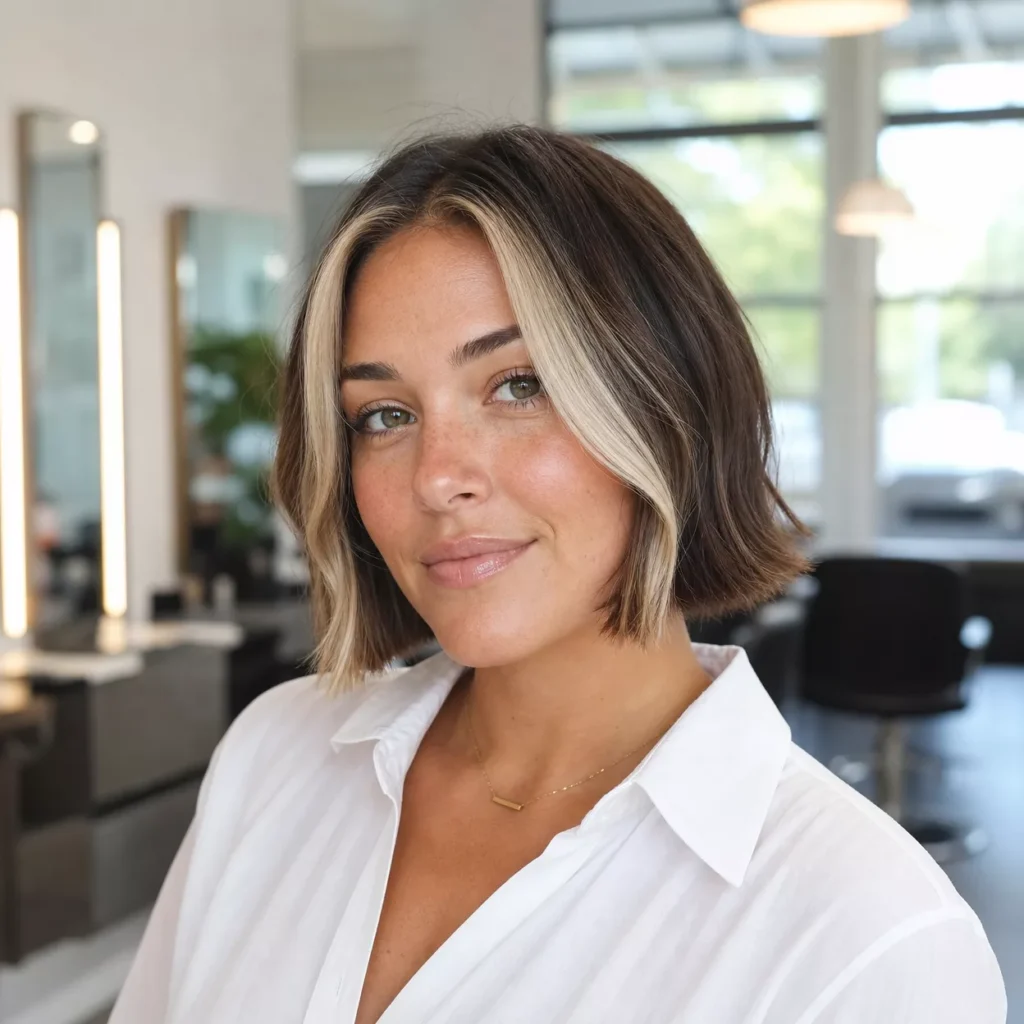
The bob is the haircut; the money piece is color. Two lighter sections at the front hairline brighten the area around the face without changing the cut. How strong that looks depends on contrast and your starting base. A subtle shade blends in; a bright blonde against dark hair stands out. Because the pieces sit right at the hairline, regrowth shows quickly, so the front may need a color touch-up before anything else.
Silver Pixie Cut
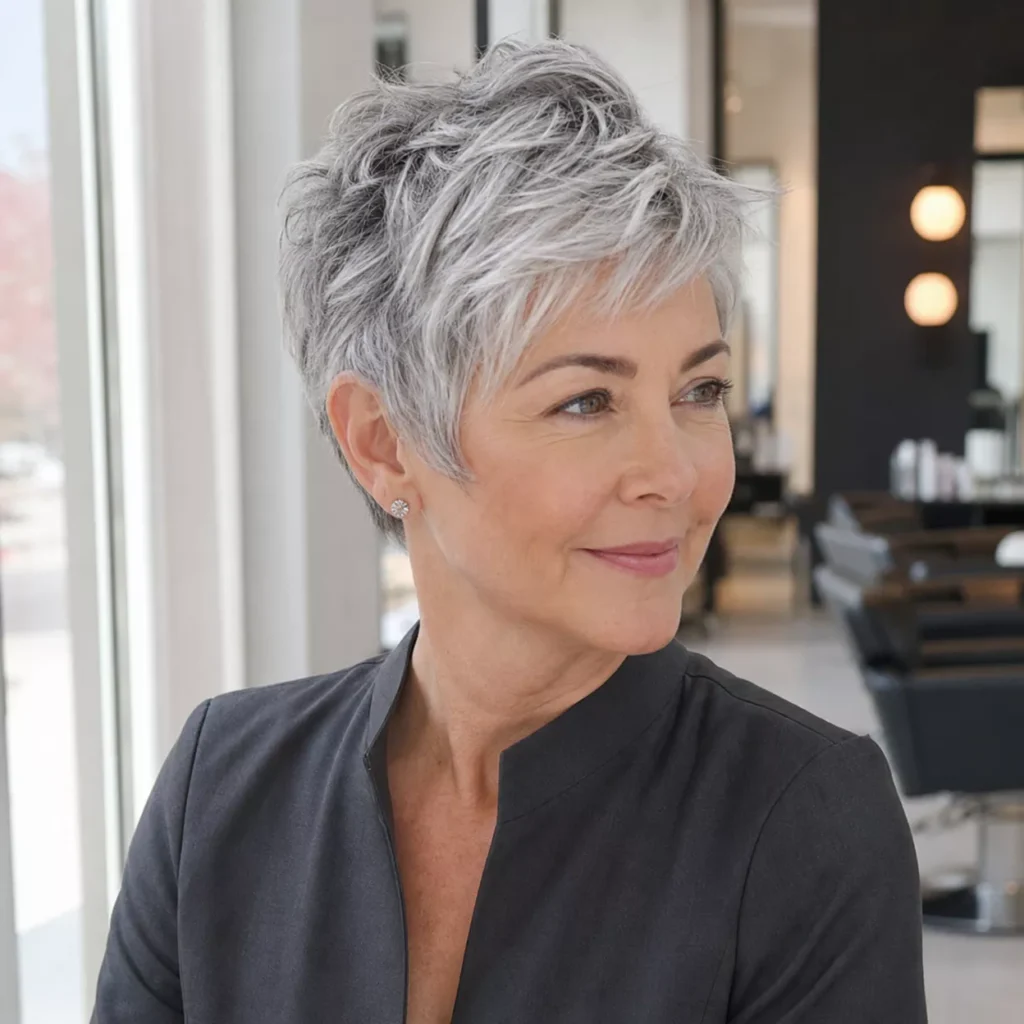
Silver hair in a pixie shows texture and tone variation clearly, especially salt-and-pepper hair, where gray and darker strands mix. Natural silver needs no color maintenance, while artificial silver usually needs regular toning to stay cool. Some people find gray hair coarser or springier than before, which can make a pixie’s texture more visible, though not everyone notices a change. If you’re growing out color, a pixie removes old colored ends quickly.
Short Layered Bob

A short layered bob keeps a fairly clean perimeter while adding soft layers inside, so the hair moves without losing the bob outline. Compared with the blunt bob at the start of this list, it trades some edge solidity for movement. On dense hair, the layers help the bob sit lighter. On fine or low-density hair, fewer, longer layers keep the ends looking full. It tends to grow out more gradually than a blunt bob, though it still needs reshaping as the layers lengthen.
Short Doesn’t Tell You How Short
“Short” is a spectrum, and where you land on it changes almost everything.
Ear length opens the jaw and cheeks and leaves little to tuck or tie.
Jaw and chin length are classic bob territory. There’s enough hair to frame the face, but not enough to pull back easily.
Short lob territory, just above the shoulders, keeps more length and more options, including a small ponytail for some.
Pixie territory removes most of the length, with short sides and a little more on top.
Nape-short shapes, like stacked and tapered cuts, put the back of the head on display and depend on a tidy nape.
The shorter you go, the faster growth changes the shape, and the longer the grow-out lasts. That’s worth weighing as much as how the cut looks on the first day.
The Real Decision Is Where You Want the Weight
Every short cut is a choice about where the hair should sit.
Crown weight creates height and a rounded top, as in a tapered pixie or wolf cut.
Nape weight affects the back of the shape. Stacked and inverted bobs move weight upward from the nape, while a blunt bob keeps it low.
Perimeter weight makes the ends look full and the shape look solid. Blunt bobs depend on it; choppy and feathered cuts lighten it.
Interior weight decides how the hair moves. Removing some lets dense hair sit closer to the head; removing too much can create frizz or gaps.
Face-framing weight changes what you notice first. Bangs and front pieces shift attention toward the forehead and cheekbones.
Moving weight from one of these places to another can change the silhouette as much as changing the length.
A Short Haircut Can Be Easy to Style and Hard to Maintain
Daily styling and shape maintenance are different kinds of effort.
A pixie may take very little time each morning but need reshaping often, because the shape changes quickly as it grows.
A softly layered bob may grow out gently but need daily styling to look like the reference.
A color-heavy cut, like a money piece on a bob, may be easy to style but need regular color appointments.
When you hear that a short cut is low-maintenance, it helps to ask which kind of maintenance is being reduced.
Before You Cut, Check What the Photo Is Hiding
A single front-facing photo rarely tells you enough about a short haircut.
Look at the side to see how the length relates to the jaw and ears. Look at the back for the nape: is it tapered, stacked, or blunt? Check whether the texture is natural or styled, and whether the photo shows a fresh blowout. Compare the density with your own hair. Consider extensions, which sometimes add fullness even to short cuts. And notice color and lighting, which can make layers look sharper than they are.
If you can find several angles of the same haircut, you’ll have a much clearer idea of how it’s built.
Know Your Non-Negotiables
Before you look at any more photos, decide what matters most to you. A few examples:
“I need to be able to tie my hair back.”
“I don’t want a fringe that needs regular trims.”
“I want the nape to stay clean.”
“I want my natural wave to stay visible.”
“I don’t want the ends aggressively thinned.”
“I’m happy to style the top, but not the back.”
“I want the cut to grow out softly.”
“It has to work without heat.”
These priorities narrow the options faster than any photo, and they give your stylist something concrete to work with.
What Changing the Length Actually Changes
Going short changes more than how your hair looks.
Weight drops, so the hair may sit up and move differently. Drying time shortens. Styling becomes more focused, since there’s less hair to manage but less room to hide an off day. Face framing shifts, as the hair ends closer to the jaw and cheekbones. Your neck and nape become more visible, and so do cowlicks and growth patterns. Grow-out becomes a bigger consideration, especially for pixies. And color becomes more noticeable, since regrowth at the roots is a larger proportion of the overall length.
Final Thoughts
The right short haircut isn’t necessarily the shortest, the newest, or the most dramatic. It’s the shape that fits how your hair behaves, how you actually style it, how much maintenance you’re comfortable with, the silhouette you want, and how patient you’re willing to be when it’s time to grow it out.
Start with those, and choosing between the 26 cuts above becomes much simpler.