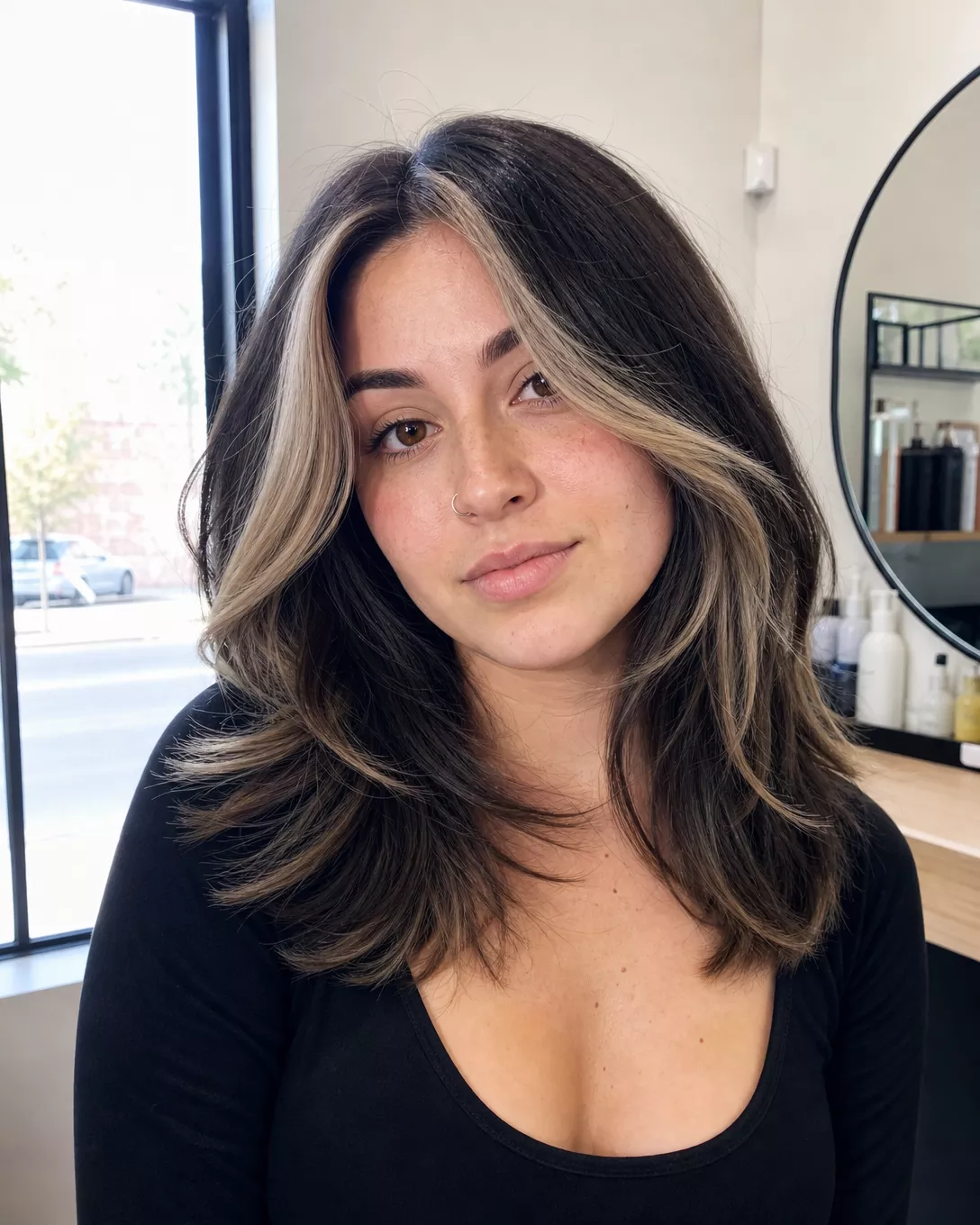
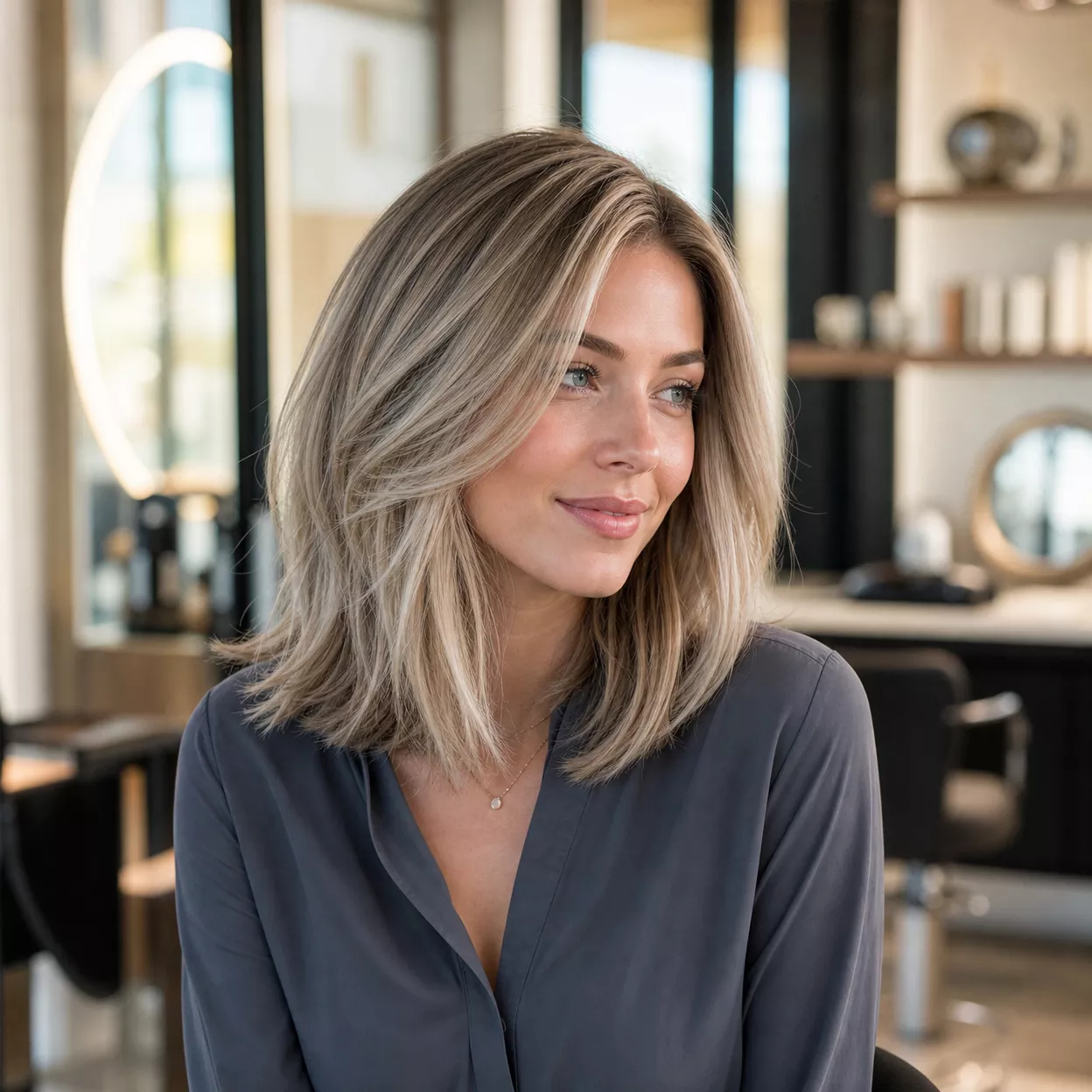
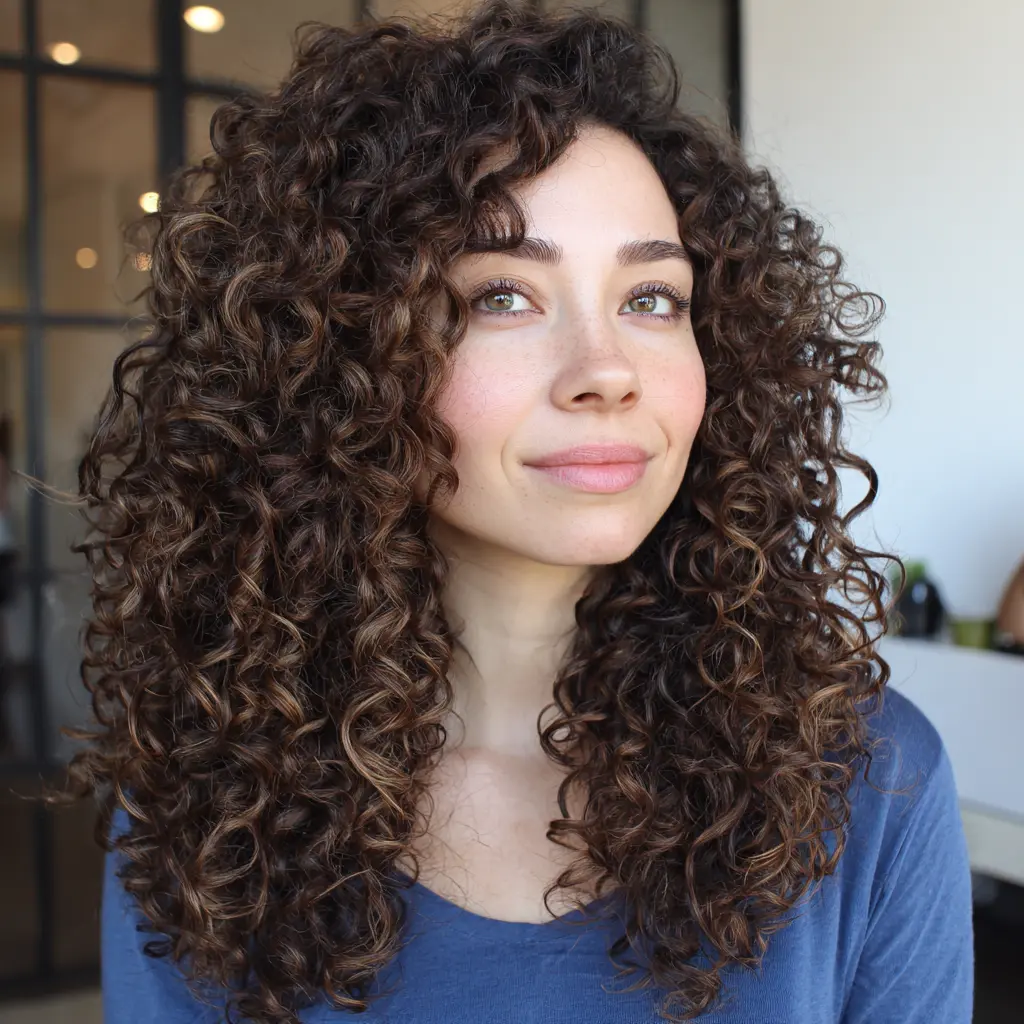
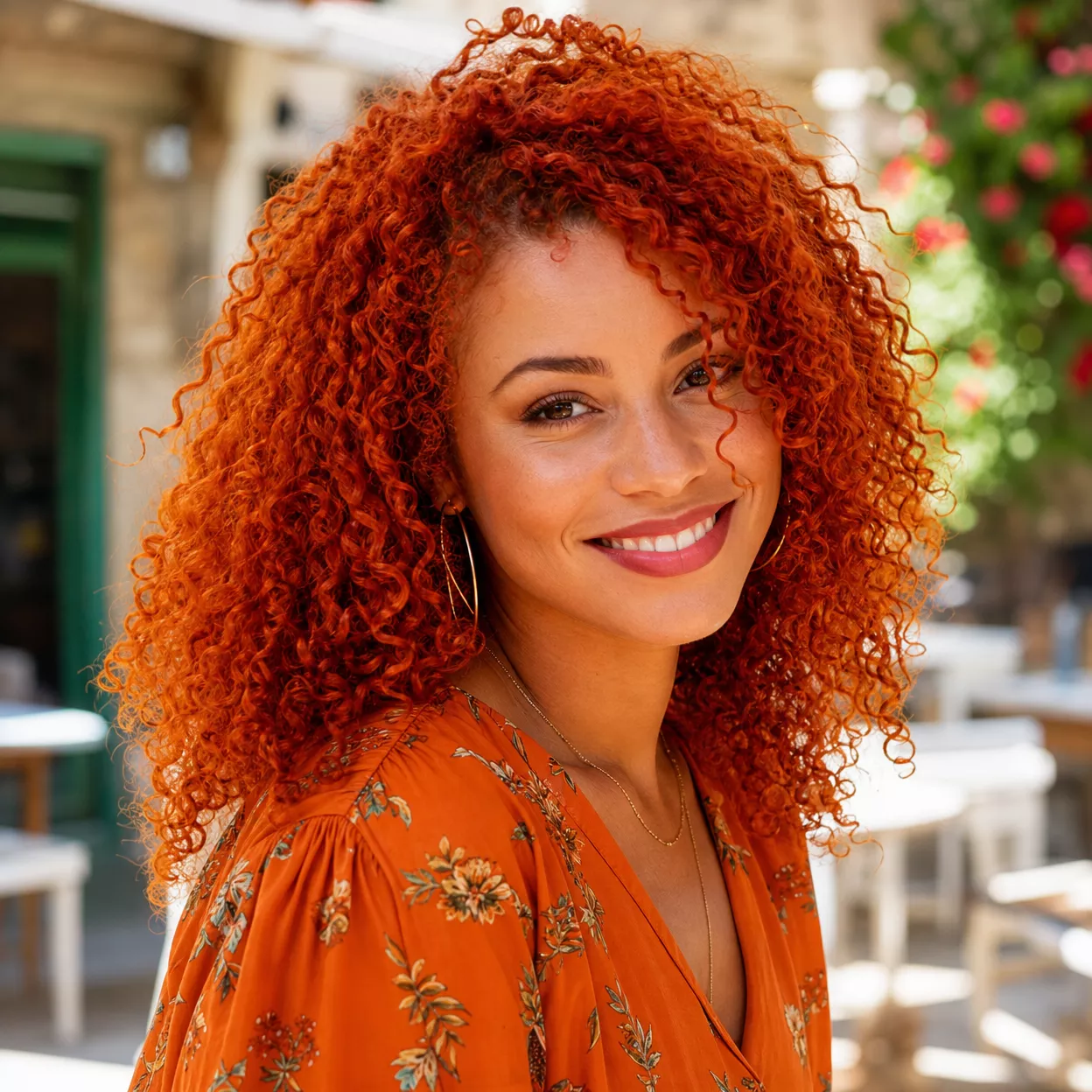
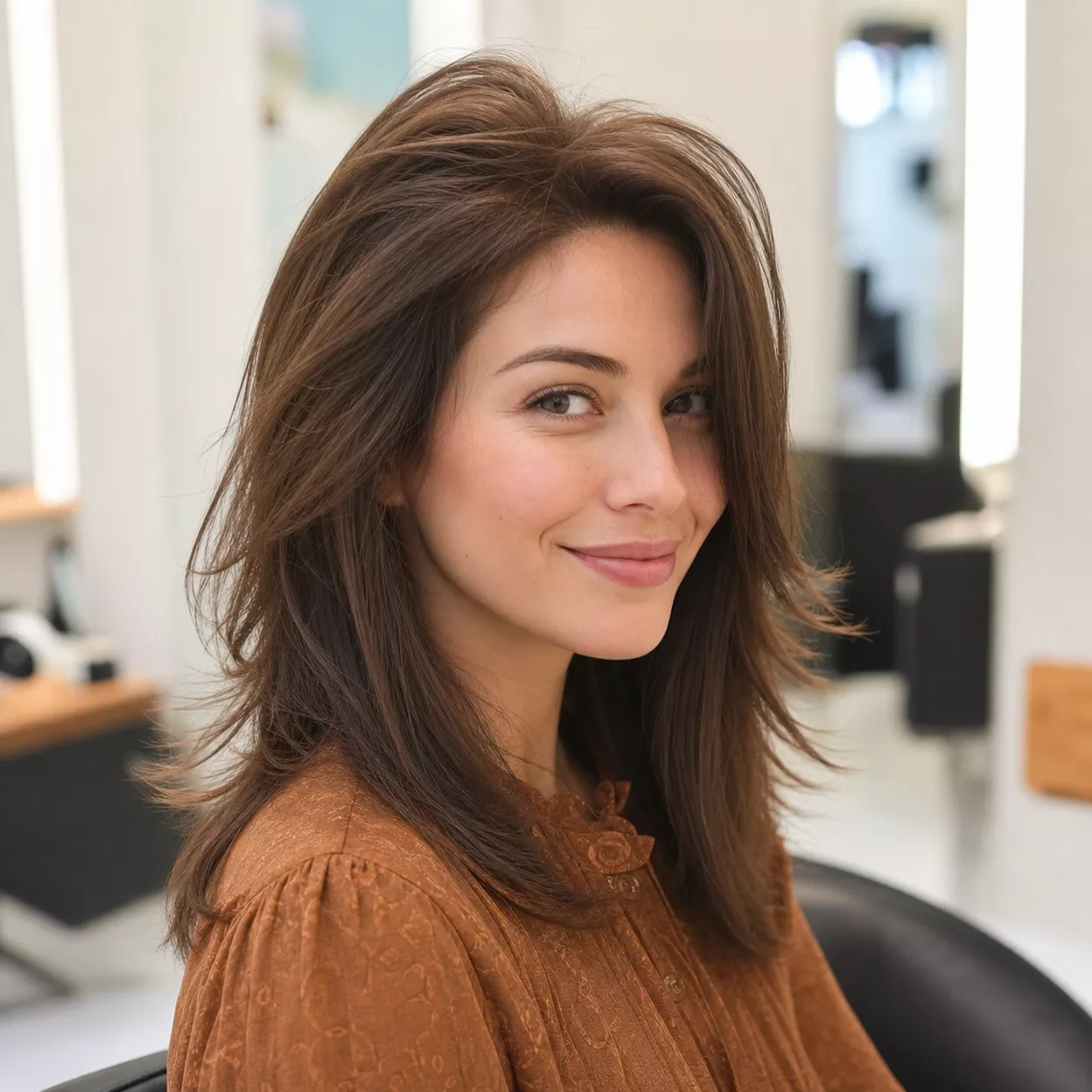
22 Bixie Haircuts with Bangs That Frame Your Face
A bixie sits between a bob and a pixie: short and structured at the back, with more length left through the front and crown. Adding bangs to that shape changes where the eye lands first, since the fringe becomes the first thing anyone notices rather than the length of the cut itself.
What that fringe actually does depends on a handful of things that don’t show up clearly in a photo: how much hair sits at your hairline to begin with, whether your part naturally falls where the bang wants to sit, how your hair dries versus how it looks freshly styled, and how often you’re willing to sit in a salon chair to keep a short fringe in shape. The 22 versions below each highlight a different part of that decision.
Before You Choose Your Bangs
A few questions are worth answering before you bring a photo to a consultation.
How much hair do you have at the hairline? Fringe is cut from a section at the very front of the head, and if that section is naturally sparser than the rest of your hair, a heavier bang style can end up looking thinner than intended.
Which way does your hair part on its own? Bangs cut against your natural part tend to fight their way back to where the hair wants to fall, especially once they grow out past the first few weeks.
How does your hair behave dry? A cut that looks a certain length wet can sit noticeably different once it dries, particularly with any wave or curl.
How much upkeep are you willing to commit to? A short, precise fringe usually needs trimming every three to four weeks to hold its shape. A longer or softer one can often go longer between visits.
Curtain Bang Bixie
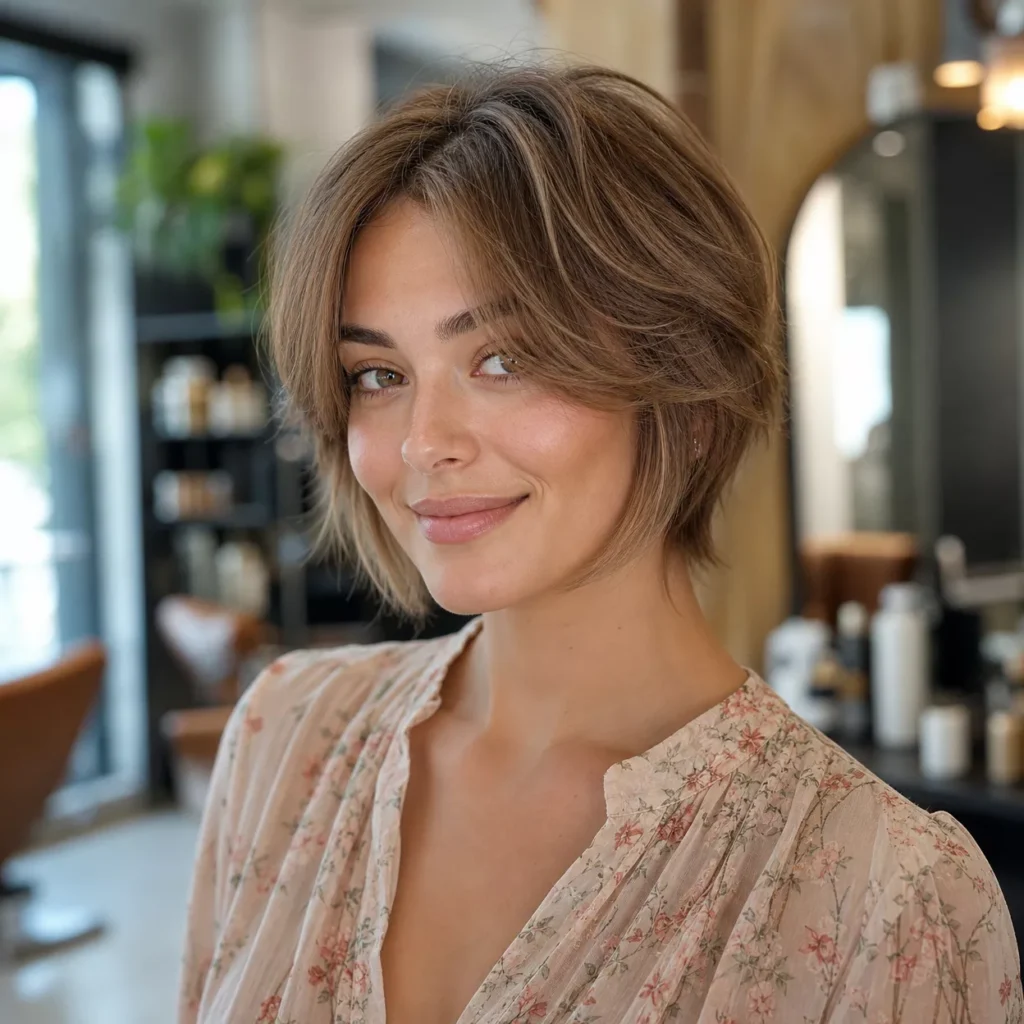
Curtain bangs part down the center and sweep outward rather than falling straight down, so how much forehead stays visible depends on where that part sits and how wide the opening is. A center part cut close to the hairline leaves more forehead exposed than one cut slightly off-center. Because the pieces blend into the longer front sections of the bixie rather than ending abruptly, the fringe tends to grow out into face-framing layers instead of an obvious in-between stage.
Blunt Fringe Bixie

A straight-across fringe creates a hard horizontal line, which is a different visual effect from a softer, swept bang: it reads as more graphic and more deliberate. That precision comes with upkeep. A blunt line shows growth quickly, so it typically needs a trim every three to four weeks to stay sharp, and it’s worth asking your stylist how the fringe will blend into the sides of the bixie so there isn’t a visible seam where the two meet.
Wispy Bang Bixie

A wispy fringe is cut thin on purpose, light enough to see through slightly. That only reads as soft styling if there’s enough density at the front to spare. On hair that’s already sparser at the hairline, the same thinness can look more like a gap than an intentional effect, so it’s worth asking your stylist how much hair they plan to take into the bang before it’s cut.
Side-Swept Bang Bixie

Whether a side-swept bang holds its direction depends largely on which way your hair naturally parts. Swept with the grain, it tends to stay in place with minimal effort. Swept against it, the diagonal can start drifting back toward center within a day or two, particularly as it grows past the first few weeks and has more length working against the direction it was cut.
Baby Bang Bixie
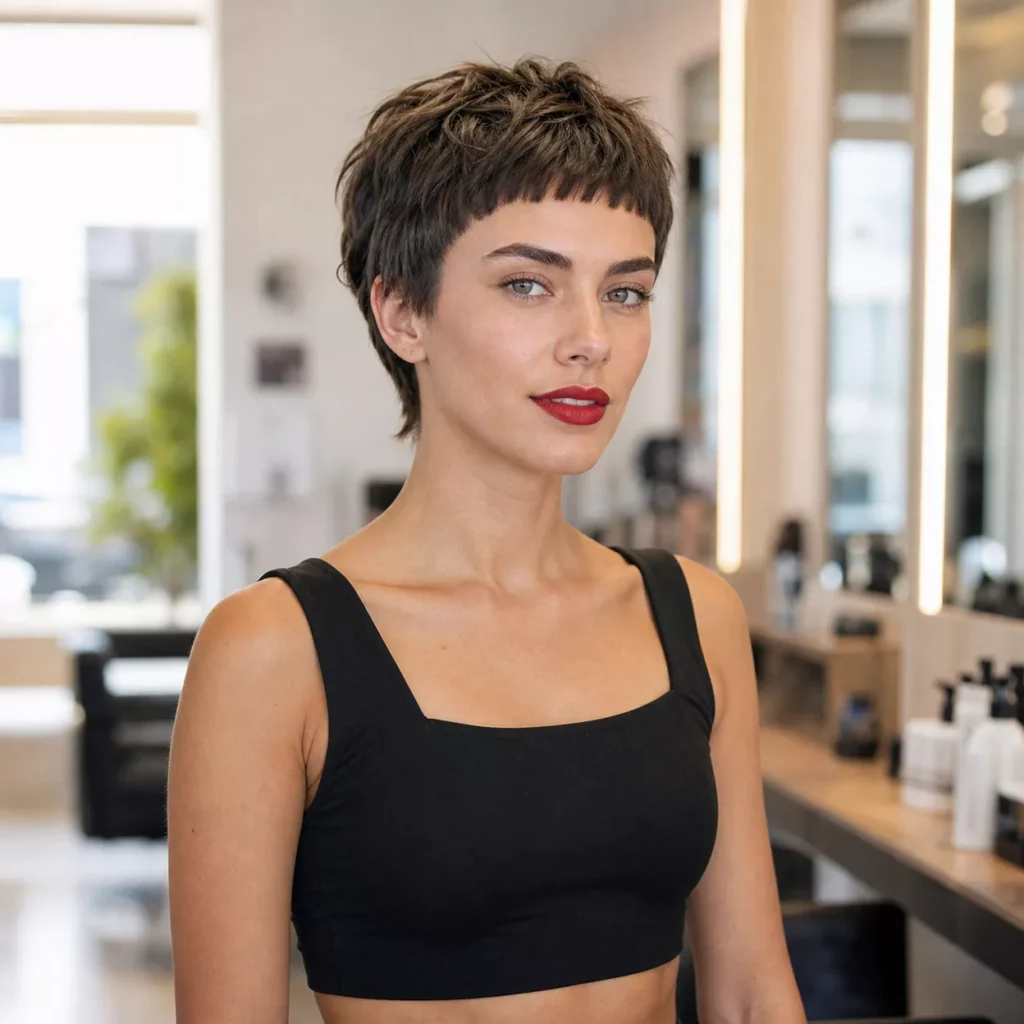
This is the shortest fringe option on this list, sitting well above the brow, and it’s the one that asks for the most commitment. Regrowth shows almost immediately at this length, since even a small amount of growth changes how the bang sits against the forehead, so it tends to need attention every two to three weeks to hold its shape. It’s worth trying a shorter, less extreme version first if you’re unsure how you’ll feel about maintaining it.
Shaggy Bixie with Tousled Bangs

The bangs here are cut with the same loose, piece-y layering as the rest of the bixie, so there’s no sharp line separating fringe from cut. That works well with textured or wavy hair, where the layers naturally separate. On finer or lower-density hair, heavy layering throughout can start to look more separated than intended, so a slightly more conservative amount of texture is worth discussing if that describes your hair.
French Bixie with Bangs

What sets this apart from a standard bixie is mostly the perimeter: the shape leans toward the softer, rounder lines associated with a French bob rather than the choppier texture of a typical bixie. Paired with a curtain or wispy fringe, the overall effect depends more on how much texture is left in versus smoothed out than on any single defining feature. It tends to need a smoothing step, whether that’s a blow-dry or a light serum, to hold that rounder shape rather than air-drying into something choppier.
Layered Bixie with Face-Framing Bangs

The face-framing pieces here start further back than a typical bang, usually somewhere around the cheekbone, and layer forward from there rather than being cut as a separate fringe section. Where those pieces end matters: longer face-framing layers around the jaw create a softer transition into the shorter back of the bixie, while shorter ones create more contrast between the front and back sections.
PRO TIP: When asking for a bixie with bangs, always bring a reference photo AND tell your stylist your face shape. The bang style that works best varies significantly by face shape. Curtain bangs and side-swept bangs work for most faces, while blunt fringe and baby bangs are most flattering on oval and heart shapes specifically. A good stylist will confirm this before picking up the scissors.
Textured Bixie with Micro Bangs

Micro bangs sit at a length between baby bangs and a standard fringe, short enough to look deliberate but not quite as extreme a commitment as baby bangs. That makes the maintenance schedule slightly more forgiving, generally every three weeks rather than two, though it still shows growth faster than a longer bang would.
Choppy Bixie with Thin Bangs
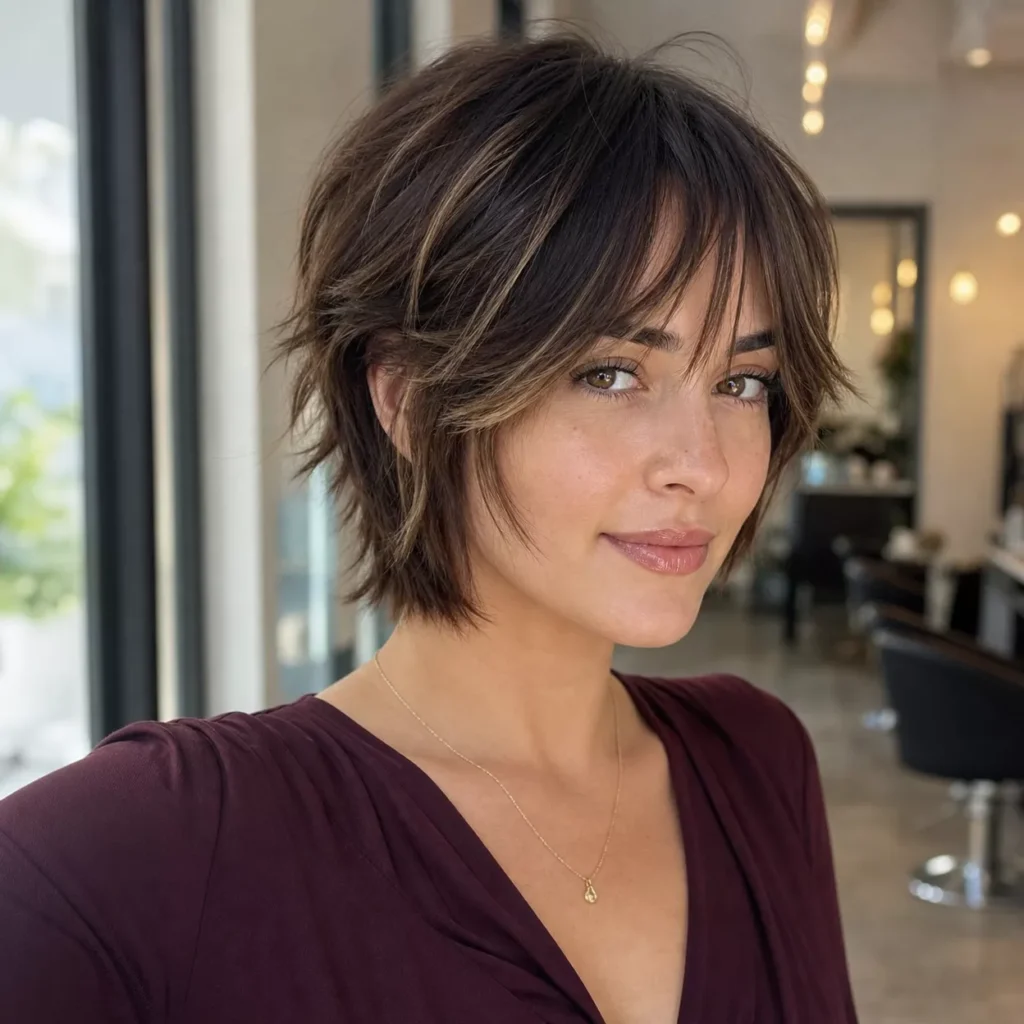
Thin, separated bang pieces work on the same principle as the wispy version, but with more visible gaps between individual sections rather than an overall light coverage. The risk is similar too: without enough density at the hairline to begin with, the separation can end up looking sparse rather than deliberately textured, so it’s a style that benefits from a stylist checking your natural hairline density before committing to how thin to cut it.
Rounded Bixie with Side Bangs

The rounded shape here comes from how the crown and sides are cut to curve rather than angle, which changes the overall silhouette more than the bangs do on their own. A side-swept fringe that starts shorter at the temple and lengthens as it crosses the forehead adds a diagonal line to that rounded outline rather than a straight one, which is the main visual difference between this version and a more angular bixie with the same bang placement.
Stacked Bixie with Curtain Bangs
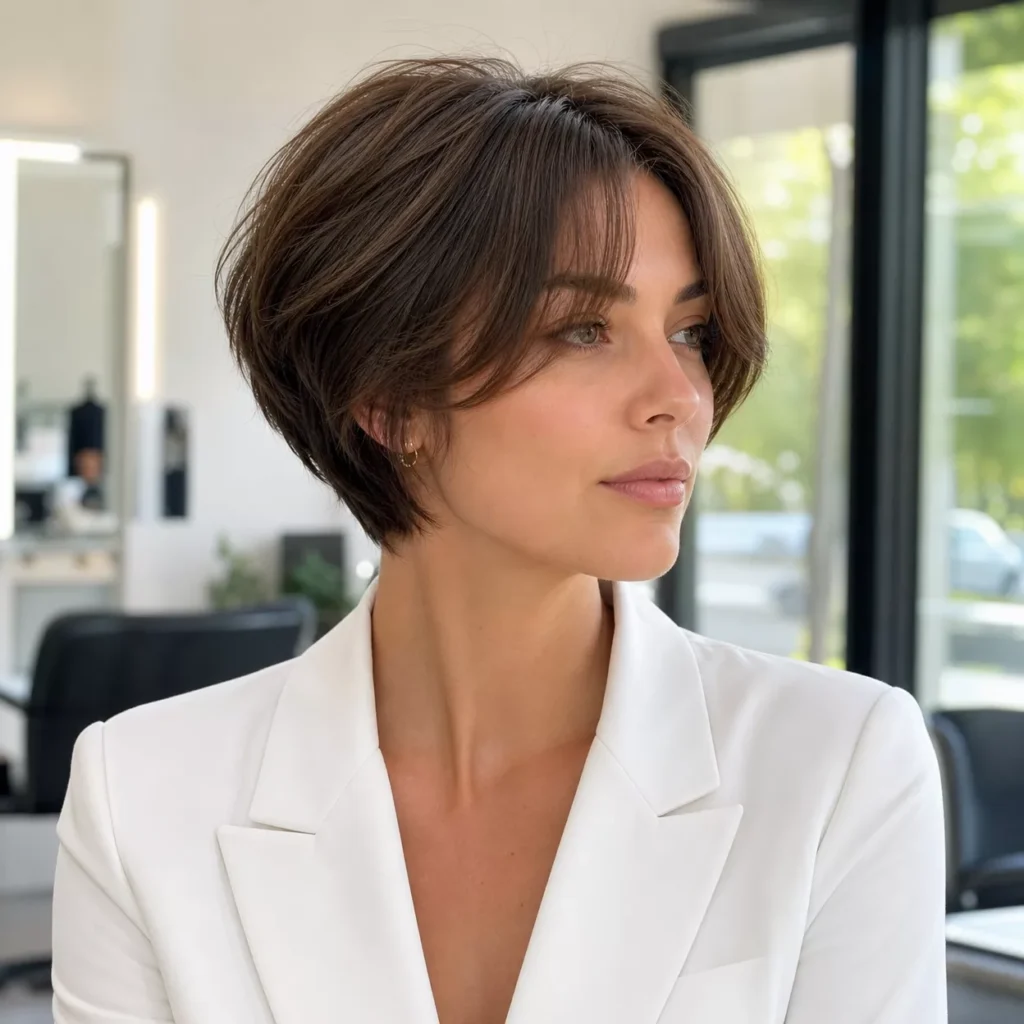
Stacking is a technique applied mostly at the back of the head: shorter layers underneath push the longer ones above outward, which builds shape and can make hair look fuller in that area, though it works by changing how the hair sits rather than by adding density. Curtain bangs at the front do a separate job of softening that structure. The stacking itself needs periodic maintenance to hold its shape as it grows, since the effect softens once the underlying layers lengthen.
Wavy Bixie with Wispy Fringe

Wave pattern affects both the fringe and the rest of the cut here more than in a straight-hair version. Waves add width and movement through the sides and back on their own, without much need for extra layering to create that effect. It’s worth having the length checked once your hair is fully dry rather than cut only on wet hair, since wave and curl both shrink hair somewhat as it dries.
Platinum Bixie with Blunt Bangs
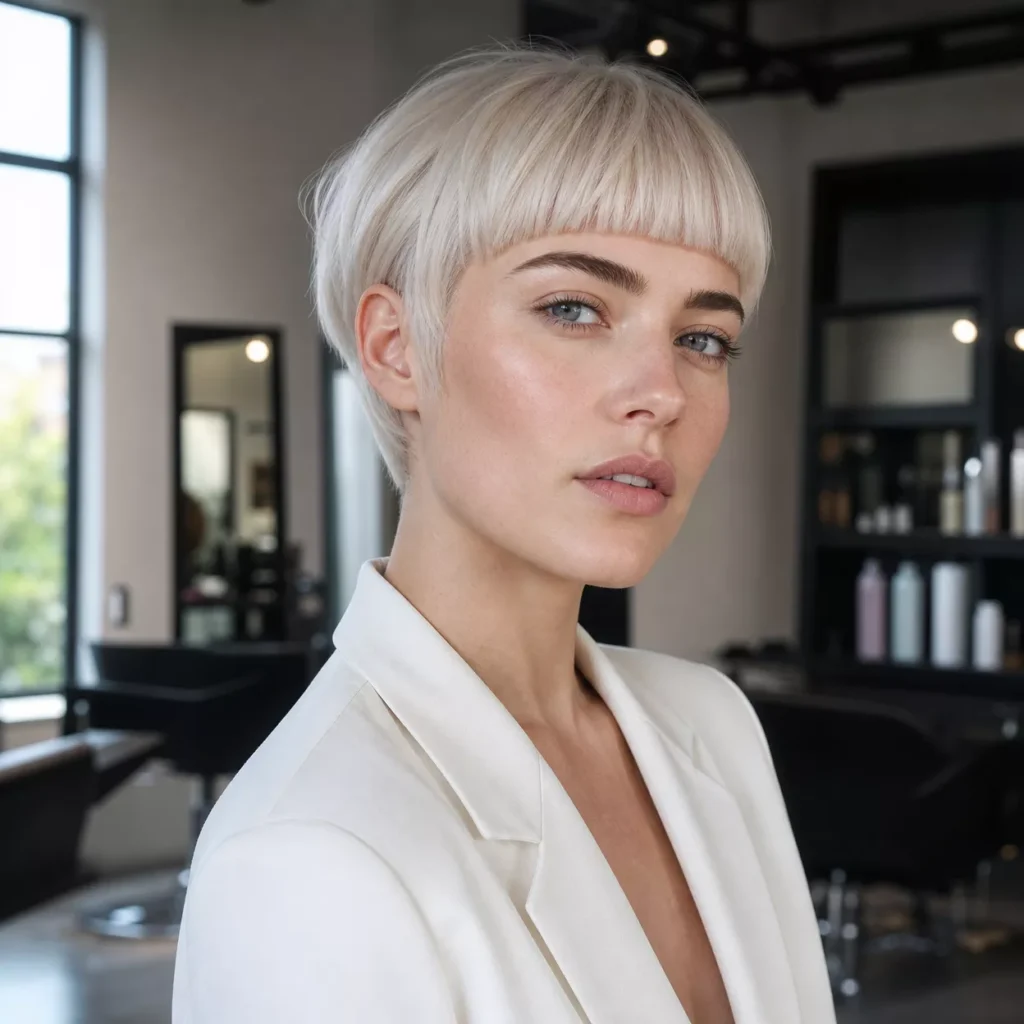
Platinum is a color choice layered onto the cut, not a different haircut structure, so the blunt bang and bixie shape described above apply here as much as with any other color. What changes is the maintenance load: lightening hair to platinum affects its condition, and short, precisely cut ends show damage more visibly than longer hair might, so a lightened bixie tends to need more conditioning attention and more frequent root touch-ups than a natural-color version of the same cut.
Bixie with Long Side-Swept Bangs

Compared with a shorter fringe, this version asks for less ongoing commitment. Longer bangs that extend past the cheekbone can be worn swept across the face or tucked behind the ear, which gives some flexibility day to day, and they blend into the longer front sections of the bixie rather than requiring their own separate trim schedule as often as a short blunt fringe would.
Dark Brunette Bixie with Curtain Bangs
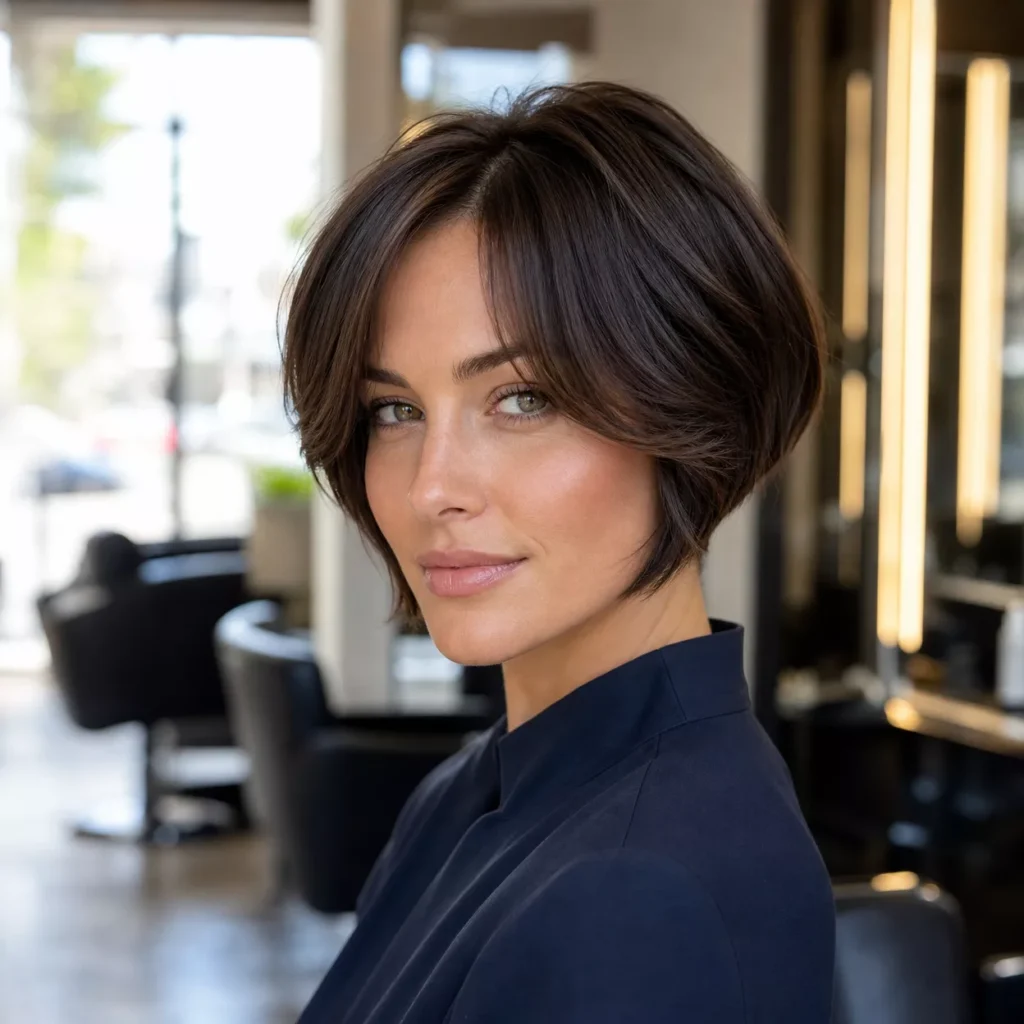
On darker hair, layer separation and texture can be harder to see than on lighter shades, simply because there’s less contrast for the eye to pick up on. Subtle highlights woven through the fringe area can help the individual layers of the curtain bang read more distinctly, though that’s a color decision layered onto the cut rather than a change to the haircut itself.
Ash Blonde Bixie with Wispy Bangs
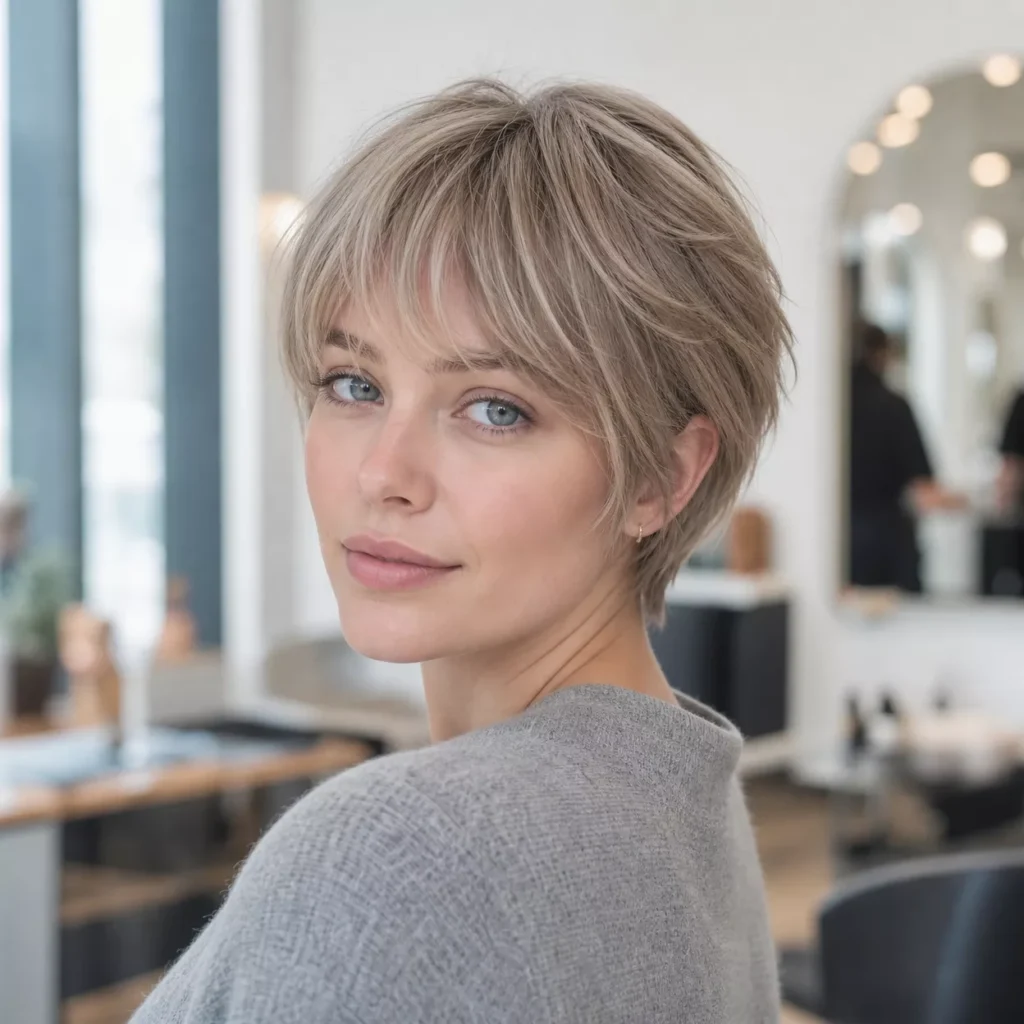
Ash tones are cool-toned and tend to fade toward warm over time, which usually means using a purple or blue-toned shampoo between salon visits to hold the color. As with the platinum version above, the color and the cut are separate decisions: the wispy fringe behaves the same way described earlier regardless of shade, though lightened hair can be more prone to dryness, which is worth factoring in if your hair is already fine or short.
Bixie with 90s-Inspired Bangs

What reads as “90s” here is mostly the styling direction rather than the cut: a slightly overgrown, piece-y fringe worn with a side part and left to fall loosely instead of being blow-dried into place. It tends to work with a range of natural textures, since the loose, undone finish doesn’t depend on a precise cut the way a blunt fringe does.
Fine Hair Bixie with Feathered Bangs

Feathering removes some weight from the ends of both the fringe and the rest of the bixie, which can help hair that’s fine in strand width look less flat, though it’s worth separating “fine” from “low density.” Fine strands with good coverage generally tolerate more feathering than hair that’s both fine and thinning, where too much weight removal can leave the perimeter looking sparse rather than lifted. A stylist working on fine hair usually needs to judge how much to take out case by case rather than following a set amount.
Bixie with Invisible Fringe
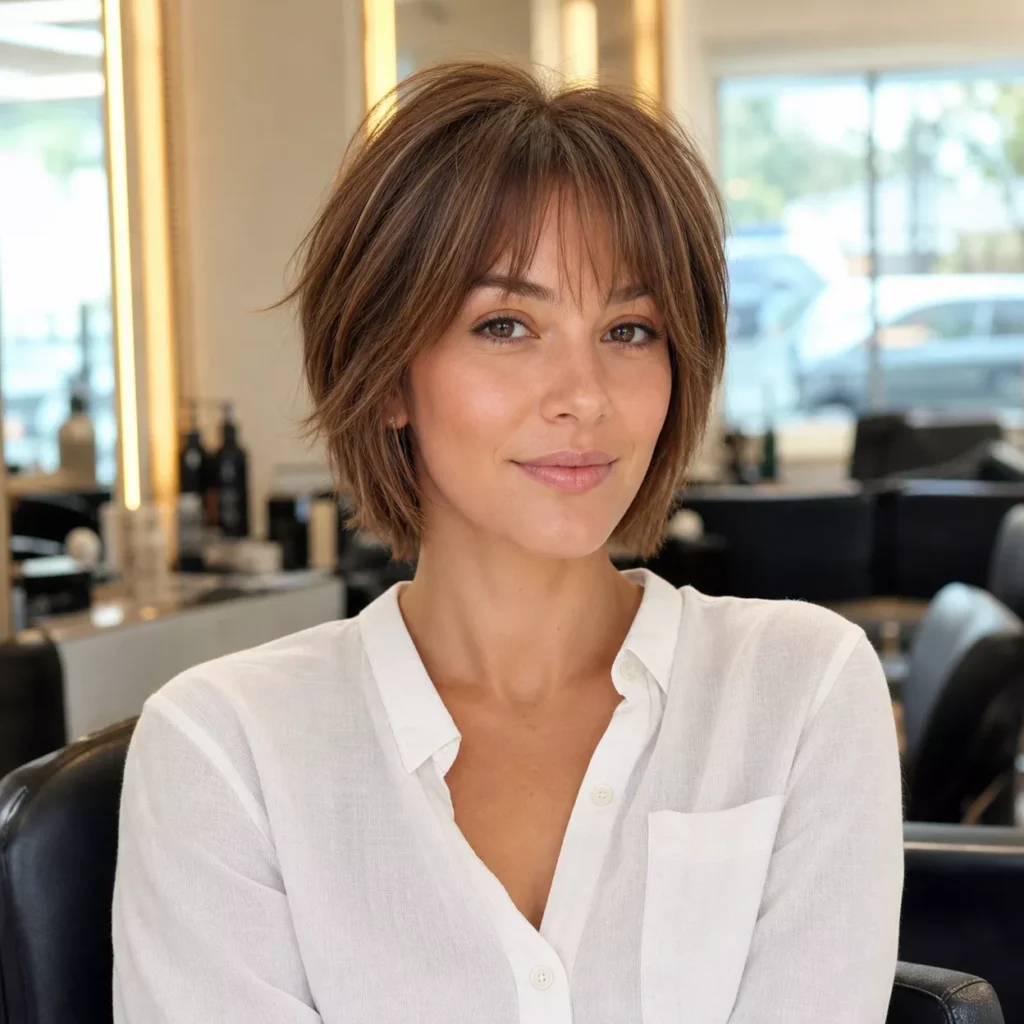
This version removes very little hair from the front section: just enough to create soft, thin pieces along the hairline that blend in rather than reading as a distinct fringe. Because so little length and density come out, it grows out with almost no visible transition, which makes it a lower-commitment way to test whether bangs suit you before cutting something more defined.
Curly Bixie with Curtain Bangs

Curl pattern affects two things here: how much the hair shrinks as it dries, and how the curtain bangs behave once curled versus straightened. A length that looks right on wet or stretched hair can sit noticeably shorter once it springs up dry, so this is one of the styles most worth having checked on fully dry hair before any final trimming. Layering is generally used to encourage curl definition and reduce weight that would otherwise pull curls down, rather than to remove bulk the way it might on straight hair.
Soft Layered Bixie with Blended Bangs
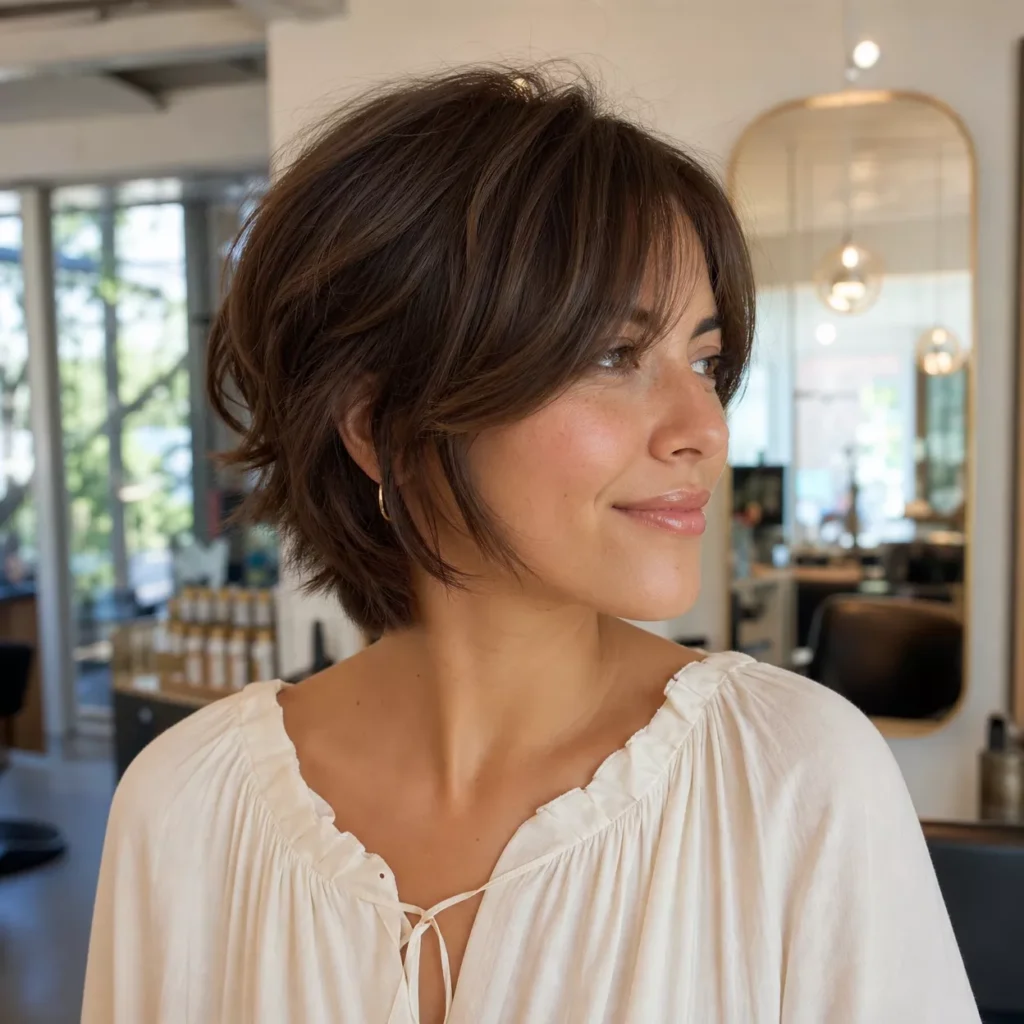
The layering and the bang here are both cut to blend gradually rather than create any hard lines, which makes this a reasonably conservative starting point if you’re considering a bixie for the first time and aren’t sure how short you want to go. Because there’s no sharp perimeter or blunt fringe edge to maintain, it also tends to be more forgiving between salon visits than several of the more defined versions above.\
How to Choose the Right Bixie with Bangs
Fine hair: Look for versions that keep some weight through the perimeter rather than heavy feathering throughout, since fine strands can look sparse if too much is removed at once. The soft layered or curtain bang versions tend to give a stylist more room to be conservative.
Thick hair: Heavier layering and stacking techniques generally have enough hair to work with without looking thin, so bolder choices like the shaggy or stacked versions are less likely to backfire.
Straight hair: Blunt lines and precise shapes, like the blunt fringe or micro bang versions, tend to hold their cut lines clearly without much natural movement working against them.
Wavy hair: Waves add their own texture and width, so a style that leans into that rather than fighting it, such as the wavy bixie with wispy fringe, usually needs less daily styling to look intentional.
Curly or coily hair: Length and layering decisions benefit from being checked on dry, unstretched hair, since shrinkage changes the result more than with straighter textures.
Lower maintenance preference: Longer or softer bangs, like the long side-swept or invisible fringe versions, ask less of your trim schedule than a blunt or baby bang.
Bolder fringe preference: Baby bangs, blunt fringe, or platinum color combinations create more visible change and generally ask for more upkeep in return.
Softer fringe preference: Curtain bangs, wispy bangs, or the soft layered version create a gentler transition and tend to be easier to grow out if you change your mind.
What Can Go Wrong With a Bixie and Bangs
- The fringe is heavier than the available density supports, which can leave it looking thin rather than full once it’s cut and styled.
- The bang fights the natural part, causing it to drift out of place within days rather than holding the shape from the photo.
- Too much layering is used throughout, which can create more separation than intended, particularly on finer or lower-density hair.
- The crown or back is cut shorter than expected, changing the overall proportion of the bixie compared with the reference photo.
- Curly hair shrinks more than anticipated, leaving the cut shorter once dry than it appeared during the appointment.
- The fringe turns out to be more maintenance than expected, especially with shorter, more precise shapes like baby or blunt bangs.
- The reference photo doesn’t match the reader’s natural texture, since a style styled straight or curled for a photo may not reproduce the same way on different hair.
What to Ask Your Stylist
- Where should the shortest point of the bangs sit?
- How much hair are you taking into the fringe?
- Where will the bixie become shorter through the back?
- How will this grow out, and what will it look like at the awkward stage?
- Does my natural part work with this bang, or will it need to be trained?
- Should we check the length again once it’s dry?
- How much daily styling will this actually require?
FAQ
Is a bixie with bangs high maintenance?
It depends on the bang. Shorter, blunt, or precisely cut fringes generally need trims every two to four weeks. Longer or softer bangs, like curtain or wispy styles, can often go six weeks or more between visits.
Can fine hair wear a bixie with bangs?
Yes, though the amount of layering matters more than the hair type alone. Fine hair with good density at the hairline usually has more flexibility than hair that’s both fine and thinning, where a stylist may need to preserve more weight to avoid a sparse look.
Can curly hair wear a bixie?
Yes. The main consideration is shrinkage, since curls typically sit shorter once dry than they appear wet or stretched, so length is often best judged on dry hair.
How often do bixie bangs need trimming?
Short, precise styles like baby or blunt bangs often need attention every two to four weeks. Longer or softer bangs can typically stretch to five or six weeks.
What is the difference between baby bangs and micro bangs?
Baby bangs sit at the shortest length, well above the brow, and show growth almost immediately. Micro bangs are slightly longer, which gives a bit more room before regrowth becomes noticeable.
Can I grow out a bixie with bangs easily?
Softer, blended styles like curtain bangs, wispy fringe, or the soft layered bixie tend to grow out with fewer awkward stages, since there’s no hard line to lose. Blunt or very short fringes usually show a more noticeable transition period.
Choosing What Actually Fits
There isn’t one bixie-with-bangs combination that works the same way for everyone, since the result depends on your hair’s density at the hairline, how it behaves dry versus wet, which way it naturally parts, how short a fringe you’re comfortable committing to, and how often you’re willing to sit in a salon chair. The versions above cover a fairly wide range of those trade-offs. The right one is less about which photo looks best and more about which combination of density, texture, and maintenance matches what you’re actually working with day to day.