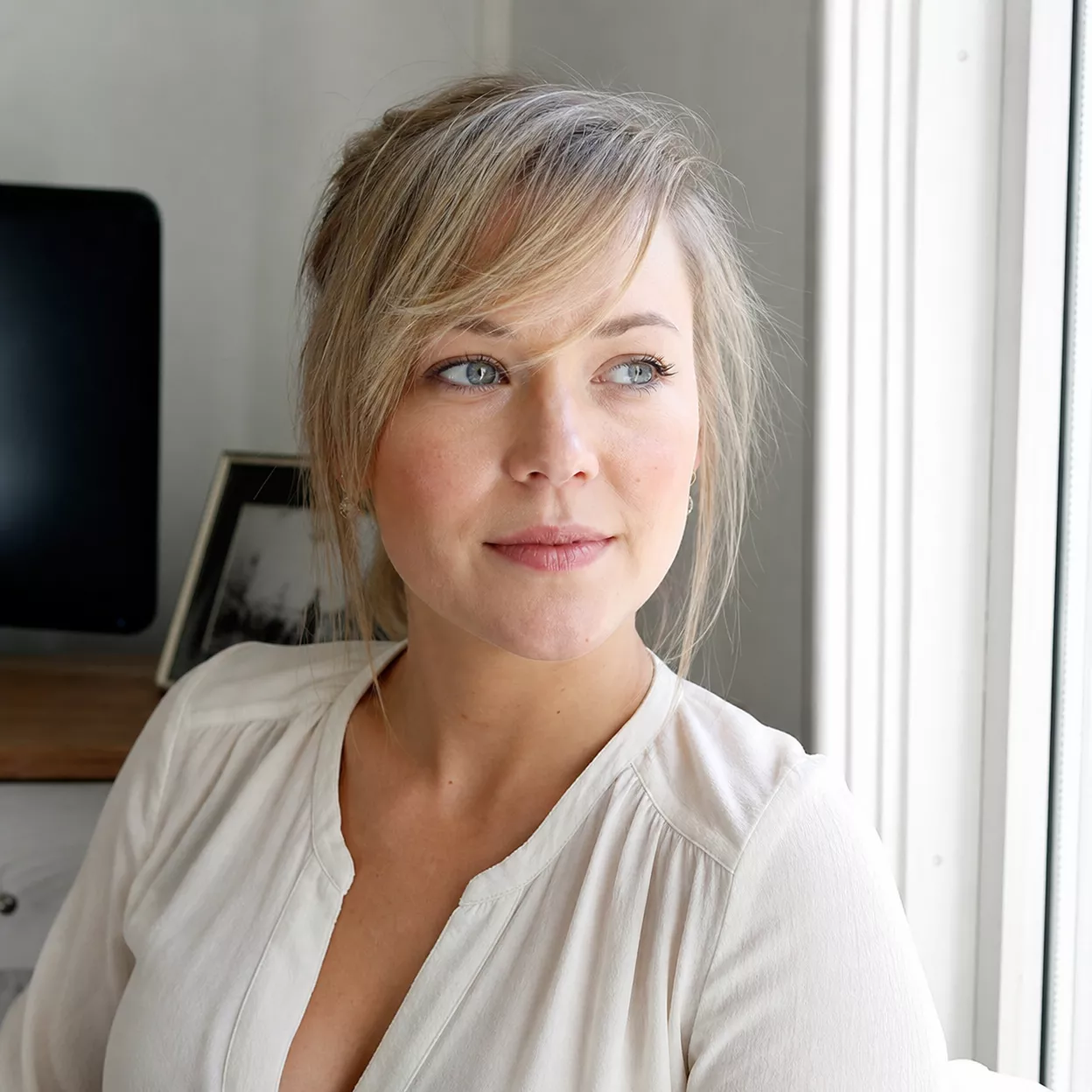
10 Medium Length Hairstyles for Women: How to Choose the Right Cut
“Medium length” is a wide category, and two haircuts that land at the same length on a ruler can behave completely differently in daily life. A blunt, unlayered cut at the shoulder holds a very different shape from a heavily layered shag at that same length, and a style that looks effortless on naturally wavy hair might need twenty minutes with a wand on straight hair to get the same result. What actually decides how a medium haircut works isn’t the length alone. It’s where the perimeter sits, how much layering has been cut into it, how dense and how fine your hair is, and how much time you’re realistically willing to spend styling it.
This guide walks through ten medium-length structures, what defines each one, and the trade-offs that come with it, followed by some practical ways to narrow the list down to what actually fits your hair.
What to Think About Before You Pick a Photo
A few things matter more here than which picture catches your eye first.
Fine hair and low-density hair aren’t the same thing. Fine refers to how narrow each individual strand is. Low density refers to how many strands you actually have. You can have fine hair that’s fairly dense, or coarser hair that’s spread thin, and each responds differently to layering. Heavy layering on hair that’s both fine and low-density tends to leave the ends looking sparse, while the same layering on fine-but-dense hair can look fuller because there’s more hair to fill in the movement.
Texture changes what a cut needs from you. A shape that photographs well on wavy hair may need active styling on straight hair to look the same, and curly hair shrinks noticeably as it dries, so length is often worth judging on dry hair rather than wet.
Think about your actual routine. Do you air-dry most days, or do you regularly reach for a blow-dryer and a round brush? Some of the structures below are built to work with minimal effort. Others depend on heat styling to look like their reference photos.
Consider whether you wear your hair up. Length, how much layering is at the front, and where face-framing pieces fall can all affect whether a cut still looks finished pulled back into a ponytail.
Factor in how often you can get to a salon. Sharp, precise perimeters and full bangs generally show growth sooner than softer, blended shapes.
Face shape can play a role too, but it’s worth treating as a preference rather than a rule. If you want softer framing around the jaw, face-framing layers or side-swept pieces tend to help. If you want to preserve more visual length, a longer, less-layered perimeter or vertical face-framing pieces can do that. If you’d rather keep width controlled around the cheeks, avoiding heavy layers that flare outward is usually the more relevant factor, more so than the shape of your face on its own.
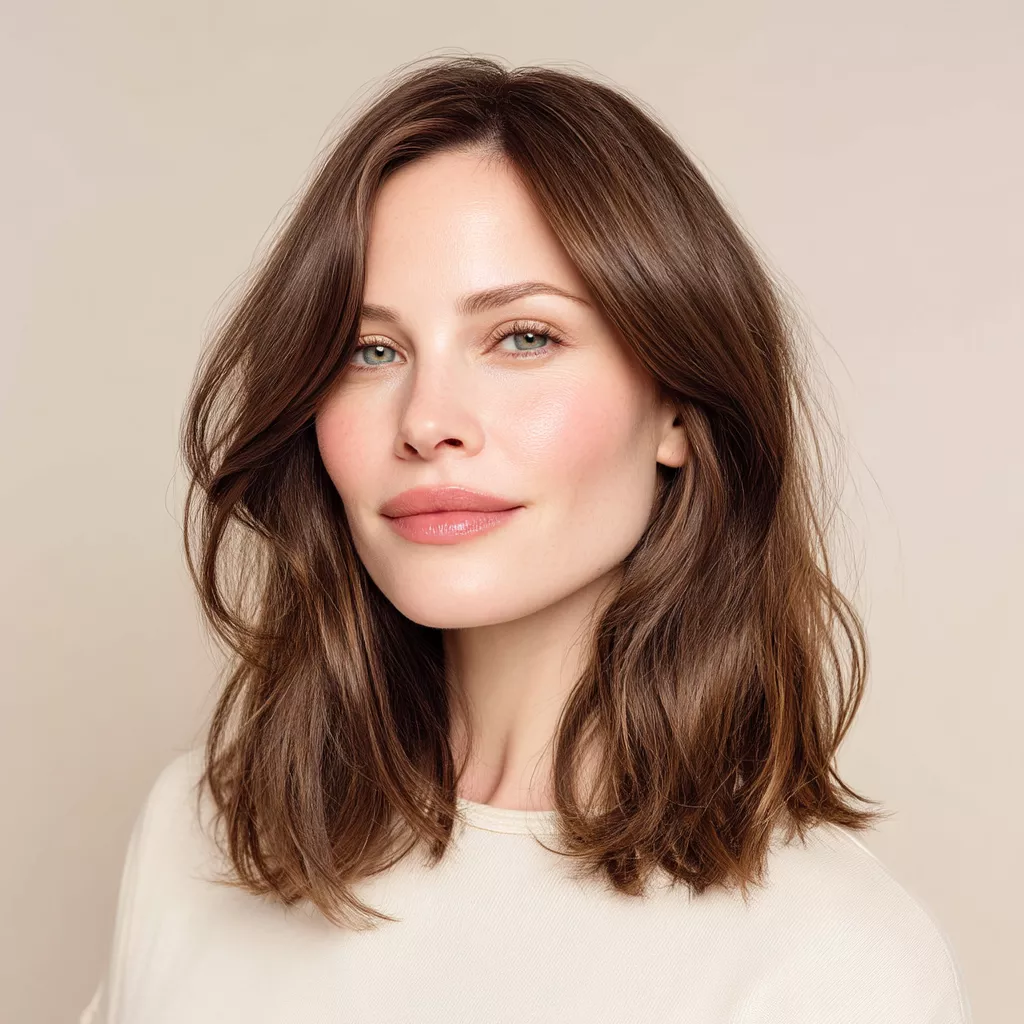
Layered Lob (Long Bob)
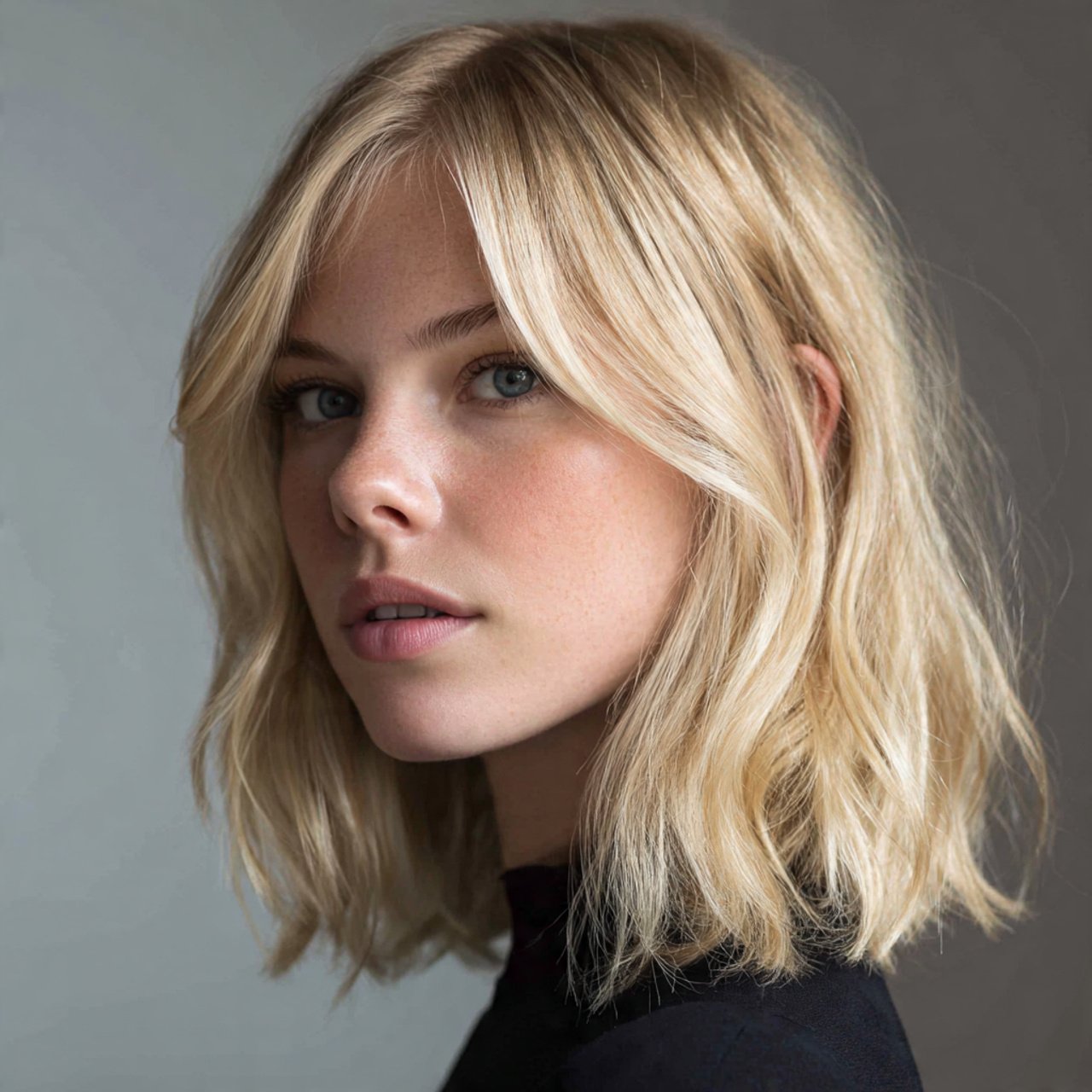
A lob generally sits at collarbone length, and how it behaves depends almost entirely on how much interior layering is added to that length. With minimal layering, the perimeter stays fairly solid and the cut looks polished but can feel heavy on hair with a lot of natural body. With more layering through the mid-lengths, the shape moves more freely, though too much layering near the very ends can start to thin out the perimeter on finer hair. It’s a reasonable length to start from if you’re not sure how much layering suits you, since it can be adjusted in either direction at your next visit.
Feather Cut (Soft Layered Style)
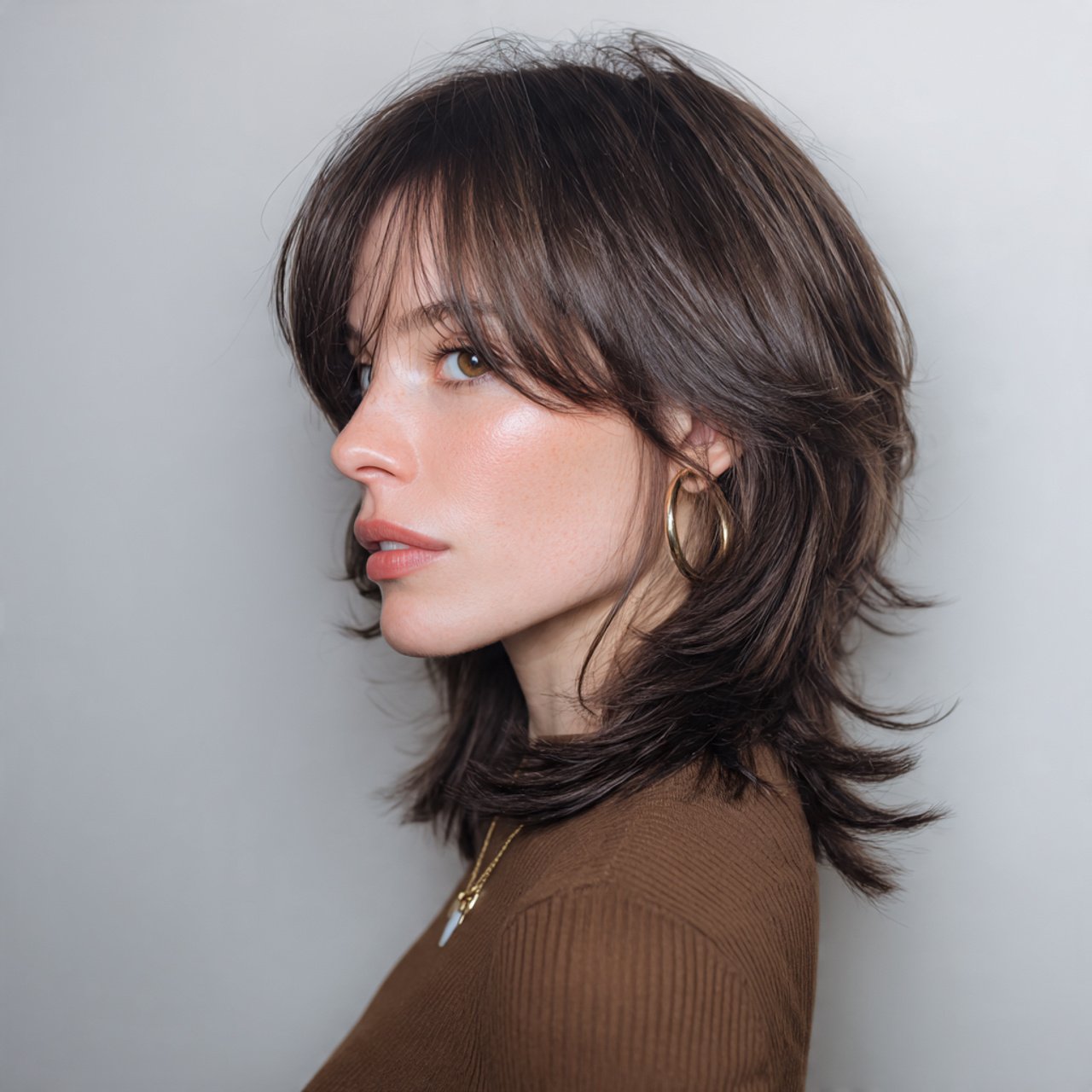
Feathering tapers the ends into a lighter, less blunt finish, usually with a razor or with scissors angled into the hair rather than cut straight across. This can help fine hair that’s still reasonably dense look softer and less heavy at the perimeter. On hair that’s both fine and lower in density, heavier feathering can go the other way and leave the ends looking thin, so it’s worth asking your stylist how much they plan to remove before they start rather than assuming more feathering is automatically better.
Blunt Shoulder-Length Cut
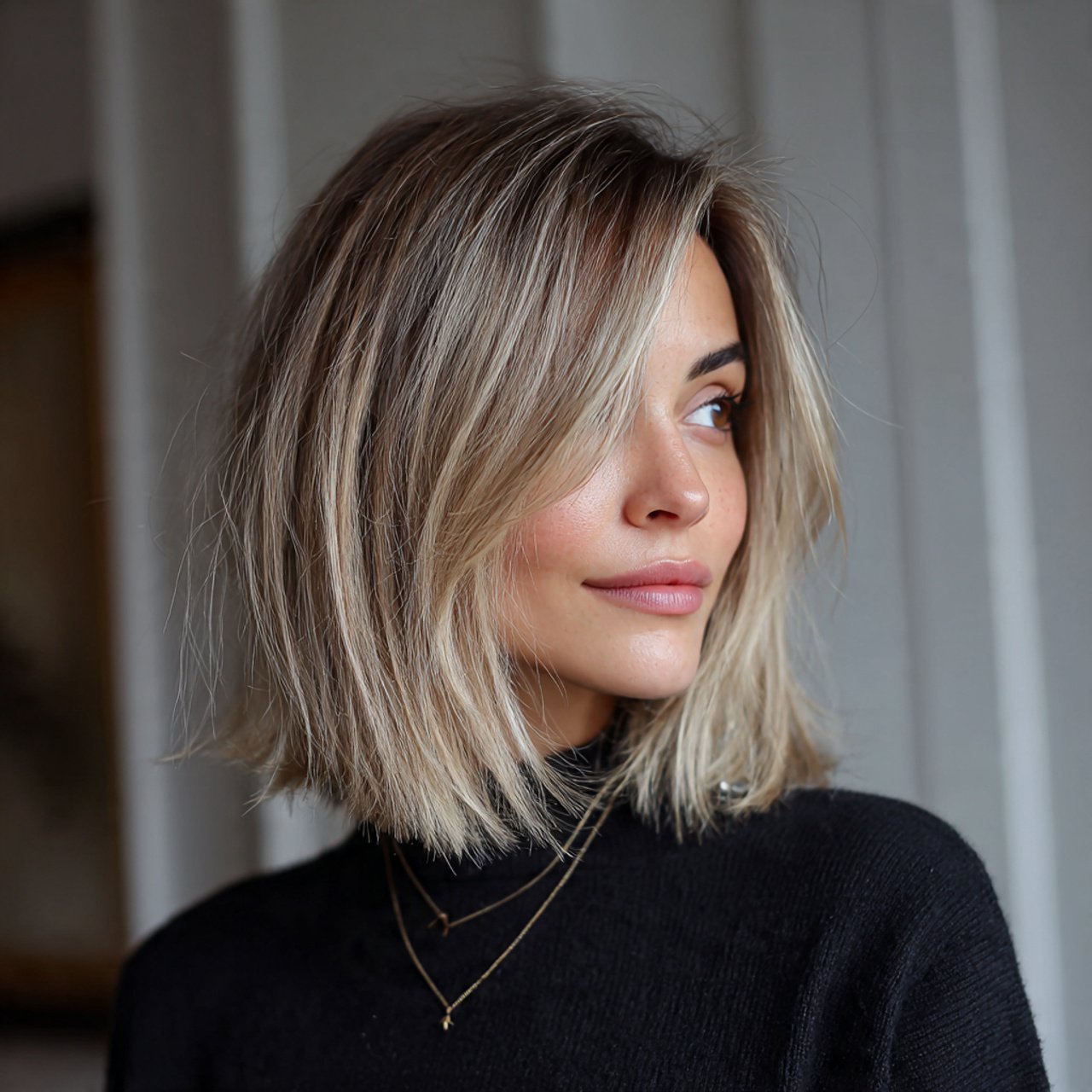
Keeping the perimeter blunt, without layering cut into the ends, gives the eye an unbroken line to read as fuller, which is part of why this shape often gets suggested for fine or fine-and-thinning hair. The trade-off is grow-out. A precise, unlayered edge shows lengthening clearly as it grows, so it tends to need more frequent trims to hold that clean line than a softer, layered cut would.
Curtain Bangs with Medium Hair
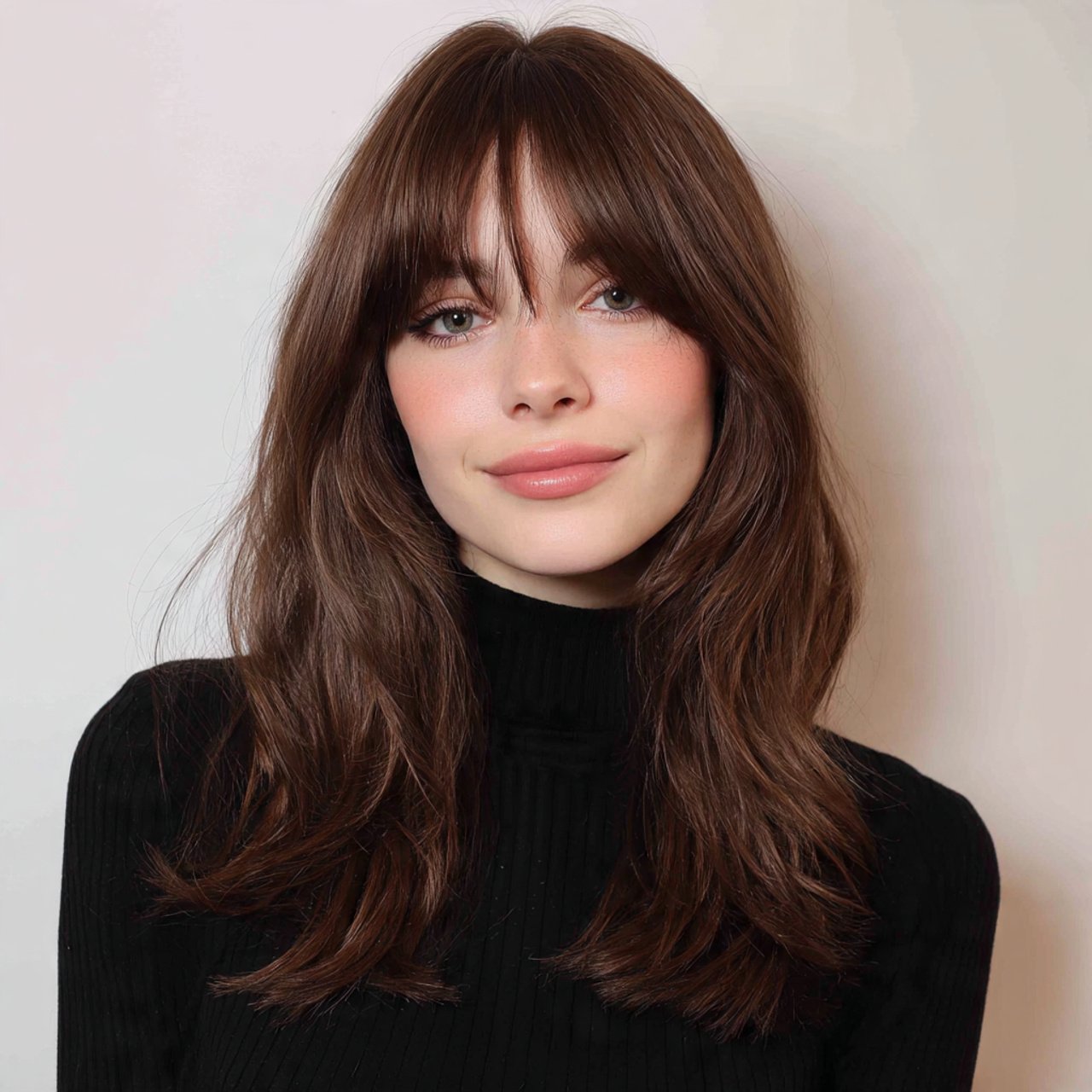
Curtain bangs part in the center and sweep outward rather than falling straight down, and this is really an addition to a cut rather than a separate haircut structure on its own, since it can be paired with a lob, a shag, or most of the other shapes on this list. How well the bangs hold their shape depends heavily on your natural part. Cut with the direction your hair already wants to fall, they tend to settle with little effort. Cut against it, they can drift back toward center within a day, particularly once they grow past the first few weeks.
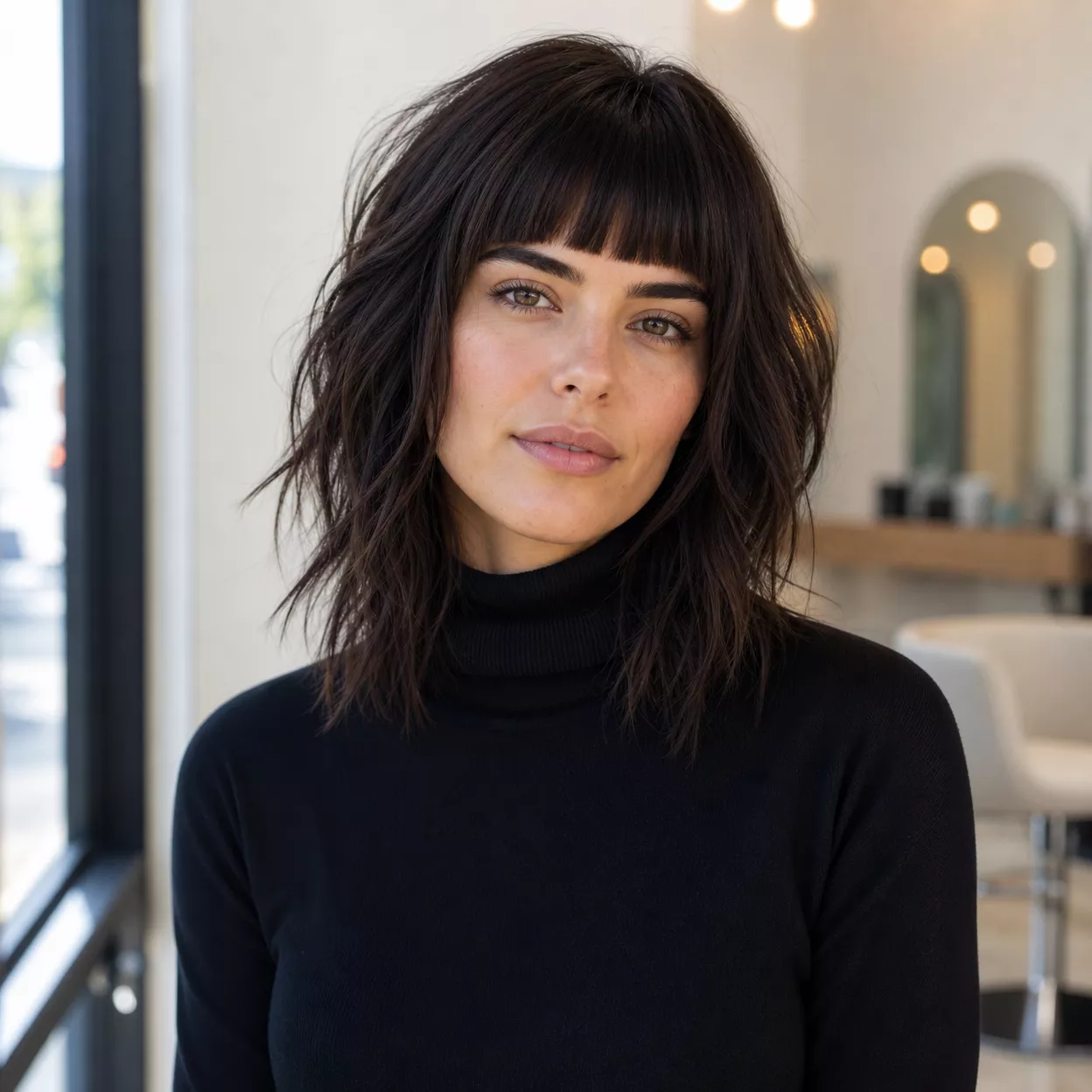
Textured Shag Cut
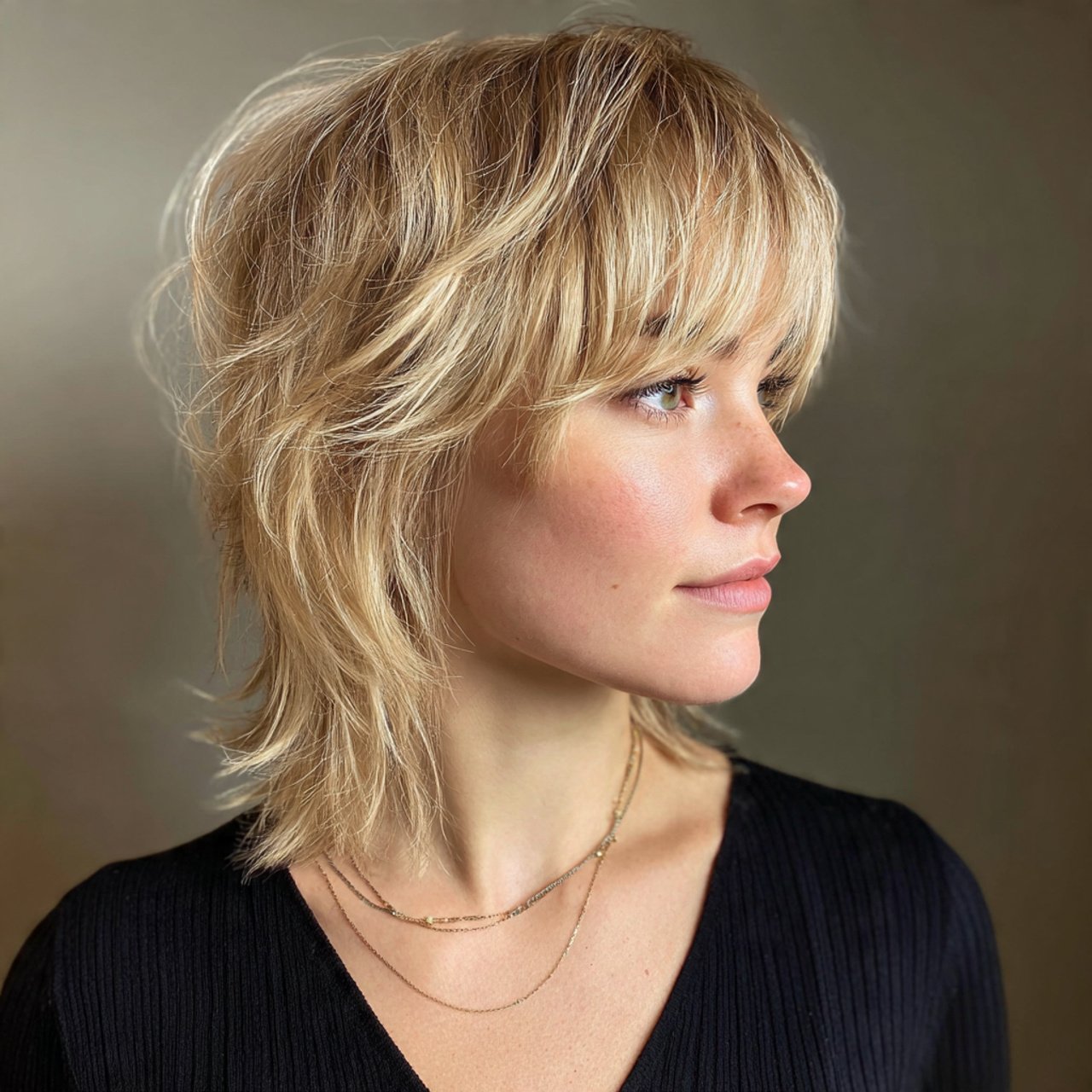
A shag relies on layers cut at several different lengths, which creates separation through the hair. That separation reads as texture when there’s enough density to fill the gaps between the layers, and it can start to look thin rather than textured on hair with less density to spare. Naturally wavy or textured hair tends to hold this shape with minimal effort, while very straight, fine hair may need a texturizing product or some diffusing to get a comparable result rather than lying flat.
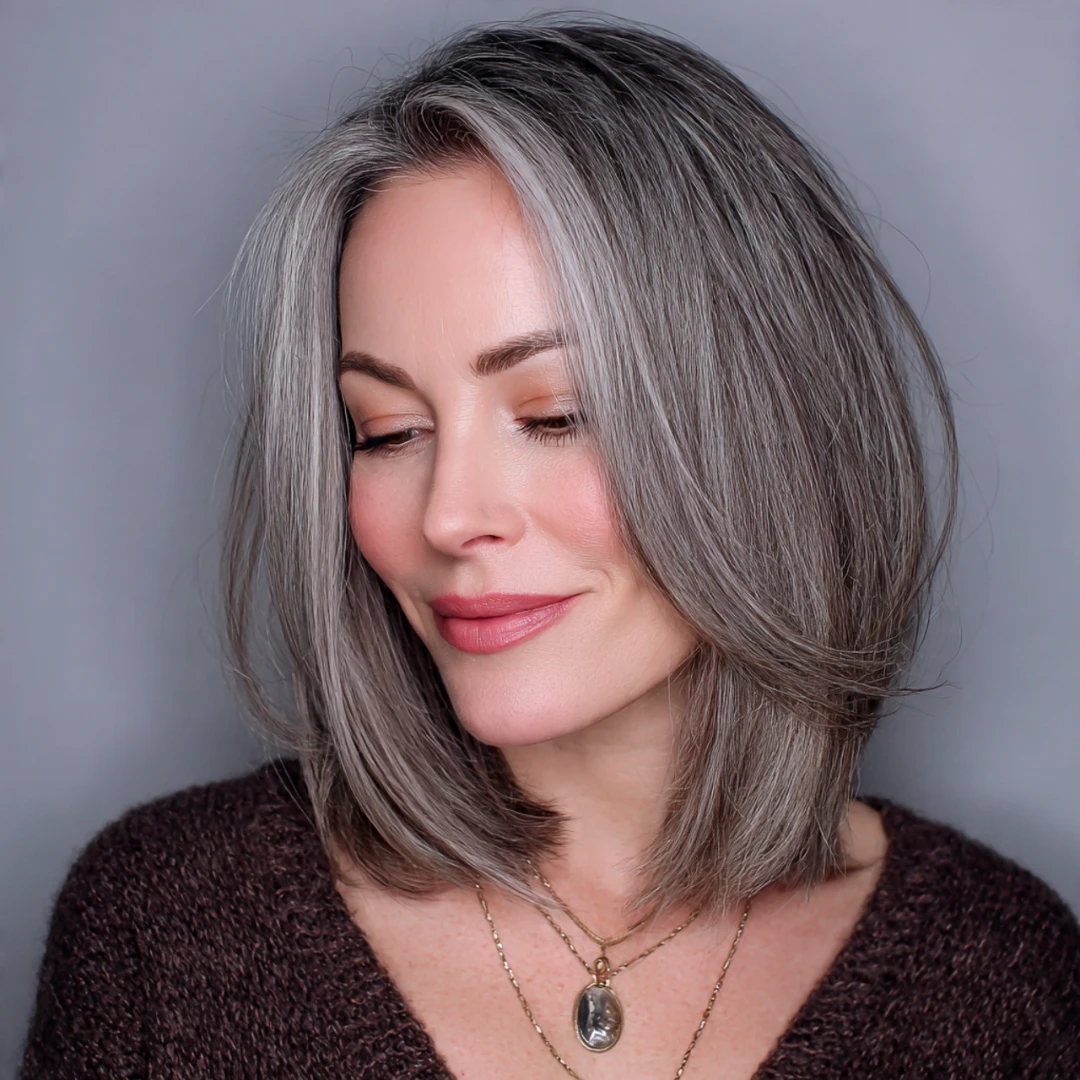
Straight Cut with Layers
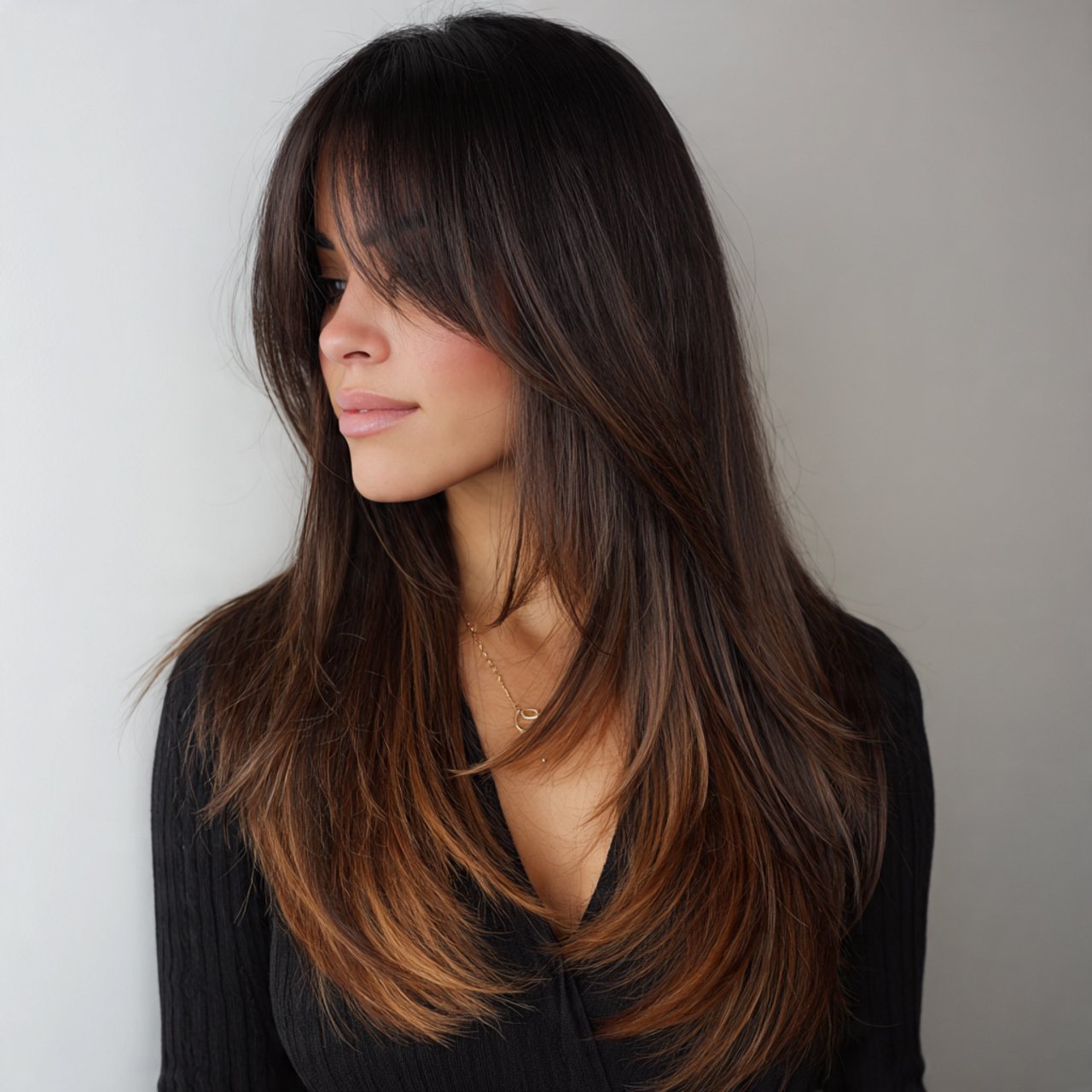
This is a more restrained version of layering than a shag or feather cut, keeping the overall length intact while adding movement through internal layers rather than at the visible perimeter. It tends to suit a range of hair types reasonably well precisely because the layering is kept moderate, though the finished look still depends on your texture: it holds a smoother shape on straighter hair and shows more natural movement on wavy hair without much intervention either way.
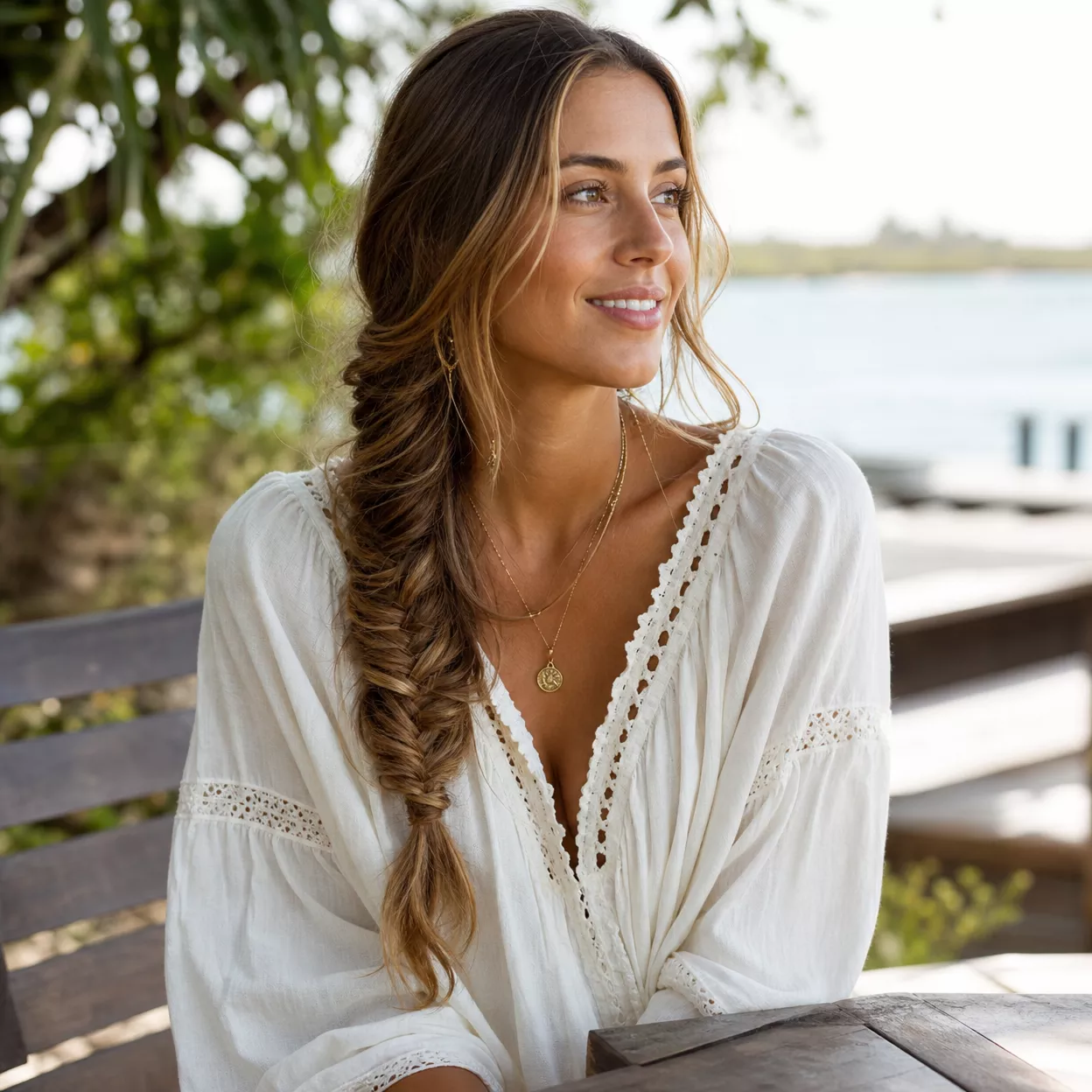
Wavy Medium Length Haircut
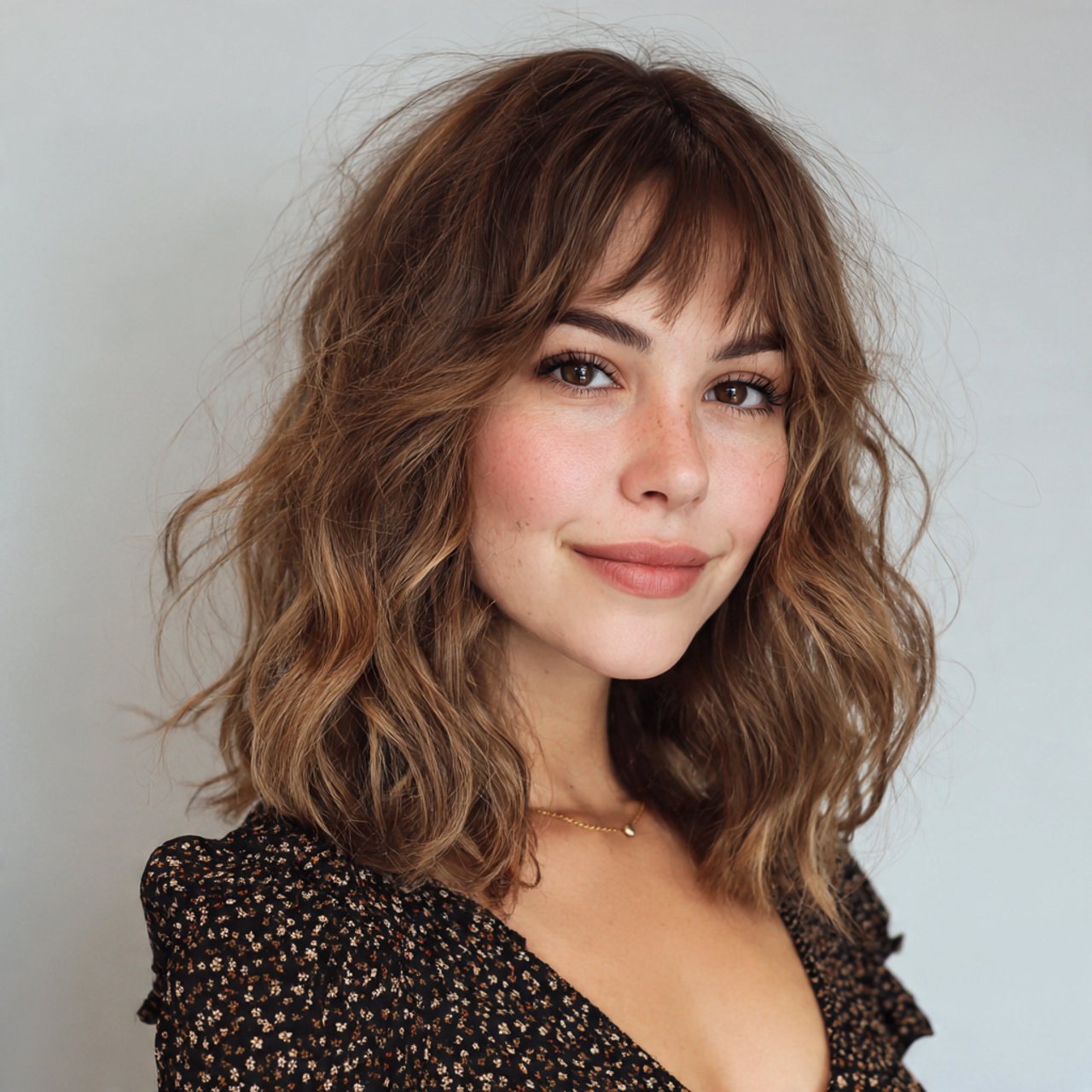
This entry is really about styling and natural texture more than a distinct cut. On hair that already has some bend or wave, a cut at medium length can be left to air-dry and still show that texture with little effort. On naturally straight hair, achieving the same wavy look in a photo usually means a curling wand or heat styling each time, which is a different daily commitment than the “minimal styling” impression the photo might give.
U-Cut for Medium Hair
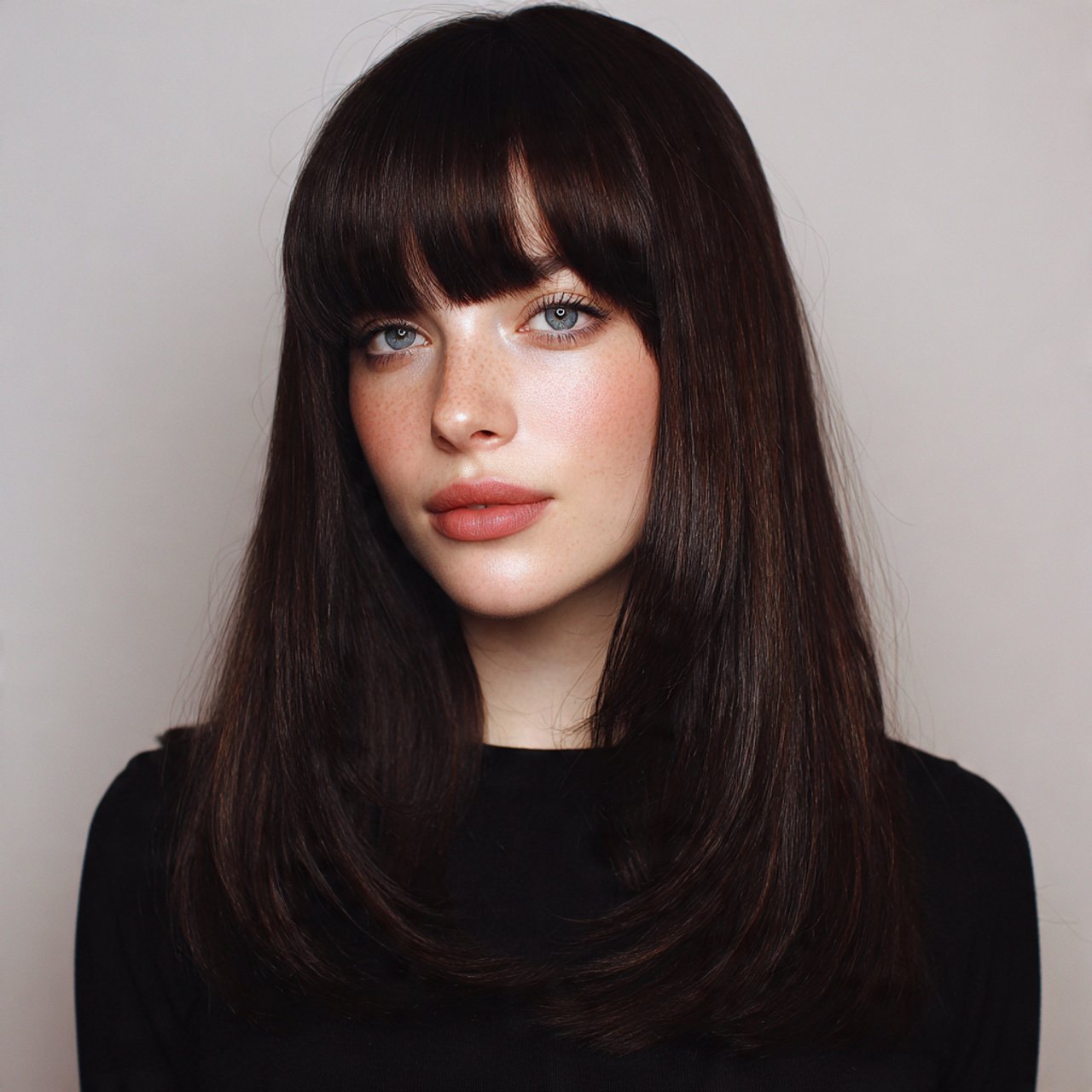
A U-cut shapes the ends into a soft, rounded curve rather than a straight line across. That curve can make the ends look fuller than a flat perimeter of the same length would, since there’s no hard edge for the eye to read as thin. It tends to work best on hair with enough length to show the curve clearly, and it generally holds its rounded shape a bit longer between trims than a sharply angled cut, since a slightly grown-out curve still reads as intentional.
V-Cut Medium Hairstyle
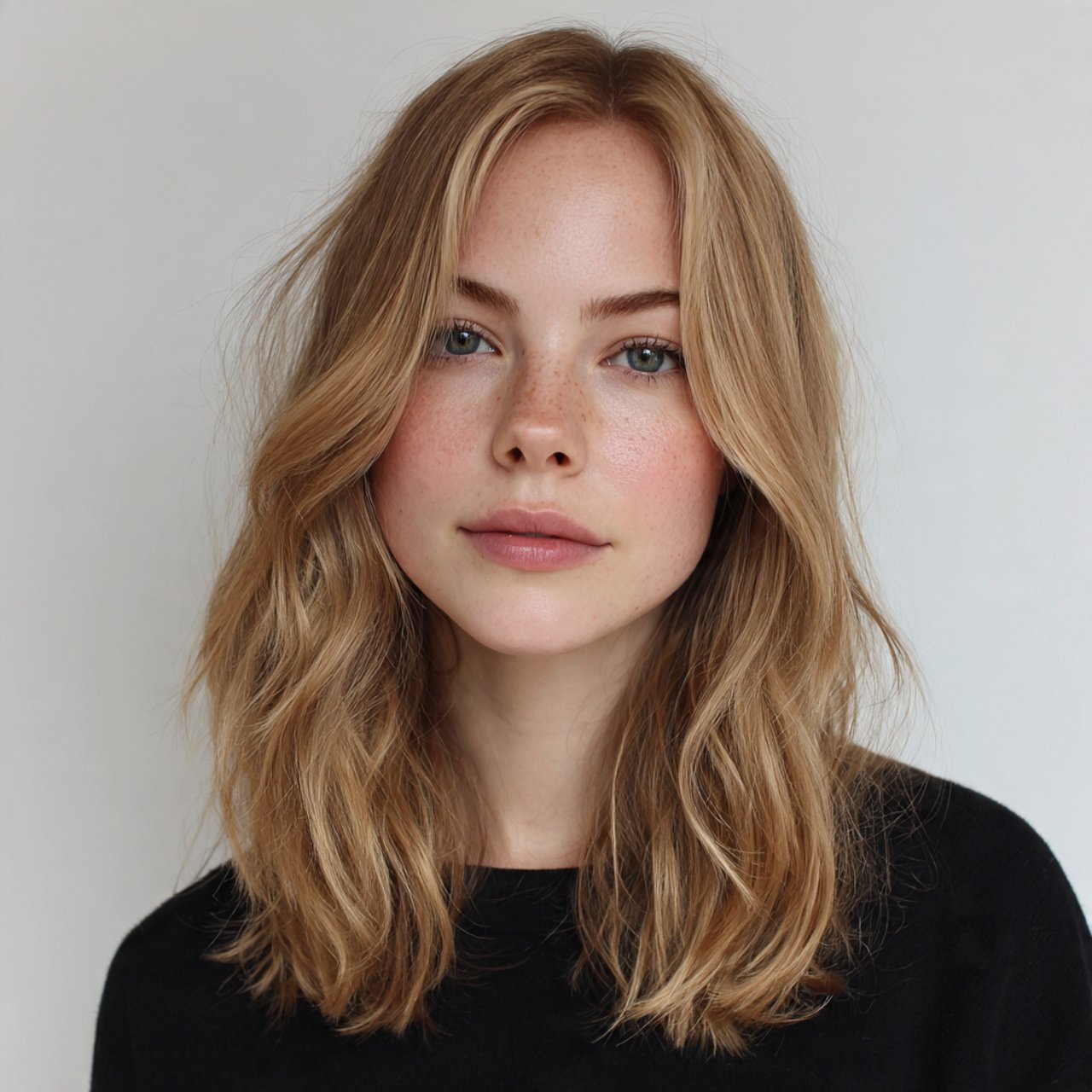
A V-cut tapers the ends to a point rather than curving them, which creates a stronger vertical line down the center of the hair. That point can make the length look more dramatic and add a sense of movement, but it’s a less forgiving shape at the very tip: on hair that’s already lighter in density, the pointed section can look noticeably thinner than the rest of the perimeter, so it’s worth discussing how deep the point should go relative to your density.
Medium Hair with Highlights
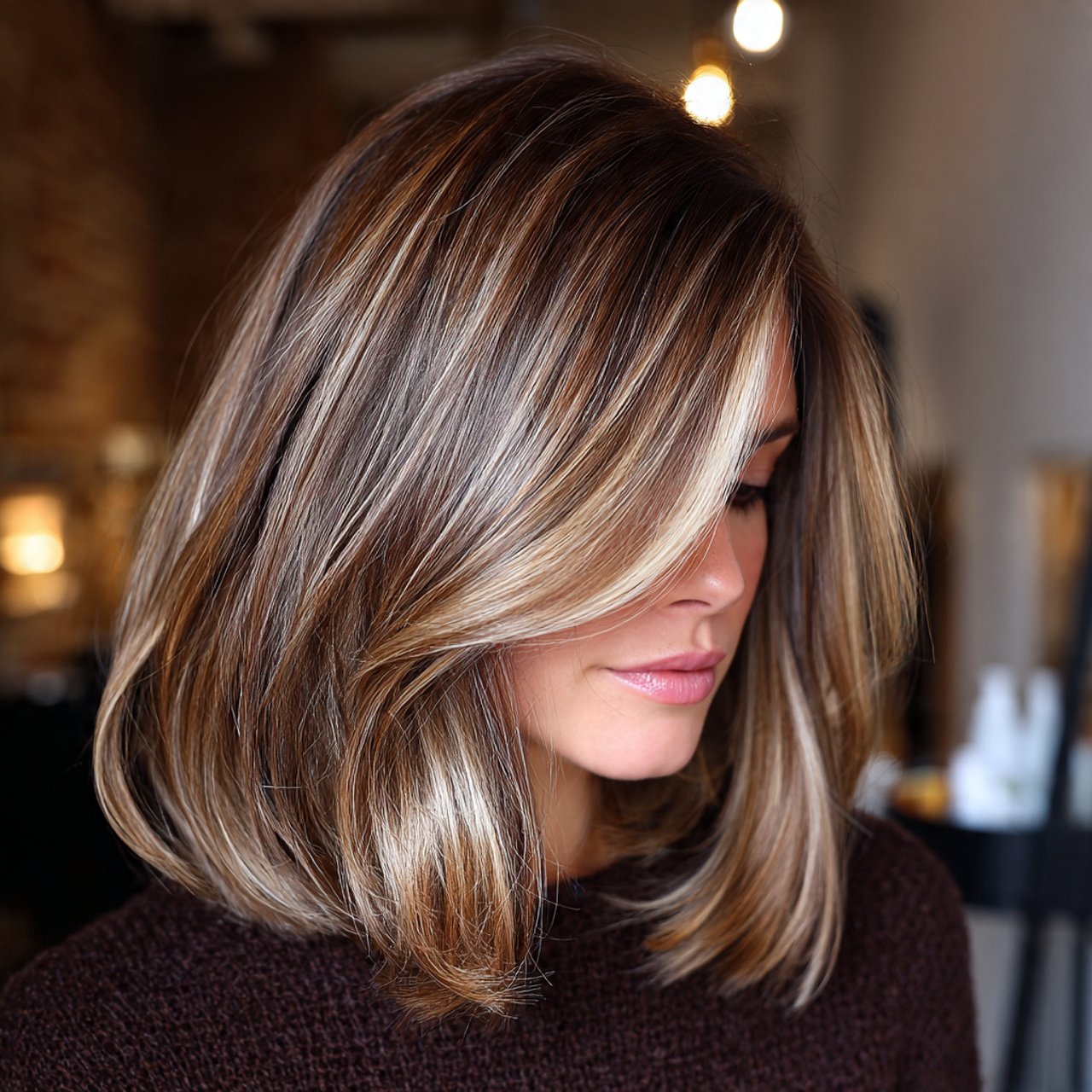
This is a color choice rather than a haircut, and it can be added to any of the structures above rather than requiring a specific cut. Highlights placed to follow the direction of your layers can make movement in the hair more visible, since the lighter pieces catch light differently as the hair moves. Foiled highlights tend to be more uniform and show root regrowth sooner, while a softer, hand-painted technique like balayage generally grows out with less of a hard line, which can mean fewer color appointments over time.
How to Narrow Down Your Medium-Length Haircut Choices
- Fine hair (with reasonable density): A feather cut or moderately layered lob can add lightness without leaving the ends too sparse.
- Fine and lower-density hair: A blunt shoulder-length cut or U-cut tends to preserve more visual fullness than heavy layering would.
- Thick or dense hair: A textured shag or a more heavily layered lob has more room to remove weight without looking thin.
- Naturally straight hair: The straight cut with layers or a blunt shape will generally hold its shape with less daily effort than a style built around waves or shag texture.
- Naturally wavy hair: The shag cut or wavy medium-length style can lean into your existing texture rather than fighting it.
- Curly hair: Length is usually easier to judge accurately once your curls have fully dried and shrunk, so it’s worth discussing that with your stylist regardless of which structure you choose.
- Minimal daily styling: Shapes with softer, more textured perimeters, like the shag or feather cut, tend to be more forgiving of an air-dry than a sleek, blunt line.
- Frequent ponytails: A moderately layered lob without heavy face-framing pieces will generally stay tidier pulled back than a cut with a lot of shorter layers around the face.
- Considering bangs: Curtain bangs tend to ask less of your trim schedule than a full, blunt fringe, and they can be added to most of the structures above.
- Wanting flexibility between styled and unstyled days: A cut with moderate layering and no aggressive perimeter shape, closer to the straight cut with layers or a softly layered lob, tends to adapt most easily either way.
What Can Go Wrong With a Medium-Length Cut
- Removing too much weight from fine or low-density hair, which can leave the ends looking thin rather than lighter.
- Layers starting too high up the length, taking weight out of areas that didn’t need it and leaving less at the ends.
- Expecting an air-dried result from a styled reference photo, when the photo was likely finished with a wand, a blow-dryer, or a flat iron.
- Underestimating curl shrinkage, which can leave a cut noticeably shorter once it’s fully dry than it looked right after cutting.
- Bangs cut against your natural part, which can cause them to sit awkwardly or drift out of place within days.
- Choosing a length that catches awkwardly at the shoulder, since the exact point where hair meets the shoulder can behave differently depending on your shoulder shape and how your hair naturally sits.
- Assuming “low maintenance” means no styling at all, when it more often means the cut is forgiving of an air-dry rather than requiring zero effort under any circumstances.
What to Ask Your Stylist
- Where will the perimeter sit once my hair is fully dry, not just right after the cut?
- How much weight are we actually removing, and can we be conservative to start?
- Where will the shortest layer begin?
- Will my natural wave or curl change the finished length?
- Can I still put this into a ponytail comfortably?
- How much daily styling will this realistically require?
- How will this grow out, and when should I plan to come back?
FAQs (Answer Passage Optimized)
Choosing What Actually Fits
There isn’t one medium-length haircut that behaves the same way on every head. The perimeter shape, how much layering is cut into it, your hair’s density and texture, and how much time you’re willing to put into styling all shape the outcome more than the general length category does. Bring a reference photo to your next appointment, but bring an honest sense of your own hair and routine along with it. That combination will tell your stylist far more than the picture alone.