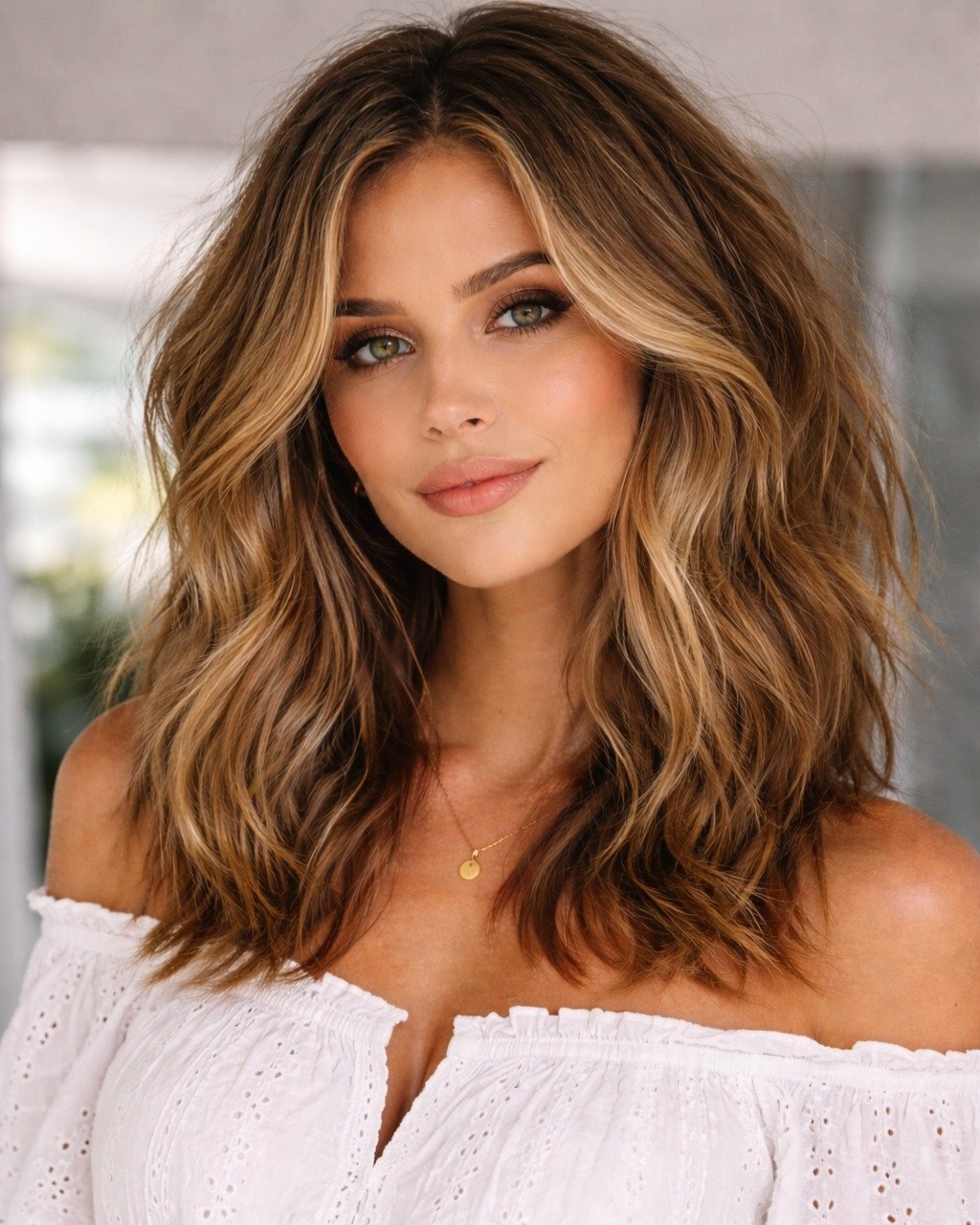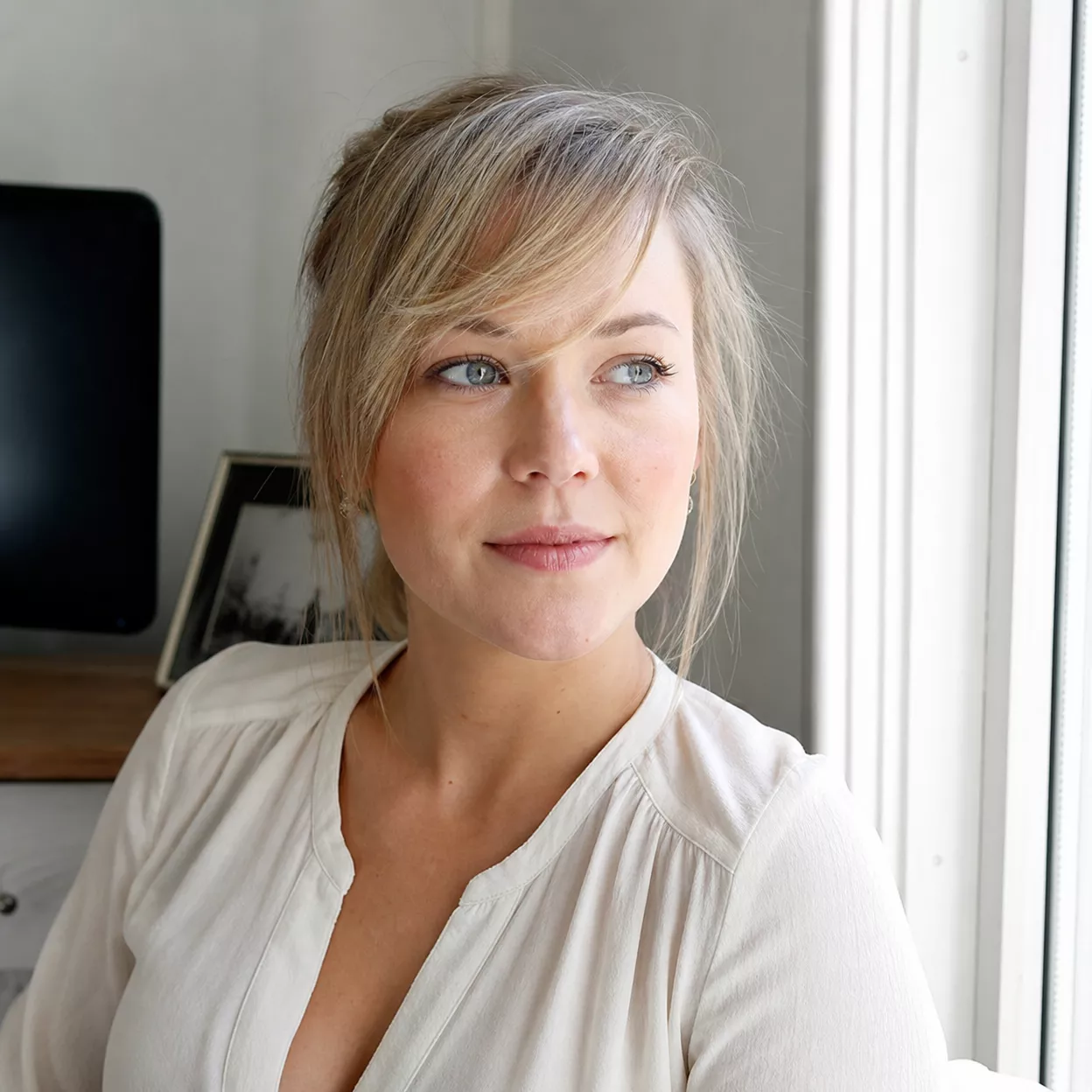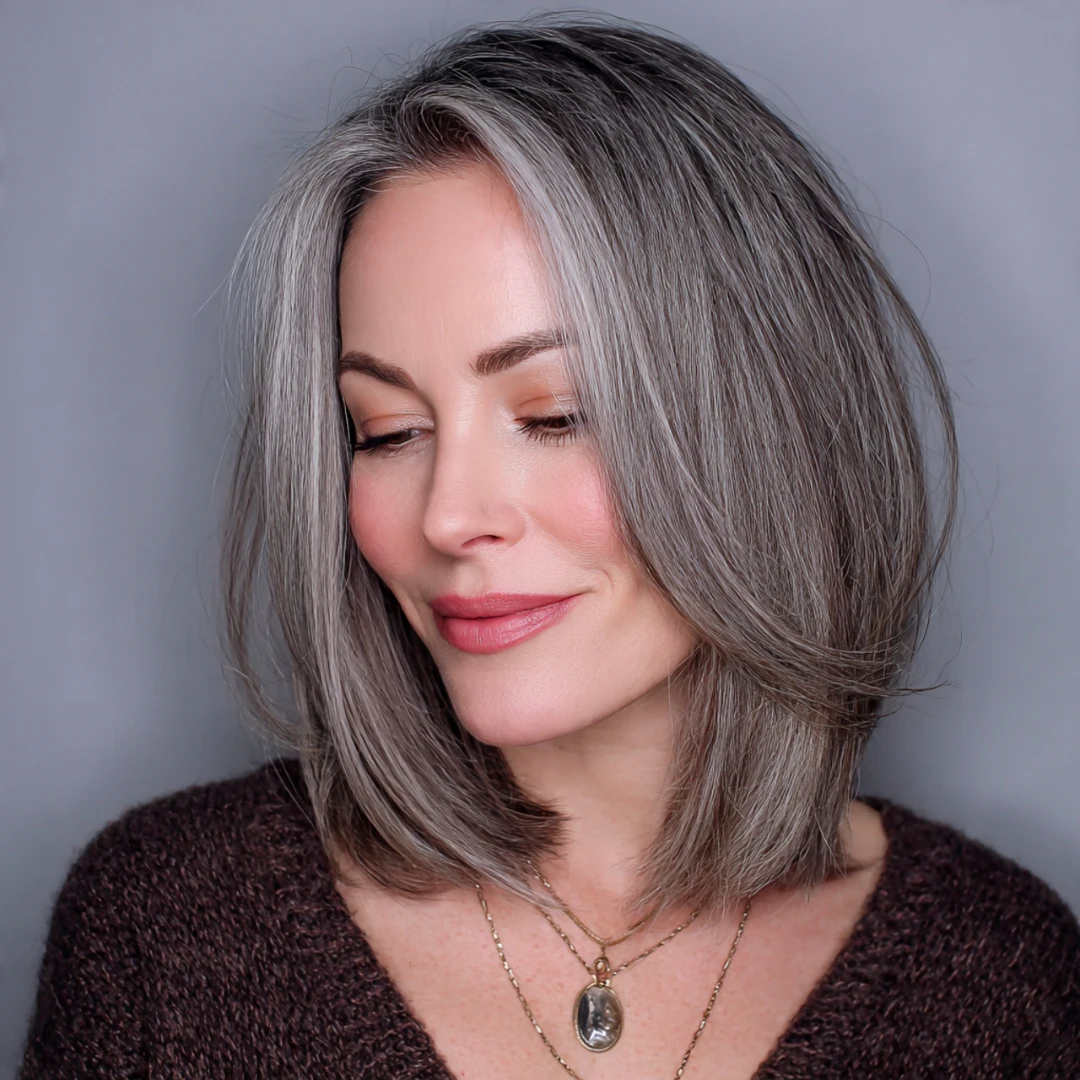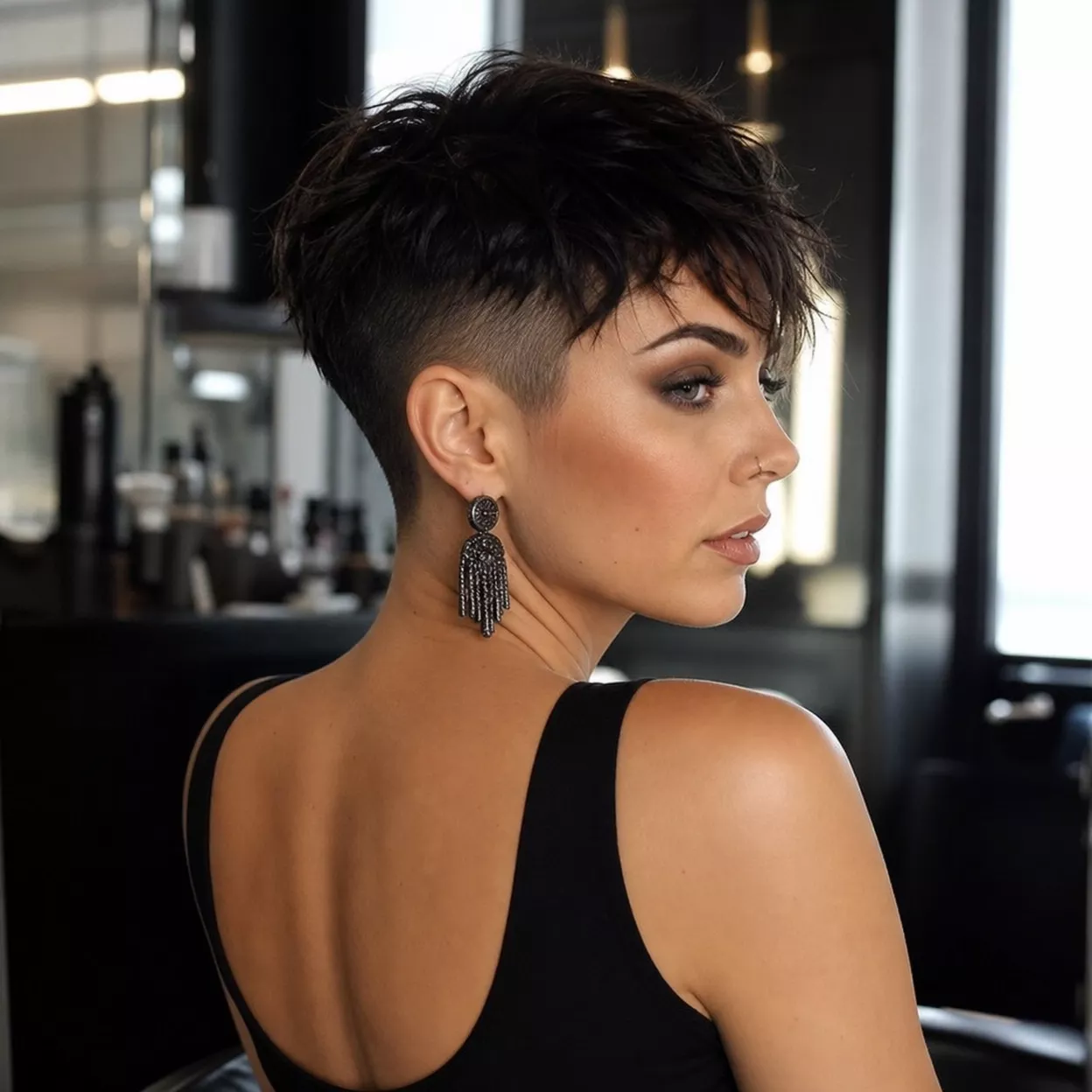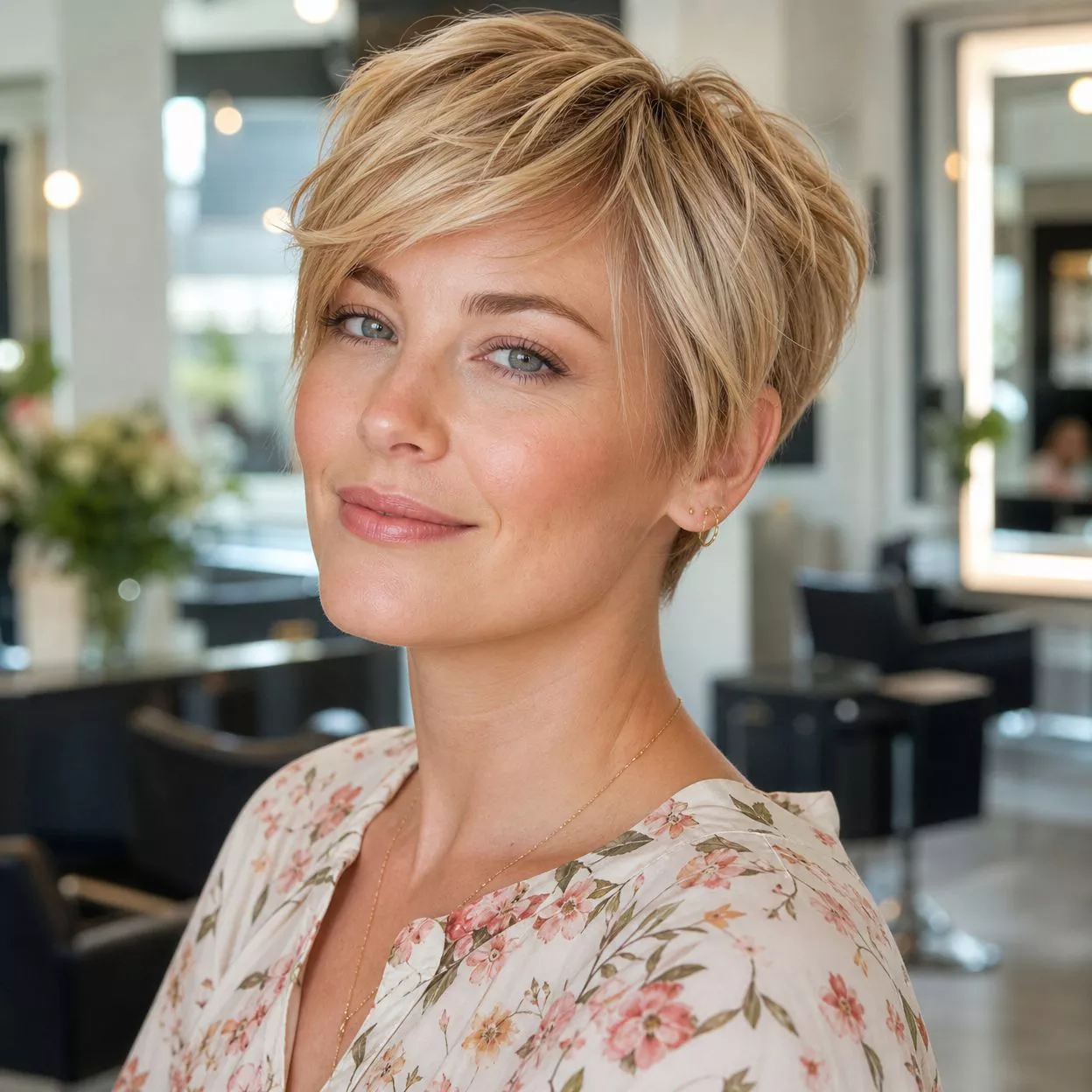
27 Fall Haircuts for Women and How to Choose One That Fits Your Hair and Routine
A change of season is a practical moment to rethink a haircut. Scarves, collars, coats, and hats start touching your hair again, and so do drier indoor air and a different styling routine. A cut that moved freely in summer may bunch at the neckline or lose its shape under a hat.
That’s why a haircut is better judged by how it behaves than by how it looks in a reference photo. The same shape can read very differently depending on your density, strand thickness, natural texture, and part, and on whether you air-dry or reach for a brush and dryer. Length, layering, fringe, and how often you’re willing to reshape the cut all matter as well.
The 27 haircuts below run as one continuous sequence. Each points to the detail that shapes the result, so you can tell whether a cut suits your hair and your routine, not just the season.
Collarbone Lob with Soft Layers

Collarbone length is the point where hair starts to meet clothing. Ends that land right on the collarbone can flip outward against a coat collar or bend unevenly over a scarf, which is worth testing in outerwear before committing. Soft layers lighten the lengths without changing the outline. On dense hair, they stop the lob from sitting heavy. On low-density hair, a few long layers usually keep the ends looking fuller than many short ones would. Hair that reaches the shoulders may flip more than hair that stops just above them.
Curtain Bangs with Medium Layers

Curtain bangs part at the center and sweep toward the cheekbones, and the detail that matters is how they connect to the first face-framing layer. When the two meet smoothly, the front reads as one shape. The bangs sit most easily when the split matches your natural part, and they need enough hairline density to look full. Hats can press them flat or push them into the eyes, so expect some daily reshaping. Fringe also needs trimming before the rest of the cut does.
Blunt Bob with Shine Finish

Two separate things are happening here. The blunt bob is the haircut: one solid perimeter with little layering, which gives a strong outline and keeps the ends looking substantial. The shine is a finish that depends on your hair’s condition, how smooth the cuticle lies, and how it’s styled. A blunt line can show off smoothness, but it can’t create it. Cooler, drier air can make straight hair static and flyaway, so a smoothing step may matter more in fall. A blunt edge also shows growth quickly.
Wavy Shag with Volume

A shag moves weight around. Shorter layers at the crown lift the top, interior layers let the lengths move, and the ends are often broken up. How much of that suits you depends on your wave pattern. Consistent waves tend to fall into shag layers on their own, while uneven ones may need help to look balanced. Volume here comes from where weight is removed, not from adding hair, so low-density hair can look lighter at the ends if too much comes out. Humidity can swing waves between defined and frizzy.
Shoulder-Length Cut with Face Framing

Face-framing pieces are cut shorter at the front and blend into the lengths, and where they start changes the effect. At the cheekbone, the frame is close and visible; at the jaw, it’s softer. Shoulder length also keeps ponytails possible, but the front pieces may escape the elastic, which can look intentional or untidy depending on your preference. If you often wear your hair up, ask how the layers will behave when pulled back. Straight hair shows the framing clearly, while wavy hair blends it into the movement.
Textured French Bob

Calling a bob “French” describes design choices, not a stereotype. Usually that means a clean perimeter around the jaw or cheekbone, some natural movement, and a fringe or side part that keeps it from looking rigid. The texture is what separates it from a blunt bob: slightly broken ends and a loose finish. Natural wave helps the shape look relaxed, while very straight hair may need product to create the same texture. Because it’s short, growth changes the outline quickly, and the fringe usually needs attention first. Our guide to bob hairstyles covers more variations of this length.
Long Layers with Rich Dimension

The haircut and the dimension are separate. Long layers shape the movement and remove weight at the ends, while “rich dimension” describes color: usually balayage, highlights, or lowlights placed through the lengths. Layers can make color easier to read, because the shifting lengths catch light differently, but they don’t create it. If you like the look, decide whether you want the cut, the color, or both, since each has its own upkeep. Color also depends on your starting shade and may involve lightening.
Chin-Length Bob with Side Part

A side part tilts a bob’s balance. More hair falls across one side, so the shape becomes asymmetrical, and the heavier side carries more visual weight. It holds best when it follows your natural part; a part forced against your growth pattern tends to drift back through the day. Chin length sits above most collars, which keeps the cut clear of scarves, though hats may flip the ends outward. On low-density hair, a very deep part can show more scalp along the line, so a moderate one may look fuller.
Butterfly Cut for Long Hair

A butterfly cut keeps most of the length while adding shorter layers around the face and upper lengths. The idea is movement near the face without a visible chop. How much it shows depends on styling: the lifted, bouncy shape in photos usually comes from a blowout or curling, and air-dried straight hair may fall flatter. On fine or low-density hair, many short upper layers can thin out the ends, so the cut often works better with fewer, longer ones. Long hair also tends to be compressed by coats and scarves.
Soft Wolf Cut

A wolf cut combines a shorter, layered crown with longer, lighter lengths. The soft version narrows the gap between them, so the shape reads less dramatic and keeps more weight. How wearable it feels depends on the amount of layering and your texture. Wavy hair often falls into the shape; straight hair usually needs texture product to show separation. It isn’t automatically easy to style, and the crown layers may need reshaping as they grow. Dense hair holds the layering well, while low-density hair can look sparse at the ends if too much weight is removed.
Sleek Lob with Center Part

The lob is the cut; sleekness is a finish. On naturally straight hair, a smooth surface may take little more than brushing. Wavy or curly hair usually needs a blow-dry or flat iron, and the finish can change quickly in damp weather. A center part shows any unevenness and works most easily when it matches your natural part. It can also show more scalp along the line on lower-density hair. A lob ending around the collarbone may flip against coat collars, so check how the ends sit in layers of clothing.
Layered Bob for Fine Hair

Fine describes narrow strands, and low density describes fewer strands. The two aren’t the same, and they call for different layering. Fine hair with good density can usually handle moderate layers, which add movement without thinning the ends. Fine hair that’s also low in density needs more caution, because layers remove weight and the ends can look see-through. A fairly strong perimeter with a few light layers inside tends to look fuller than heavy layering. Layers don’t add volume; they change where fullness sits. Our guide to volumizing hairstyles for fine or thin hair goes further.
Curly Shoulder Cut with Shape

Curls shrink as they dry, sometimes a great deal, so a shoulder-length cut judged wet may sit near the jaw once dry. Many stylists assess curls dry for that reason. Shaping redistributes weight. Layers at the crown let the top lift, while enough length below stops the outline from widening into a triangle. Curl pattern, density, and shrinkage all change the plan, and tighter curls and coils often expand differently from looser ones. At shoulder length, curls can also be flattened by collars and scarves, so definition may need refreshing during the day.
Bixie Cut with Texture

A bixie sits between a bob and a pixie: shorter at the back and sides than a bob, with more length at the front and top than a pixie. That length gives styling options, and the textured finish adds separation. The shorter areas change the upkeep. The nape and sides lose their shape first, so reshaping comes sooner than with a longer cut. Cowlicks at the crown and hairline are more visible at this length. Short cuts also stay clear of collars and scarves. Our guide to bixie haircuts covers more versions.
Long Bob with Curtain Fringe

Here, a stable perimeter meets a changeable front. The long bob keeps its weight and outline, while the curtain fringe is the part that moves: it grows, shifts with your part, and needs trims. That difference is worth planning for. The lengths may need reshaping rarely, while the fringe needs attention more often. Under a hat, the bangs can flatten or sweep into the eyes. The fringe blends into the face-framing layers as it grows, but there’s an in-between stage first.
Razor-Cut Mid-Length Hair

A razor slices at an angle, so each end tapers to a softer point. That can give the ends a lighter, more separated look. It’s a finish, not an automatic upgrade. Fine, fragile, or very dry hair may fray or look wispy with razored ends, and curly or coily hair can lose definition at the tips. Scissors can create soft texture too, through point-cutting or slide-cutting. Fall’s drier air can make frayed ends more noticeable, so describe the finish you want and let your hair’s condition decide the tool.
Polished Short Crop

A short crop is defined by its outline and crown length. The polish comes from a clean perimeter and controlled styling, and on many hair types, daily styling can stay simple. The upkeep is different from the daily effort. Short cuts show growth quickly, and the nape and sides need reshaping before the top does. The hairline, cowlicks, and crown matter more at this length, and straight hair shows precision clearly. Because there’s little length, collars and scarves rarely interfere, though hats may press the top flat.
Shoulder Shag with Bangs

Bangs and a layered perimeter share the same space around the face, so the connection between them matters. When the fringe flows into the first layers, the front looks continuous; when it doesn’t, it can look like two separate cuts. Density and texture decide how much movement actually shows. Wavy hair makes shag layers visible with little effort, while straight hair often needs product to separate them. On low-density hair, heavy layering can leave the ends sparse. At shoulder length, the ends may flip against a coat collar.
Rounded Bob for Thick Hair

Thick can mean dense, coarse, or both, and the distinction matters. A rounded bob manages weight by curving the perimeter and removing some bulk inside, so the shape sits closer instead of expanding into a triangle. Removing too much can backfire. Over-thinned coarse hair may frizz or stick out, and thinned dense hair can lose the weight that gives the shape its outline. The aim is distribution: lighten the interior, keep the perimeter. Thick hair under a hat or collar may also compress and need reshaping.
Long Hair with Bottleneck Bangs

Bottleneck bangs start short at the center and lengthen toward the sides, so the fringe narrows like the neck of a bottle. The transition from the center to the longer sides is the detail to look for in a photo. Your natural part decides how it sits, and a cowlick at the front can push the center up or apart. They usually need a quick blow-dry to open. Under a hat, the short center section may press flat. As they grow, the center reaches the brow first, which changes the shape.
Blended Layers with Soft Waves

The layers are the haircut, and the waves are styling. Blended layers flow into each other without obvious steps, which keeps the cut soft. Natural waves may need little more than a light product, so the styling effort stays low. Straight hair needs waves added with a wand or an overnight method, and those may relax during the day or in damp weather. Without the waves, the same layers may look flatter, so it helps to see how the cut looks air-dried. Soft layers also tend to blur as they grow.
Choppy Shoulder Cut

Choppy describes uneven lengths and broken ends, not a single shape. The edge looks irregular on purpose, and texture shows through the surface. The trade-offs vary by hair. On dense hair, choppiness can lighten the cut and keep it from looking heavy. On fine or low-density hair, heavy choppiness can leave the ends looking sparse. Wavy hair tends to hide the unevenness, while straight hair shows every step. Shoulder-length ends can also flip against collars, which may suit the choppy finish or fight it.
Jaw-Length Italian Bob

The fuller shape is the defining feature. An Italian bob usually has a rounded, controlled outline at the jaw with some weight kept at the ends. Density decides the silhouette: dense hair holds the full shape easily, while fine or low-density hair may need a stronger perimeter to look fuller. It’s usually styled with a bit of movement rather than pin-straight. The jaw-length edge sits above most collars, though a high collar may push it outward. The shape depends on keeping the perimeter intact, so growth changes it quickly.
Layered Pixie with Longer Top

The contrast between short sides and back and a longer top is where the options are. The longer top can be swept, pushed up, or worn forward, so styling is flexible. That flexibility asks for some daily attention: the top usually needs product or a quick blow-dry to hold a direction. Grow-out is the real commitment, since the sides and nape lengthen first and change the silhouette. On low-density hair, the top needs enough length to avoid showing scalp. Hats can flatten the top and leave a mark.
Medium Cut with Soft Flipped Ends

The haircut is a medium-length cut with the ends shaped to turn outward; the flip is a styling effect. It usually comes from a round brush and a blow-dryer, or sometimes a flat iron or hot rollers. Without that, the ends may fall straight or turn in their own direction. Hair that grows with some natural flip, often around the shoulders, may need little help. Humidity can make a set flip drop or frizz. If you don’t blow-dry regularly, ask how the cut will behave air-dried.
Long Shag with Curtain Bangs

A long shag keeps most of the length, so it avoids the shorter, more dramatic look of a mid-length shag, while adding crown layers and texture through the lengths. That structure removes a lot of weight. On fine or low-density hair, heavy layering can leave the ends thin, so a gentler version with longer layers keeps more fullness. Curtain bangs open the front. Natural wave helps the layers show, while straight hair may need product. Under long hair, collars and scarves may bunch the layers, so test it with outerwear on.
Angled Lob with Volume

An angled lob is shorter at the back and longer at the front, so the perimeter slopes toward the face. The steeper the angle, the more the shape becomes the focus. The volume is not built into the cut automatically. It may come from graduation at the back, from natural density, or from a blowout that lifts the roots and sides. As it grows, the back reaches the collar first and may flip while the front still sits where it should. A gentler angle tends to grow out more evenly.
Fall Changes More Than the Haircut
Seasonal clothing affects haircuts more than most reference photos suggest. High collars and scarves push hair outward, flatten the ends, or make them bunch at the neckline. Hats can compress the crown, flatten bangs, and leave a line where the brim sat. Coats and jackets add friction that can roughen smooth finishes, especially on fine or straight hair.
Shorter cuts, from a jaw-length bob to a pixie, mostly stay clear of this, though hats and hoods may still press them. Longer layers sit against clothing more often, so they may need smoothing or restyling during the day. Your routine changes too: indoor heat and drier air can make hair static and flyaway, and many people style differently once the weather changes. Pick a cut you’ll still enjoy wearing in the clothes you’ll actually have on.
The Haircut Photo Doesn’t Show You Everything
A reference photo hides most of what shaped the finished look. It can’t show density or strand thickness, or whether the model’s hair is naturally straight, wavy, or curly. It rarely shows how much blow-drying, flat ironing, curling, or product went into it. Extensions can add length or fullness, and color can make layers look sharper than they are. Lighting and camera angle change how full and glossy hair appears, and professional styling can be hard to repeat at home.
If you can, look at the side and back, which show how the cut is built. Then ask how it would look on your hair, air-dried, on an ordinary day. Copying the shape exactly doesn’t reproduce the result if your hair behaves differently.
Fine Hair, Thick Hair, Waves, Curls: The Same Cut Behaves Differently
Fine hair has narrow strands. Low-density hair has fewer strands. Fine but dense hair can usually handle moderate layering, while fine, low-density hair tends to look fuller with fewer layers and a stronger perimeter.
Thick hair can mean many strands, wide strands, or both. Dense hair benefits from interior weight removal, while coarse strands hold shape but can frizz if heavily thinned.
Straight hair shows perimeter lines and layer steps clearly but often needs styling to show texture. Wavy hair often falls into layered shapes, though uneven waves may need help. Curly and coily hair shrink and expand, so cuts need planning around the dry shape.
Layered cuts move weight around, and blunt cuts keep it at the perimeter. That difference decides how full the ends look.
How to Choose Your Fall Haircut From These 27
Start with length. Decide how much you want to keep, since that narrows the choices quickly: pixies and crops are the shortest, bobs sit between the jaw and chin, lobs reach the collarbone, and long layers and shags keep most of the length.
Then consider styling. Sleek and flipped cuts usually depend on heat, while shags and waves lean on natural texture. Think about your texture and your density, because they decide how much layering your hair can carry.
Consider how often you’re willing to reshape the cut. Short cuts and fringe need attention sooner than longer, blended shapes. If you wear scarves, hats, or high collars often, test how the length and ends will sit against them.
Finally, decide whether you want a visible change or a subtle seasonal refresh. A fringe, a few face-framing layers, or a slight length change can be a lighter step than a full reshape.
Choosing a Fall Haircut Around Your Routine
Next, think about how often you wear your hair up. If you tie it back for work or exercise, check that the shortest layers will still reach a ponytail, since face-framing pieces and shags often leave strands loose.
Fringe is its own commitment. Curtain bangs left long are the most forgiving because they can be tucked aside, while short or bottleneck bangs usually need daily styling.
Then choose between a precise outline and visible texture. Precise shapes, such as blunt and rounded bobs, look crisp but show growth sooner. Textured shapes, such as shags and choppy cuts, grow out more gradually but depend on your natural texture or on product.
When a Fall Haircut Can Disappoint
Most disappointments come from a mismatch between the cut and the hair. Too many layers can leave fine or low-density ends looking sparse. Too much weight left in thick hair can make a shape wider than expected. Bangs may need more daily styling than you planned for, especially under hats.
A sleek look can depend on daily heat, and shag layers can behave differently on straight hair than on wavy. Curls may shrink after the cut, leaving it shorter than it looked wet. A collar or scarf can interfere with the ends. Short cuts need reshaping sooner than longer ones. And reference photos often rely heavily on professional styling that’s hard to repeat.
What to Tell Your Stylist
A few specific sentences help more than a photo alone:
“I want to keep the overall length but remove some weight around the face.”
“I want movement without losing too much fullness through the ends.”
“My hair is fine but dense, so I don’t want the layers to remove too much weight.”
“I wear scarves and high collars often, so I want to know how this length will sit against them.”
“I don’t want a cut that depends on daily heat styling.”
“My curls shrink when dry, so please consider the dry shape.”
Use the ones that apply to your hair, and leave out the rest.
Why a Reference Photo May Look Different on Your Hair
Many haircut names describe a family of shapes, not one exact result. A French bob, a shag, or a butterfly cut can vary considerably from one salon to the next. Density then changes how full the shape looks, texture decides whether layers show, growth direction moves parts and fringe, and your starting length affects where layers can be placed. Photos also capture one styled moment, often after a blowout or with product.
None of this means your natural texture needs fixing. A good stylist adapts the shape to your hair, so the result becomes your version of the cut.
Final Thoughts
The best fall haircut isn’t necessarily the trendiest one. It’s the one whose shape works with your actual hair, your wardrobe, your routine, and the amount of maintenance you’re willing to take on. Use the 27 cuts above to find the shapes you like, then test them against your density, your texture, and the collars and hats you’ll really wear.