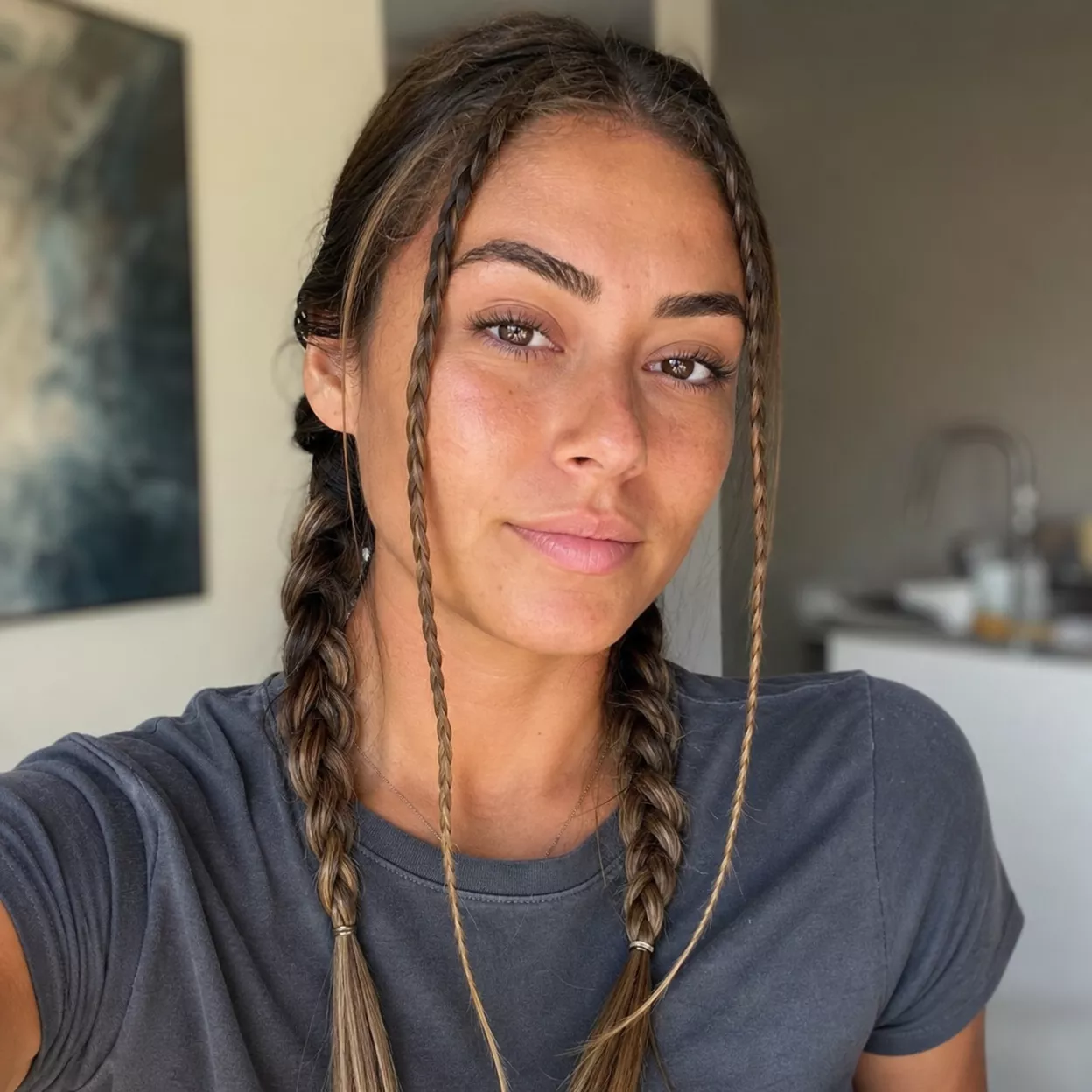
25 Fishtail Hairstyle Ideas and What Makes Each Version Work
Two people can follow the same fishtail photo and end up with very different braids. The pattern is the same: two sections, thin pieces crossed from the outside in. But the result depends on how wide those pieces are, how firmly they’re pulled, how long the hair is, how much grip it has, and what the braid is attached to.
Dense hair makes a thick, chunky braid. Fine hair makes a narrow one. Silky hair slides, layered hair releases short pieces, and curls can hide the pattern entirely.
That’s why the technique is only part of the decision. The 25 styles below run as one sequence, and each points to the detail that changes the outcome, from section size and tension to length and the hairstyle around the braid. The goal is to help you choose a version that suits your hair and your day, and to see what a reference photo is and isn’t showing you.
Classic Side Fishtail Braid
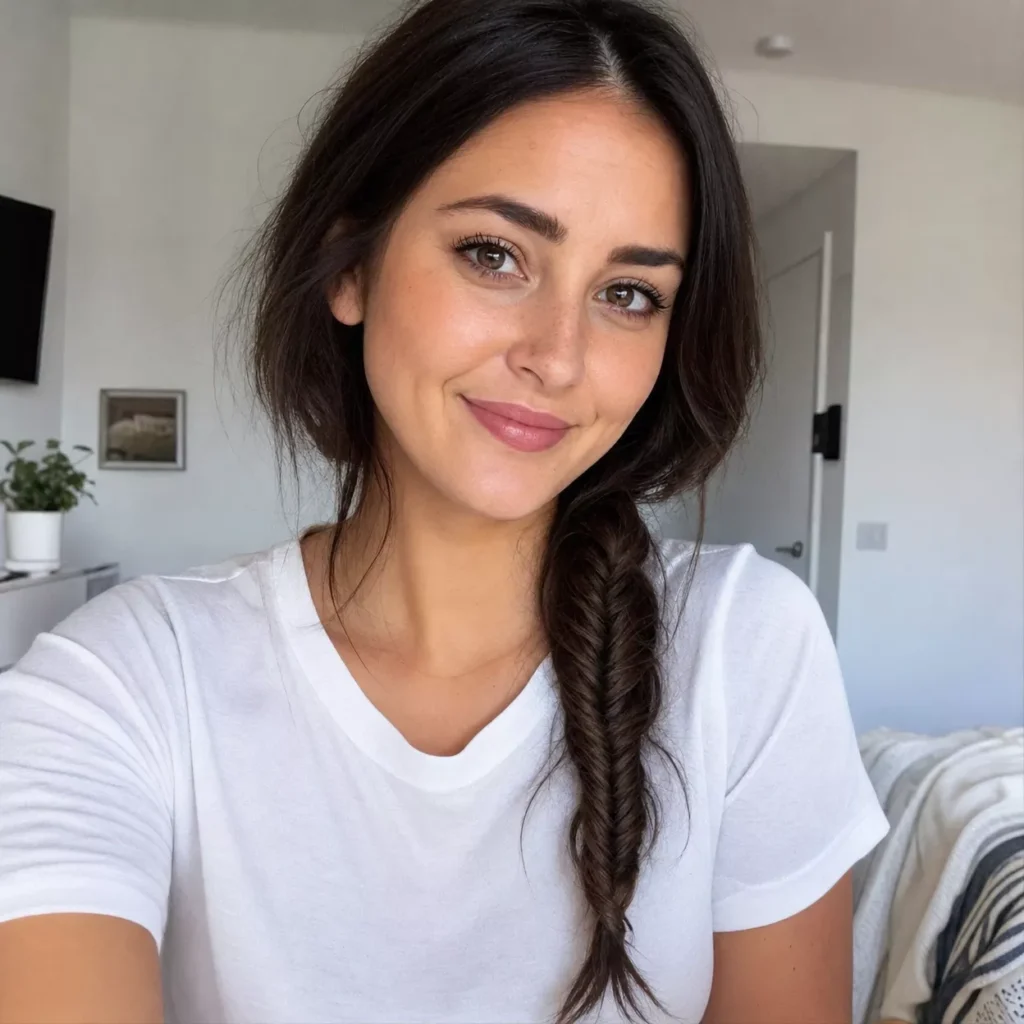
Moving the braid over one shoulder makes the pattern easier to manage, because you can see the crossovers as you work instead of braiding blind at the back. It also gives the braid a place to hang where its length shows. Tension decides the look. Pieces pulled snugly produce a neat, defined herringbone, while looser ones give a softer, wider braid that’s less secure. If your hair is very smooth, a little grip from a texturizing product can keep the sections from slipping. An elastic at the end holds the braid together.
Loose Fishtail with Face-Framing Pieces

Leaving hair out changes the silhouette. A few pieces left free at the temples soften the front and keep the face from being fully pulled back, while the braid itself carries the back and sides. The question is how much to leave out. A couple of thin strands read as a deliberate detail. Too many can leave too little hair for the braid and make it look sparse. On layered hair, short front pieces may fall out on their own, so they can work as the face-framing section without any extra effort.
Half-Up Fishtail Twist
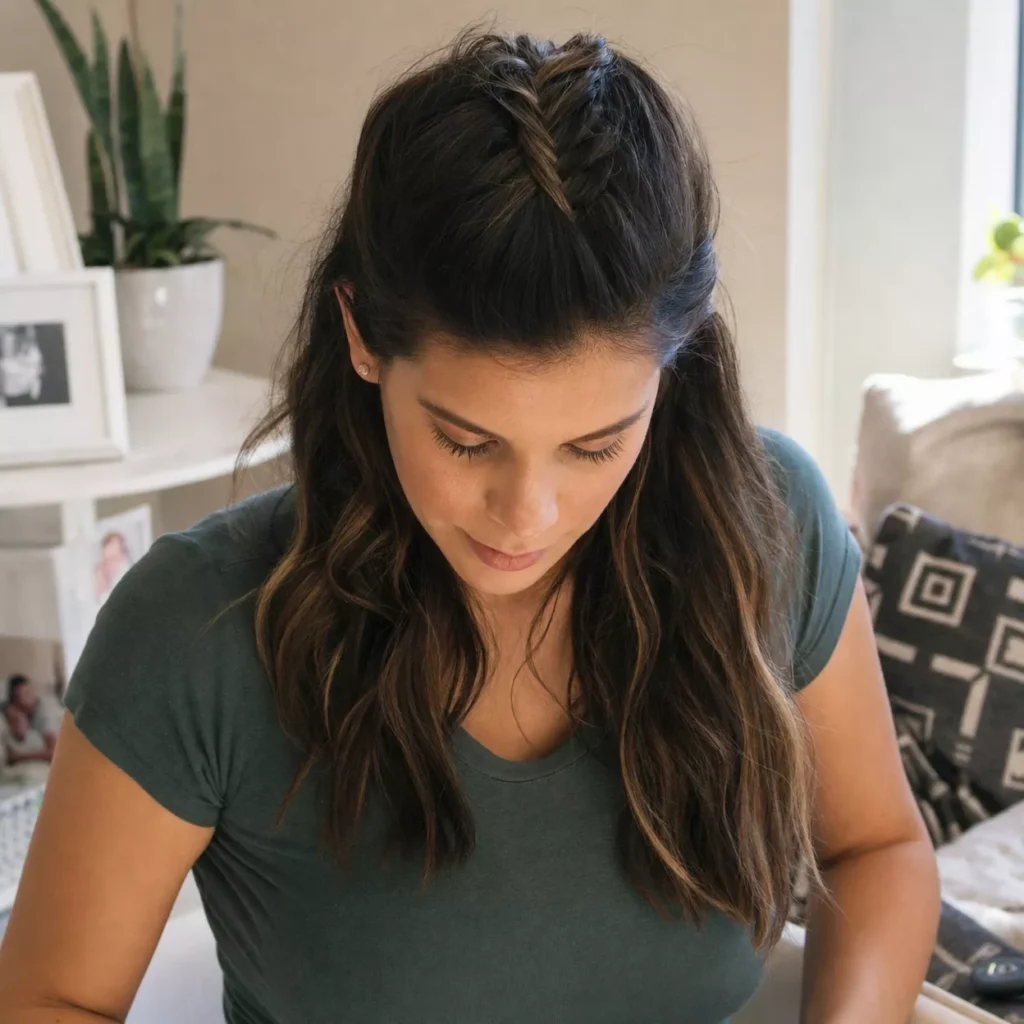
Here, the proportion matters most: how much hair goes into the braided section and how much stays loose. Gathering a small top section gives a slim braid and leaves most of the length down. Taking more makes the braid thicker and the loose portion shorter. The fishtail is usually started at the crown or partway down, and its length depends on how much hair is gathered. Because most of the hair stays free, this version suits people who want a braid detail without committing the whole head to it.
Fishtail Ponytail Braid

The ponytail is the anchor. Gathering the hair first means the braid starts from a fixed point, which makes it easier to keep the sections even. Where that ponytail sits changes the direction of the braid. A low ponytail lets it hang straight down the back, while a higher one makes the braid swing and sit away from the neck. The tail needs enough length below the elastic to show a visible pattern, so shoulder length hair will produce a short braid, while longer hair shows several inches of crossovers.
Messy Fishtail for Thick Hair

Thick can mean many strands, wide strands, or both, and each does something different here. Dense hair produces a braid with considerable bulk, since there are many strands inside each section. Coarse strands hold a braid’s shape and texture well but can feel stiff. A looser, slightly undone braid suits both, because the weight of the hair would otherwise make a tight braid heavy. Taking smaller crossover pieces keeps the pattern readable, since large ones make the braid look chunky and the herringbone harder to see.
Sleek Fishtail Low Pony
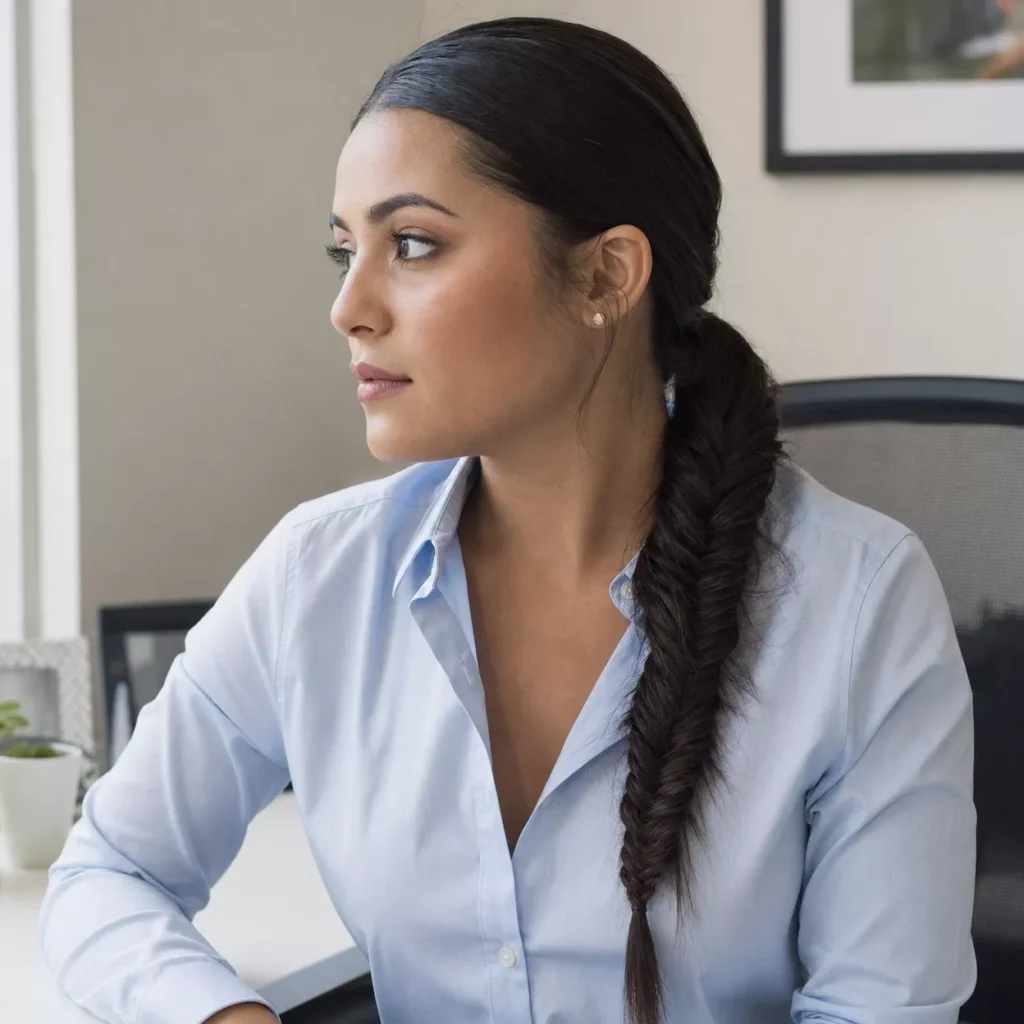
The contrast between a smooth crown and a textured tail is the point. The top is brushed flat while the braid below shows the pattern, so the style reads as controlled but not plain. How sleek the top can be depends on your hair. Straight hair may need little more than brushing, while wavy or curly hair usually needs smoothing first, and flyaways may still appear around the hairline. A low placement keeps the elastic near the nape and gives the braid a long route to hang.
Double Fishtail Braids
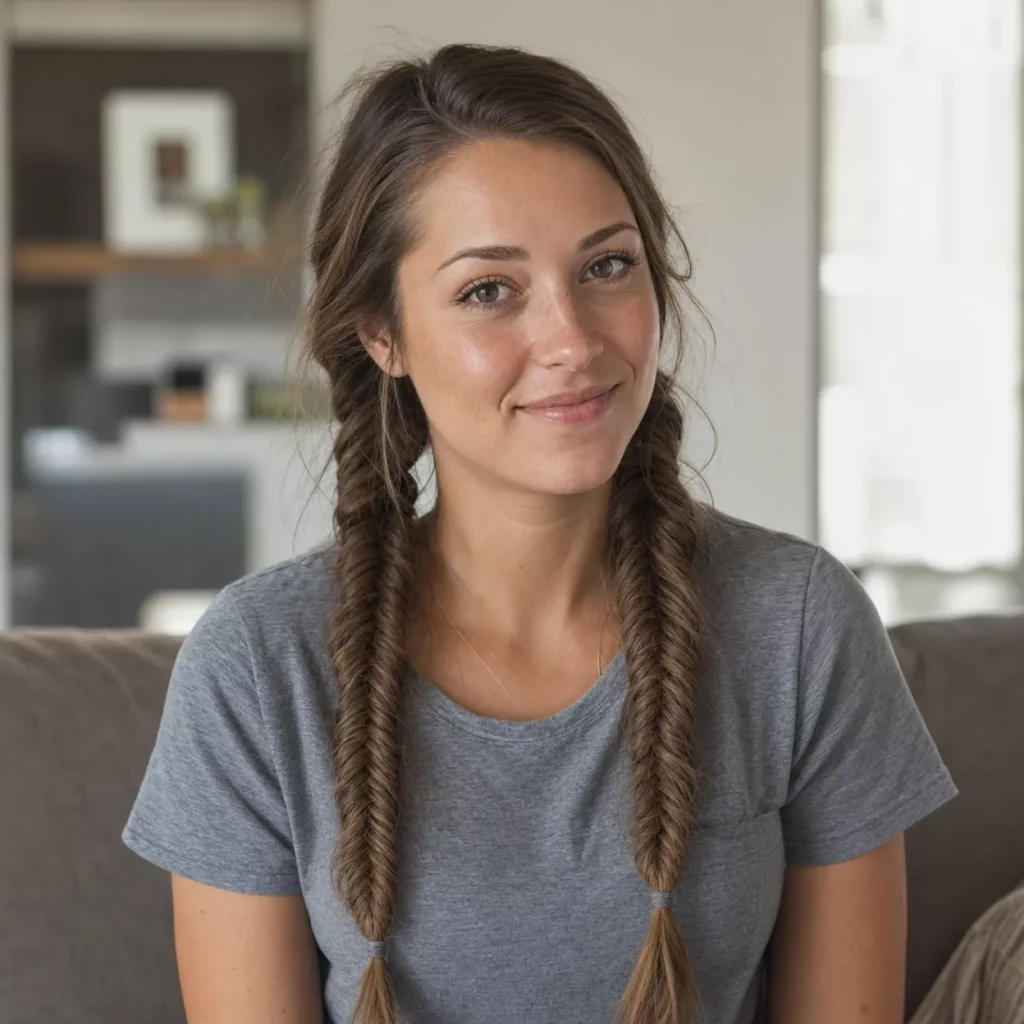
Two braids share the same hair, which means each one is slimmer than a single braid would be. Symmetry becomes the main thing to check: the part should be straight, the sections even, and both braids started at the same height. Uneven tension shows quickly, because the braids sit side by side. On shoulder length hair, each braid will be short, while longer hair gives the pattern room to repeat. They can hang forward, sit back, or be pinned up, and each position changes how much of the braid is visible.
Crown Fishtail Accent

Direction and distance define this one. The braid travels around the head, usually from one side across the front or back, and ends pinned behind the opposite ear. That means the section has to be long enough to reach, and the further it travels, the more hair it needs. A fishtail uses more length than a basic braid, so a crown version may need longer hair than the photo suggests. Where the braid is pinned matters, since the anchor has to carry its weight.
Fishtail Braid Bun
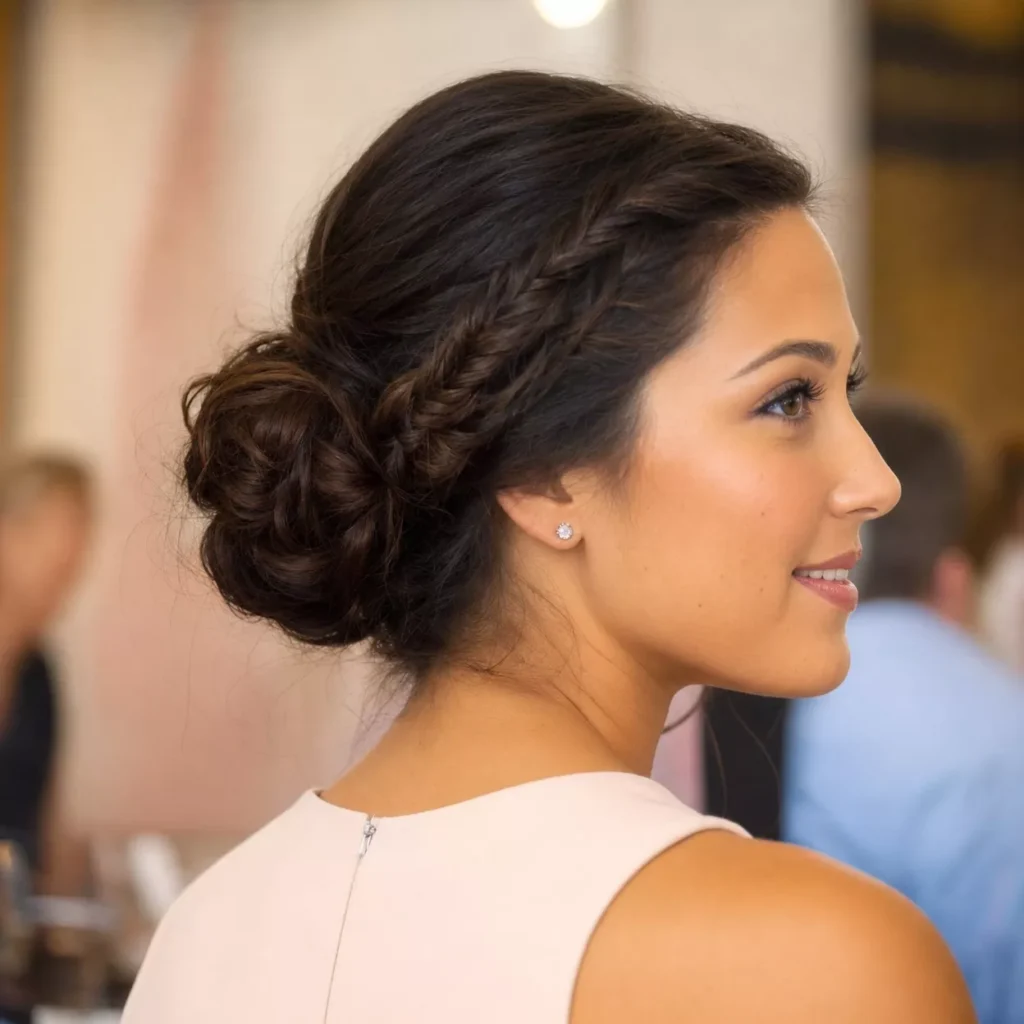
In a bun, the braid is a texture rather than a feature. It’s coiled so the pattern shows along the outside, and the end is tucked beneath. The braid adds surface detail that a plain twist doesn’t have. Where it disappears matters: the tail should tuck under the coil so no loose end shows. Bun size depends on density and length. Dense, long hair makes a large coil that needs several pins, while shorter or finer hair makes a smaller one.
Side-Swept Fishtail with Waves
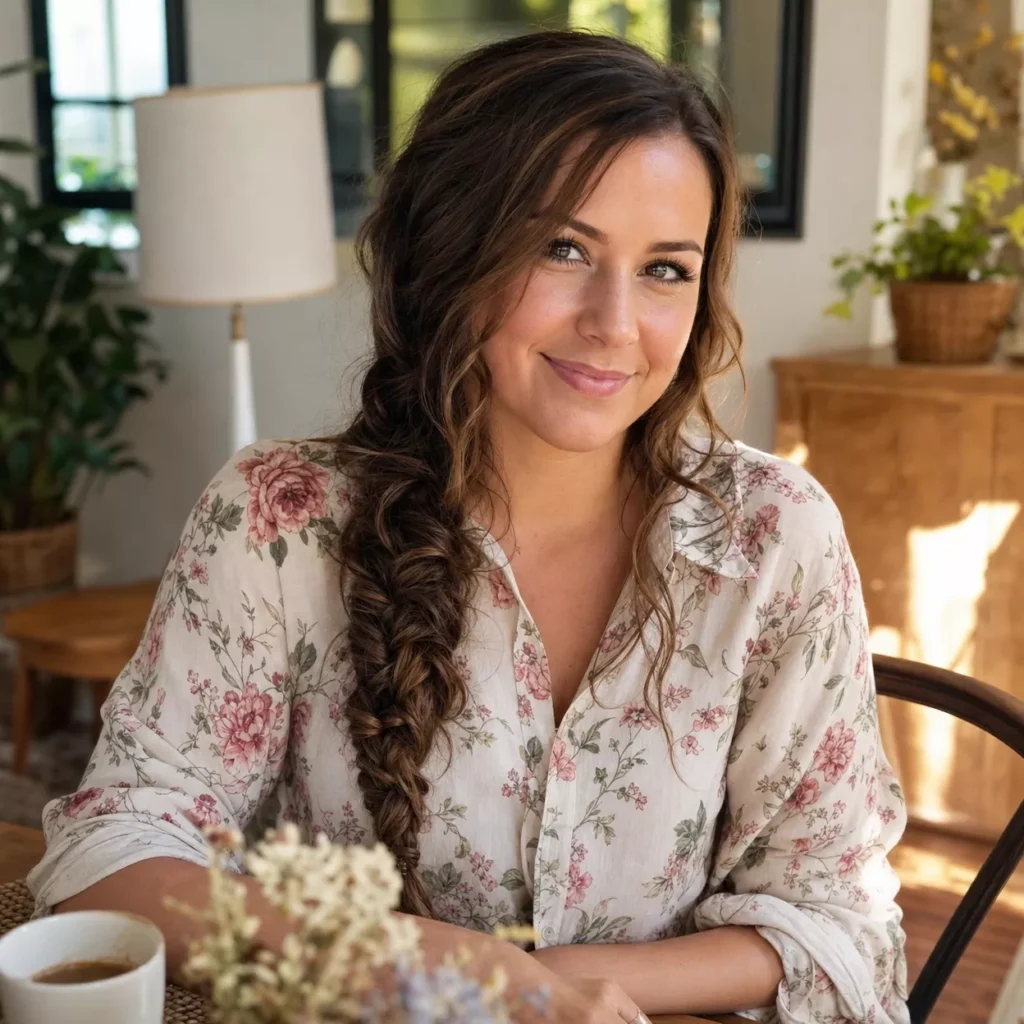
A structured braid next to loose waves creates a contrast that helps both stand out, but only when the waves are present. Naturally wavy hair may provide them with a little product. Straight hair usually needs waves added with a wand or an overnight method, and those may relax during the day. The braid itself is usually started low so the waves can frame the top and sides. Check the reference photo to see whether the waves are natural, because that tells you how much additional styling the look depends on.
Mini Fishtail Accent Braid
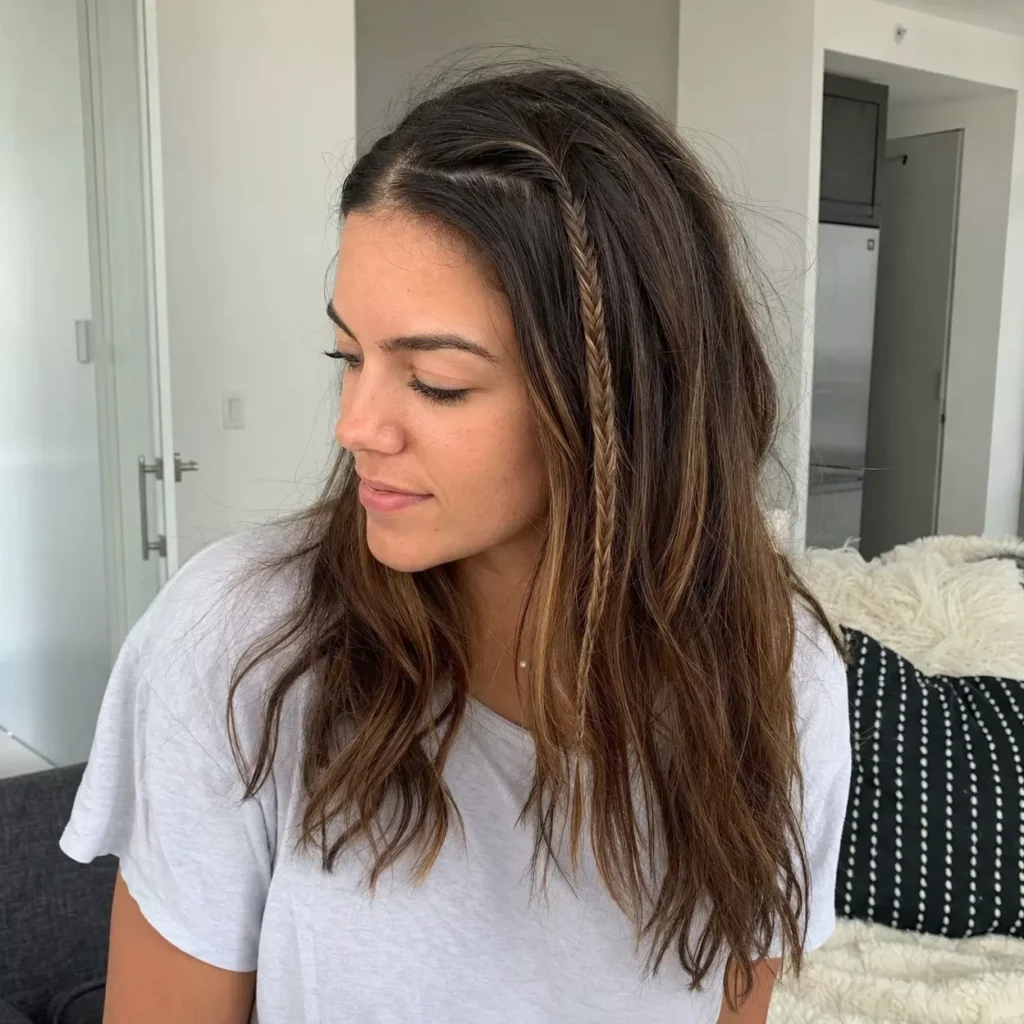
A small fishtail uses only a few strands, so the sections are tiny and the pattern is fine. That makes it a detail near the temple or part rather than a main feature. It’s realistic on shorter or layered hair, since it only needs a few inches of length. The limitation is size: with such small pieces, the crossovers can be hard to keep even, and the braid can come loose easily. A tiny clear elastic or a hidden pin at the end secures it.
Boho Pulled-Apart Fishtail
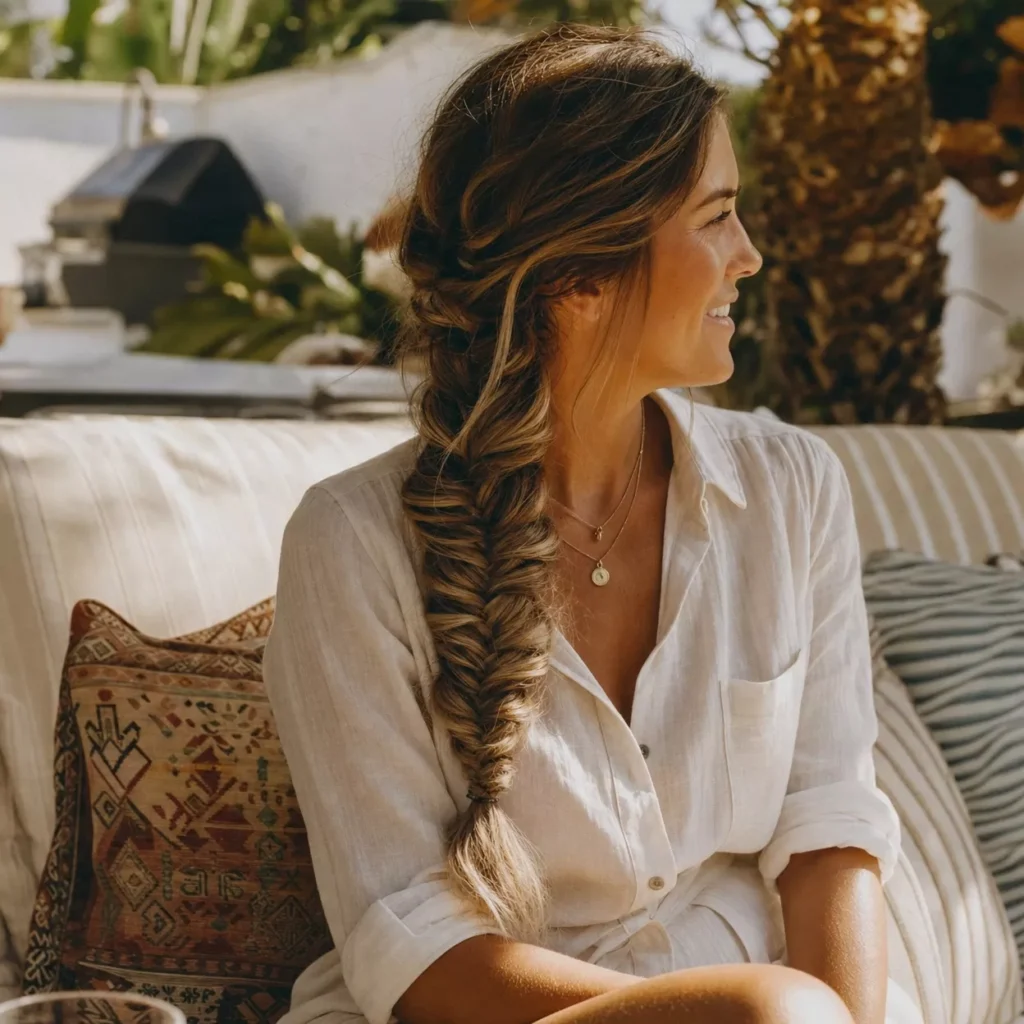
Pulling the braid apart means gently tugging at its edges after it’s finished, so each crossover widens. That changes how the braid looks, not how much hair is in it. The result is a broader, softer pattern with more surface texture. It’s a useful technique if your braid looks narrow, but it also loosens the braid, so it needs a firm elastic. Pulling too hard can distort the pattern or make the braid fall apart. A little tug at a time, working from the bottom upward, gives more control.
Fishtail Braid with Ribbon
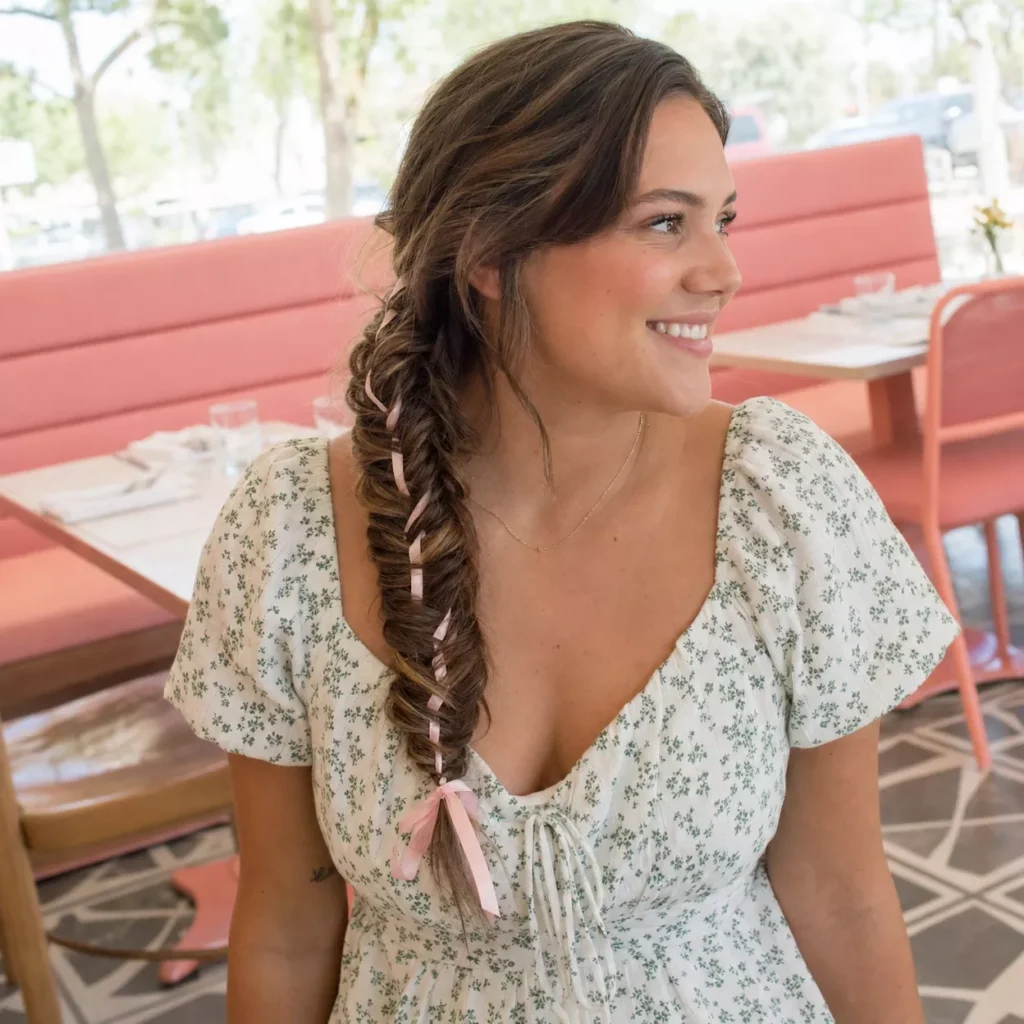
A ribbon adds bulk and a little tension. Tied around the end, it works as a decorative elastic. Woven through the pattern, it takes up space and makes the braid thicker. That changes how the braid sits, so a slimmer braid may look heavier with ribbon in it. The ribbon also needs something to hold it, usually the end elastic or a firmly braided section. Slippery satin can slide out of a loose braid, while a textured ribbon grips the hair better.
High Pony Fishtail
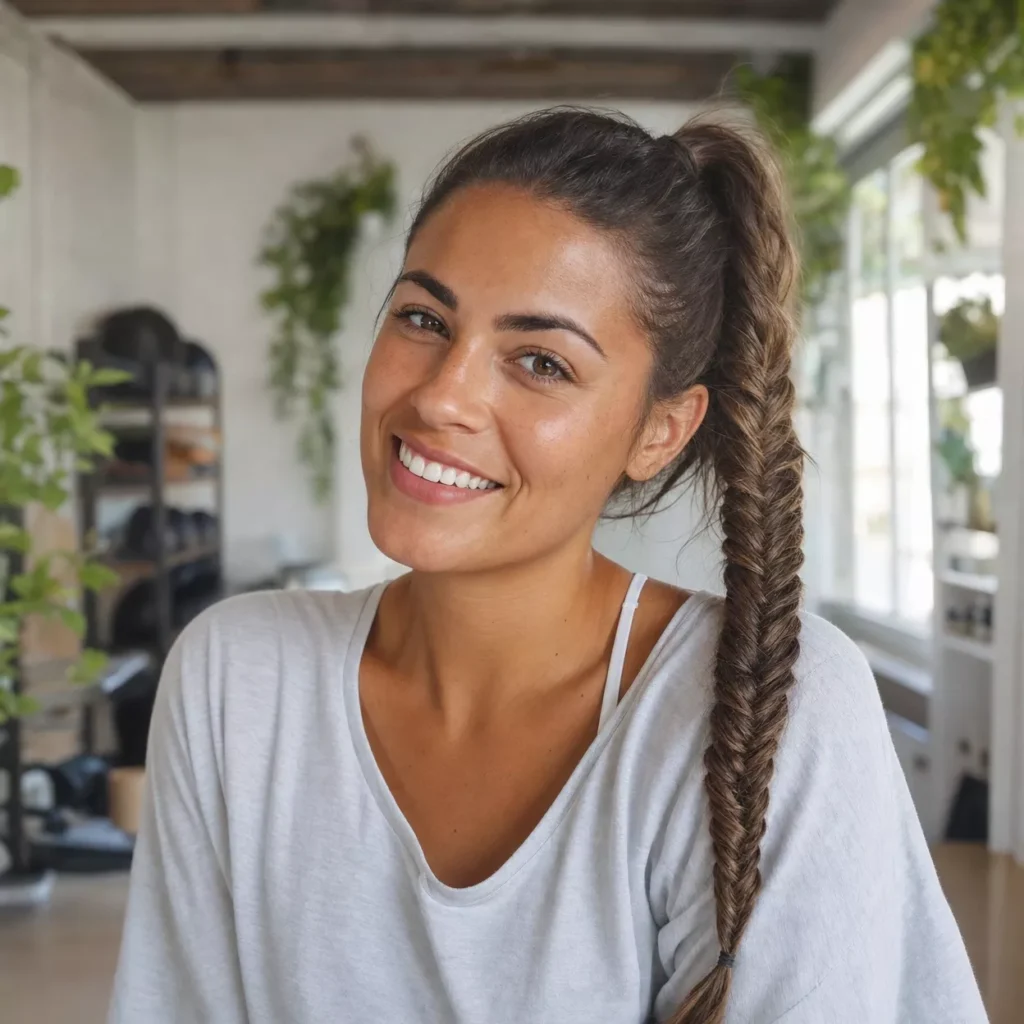
Starting the braid from a high ponytail changes its angle. Instead of falling straight down, the braid swings out from the crown and drops behind the head. That gives it movement, but it also adds tension at the top of the head, especially on long or dense hair. A slightly looser elastic is easier on the scalp, and the braid’s weight is part of that tension. The ponytail needs to be firmly anchored, since a heavy braid can drag the elastic down during the day.
Romantic Bridal Fishtail
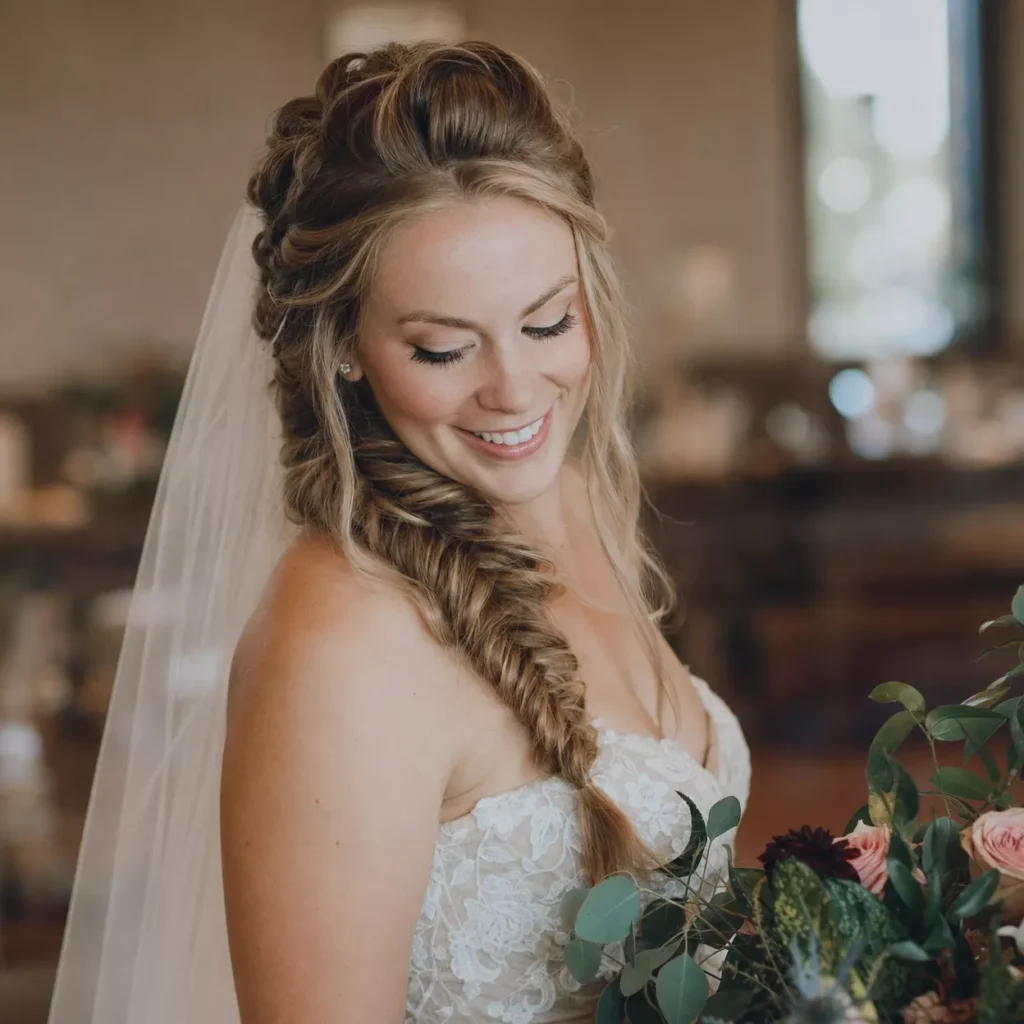
Formal styling adds structure: pins, anchoring, and often a veil or accessory. A fishtail here is usually loosened for width and softened at the front, but the base still has to be secure enough to carry whatever it’s attached to. Secure doesn’t mean tight, and a braid pulled too firmly can feel uncomfortable over hours. Bring the veil or accessory to a trial so the placement can be planned around the braid. How long the style holds depends on texture, preparation, and pinning.
Fishtail Braid for Shorter Medium Hair
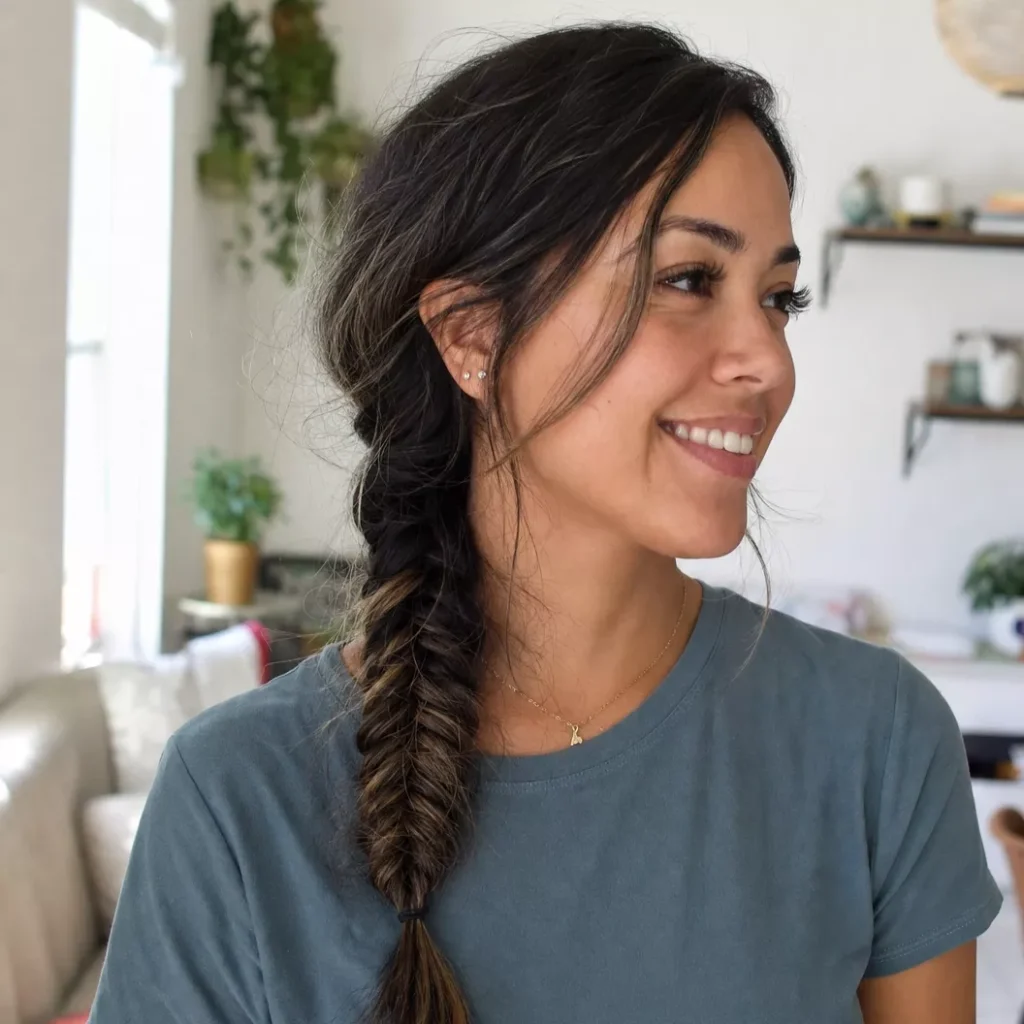
Length decides what’s realistic. A fishtail needs more length than a standard braid, because the thin crossovers use up hair quickly. On shorter medium hair, the braid may be only a few inches long, and starting it lower on the head gives it more room to show. Layered cuts often release their shortest pieces, which can look intentional if you expect it. If the hair is too short for a full braid, a smaller fishtail near one side may be a better fit.
Textured Fishtail with Highlights
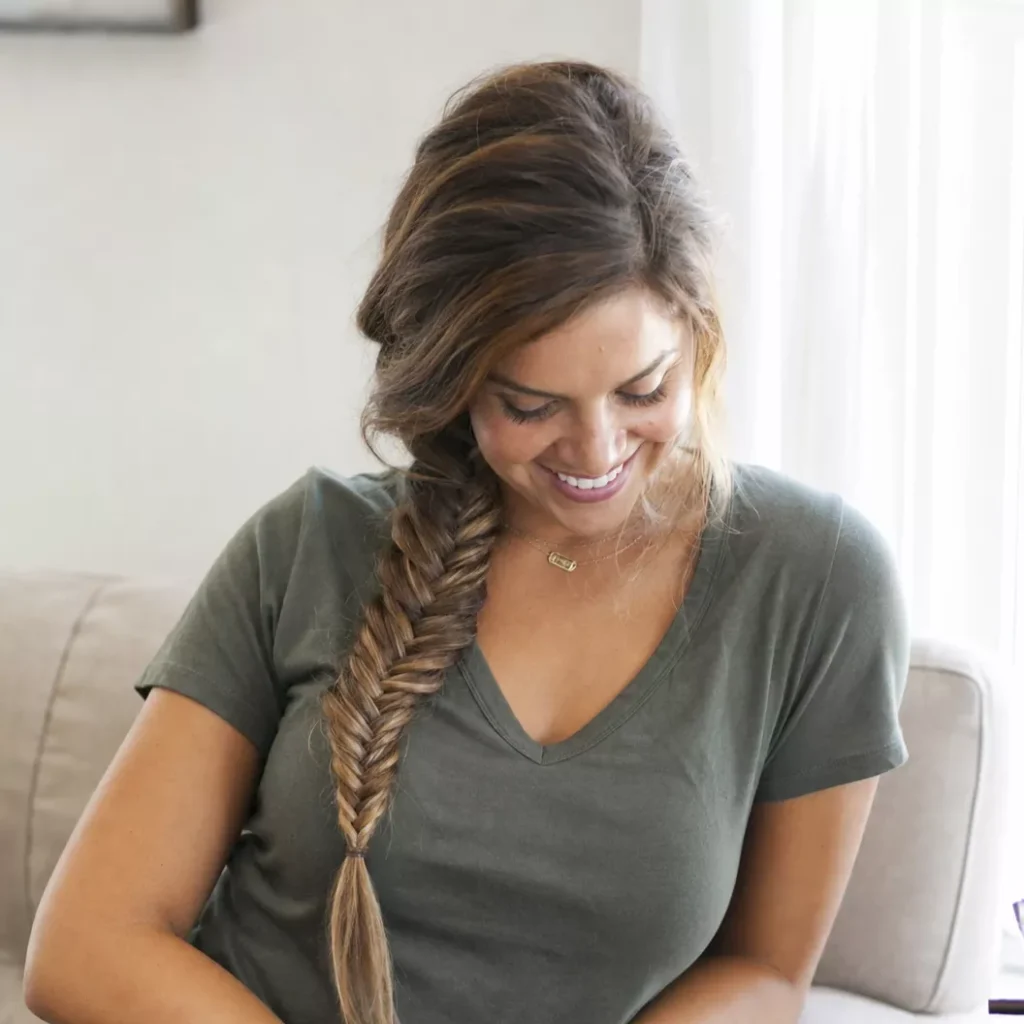
Color can make the pattern easier to see, but it’s a separate service from the braid. Lighter pieces next to darker ones create contrast, so each crossover catches the eye differently. How visible that is depends on the contrast: subtle highlights near your natural color add little, while higher-contrast placement makes the herringbone clearer. The haircut and braid technique remain the same either way. If your color is a single shade, the braid may still show clearly with the right tension and texture.
Low Side Fishtail for Fine Hair
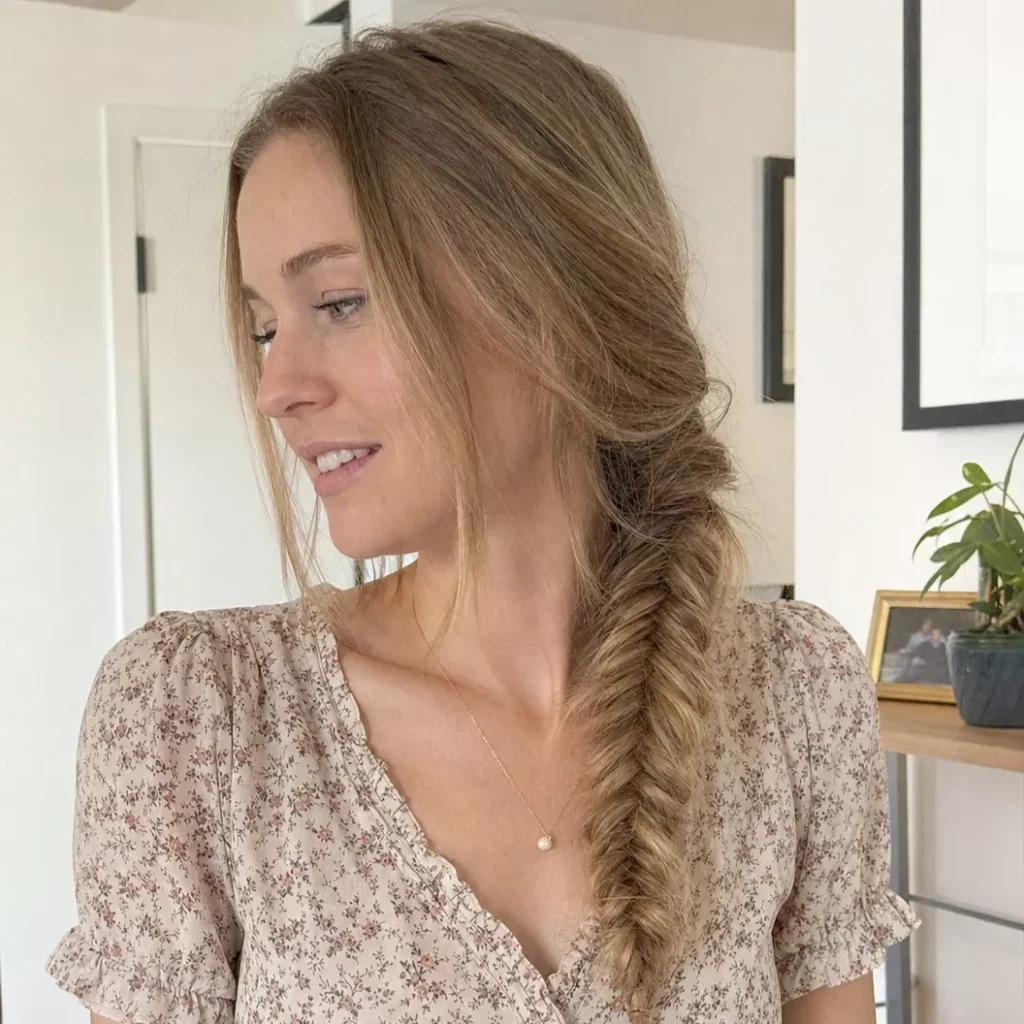
Fine describes narrow strands, low density describes fewer strands, and the two aren’t the same. A fine but dense head can produce a full fishtail, while low-density hair makes a narrower braid regardless of strand width. Gently pulling the braid apart can create the appearance of width, but it can’t add hair. Starting low and keeping the braid to one side makes the most of what’s there. Smaller crossover pieces create a more detailed pattern, and a light texturizing product gives smooth strands some grip.
Fishtail Mohawk Braid
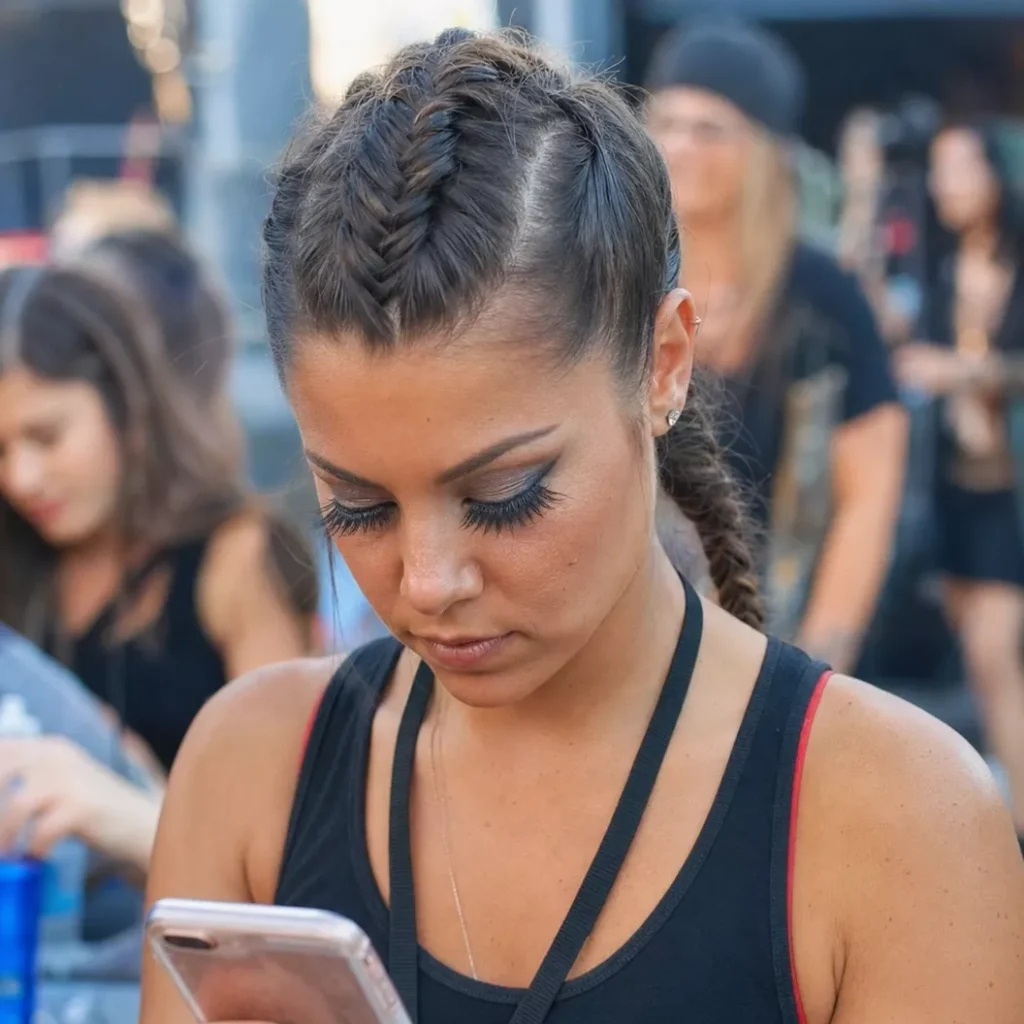
Central placement is the difference here. The braid runs down the middle of the head, with the sides held tighter, so the surrounding hair shapes how it looks. It needs a clean section, usually divided from ear to ear or along the part. The sides then need styling to stay close, which can take products or pins. Because the braid is the focus, symmetry and clean partings matter. How dramatic it looks depends on how tight the sides are.
Half-Up Bubble and Fishtail Combo
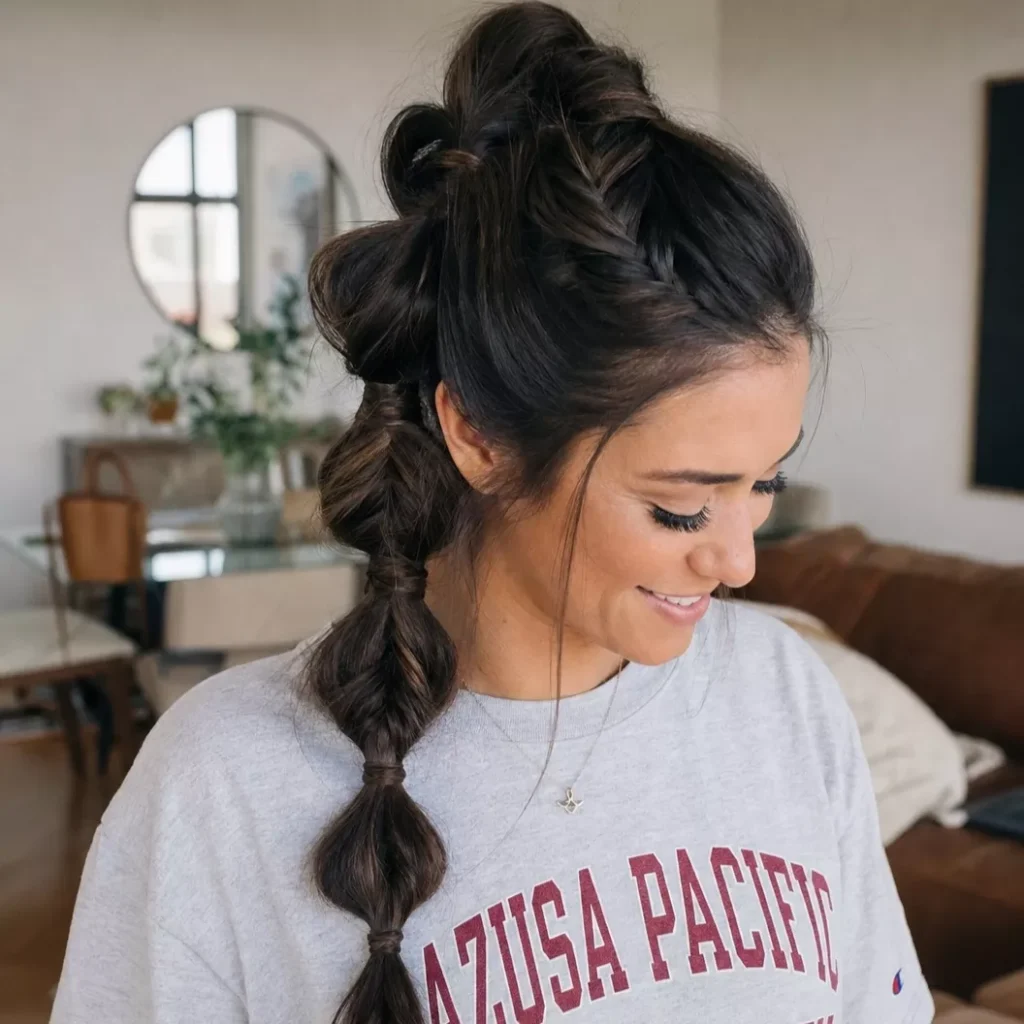
Two textures compete if they’re both prominent. A bubble section is smooth and rounded, while a fishtail is flat and patterned, so one usually needs to lead. Keeping the bubbles small and the fishtail slim can prevent the top from looking crowded. Each element needs its own elastic, and the ponytail may need to be firm so the bubbles keep their shape. The combination needs enough length for both a bubble section and a visible braid.
Fishtail Wrapped into a Low Chignon
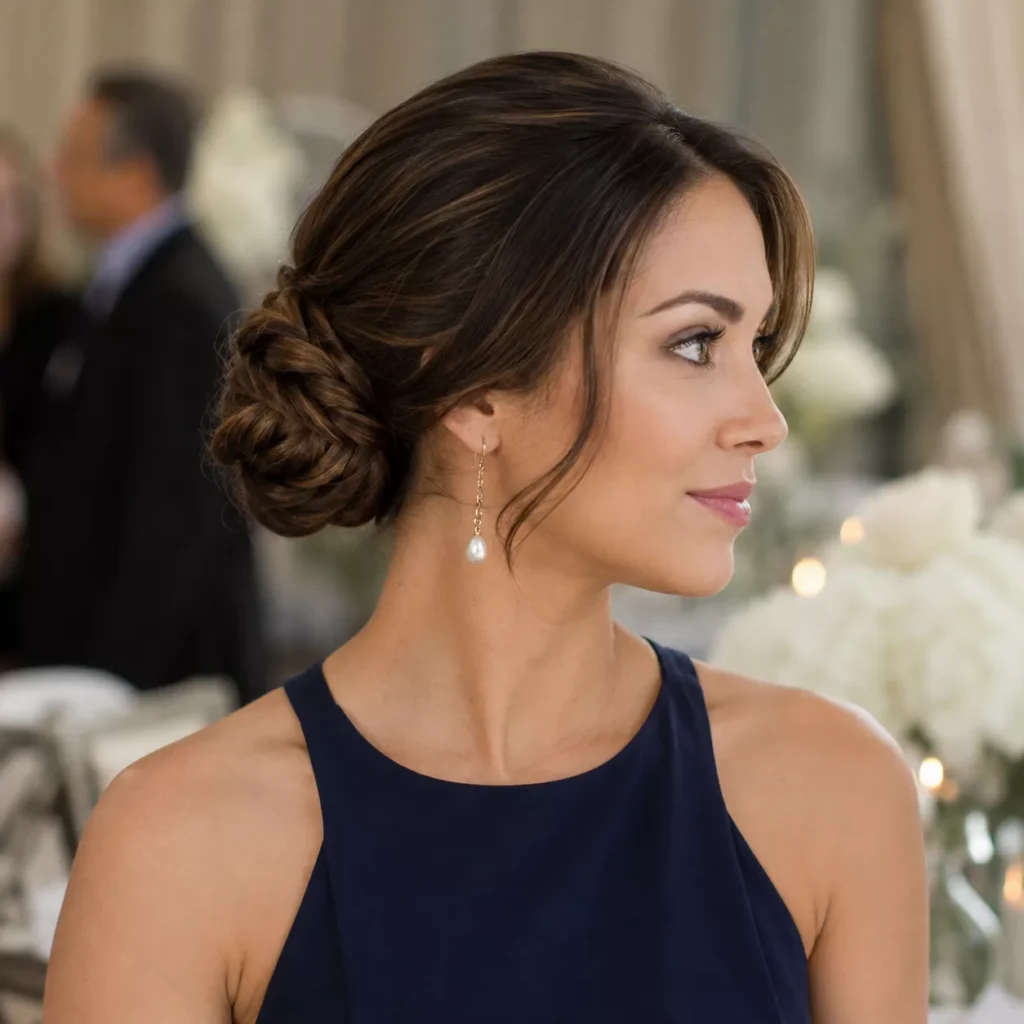
The braid adds surface pattern to the chignon, but it still needs an anchor. Pins should go through the braid itself and into the base, because pins placed in loose strands can slide. Wrapping the braid in a coil at the nape, with the end tucked under, keeps the shape low and neat. Dense hair makes a bulky chignon that needs more pins, while finer hair makes a smaller one. A looser fishtail gives the chignon more texture, while a tight one gives a smoother finish.
Casual Fishtail with Baseball Cap
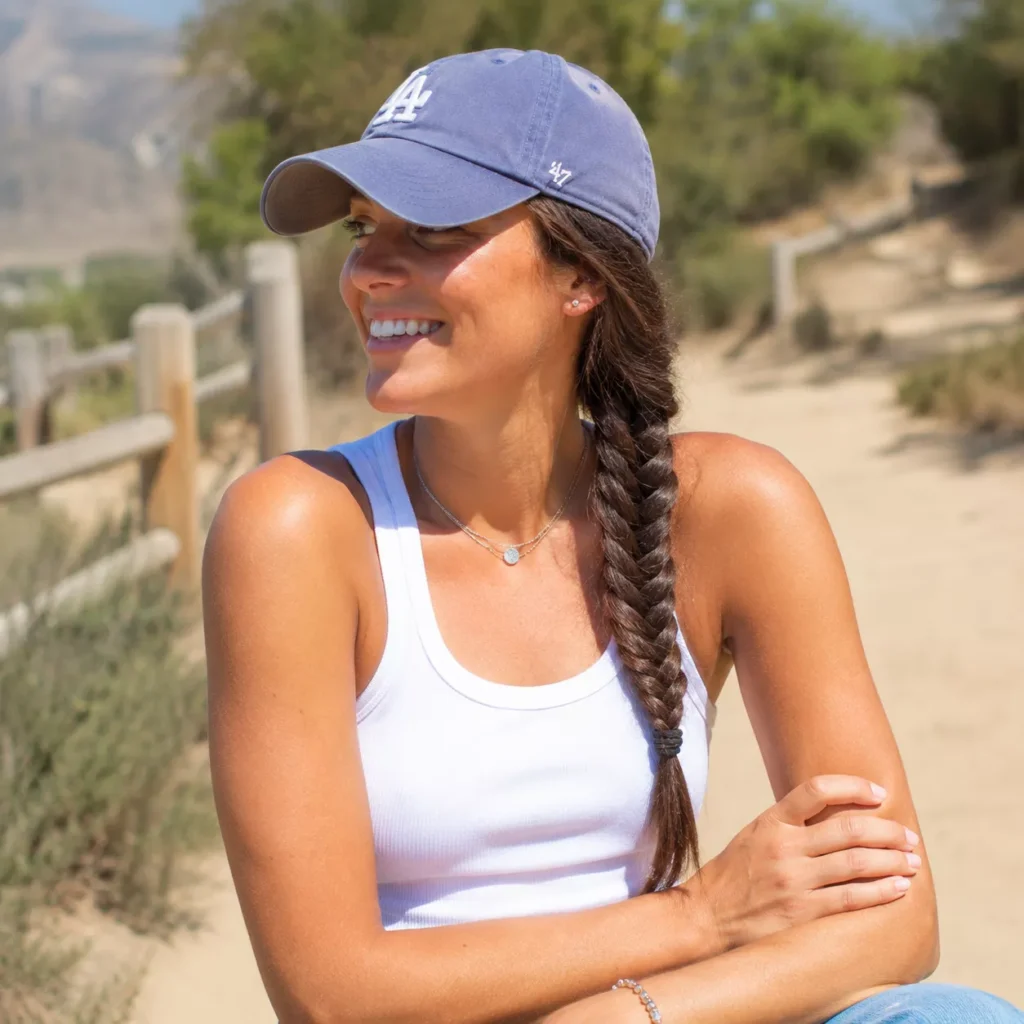
A cap changes where a braid can sit. A bulky ponytail at the crown can push against the cap’s back opening, and a high braid may be flattened or displaced. Starting the braid low, at the nape or over one shoulder, avoids the issue. A side fishtail works well because it hangs outside the cap. If you use the cap’s opening for a ponytail, keep the braid thin enough to pass through. Hair that’s slippery may need a firmer elastic.
Fishtail with Curtain Bangs

Curtain bangs and a fishtail don’t overlap on the head, but they share the visual area around the face. The bangs frame the forehead and cheeks, while the braid takes the length. Leaving the fringe loose keeps it as the focus at the front. If the braid begins near the face, it can take pieces from the fringe and sweep them back, which changes the balance. The bangs need to match your natural part, and a looser braid keeps the overall shape soft.
Braided Fishtail Headband

A fishtail used as a headband works only if its position is right. It follows the hairline from one side to the other, usually pinned behind each ear, and acts like an accessory without being one. The braid has to be long enough to cross the head, so it needs more hair than a side braid. Tension should stay moderate, since a braid held against the scalp for hours can become uncomfortable. Textured hair provides useful grip, while smooth hair may need hidden pins.
Extra-Long Statement Fishtail
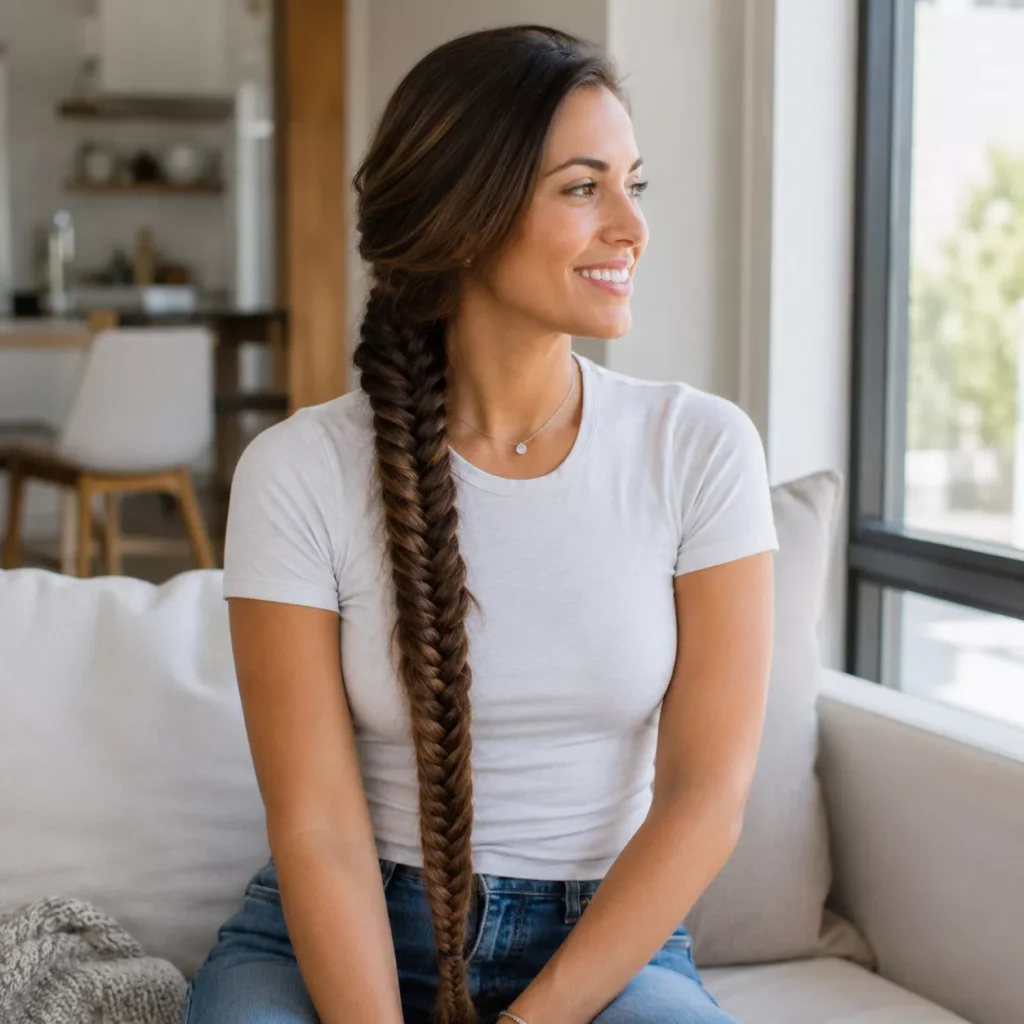
Length gives the braid room to show its pattern, but it also adds weight. A very long, dense fishtail can pull on the scalp, particularly if it’s attached to a high ponytail or a firm elastic. The braid’s size also changes: the more hair it contains, the thicker and heavier it becomes. Taking thinner crossover pieces makes the herringbone more detailed, though it takes longer. Wearing the braid over one shoulder or at the nape spreads the weight more comfortably than a high placement.
The Fishtail Photo Doesn’t Tell You Everything
A fishtail photo shows the finished braid but hides most of what produced it. You can’t see how dense the hair is, how long it is, or whether extensions add length or width. Hidden pins may be doing more work than the elastic. Product and heat may have prepared the hair. And the photo may show the braid immediately after it was done, not hours later.
It also doesn’t show how much hair went into the braid, which affects its width, or how tightly it was worked. Look at the back and the sides if you can, and treat the photo as a guide to shape, not a promise of the result.
The Same Fishtail Can Look Completely Different on Different Hair
Fine hair has narrow strands, and low-density hair has fewer strands. Fine but dense hair can make a detailed, full braid, while fine, low-density hair makes a narrower one. Thick hair may mean dense, coarse, or both, and each changes the bulk and how the braid holds.
Straight hair shows the pattern clearly but may slip, so grip matters. Wavy hair adds some natural hold and texture. Curly and coily hair shrink as they dry, and the pattern may blend into the curls, so the braid may read more as a textured section than a defined herringbone.
Layered hair releases shorter pieces. Long hair shows more of the pattern, while medium hair may need a lower start.
How to Choose Between These 25 Fishtail Styles
Start with length. Shorter medium hair suits mini accents, low side braids, and braids started low. Long hair can carry crown, headband, and extra-long versions.
Then consider density and texture. Dense hair holds thicker, messier braids and buns, while fine or low-density hair often does better with smaller crossover pieces and gentle loosening. Curly hair may prefer styles where the braid blends into the texture.
Think about control. A ponytail or bun anchors the braid, and loose styles need more grip.
Finally, decide whether you want the braid as the main feature or a small accent, and whether it’s for everyday wear or an occasion. Occasion styles may need pins, accessories, and more preparation.
When a Fishtail Braid May Not Behave the Way You Expect
Silky hair can slip, and sections may loosen before the braid is finished. Short layers can escape, leaving loose ends along the braid. Very fine hair may make a narrow braid, and very dense hair can make a bulky one.
Curls shrink after drying, which shortens the braid and can hide the pattern. An overly loose braid may fall apart, while an overly tight one can cause discomfort, especially near the hairline or crown. Long hair adds weight, which can pull on elastics and pins.
Most of these come down to grip, section size, and tension, which can be adjusted for your hair.
What to Do Before You Copy a Fishtail Photo
Check where the braid starts: at the nape, the crown, or the temple. Estimate how much hair is in it by comparing its width to the head. Look at how it’s anchored, with an elastic, pins, or a ponytail. Look at the back if there’s a view. Notice the remaining hair, whether it’s loose, curled, or tied. Consider your natural texture and whether the photo depends on heat styling. Decide whether accessories, like ribbons or pins, are structural or only decorative.
Final Thoughts
Choosing a fishtail is less about copying a photograph and more about choosing a braid structure that matches your hair and how you want to wear it. Length, density, texture, grip, and what the braid connects to will do more to shape the result than the style name. Use the 25 ideas above to find the structure that suits you, then adjust the section size and tension to your own hair.