20 Ways to Braid the Front of Your Hair and How Each One Changes the Hairstyle
A front braid uses a very small amount of hair, yet it sits in the most visible part of a hairstyle. That’s what makes it interesting. The rest of your hair can stay exactly as it is, and one narrow braid near the hairline still changes how the whole style reads.
Small decisions do most of the work. Where the braid starts, how wide the section is, which direction it travels, how tightly it’s worked, and which braid construction you use all change the result. So does what happens to the remaining hair: left loose, gathered into a ponytail, pinned into a bun, or curled.
The 20 ideas below run as one continuous sequence. Each one looks at a different decision, so you can see how placement, section size, and tension change the look, and which version suits your hair and your day.
Simple Side Front Braid
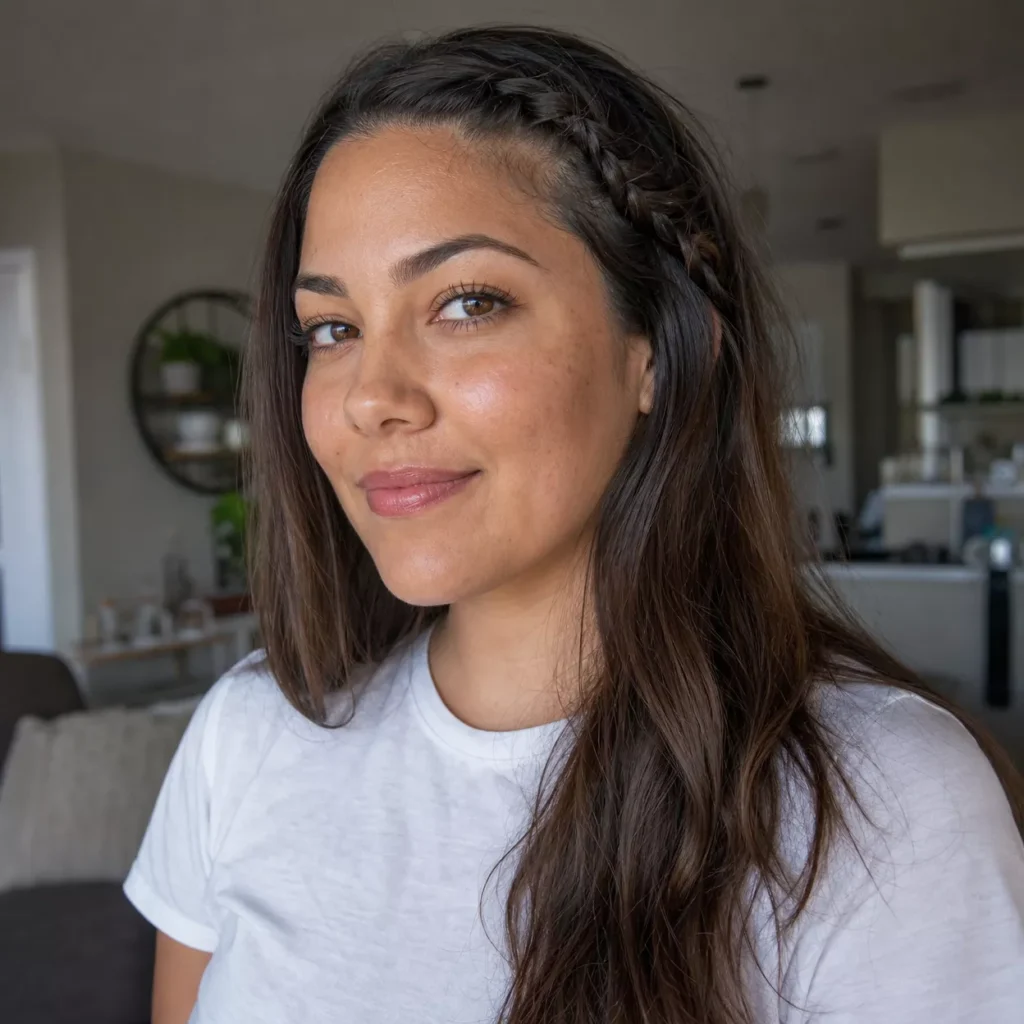
This is the plainest version: a single braid started near one temple and worked down along the side. Its effect is practical. It takes the hair that would normally fall forward on that side and gives it a defined edge, so the face stays clearer while the rest of the hair stays down. The braid doesn’t need to be long. Finishing it behind the ear and securing it with a small elastic or pin is often enough, and a looser braid will sit more softly than a tight one.
Dutch Braid Along the Hairline

Dutch construction crosses sections under rather than over, so the braid sits raised on top of the hair instead of blending into it. That’s why it reads more prominently than a French braid of the same size. It follows the hairline well, and the raised pattern shows clearly from the front. Because it’s more visible, evenness matters: uneven sections or varying tension show up more. Gently loosening the edges once it’s finished can make it look wider without changing the amount of hair in it.
Soft Front Braid with Loose Waves
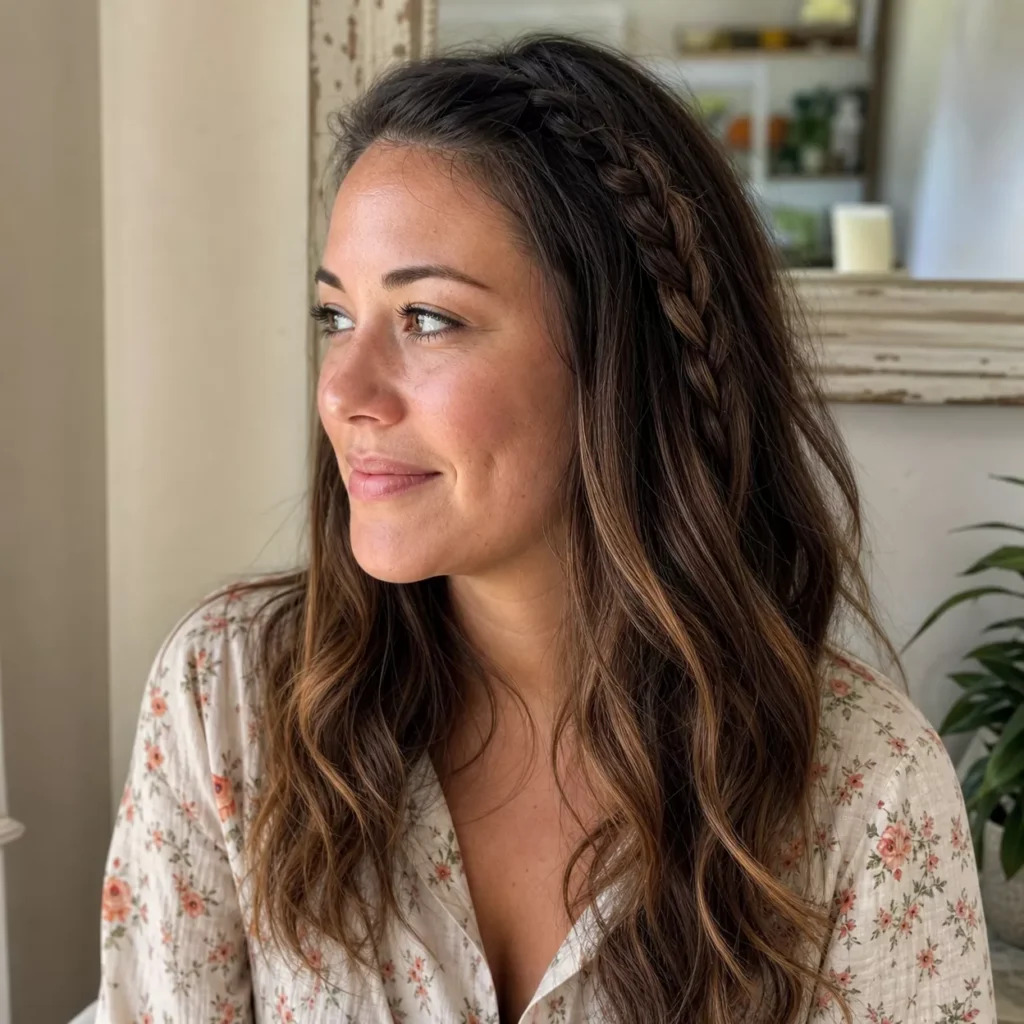
The appeal here is contrast. The braid is structured and the waves are loose, so each one makes the other easier to notice. The braid keeps the front controlled while the waves give the lengths movement. It tends to work best when the braid is relatively slim and the waves are allowed to stay a little irregular. Natural waves can handle this with little help. Straight hair usually needs waves added with a wand or an overnight method, and those may relax during the day.
Double Front Braids
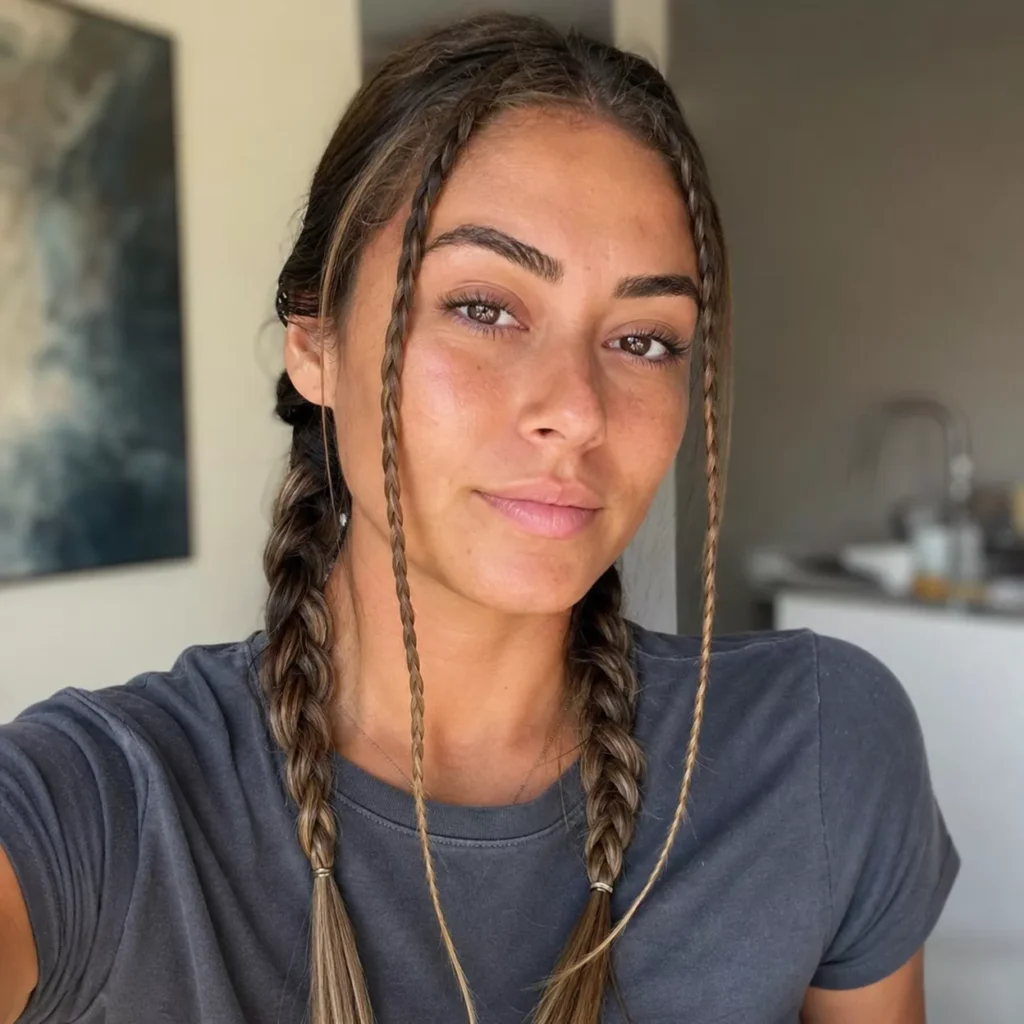
Two braids, one on each side, create a symmetrical frame. Symmetry is the main thing to get right: the starting points, widths, and angles should match, or the difference becomes the most noticeable part of the style. Using two braids also means each one is slimmer than a single braid would be, since the hair is divided between them. They can be left to hang, pinned back together, or tucked behind the ears, and each choice changes the shape of the overall look.
Front Braid into Ponytail

Here, the braid isn’t an accent. It becomes part of the ponytail. Starting it at the front and working it back so it joins the gathered hair lets the braid act as a leading line toward the elastic. That makes the ponytail look more deliberate, and the braid also helps keep shorter front pieces in place. Height of the ponytail matters: a low one gives the braid a longer, gentler path, while a high one makes the path shorter and steeper.
Boho Front Braid with Loose Hair
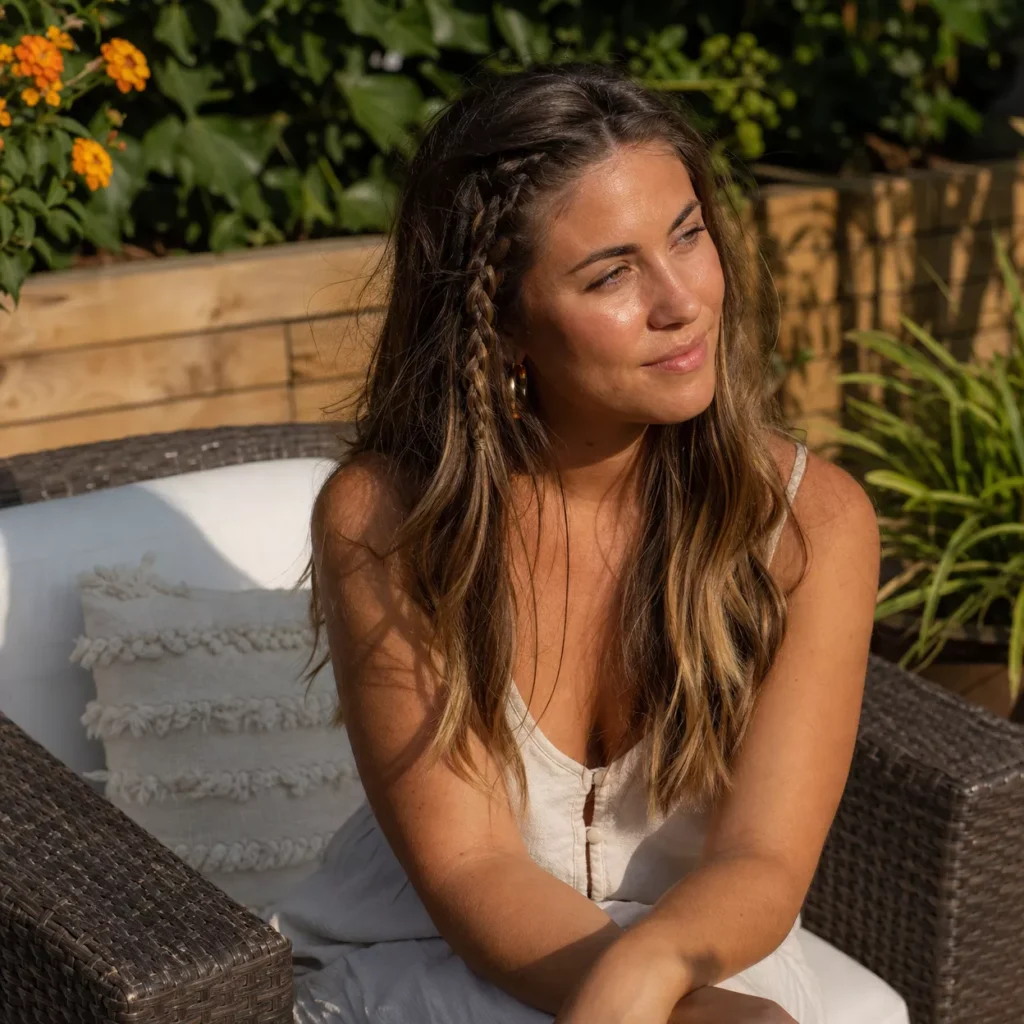
“Boho” here mostly means texture and looseness. The braid is slightly relaxed, with a few pieces left to fall near the face, and the rest of the hair stays soft and unfinished. The point is that the braid doesn’t look tightly controlled. That looseness depends on grip: hair with some natural texture holds a relaxed braid well, while very smooth hair can slip out of it. A light texturizing product or a small hidden pin can help on slippery hair.
Crown-Inspired Front Braid
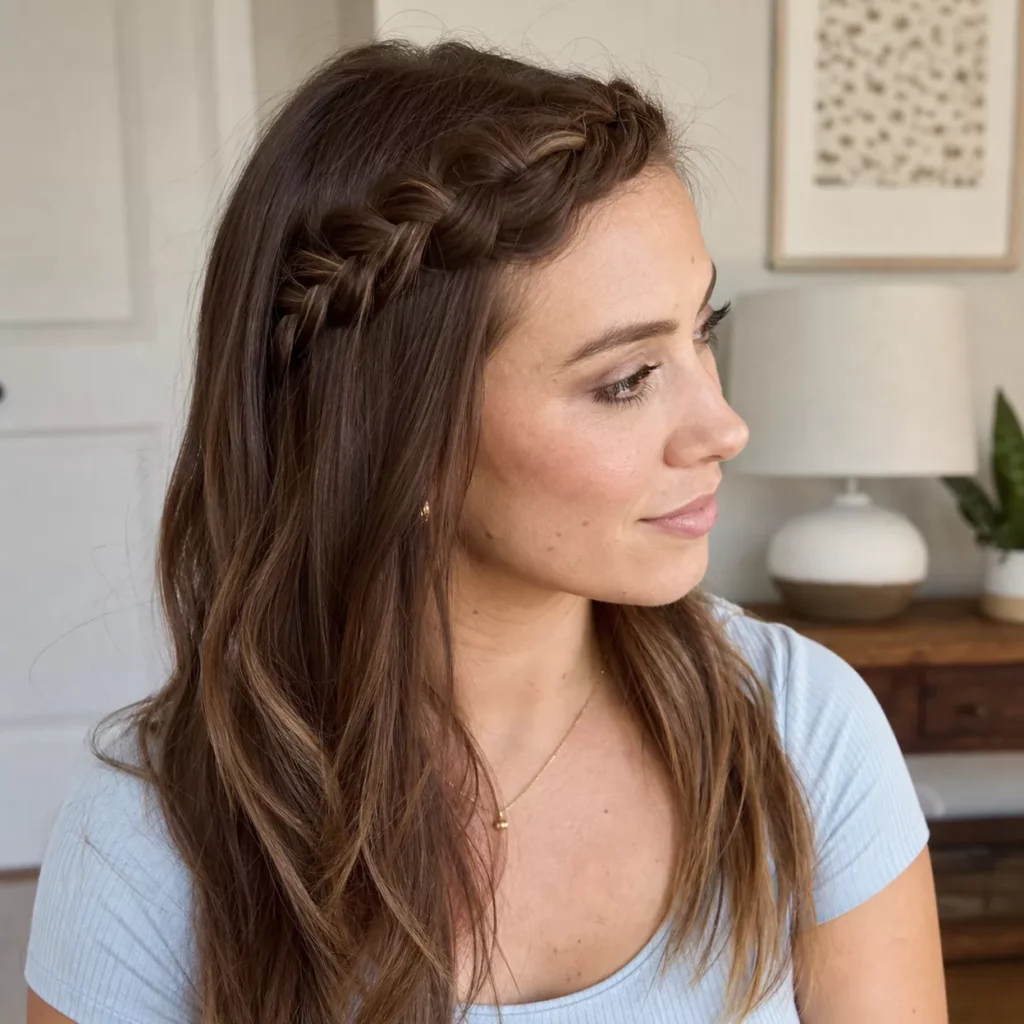
How far the braid travels is the main variable. A crown-inspired braid follows the curve of the head instead of staying near one temple, which means it uses more length and more hair. It starts at the front and arcs across, usually pinned behind the opposite ear. It needs enough length in the section to reach that far, and the pin placement matters, since the braid has to be anchored where it ends. On hair too short to arc fully, a shorter version still gives the shape of a crown without going all the way across.
Tight Front Braid for Gym Days
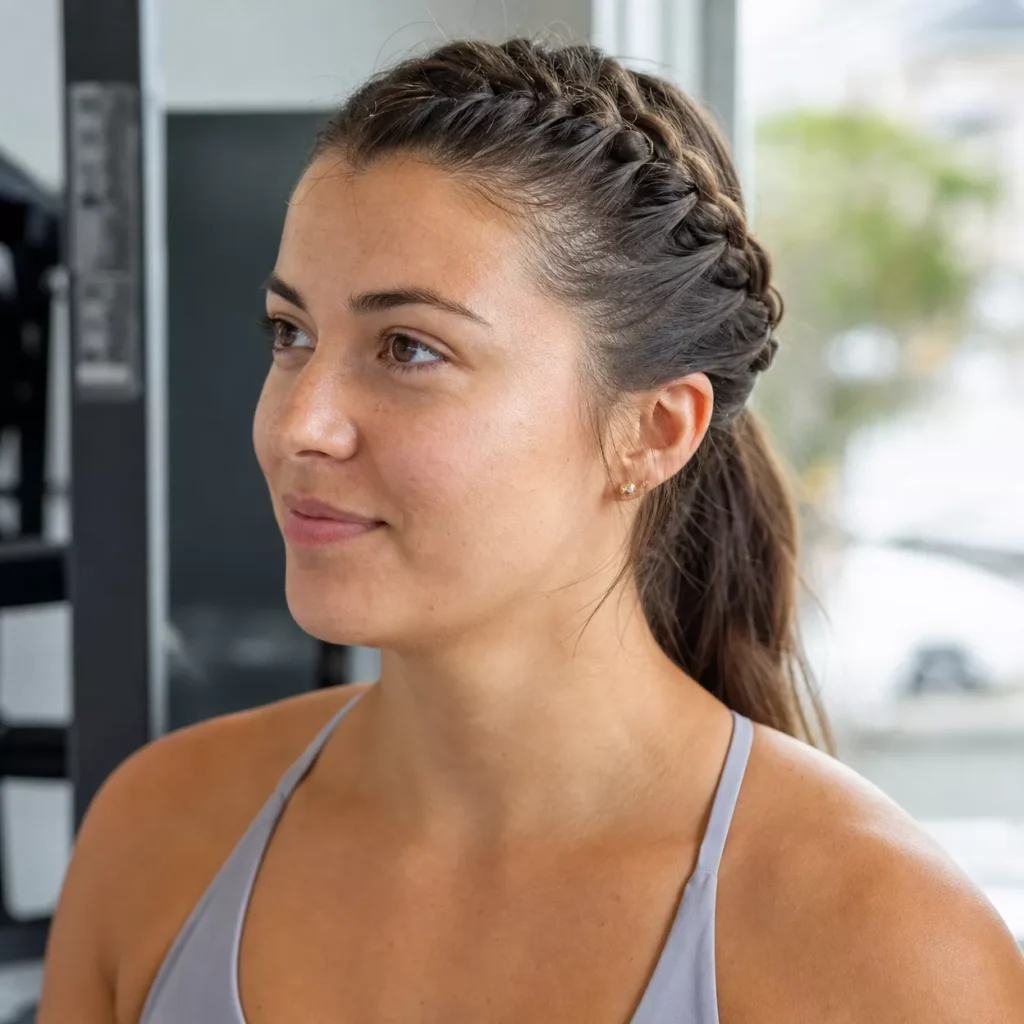
This is the one built for movement, so security matters more than appearance. A braid that keeps shorter front pieces controlled can help during exercise, but secure doesn’t have to mean painful. A braid pulled very tight can create tension at the hairline, and repeated tension can be uncomfortable. Firm and snug is usually enough. A small, strong elastic and a pin or two do more for security than extra pulling, and braiding into the section slightly behind the hairline reduces strain on the front edge.
Front Braid with Bun
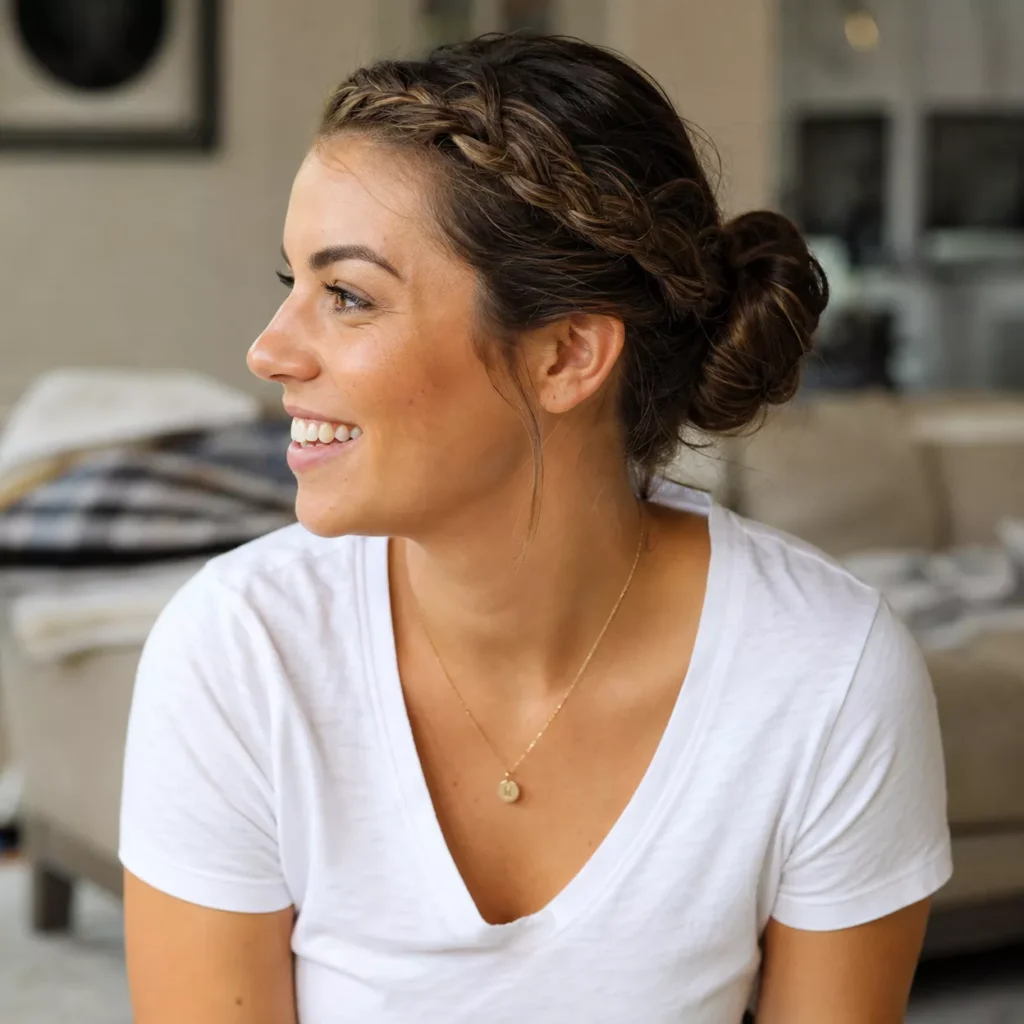
A bun can look like an unconnected shape sitting on the head. Adding a front braid creates a visible link between the face and the bun, so the style reads as one design instead of two. The braid runs back and ties into the gathered hair, and the bun hides the join. It also adds texture at the front, which a smooth bun lacks. Bun size depends on your density, while the braid depends more on the section you take at the front.
Waterfall-Inspired Front Braid
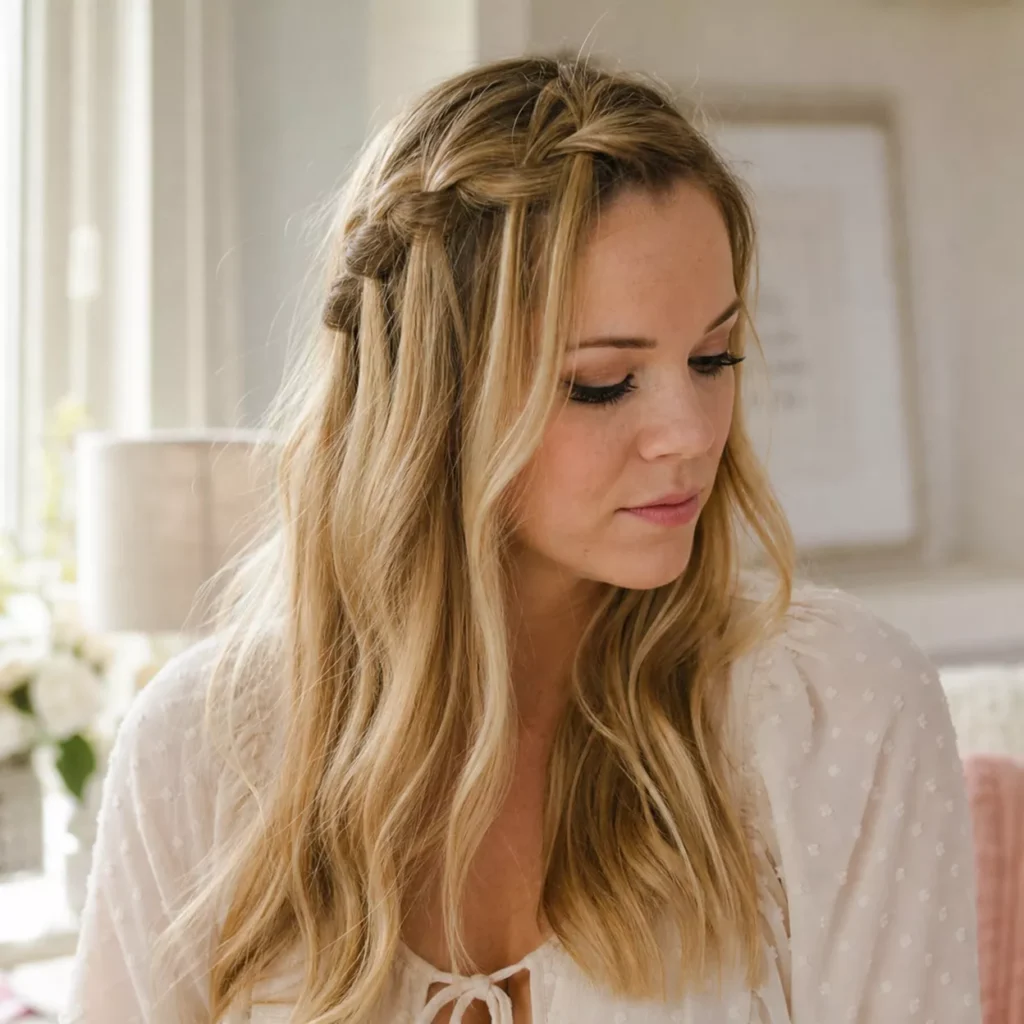
A standard braid secures every strand. A waterfall-style version deliberately drops pieces so they fall away from the braid, which creates a layered, open look. The difference matters because dropped pieces change how much hair is in the braid at any point and add loose strands below it. It takes some practice to keep the dropped sections even. Wavy or lightly curled hair makes the effect easier to see, since the loose pieces have their own shape, while very fine, straight hair can make the dropped strands look sparse.
Curly Hair Front Braid
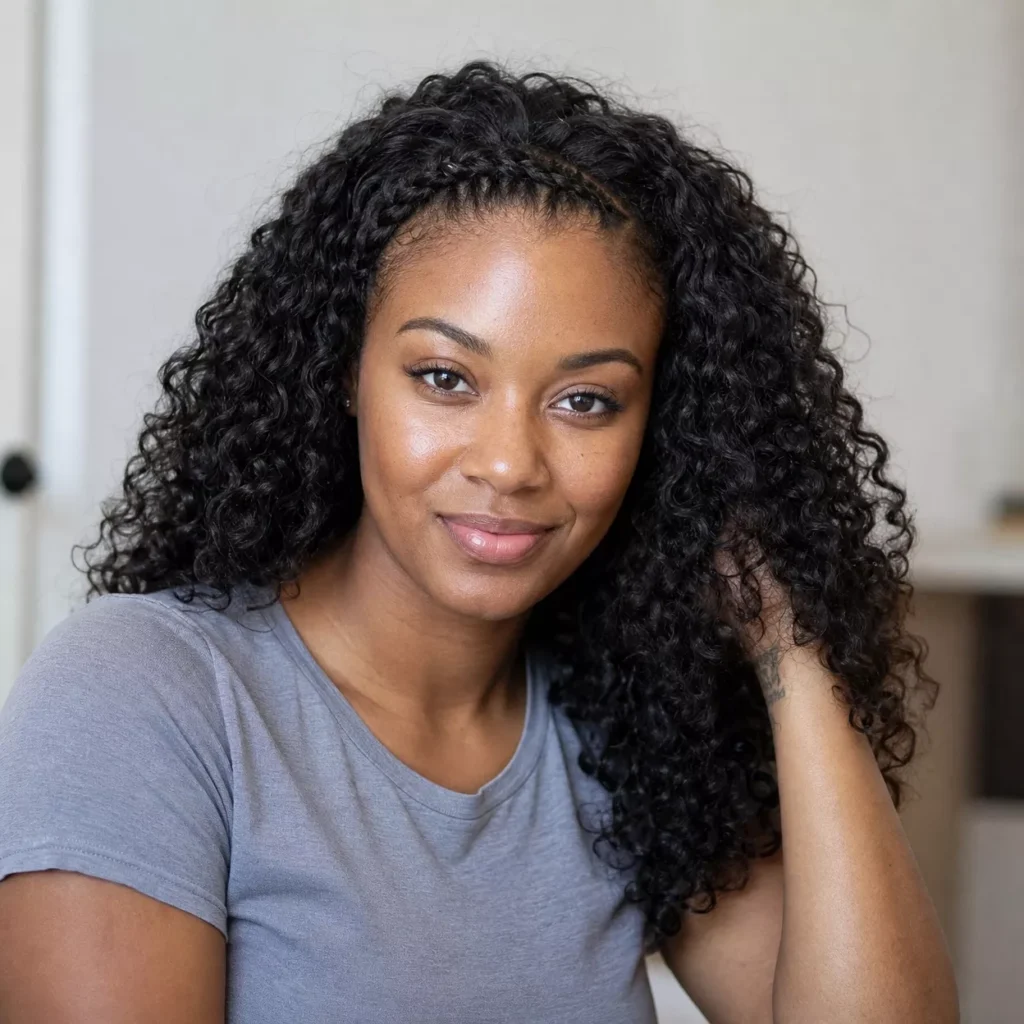
Curls behave differently in a braid, and that’s worth planning for. They shrink as they dry, so a braid started on damp or stretched curls will look shorter and thicker once dry. Curl pattern changes how visible the braid is: looser curls show more of the braid pattern, while tight curls and coils can blend it into texture, making it read more as a defined section than a distinct braid. Textured hair can provide useful grip, so fewer pins may be needed, and the style can preserve the natural pattern without smoothing it. Humidity may expand the curls around the braid.
Front Braid with Half-Up Style
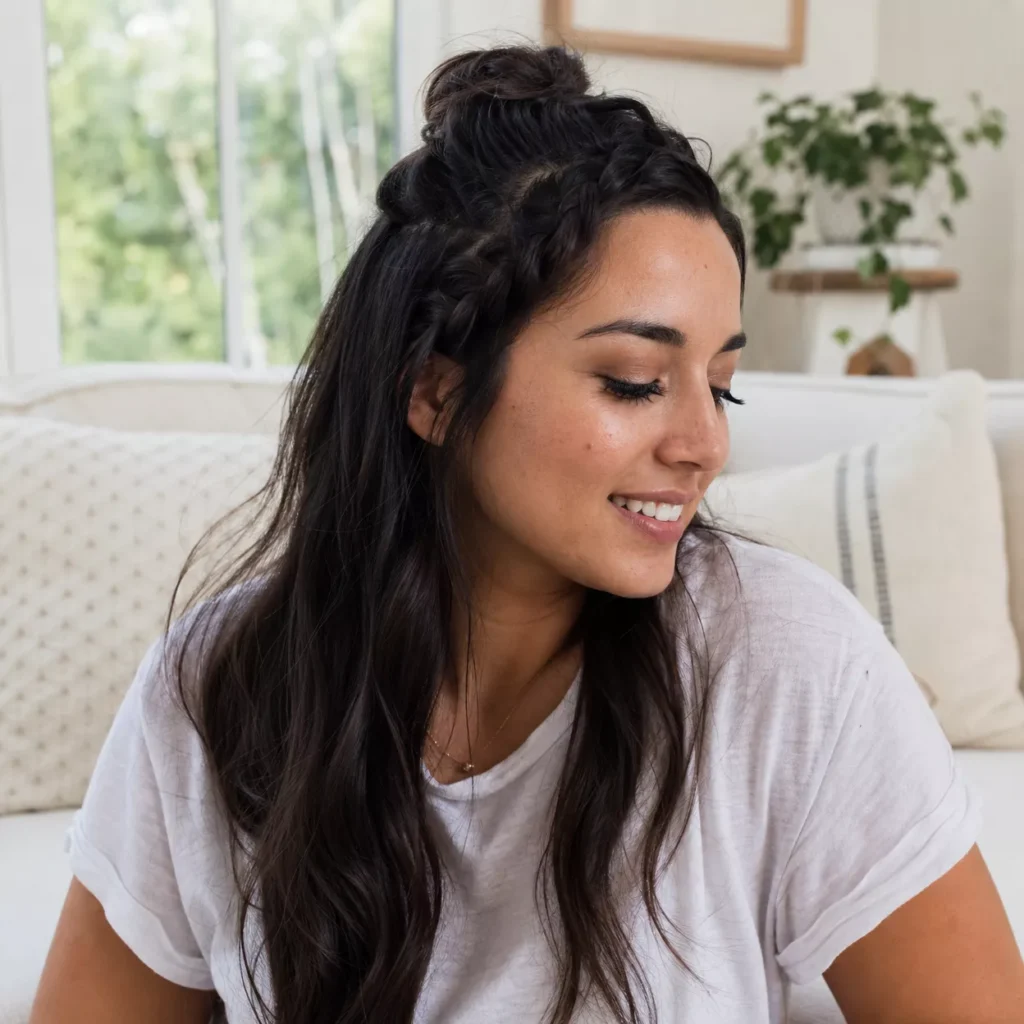
Combining a braid with a half-up style means two structures share the top of the head, so the question is how to keep them from competing. One approach is to let the braid do the work of the gathered section, feeding into it so it forms the first part of the half-up. Another is to keep the braid slim and place it at the side while the half-up stays simple. Too many elements in one area can look crowded, so keeping one of them quiet usually reads more cleanly.
Thick Front Braid
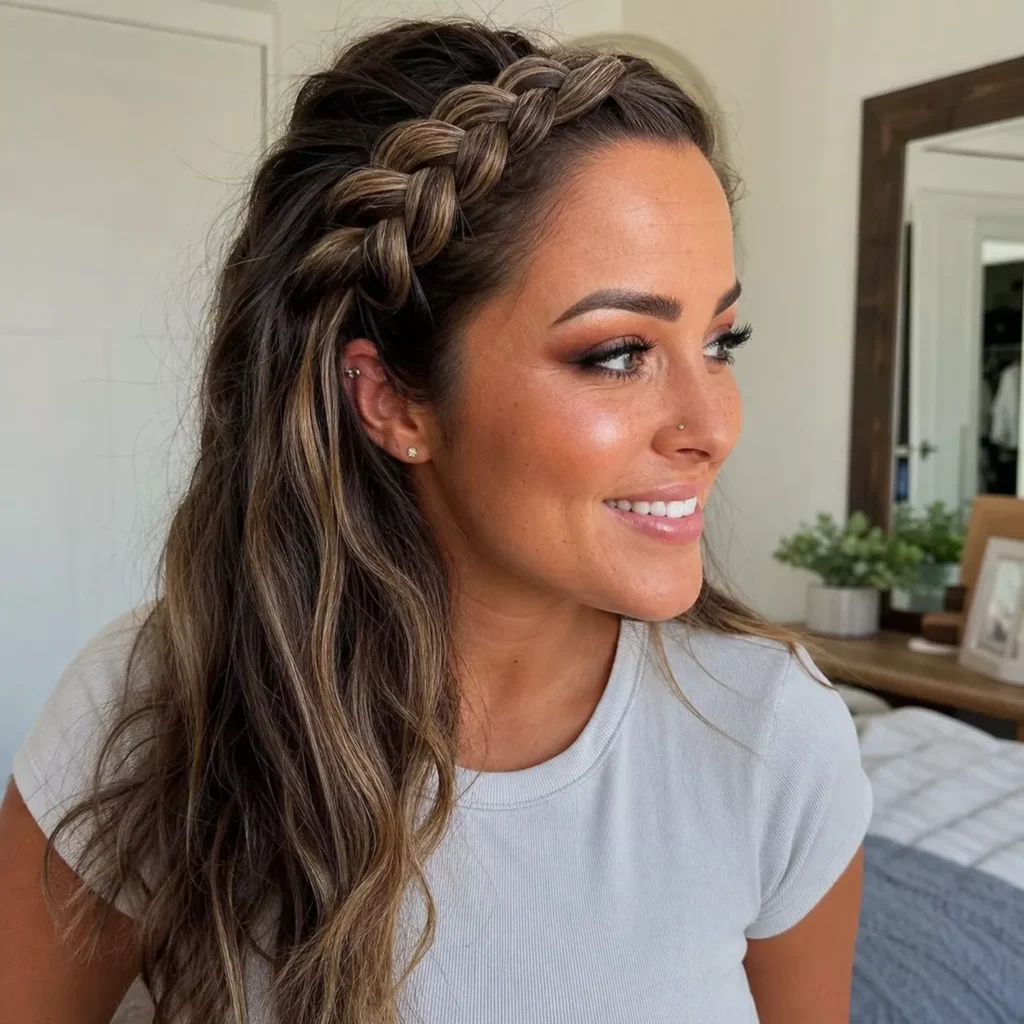
Section size decides everything here. A wider section makes a more substantial braid, and the visual weight of the braid becomes a feature of the hairstyle. Dense hair makes this easy, since there’s plenty to draw from. Fine hair with lower density may produce a thinner-looking braid even with a wide section, though gently loosening the edges can create the appearance of width. A thick braid also takes more hair from the front, which changes how much remains loose around the face. Thick and coarse aren’t the same thing, and coarse strands may hold a bulkier braid more firmly.
Tiny Accent Front Braid
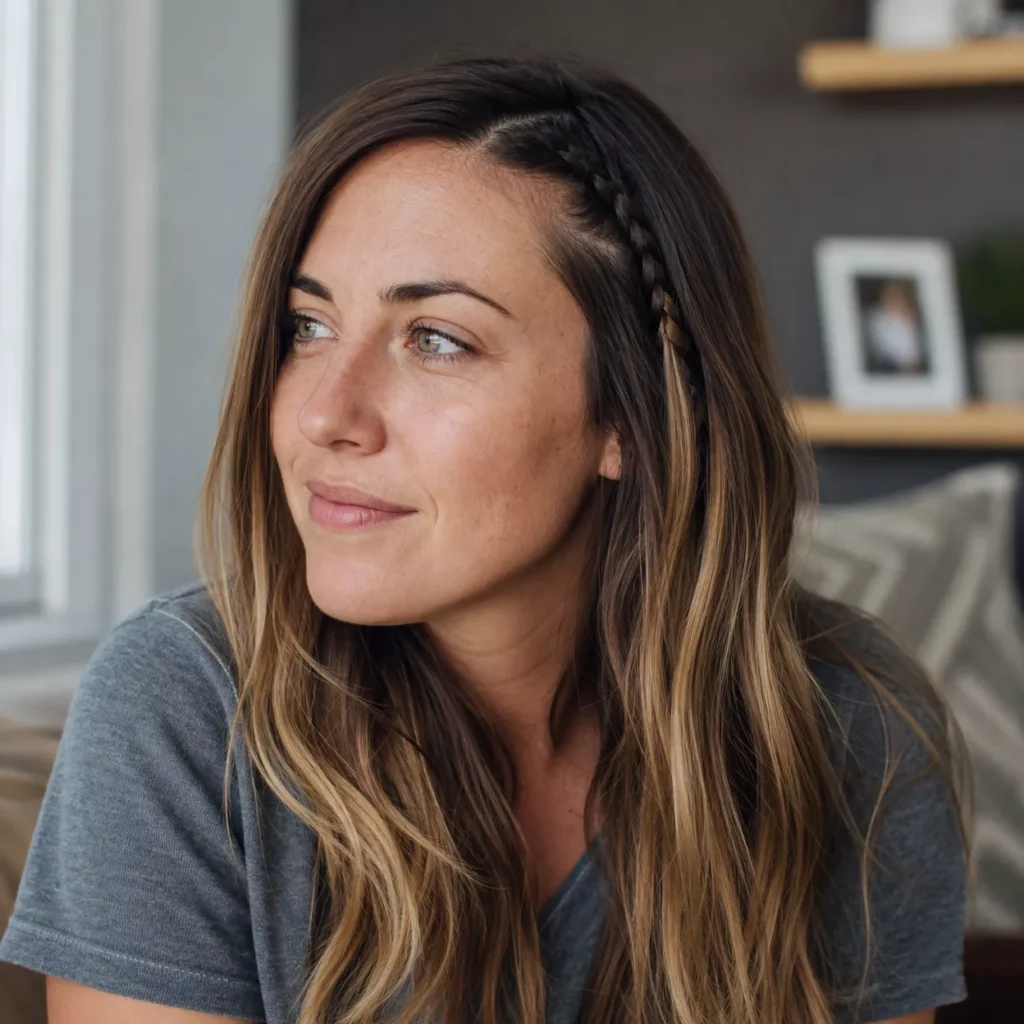
Restraint is the point. A very small braid, often just a few strands near the temple, works as a detail rather than the main hairstyle. It adds a hint of texture without changing the way the rest of the hair falls. Because it’s so small, it needs to be secured well, usually with a tiny clear elastic or a pin, since a few strands can easily come loose. On short or layered hair, it may be one of the few front braids that’s realistically possible.
Front Braid with Low Pony
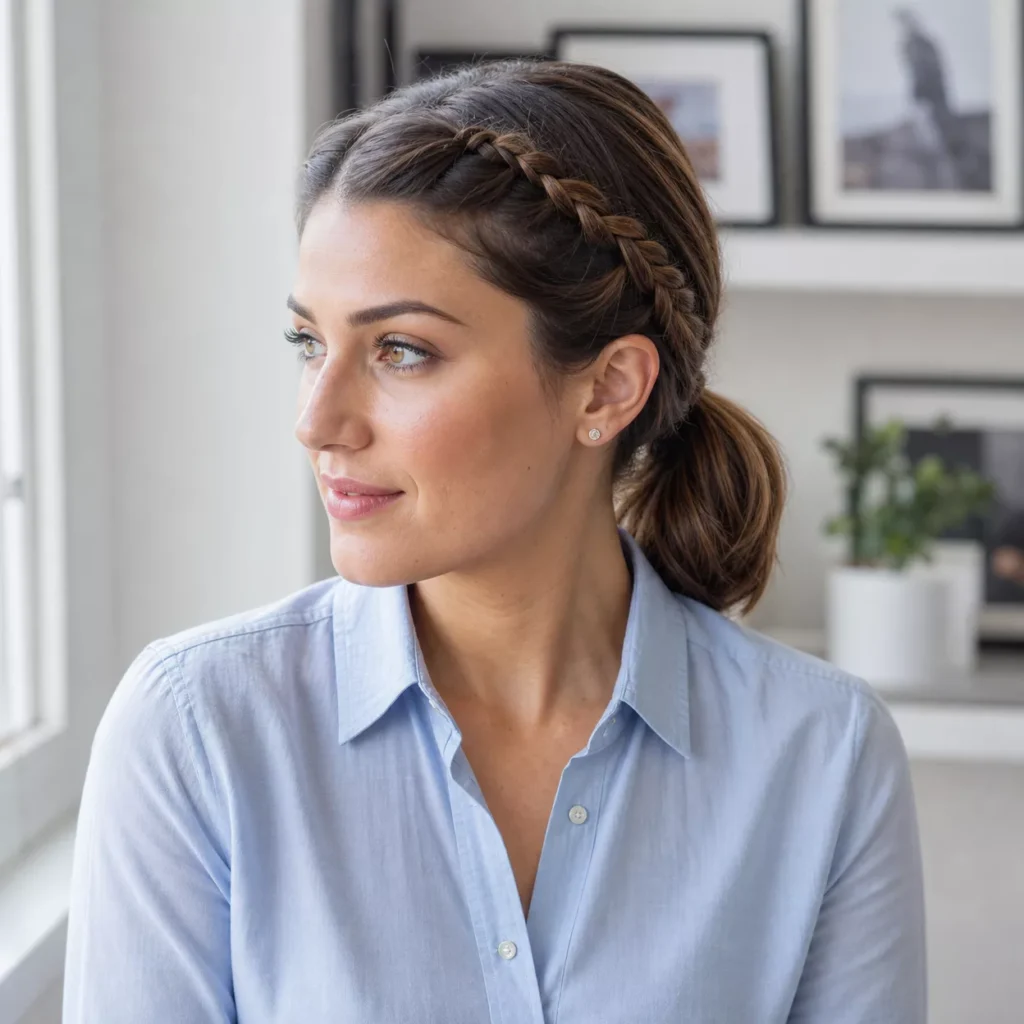
A low ponytail is simple and can look flat on its own. Adding a front braid gives the face edge some detail without changing the ponytail itself. Because the pony sits low, the braid has a longer route back toward the nape, and it can either join the ponytail or end in a small elastic and be pinned. The braid placement shifts the focus toward the front, which makes the ponytail feel more finished without adding anything to its structure.
Side-Swept Front Braid
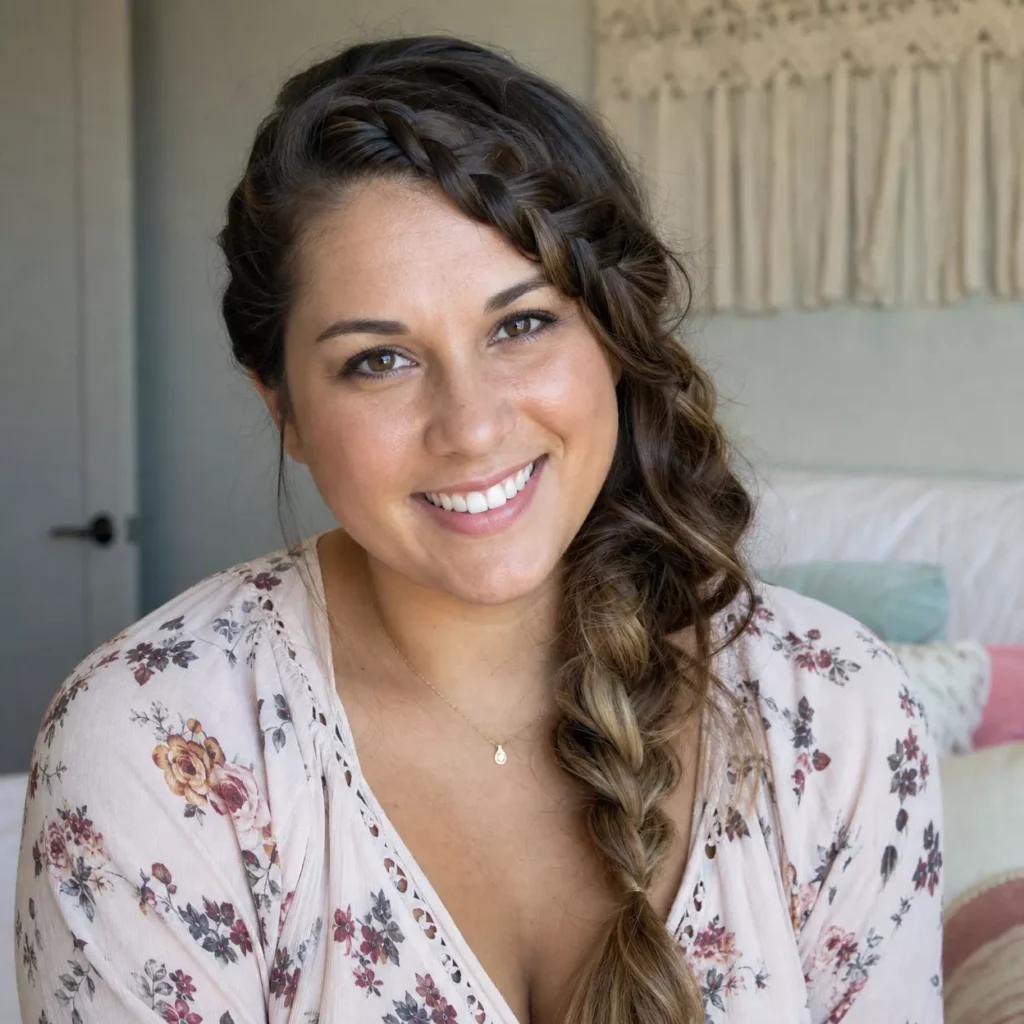
Direction defines this one. The braid starts on one side of the part and sweeps across the forehead toward the opposite side, creating an asymmetrical line. That angle relates to your natural part: working with it makes the braid sit more easily, while going against it can pull the hair back toward its natural direction. The braid also covers part of the forehead, which is a styling preference rather than a rule. A deeper side part gives the braid more room to travel.
Front Braid with Headband Effect
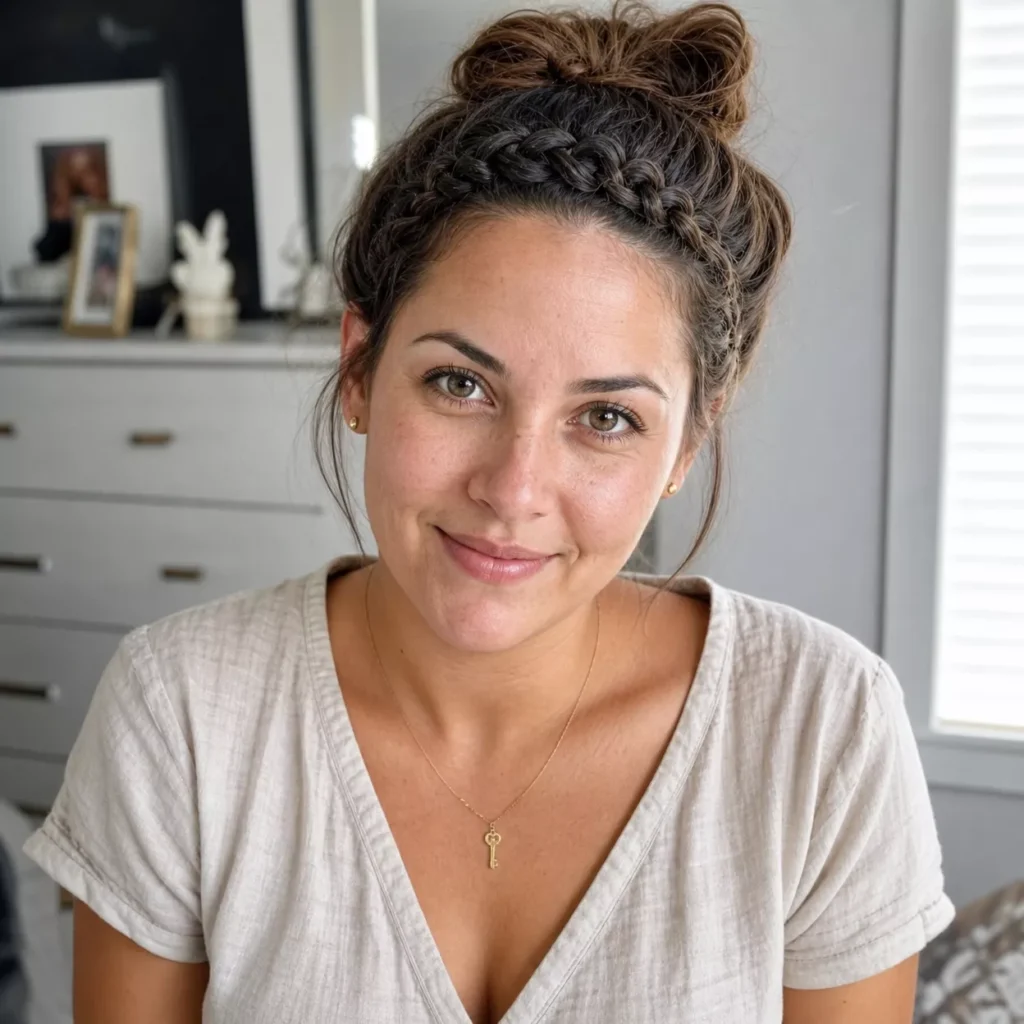
This braid replaces the visual function of an accessory. It sits across the front like a headband, holding hair back and defining the hairline, without needing anything to hold it there. Because it follows the hairline closely, placement is critical: too far forward and it looks like a forehead band, too far back and it loses the shape. It’s usually pinned or secured behind each ear. Tension should stay moderate, since a braid acting as a headband sits close to the scalp for long periods.
Front Braid into Loose Updo
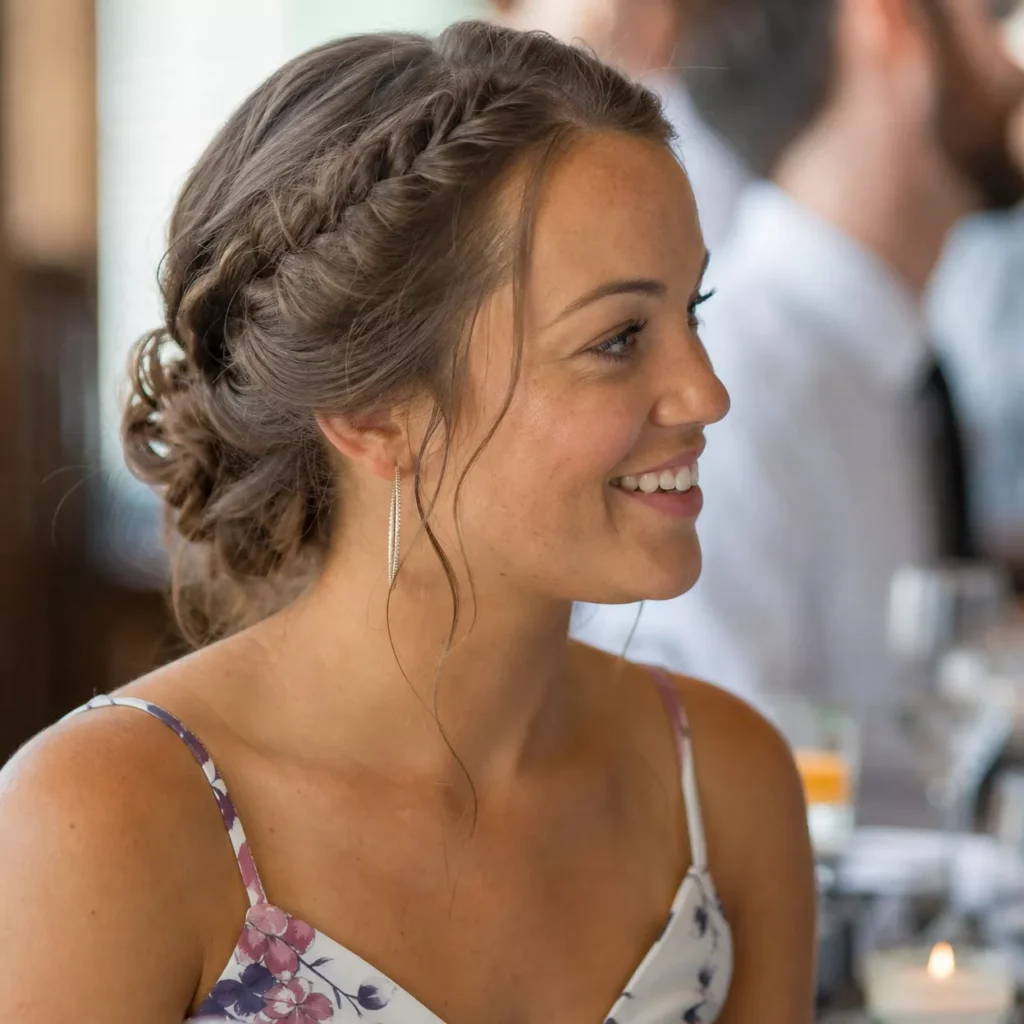
For occasion styling, the braid creates detail at the front before the hair is gathered. It starts near the hairline and feeds back into a loose updo, so the front looks finished while the back stays soft. How it holds depends on grip and pinning. Hair with some texture holds a loose updo more readily, and pins should anchor into the braid rather than loose strands. Because the updo is loose, some movement is expected, and a few escaped pieces can look intentional.
Front Braid on Short Hair

Length is the limit here. How much can be braided depends on the front length, layering, hairline, and density. Hair that reaches the ear can usually hold a short braid along the side, while shorter hair may only manage a few strands. Short layers near the front often escape the braid, so it’s worth keeping the section small and securing it firmly with pins instead of relying on elastics. If only a small braid is realistic, it can still add detail without needing length.
Romantic Front Braid with Curtain Bangs
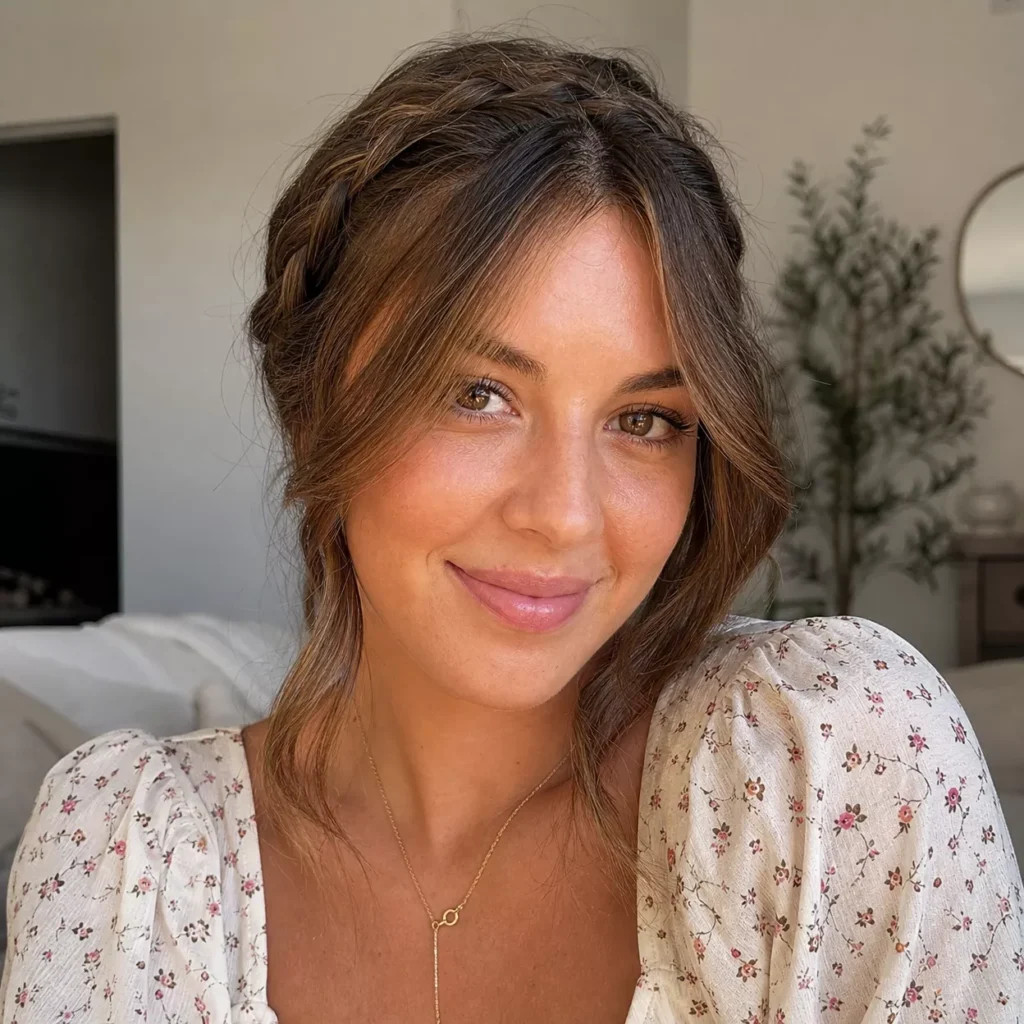
Curtain bangs and a braid both occupy the front of the hair, so the question is how they interact. The braid can begin behind the bangs, leaving them loose in front, or it can pick up the outer pieces and sweep them back. The center part decides the balance. More of the curtain bang left loose keeps the fringe the main feature; more taken into the braid shifts attention to the braid. Either works, depending on whether you want the braid to complement the fringe or compete with it.
Change the Braid, Not the Whole Hairstyle
A front braid works as a modular detail. The same braid can sit on top of loose hair, lead into a ponytail, feed a bun, join a half-up, or frame natural curls, and each combination looks like a different hairstyle.
That means you don’t always need a new style. Changing the braid’s width, direction, or endpoint can change the result. A slim braid over loose hair is subtle. The same braid fed into a ponytail looks more purposeful. Widen it and the braid becomes the focus. Move it across the forehead and the shape shifts again.
Three Small Decisions That Change the Result
How close the braid sits to the hairline. Right at the hairline, it frames the face and acts like an edge. A little further back, it reads as a detail within the hair and puts less strain on the front.
How much hair is included. A narrow section reads as an accent. A wider one becomes the main feature. A slightly wider section can sometimes create the appearance of more fullness in fine or low-density hair, while dense hair can handle either.
How tightly the braid is finished. A tighter braid looks crisp and may stay more secure, but it can feel uncomfortable. A looser one looks softer and more textured but needs better grip. Firm, not painful, is usually the useful middle.
Keep the Rest of the Hair Simple
A front braid is already a focal detail, so the rest of the hairstyle doesn’t need extra complexity. Loose hair, a plain ponytail, a simple bun, or natural curls all let the braid stand out. Adding too much, such as multiple braids, heavy accessories, and elaborate styling, can crowd the front and reduce the effect.
The strongest front-braid hairstyles often come from changing one small section while the rest of the hair stays natural and recognizable. If the braid is the part people notice, the rest of the hair only needs to support it.