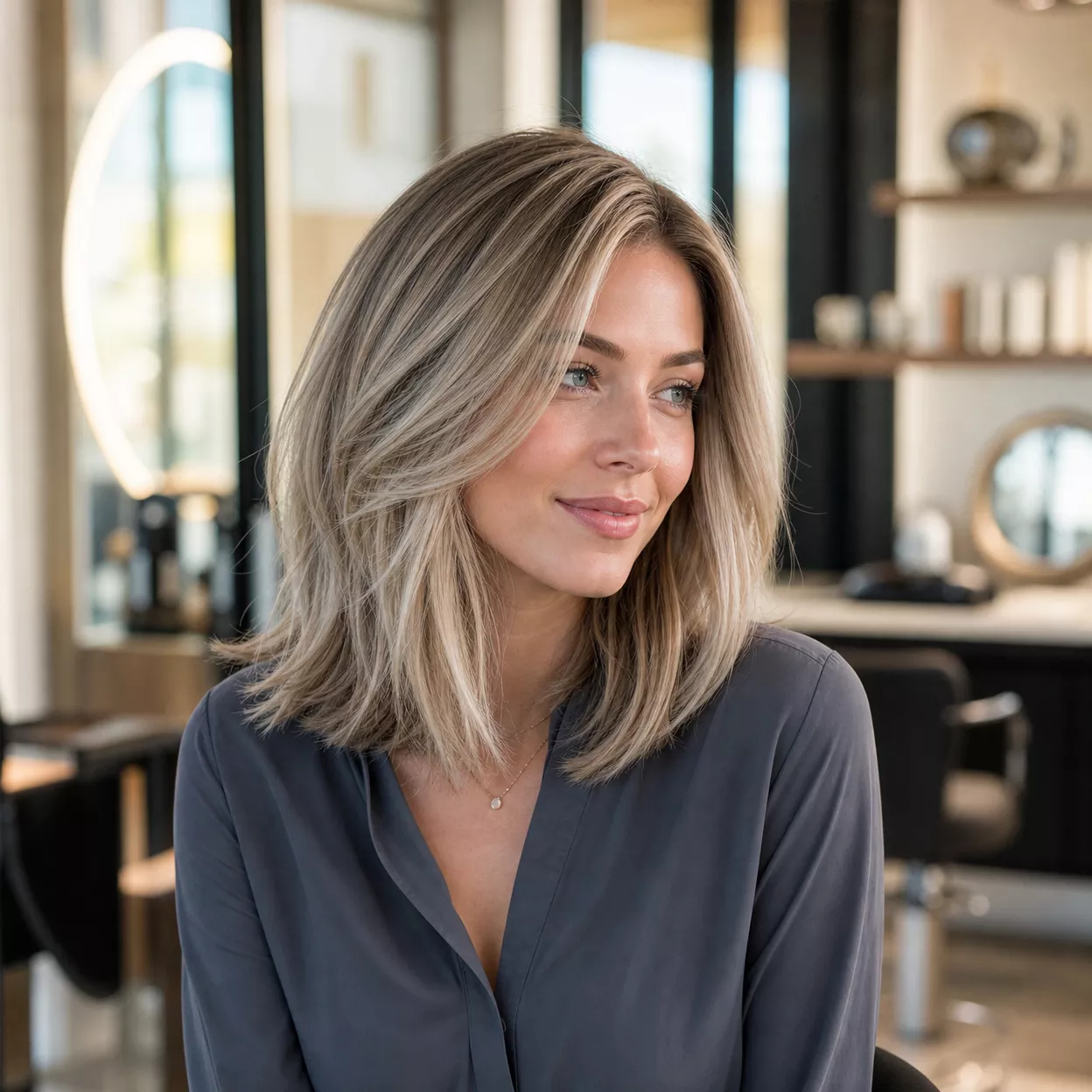
23 Easy Bob Hairstyles for Women That Look Gorgeous Every Single Morning
A bob isn’t one haircut. It’s a length category that covers a lot of very different structures, and the distance between two bobs of similar length can be enormous depending on where the perimeter sits, how much layering has gone into it, and whether the shape depends on styling to look finished. A blunt, unlayered bob and a heavily stacked, layered one can both land at the jaw and behave nothing alike from one morning to the next.
This guide covers 23 bob variations, one after another, with what actually defines each cut, who tends to find it practical, and the trade-offs that come with it. After the list, there’s a section for narrowing the options down based on your hair’s density, texture, and how much time you’re realistically willing to spend on it.
Before You Choose: What Actually Matters More Than Face Shape
Face shape often gets treated as the deciding factor in bob guides, but it’s really just one input among several, and not always the most important one. Where a bob ends relative to your jaw, how much width sits at the perimeter, and where any layering or face-framing begins all shift the visual effect, and those decisions can be made somewhat independently of face shape. A rounder face might prefer more length and softer framing, or it might prefer a shorter, more structured line. Both are reasonable choices depending on what the person actually likes and how the hair grows.
What tends to matter more in practice is your hair’s density, its texture, your natural part, and your tolerance for styling and trims. A blunt, structured bob and a soft, wavy one can both suit a similar face shape and still be completely wrong for each other’s target hair type. Keep that in mind as you go through the 23 styles below: consider your hair’s actual behavior first, then use face shape as a secondary filter.
23 Bobs to Consider
The Glass Bob
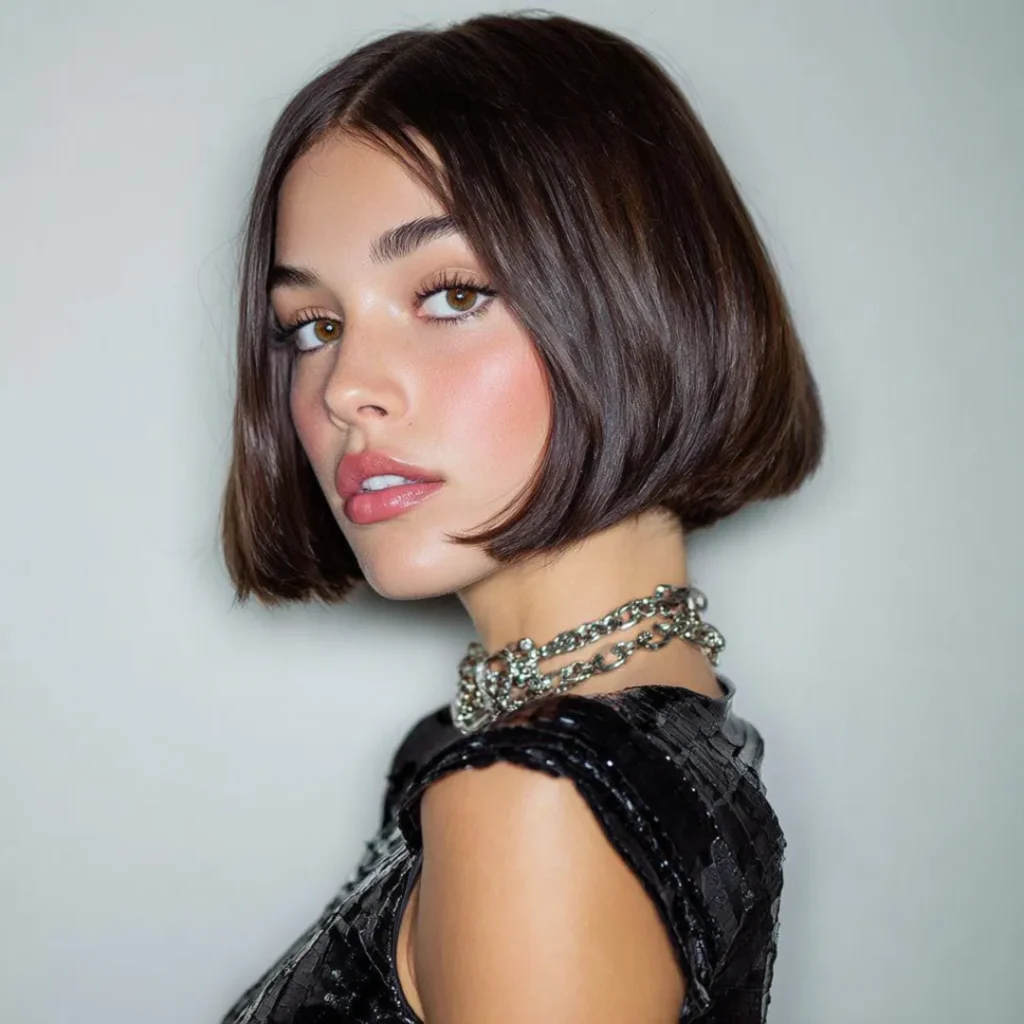
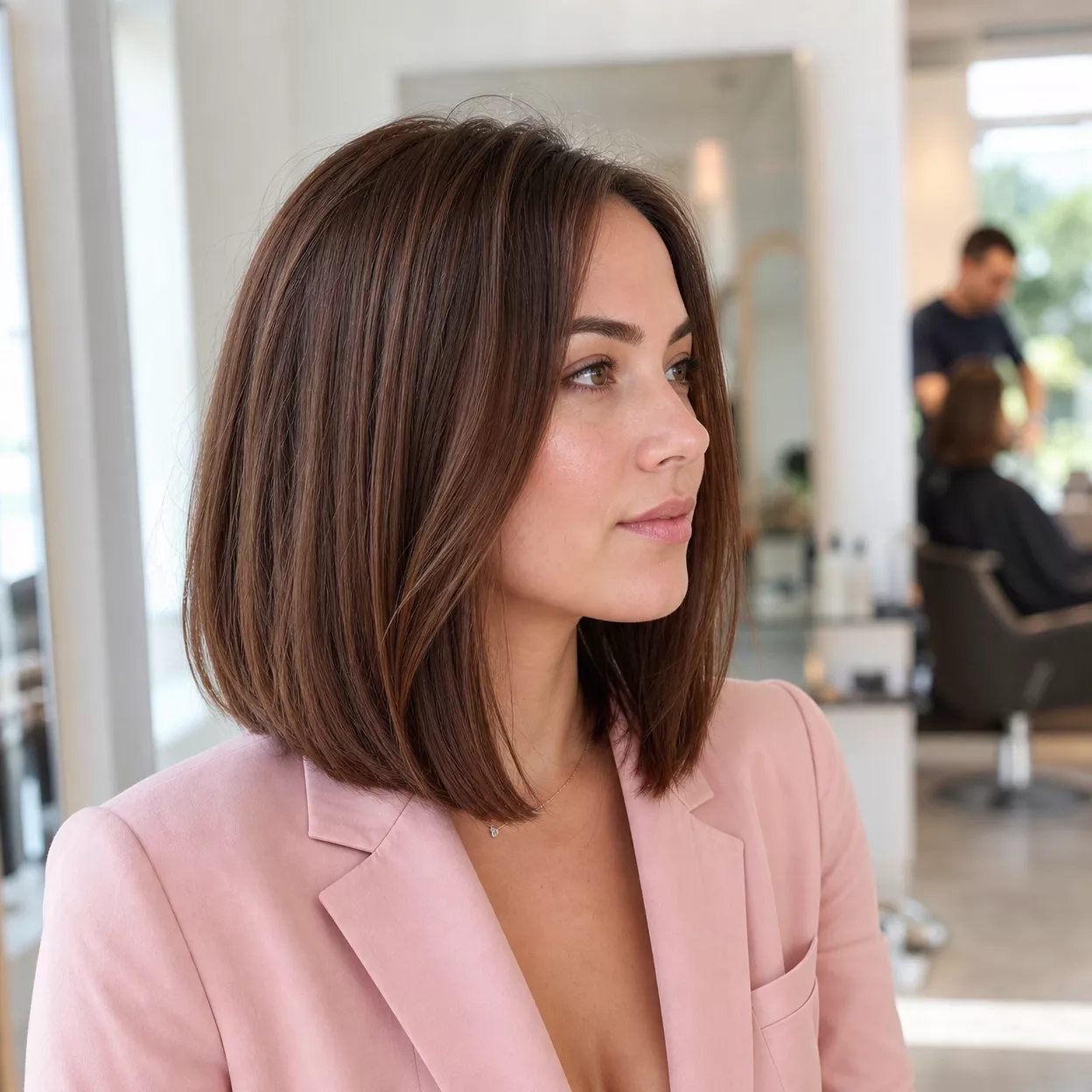
This is a jaw-length, unlayered cut finished sleek and smooth, and the appeal is almost entirely about the unbroken perimeter line. A solid, blunt edge reads as denser to the eye than the same length with layers cut into it, which is why it tends to get suggested for fine hair. It’s worth noting that this effect is visual rather than a change in actual density: the hair looks fuller because there’s no tapering at the ends, not because there’s more of it. The style depends on a smooth finish to work, so it generally needs a blow-dry and some serum or smoothing product on damp hair, and it isn’t a wash-and-go option on textured hair without some effort.
The Curtain Bangs Bob
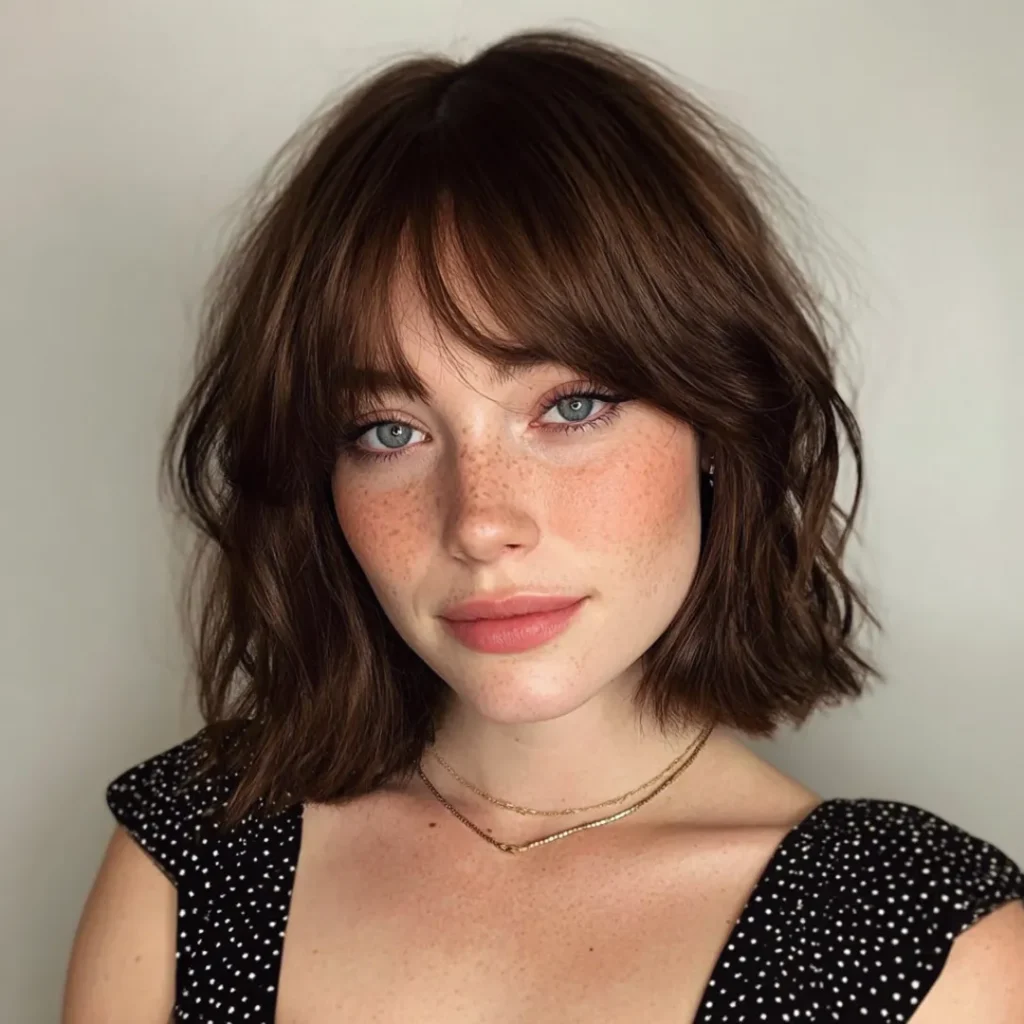
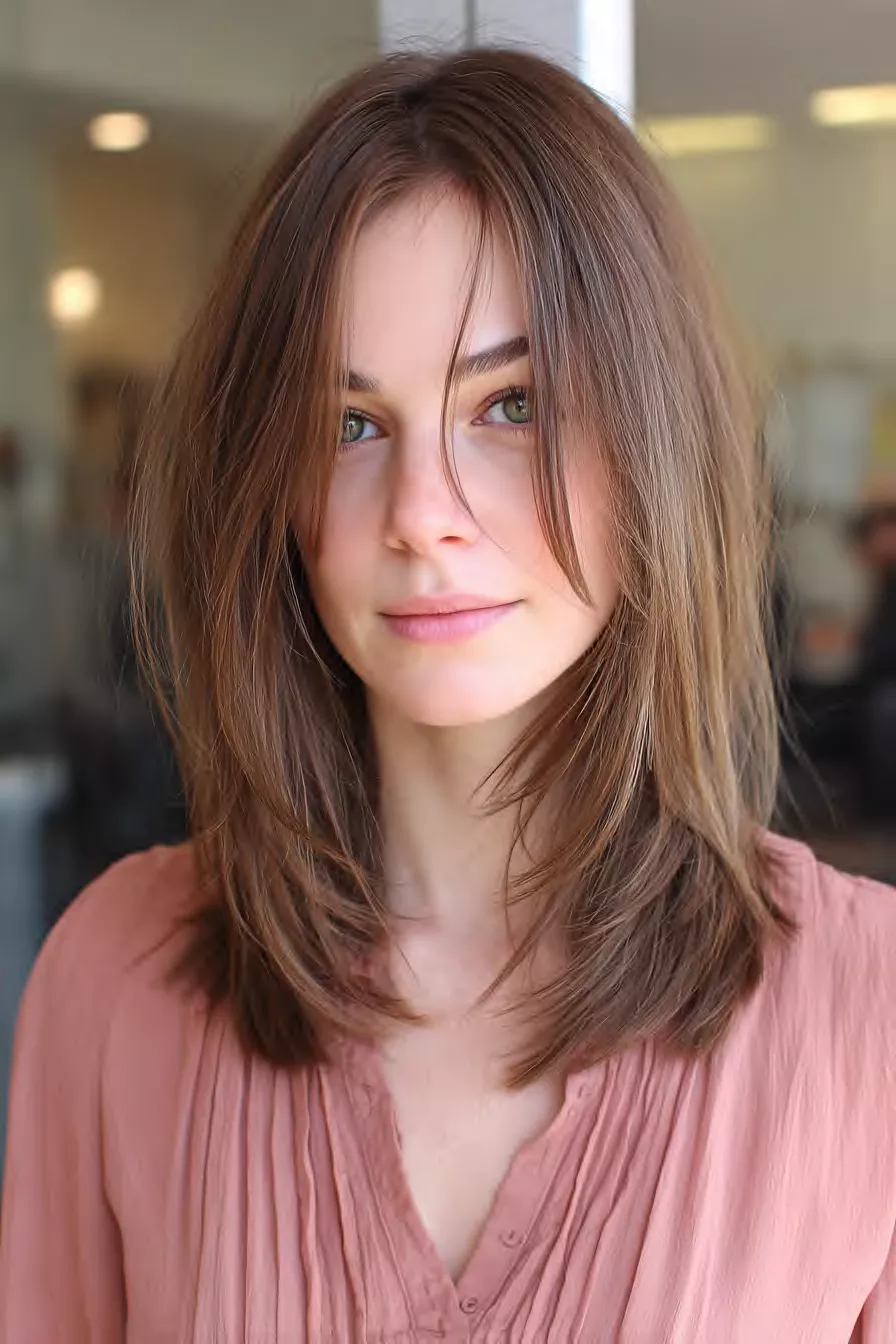
Curtain bangs aren’t a bob shape on their own. They’re a bang style that can be added to a collarbone-length bob, a jaw-length one, or several other lengths on this list, which is worth knowing if you’re drawn to this look but want a different length elsewhere. They part in the center and sweep to either side, and how well they hold that direction depends heavily on your natural part. Cut with the grain of your part, they tend to settle easily. Cut against it, they can drift back toward center within a day or two.
The Micro Bob
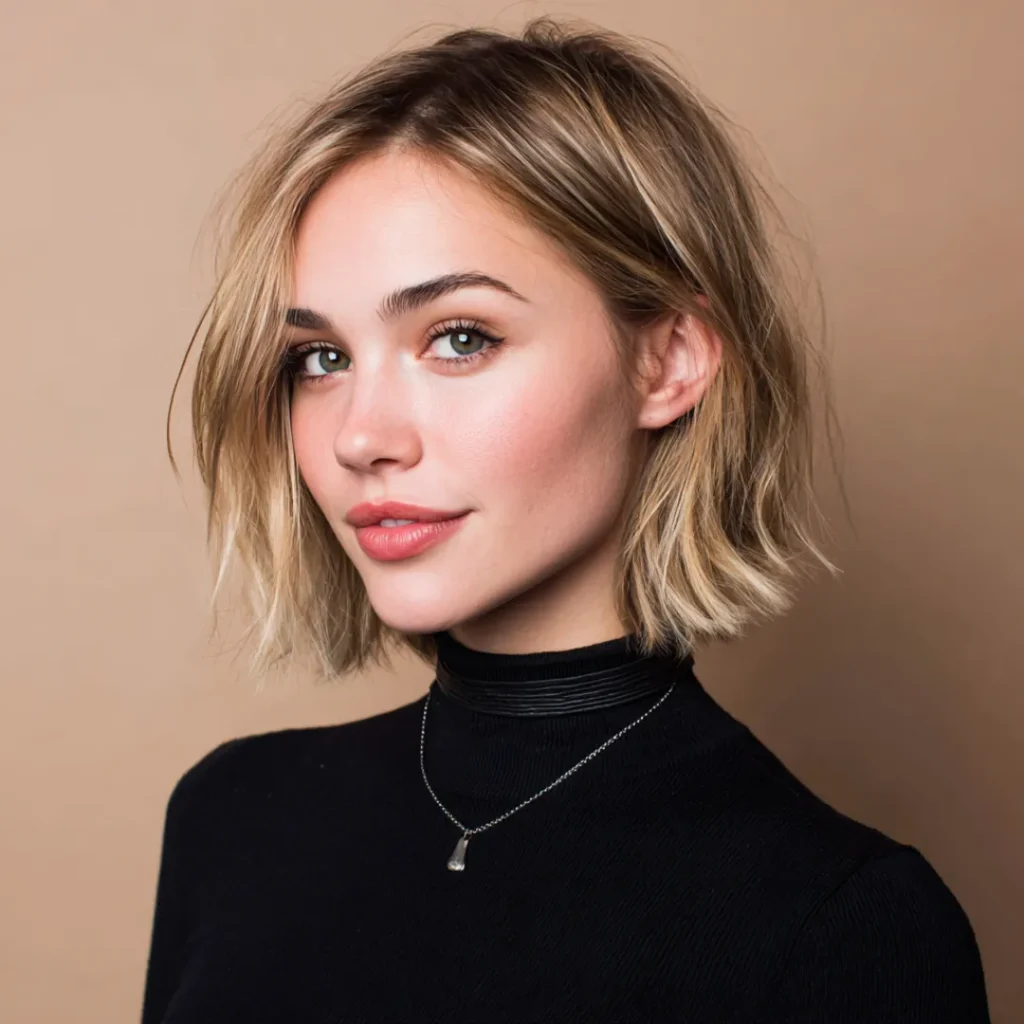
Landing at or just above the jaw, this is one of the shorter lengths on this list, and the shortness itself does a lot of the visual work: there’s very little length left for weight to accumulate and pull the ends down. That makes it a reasonable option for fine hair, though it’s a length that shows growth quickly, since even a small amount of new length changes the proportion of a cut this short. Soft shaping around the face can keep it from reading as severe, but it’s a cut that generally needs regular reshaping to hold its line.
The Cloud Bob
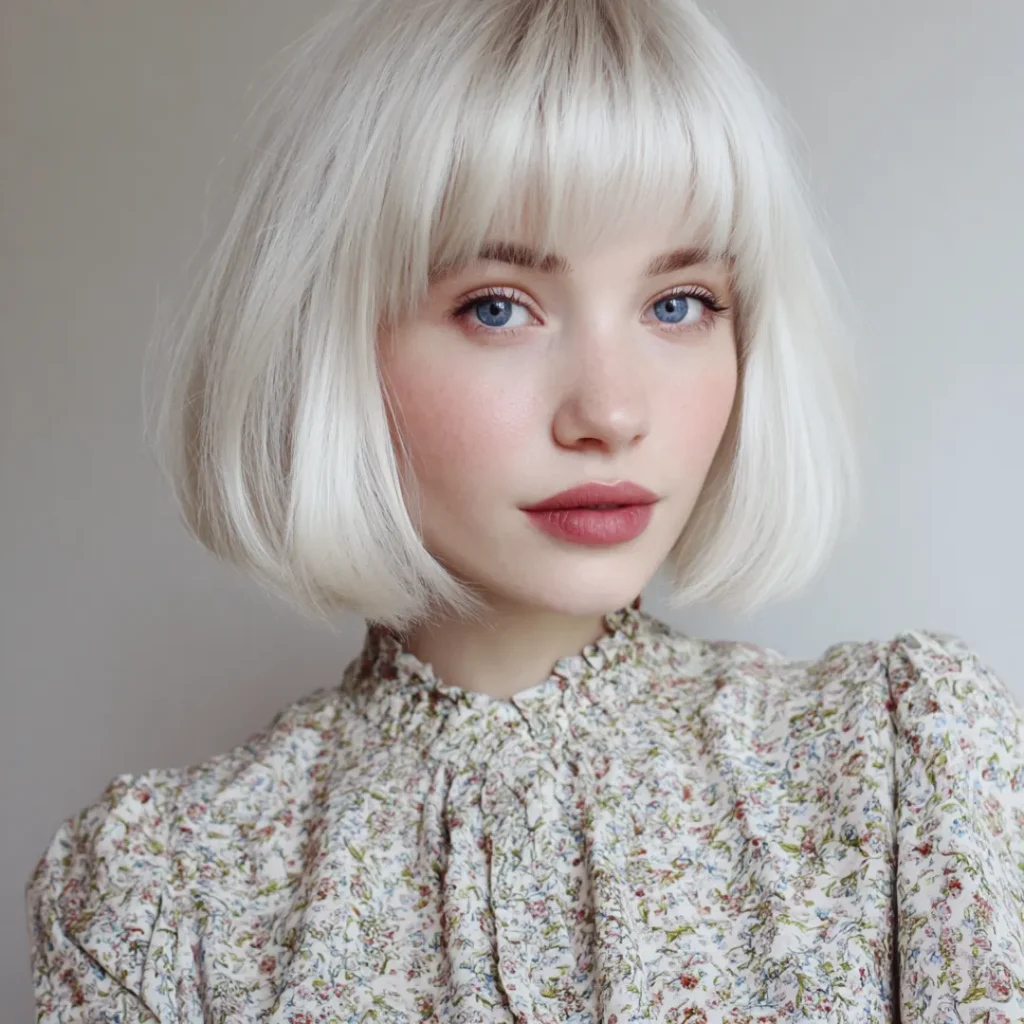
This is a chin-length cut made for curly or coily hair, cut curl by curl with light internal layers rather than a straight-across line, which doesn’t translate well to naturally curly texture. Curls shrink noticeably as they dry, so the finished length is usually judged on dry, unstretched hair rather than wet hair, and it’s worth having that conversation with your stylist before any cutting starts. Scrunching in a curl cream on soaking wet hair and diffusing on low heat tends to preserve the curl pattern this cut depends on; rubbing curls dry with a towel disrupts it.
The Undone French Bob

Sitting just below the cheekbone with internal layers rather than a blunt perimeter, this version relies on natural wave or texture to look intentionally undone rather than simply unstyled. On hair with some natural bend, rough-drying with fingers and a sea salt spray can get close to the tousled finish. On very straight hair, achieving the same texture usually requires some heat styling, so it’s worth being realistic about which category your hair falls into before expecting a no-effort result.
The A-Line Bob
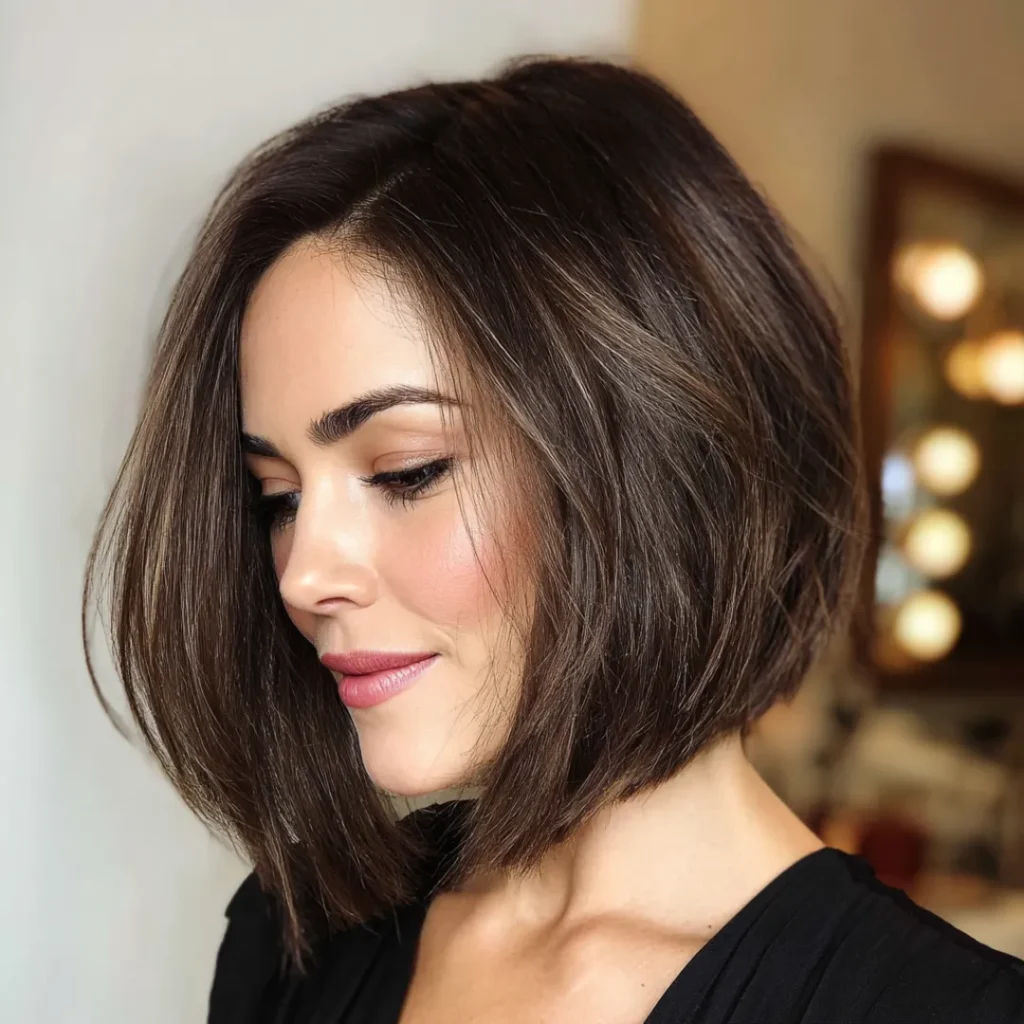
Shorter at the back and longer toward the front, this creates a diagonal line that most people find easy to style multiple ways, sleek one day and tousled the next, since the underlying shape works with either finish. Interior layers cut with a razor can remove some bulk without disturbing the angle, which matters more on thicker hair that might otherwise feel heavy at this length. It’s a fairly adaptable structure across a range of hair types, though the diagonal line does grow out and soften over time, which some people like and others find frustrating between trims.
The Shaggy Bob
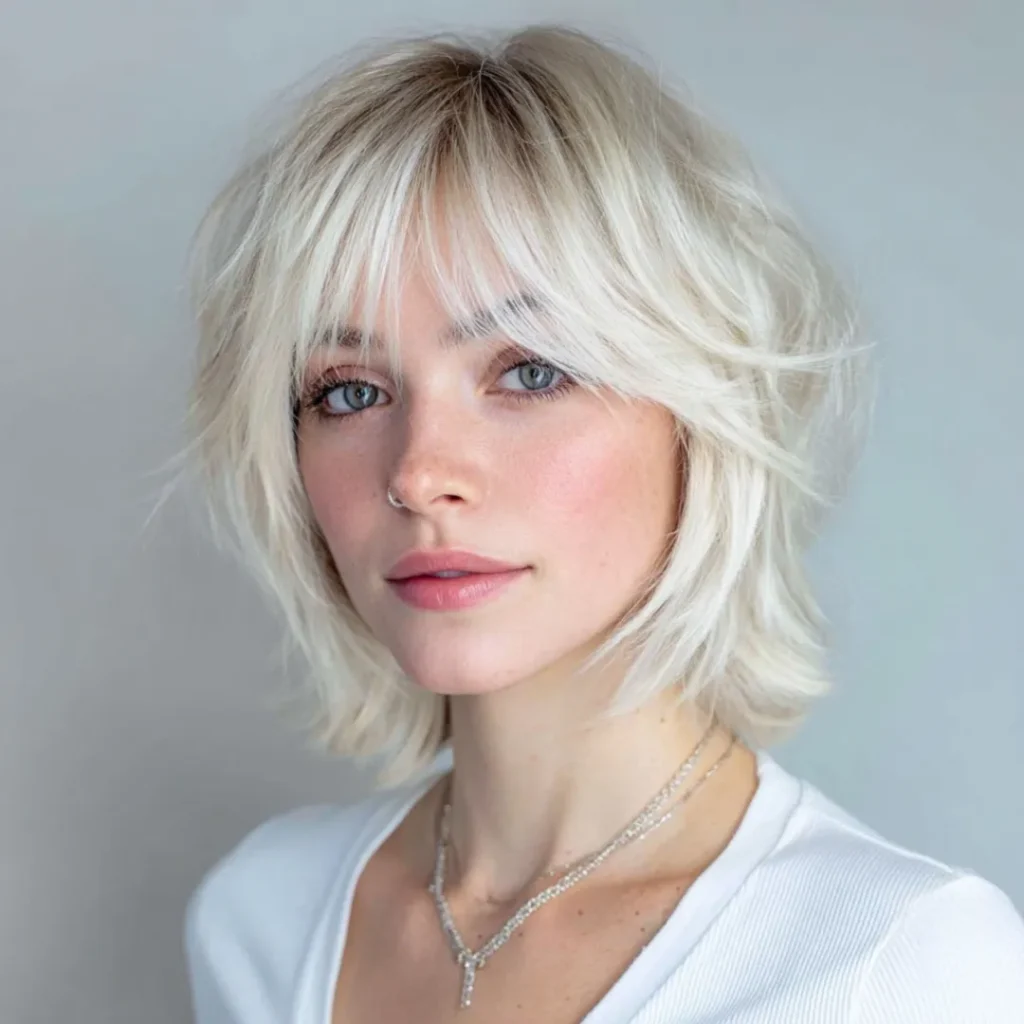
This combines a bob’s general structure with shag-style layering: curtain bangs, softer layers throughout, and diffused, textured ends rather than a clean perimeter. It tends to suit medium to thick hair with some natural wave or curl, since the layering needs enough density to create visible separation rather than looking sparse. It’s a cut that generally looks better slightly undone than freshly blow-dried straight, and diffusing on low heat preserves the texture better than high heat, which can flatten the volume the style depends on.
The Rounded Bob

The ends here curve gently inward rather than cutting straight across, which is a subtler perimeter shape than a blunt line but still relies on an intact, largely unlayered edge to hold its softness. This can suit fine, straight hair reasonably well, since the curve adds shape without needing heavy layering to create movement. A medium round brush rolling the ends inward during blow-drying builds that curve into the finish without a separate curling step afterward.
The Lob With Invisible Layers
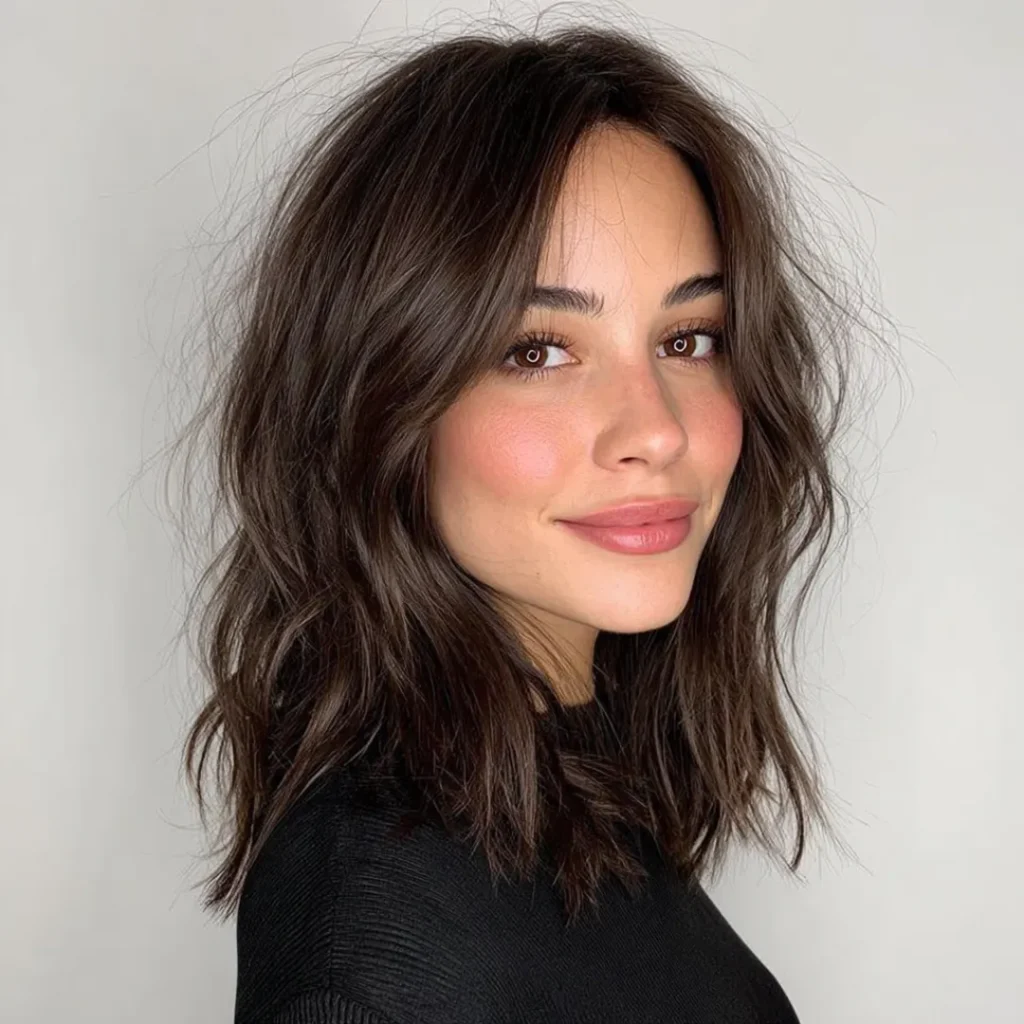
A lob generally sits at collarbone length, and “invisible” layers here means the layering is cut internally rather than at the visible edge, so the outer silhouette still reads as close to one length while the inside carries some movement and reduced weight. This can help fine or flat hair feel less heavy without losing the solid-looking perimeter that makes the cut look polished. It’s worth specifically asking for internal layering rather than layering cut at the surface, since surface layers change the visual weight line more than internal ones do.
The Blunt Chin-Length Bob
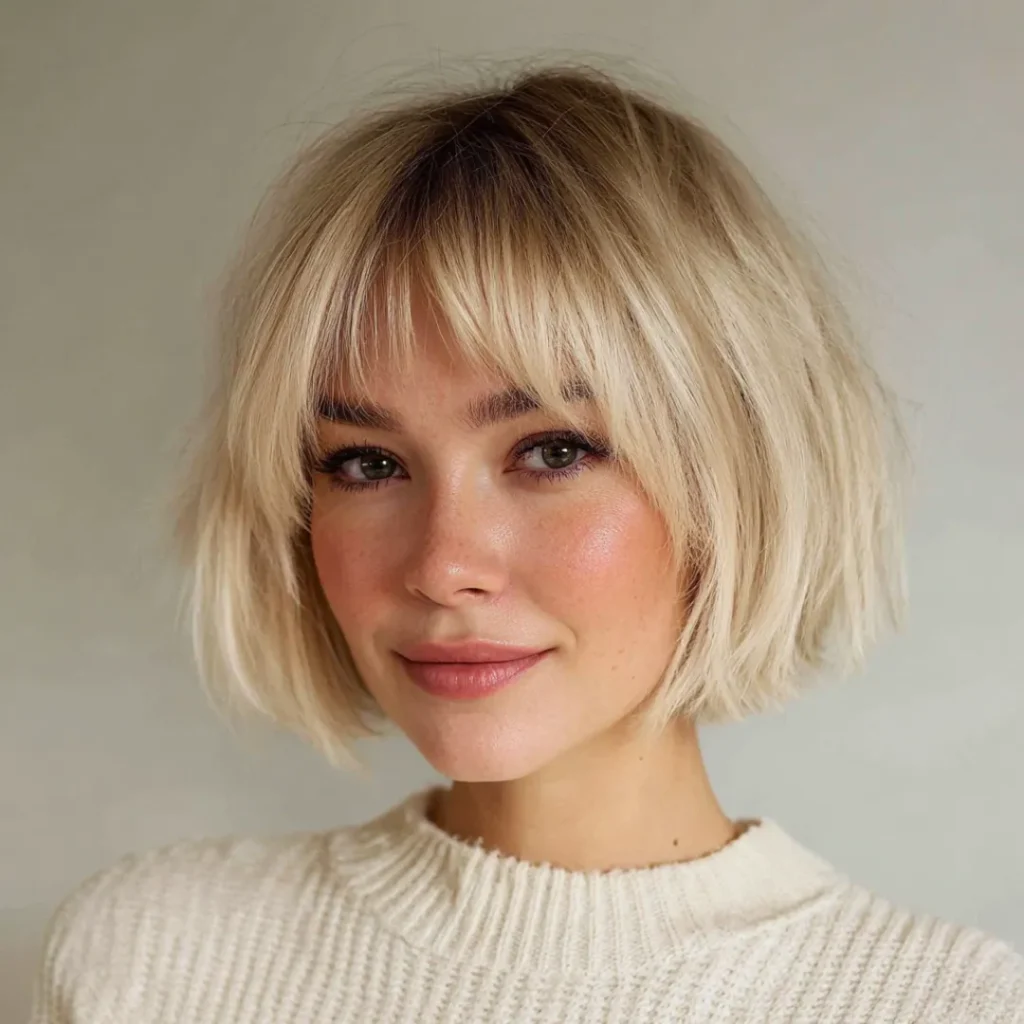
A single-length cut with no layering, this creates the strongest possible perimeter line on this list, and that solid edge is what makes fine or straight hair look fuller at the ends, for the same reason described in the Glass Bob above: it’s an appearance of thickness from an intact edge, not an actual increase in density. It photographs cleanly and generally styles quickly, but the sharp, precise line shows growth clearly, so it needs relatively regular trims to keep its shape, and an occasional gloss treatment can help the ends look deliberately sharp rather than simply grown out.
The Soft Wavy Lob
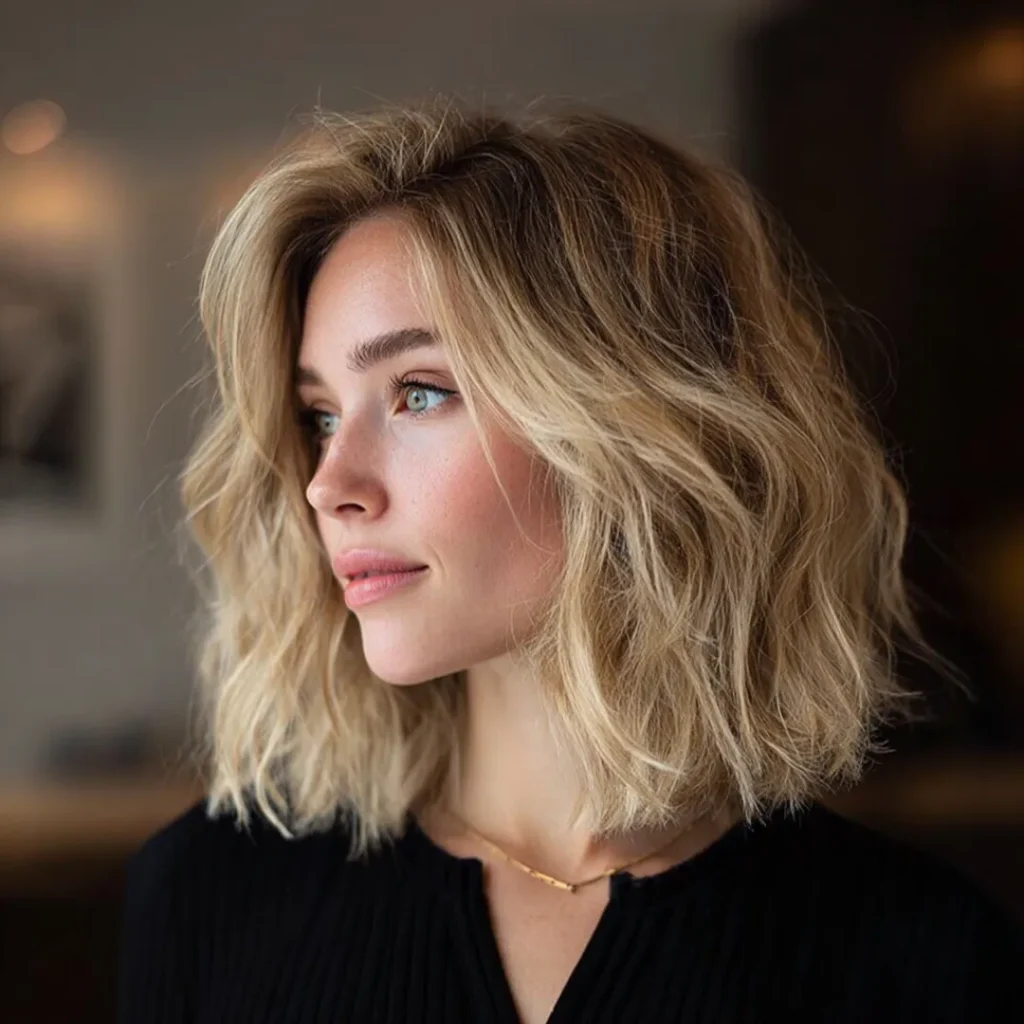
This is a collarbone-length lob styled with loose waves from a large-barrel iron rather than a distinct cutting structure of its own; the underlying cut is fairly similar to other lobs on this list, with the waves doing most of the visual work. The waves can add apparent volume to fine hair that might look flatter styled straight, and the length keeps it versatile between casual and slightly dressier occasions. Wrapping sections around the iron away from the face and letting them cool before finger-combing tends to give a more lasting result than curling and immediately running fingers through while it’s still hot.
The Jaw-Length Bob With Side Part
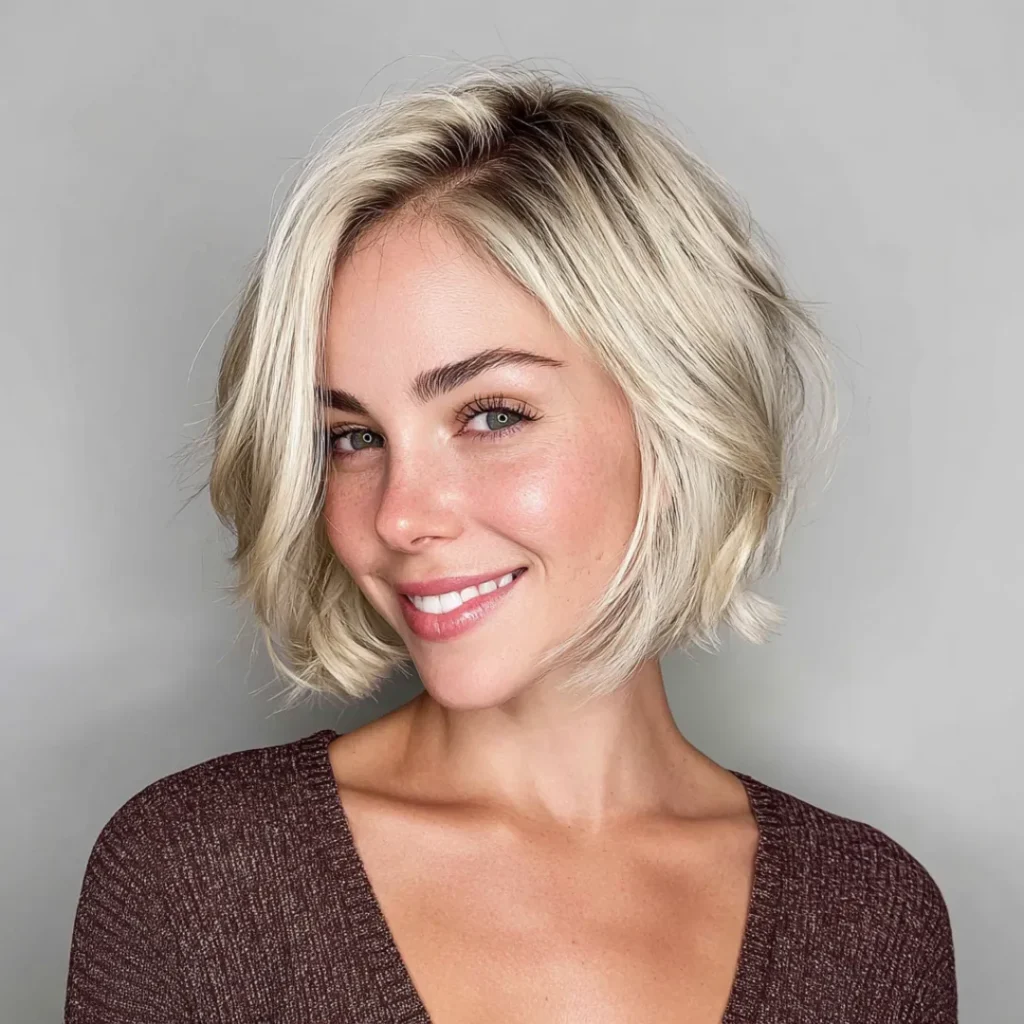
The side part is a styling decision rather than part of the haircut itself, and it can be applied to several jaw-length bobs on this list, not just this specific version. A deep side part shifts more hair to one side, creating asymmetry and adding the impression of volume on the heavier side, which some people prefer over a symmetrical center part. Setting the part while hair is still wet tends to hold better through the day than trying to force a dry part into a new direction later.
The Textured Bob With Wispy Ends
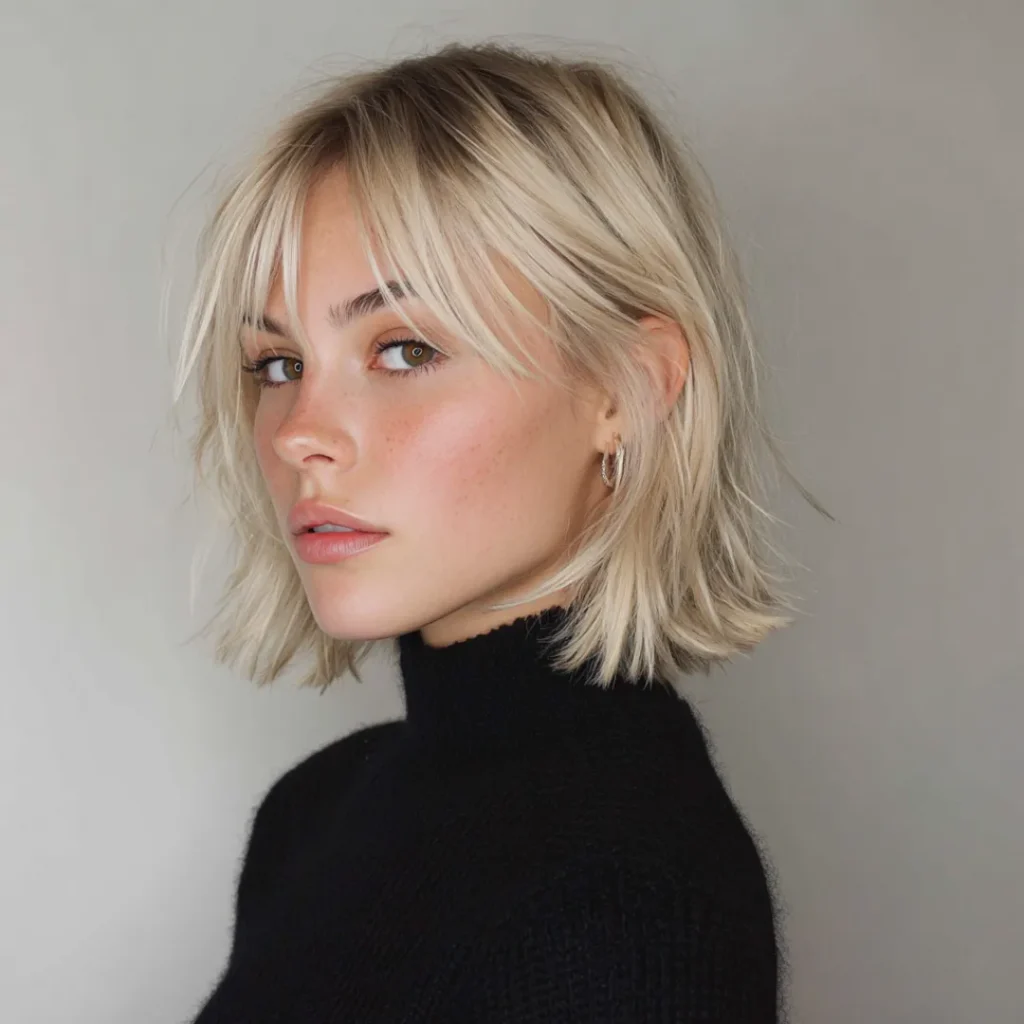
Point-cutting and razor work on the ends create tapered, feathered tips rather than a clean, blunt line, which tends to suit medium to thick hair that has enough density to make the separation look intentional rather than sparse. This texture also tends to grow out more forgivingly than a sharp perimeter, since there’s no clean line to lose as the length increases. A small amount of matte texture paste worked through dry ends can maintain the feathered look; a glossier product tends to work against the matte, separated finish this style depends on.
The Stacked Bob
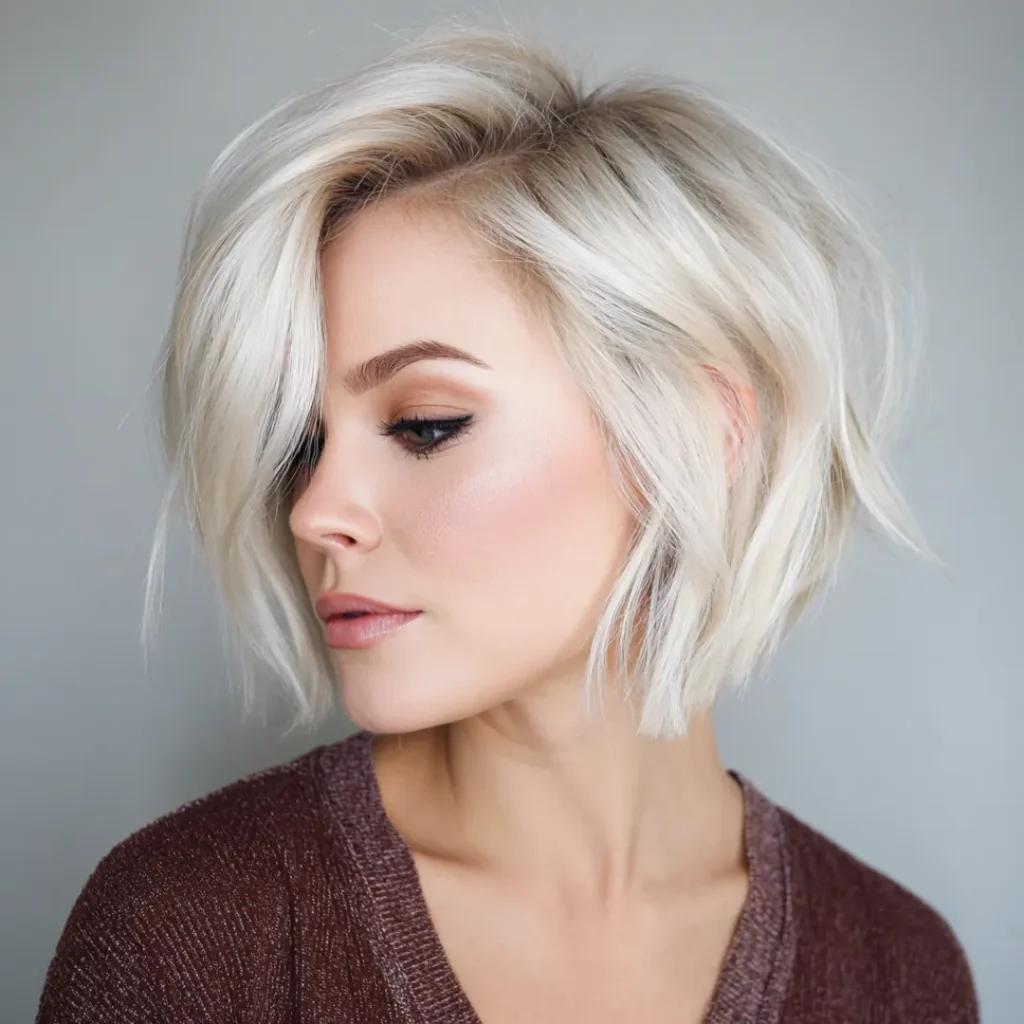
Stacking builds volume and lift specifically at the back of the head, with shorter layers underneath pushing the longer top layers outward, which creates a rounded, dimensional shape from behind while the front stays longer and softer. This tends to work well on thicker or straighter hair that has enough weight to hold the stacked shape rather than falling flat. The structure depends on the back staying properly cut, so nape trims matter here more than with a less structured bob: letting the back grow out past a few weeks tends to soften the shape more noticeably than it would on other styles.
The Wolf Lob

This pairs the general length of a lob with wolf-cut style layering: choppy, heavily textured layers combined with curtain bangs, aiming for a rougher, more undone finish than a standard layered lob. It tends to suit medium to thick hair with some natural wave or curl, since straight, fine hair may not have enough texture to hold the choppy separation without help. Letting hair air-dry mostly before diffusing, rather than diffusing from fully wet, tends to work with the natural texture rather than fighting it.
The Sleek Blowout Bob
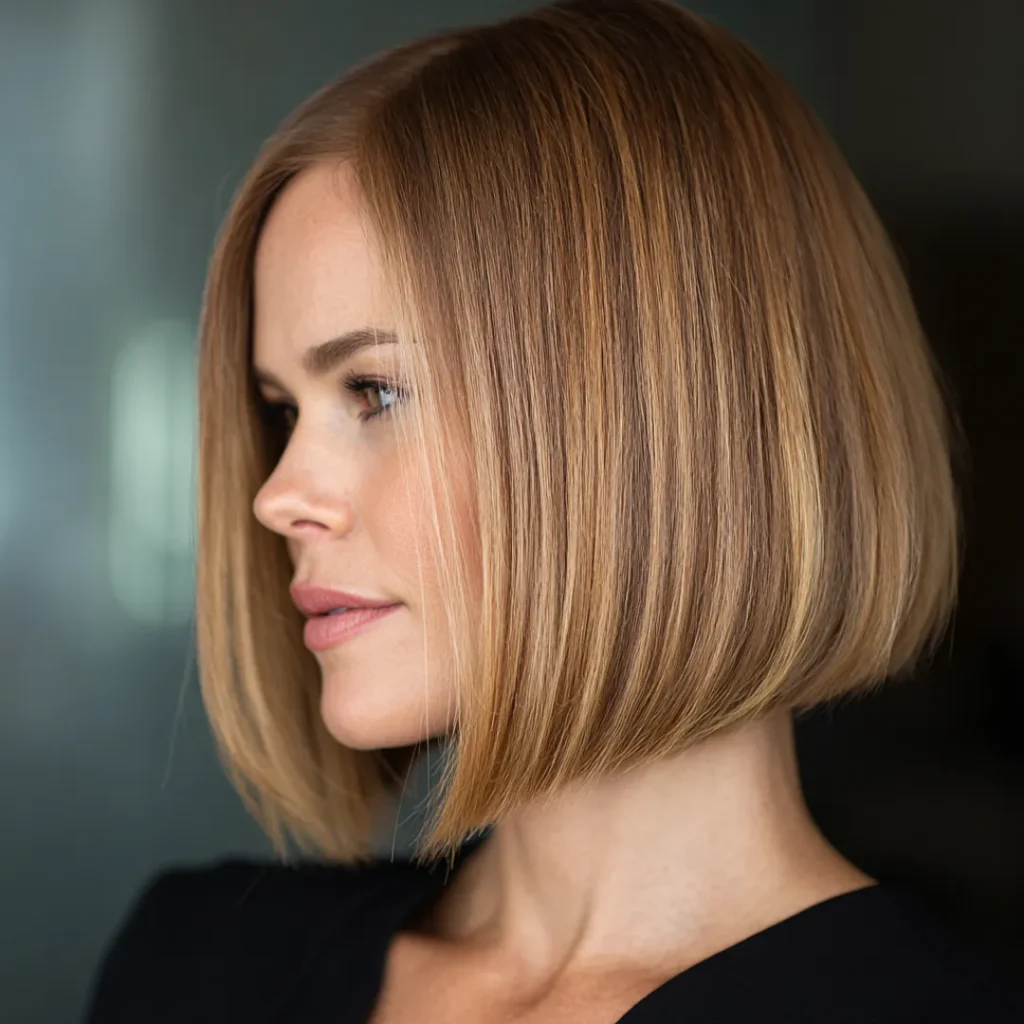
This is a styling method more than a distinct cut: a shoulder or collarbone-length bob blown smooth with a paddle brush and heat protectant, then finished with a flat iron on the ends. It generally suits fine to medium straight hair best, since achieving true smoothness on coarser or more textured hair takes more time and product. A gloss treatment can extend the smooth finish and cut down blow-dry time somewhat between salon visits, though it’s a maintenance add-on rather than something that changes the underlying cut.
The Collarbone Bob With Face-Framing Layers
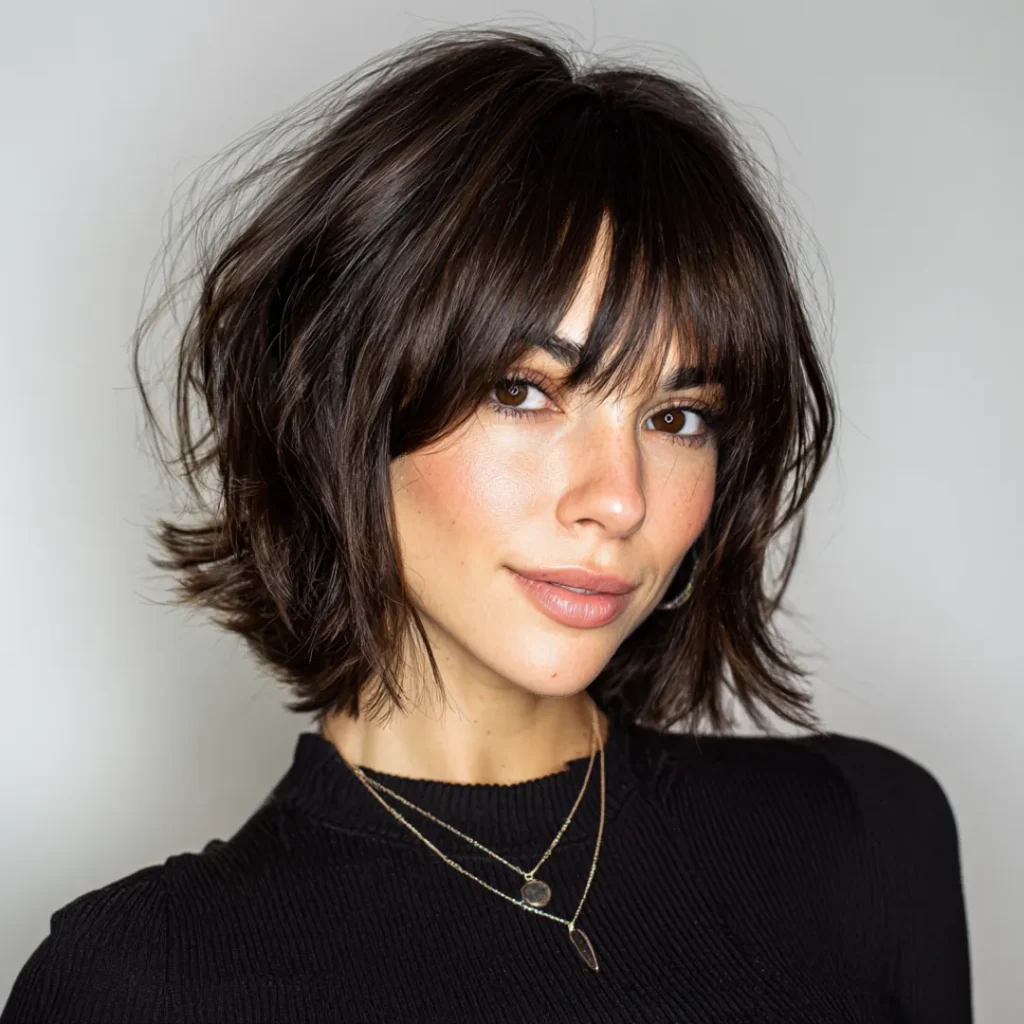
Face-framing layers are a more limited technique than full layering throughout the cut: two or three strategically placed layers around the face add movement near the cheekbones without reducing the weight along the rest of the perimeter. This distinction matters for fine hair in particular, since it allows some softness at the front without thinning out the overall look. Keeping the shortest face-framing layer no shorter than cheekbone length tends to preserve more of the visual weight than a shorter, more dramatic layer would.
The Balayage-Ready Lob
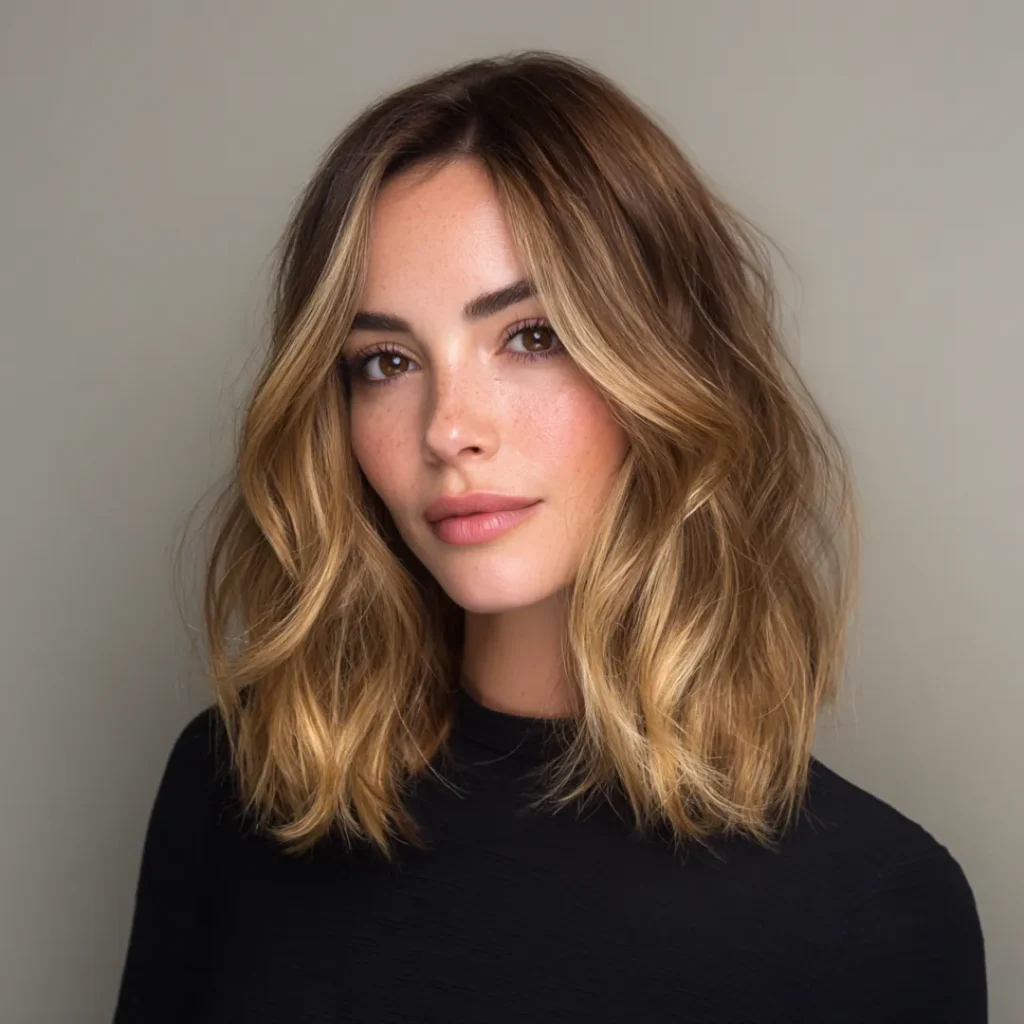
Balayage is a color technique, not a haircut, and a collarbone-length lob simply happens to display it well, since the length and movement of the cut let the hand-painted color transition show clearly from root to tip. This is worth separating clearly from the haircut itself: any lob-length cut can carry balayage, and choosing this option is really a color decision layered onto whichever lob structure you’ve already picked. Highlights placed a shade or two lighter than your base tend to look more naturally blended than a high-contrast placement, though that’s a matter of personal preference as much as anything else.
The Choppy Pixie-Bob Hybrid
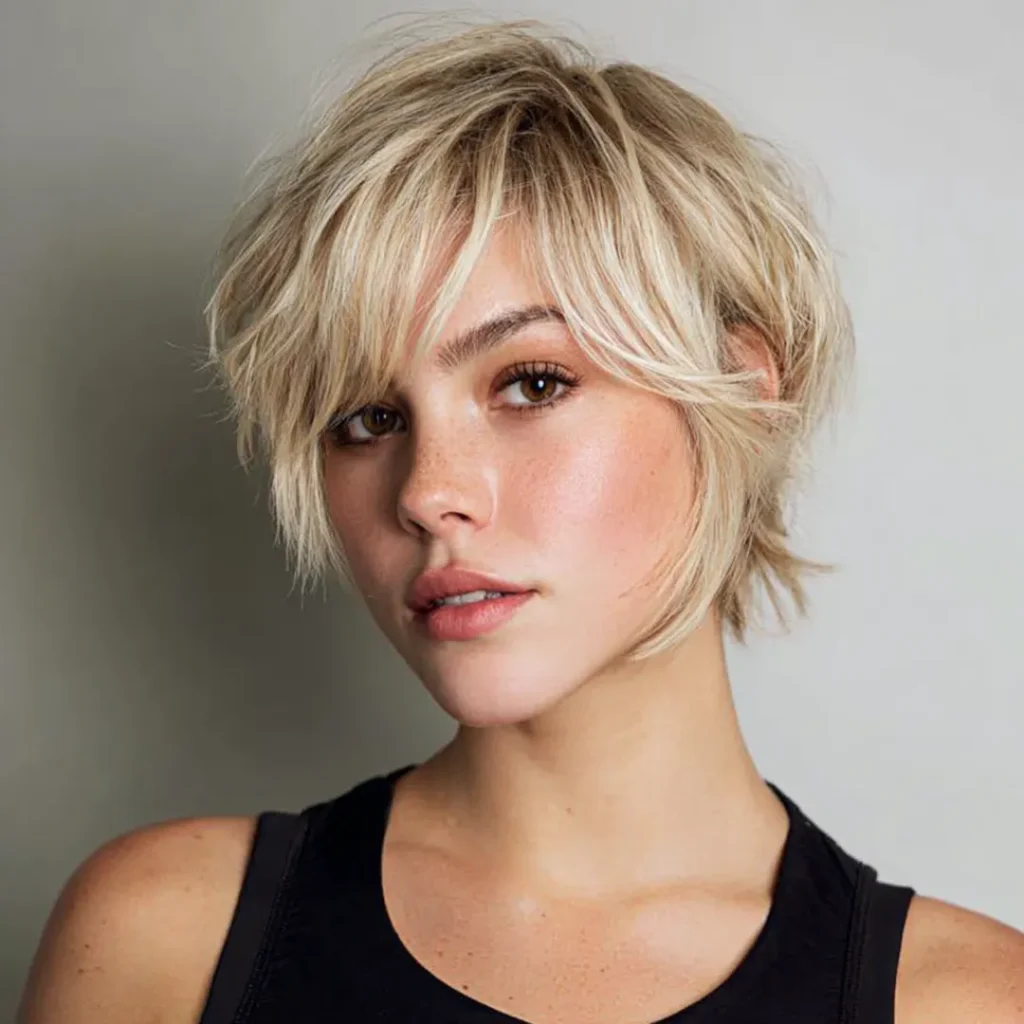
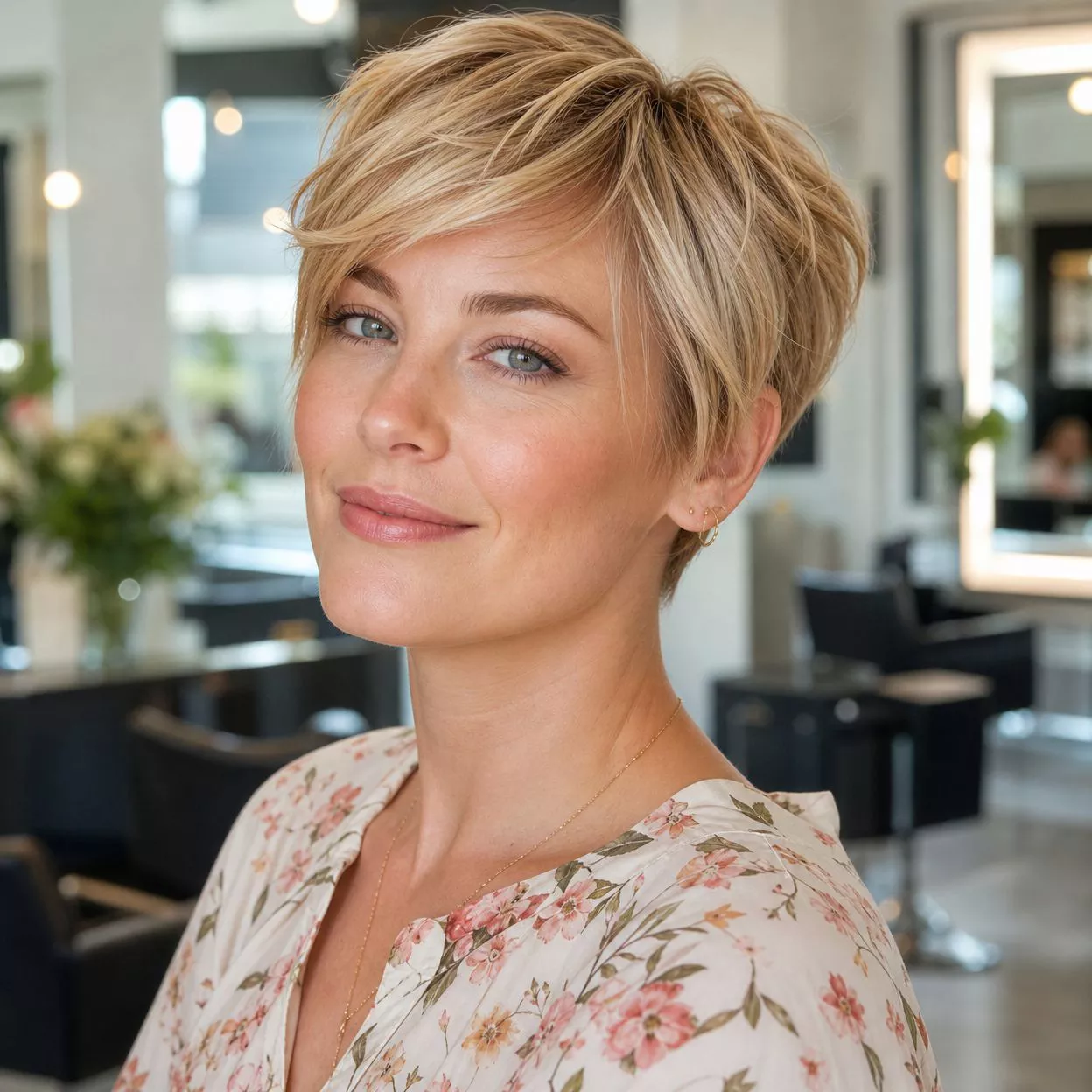
Sometimes called a bixie, this sits just below the ear with choppy, textured layers, landing between a pixie and a bob in both length and attitude. It has enough length to tuck behind the ear or style a few different ways, which gives it more flexibility than a true pixie while keeping a shorter, bolder silhouette than a standard bob. A matte clay product tends to define the choppy texture better than a creamy one, which can weigh the shorter layers down.
The Sleek Bob With Blunt Fringe
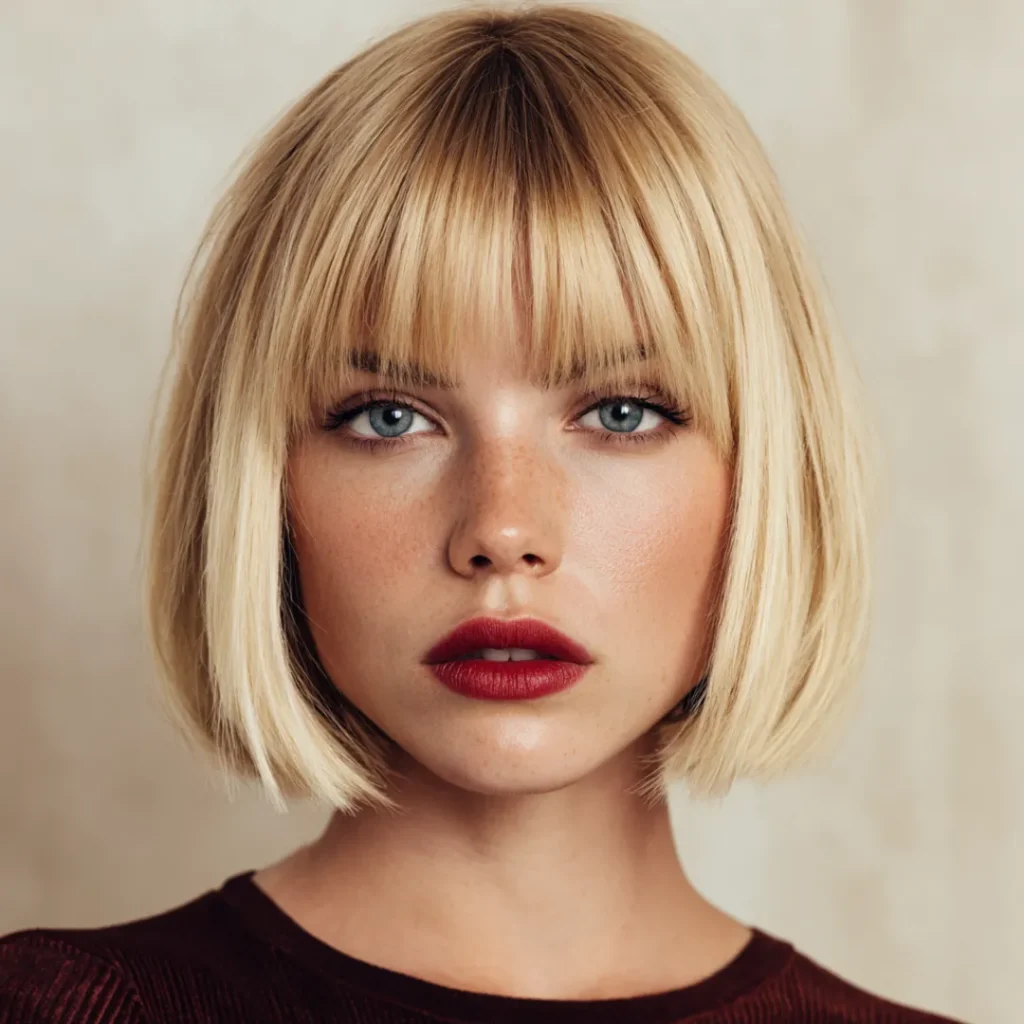
A full, blunt fringe paired with a jaw-length bob creates two strong horizontal lines: one at the fringe and one at the perimeter. This is a fairly high-commitment combination, since a full fringe needs enough density at the hairline to look intentional and tends to need trimming more frequently than curtain bangs or a wispy fringe, given how noticeably even a small amount of growth changes its position relative to the eyebrows.
The Bob With Curtain Bangs for Round Faces
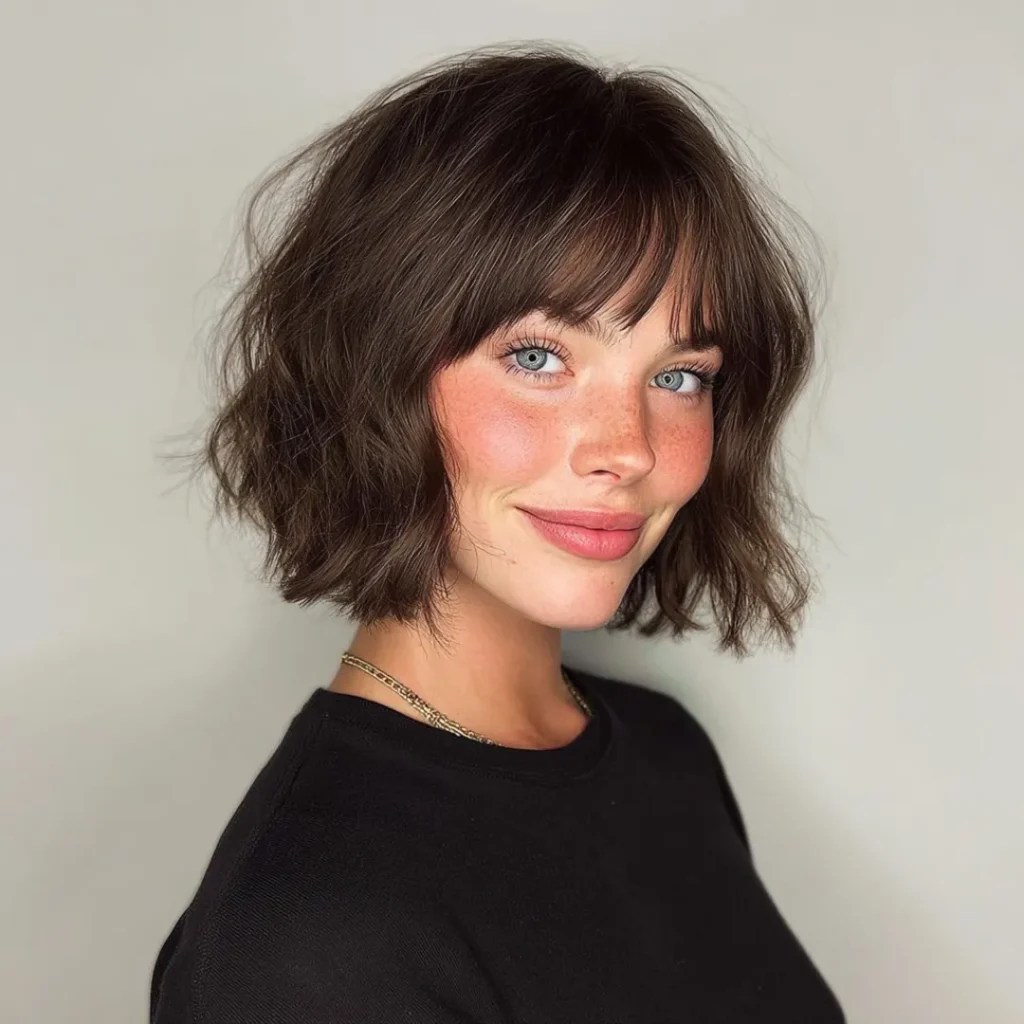
This pairs a chin-length bob with longer curtain bangs starting around the cheekbones, which creates more vertical line through the face than a shorter, more rounded bang would. Whether that reads as more flattering depends on personal preference as much as face shape, but it’s a reasonable version to consider if you want bangs that add length rather than width. As with the standalone Curtain Bangs Bob entry above, how well these hold their shape comes down to your natural part more than the length of the bang itself.
The Tousled Shoulder Bob
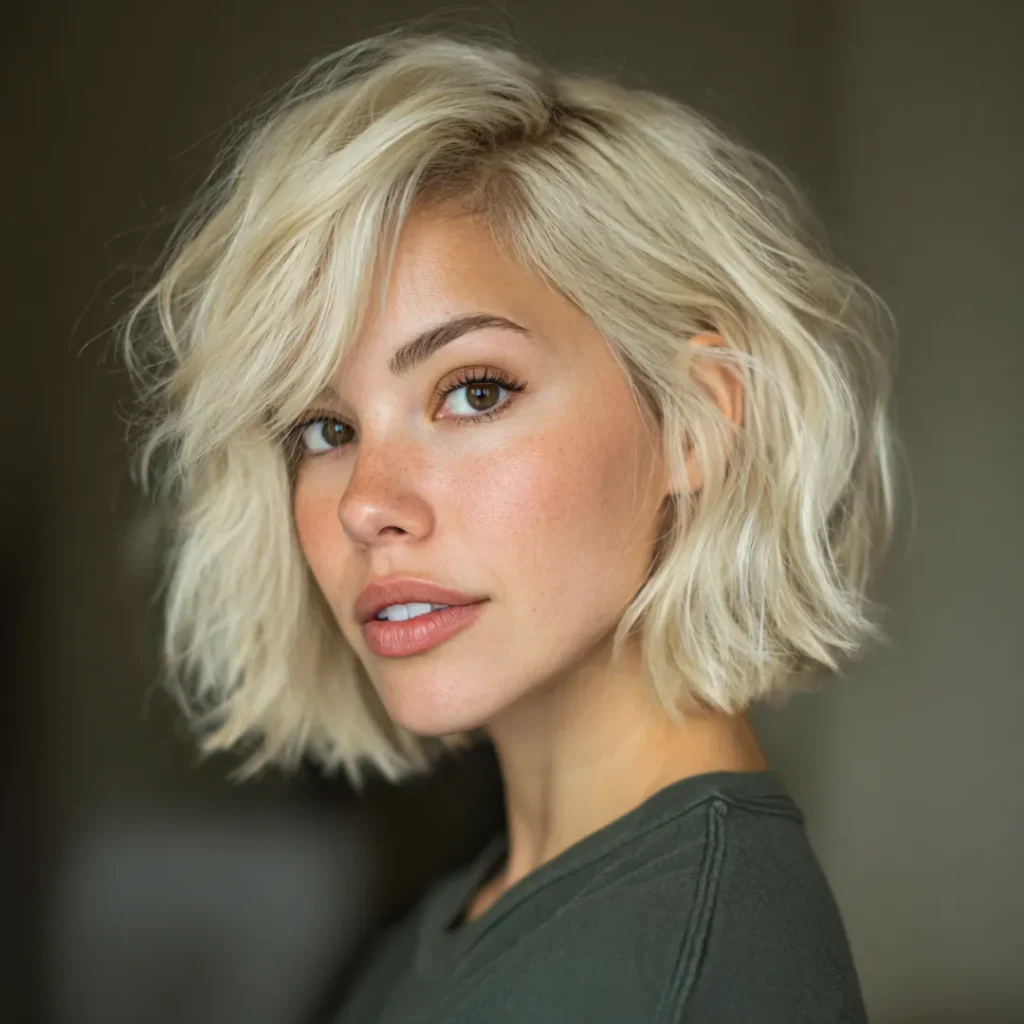
Landing at the shoulder with soft waves and a slightly undone finish, this length has a practical quirk worth knowing about: hair often flips outward right where it meets the shoulder, which affects how waves or texture sit. Some people like the flip; others find it fights the tousled look they’re going for and ask their stylist to cut slightly above or below the shoulder to avoid it. Sleeping with slightly damp hair in a loose bun can create some of this texture overnight without heat, though results vary a fair amount depending on your natural texture to begin with.
The Low-Maintenance Bob for Women Over 40
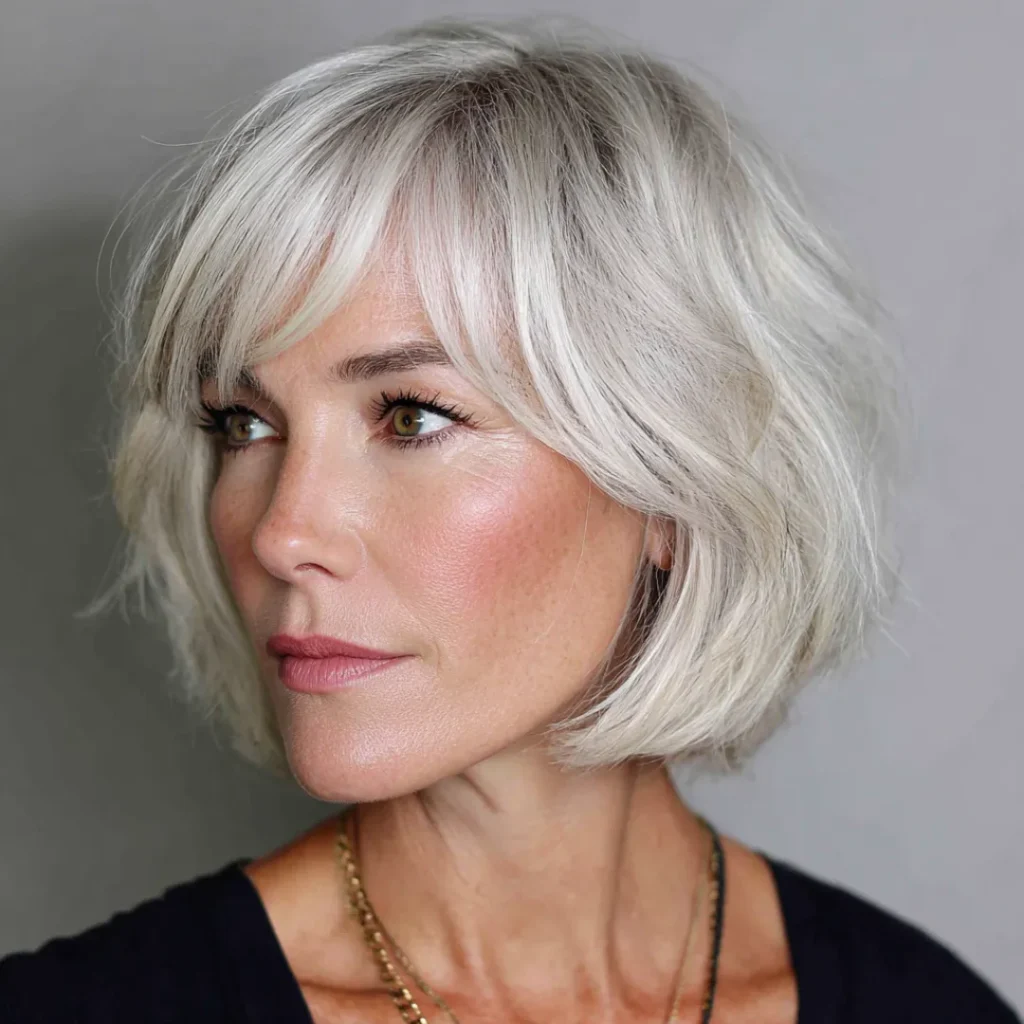
This isn’t really a separate structure so much as a general approach: a collarbone-length bob with soft internal layers, a slight inward bevel at the ends, and optional face-framing pieces, aimed at working with texture changes rather than fighting them. The appeal for many people at this stage isn’t the age bracket itself but the practical goal, less daily heat styling and a shape that adapts reasonably well as hair evolves. A bevel cut, where the ends are shaped to curl slightly inward as part of the cut itself, can reduce the need for a round brush to achieve that same curve every morning.
How to Narrow Down Your Bob Choices
Fine but dense hair. You likely have more flexibility than you’d expect, since there’s enough hair to support some layering without looking sparse. The Curtain Bangs Bob, Lob With Invisible Layers, or Collarbone Bob With Face-Framing Layers can all add movement without stripping visual weight.
Fine and low-density hair. A more solid, less-layered perimeter tends to hold up better here. The Glass Bob, Blunt Chin-Length Bob, or Rounded Bob rely on an intact edge rather than layering to create the appearance of fullness.
Thick or dense hair. You generally have more room to remove weight without the cut looking thin. The Stacked Bob, Shaggy Bob, or Wolf Lob all use layering or texture to manage bulk that a blunt cut might leave feeling heavy.
Straight hair. Structured, precise shapes like the Glass Bob, A-Line Bob, or Sleek Blowout Bob tend to hold their line with less daily intervention than textured or wavy styles built for movement.
Wavy hair. The Shaggy Bob, Wolf Lob, or Undone French Bob can lean into your existing texture rather than fighting it, generally needing less heat styling to look finished.
Curly or coily hair. The Cloud Bob is specifically built around curl-by-curl cutting, and length decisions should generally wait until the hair is fully dry to account for shrinkage.
Hair that needs to air-dry most days. Look for cuts less dependent on a blow-dry or iron to look finished: the Cloud Bob, Undone French Bob, or Tousled Shoulder Bob tend to be more forgiving in this respect.
Someone who regularly blow-dries. The Sleek Blowout Bob or Glass Bob are built around that routine and generally look their best with it.
Someone who wants to still tie hair back. Longer lengths with less aggressive face-framing, like the Soft Wavy Lob or Balayage-Ready Lob, generally stay tidier pulled back than a cut with a lot of shorter layers around the face.
Someone who wants a strong, defined perimeter. The Blunt Chin-Length Bob, Glass Bob, or A-Line Bob all rely on a clean edge as the main visual feature.
Someone who wants more movement and less structure. The Textured Bob With Wispy Ends, Shaggy Bob, or Wolf Lob prioritize separation and texture over a clean line.
Someone who dislikes frequent trims. Softer, less precise shapes like the Undone French Bob or Rounded Bob tend to grow out more gracefully than a sharp perimeter or a full blunt fringe.
Someone willing to commit to bangs. Curtain bangs, as in several entries above, ask less of your trim schedule than a full, blunt fringe like the one in the Sleek Bob With Blunt Fringe.
What Can Go Wrong
- Removing too much weight from low-density hair. Heavy layering can leave the ends looking thin rather than lighter, especially on hair that doesn’t have much density to spare.
- Layers starting too high up the length. This takes weight out of areas that weren’t the problem and can leave less density where it’s actually needed, near the ends.
- Picking a reference photo that needs more daily styling than you’re willing to do. A lot of the “effortless” looks above are styled that way for the photo; on a different texture, that same result may need a blow-dryer or wand.
- Ignoring natural curl shrinkage. A length cut on wet or stretched curls can turn out shorter than expected once fully dry.
- Cutting bangs against your natural part. This tends to create ongoing friction between how the bang was cut and how your hair actually wants to sit.
- Choosing a sharp perimeter when frequent trims aren’t realistic for you. Blunt lines and precise fringes generally show growth sooner than softer, layered shapes.
- Assuming “low maintenance” means zero styling. It more often means the cut is forgiving of minimal styling, not that it requires none at all.
- Copying a photo without accounting for your own density or texture. The same haircut can look and behave differently depending on what you’re starting with.
What to Ask Before Your Bob Is Cut
- Where will the perimeter sit once my hair is dry, not right after cutting?
- How much weight are we actually removing?
- Where will the shortest layer start, if there is one?
- Will my natural wave or curl change the finished length?
- How will this grow out over the next couple of months?
- Can I still tie this back comfortably?
- How much daily styling will this shape realistically need?
- Would it make sense to start with less layering and adjust at a later visit?
FAQ
Where to Go From Here
There isn’t one bob that works the same way on every head, and the 23 versions above show just how much a single length category can vary depending on the perimeter, the layering, and the texture it’s cut for. The most useful next step is being honest about your hair’s actual density and texture, not just which photo you like best, and bringing both to your next consultation.