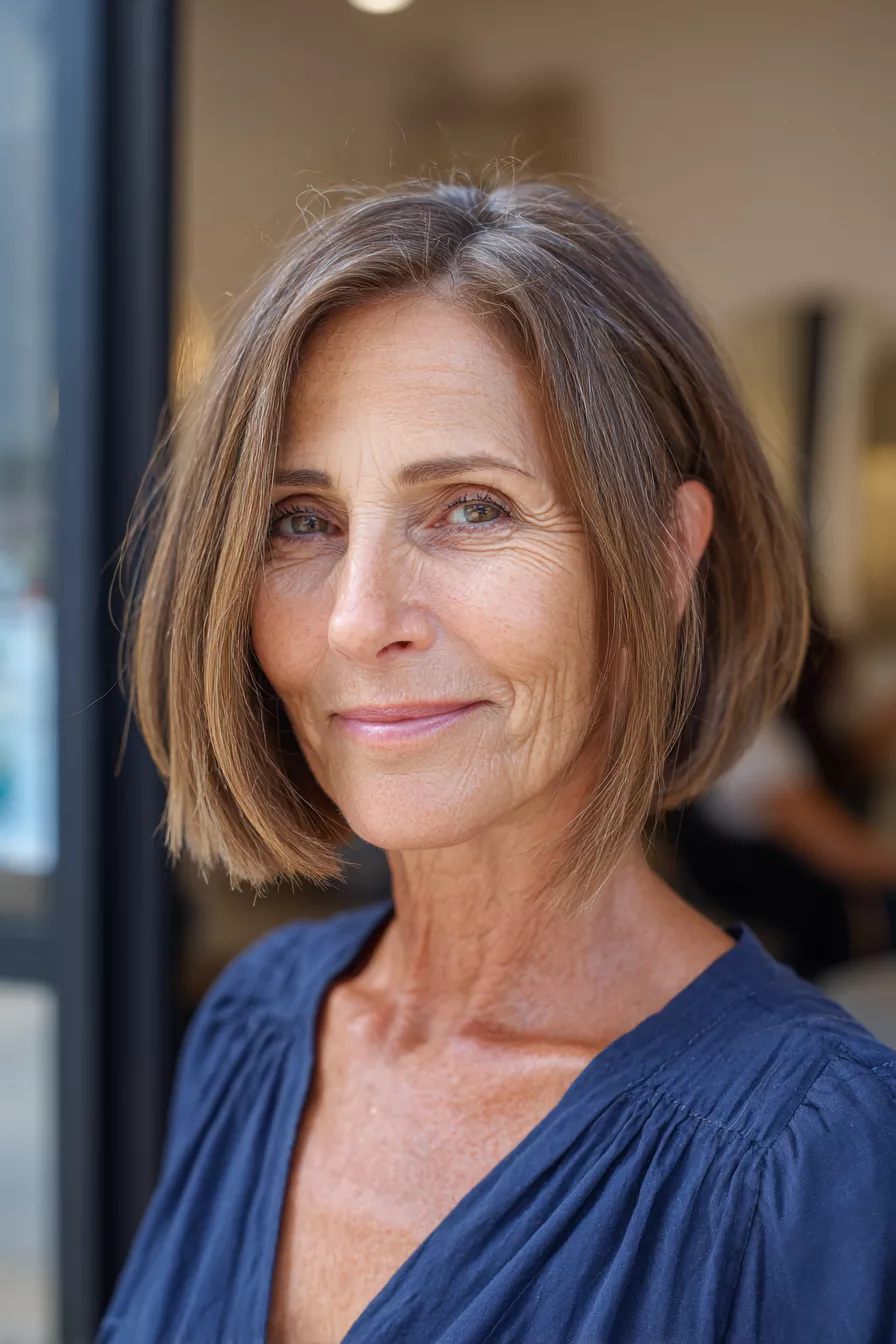
25 Short Hairstyles for Women Over 60 That Look Ageless
You ask for volume, some texture, and a cut that won’t take twenty minutes every morning. It looks great when you leave the salon, freshly blow-dried under flattering light by someone who does this all day. Then you wash it yourself for the first time, and by lunch it has either gone flat or puffed out in a direction nobody mentioned.
That gap between the salon chair and your own bathroom mirror is the real problem with short hair after 60. Most of the time it comes down to three questions that rarely get asked before the cutting starts: what your hair’s texture is now (not what it was twenty years ago), how many minutes you’ll give it each morning, and whether your face needs height, width, or neither. Gray and silver hair adds a fourth. It reflects light differently, it’s often coarser than pigmented hair, and it shows every uneven layer a stylist leaves behind.
The 25 cuts below are specific styles, not a mood board. For each one, we’ve said who it suits, who should skip it, and what it takes to keep it looking right.
Before You Book: Five Things Worth Settling First
Your hair’s texture today, not at 40. Hair changes with age. Straight hair can pick up a wave and fine hair can turn wiry, so cut for what’s growing out of your head now.
How long you’ll spend styling. Three minutes and ten minutes produce very different results. Be honest with yourself rather than optimistic.
What you’re doing with the gray. Keeping it natural, toning it, or coloring over it all change how heavily a stylist should layer, because gray shows every cut line.
What your face shape needs. Round faces usually want height. Long faces want width. Square faces soften with diagonal lines or curves.
How often you can get to the salon. Short cuts lose their shape faster than long hair. If a visit every five weeks isn’t realistic, let that guide your choice from the start.
Soft Layered Pixie
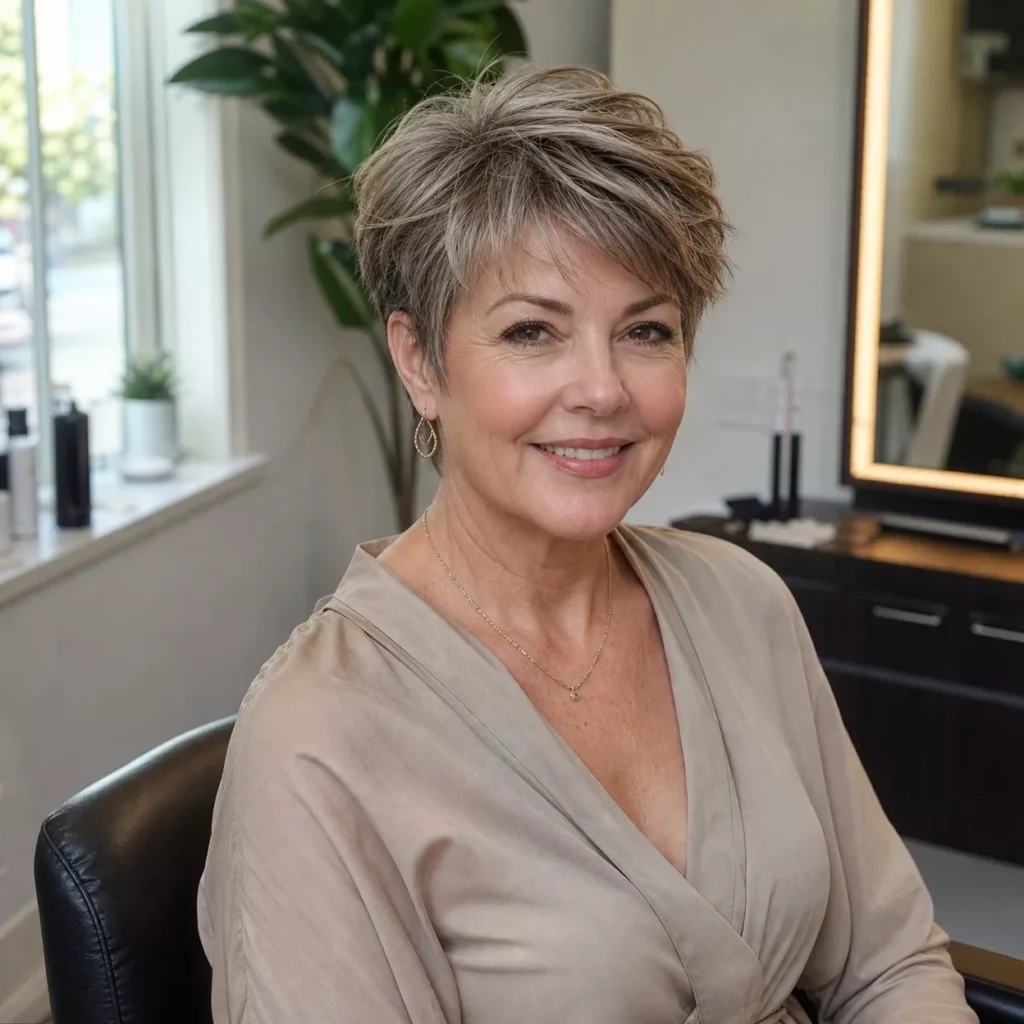
Short at the nape and sides, a little longer through the crown, with layers softened instead of chopped. That softness matters more than it sounds. Coarse, wiry gray holds a spiky layer far too well, and this cut gives you lift without any of that.
Oval, heart, and oblong faces suit it with little adjustment. On a very round face, ask the stylist to build extra height at the crown, or it can add width. It works best on fine to medium density. If your hair is thick, ask for internal weight to be removed so it sits soft rather than puffy.
What to say in the chair: “Soft pixie with enough length on top to lift it, but blend the layers, don’t chop them.”
Styling is a little mousse at the roots, then a blow-dry forward and up with your fingers. No brush, three or four minutes. Book a trim every four to six weeks. At a mid-range salon that usually runs $40 to $80.
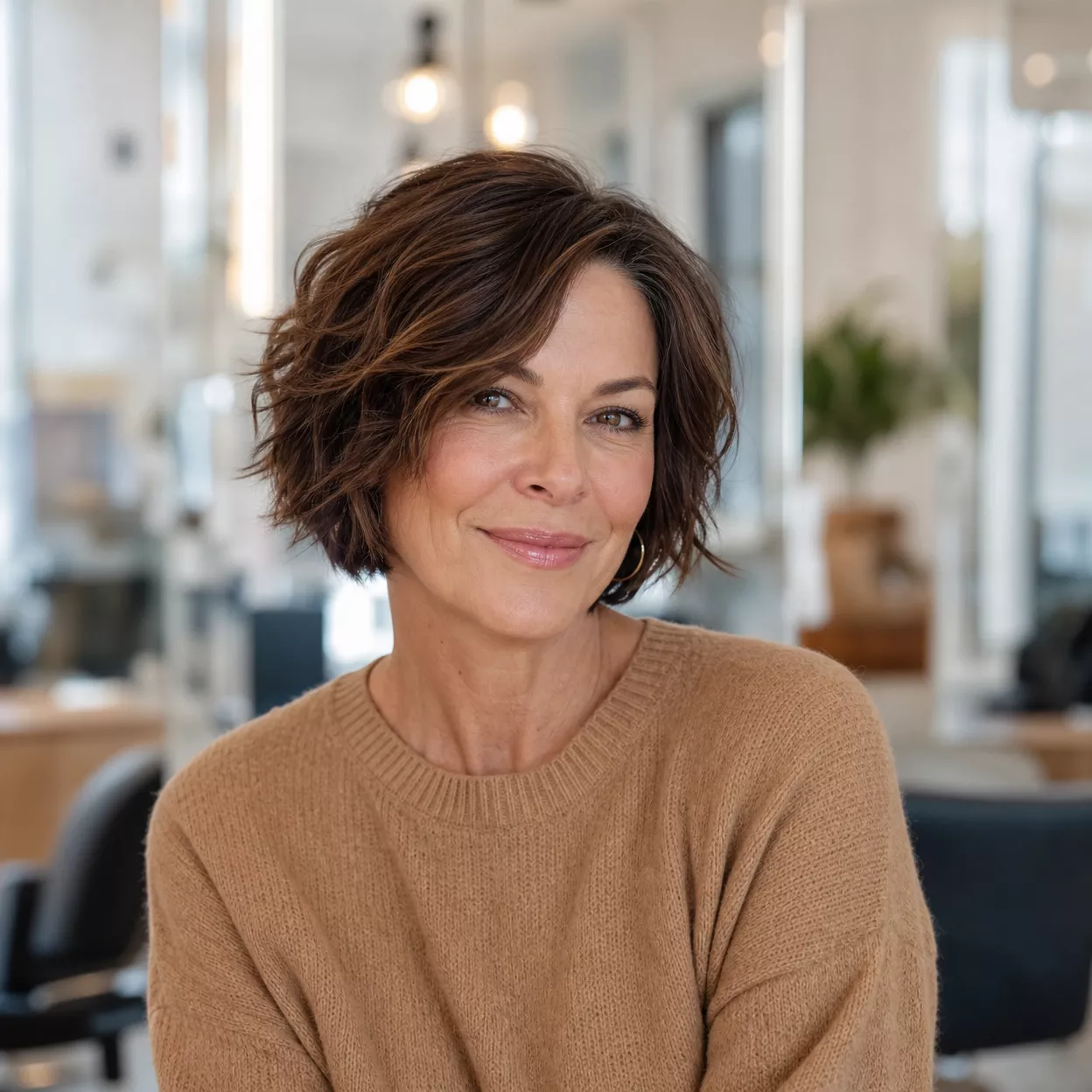
Short Textured Bob
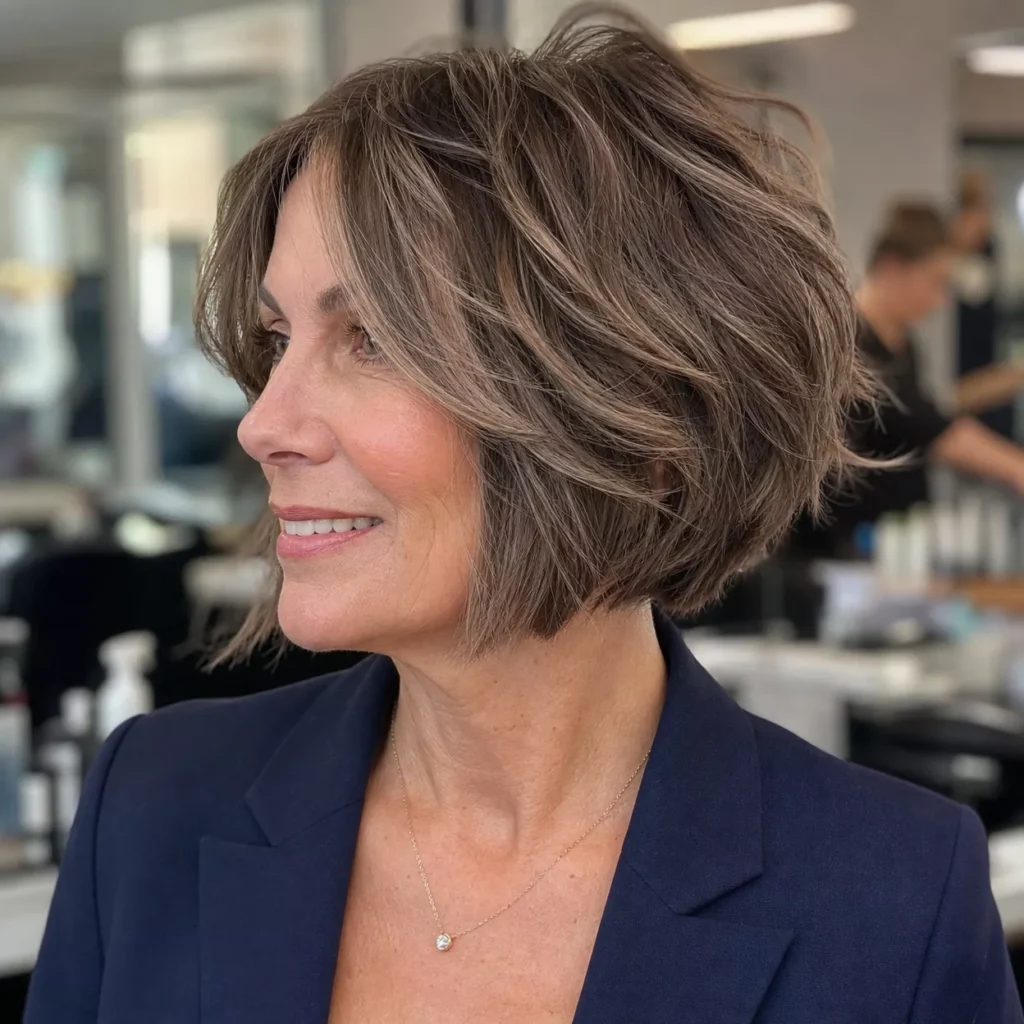
If your hair is straight or has a slight wave, this is one of the most forgiving cuts on the list. It sits at chin length or just above, and the ends are point-cut or razored so they separate instead of forming one heavy line. That separation adds movement and keeps fine or thinning hair from looking flat.
Skip it if your gray came in curlier than your old color. Choppy ends on curly hair land wherever they like, and you’ll spend every morning deciding whether you can live with it.
Textured ends also need more frequent trims than a blunt line. Once they grow out, the deliberate texture starts to look like split ends.
Short Shag with Soft Layers
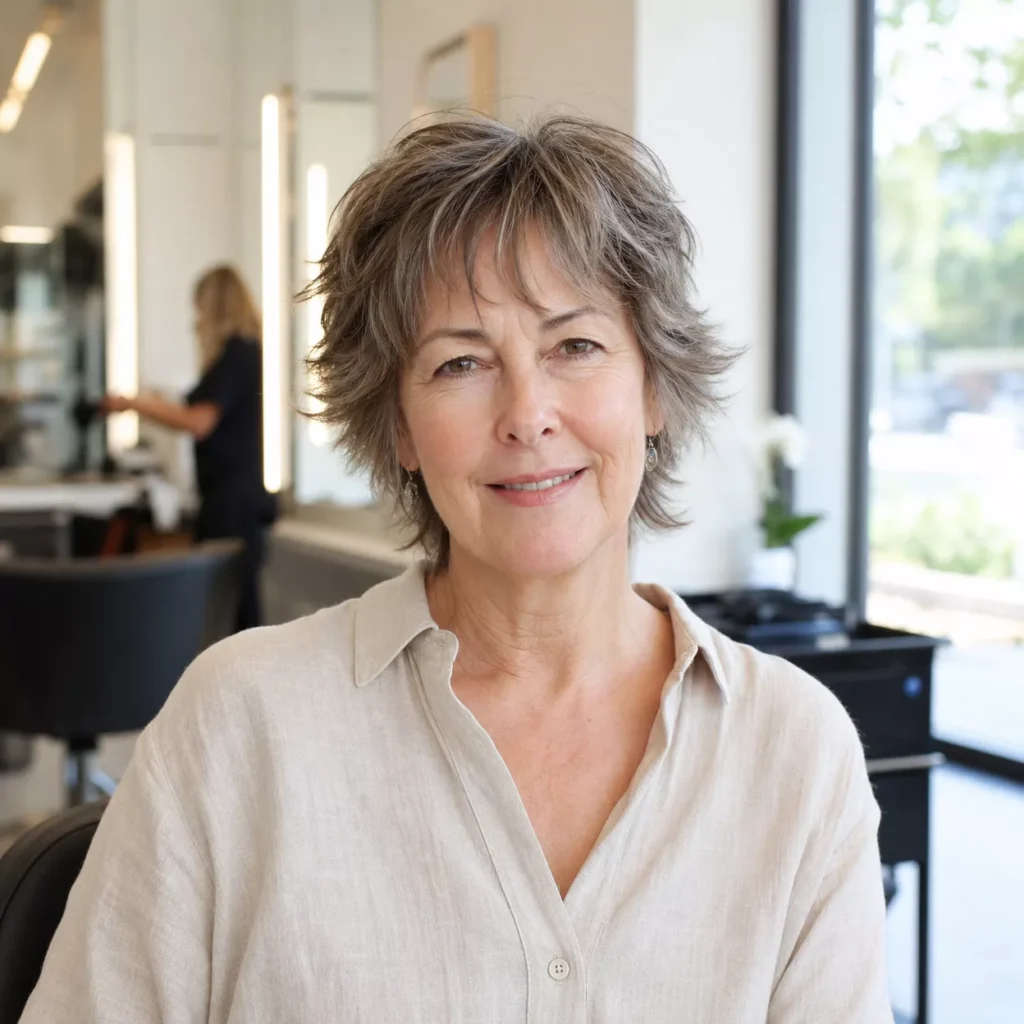
Here’s the catch with a shag: it depends almost entirely on whether your stylist has cut a lot of them. Done badly, you’ve paid for a vague layered bob. Ask to see shags in their portfolio before you book.
Done well, it’s worth the search. Layers sit at several lengths throughout the head, the weight is thinned out, and there are usually soft bangs or face-framing pieces at the front. Because volume is built in at more than one level, it helps a lot once overall density has started to thin.
Styling: light mousse or sea salt spray on damp hair, scrunch, then air-dry or diffuse if you have any wave. Five to seven minutes. Grown-out shag layers still look intentional, so trims every six to eight weeks are usually enough.
Pixie Bob
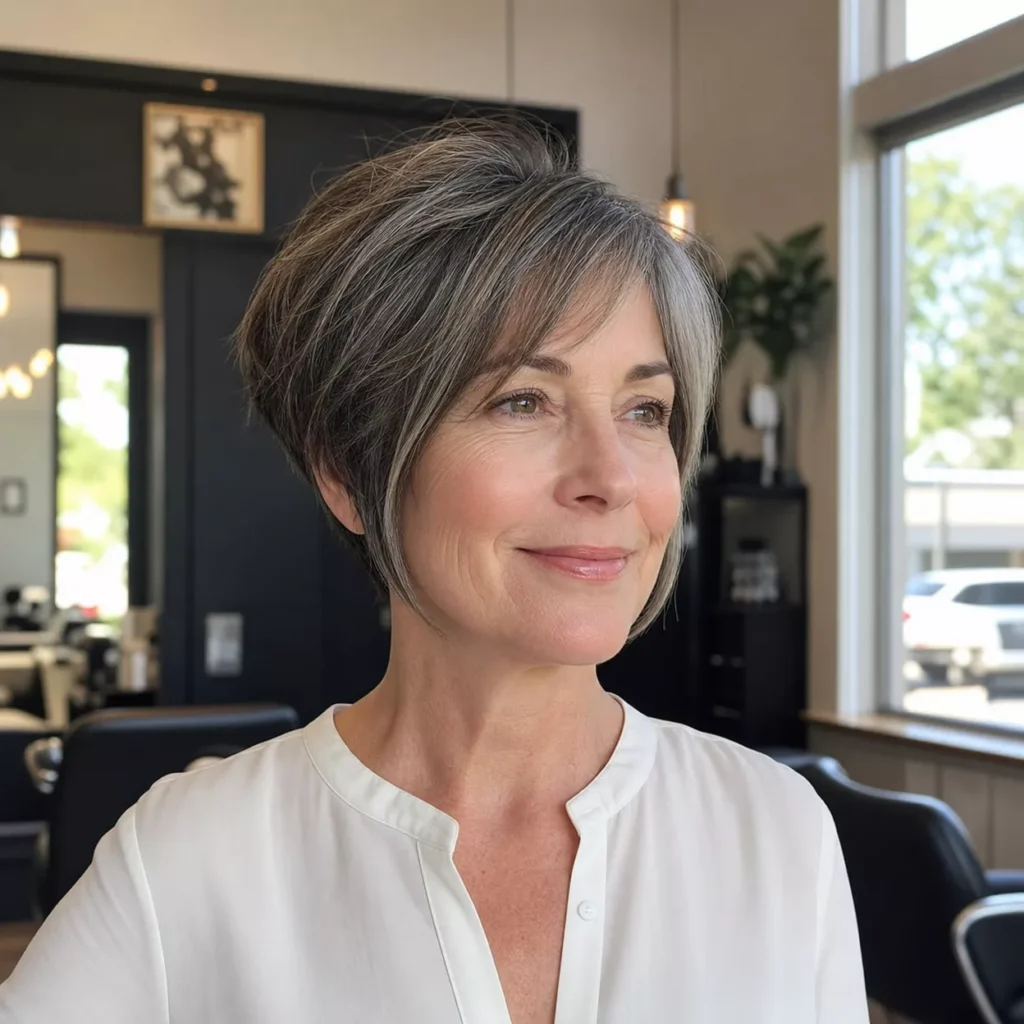
It sits around the earlobe, longer than a pixie and shorter than a bob. You get most of the ease of short hair without going as short as some women are comfortable with.
That in-between length is also its weak point. It’s the most awkward length to grow out of if you change your mind, and there’s usually a rough stretch somewhere between week eight and week fourteen. Better to know that going in.
Short Bob with Curtain Bangs
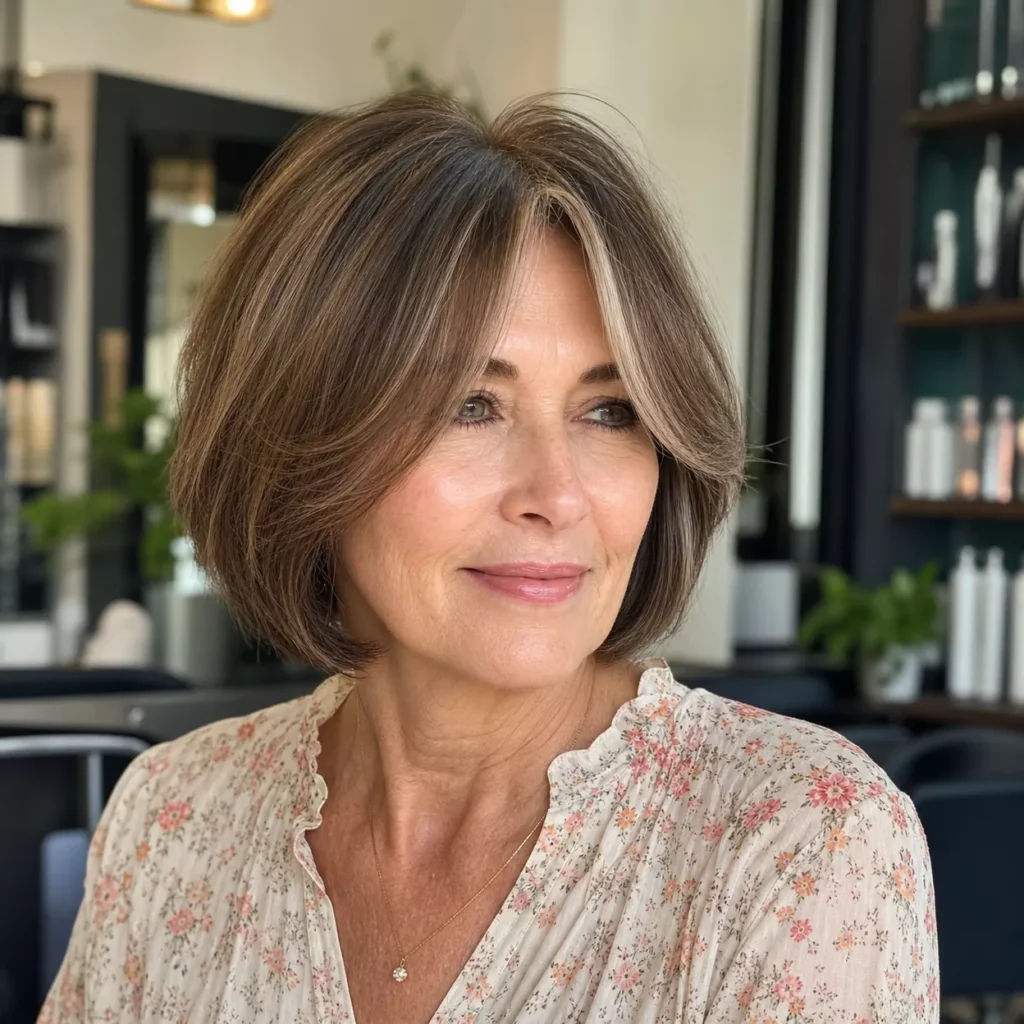
A chin-length or shorter bob with center-parted bangs that sweep out to either side and land near the cheekbones. They soften the forehead and draw the eye upward, which flatters most face shapes.
Before committing, check your front hairline. A strong cowlick will fight a center part every day, and no product or blow-dry technique fixes that for good.
The bangs need their own trim every three to four weeks, between full cuts. Plenty of salons do quick bang trims for free, so ask when you book.
Feathered Short Cut

Soft, light layers that taper and flick outward at the ends. On fine or thinning hair, the feathered edge blurs the outline so sparse areas don’t catch the eye.
Thick hair is the exception. Feathering there piles bulk onto the perimeter, which is the opposite of what you want.
Styling barely counts as a routine: a light mousse or root spray, then a blow-dry with your fingers running through. Two to three minutes.
Short Inverted Bob
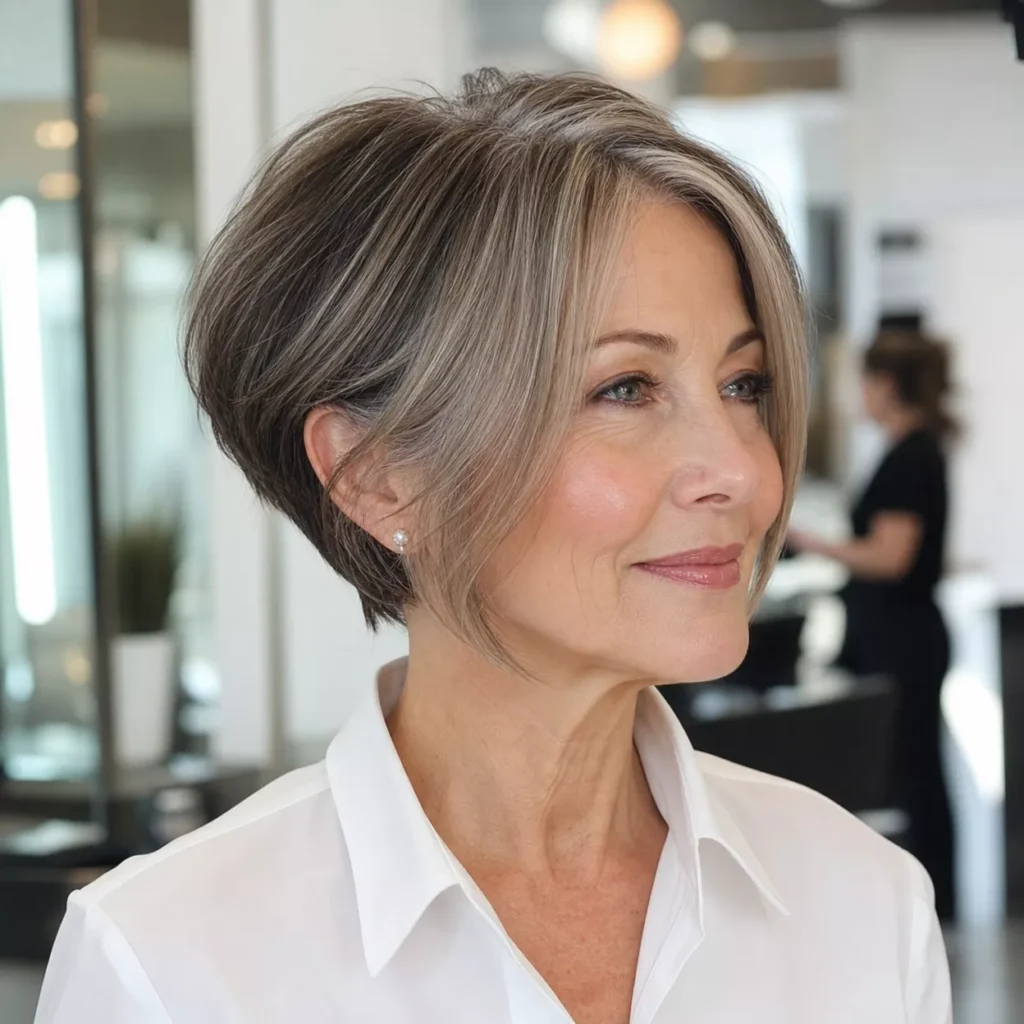
Shorter in back, longer in front, with the back stacked in graduated layers. Those stacked layers build fullness right at the nape, which is exactly where fine hair tends to lie flat.
It looks best on straight or slightly wavy hair. Curly hair can make the stacked section balloon outward and throw the whole shape off balance. Thick hair can also get bulky in the back unless the stylist thins those layers properly.
Plan on a trim every four to five weeks. Past six, the graduation softens and the cut loses the definition that made it worth getting.
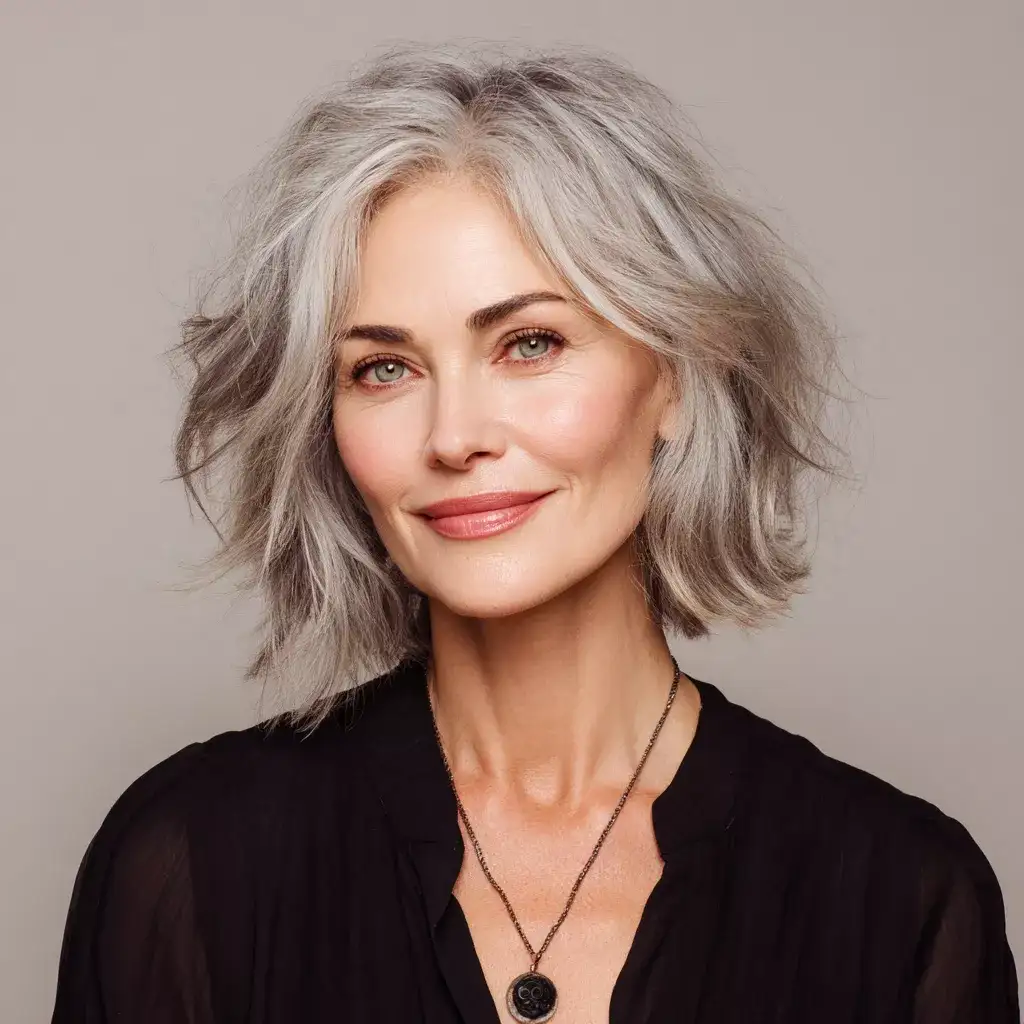
Soft Silver Pixie
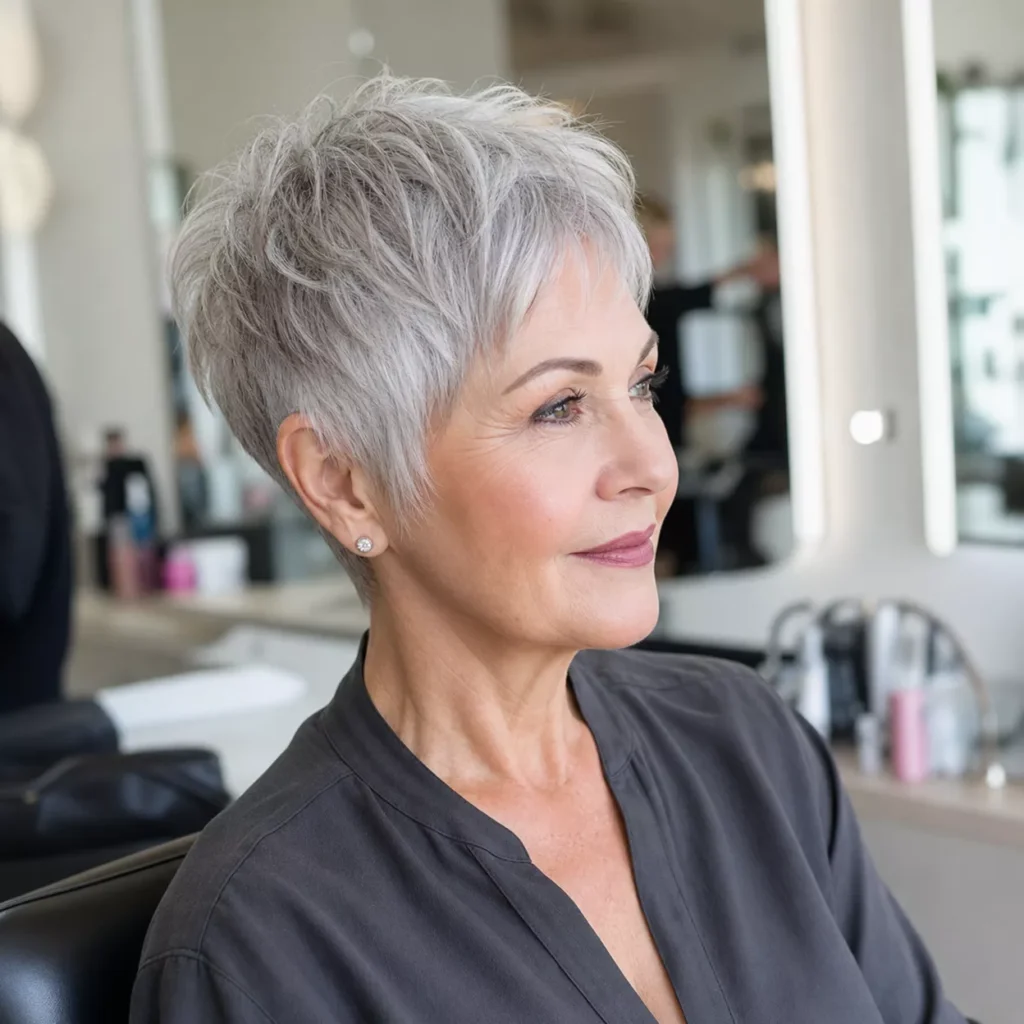
This is a pixie cut with natural silver or gray in mind: gentle layers and a polished finish rather than a choppy one. Cut this way, silver looks like a style decision.
Keep it soft. A spiky, heavily textured pixie on silver can look harsh, especially under indoor lighting. Soft layers plus a little shine from a finishing cream keep the whole look warm.
Short Layered Bob with Side Part
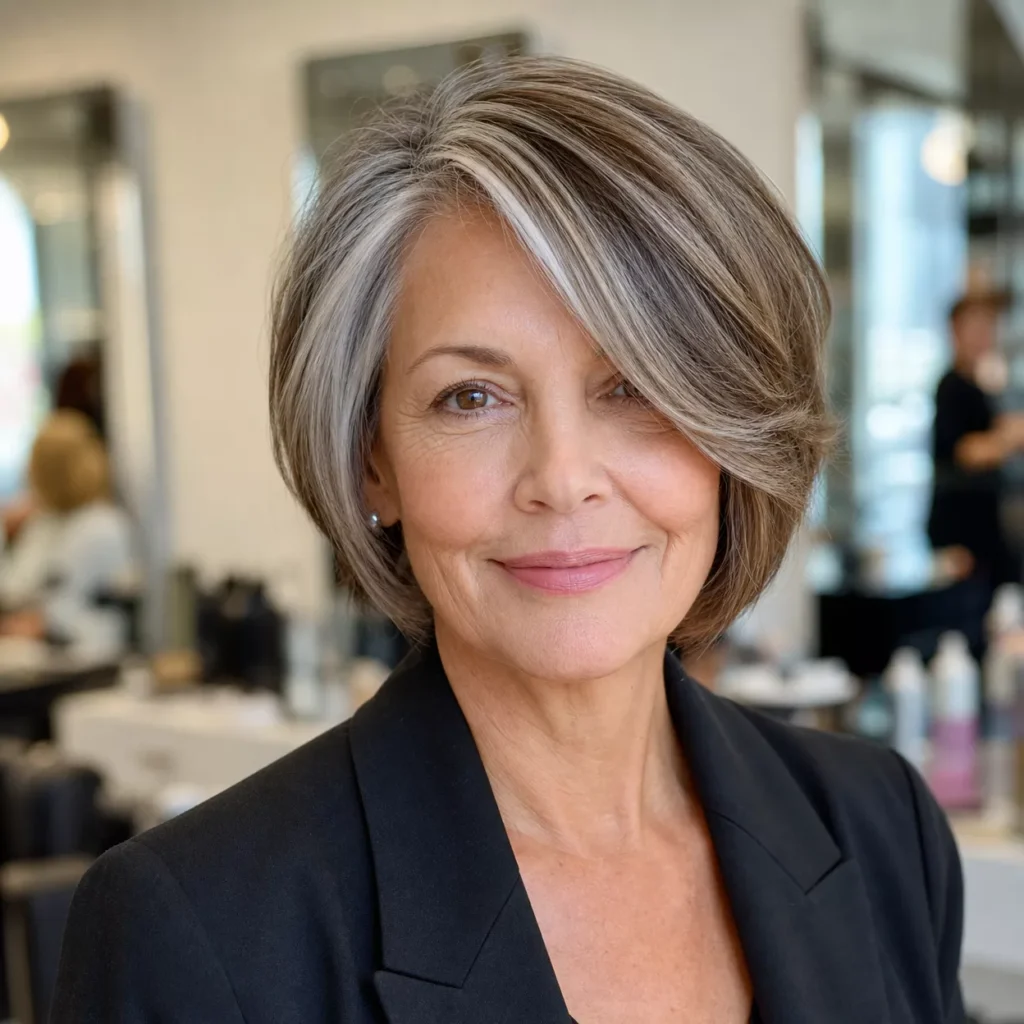
A chin-length layered bob worn with a deep side part. That one change puts a diagonal line across the face. It suits most shapes and helps round and square faces in particular, since a center part tends to widen them.
Expect four to five minutes with a round brush and a blow-dryer. You can switch to a center part on lazy days, but you’ll lose the angle that makes this version work.
Choppy Short Cut for Thick Hair
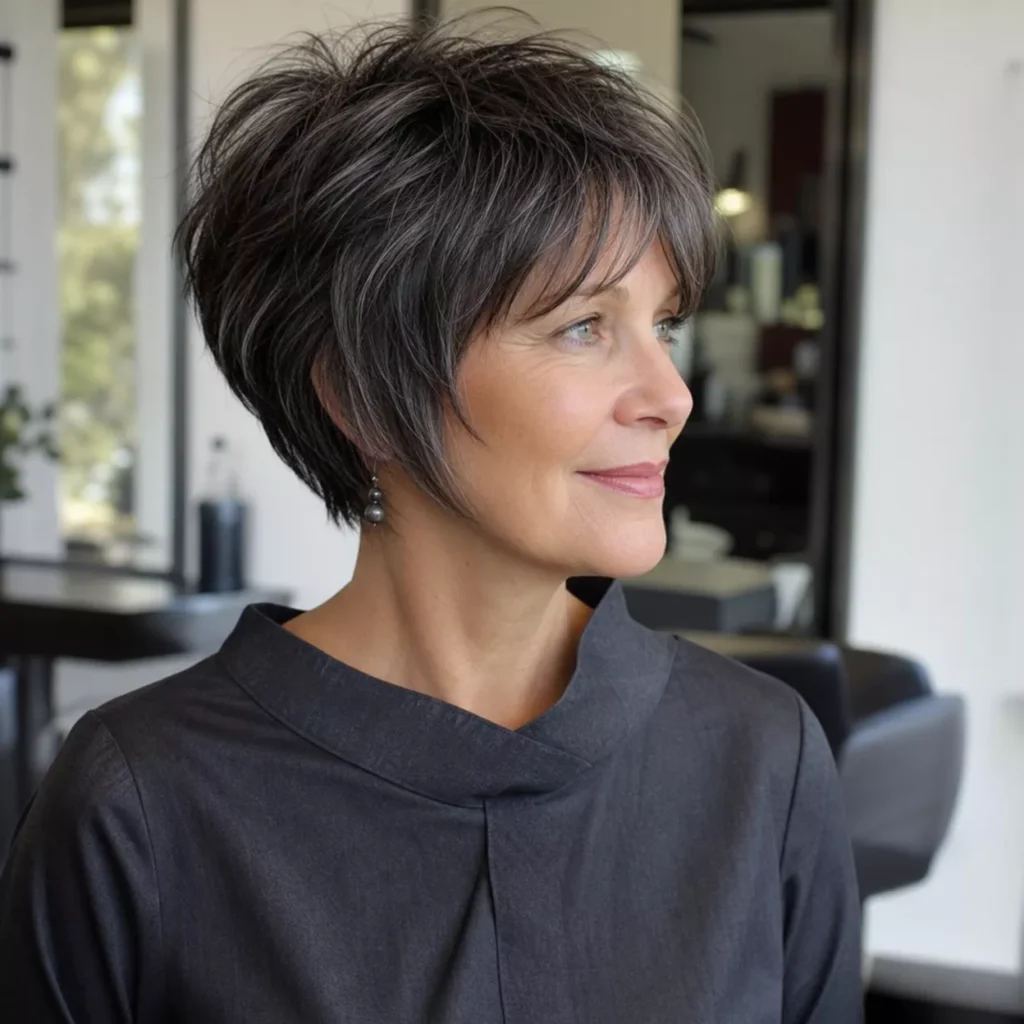
Thick hair often gets coarser as it grays, and if enough weight isn’t taken out, it grows outward instead of lying close to the head. This cut handles that with heavy internal layering, thinning, and choppy, separated ends.
The most common way it fails is under-thinning. The cut looks fine when you leave the salon and turns unmanageable by day three, after you’ve washed and dried it yourself. You need a stylist willing to take out real bulk.
What to say in the chair: “My hair is thick and it tends to expand. Take out more weight than you think you should.”
Short Wavy Bob
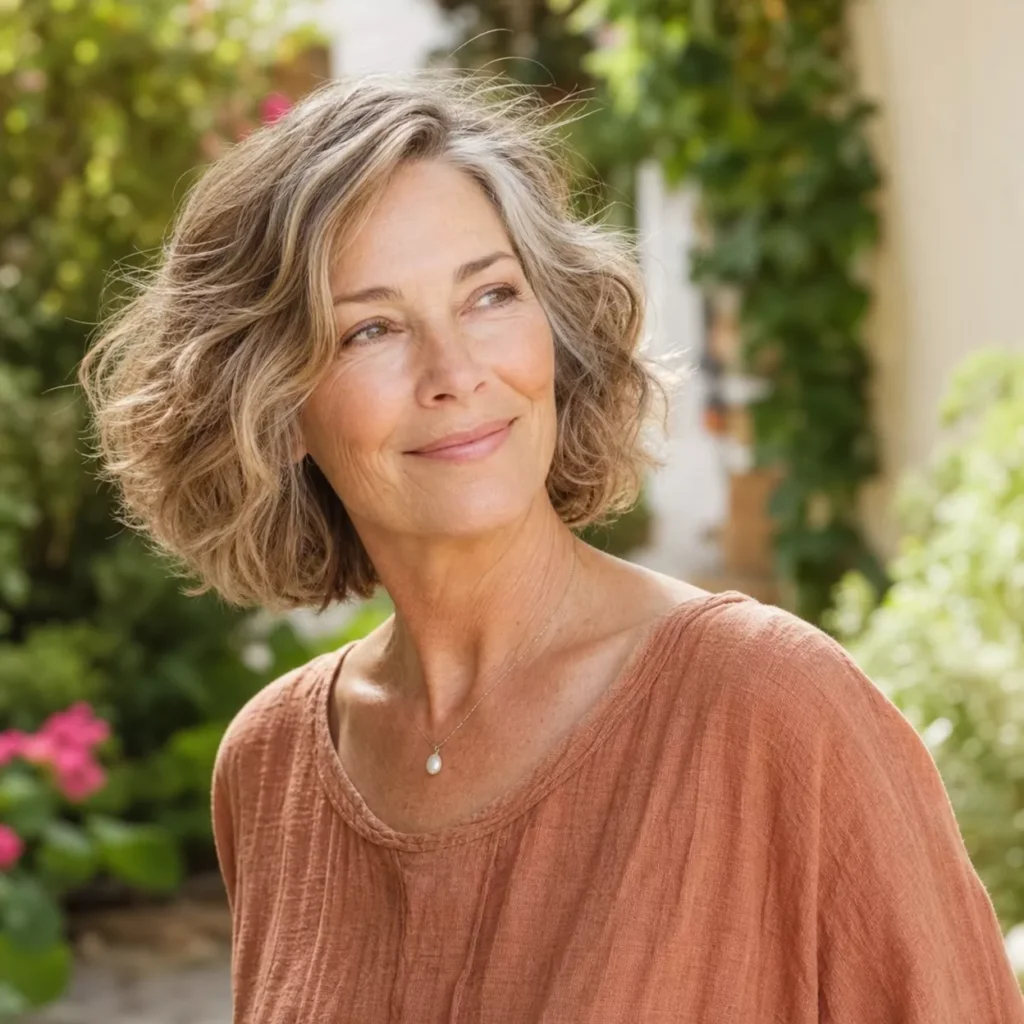
Cut at chin length or shorter so your natural wave can show instead of being fought. When it works, the wave does most of the styling and you barely need heat.
It suits type 2A to 2C waves best. Looser waves may need a curling iron to look defined. Tighter waves shrink more than you’d expect as they dry, so make sure your stylist cuts it dry or leaves length for shrinkage.
Styling: curl cream on soaking wet hair, scrunch upward, then air-dry or diffuse on low. Five minutes, then hands off.
Tapered Pixie with Volume Crown
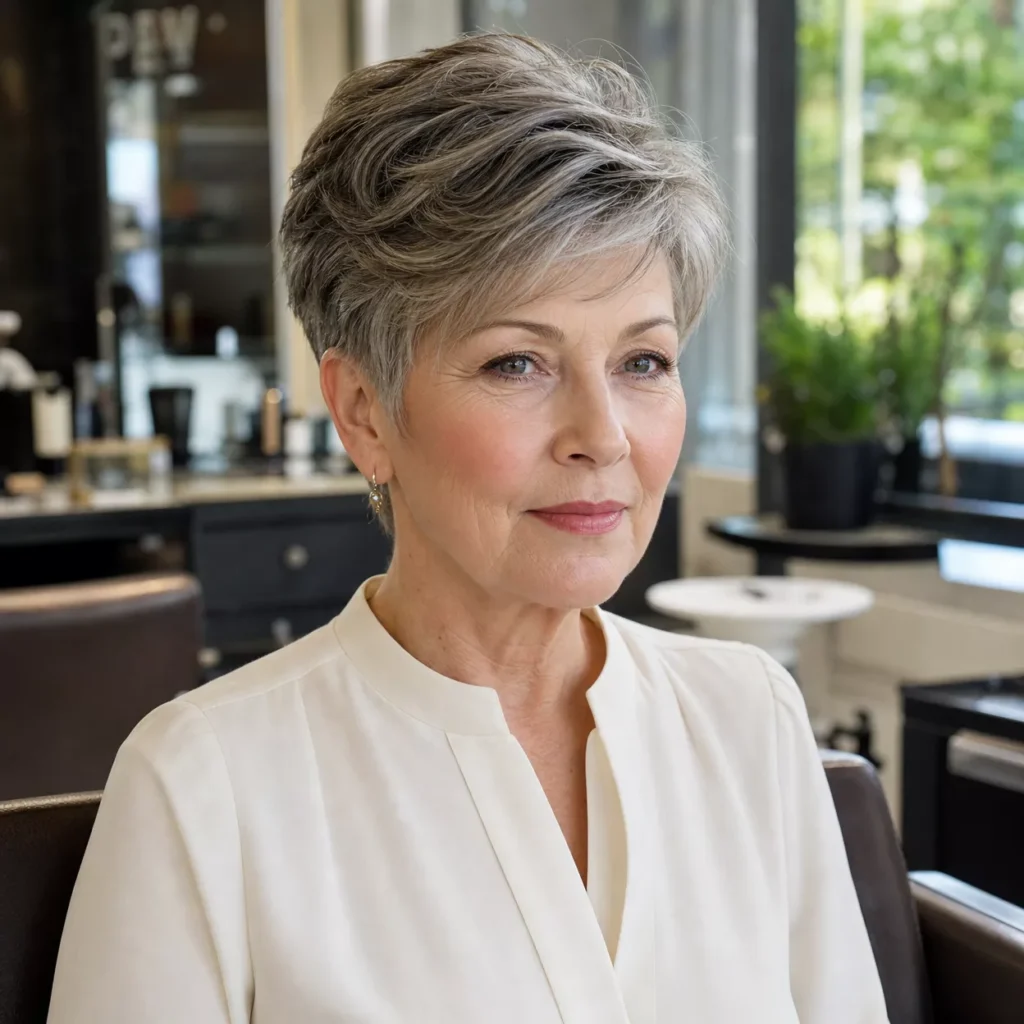
Close and short at the sides and nape, longer through the crown with layers that lift. The contrast between tight sides and a full crown creates the look of more density, which is why this is so good for fine or thinning hair.
It won’t work as a wash-and-go. Without lifting the crown, either with a blow-dryer and round brush or a root-lift spray, the top collapses and the proportions fall apart. Budget seven or eight minutes, not three.
Short Bob with Wispy Bangs
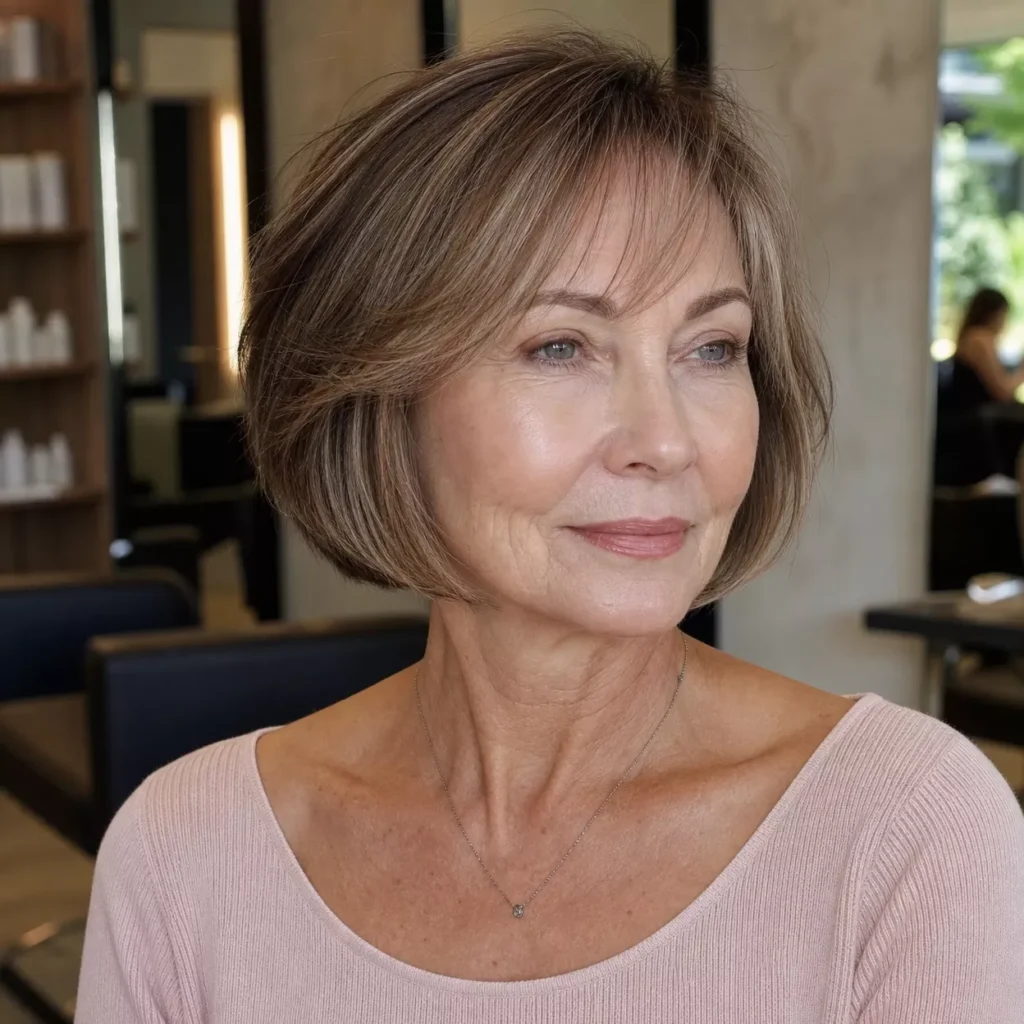
A short bob with very light, heavily thinned bangs that skim the eyebrows. Wispy bangs don’t look heavy or dated, and they grow out so gradually you never hit an obvious awkward stage.
Ask your stylist to thin them more than feels comfortable, almost to the point where you worry too much has come out. Bangs that aren’t wispy enough just look like blunt bangs that weren’t finished.
Layered Short Cut for Round Face
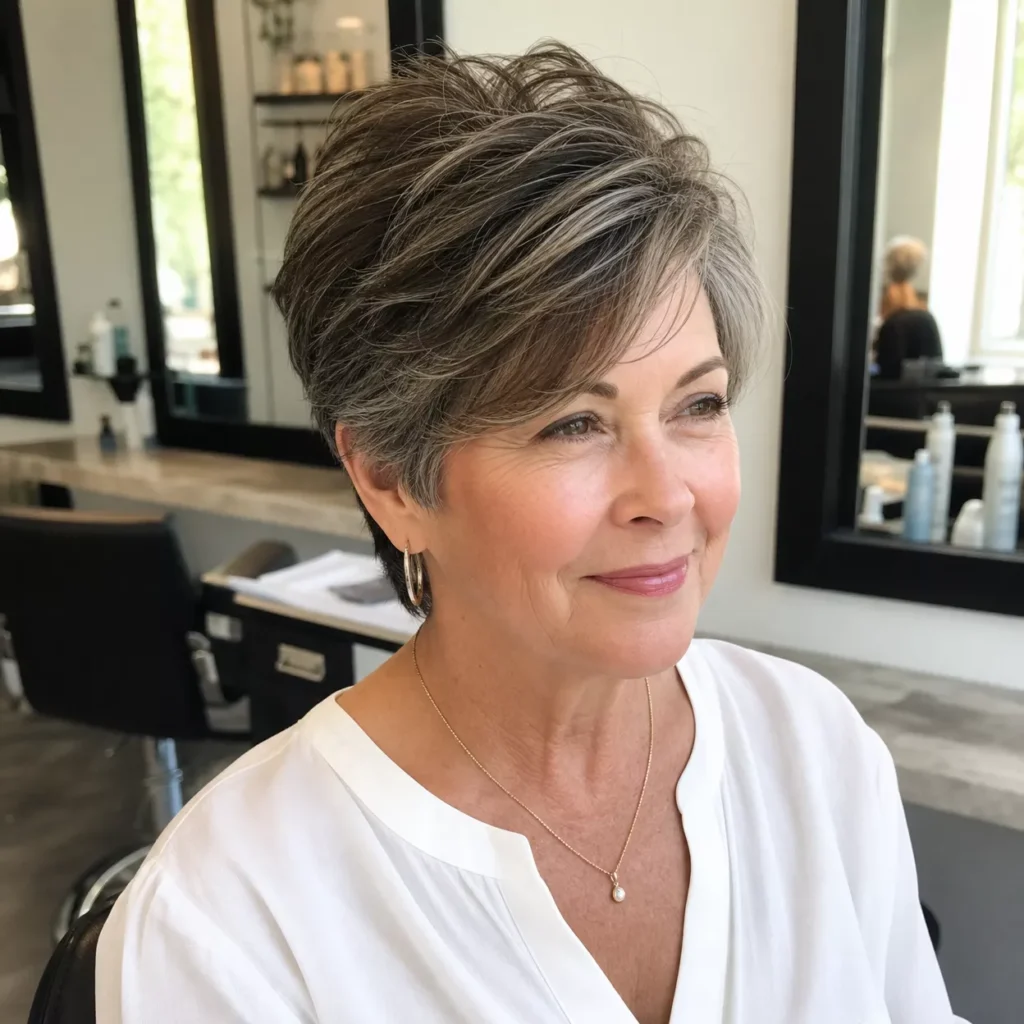
Layers concentrated at the crown for height, with the sides kept close to the head. Height lengthens a round face, and tight sides stop the cut from adding width.
Because the cut is solving a proportion problem, skipping the styling undoes it. A flat crown puts you right back where you started. A root-lift spray and about three minutes of blow-drying aimed up at the crown keep it working.
Short Bob with Money Piece
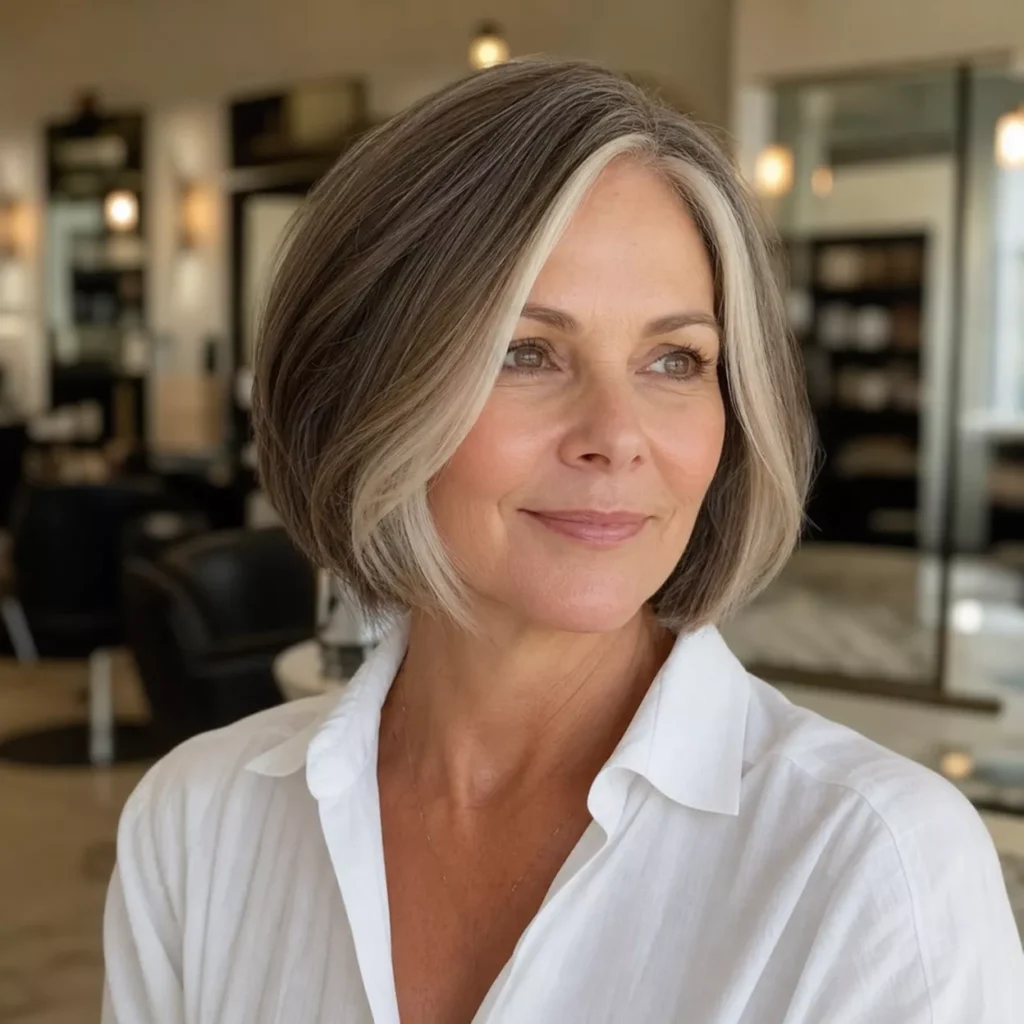
A short bob with two bright face-framing sections at the front, usually two or three shades lighter than the rest. It’s a small change that pulls attention straight to the eyes and cheekbones.
Go in aware of the upkeep. The money piece typically needs a toner refresh every six to eight weeks to keep it from turning brassy, and that’s on top of your haircuts. Expect roughly $100 to $200 for the first color appointment and $35 to $65 for each toner visit.
Ash Brown Short Layered Cut
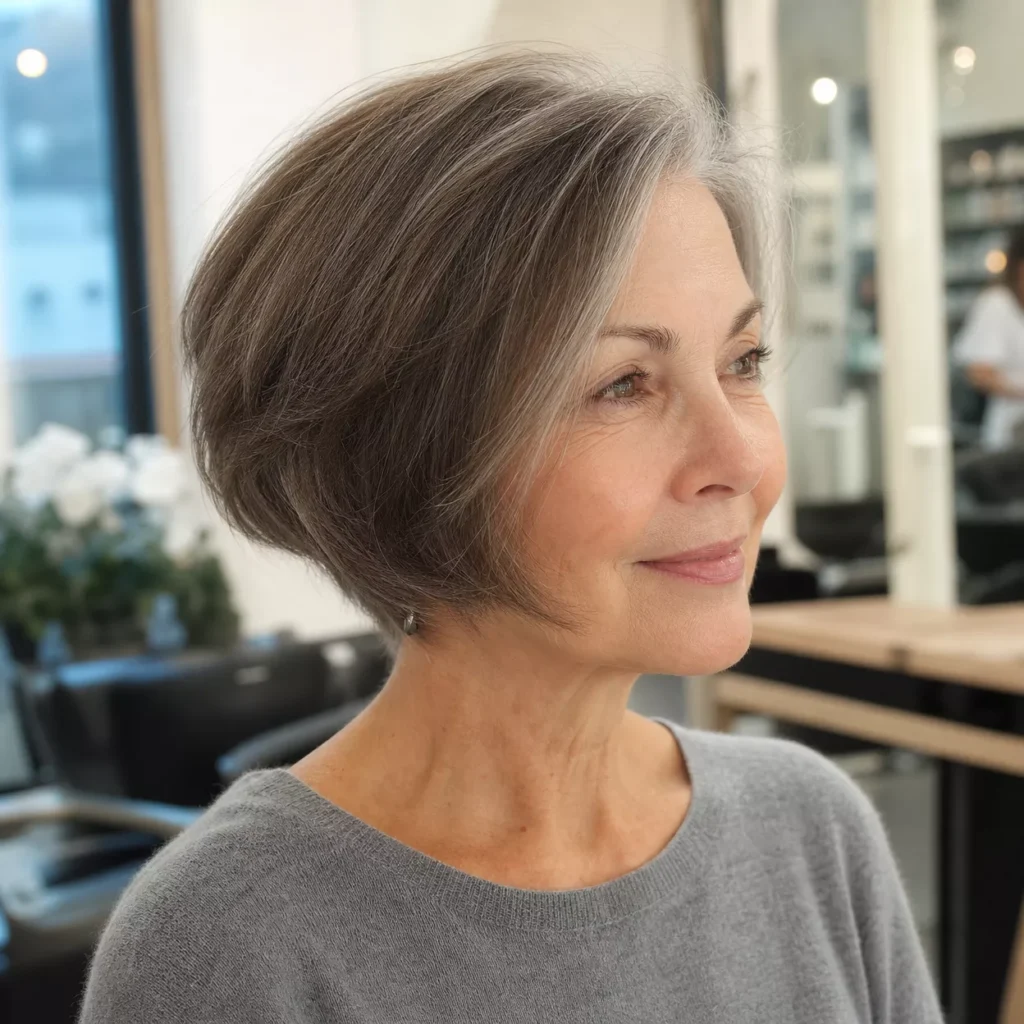
A cool brown, often with gray or ash undertones, on a short layered cut. For anyone growing out gray, this is usually the smoothest transition shade, because the cool base blends into silver roots instead of leaving a hard line.
That only holds if your natural gray is cool. If it leans warm or slightly yellow, ash brown can look disconnected from your regrowth, and a warmer brown or a beige-leaning gloss will match better.
Short Shag with Wispy Fringe
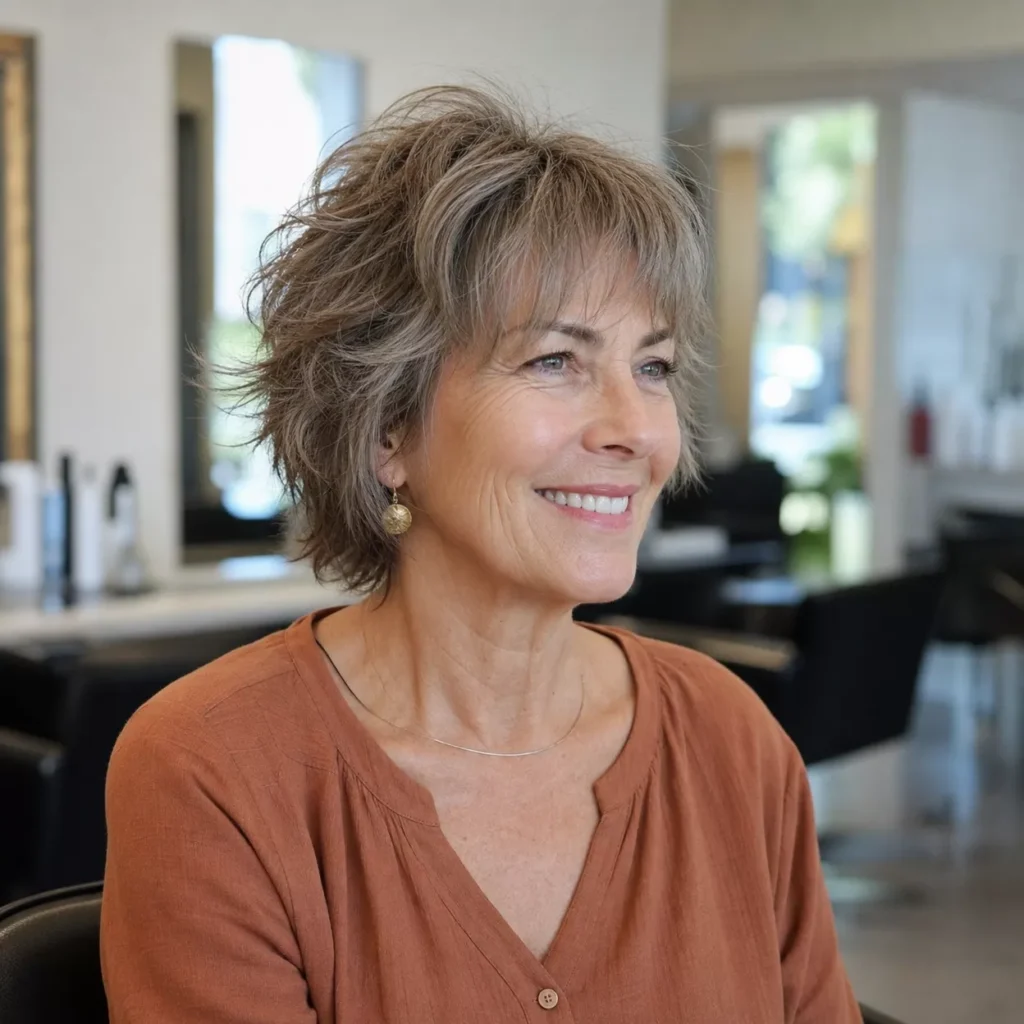
A shag paired with soft, thinned bangs. The shag layers do the volume work while the wispy bangs soften the forehead without adding weight.
It’s also one of the harder cuts on this list to execute. The layers and the bangs both need precision, and if either is off, the whole look suffers. Choose a stylist whose work you’ve seen in person, not just in one flattering photo.
Blunt Short Bob
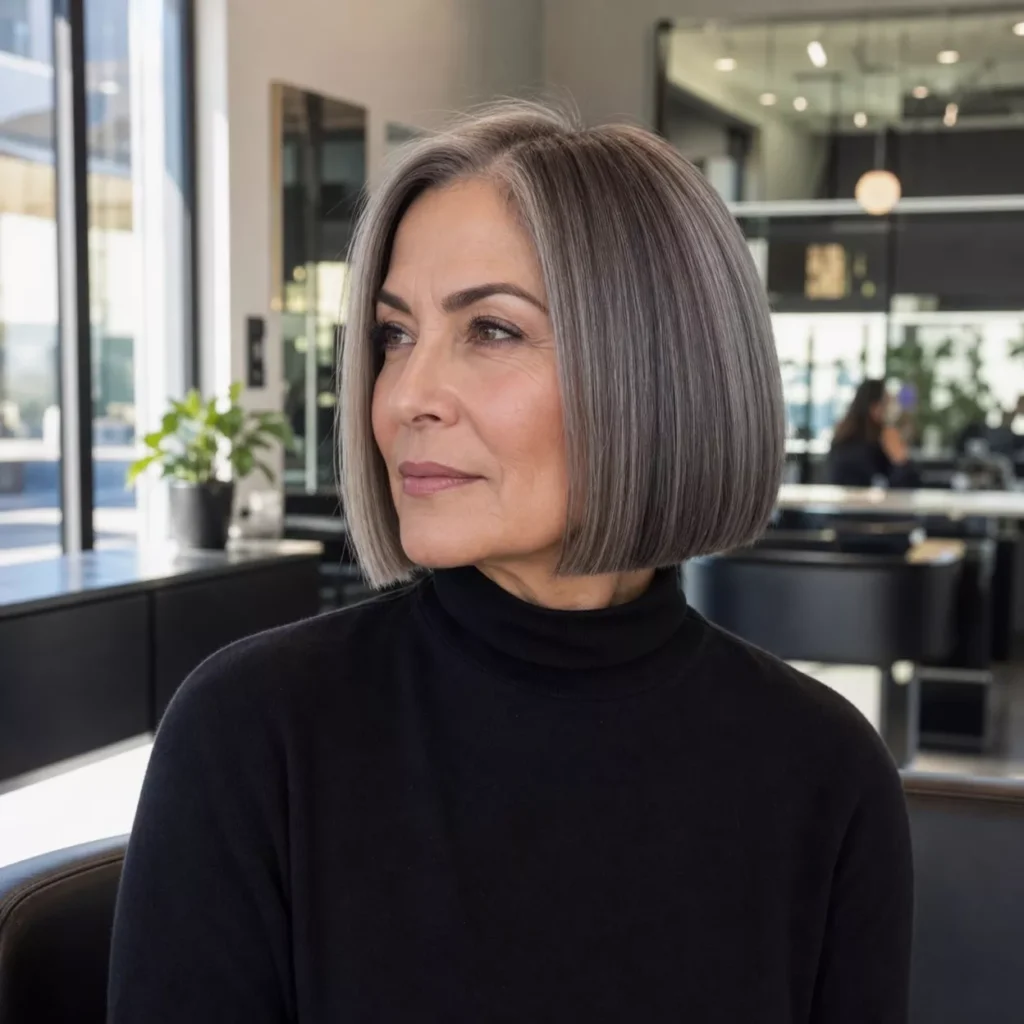
One clean, straight line at chin length or shorter. No layers, no softening. It’s the boldest and most minimal cut here by some distance.
It suits strong features and anyone happy with a cut that draws attention. The same boldness is the risk. A blunt line shows every bit of regrowth and every small flaw, so it needs a skilled stylist and a tighter trim schedule than most cuts on this list.
Styling: blow-dry smooth with a paddle brush, go over it with a flat iron if needed, then finish with a smoothing serum or oil for shine. Six to eight minutes.
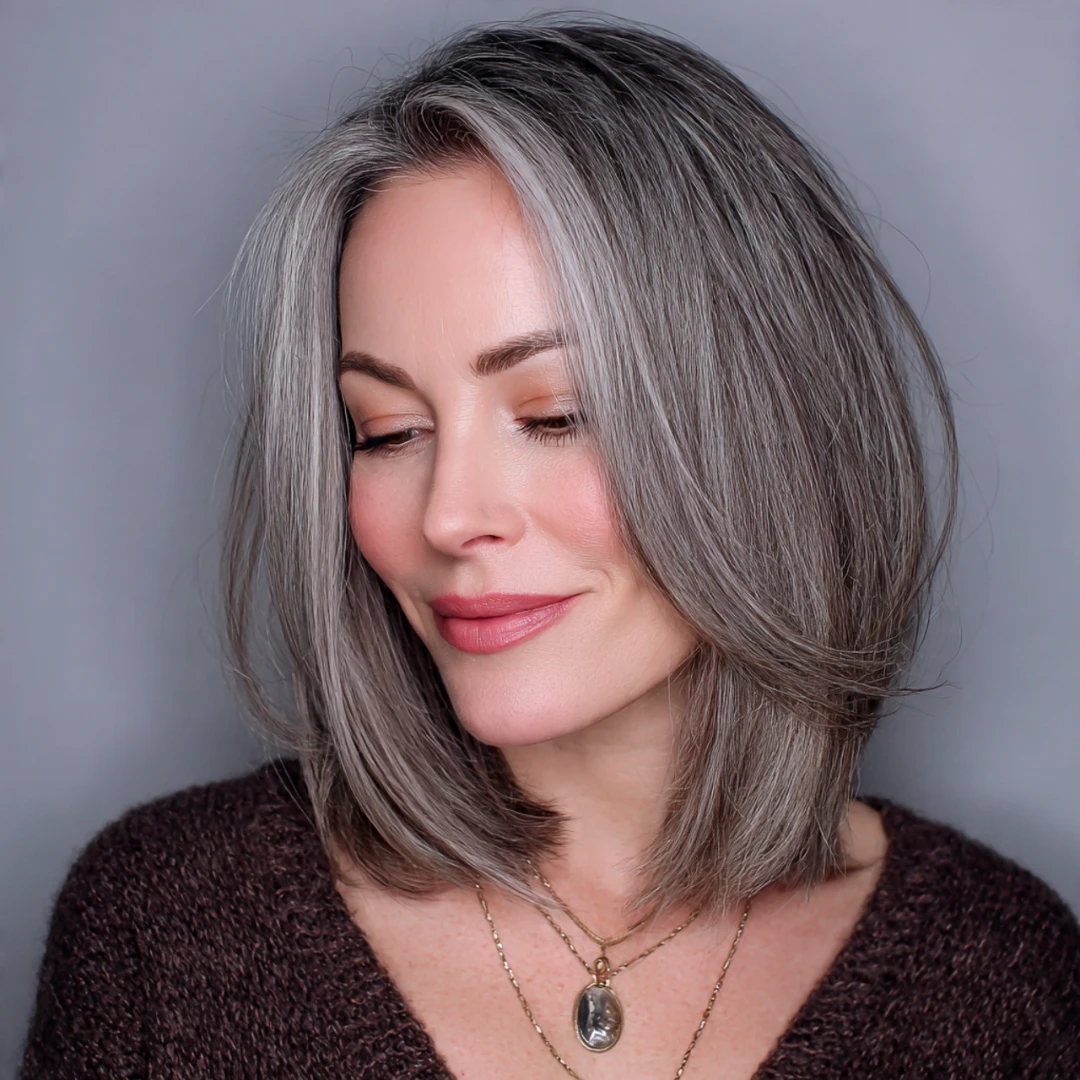
Short Cut for Grey Hair
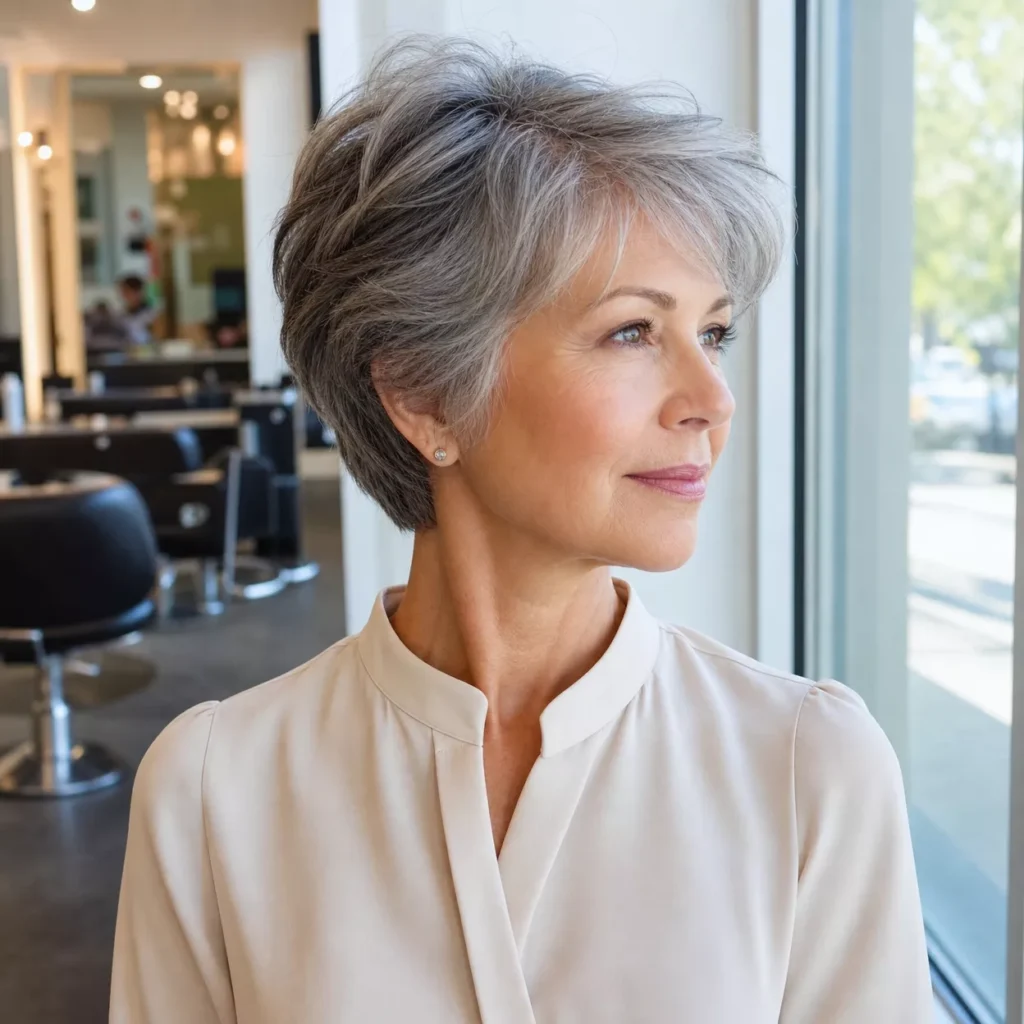
This isn’t one specific shape. It’s any short cut designed to show off natural gray instead of hiding it, finished with a salon gloss. Gray reveals cutting precision more than pigmented hair does, because the natural variation in tone highlights every layer line.
The gloss is the part people skip. It adds shine and can nudge the tone slightly (cooler toward silver, warmer toward pewter, softer toward dove) without covering the gray. Expect about $40 to $85 every six to eight weeks.
Short Romantic Curl Cut
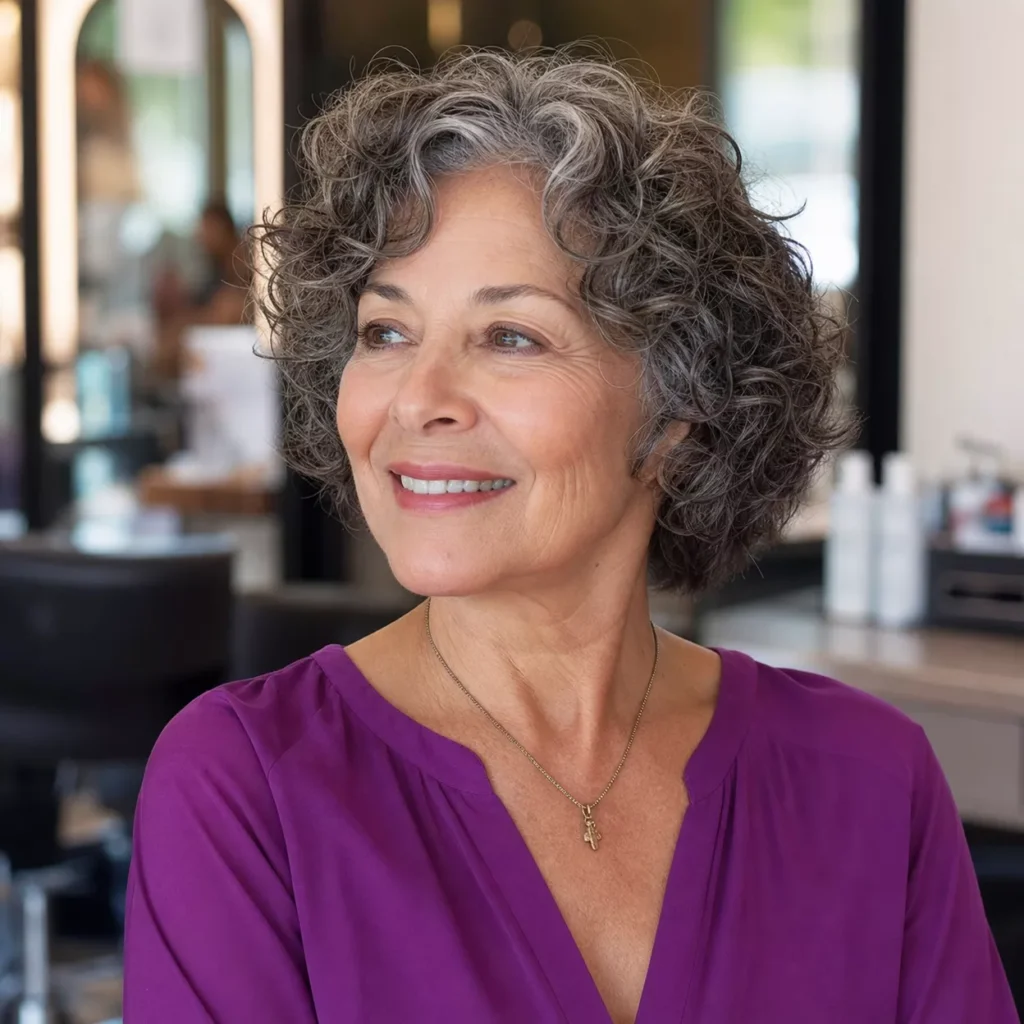
For naturally curly hair, with layers placed so each curl can spring up and define itself instead of clumping or dragging the shape down. The result is full, soft, and bouncy, built around the curl pattern you already have.
Curly hair should be cut dry so the stylist can see where each curl sits. If yours insists on cutting it wet, find someone else.
Styling: curl cream on soaking wet hair, scrunch, then diffuse on low heat and low speed until completely dry. Don’t touch it while it dries. Eight to ten minutes, plus drying time.
Textured Pixie with Side Swept Fringe
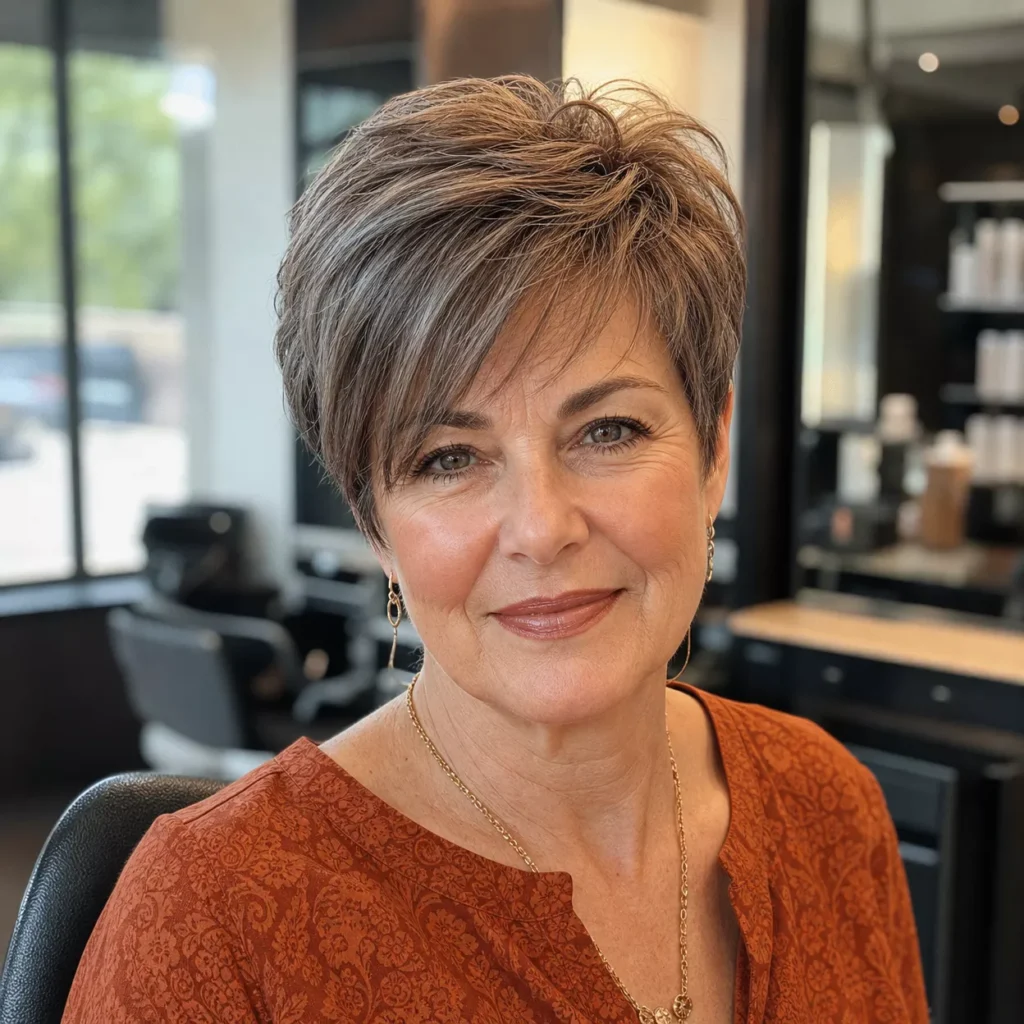
A textured pixie with the bangs pushed to one side instead of falling forward or cut straight across. The diagonal adds length and softness to the forehead, which especially flatters round and square faces.
The bangs need enough length to sweep. Cut too short, they stand up instead of lying across, and the effect is gone.
Textured Crop
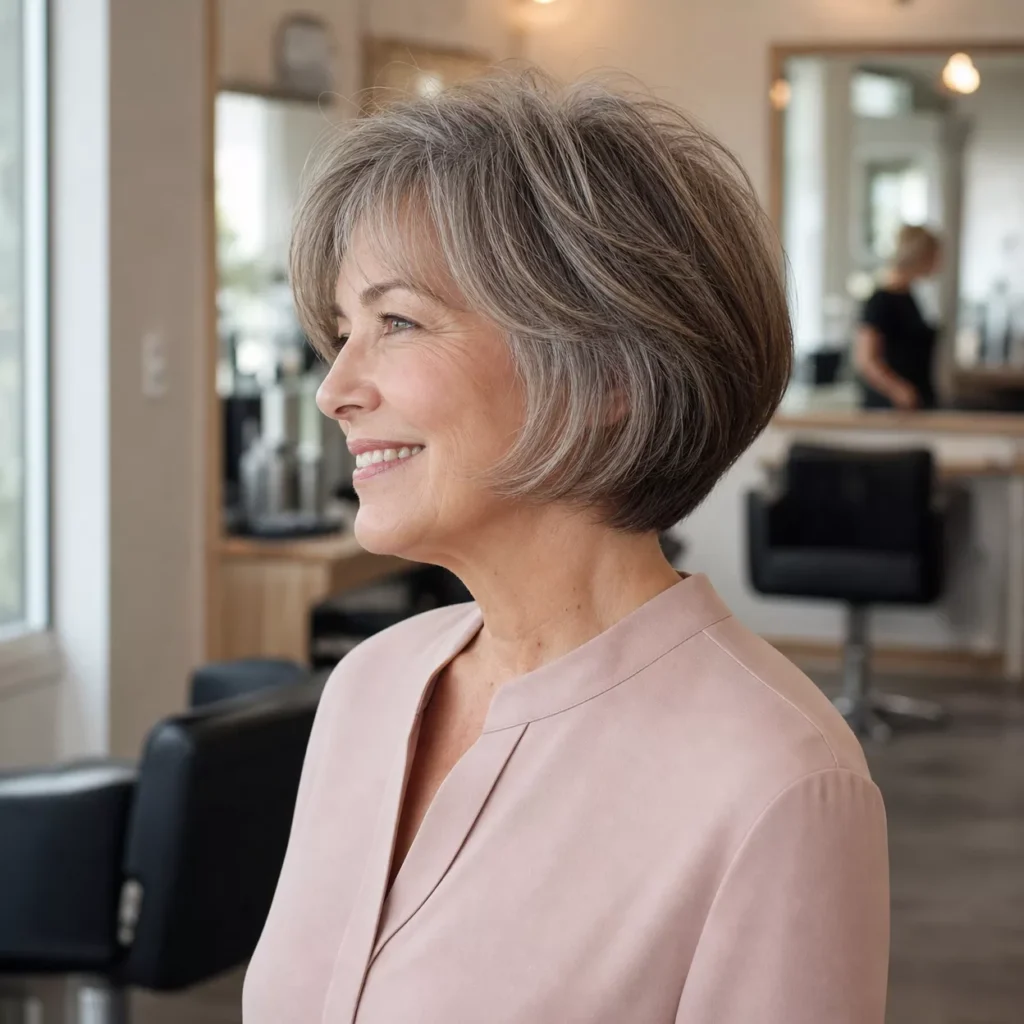
Shorter than a pixie all over, usually an inch or two on top, with the sides and nape cut close and the top point-cut so it breaks into small, piece-y sections instead of lying flat. It asks the least of you of anything on this list, and it makes good use of coarse gray, because that extra grip lets the texture hold with very little product.
It suits oval and heart faces easily, and works on round faces as long as the top is left long enough to push upward. On a long face it can make the head look narrow, so ask for a little more length at the sides.
Styling: a pea-sized amount of matte paste warmed between your palms and pushed through dry hair with your fingertips. Two minutes at most. It loses its shape quickly as it grows, so plan on a trim every four to five weeks.
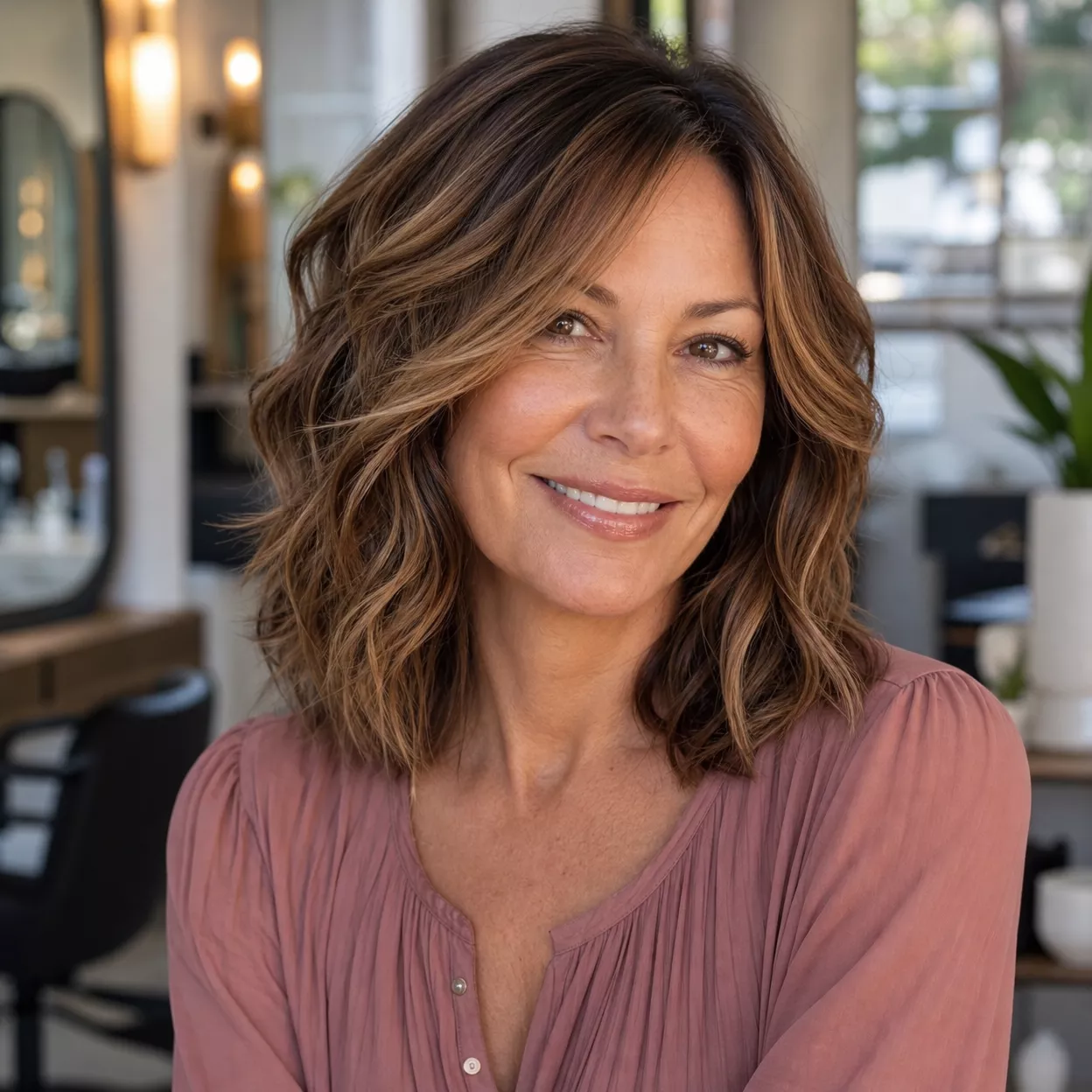
Short Cut with Honey Highlights
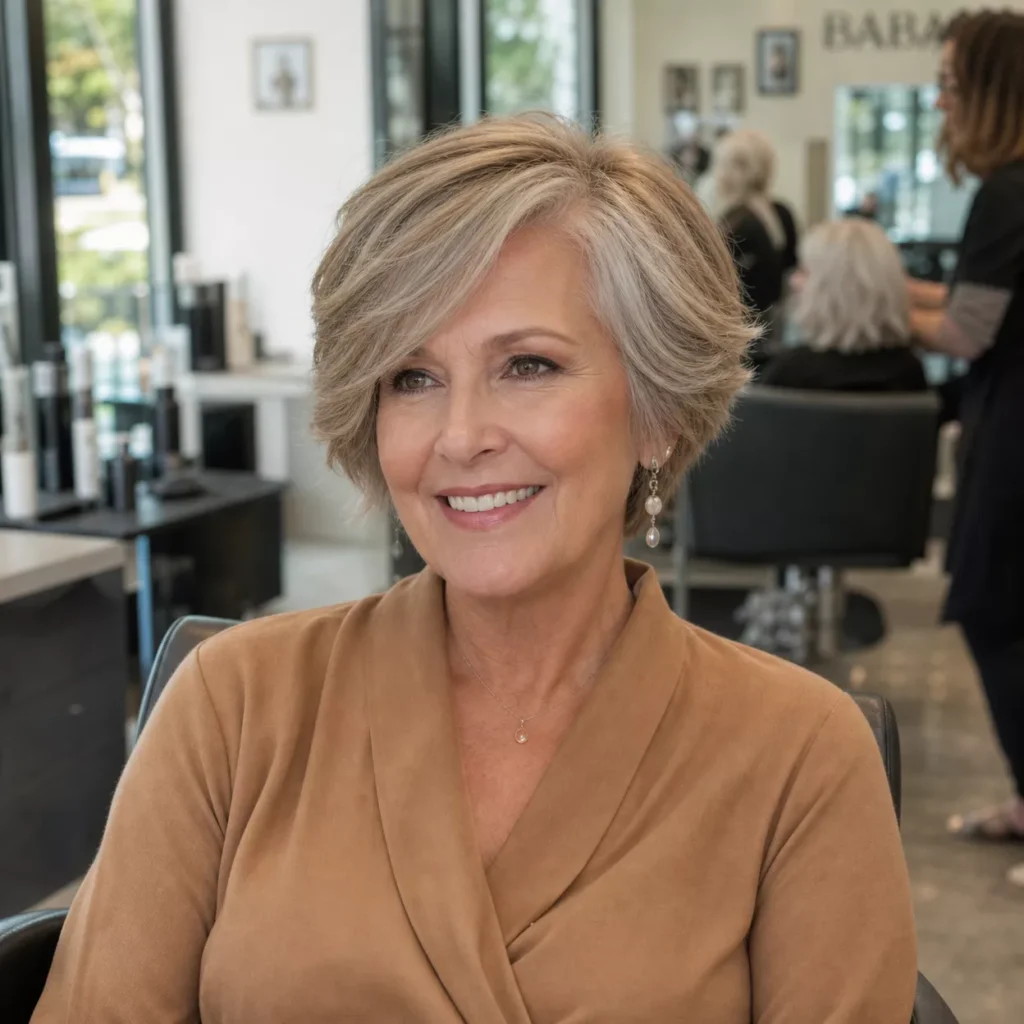
Warm golden highlights in caramel, honey, or butterscotch tones, woven through a short cut. Against a gray or silver base, they add dimension and a sunlit brightness that suits most skin tones.
They also add appointments. If your natural gray is growing in underneath, plan on root touch-ups every eight to ten weeks, plus toner now and then to keep the warmth from turning brassy.
Short Asymmetrical Bob
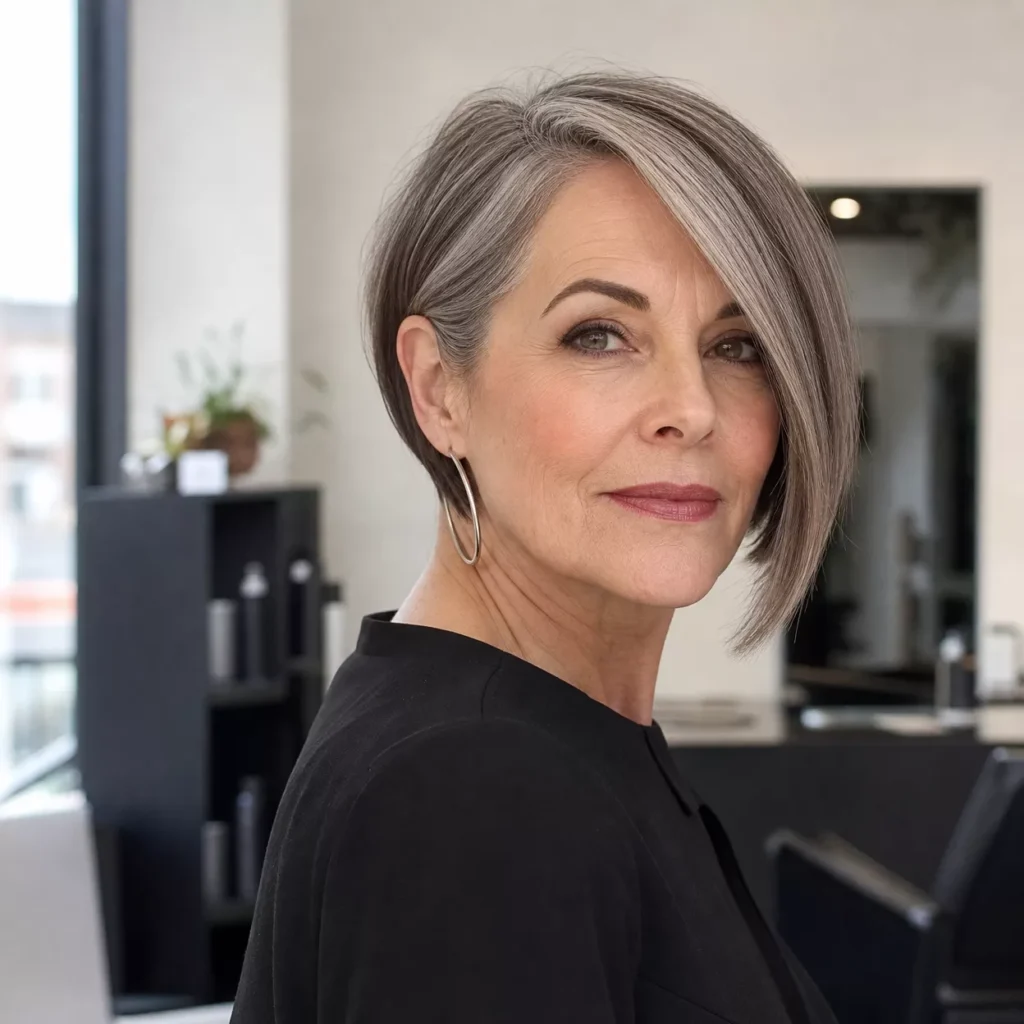
One side is cut noticeably longer than the other, creating an angular, graphic line. It gives a standard bob a modern edge and works especially well on oval and heart-shaped faces, where the extra diagonal flatters.
The asymmetry fades as the hair grows. By around week eight, the sides have evened out enough that it tends to look like an uneven bob rather than an intentional one.
Soft Classic Pixie
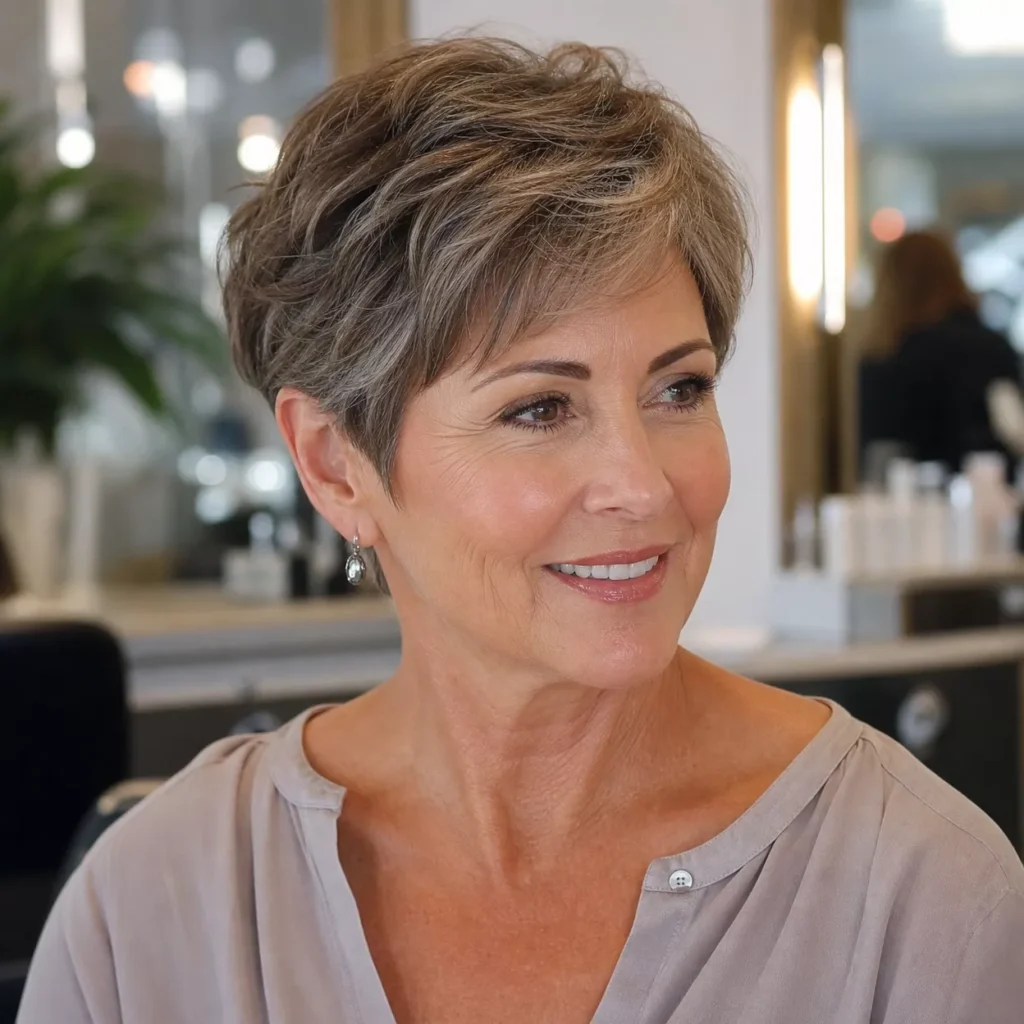
Tapered sides and nape, a slightly longer crown, clean lines, and none of the heavy texture or sharp angles the trendier cuts rely on. It has stayed flattering for decades because the proportions are balanced to begin with.
Nearly every face shape can wear it with a small tweak: more height for a round face, softer bangs for a square one, a side part for a long one. Fine, medium, and moderately thick hair all handle it well.
Styling: mousse at the roots, blow-dry forward with your fingers, smooth the sides with your palms. Three minutes. Trim every five to six weeks.
Quick Comparison by Face Shape
| Face Shape | Best cuts from this list | Avoid |
|---|---|---|
| Oval | Nearly all cuts work; soft layered pixie, textured bob, and asymmetrical bob are especially flattering | Very heavy, blunt bangs that shorten the face |
| Round | Tapered pixie with volume crown, layered cut for round face, side-parted bob, textured crop | Blunt bobs with no height, chin-length cuts that end at the widest part of the face |
| Square | Soft layered pixie, side-swept bangs, curtain bangs, feathered cut | Blunt geometric bobs, heavy straight-across bangs |
| Heart | Pixie bob, bob with curtain bangs, side-swept styles | Very short cuts with too much volume at the crown |
| Oblong | Short wavy bob, textured bob, styles with soft bangs | Tapered pixie with extreme crown height, anything that adds lengthy |
Five Mistakes to Avoid
Choosing a cut from a photo of someone with completely different hair density. Thick and fine hair produce different silhouettes from the same cut, and no amount of styling closes that gap.
Letting a short cut run past eight weeks because it still looks okay. Short hair loses its shape and proportion much faster than long hair. By week nine, you’re styling a cut that has already grown out.
Using heavy oils or serums on fine gray hair. Gray hair can be drier and more porous, so it absorbs heavy products quickly and ends up weighed down or greasy by midday. Lighter, matte-finish products work better.
Asking for layers without saying where. Crown layers add height. Mid-length layers add movement. Layers at the ends add texture. Your stylist needs to know which one you mean.
Skipping the consultation because you brought a photo. The photo shows the result you want. The consultation is where the stylist works out whether your hair can get there, and what to adjust if it can’t.
Before Your Appointment
- Wash and style your hair the way you normally do, so your stylist sees your real texture and growth pattern rather than a version tidied up for the visit.
- Bring two or three photos, and try to include at least one of hair with the same density and texture as yours, not just the same shape.
- Say out loud how many minutes you’ll spend styling each morning, and be honest about it.
- Mention whether you’re staying natural, toning, or planning a bigger color change, since it affects how the cut should be structured.
- Ask what the cut will look like at six weeks and at ten, so you know whether the maintenance schedule fits your life.
- Ask which products the cut depends on, and whether it still works without heat tools.
FAQ
How much does a short cut cost?
Usually $45 to $100 at a mid-range salon, and more with a senior stylist or at a high-end salon. Color work adds to that. Prices vary a lot by city and salon, so call ahead and confirm rather than budgeting from an article.
How often do short cuts need trimming?
Every four to six weeks for pixies, crops, and precision cuts like the inverted bob, where the shape depends on clean lines. Textured bobs, shags, and layered cuts are more forgiving and can usually go six to eight weeks, because grown-out layers still look intentional.
Does grey hair behave differently than pigmented hair?
Often, yes. It tends to be coarser, drier, harder to smooth, and sometimes wavier than the same hair was before it turned gray. That coarseness has an upside, though: it gives textured and piece-y styles grip, so they hold their shape longer.
What is the easiest short cut to maintain?
The textured crop and the soft classic pixie need the least daily effort, usually two to four minutes. The trade-off is that both need frequent trims to keep their shape.
Which cut makes thinning hair look fullest?
Feathered cuts, soft layered pixies, a tapered pixie with a volume crown, and textured bobs all create the look of more density. Blunt bobs tend to do the opposite and make thinning easier to see.
Can I go short if my hair is very fine?
Yes, and fine hair often looks better short than long, because a short cut removes the weight that drags it flat. Soft layers, feathering, and textured ends all add the appearance of volume.
What products should I start with?
A volumizing mousse if your hair is fine, a matte paste or texturizing cream for textured cuts, a light curl cream if you have any wave or curl, and a root-lift spray if your cut depends on crown height. Two of these will cover most of the cuts on this list.
Do I need to style short hair every day?
Most short cuts need at least a little styling to look intentional rather than slept on. That can be as little as two minutes with your fingers and a small amount of product, but completely unstyled short hair rarely looks the way it did at the salon.
What if I hate it after it’s cut?
It grows back. Getting from a pixie to a short bob takes roughly four to six months, and from a short bob to shoulder length takes about another six. If you’re unsure, start with a longer short cut like a pixie bob or a chin-length bob instead of going very short right away.
Should I cut my hair short before or after I’ve gone fully gray?
Either works. Cutting it short during the transition can make the process faster and less awkward, though, because short hair grows out and gets trimmed away much sooner than long hair does.