26 Medium Shag Haircuts and How to Choose the Right One
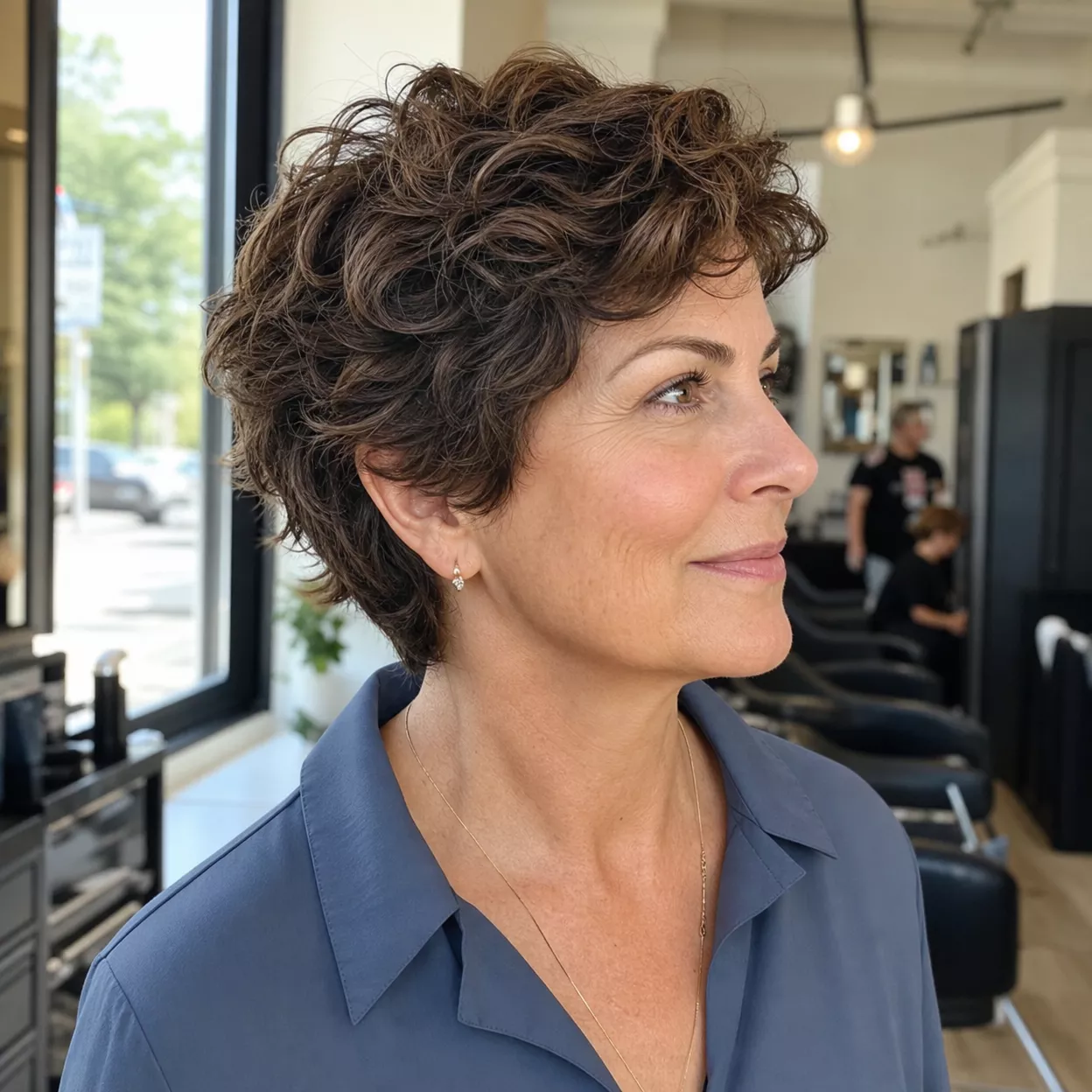
A medium shag is less a single haircut than a way of distributing weight. Somewhere around the shoulders, the hair is broken into layers of different lengths: shorter at the crown or around the face, longer toward the ends, with the perimeter left solid, softened, or deliberately uneven. Change any one of those decisions and the cut behaves differently.
That’s what makes the shag adaptable, and also why it doesn’t work the same way on everyone. On fine but dense hair, a few well-placed layers can add movement without losing fullness. On low-density hair, the same layering can make the ends look sparse. Thick hair may welcome the weight removal, while coarse hair can frizz if too much comes out. Straight hair shows every layer but often needs styling to look textured. Wavy hair tends to fall into the shape. Curly and coily hair shrink and expand, so the shag has to be planned around how the hair looks dry.
The 26 versions below each focus on one decision that changes the result, from fringe and texture to color and how much weight stays behind.
Classic Curtain Bang Medium Shag
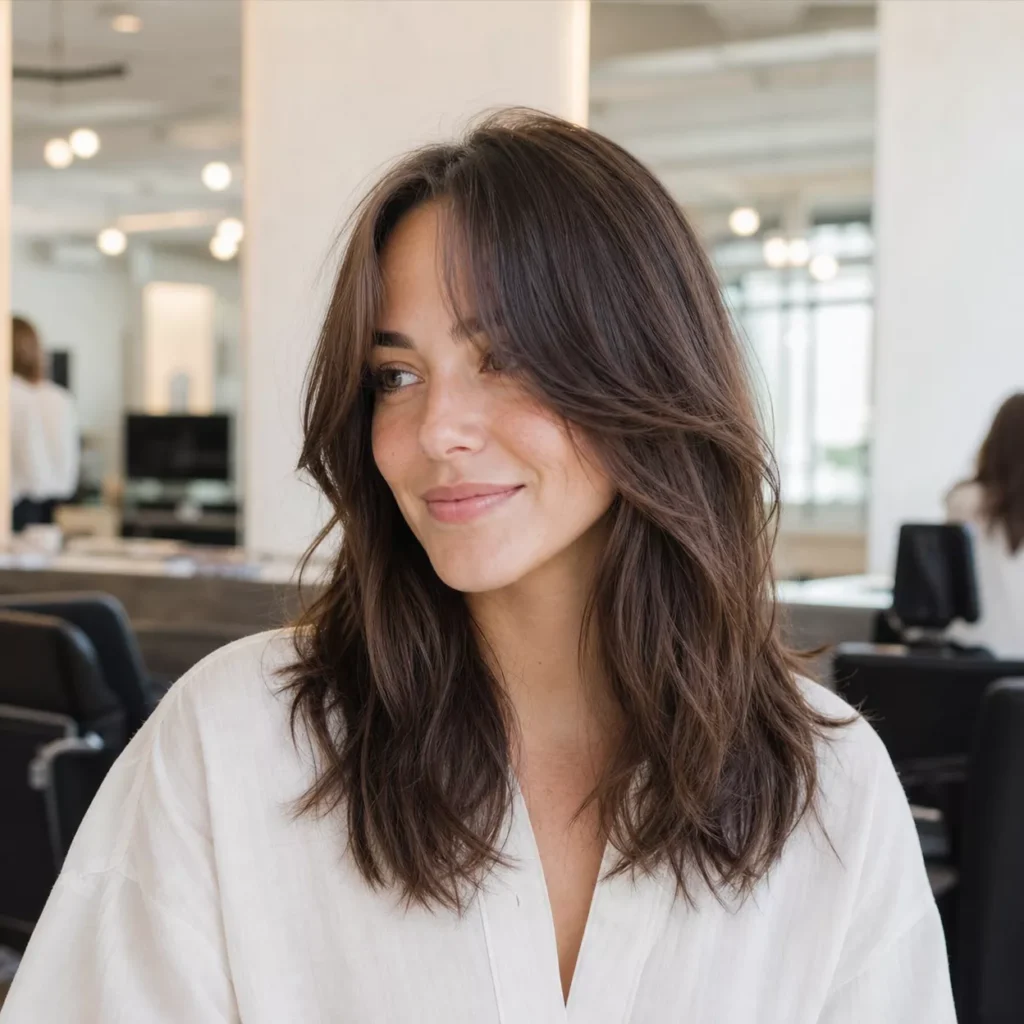
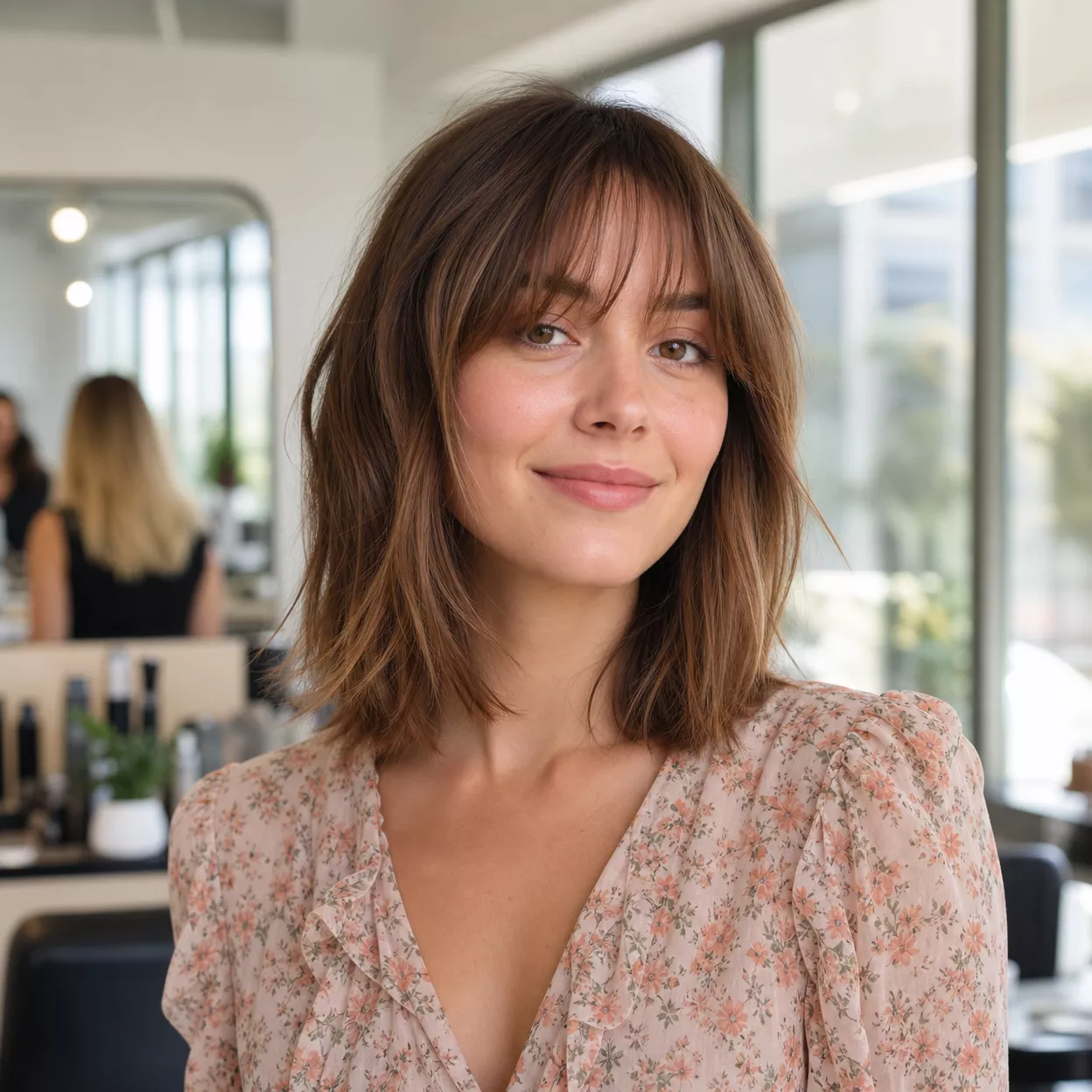
The curtain bangs are where this version begins, quite literally. They start at the hairline, part at or near the center, and fall toward the cheekbones, where they should meet the first face-framing layer. When that connection is smooth, the fringe looks like the opening line of the shag rather than a separate piece added on top.
Light curtain bangs, cut from a narrow section, read airy and blend quickly into the layers. Fuller ones, cut from a deeper section, look more defined and usually need more styling to sweep open. Density at the hairline decides which is realistic, and your natural part decides whether the split stays where it was cut. Our guide to curtain bang hairstyles covers other fringe shapes.
Razored Medium Shag
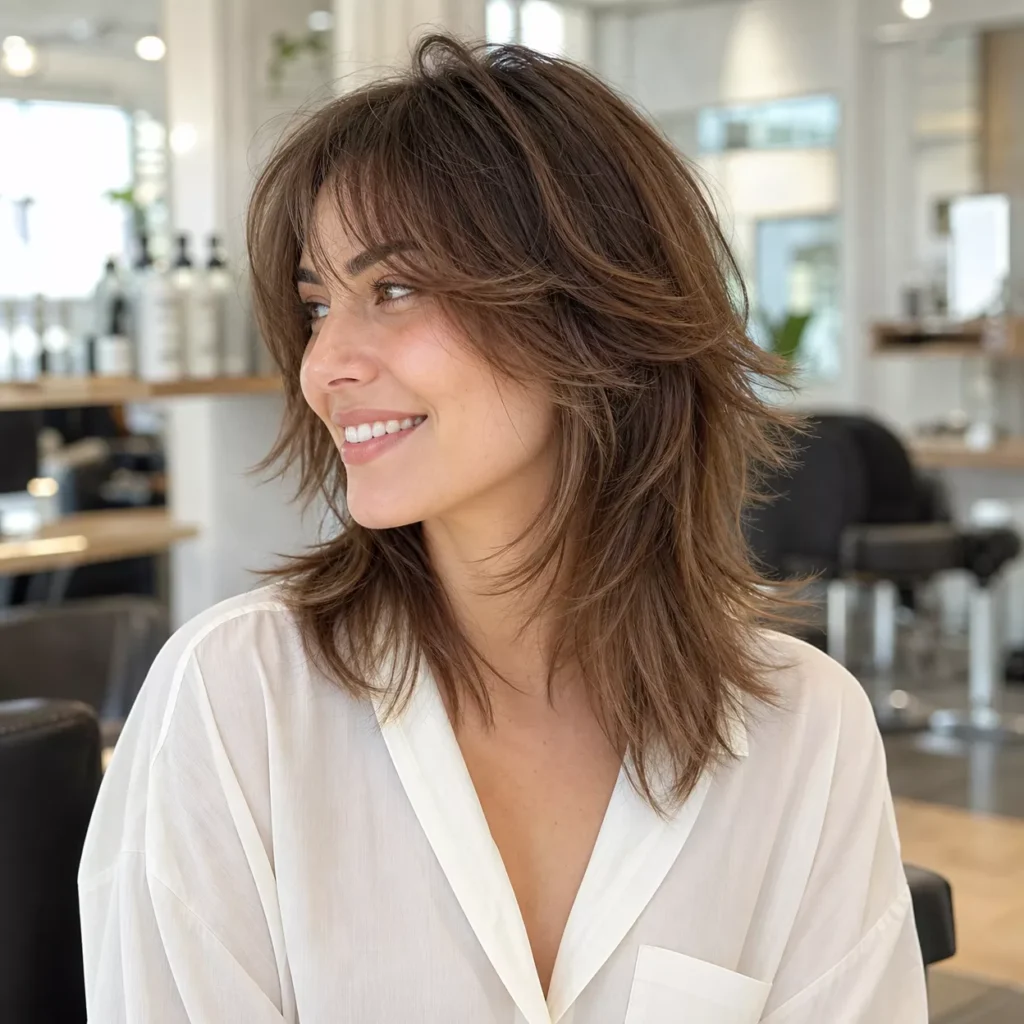
A razor slices rather than snips, so the ends taper instead of finishing bluntly. On a shag, that tapering can help the layers separate and look lighter at the tips. The effect is about how the ends move, not about adding volume.
Removing that much from the ends can be useful on dense hair, but it can leave fine or low-density hair looking wispy. Wavy hair often shows razored texture well. Curly and coily hair may frizz or lose definition at the tips, and dry or fragile hair can fray. Point-cutting with scissors creates a similar softness for many people, so it’s more useful to describe the finish you want than to insist on a particular tool.
Wavy Medium Shag with Face Framing

Waves rarely land where they were cut. A face-framing piece cut at the jaw while wet may spring up toward the cheekbone once dry, and one side may tighten more than the other. That makes the dry shape a better guide to the front than the wet one.
Layers placed where your wave naturally forms let it bend freely instead of being dragged flat by weight. Air-drying with a light cream or mousse can bring the pattern out; heat styling gives more uniform waves but has to be repeated after each wash. Humidity can help or hurt, depending on whether your waves tighten or frizz in damp air.
Choppy Medium Shag for Thick Hair
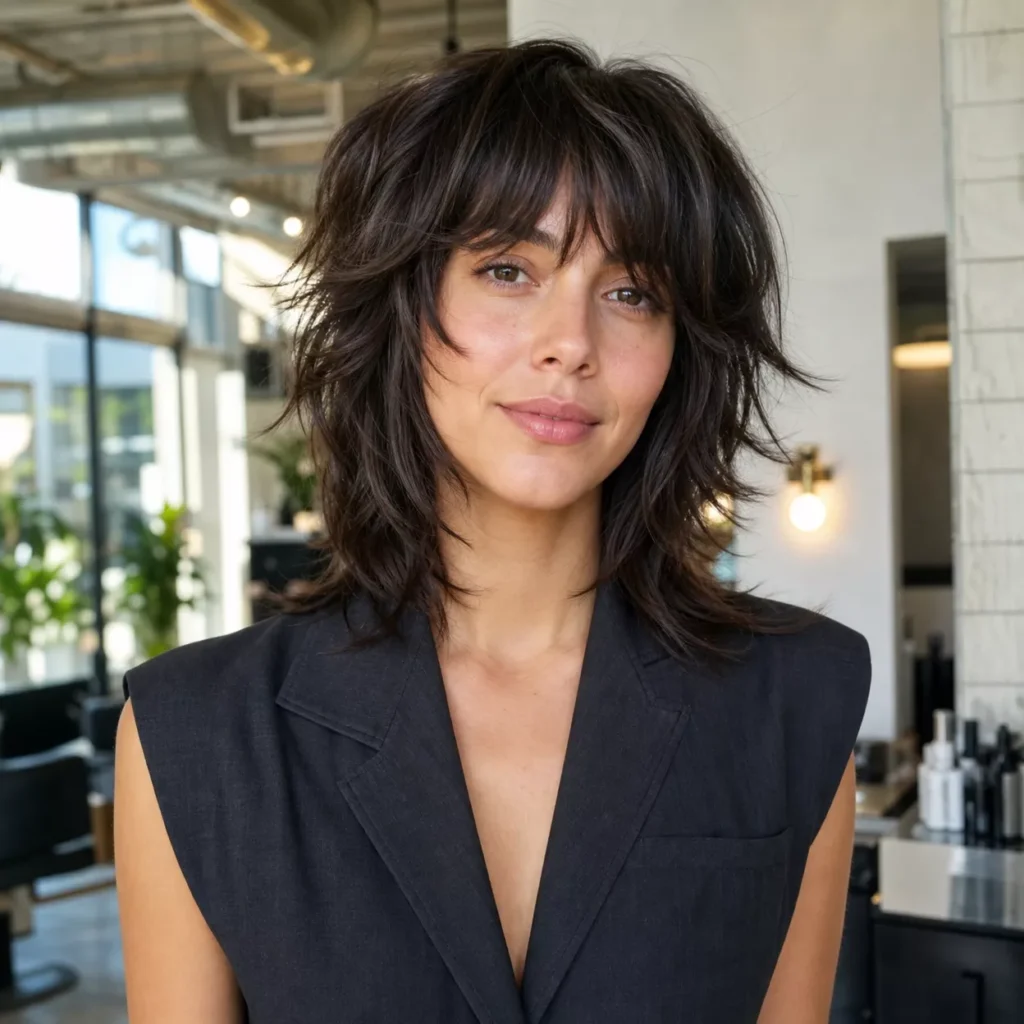
Thick can mean a lot of strands, wide strands, or both, and the difference matters here. High-density hair tends to build bulk inside the shape, which can push a medium cut outward into a triangle by the end of the day. Internal layering can move some of that bulk, letting the lengths sit closer and move more freely.
Coarse strands, though, can frizz or stick up if too much is removed. The aim is distribution rather than reduction: lighten the interior, keep enough at the perimeter to hold the shape, and avoid so many short crown layers that the top widens instead. Our guide to shag haircuts for thick hair looks at this balance in more detail.
70s-Inspired Medium Shag
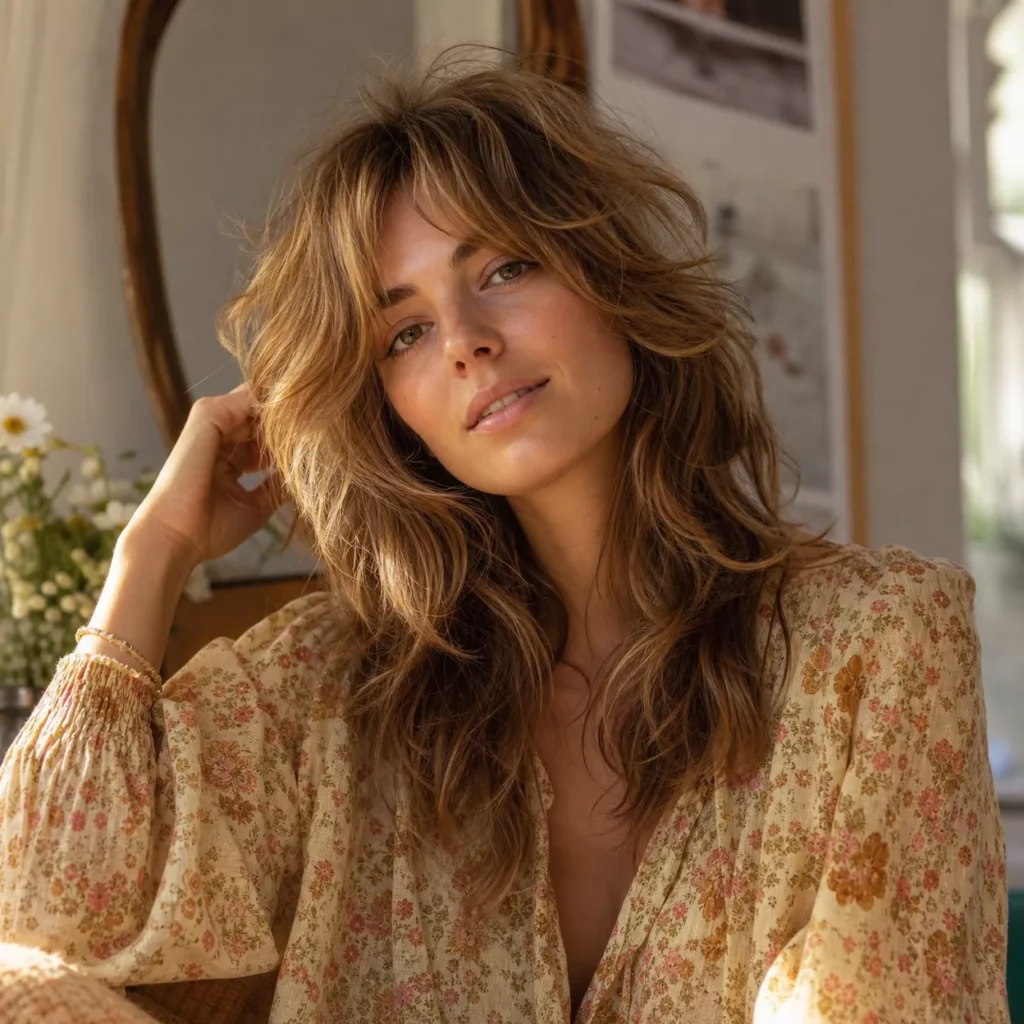
The 70s shag gets its look from direction. The crown is layered for height, the sides are feathered back and away from the face, and the face-framing pieces are often shorter and stronger than in a modern soft shag. Farrah Fawcett is the usual visual shorthand.
Reproducing that reference typically means a blow-dryer and round brush, sometimes a wand, to flick the layers outward. Air-dried, the same cut may simply hang. If you like the structure but not the routine, ask for the feathered layering with a softer, less directed finish.
Medium Shag with Wispy Fringe

How see-through a wispy fringe looks depends on how much hair grows at your hairline. With good density, it reads light but even; with sparse density, it can look broken up. It blends into a shag’s texture more easily than a solid fringe, and it grows out by gradually merging into the face-framing pieces, though there’s still a stretch where it sits in your eyes. Humidity tends to pull it into separate strands, and it usually needs a quick blow-dry to sit where you want it.
Beachy Textured Medium Shag
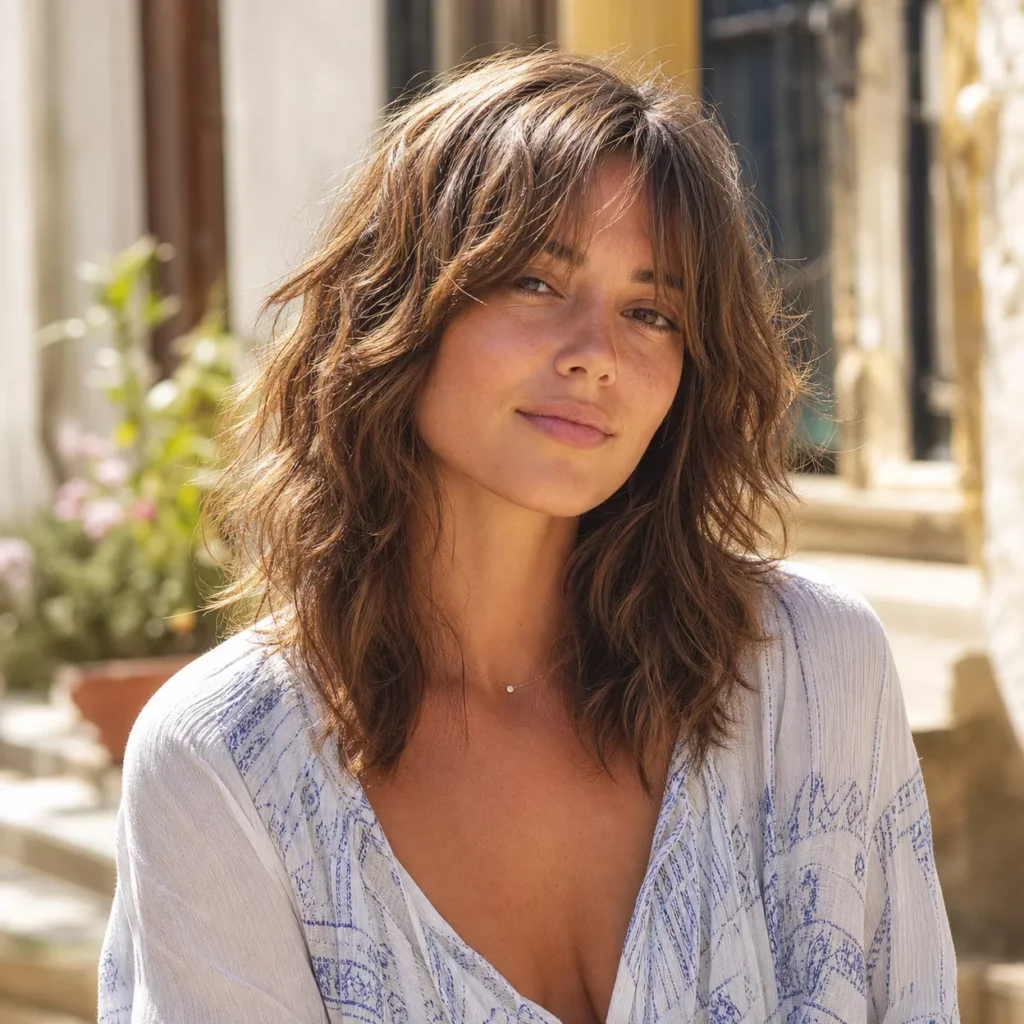
The real question here is where the texture comes from. If your hair has a natural wave, the beachy finish may appear with a texturizing spray and air-drying. If it’s straight, the texture has to be created with product, a wand, or a flat iron, and recreated after each wash.
Many people find the look improves on the second day, when the hair has more grip, though that depends on texture and how quickly your scalp gets oily. In a reference photo, notice whether the separation looks natural or carefully arranged. That tells you how much styling the image is hiding.
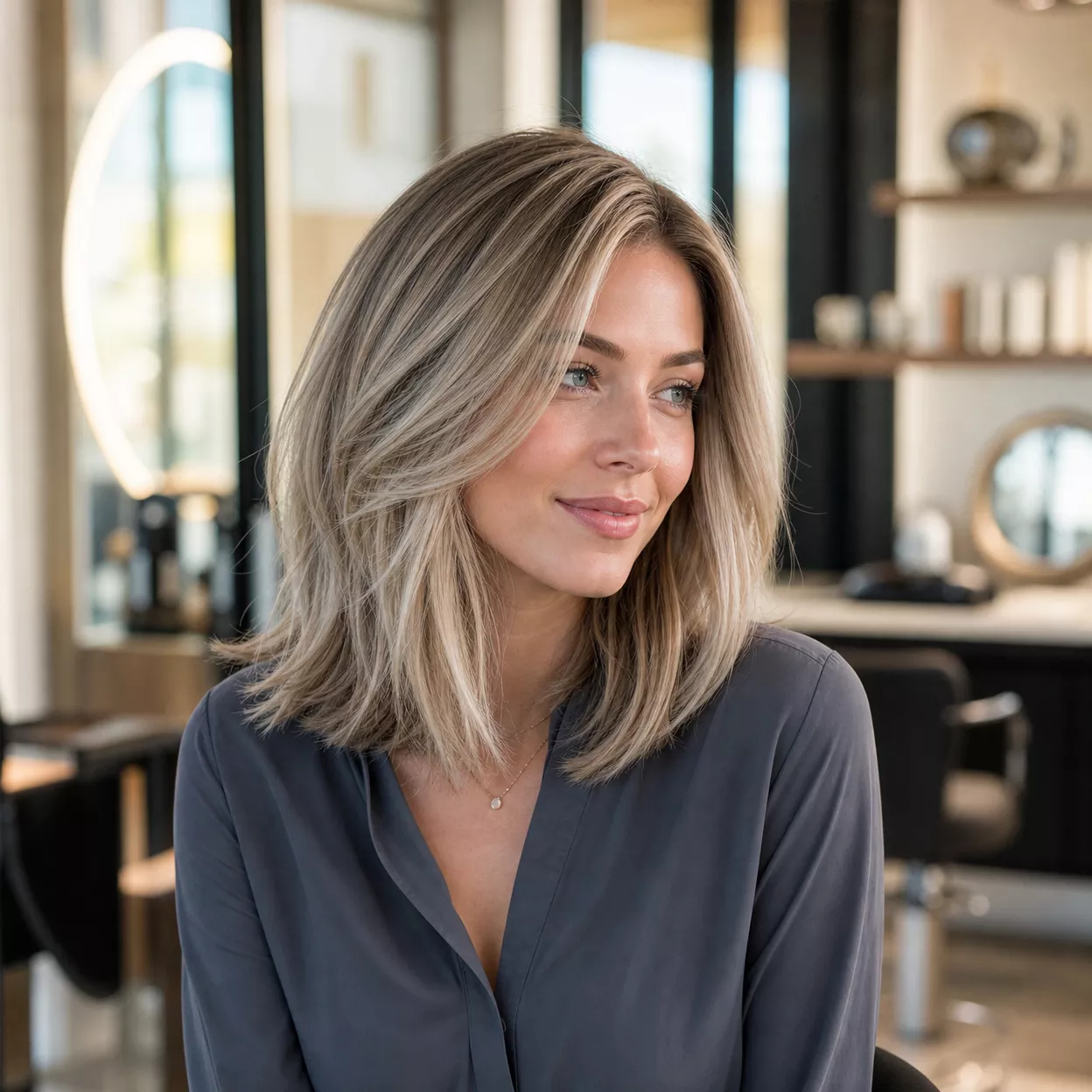
Ash Blonde Medium Shag
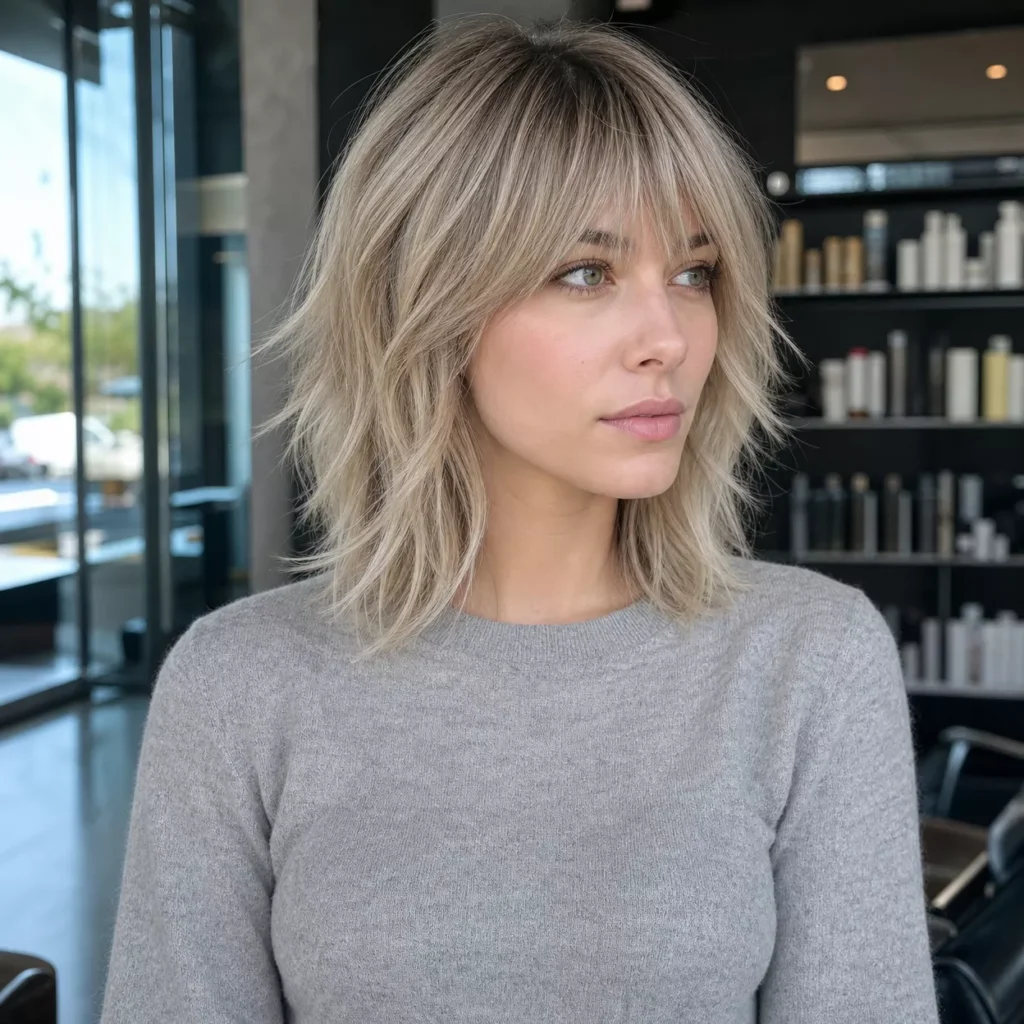
Two separate decisions share this look: a shag haircut and an ash blonde color service. The layers make the color look varied, since light falls differently across each section, but they won’t fix a tone that’s flat or uneven.
Reaching ash from a darker base usually means lightening, which exposes warm pigment that toner has to counteract. As toner fades, the warmth returns, so regular toning becomes part of the upkeep. A shadow root can soften regrowth, though the ash lengths still need attention to stay cool.
Medium Shag with Curtain Bangs and Highlights
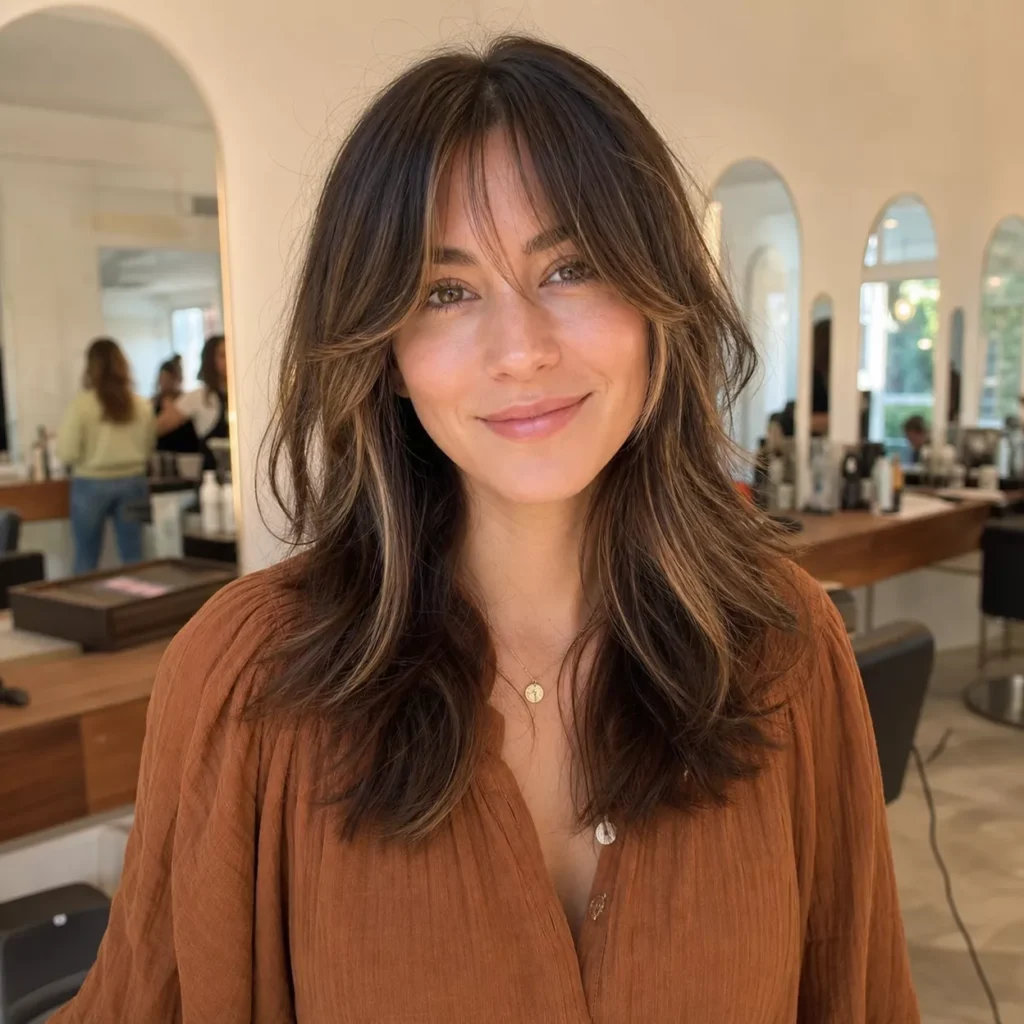
Color placement and layering interact closely here. Highlights placed along the edges of the shag’s layers make each step more visible. Concentrated in the curtain bangs and face-framing pieces, they brighten the front instead.
That front brightness has a trade-off: regrowth near the face shows sooner. It helps to treat the haircut and the color as separate services on separate schedules. The bangs will need trimming before the shag needs reshaping, and the highlights will need refreshing as they grow out.
Soft Feathered Medium Shag
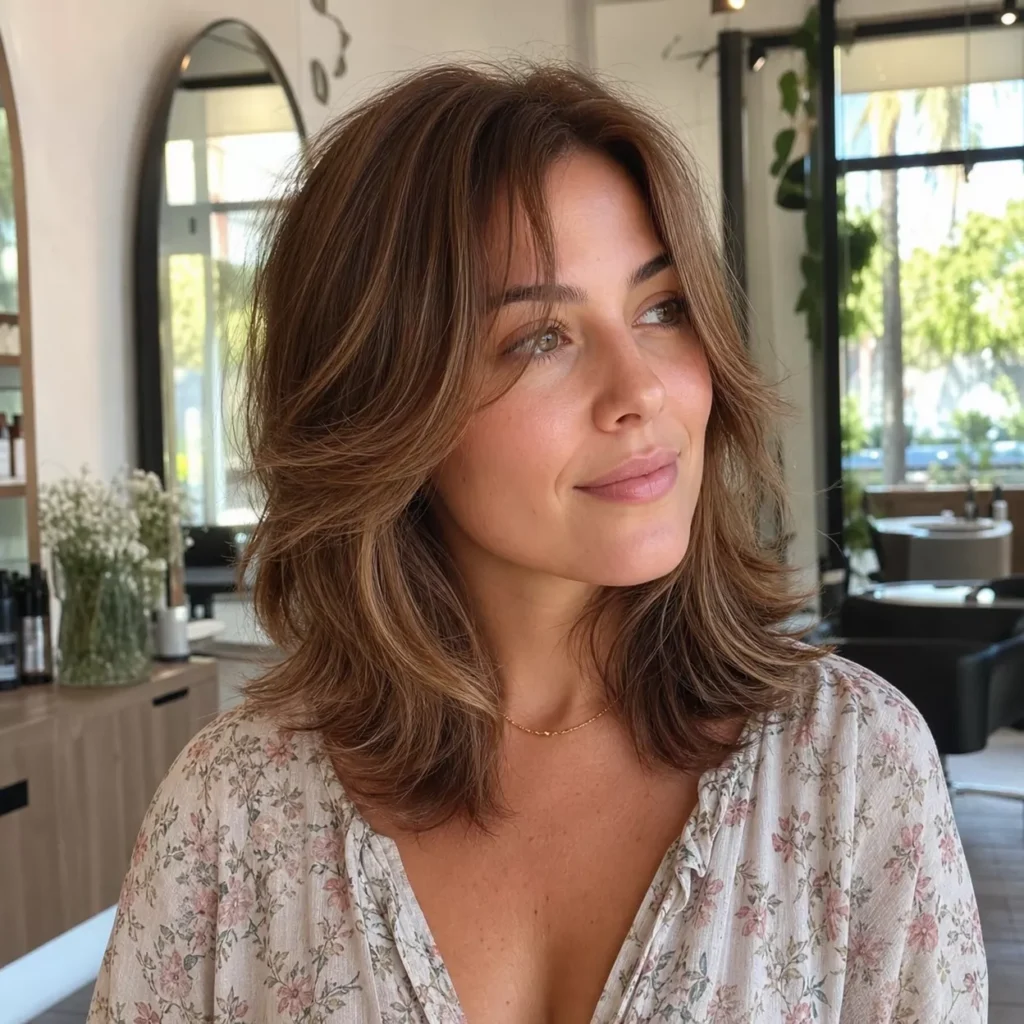
Feathering, texturizing, and thinning all remove hair, but they do different jobs. Feathering directs layers outward and back. Texturizing breaks up the ends so they separate. Thinning removes bulk from inside without guiding direction.
A soft feathered shag relies mostly on the first. Longer, blended layers are angled away from the face, with less choppiness at the ends. It keeps more weight than a choppy shag, which helps on hair that could look sparse with heavy texturizing. The outward sweep often needs a round brush to show on straight hair.
Long-Layered Medium Shag for Fine Hair
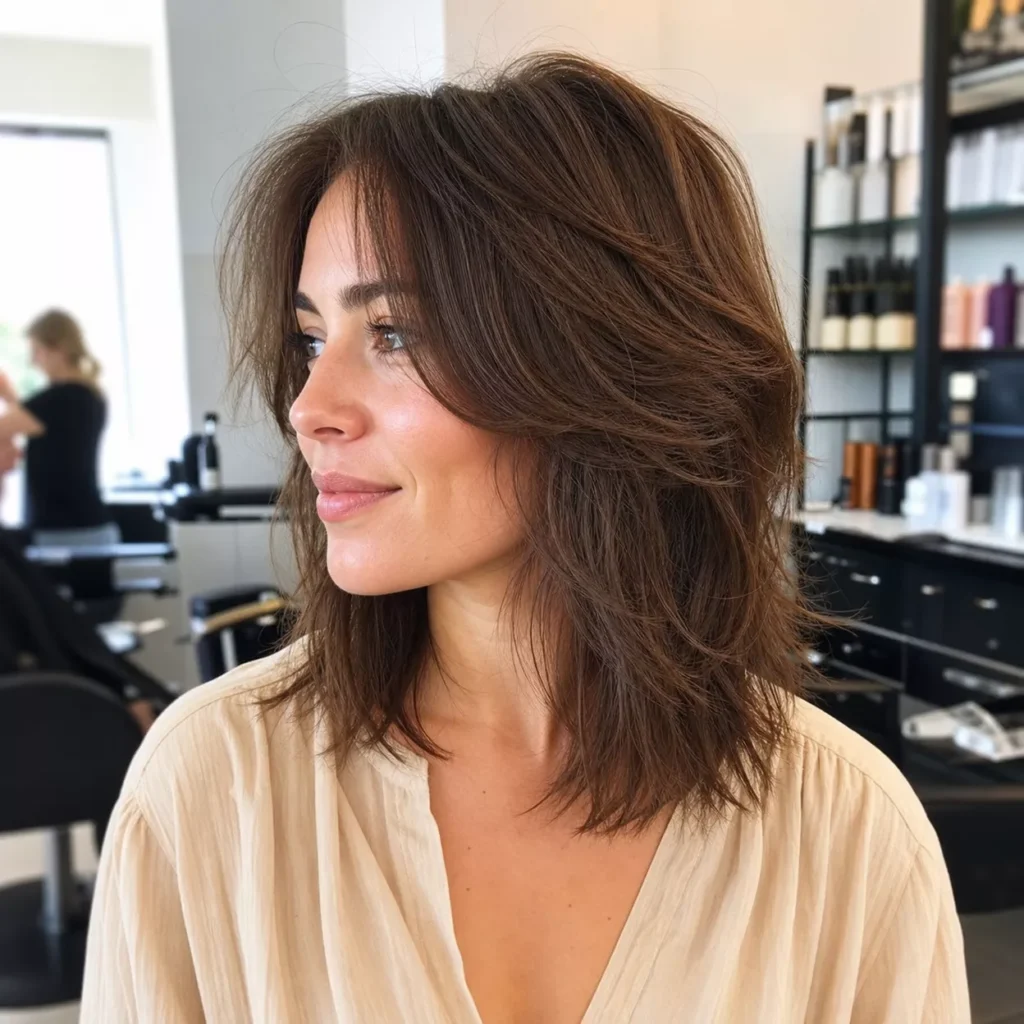
Fine describes the width of each strand; low density describes how many strands there are. The two need different shags.
Fine hair with good density can usually handle long, blended layers that add movement without thinning the ends. Fine hair with low density needs the perimeter protected: fewer layers that start lower, with texture concentrated near the face. A shag can make fine hair look more textured and give the crown a little lift, but it can’t add hair. If the ends start to look see-through, that’s a sign the layering has gone too far. Our guide to volumizing hairstyles for fine or thin hair covers this distinction in more depth.
Dark Brunette Medium Shag

On darker hair, a shag’s structure shows through light and shadow rather than color contrast. Each layer edge catches light while the hair beneath sits deeper, which can make the shape read more clearly than it would on a single light shade. Smooth hair reflects light more evenly, so shine helps. A gloss can add shine and refresh tone if the brunette is colored, but it’s optional. The haircut creates the layers; the color only changes how visible they are.
Honey Blonde Medium Shag
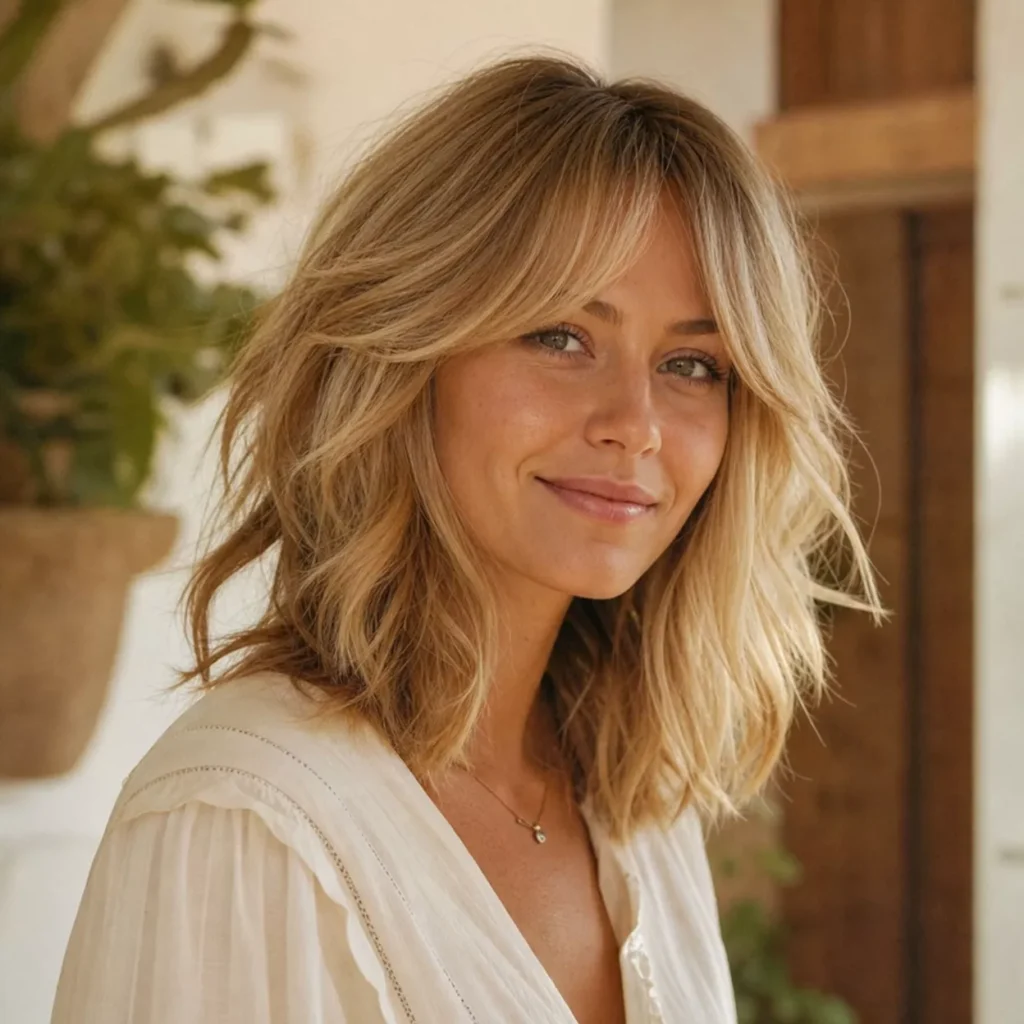
Honey is a warm, golden blonde, and its placement changes what you see. As highlights along the layers, it shows movement. As all-over color, it shifts the whole tone warmer without adding much contrast.
Your starting base decides how much lightening is involved. Light brown hair may need only selective lift; darker hair needs more and may come out warmer than expected. Warm tones can drift brassy as they fade, so a gloss or toner may be part of keeping honey balanced.
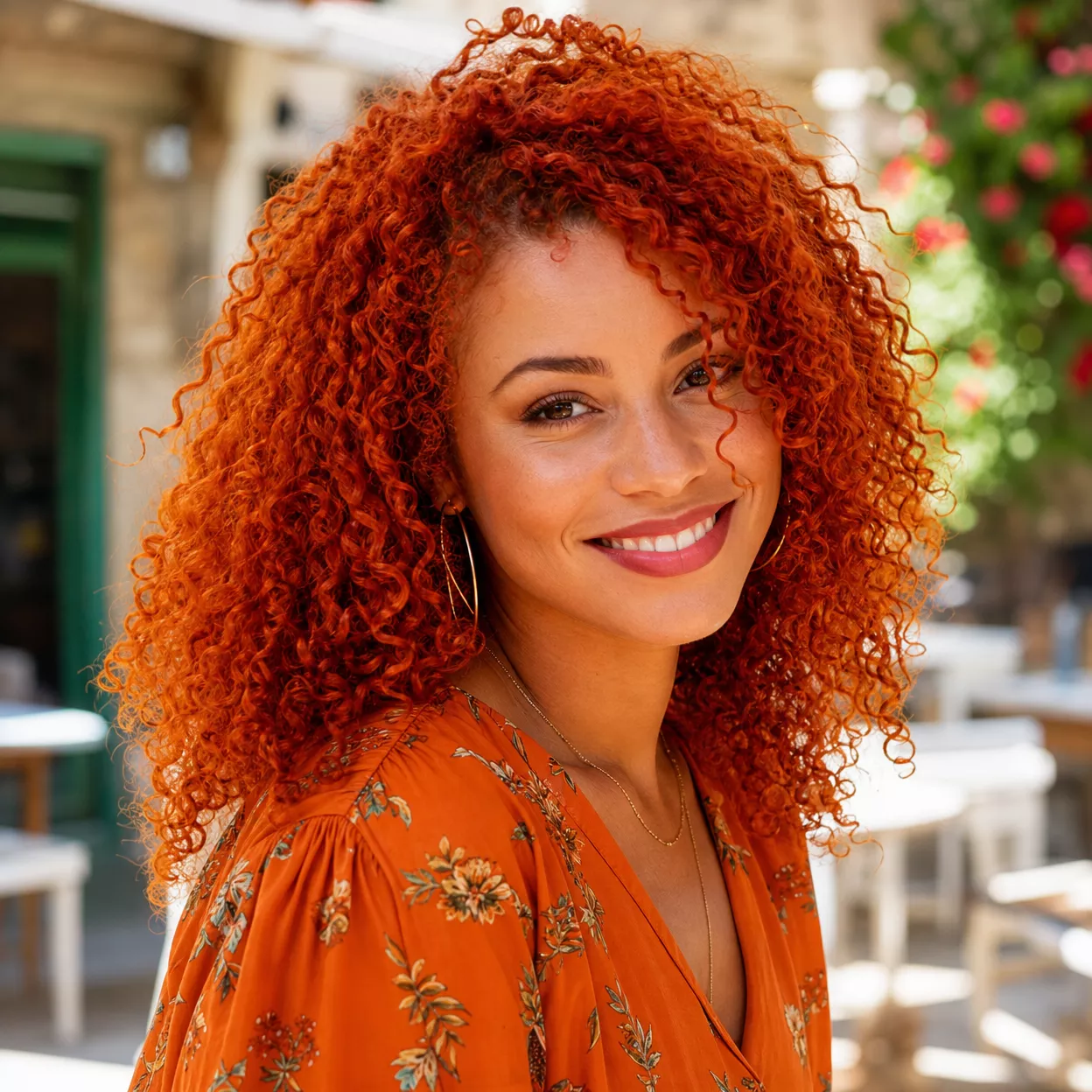
Medium Shag for Curly Hair
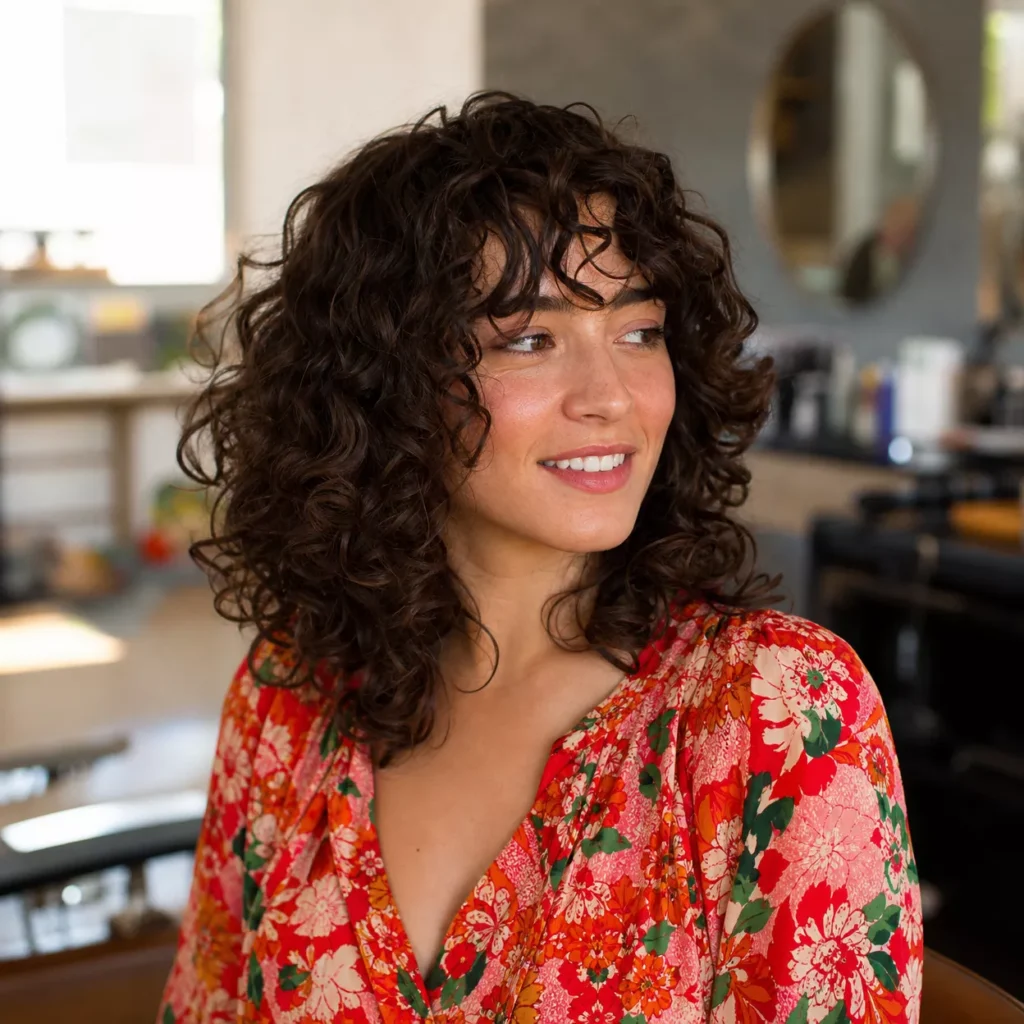
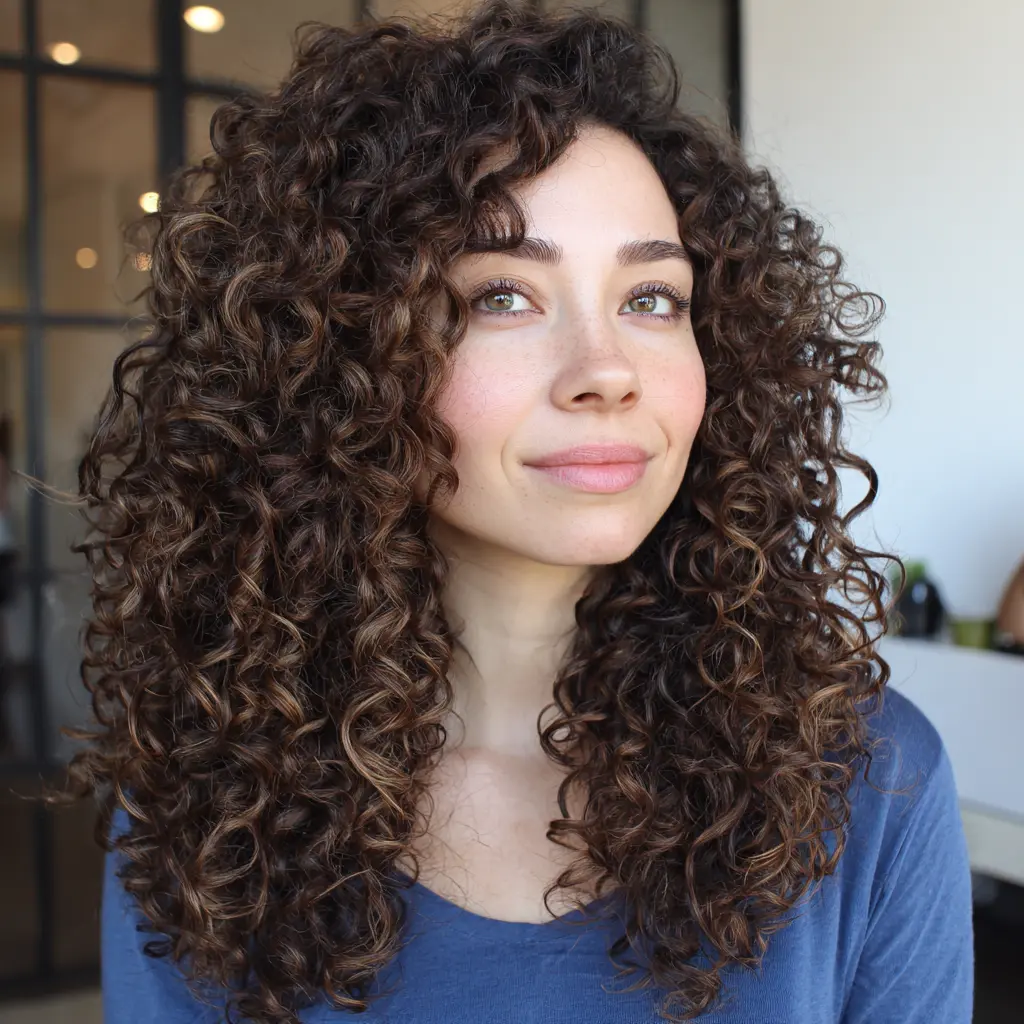
Curly shags need different planning because curls don’t sit at their cut length. They shrink as they dry, sometimes considerably, and the amount can vary across the head. A layer cut to the collarbone while wet may end near the jaw. Many stylists assess curls dry, or check them dry, before finishing.
Weight removal works differently too. Curls at the crown often need to be released so the top can lift, while weight lower down helps the curls hold their shape and keeps the outline from widening into a triangle. Remove too much and curls can frizz or lose definition; remove too little and they may collapse at the crown. Coily hair often shrinks and expands differently from looser curls, so the same plan won’t suit every pattern. Our guide to curly shag haircuts goes into more detail.
Shaggy Lob Hybrid
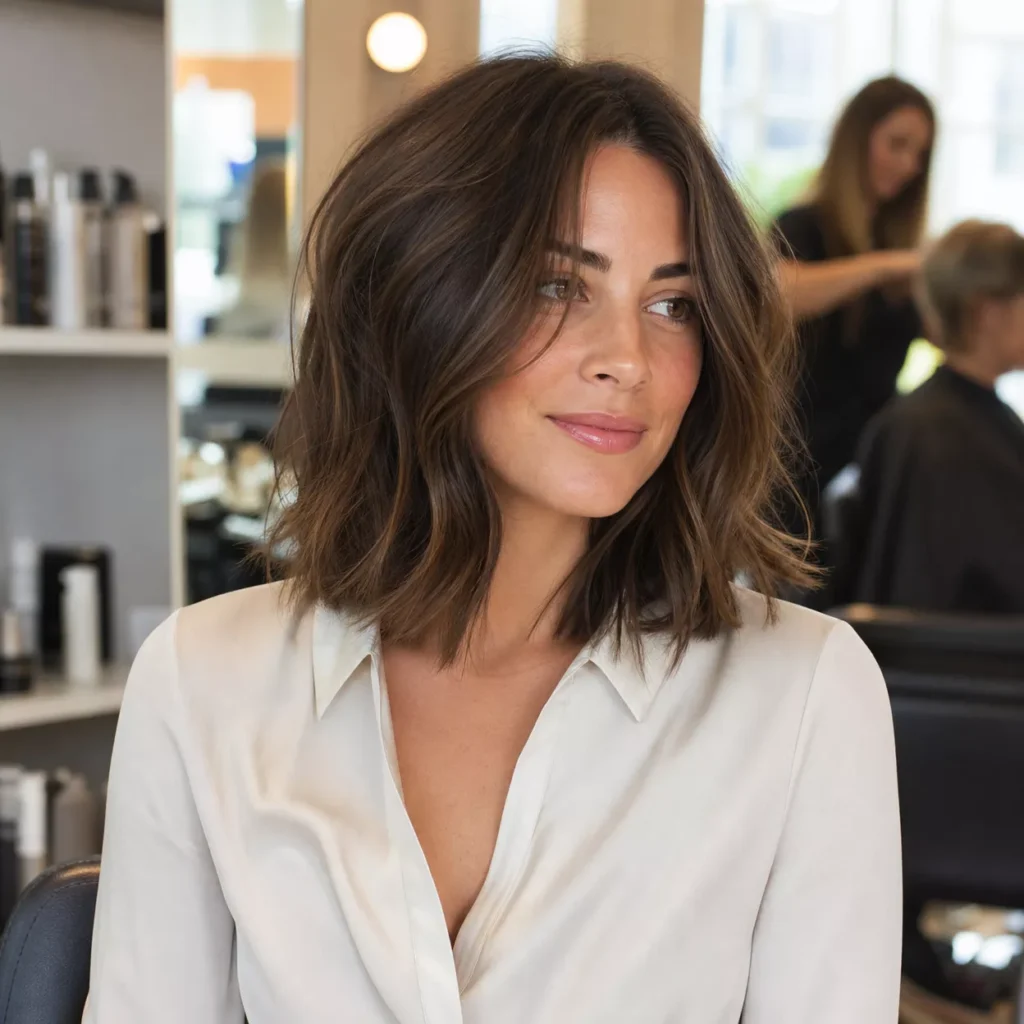
The hybrid splits the work between two cuts. A lob’s clean perimeter sits on the outside; a shag’s layering sits inside. From a distance, the outline reads defined. Up close, the lengths move and separate.
It suits anyone who wants texture but doesn’t want ends that look thin or choppy. As it grows, the solid perimeter tends to keep the shape tidier than a full shag, though the interior layers still soften over time and eventually need reshaping.
Medium Shag with Deep Side Part

The part is styling rather than cutting, but it changes how the whole shag reads. A deep side part sends more hair across one side, making the silhouette asymmetrical and shifting crown volume with it. It holds best when it follows your natural part. A cowlick or strong growth pattern at the crown may keep pushing it back toward center. On low-density hair, a very deep part can show scalp along the line, so a moderate one may look fuller.
Caramel Medium Shag
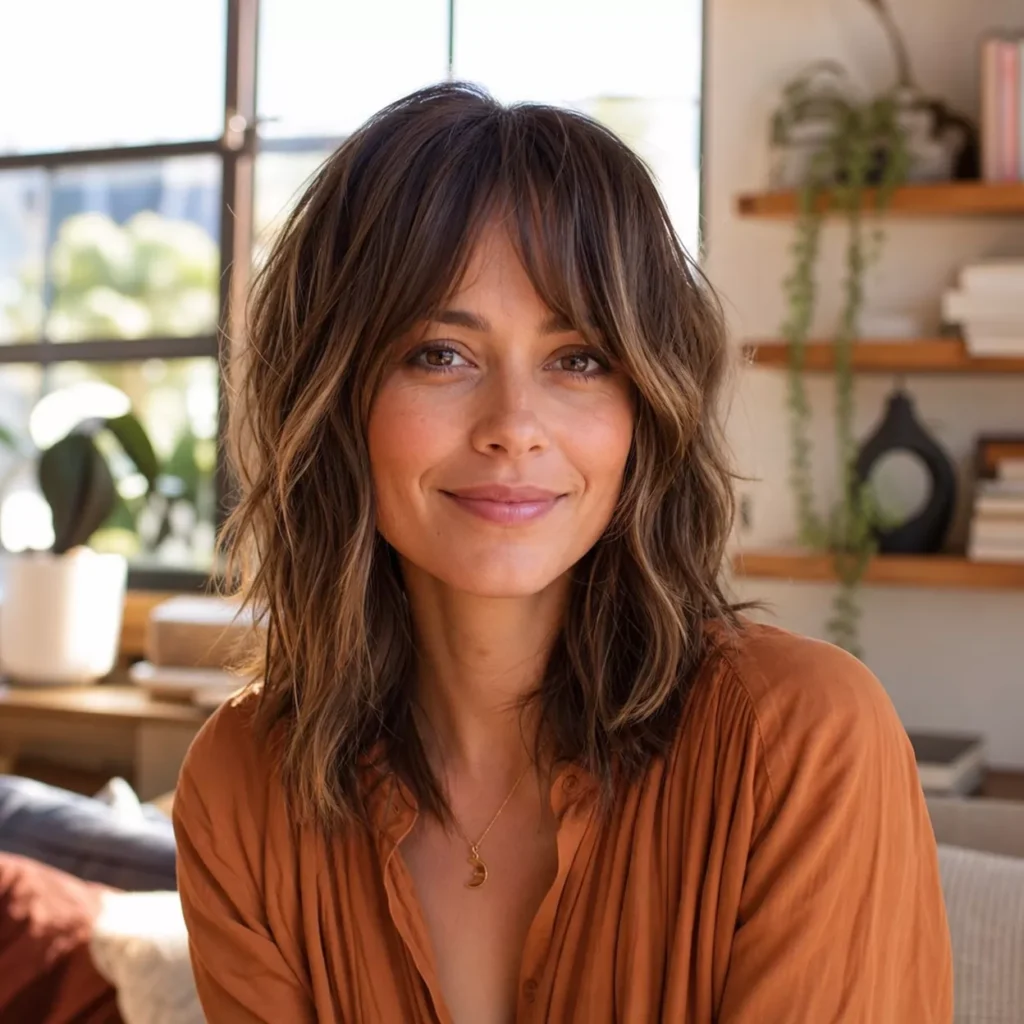
Caramel adds warm, golden-brown dimension that often sits close to a brunette base, so the contrast stays subtle. Placed through the outer layers, it shows the shag’s movement; placed underneath, it adds depth without obvious stripes. On medium brown hair, caramel needs relatively little lightening. On dark brunette, it needs more and may lean warmer. Like other warm tones, caramel can turn brassy as toner fades.
Undone Medium Shag

Undone looks unstyled, but it usually isn’t. Irregular layers give the cut a relaxed shape, and some texture product, scrunching, or a particular air-drying technique brings the finish out. On naturally wavy or curly hair, that can happen with very little intervention. On straight hair, the undone look often needs product and sometimes heat to show separation. The cut provides the possibility; your routine decides how much of it appears.
Medium Shag with Blunt Fringe
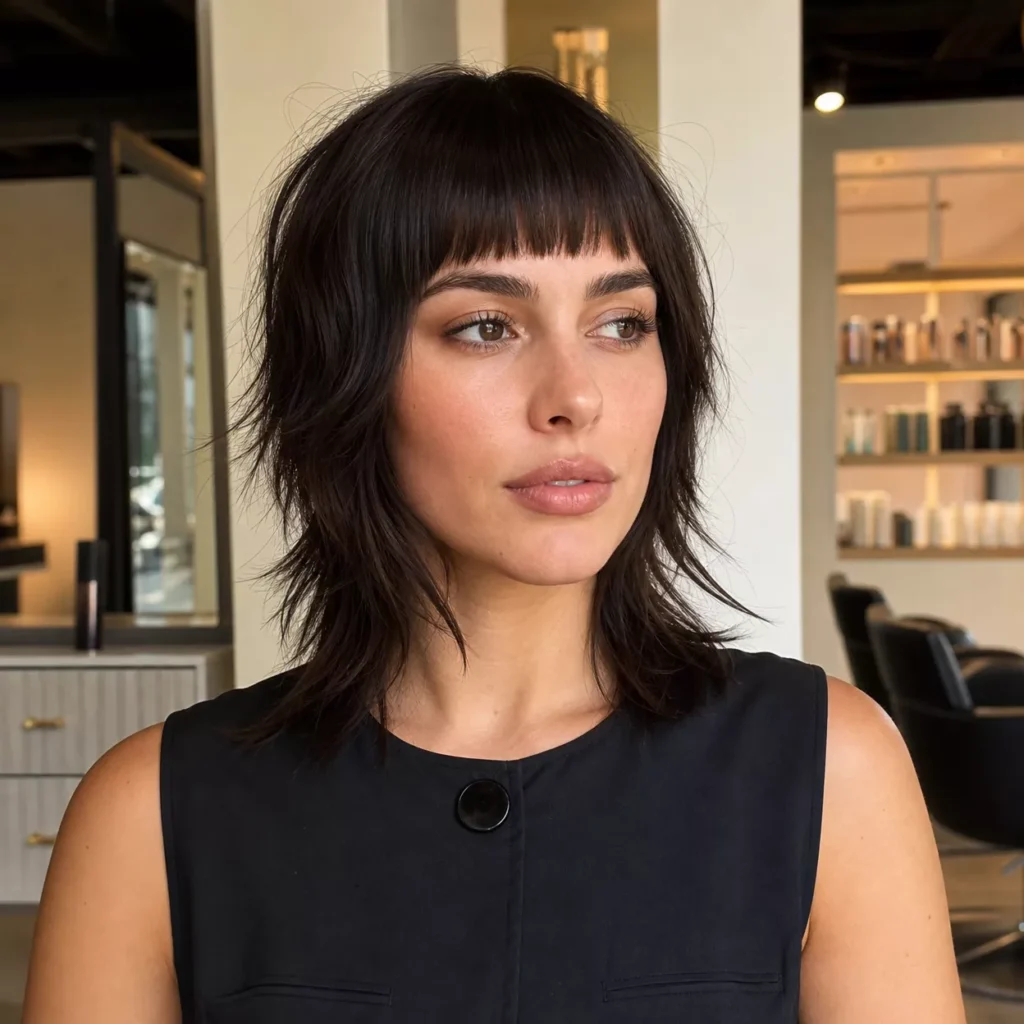
A blunt fringe draws a strong horizontal line, and on a shag that line sits against loose, irregular layers below. The contrast is the point. The fringe needs enough density at the hairline to look solid, and a cowlick can split or lift it. Blunt fringes show growth quickly, so they need trimming more often than the shag itself. Wavy hair can soften the line, while straight hair keeps it sharp.
Silver Gray Medium Shag

Natural gray and artificially colored silver behave differently. Natural gray is often a mix of white, gray, and darker strands, which shows the shag’s texture clearly. Colored silver is more uniform and usually needs toning to stay cool.
Some people find their gray strands feel coarser, drier, or more porous; others notice no change, so it’s worth paying attention to how your own hair behaves. If you’re growing out color, a shag can shorten how long the old ends remain.
Medium Shag with Money Piece
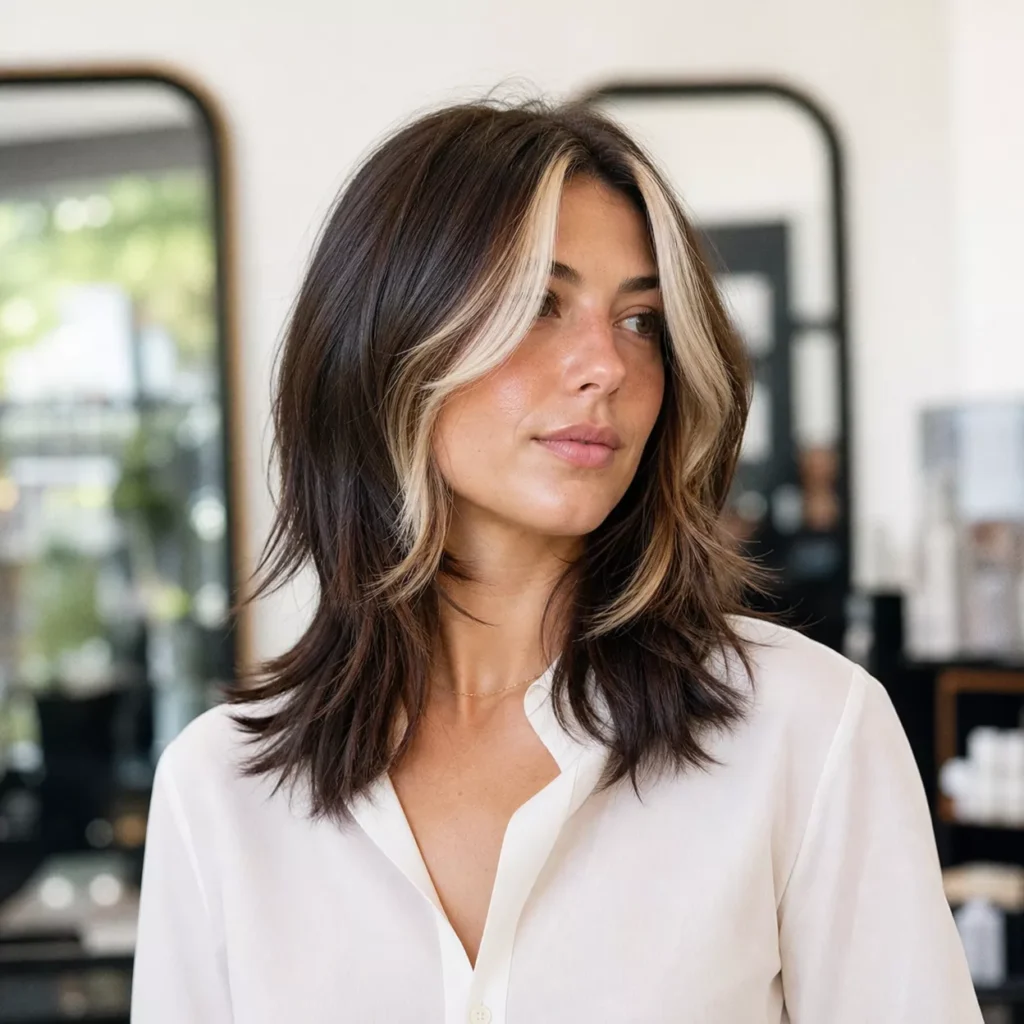
A money piece is a color service, not part of the haircut: two lighter sections placed at the front hairline. On a shag, it brightens the face-framing layers and draws attention to them. The contrast depends on your starting base. A soft shade blends in, while a bright one against dark hair stands out. Because the pieces sit right at the hairline, regrowth shows quickly, and the front may need refreshing before the rest of your color.
Textured Medium Shag for Straight Hair
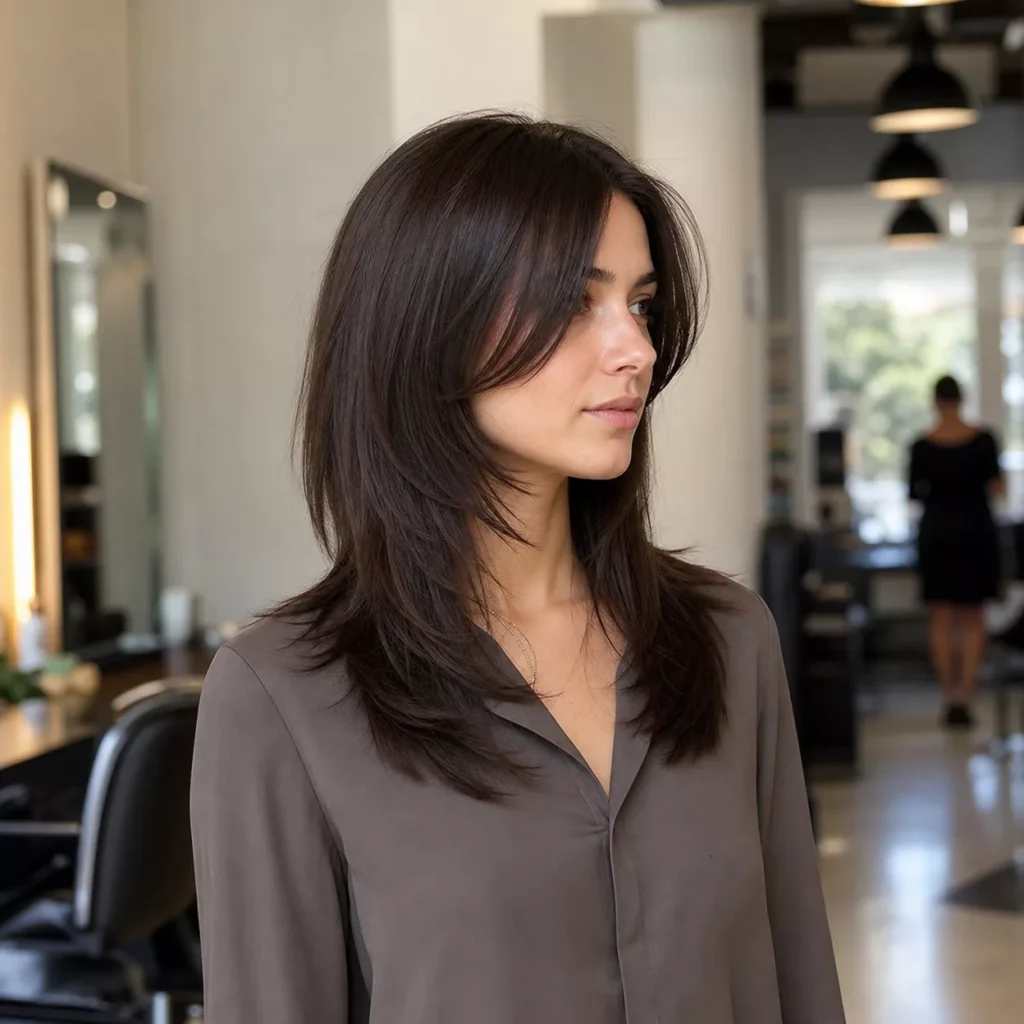
Straight hair shows exactly where every layer begins and ends. That makes a shag look precise and defined, but it also means the texture in many reference photos comes from styling. Without a texturizing product, a wand, or a quick bend with a flat iron, the layers may lie flat. Razor work can soften the ends on straight hair with reasonable density, but it doesn’t add volume by itself, and point-cutting can create a similar softness.
Medium Shag with Soft Curtain Bangs and Waves
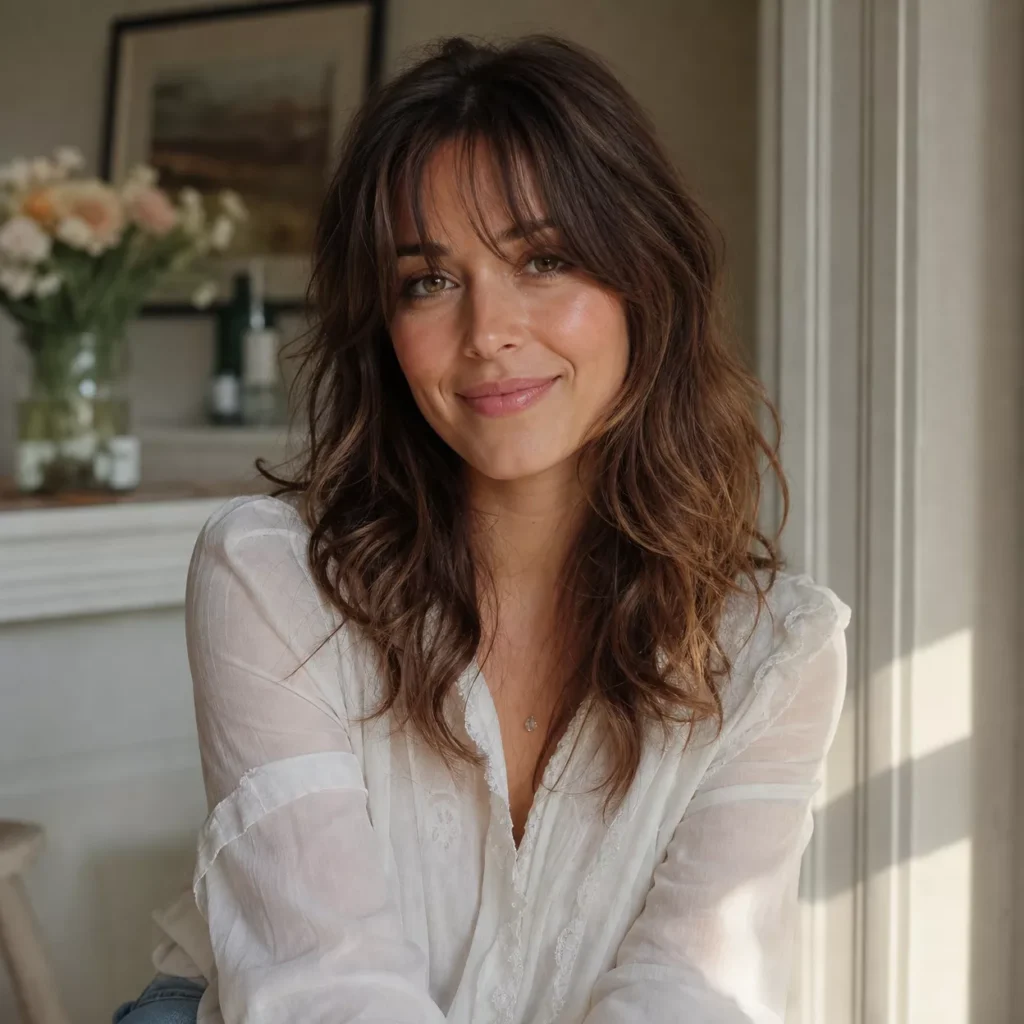
Waves change how curtain bangs connect to the rest of the cut. Where the waves fall around the face decides whether the fringe flows into them or stands apart. Natural waves often blend the bangs into the layers, while heat-created waves may need the bangs styled separately to match. Either way, the bangs need a natural part to sit evenly. Expect some styling: a wand, a diffuser, or at least a quick brush through the fringe.
Rich Mahogany Medium Shag

Mahogany is a deep red-brown, and its depth interacts with the shag’s layers. As the hair moves, light picks out the red tones along each layer edge. Reaching mahogany usually means depositing color on medium to dark hair, sometimes with some lift for brighter red tones. Red tones tend to fade faster than neutral browns, so they may need refreshing more often.
Medium Shag with Invisible Layers
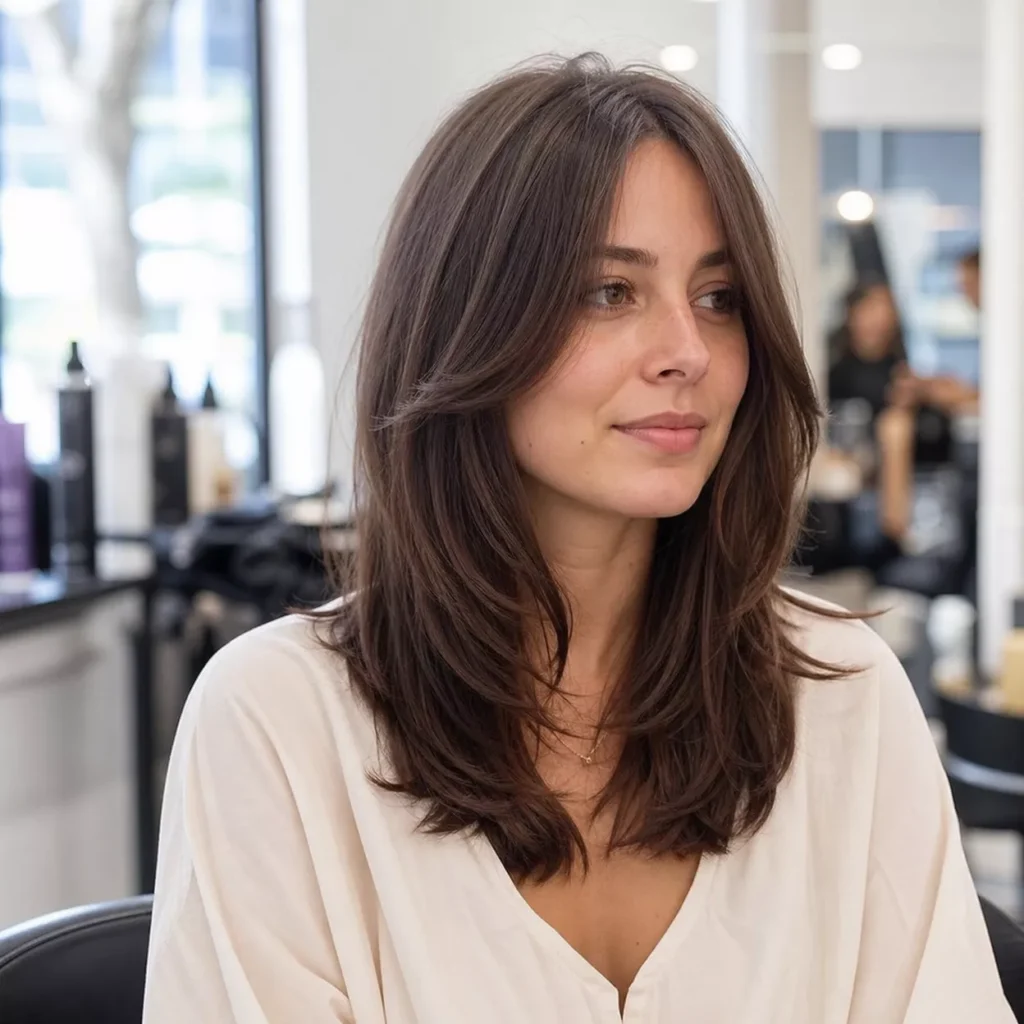
Invisible layers aren’t the same as simply having fewer layers. They’re cut inside the hair, beneath the top section, so the outer perimeter stays intact while the interior moves. The result looks like one length from the outside but behaves more freely. It suits anyone who wants movement without visible steps, and it can help fine or low-density hair keep its fullness at the ends.
Lived-In Medium Shag

Lived-in describes a cut designed to look intentional as it grows: irregular layers, a soft perimeter, and texture that doesn’t rely on precise lines. That can make it lower-maintenance in terms of salon visits, since it grows out gradually.
Daily styling is a separate question. On wavy or curly hair, lived-in may mean little more than a texturizing cream and air-drying. On straight hair, it may mean product and some heat to bring out the texture. A low-maintenance cut isn’t the same as a no-styling cut.
What a Medium Shag Actually Changes in Your Hair
Every medium shag moves weight. Shorter layers at the crown let the top lift. Layers through the mid-lengths let the hair move. Face-framing pieces change what you see first. The perimeter either keeps weight at the ends or lightens them.
That’s why two medium shags can behave completely differently. One might keep a strong perimeter and add subtle layers inside, looking full and smooth. Another might remove weight throughout, looking airy and textured but less full at the ends. Both are medium shags. They just make different choices about where the hair stays.
The Biggest Difference Is Usually Density, Not Hair Type
Hair type tells you about texture. Density tells you how much hair the shag has to work with, and that often matters more.
Fine but dense hair can handle moderate layering, since there’s enough hair to fill in the movement. Fine, low-density hair needs more weight kept at the ends. Thick, high-density hair benefits from internal weight removal so it doesn’t expand. Coarse hair holds texture well but may frizz if heavily thinned. And low-density hair of any strand thickness needs a more cautious approach to layering.
The same shag, cut the same way, can look full on one head and sparse on another. Knowing your density helps your stylist adjust the layering before it’s cut.
When the Reference Photo Will Mislead You
Shag photos often show more styling than they reveal. Texture may come from a wand or product. Extensions may add fullness. Color can make layers look sharper than they would in a single shade. Lighting and camera angle can hide sparse ends or flat spots. And curly shags are sometimes photographed in ways that make the dry shape hard to judge.
Before saving a photo, ask how much of it is cut, how much is styling, and how much is color or lighting.
Decide How Much Shag You Actually Want
Shags sit on a spectrum, and each step brings a trade-off.
Subtle texture, with long layers and a strong perimeter, keeps fullness but shows less movement.
Moderate layering adds visible movement while keeping the ends reasonably full.
An obvious shag, with shorter crown layers and noticeable texture, creates more shape and separation, though it may need more styling.
A heavily layered or razored shag maximizes movement and separation but removes the most weight, which can leave fine or low-density hair looking thin.
None of these is better than the others. The right point depends on your density, texture, and how much styling you want to do.
What Should Stay Heavy?
Removing weight everywhere isn’t automatically better. Deciding where weight stays often matters as much as where it comes out.
The perimeter and ends often need weight to look full, especially on fine or low-density hair. The crown can be lightened for lift, but too much removal on dense hair can widen it. Internal weight can be reduced on thick hair to stop bulk, without touching the outline. Face-framing pieces can be light or heavy depending on how much you want around the face.
A well-planned shag keeps weight in the places that support the shape and removes it only where it gets in the way.
Tell Your Stylist What You Want the Hair to Do
A reference photo helps, but describing the result you want helps more:
“I want movement, but I don’t want my ends to look thin.”
“I like the layers in this photo, but I’d like to keep more weight through my perimeter.”
“I want the shag texture without needing to heat-style it every morning.”
“My hair is low density, so I’d like to avoid removing too much from the ends.”
“My curls shrink a lot, so please consider the dry shape.”
“I like the curtain bangs, but I’d like them to blend into the layers rather than sit separately.”
Final Thoughts
The right medium shag isn’t necessarily the most heavily layered or the most dramatic. It’s the version whose layers, perimeter, and texture work with your density and natural texture, and whose styling demands fit your routine. Decide how much shag you want and what should stay heavy, and the 26 versions above become a useful map rather than a list of photos.