27 Long Layered Bob Haircuts for Thin, Fine Hair
A long layered bob is not automatically a good idea for fine hair. Sometimes it is the best cut you will ever get. Other times it leaves you with see-through ends and a flat crown, and the hair looks thinner than it did before.
The difference comes down to where the layers start and how much weight they take away. Layers that begin too high can leave the ends looking sparse, a crown with no support can go flat by lunchtime, and a shape that looked full in the photo may not survive your own blow-dry.
Below are 27 long layered bob variations. Each one focuses on what matters most for that particular cut, whether that is thin ends, a flat crown, sparse temples, grow-out or how much styling it really needs. One word you will see often is perimeter, which simply means the outer bottom edge of the cut. A solid perimeter is what makes fine hair look full at the ends.
Not sure which one fits your hair? After the styles, you will find a decision guide, a comparison table, a section on who should skip this cut, and ready-made wording for your stylist.
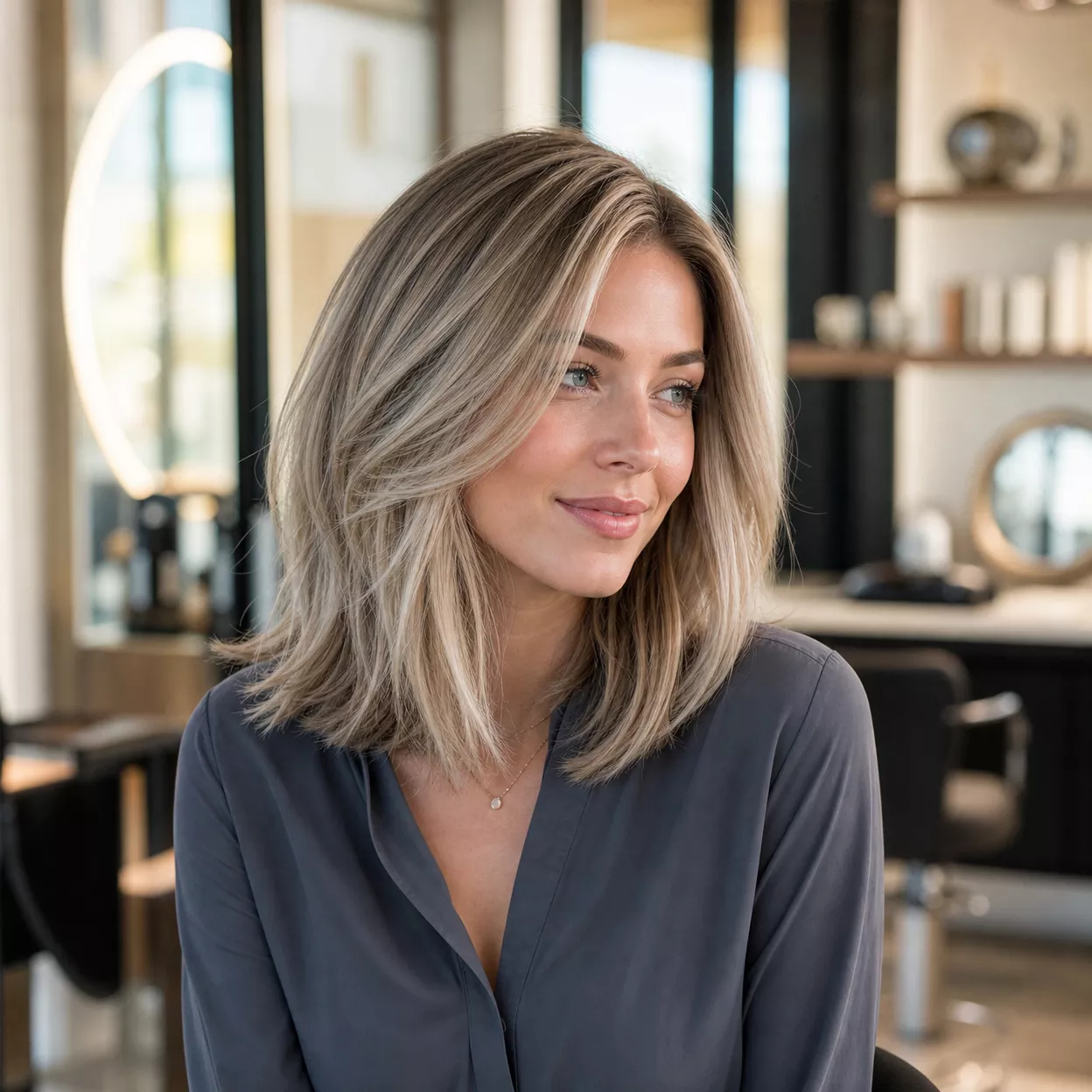
Classic Long Layered Bob
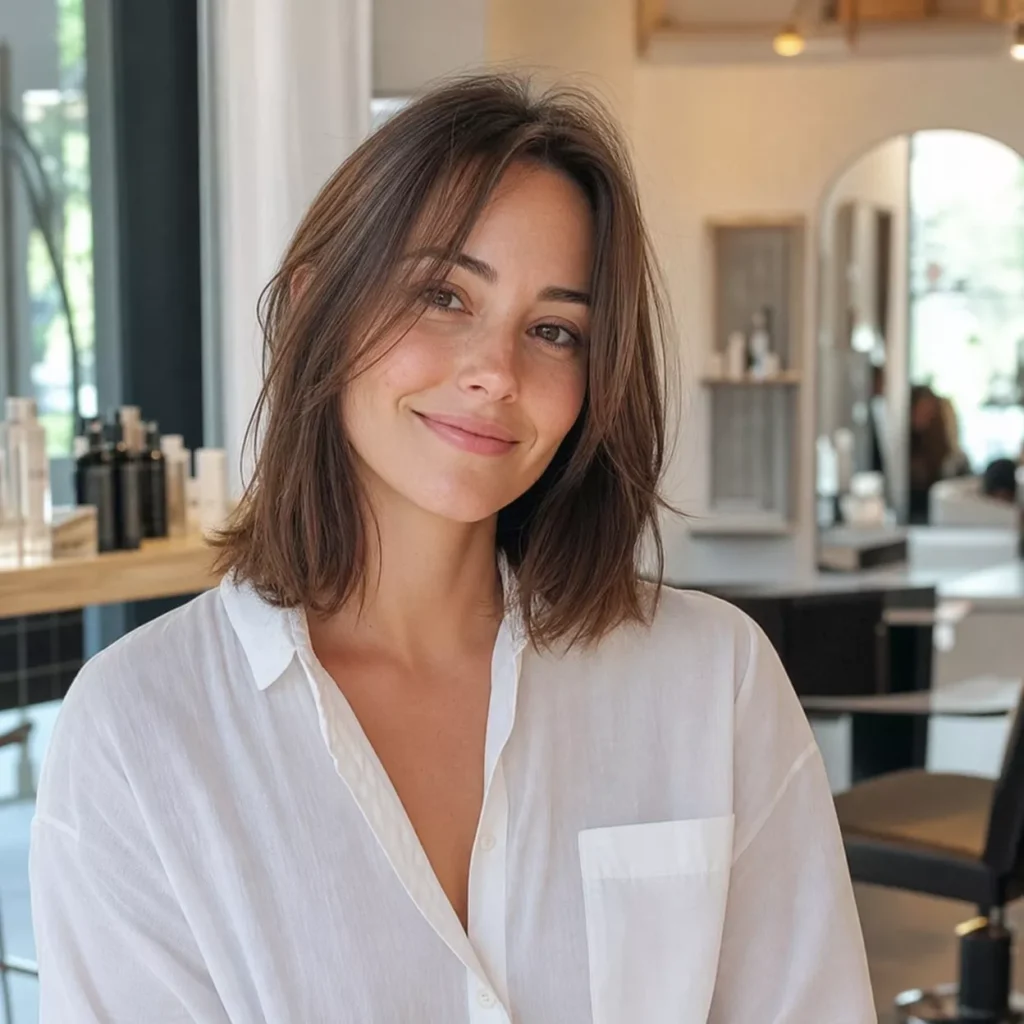
This is the baseline version, and most of the other cuts on this list are variations on it. It sits at collarbone length with soft layers through the mid-lengths and a perimeter that stays largely intact, so the ends still read as solid while the hair gains some movement.
It is also the safest place to start if you are unsure how much layering your hair can handle. You can always go shorter or choppier at the next visit, but weight that has already been cut takes a long time to come back. Styling takes roughly 5 to 10 minutes with a round brush or large-barrel tool, or nothing at all if your hair dries with a natural bend.
A good opening line for the salon: “Keep the perimeter fairly solid and add only subtle internal layers for movement.”
Long Layered Bob with Curtain Bangs
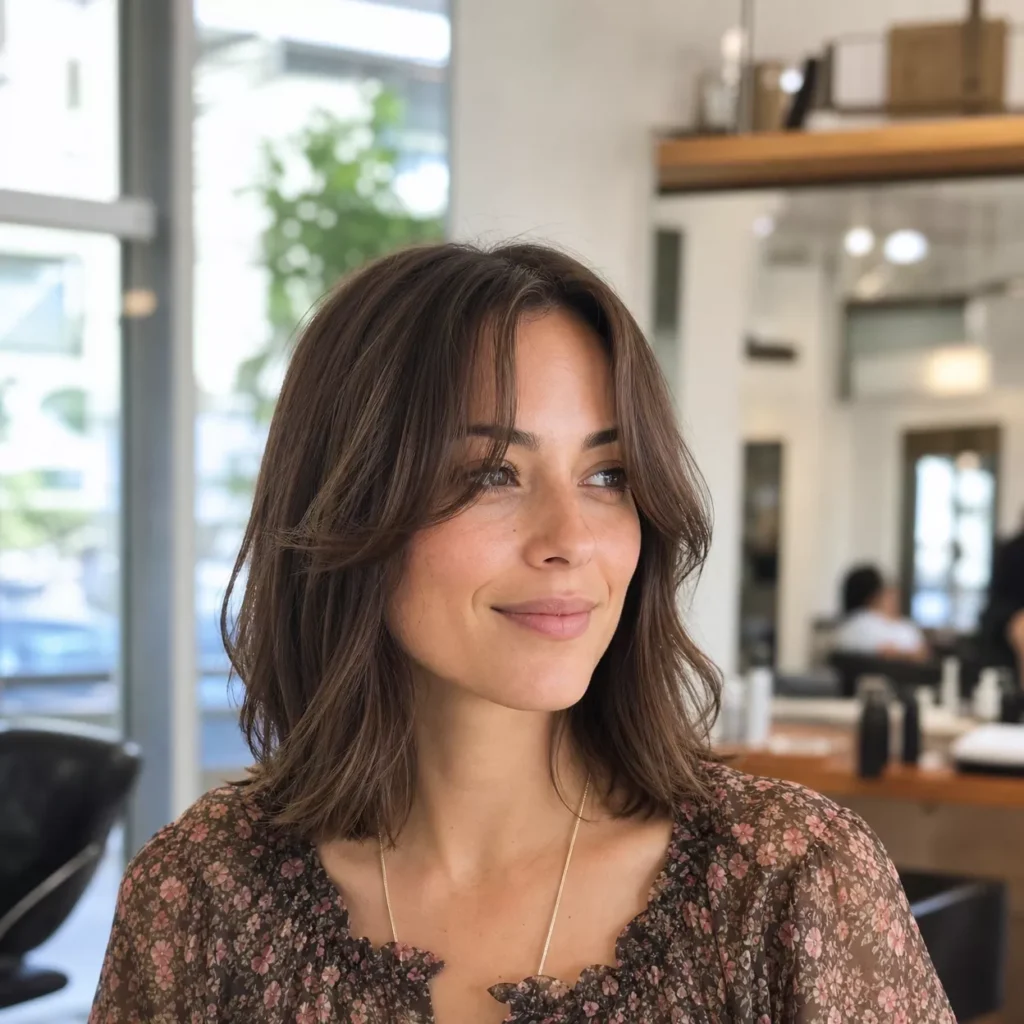
The real question with curtain bangs is not the bangs themselves but what they take from the front of your head. They are cut from the hair around the forehead and temples, so if that area is already sparse, they can look thin instead of soft. Asking for the bangs to come from a smaller section usually solves it: “Please cut the bangs from a small section so I keep density at my temples.”
Parted in the middle and angled toward the cheekbones, they soften the face without the commitment of a short fringe, and they grow into face-framing pieces rather than an awkward in-between stage. The catch is upkeep. Because they sit on the most visible part of your head, they need reshaping about every three to four weeks to hold their angle. If you already resent salon visits, factor that in before you commit.
Blunt Perimeter Long Bob with Interior Layers
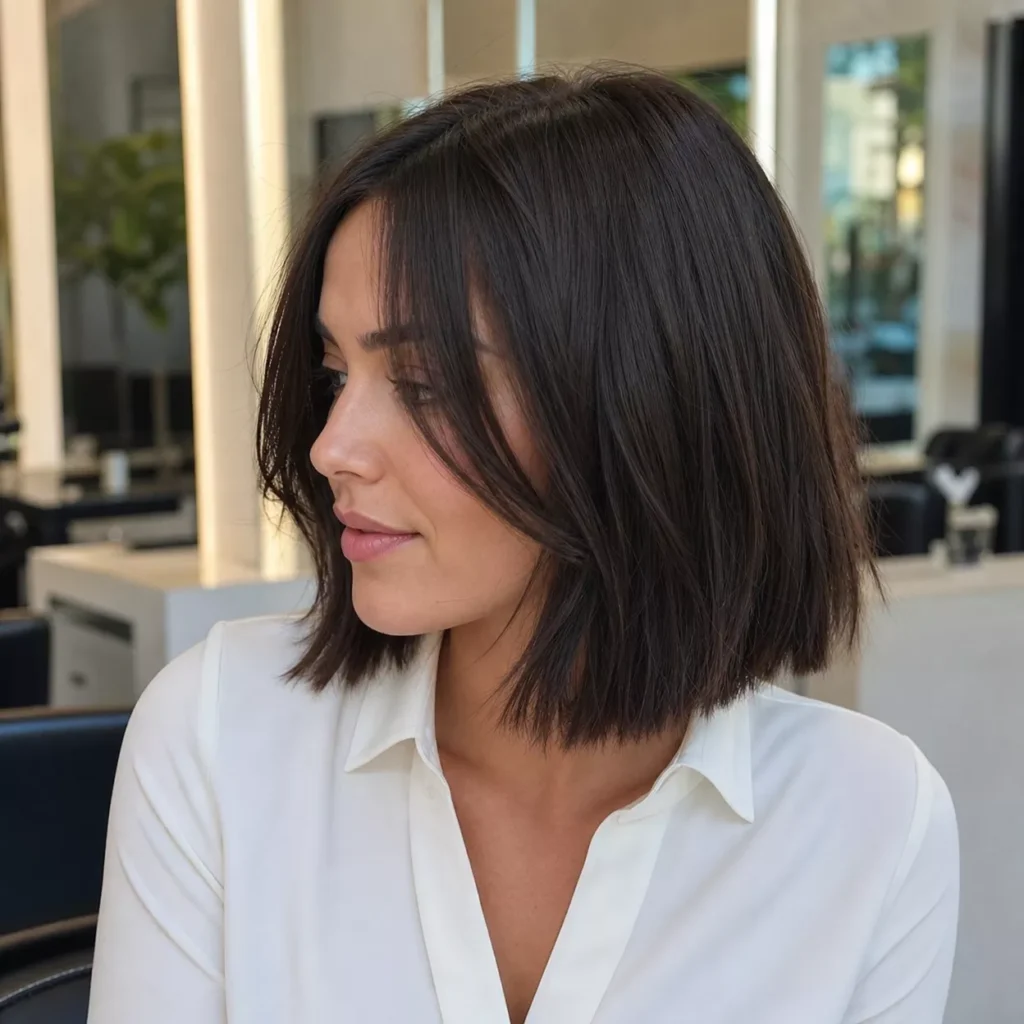
This is the cut to consider when your ends are what worries you. A solid, even bottom line gives the eye one unbroken edge to read, so narrow strands look thicker because there is no taper to suggest sparseness. Inside that line, layers stop the hair from lying flat against the skull. It is the version most often suggested for low density.
The trade-off: you give up the piecey, undone texture you see in heavily layered photos. Ask your stylist how heavy to keep the perimeter compared with the interior, based on your density rather than on the picture. Styling is quick, about 5 minutes with a round-brush blow-dry at the crown.
Razored Long Layered Bob
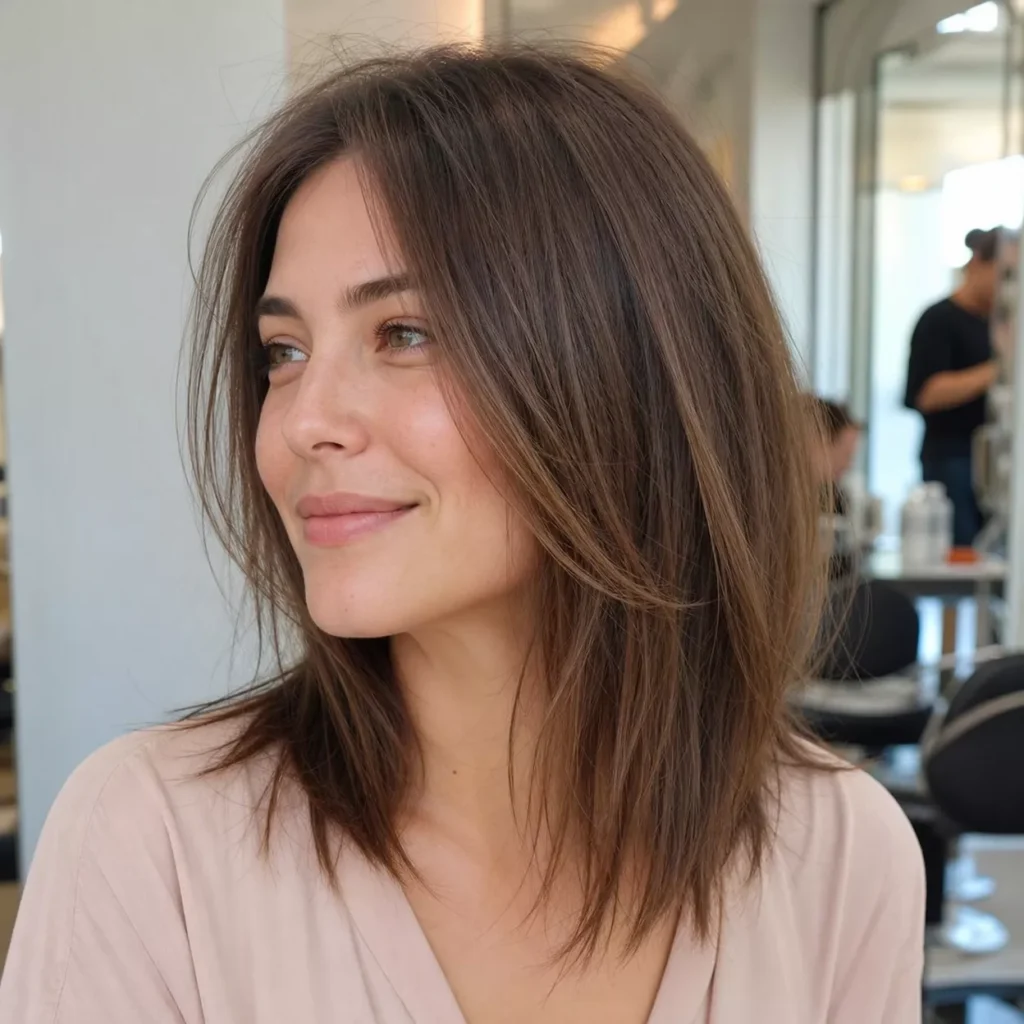
A razor gives a softer, feathered end instead of a hard scissor line. Whether that suits you comes down to three things:
- Condition. On dry or chemically processed hair, a razor can encourage the ends to fray.
- Density and strand width. On narrow strands it can leave ends see-through.
- Your stylist. Results depend heavily on technique, so ask how often they use one.
It is entirely reasonable to ask directly: “Would you use a razor on my hair specifically, and what will the ends look like as it grows out?” A stylist who works with razors regularly will give you a straight answer. Expect 5 to 10 minutes of styling, with a little texture cream through the ends.
Wavy Long Layered Bob

Everything about this cut depends on what your hair does when you leave it alone. A natural bend keeps the hair away from the head and gives the layers something to do, so the movement comes from your texture rather than from a hot tool. If your hair dries straight and flat, you are looking at a wand every morning, which is a very different commitment from what the pictures imply.
If your hair does wave, the routine is short: mousse on damp hair, scrunch, then air-dry or diffuse. About 5 minutes. The variable is humidity. Moisture relaxes set waves through the day and can leave fine hair either frizzy or flat.
Photo reality: pictures of wavy layered lobs usually show styled waves. Ask your stylist how your hair looks air-dried before you commit.
Long Bob with Face-Framing Highlights
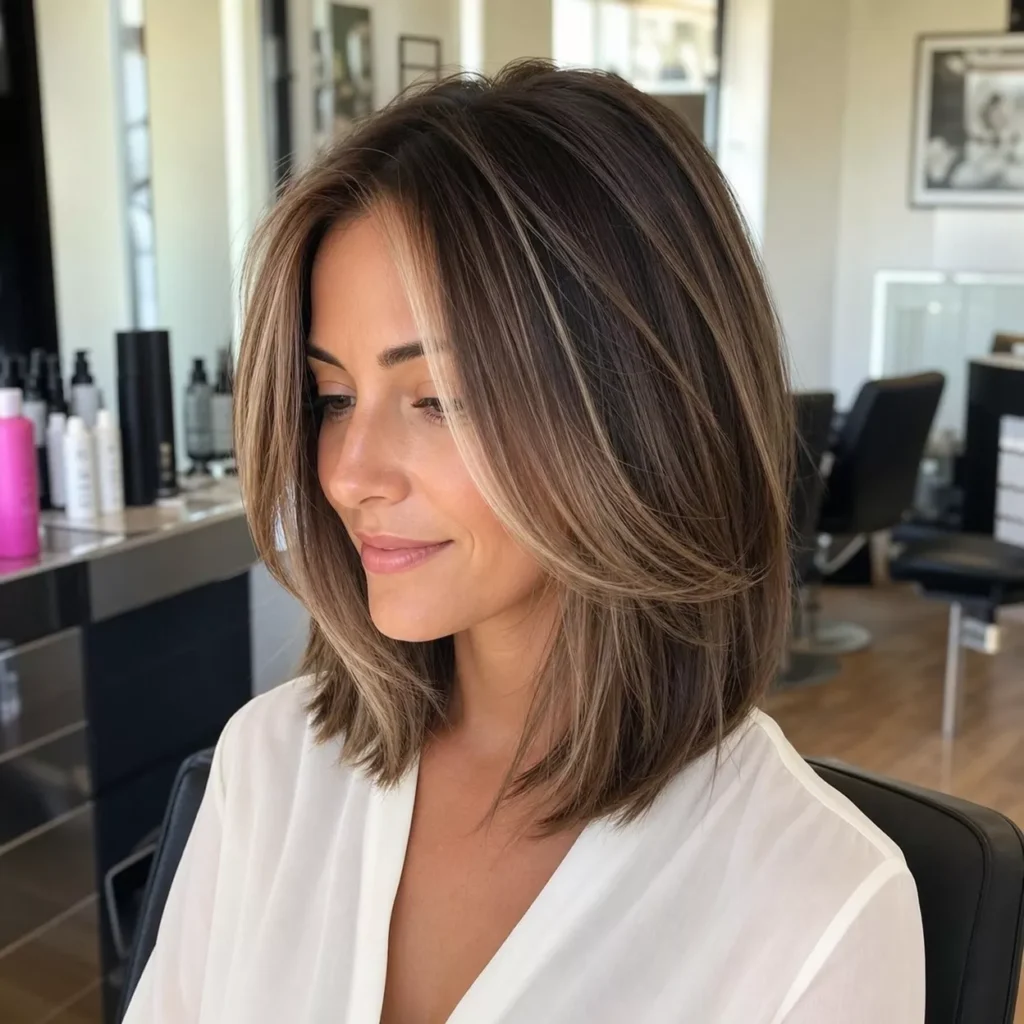
Placement is the point here, not the shade. Lighter pieces concentrated at the front catch light where the face is, and because the work is limited to that zone, grow-out is gradual and the cost stays well below a full head. That makes it a reasonable first color service if you have never colored before.
One thing to specify: fine weaving. Thick sections on narrow strands can separate and look stripey, so ask for the highlights to be woven finely into the layers.
Textured Long Bob with Wispy Ends
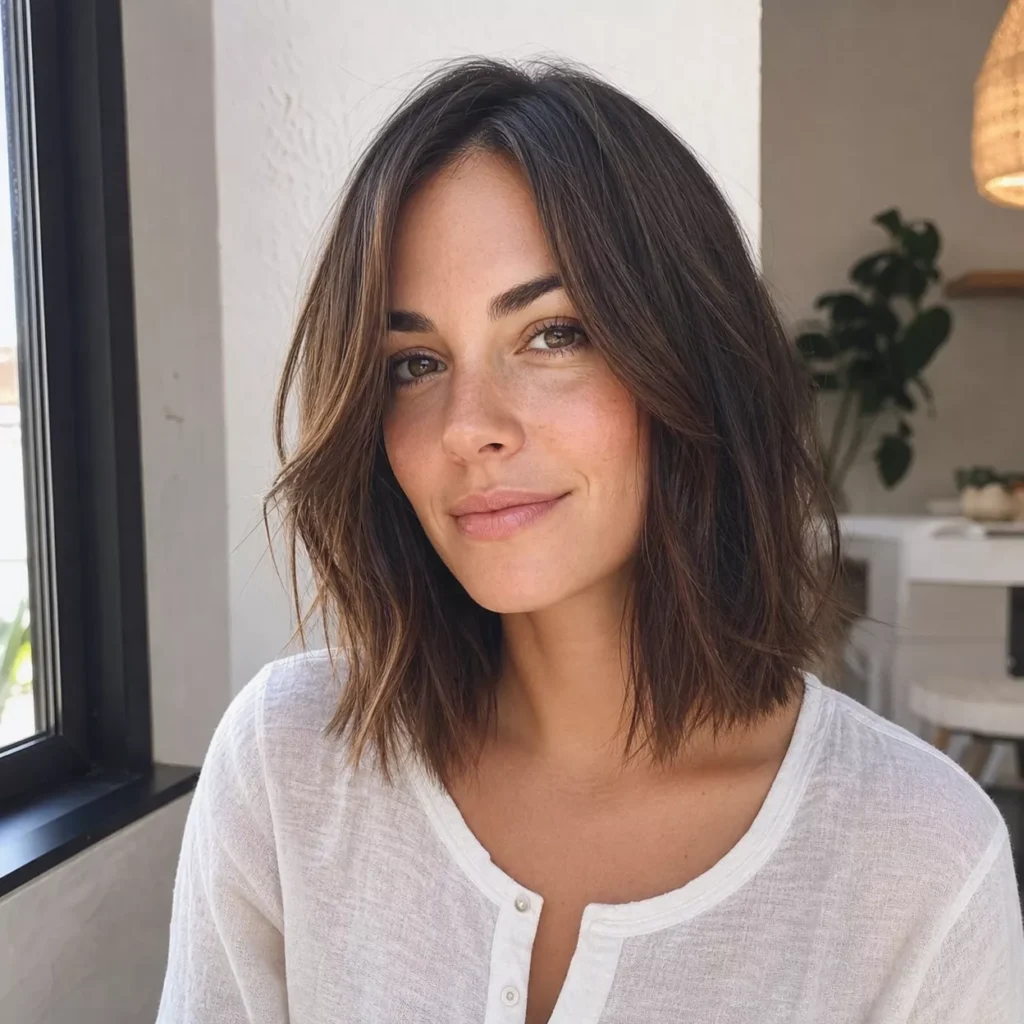
Deliberately thinned, separated tips look soft on hair with weight to spare, which is why this style photographs so well.
Who should be careful. If your scalp shows through the parting, or your ends already look see-through, this technique subtracts from the very thing you are trying to protect. Weight removed this way takes months to grow back. If you love the look anyway, say something like: “Keep my ends fuller than the photo. My hair is fine and I don’t want them to look thin.” Styling takes about 5 minutes.
Long Bob with Curtain Bangs and Balayage
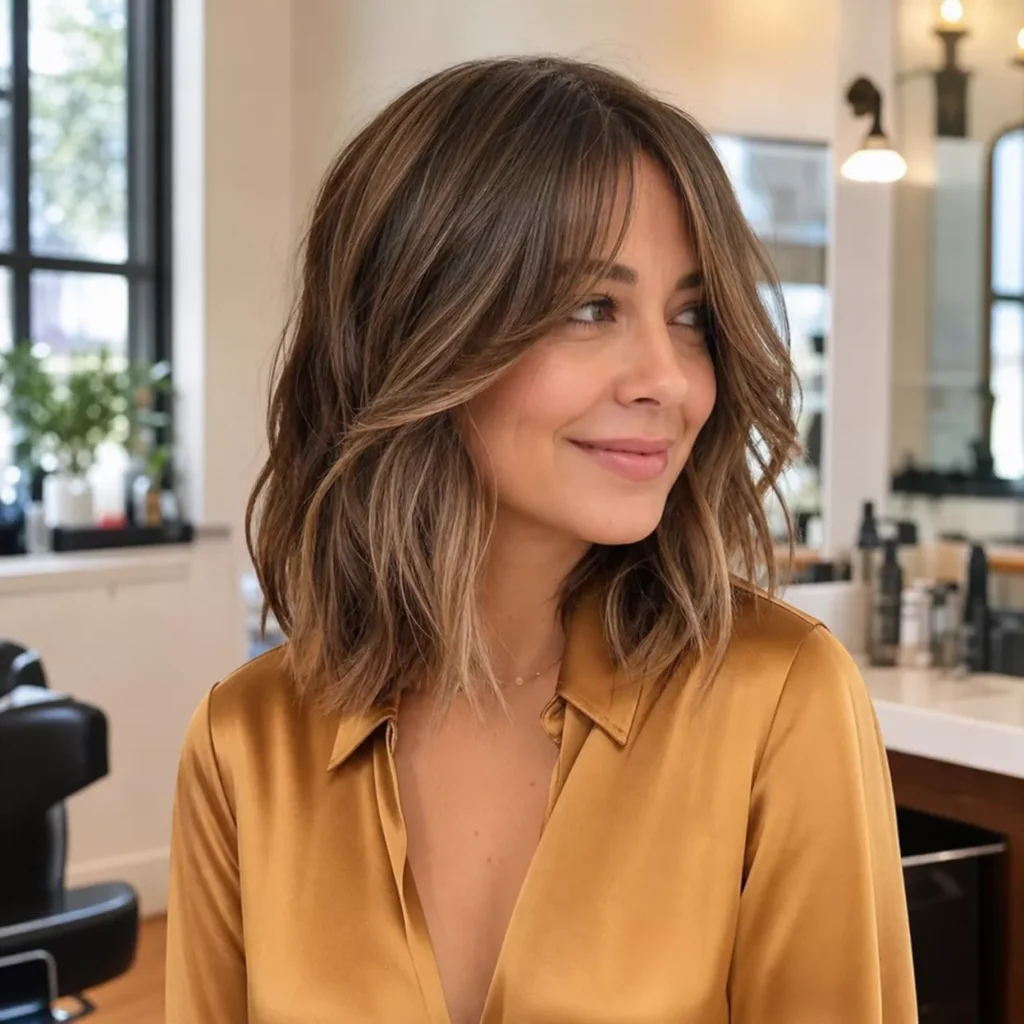
This combination means two upkeep schedules running side by side.
- Bangs: a trim every few weeks to keep the angle.
- Balayage: every few months, though it grows out gradually.
The bangs handle the face, and the painted color adds contrast through the layers, giving the eye some variation to read. Lightening does affect strand condition, and damaged hair looks thinner, so ask your colorist to keep it light enough that your ends stay healthy. It is a sensible pairing if you were going to do both anyway, and less sensible as a first change. Allow about 10 minutes for styling.
Sleek Straight Long Layered Bob
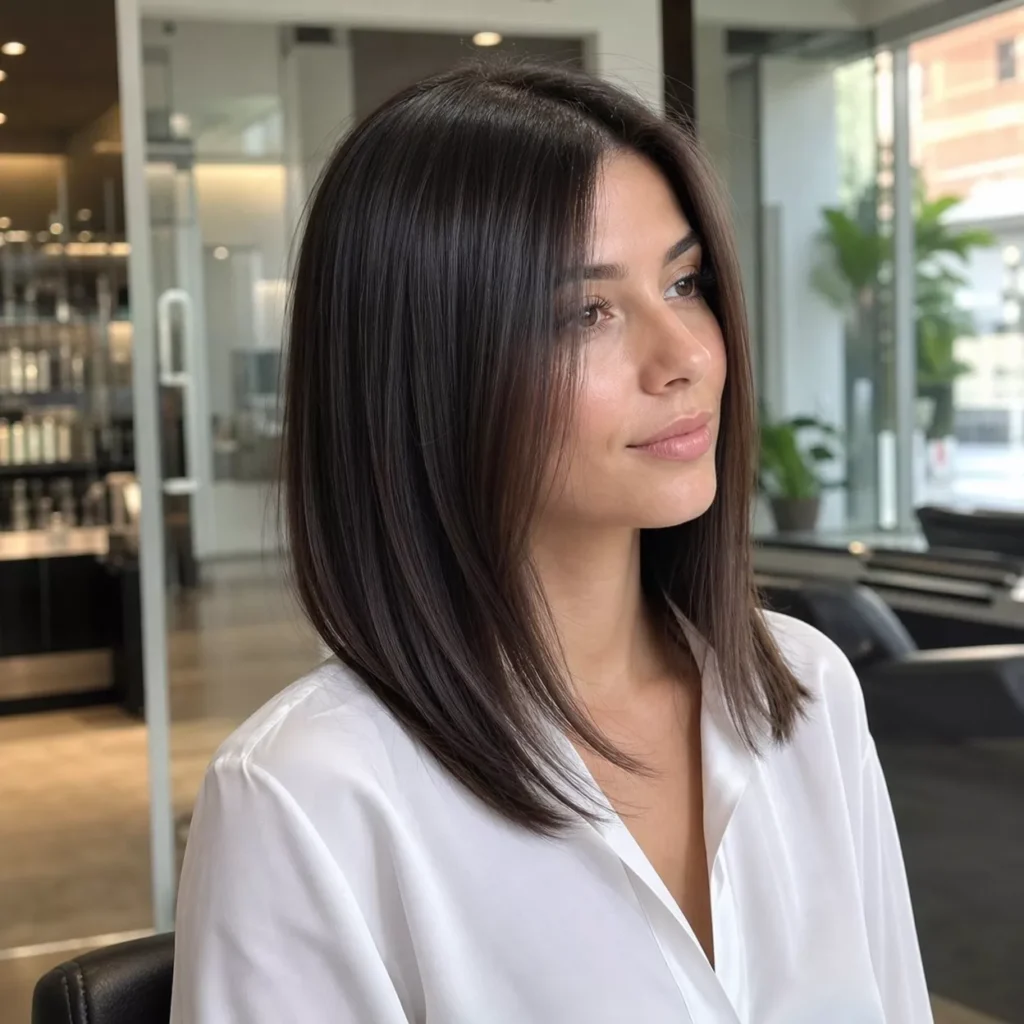
Smoothed straight, the layers show up as clean lines falling at slightly different lengths, and the shine makes the perimeter look dense and finished. The catch is that sleek hides nothing. Dry or split ends are immediately obvious, so this look asks for hair in good condition.
Getting narrow strands truly smooth usually means heat, and over time heat is one of the main causes of the breakage that makes ends look sparse. Heat protectant is not optional here, and a moderate temperature does less damage than a high one. Plan on 15 to 20 minutes with a dryer and flat iron, which makes this one of the higher-effort options on the list.
Photo reality: the pictured finish often involves a professional blowout, a flat iron and sometimes extensions. With lower density, expect a slimmer result and ask how much of it your hair can reach. A useful question: “Will this still look full from behind once I smooth it straight?”
Long Bob with Soft Waves and Side Part

This one costs nothing to try tomorrow morning. Shifting the part stacks more hair on one side, which makes the silhouette look denser from the front without changing the cut at all. Soft waves from a large-barrel iron take about 10 minutes.
One caution: a hard, deep side part can expose the parting line if your scalp shows easily, so experiment with how far over you take it. If you decide to cut for it, ask your stylist to shape the layers so they work with both a side part and a center part.
Long Bob with Money Piece
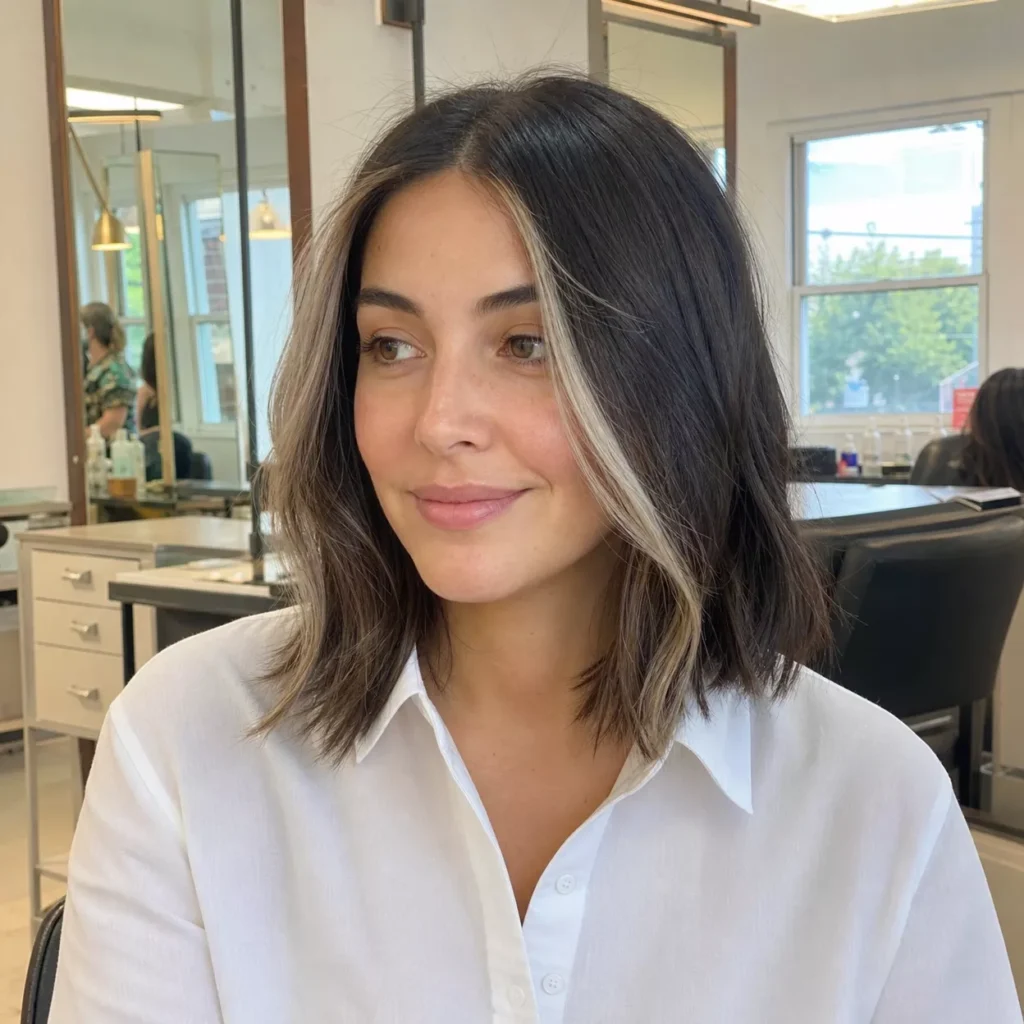
Two bright sections at the very front, worn against a darker base. It is higher contrast than face-framing highlights and deliberately obvious rather than subtle. Because it sits right at the hairline, regrowth shows sooner than with almost any other color option here, so plan a touch-up schedule you can live with.
Beachy Long Layered Bob

Salt or texture spray on damp hair, scrunch, then leave it alone. That is the whole routine, and it holds up on second and third-day hair better than a smooth finish does.
The cost is dryness. Salt sprays can roughen narrow strands, and rough ends look thinner than smooth ones, so use it sparingly and keep it off the roots. Since you will be air-drying, tell your stylist so the layers are cut to look good scrunched rather than blow-dried. Expect about 5 minutes of effort plus drying time.
Long Bob with Ash Blonde Color
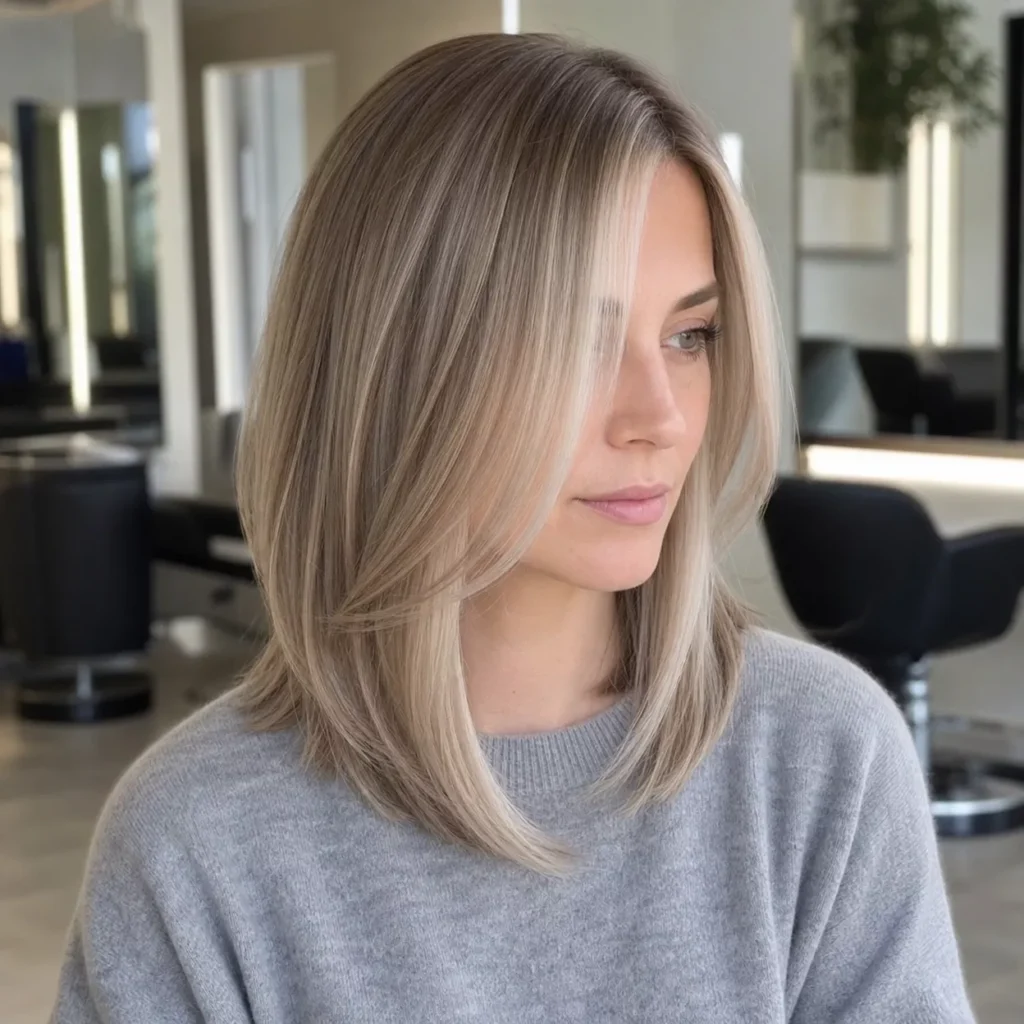
With ash, the challenge is upkeep of the tone more than the lift. Cool shades fade warm, so holding a true ash means toning between appointments, usually with a purple shampoo or a salon gloss. Over a slightly deeper root, the cool blonde creates depth that the eye reads as dimension.
If you would rather not manage tone, a warmer blonde is less work. And because lightening affects condition, this shade suits hair that is already in good shape.
Choppy Long Layered Bob

The gap problem. Disconnected layers at several lengths create visible separation between pieces. When there is enough hair to fill the gaps, that reads as texture. When there is not, the gaps read as thinness. This is the highest-risk version for sparse hair, and it works best on fine but dense hair that collapses into one flat, heavy fall.
If you like the look anyway, keep the choppiness inside: “Keep the choppiness in the interior and leave the perimeter comparatively solid.” A small amount of texturizing paste is enough for styling, about 10 minutes.
Long Bob with Invisible Layers
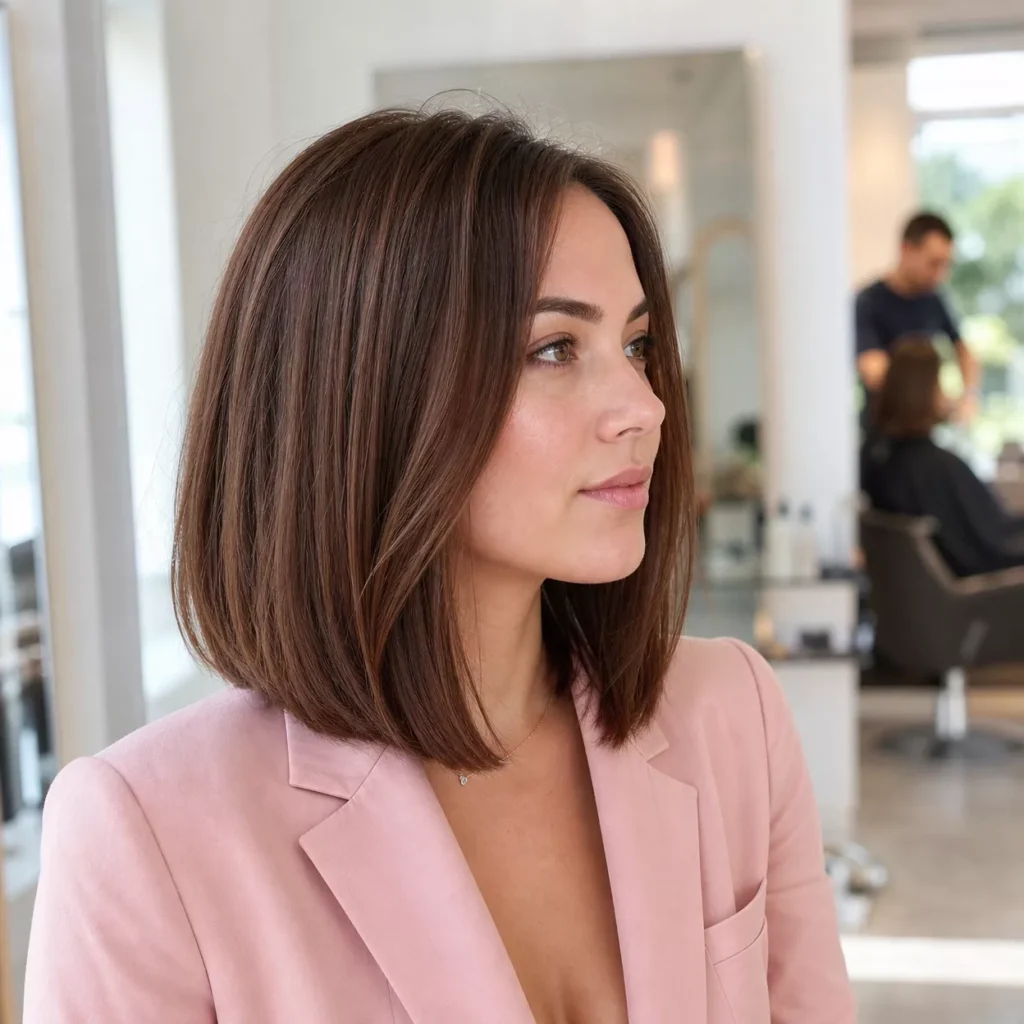
From the outside, this looks close to a one-length bob. Underneath, layers cut internally have redistributed the weight, and nothing touches the perimeter. It is a good entry point if a choppy cut has disappointed you before, or if you want to test whether layering helps your hair at all without changing the outline you already like.
The effect is subtle, so if you want visible separation between pieces this will feel underwhelming. When you ask, describe it plainly: take weight out from underneath and leave the outer line untouched. An ordinary blow-dry of 5 to 10 minutes is enough.
Honey Blonde Long Layered Bob

Warm and golden, and easier to live with than ash for one specific reason: the regrowth line is less stark against most natural bases, so you can stretch the gap between appointments. It is a sensible pick if the maintenance schedule is what usually defeats you.
The one thing to watch is tone. A honey that runs too warm can look brassy over time, so ask about an occasional gloss.
Long Bob with Textured Crown

If the top of your head is your main complaint, this cut leaves the length alone. Layers start just above the crown and lift the hair away from the scalp where flatness shows most, while the perimeter is left untouched, so nothing is lost at the ends.
Apply root-lift spray to damp roots, then dry the crown upward with a round brush. About 5 minutes. The one risk is very low crown density, where layers cut too short can leave the top looking patchy. If that sounds like you, ask for lift at the crown only and leave the bottom alone.
Long Layered Bob with Soft Fringe

Choose this if you want something at the forehead but are not sure you want bangs. It is lighter and wispier than a full fringe, and it grows out gradually with no sharp point where it stops working, which makes it a low-consequence experiment.
On fine hair, keep it slightly heavier than the reference photo suggests, since a genuinely wispy fringe on narrow strands can look sparse rather than soft. Dry the fringe first, then the rest of the hair.
Long Bob with Dark Brunette Base and Highlights
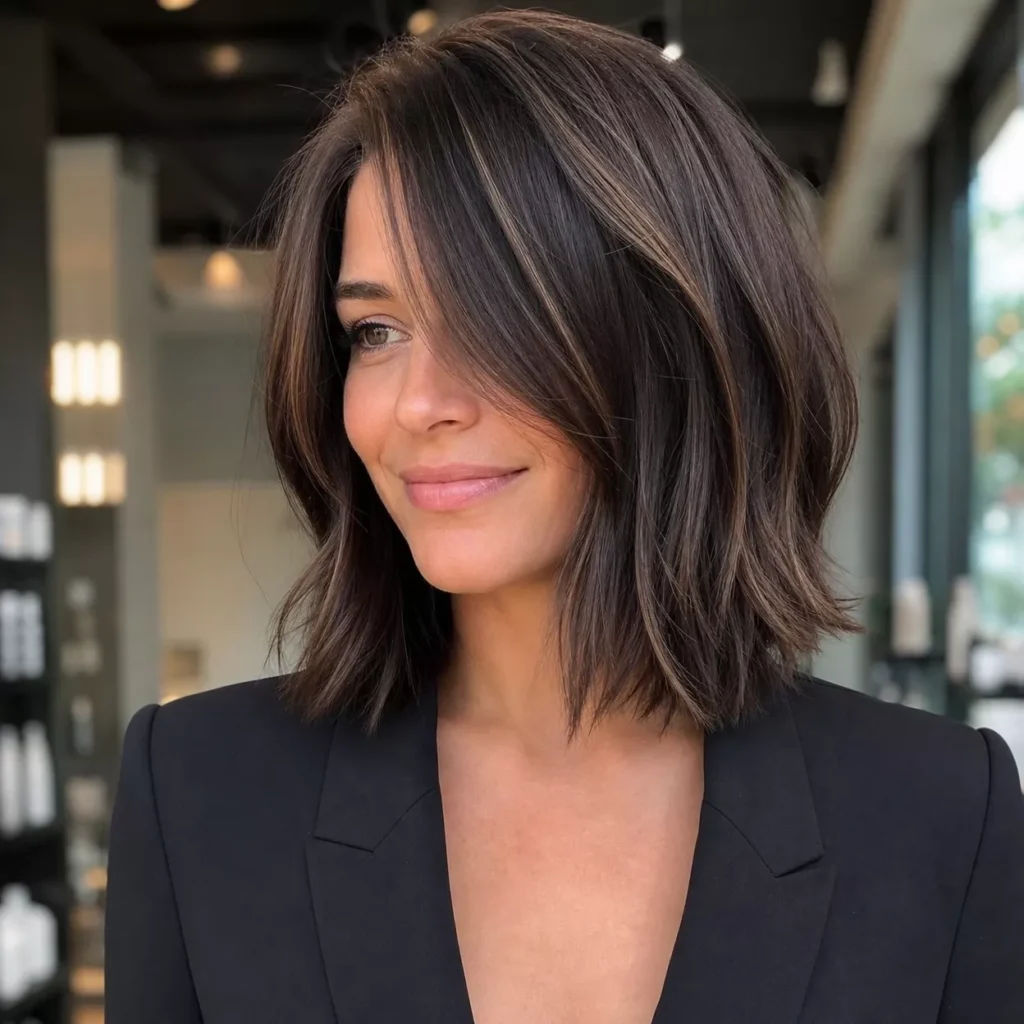
Contrast does more work here than shade does. Keeping depth at the root and weaving finer, lighter pieces through the layers gives the eye variation to read, and the darker base at the scalp can help disguise a parting line that shows.
Placement matters more than quantity. Ask for highlights woven finely rather than in thick sections, since chunky pieces on narrow strands can separate and look stripey.
Shaggy Long Bob

This cut carries the most texture of anything here, and it removes the most weight. Multiple layer lengths and a deliberately undone finish are the whole idea. Where there is plenty of hair collapsing under itself, that is often exactly what is needed. Where there is not, a full shag can leave very little at the perimeter.
The compromise is a modified shag with a stronger bottom line: “Can we do a modified shag with a stronger bottom line?” Styling is light, about 5 minutes with texture spray and an air-dry.
Photo reality: shag pictures often feature very thick hair, curling and product. Ask what your own density would look like in the same cut.
Long Bob with Deep Side Part and Waves

This is an occasion style more than a daily one. A deep part with set waves sends most of the hair to one side, so the heavier side looks fuller and the silhouette reads as deliberate asymmetry rather than thinness. It needs setting and holding, roughly 20 minutes with a curling iron, a brush-out and hairspray, and on fine hair the shape may not last a whole evening.
Photo reality: most of the effect in these pictures comes from the styling, not the cut. Set curls, hairspray and sometimes added hair do a lot of the work. If you want to cut for it, ask whether the layers can support a deep part without weakening the shorter side.
Long Layered Bob with Curtain Bangs and Copper Color
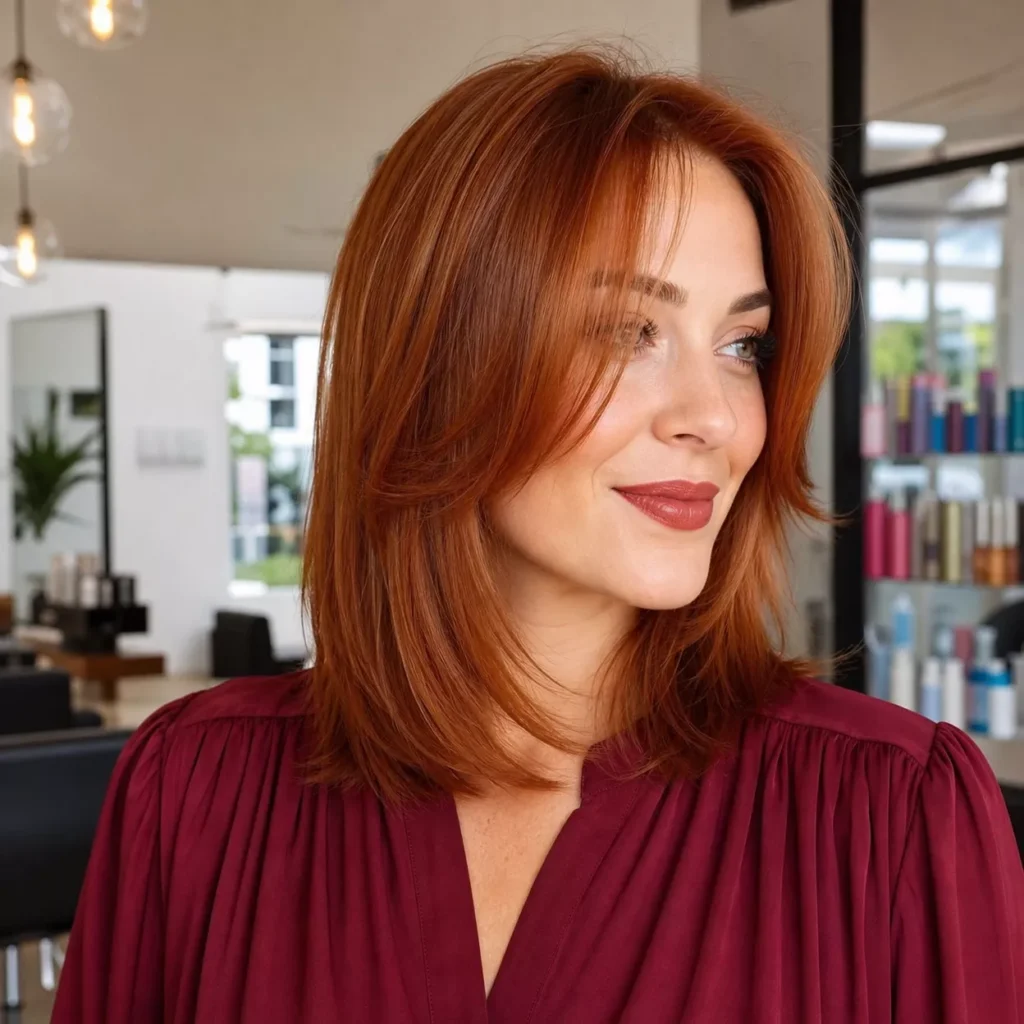
Copper is a commitment. Reds are commonly acknowledged to fade faster than other shade families, so expect visible fading within weeks. A color-depositing conditioner stretches it, and hot water and frequent washing speed it up, which is why cooler rinses and fewer washes are the standard advice.
Red is also among the harder colors to reverse later, so choose it because you want it for a while rather than to try something out. Add the bang trims every few weeks and this is a high-attention combination. A useful question for your colorist: how often will I realistically need to refresh this shade?
Undone Long Layered Bob

Wash, light mousse, scrunch, air-dry. The cut does the work and you do almost nothing, which is exactly why it exposes a cut that does not suit your texture. There is no styling step to correct it. Under 5 minutes of hands-on time, but only if the cut was made for your natural pattern.
Before booking, ask how it will dry with no tools, given your texture.
Long Bob with V-Cut Layers
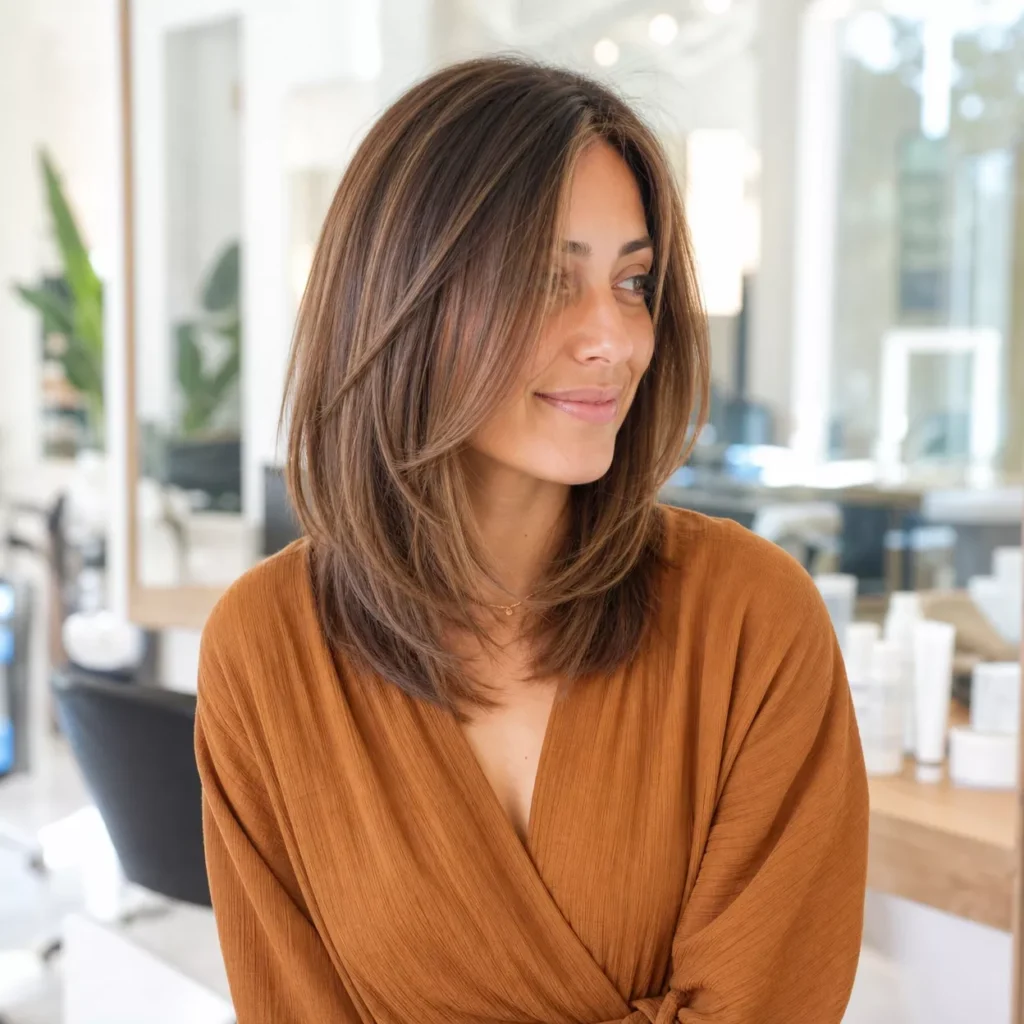
The trade-off. Layers tapering toward a point at the back draw the eye downward, so the hair looks longer than it measures. But that taper is the opposite of a blunt perimeter, because it narrows the bottom edge. On hair with weight to spare it can look graceful. On sparser ends it can emphasize exactly what you were trying to disguise.
So ask for a shallow V rather than a pronounced one: “A very shallow V, please, so the back stays fuller.” Styling takes about 10 minutes with a blow-dry.
Long Layered Bob with Pearl Blonde Color
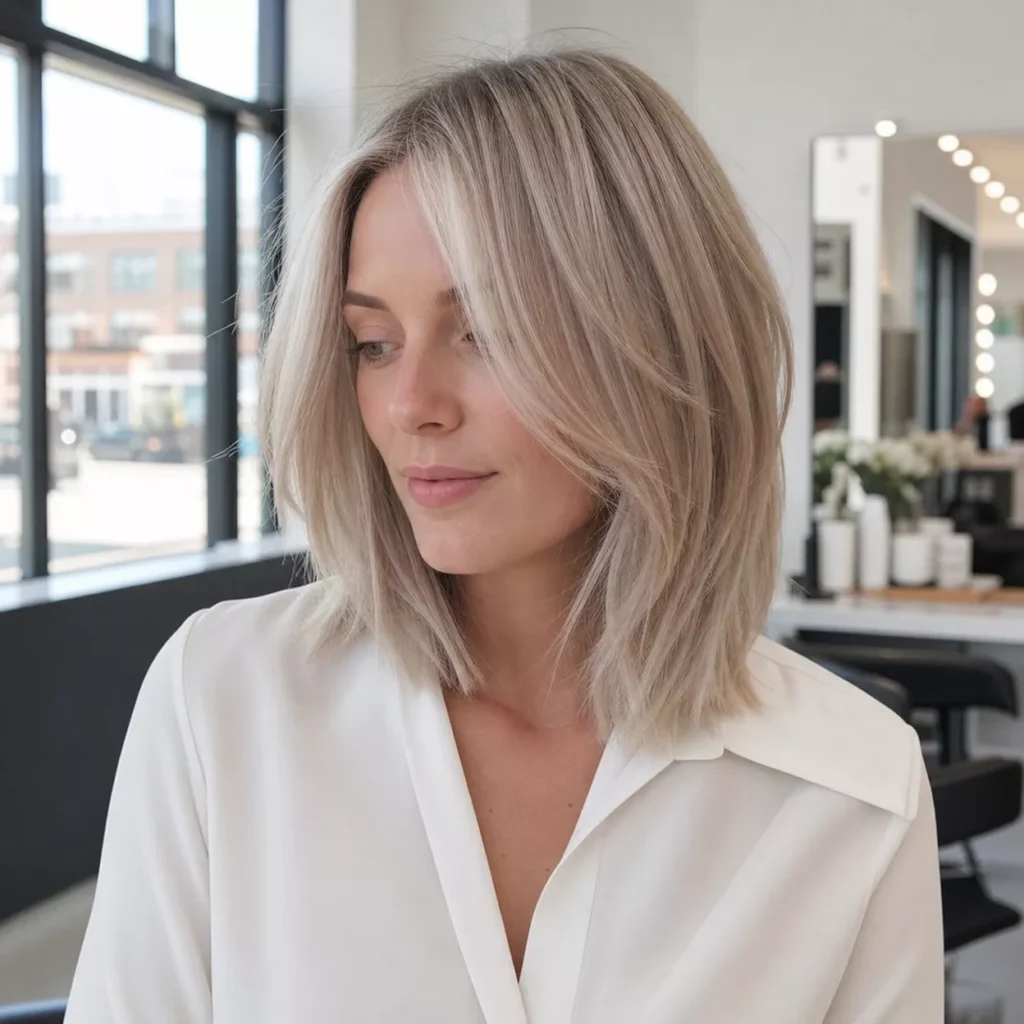
Very pale and cool, which means two things: it requires significant lift, and lift is the process most likely to compromise narrow strands. Damaged hair looks thinner, so the condition conversation matters more than the color conversation.
Questions worth taking to your colorist:
- Can my hair take this shade in one session, or does it need two?
- Would bond-building products help?
Expect regular toning on top of that.
Photo reality: very pale shades in pictures are often the result of several sessions and careful toning, so ask whether your hair can get there in one visit.
Long Bob with Textured Ends and Sea Salt Finish

Salt spray separates the tips and gives grip, which is what this look is built on. Used often or used heavily, though, it can dry out narrow strands, and rough ends look thinner than smooth ones.
Use it sparingly, keep it off the roots, and follow with conditioner on wash days. If your ends already feel dry, a light texture cream is a gentler way to get the same separation. About 5 minutes of styling.
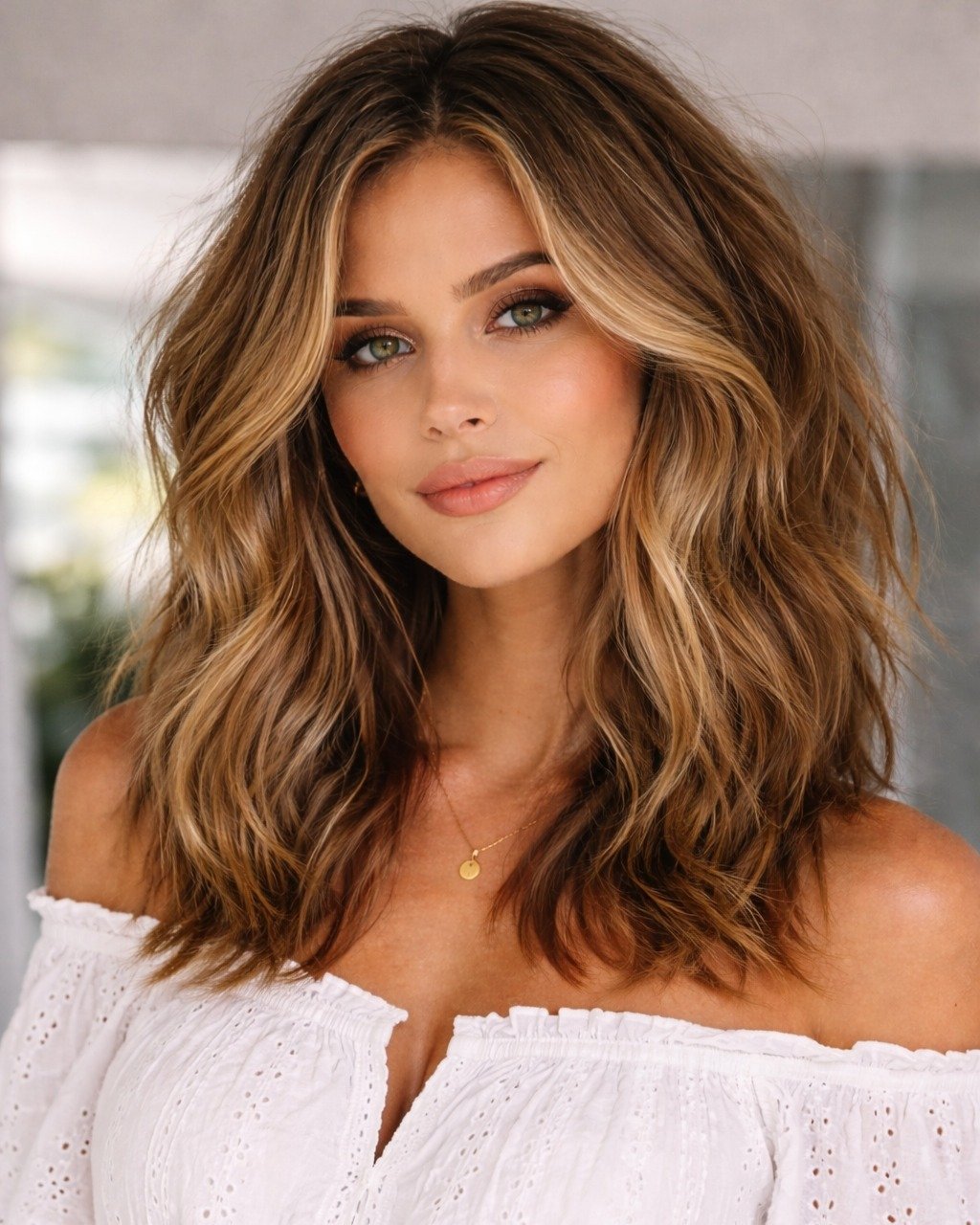
Long Layered Bob with Soft Curtain Bangs and Caramel Highlights
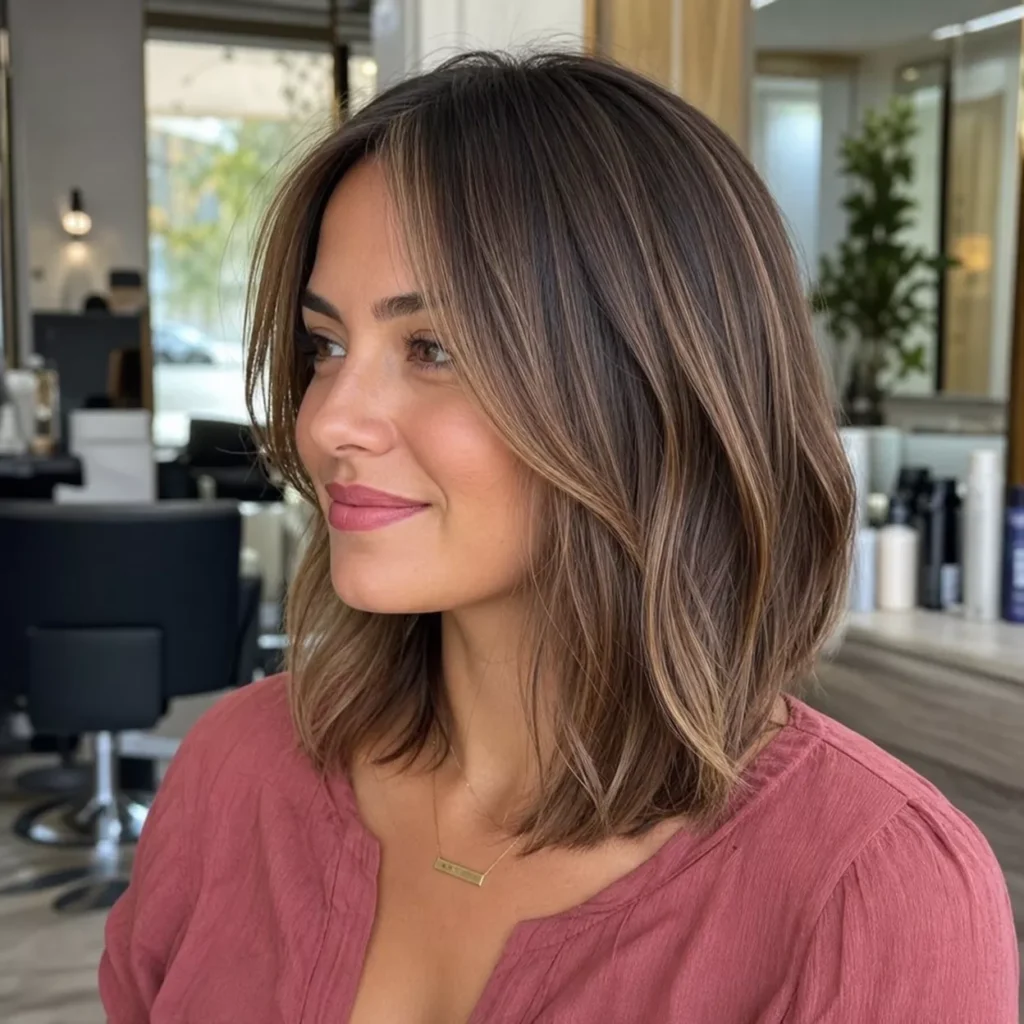
Caramel earns its place here on grow-out. Warm mid-tones sit close enough to most natural bases that regrowth blurs rather than lines up, which makes it one of the lower-upkeep color options on this list. With curtain bangs added, the bangs become the part needing regular attention, with trims every few weeks, not the color.
One thing to avoid is caramel that sits too close to your base shade, which can look flat. Ask your stylist to place it so the regrowth blends rather than lines up.
Which Long Layered Bob Should You Consider?
Work backwards from your main priority.
- If your priority is maximum fullness: a blunt or softly layered lob, such as the Blunt Perimeter Long Bob with Interior Layers.
- If your hair is fine but fairly dense: the Classic Long Layered Bob.
- If your hair is naturally wavy: the Wavy Long Layered Bob.
- If your ends are very thin: a minimal-layer collarbone bob with a strong perimeter.
- If you want almost no styling: a long bob with a strong perimeter and minimal layering.
- If you want movement: an internal-layer lob, such as the Long Bob with Invisible Layers.
Treat the ratings as general guidance. Your own density and texture can move any of these up or down.
Fine Hair vs Thin Hair: Why the Difference Matters
People use these two words as if they mean the same thing. They don’t, and mixing them up is one of the quieter reasons a haircut goes wrong.
Fine describes the width of each individual strand. Fine strands are narrow, which is why they often feel soft and go limp quickly.
Thin describes density, meaning how many strands grow from your scalp. Low density is about quantity, not strand width.
You can land in any of three places:
- Fine but dense. Lots of narrow strands. The hair often collapses under its own weight, and layers usually help because there is plenty of hair left to fill the shape.
- Coarse but thin. Thicker strands, fewer of them. Each strand holds its shape well, but gaps show easily at the ends and along the part.
- Fine and thin. Narrow strands and lower density. This group is the most likely to be let down by heavy layering, because there is very little spare hair once weight is removed.
That is why the same layered bob can look great on one person and sparse on another, even when both describe their hair as “fine”. Work out which group you sit in before you pick a photo.
Before You Ask for a Long Layered Bob
Five questions are worth answering before the consultation.
Is your hair fine, thin, or both?
Use the breakdown above. If your scalp shows easily at the part, density is probably your main issue. If your hair feels soft and goes flat but there is plenty of it, strand width matters more. Your answer decides how much layering is safe.
Where is your density lowest?
Check the temples, the crown, the sides and the ends. Layers should respond to where the hair actually runs short. Sparse temples mean face-framing needs a light hand. A thin crown needs support on top. If the ends are the weak spot, the perimeter is the part to protect.
How long do you want the bob?
Just below the chin gathers the hair into a compact shape and feels closer to a classic bob. Collarbone is the usual sweet spot, with enough length to move and a short enough line to keep the ends looking solid. Upper chest gives you more styling options, but the last few inches of fine hair tend to taper, so a strong perimeter matters more.
How much daily styling will you really do?
Be honest here. Air-drying, a five-minute blow-dry, a full blowout and heat styling all lead to different cuts. A shape that needs a round brush every morning is a poor match if you plan to leave the house with wet hair.
How often can you get a trim?
A long layered bob changes as it grows. The interior layers lengthen and the outline softens. If you can only make it to the salon a couple of times a year, choose a version that grows out gently.
Why Too Many Layers Can Backfire on Fine Hair
Layers work by removing weight. On thick hair that is the whole point. On fine hair, that same weight is often what makes the ends look substantial. Take too much off and the bottom edge turns wispy, and the cut reads thinner than the hair really is.
It helps to think of the cut in two zones. The perimeter is the outer edge you see from behind, and it is what reads as density. The interior is everything inside that outline, where layers create separation and lift. Many disappointing layered cuts have layers that reach into the perimeter when they should have stayed inside it.
Four common approaches behave very differently on fine hair:
- Soft internal layers. Cut inside the outline, they suit anyone who wants movement while keeping weight at the perimeter.
- Heavy face-framing. Short pieces at the front can take too much density from around the face, especially if the temples are already sparse.
- Long blended layers. These can work well when enough density remains through the bottom, because the layers are gradual rather than abrupt.
- Short choppy layers. They create texture, but on ends that are already thin they can make the hair look more separated.
Who Should Skip It or Modify It
A long layered bob is not for everyone. Consider a more conservative version, or a different cut entirely, if:
- Your ends are extremely sparse. Layers subtract, and a blunt cut will usually look more solid.
- Your crown density is very low. Layers on top need support, so ask about crown-only lift or skip layers there.
- You never style your hair. A layered shape that relies on a brush will not look like the photo without one.
- Your hair loses shape easily. Layers can fall flat quickly on very fine, straight hair.
- You don’t want regular trims. The shape softens as it grows, and that is when it starts looking uneven.
Skipping the cut is not a failure. A well-cut blunt lob is a strong alternative for many fine-haired people.
Five Ways a Long Layered Bob Can Go Wrong
- Too many layers. Weight comes off the ends and they look thinner.
- Layers that start too high. Density disappears around the face, which is where you notice it most.
- Too much length. Fine hair gets pulled flat by its own length, and the ends taper.
- Heavy heat styling. Ends can turn dry and frayed, and frayed ends look sparse.
- Copying a styled photo exactly. Your natural texture and density may behave very differently from the model’s.
Maintenance Reality
“Low maintenance” means very little without numbers, so here is what this cut usually asks of you. Treat these as approximate guidance, because growth rate, texture and technique all shift them.
- Daily styling: roughly 5 to 10 minutes for most versions, longer for sleek straight finishes.
- Shape refresh: approximately every 6 to 10 weeks.
- If heavily layered: the shape may need refining earlier than that.
- Bangs: usually every three to four weeks.
- Air-drying: depends strongly on your natural texture.
- Color: face-framing highlights and balayage grow out gradually, while a money piece or all-over blonde shows regrowth sooner.
How to Style It Without Flattening It
- Use lightweight mousse on damp hair through the mid-lengths rather than a heavy cream.
- Apply root-lift spray or powder at the scalp before drying, since that does more for a flat crown than product on the lengths.
- Put heat protectant on before any hot tool, mainly to avoid the breakage that makes ends look sparse later.
- Dry the roots in the opposite direction first with a round brush, then smooth them back into place.
- Choose a large-barrel iron for a soft bend rather than a tight curl.
- Keep heavy oils and butters away from the roots. A drop on the ends is plenty.
What to Tell Your Stylist
Bring a photo, but bring a question with it. A good starting script is:
“I want a long bob that keeps enough weight through the perimeter because my hair is fine. I want movement, but I don’t want aggressive layers that make my ends look thinner.”
Then adjust it to your situation.
If you want more volume: “Keep the crown slightly shorter but preserve density through the bottom.”
If your ends are thin: “Please don’t remove too much weight from the perimeter.”
A few more questions worth asking:
- “Is my hair fine, low density, or both, and does that change your plan?”
- “How much weight are you planning to remove, and can we go conservative this time?”
- “What will this look like if I air-dry it?”
If a razor or thinning shears appear unexpectedly, it is fine to ask what they are for before they are used.
Five Long Bob Approaches Side by Side
| Style | Best for | Fullness at the ends | Styling effort | Main risk |
|---|---|---|---|---|
| Blunt long bob | Very fine hair | High | Low to medium | Can look flat |
| Soft layered lob | Fine hair, medium density | Medium | Medium | Too many layers |
| Wavy layered bob | Fine, naturally wavy hair | High | Medium | Frizz |
| Face-framed lob | Fine hair with a longer face shape | Medium | Medium | Front can lose density |
| Collarbone lob | Thin hair | Medium | Low | Ends may look sparse |
FAQ
Is a long layered bob good for very thin hair?
It can be, if you choose the right version. A collarbone length with a strong perimeter and minimal layering tends to work best. Heavy layering usually makes very thin hair look thinner.
Are layers or blunt ends better for fine hair?
It depends on your main problem. If your hair is fine but dense and collapses under its own weight, layers help. If your density is low and your ends look sparse, blunt or near-blunt reads as more solid. A blunt perimeter with interior layers sits between the two.
How many layers should fine hair have?
There is no fixed number. Fewer, longer, blended layers placed inside the outline are the safer starting point. Ask your stylist to stay conservative, since you can always add more at the next visit.
Should fine hair be layered around the face?
Only lightly. Front pieces take density from the most visible part of the cut. If your temples are sparse, ask for longer, softer face-framing pieces.
Is a lob easier to maintain than a pixie?
Usually, yes. A lob commonly goes longer between trims and forgives grow-out, while a pixie often needs visits every four to six weeks to hold its shape. Bangs or heavy layering narrow that gap.
Can I air-dry a layered bob?
Yes, if your natural texture cooperates. On very straight, fine hair a hands-off routine can leave the shape flat, so ask your stylist what it will look like air-dried before you book.
How do I style a lob without weighing it down?
Light products, applied to the mid-lengths rather than the roots, plus a root-lift product at the scalp before drying. Keep heavy oils off the top of the head entirely.
Will color make my hair look thicker?
Color cannot add hair, but contrast between lighter and darker strands gives the eye variation, which can make the shape read as less flat. The bigger consideration is condition, since lightening can compromise narrow strands, and damaged hair looks thinner.