22 Choppy Layered Shoulder Length Styles for Thin Curly Hair
You ask for layers. The stylist cuts them in, you leave feeling optimistic, and by the time you get home and wash it yourself the curls have clumped into three sad ropes that sit against your neck like wet string. Or the opposite happens: the layers are so aggressive that the ends frizz out into a triangle and the whole thing looks wider than it is long.
That is the actual problem with thin curly hair at shoulder length. Too much length drags the curl pattern flat under its own weight. Too-short lengths remove the room curls need to coil properly. Layers placed without understanding how each curl springs create gaps, not volume. And most stylists approach curly hair the same way they approach straight hair, which means they cut it wet, stretch it straight, and then act surprised when it shrinks and behaves nothing like the shape they intended.
The 22 cuts below are real, distinct approaches. Some will work for your curl type and density. Some will not, and the write-ups say so.
Before You Book: Four Things Worth Confirming First
- Your curl type. Loose waves (2C) and tight corkscrews (3C) need different layer placements. A stylist who does not ask is guessing.
- Where your hair is actually thin. All-over fine texture versus localized thinning at the crown or temples changes where layers should go.
- How you dry your hair. Air-dry, diffuse, or blow-out? The cut needs to support your real routine, not an aspirational one you will do twice.
- Stylist experience with curly cuts. If their portfolio shows only straight-haired blowouts, go elsewhere. Curly cutting is a separate skill set.
Choppy Shoulder Shag on Thin Curly Hair

Short layers through the crown, longer pieces at the shoulders, choppy rather than blended ends. The shag works for thin curly hair because it removes weight without removing length, so curls spring at multiple levels instead of dragging downward in one uniform sheet.
Best on 2C to 3B curl patterns. Tighter coils (3C and beyond) may shorten more than expected once the curls spring fully, so this cut can end up above the shoulder rather than at it.
Morning routine: scrunch in a curl cream on soaking wet hair, diffuse on low or air-dry, do not touch while drying. Six to eight minutes if you diffuse, twenty-plus if you air-dry. Trims every eight to ten weeks, because grown-out shag layers still read as intentional.
Say this to your stylist: “I want a shoulder-length shag with choppy ends, and I need you to cut it dry so you can see where my curls actually sit.”
Layered Shoulder Cut with Defined Curls

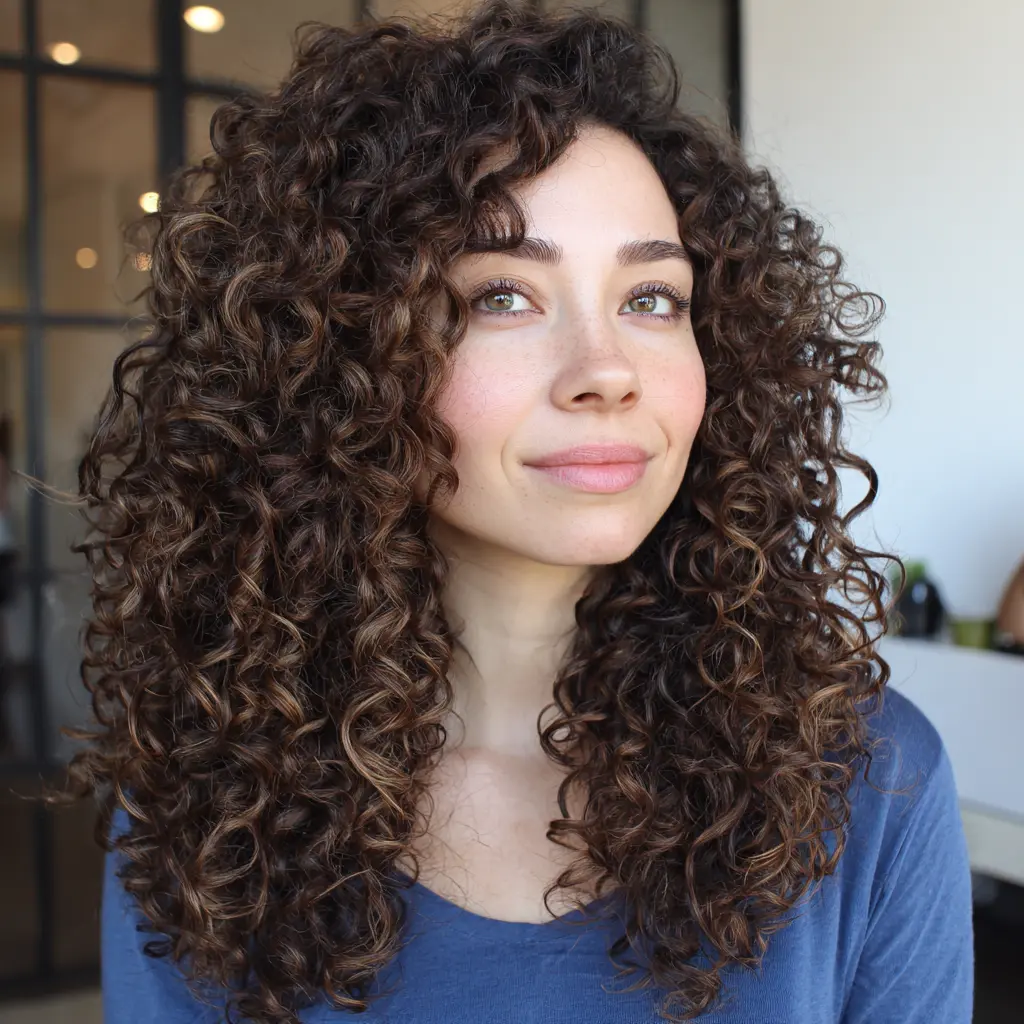
Layers concentrated at the crown and through the mid-lengths, with the perimeter left longer for weight. The layering allows each section of curls to coil independently rather than merging into one mass.
This cut depends on precise layer placement. Too high and the crown puffs out. Too low and the weight problem remains. A stylist unfamiliar with curly hair will likely place them too high.
Choppy Collarbone Cut on Thin Curls

Slightly shorter than true shoulder length, landing at the collarbone or just above. The shorter length reduces weight, which matters more for thin curly hair than for thick curly hair, because thin curls have less structure to hold their shape under their own weight.
Drawback: this length sits exactly where scarves, backpack straps, and coat collars rub, which creates frizz. If you wear your hair down daily without outerwear it works fine. Otherwise expect midday frizz at the perimeter.
Shoulder Shag with Curtain Bangs for Thin Curls

A shag with a centre-parted fringe that sweeps to either side and curls around the cheekbones. The bangs frame the face and the shag adds volume through the length. Together they create a balanced, face-framing silhouette.
The bangs need their own maintenance. Curly bangs grow out faster than you expect, because each time they spring they shorten. Budget for fringe trims every four to six weeks, often separately from the main cut.
Razor-Cut Shoulder Style for Thin Curly Hair

Cut with a razor rather than shears, creating soft, feathered ends that taper rather than stop at a blunt line. The razor technique removes weight progressively, which allows curls to spring without the dragging effect a blunt perimeter creates.
Not suitable for very dry or damaged curls. Razor cutting exposes more of the hair shaft, which can exacerbate frizz if the cuticle is already compromised. Healthy, well-moisturised curls take to it beautifully. Dry, brittle curls do not.
Layered Shoulder Wolf Cut on Thin Curly Hair
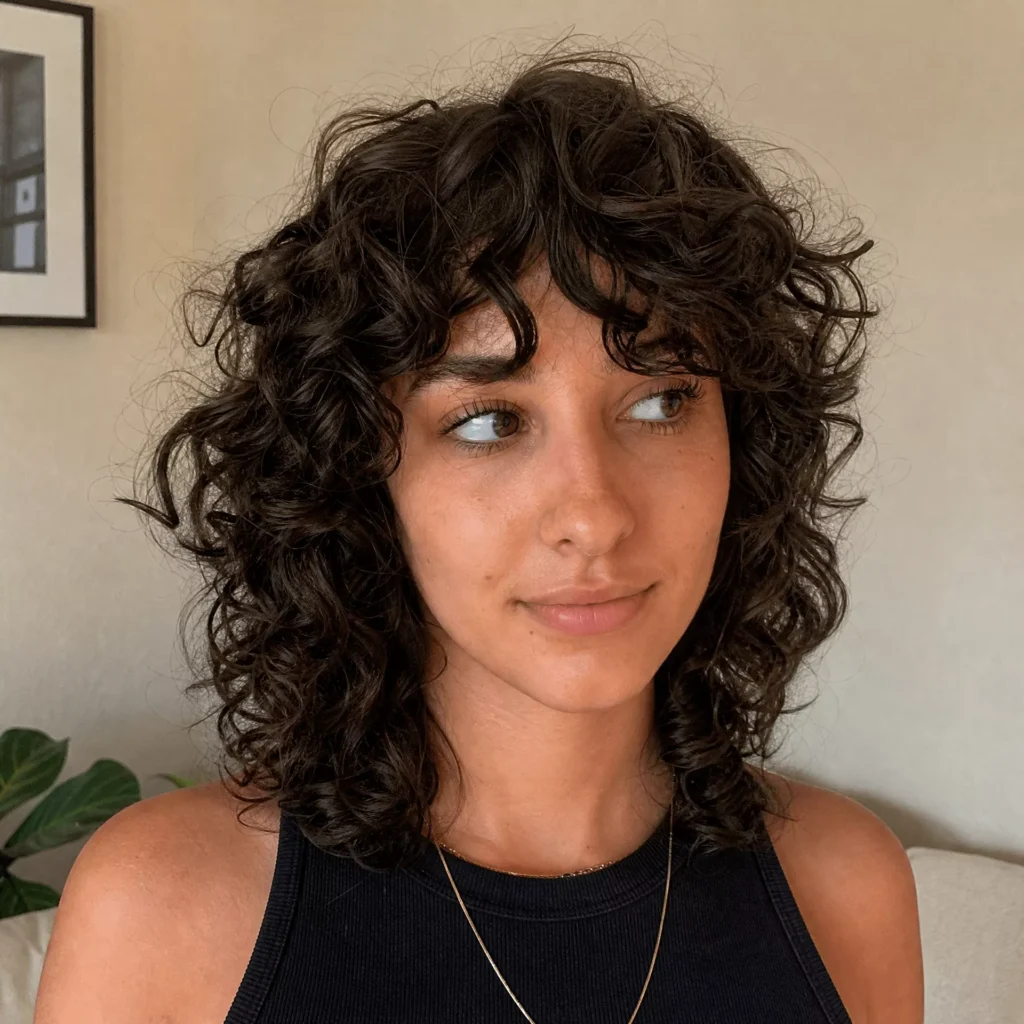
Short, choppy layers at the crown (often with a fringe), long disconnected layers at the shoulders. The wolf cut creates dramatic volume at the top and movement at the bottom, with a visible gap in density between the two.
High-effort cut. The layering is extreme, so if your stylist misjudges the placement the top section can look too short and the bottom too sparse. It is also the cut that looks most different wet versus dry, so a dry cut is essential.
Shoulder Length with Face-Framing Curl Layers

Standard shoulder length with shorter layers starting at the cheekbone and gradually blending into the length. The shorter face-framing pieces spring more tightly, creating width and movement around the face.
Works particularly well for round and square faces, where the added width at the cheekbone balances the proportions. Less successful on long faces, where it can add width without adding the vertical balance a long face needs.
Choppy Layered Shoulder Bob on Thin Curls

A bob structure (one-length perimeter) with internal choppy layering. The bob edge creates a defined endpoint that makes thin curls look denser at the perimeter, while the interior layers prevent the curls from sitting flat.
The bob perimeter needs trimming every six to eight weeks to stay clean. Let it grow past that and it stops reading as a bob and starts looking like a grown-out cut with unclear intentions.
Feathered Shoulder Cut for Thin Curly Hair

Ends cut in a feathered, tapering pattern so each curl springs independently rather than clumping with its neighbours. The feathering creates the illusion of more hair than there is, because the eye reads separated curls as fuller than clustered ones.
Feathering on very fine curls can make the ends look wispy rather than full, particularly if the curl pattern is loose (2B to 2C). Tighter curls (3A and beyond) hold the feathered shape better.
Shoulder Cut with Curl-Defining Layers

Layers placed at regular intervals—crown, ear, chin, shoulder—so the curl definition is visible at multiple heights. The regularity of the layer placement creates a structured, intentional curl pattern rather than a random one.
This is the cut to ask for if your curls tend to merge into one undefined wave. The layers force separation.
A note on cutting curly hair wet versus dry: Curly hair shrinks as it dries. A shoulder-length cut done on wet, stretched hair can end up at the collarbone or higher once the curls spring. A dry cut allows the stylist to see the actual curl pattern, the actual shrinkage, and the actual places where weight needs to be removed. If your stylist insists on cutting curly hair wet, find a different stylist.
Choppy Shoulder Cut with Natural Curls
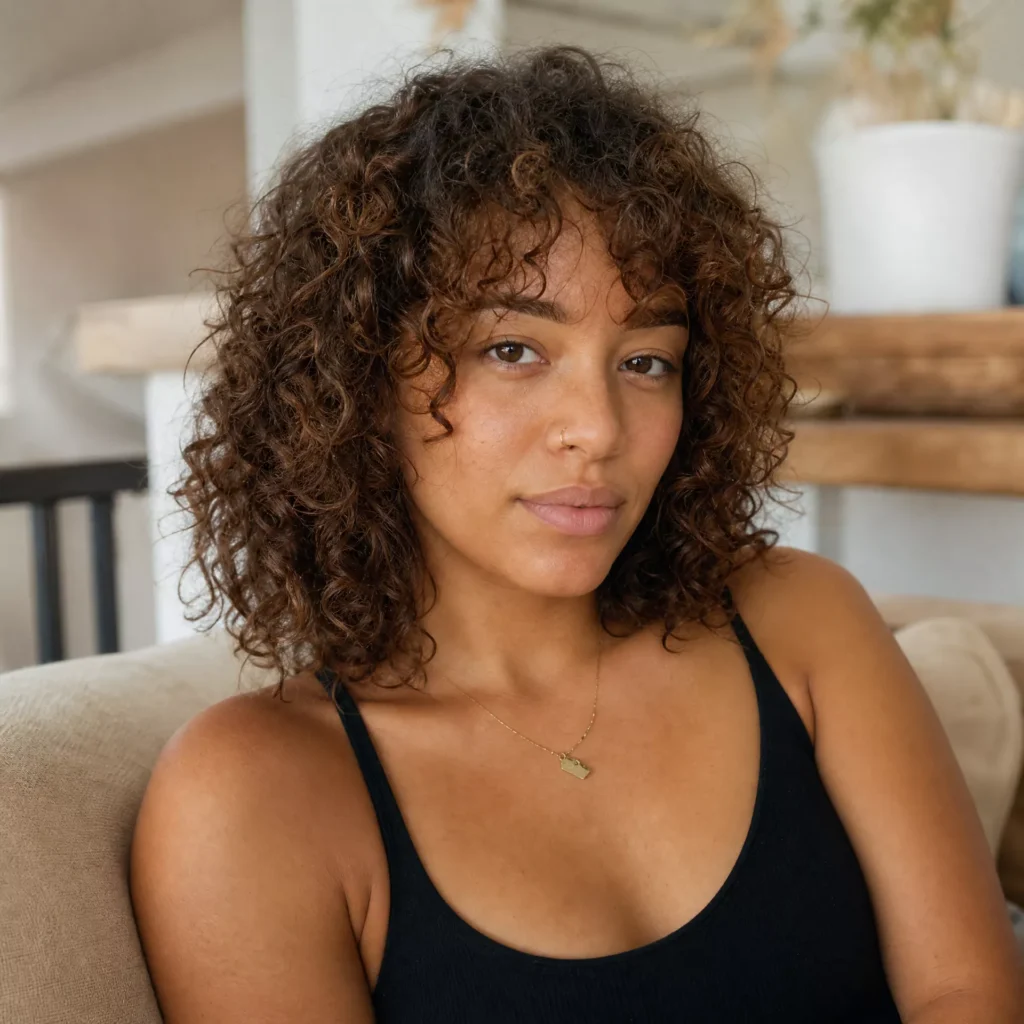
No heat styling, no diffusing, no products beyond a leave-in and a curl cream. This cut is shaped so the natural curl pattern, left entirely alone, creates the intended silhouette.
Requires a stylist who genuinely understands curl patterns, because the cut must anticipate exactly how each section will spring and where it will sit once fully dry. Not every stylist can do this.
Thin Curly Hair Shoulder Cut with Highlights
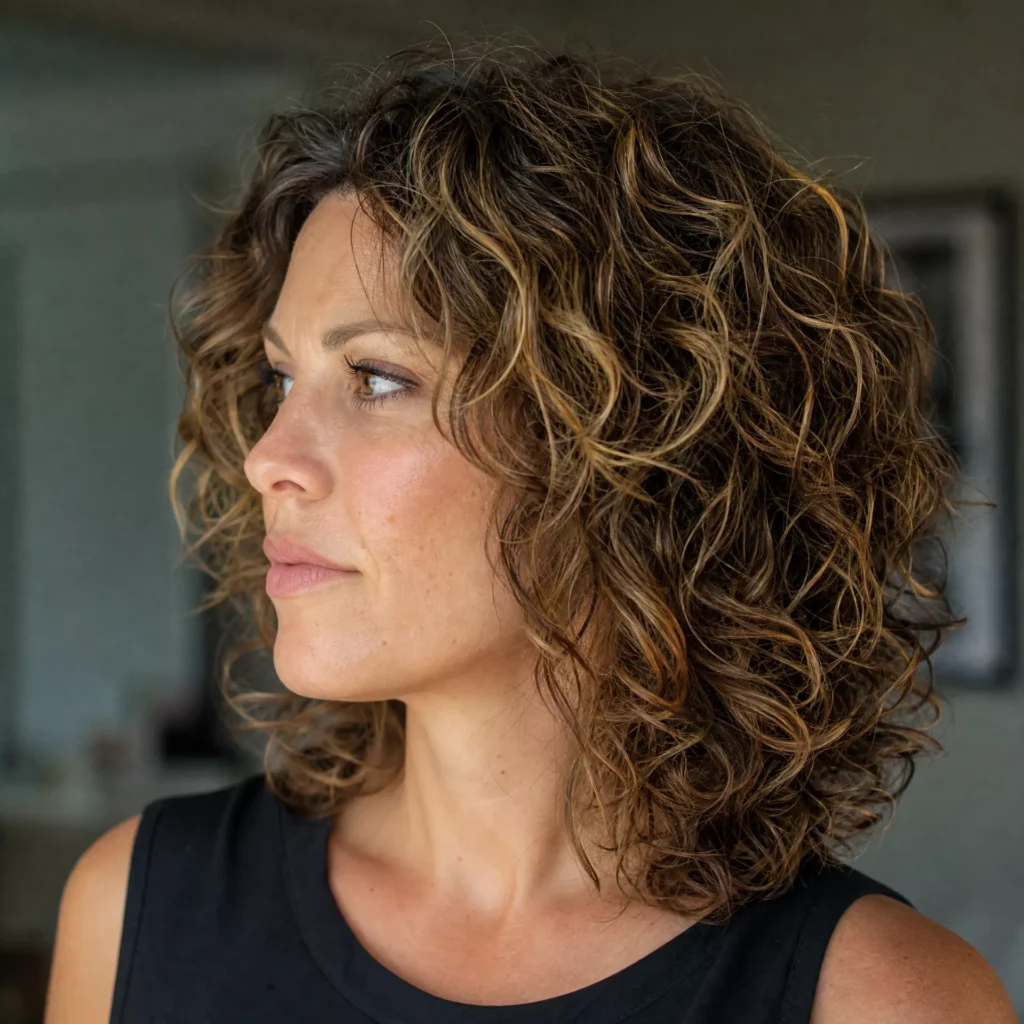
Colour dimension through the mid-lengths and ends, typically lighter pieces woven through the curl pattern. The lighter tones catch light at different points on each coil, which makes thin curls look more defined and more numerous.
Highlights add cost and maintenance. Budget for toner refresh every six to ten weeks to prevent brassiness, on top of your cut appointments. Roughly £60 to £150 for the initial colour and £30 to £70 for toner, though these figures shift by market and should be confirmed before booking.
Soft Shoulder Shag on Fine Curly Hair

A gentler version of the shag, with softer, less aggressive layering. Fine curls (as opposed to just thin density) can look jagged if the layers are too choppy, so this version blends the layers more gradually while still removing enough weight for the curls to spring.
Fine curls also tend to be more fragile, so request point-cutting or slide-cutting rather than heavy shear work, which can damage fine curl structure.
Shoulder Cut with Crown Volume on Thin Curls
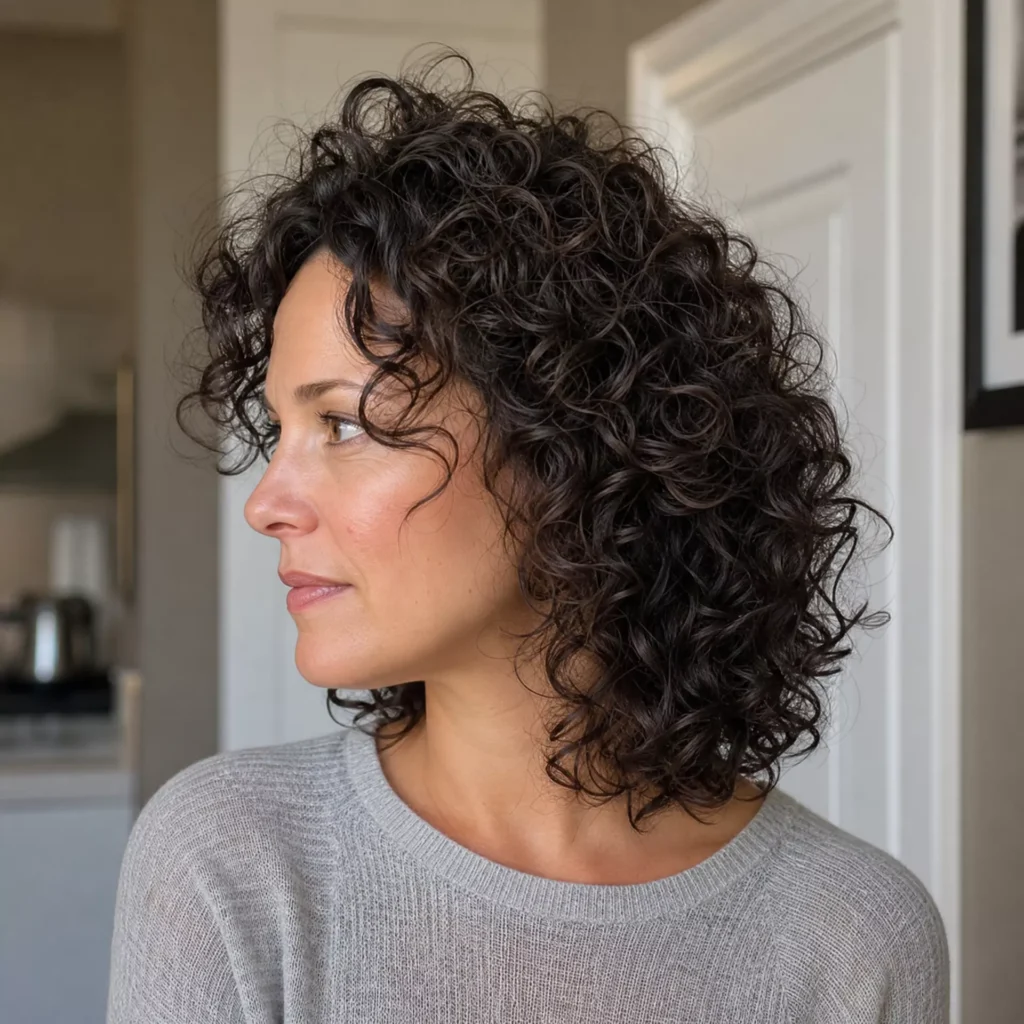
Layers concentrated heavily at the crown, with the sides and back left longer for balance. The crown layers lift and spring upward, creating height exactly where thin curly hair tends to fall flat.
This cut requires morning effort. Without lifting the crown with clips while it dries, or diffusing the roots upward, the volume collapses by midday. Five to seven minutes of root-focused drying.
Disconnected Layer Shoulder Cut for Curly Thin Hair

Layers that deliberately do not blend, creating visible steps or sections through the length. The disconnection is the point: it makes thin curls look like intentional structure rather than sparse strands.
Bold, modern, and not subtle. If you prefer a soft, blended look this will feel too graphic. If you want something with edge it works beautifully.
Choppy Layered Shoulder Cut with Balayage on Curls
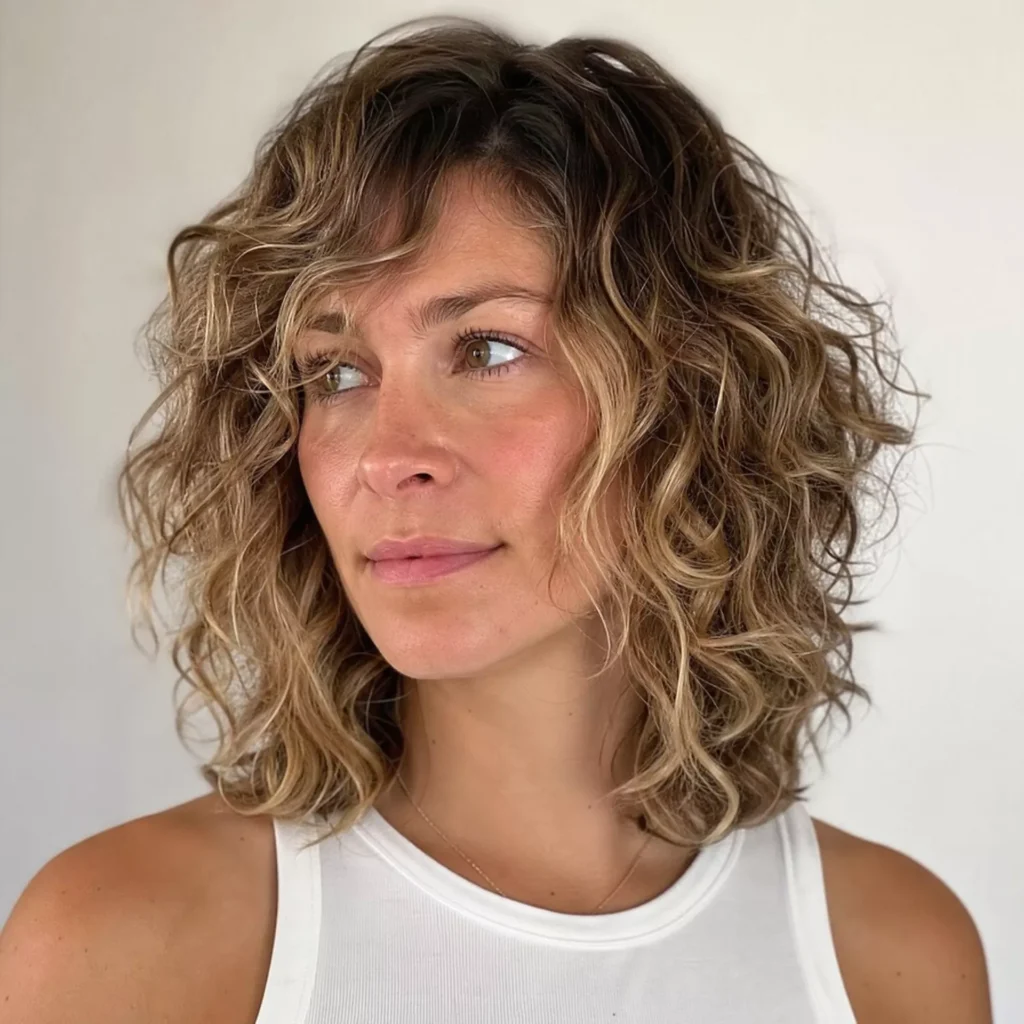
Balayage (hand-painted colour) through a choppy layered cut, typically painting lighter tones onto the top layers where they will be most visible. The colour follows the natural curl path, which creates dimension that looks three-dimensional rather than flat.
Balayage on curly hair takes longer and costs more than balayage on straight hair, because the stylist must paint around the curl pattern rather than pulling the hair straight. Confirm pricing before the appointment.
Thin Curly Hair Shoulder Cut with Wispy Ends

Ends thinned to create a soft, airy perimeter rather than a solid one. The wispiness makes thin curls look fuller at the ends, because sparse ends that are blunt read as thin, while sparse ends that are wispy read as intentionally soft.
The wispy ends need re-cutting every eight to ten weeks. Grown-out wispy ends just look like split ends.
Shoulder Length Devacut for Thin Curly Hair
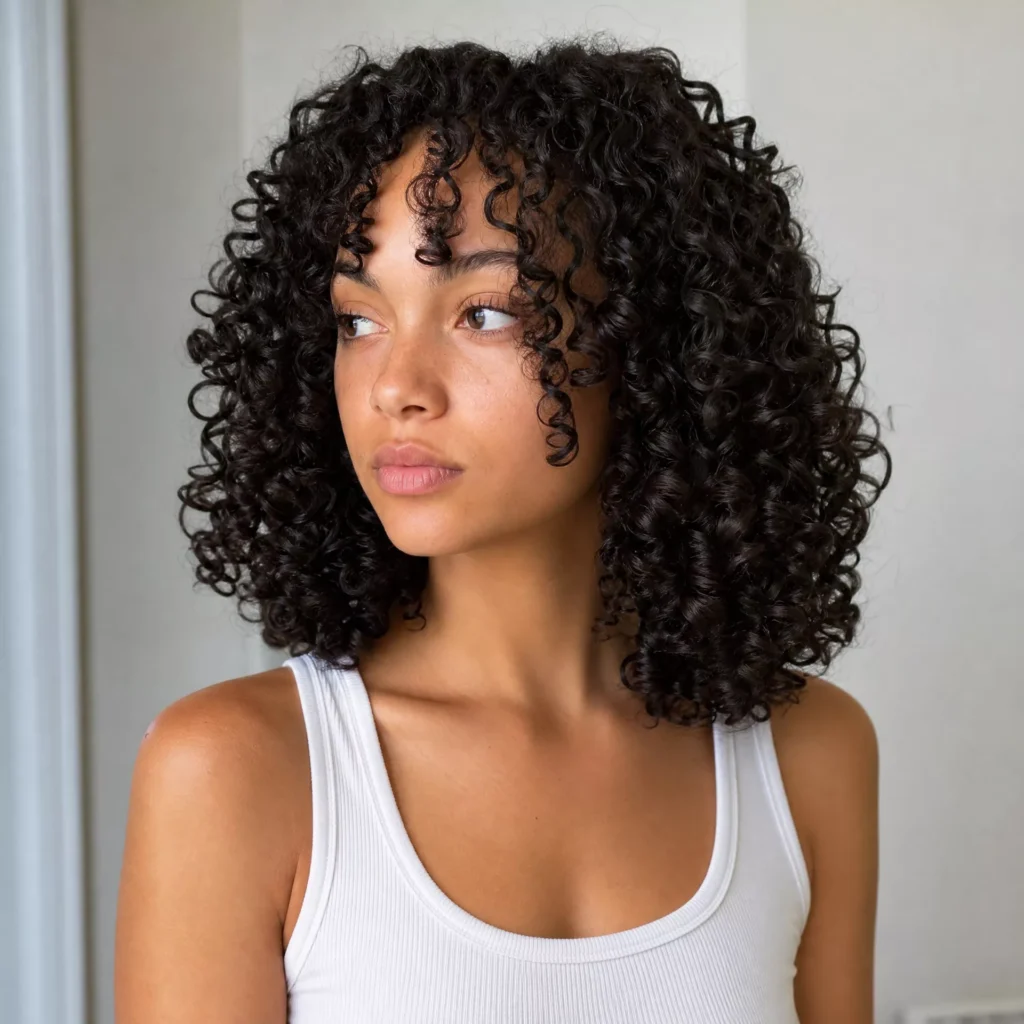
A dry cutting technique where each curl is cut individually in its natural state. The Devacut removes weight only where the specific curl needs it, creating a completely customised shape.
Devacuts typically cost more than standard cuts (roughly £60 to £120 depending on location and stylist) and require a stylist specifically trained in the technique. Not every salon offers it, so ring ahead.
Choppy Short Shoulder Cut on Thin Wavy-Curly Hair
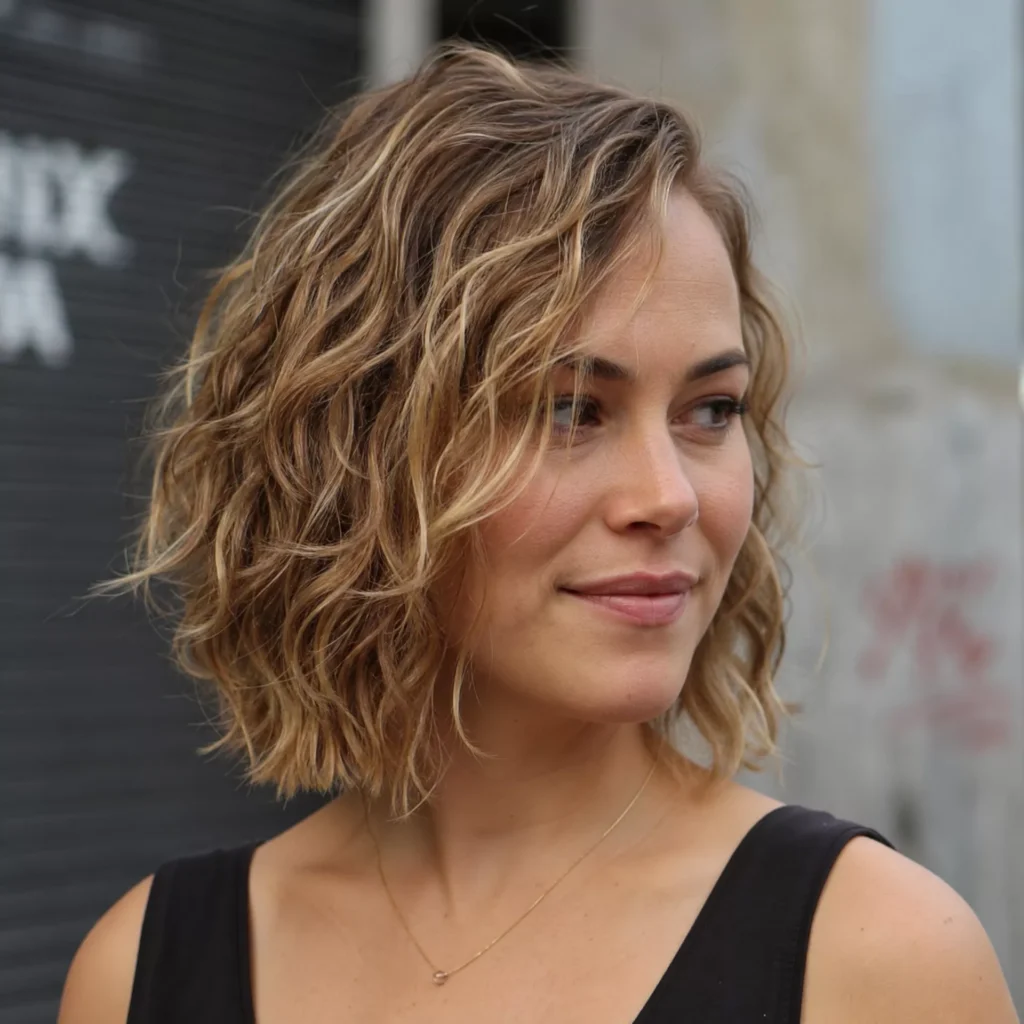
For hair that sits between wavy and curly (2C to 3A), with thin density throughout. The choppy layers encourage the wave to curl and the curl to define, creating a silhouette that honours both textures rather than fighting one or the other.
Product choice matters here more than on tighter curls. A curl cream will encourage curl. A wave spray will encourage wave. Choose based on what you want the end result to lean toward.
Shoulder Cut with Curl Refresher Styling
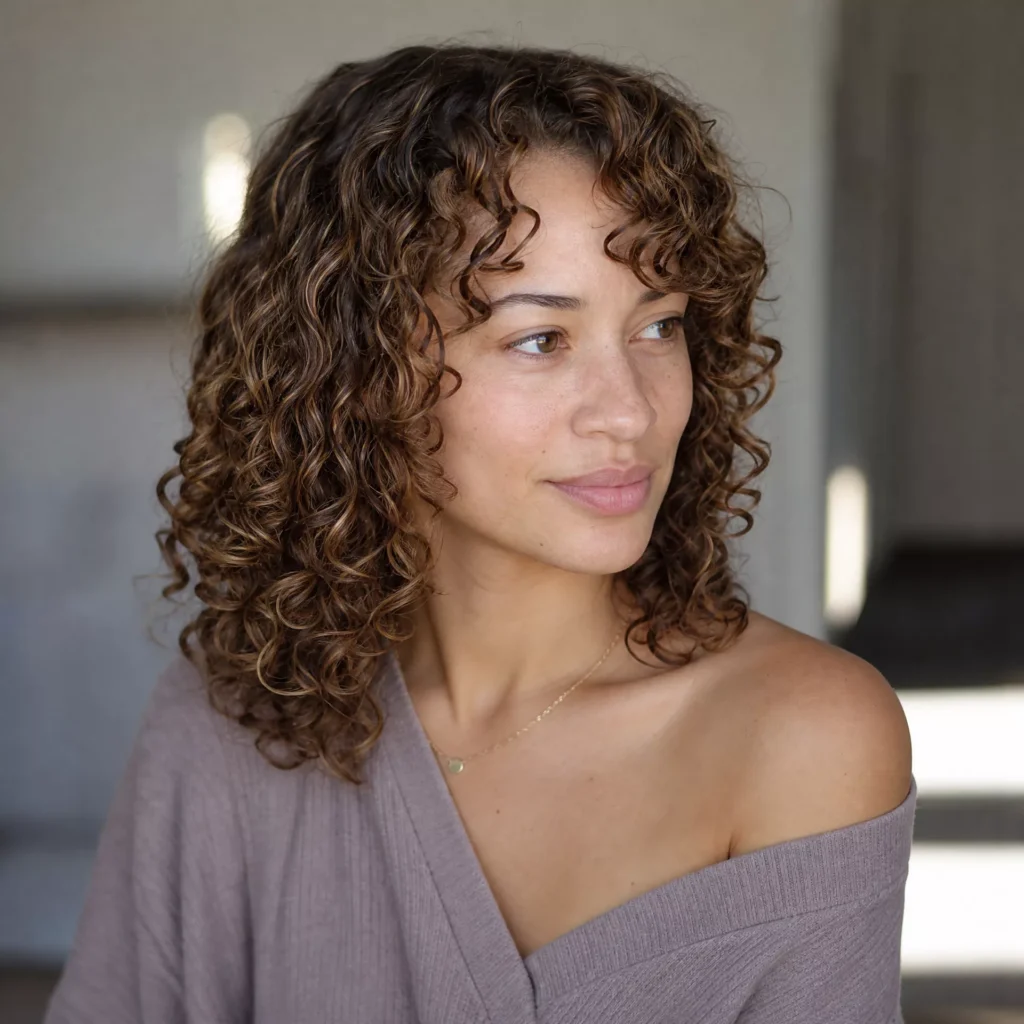
A cut shaped so second-day and third-day curls still look deliberate with minimal intervention. The layering holds definition even after the curls have been slept on, which means a spritz of water and a scrunch with cream brings them back without a full wash.
This is the lowest-maintenance option on the list, but it depends on the cut being done correctly. A poorly executed version will still need a full wash and restyle daily.
Layered Shoulder Cut for Thin Type 3 Curls

Type 3 curls (defined spirals and corkscrews) that are thin in density need layers placed differently than Type 2 waves. This cut places them to support the tighter coil pattern, removing weight at the points where Type 3 curls tend to pyramid outward.
Type 3 curls also shrink more than looser patterns, so a shoulder-length cut on wet hair may end up several inches shorter once dry. Discuss shrinkage with your stylist before the cut starts.
Full-Shape Choppy Shoulder Cut for Thin Curls

Crown layers for lift, mid-length layers for separation, choppy ends for movement, and a shoulder-length perimeter for balance. This is the most complete, most technically involved cut on the list, combining every structural element that benefits thin curly hair.
Requires a skilled stylist and takes longer than a standard cut. Budget an extra thirty minutes and confirm the stylist is comfortable with layered curly cuts before booking.
Quick Comparison by Curl Type
| Curl Type | Best cuts from this list | Avoid |
|---|---|---|
| 2B–2C (loose wave) | Feathered shoulder cut, soft shag, choppy collarbone | Disconnected layers, aggressive wolf cut |
| 3A (loose curl) | Choppy shag, layered shoulder, face-framing layers | Very short crown layers that will spring too high |
| 3B (defined spiral) | Devacut, curl-defining layers, full-shape choppy cut | Blunt bobs, razor cuts on dry or damaged curls |
| 3C (tight corkscrew) | Crown volume cut, Type 3 layered cut, soft shag | Long one-length cuts that will drag curls flat |
Five Mistakes to Avoid
- Letting a stylist cut your curls wet unless they explicitly explain why and how they are accounting for shrinkage. Wet cutting on curly hair without shrinkage adjustment produces cuts that are too short once dry.
- Choosing a cut from a photo where the curls have been heat-styled or blown out. You are judging a curl pattern that does not exist naturally, so the cut will not look like that on air-dried hair.
- Using heavy oils or butters on thin curly hair. Thin curls lack the structure to carry heavy products without being weighed flat. Light creams, mousses, and gels work better.
- Stretching trims past twelve weeks because “it still looks okay.” Curly cuts lose their shape as weight accumulates at the ends, and by week twelve the layering that made the cut work has been buried under regrowth.
- Asking for layers without specifying where. Crown layers create volume. Face-framing layers create width. End layers create movement. The stylist needs to know which one you mean.
Before Your Appointment
- Wear your hair in its natural state, fully dry, styled the way you usually style it. The stylist needs to see your real curl pattern, not a version you created for the appointment.
- Bring two or three photos of hair with similar curl type and density to yours, not just similar length. A 3A curl cut will not translate to 2C waves.
- Say out loud how you dry your hair and how much time you spend on it. Be honest.
- Ask whether the stylist cuts curly hair wet or dry, and if wet, how they account for shrinkage.
- Ask what products the cut depends on and whether it works without a diffuser.
- Confirm the price before the appointment starts, particularly if colour or a specialist technique like Devacut is involved.
FAQ
How much does a curly cut cost?
Roughly £40 to £90 for a standard cut, £60 to £120 for a Devacut or other specialist curly cutting technique, more at senior-stylist or premium rates. Prices vary significantly by region and salon, so confirm before booking.
How often do shoulder-length curly cuts need trimming?
Every eight to twelve weeks for most layered cuts. Every six to eight weeks for bobs, shags with fringe, or cuts with wispy ends where the shape depends on precision.
Should curly hair be cut wet or dry?
Dry is almost always better for curly hair, because it allows the stylist to see where each curl springs and how much it shrinks. Wet cutting can work if the stylist is experienced with curly hair and accounts for shrinkage, but dry cutting removes the guesswork.
What is the best cut for very thin curly hair?
Choppy shag, feathered shoulder cut, and curl-defining layers all create the optical illusion of density. Avoid blunt one-length cuts, which expose thinness rather than disguising it.
Can I still have shoulder-length curls if my hair is thinning?
Yes, but the layering needs to be placed carefully. Crown layers add volume where thinning is most visible. Avoid heavy, solid perimeters that make thin ends obvious.
What products should I use on thin curly hair?
Light curl creams, mousses, and gels. Avoid heavy oils, butters, and thick leave-ins that weigh thin curls flat. One or two lightweight products are usually enough.
Do I need to diffuse or can I air-dry?
Either works, but diffusing gives more volume and definition. Air-drying is lower effort but produces a softer, less structured result. Choose based on your morning time and the look you want.
Will highlights damage my thin curls?
Properly done highlights should not damage curls, but thin curls are more fragile than thick ones, so ask for a stylist experienced with colour on curly hair. Avoid overlapping colour onto previously lightened sections.
How do I know if a stylist is good with curly hair?
Ask to see their portfolio. If it is all straight-hair blowouts, go elsewhere. Ask whether they cut curly hair wet or dry. If they insist on wet without explaining their shrinkage method, go elsewhere.
What if my curls are different textures in different areas?
That is normal. A skilled curly-hair stylist will cut each section according to its own curl pattern rather than imposing one uniform length. Mention it at the consultation so they can plan accordingly.
Thin curly hair at shoulder length is not a limitation. It is a texture that, with the right layering and the right stylist, creates movement and definition that thicker curls often struggle to achieve. One of these twenty-two will work for your curl type and density. Find it, save it, and take it to someone who knows how to cut curls dry.