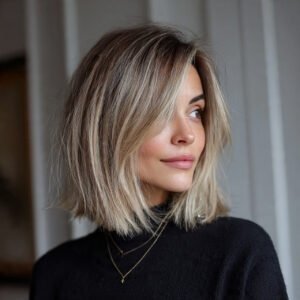
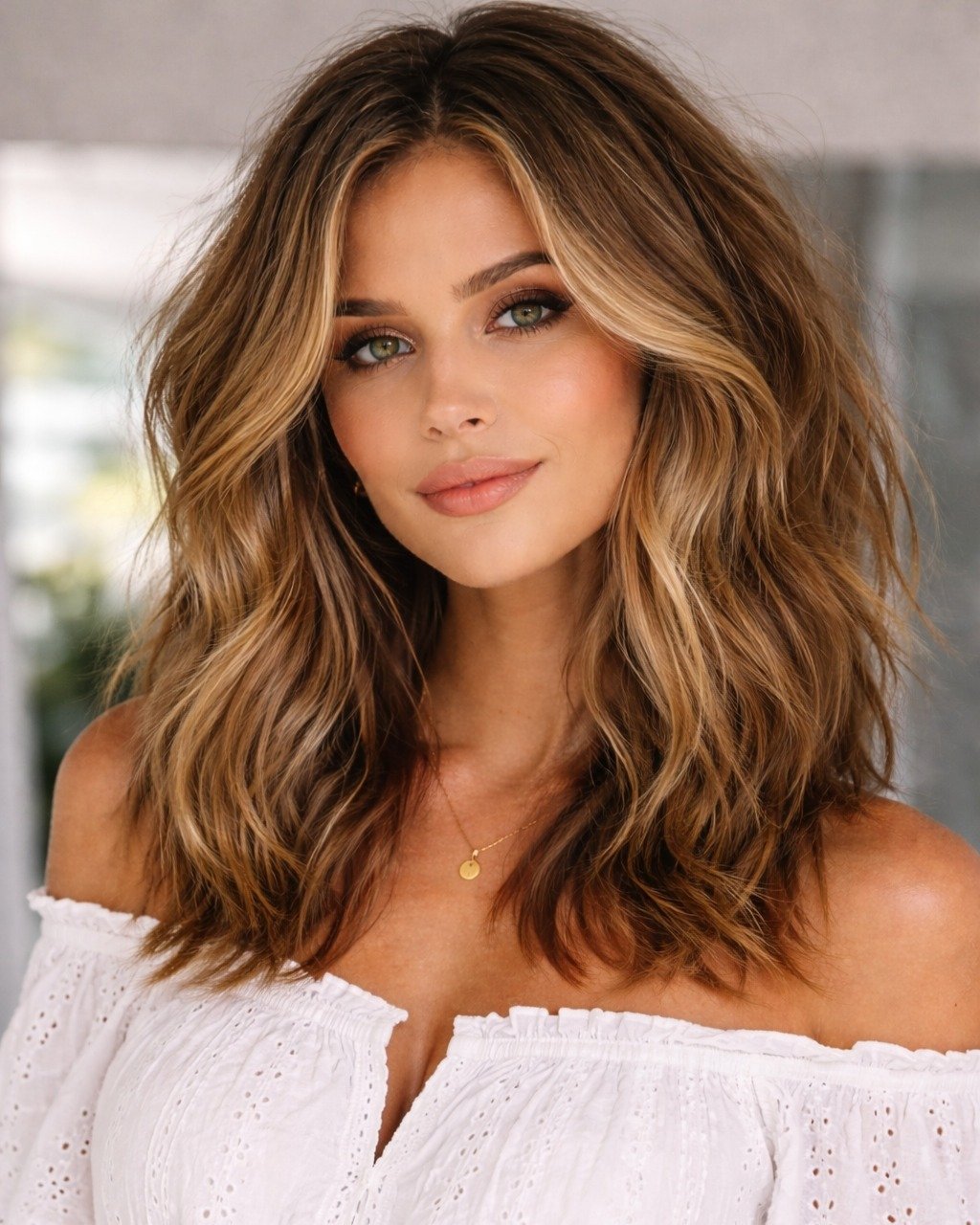
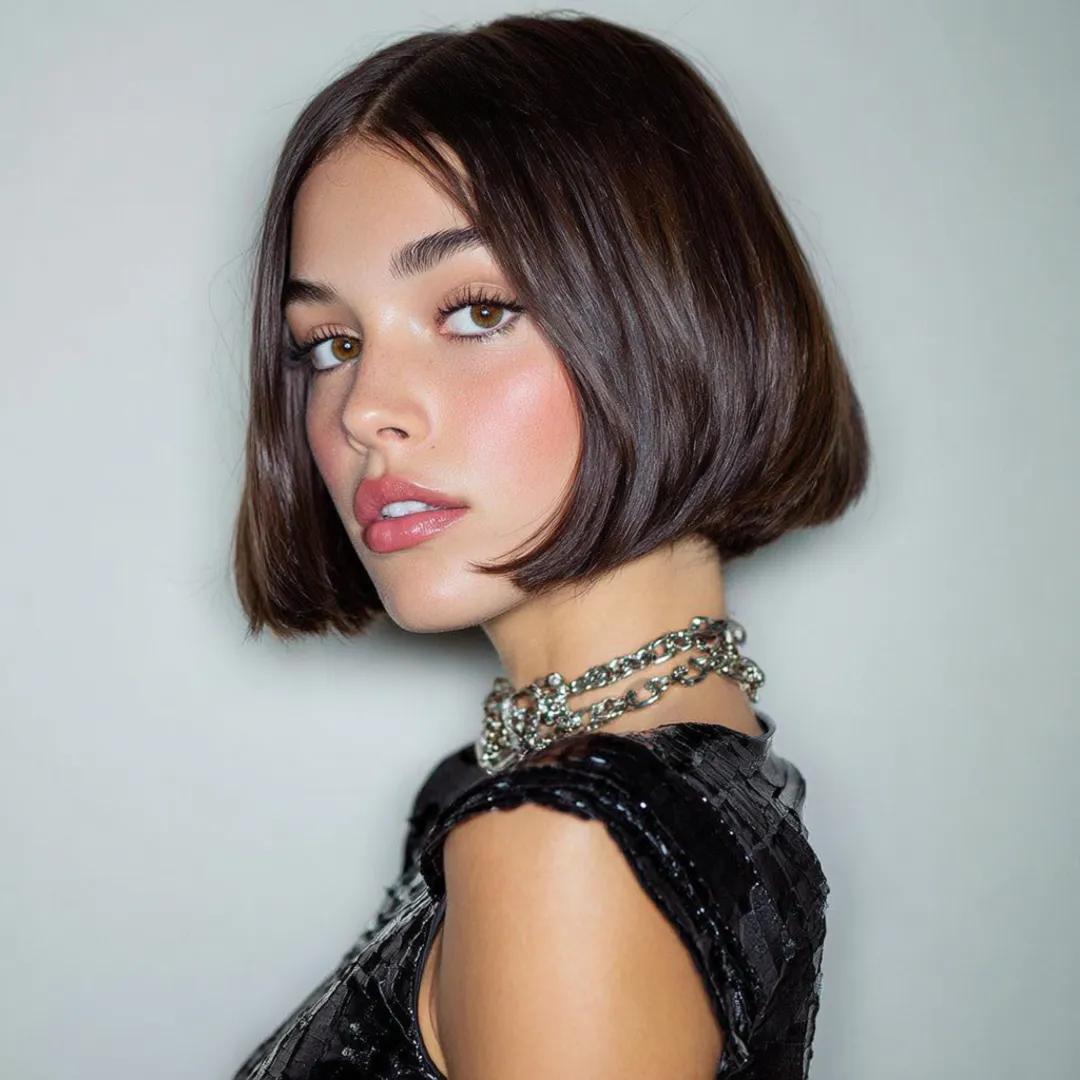
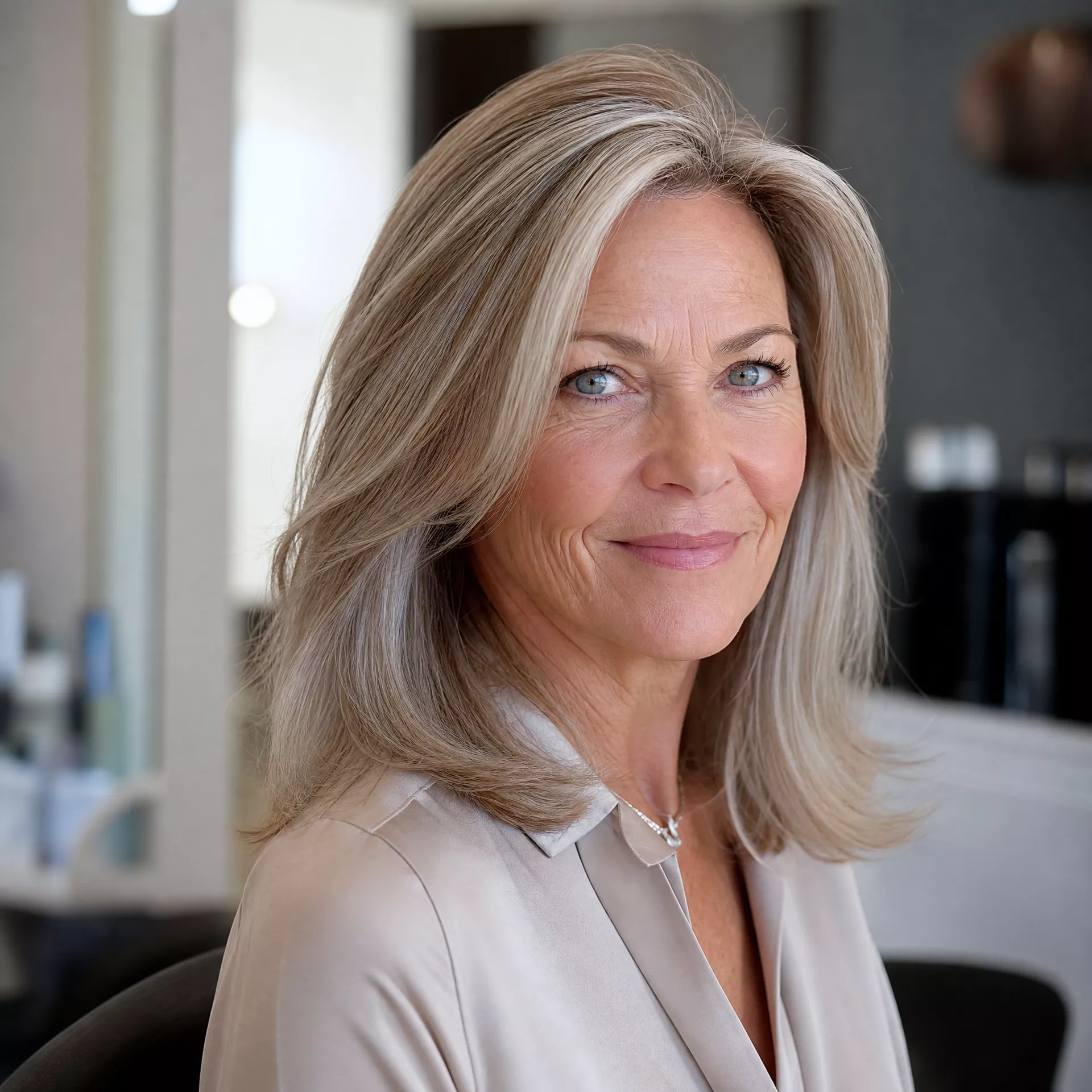
21 Medium Shaggy Hairstyles for Women Over 60 with Glasses
Glasses add another visual element around the eyes and temples, so a haircut has to share that space with the frames. What works depends on the size and shape of your frames, how much hair sits around the ears and temples, your density and texture, your face shape and how much upkeep you actually want.
A medium shag can suit a lot of these situations, because the layers add movement and the length stays manageable. It is not automatic, though. Layers that add movement on one head can add bulk right where the arms of your frames sit on another.
The 21 variations below each focus on something that can affect how the cut behaves with glasses, whether that is bang length, density, texture, grow-out or styling time. A short set of questions comes first, since your answers make the list easier to use.
Before Choosing a Medium Shag
Styling time. Air-drying only works when your texture cooperates. A blow-dry or wand finish usually takes around 10 to 20 minutes.
Frame shape. Bold, thick frames already draw a strong line across the face, so a blunt fringe or a heavy side sweep can crowd them. Narrow or rimless frames leave more room for bolder hair. Cat-eye frames lift at the outer corners, so the hair beside your cheekbones interacts with them differently than with round or rectangular frames.
Frame size. Oversized frames cover more of the cheeks and temples, so there is less space for hair beside the face. Smaller frames leave more room to work with.
Hair density. Fine hair usually does better with fewer, longer layers. Medium density suits most variations here. Thick hair often needs weight removed from inside the shape, not just shorter ends.
Texture. Straight hair can show cut lines clearly and often needs styling to hold its shape. Wavy hair tends to give layers movement on its own. Curly hair usually shrinks as it dries and can expand sideways.
Temple area. The arms of your glasses rest against the temple and over the ear. Bulky hair there can push the frames forward, and hair cut too short can look uneven around them.
Bang preference. Decide where you want hair in relation to the frames: above them, beside them, or away from them entirely.
Medium Shag with Curtain Bangs

Bang length matters more here than the bangs themselves. Curtain bangs parted in the center and ending around the cheekbones tend to fall beside and just below the top edge of the frames. A longer sweep can graze the lenses as your hair shifts through the day, which means smudges and constant pushing aside.
Ask for the shortest pieces to end at or just above the top rim, or to sweep clear to the side. Bangs need a trim roughly every three to four weeks to hold that length, while the shaggy layers below are more forgiving between visits.
Layered Medium Shag with Side Part

A side part moves the weight of the hair to one side and can break up the symmetry many frames create. The deeper the part, the more hair sits over one temple, so check what that side does around the arm of your glasses. A moderate part is usually easier to live with than a deep one.
Parting the hair when it is dry can be easier to judge, since a part made on wet hair may fall somewhere else once it dries.
Feathered Medium Shag

Feathered layers are cut light and tapered, so this cut depends heavily on density. With enough body they look soft and airy. On fine hair, tapered ends can turn see-through and leave the shape looking sparse.
If your hair is fine, ask how much taper your stylist plans to use and keep the ends a little fuller than the photo shows. The layers sweep away from the face, which gives the cut its open, airy shape.
Medium Shag with Wispy Fringe and Glasses
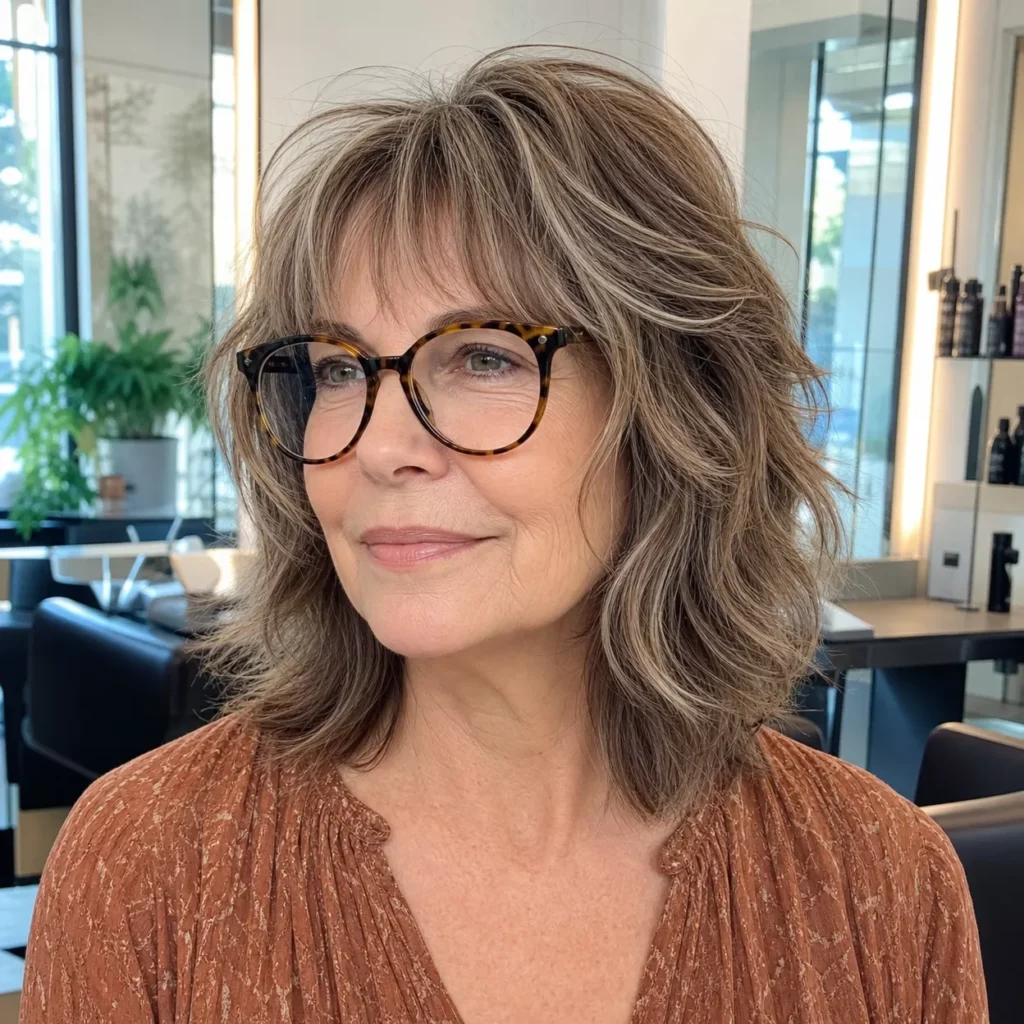
A wispy fringe is lighter than a full one, so you can see the forehead through it. It can sit above the frames when it is freshly cut, but as it grows it can start resting on the top rim. That is when it starts brushing the lenses.
Check where it lands with your glasses on before the stylist finishes the cut, and plan a small trim before it reaches the frames. On fine hair, keep it slightly heavier than the reference photo, because a very sheer fringe can look sparse.
Choppy Medium Shag for Thick Hair Over 60
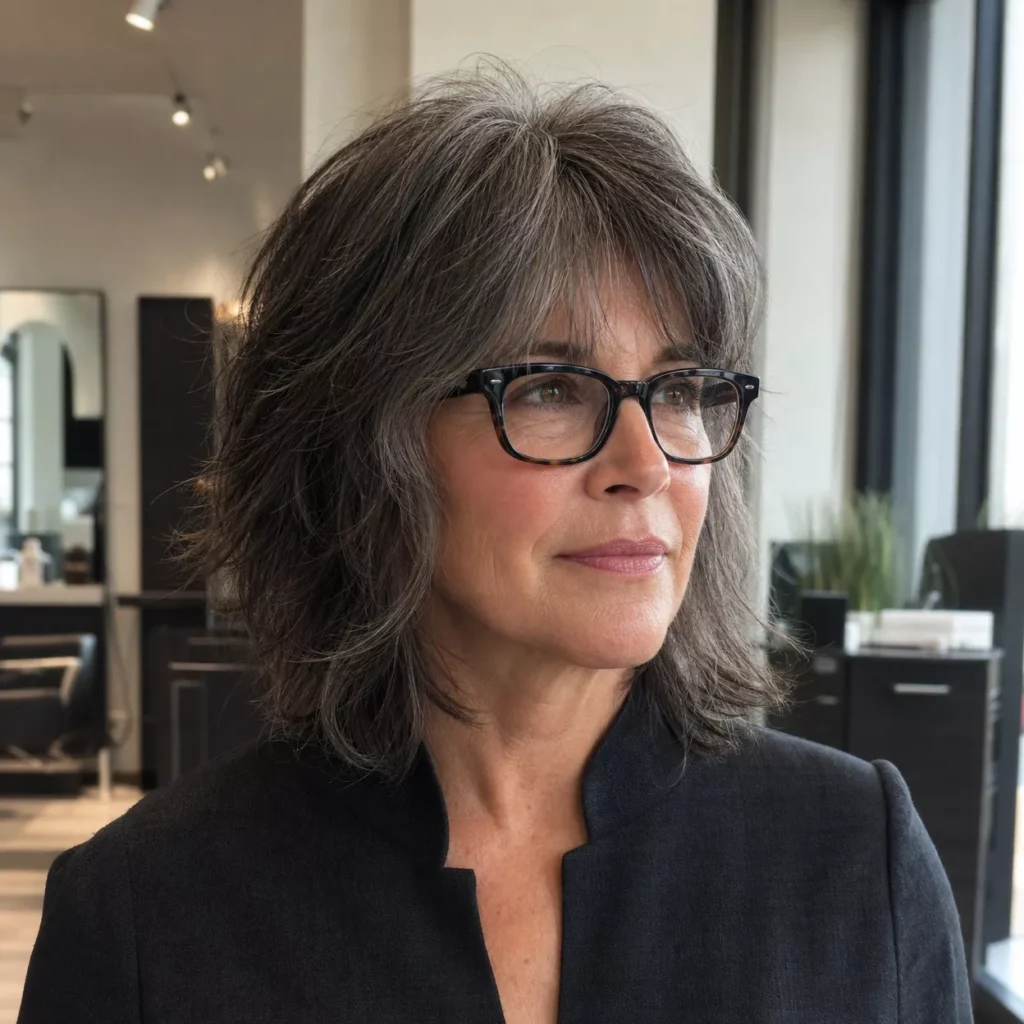
Thick hair can expand sideways beside the face, which is exactly where frame arms rest. Choppy layers help by removing weight from the inside of the shape instead of only shortening the ends.
Ask your stylist to take bulk out internally, and to keep the layers around the temples and ears slightly lighter and shorter. Heavy hair at that level can compete with the arms of your glasses, while lighter temple layers can let the frames sit more cleanly. If the hair still pushes out past the frames, the shape will read as wider than you intended, so it is worth reshaping every 8 to 10 weeks or so.
Medium Wolf Cut for Women Over 60
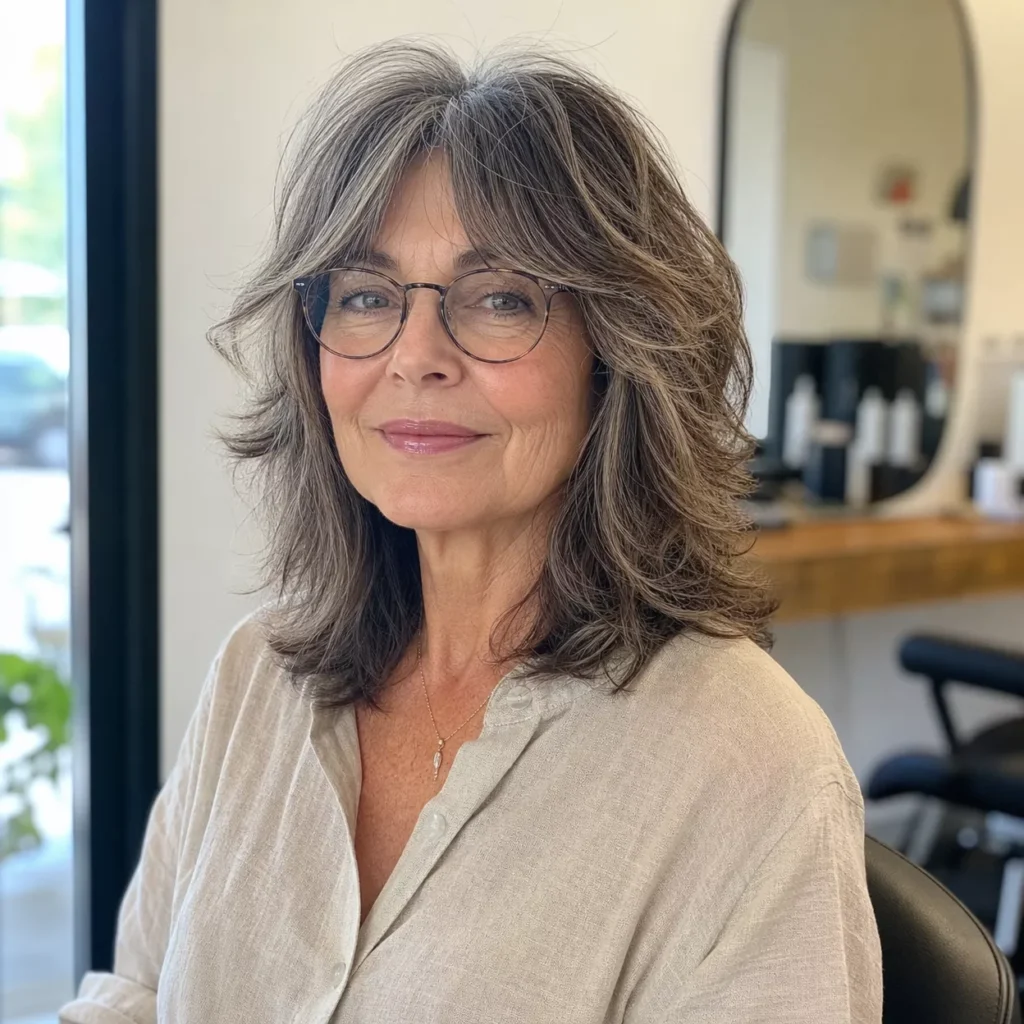
A wolf cut is a shag with more contrast: a heavily layered, shorter crown and longer, wispier pieces below. That means more layering and more texture than a standard medium shag, and shorter layers near the top can create bulk around the ears and temples if they are not cut carefully.
The layered shape gives the cut a more current, textured finish, but it usually requires more styling and maintenance than a softer shag. You may need more frequent trims to stop the layers from growing into a shapeless mass, plus some product to keep the texture defined. If you like wash-and-go hair, a softer shag may be a better fit. The front sections can be cut to sit above or beside your frames, so ask where they will fall.
Medium Shag with Natural Gray and Glasses

Gray hair often feels wirier or drier than pigmented hair, and it can sit or curl differently, so this cut is as much about texture as color. A moisturizing routine and a lightweight styling cream usually help.
If you are growing out color, layers can help by breaking up the transition zone. Silver, white and remaining darker strands can show up as movement through the layers instead of a hard regrowth line. A gloss or an occasional purple shampoo can help if yellowing bothers you.
Undone Medium Shag

This tends to look undone only when the cut suits your natural texture. The routine is short: wash, scrunch in a curl cream or light mousse, and let it air-dry completely without touching it.
Wavy or curly hair often cooperates. Very straight, fine hair may fall flat without heat, since nothing holds the layers up. Before you commit, let your hair air-dry once without styling and see what it does. That is the honest preview of this cut.
Medium Shag Bob with Glasses
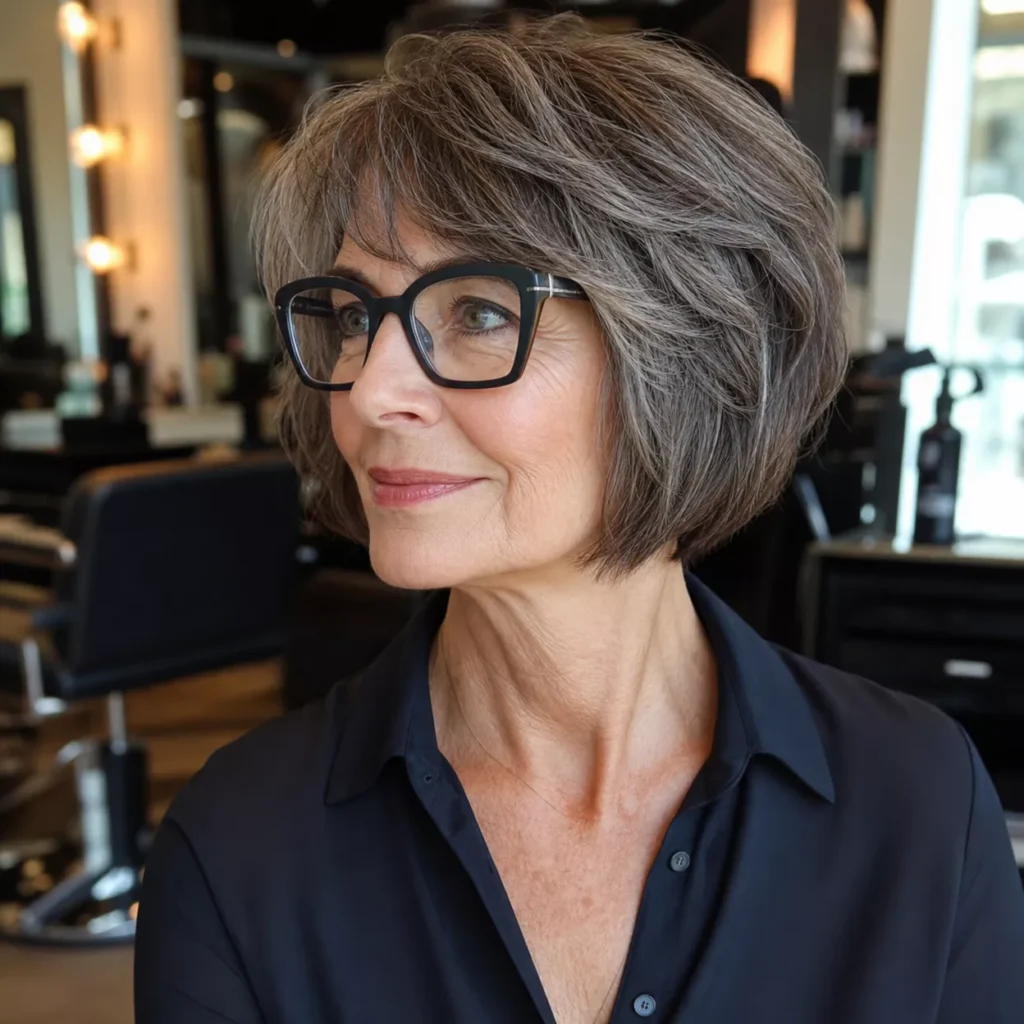
This variation combines the outline of a bob with the interior layers of a shag. The perimeter stays clean and defined, and the movement happens inside it. Because the bottom edge is solid, it can suit fine to medium hair that might look sparse in a fuller shag.
The clean outline can also echo angular frames, though that is a matter of taste. If you prefer contrast, ask for slightly softer ends. It can grow into a shaggier shape faster than you might expect, so trims every 6 to 8 weeks help keep the outline.
Layered Medium Shag with Warm Highlights

Highlights placed along the layers can bring out the movement of the cut, and caramel or honey tones can blend into gray and brunette bases without a harsh regrowth line. Ask for fine weaving, because chunky sections can look stripey.
Lightening can dry the hair and change its texture, so ask your colorist whether a gloss or bond treatment makes sense. Color visits every few months are common.
PRO TIP: When wearing glasses, ask your stylist to keep the hair at the temples slightly lighter and shorter. Heavy hair at the temple level competes directly with the frame arms of the glasses and creates visual clutter. Lighter, slightly shorter temple layers allow the frames to sit cleanly and make both the hair and the glasses look better simultaneously.
Shaggy Lob with Curtain Bangs for Glasses

A shaggy lob keeps more length while borrowing the layers of a medium shag. The extra length lets you tie your hair back, and it drops the outline lower, which can leave more room around the temples.
The trade-off is weight. Long, heavy hair can pull layers flat, so the layering needs enough shape to keep movement through the ends. Styling usually takes a little longer than a shorter shag because there is more hair to dry.
Medium Shag with Blunt Fringe and Bold Frames
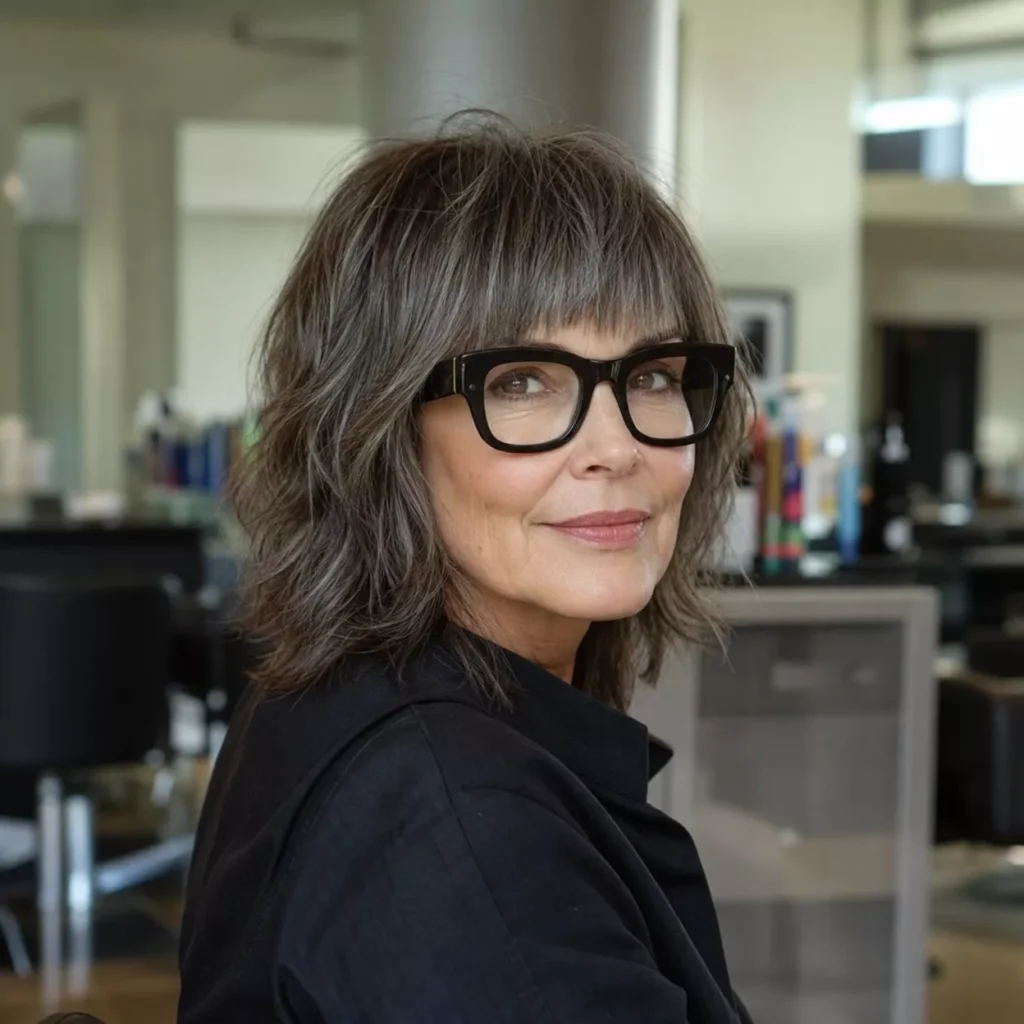
A blunt fringe makes a straight horizontal line, and thick frames make another. How they sit in relation to each other decides the effect. A fringe that ends just above the top rim can read as two deliberate lines. One that lands right at the rim can look as if it is colliding with the frames.
Have the stylist check the length with your glasses on. A blunt fringe is also a higher-upkeep bang option, usually needing a trim every three to four weeks and a little styling each morning. The shaggy layers behind it soften the rest of the shape.
Soft Layered Medium Shag on Fine Hair
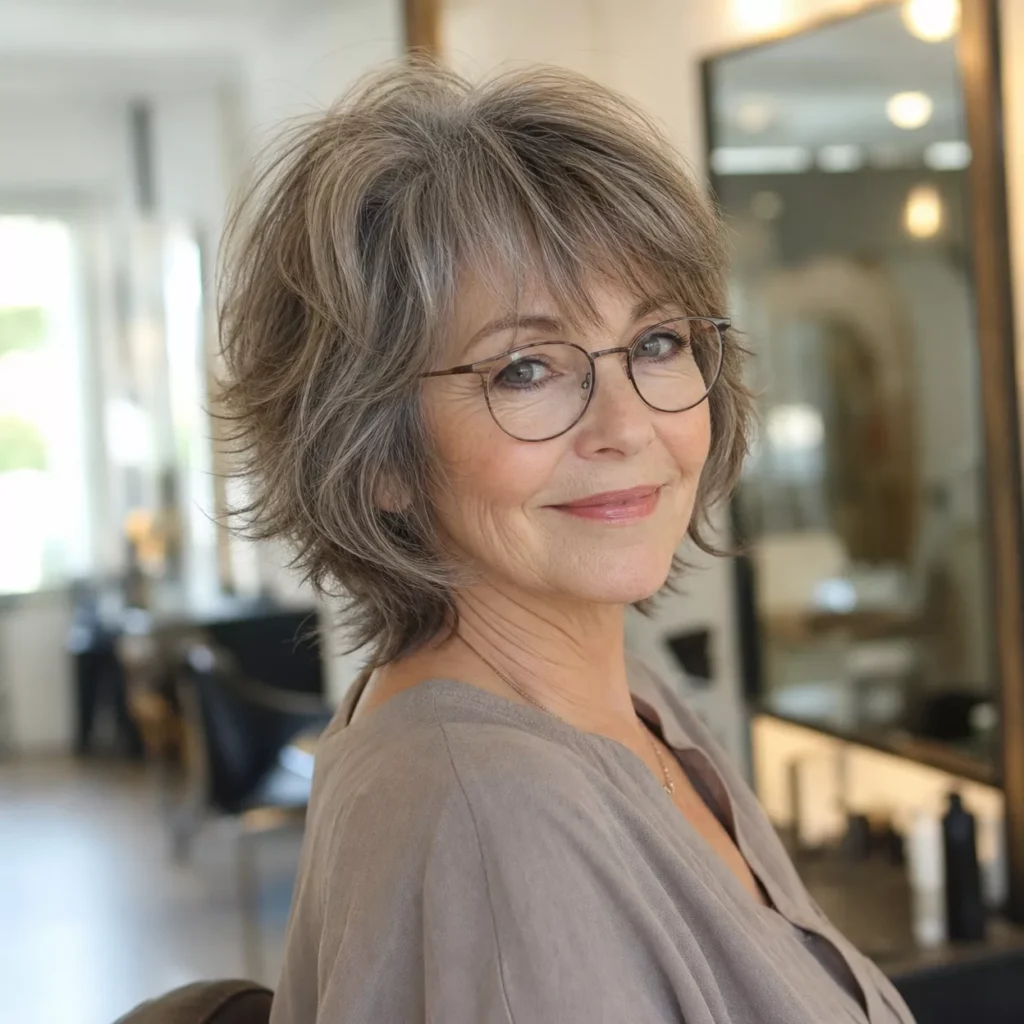
With fine hair, the goal is to keep weight where it matters. Too many short layers pull hair away from the ends and can leave the perimeter thin. Longer, blended layers sitting inside a reasonably solid bottom line usually hold more body.
A lightweight mousse on damp roots and mid-lengths can give grip without heaviness. Try saying: “Keep the ends fairly full and use longer layers, because my hair is fine.” How much lift you actually get depends on your density.
Medium Shag with Face-Framing Layers

Where the shortest front pieces end changes how crowded the glasses look. Pieces that finish near the cheekbone can sit alongside the frames, while pieces that end at the jaw may fall past them. If the front layers end at the same level as the bottom of your frames, the two can compete.
Oversized frames cover more cheek and temple, so there may be less room for hair there. Keep the front pieces slim if that describes your glasses.
Medium Shag with Copper Highlights and Glasses

Copper tends to fade faster than many other shades, so visible softening within weeks is common. Cooler rinses, fewer washes and a color-depositing conditioner can all help stretch it.
It is worth trying the shade against your frames before committing. Copper can contrast with dark or tortoiseshell frames, while next to warm amber frames the tones may blend together, which some people like and others do not.
Low Maintenance Medium Shag Over 60

“Low maintenance” is only useful if you know what it means. For most people it comes down to:
- five minutes or less of daily styling
- a texture that dries into shape without a tool
- trims every 8 to 12 weeks instead of every 4 to 6
- no color to refresh
A shag can meet the first two when it is cut for your natural texture. Very straight, fine hair may need heat to look intentional, so a shaggy cut there may not be low effort. Ask your stylist to walk you through what a normal morning would look like.
Medium Shag with Deep Side Part

Deep parts often need holding. On fine or slippery hair, the part can drift back toward the center by afternoon, so a light hold spray or a little root texture helps. The heavy side falls over one temple, so check that the section is not being pushed around by the frame arm.
If it keeps shifting, tucking that side behind the ear is a simple fix. This is a style where the shape depends on daily effort more than on the cut.
Romantic Medium Shag with Loose Waves

Loose waves come from a large-barrel wand, followed by a light flexible-hold spray. Plan on about 15 to 20 minutes. On fine hair, choose lightweight products, since a heavy spray can flatten the shape.
Wave direction matters with glasses. Curling away from the face tends to leave the temple area clearer than curling toward it, where hair can rest on the frame arms. Humidity can relax set waves through the day, so a slightly sturdier hold may help in damp weather.
Medium Shag on Curly Hair Over 60

Two things decide this cut: shrinkage and expansion. Curls usually dry shorter than they hang, so it helps to judge length on dry hair. Layers remove weight that drags curls down, which can let them spring up, but in the temple area curls can expand into the arms of your glasses.
Ask for the layers there to be shaped so the curls do not push against the frames. Some stylists prefer cutting curls dry to judge this. Many people define with a curl cream, diffuse, and avoid touching the hair while it dries.
Medium Shag with Silver Tones and Cat-Eye Frames

Cat-eye frames lift at the outer corners. Hair pieces that sweep away from the face near the cheekbones can echo that line, while heavy volume beside the cheeks can crowd it.
Silver is a maintenance question too. Cool tones can turn yellow or dull, and an occasional purple shampoo helps hold them. If your hair is not naturally gray, getting it there may take lightening, which affects condition.
Textured Medium Shag for Maximum Volume Over 60

Layers that start close to the crown remove weight from the top, so the hair can lift instead of lying flat. Choppy ends keep the perimeter from looking heavy. Results depend on density: fine hair may not hold the lift, and on very thick hair the added height can make the shape look wider from the front.
You will probably need root product and a blow-dry to get it, so this is a cut for someone who is happy to style.
Which Medium Shag Should You Consider?
Use these as starting points.
- If your hair is fine: softer, longer layers with a solid bottom line.
- If your hair is thick: more internal weight removal, especially around the temples.
- If you want minimal styling: a natural or undone version, once you have checked that it suits your texture.
- If you wear oversized frames: keep the temple area lighter and the front pieces slim.
- If you have curly hair: account for shrinkage and expansion, and have the shape checked around the frame arms.
- If you want bangs: consider how their length interacts with the top edge of your frames.
When a Medium Shag with Glasses Can Go Wrong
- Too much bulk at the temples. Layers that add weight beside the ears can push against the frame arms.
- A fringe that keeps touching the frames. It smudges the lenses and gets pushed aside all day.
- Too many short layers on fine hair. The ends can turn sparse.
- Too much volume beside the cheeks. The hair can crowd oversized or bold frames.
- Curly hair expanding into the arms. It can tug at the frames or bulge around them.
- Copying a styled photo exactly. Your natural texture may behave differently from the model’s.
- Choosing a high-maintenance cut when you want wash-and-wear hair. A wolf cut or a blunt fringe can ask more of you than a soft shag.
What to Tell Your Stylist
Bring a photo, but wear your glasses to the appointment so the stylist can see how the frames sit. A few scripts you can adapt:
“I wear glasses every day, and I don’t want the layers to create bulk where the arms of my frames sit. I’d like movement through the length, but a cleaner temple area.”
“My hair is fine, so please keep the ends fuller and use longer layers instead of lots of short ones.”
“I want something I can air-dry. Can you cut it around my natural texture?”
A few questions worth asking:
- How much bulk will be left at my temples?
- Where will the bangs land once they are dry, and how often will I need to trim them?
- What will this look like with no styling?
- How often will this need reshaping?
A medium shag is rarely the same on two heads, and glasses add another variable. Choose the version that fits your frames, density and texture, and take it to a stylist who is willing to check the result with your glasses on.