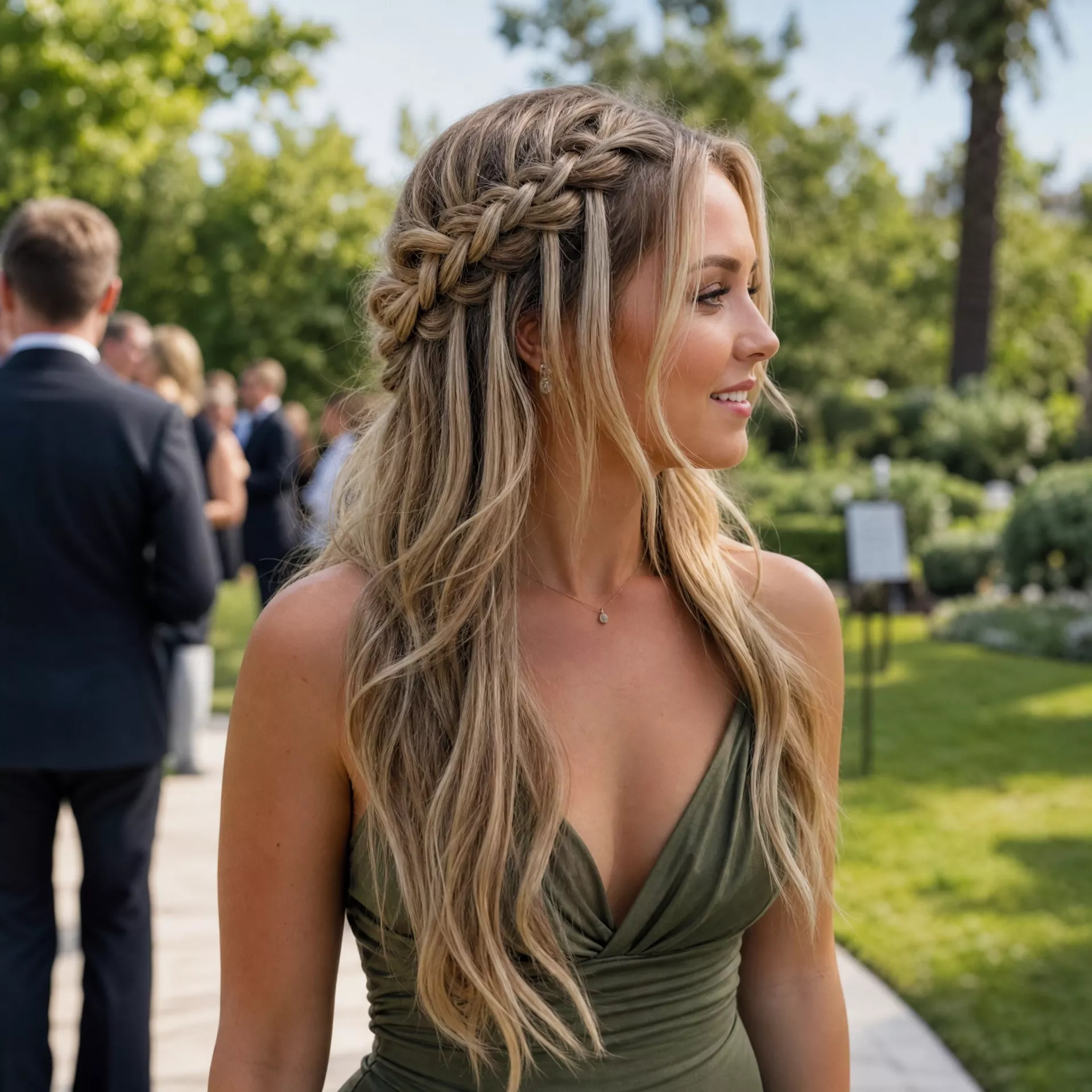
24 Winter Hair Ideas: Styles, Color, and Cold-Weather Care
Winter changes how hair behaves for many people, though not in the same way for everyone. Indoor heating can dry the air, hats and scarves add friction and static, and cold mornings make waiting for hair to air-dry less appealing. Some of the ideas below are hairstyles that work around coats, collars, and beanies. Others are color services, conditioning treatments, a styling routine, or accessories. They appear together because winter decisions often overlap, but they’re different kinds of choices with different costs and upkeep, and each entry says which kind it is. After the 24 ideas, you’ll find practical notes on static, moisture, headwear, color appointments, and habits that can backfire, so you can pick one useful change instead of a full seasonal overhaul.
Rich Deep Brown for Winter

This is a color idea, not a cut. A deep brown can lean warm, with red or golden undertones, or cool, with ashy or neutral ones, and the difference shows most clearly in daylight. How much contrast it creates depends on your current shade. Going a level or two darker than your natural color is usually a smaller change than going lighter, and regrowth may be less noticeable if your roots are a similar depth. Darker shades can fade toward warmer tones over time, so a gloss or toner may become part of the upkeep. Talk through warm versus cool with your colorist before deciding.
Winter Gloss Treatment

A gloss, sometimes called a glaze, is usually a short service that adds shine and can adjust tone. A clear gloss mainly affects shine. A tinted one deposits some pigment, which can refresh faded color, neutralize brassiness, or deepen the shade slightly. Results depend on the product used. Most glosses fade over several weeks, so they work as a temporary refresh, not a permanent change. That doesn’t make them commitment-free: a tinted gloss still changes your tone, and you’ll need to repeat it if you want to keep the result.
Sleek Winter Blowout

A sleek blowout depends on heat and technique: working in sections, using a heat protectant, and drying each section smooth with a paddle or round brush. A light smoothing product can help control flyaways if static is a problem. Hats and scarves will still affect it. A beanie can flatten the crown or leave a crease, and a scarf can rub the ends. Letting each section cool before moving on helps the shape last, and smoothing the hair gently with your hands after removing a hat brings much of it back.
Winter Updo

Updos range from a quick twisted bun for work to a pinned chignon for an evening event. In winter, placement matters most. A high bun can clash with a beanie, while a low one at the nape usually fits under a hat but may press against a high coat collar. A mid-height bun works with some hats and not others. Keeping the ends tucked away reduces friction against scarves, though it doesn’t change the dry air around your hair. Test any updo with the coat and hat you’ll actually be wearing.
Deep Conditioning Winter Treatment

Conditioning comes in several strengths. A regular rinse-out conditioner smooths hair after every wash. A deep-conditioning mask is usually richer and stays on longer. A salon conditioning service may use professional products, sometimes with heat. Which one you need depends on how your hair feels. If it’s tangling easily, feels rough, or is snapping, a mask may help. If it already feels soft, your regular conditioner may be enough. Follow the product’s instructions for timing, and notice whether richer formulas leave fine hair flat.
Bold Dark Lip Matching Hair

This is a styling idea, not a hair technique. It means pairing a deep hair color, such as burgundy, auburn, or dark brown, with a darker lip shade for a coordinated look. Some people enjoy echoing the same color family, while others prefer contrast, such as a deep lip with lighter hair. Undertones can guide the match. Warm hair often pairs with brick or berry-brown lips, and cooler burgundy hair tends to suit plum or wine shades. It’s purely a matter of taste, so experiment with makeup first, since lipstick is far easier to change than hair color.
Winter Curtain Bangs

Curtain bangs part at the center and frame the face, sitting above scarves and collars. Under a hat, they often get pressed flat or pushed to one side, so expect to reshape them after taking headwear off, using your fingers, a small round brush, or a quick blast from a dryer. Some people tuck them under the hat’s edge instead. Grow-out depends on the cut and your hair. Curtain bangs usually blend into face-framing pieces more easily than a blunt fringe, but they still need trims to stay out of your eyes.
Half-Up Winter Style

Gathering the top section keeps hair away from your face while the rest falls over your shoulders and coat. A higher section adds shape at the crown, while a lower one stays flatter and sits better under a hat. A loose gather looks softer and is gentler on the hairline. A tightly secured one stays neater but can pull. The loose lengths will meet collars and scarves, which can cause tangling or static, so a little smoothing product on the ends helps. Any crown height will be compressed once a hat goes on.
Braided Winter Style

Different braids behave differently in winter. A French braid weaves hair in from the hairline and sits close to the head, so it fits under many hats. A low side braid falls over one shoulder, where it may rub against a scarf or coat. A crown braid wraps around the head and may clash with a snug beanie. Braids can reduce tangling by keeping strands together, but they aren’t automatically protective. Very tight braids put tension on the hairline, and the loose ends still rub against fabric. Secure the end with a soft elastic.
Rich Red for Winter

Red covers a wide range. Burgundy and wine shades lean cool and purple, deep reds sit closer to a true red, and copper leans orange. Which suits you is personal, and the contrast with your skin and eyes matters more than the season. Achieving red depends on your starting color. Darker hair may need lightening for a vivid result, while a deep burgundy can sometimes be deposited without lifting. Red shades tend to fade faster than many others, so color-safe care and regular refreshes are part of wearing it. A colorist can help you choose the depth and tone.
Hat-Proof Winter Style

No style is entirely hat-proof, but some cope better than others. Low buns, braids, and compact twists that sit below where the hat presses usually survive, while loose waves and crown volume usually don’t. The hat matters as much as the hair. A slouchy beanie compresses less than a tight one, and a brimmed hat sits differently again. Avoid bulky pins where the hat presses against your head, and secure the style gently. Some flattening at the crown is normal, so plan for a quick reshape when the hat comes off.
Winter Pixie with Warm Color

This entry combines two decisions: a pixie haircut and a warm color. The pixie changes the silhouette, shows the neck and ears, and dries quickly after a hat. A warm shade, such as auburn or warm brown, changes the tone. Together they make a significant change, so consider each one separately. A pixie needs regular trims, and color on short hair shows regrowth quickly, so the two upkeep schedules may overlap. Hat flattening on a pixie usually fixes with a little product and your fingers.
Cozy Low Pony for Winter

A low ponytail sits at the nape, below most hats and inside a coat collar. A smooth version needs brushing and maybe a little smoothing product, while a softer, textured one looks more relaxed and hides any dents a hat leaves behind. Use a soft elastic or scrunchie that holds without pulling at the hairline. The ponytail may still crease where the band sits or flatten under a heavy collar. Shifting the exact position now and then also avoids constant strain on one spot.
Deep Burgundy Balayage for Winter

Balayage is a placement technique in which color or lightener is painted on freehand, usually leaving the roots closer to your natural shade. A burgundy version adds deep red-purple tones through the mid-lengths and ends. It can be subtle, with burgundy deposited over a dark base, or high-contrast, which may require lightening first. Your base color and color history decide what’s possible. Grow-out is often gradual because the roots stay natural, but burgundy fades, so toning or gloss appointments may be needed to keep it looking fresh.
Winter Moisture Styling Routine

Styling products each have a different job. A leave-in conditioner softens hair and helps with detangling. A cream adds more weight and control. An oil adds slip and shine when used in small amounts, and a finishing serum smooths the surface and can reduce flyaways. You don’t need all of them. Fine hair may be weighed down by more than one, while thick or coarse hair may tolerate richer layers. Start with one product, see how your hair responds, and add another only if the first isn’t enough. Keep heavier products away from the roots.
Loose Winter Waves

Loose waves can come from natural texture or from a curling wand or iron. Natural waves need suitable product and gentle drying. Heated waves need a heat protectant and work best on fully dry hair. Wave size depends on the barrel, with larger barrels giving looser bends. How long the waves last varies with hair type. Fine or very smooth hair often drops them quickly, while hair with some texture holds them longer. Finger-combing keeps waves defined, and brushing softens them into a fuller shape. A hat will usually flatten them at the crown.
Winter French Tuck Updo

A French tuck usually means gathering the hair, twisting it vertically up the back of the head, tucking the ends into the roll, and pinning it in place. Some people use the term for a rolled chignon at the nape, so a photo helps make sure you and your stylist mean the same thing. Sectioning and pinning decide how well it holds, and pins pushed into the roll so they cross each other keep it secure. Before relying on it, test it with your coat and scarf, since a high collar can press on the roll. It may loosen over a long day.
Protective Winter Style for Natural Hair

Protective styles such as flat twists, braids, and bantu knots keep the ends tucked away and reduce daily handling. For some people, that helps with dryness and breakage through winter, though results depend on the hair and the technique. A protective style isn’t automatically beneficial. If it’s too tight, it can strain the hairline, and the hair underneath still needs moisturizing and care while it’s in. Keep the tension moderate, take the style down gently, and consider satin-lined headwear to reduce friction over it.
Winter Bob with Polished Finish

A polished bob depends on the finish as much as the cut. A blunt perimeter gives a clean line that shows clearly when the hair is smoothed, while a textured bob has broken-up ends and looks deliberately undone. The polished version usually needs a blow-dry or flat iron, and possibly a smoothing product if static is an issue. A bob also sits above most collars, so it rubs less against scarves than longer hair does. Growth shows first at the perimeter, so regular trims keep the line sharp.
Deep Conditioning Color with Gloss

This entry pairs a conditioning treatment with a gloss, which do different things. Conditioning addresses how the hair feels, while a gloss addresses shine and tone. Some salons offer both in one appointment, and others recommend separate visits depending on the products and the condition of your hair. The combination makes sense if your hair feels dry and your color also looks faded. If only one of those applies, a single service may be enough. Ask your colorist what each step is meant to do before booking both.
Winter Curly Hair with Moisture

Curly hair can feel drier in low humidity, so a conditioning routine suited to your curl pattern often helps. Detangle gently while conditioner is in, using your fingers or a wide-tooth comb, and blot water out with a microfiber towel or cotton T-shirt instead of rubbing. Diffusing is a drying method, not a way to add moisture, though it can help curls set faster on cold mornings, and low heat is gentler. Friction from scarves and hats can frizz curls, so a satin-lined hat may help.
Low Braided Bun for Winter

A low braided bun starts with a braid, which is then coiled into a bun at the nape and pinned. Because the braid keeps the strands together, the bun is less likely to loosen than a simple twisted one. Its low position usually fits under hats and inside collars, though a bulky bun can press against a high collar. Keep the braid moderately loose to avoid tension, and use pins that sit flat against the head so they don’t dig in under a hat.
Winter Hair Accessories

Accessories do different jobs. Satin- or silk-lined beanies give the hair a smoother surface to rub against, which may reduce friction and frizz. Velvet headbands hold hair back and add texture, though velvet grips some hair more than others. Satin scrunchies are gentler than plain rubber elastics, and padded clips or claw clips hold updos without pressing pins into the scalp. No accessory prevents static entirely. Choose ones that fit comfortably and don’t snag or pull.
The Complete Winter Hair Refresh

Instead of a fixed package, think of a winter refresh as choosing the change that matters most to you. Some people need a trim. Others need a different styling habit, a better conditioner, a lined hat, or a color appointment. Changing everything at once makes it hard to tell what actually helped. Start with the problem that bothers you most, whether that’s static, dryness, flat hair under hats, or faded color, and address that first. Color is optional, and many people won’t need it at all.
Why Winter Hair Gets Static and What Actually Helps
Static builds up when hair rubs against fabric, a brush, or other hair and picks up an electrical charge. Dry air makes this more noticeable because there’s less moisture around to help the charge dissipate. That’s why it often appears when you pull off a sweater or hat.
A few measures help. Reducing friction, through satin-lined hats, smoother scarf fabrics, and less repeated brushing, makes a difference. A light conditioner or leave-in can help if your hair also feels dry. Smoothing flyaways with slightly damp hands or a small amount of anti-frizz product usually works better than piling on heavy products. Choose formulas suited to your texture to avoid buildup. Dryer sheets are sometimes suggested as a quick fix, but they’re made for laundry, not hair, so products designed for hair are the better routine choice.
A Winter Moisture Routine Without Product Overload
Each product has its own role. Conditioner is for every wash. A mask is for occasional extra conditioning. A leave-in softens and detangles, creams and oils add weight and slip, and serums smooth the surface. Most people need two or three at most.
Fine hair is usually happiest with lightweight products used sparingly and kept away from the roots. Thick or coarse hair can often handle richer creams. Curly and coily hair tends to benefit from a routine built around its pattern, with leave-ins and creams layered thoughtfully. Colored, bleached, or regularly heat-styled hair may need more careful conditioning.
It also helps to separate three goals. Reducing friction comes from accessories and gentle handling. Improving softness comes from conditioning products. Repairing structural damage is something products can’t fully do. Follow product directions and adjust based on how your hair actually responds.
Wearing Hats, Beanies, and Scarves Without Ruining Every Style
Some flattening is normal, and how much depends on the hat, your texture, and the style. Low buns, braids, and compact styles cope best. Avoid bulky pins where the hat presses, and choose a hat that fits without excess pressure, ideally with a smooth lining. After you take it off, give your hair a minute to settle, then reshape it with your fingers or a brush. Watch for friction at the hairline from tight bands or scarves rubbing the same spot every day. Curls may compress under a hat and usually spring back with a little water or product.
Winter Hair Color: What to Know Before Booking
These services do different things:
- A haircut or trim changes shape and removes ends.
- A gloss or glaze adds shine and adjusts tone temporarily.
- Demi-permanent color deposits tone that fades gradually.
- Permanent color lasts until it grows out.
- Highlights or balayage lighten selected sections.
- A conditioning treatment changes how the hair feels, not its color.
Each has different costs, upkeep, and possible effects on your hair. Your existing color, previous chemical services, the contrast you want, and your hair’s current condition all decide what’s realistic. A gloss isn’t always damage-free, balayage isn’t always low maintenance, and darker colors still fade. For a significant change, a consultation with a qualified colorist is the best place to start.
Winter Hair Habits That Can Backfire
- Layering heavy products on fine hair to fight static, which often leaves it limp.
- Wearing the same tight bun or braid every day, which strains the hairline.
- Using hot tools without a heat protectant.
- Expecting a mask to repair every kind of damage.
- Wearing a hat or scarf that snags or rubs the same spot daily.
- Booking several chemical services close together without considering your hair’s current condition.
How to Choose a Winter Hairstyle That Fits Your Routine
Start with how often you wear hats or scarves, since daily wearers may prefer low buns, braids, or a short cut. Consider how much time you want to spend styling. Decide whether you’re after a cut, a color change, a treatment, or just a styling adjustment, because these differ a great deal in cost and upkeep. Then factor in your texture and density, whether you need an everyday look or something for an occasion, and how much maintenance you’re comfortable with.
Final Thoughts
Winter hair doesn’t call for a complete makeover. Pick the one issue that bothers you most, whether that’s static, flat hair under hats, dryness, or faded color, and choose the idea above that addresses it. Give it a few weeks before adding anything else, so you can see what actually makes a difference.