23 Classy Office Hairstyles for Professional Women That Hold Up Through the Workday
A hairstyle you wear to work has a harder job than one you wear to dinner. It has to survive a commute, sit through three back-to-back meetings, look intentional on a video call, and still be manageable by the time you’re packing up your laptop, not just look good for the five minutes right after you finish styling it. What actually works depends on things a photo can’t show you: how much time you realistically have before you leave the house, whether your hair drifts into your face the second you start concentrating, and whether your office runs formal, relaxed, or somewhere in the murky middle.
Below are 23 office-friendly hairstyles, one after another, with an honest look at what each one asks of your hair and your morning rather than just a description of how it looks finished. After the list, there’s a way to narrow these down by texture, density, and workplace, plus a few things worth checking before you commit to any of them.
Which Office Hairstyle Fits Your Workday?
Before you scroll through all 23, here’s a shortcut.
In a rush? The Claw Clip Updo and Loose Low Ponytail need no sectioning and no heat. The Elegant Headband Updo gets you there almost as fast.
Need hair completely off your face? Try the Sleek Low Bun, Sleek Middle-Part Bun, or Chignon Bun. The Classic French Twist does the same job while keeping your neck exposed on a warm day.
Prefer wearing it down? Sleek Straight Open Hair and the Sleek Side-Part Blowout keep length loose. Shoulder-Length Layers With Center Part adds movement without asking much of your morning.
Working with natural curls or coils? The Curly High Ponytail lifts the pattern up instead of fighting it. Box Braids Updo is the longer-term option. The Textured Low Ponytail keeps some wave on display.
Fine hair? The Classic Blunt Bob or Polished Pixie Cut hold their structure without much fuss. The Braided Crown for Faux Fullness can create the appearance of more fullness at the crown.
Thick or dense hair? The Half-Up Top Knot takes weight off your face without a full updo. The Low Braided Bun and Braided Low Ponytail both give dense hair somewhere useful to go.
Formal office? Lean on the Sleek Low Bun, Sleek Middle-Part Bun, Classic French Twist, or Chignon Bun. All four read as buttoned-up without much effort.
More relaxed or creative workplace? The Claw Clip Updo, Half-Up Top Knot, Curly High Ponytail, and Twisted Crown Updo can afford to look a little undone.
Sleek Low Bun

Nothing moves in a low bun pulled tight at the nape, which is exactly why it works when you want zero distraction during a presentation, or when you’re in a more traditional office to begin with. Straight and wavy hair take to it easily, since the smoothness depends on a surface that already wants to lie flat. Curly or coily hair can get there too, but expect more product and more time. A little smoothing serum before you pull it back keeps flyaways in check, though on finer hair, don’t be surprised if it looks a touch less crisp by 4 p.m.
Claw Clip Updo

No sectioning, no pins, no heat. This is the fastest thing on the list. Go for a sturdy medium-to-large clip if your hair is thick or dense; a small one tends to give up halfway through the day. Stick to a matte, neutral shade, black, tortoise, navy, and it reads as deliberate rather than casual, though “appropriate” still depends heavily on your specific office. The catch is grip. It’s a looser hold than anything pinned, so test it through a full afternoon before you trust it on a day with a lot of movement.
Loose Low Ponytail

There’s a reason this shows up on so many “easy office hair” lists: it keeps hair controlled without tipping into full-updo formality, which suits a more relaxed office better than something structured. Straight and wavy hair both handle it fine. Fine hair can end up looking a little thin through the ponytail itself, so add some texture at the crown first if that’s a concern. Wrap a small strand around the base of the elastic to hide it and it instantly looks more finished, though that wrap has a habit of working loose by afternoon and needing a quick re-tuck.
Elegant Headband Updo

A headband does most of the structural work for you here, which is the whole appeal on a morning where you’re running late. Go thin and neutral and it reads as appropriate almost anywhere; go wide or decorative and it can look out of place somewhere more formal. Works across most lengths and textures. If your hair is fine, add a little grip product underneath the band, otherwise it tends to slide backward as the day wears on.
Half-Up Top Knot

Thick or voluminous hair that fights a full updo often does better half up: the crown section knots away from your face, and the rest just hangs loose without adding to the bulk. It reads more relaxed than formal, so it fits a creative or business-casual office more comfortably than a strict one. Smooth the top section with a bristle brush before securing it so the knot looks deliberate rather than lumpy. By late afternoon, though, don’t expect it to look quite as crisp as it did at 8 a.m.
Classic Blunt Bob

An unlayered perimeter holds its line with very little daily effort once it’s cut, which is exactly why this shape gets suggested for fine to medium hair so often. The flip side: there’s no layering to hide growth, so it shows lengthening sooner than a softer, layered cut would, and you’ll likely be back in the chair more often to keep it sharp. A round-brush blow-dry gives it a clean edge that generally holds through most of a working day, though humidity has a way of softening that edge early if your hair has any natural wave.
Polished Pixie Cut

Very little hair means very little decision-making in the morning. A pixie doesn’t fall in your face during a meeting, and it usually takes just a few minutes with product to finish. It tends to suit fine to medium hair well, since the shortness itself does a lot of the fullness work that longer hair would otherwise need length for. The trade-off shows up at the salon rather than at your bathroom mirror: precise short shapes like this need reshaping more often than longer cuts. A small amount of matte pomade through the top keeps things defined without overdoing it for a Friday.
Shoulder-Length Layers With Center Part

Soft layers add movement without demanding much styling, and a center part keeps the whole shape fairly balanced, which reads as neutral in just about any office. It looks equally good on straight, wavy, and fine hair, since the layering itself stays moderate rather than aggressive. Once it’s cut right, a round-brush blow-dry and a light hold spray is about all you need most mornings. Very straight hair without much natural bend may need a bit more encouragement to move rather than just hang there.
Sleek Straight Open Hair

Sometimes the simplest option, hair worn down and smooth, does the most for a polished impression with the least effort, at least if your hair is naturally straight or lightly wavy. It’s a poor fit if your hair tends to fall forward into your face while you’re deep in focused work, since there’s nothing holding it back. A smoothing serum and a few slow flat-iron passes at medium heat usually get you there, but keep the heat protectant in rotation. Repeated straightening without it takes a toll on condition over time.
Sleek Side-Part Blowout

Move the part deep to one side and you get instant asymmetry that a center part simply doesn’t offer, and that effect comes from the styling direction more than your face shape, which is why it tends to suit a wide range of people. Works at short, medium, and long lengths, though how deep the part sits and how smooth the finish comes out both depend on your natural texture. A medium round brush directing hair to one side, finished with a light shine spray, generally lasts a full day. Just know it usually needs redoing at every wash rather than holding over multiple days.
Classic French Twist

Fully contained, structured, and it happens to keep your neck exposed on a hot day, which is a small but genuine perk nobody mentions until they’ve worn one in July. It suits a more formal or traditional office and generally needs medium to long hair to work with. Fair warning: it takes more practice than a bun or ponytail to get clean, so don’t debut it on the day of a big presentation. A few bobby pins tucked inside, plus a light hold spray, keep it together for most of a shift, though finer hair can start loosening at the crown by late afternoon.
Chignon Bun

Low, close to the head, and quietly formal without any real technique required, which is what makes it work for a Monday morning meeting and a Thursday client dinner without changing a thing in between. Fine to thick hair both suit it, though if you’re on the fine and lower-density side, a bit of texturizing spray before pinning keeps it from looking flat. A few extra pins, or a hair net underneath if your hair is especially slippery, help it stay tight rather than loosening gradually as the day goes on.
Side-Swept Low Bun

Pin it off to one side instead of dead center and the whole style softens, which some people just prefer to the symmetry of a classic bun. You’ll need longer hair for this one, enough to gather and wrap comfortably to the side. A light hold spray once it’s pinned keeps the shape. Because the bun sits off-center, the pins may need a little more checking during a long day, so a midday glance in the mirror is worth the ten seconds.
Twisted Crown Updo

Two sections twisted back from either side and pinned at the back create something between a bun and a full formal updo, more elevated than either, honestly. It comes together best on fine to medium hair, since the twists don’t need heavy volume to hold their shape. Save it for the days that matter more, a big presentation, a client dinner, since it takes noticeably longer to put together than most of the quicker options on this list.
Low Braided Bun

A braid coiled into a bun at the nape gives you more visual texture than a plain bun, with a similarly contained finish. How tight that finish actually stays depends on your hair’s texture, how firmly the braid was worked, and how many pins went in, so results vary more than you’d think. It handles medium to long hair and most textures well, since the braid itself helps keep frizz in check that might otherwise show in a smooth bun. It takes longer to put together than a simple twist-and-pin bun, so save it for mornings with a few spare minutes.
Sleek Middle-Part Bun

A precise center part plus a smooth, pulled-back bun makes for a fairly symmetrical, no-nonsense look that fits a formal office well. It performs best on straight to slightly wavy hair, since the smoothness along the part needs hair that lies flat without a fight. A fine-tooth comb and a small amount of smoothing gel along the part line keep that line crisp, but hair with any natural wave, or a cowlick near the crown, may need a touch-up by midday.
Sleek Bun With Face-Framing Pieces

A few soft pieces left loose around the face take the edge off what would otherwise be a fully pulled-back, structured look, and that softer version fits an office that wants polish without full formality. It adapts across textures and lengths, and it’s forgiving of how much time you actually put in, a rushed version and a careful one can both look intentional. A small curling wand gives those face-framing pieces a gentle bend, and since they’re not under the same tension as the rest of the bun, they tend to hold that bend better too.
Curly High Ponytail

Lifting your natural curls up and away from your face shows off the shape and volume you already have instead of fighting it, and it’s a genuinely practical option if you’d rather skip straightening before work, across a range of natural curl and coil patterns. A curl-defining cream before you pull hair up, plus a soft bristle brush to smooth the edges, keeps the front neat while the curls up top stay full. Humidity plays its own game with curls, different from straight hair entirely, so how the style holds by afternoon really comes down to your specific curl type and the weather that day.
Box Braids Updo

Pin box braids into an updo or high bun and it can hold reasonably well through a full working day with minimal fuss, though that still depends on the braids themselves, the pins used, and how much your day actually moves you around. It suits coily and tightly coiled textures particularly well, and functions almost as a protective style through the week, since your hair isn’t being touched daily. The real time cost is upfront: installation takes considerably longer than anything else on this list, so it’s more of an upfront styling investment than a daily routine.
Textured Low Ponytail

Skip the flat-iron and let natural waves or texture stay in a low ponytail, and you get something more relaxed and a bit more editorial than a fully sleek version, better suited to a creative or business-casual office than a strictly formal one. Works well across wavy, curly, and naturally textured hair of most lengths. Scrunch a little curl cream through damp hair, let it air dry, then pull it back loosely, all fairly low effort, though how it actually turns out depends heavily on your hair’s own relationship with air-drying, which varies a lot from one curl pattern to the next.
Low Side Braid

Sweep everything into one braid to the side and it keeps hair out of the way without reading as overly formal, and the texture it adds works with an outfit instead of just sitting there. Best on longer hair, since a shorter braid can look stubby rather than sweeping. Loosen it slightly after plaiting by tugging gently at the outer edges, and it softens into something more refined, though pull too much and it’ll start unraveling faster than you’d like over a long day.
Braided Low Ponytail

A braid running through a ponytail gives you more textural interest than a plain elastic, plus it helps control frizz along the length, which makes it one of the more durable choices here for a long stretch with no touch-ups needed. Good for medium to long hair, and it comes together especially well on straight and slightly wavy textures where a plain ponytail can otherwise look a bit flat. A solid middle ground if you want something more finished than a basic ponytail but don’t have time for a full braided updo.
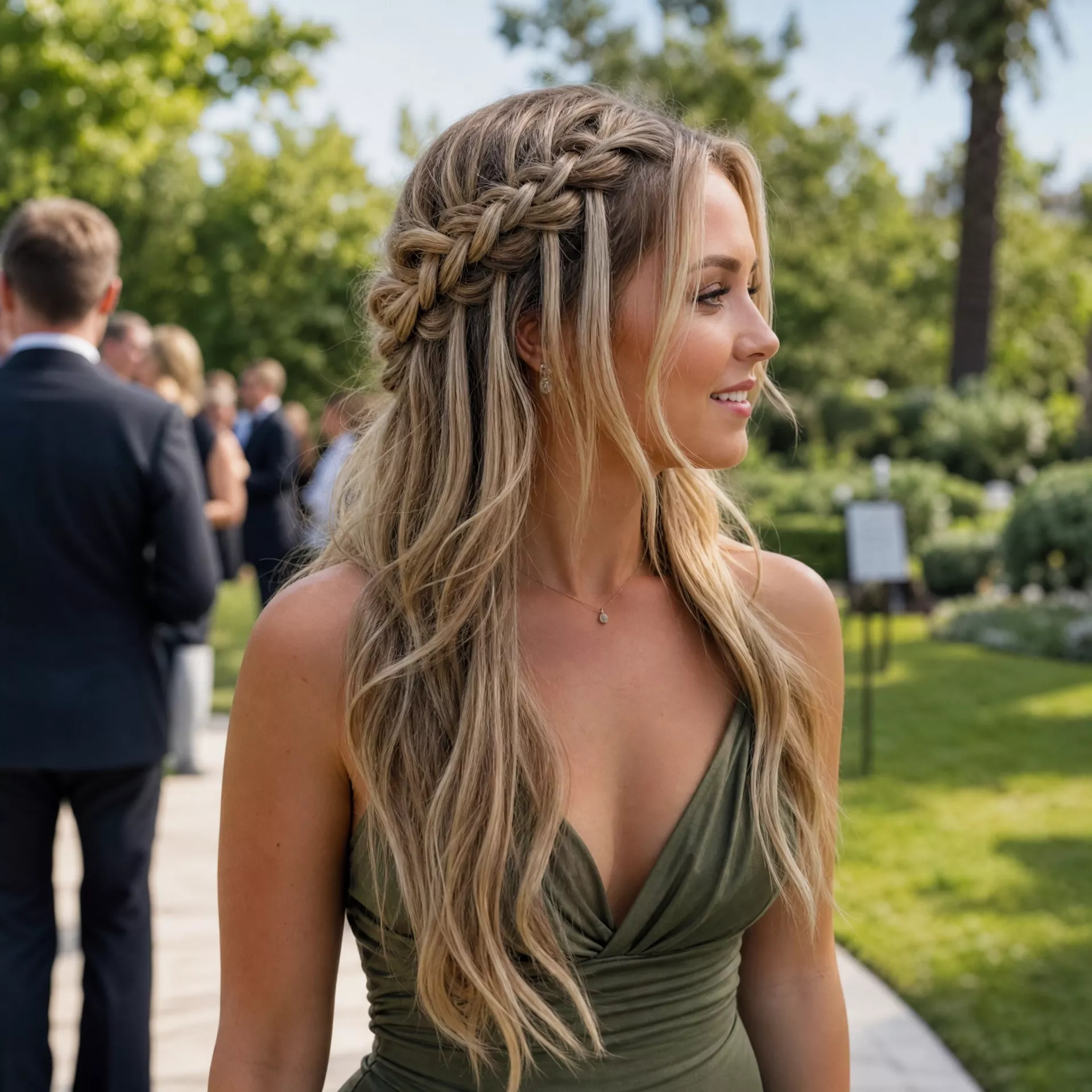
Braided Crown for Faux Fullness

Wrap two braided sections across the top of the head and you get structure and a bit of height without a full updo, and it works across most hair types. Fine or lower-density hair benefits most, since the braids can create the appearance of more fullness at the crown that the hair alone might not provide. Tug gently at the braids after pinning to loosen them and soften the whole thing, but go easy: pull too hard and it stops looking relaxed and starts looking undone. Adjust gradually rather than all at once.
How to Choose an Office Hairstyle That Lasts
A few things matter more here than which photo catches your eye first.
Natural texture. A style built around waves or curls you already have will almost always take less daily effort than one that fights your hair’s natural inclination.
Density and strand thickness. Not the same thing, worth saying again. Fine hair means each strand is narrow. Low density means fewer strands overall. Fine but dense hair generally handles structured styles, like a sleek bun, without looking thin. Fine and lower-density hair usually does better with something that can create the appearance of more fullness, like a braided crown.
Length. A French twist or chignon needs enough length to gather comfortably. A pixie or blunt bob is built around shorter length from day one.
Styling time. Be honest with yourself about how many minutes you actually have most mornings, not how many you wish you had. A fifteen-minute style isn’t realistic on a rushed day, no matter how good it looks finished.
Workplace dress code. Formal offices generally call for structured, contained styles. Relaxed or creative ones give you more room for loose ponytails, half-up styles, or visible natural texture.
Weather and humidity. Sleek, smooth styles shift more with humidity than textured or braided ones, which can actually hold up better on a damp day.
How often you’re willing to fuss with it. Some styles hold with almost no intervention across a full day. Others, especially looser updos or anything held by a single elastic, might need a quick fix by the afternoon.
Judging a Hairstyle Over a Full Workday
A style that looks great right after you finish it doesn’t necessarily hold up eight hours later. Worth thinking through before you commit to something for a long day:
- Does it stay secure through a commute, meetings, and general movement, or does it depend on a hold that loosens over time?
- Will any part of it drop into your eyes once you’ve been sitting, typing, or on a call for a while?
- Will it flatten at the crown or roots if you’re at a desk most of the day?
- Will humidity or weather change the shape, especially anything sleek or straightened?
- Will it need a lunchtime touch-up, or does it hold on its own?
- Is it actually comfortable to wear for hours, or does it pull at the hairline or scalp?
- Will it still look intentional late in the day, or does it start to look undone in the wrong way?
None of this plays out identically for everyone. How a style holds up depends on your texture, the products you used, the weather, and how it was put together that morning.
Common Mistakes to Avoid
- Picking a style that needs more effort than you’re actually willing to put in. Effortless in the photo doesn’t mean effortless in your bathroom.
- Pulling hair too tight. Sleek buns and ponytails can strain the hairline if you pull hard, and that’s uncomfortable over a full day, not just an inconvenience.
- Ignoring your natural texture. Fighting your hair every single morning instead of working with it costs you more time than it needs to.
- Overdoing the product. Too much on fine hair just weighs it down and flattens the whole look.
- Wrong accessory for the room. A bright or decorative clip can look out of place in a formal setting, even when the style underneath is totally appropriate.
- Assuming “low maintenance” means zero effort. Most of the quicker styles here still need a few minutes of attention, just less than a full blowout or updo.
- Choosing something that needs constant adjusting on a day you can’t afford to duck into a restroom.
- Judging a style purely from a photo, without accounting for humidity or what your actual workplace expects.
Before You Choose
Whether you’re deciding what to do tomorrow or planning a cut for your next salon visit, a few honest questions help:
- How much time do I actually have in the morning, realistically?
- Do I usually wear my hair down or tied back for work?
- Do I need it completely away from my face for meetings, calls, or hands-on tasks?
- How does my hair behave with zero heat?
- How often am I willing to go back to the salon for maintenance?
- Is my office formal, relaxed, or somewhere in between?
- Does this style need to survive a commute, and how am I getting there?
- Do I want something that can go from the office into an evening plan without a full redo?
FAQ
What’s the easiest professional hairstyle for busy mornings?
A claw clip updo or a loose low ponytail, since neither needs precise sectioning or heat. A headband updo comes close behind if you need a bit more control up front.
What office hairstyle tends to hold up best across a full day?
Braided styles, like a box braids updo or a braided low ponytail, generally loosen more slowly than anything held by a single elastic or a few pins. That said, hair texture, braid tension, and pin count all shift the outcome, so results genuinely differ from person to person.
Are claw clips appropriate for the office?
Usually, yes, especially in neutral colors like black, tortoise, or navy, though it still depends on your specific workplace. A more formal office might expect a proper updo instead, while a relaxed one tends to give you more room.
What professional hairstyles work well for fine hair?
A blunt bob or pixie can work well for fine hair because a well-chosen shape can preserve visual structure without relying on heavy layering. If you’re doing an updo, a braided crown can create the appearance of more fullness where fine hair sometimes lacks it.
How can I make a ponytail look more polished for work?
Wrap a small section of hair around the elastic to hide it, which instantly reads more finished than a bare tie. Weaving a braid through the ponytail is another quick way to make it look more considered than a plain, quickly-pulled-back one.
What office hairstyles work with naturally curly hair?
A curly high ponytail lets your curl pattern show instead of forcing it flat. Box braids and a textured low ponytail both work with curl and coil texture rather than against it.
Making the Decision
The right office hairstyle for you comes down to how your hair actually behaves, how much time you realistically have most mornings, what your workplace expects, and how much upkeep you’re willing to do over a long day, not which style photographs the best. Bring a couple of options to your stylist and be upfront about your actual routine, including how rushed your mornings usually are and whether you tend to skip touch-ups. That tells them more than any photo ever will.