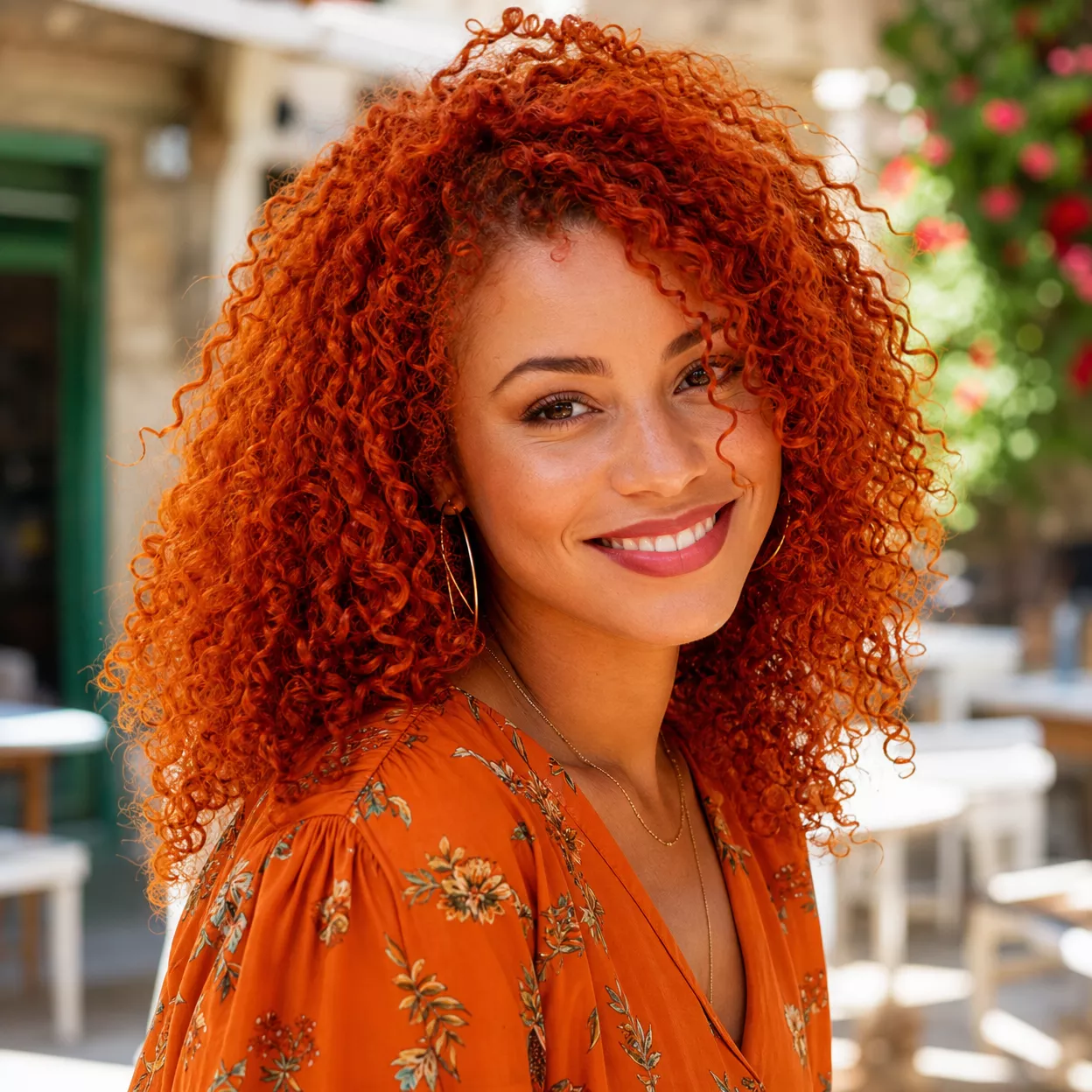
35 Summer Blonde Hair Color Ideas to Discuss With Your Colorist
Summer blonde can mean very different things depending on your starting color, natural texture, and how much maintenance you want to take on. A honey balayage may need a very different upkeep routine from platinum blonde, while a subtle highlight refresh can brighten existing color without changing the whole look.
The 35 ideas below cover warm, cool, dimensional, high-contrast, and cut-focused blonde options. Instead of choosing only by the photo, consider how much lightening your hair can handle, how often you want color refreshed, and whether the shade works with your natural base.
Before You Choose a Summer Blonde
Starting color. The darker your starting color, the more lifting may be required to reach certain blonde shades, and more lifting generally means more sessions or more time in the chair.
How light you actually want to go. Honey, bronde, and beige don’t require the same level of lightening as platinum or icy blonde. It’s worth deciding this before you fall in love with a photo that assumes a much lighter starting point than yours.
Hair condition. Previous bleach, chemical processing, and heat exposure all matter when deciding how aggressively to lighten hair further. A colorist may recommend a slower, more gradual approach if your hair has already been through a lot.
Warm versus cool tone. Decide whether you prefer golden and honey tones, neutral beige, ash, or icy blonde, rather than choosing only from a photo where lighting can shift how a color reads.
Root maintenance. A shadow root or balayage generally creates a softer, more gradual grow-out than blonde that starts directly at the scalp, which can mean fewer salon visits over time.
Natural texture. Curly and highly textured hair may need different lightening and conditioning approaches than straight hair, partly because curl patterns can make it harder to see how evenly color has processed.
Styling routine. A blonde photo styled with waves, curls, or a polished blowout may look noticeably different once you’re air-drying it yourself at home.
The 35 Blonde Ideas
Sun-Kissed Honey Balayage With Face-Framing Pieces

Warm honey tones are hand-painted through the mid-lengths and ends, with extra lightness placed around the face. Because balayage is painted rather than applied uniformly from the root, it tends to grow out with a softer line than foiled highlights, which can mean more time between salon visits. How warm or cool the honey reads depends on your natural base and how your colorist tones it, so it’s worth discussing your starting color before assuming the exact shade in a photo will translate directly.
Bronde Balayage With Warm Wheat Tones

Bronde sits between brunette and blonde, which makes it a reasonable option if you want a lighter look without committing to full blonde. Because it preserves more of your natural depth than a fuller lightening process, it generally involves less lift and can be a lower-commitment way to test whether you want to go blonder later. The wheat tone can be adjusted warmer or cooler depending on your undertone and how much contrast you want against your base.
Natural-Looking Sun-Bleached Ends

Only the ends are lightened, generally by a shade or two. Compared with techniques that lighten larger sections of the hair, this approach limits the amount of hair being processed, which can be a useful starting point if you’re unsure how your hair will respond to lightening. The final look depends heavily on your base color, since sun-bleached ends read very differently on dark brunette hair than on hair that’s already light
Sandy Blonde Lob With Babylights

Babylights are a finer, more subtly placed highlight than standard foils, and here they’re paired with a lob, which is a haircut decision separate from the color itself. Because the highlights are fine and closely spaced, the grow-out tends to be less noticeable than with chunkier highlights, though a glossing treatment afterward can help blend everything into a cohesive tone.
Natural Highlight Refresh For Existing Blondes

If you’re already blonde and your color has grown out or faded, a refresh generally involves fewer highlights than a full color service, focused on brightening and blending regrowth rather than starting over. This tends to take less time and product than an initial lightening appointment, which can make it a more affordable way to maintain color between bigger sessions. A gloss at the end helps unify any variation between the refreshed sections and the rest of your hair.
Honey Glazed Highlight Refresh

A glaze is a toning treatment rather than a lightening process, so this option works on hair that already has some blonde or highlighted sections that need warming up rather than lifting further. It’s useful as a lower-commitment step between bigger color appointments, since it adds warmth and shine without any additional bleaching.
Bright Blonde Balayage On Wavy Hair

Placement matters differently on wavy hair than on straight hair, since waves naturally create peaks and valleys that catch the balayage’s lighter and darker sections in different ways. A colorist working with wavy hair may place the lightest pieces slightly differently than they would on straight hair, to account for how the wave pattern will show off the color once it’s dry and styled.
Golden Hour Balayage With Caramel Ribbons

Caramel sections woven through a golden blonde base add depth without requiring a fully uniform blonde result. Because there’s more than one tone involved, blending at the roots and through the mid-lengths matters more here than with a single-tone balayage, and it’s worth asking your colorist how they’ll keep the transition between the caramel and golden sections looking intentional rather than patchy.
Warm Toffee Blonde Ombre

Ombre transitions from a deeper root into a lighter, warmer blonde through the lengths, and because the darker color stays intact near the scalp, this style generally grows out with less visible regrowth than a technique that lightens closer to the root. Refreshing the ends periodically with a gloss can help keep the blonde section from dulling between full color appointments.
Buttery Blonde Highlights On Dark Brown Base

This is a partial lightening approach: the dark brown base stays mostly intact while creamy blonde pieces are added through it, generally using a foiling technique that keeps the sections soft rather than sharply lined. Because most of your natural depth remains, this tends to involve less overall lifting than techniques that lighten the whole head, which can mean a gentler process for hair that hasn’t been lightened before.
Toasted Coconut Blonde Layers

The color here is a warm blend of deep brown and golden blonde; the layers are a separate haircut decision that shapes how the color moves once it’s styled. If your hair has been through repeated lightening to get multiple tones, a protein or moisture treatment can help address any dryness that builds up, though how often you need one depends on your hair’s condition rather than a fixed schedule.
Golden Bronze Blonde For Deeper Skin Tones

Rather than lifting hair to a pale blonde, this shade keeps golden and bronze tones front and center, which generally means less overall lift is needed from a darker base. Because the goal is warmth rather than paleness, the tone can be adjusted to sit closer to or further from your natural depth depending on how much contrast you want. A moisturizing treatment can help manage dryness, particularly after any lightening process.
Vintage Gold Blonde With Warm Gloss

The base color here is a deep amber and honey blend, and the gloss on top is a separate toning step that adds shine and a slightly richer finish rather than lightening the hair further. Because a gloss fades faster than the underlying color, it will need refreshing more often than the base blonde itself, with the exact timing depending on how quickly your hair processes and fades the tone.
Terra Cotta Blonde For Warm Summer Vibes

This shade blends golden blonde with amber, rust, and burnt orange notes, which puts it further from a typical blonde and closer to a warm, reddish tone. Because those orange and amber notes can shift more noticeably than a standard blonde if toned incorrectly, ongoing color maintenance matters more here than with cooler, more neutral shades, and it’s worth discussing with your colorist how the tone is likely to fade over time.
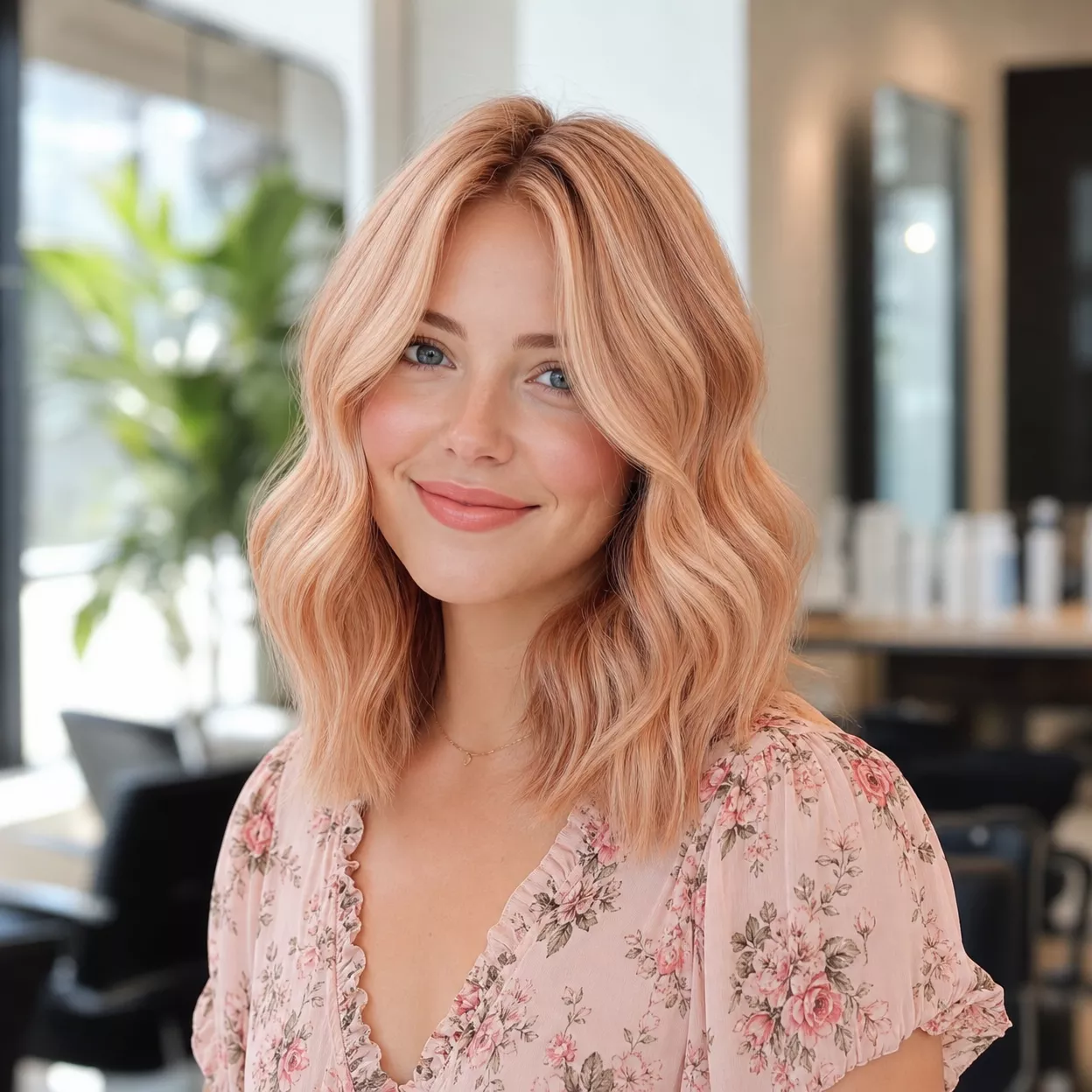
Copper-Kissed Strawberry Blonde

Strawberry blonde already leans warm, and adding copper tones pushes it further into a peachy, golden territory. The final result depends heavily on your natural base; a warmer starting color may require less correction to achieve the copper tone, while a very cool or ashy base may need additional color adjustment.
Sun-Drenched Blonde Long Layers

The layers here are a cutting decision, separate from the warm blonde color itself; you could pair a similar blonde with a different haircut, or these long layers with a different color. The layering affects how the tonal variation catches light and shows movement, so it’s worth discussing with your stylist whether the layers are being cut with the color’s placement in mind.
Platinum Beach Blonde With Tousled Waves

Reaching a bright, icy platinum from most natural bases requires significant lifting, which is a more involved process than most other shades on this list and generally means more sessions to get there safely without excessive damage. Keeping the tone bright rather than yellow typically requires more frequent toning than warmer shades need. The tousled waves are a separate styling choice on top of the color and can be achieved with a wand regardless of your natural texture. A moisturizing or bond-focused treatment is worth discussing with your colorist if your hair has undergone significant lightening.
Champagne Blonde With Soft Grown-Out Roots

Champagne sits between platinum and golden blonde, and the deliberately grown-out root is what keeps this option relatively low-maintenance: because the root is meant to look soft and shadowed rather than sharp, regrowth blends in rather than creating an obvious line. A toning gloss applied periodically at the root can help stretch the time between full salon visits.
Ice Blonde Bob With Subtle Shadow Root

On shorter hair, the contrast between a darker root and pale, icy lengths can become more visually prominent because there is less length to soften the transition. Regrowth may therefore be more noticeable on a bob, so it’s worth asking your colorist how the shadow root will change as it grows.
Dimensional Ash Blonde With Money Piece

A money piece places bright color specifically around the face rather than throughout the whole head, which is a lower commitment than full highlights and shows regrowth faster than the rest of the hair because it sits so close to the hairline. Ash tones can shift warmer over time as they fade, so ongoing toning matters here regardless of how much of the head is highlighted.
Beige Blonde Balayage On Medium Brown Hair

Beige blonde is a cooler, more muted tone than honey or golden blonde, and how well it holds against a medium brown base depends on keeping the warmth in check as the color grows out and fades. Toning at a pace that matches how quickly your specific hair drifts warm, rather than on a fixed schedule, tends to keep beige blonde looking intentional rather than brassy.
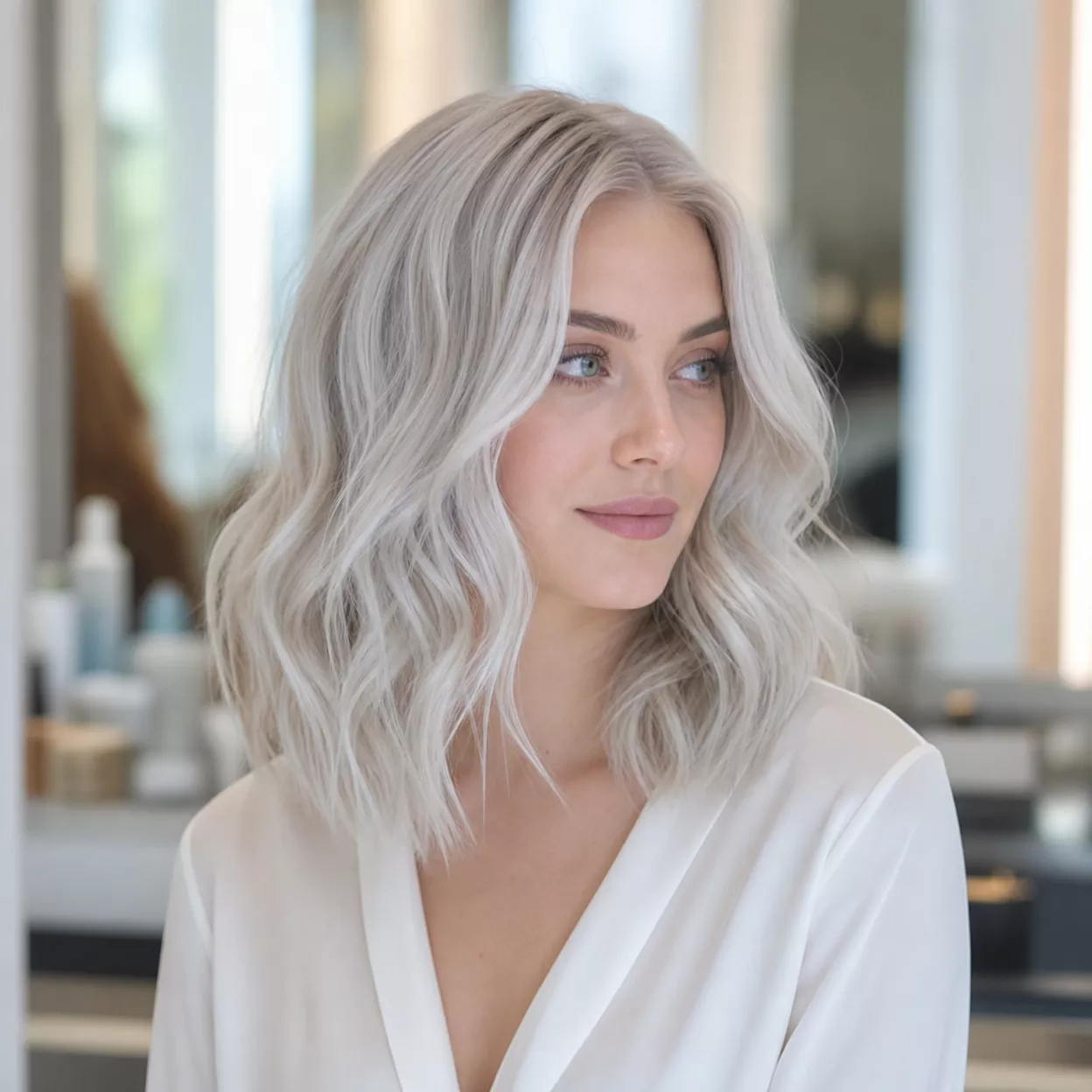
Pearl Blonde With Cool Undertones

Pearl blonde sits lighter than champagne but warmer than platinum. Building this tone from a dark base may require multiple stages of lightening rather than a single appointment, so it’s a more realistic goal if your hair is already fairly light or has been previously lightened. A leave-in toning conditioner used between washes can help maintain the tone without over-drying the hair.
Soft Lavender-Toned Blonde

This is a cool ash blonde with a faint lavender tone layered on top, and because that lavender tint is a toning effect rather than a permanent pigment, it fades faster than the underlying blonde and needs more frequent refreshing to stay visible. Alternating between a purple shampoo and a lavender-toned mask can help maintain the tint between salon visits, though how often you need either depends on how quickly your hair processes and releases the tone.
Icy Blonde Curtain Bangs With Lived-In Color

The curtain bangs are a cutting and styling decision separate from the color; here, only the bangs are toned icy while the rest of the hair keeps a warmer, more blended tone. This partial approach can be a way to try a cooler tone without lightening your entire head, and it means the maintenance schedule for the bangs may run separately from the rest of your color.
Chunky Face-Framing Blonde Pieces

Wide, deliberately visible highlight sections around the front of the hairline create a strong contrast that reads as a stylistic choice rather than a subtle color shift. Because this placement sits close to the hairline, it shows regrowth relatively quickly, and blending the pieces slightly at the root can help soften that transition compared with a hard, two-tone line.
Platinum Highlights On Dark Hair

Getting platinum highlights on a dark base generally requires more lift than lighter starting colors, since the natural pigment has to be broken down significantly to reach a pale tone. This puts more demand on hair condition than most other options here, so it’s worth asking your colorist whether a bond-building or conditioning treatment would be appropriate during the process, particularly if the highlighting will be done in stages rather than all at once.
Multi-Tonal Summer Blonde With Depth

This technique uses at least three shades of blonde within the same head, from deeper base tones through to lighter ends, rather than a single uniform color. Because there are multiple tones to maintain in balance, regular glossing helps keep them cohesive; without it, one shade can start to dominate as the others fade at different rates.
Rose Gold Blonde Blend

Rose gold is a semi-permanent, color-depositing tone layered over a blonde base, which means it fades faster than a permanent color and needs more frequent refreshing to stay visible. It also generally requires hair that’s already blonde or very light to begin with, since the pink tones show up most clearly against a pale base rather than a darker one.
Glossy Blonde Bob With Invisible Highlights

The highlights here are placed and blended finely enough that they aren’t obvious until light catches the hair, which works particularly well with a blunt bob’s clean perimeter. Because the highlighting is subtle, the visual maintenance tends to be less demanding than bolder techniques, though the bob itself, being a precise, blunt shape, may need more frequent trims to hold its line regardless of the color underneath.
Bright Summer Blonde With Curtain Bangs
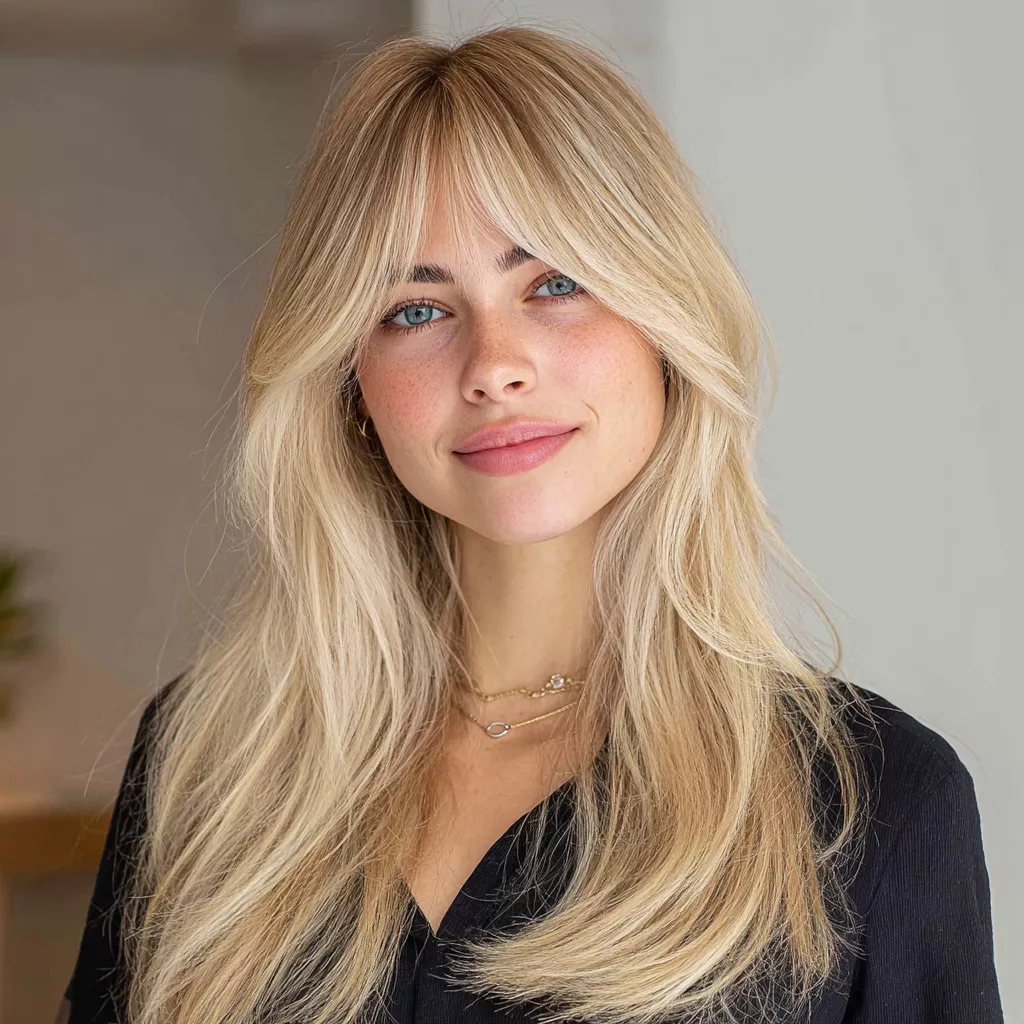
The curtain bangs are a separate cutting decision from the base blonde color, and pairing them means the bangs generally need their own trim schedule apart from any color touch-ups. Keeping the bangs a shade lighter than the rest of the hair, blended with face-framing pieces, is a styling and placement choice your colorist can adjust depending on how much contrast you want at the front.
Wheat Blonde Pixie With Root Shadow

On a pixie, regrowth becomes visible faster than on longer hair simply because there’s less length to distract from the roots, which makes the root shadow here more of a practical tool than a purely stylistic one: it extends the time before regrowth looks obvious. Because pixies also need more frequent cutting to hold their shape, color and cut maintenance tend to overlap more here than with longer styles.
Creamy Blonde Highlights On Fine Hair

Highlights can create more visible variation across fine hair, which may make movement and dimension easier to see. They do not increase actual density, and the lightening process should be discussed carefully if the hair is already fragile or low-density, since fine hair can be more prone to damage from repeated lightening than coarser hair.
Soft Caramel Balayage On Shoulder-Length Hair

Caramel tones painted through shoulder-length hair work across straight, wavy, and curly textures, though the placement your colorist chooses may shift depending on your texture, since curls and waves show off hand-painted color differently than straight hair does. The cut length here is a separate decision from the color technique and could be paired with a different balayage tone if you prefer something cooler.
Blonde Highlights For Natural Curls

Curl pattern affects how highlights read once the hair is dry, since each curl catches light differently and can show more or less of the lightened sections depending on how tightly it coils. Lightening can affect the feel, moisture balance, and sometimes the appearance of curl definition, particularly when hair undergoes substantial processing, so a colorist working with curly hair may recommend a more gradual approach and a stronger moisture routine afterward than they would for straight hair.
Blonde Highlights With Dark Lowlights

Adding lowlights back into heavily highlighted hair restores some depth that can be lost when blonde becomes too uniform, and the darker strands create contrast against the lighter ones rather than blending into one flat tone. Because lowlights add back some of your natural depth, they can also reduce how much bleach is needed at future appointments, since not all of the hair needs to be kept at the same light level.
What Can Go Wrong With Summer Blonde
- Choosing a shade without considering your starting color. A shade that looks a certain way in a photo may require significantly more processing on a darker base than it did on the model’s hair.
- Lightening hair that’s already heavily processed. Repeated bleaching or lightening without addressing condition first can lead to breakage or an uneven result.
- Choosing a tone that’s too cool or too warm for what you actually want. Ash tones can look flat against warm skin tones some people prefer, and warm tones can shift brassy faster than expected on hair prone to warmth.
- Underestimating root maintenance. Some techniques, like balayage or a shadow root, grow out gently; others, like all-over platinum, show regrowth much sooner.
- Assuming balayage means no maintenance at all. It generally means less frequent salon visits than foiled highlights, not zero maintenance.
- Using toning products too frequently. Purple or blue shampoos used more often than your hair needs can lead to overly cool or even purple-tinted results.
- Choosing a reference photo shot in different lighting. Blonde tones can look noticeably different in natural sunlight versus salon lighting or a filtered photo.
- Focusing entirely on the color while ignoring the haircut. Several of the looks above depend as much on the cut and styling as on the color itself.
- Expecting one appointment to reproduce a heavily edited or professionally styled photograph. Many reference photos involve significant styling, lighting, and sometimes color correction beyond a single salon visit.
What to Tell Your Colorist
- What is your natural starting color, and has it been previously bleached or highlighted?
- Do you want a warm, neutral, or cool blonde overall?
- How light do you actually want to go, realistically?
- How much root maintenance are you comfortable with between appointments?
- Do you want visible contrast between sections, or a softly blended result?
- Are you trying to preserve some of your natural depth, or lighten as much as possible?
- How often are you willing to return for color maintenance?
- What condition is your hair in currently, and has it had any recent chemical treatments?
- Which specific part of your reference photo do you like: the tone, the placement, the root shadow, or the contrast?
FAQ
Do I need to go platinum to get a “summer blonde” look?
No. Many of the ideas above, like bronde, honey balayage, or beige blonde, stay much closer to a natural base and require less lifting than platinum does.
How often will I need to go back for color maintenance?
It depends on the technique and how quickly your hair reveals regrowth or fades tone. Balayage and shadow-root techniques generally allow more time between visits than all-over highlights or platinum shades.
Can I go blonde if my hair has been previously colored or bleached?
It’s possible, but your colorist will likely want to assess your hair’s current condition first, since already-processed hair may need a more gradual approach to avoid excessive damage.
Will highlights make my fine hair look thicker?
Highlights can make movement and dimension more visible in fine hair, but they don’t add actual density. If your hair is fine and also low in density, it’s worth discussing how much lightening it can handle.
How do I keep cool-toned blonde from turning brassy?
A purple or blue toning shampoo can help, though how often to use it depends on the product and how quickly your specific hair shifts warm. Using it more than your hair needs can overcorrect the tone.
What’s the difference between balayage and traditional highlights?
Balayage is hand-painted and tends to grow out with a softer line, while foiled highlights are more uniform and often show regrowth sooner, though foils can also create more precise, consistent color throughout.
How far you can go in one appointment depends on where your hair is starting from. Softening a few face-framing pieces is a different process from lifting several levels all over. Before significant lightening, a strand test on a small hidden section can show the likely result, how long the lightener needs, and how your hair responds. That test says nothing about allergy. An allergy patch test is a separate check, done on the skin by following the dye product’s instructions before use, including for products you have used before. If your hair has already been bleached or highlighted, have a professional assess its condition first, because previously processed hair may not tolerate another round of lightening the same way.
Final Thoughts
The best summer blonde is not necessarily the lightest or brightest option. The better choice depends on your starting color, how much lightening your hair can handle, the contrast you want, and how often you’re willing to maintain the color.
Before your appointment, save two or three reference photos and tell your colorist what you like about each one, whether that’s the tone, brightness, root depth, placement, or amount of contrast. That gives you a much clearer starting point than asking for “summer blonde” alone.