21 Volumizing Hairstyles for Fine or Thin Hair, and How to Choose the Right Cut
Fine hair and low-density hair can behave very differently, and neither automatically needs the same haircut. Some cuts create a stronger-looking perimeter, while others rely on texture, root lift, or styling to create more visible movement. The important question is not simply which hairstyle adds the most volume, but which combination of cut, density, texture, and daily styling fits your hair.
The 21 ideas below cover cuts of different lengths, a few styling techniques, and a couple of color approaches. Each one focuses on a different practical factor, not just “adds volume,” so you can find the ones that actually address what’s happening with your hair.
Fine Hair vs. Thin or Low-Density Hair
These two terms get used interchangeably, and that’s a problem, because they call for different solutions.
Fine hair describes the diameter of each individual strand. Fine strands are narrower than average, which is why they can feel soft or silky, and why they tend to lose shape or volume more easily than coarser strands.
Low-density or thinning hair describes how many strands you have overall, regardless of how thick or thin each one is.
You can have fine strands with high density, which often behaves quite differently from hair that’s both fine and low-density. You can also have coarser strands with low density, which presents its own separate challenges. A haircut chosen for one combination isn’t automatically right for another: heavy layering that adds movement to fine-but-dense hair, for instance, can make already low-density hair look sparser rather than fuller.
If your hair has started thinning suddenly or noticeably, it is worth seeing a doctor or dermatologist, since a haircut can change how hair looks but not why it is thinning.
Before You Choose a Volumizing Hairstyle
A few things worth figuring out before you pick a style:
Where does your hair actually lose volume? Some people notice flatness mainly at the crown, others at the temples, and others through the ends. The answer changes which cut or technique will actually help.
How much styling are you willing to do? Some of the options below depend on daily blow-drying and root lift; others are closer to wash-and-go.
Do you have any natural wave or curl? Texture that already exists in your hair changes how much a cut needs to do the work versus how much falls to styling.
How long do you want to keep your hair? Some volumizing approaches work more easily at shorter lengths, while others are built specifically to preserve length.
Are you open to color as part of the approach, or are you focused on the cut alone? Color can add visual dimension, but it’s a separate decision from the haircut itself.
The 21 Hairstyles
The Blunt Bob With Subtle Undercut

A clean, blunt perimeter can make the ends appear visually denser, particularly when the hair isn’t heavily layered, since an unbroken line gives the eye less to read as thin. An undercut hidden underneath removes some bulk at the nape without changing the outer shape, which can help if your hair feels heavy there without affecting the visible silhouette. Ask your stylist where they plan to keep the blunt line and how the undercut will be blended so it doesn’t show when your hair moves.
Textured Pixie With Piece-y Layers

Shorter length removes the weight that pulls fine hair flat, and piece-y layers through the top and crown create separation that adds visible texture. How much separation you get depends on your density as much as the cutting technique: fine-but-dense hair tends to hold this texture more easily than fine, low-density hair, where the same layering can look a bit sparse. A small amount of lightweight styling product through dry hair can help define the pieces without adding much weight.
Stacked Bob With Volume At The Crown

Graduation at the back, shorter at the nape and gradually longer toward the jaw, builds shape through stacking rather than through added length. This is a structural approach to lift, meaning the cut itself does the work rather than daily styling, which is useful if your crown area tends to flatten quickly. Blow-drying the roots upward with a round brush reinforces the shape the cut is already building.
French Bob With Blunt Fringe

The French bob sits around the cheekbone, and pairing it with a full, blunt fringe adds a second area of visual weight at the front. The bob’s rounded shape and the fringe’s density work together, but each also comes with its own upkeep: the fringe will generally need trimming more often than the rest of the cut to stay in shape. Dry shampoo at the roots on day two can extend the time between washes.
Shaggy Pixie With Curtain Fringe

Layers cut throughout create movement, while curtain fringe frames the face without adding the weight of a fuller bang. This tends to suit both straight and slightly wavy hair, though the amount of natural texture you have will change how much diffusing or styling it takes to get the layers looking defined versus flat.
Layered Lob With Face-Framing Pieces

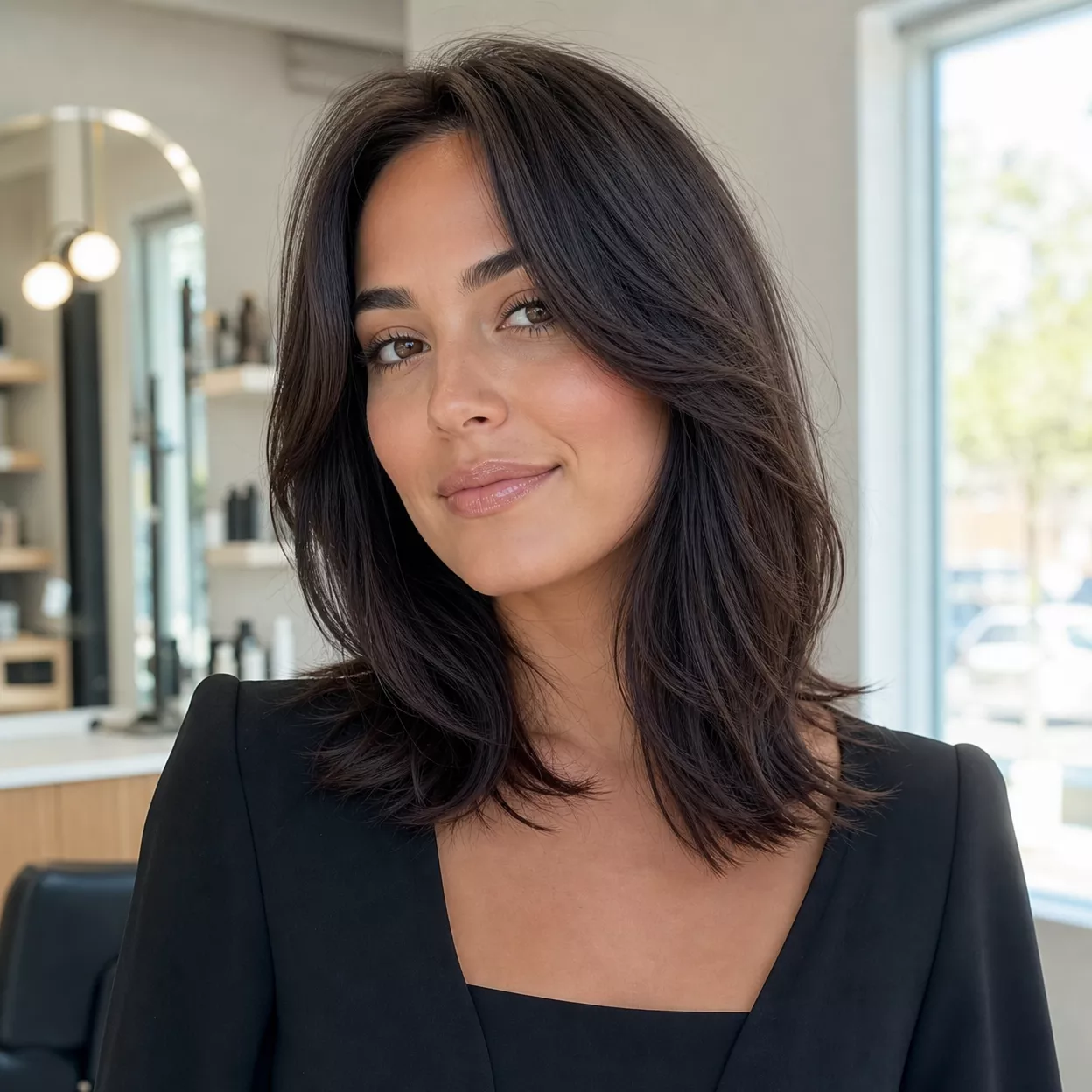
Layers worked through the mid-lengths and ends remove some bulk in the area where fine hair often looks stringy, while face-framing pieces add movement near the front. The trade-off is the same one that applies to most layering on fine hair: enough layering adds visible movement, but too much, especially near the very ends, can leave the perimeter looking thinner rather than fuller. Flipping your head upside down while blow-drying can add a temporary lift at the root, though how long that lasts depends on your hair and any product used.
Voluminous Blowout Bob At Collarbone Length

Collarbone length is short enough that a blowout doesn’t have to fight much weight, which is part of why this length is often suggested when you want a fuller-looking blowout. A round brush and a volumizing mousse applied at the roots before drying are the basic tools here, though this is a styling-dependent look: the volume comes largely from the blowout technique, not from the cut sitting that way on its own.
Beachy Waves On A Medium Cut

Waves add bends and curves along the length that break up the flat, close-to-the-head look fine hair often has when worn straight. A sea salt spray on damp hair, scrunched and either diffused or air-dried, is a common approach, though how much definition you get depends on your hair’s natural tendency to hold a wave versus needing heat to create one.
Soft Shag With Wispy Ends

A shag removes weight throughout the length rather than concentrating it at the ends, using layers cut from the crown down. On fine-but-dense hair, this tends to create noticeable movement without much loss of fullness. On fine, low-density hair, it’s worth discussing with your stylist how conservative the layering should be, since removing too much weight in an already sparse area can make things look thinner rather than more textured.
Curtain Bangs With A Medium Layered Cut

Curtain bangs add visual interest at the front of the face, parting and sweeping outward rather than sitting flat. They also add a separate maintenance point: bangs generally need more frequent trims than the rest of a layered cut to keep their shape. Blow-drying them outward with a round brush is the usual approach to getting the swept curtain effect.
Asymmetrical Bob For Fine Hair

An asymmetrical bob, with one side cut longer than the other, creates a directional line that adds visual interest through its shape rather than through length or layering alone. Internal layers on the longer side can help prevent that side from looking heavy or flat as it grows, since a single-length section of hair that’s noticeably longer than the other can start to weigh down without any layering to break it up.
High Ponytail With Teased Crown

This is a styling technique rather than a cut. Pulling hair up into a high ponytail makes the crown more visible, which can draw attention to low-density areas if that’s where you notice the most scalp or separation. Lightly teasing that section before pulling everything back creates a base with some lift, and wrapping a small section of hair around the elastic covers it for a more finished look.
Half-Up Half-Down With A Volume Bump

Backcombing the top section gently before securing it creates a raised base at the crown while the rest of the hair stays down, showing length. This is a technique that can be applied to a range of cuts and lengths rather than a haircut in itself, and a light-hold hairspray tends to keep the bump in place without making the hair feel stiff.
Loose Updo With Pulled-Out Pieces

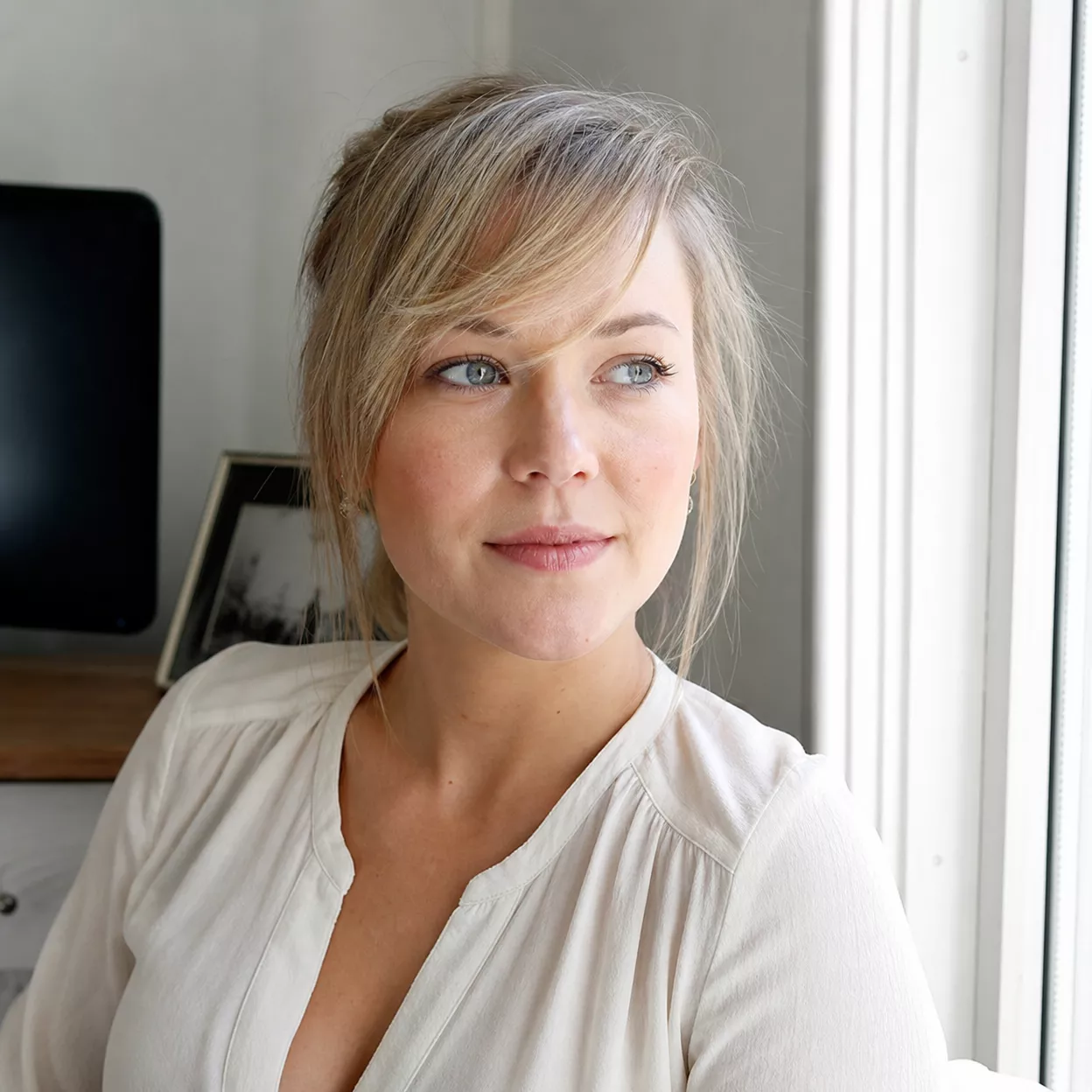
Gathering hair up removes the flat, close-to-the-head appearance that shows more clearly when hair hangs down, and pulling a few pieces loose around the face softens what could otherwise look severe. This is another styling approach rather than a specific cut, and it works across most lengths as long as there’s enough hair to gather and twist.
Braided Crown For Faux Fullness

Braiding two sections and wrapping them across the top of the head adds structure and some height at the crown without an elaborate updo. The braided sections themselves create the appearance of fullness there, which can be useful specifically if your crown area is where you notice the most flatness. Gently tugging at the braids after pinning loosens them and softens the look, though pulling too much can make them look undone rather than deliberately relaxed.
Long Layers With Feathered Ends

Long layers can preserve length while introducing movement, but the amount of layering matters. On fine or low-density hair, removing too much weight can make the ends appear thinner, so a stylist may keep more weight through the perimeter and use fewer, strategically placed layers rather than heavy feathering throughout. The ends may need reshaping periodically depending on how quickly your hair grows and how much you want to preserve the feathered shape.
Voluminous Blowout On Long Fine Hair

A blowout on long hair generally means sectioning the hair and working from underneath upward with a large round brush, directing airflow along the shaft. Applying a volumizing mousse at the roots before starting, and finishing with a light-hold rather than a heavy spray, tends to help preserve lift rather than weighing the style back down. How full the result looks still depends on your density and how much time you spend on the technique, not the technique alone.
Long Hair With Root Lift Styling

Root lift is a technique, not a cut. A root-lifting spray or foam is worked into the roots before blow-drying, and the roots are dried in the opposite direction from how they’ll ultimately sit, building some height at the base before the rest of the hair is smoothed into place. How long that lift holds through the day varies by hair type, humidity, and how much product was used, so it’s not something that’s guaranteed to last unchanged from morning to evening.
Mermaid Waves On Fine Long Hair

A larger-barrel iron can create broader waves along long fine hair than a small-barrel tool, since bigger waves add sweeping movement along the length rather than small, separated ringlets. Running fingers through the waves rather than brushing them out tends to keep them looking fuller rather than separating them into thinner-looking sections.
Highlights And Lowlights For Dimensional Depth

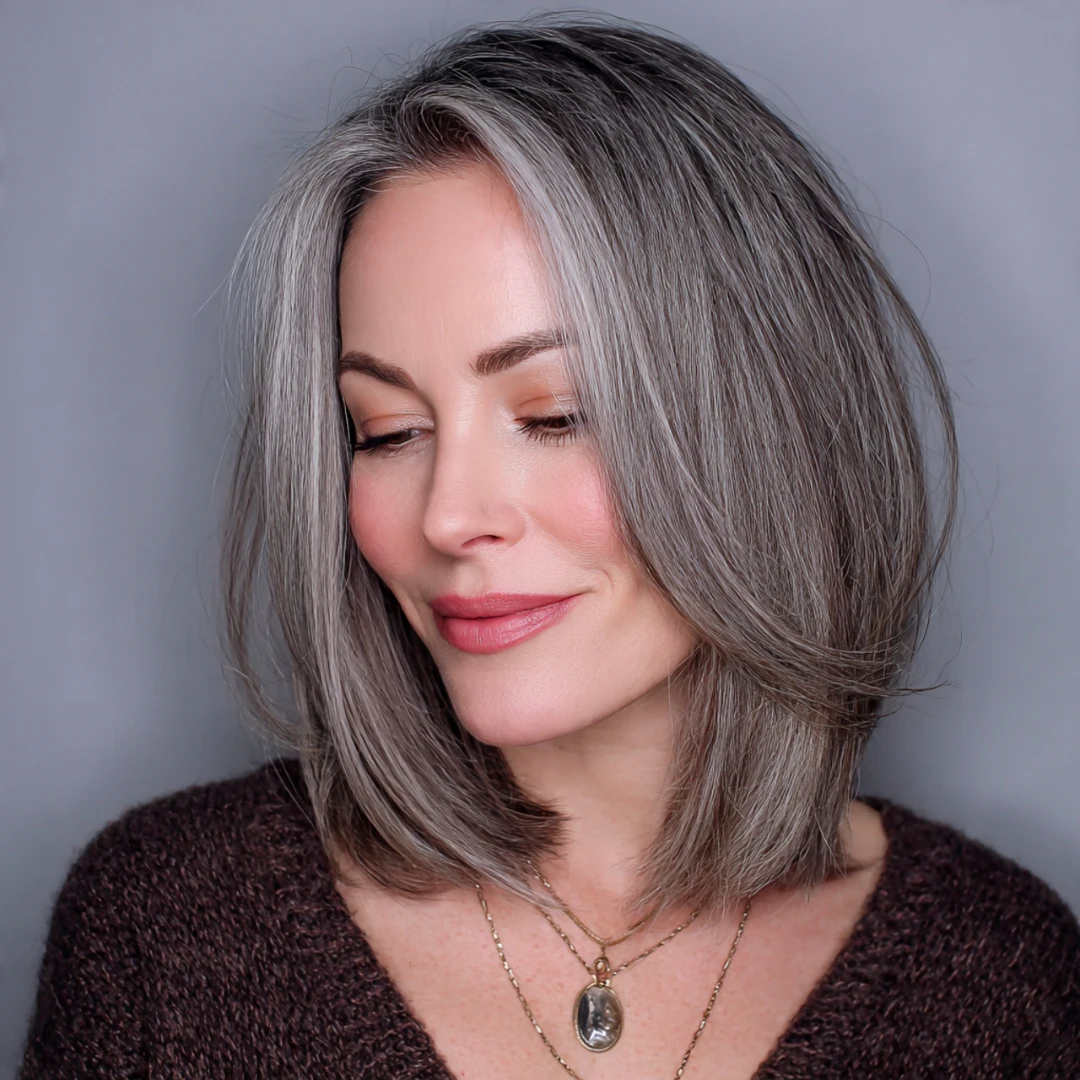
Combining highlights and lowlights adds contrast between lighter and darker strands, which can make movement in the hair more visible and add a sense of depth. This is a visual effect from color placement, not a change in actual density, so it’s worth thinking of this as a way to make existing movement more noticeable rather than a fix for low density on its own.
Root Shadow With Bright Ends

A slightly deeper root can create contrast against lighter lengths and make the color look more dimensional. Because the root is intentionally kept darker, regrowth can also be less abrupt than with an all-over light shade, although maintenance still depends on how much contrast you want to keep, and it isn’t a technique that eliminates upkeep entirely.
How to Choose Based on Your Hair
If your strands are fine but your density is good: you likely have more flexibility for layering and texture, like the Textured Pixie or Soft Shag, without much risk of looking sparse.
If density is specifically low at the crown: techniques that build height there, like the Stacked Bob, High Ponytail With Teased Crown, or Braided Crown, address that area directly rather than adding volume elsewhere.
If your ends look sparse: a more solid perimeter, like the Blunt Bob or French Bob, may help more than additional layering, which can thin the ends further.
If you want to keep long hair: Long Layers With Feathered Ends or Root Lift Styling are built around preserving length rather than cutting it away.
If you rarely heat-style: cuts with more built-in structure, like the Stacked Bob or a shag with natural texture, rely less on daily blow-drying than looks built around a voluminous blowout.
If you wash-and-air-dry: Beachy Waves On A Medium Cut and Soft Shag tend to work with minimal-effort routines better than styles that depend on a full blowout.
If you want minimal maintenance: consider how often each option needs trims or touch-ups, not just how easy it is to style day to day; bangs and precise perimeters generally need more frequent salon visits.
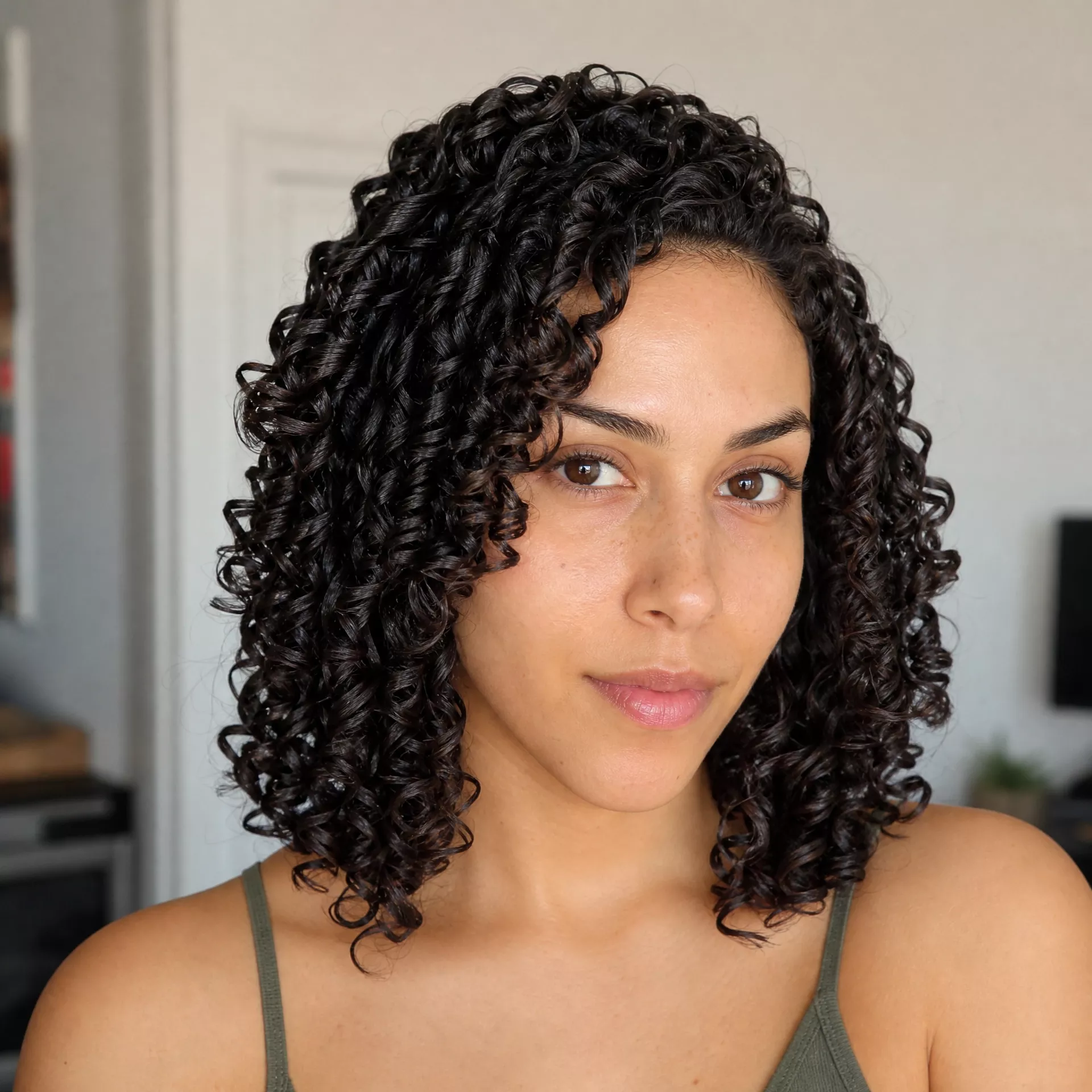
If you have natural waves or curls: your existing texture may already be doing some of the work that a cut or product would otherwise need to provide, so it’s worth discussing with your stylist how to cut with that texture rather than against it.
What Can Go Wrong With a Volumizing Haircut
- Too many layers on low-density hair. Layering that helps fine-but-dense hair can leave already low-density ends looking thinner.
- Removing too much weight isn’t always the answer. Sometimes preserving weight through the perimeter helps more than thinning it out.
- A style that looks voluminous after a salon blowout may not hold the same way at home. Ask what the cut looks like without a full professional styling session.
- Heavy products can work against lift. Rich creams or oils can weigh fine hair down rather than adding body.
- Fine hair and low-density hair aren’t the same problem, and a cut chosen for one may not address the other.
- Color can add visual dimension, but it doesn’t increase actual density. It’s a complement to a haircut strategy, not a substitute for one.
- Very long lengths may need more consistent styling to maintain root lift, since length adds weight that can pull volume down over the course of a day.
One limit is worth stating plainly. If your hair has become noticeably thinner over a short period, or you are shedding more than usual, a haircut cannot explain why. Consider speaking with a doctor or dermatologist, who can check for an underlying cause. A cut can change how full your hair looks, but it cannot diagnose or treat hair loss.
What to Ask Your Stylist
- Is my main issue fine strands, low density, or both?
- Where does my hair actually lose volume first, the crown, the temples, or the ends?
- Should we keep more weight through the perimeter, or is layering the better approach for my hair?
- How much layering can my density realistically handle?
- Will this cut hold its shape without a full blowout?
- What will this look like as it grows out?
- Where should any face-framing pieces start?
- Should we avoid thinning shears or heavy texturizing in certain areas?
FAQ
Is fine hair the same as thinning hair?
No. Fine describes the width of individual strands, while thinning or low density describes how many strands you have overall. You can have fine hair that’s dense or coarser hair that’s thin, and each responds differently to a haircut.
What’s the best haircut length for fine hair?
There isn’t one length that works for everyone. Shorter cuts can be easier to style because there is less length and weight pulling the hair down, but medium and long lengths can also work well with the right layering and styling approach.
Do layers actually add volume to fine hair?
They can add movement and the appearance of fullness, particularly on fine-but-dense hair. On low-density hair, too much layering can have the opposite effect and make the ends look sparser.
Can color really make hair look thicker?
Color techniques like highlights and lowlights can add visual dimension and make movement more noticeable, but they don’t increase actual hair density.
How often will a volumizing cut need to be trimmed?
It depends on the style. Precise perimeters, bangs, and shorter cuts generally need more frequent trims than looser, layered shapes.
Can I keep long hair if it’s fine or low-density?
Yes, though it usually requires more attention to layering, weight distribution, and styling technique than shorter cuts do, since length adds weight that can pull volume flat over the day.
Final Thoughts
Fine hair and low-density hair aren’t the same problem, and figuring out which one you’re dealing with, or whether it’s some combination of both, makes a real difference in which of these 21 styles will actually help. The most useful cut is the one that matches where your hair loses volume, how much styling you’re willing to do, and how much length you want to keep, not simply the one that photographs the fullest.