22 Professional Interview Hairstyles for Women and How to Choose the Right One
An interview hairstyle has one practical job: it should help you feel prepared without becoming something you have to think about once the conversation starts. If you’re tucking strands behind your ear, checking whether a pin has slipped, or wondering whether your curls have held, your attention is somewhere other than the questions in front of you.
What works depends on more than the job title. The setting matters, and so does whether you’ll be across a desk, in front of a panel, or on a video call. Your hair’s length and texture, the way you usually wear it, how much styling you can realistically manage that morning, and whether you prefer your hair contained or down all shape the choice.
The 22 options below include buns, ponytails, blowouts, braids, natural styles, half-up looks, and polished down styles. None of them is the right answer for everyone. Each one notes when it tends to work and what’s worth thinking about before you choose it.
Classic Low Bun

A low bun is a practical choice when you want your hair contained and your face unobstructed. Because it sits at the nape, it puts less pull on the crown than a high style, which matters if the interview runs long or you’ll be leaning back in a chair. It can feel especially at home in more formal settings, but it should still be something you’d wear comfortably on an ordinary day. A bun pinned too tightly can become the thing you notice most halfway through.
Sleek High Ponytail

A high ponytail keeps hair off the face but adds height and movement behind you. If you wear your hair this way often, it can feel natural and secure. If you don’t, the pull at the crown and the swing of the ponytail may be more noticeable than you expect, especially in a long interview or one where you’ll be turning toward different panel members. How sleek you make it is a matter of preference and texture, not a requirement.
Polished Blowout

Hair worn down can look just as considered as hair worn up, and a blowout is one way to give loose hair a finished shape. It suits straight and wavy hair readily. Curly and coily hair can be blown out too, though that’s a bigger change from your natural texture and may react to humidity. If you already blow-dry regularly, whether to do it the night before or that morning depends on how well your hair holds a style overnight. If you rarely blow-dry, a different down style may feel more familiar.
Half-Up Twist with Clean Finish

A half-up twist sits between contained and relaxed. The front sections are twisted back and secured, so hair stays out of your eyes while the lengths stay down. It’s useful if a full updo feels too formal for you, but fully loose hair tends to fall forward when you look down. It works on most lengths that reach the back of the crown. Check that the clip or pins hold when you turn your head, not just when you’re looking straight ahead in the mirror.
French Twist

A French twist is a vertical roll secured at the back of the head, and it reads as structured and formal. That can suit traditional settings, but its success depends heavily on whether it feels natural to you. If you’ve worn it before and know it holds, it can be a calm choice. If it’s new, it may take more practice than other updos, and a twist that starts loosening mid-interview is hard to ignore. Medium to long hair with some grip tends to hold it most easily.
Sleek Side Part Blowout

Moving the part to the side changes how a blowout frames the face, creating a sweep across the forehead. Whether it stays put depends on your natural part. A side part that works against your growth pattern may drift back during the day, and hair swept across the face can fall forward when you glance down at notes. If your hair already parts to one side, this is a simple way to make a blowout feel more deliberate.
Low Chignon

A chignon is a low knot or roll at the nape, often twisted or braided before it’s pinned. It sits close to a low bun, with a little more structure or detail. It can suit settings where you want a neat, contained look, though it doesn’t need to be severe; a softer chignon with a few loose strands still looks finished. It holds best on medium to long hair, and the pins should sit comfortably rather than dig in.
Natural Hair Interview Style

“Natural hair interview style” isn’t one hairstyle. It can mean defined curls, coils, a puff, braids, twists, or another style you already wear. Defined natural curls, coils, twists, braids, puffs, and other familiar styles can be completely appropriate for an interview when they’re comfortable and intentionally prepared.
The useful question isn’t how to change your texture. It’s which style you already know how to wear, that holds up through normal movement, and that you won’t need to adjust. Interview morning is not the time to try a new product or technique.
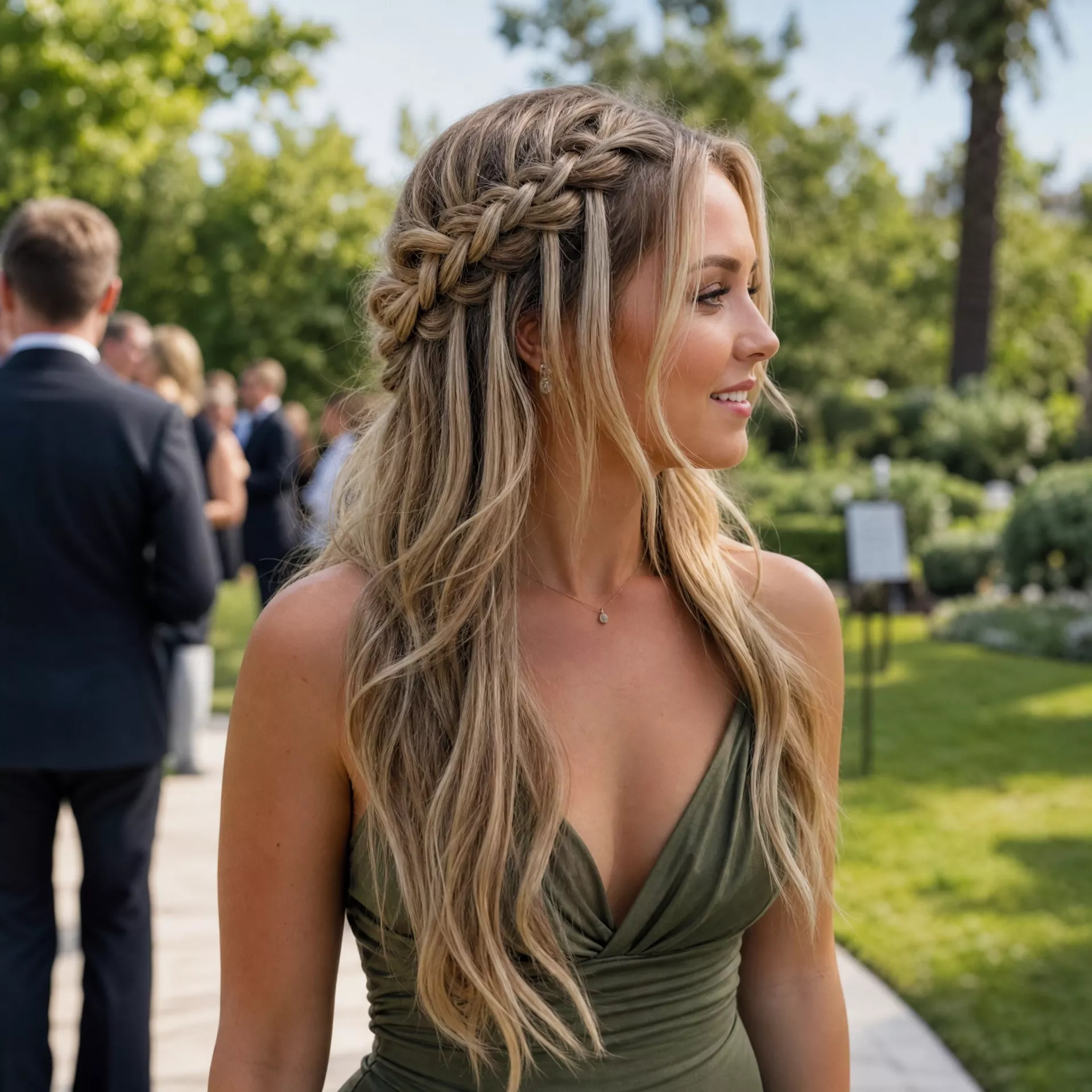
Braided Crown Updo

A braid wrapped around the crown keeps all the hair secure and adds detail without any loose sections. That stability makes it useful for longer interviews or days that involve travel. It works best on hair long enough to wrap around the head and with enough grip to stay in place; very fine or slippery hair may need extra pins. If braiding isn’t something you do often, practice beforehand, since crown braids can take a few attempts to place evenly.
Straight and Smooth Long Hair

Long straight hair worn down can look polished with very little added, particularly if it’s naturally straight. The practical consideration is length. Long hair can fall forward when you look down, catch on a bag strap, or end up pinned behind you against the chair. A center or side part gives it shape. If your hair isn’t naturally straight, the smoothness may depend on heat, which adds time and can change in damp weather.
Textured Low Bun for Curly Hair

Gathering curls into a low bun keeps them contained while preserving their texture. Pulling them loosely rather than tightly avoids tension at the hairline and keeps the curl pattern intact around the edges. A few curls left loose at the front can soften the shape if you like that. Shrinkage means the bun may be smaller than your length suggests, and dense curls may need a larger or stronger tie to stay secure.
Smooth Lob or Bob Worn Down

With a lob or bob, the haircut provides much of the structure, so wearing it down takes less styling to look deliberate. A quick blow-dry or a little product is often enough. Shorter cuts also tend to stay out of the way, since there’s less length to fall forward. If your cut has a fringe, check that it sits where you want it, because bangs drifting into your eyes are hard to ignore while you’re talking.
Pinned-Back Waves

Waves pinned back on one or both sides keep hair away from the face without putting it up. That suits wavy hair worn in its natural pattern, or straight hair with added waves. The pin or clip needs to hold; if it slips, you’ll probably find yourself adjusting it. Natural waves can change with humidity, so a wave routine you’ve used many times is more dependable than a new one.
Sleek Middle Part with Straight Hair

A center part with straight hair creates a symmetrical, uncomplicated frame. It works most easily when your hair naturally parts near the middle and is naturally straight. If you need to straighten it, the result takes more time and may depend on the weather. Long hair parted in the middle can fall forward on both sides, so consider whether that will bother you if you’re reading, writing, or presenting.
Low Braid Bun

Braiding the length and coiling it into a bun adds texture to a low updo and tends to hold securely, because a braid is easier to pin than loose hair. It suits medium to long hair. Fine hair may make a smaller bun, while dense hair may need more pins. Since it’s built from two familiar steps, braiding and pinning, it can be easier to manage than more structured updos.
Slicked Back Low Bun

A slicked-back bun smooths all the hair away from the face and gathers it at the nape, creating a very clean, structured look. It can suit formal settings, though it doesn’t need to be the default. The smoothness usually relies on gel or another hold product, which can feel stiff or show buildup if overused, and pulling the hair tight can create tension at the hairline. If you prefer something softer, a looser low bun keeps a similar shape with less strain.
Half-Up Half-Down for Medium Hair

Medium-length hair can be gathered at the crown while the rest stays down, keeping the front clear without a full updo. It’s a useful option if full updos feel uncomfortable or don’t hold well at your length. The top section needs to be secure enough not to slip, and a clip or small elastic usually works. On fine hair, the gathered section may be small; on dense hair, it may need a stronger hold.Medium-length hair can be gathered at the crown while the rest stays down, keeping the front clear without a full updo. It’s a useful option if full updos feel uncomfortable or don’t hold well at your length. The top section needs to be secure enough not to slip, and a clip or small elastic usually works. On fine hair, the gathered section may be small; on dense hair, it may need a stronger hold.
Braided Side Bun

A braid running from one temple to a low bun behind the opposite ear keeps all the hair contained while adding a diagonal line. It’s a more detailed updo, which can suit anyone who likes a bit of structure or individuality, in any field. It does take some braiding skill, so it’s worth practicing beforehand. Once secured, it holds well, which helps during longer interviews.
Twist-Out for Natural Hair

A twist-out depends on planning. Twists usually need to be set and fully dry before they’re undone, which often means starting the evening before. Unraveling them too soon can leave the definition looser than you intended. It’s most reliable when you already know how your hair responds to the process and how long it takes. Humidity can change the definition, so a familiar routine and product matter more than anything new.
Blow-Dried Voluminous Straight Style

A voluminous blowout lifts the roots and smooths the lengths, giving a fuller shape than a sleek blowout. On fine hair, it can create the impression of more fullness, though it doesn’t change density. On dense hair, it can become wider than you’d like if the volume is overdone. Lift often softens over the day, especially in humidity. A moderate version is easier to keep looking the way it did when you left home.
Simple Low Ponytail

A low ponytail is one of the least complicated options on this list. It needs little more than a brush and an elastic, keeps hair off the face, and puts little tension on the crown. That simplicity makes it a reliable choice if your morning is busy or you’d rather not think about styling at all. How smooth you make it depends on your texture and preference.
Defined Braid Down the Back

A single braid down the back keeps long hair secure and stops it from falling forward or catching on things. A French braid starting at the crown, a three-strand braid from the nape, or a simple plait all work. Once it’s in, there’s very little to adjust. A braid pulled very tight can become uncomfortable over a long interview, so firm rather than tight is usually easier to wear.
How to Choose an Interview Hairstyle Without Overthinking It
A few practical questions narrow the 22 options quickly.
Will I need to touch or adjust it? Styles that hold through movement, like braids, buns, and low ponytails, need less attention than loose hair that falls forward.
Have I worn this style before? A familiar style is far easier to get right on a stressful morning than something new.
Will it stay comfortable for the whole interview? Tight elastics and pins that dig in become more noticeable over time.
Does it work with my natural texture? Styles that suit your hair as it is usually take less effort and hold better.
Does it fit the level of formality? Some settings call for a more contained look; others are relaxed. Your own sense of the company matters more than any rule.
Will it distract me? If you know you’ll fiddle with loose hair, a contained style may suit you better.
Do I realistically have time for it? Blowouts, twist-outs, and detailed updos need more time or preparation than a simple ponytail or bun.
Match the Style to the Interview, Not a Stereotype
Workplace expectations vary widely, even within the same industry. Company culture, the role, its seniority, your location, and the interview format all play a part, and so does how you normally present yourself.
In a formal or traditional environment, contained styles like a low bun, chignon, or French twist may feel appropriate, provided they suit you. Polished down styles can also work.
In business casual settings, a polished blowout, half-up style, ponytail, lob, or soft waves are all reasonable choices.
In creative environments, natural texture, braids, waves, or more individual styles can be polished, but a creative role doesn’t require a creative hairstyle.
For video interviews, what the camera sees matters most. Hair that keeps falling across your face is more noticeable on screen, so check your framing and lighting beforehand.
For panel interviews, which may run longer and involve turning between people, choose something comfortable and secure.
Your Hair Texture Changes the Practical Choice
Straight hair usually suits smooth styles easily, and texture can be added if you prefer it.
Wavy hair can often be worn in its natural pattern rather than fully straightened, which saves time and holds more predictably.
Curly hair in its familiar pattern can look polished. Avoid trying a completely new styling method on the morning of the interview.
Coily and natural hair works well in familiar protective or loose styles. Prioritize comfort and stability, and allow enough time for twists or sets to dry.
Fine hair may lose shape with too much manipulation. Visual fullness can come from shape, though it won’t change density.
Thick hair benefits from secure sections and strong enough pins or elastics, so styles don’t loosen during the interview.
What Matters More Than Looking “Perfect”
The goal isn’t a flawless finish. It’s removing unnecessary distraction.
Familiarity means you know how the style behaves and how long it takes. Comfort means you won’t feel pins or tension halfway through. Stability means it holds through normal movement. A clean, finished look matters more than any particular shape. And a style that feels consistent with how you usually present yourself tends to feel more natural, which makes it easier to stop thinking about it.
Small Things That Can Become Distracting
None of these are failures. They’re simply worth checking ahead of time.
- Bangs falling into your eyes when you look down
- Loose strands repeatedly touching your face
- An elastic that feels too tight after an hour
- Pins that press into the scalp
- Curls reacting unexpectedly to an unfamiliar product
- A style that needs regular adjusting
- Heavy product that feels stiff or shows buildup
- Accessories that make noise or need fixing
- A style that can’t handle turning, nodding, or leaning back
What to Do the Night Before
Test the hairstyle once if you haven’t worn it recently. Check it from the front and the side, and move around: sit, turn your head, look down. Make sure the pins and elastics are comfortable. Lay out what you’ll need, including spare pins or an extra elastic.
Avoid trying a complicated new style. Decide whether to wash and style the night before or that morning based on how your hair usually behaves; some hair holds overnight, some looks better freshly styled. If you’re wearing a twist-out or set, start early enough for it to dry fully.
What to Tell Yourself Before You Walk In
Once your hair is done, it’s done. If a strand moves or a curl loosens, it’s very unlikely to matter as much as it feels like it does. You chose a style you know, you tested it, and it holds. That’s one item you can take off your list.
FAQ
What is the safest interview hairstyle for women?
There’s no single safe choice, but a style you already know how to wear, that’s comfortable and holds well, is usually the lowest-risk option.
Is it okay to wear your hair down to an interview?
Yes. A polished down style can be completely appropriate. Consider whether loose hair will fall forward and distract you.
Can natural curls be professional for an interview?
Yes. Defined curls, coils, and other natural styles can be entirely appropriate when they’re comfortable and intentionally prepared.
Should I wear my hair up or down?
It depends on the setting, your comfort, and whether you find loose hair distracting. Both can look professional.
Should I try a new hairstyle before an interview?
It’s usually better to choose something familiar. If you want to try something new, practice it well before the day.
Is a ponytail professional for an interview?
A ponytail can be appropriate, especially when it’s secure and suits the setting. A low ponytail is often more comfortable over a long interview than a high one.
What hairstyle works best for a video interview?
One that keeps hair from falling across your face on camera. Check your framing and lighting ahead of time.
How can I keep my hair from becoming distracting?
Choose a familiar, secure style, test it the night before, and make sure pins and elastics are comfortable.
Final Thoughts
The right interview hairstyle is usually the one you already know how to wear, that stays comfortable from the moment you sit down to the moment you leave, and that lets you focus on the conversation instead of your hair. It doesn’t need to be the most formal or the most polished option on this list. It needs to suit your texture, fit the setting as you understand it, and hold up through ordinary movement. Choose it early, test it once, and let it be one less thing to think about on the day.