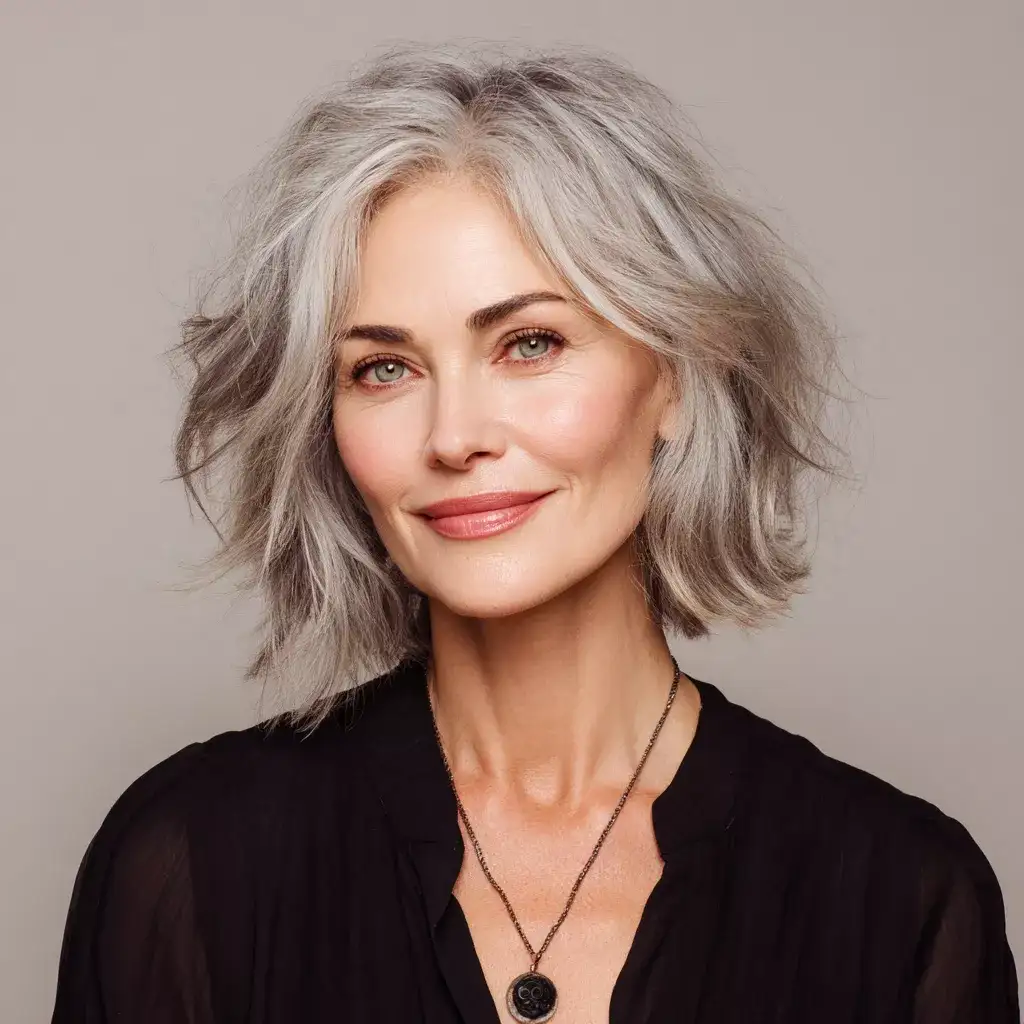
30 Hairstyles for Women Over 60, From Short Crops to Long Layers
There is no single haircut that suits every woman over 60, and the old idea that hair has to come off after a certain age no longer holds. Current options run from close-cropped pixies to long layers, so the more useful question is not what is popular but what fits your hair’s density, your texture and the amount of styling and upkeep you actually want.
This guide starts with a few things worth deciding first, followed by a quick table for narrowing 30 options. The styles that follow each look at a different practical question, such as density, grow-out, texture, gray hair or maintenance, so you can compare them on more than how they look in a photo.
Before Choosing a Hairstyle After 60
Start with your hair density
Fine hair and thin hair are not the same thing. Fine refers to the diameter of each strand, while thin generally refers to lower density, meaning fewer strands across the scalp. You can have fine strands with plenty of hair, or thicker strands with lower density.
Many people notice their texture and density change over the years, so check what your hair is doing now, not what it did a decade ago. The difference matters because dense hair usually tolerates heavy layering or thinning well, while lower-density hair can end up looking sparse at the ends.
Think about your styling routine
Ask yourself a few honest questions:
- Do I air-dry, or blow-dry?
- Am I willing to use a round brush?
- Do I want a wash-and-wear cut?
- How often am I willing to go back for trims?
A cut that needs ten minutes with a round brush is a poor match for an air-dry routine, however good it looks in the photo.
Consider texture before choosing the photo
A hairstyle photographed on straight hair can behave very differently on wavy or curly hair. Curls usually dry shorter than they hang, and waves may relax in humid weather. It helps to pick photos with a texture close to your own.
Decide what you actually want to change
Are you looking for:
- less daily styling
- more visible fullness
- easier gray maintenance
- more texture
- a longer shape
- a shorter, lighter cut
- a change without losing much length
Your answer points toward different cuts, which is what the table below is for.
Which Hairstyle Should You Consider?
| If your priority is | Styles to explore |
|---|---|
| Less daily styling | Tapered Crop, Textured Pixie, Short Choppy Cut |
| Keeping some length | Collarbone Length Layered Cut, Wavy Lob, Long Layers |
| Fine hair | Blunt Bob, Layered Bob, Pixie Bob |
| Natural gray | Silver Pixie, Gray Bob with Highlights, Natural Gray Long Hair |
| Wavy texture | Wavy Lob, Shoulder-Length Waves, Short Wavy Cut |
| Curly texture | Short Curly Style, Soft Shag |
| A more contemporary shape | Shaggy Lob, Asymmetrical Bob, Textured Pixie |
| Bangs | Curtain Bangs, Side-Swept Layers |
| Formal styling | Soft Updo, Half-Up Style |
| Not wanting very short hair | Wavy Lob, Collarbone Length Layered Cut, Long Layers |
Treat the table as a starting point. Your density and texture can change which options fit.
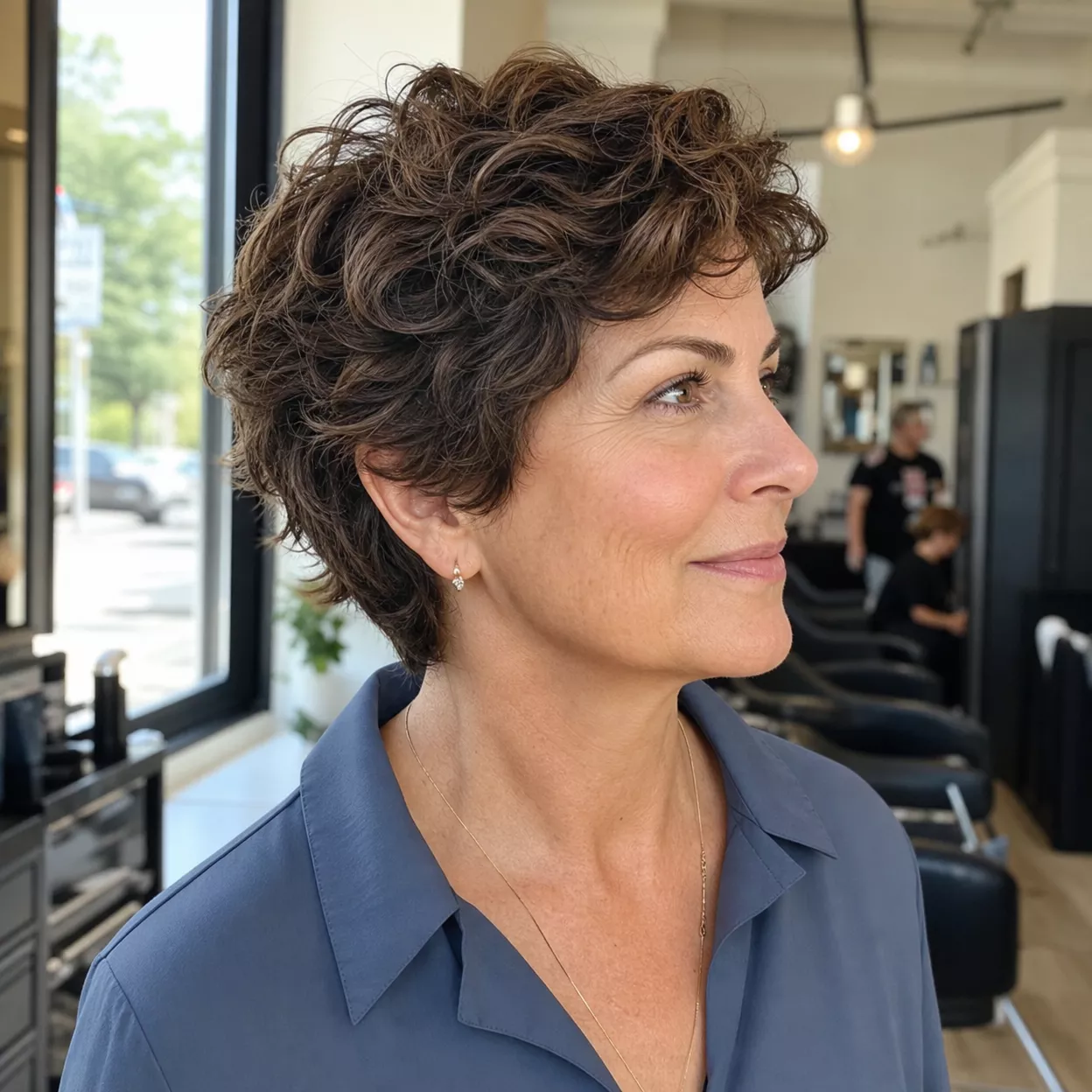
Textured Pixie for Women Over 60
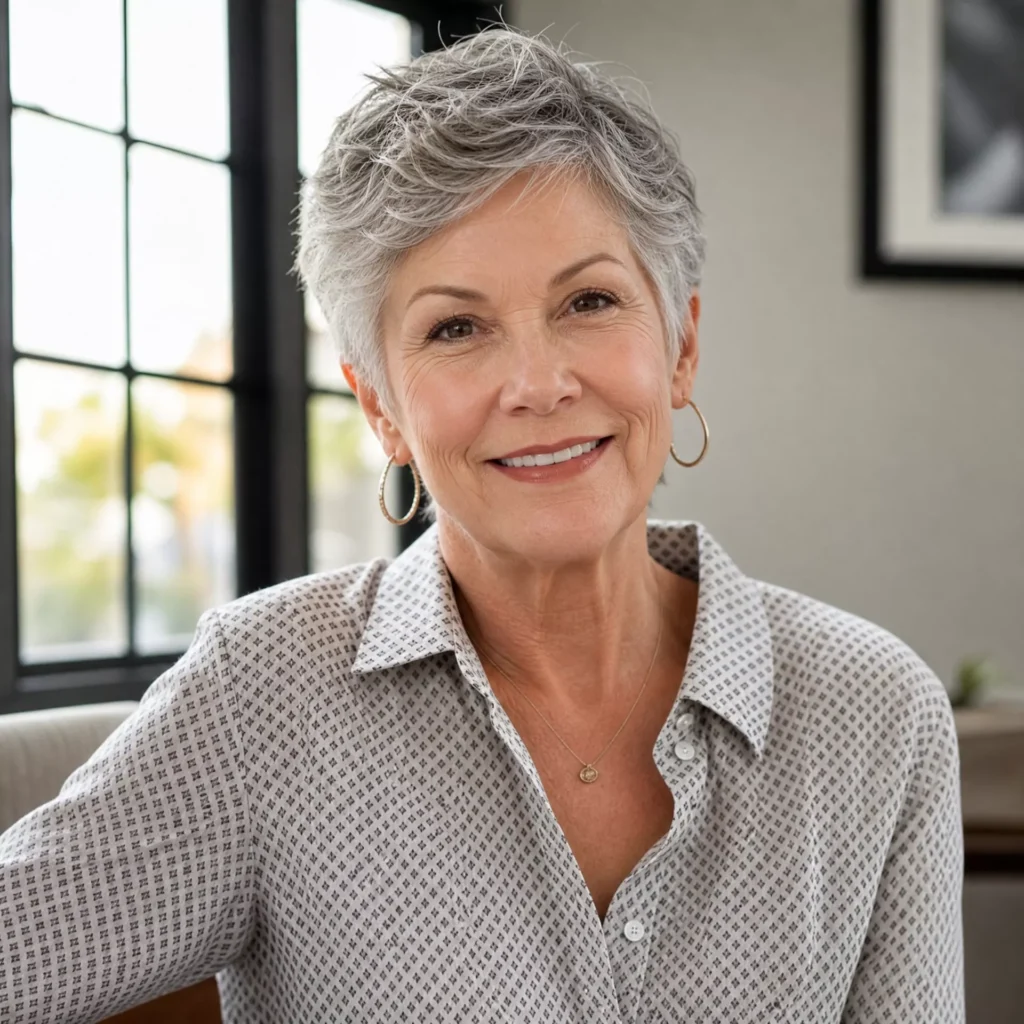
The word textured does most of the work here. The top is left longer than the sides and cut in uneven lengths, so it holds a shape without stiff styling, and how much effort it takes depends on your hair. Wavy or medium-thick hair often keeps the pieces with a small amount of paste or cream, while very fine, straight hair can collapse by midday and may need a little texturizing product at the roots.
The outline tends to lose its edge around the ears and nape first, which is usually the cue for a trim.
Classic Bob for Women Over 60
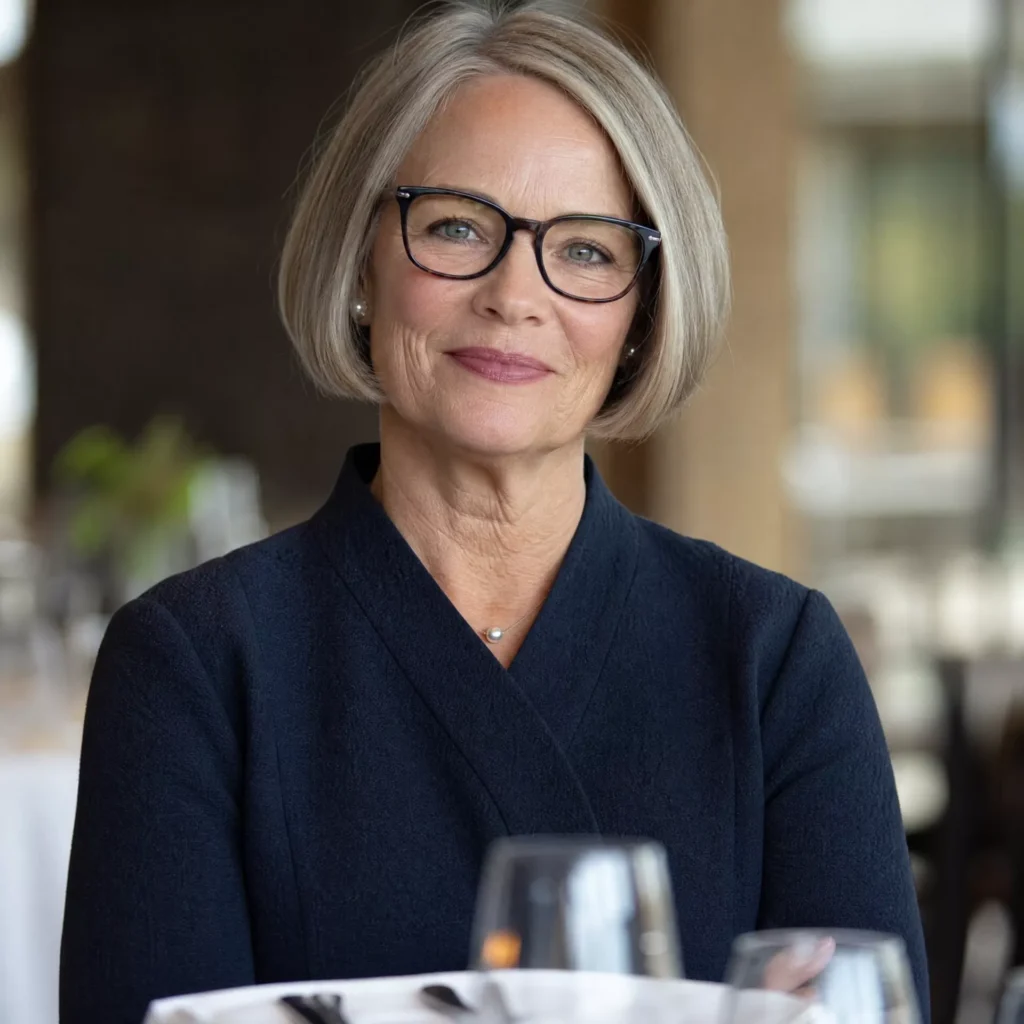
A classic bob is worth considering if you want a defined shape without going as short as a pixie. At chin length, the deciding factor is how much weight stays in the bottom edge. A fairly solid perimeter can make finer hair look fuller, while too many layers cut into it can leave the ends looking sparse.
The trade-off shows up as it grows. A precise bob reveals its shape the moment it starts to lengthen, so it may need trimming more often than a softer layered cut. Ask your stylist: “Can we keep enough weight through the perimeter so the ends look substantial without making the cut feel heavy?”
Soft Shag for Women Over 60
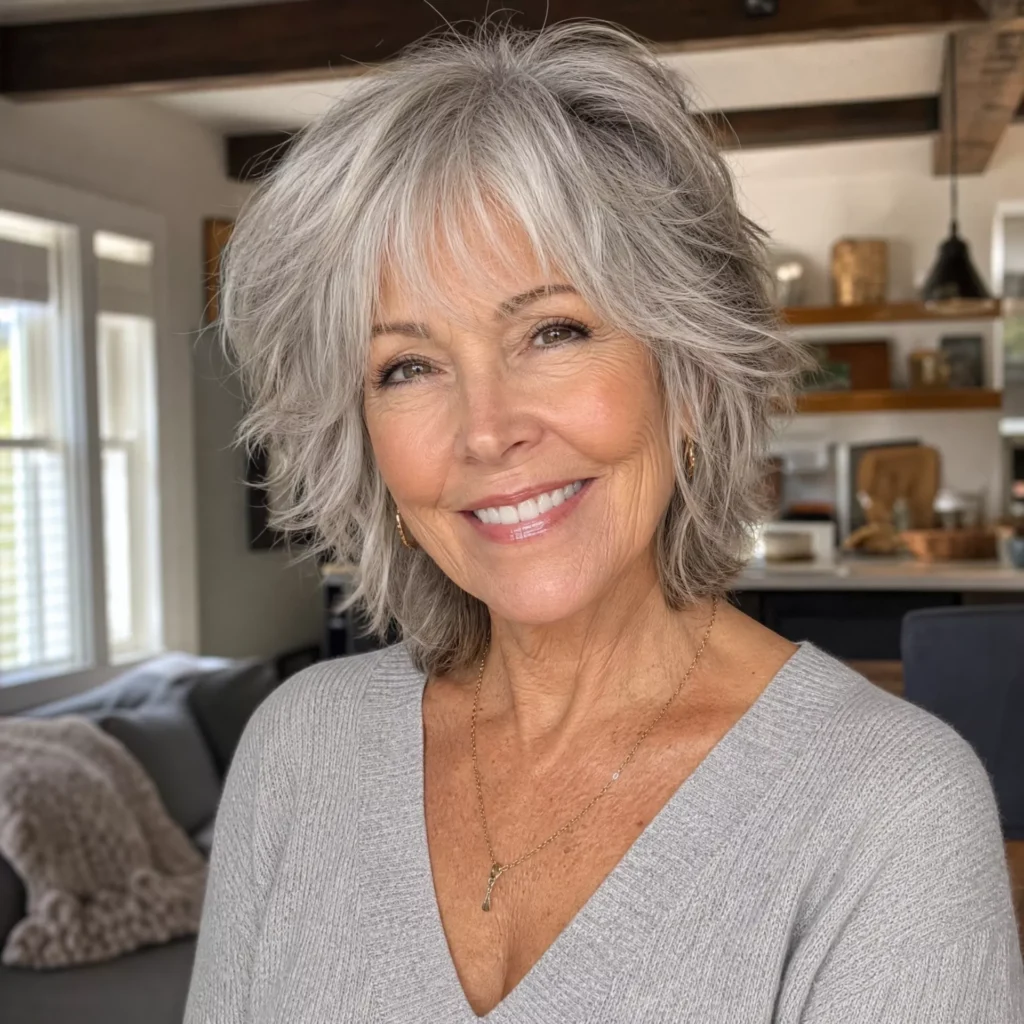
Shags are built from layers, so the first question is how much hair you have to layer. Medium to thick hair gives the layers plenty to work with. With fine or thinning hair, placement matters more than the number: keep the layers long and blended, start them above the ends, and ask the stylist to leave the bottom edge reasonably full, since short choppy layers can leave it wispy.
Curtain bangs often appear with this cut, but they are optional. If you would rather not maintain a fringe, longer face-framing pieces give a similar shape without the trims.
Long Layers for Women Over 60
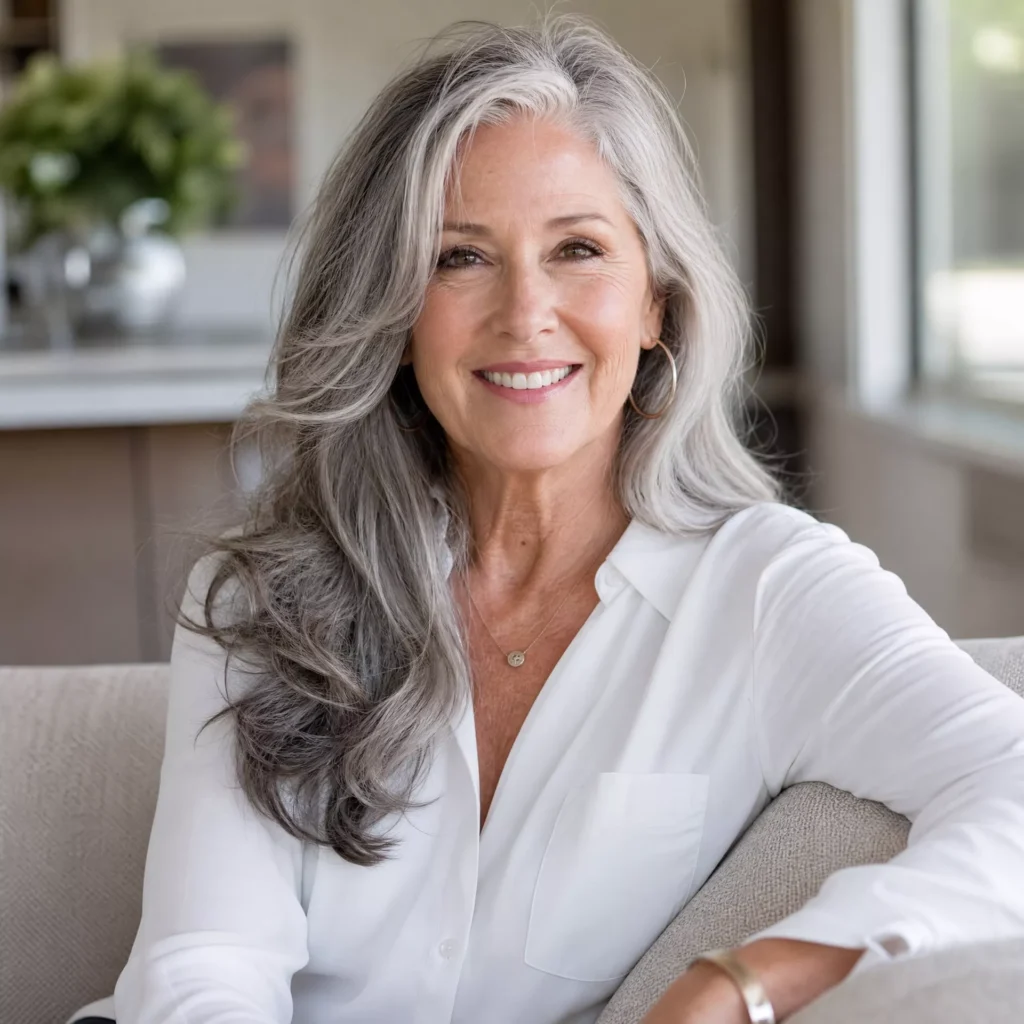
On long hair, the ends are the oldest part of what is on your head, and if they are dry or frayed, layers will not hide it. Condition is worth checking before you decide how much to remove.
Each layer takes weight out, and on fine hair that can leave the bottom looking thin, so keeping them long and placed well above the ends usually preserves more body. A trim every 8 to 12 weeks or so keeps the ends looking deliberate. It is fair to ask: “How much weight will these layers take from the bottom?”
Wavy Lob for Women Over 60
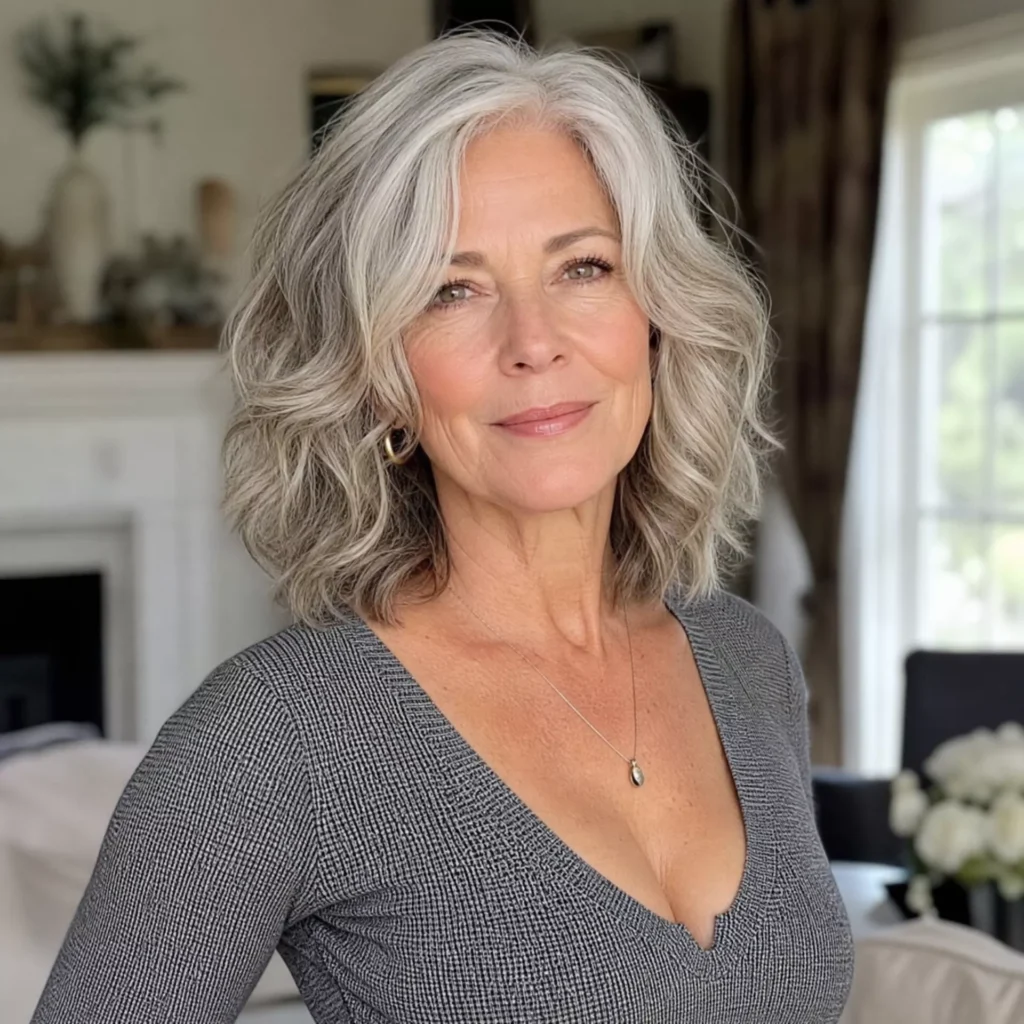
Before choosing this one, let your hair air-dry once without styling. If it bends or waves on its own, a lob at collarbone length gives the pattern room to show, and a light mousse or cream may be all it needs. If it dries straight, the waves will have to come from a wand or rollers, which is a different daily commitment from the one the photos suggest.
The length is enough for a low ponytail or a half-up style, and short enough to stay off the shoulders.
Silver Pixie for Women Over 60
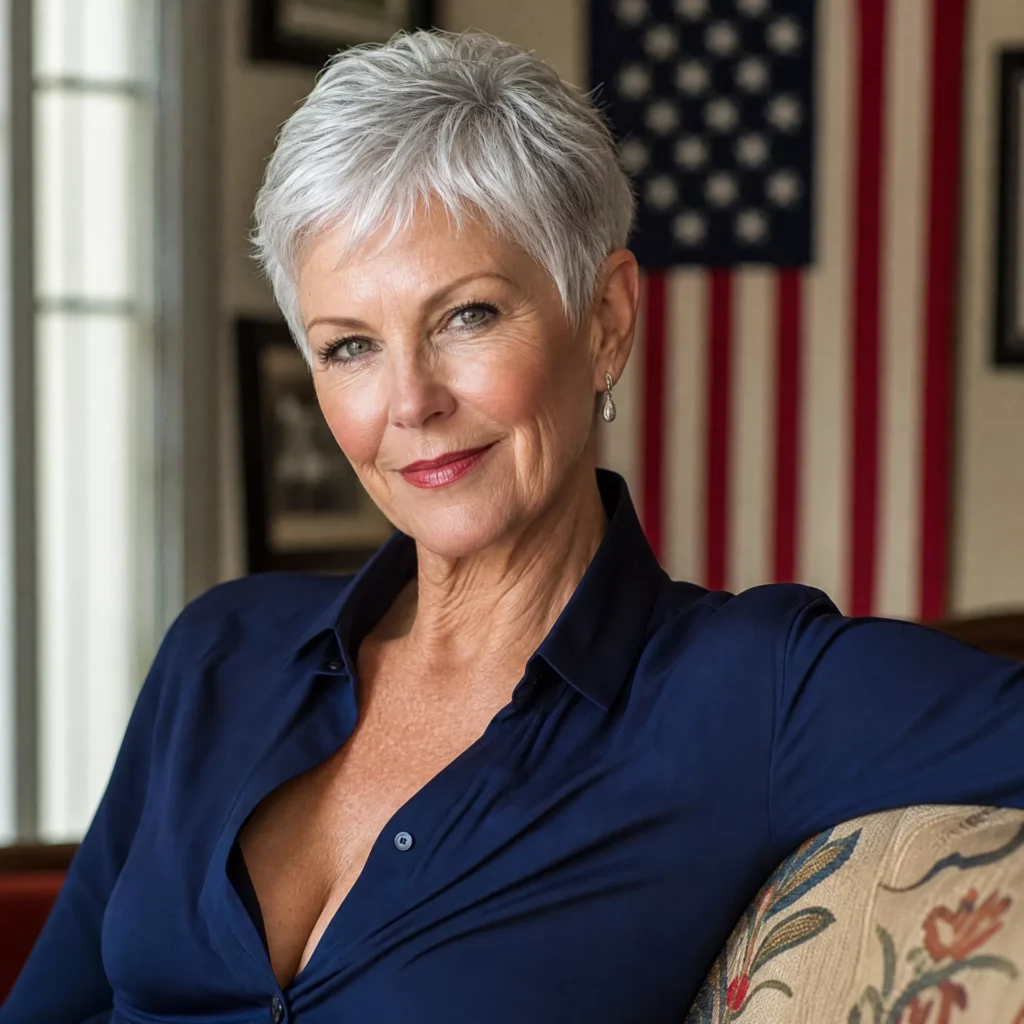
Silver hair can sometimes feel wirier or drier than pigmented hair, although texture varies from person to person, so a precise cut helps the shape read cleanly, and a lightweight cream keeps the texture from looking rough. It is worth asking your stylist how the cut will work with the direction your hair grows, since gray sections sometimes grow in a different pattern.
If you are growing out dyed hair, a pixie is one of the quicker routes to your natural shade, because so much length comes off at once.
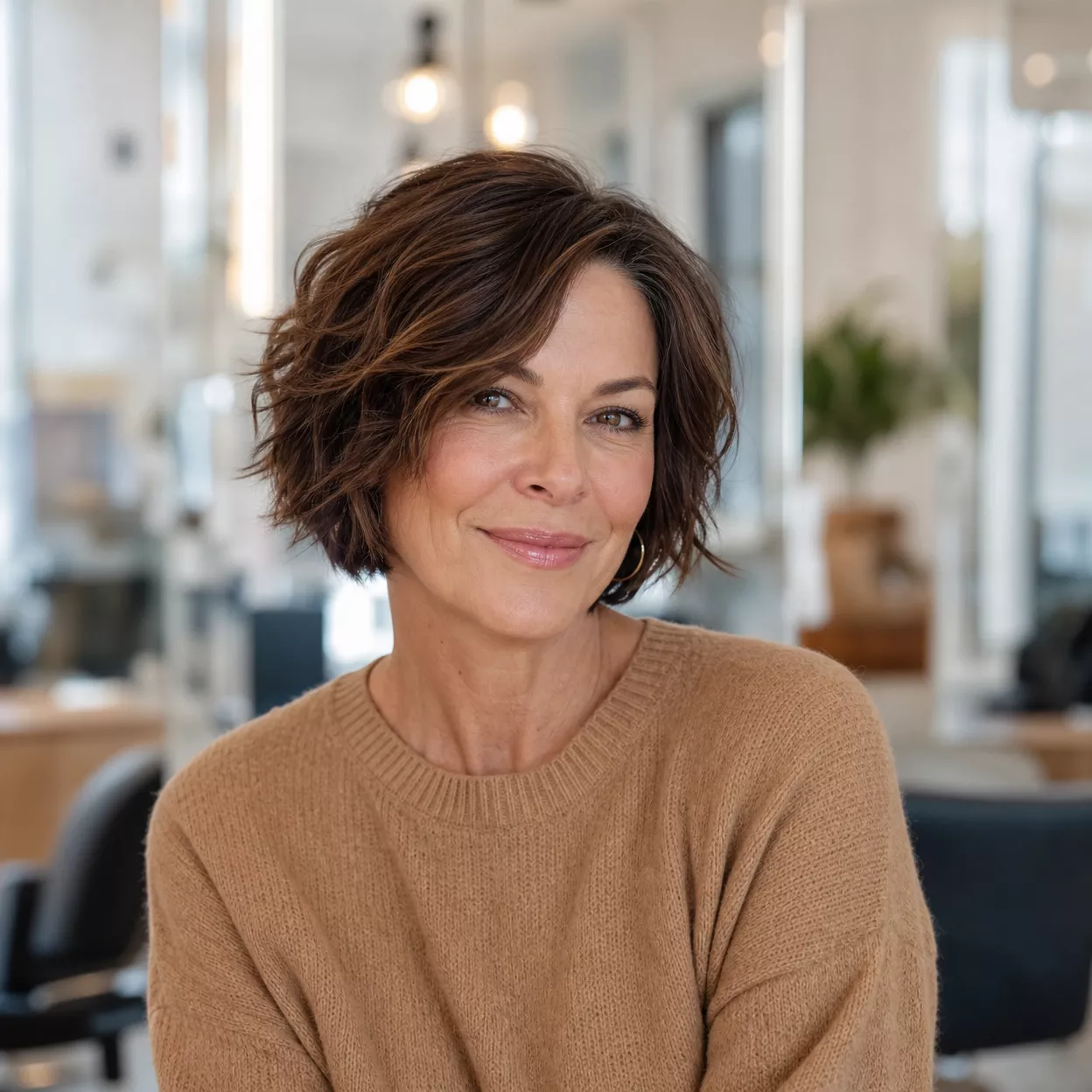
Layered Bob for Women Over 60
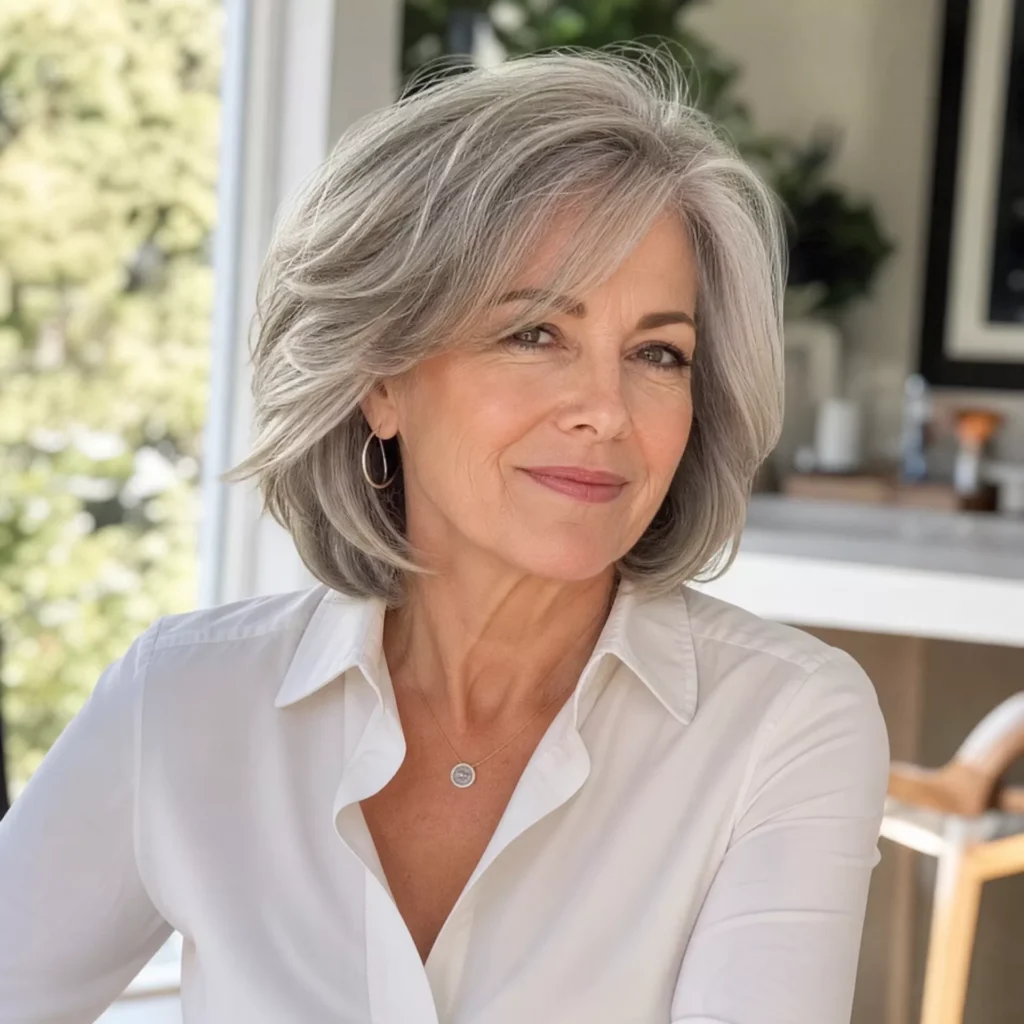
The question with a layered bob is where the layers stop. Kept through the mid-lengths, they add separation so the hair does not sit flat against the head, and shorter layers around the crown can lift the top. Carried down to the bottom edge on fine hair, they can thin out the perimeter and leave the ends looking see-through.
Because the layers lengthen as the cut grows, the shape softens in a way a blunt cut does not, which some people prefer. A trim about every six to eight weeks keeps it from turning shapeless.
Curtain Bangs for Women Over 60
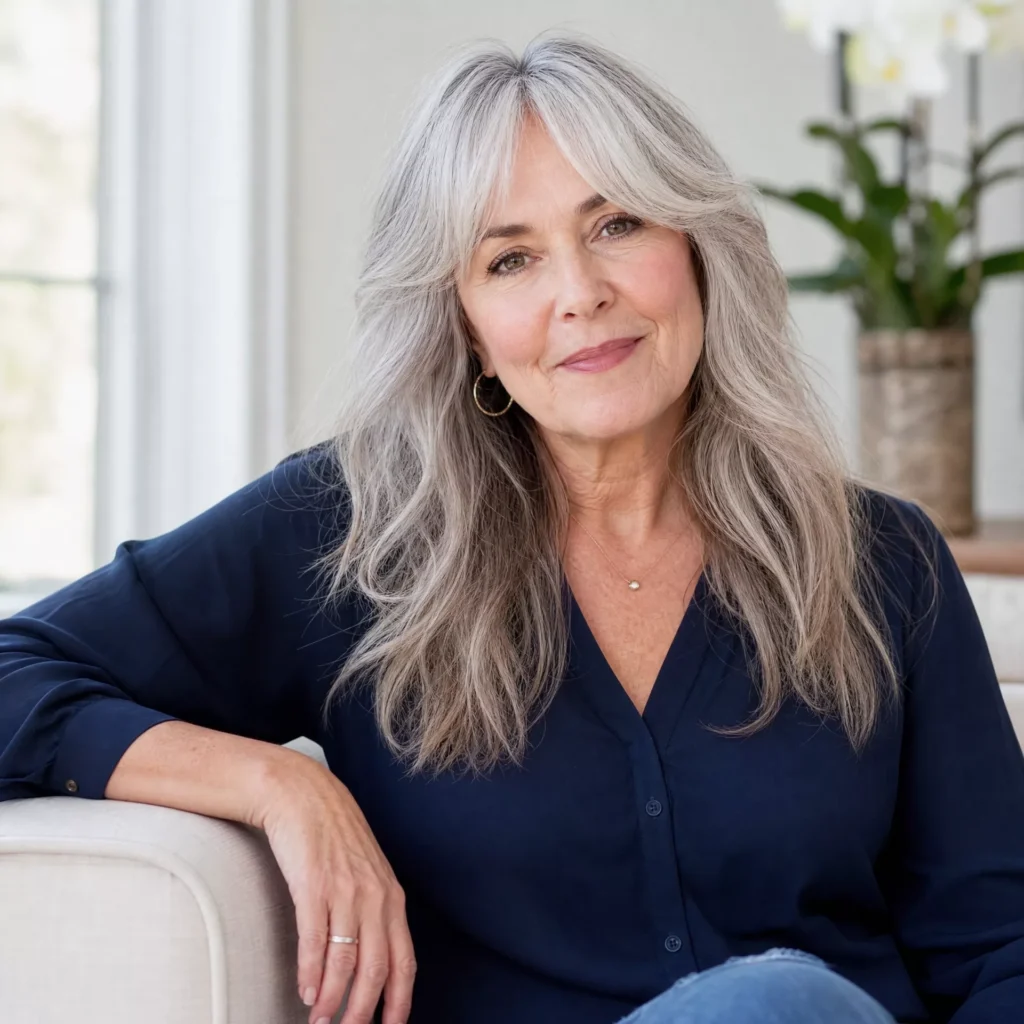
Curtain bangs are as much a decision about your hairline as about the cut. They are parted in the center and swept to each side, which needs enough hair at the front and a hairline that cooperates. A cowlick, or a very high or low hairline, can change how they fall, and a stylist who sees your hair dry will judge that better than a photo can.
Expect a trim roughly every three to four weeks to keep them off your eyes. The upside is a forgiving grow-out, since they turn into face-framing pieces rather than a stage you have to hide.
Short Curly Style for Women Over 60
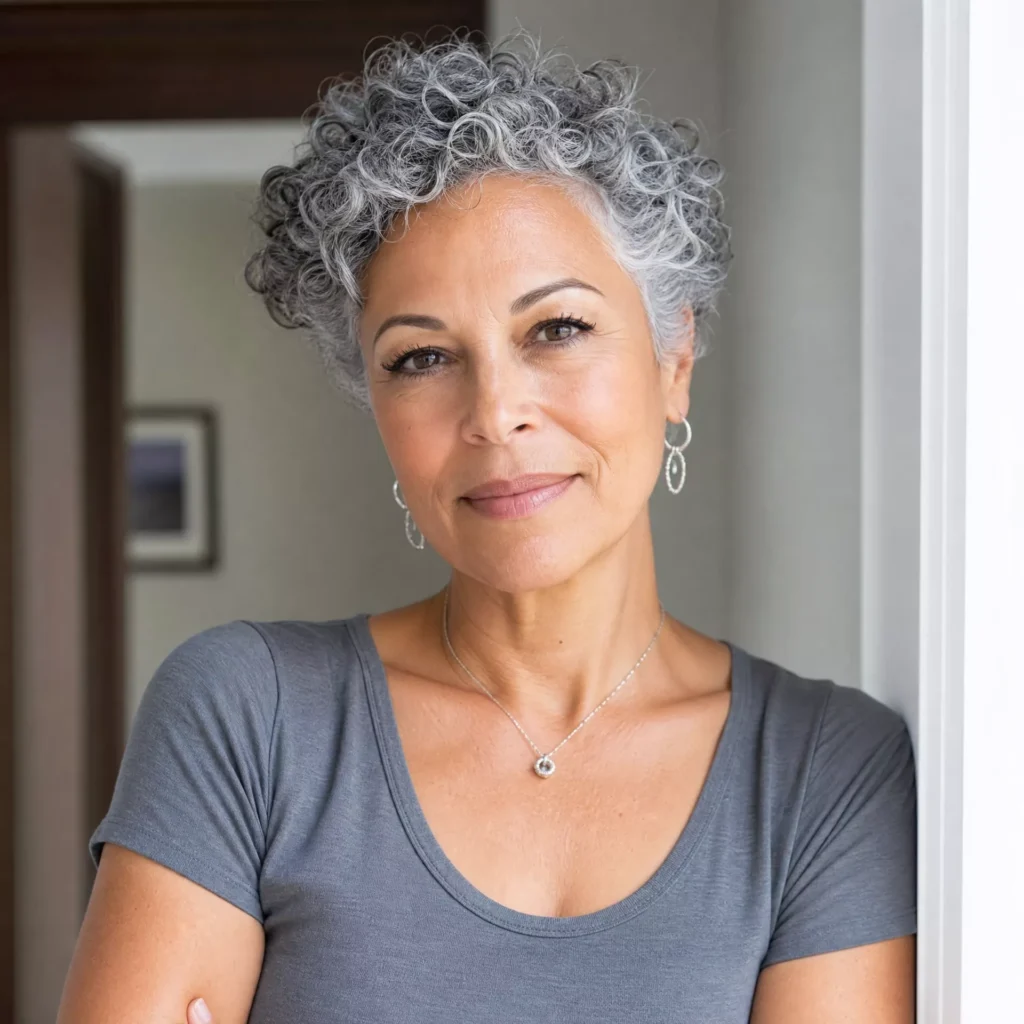
Curls usually dry shorter than they hang when wet, and tighter patterns shrink more, so a length that looks right after washing can sit noticeably higher once it dries. That is why some stylists cut curly hair dry, or check the shape dry before finishing. Ask: “Can you check the shape once it’s dry?”
Short length also changes how curls behave. Without long hair pulling them down, the pattern is easier to see, but the sides can expand more than you expect, so ask how the shape will be balanced. A curl cream with a diffuser tends to hold definition better than rubbing with a towel.
Tapered Crop for Women Over 60
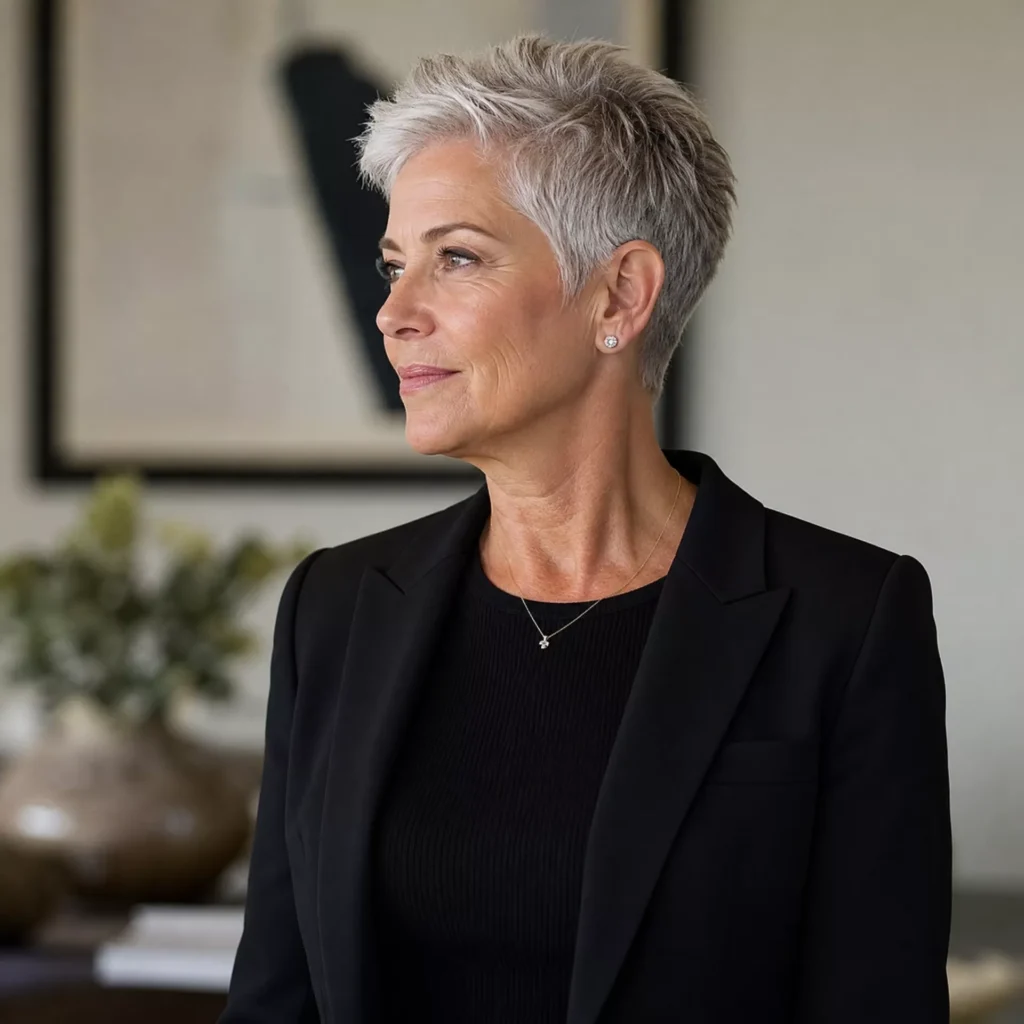
Low daily styling and low salon upkeep are not the same thing, and a tapered crop is a good example. The shape is cut in, so mornings can take almost no time, but the close sides and nape grow out quickly enough that trims every four to six weeks are common. If fewer appointments matter as much as a short routine, a softer cut may fit better.
The crown is left a little longer than the sides, which leaves room to add texture with a small amount of product.
Pro tip: If your hair has become finer or less dense, don’t automatically ask for heavy thinning. Ask your stylist how much weight needs to be removed and where. Over-thinning can leave hair looking wispy, while removing weight strategically can make a layered shape easier to manage without making the outer perimeter look sparse.
Side-Swept Layers for Women Over 60
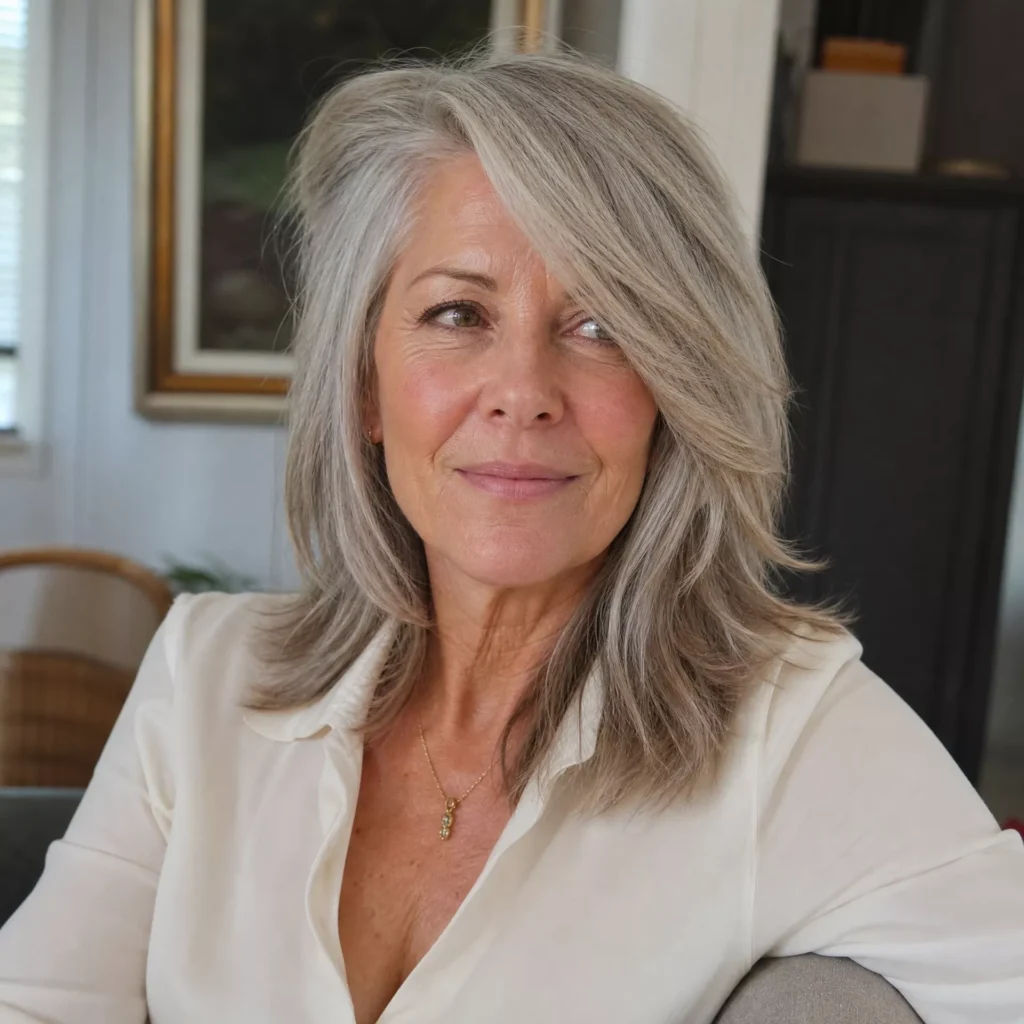
Whether the sweep holds depends on your natural part. If your hair keeps falling the other way, it will not stay swept without product, and the cut is easier to live with when it is shaped around the direction your hair already prefers. Layers that follow the sweep keep the shape connected, and the swept side should be light enough not to hang into your eyes by afternoon.
A useful question: “Which way does my hair want to part, and can you cut with that in mind?”
Blunt Bob for Women Over 60
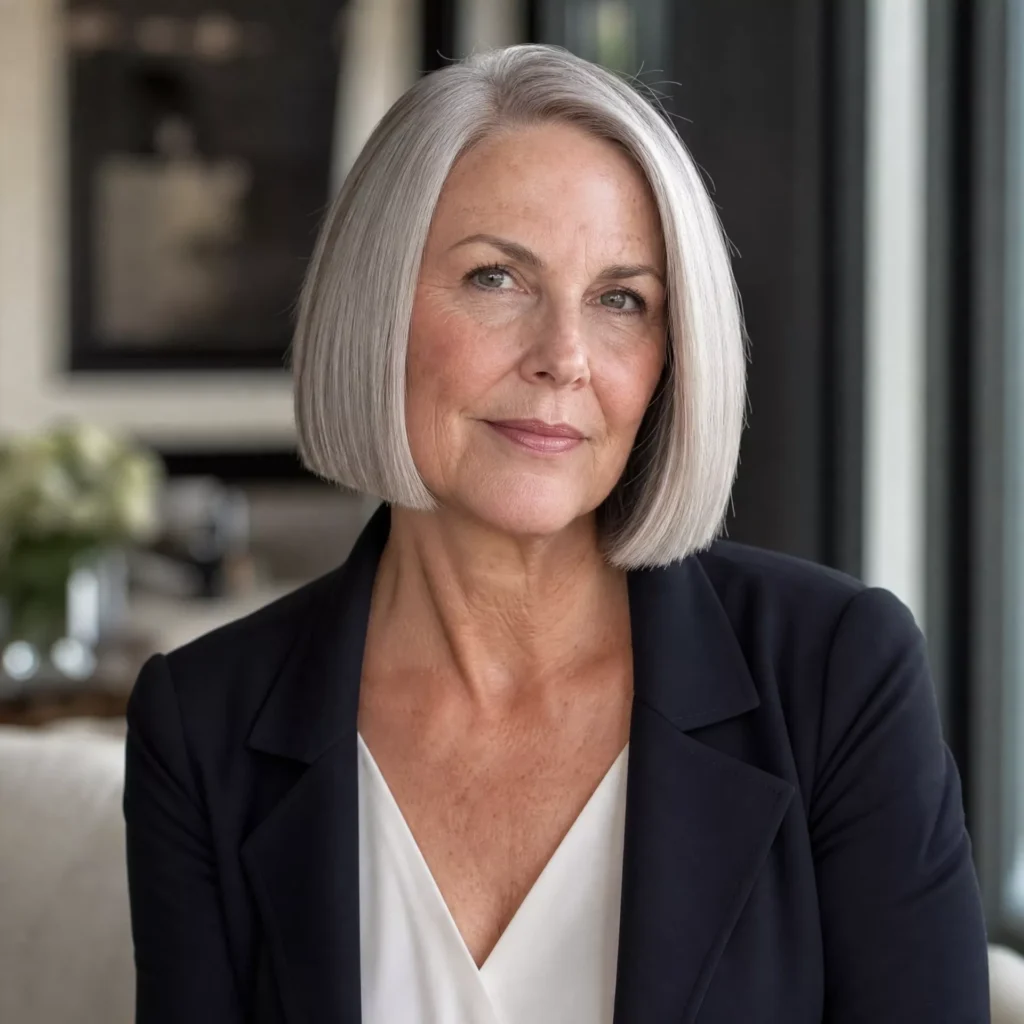
The case for a blunt bob on fine hair is the bottom edge. A single length gives the eye an unbroken line, so the ends can look thicker than they would with layers. It is not a fix for every fine head, though. The same cut can sit flat at the crown, so you may need root lift when you dry it.
Because the line is precise, growth shows quickly, and trims around every six to eight weeks are typical. If you want a middle route, ask for a blunt perimeter with a few layers inside.
Feathered Layers for Women Over 60
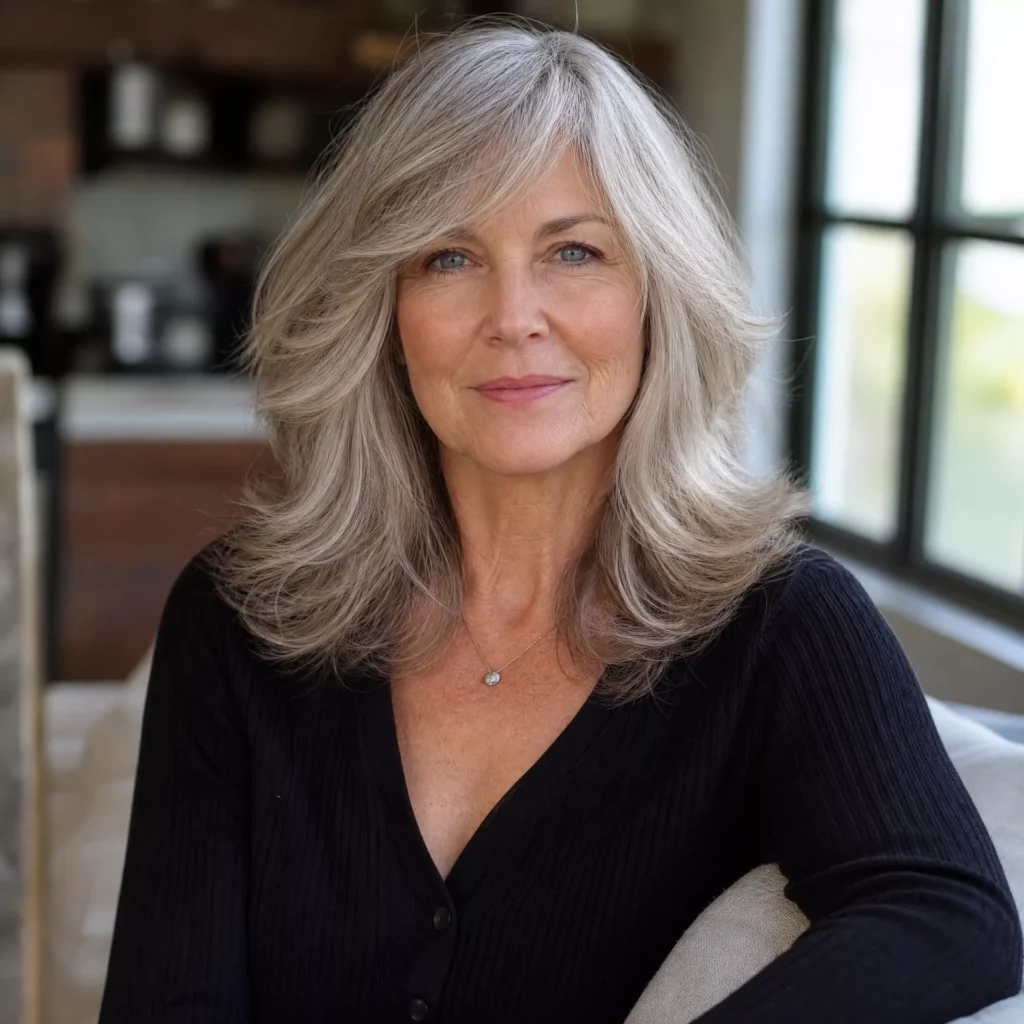
Feathering means the ends are cut light and tapered, so the finish is soft and separated, provided there is enough hair to taper. On fine or thinning hair, the same taper can look see-through. Ask how much is planned, and keep the ends a little fuller than the photo suggests.
Shoulder-Length Waves for Women Over 60
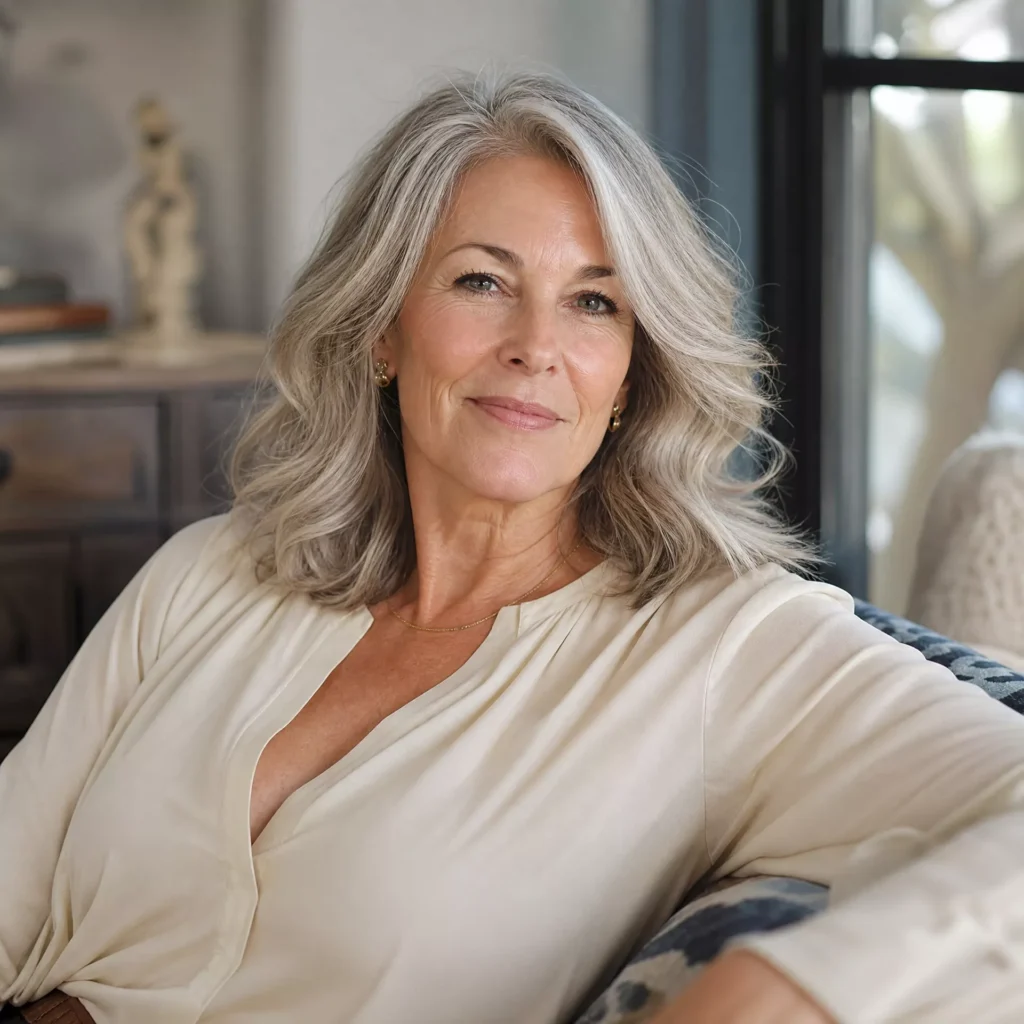
Shoulder length has a practical quirk: hair tends to flip outward where it meets the shoulders, which changes how waves sit. Some people work with the flick, while others cut slightly above or below the shoulder line to avoid it. Waves can come from natural texture or a large-barrel iron, and a light flexible-hold spray helps them last. Allow 10 to 15 minutes if you are curling.
Pixie Bob for Women Over 60
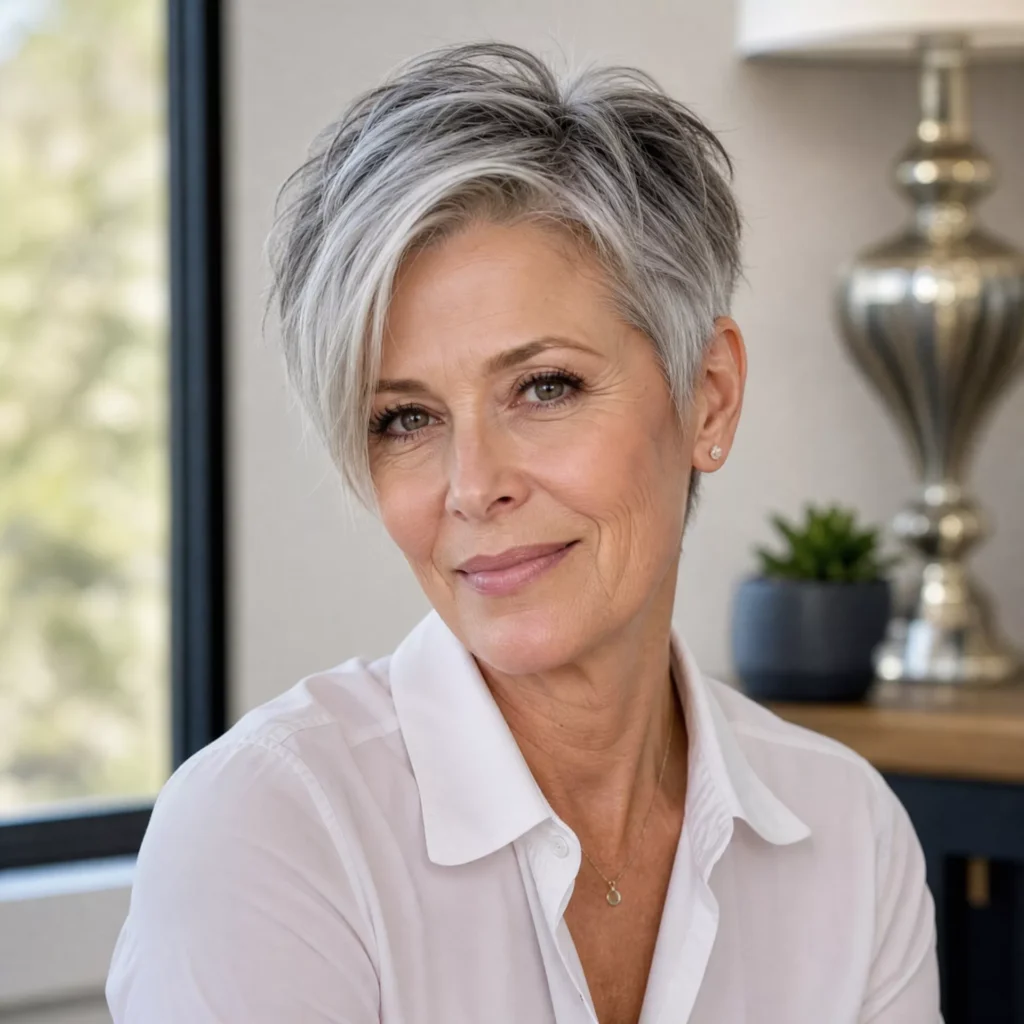
This works as a bridge if you are moving from a bob to a pixie, or growing a pixie out. The longer front and crown give you more to style, and the shorter sides keep the shape compact. It is not necessarily easier than either cut, since it needs regular shaping to keep the sides tidy while the top grows.
Natural Gray Long Hair for Women Over 60
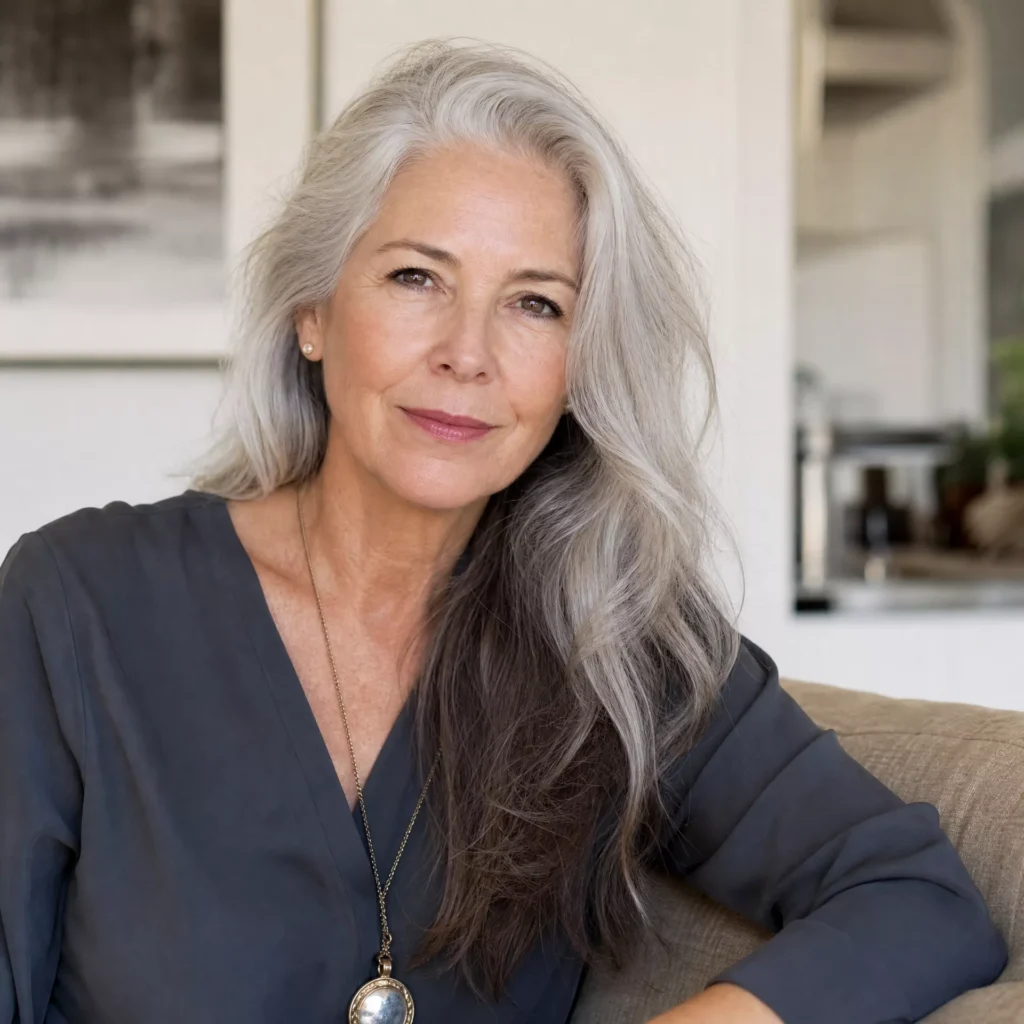
On long hair, dryness shows up at the ends. Gray strands can be coarser or drier than pigmented ones, and after years of growth the bottom few inches have had the most wear. A regular trim, a leave-in conditioner and heat protection for any hot tools can matter more here than the cut itself.
If layers are added, they are usually best kept long and light, so the ends do not lose the weight that makes them look full.
Textured Bob with Side Part for Women Over 60
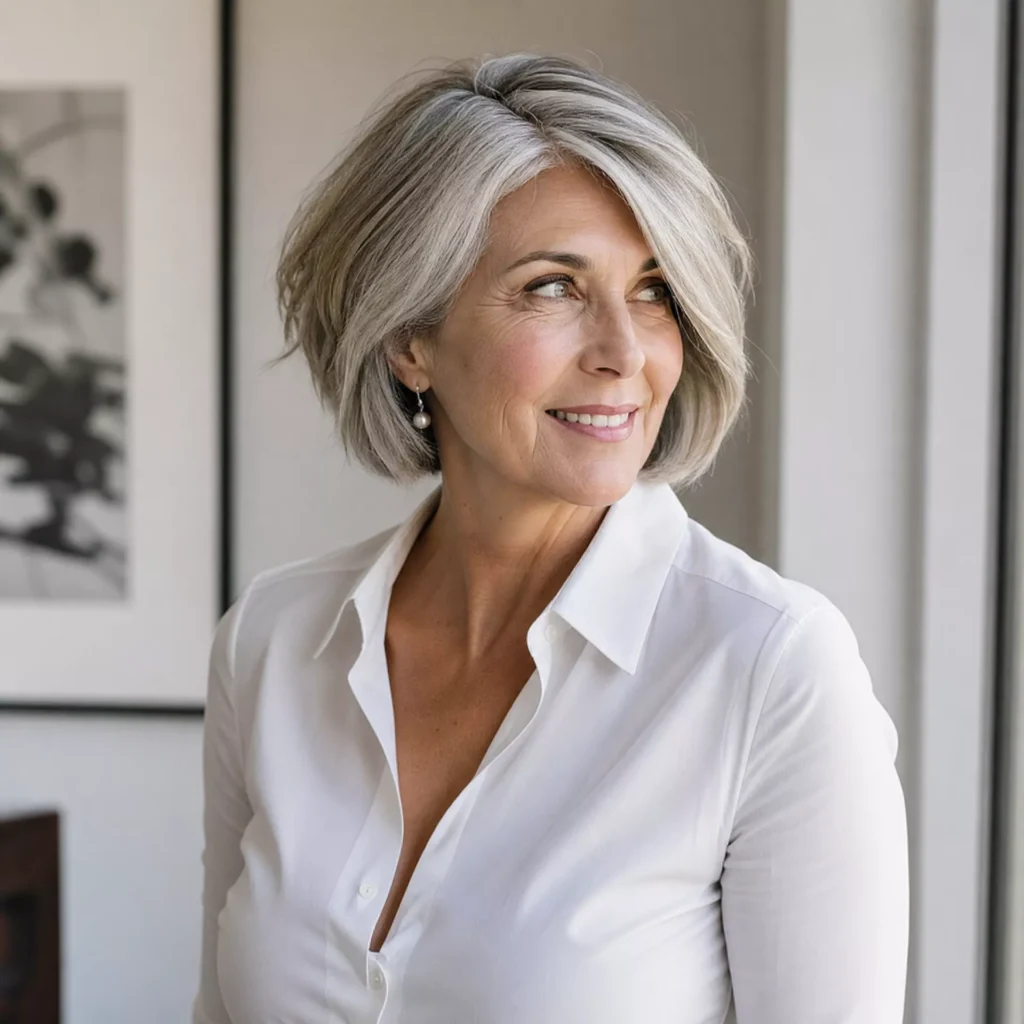
A side part moves more hair to one side, so the effect depends on where you part. A deep part gives more asymmetry, while a moderate one is easier to hold through the day. Parting the hair when it is dry can be easier to judge, since a part made on wet hair may land somewhere else as it dries. A light texturizing spray helps the ends separate without stiffening them.
Soft Updo for Women Over 60
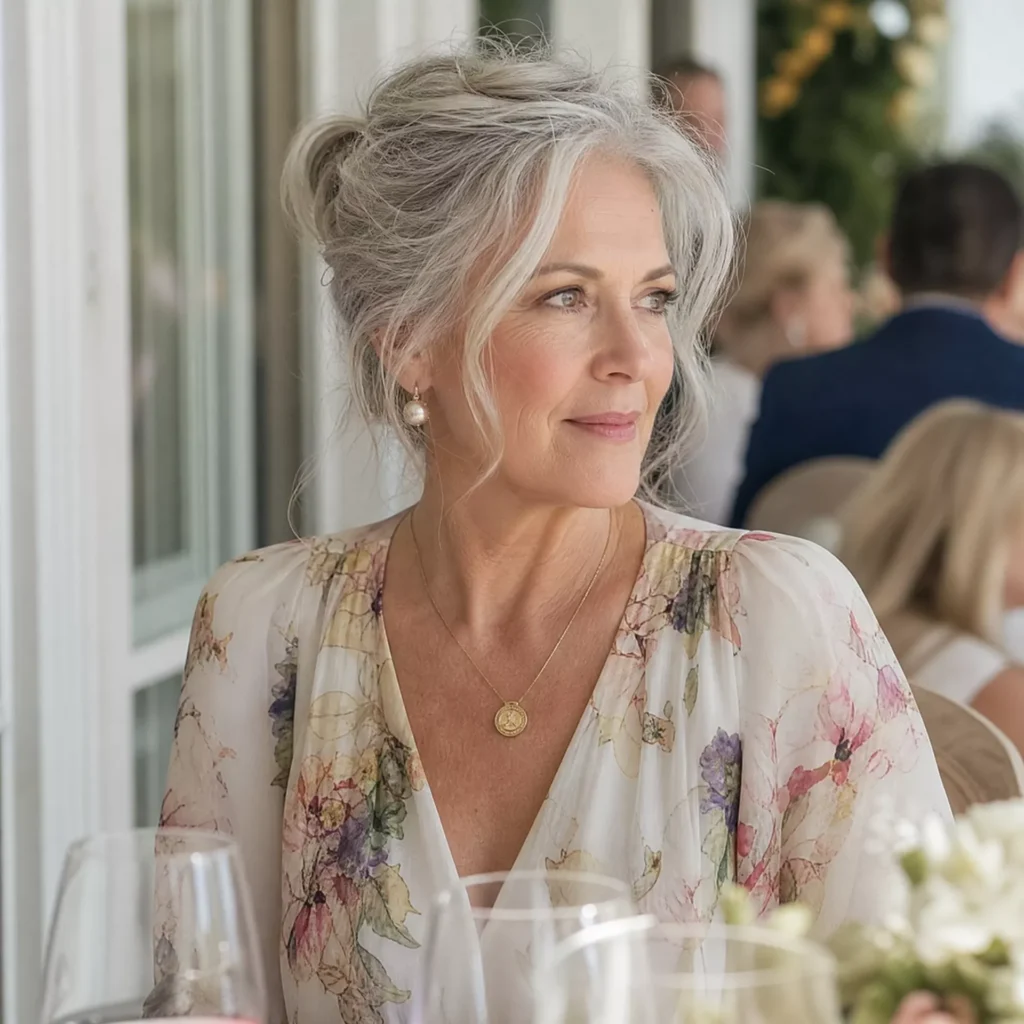
An updo depends on grip more than on the cut. Fine, smooth hair tends to slide out of pins, so a light spray or dry shampoo at the roots before pinning gives it something to hold. Keeping it loose leaves room for a few pieces at the front, but shorter layers may work loose through the evening, so expect a small touch-up. It helps to try it once before an event so you know how long it takes and what stays in.
Inverted Bob for Women Over 60
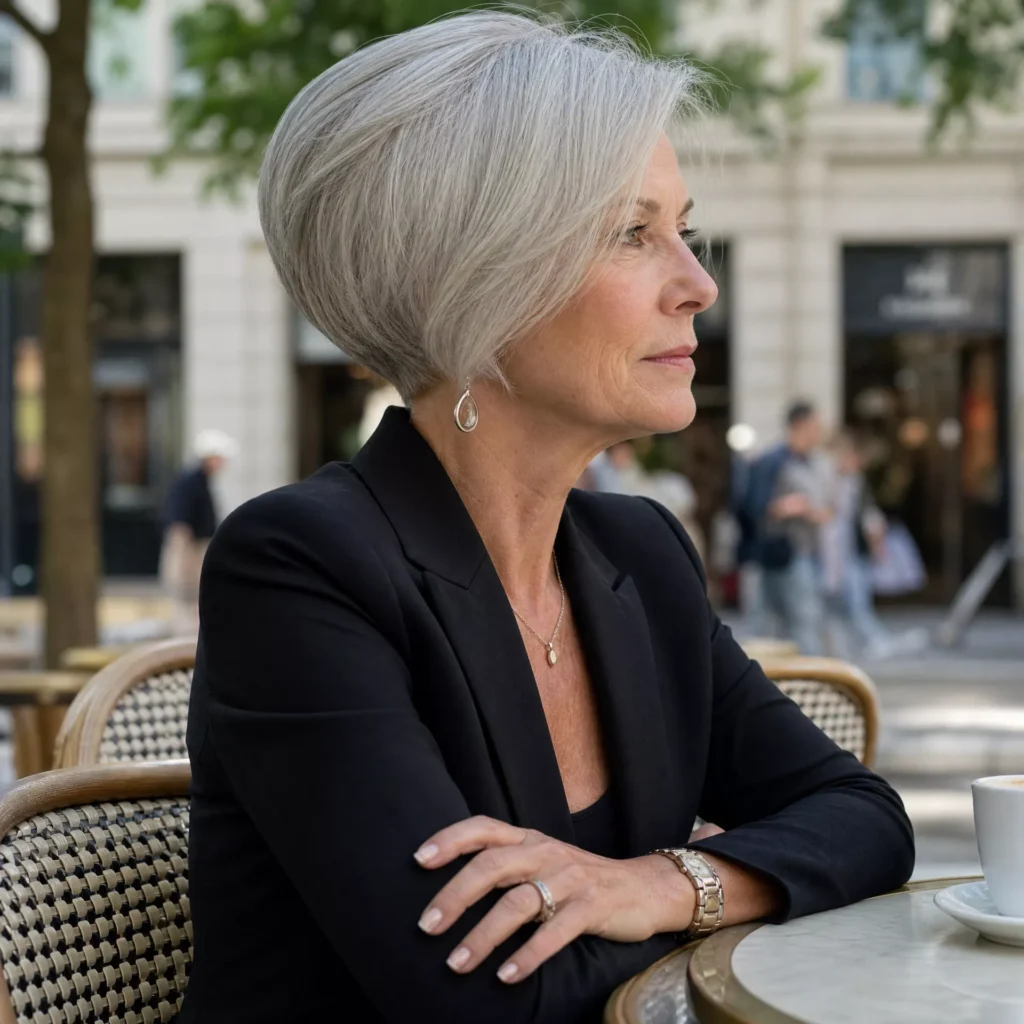
An inverted bob is shorter at the back and lengthens toward the front, and the technical part is the graduation at the nape, where short layers stacked close to the neck build shape at the back of the head. That precision is also its limit. Check how your hair grows at the neckline, because a whorl or uneven growth there can change the result, and on fine hair heavy graduation can look sparse.
As it grows, the back lengthens first and the angle softens, so trims about every five to seven weeks help it hold. If your neckline is uneven, ask how your stylist plans to handle it.
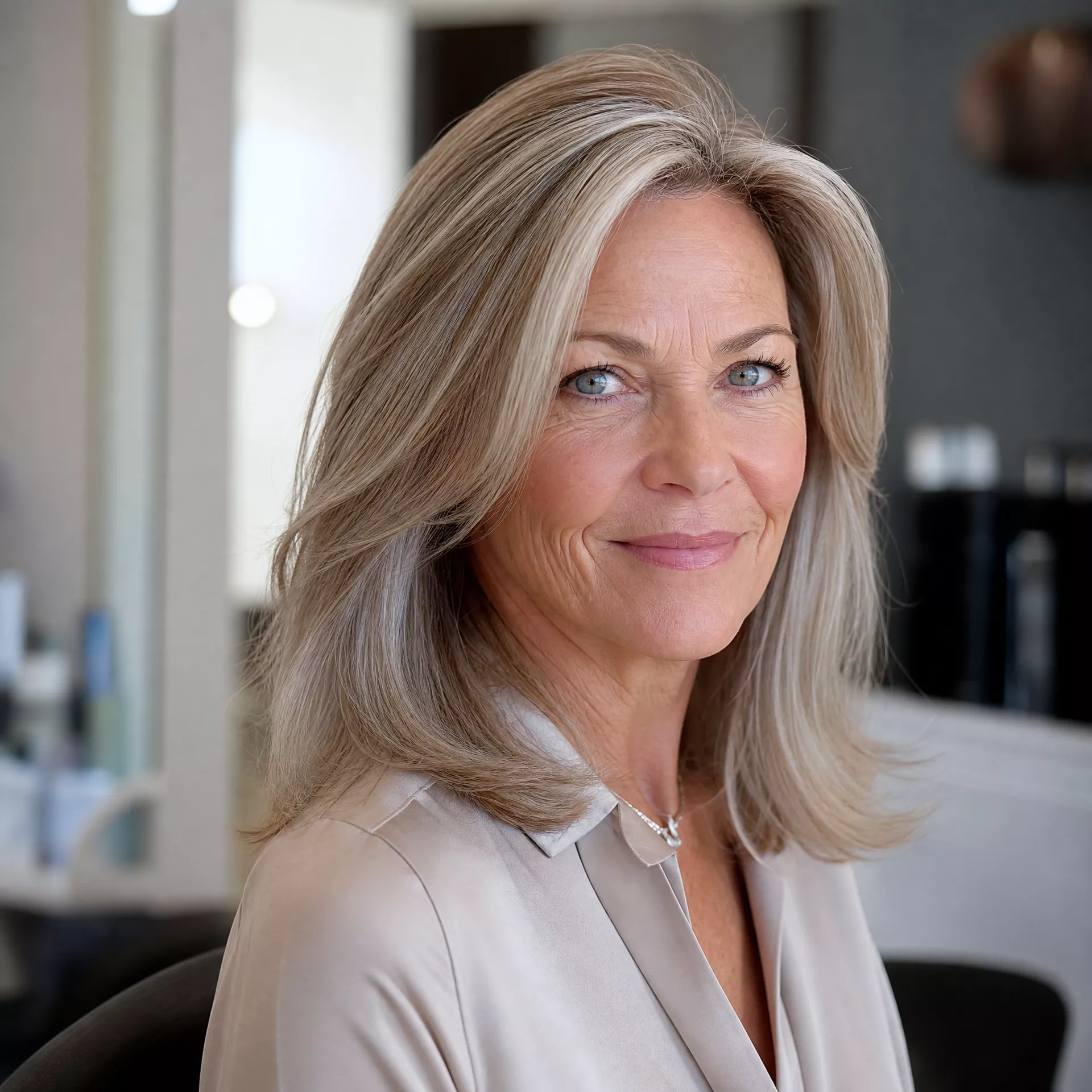
Collarbone Length Layered Cut for Women Over 60
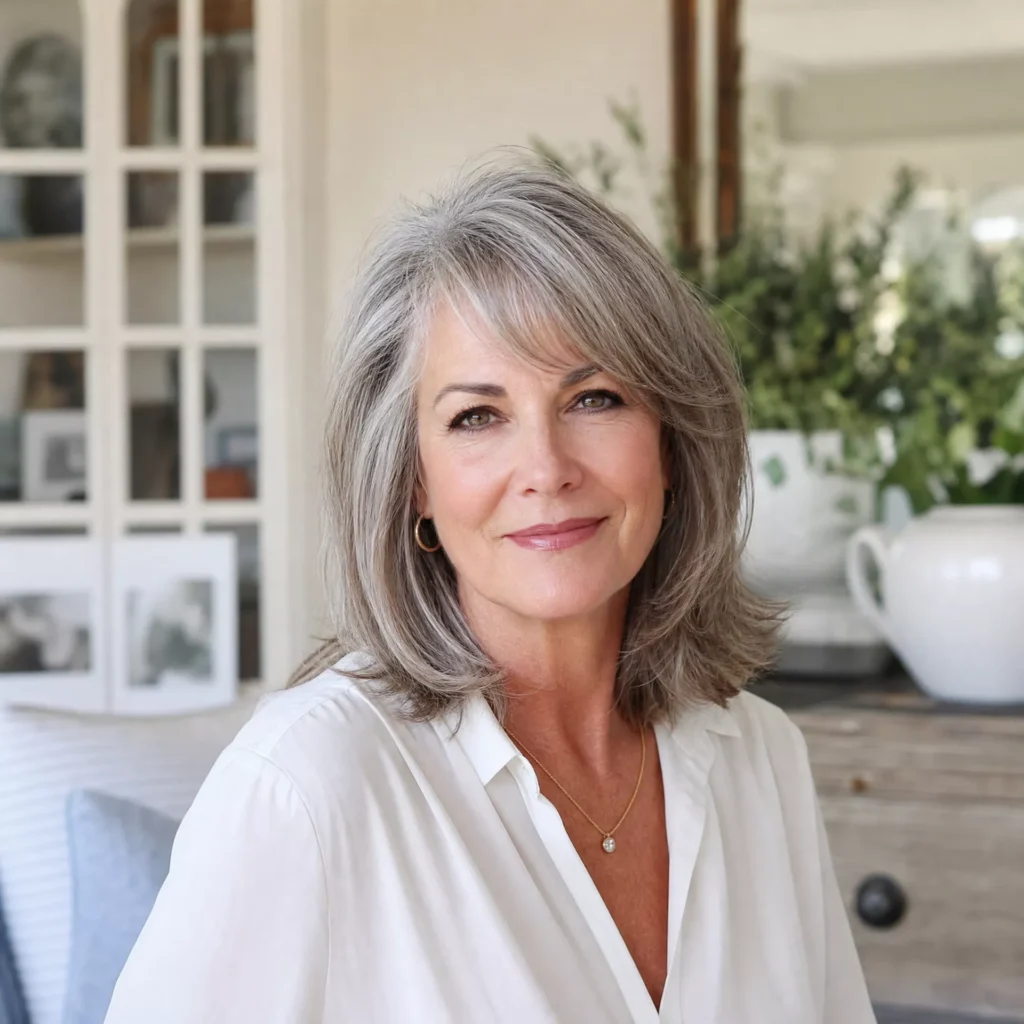
This is a reasonable middle ground if you want enough length to tie back without the upkeep of very long hair. At collarbone level the hair clears the neck and usually takes less time to dry than longer cuts. Layers are optional and best used sparingly, and on fine hair, soft, long ones keep the ends full. Trims every 8 to 10 weeks are typical.
Short Choppy Cut for Women Over 60
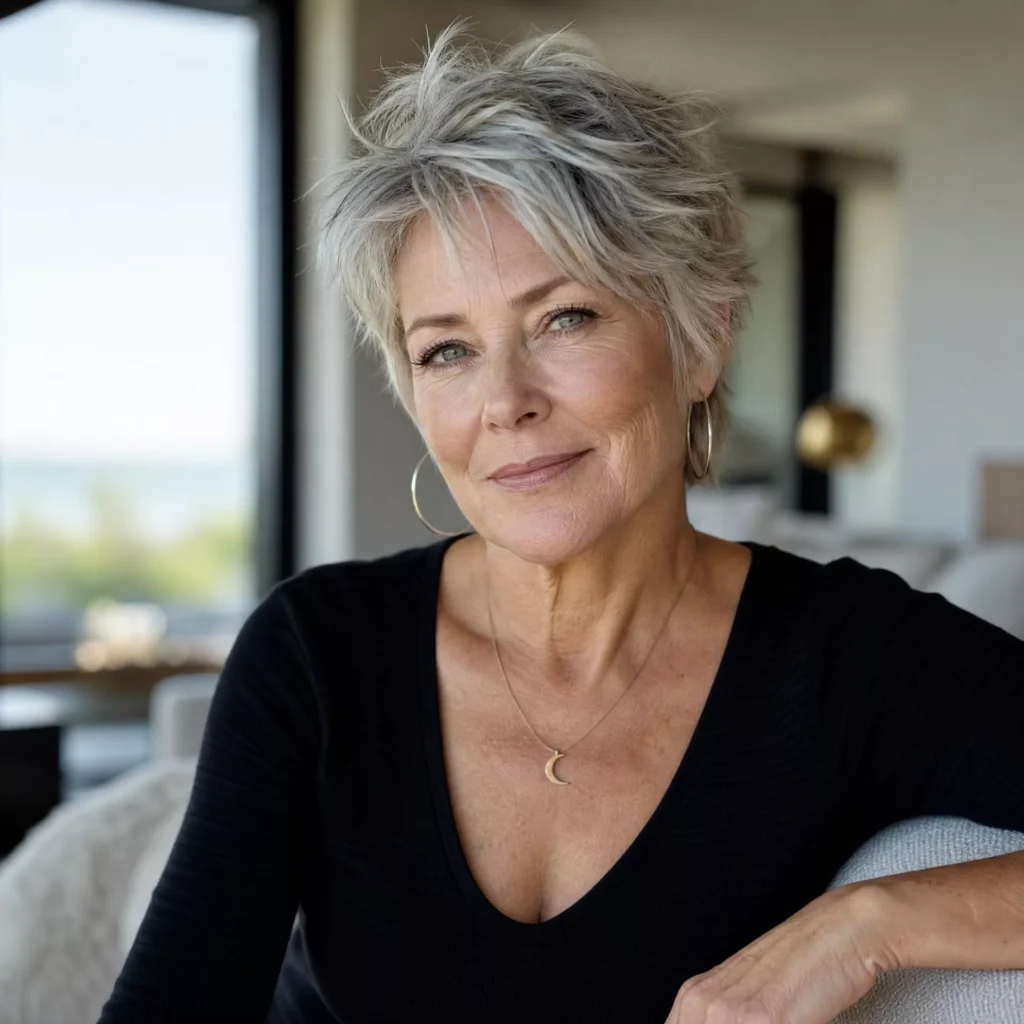
Choppy cuts rely on gaps between pieces, and the gaps only look deliberate when there is enough hair to define them. Where hair is sparse, the same cut can look uneven. A small amount of paste or cream separates the pieces, but too much weighs them down. If you like the look and have fine hair, ask for the choppiness to sit mainly on top and keep the sides cleaner.
Lob with Face-Framing Highlights for Women Over 60
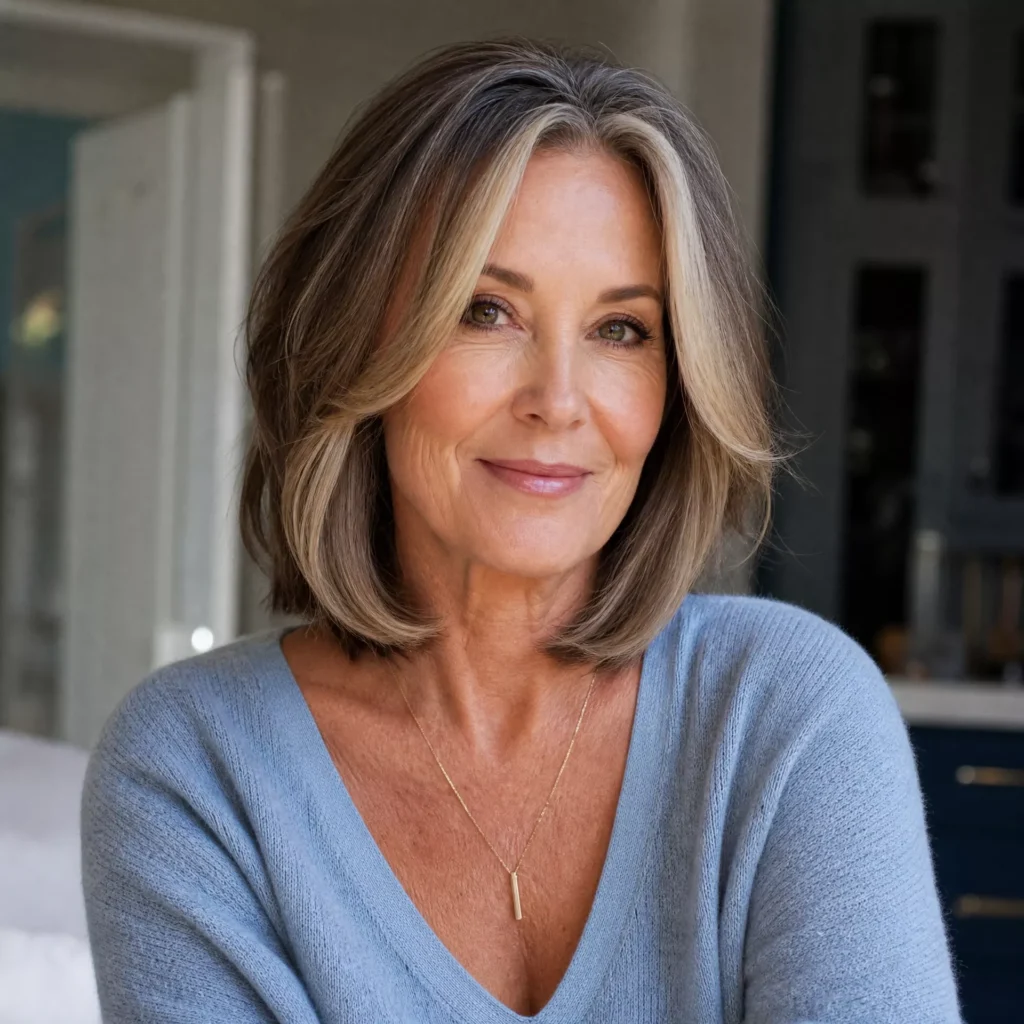
The appeal here is limited scope. Lighter pieces around the face take less time and money than color through the whole head, and the rest of the hair stays as it is. On gray or graying hair, lighter pieces can blend with the natural color instead of competing with it. Ask for fine weaving, because thick sections can look stripey, and expect a color visit every few months, with a gloss if brassiness shows up.
Soft Waves on Medium Length for Women Over 60
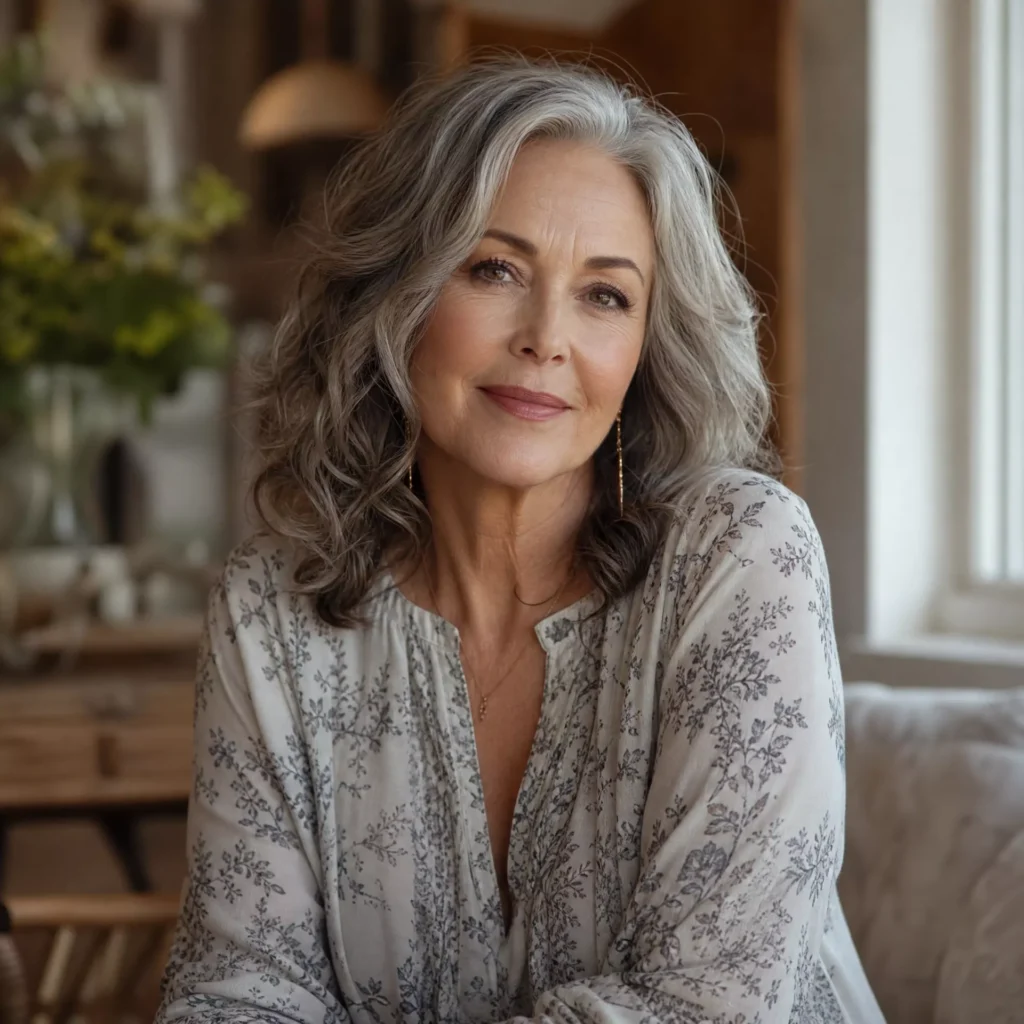
Where the wavy lob relies on natural texture, these waves are made, and the question is how long they last. On fine or very straight hair, a wand curl can drop by the afternoon. A slightly larger barrel, a light flexible-hold spray and letting the waves cool completely before touching them all help, and humidity can still relax them. If you don’t want to redo them, a cut with some built-in layers may hold a bend better.
Layered Pixie for Women Over 60
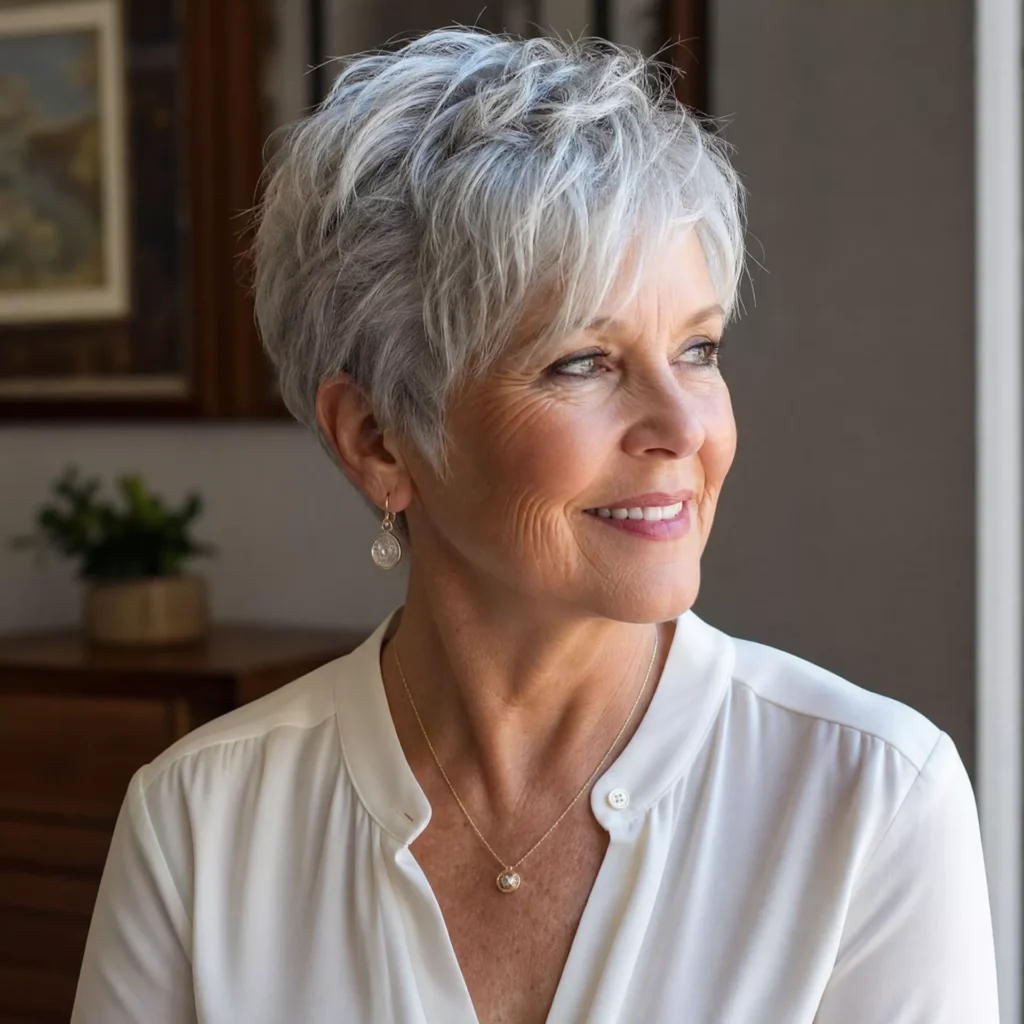
Extra length at the crown gives this cut more than one finish: swept forward, pushed up or smoothed to one side. That flexibility costs a few minutes and a little product each morning, and layers on a short cut can look uneven as they grow, so trims about every five to six weeks help.
Gray Bob with Highlights for Women Over 60
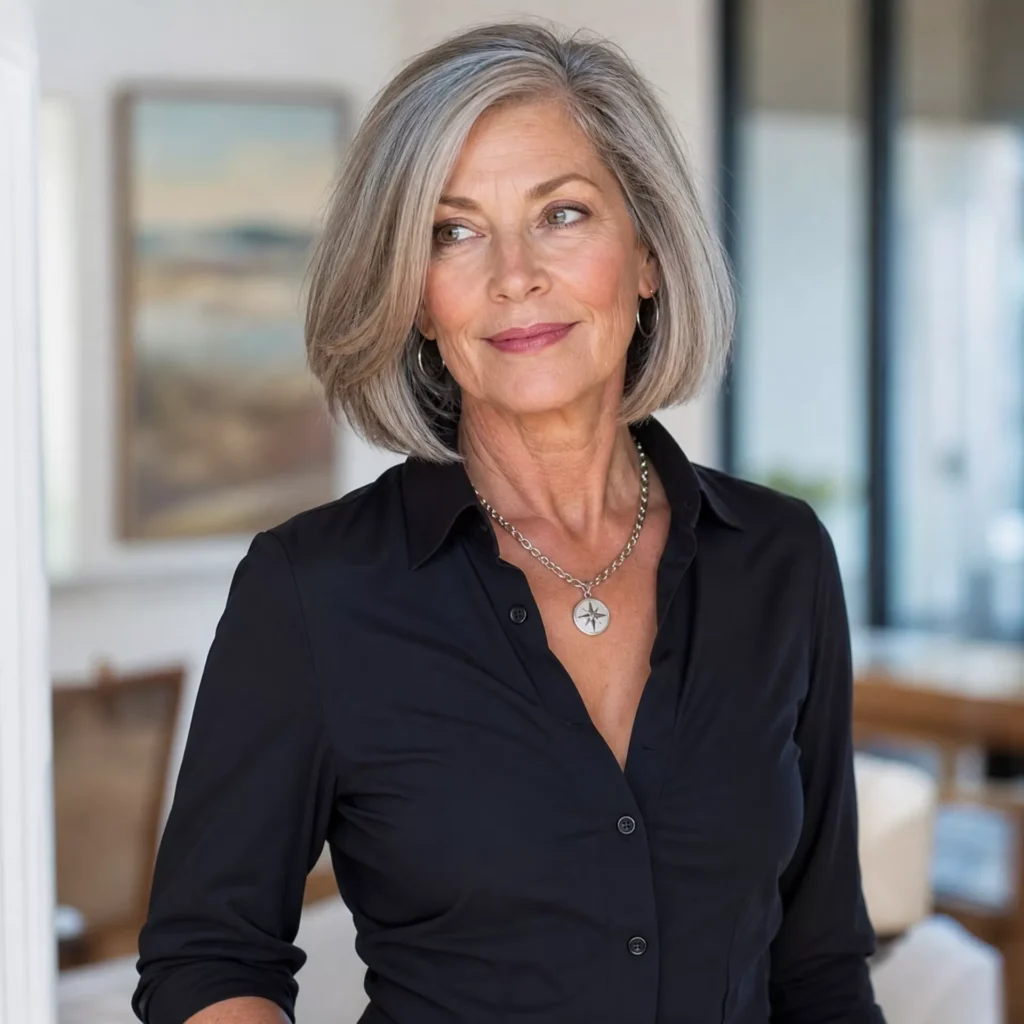
A single flat tone of gray can look uniform, and lighter pieces add variation through the bob. The catch is that lightening gray hair can bring out yellow tones, so ask your colorist about toning and how often you would need a refresh. An occasional purple shampoo can help between visits. Lowlights, which add darker strands, are an alternative if you want depth without more lifting.
Shaggy Lob for Women Over 60
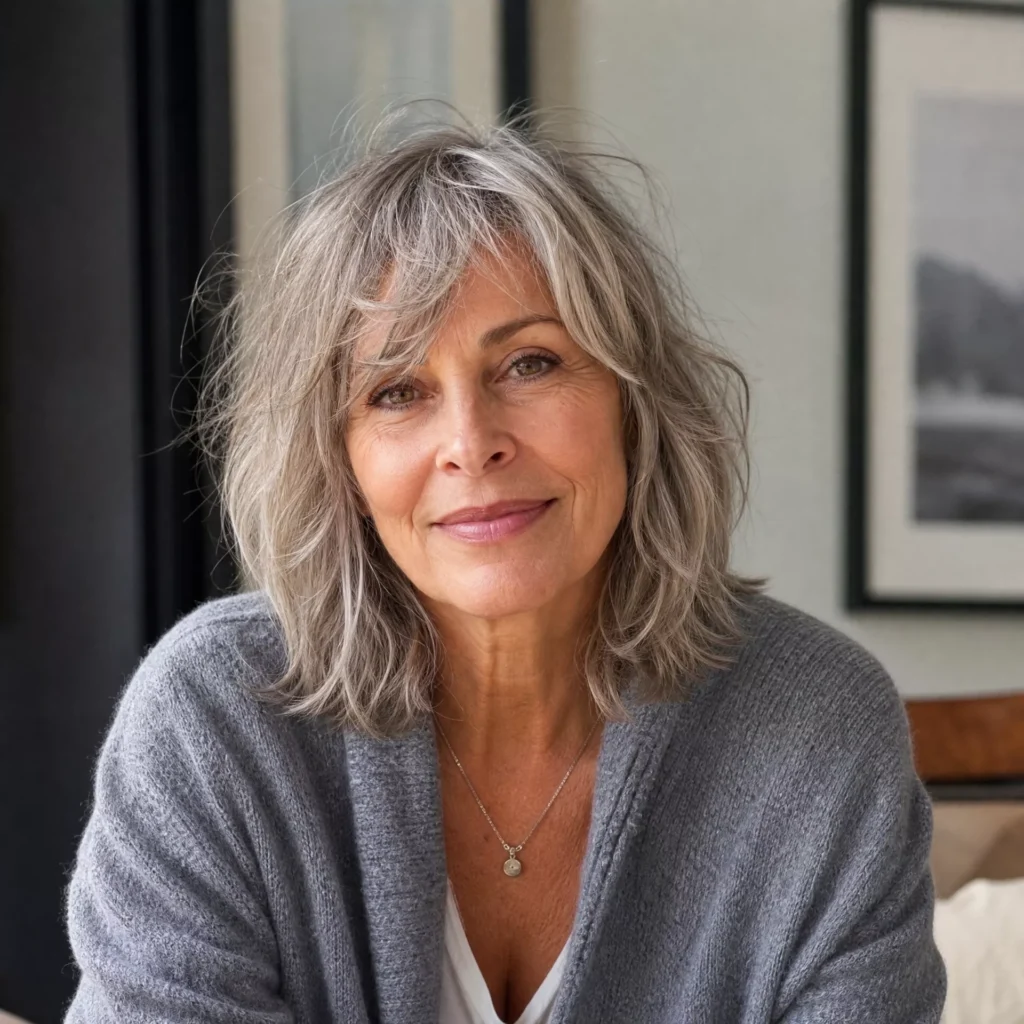
The lob length matters here. A shag at collarbone length carries more weight than a short one, so the layers have to be numerous enough to keep the shape from widening toward the ends, especially on thick hair. On fine hair, a modified version with a solid perimeter is safer.
The relaxed finish is often described as low-effort, but that depends on texture. Wavy or medium-thick hair tends to hold it, while very straight, fine hair may need a little product and a quick dry to keep the shape. Trims every 8 to 10 weeks are common.
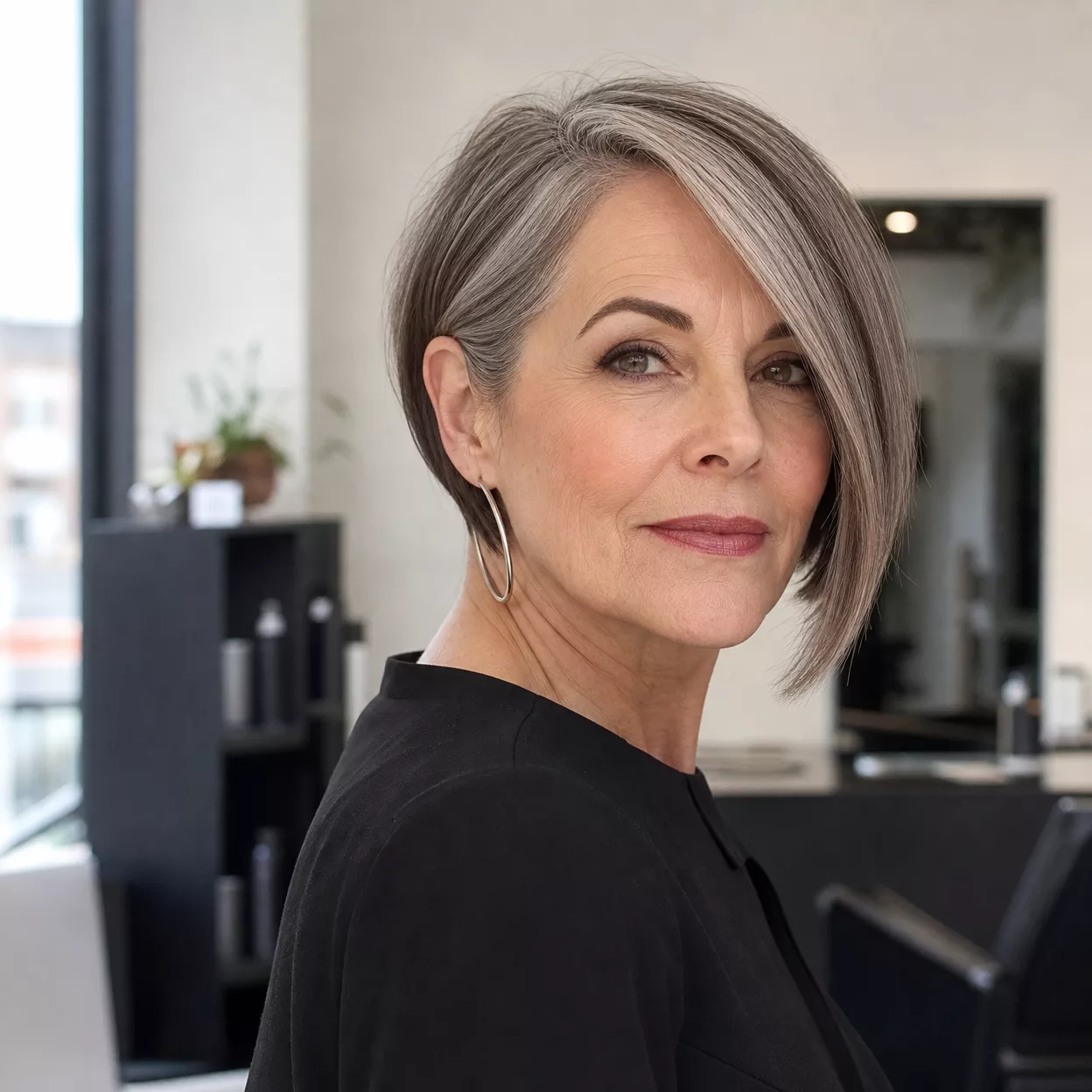
Asymmetrical Bob for Women Over 60
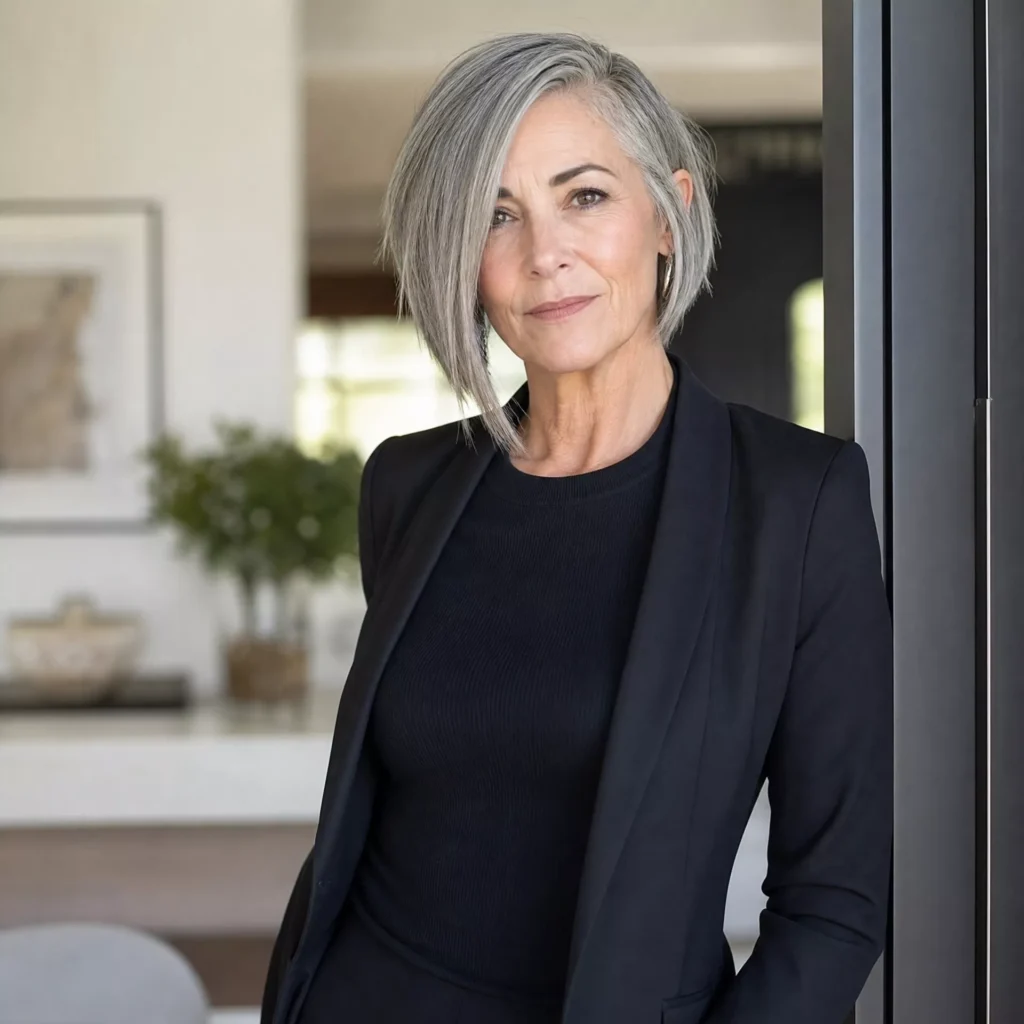
The difference in length between the two sides is the whole design, and it is also what makes this cut demanding. The shorter side loses its shape first as it grows, so the cut can look unbalanced sooner than an even bob. A mild difference is easier to grow out. If you dislike frequent appointments, choose a subtler angle, and ask which side suits your natural part.
Half-Up Style for Women Over 60
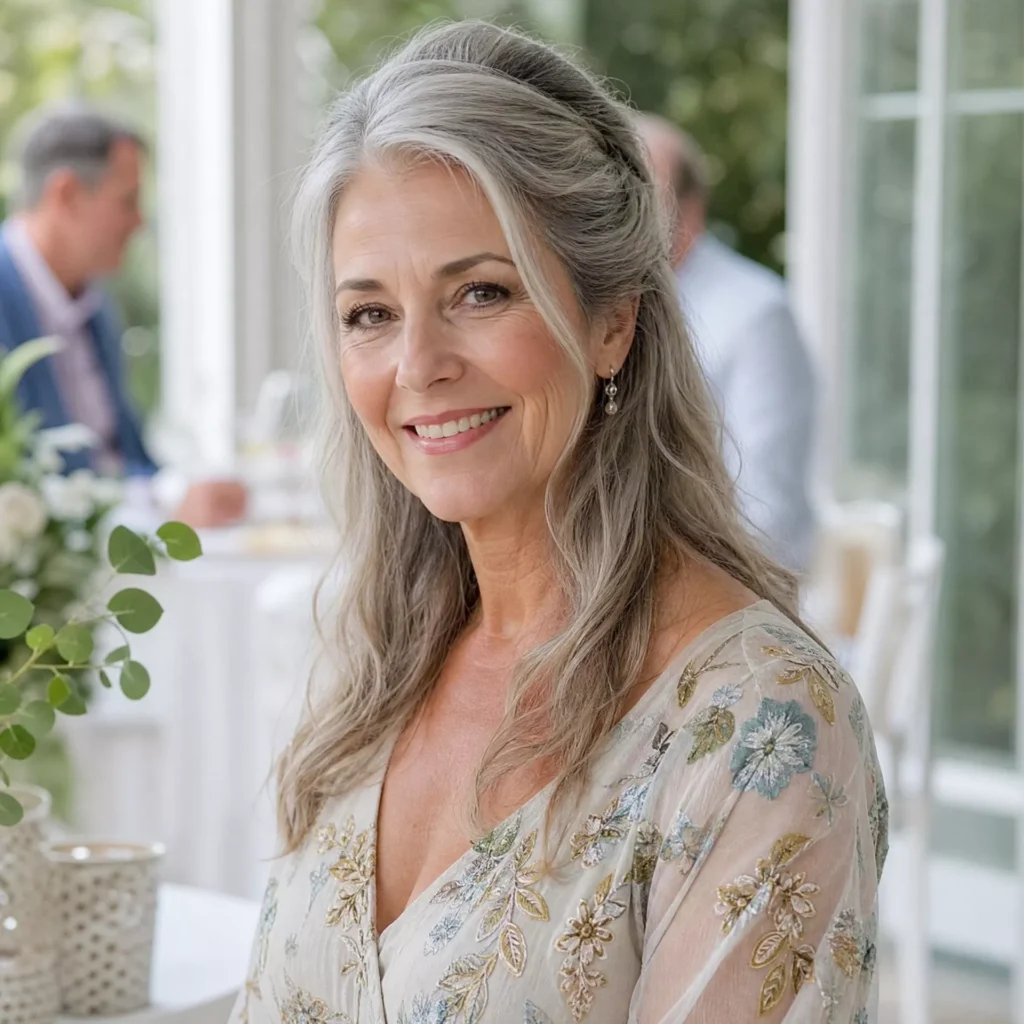
Half-up is a styling choice, not a cut, and it needs enough length to reach the crown or the back of the head. A light root spray before pinning can lift the top section, and leaving a few face-framing pieces out keeps the front from looking pulled back. It suits straight or wavy hair, and on fine hair a clip with a firm grip holds the section better than a loose elastic.
Balayage on Layered Long Hair for Women Over 60
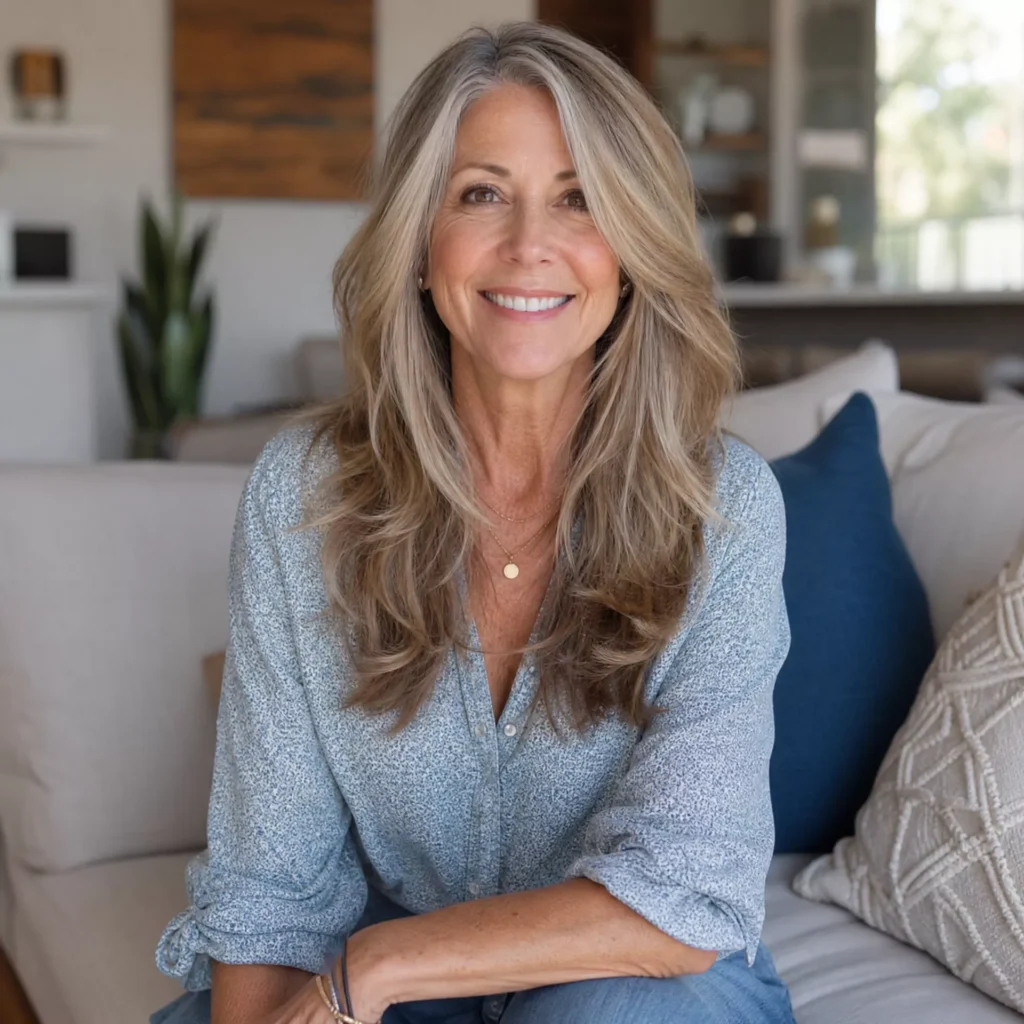
Balayage is painted by hand, so the color usually grows out without a hard regrowth line and can mean fewer salon visits than all-over color. The concern is condition. Lightening long hair affects the ends most, since they are the oldest part, and layers cannot hide fragile ends.
Ask your colorist: “How much lift can my hair take in one session, and would a gloss or bond treatment help?” If the ends are already dry, keep any layers long.
Short Wavy Cut for Women Over 60
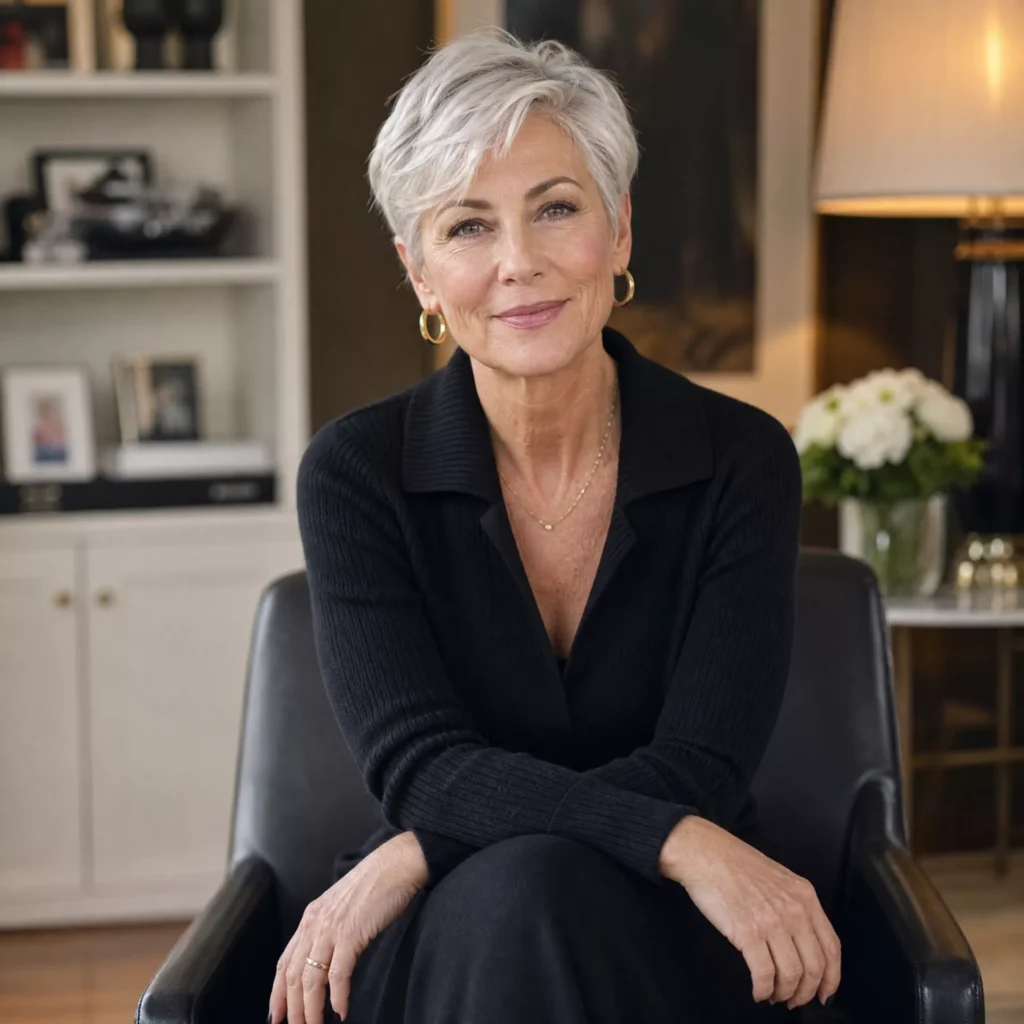
Short length changes what waves do. Without the weight of long hair pulling on them, waves can be easier to see, but only if your hair waves in the first place. Ask the stylist to cut with your natural pattern in mind and to check the shape when it is dry. If your hair dries straight, a small-barrel iron can create the bend, but it may not last the day without some hold, and humidity can push the shape either way.
When a Hairstyle May Not Work as Expected
A style can look excellent in a photograph and still be a poor match for your routine.
- Too many layers on fine hair. They can make the ends look less substantial.
- A precise bob with very fast-growing hair. It may need more frequent trims to hold its outline.
- Long layered hair with fragile ends. It may need more attention to condition and trimming.
- Bangs with a low-maintenance routine. They may need shaping more often than the rest of the cut.
- A high-volume crown on naturally dense hair. It can create more bulk than you want.
- Copying a styled photo exactly. Your natural texture may behave differently from the model’s.
- Lightening already fragile hair. Color that requires lift can affect condition, and damaged hair can look thinner.
What to Tell Your Stylist
Bring two or three photos, and point to what you like about each: the length, the perimeter, the layers, the bangs or the amount of texture. A few lines you can adapt:
“My hair has become finer, so I’d like to keep enough weight through the ends. How many layers can it handle?”
“I air-dry most days. Can you cut this to work with my natural texture?”
“How often will this need trimming to keep its shape?”
A few more questions worth asking:
- How much weight will you remove, and from where?
- What will this look like if I don’t style it?
- How will it look as it grows out?
The Bottom Line
There isn’t one hairstyle that works for every woman over 60. The useful starting point is your hair’s density and texture, how much styling you’re willing to do, how often you want salon maintenance, and whether you want to keep or change your current length.
Save two or three photos rather than choosing one immediately. When you see your stylist, explain what you like about each photo, such as the length, perimeter, layers, bangs or amount of texture, because that gives them more useful information than the photograph alone.