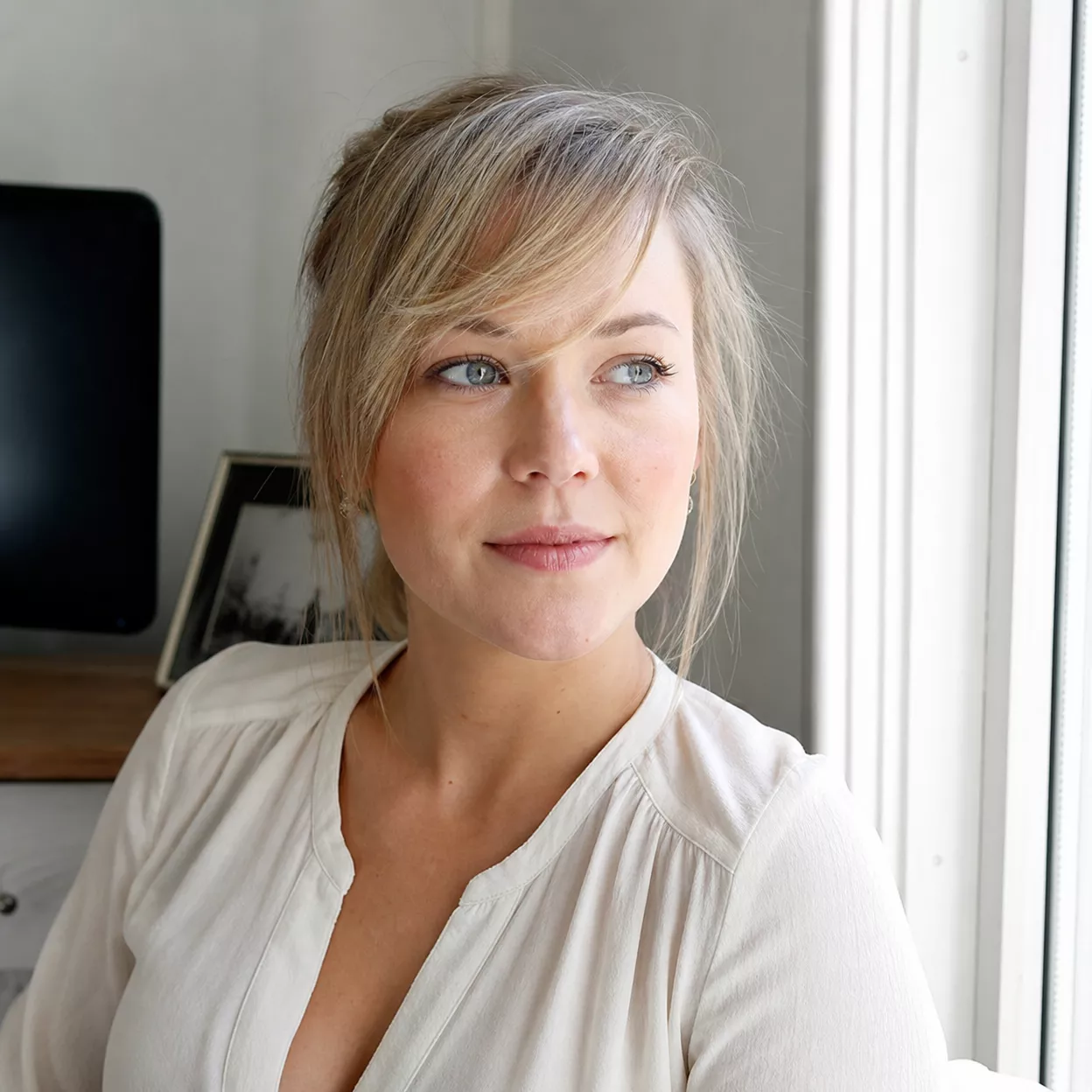
25 Hairstyles for Older Women with Long Hair and How to Choose the Right One
There’s no age at which long hair stops being an option. Whether it suits you depends far less on a birthday than on how the hair is cut, how much of it there is, its natural texture, its condition, and how much styling you want to do. Length alone doesn’t make hair look full or feel manageable. Long layers, a solid perimeter, and face-framing pieces all distribute weight differently, so the same length can hang heavily on one person and move easily on another. Color is a separate choice, and natural gray, salt and pepper, and deliberately toned silver are not the same thing. Many reference photos also rely on a blowout, a curling iron, or product. The hairstyles for older women with long hair below are explained by what each one actually does, so you can choose by how your hair behaves, not by age-based rules.
Long Layers with Curtain Bangs

The curtain fringe parts at the center and sweeps outward, and its outer edges need to meet the front layers so the transition into the long lengths looks continuous. Where the fringe ends and the first layer begins decides whether the front reads as one shape or two. Your natural part and hairline growth affect how easily it opens, and a cowlick can push it off-center. The amount of hair in the fringe matters too. A thin section sits lightly but splits easily, while a fuller one holds its shape but needs more styling. Layers through the lengths add movement, though on fine or low-density hair they can thin the ends.
Long Silver Gray with Waves

Two separate things shape this look: the silver color and the wave pattern. Natural silver hair varies a great deal. It can be fine or coarse, silky or wiry, and gray strands sometimes bend differently from the pigmented hair around them. If the waves are natural, the cut should work with the way they form. If they come from a wand or rollers, they’ll need recreating after each wash. Silver created through lightening and toner is a different starting point from silver that has grown in, with more processing and upkeep. The waves show the variation in tone; they don’t create it.
Long Hair with Face-Framing Layers

Face-framing layers start shorter at the front and lengthen toward the back. Where they begin, whether at the cheekbone, chin, or collarbone, changes how the front transitions into the rest of the hair. A high starting point creates more movement around the face, while a lower one keeps the front close to the main length. The trade-off is weight: the shorter the first piece, the more hair is taken from the front. Face framing changes the outline around the face, but it doesn’t soften features or suit every face automatically. Ask where the shortest piece will land when your hair is dry.
Long Wavy Shag

A shag moves weight upward. Shorter layers at the crown and around the face, with lighter lengths below, create separation through the whole cut. On natural waves, removing that weight often lets the pattern form more easily, so the layers show without much styling. Straight hair styled into waves can imitate the look, but it depends on heat every time. The risk sits in the lengths. Too much layering can leave fine or low-density ends looking sparse, especially on long hair, where the lower sections already carry less. A softer shag with fewer layers keeps more weight at the bottom.
Long Straight Hair with Highlights

The straight hair and the highlights are separate decisions. Straight hair shows color placement clearly because there are no bends to break up the lighter sections, which makes placement important. Fine, scattered pieces blend softly, while broader ones show as visible bands along the length. The result depends on your starting color, any color history, and how much contrast you want. Highlights don’t make hair healthier or fuller, and a single color isn’t inferior. On long hair, the highlighted ends may also be several years old, so they can look different from newer sections near the roots.
Long Hair in a Loose Updo

A loose updo gathers long hair, folds or twists it, and pins it so the shape looks relaxed. Holding that shape depends on support. Dense hair has more weight to secure and may need more pins, while fine or silky hair can slip unless it has some grip from texture spray or a day’s wear. Pin placement matters more than the number of pins, and anchoring each one into a gathered section holds better than pinning loose strands. Some hair will escape over time, which is part of the look, so decide how much movement you’re comfortable with. Leaving face-framing pieces out is optional.
Long Gray Hair with Balayage

Balayage is a coloring technique in which lightener or color is painted onto sections freehand. It isn’t a haircut, and it isn’t a standard treatment for gray. On gray hair, a colorist might use it to brighten certain sections, blend gray with remaining darker hair, or soften the contrast between them, depending on the existing gray, the natural base, any previous color, and the result you want. Naturally grown gray needs no color at all, so balayage is simply one option. Lightening and toning add upkeep, so ask how the result will change as more gray grows in.
Long Hair with Blunt Ends

Cutting the ends to one solid line keeps the full weight of the hair at the bottom, so the perimeter looks more substantial. It doesn’t add hairs, though. Fine or low-density hair may still show some transparency at the ends, especially at very long lengths. Dense or coarse hair can feel heavy with a fully blunt edge and may benefit from some interior weight removal to keep the outline from looking like a solid block. A blunt line also shows breakage and unevenness more readily than layered ends, which is a reason to keep the perimeter trimmed, not a rule about who can wear it.
Long Romantic Waves

This is a finish, not a cut. Soft, flowing waves can come from natural texture, rollers, overnight braids, or a curling iron, and each produces a different pattern. Heat-set waves tend to look more even, while braided or natural waves look looser and less uniform. How long they last depends on hair type and weather. Smooth, slippery hair often releases waves quickly, while hair with some natural bend holds them longer, and humidity can loosen or frizz them. A haircut with a little internal movement helps the waves settle, but they still have to be recreated after washing.
Long Hair with Crown Volume

Crown volume means lift at the top of the head. It can come from the haircut, through shorter layers near the crown, but it more often comes from styling: a blow-dry that lifts the roots, rollers, or volumizing product. Long hair doesn’t automatically lie flat at the scalp. Growth pattern, density, and strand thickness all play a part, and some hair has natural lift. Crown layers don’t guarantee volume either. Whatever the method, lift tends to relax over the day, so a moderate amount usually looks more consistent than a dramatic one.
Long Salt and Pepper Hair

Salt and pepper is a natural color pattern, a mix of darker pigmented strands and lighter gray or white ones. The proportion changes over time and varies across the head, so the front may look lighter than the back. The haircut affects what you see. Long layers let the mix show through movement, while a solid perimeter presents it as a more even blend. Natural variation isn’t better or worse than colored hair; it’s one choice among several. It needs no color upkeep, though the gray strands may feel different in texture from the darker ones.
Long Hair with Side Braid Detail

One braid adds a small detail without gathering the hair into a full updo. Placement decides the effect. A braid near the hairline frames the face, one running back from the part acts like a headband, and one along the side moves the eye across the head. Width matters too: a thin braid reads as a subtle detail, a thicker one as a feature. Shorter front layers may escape, and slippery hair can loosen, so a little texture product helps the braid hold. Securing the end with a small clear elastic or a pin keeps it in place among the loose lengths.
Long Feathered Layers

Feathering tapers the ends of each layer so they sweep softly instead of ending in a clean line. That makes it different from a blunt perimeter, which stays solid; from choppy layers, which show visible steps; and from a heavily textured shag, which moves weight to the crown. The result is movement, often directed away from the face with a round brush. Feathering doesn’t automatically create fullness. On low-density hair, removing too much at the tips can leave the ends thin and see-through, so a lighter taper keeps more weight at the bottom.
Long Hair with Curtain Bangs and Color

Three decisions overlap here: the fringe, the haircut, and the color. The curtain bangs connect to the front layers, while highlights or balayage decide where lighter tones sit. When the two are planned together, lighter color often lands on the fringe and front pieces, which makes the front the focus. The result depends on contrast, your starting color, where your hair parts, and how you style the fringe. Lighter color at the front also shows regrowth there sooner. Decide whether you want the color to highlight the bangs or stay mostly in the lengths.
Long Gray Waves with Center Part

A center part divides the hair evenly, so the waves fall on both sides and the gray pattern shows symmetrically. That works most easily when your hair naturally parts near the middle. If your growth pattern or a cowlick leans to one side, the part may drift back during the day, and the waves may sit higher on one side than the other. On lower-density hair, a center part can show more scalp along the line. Natural waves often vary from side to side, while heat-styled waves look more matched but need redoing after washing.
Long Hair Half-Up with Volume

Gathering the upper section changes the silhouette: the top sits higher or closer to the head, and the lengths below hang free. How much hair you gather decides the effect. A small section is subtle, while a large one creates a stronger shape and leaves less hair loose. The volume comes from the style, often a little lift or light backcombing before gathering, not from added density. Placing the section at the crown increases height. A sturdy elastic or two crossed pins keeps it secure, especially on smooth hair, which can let the section slide.
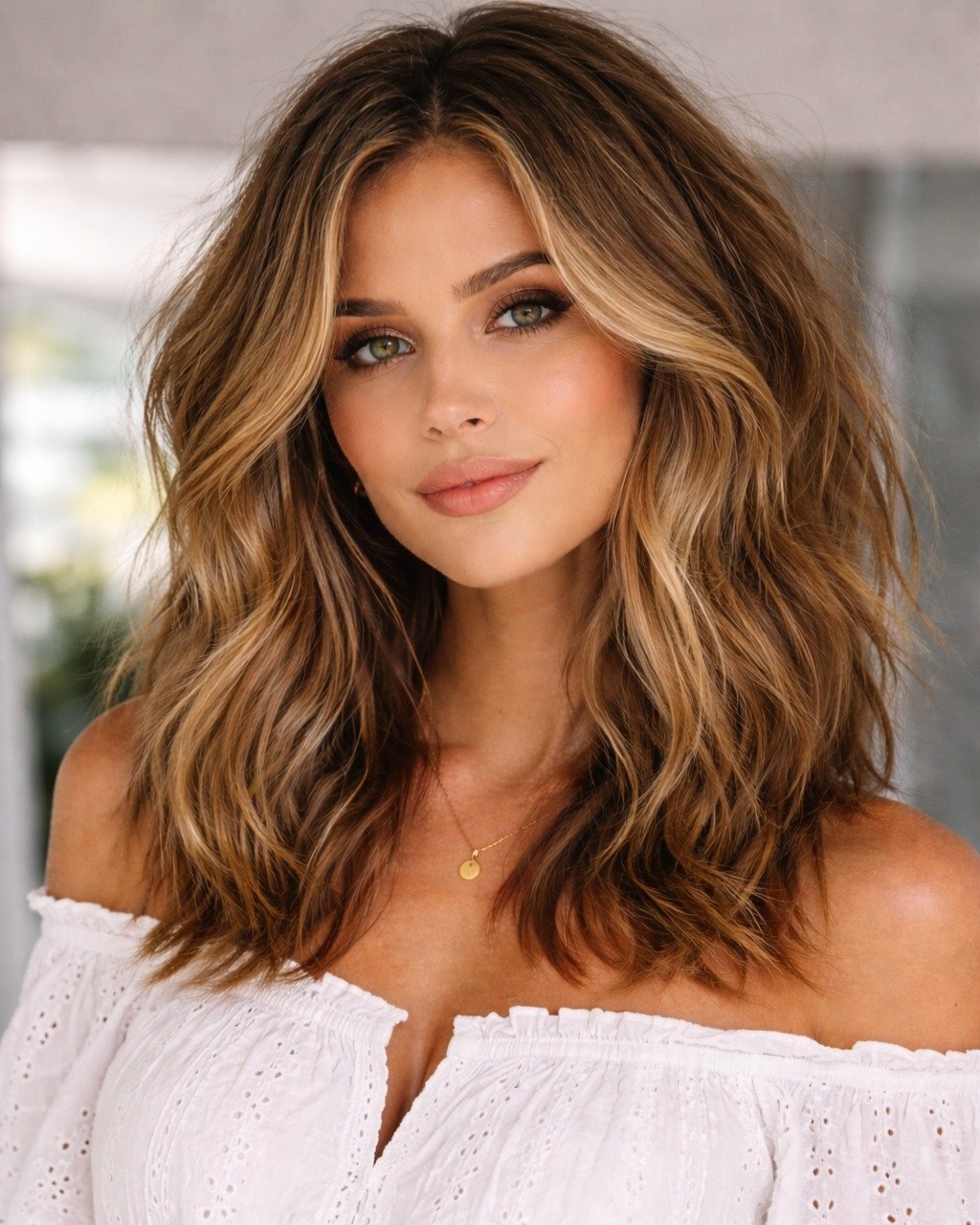
Long Layered Cut with Caramel Highlights

The layers and the color do different jobs. Long layers shape the outline and movement, while caramel highlights add warm, golden-brown sections that contrast with the base. How noticeable they are depends on that base. On light brown hair, caramel blends gently; on dark brown, it contrasts more strongly; on gray, it shifts the overall tone warmer. Placement and the amount of warmth are choices to discuss with a colorist. Warm tones can also shift between appointments, so toning may be part of the upkeep.
Long Hair with Wispy Fringe

A wispy fringe uses only a small amount of hair, so it sits lightly against the forehead. How much is taken from the front, and how the fringe connects to the longer sides, decide whether it looks soft or sparse. On fine or low-density hair, it can separate and show gaps. Hairline growth matters as well, since a cowlick may push it in an unexpected direction. Grow-out tends to be softer than with a blunt fringe, but the pieces still pass through the eyes before they blend in, so expect trims or some styling in between.
Long Curly Hair with Shape

Curl pattern, shrinkage, density, and weight distribution all change a long curly cut. Curls spring up as they dry, so hair that looks long when stretched may sit considerably shorter. Layers can help curls stack into a rounded shape instead of hanging heavily, but removing too much weight can split them into separate clumps or leave the outline uneven. Some curly hair looks best close to a single length. The dry shape can differ a great deal from a wet or stretched reference photo, so ask how the cut will look once your curls have fully dried.
Long Gray Hair with Icy Highlights

Icy highlights are deliberately lightened and toned sections, usually near-white or cool silver. Natural gray is different: it grows in. Adding icy pieces to gray hair depends on the starting point. Already-light gray or white sections may need only toning, while darker remaining strands usually need lightening first, which is chemical processing. The result won’t automatically blend with every lighter strand, and very pale tones can drift warmer between appointments, so regular toning is common. Ask how much lightening it will take to reach the shade you want.
Long Bohemian Waves

The label describes a finish: loose, irregular waves with uneven texture and some separation, not polished curls. That irregularity can come from natural wave, overnight braids, rollers, or a curling iron used in alternating directions. Texture or sea-salt spray often adds the slightly rough feel seen in reference photos. Product choice and humidity change the result. Humid weather can loosen the waves or add frizz, while drier conditions may help them hold. Straight hair usually needs heat or braiding to reach this look.
Long Hair with Textured Ends

Texturizing the ends breaks up a solid perimeter so the tips separate and move. Point-cutting snips into the ends with scissors, while a razor tapers them; both lighten the edge in different ways. A more solid perimeter keeps the weight where it is. Textured ends can add movement, but taking too much can make the bottom look thin, especially on low-density hair. A razor suits some hair and frays other hair, particularly fine, fragile, or curly strands. Describe the finish you want and let your stylist choose the method.
Long Hair in a Classic Low Pony

A low ponytail sits at the nape, keeping the shape close to the head while the lengths hang down the back. A smooth version needs brushing and some smoothing product, while a textured version looks softer. Wrapping a small strand around the elastic hides it, held with a pin. Shorter layers may escape around the face and nape, and a tight elastic worn often can strain the hair, so moderate tension is kinder. Because the loose lengths are on full display, the condition of the ends shows clearly. How polished the ponytail looks depends on the finish.
Long Hair with Volume Blowout

A blowout is a temporary finish, not a haircut. Lifting the roots with a round brush adds height, smoothing the mid-lengths reduces frizz, and turning the ends shapes the bottom. On long hair, it takes longer, and the weight of the length can pull root lift down sooner than on shorter hair. Using a heat protectant helps limit damage from repeated styling. Humidity can undo the finish, and after washing the hair returns to its natural shape, so the cut still has to work between blowouts.
Effortless Long Hair Air-Dry

“Effortless” describes how the hair looks, not a guaranteed routine. Whether long hair air-dries into a useful shape depends on its natural texture, layer placement, density, climate, and product. Hair with some wave often dries with movement. Very straight, fine hair may dry flat, and very dense hair can take hours and frizz along the way. A leave-in or curl cream can help, but it won’t create a pattern your hair doesn’t have. Some people still need sectioning, a diffuser, or an occasional blow-dry. If minimal heat is your goal, tell your stylist so the cut is built around it.
What Long Hair Needs from a Haircut
Long hair carries more weight than shorter cuts, and that weight pulls down on the lengths. The haircut decides where it sits. A solid perimeter keeps weight at the ends for a clean outline. Interior layers redistribute some of it to add movement. Face-framing pieces shape the front without changing the back, and natural texture then decides how all of it behaves.
There’s a real trade-off between keeping length and removing weight. Long hair doesn’t automatically need layers: for fine or low-density hair, a mostly solid perimeter may keep the ends looking fuller. Dense hair often benefits from some layering. Trim frequency varies as well, depending on the cut, the condition of the ends, chemical processing, and how closely you want to hold the shape.
Fine, Dense, Coarse, and Curly Hair Have Different Priorities
Strand thickness, density, and texture describe different things. Fine strands are narrow, while low density means fewer strands. Fine but dense hair can carry layers because there are enough hairs to keep the ends full. Fine, low-density hair has less to spare, so heavy layering or texturizing shows more quickly.
Coarse strands are wide and tend to hold shape, including bends from braids or rollers, but they can also feel stiff or frizz. Curly hair shrinks as it dries, so its finished length is shorter than its stretched length, sometimes by several inches. Keep these differences in mind when reading the styles above, because a cut described as light may need adjusting for your density.
Natural Gray, Silver Color, and Highlights Are Different Choices
Naturally growing gray needs no processing and comes in with its own pattern, which may be even or patchy. Salt and pepper is a natural mix of dark and light strands. Highlights and balayage add lighter sections, which can blend gray with darker hair or brighten particular areas. Icy tones are deliberately lightened and toned and may involve more processing and regular toning.
No option is more suitable for older women than another. What differs is the starting color, how much contrast you want, how much processing is involved, and the upkeep you’re willing to maintain.
The Photo May Show More Than the Haircut
Reference photos often rely on blow-drying, curling tools, product, color, and lighting. They rarely show the model’s density or natural texture, and the back is usually missing.
Decide what you actually like about the image: the outline, where the layers start, the fringe, the wave pattern, or the color. Save front, side, and back references if you can, and point to the specific detail you want to keep.
Before You Decide to Keep Your Length
Long hair asks for a few things: time to wash and dry, attention to the ends, and some willingness to style it or tie it back. If you enjoy that, length works well. If drying time or tangling bothers you, a different perimeter or a slightly shorter long cut may help without giving up much length. Consider the condition of your ends too, since the tips of long hair are often several years old.
Questions worth asking your stylist:
- How will this cut behave with my natural texture?
- How much layering do I actually need?
- How will the perimeter look when my hair is dry?
- Which parts of the reference photo depend on styling or color?
- How much maintenance will the shape require?
- How will the cut grow out?
Final Thoughts
Long hair is a personal preference, not something tied to age. The right version depends on your texture, density, the shape you want, and how much styling you’re willing to do. Use these 25 hairstyles as reference points and notice which details appeal to you, whether that’s the perimeter, the layers, the fringe, the color, or the finish. Then discuss those specific features with your stylist so the cut works with your hair as it actually is.